NAACP, Advocates Work to Register ex-Felons to Vote

Personalliberty

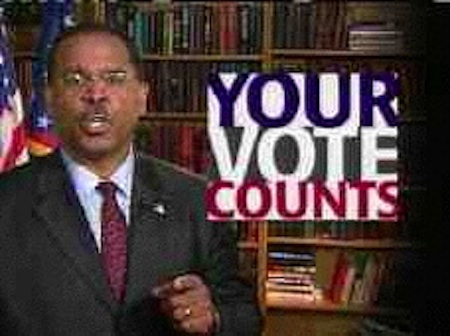
Civil right activists stepped up efforts this week to allow more than 1.5 million voting-eligible felons in Florida — and millions more nationwide — access to elections, urging that laws they see as discriminatory need to be changed.

“Keep in mind that two-thirds are not in a prison cell right now,” said Hilary O. Shelton, senior vice president for advocacy at the National Association for the Advancement of Colored People.

Nearly 6 million American felons have no voting rights, says the Sentencing Project, a non-profit group that works on criminal justice reform issues. Florida leads the nation with the highest rate per capita of disenfranchised felons.

In swing states like Florida and Virginia, another state with a large number of disenfranchised felons, those votes could make the difference in close elections. The deadline to register for the November election is Tuesday in Florida and Oct. 15 in Virginia.

Advocates say they worry the laws are part of larger voter suppression efforts, some designed to keep minorities from casting ballots this fall.

The NAACP launched a national campaign against felon disenfranchisement Tuesday in Tallahassee, Fla. The group is seeking changes in laws that keep felons from voting.

Read More

Four Ways Ohio and Others Have Toughened (Rigged) Voting Rules to Stop Non-Whites from Voting because the white population is declining

 ProPublica

Voter ID laws have received plenty of attention recently, but they're not the only controversial changes to election rules this year. Some states have made changes that critics say could impact individuals' ability to vote. Here are four.

Ohio won't count provisional ballots mistakenly cast in the wrong precinct.

Four years ago in Ohio, there were 200,000 provisional ballots cast among a total 5.7 million votes. This was the most among any state other than California. (Federal law requires states to use provisional ballots when a voter's eligibility is in question or if their registration doesn't reflect a new name or address.)

But Ohio requires county election boards to reject provisional ballots if the ballot doesn't correspond to the voter's assigned precinct — even if it was the poll worker's mistake. (A few other states have similar rules, but Ohio is fighting a lawsuit right now to preserve its approach.)

Such errors are bound to happen since 80 percent of Ohio's polling stations cover multiple precincts. In 2008, Ohio elections officials discarded 14,000 provisional ballots for this very reason. That number accounted for one-third of the total rejected provisional ballots that year.

In June, a group of labor organizations and advocacy groups sued Ohio to block enforcement of this requirement, arguing it could disenfranchise thousands of voters.

Ohio officials have argued the law is justified by the state's interest in "running elections fairly and efficiently."

"The argument is sometimes made that if states are required to count these ballots, more people would deliberately go and vote in the wrong precinct," said Wendy R. Weiser, director of the Democracy Program at the Brennan Center for Justice.

During oral arguments before a federal judge earlier this year, a lawyer for Ohio hinted at such a scenario when he challenged the strength of the plaintiffs' evidence. "Something else is going on that may not be poll-worker error," he said, as noted in a footnote to the judge's ruling.

In August, a federal judge ruled against Ohio's approach. The state's interest in fair and efficient elections, wrote U.S. District Judge Algenon Marbley for the Southern District of Ohio, "falls short of what is required to justify its inevitable disenfranchisement of thousands of qualified voters in the November 2012 election."

Ohio has appealed the decision, arguing that the rule helps with "counting only valid, legal ballots, in running a smooth election, and in minimizing post-election litigation." Allowing such provisional ballots to count, the state further argued, would make it "more difficult for elections officials to monitor and keep up with the voting process."

The Sixth Circuit Court of Appeals heard arguments in the case early last week and is expected to issue a decision soon.

Ohio tried to shorten its early voting period — until a federal court ruled otherwise.

Ohio used to permit in-person early voting for registered voters in the three days prior to Election Day. (More than 30 other states have similar early voting options, mostly for those who can't make it on Election Day.) But last year, the Ohio General Assembly limited the window. Early voting, which began Oct. 2, was scheduled to end 6 p.m. the Friday before Election Day. (Members of the military and overseas voters were exempt from the narrowed time frame.)

Read More

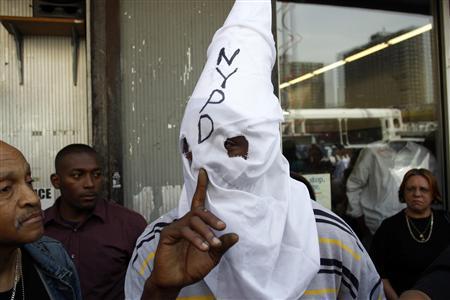
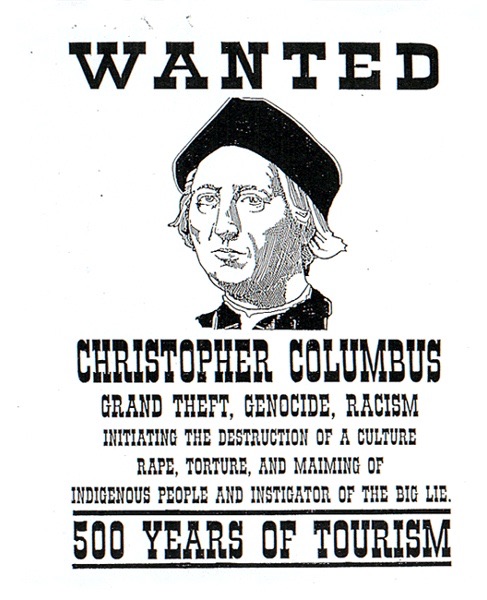
The Great Christopher Columbus, Death Race NYPD

Black Talk Radio at 10PM

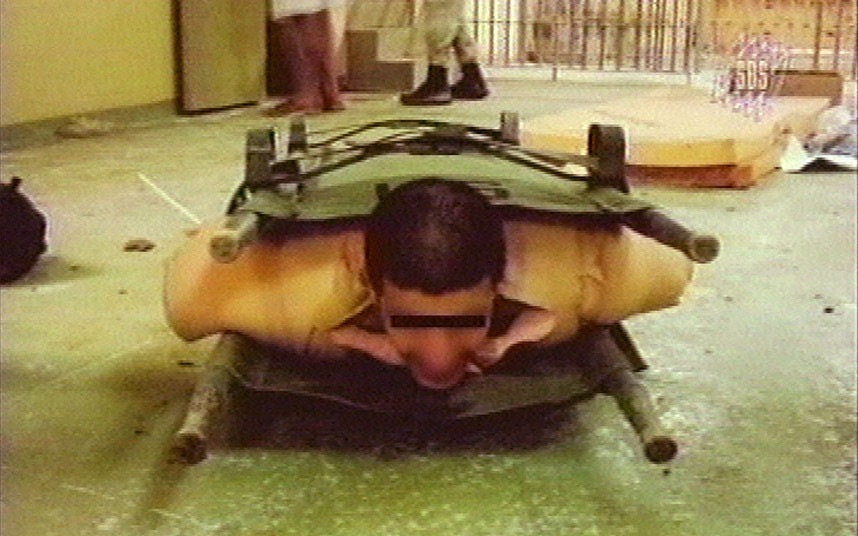
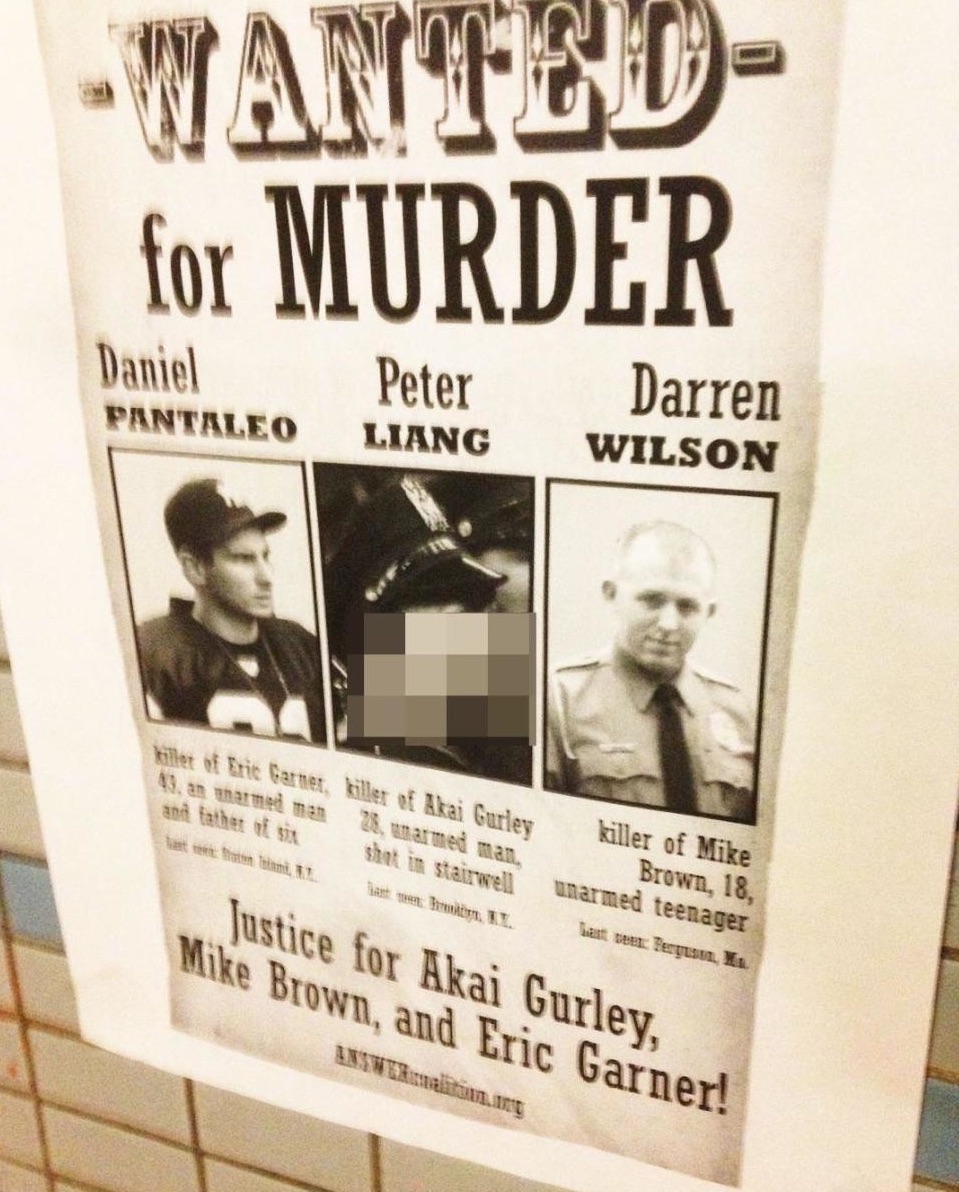
Unfortunately we have a lot of cop watch news to report. NYPD purposely run over a man, kill him and then sent his mother a bill for the damage to the car and that is not all. A quick search revealed that cops are known to run people over as if they are in a Death Race match to see how many people they can run over and kill. Today is Columbus and thousands turned out to celebrate a mass murdering rapist. If you throw out revisionist history, what was his great accomplishment. Will share a lecture from Dr. John Henrik Clarke on Columbus and the African Holocaust. This news and more plus your phone calls and the best in Hip-Hop and R&B! Listener Supported Radio See More

Read More

Rep Rivera (Fla) Calls News Conference, Won't Talk FBI Investigation

Hotline

Embattled Rep. David Rivera, R-Fla., called a press conference Friday... but then refused to talk about the alleged FBI investigation into whether he secretly funneled money to the failed congressional campaign of Democrat Justin Sternad. Why? Rivera said that because he was physically in his district office, he could only discuss official government business. Asked to go outside and discuss the investigation, Rivera declined. Local 10:

Rep. David Rivera (R- Miami) summoned reporters to his district office Friday morning for a news conference, but refused to speak about anything but the stated purpose -- deferred action for undocumented children.

...

But when asked about the ongoing FBI investigation into his reported ties to former congressional candidate Justin Lamar Sternad, a Democrat, Rivera said he couldn't talk about it in his district office.

"In a federal legislative office, we can only do official government business," Rivera said. "Anything campaign-related, we have to talk about outside."

We asked Rivera to step outside to answer questions, but he refused.

Dennis Banks: Palestinian Suffering Under U.S.-Backed Occupation Recalls Plight of Native Americans

DemocracyNow

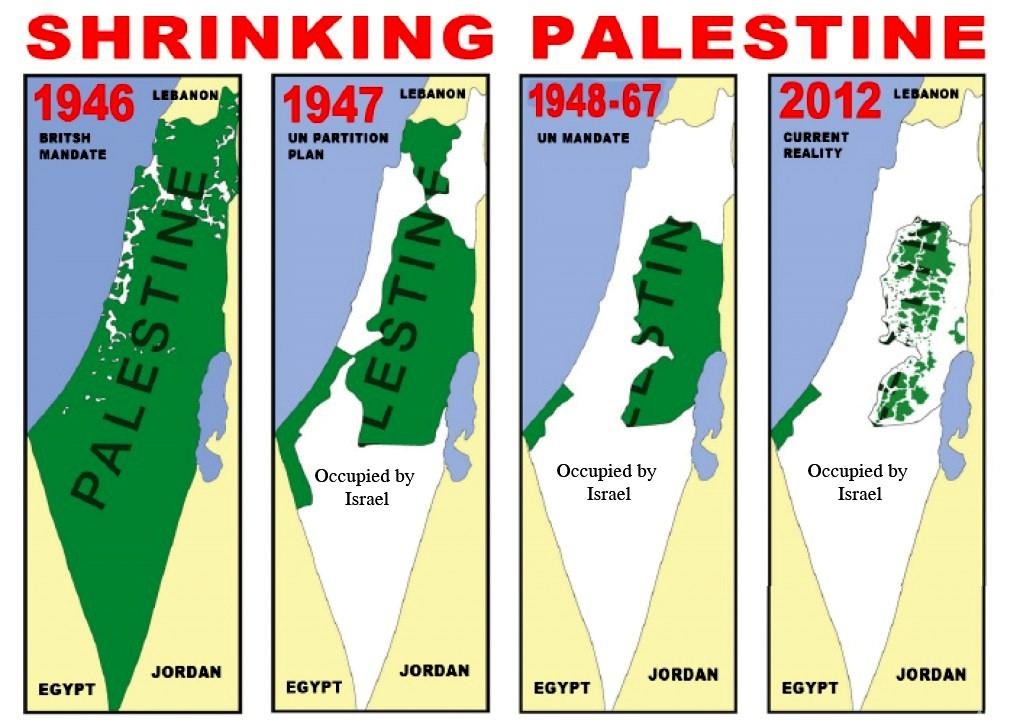
Dennis Banks, the legendary Native American activist and co-founder of the American Indian Movement, was in New York City this weekend to serve as a jurist at the Russell Tribunal on Palestine, an international people’s tribunal created in 2009 to bring attention to the responsibility other states bear for Israel’s violations of international law. Banks says, "What is happening to [Palestinians] is what we went through during the last century. Unfortunately, it is the same, same people [backing it]: it is the U.S. government, which funnels money to Israel, and then it goes to hurt the Palestinian people." [includes rush transcript]

Detroit Black Police Chief Retires Amid Scandal

NewsOne

DETROIT — Detroit police Chief Ralph Godbee has stepped down after an internal affairs officer revealed that she and the chief had been conducting a sexual relationship, the mayor announced Monday.

Mayor Dave Bing said the 44-year-old Godbee submitted a letter of retirement, effective immediately, from the job he’s held since 2010.

Bing said Godbee told him about his decision to retire during a meeting Sunday. The mayor said he did not force Godbee to leave but believes “this was the right decision by the chief.” Bing said Godbee was “contrite” and “embarrassed.”

“Yes, he did apologize … he felt he let the citizens of Detroit down,” Bing said at a news conference.

Godbee has not publicly commented on the revelations of his affair with Angelica Robinson. There was no mention of the scandal in an eight-paragraph letter dated Monday from Godbee to Bing that announced the former chief’s retirement. A copy of the letter was released to reporters after the news conference.

Bing placed Godbee on a 30-day suspension last week pending an investigation into the claims by Robinson’s attorney that the 37-year-old woman had wanted the relationship to end but that Godbee did not.

At the news conference, Bing said assistant Chief Chester Logan will serve as interim chief. Logan had assumed Godbee’s responsibilities during the suspension. Bing said a national search for a new chief is planned.

Angelica Robinson’s lawyer revealed that she and Godbee had been seeing each other for about a year, but Godbee was upset when she wanted to end the relationship.

Gallup Poll has Obama Tied with Mittens (like a boxing match, if its close it can be stolen!)

Gallup

Registered voters' preferences for president are evenly split in the first three days of Gallup tracking since last Wednesday's presidential debate. In the three days prior to the debate, Barack Obama had a five-percentage-point edge among registered voters.

Comparison of Registered Voters' Presidential Preferences, Before and After First Presidential Debate, 2012

Gallup typically reports voter presidential preferences in seven-day rolling averages; the latest such average as of Saturday interviewing shows Obama with an average three-point edge, 49% to 46%, among registered voters. This Sept. 30-Oct. 6 field period includes three days before the Oct. 3 debate, the night of the debate itself, and three days after the debate.

Read More

Obama dedicates Cesar E. Chavez National Monument

LA Times

President Obama on Monday officially dedicated the Cesar E. Chavez National Monument in the Central Valley where the farmworker labor movement took place.

The site in Keene in Kern County served as both home and operational headquarters for Chavez and his United Farm Workers movement.

“It's a story of natural wonders and modern marvels, of fierce battles and quiet progress. But it's also a story of people, of determined, fearless, hopeful people who have always been willing to devote their lives to making this country a little more just and a little more free,” Obama said.

The ceremony was an emotional moment for the UFW and Chavez supporters. But it was not without some glitches.

More than 7,000 people had traveled long distances to witness Obama’s dedication of the three-acre monument in the Tehachapi Mountains between Bakersfield and the Mojave Desert where Chavez was buried.

Only a week ago, National Park Service officials estimated about 4,000 people would show up for the dedication of the first national monument to honor a contemporary Mexican American.

As of Monday, about 1,000 people who had registered for invitations saw them rescinded by the UFW and Chavez foundation.

Among those turned down was Maricela Mares-Alatorre, a community activist from Kettleman City, an impoverished farming community north of Bakersfield.

“We were uninvited Sunday night,” said Mares-Alatorre, who had planned to accompany 13 other Kettleman City residents including her father, a farmworker who had marched in Chavez’s funeral procession in 1993. “They said they were overbooked. We’re heartbroken.”

Marc Grossman, spokesman for the Cesar Chavez Foundation, which, along with the union, is headquartered at the site, said the crowd at the site was the biggest since Chavez died in 1993. “Clearly, we all underestimated the passion people have for Cesar, the farmworkers union and the opportunity to see the president,” he said.

Roughly a third of the people in attendance were farmworkers who arrived in 32 buses chartered by the UFW. Hundreds more, including schoolchildren from across the Central Valley, came in buses chartered by the National Park Service.

Ex-CNN reporter: US media forcing American public to approve of war on Iran

PressTV

Outspoken investigative journalist and former CNN correspondent, Amber Lyon voices concern that, through widespread and continual vilification of Iran, the US media is pressing the Americans to approve of a potential conflict with the Islamic Republic.

“United States public is constantly being inundated with reports that are demonizing Iran…I mean it’s all over the nightly news and in the papers, blogs, and in journalistic outlets,” Lyon said from Los Angeles on Monday in an exclusive interview with Press TV. 

“…several journalists and experts I have spoken to feel that we are being led into a potential conflict this time, you know, instead of Iraq it being Iran and the public is being fed propaganda continually demonizing Iran and you’re seeing these other stories like Bahrain being covered up and that has some of us worried that the public is being fed this propaganda in order to get the public to approve another conflict with Iran,” Lyon regretted. 

“…and then you’re not seeing equal coverage being given to the horrific human rights abuses happening in Bahrain and Saudi Arabia.” 


In late March 2011, the award-winning journalist was sent to the Persian Gulf island of Bahrain to produce a one-hour-long documentary depicting the importance of social media and technology in the Arab Spring. 


The documentary exposed the brutality and aggression waged by Saudi-backed Bahraini regime forces against peaceful protesters. It was aired domestically within the US, but its broadcast on CNN International was suspiciously withheld. 

Pew Poll of Likely Voters Shows Obama Losing to Mittens 49% - 45%

Pew Research Center

GOP Challenger Viewed as Candidate with New Ideas

OVERVIEW

2012 Election Voter Preference Trends

Track voter preferences for Obama vs. Romney overall and by demographic group among registered voters.

Mitt Romney no longer trails Barack Obama in the Pew Research Center’s presidential election polling. By about three-to-one, voters say Romney did a better job than Obama in the Oct. 3 debate, and the Republican is now better regarded on most personal dimensions and on most issues than he was in September. Romney is seen as the candidate who has new ideas and is viewed as better able than Obama to improve the jobs situation and reduce the budget deficit.

Fully 66% of registered voters say Romney did the better job in last Wednesday’s debate, compared with just 20% who say Obama did better. A majority (64%) of voters who watched the debate describe it as mostly informative; just 26% say it was mostly confusing.

In turn, Romney has drawn even with Obama in the presidential race among registered voters (46% to 46%) after trailing by nine points (42% to 51%) in September. Among likely voters, Romney holds a slight 49% to 45% edge over Obama. He trailed by eight points among likely voters last month.

The latest national survey by the Pew Research Center for the People & the Press, conducted Oct. 4-7 among 1,511 adults, including 1,201 registered voters (1,112 likely voters), finds that 67% of Romney’s backers support him strongly, up from 56% last month. For the first time in the campaign, Romney draws as much strong support as does Obama.

More generally, the poll finds Romney’s supporters far more engaged in the campaign than they were in September. Fully 82% say they have given a lot of thought to the election, up from 73% in September. The new survey finds that Romney supporters hold a 15-point advantage over Obama backers on this key engagement measure. Supporters on both sides were about even in September.

Coming out of the debate, Mitt Romney’s personal image has improved. His favorable rating has hit 50% among registered voters for the first time in Pew Research Center surveys and has risen five points since September. At the same time, Obama’s personal favorability rating has fallen from 55% to 49%.

In the presidential horserace, Romney has made sizable gains over the past month among women voters, white non-Hispanics and those younger than 50. Currently, women are evenly divided (47% Obama, 47% Romney). Last month, Obama led Romney by 18 points (56% to 38%) among women likely voters.

Read More

Ahmadinejad: 'Imagine Iran, Egypt, Turkey, Saudia Arabia, Pakistan & Arab Nations United. What would Happen in the World?'

Al Jazeera

The financial sanctions on Iran are now having a real impact. Earlier this week, people in Tehran openly complained that the Iranian currency is drastically losing value against the dollar, pushing up prices. 

Meanwhile, Iran's leadership is already dealing with a threat from Binyamin Netanyahu, the Israeli leader, who delivered a strong speech at the United Nations against the Iranian nuclear programme.

There is also the situation in Syria, where Iran’s relationship with the Assad regime is forcing the Iranian leadership to take sides. And then there is Egypt: A new leader, President Morsi, is changing the geopolitical landscape. Is this an opening for Iran?

We sat down with Mahmoud Ahmadinejad, Iran's president, in New York, to discuss where things stand and where we are headed.

"Not just Arab countries – all countries are in need of reform. Perhaps countries that think they are very advanced are the most in need of reform...

Iran too needs reform, but it's the extent of reforms that is different. The same can be said for Syria. But my point is we need to talk about the method of these reforms.

There are two clear options [for Syria]: One is of war. Some feel that war will bring reform. They applaud conflict, they support conflict. The media climate might also support it. This might bring about a temporary end – a point might be reached where forces might come into the country to back the Syrian government. Or forces might come in to back the opposition, bringing things to an end in that way.

But I think that in the long term, this will harm Syria. Because you can't rule with war. The Syrian military and people are of different tribes and they all have to get along. If tribal warfare breaks out, Syria will either break up - or it will continue, where one tribe takes control and the other will arm itself and keep fighting. So this is one method and it has supporters - on both sides.

But there's a second way, that of a national dialogue for totally free elections. I think this second method is better and more beneficial for Syria...

Our relationship with Syria goes back a long time .... Some people want to use this to put pressure on Iran, to make accusations against Iran.

Do you really think that Syria doesn't have friends who would arm it? Those who have been arming it for a long time? There are many in line before us. I'm not saying that people don't make mistakes. There are those in every country that might make mistakes ... I want to ask this question. Tomorrow this situation might happen in Jordan. Or it might happen in Saudi Arabia, or in Qatar and the UAE. Should there be war? I don't agree with this. I think it's very bad.

I think war is not a good method. Ultimately, Arab forces are more needed elsewhere - in places where people have been waiting 60 years for Arab forces...

Currently, we're going towards a tribal war, and this is very dangerous. It's not in the best interest of Syria. If tribal war breaks out, this will immediately spread to Lebanon, Turkey, Jordan and Iraq. This isn't a fire that can be contained. I'm more worried about the future."

Mahmoud Ahmadinejad, Iran's president

Early Voting Is Restored in Ohio

Citizens for Legit Gov

Early voting in Ohio the weekend before the election was restored for all voters on Friday by the United States Court of Appeals for the Sixth Circuit, giving President Obama's campaign another victory in its legal battles with Republicans over voting issues. The state's Republican-led administration had imposed a measure that allowed voting that weekend only for members of the military and people living overseas. Democrats and Mr. Obama's campaign had cried foul, arguing that the measure unfairly disenfranchised minorities and others who often wait until the last weekend. Those voters are considered likelier to back the Democratic candidates.

Read More

On Afghan War 11th Anniversary, Vets Confront Mental Health Crisis, Soldier Suicides and Violence

Democracy Now! 

On the 11th anniversary of the U.S. invasion of Afghanistan, we take a look at the invisible wounds of war here at home. Since the war began on Oct. 7, 2001, less than a month after the Sept. 11th attacks, at least 2,000 U.S. soldiers have died. Some 2.4 million U.S. soldiers have served in Afghanistan and Iraq, and the psychological toll of the wars is mounting. Last year, the Veterans Administration treated almost 100,000 Iraq and Afghanistan veterans for post-traumatic stress disorder (PTSD) and soldier suicides reached an all-time high this year.

In Colorado Springs, the commanders at Fort Carson have come under scrutiny for its handling of mental health concerns, with a 2010 joint NPR-ProPublica investigation finding that as many as 40 percent of Fort Carson soldiers had mild brain injuries missed by Army health screenings. Meanwhile in 2009, the Colorado Springs Gazette published a startling series called “Casualties of War,” written by our guest, investigative reporter Dave Philipps. His book, "Lethal Warriors: When the New Band of Brothers Came Home,” shows how a wave of violence swept across Colorado Springs when the 506th Infantry Regiment, known as "the Band of Brothers,” returned home from their first tour in Iraq. We are also joined by Georg-Andreas Pogány, a retired Army sergeant who is now an independent veterans’ advocate and investigator, and Graham Clumpner, an Afghanistan War veteran and Colorado regional organizer for Iraq Veterans Against the War. Democracy Now! is on the road, broadcasting from Colorado Springs, the home of five major military installations — Fort Carson, Peterson Air Force Base, the U.S. Air Force Academy, Schriever Air Force Base and the Cheyenne Mountain Air Station. 

Read More

Obama Jokes About His Debate Performance

ABC News

President Obama got in on the act tonight, joining a long line of commentators and comedians who have poked fun at his lackluster debate performance last week.

Speaking to 6,000 supporters at the star-studded “30 Days to Victory” gala at the Nokia Theatre, Obama praised the performers that came before him, including Jon Bon Jovi, Earth Wind & Fire, Stevie Wonder, Katy Perry and Jennifer Hudson.

“They just perform flawlessly, night after night,” he said. “I can’t always say the same.”

Obama quickly launched into his standard stump speech, but later reminisced about his 2008 campaign, admitting he had made some mistakes and “goofed up” at times, but that “the American people carried us forward.”

As he enters the final stretch to Election Day, the president is spending two days fundraising on the West Coast, where he is expected to rake in at least $9.5 million for his campaign coffers.

Grand Theft Election in Florida? Mittens said he is "Counting on their Vote" - will Mittens Inc. be Counting the Votes?

NY Times

Seeking to capitalize on his commanding debate performance last week, Mitt Romney tried to turn the enthusiasm of large crowds during a three-day visit to Florida into momentum to carry a state that, by all accounts, is crucial to his path to the White House.

His effort to capture a state that President Obama won in 2008 came on a day when the usual pattern of the race was reversed: while Mr. Romney has been criticized by some Republicans for spending too much time raising money off the trail, he was the one on the multiple-day campaign swing this time, with Mr. Obama starting a fund-raising jaunt through California.

“It may be a little cloudy today, but the sunshine is coming through, guys,” Mr. Romney told more than 10,000 supporters in a light rain here on Sunday.

All three of his rallies, beginning on Friday in St. Petersburg, were in counties that Mr. Obama won in 2008. Those contributed to his victory over Senator John McCain by three percentage points, a landslide in Florida terms.

“We’re playing on their side of the 50-yard line,” said Rich Beeson, Mr. Romney’s political director. “We’ve got to ratchet up Republican voters, but we’ve also got to get people who voted for the president in 2008.”

Beyond scheduling frequent visits to the state by Mr. Romney and his running mate, Representative Paul D. Ryan, Republicans have mounted an aggressive get-out-the-vote effort. Volunteers knocked on over 150,000 doors in Florida on Saturday, nearly 60 times as many as in 2008, Mr. Beeson said.

The effort was part of a national “Super Saturday” turnout day that, according to the Republican National Committee, benefited from enthusiasm for Mr. Romney’s debate performance. In the days after the Wednesday debate, volunteer rosters jumped 60 percent nationally, the committee said.

“Are you getting a lot of feedback on the debate?” Ann Romney, the candidate’s wife, asked during a visit to a campaign office in Orlando on Saturday. Volunteers erupted in shouts of “Yes!” Mrs. Romney placed a couple of calls herself, telling one startled voter: “Dan, this is Ann Romney calling. How about that? I know, it’s for real, too!”

As Mr. Romney campaigned here, Mr. Obama started his fund-raising swing through California. He met donors at a small gathering with President Bill Clinton at the home of Jeffrey Katzenberg, the head of DreamWorks Animation, before holding much larger events, including one at the Nokia Theater in Los Angeles with the actor George Clooney.

With polls showing the race even tighter in Florida than in other battleground states, Mr. Romney tailored his message for maximum appeal, including by painting “Obamacare” as a threat to Florida seniors who rely on Medicare. The health care overhaul would mean “$44 billion of cuts right here in Florida” to Medicare, Mr. Romney said, offering an interpretation that Democrats strongly reject. He added that about “540,000 of our seniors that have Medicare Advantage would lose Medicare Advantage here in Florida.”

Two of Mr. Romney’s three rallies were along the Interstate 4 corridor that bisects the state and is home to some of its most swing-prone counties.

Central Florida around Orlando has seen a large influx of Hispanics, especially migrants from Puerto Rico, and Mr. Romney’s campaign has tried to make inroads, running Spanish-language television ads recorded by Senator Marco Rubio of Florida and Luis Fortuño, the governor of Puerto Rico. On Friday night, Mr. Romney visited a Cuban restaurant in Tampa.

But demographics alone give Mr. Obama an edge. The state’s Hispanic electorate, which was 12 percent of registered voters in 2008, is now 13.5 percent, and polls show that Hispanic voters favor the president by the same overwhelming margin as four years ago. Meanwhile, the share of white registered voters has declined to 67.5 percent from 69.

Mr. Obama’s campaign is also running a fierce get-out-the-vote effort, with more than 100 field offices. Democrats registered 10,000 new voters a week ago Saturday, the campaign said.

For Mr. Romney, the road to the 270 electoral votes needed to win the presidency is highly unlikely without Florida’s 29. No Republican has won without Florida since Calvin Coolidge.

And that may explain why Mr. Romney chose the state to add a new chapter to the attempt to project a more compassionate side of his personality that was first introduced at the party convention in Tampa five weeks ago.

In all three Florida appearances, he offered personal stories that showed a tenderness toward people who had died. In one he described a 14-year-old boy whose bedside he visited, and in another he described a paralyzed former classmate who attended a rally of his on the day before his death.

Suggesting that personal revelation still comes unnaturally for Mr. Romney, in some renditions the accounts elicited a gasp and an “ohh” from the crowd. At other times, there was no reaction.

But even though he may not have touched hearts, the crowds cheered wildly when he told them, “I’m counting on Florida to win this for me on Nov. 6.”
Chavez Declared Winner Over Capriles in Venezuelan Election

Bloomberg

Venezuelan President Hugo Chavez was declared the winner in his closest election fight since taking office 14 years ago, overcoming cancer surgeries to extend his self-declared socialist revolution by six more years.

With 90 percent of the votes counted, the 58-year-old former paratrooper received 54 percent of the votes cast, the national electoral council said tonight. Henrique Capriles Radonski, the former governor of Miranda state, won 45 percent, the council said. Pre-election polls showed the race tightening, with some showing Capriles ahead.

Stand Your Ground Law: Black Man Convicted for Killing a White Intruder on his Property may be Released from Georgia Prison

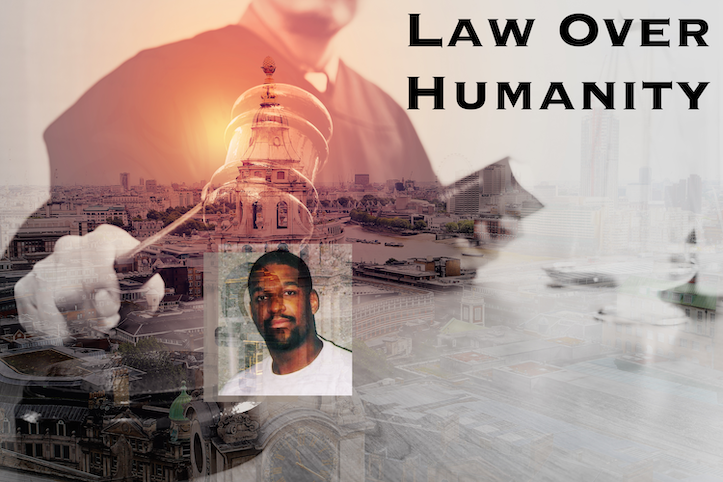
The "stand your ground" law that advocates say should protect McNeil is similar to a law cited by authorities who initially declined to charge white man George Zimmerman in the fatal shooting of Trayvon Martin, who was unarmed. Zimmerman told police he shot Martin, who was black, in self-defense during a scuffle. The decision by police to not charge him sparked protests across the nation. Prosecutors ultimately charged him with second-degree murder; Zimmerman has pleaded not guilty. The law is inapplicable to Zimmerman unless he can show that he was in immediate danger of being killed and he had no other option but to use deadly force to avoid the danger - Zimmerman outweighed Martin by over 100 lbs and was unarmed -bw

McNeil never denied shooting Epp. He told police in Kennesaw, Ga., that Epp was belligerent and had threatened his son with a knife just before the shooting. A witness testified that Epp came onto McNeil's driveway, ignored a warning shot and charged at McNeil, who then fired a fatal shot. McNeil's attorney says the men were so close at that point that Epp's body touched McNeil's as he fell.

The judge cited multiple errors at trial, including that the jury was not properly instructed on a person's right to use force to defend himself, his home or another person from violent attack.

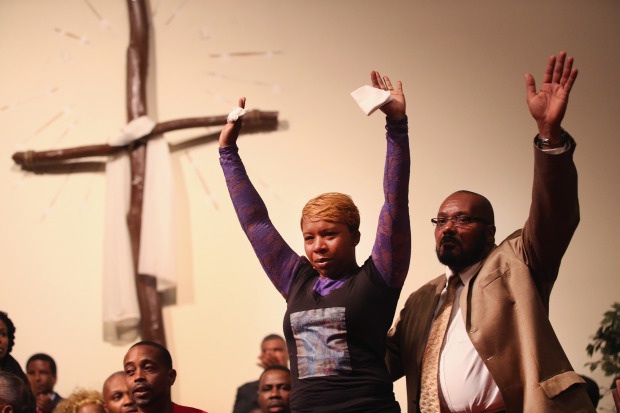
"We are very hopeful that people in a position of power now will look at this, will look at the people who have stood on John's side, and will do a form of repentance and say enough is enough. Let this man come home and be with his wife," said the Rev. William Barber, president of the North Carolina chapter of the National Association for the Advancement of Colored People.

Read More

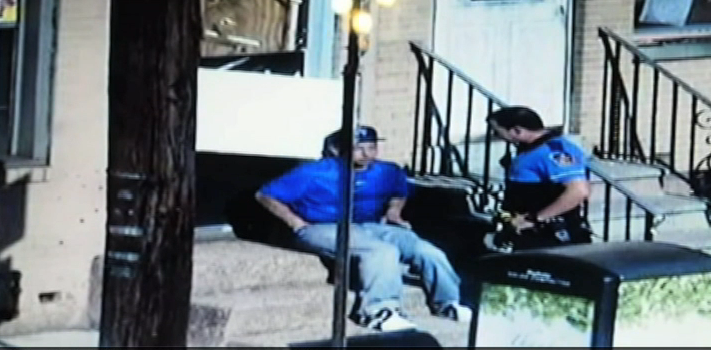
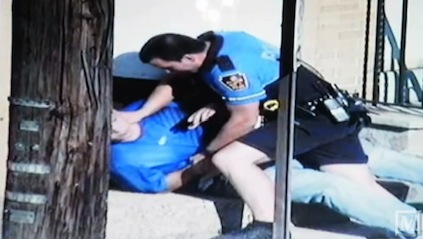
City Apologizes for Billing Family of Black Man Killed by NYPD

NBC

New York City officials have apologized for sending a collection letter to a man who was killed by a police cruiser, billing him $710 for the damage his body did to the vehicle.
 
Tamon Robinson died in April during a police chase in Brooklyn. Officers had caught the 23-year-old digging up paving stones, and he was fleeing on foot when he was hit by the cruiser.

 Then, last month, Robinson's mother got a letter from a law firm retained by the city. It was addressed to her dead son and demanded that he pay for the damage within 10 days. Robinson's mother tells The Daily News she is outraged. She has filed a wrongful death suit against the NYPD. 
 
A spokeswoman for the city's law department tells The New York Times the notice never should have been sent.


Mittens Catches Up In Wisconsin, Obama Still Trusted On The Economy

TPM

Republican presidential nominee Mitt Romney has closed the gap in Wisconsin after his strong debate performance on Wednesday night. President Obama edges him by a 2-point margin in the state, 49 percent to Romney's 47 percent, in a new poll from Democratic-leaning Public Policy Polling (PPP). Obama had a lead outside the margin of error in PPP's mid-September poll, 52 percent to Romney's 45 percent.

Wisconsin voters think Romney won the debate by a 61 percent to 25 percent margin, and it seems to have helped Romney on his personal rating -- he's now seen favorably by 49 percent of likely voters, while unfavorably by 48 percent. That's up from a negative 44 percent favorable, 51 percent unfavorable split last month.

The president retains a strong lead in the overall PollTracker Average of Wisconsin, however, as he was breaking away in the state during the weeks leading up to the debate. His advantage now stands at 8.5 percent.

The poll isn't all bad for Obama. While Romney's image has certainly recovered, the president still bests him on who is more trusted to handle the economy, 49 percent to Romney's 47 percent, down slighty from the previous poll that showed Obama leading on the question 51 percent to Romney's 46 percent.

Much of that seems to be from Republicans coming home to Romney on the issue: 10 percent of the Wisconsin GOP faithful trusted Obama on the economy to Romney's 89 percent in September, while only 6 percent trust Obama now and 93 percent go for Romney. Obama lost no support among independent voters on the question -- 50 percent of them broke toward the president in both surveys -- and he lost a single point among Democrats.

PPP described the Romney debate-bump:

The main shift compared to 2 weeks ago in Wisconsin is an increase in Republican enthusiasm about Romney and the election in general. He's gone from leading Obama by 79 points with Republicans (89-10) to an 85 point advantage (92-7). One thing that might be reassuring for Democrats is that Obama's held steady with independents in the state, continuing to hold a 9 point lead.

There's also been a big uptick in Republican enthusiasm about the election. Two weeks ago there was basically no enthusiasm gap with 65% of Democrats and 63% of GOP voters saying they were 'very excited' to vote this fall. Now the Republicans are seeing an advantage on that question with their share of 'very excited' voters climbing to 72% while the Democrats have declined to 63%.

The PPP poll used 979 automated interviews with likely voters via landline (automated surveys are prohibited from calling cell phones) conducted Oct. 4-6. It has a sampling error of 3.1 percent.