Mayor Nutter Apologizes to Latino Woman Punched in the Face by Philadelphia Police Officer

ABC

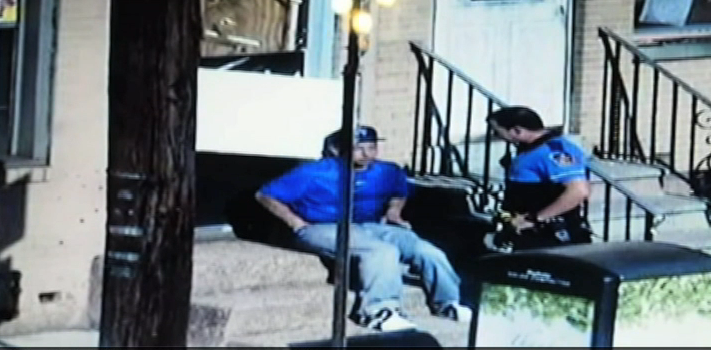
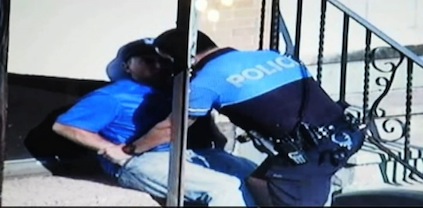
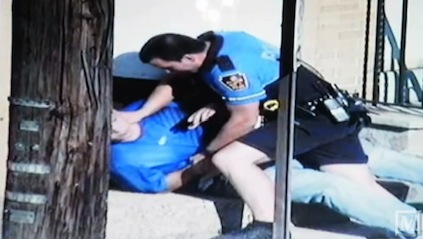
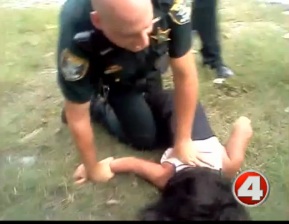
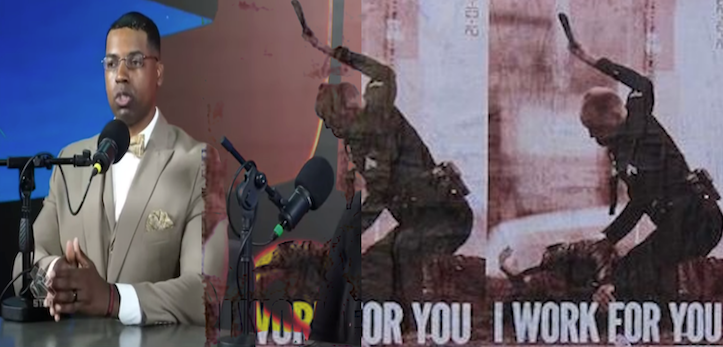
Philadelphia's Black mayor apologized to the woman who was shown on video being punched by a police lieutenant at a parade last weekend.

Mayor Michael Nutter said Thursday he has seen the video about 20 times and is "appalled," ''sickened" and "ashamed" by what happened.

The mayor formally apologized to the 39 year old mother of 4 who lives in Chester during a 20-minute closed door meeting.

"This was about a person, about a human being who has been injured in our city in a very graphic way, and I wanted to take a moment when the opportunity presented itself, to talk to her," said Mayor Michael Nutter.

The apology comes a day after police Commissioner Charles Ramsey announced Lt. Jonathan Josey was being suspended for 30 days with the intent to dismiss.

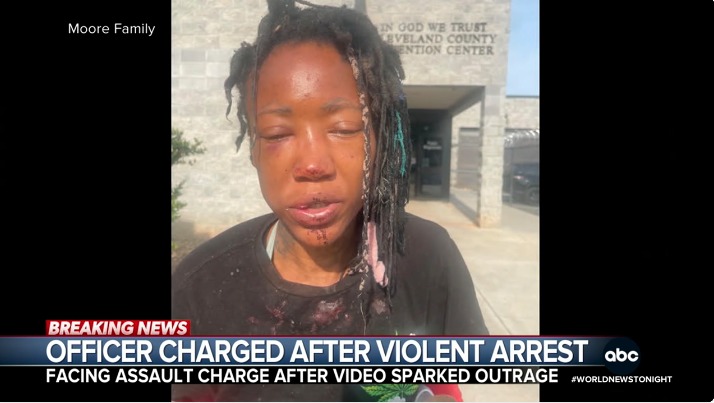
A 36-second video on YouTube shows 39-year-old Aida Guzman being struck in the face and falling to the ground, her face bloodied, then being led away in handcuffs.

"I feel so happy when the mayor speaks to me," Guzman said.

Guzman's lawyer says she is satisfied with what he calls the Mayor's heartfelt apology on behalf of the city, but he would not rule out a possible civil suit against Philadelphia.

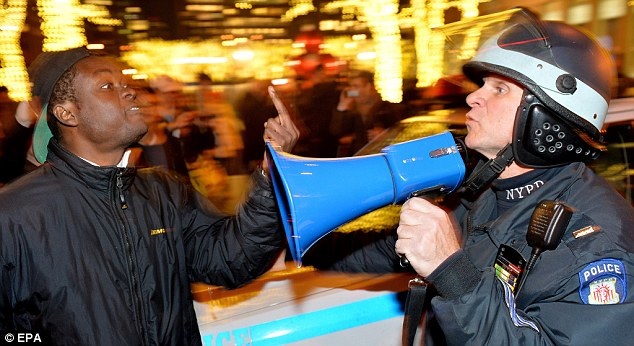
Even as Aida Guzman met with Mayor Nutter, a small group of activists held a rally outside City Hall to rally against police brutality and demanding Josey's arrest.

"This is unacceptable," said Vanessa Maria Graber from Occupy Philadelphia. "Violence against our people, routine violence, is unacceptable."

Police say people had been throwing liquid at officers during a celebration at the city's annual Puerto Rican Day Parade.

Prosecutors have withdrawn a disorderly conduct charge against Guzman, but may consider possible charges against Lt. Josey.

The 19 year police veteran left internal affairs Thursday after turning in his badge and service weapon.

The FOP is promising a legal fight to save his job and to provide lawyers to defend him if the District Attorney does bring charges.

LAPD Kills Latino Man, 66, In Officer-Involved Shooting - few details

CBS

Los Angeles police announced Saturday that they shot and killed a 66-year-old man in the Jefferson Park area.

Police were dispatched to the 2600 block of Manhattan Place around 9:30 a.m.

Fire officials reported a man with a knife was making threats, said Officer Rosario Herrera of the Los Angeles Police Department.

“The officers entered the location, and the officer-involved shooting occurred,” Herrera said.

The man, identified only as a 66-year-old Latino, was taken to a hospital where he died from his injuries, Herrera said.

No officers were injured in the shooting.

Digging a hole? 12,000 South African Striking Miners Fired

Rt.com

Up to 12,000 employees of Anglo American Platinum received messages Friday saying they were fired. The mining powerhouse dismissed the workers after a three-week strike. The labor stand-off has already taken 48 lives across South Africa since August.

­The news was broken to the employees via SMS and emails. 

Commenting on the move, Amplats declared miners had failed to appear before disciplinary hearings "and have therefore been dismissed in their absence." The miners had been warned that would happen if they failed to turn up, the company said.

The world's largest platinum producer says its lost over $80 million in revenues since a major strike gripped their mines in mid-September, involving at least 20,000 miners. 

Justice department calls Megaupload case a success despite catastrophic flaws

RT.com

Even as the US government's case against Kim Dotcom and the vast copyright infringement conspiracy they allege he orchestrated crumbles in their hands, the Justice Department has only nice things to say about their take-down of Megaupload.

The Obama administration has all but thrown in the towel in the federal copyright infringement suit against Megaupload.com, but Attorney General Eric Holder is celebrating the seizure of the file storage site nearly a year later even despite a steady series of setback both domestically and abroad expected to heavily jeopardize the outcome of the case.

Speaking at the Intellectual Property Law Enforcement Grant Award Event in Towson, Maryland on Wednesday, Attorney General Holder praised the DoJ’s attempts at prosecuting Megaupload and its associates for copyright infringement, calling the case yet another example in the courts’ “record of success” when it comes to fighting and preventing IP crimes.

At this week’s ceremony, Mr. Holder said, “In this year alone, we have prosecuted a number of significant IP cases,” citing specifically the seizure of Dotcom’s file-storage locker as a significant accomplishment under the Obama administration.

“For example,” Mr. Holder said, “in January – in one of the largest criminal copyright cases in U.S. history – the Department indicted two corporations and seven individuals with operating an international organized criminal enterprise responsible for massive worldwide online piracy of numerous types of copyrighted works, through Megaupload.com and other related sites.”

While Mr. Holder was absolutely correct in confirming the Justice Department’s indictments against Dotcom, the case has anything but a success. In the aftermath of the January 20, 2012 raid on Dotcom’s New Zealand residence, a slew of snafus both on the part of American and Kiwi authorities have nearly cost them their case.

Just this week, New Zealand Prime Minister John Key confirmed that he was debrief on the surveillance methods used to spy on Dotcom before January’s raid, despite not acknowledging the fact for months later. Previously, he offered a public apology to Dotcom — which he accepted — for illegal snooping carried out under his administration.

Earlier, New Zealand Justice Helen Winkelmann said the warrants used in the raid on Dotcom’s home were invalid, and American authorities have since delayed their hearings to attempt to extradite him to the US.

On Twitter, Dotcom weighed in on Attorney General Holder’s remark this week, showcasing his trademark snark to debunk the justice’s celebratory claims.

“US Attorney General Eric Holder calls Megaupload case a success. Reminds me of George W. Bush and ‘Mission Accomplished,’” he wrote.

Warning: Keep a Stash of Cash

LewRockwell

Customers of the Lloyds Banking Group, which includes Halifax and Bank of Scotland, were unable to use cash machines or debit cards, and struggled to bank online. The Co-operative Bank and Smile were also affected by system problems, in a situation reminiscent of the high-profile IT issue at Royal Bank of Scotland in June, which left millions of its customers without cash for several days.

Lloyds said that its systems were up and running again at 4pm and promised that it was “working hard to process the transactions impacted by this problem”. “They will be resolved by the close of play today,” a spokesman said. “We know our customers rely on us, and we apologise for the inconvenience we have caused them,” he added. The bank’s telephone systems were also affected while customers were unable to withdraw money in their branches, which were also affected by the system failure.

A spokesman for the Co-operative Bank, which experienced similar issues, said that its issue was also fixed on Friday afternoon. “We can confirm that our systems are now fully operational and customers should now be able to use their accounts as normal. We would like to apologise for the inconvenience caused by this temporary issue.”

The bank said that there was no connection between the problems at the banks, despite the fact that the Co-operative Bank is about to take on 4.8 million Lloyds customers after agreeing terms to buy 632 Lloyds branches across the UK. Many new Co-operative Bank customers made the switch to the bank following the systems problems at NatWest and Royal Bank of Scotland. The bank prides itself on its high scores for customer satisfaction and sees itself as a challenger to the major high street banks.

Cuban blogger Yoani Sanchez freed from detention

AP

Cuban authorities released noted blogger Yoani Sanchez more than a day after she was taken into custody near the eastern city of Bayamo, where she traveled for a Spanish man's trial over a car crash that killed another prominent dissident.

Sanchez said via Twitter that authorities "deported" her and her husband back to their Havana home late Friday night, and that she had been held for 30 hours.

"We were released! Thanks to all those who raised their voices and their tweets so we were able to return home," she wrote.

Sanchez, her husband and another man were detained Thursday before they could reach Bayamo, where she said she intended to cover the trial of Spaniard Angel Carromero as a journalist. Sanchez has gained international fame - and raised the ire of island authorities - with her descriptions of daily life in Cuba on her blog Generation Y, and she also writes for Spanish newspaper El Pais.

Calls to Sanchez's cell phone were not answered Saturday, but her husband, Reinaldo Escobar, said police were polite, though they insisted the couple would not be allowed to attend the trial because their presence would be provocative. After a few hours at a detention center, they were loaded into a vehicle and driven back to Havana.

"They dropped us off in front of our building at night," Escobar said.

The detentions had been criticized by international press and human rights groups, as well as governments including Washington. Human rights monitors complain that Cuba has adopted a tactic of short-term detentions lasting a few hours or a couple of days to harass dissidents and disrupt their activities.

The Cuban government considers the island's small community of dissidents to be dangerous counterrevolutionaries bent on undermining its sovereignty, and bloggers aligned with President Raul Castro's alleged that Sanchez's real intention was to tarnish the court proceedings.

Carromero, who is affiliated with a youth wing of Spain's ruling conservative Popular Party, and a Swedish political activist traveled to the Caribbean island this summer to support dissidents. They were driving to eastern Cuba on July 22 when Carromero lost control on an unpaved section of road being repaired, and crashed into a tree.

Dissident Oswaldo Paya, famous abroad for a petition drive a decade ago demanding political change, and another government opponent were riding in the back seat and died in the accident.

Carromero's trial began and ended Friday with prosecutors seeking seven years on charges equivalent to vehicular manslaughter.

The defense argued that highway signs warning of the repairs were poor, and there was no way to be sure how fast the Spaniard was driving.

"The accused ... and his lawyer counted on all guarantees provided by the Law of Penal Procedure and presented the elements they considered favorable," according to a note published Saturday in Communist Party newspaper Granma. "At the conclusion of the judicial act, the court declared the process concluded ... and announced that it will issue its ruling in the coming days."

Sanchez wrote Saturday that she empathizes with the grief of Paya's relatives, who also said they were turned away from attending Carromero's trial.

"The saddest and most important thing is the drama that Oswaldo Paya's family is living," she tweeted. "Our arrests are NOTHING compared with that loss."

___

Chipotle Agrees to Respect Farmworkers

ColorLines

The Coalition of Immokalee Workers claimed another victory yesterday when Chipotle agree to sign on to the organization's Fair Food Program. CIW members--who represent some 4,000 Florida tomato pickers--and their allies held a protest outside of Chipotle's headquarters in Denver this week. They were planning another protest during the restaurant's popular Cultivate Festival tomorrow--which touts Chipotle's "Food with Integrity" slogan.

After six years of refusing to meet with the CIW, Chipotle becomes the 11th corporation to sign on to the agreement--after Trader Joe's did the same in February. The Fair Food Program is unique in that it doesn't demand more pay directly to farmworkers. Instead, it asks that end-use corporations like Chipotle pay a price premium for the tomatoes they purchase for their consumers. In turn, the price premium paid by those food retailers to growers ensures higher wages for farmworkers, and a code of conduct that targets harassment in Florida's fields.

Fast food chains and supermarkets often argue that industries that rely on ever lower prices simply cannot afford to pay a price premium. They add that since they don't set wages in the fields, they shouldn't be pressured to raise the amount of money they pay for their tomatoes.

Yet CIW continues to win victories by reminding growers, corporations, and consumers what farmworkers already know: the food chain's economy is connected, and once food retailers pay pennies more per pound on one end, workers in the field will feel the difference by earning more pay on their end. Aside from a wage increase, the price premium also ensures rules against child labor and modern-day slavery in Florida's tomato fields.

Nely Rodriguez, a CIW member who has been working in fields in Michigan and Florida for nearly 10 years, told Colorlines.com that the agreement is also an important win for Chipotle. In a phone interview this morning, she said that consumers want workers to be treated with respect, and that Chipotle's signature assures that.

"The agreement is also important because if there are any human rights violations in Florida's fields, against women being sexually assaulted, for example, Chipotle now has the responsibility to hold the grower to the code of conduct, and stop the misconduct. There are now market consequences for abuse," she added.

The CIW has cancelled this weekend's action in Denver, and is already preparing for its next victories, with actions planned against Publix, Kroger, Stop and Shop, and Giant supermarkets. Although 11 food retailers have signed on to the Fair Food Program, Rodriguez said there are many more corporations who take advantage of cheap farm labor during the winter tomato harvest.

Read More

Rep. Elijah Cummings Launches True the Vote Investigation

ColorLines

Today, Rep. Elijah Cummings announced that he was launching an investigation into the group True the Vote, a tea party network that has trumped up charges of voter fraud in order to have restrictive voting laws passed while stacking up complaints of voter intimidation.

Rep. Cummings sent a letter to True the Vote's president Catherine Engelbrecht asking for documents related to their work of scouring through voter registration databases and then demanding that thousands of voters be purged from the rolls. They've done this throughout 2012 under the belief that dead people, imprisoned people and "illegal aliens" have been voting and stealing elections. All of their voter fraud accusations and allegations have fallen flat and Rep. Cummings said he based his investigation on their "horrendous record" of filing false voter challenges.

"At some point, an effort to challenge voter registrations by the thousands without any legitimate basis may be evidence of illegal voter suppression," wrote Cummings. "If these efforts are intentional, politically-motivated, and widespread across multiple states, they could amount to a criminal conspiracy to deny legitimate voters their constitutional rights."

He's demanding that Englebrecht turn records related to the software and databases they use to challenge voters, training materials for poll watchers and how they select which polling districts to deploy volunteers to.

Here at Voting Rights Watch 2012 we have been following and reporting the activities of True the Vote since April. It was at their national summit that month that we collected the widely cited quote from their national elections coordinator Bill Ouren who said True the Vote poll watchers should make voters feel like they're "driving with the police following you." In a story we posted this week about former Congressman Artur Davis' involvement with them, we published True the Vote's explanation of that quote, which was to say that True the Vote was really like "a parent" and that "kids [voters] will act up more" if they're not around.

In August, we published the investigative report "How the Tea Party's Building a 'Poll Watcher' Network for November," which revealed the extent of their outreach around the nation in their efforts to have one million trainees at polling places in November.

Read Rep. Elijah Cummings letter about the investigation here.

Read the full suite of Voting Rights Watch 2012's True the Vote coverage here.

FEMA Ordered to Prepare For 'Mass Fatality Planning' in Bill Introduced Into Congress

Citizens for Legit Gov

Remember Homeland Security's recent big ammo shopping spree? Well. FEMA Ordered to Prepare For 'Mass Fatality Planning' in Bill Introduced Into Congress 06 Oct 2012 H.R. 6566: To amend the Homeland Security Act of 2002 to require the Administrator of the Federal Emergency Management Agency to provide guidance and coordination for mass fatality planning, and for other purposes. This Act may be cited as the "Mass Fatality Planning and Religious Considerations Act". Section 504 of the Homeland Security Act of 2002 19 (6 U.S.C. 314) is amended by adding at the end the fol20 lowing new subsection: 21 "(c) PREPAREDNESS FOR MASS FATALITIES. In carrying out this section, the Administrator shall provide guidance to and coordinate with appropriate individuals, including representatives from different communities, private sector businesses, non-profit organizations, and religious organizations, to prepare for and respond to a natural disaster, act of terrorism, or other man-made disaster [aka nuclear melt-downs, CIA false flags, and pharma-terrorists' pandemics] that results in mass fatalities". Accordig to GovTrack.us, 'This bill was assigned to a congressional committee on September 28, 2012, which will consider it before possibly sending it on to the House or Senate as a whole.' [Why are WE always the guinea pigs for the US government's chemtrail spraying, biological weapons testing, false flags, pandemics, and scopolamine-fuelled shooting sprees? Why not bank on and plan for your OWN demise -- for once -- instead of OURS? --LRP]

Houston Man Receives Visit from FBI after Photographing Weather

Citizens for Legit Gov

A man who snapped photos of a brewing storm last month received a visit Friday from an FBI Agent, inquiring why he would want to take such photos. Michael Galindo explained that he was simply volunteering for the National Weather Service. And FBI Agent David Pileggi seemed to be satisfied with that response. But Galindo was left wondering whether he now has a permanent FBI file.

More Idiocy from Chief Flynn to UW-Milwaukee students: You're guests, not residents

JSOnline

Milwaukee police Chief Ed Flynn considers University of Wisconsin-Milwaukee students who rent east side apartments and duplexes "guests" - not residents - because they don't own property or directly contribute to the tax base, according to a letter the chief sent last month to a top UWM administrator.

The letter was about a police crackdown on disruptive student behavior in the UWM neighborhood since classes started last month.

Flynn himself rents an apartment in Milwaukee, though not in the UWM neighborhood.

In the letter to UWM Vice Chancellor for Student Affairs Michael Laliberte, Flynn defended the tactics of a monthlong increased police presence on the east side, which has led to more than 100 arrests, about half of them UWM students. The UWM Student Association gave Flynn's letter to The UWM Post student newspaper, which published it this week.

"Unfortunately, the disorder and criminal damage that results from unruly students seems to be escalating," Flynn wrote in the letter dated Sept. 21. "It appears our strict enforcement and new practice of taking violators into custody are the strategies that have the greatest impact on the disorder.

"I view your students as 'guests,' since most do not own property in Milwaukee and they do not directly contribute to the tax base," the chief continued. "As guests, they should be exhibiting appropriate conduct. I will stand firm in representing the rights of city residents who deserve quality of life. They should not be expected to endure sleepless nights every weekend."

University spokesman Tom Luljak said Friday that the school was surprised and disappointed in Flynn's assessment because of the good working relationship between UWM and the Police Department.

He said that many off-campus students are from Milwaukee, and that those who come from elsewhere often stay for years, many establishing careers here.

"They study here, they work here, they vote here," Luljak said.

"Any suggestion that they are just visiting is frankly unfair to the thousands of students who are part of the fabric of the community," Luljak said.

Luljak said that by spending money in restaurants, at sporting events and businesses, students contribute greatly to the city's economic base.

He also pointed out that the rent they pay helps pay the property taxes of rental owners.

"We also find it hard to believe that those nonprofit agencies where students spend thousands of volunteer hours would consider them 'guests,' " Luljak said.

UWM has a $25,000 annual contract with the Milwaukee Police Department, spread over the fall and spring semesters, to periodically provide overtime pay for a couple of extra police squads to patrol the UWM neighborhood on Thursdays, Fridays and Saturdays, according to Luljak.

That way, Luljak told the Journal Sentinel, the Police Department isn't leaving any part of the city uncovered while patrolling UWM neighborhoods.

The extra patrols are intended to both monitor student behavior off-campus and to help protect students from crimes such as robbery, assault and burglary, Luljak said.

"We make it clear it isn't a crackdown on house parties per se, but for student safety," Luljak said.

Litigating Lineups: Why the American Justice System Is Keeping a Close Eye on Witness Identification

PacificStandard

Studies have shown that memory and recall are more fallible than failsafe. That finding undermines eyewitness identifications—a critical prosecution mainstay—revealing them as far more fragile evidence than imagined. Just ask Rickey Dale Wyatt of Dallas, Texas. On January 4, 2012, he was released from prison after serving 31 years of a 99-year sentence for a rape he did not commit.

Police were sure that a single rapist had committed a cluster of rapes when they arrested Wyatt for three assaults.

The third victim, who had been grabbed from behind and dragged at knifepoint to a dimly lit area, was the first to identify Wyatt. Ultimately, all three picked Wyatt from photographic lineups. All had described their rapists as being between 170 and 200 pounds, between 5’9” and 6’, and as having no facial hair. Wyatt is 5’6”, was close to 140 pounds—and he had abundant facial hair and a mustache.

While Victim No. 3 identified Wyatt in the photo lineup, she had failed to do so in a live lineup (which wasn’t recorded). That failure, and knowledge of the lineup’s very existence, was withheld from Wyatt’s defense attorney.

Wyatt stood trial for one rape: the first. While his nephew testified that he’d never weighed more than 140 pounds, a police officer testified that after Wyatt’s arrest the suspect had told him that he’d lost approximately 30 pounds in 10 days.

Wyatt, then 25, declined a plea deal for a 5-year sentence and defended his innocence in front of a jury. He lost.

There was much that jurors did not know. Innocence Project lawyers who eventually fought to free Wyatt found that police and prosecutors held back exculpatory photographic evidence of the physical appearance mismatch—then-recent photographs showing Wyatt with facial hair, weight approximately 135 pounds. They also alleged that a report in which the third victim put her attacker at around 200 pounds was suppressed; at his sentencing hearing, the third rape victim publicly identified Wyatt as her rapist.

Wyatt’s complex case had more problems than just lineup problems, starting with an inadequate legal defense. Body fluid tests did not link Wyatt to the rape, and his trial lawyer failed to challenge it. The attorney also failed to present evidence like recent hospital records that would have shown Wyatt had facial hair.

Wyatt’s conviction was vacated thanks to the efforts of the Innocence Project and Dallas’s Conviction Integrity Unit and District Attorney’s office, which pushed for DNA testing. Also key: the city of Dallas’ propensity for saving physical evidence likely to have been discarded elsewhere to save on the cost of storage.

The need to reform eyewitness identification procedures has been recognized in recent years, but actual changes have lagged. Although the Department of Justice issued its “Eyewitness Evidence, A Guide for Law Enforcement” (pdf ) in 1999, calling for written protocols on eyewitness evidence, many U.S. police departments still lack written protocols. Last June, 10 states including Texas enacted legislation requiring all law enforcement agencies to create written procedures.

Misidentification is the single biggest common denominator in wrongful convictions, and a factor in 72 percent of cases overturned by DNA nationwide. In 50 percent of those convictions, shaky eyewitness testimony was not shored up by physical evidence or other corroboration like a confession or informant testimony.

In 2001, New Jersey became the first U.S. state to adopt federally recommended guidelines on witness identifications after mounting awareness of the old methods’ fallibility (such as eyewitnesses being influenced by unintentional verbal or body clues from investigators).

But those improvements still didn’t go far enough, said experts.

The 2004 case of Larry Henderson, sentenced to 11 years for reckless manslaughter and weapons possession in connection with a fatal shooting in Camden, pushed New Jersey to examine its standards again.

In his appeal, Henderson argued that police had failed to follow the guidelines adopted in 2001 and that the police photo lineup conducted 13 days after the murder improperly swayed a witness to pick him out. The witness later testified that a police officer had moved the photographs around as if hinting which to select and that “there was pressure” to make a choice.

An appellate panel in 2008 called the Henderson lineup “a charade” and ordered a new hearing on the photographic evidence’s admissibility. The state appealed. In response, the New Jersey Supreme Court said that before it would address the issue, it wanted a full inquiry into procedures used in the state’s eyewitness identifications.

That’s when, says Barry Scheck, cofounder and co-director of the Innocence Project at the Benjamin N. Cardozo School of Law at Yeshiva University, “they did something that courts should do much more with science and the law. … They remanded it to a special master, a very smart retired judge”—in this case former New Jersey State Appellate Judge Geoffrey Gaulkin.

Gaulkin’s task was to determine if New Jersey’s identification procedures were scientifically sound. He held hearings and reviewed more than 2,000 pertinent scientific studies published since the 1977 introduction of the Manson test. The test is a two-step process that first decides whether the eyewitness procedures police used to identify a suspect were impermissibly suggestive. If so, courts must then determine, using a five-part reliability factor test, whether the identification still should be admissible. Bottom line: even if there are problems with the procedure, unless there is a “very substantial” likelihood of an “irreparable” misidentification, courts must allow the identification into evidence.

In a June 2010 report (pdf), Gaulkin wrote that the short answer to the court’s question whether the test and associated procedures were “‘valid and appropriate in light of recent scientific and other evidence’ is that they are not.”

His report called for a major overhaul of the legal standards governing whether or not eyewitness testimony is allowed in court. And he recommended that memories be treated as “fragile, difficult to verify and subject to contamination.” During his research, he’d come to view them as more akin to trace evidence: “a fragment collected at the scene of a crime like a fingerprint or a blood smear, whose integrity and reliability needs to be monitored and assessed from the point of its recovery to its ultimate presentation at trial.”

Not only can law enforcement unconsciously lead a witness towards identifying a suspect, he noted, but they—along with other witnesses or family members—can unconsciously contaminate a witness’s memory. What those people say and do can bolster, indeed overinflate, a witness’s level of certainty in their identification.

Cognitive neuroscientist Itiel Dror of the University College of London points to psychological research that shows  “time and time again no correlation between confidence and accuracy.” Yet heightened confidence can easily be mistakenly read that way, leading a court to allow improperly overstated evidence and jurors to give it too much weight.

Gaulkin recommended that judges and juries alike be made fully aware of all scientific facts that can impact eyewitness identifications’ trustworthiness and that the burden be on prosecutors to provide proof that evidence and testimony is reliable. He concurred with Innocence Project recommendations that courts examine scientific variables that can impact accuracy by hearing testimony from eyewitnesses and police officers pre-trial at admissibility hearings.

“That was a very big deal,” says Barry Scheck. “For years, we’ve been working with experimental psychologists on eyewitness identification issues and on getting the courts to change their standards for assessing that evidence, and on changing the way they do pretrial reliability hearings to make them more in accordance with the science.”

Professor Daniel Medwed of the S. J. Quinney College of Law at the University of Utah, also favors pre-trial review. “It just enhances decision making at the front end,” he says. “And the better the decision on the front end, the better everything will play out. Because once you make a decision, because of cognitive bias, people often become very wedded to that initial decision. You can call it tunnel vision, confirmation bias, expectancy bias, whatever…but it’s very common.”

New Jersey set aside the Manson test in August 2011. Now eyewitness identification procedures must be captured by cameras. New Jersey judges also must hold hearings—mid-trial if necessary—to weigh fairness when a defendant presents evidence that an identification procedure was unfairly suggestive. And judges must convey to juries that memory is imperfect and that recall can be wrong or distorted. Jury instructions must explain factors that may affect identification dependability, including lighting, poor eyesight, the length of an encounter, whether a witness was under the influence of drugs or alcohol and whether a weapon was being brandished.

Plus, studies show people have more trouble differentiating faces of races not their own and more mistakes happen in cross-racial identifications. Innocence Project research found that to be the case in 53 percent of mistaken-identification cases where the race is known.

The Innocence Project wants states to mandate uniform procedures that include recording lineup proceedings and having blind administration: lineups with pictures or people shown one at a time by officers who don’t know if a suspect is even present. And it recommends witnesses write “confidence statements” immediately after they view a lineup, expressing—in their own words—their level of faith in any identification.

In 2006, a year-long field study conducted by Illinois state police seemed to contradict earlier research, which consistently found fewer mistaken identifications if eyewitnesses view lineup participants one at a time when making identification decisions. But the Illinois study’s design was deemed flawed, more research followed, and a recent study conducted by the American Judicature Society has added to earlier research showing fewer errors in lineups that are sequential rather than simultaneous.

Specifically, it found that viewing lineup participants singly rather than simultaneously—where witnesses must rely on their memories and not on making comparisons—doesn’t significantly reduce the number of accurate positive identifications. Nor does it impede a witness’s ability to make an identification. But it does lead to a significant reduction in witnesses selecting “fillers”—the non-suspects put in lineups. In simultaneous lineups, fillers were picked out 18.1 percent of the time but only 12.2 percent of the time in sequential lineups.

According to eyewitness expert and American Judicature Society study co-author Gary Wells, the future is likely to see a shift to computer-generated lineups designed to reduce bias or investigator influence. Wells also is studying what happens to an eyewitness trying to identify a perpetrator when their memories fail.

“Instead of the person sort of bailing out when memory fails and saying ‘Gee, I don’t know’ or ‘I guess I’m not going to identify anyone,’ secondary processes kick in,” Wells, an Iowa State University psychology professor exploring these issues for 35 years, explained in a statement. “And rather than the primary processes, which are automatic, these secondary processes require more thinking. We call them deliberative. People tend to be more conscious of these. They’re engaged in a process of reasoning and they tend to be more verbal.” As far as misidentifications go, says Wells, these processes “tend to be the dangerous ones.”

Lineup designs, meanwhile, continue to improve, as do legal protections. Thanks to its Supreme Court ruling, New Jersey now has the nation’s toughest guidelines and offers a blueprint—“a new legal architecture,” as Scheck calls it—that may spur nationwide reform.

19 yr old + No Priors - Black Man +Dead White Cop + 11 White Jurors + White Prosecutor + White Judge = Death Sentence

HumanRighrsNow

Anthony Haynes, a 19-year-old at the time of the crime with no prior criminal history, is scheduled to be executed in Texas on October 18.

As noted in this space previously, there were serious issues of racial bias in his case (African American defendant, 11 white jurors, judge cleaning guns during jury selection). There were also bad lawyers and a possibly coerced confession. Despite this, the state of Texas is prepared to put this man to death for a crime he committed as a teenager under the influence of crystal meth.

Two days before Haynes fatally shot Kent Kincaid, an off-duty police officer, a friend of the family had given him crystal meth. It was Haynes’ first experience with the drug. The same friend wrote in a sworn statement that during those two days Haynes began “talking crazy,” saying he had been unable to sleep for days and thought someone was following him. When Sergeant Kincaid approached Haynes’ car, Haynes’ drug-induced paranoia really kicked in – he believed he would be dragged from the car. He shot and killed Officer Kincaid.

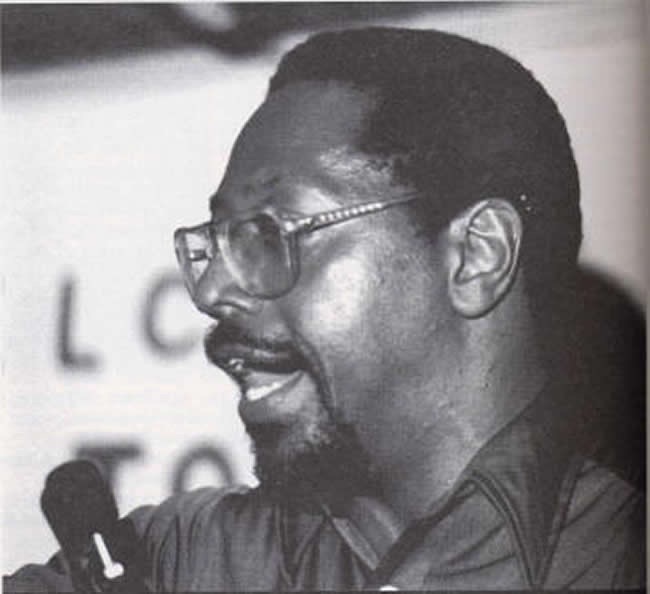
A doctor who specializes in psychiatry concluded in 2005 that Haynes’ actions that night were inconsistent with previous behavior and his diminished capacity was due to his first-time use of meth. The jury never heard that Haynes had used crystal meth prior to the shooting.

Sloppy Lawyers

Predicting “future dangerousness” is a prerequisite for Texas death sentences, and Anthony Haynes’ lawyer failed to offer a strong challenge to the state’s weak case for his future dangerousness.  Without the violence inducing effects of meth, there was little to suggest Haynes would be an ongoing threat.

Haynes has no previous criminal record. More than 3 dozen friends and family offered to testify about Haynes’ good character and against the claim that Haynes would be a future threat to society. Yet Haynes’ defense lawyer refused most offers of testimony and failed to even interview many family members.

Haynes’ inadequate representation continued into his habeas corpus appeal. His court appointed habeas lawyer didn’t investigate the failures of his trial lawyer. In a 2006 article in the Austin American-Statesman, the habeas attorney was cited as one of the “sloppy lawyers failing clients on death row”, due to a habit of submitting habeas corpus petitions that were “copied largely verbatim” from the prisoner’s previous appeal.

A Coerced Confession?

For Texas to obtain the death penalty in this case, the prosecution also had to prove that Haynes knew Sergeant Kincaid was a police officer at the time of the shooting. Kincaid was off-duty the day of the shooting and was dressed in plain clothes, driving his personal car. In his initial statement, for which he waived his right to have a lawyer present, Haynes confessed to the shooting and to knowing that Kincaid was a police officer.

Haynes has since maintained that this confession was coerced, and that he did not know Kincaid was an officer. During and before his interrogation, Haynes was not allowed to use the bathroom, eat or rest, and was still feeling the effects of his meth use. As we have all seen recently, it doesn’t always take much to coerce a false confession. Despite Haynes’ allegation that the confession was coerced, the judge allowed it to be used as evidence that led to his being sentenced to death in 1999.

Stop this execution

Anthony Haynes should be granted a new sentencing hearing so that the mountains of unheard mitigating evidence can finally be presented. At the least, he should be granted clemency and have his sentence commuted.  Executing Anthony Haynes after such a dubious legal process would be a fundamental injustice.

Read More

Citizenship Checkbox Ordered off the November Ballot Application

ACLU 

In a ruling from the bench, a federal judge issued an injunction today against Secretary of State Ruth Johnson’s controversial “citizenship checkbox.” The ruling comes after a day of testimony and arguments and will be followed by a written decision on Tuesday. A voting rights coalition brought the lawsuit requesting Judge Paul D. Borman strike down the checkbox as unconstitutional and a violation of federal and state law.

In his ruling from the bench, Judge Borman stated that the checkbox “will create chaos” and cause “irreparable injury to the voting process.”

The coalition successfully argued that the erratic and inconsistent implementation of the checkbox would violate the Fourteenth Amendment’s Equal Protection Clause, which requires voting rules and regulations to apply uniformly across the state. The lawsuit was filed last month by the American Civil Liberties Union of Michigan, Service Employees International Union (SEIU), Latin Americans for Social and Economic Development (LA SED), Ingham County Clerk Michael Bryanton, and registered voters from East Lansing, Shelby Township, and Buena Vista Township filed the case with support from the UAW International.

The following can be attributed to Dan Korobkin, ACLU of Michigan staff attorney:

“Today’s decision is a clear victory for Michigan voters and the cause of voting rights across the country. There is no question that, without the court’s intervention, the chaos that persisted during the August primary election will be replayed on a greater scale during the November general election.  We are encouraged by the decision and hope to work with the Secretary of State on initiatives that will truly ensure that voting is convenient and open to every eligible voter in our state.”

To read the winning motion, go to http://www.aclumich.org/sites/default/files/Checkbox_Preliminary_Injunction2012.pdf

To read more about this case, go to: https://www.aclumich.org/issues/voting-rights/2012-09/1761


Limbaugh Denies Job Creation: "You'd Sense It"

MediaMatters

Rush Limbaugh is denying that any new jobs have been created, because if they had been, "You'd sense it."

This denial came the same day that the Bureau of Labor Statistics (BLS) released its monthly jobs report, which showed the unemployment rate dropping to 7.8 percent and employment increasing by 114,000.

Limbaugh cited these findings and then immediately claimed that no evidence exists to prove actual job creation. Limbaugh stated:

So what we're being told here is, thanks to a measly 114,000 jobs, the unemployment rate for September fell from 8.3 to 7.8. That's a full half-a-percentage point. Meanwhile, manufacturing jobs down six and a half percent last month. There's no evidence of any job creation. You'd sense it. You would know it. You would feel it.

Setting aside instinct and conspiracy theories, simple statistics show that Limbaugh is wrong.

As BLS wrote, "Since reaching an employment trough in February 2010, the private sector has added 4.7 million jobs."

Here is a chart that uses BLS statistics to show job creation since February 2010:

Read More

Houston: Reparations Event This Weekend

People of Color Organize

The Ndaba for Reparations will serve as a cultural institution for the purpose of giving the global African community an all-inclusive process to achieve reparations. Understanding that the economic, political, and cultural, atrocities of the Transatlantic slave trade, better known as the Maafa, are crimes against humanity that have been inflicted on African people on [...]