Injuries and New Video Contradict DA's Clogic that Nolan Wells Drowned; Shows Shook Racist Suspects Docking Boat. Grand Jury Sought to Clear White Kids and Debunk Theories, Had No Valid Legal Purpose
/From [HERE] . . . The grand-jury report briefly mentions “an extensive investigation by both Federal and State law enforcement agencies,” yet there hasn’t been a public accounting of what steps, if any, the Justice Department, the F.B.I., the U.S. Coast Guard, or the National Park Service, which oversees the barrier islands that include Horn Island, have taken to assist local authorities. Kristen Clarke, the former chief of the Justice Department’s Civil Rights Division under President Joe Biden, now general counsel to the N.A.A.C.P. and part of the family’s legal team, joined Wells’s family on Tuesday and boosted an earlier call by the Congressional Black Caucus to urge an independent probe by the department that she once helped lead. “This is a taxpayer-funded agency that serves us,” she said. Turning her attention to McIlrath, she said, “We have a message for the District Attorney. Your job is not done.”
The grand-jury report, which is eight pages long, largely appears designed to knock down whatever theories the public may have conjured up about the Fourth of July trip. After a page of formalities, references to the law of grand juries, and a demographic breakdown of the twenty-three grand jurors—twelve of whom self-identified as white, five as Black, one as Asian American, two as Hispanic, two as Native American, and one who marked “other”—the report establishes that its purpose is also exonerative: “The Grand Jury was expressly charged by the impaneling Circuit Judge with not only being the means of bringing to trial those people who are accused of a crime, but ‘also to protect persons from unfounded accusations whether presented by legal officers or by others who may be motivated by public clamor or private malice.’ ”
The report lists what evidence the grand jurors considered, without saying much about the evidence itself: a hundred and thirty-two subpoenas were issued, and forty-three people testified. The report singles out seven people whom the grand jury “invited” to testify—presumably Wells’s friends, though these names were redacted from the report. Five of the seven accepted the invitation; another one wished to but couldn’t make it “due to circumstances outside of [REDACTED] control,” and so the grand jury considered that person’s statement to law enforcement. Notably, one person, without explanation, rejected the invitation to testify, though their statement to law enforcement was also considered. The report also notes more or less what’s contained in the full investigative file, which includes physical and digital evidence, G.P.S., location, and cellphone data, maps, images, and other information that largely remains in the state’s possession.
Wells and his friends took three boats to Horn Island. The report establishes who was on the Triton, the boat that Wells rode to Horn Island, and who was on the other two boats, the Palm Beach and the Tideline, and explains how several in the group may have switched boats on the way back, with the friends leaving Wells behind “to socialize,” as the report puts it. Then, the report absolves these individuals of “any criminal conduct” related to Wells’s death, adding, “The Grand Jury finds that the public attacks on the occupants of the Triton, the Palm Beach, and the Tideline, as well as their family and friends, are malicious, false, and have no truth in fact or evidence.” The report notes that it’s common for people to ride to the island on one boat and return on another, and that Wells’s cellphone “was not the only phone to travel back to the mainland without its owner.” It also puts to rest the idea—circulated widely online—that Wells was the only Black person on the island, and the theory that the chaotic phone call to the boat-towing company was revealing of anything other than a typical boat malfunction. “The Grand Jury finds that the Triton was towed for a short distance by the Tideline allowing the water to drain from the boat interior while a passenger manually held the motor trim button down,” the report reads.
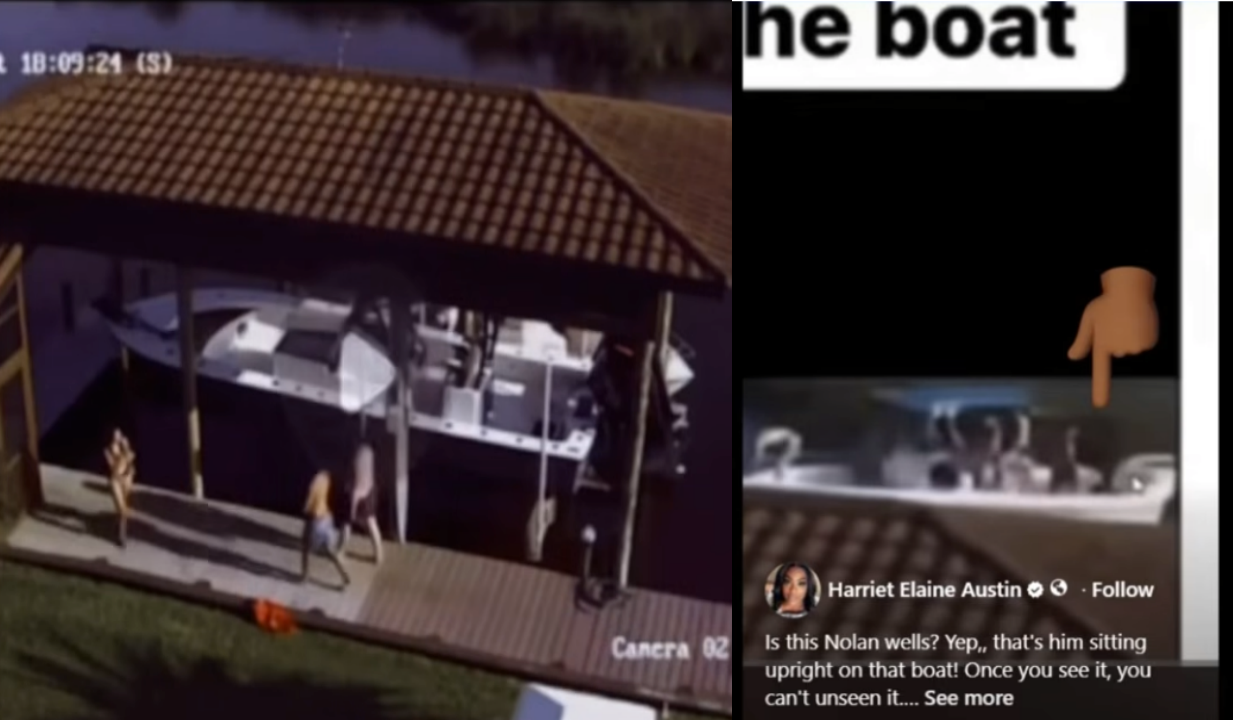
That leaves us with the question of how Wells, a college football player who was reportedly a good swimmer, and who may or may not have had alcohol in his system—there have been two autopsies, which are in conflict as to his blood-alcohol concentration—was found dead two days later. One thing the grand-jury report doesn’t do is establish conclusively that drowning was the cause of death. Among the items that Mississippi officials held off on releasing, for months, was the state autopsy, leading the family to conduct an independent autopsy, the final results of which were released earlier this week, by the family’s legal team; on Thursday, the family released the state autopsy as well. The state’s chief medical examiner and the doctor who conducted the independent autopsy agree on a crucial point, noted by the grand-jury report: both medical professionals “opined that the cause and manner of Mr. Wells’ death is undetermined and that drowning is a diagnosis of exclusion.” In forensic parlance, a diagnosis of exclusion is one reached by ruling out other plausible causes; drowning can be challenging to prove, because often there’s no telltale sign that one occurred. And here, the state’s own autopsy noted that there was no liquid in Wells’s stomach and airways. Roger A. Mitchell, Jr., the doctor who conducted the independent autopsy—he was allowed to visit Horn Island and had access to the state autopsy and retained sample tissues—explained in his findings that, since Wells’s manner and cause of death were listed as undetermined, the drowning theory contained holes that his autopsy alone couldn’t fill. “The available record,” he wrote, “does not definitively establish the decedent’s condition immediately before entering the water, whether he entered voluntarily or was forced, whether he was conscious or impaired, or why he would have been unable to extricate himself despite reportedly being able to swim and while in the presence of other persons.”
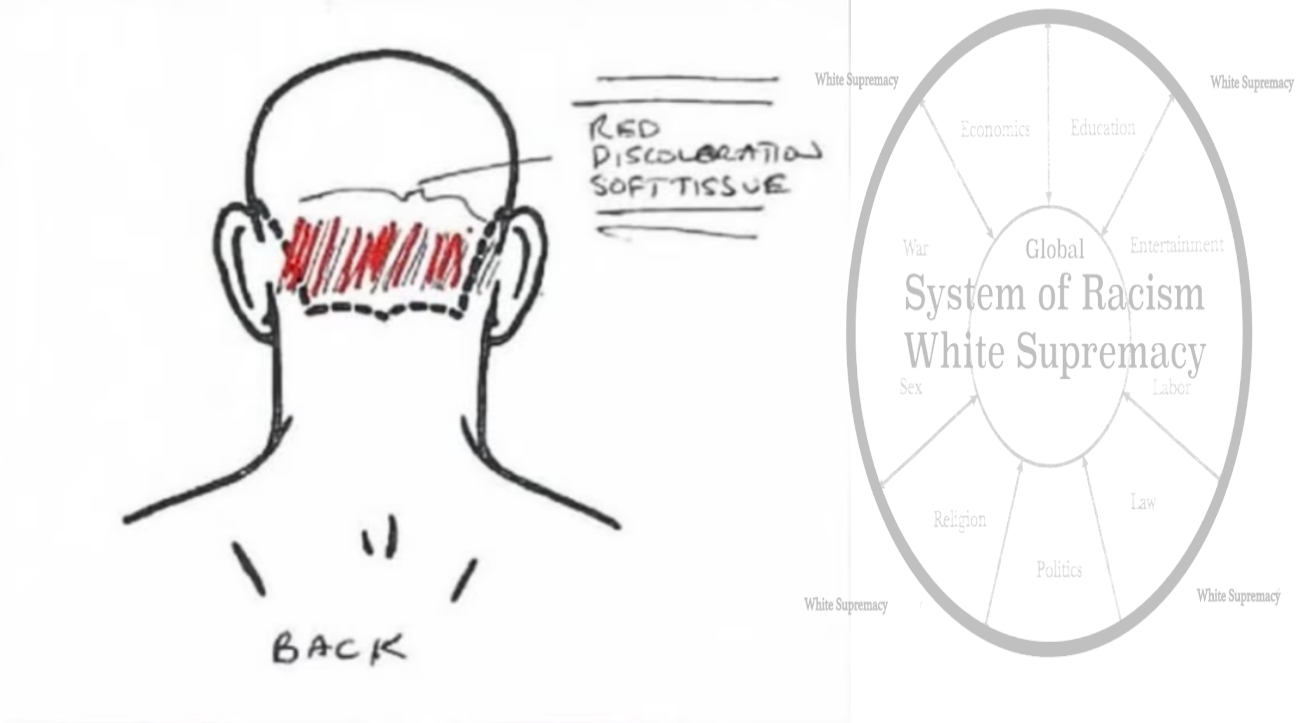
Mitchell’s main contribution, however, was his observation that Wells sustained “unexplained blunt-force injuries to the back of the head and additional areas of his back” that cast doubt on the drowning theory, and called into question the state’s thoroughness. The state autopsy and the grand-jury report had noted the injuries to the head but dismissed them as nonfatal; one witness had testified that they had seen Wells “slip awkwardly off the side of one boat” at one point, but couldn’t confirm if he had injured his head. Mitchell wrote that the state “failed to take close-up pictures of the contusions, dissect the area at the back of the head, or take histological sections of the area of bruising.” (The grand-jury report did acknowledge that if evidence emerges in the future “that suggests Mr. Wells’ death was non-accidental,” the case could once again be presented to the grand jury.)
Wells’s family, along with commissioning their own autopsy, hired their own forensic experts. This past Thursday, the family’s legal team convened another news conference to discuss the findings from Wells’s cell phone. Grand jurors did consider “mobile device examination findings” and a “Snapchat Conversation Report,” according to the report, but Andrew Garrett, one of the family’s forensic experts, explained how his team gathered “over one million artifacts of data” from the phone to create “a perfect timeline” of how the device moved that day. On Thursday, for the first time, based on Wells’s cell location data, the public was presented a visual “reconstruction,” similar to an Uber driving to its destination, of every point the phone travelled on July 4th—including a McDonald’s stop in the morning, the nearly hourlong trip to Horn Island, and its return to the mainland without its owner. According to the presentation, Wells last locked his phone at 2:18 P.M.; his parents recovered it around 3 A.M., according to Garrett, who added that “things were deleted on the phone” in that same time period. Asked to clarify what he meant, he said that someone “took user action” to delete Snapchat data. In a statement late Thursday, McIlrath disputed Garrett’s account and noted the “user action” was from other Snapchat users who were in the same group chat with Wells—not someone physically accessing Wells’s phone. “If the Crump team has evidence to the contrary, they have not provided it to us,” she said, blaming the family’s legal team for feeding public misperceptions.
In the end, these back-and-forths between the state and the family’s lawyers are distractions from the grief of two parents who feel like they’ve been failed by the system. “Elmore and I do not believe that Nolan simply and accidentally drowned,” Christine Wells-Wonsley said. “And nobody saw anything? And no one knows anything.” The handling of the grand-jury report “was a reminder,” she said, “that our son’s life does not matter to those who hold positions that are supposed to serve and protect the public.”