Federal Judge Blocks DHS’ Warrantless Immigration Arrests
/From [HERE] A US federal judge on Tuesday granted a preliminary injunction blocking the Department of Homeland Security (DHS) from enforcing its policy of warrantless civil immigration arrests without probable cause of escape risk.
The order grants both a preliminary injunction and provisional class certification, and denies a separate motion for final class certification without prejudice, meaning plaintiffs can still refile this request in the future. The provisional class certification includes all individuals arrested in the District of Columbia who were not subject to escape risk assessments prior to their arrest.
Tuesday’s ruling stems from the lawsuit Escobar Molina v. DHS, filed in September. Four individual immigrants and CASA, Inc. challenged DHS policy of conducting warrantless civil immigration arrests in Washington, D.C. without individualized probable cause determinations, following an emergency declaration made in August. The plaintiffs moved for a preliminary injunction and provisional class certification under the Federal Rules of Civil Procedure 23(g). The complaint argues that DHS violated federal standards for warrantless arrests under 8 U.S.C. § 1357(a)(2), which requires the arresting officer to have reason to believe the individual is “likely to escape before a warrant can be obtained for his arrest.”
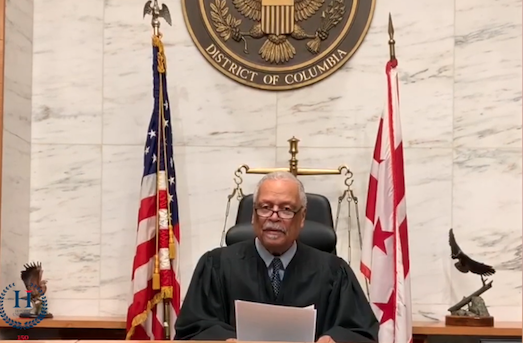
Writing for the US District Court for the District of Columbia, Judge Beryl Howell concluded that the plaintiffs had demonstrated sufficient likelihood of success on their claim that DHS adopted a policy requiring only “reasonable suspicion” rather than probable cause for both unlawful presence and escape risk. The 88-page memorandum opinion, which gives reasons for the order, cited repeated public statements by senior DHS officials, including Border Patrol commander Gregory Bovino, explicitly stating that warrantless arrests required only “reasonable suspicion.”
The Court rejected DHS’s jurisdictional defenses, holding that 8 U.S.C. § 1252(a)(5), (b)(9), and (g), which strip district courts of jurisdiction for removal-related matters, do not apply to arrest procedures that are not directly part of the removal process itself. The Court emphasized that being deportable does not automatically establish a likelihood of escape, rejecting arguments that would otherwise conflate the statute’s two distinct probable cause requirements. Tuesday’s injunction requires DHS to transmit the district court’s order to all federal agents with immigration enforcement authority, and it must now document the factual basis for each warrantless arrest. [MORE]