The God Given Right to Possess and Carry Firearms for Self-Defense Against Tyranny and Slavery is Especially Vital when a Lawless Racist is in the Blight House and He Represents a Racist Majority
/
From [HERE] and [HERE] The Declaration of Independence established a new nation, acting as “one people,” through “thirteen united States of America.” James Madison insisted that the Constitution be ratified by special conventions to make clear that ratification would be “not through the intervention of the Legislatures, but by the people at large”—a distinction regarded as “very material.” For these reasons, incidentally, a state has no unilateral right to secede: the Constitution is not a compact of states but an agreement among the people. See Timothy Sandefur, How Libertarians Ought to Think About the U.S. Civil War.
If this is so and the people are sovereign, it has important implications, the most important of which for our purposes here is that sovereignty is inalienable. This, the first lesson of the American experiment, was demonstrated when our Founders asserted the people’s right to declare independence from the crown and to engage in a legitimate act of revolution. That right, as the Declaration explains, does not arise from light and transient causes but from a long train of abuses and usurpations, which the Founders took care to enumerate in their appeal to the natural law from which sovereignty and sovereign rights derive. Moreover, the sovereign people’s right to revolution is limited by the natural bounds of reason—had the Founders’ rational appeal to their fellows failed to persuade enough of them to willingly risk life and limb in taking up arms in revolution, the American self-government project would have foundered without a shot fired or a drop of blood spilled.
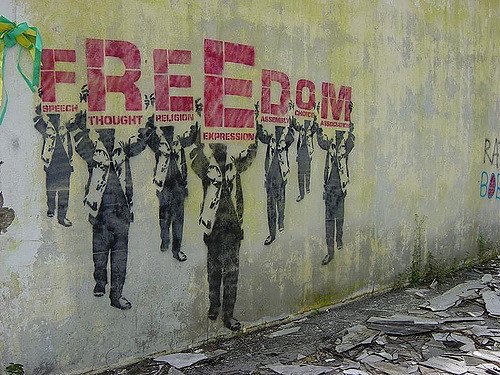
Self-government thus requires that the sovereign people enjoy meaningful exercise of the people’s right to associate with one another, their right to speak their grievances and invoke their right to self-government, and the right, in the face of an aggressor sovereign, to bear arms against it. Mere paper barriers like the rights of habeas corpus and due process are without teeth in the face of unchallenged tyranny. The very essence of sovereignty includes a right to revolution, the right to enforce those rights. It is the ultimate form of self-defense.
In other words, the rights expressed in the First and Second Amendments are the bedrock of the American project in self-government, and the font of our sovereignty. That we can post on each other’s Facebook walls and experiment with Zoroastrianism and go duck hunting are happy byproducts of that sovereignty. But it is silly to suggest these activities are why those amendments exist. As Judge Alex Kozinski put it in his dissent to the Ninth Circuit’s denial of review in Silveira v. Lockyer:
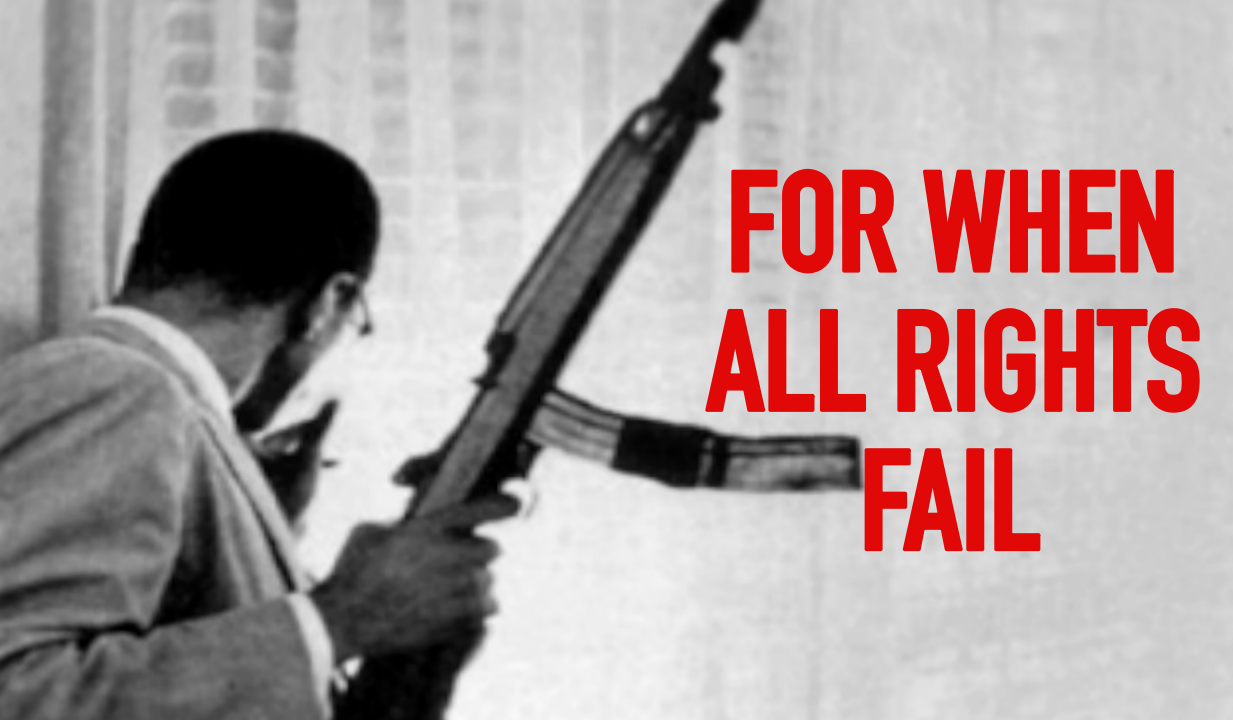
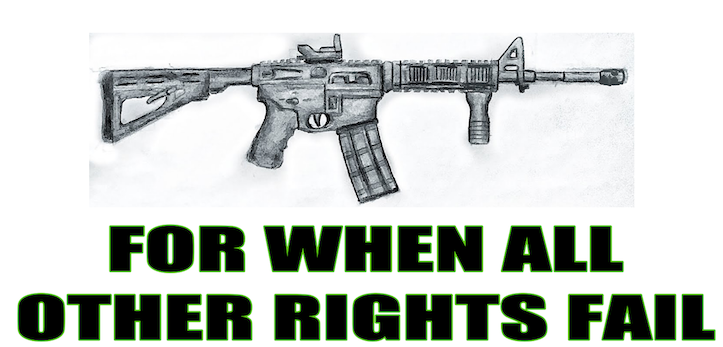
The Second Amendment is a doomsday provision, one designed for those exceptionally rare circumstances where all other rights have failed—where the government refuses to stand for reelection and silences those who protest; where courts have lost the courage to oppose, or can find no one to enforce their decrees. However improbable these contingencies may seem today, facing them unprepared is a mistake a free people get to make only once. [MORE]