$550M Settlement Reached: Profithoodlum Santander Caught Preying on Low Income Customers in 34 States by Issuing Unaffordable Predatory Car Loans Larger that the Purchase Price
/![Santander Consumer, the largest and most recognized name in subprime auto lending, is the poster child for predatory practices in the industry. [MORE] Avoid It all costs, NEVER participate in racism white supremacy or anyone else’s deception. FUNKTI…](https://images.squarespace-cdn.com/content/v1/5a5430b290bade59404c2423/1591435854979-FVP2FFRHMOVMUA0BOL9F/fuck+santander+.jpg)
Santander Consumer, the largest and most recognized name in subprime auto lending, is the poster child for predatory practices in the industry. [MORE] Avoid It all costs, NEVER participate in racism white supremacy or anyone else’s deception. FUNKTIONARY defines:
profithoodlum - non-producers who rob producers of either a great portion or all of their productive wealth that has exchange value or value in use. A profithoodlum is one who extorts income from others without working themselves - made possible (accessible and attainable) by and through monopoly capitalism, usury, debt-based monetary systems and the white magic of compound interest. We need to get criminals off the boardrooms and out of certain federal agencies if we want to get petty criminals off the streets. (See: Bankster, Gangbanking, Merchant, Privateers & Alchemist)
$550M Settlement Reached: Profithoodlum Santander is Caught Preying on Black & Latino Customers in 34 States by issuing Unaffordable Predatory Car Loans Larger that the Purchase Price
From [HERE] and [HERE] Santander Consumer USA Holdings, the subprime auto lending arm of the Spanish banking giant, said Tuesday that it agreed to change its underwriting practices as part of a $550 million settlement with 34 states. The settlement resolves allegations that Santander violated consumer protection laws by exposing subprime consumers to unnecessarily high levels of risk by placing them into auto loans that Santander had determined had a high probability of default. Today’s settlement stems from a multistate investigation of Santander’s subprime lending practices led by a six-state executive committee comprising Maryland, California, Illinois, New Jersey, Oregon and Washington, and included attorneys general from a total of 34 states.
“We charged that Santander structured auto loans it knew borrowers likely could not repay,” said MD Attorney General Frosh. “Borrowers who were harmed by Santander’s practices will receive restitution with this settlement. The settlement establishes safeguards to prevent further harm to consumers in Maryland and across the country from these types of lending practices.”
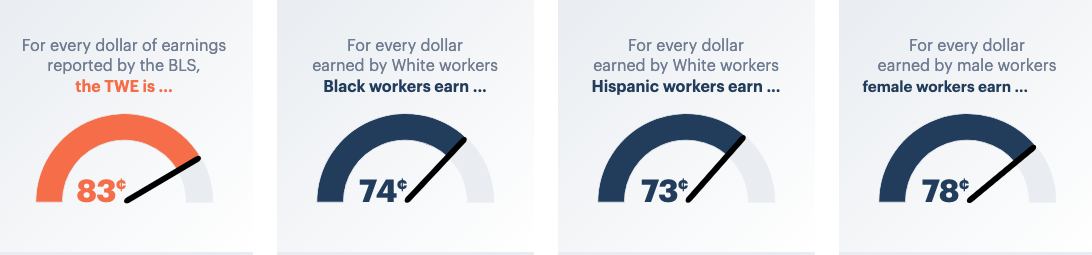
Santander in particular is no stranger to regulatory and legal scrutiny – they have been charged with various violations of the Fair Debt Collection Practices Act, the Fair Housing Act and Equal Credit Opportunity Act in recent years. [MORE] According to reports by consumer advocate organizations, dealer interest rate markups on vehicle loans have resulted in racial disparities for African American and Latino borrowers compared to similarly situated white borrowers. Jerry Robinson, a Committee for Better Banks member and retiree, described his experience at Santander: "Our job was to get people who were already upside down on their loans back in their cars by making them pay more fees." In describing his experience in another department, he told the CEO that he "saw how auto dealer inflated the costs of loans. I saw first-hand how customers paid for products that they did not know were optional. Sometimes our customers were sold GAP insurance that they did not know they could decline. Practices like these added costs to their loans and made their monthly payments too high." [MORE]
The settlement includes $65 million of restitution for consumers. It also involves some $433 million in loan forgiveness, including for customers who have had cars repossessed but still owe money to Santander. The lender also agreed to waive balances for customers who have very low credit scores and who had stopped paying their loans as of the end of last year.
Lenders have been approving consumers for auto loans that they can’t afford, including loans with larger monthly payments than borrowers’ incomes, The Wall Street Journal reported last year. Consumers are increasingly signing up for loans that are larger than their car’s purchase price, the Journal reported, increasing their chances of default.
Consumer lawyers say the practices often result in repossessed cars and damaged credit scores that make it harder for people to qualify for affordable financing.
Santander didn’t verify several numbers in consumers’ auto-loan applications that would have determined whether they could afford the financing, the states said in their complaints. It accepted stated-income loans without requiring documentation from dealers or consumers that would prove the income listed on the application, the states said.
Loan applicants’ housing costs were also rarely verified, and Santander didn’t have measures in place to catch falsified figures, the states alleged. When a loan application didn’t include housing costs, Santander would assume a lower figure than what was reasonable for the area, according to the complaints.
The settlement highlights lenders’ reliance on dealerships to boost loan sales. There was internal tension at Santander over how to handle dealerships that were found to have falsified applications, according to the states’ complaints. The lender, the states said, tracked problematic dealers but often failed to cut ties with them if they were delivering enough profitable loans. [MORE]
The attorneys general allege that Santander, through its use of sophisticated credit scoring models to forecast default risk, knew that certain consumers were predicted to have a high likelihood of default. Santander exposed these borrowers to unnecessarily high levels of risk through high loan-to-value ratios, significant back-end fees, and high payment-to-income ratios. The attorneys general also allege that Santander’s aggressive pursuit of market share led it to underestimate the risk associated with loans by turning a blind eye to dealer abuse and failing to meaningfully monitor dealer behavior to minimize the risk of receiving falsified information, including the amounts specified for consumers’ incomes and expenses. Finally, the attorneys general allege that Santander engaged in deceptive servicing practices, including misleading consumers about their rights, and the risks of loan extensions.
Under the settlement, Santander is required to provide relief to consumers and, moving forward, is required to factor a consumer’s ability to pay the loan into its underwriting. Santander will pay $65 million for restitution for certain subprime consumers in the participating 34 states who defaulted on loans between January 1, 2010, and December 31, 2019. More than 9,000 Maryland consumers are eligible to receive restitution payments, for a combined total of over $2.2 million. For consumers with the lowest quality loans who defaulted but have not yet had their cars repossessed, Santander is required to allow them to keep their cars and waive any deficiency balances on the loans, until such relief has a total value of $45 million in loan balances. The settlement also requires Santander to waive the deficiency balances on certain loans currently owned by Santander, totaling approximately $433 million in loan forgiveness. More than 1,000 Maryland consumers will receive these deficiency waivers, for a combined total of over $13.7 million. Santander also must try to buy back certain loans it no longer owns, in order to waive those loan deficiencies as well. Santander will pay up to $2 million for the settlement administrator who will manage restitution claims, and pay an additional $5 million to the states.
Among specific long- and short-term requirements of the settlement, Santander:
Cannot extend financing if a consumer has zero or negative residual income after taking into account all of the consumer’s actual monthly debt obligations;
For the next four years, test all loans that default to see if the consumer, at the time of origination, had zero or negative residual income (if consumer does have zero or negative income and the loan default occurred within a certain amount of time, Santander is required to waive the loan deficiency);
Is barred from requiring dealers to sell ancillary products, such as vehicle service contracts and Guaranteed Asset Protection (GAP) products;
Must implement steps to monitor dealers who engage in income inflation, expense inflation, power booking, and enact additional documentation requirements for those dealers;
Must, when using a default mortgage or rent payment value, use an amount that reasonably reflects such costs for the consumer’s geographic area; and
Must maintain policies and procedures for deferments, forbearances, modifications, and other servicing matters that all employees must follow.
Joining MD Attorney Frosh in the settlement are the attorneys general of Arizona, Arkansas, California, Connecticut, the District of Columbia, Florida, Georgia, Hawaii, Illinois, Indiana, Iowa, Kansas, Kentucky, Louisiana, Maine, Michigan, Minnesota, Nebraska, New Hampshire, New Jersey, New Mexico, New York, North Carolina, Oregon, Pennsylvania, Rhode Island, South Carolina, Tennessee, Utah, Virginia, Washington, West Virginia, and Wyoming.
Consumers with questions about this settlement may call the Consumer Protection Division at 410-528-8662 or write to: Consumer Protection Division, 200 St. Paul Place, 16th Floor, Baltimore, MD 21202.