ICE Extends Agreements Delegating Immigration Authority - Promotes Profiling of Non-White Immigrants
/Immigration and Customs Enforcement extended its controversial 287(g) program with 62 law enforcement agencies in 24 states for 90 days (full list available here). Originally set to expire on or around September 30, 287(g) delegates federal immigration authority to state and local law enforcement agencies nationwide. It has been criticized by the Department of Homeland Security’s inspector general and denounced by civil rights groups for promoting racial profiling of Latinos.
“The decision by DHS and ICE to extend this failed program in spite of mounting criticism defies comprehension,” said Joanne Lin, ACLU legislative counsel. “The 287(g) program damages immigrant communities’ trust in local law enforcement by confusing the role of federal ICE agents with state and local police. It is time for DHS and ICE to get out of the business of partnering with sheriffs who use racial epithets and foster a culture of racial bias.”
On September 26, the ACLU joined faith, labor, immigration advocacy and other civil rights organizations in sending a letter to DHS Secretary Janet Napolitano and ICE Director John Morton urging them to terminate the 287(g) program.
The letter is available at: www.aclu.org/files/assets/terminate_287g_sign_on_final_sept_26.pdf
10 Reasons Death Penalty Abolition is Coming
/Today is the 10th World Day Against the Death Penalty, an annual October 10 event created by the World Coalition Against the Death Penalty of which Amnesty International is a founding member. Since that first World Day on Oct. 10, 2003, executions are on the wane both here in the U.S. and around the world.
Here are 10 reasons to celebrate 10 years of progress this World Day:
1. 97 Countries Have Abolished the Death Penalty
At the end of 2003, 80 countries had abolished the death penalty for all crimes. The number now stands at 97. Overall, more than two-thirds (140) of the world’s countries are now abolitionist in law or practice.
2. US Death Sentences at All-Time Low
Death sentences in the U.S. dropped to 78 in 2011, representing the lowest figure since the 1970s. Executions in the US have dropped by a third, and death sentences almost by half, in the last decade.
3. Five More US States Outlaw Death Penalty
Since 2003, five U.S. states – Connecticut, Illinois, New Jersey, New Mexico, New York – have abolished the death penalty in the past ten years. Now 17 states are abolitionist in law. And in less than a month, California will be voting on replacing its death penalty.
4. Less Countries in Africa & Middle East Executing
The number of countries executing and passing death sentences in the Middle East and North Africa has decreased. Africa is the continent with the highest number of abolitions over the past decade.
5. Mass Commutations & Pardons
There were mass commutations or pardons in several countries during the last ten years. All death sentences were commuted in the Philippines, Ghana, Tanzania, Cuba, Myanmar, and Sierra Leone.
6. No More Juvenile Executions in US
No juvenile offender has been executed in the U.S. since 2003. In March 2005, the U.S. Supreme Court ruled that the death penalty for people under 18 at the time of the crime was “cruel and unusual punishment”. The Roper v. Simmons decision spared the lives of over 70 child offenders on U.S. death rows.
7. Declines for Two Big Executioners
Internationally, the number of countries known to have carried out executions has declined. And a significant decrease in the implementing of death sentences has been recorded in countries with previously high execution rates such as Egypt and Singapore. Singapore has in fact announce a moratorium on executions.
8. UN Passes 3 Resolutions for Global Moratorium
The UN General Assembly (UNGA) has adopted three resolutions calling for a moratorium on executions with a view to abolishing the death penalty. The adoption of these resolutions has put abolition squarely on the global agenda.
9. Power of the People
Several times in recent years widespread and very vocal opposition to the death penalty has emerged around executions in cases that showed the inherent cruelty and failure of the death penalty. In Iran, Gambia, and the USA, executions have provoked intense regional and international public opposition and protests.
10. Victims’ Families Are Speaking Out
Family members of murder victims who actively oppose the death penalty have become a stronger voice. For example, the family of Chong Hoon Mah, a South Korean immigrant to the U.S. who was shot and killed by Johnnie Baston in 1994 in Ohio, opposed the death penalty in his case because of their belief that it was incompatible with their respect for human life. In another U.S. case, Rais Bhuiyan, who survived being shot by Mark Stroman in 2001 in one of a series of racist violent crimes committed in reaction to the 9/11 attacks, campaigned against Stroman’s execution in Texas. More recently, the widow of a man killed by Terrance Williams in Pennsylvania continues to oppose the execution of her husband’s killer.
Public opinion on the death penalty has shifted dramatically over the last ten years, as more voices, like victim’s family members, have come out against it.
The trends are clear. Abolition is coming.
As Millions Buy iPhone 5, Chinese Workers at Apple Plant Foxconn Protest Workplace Conditions
/As consumers worldwide flood Apple Stores to buy the new iPhone 5, we look at why thousands of Chinese workers at a key Apple manufacturing plant walked off the job last week. The group China Labor Watch says up to 4,000 Foxconn workers walked off the job in protest of new employee demands on hours and product quality. Foxconn initially denied that a strike was taking place but later said a small number of workers had participated in a dispute that was quickly resolved. We’re joined by Li Qiang, the founder and executive director of China Labor Watch.
After Decades of Uranium Mining, Navajo Nation Struggles With Devastating Legacy of Contamination
/New Mexico’s long history of uranium mining on Native American lands provides fuel for the front end of the nuclear industry and stores much of the mine tailings and radioactive waste from nuclear weapons and power plants. We look at the devastating impact uranium mining continues to have on Native lands with Leona Morgan of Eastern Navajo Diné Against Uranium Mining, a group dedicated to protecting the water, air, land and health of communities in areas impacted by uranium mines. We’re also joined by Jay Coghlan of Nuclear Watch New Mexico and former Los Alamos National Laboratory investigator Chuck Montaño. [includes rush transcript]
Koch Brothers Among U.S. Billionaires Pressuring Thousands of Employees to Vote GOP on Election Day
/A new exposé raises alarming questions about the ability of corporations to influence the voting decisions of their employees. In an article published by "In These Times" magazine, labor journalist Mike Elk examines the contents of a voter information packet that Koch Industries sent to tens of thousands of employees at its subsidiary, Georgia-Pacific. The packet advised the employees on whom to vote for and warned them of the dire consequences to their families, their jobs and their country, should they choose to vote otherwise. Koch Industries is run by billionaire brothers Charles and David Koch. Corporations like Koch are legally allowed to pressure their workers to adopt their political views at the ballot box because of the Citizens United Supreme Court decision. Elk joins us to discuss his In These Times article, "Koch Sends Pro-Romney Mailing to 45,000 Employees While Stifling Workplace Political Speech."
Designer Behind Gap's Manifest Destiny Shirt Tweets Inflammatory Response
/Up until Monday afternoon, Gap Inc. was selling a controversial men’s t-shirt with the words “Manifest Destiny” sprawled out across the chest. The shirt went on sale close to a month ago but it wasn’t until a UCLA student started a Change.org petition urging the Gap to stop selling the shirt that the news went viral.
“This article of clothing promotes a belief that has resulted in the mass genocide of indigenous people, and it serves to normalize oppression,” explains the Change.org petition. “This shirt is marketed to teens and young adults, and it gives no context for the racism and inequality that persists in our society, to this day, as a result of this doctrine.”
The shirt was created by Mark McNairy, a designer chosen by GQ magazine as one of America’s Best New Designers, and the shirt is part of a collection branded “GQ x Gap.” The ‘limited edition’ shirts went on sale on September 19th, 2012, according to GQ.
When McNairy heard his work was promoting “a belief that has resulted in mass genocide” he took to Twitter to stir the controversy even more.

“MANIFEST DESTINY. SURVIVAL OF THE FITTEST!” McNairy tweeted on Saturday. The tweet was deleted shortly after.
Days later on Monday afternoon McNairy tweeted an apology for his response to the criticism.
I AM SORRY FOR MY SURVIVAL OF THE FITTEST COMMENT. IT HURT ME DEEPLY TO BE CALLED A RACIST AS THAT IS NOT ME. I REACTED WITHOUT THINKING.

The American Indian Movement Southern California say they’re not interested in his apology. Their statement is below:
“The want to be designer for the GAP “Manifest Destiny” T-Shirt has APOLOGIZED AFTER HE responded to criticisms of his Genocide Fashion statement. From his Twitter page: MANIFEST DESTINY. SURVIVAL OF THE FITTEST!” (that is a pretty sick statement people- lets him put through some of the HISTORICAL TRAUMA we have been through as NATIVE PEOPLE- teach the little insensitive freak a lesson)—- NO! YOU NEED A NEED DAY JOB…..YOUR APOLOGY NOT ACCEPTED- What you did, and HOW GAP endorsed it is not ACCEPTABLE….MAKE A SHIRT THAT says: FREE LEONARD PELTIER and all Indigenous Political PRISONERS!- PROCEEDS of Merchandise to go to LEGAL DEFENSE and the FAMILIES of OUR HEROS YOUR ENEMIES!
The blog “The Belle Jar” helped the petition go viral. The post deconstructs how Manifest Destiny can still be “felt” today.
Manifest Destiny and the philosophy behind it are responsible for a whole bunch of really terrible things. It was used to justify the Mexican-American War, the War of 1812, and, most appallingly, the Indian Removal Act. Manifest Destiny was used to vindicate the myriad abuses suffered by people of colour at the hands of white North Americans. It’s the philosophy that lead to our continent-wide reservation system , not to mention the residential schools created for the Aboriginal peoples of Canada.
The effects of Manifest Destiny can still be felt, in the poverty and degradation suffered by American and Canadian people of colour, and in the deplorable conditions found on many reserves, both here and south of the border. The ideas behind manifest destiny still exist in our white western consciousness, as much as we might be loathe to admit it; they come up every time our (largely white) government asserts that it knows best when it comes to First Nations issues, or every time someone complains about how much freaking money has already been spent on Attawapiskat only to have their community still be in a state of crisis. Manifest Destiny is apparent every time someone chooses to be bigoted and wilfully ignorant about non-white immigrants, or tries to deny the far-reaching effects of racism; it’s apparent in the mindset of all the people who never take a moment to wonder why or how so many white people ended up owning so much fucking land.
At the time this story was published the shirt was no longer available on Gap.com. But according to American Indian Movement Southern California, several of their members have seen the t-shirt available in stores.
Gap hasn’t issued a statement yet but a few creatives have taken it upon themselves to respond. Take a look at some of the responses below:
Artist Aaron Paquette re-interpreted a GQ editorial shot that included the controversial shirt.


Artist and filmmaker Steven Paul Judd put the following image on his Facebook page:

Artist Gregg Deal posted the following image on Twitter, @thelamesauce:

44 Oakland police officers face discipline over 'Occupy' response
/Oakland, California's police chief announced he would seek disciplinary action against 44 police officers for excessive use of force and other offenses against mostly peaceful Occupy Oakland protesters over the past year.
The San Jose Mercury News reports that the disciplinary action, the largest in the department's history, would include the firing of two officers.
Chief Howard Jordan announced his plans on Friday as a summary of a number of internal affairs investigations of officer misconduct during the Occupy protests was released. Public outcry over police brutality and other misconduct prompted the probes; the city received around 1,000 complaints related to the handling of the Occupy demonstrations.
Chief Jordan called the discipline recommendations "a reflection of how we want to improve how we treat people," adding that he had an "obligation" to hold his officers "accountable."
The misconduct found during the course of those investigations ranges from minor infractions to lying, making unjustified arrests and outright brutality.
Without naming any names, Chief Jordan also admitted that it was an Oakland officer (many law enforcement agencies participated in containing and dispersing Occupy protests) who fired a "less lethal" beanbag projectile from a shotgun into the head of US Marine and two-tour Iraq war veteran Scott Olsen. Olsen suffered a fractured skull and was hospitalized in serious condition. Jordan did not say whether the officer who wounded Olsen was one of the two targeted for termination.
On October 25, 2011, police arrested more than 100 people as they forcefully evicted the Occupy Oakland encampment in Frank H. Ogawa Plaza, renamed Oscar Grant Plaza by protesters in honor of the unarmed, handcuffed 22-year-old father slain by Bay Area Rapid Transit police officer Johannes Mehserle in 2009. The next day, hundreds of mostly peaceful Occupy demonstrators took to the streets of Oakland and were met by rubber-coated steel bullets, chemical agents including tear gas, concussion grenades and other "less lethal" projectiles. Fringe pseudo-anarchist elements among the otherwise peaceful demonstrators provoked police by hurling projectiles at officers, who responded with increased force. Scott Olsen was wounded during the course of the evening's protests.
A week later, Kayvan Sabehgi, a former US Army Ranger who served tours in both the Afghanistan and Iraq wars, was trying to make his way home after participating in the mostly peaceful November 2 Oakland General Strike when he was detained and severely beaten by Oakland police. Sabehgi suffered a ruptured spleen and required hospitalization in an intensive care unit as a result of the beating.
At a January 7, 2012 Occupy Oakland protest, police knocked down and clubbed a young woman on a bicycle. Later that month, Oakland police once again resorted to beating protesters as they arrested 400 people at another Occupy demonstration. At least half a dozen journalists were among the arrested.
The brutal manner in which many Oakland officers responded to the mostly peaceful Occupy protesters shocked the conscience of many in Oakland and beyond and led to changes in the way the city's police department trains officers in crowd control techniques. The reputation of Oakland Mayor Jean Quan, who apologized to Occupy Oakland protesters following the October 25 eviction, has suffered as a result of the city's handling of the demonstrations.
Federal authorities also took note of Oakland's excessively violent response to the protests. In May, US District Judge Thelton Henderson issued an ultimatum to the city threatening sanctions if authorities failed to adequately address the flood of citizen complaints about the heavy-handed tactics employed by police against the protesters.
Oakland police bristled at the criticism.
"I've never seen anything like this," Barry Donelan, president of the Oakland Police Officers' Association, told the San Jose Mercury News. "The city is focused on persecuting hardworking police officers and there is no interest in prosecuting criminals," he added, accusing city leaders of "indecisive leadership" in dealing with the Occupy movement.
"There was absolutely no leadership by the city leaders in this whole situation and these poor officers were left to fend for themselves," Donelan said. "It would be nice if the city officials that put us in this position were facing the same type of discipline."
Reuters reports that some 40 Oakland officers have been punished so far, with two fired, 15 suspended and numerous others receiving some sort of discipline.
Occupy Wall Street, of which Occupy Oakland is a part, is a leaderless, democratic, grass roots movement formed in 2011 in response to rampant corporate greed and economic inequality. After its inception in New York's Zuccotti Park last September, the movement spread to hundreds of cities and towns around the world.
Black Owned Business Suspends all Black Workers after Sex Assault Claim
/|
An African American owned company that runs a suburban Detroit nursing home has suspended a number of its black workers after a resident claimed she was sexually assaulted by a black man. Reginald Hartsfield of Southfield-based Advantage Management Group told The Detroit News that nursing home rules dictated the suspensions with pay for the Southgate Manor workers as police investigate. "We have to do a thorough investigation, and when there's an allegation … you have to follow the regulations," said Reginald Hartsfield of Southfield-based Advantage Management Group. "Anybody that could have come in contact with that resident we have to suspend with pay until we complete the investigation." Hartsfield said he did not know how many men were suspended. The attack allegedly happened Monday at the facility on Trenton Road. She said she didn't know how many men were suspended following the report of the attack Monday. Authorities say they're working with the vague suspect description provided of a black male. Hartsfield says workers are expected to be brought back as the investigation moves forward. Larry Dubin, a law professor at the University of Detroit Mercy, says the action might appear to be discriminatory but looks to be reasonable considering the circumstances. "If their suspension with pay of certain employees is to facilitate a police investigation without in any way making false accusations about any of their employees, they would be acting in a reasonable manner," said Larry Dubin, a law professor at the University of Detroit Mercy.
|
|
Miami police arrrest Secret Service officer after Obama leaves
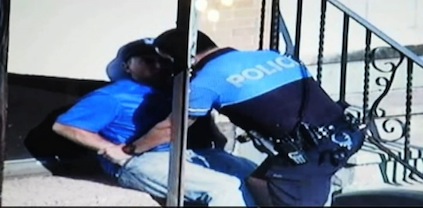
/Miami Police arrested a Secret Service officer after he was found passed out and apparently drunk on a busy Brickell intersection, hours after President Barack Obama passed through for a quick campaign stop at the University of Miami.
A Miami Police arrest affidavit described agent Aaron Francis Engler as lying on the ground near Southwest Seventh Street and Brickell Avenue around 7 a.m. An officer asked him to get up.
Engler refused, according to the affidavit.
There was a “strong odor of [an] alcoholic beverage emitting from his breath,” police said.
He had bloodshot eyes and slurred speech. The officer had to help Engler stand to his feet before he started flailing his arms around. While the officer began searching Engler to handcuff him, the agent struck the officer in the face and chin.
An additional police unit was called to help restrain the man as he continued to struggle before he was handcuffed, police said. More here.
Helping to Slave America: Concerns mount over electronic voting
/But around the country, a growing number of election officials, observers and reform groups are expressing concern about systems such as Tippecanoe County’s that will be used in the Nov. 6 general election.
A national report jointly released in July by Verified Voting, the Rutgers Law School Constitutional Litigation Clinic and Common Cause gave Indiana a grade of “needs improvement” when it comes to election readiness because of continued reliance on electronic voting machines that leave no paper trail of voter-verified ballots that can be used for recounts in close elections and audits of electronic results.
An estimated 60 percent of Indiana voters live in counties that rely primarily on direct record electronic, or DRE, devices to record votes. Some of those counties use touch-screen devices, and others use push-button terminals.
State and Tippecanoe County election officials defend such systems, saying electronic, paperless voting is accurate, less cumbersome than other methods and trouble-free or more so than systems they replaced, such as punch cards.
“I have complete confidence in our system,” said Christa Coffey, Tippecanoe County clerk and chief election officer. It’s an opinion shared by Democrats and Republicans on the county’s Board of Elections and Registration and formed after nearly a decade of voting on touch-screen devices.
But election officials in some states and at least one Indiana county — Monroe — are migrating back to paper ballots. Some localities, rather than giving up DRE devices altogether, are equipping them with printers that let the voter see his or her vote before casting the ballot. The roll of printed ballots, similar to a cash register tape, becomes a permanent record of the election.
Coffey said she would not be opposed to such an option. However, even if county officials thought the added expense worthwhile, state election regulations don’t allow such add-on devices. The state must approve all voting devices, and Coffey said those add-ons have not been certified.
“Anything that boosts voter confidence, I’m in favor of,” Coffey said.
Pamela Smith, president of Verified Voting Foundation, said it’s not unusual for election officials to have “complete confidence” in the system they are using. “Up until something goes wrong and it’s impossible to recover from the error.”
Indiana’s touch-screen election system could face a major test Nov. 6 in the statewide race for U.S. Senate. Democrat Joe Donnelly and Republican Richard Mourdock are running neck-and-neck, according to the latest polls. A statewide recount of electronically recorded votes has never been done in Indiana, although recounts have been completed in Tippecanoe County and elsewhere.
Coffey notes that each touch-screen voting machine has a built-in backup memory system that can be used to display or print a record of ballots cast on that machine if for some reason the primary memory card is lost, compromised or fails to function.
According to Verified Voting’s report — Counting Votes 2012 released in July — it is “highly likely” that some voting systems will fail in counties across the country during the upcoming election.
More than 300 voting machine problems were reported during the 2010 midterm elections, and during every election in the past decade, computerized voting systems were faulted for miscounting votes, shutting down during use, losing votes or just not starting, the report said.
Smith’s cited a well-known case in North Carolina where voting machines in one county “lost” 4,400 votes because the machines were programmed incorrectly. The state now requires direct record electronic devices to also provide a paper backup the voter can see and verify. [MORE]
GOP Cares About the Economy? ‘You should’ve served US better and died!’ Debt collector (GOP Donors) berates disabled veteran
/A debt collector, angered that a disabled US Army veteran was living off of disability payments, told him he “should have died” in war instead of "taking advantage of" other Americans.
Minnesota-based debt collection agency Gurstel Chargo is now facing a lawsuit for verbally abusing the Army vet over a $6,000 defaulted student loan, Courthouse News reports.
“If you would have served our country better you would not be a disabled veteran living off Social Security while the rest of us honest Americans work our asses off,” one of the agency’s debt collectors allegedly told the vet. “Too bad, you should have died.”
Michael Collier was declared 100 per cent disabled after suffering permanent spine and head injuries while in the Army. As a result, both Collier and his wife receive disability payments from the federal Social Security Administration, which are exempt from seizure by debt collectors.
But in an attempt to collect on the defaulted student loan, the collector seized the money from Collier's wife’s savings account. The credit union then proceeded to freeze her account.
The Colliers filed an objection and requested a court hearing, at which the couple was told their frozen funds were exempt from such garnishment.
But the debt collection agency’s lawyer continued to harass the couple. Telling Collier “he would need to get a lawyer in order to get his money back,” an unidentified paralegal cursed at and threatened him over the phone.
“F--k you!” the paralegal allegedly said, “Pay us your money! You can’t afford an attorney. You owe us. I hope your wife divorces you.”
The couple is now seeking compensation for actual damages, statutory damages, and punitive damages for violations of the Fair Debt Collection Practices Act (FDCPA), privacy invasion, malicious infliction of emotional distress and conversion.
The FDCPA considers it abusive for a debt collector to make empty threats, misrepresent the legal status of a debt, or use obscene of profane language.
According to the Daily Beast, debt collectors sometimes use abusive techniques to pry money from the indebted because of the commission rates they receive. On average, debt collectors make 20 cents for every dollar recouped. At this rate, the Colliers’ debt would be worth $1,200 to Chargo.
Verbal harassment is a commonly-used technique to instigate debtors into making payments. In 2010, the Federal Trade Commission received 50,000 complaints about severe harassment from debt collectors, 18,000 of which included the use of obscene language.
And some say that number is low.
“That’s just the tip of the iceberg, as far as I’m concerned,” attorney Sergei Lemberg told the Daily Beast.
While Chargo's berating took it too far for the Colliers, there are of thousands of cases of abuse that never make it to court.
'Economy so so bad.' Break out the Calculator: JPMorgan Chase Turns in Record Profit
/JPMorgan Chase, the country's biggest bank, reported a record quarterly profit Friday, helped by a surge in mortgage refinancing. CEO Jamie Dimon said he believed the housing market "has turned a corner."
The bank made $5.3 billion from July through September, up 36 percent from the same period a year ago. It worked out to $1.40 per share, blowing away the $1.21 predicted by analysts polled by FactSet, a provider of financial data.
Revenue rose 6 percent to $25.9 billion, beating expectations of $24.4 billion. Earnings were also helped because the bank set aside less money for bad loans – $1.8 billion, down 26 percent from a year ago.
Revenue from mortgage loans shot up 29 percent. About three-quarters of that was from people refinancing, rather than buying new homes. Low interest rates and government help encouraged homeowners to refinance.
A Federal Reserve survey earlier this week found that a stronger housing market helped economic growth in almost every part of the country. Home sales are up, prices are rising more consistently in most places, and builders are more confident.
Dimon noted that the bank was still seeing a high level of souring mortgage loans, and said he expects high default-related expenses "for a while longer." And he noted homeowners are still struggling under mortgages they can't afford, saying the bank was working to modify those loans.
The bank gave few details on the surprise $6 billion trading loss that dominated its previous earnings report. It did mention that a credit portfolio moved to the investment bank from the chief investment office, which was responsible for the bad trade, "experienced a modest loss."
The bank set aside an extra $684 million for legal expenses. Chief financial officer Doug Braunstein said the reserves were related to "a variety of issues," and not just a lawsuit filed last week by the New York attorney general over mortgage-backed securities sold by Bear Stearns. JPMorgan bought Bear Stearns as it veered toward collapse in 2008.
Dimon said he couldn't predict how much the bank would have to spend in the future.
"Food is the new oil and land is the new gold," - Food scarcity: the timebomb setting nation against nation
/Brandon Hunnicutt has had a year to remember. The young Nebraskan from Hamilton County farms 2,600 acres of the High Plains with his father and brother. What looked certain in an almost perfect May to be a "phenomenal" harvest of maize and soy beans has turned into a near disaster.
A three-month heatwave and drought with temperatures often well over 38C burned up his crops. He lost a third and was saved only by pumping irrigation water from the aquifer below his farm.
"From 1 July to 1 October we had 4ins of rain and long stretches when we didn't have any. Folk in the east had nothing at all. They've been significantly hurt. We are left wondering whether the same will happen again," he says.
On the other side of the world, Mary Banda, who lives in Mphaka village near Nambuma in Malawi, has had a year during which she has barely been able to feed her children, one of whom has just gone to hospital with malnutrition.
Government health worker Patrick Kamzitu says: "We are seeing more hunger among children. The price of maize has doubled in the last year. Families used to have one or two meals a day; now they are finding it hard to have one."
Hunnicutt and Banda are linked by food. What she must pay for her maize is determined largely by how much farmers such as Brandon grow and export. This year the US maize harvest is down 15% and nearly 40% of what is left has gone to make vehicle fuel. The result is less food than usual on to the international market, high prices and people around the world suffering.
"This situation is not going to go away," says Lester Brown, an environmental analyst and president of the Earth Policy Institute in Washington. In a new book, Full Planet, Empty Plates, he predicts ever increasing food prices, leading to political instability, spreading hunger and, unless governments act, a catastrophic breakdown in food. "Food is the new oil and land is the new gold," he says. "We saw early signs of the food system unravelling in 2008 following an abrupt doubling of world grain prices. As they climbed, exporting countries [such as Russia] began restricting exports to keep their domestic prices down. In response, importing countries panicked and turned to buying or leasing land in other countries to produce food for themselves."
"The result is that a new geopolitics of food has emerged, where the competition for land and water is intensifying and each country is fending for itself."
Maryland Selection Committee Members Make Racist Decision to Not Honor Len Bias
/But the best chance Bias had may have already come and gone. In 2002, the university won its first men’s national basketball championship, marking an end to the program’s recovery from Bias’ death. That same year, Driesell was inducted to the hall of fame. Bias was still left out.
Bias remains Maryland’s only two-time ACC Player of the Year and was a two-time All-American. He was Maryland’s all-time leading scorer for 16 years and now ranks second, behind only Juan Dixon (who was selected for the hall this year, his first year of eligibility). Dixon recently tested positive for performance-enhancing drugs as a pro in Europe. If that didn’t disqualify him, why should Bias’ death keep him out? No other Maryland player since he died has matched his combination of athleticism, intensity and skill.
Last March, Bias was inducted into the Washington, D.C. Metropolitan Basketball Hall of Fame, his first such selection. No one would accept the award on his behalf. Family members, friends and teammates all refused to come forward.
The image of every inductee was displayed on a placard during the ceremony. Someone removed the photo of Bias as a souvenir without permission, and it was later returned to event organizers upon request. Honoring Len Bias, unfortunately, still requires unconventional methods.
White Party (GOP) Congressional Nominee Derides Poor People For ‘Slothfulness And Laziness’ At Fundraiser
/WA-1 nominee John Koster (R)
During remarks at a fundraiser outside of Seattle, Republican congressional candidate John Koster derided people who had yet to achieve financial success, saying the government rewarded their “slothfulness and laziness.”
In a video obtained by ThinkProgress from a December 2011 fundraiser in Everett, Washington, Koster spoke frankly about government programs aimed at aiding the poor. Though he declined to single out individual programs, he said the system creates an “addiction” to government assistance by creating a “sense of entitlement.” “It seems to reward the mediocrity — dare I say it, slothfulness and laziness — of those who choose not to do those things,” Koster said:
KOSTER: Reform isn’t just taxing the rich, the very people by the way who create jobs. Our economic system has been the envy of the world for generations, but it seems to get more convoluted and more onerous every year. Under this administration it has become a system that punishes those who dare to dream, those who dare to invest, those who dare to work hard or succeed. It seems to reward the mediocrity — dare I say it, slothfulness and laziness — of those who choose not to do those things. Furthermore, it creates a dependency on government programs, even an addiction I would say, by virtue of the sense of entitlement that it creates. I can tell you, those people aren’t the 99 percent.
Watch it: [HERE]
Soft Sheen founder Ed Gardner meets with Chicago Mayor Rahm Emanuel over lack of blacks in construction jobs
/Ed Gardner, the 87-year-old founder of Soft Sheen hair care products, met with Chicago Mayor Rahm Emanuel this week to discuss the lack of African-American construction workers on jobs around the city. The Tuesday meeting came after more than two weeks of protest from Gardner and supporters seeking more opportunity for Chicago’s out-of-work or under-employed construction workers.
Gardner’s protest began in September when he passed a South Side construction site where sidewalk was being laid and saw no blacks among the workers. Gardner literally stepped (with his cane) into the wet cement to make abundantly clear how he felt about the situation. After calling for additional protests, about 1,000 joined the business leader on September 30, including Reps. Danny K. Davis (D-Chicago) and Bobby L. Rush (D-Chicago). Other protests have also taken place.
Just days later, when asked about the protest during a press conference, Mayor Rahm Emanuel talked up the number of jobs that have been created in the transportation space and the minority- and women-owned businesses that have been commissioned for the work. However, he says unions and the lack of training they’re providing for minority workers also needs to be addressed.
About 4,500 immigrants spared deportation under Obama order
/Deferred Action for Childhood Arrivals Deportation Immigration Obama Administration U.S. Citizenship and Immigration Services Comments
WASHINGTON (AP) — The Obama administration has approved more 4,500 young illegal immigrants for a program to let them stay in the United States and get a work permit.
U.S. Citizenship and Immigration Services says about 180,000 people have applied for the administration’s Deferred Action for Childhood Arrivals program announced this summer. As of Wednesday, 4,591 applications had been approved. Those people will also get permission to work.
To date, no applications have been rejected.
The government started accepting applications on Aug. 15 and it had been expected that final decisions could take several months. Homeland Security officials have say the time to approve applications is expected to slow in coming months.