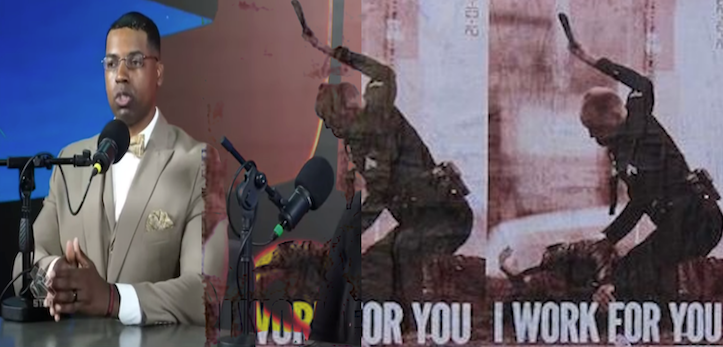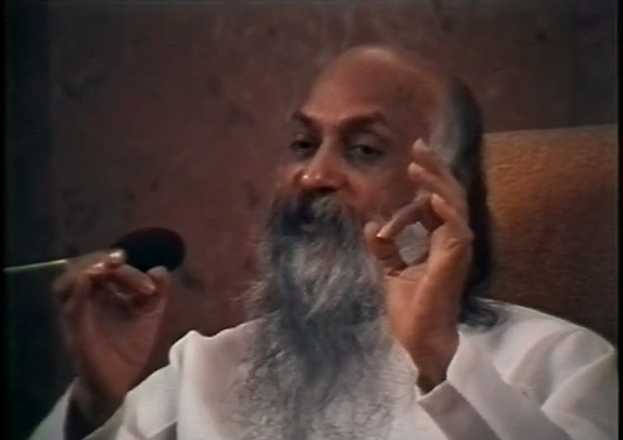
New Interview with Mumia Abu Jamal - talks about life sentence
/The People's Minister of Information JR interviews political prisoner and prolific writer Mumia Abu Jamal about the recent court decision to put him in jail for life.
The People's Minister of Information JR interviews political prisoner and prolific writer Mumia Abu Jamal about the recent court decision to put him in jail for life.
Ten years ago, on October 10, 2002, the United States House of Representatives made one of the most calamitous mistakes of a generation. Congress, with willful blindness, voted to attack, invade and occupy a sovereign, oil-rich nation in the Middle East that did not attack us and did not pose a threat to the American people.
The war in Iraq will ultimately cost the United States five trillion dollars. Four thousand, four hundred, eighty eight Americans were killed. Tens of thousands of Americans were injured. At least one million innocent Iraqis were killed. Iraq has become a home to Al Qaida which it certainly was not before our intervention. Resentment against the United States has made pursuing peace more difficult. And we still have thousands of armed contractors in Iraq -- paid for by U.S. taxpayers.
Many are trying to rewrite the history of the Iraq war. The people who led us into a war based on lies want us to believe that the intelligence community was duped. They don't want us to ask questions, because they don't want to be held accountable. Those repeating the myth that America was duped are perpetuating one of the biggest lies in American history.
Iraq did not pose a threat to the United States. Iraq had no Weapons of Mass Destruction. Iraq had absolutely nothing to do with 9/11. We were not duped. We were not fooled. It was obvious at the time. The evidence was in publicly available reports for anyone who cared to look. I personally distributed this memo to Members of Congress. In it I address the false justifications for war, point-by-point and establish the truth. I made the case in an hour-long presentation on the House floor. 133 Members of Congress were not duped; they voted against going to war with Iraq. The Bush Administration lied to the Congress and the American people to sell its war. The intelligence community wasn't duped, The American people were duped and we are still paying the price.
Why did they lie? After ten years, we have never held anyone accountable for the lies. Perhaps it would be useful to look at who benefited from the war. The Neoconservatives in the Bush Administration wanted to show the world American power by destroying an enemy. They thought that American power and American bombs could redraw the maps and ensure American hegemony and American access to cheap oil for a new century. Certainly the bomb makers and war profiteers have gained from a decade of war. The elite chattering class of State Department sponsored spokespersons from so-called "independent" think tanks have also benefited. This professional chattering class receives funding and attention by hyping threats and war. Who else benefited from the war?
America needs a period of truth and reconciliation. How can we avoid future wars if we don't understand how consent was manufactured for a war against Iraq?
Dennis Kucinich is Congressman from Ohio
A youth-suicide epidemic is sweeping Indian country, with Native American teens and young adults killing themselves at more than triple the rate of other young Americans, according to federal government figures.
In pockets of the United States, suicide among Native American youth is 9 to 19 times as frequent as among other youths, and rising. From Arizona to Alaska, tribes are declaring states of emergency and setting up crisis-intervention teams.
“It feels like wartime,” said Diane Garreau, a child-welfare official on the Cheyenne River Sioux Reservation, in South Dakota. “I’ll see one of our youngsters one day, then find out a couple of days later she’s gone. Our children are self-destructing.”
So dire is the alarm that of 23 grants the U.S. federal government awarded nationally to prevent youth suicides in September, 10 went to Native American tribes or organizations, with most of them receiving nearly $500,000 per year for three years.
A former Democratic senator from North Dakota, Byron Dorgan, who chaired the U.S. Senate Committee on Indian Affairs for 18 years, called those efforts good but insufficient. Dorgan is founder of the Center for Native American Youth, which promotes Indian child health and emphasizes suicide prevention. He describes the Indian Health Service, which serves the nation’s 566 tribes, as chronically underfunded.
njecting billions of dollars into U.S. politics is a recipe for corruption, says former President Jimmy Carter. Placing the blame squarely on the Supreme Court for endorsing a corporate spending free-for-all in American politics, he said the justices gave unlimited freedom to special interest groups representing corporations and lobbyists to provide campaign funding through third parties that don’t have to disclose their donors.
“We have one of the worst election processes in the world right here in the United States
America,” he said, “and it’s almost entirely because of the excessive influx of money.
“You know how much I raised to run against Gerald Ford?” asked Carter in his latest Conversation at the Carter Center. “Zero. You know how much I raised to run against Ronald Reagan? Zero. You know how much will be raised this year by all presidential, Senate and House campaigns? Six billion dollars. That’s 6,000 million.”
Carter did get public funding from the Democratic National Committee but received no money from private donors—corporate or individuals.
In contrast, Romney and Obama are both on their way to possibly raising an astonishing billion dollars each in campaign funds this year. By August 31 Romney had raised $669M while Obama had raised $766M. In the month of August Romney raised $112M and Obama brought in $114M, and the stakes keep getting higher until Election Day. These funds are a combination of public and private funds, with public funds comprising only about a quarter of the total money raised.
The Supreme Court justified its 5-4 Citizens United ruling on the basis that the First Amendment prohibits government from restricting independent political donations by corporations and unions. As a result, special interest groups have taken control of the election process making it “shot through with financial corruption that threatens [America],” according to Carter. He expressed his hope that “the Supreme Court will reverse that stupid ruling.”
The American Israel Public Affairs Committee (AIPAC) is, of course, the most powerful lobby in Washington. Along with other pro-Zionist lobbies, individuals and corporations, they dominate campaign funding, thus influencing the political platform, including foreign policy, for both candidates.
Carter prefers publicly financed elections, currently used by other countries.
A case in which four Nigerian fish farmers have succeeded in taking the Anglo-Dutch owned oil giant Shell to Court in the Netherlands, marks a historic turning point on whether how oil pollution and oil damage cases are handled. The case has ramifications not just for Shell and other oil companies operating in Nigeria, but around the world.
What it means is that international oil companies like Shell and others may be held legally responsible for their activities, the activities of their subsidiaries, and even partners, abroad. The Nigerian farmers at the centre of the case going on in the Netherlands brought the case to the Netherlands because Shell has its headquarters here. The hearing of the case in the Netherlands means that oil companies may no longer be able to say they are not responsible or not to blame when disasters happen - away from home, where they have their operations.
In the case against Shell being heard in the Netherlands, the four farmers, all from different parts of Nigeria's vast oil rich Niger Delta - a region that produces close to 3 million barrels of oil every day - say that Shell has failed to maintain its pipelines and other infrastructure. This has caused huge quantities of oil to leak into their fish farms, they argue, destroying their livelihoods.
In an ideal world, the farmers would have first tried to get Shell's Nigerian subsidiary held responsible. But the environmental action group Friends of the Earth alleges that because Shell is such a powerful and influence force with Nigerian government officials, and even among members of the judiciary, the case would have been unlikely to succeed here.
The truth of the matter is that there are hundreds of cases against oil companies in Nigeria, where victims allege oil pollution by companies. But few have gotten justice.
Shell denies the farmers' accusations, and says that the oil spills are being caused by Nigerians engaged in running illegal oil refineries in the area, who sabotage and burst pipelines, to siphon off oil. The oil rich communities say that is not true; that the oil in illegal refineries comes from the miles of leaking and poorly maintained pipeline lines that snake through their villages.
Judges in the Netherlands will hear evidence from the farmers and their legal representatives, Friends of the Earth, and hear what Shell has to say too. A verdict is expected at the end of the year. If Shell is found liable, not only may they be forced to clean up the oil spills and fix broken pipelines, they may also have to pay compensation to the victims.
After Iran's June 12, 2009 election, days of street protests and clashes with security forces followed. Washington stirred the pot and caused them. They replicated previous efforts elsewhere. Regime change is the common thread.
Spurious Western media reports claimed electoral fraud. A new vote was demanded. Events replicated Georgia's "rose revolution" and Ukraine's "orange" one. Both worked.
The Iranian scheme failed. Mahmoud Ahmadinejad won fair and square. He became the Islamic Republic of Iran's sixth and current president. What Iranian voters chose, Washington wasn't able to put asunder. It hasn't stopped trying.
One scheme follows others. Iran's so-called nuclear/existential threat makes headlines. They repeat ad nauseam. The power of repetition gets most people to believe them.
The decision to send Mitt to France, a nation that didn’t recognize the Mormon religion, taking advantage of his father’s position and ability to “engineer” a “single service” exemption based on a fathers love for a damaged child, hagiography stepped in and the lies began.
It would be years before Mitt would reappear, sent off to Brigham Young University, at the time reviled for racism and mediocrity, and a history would be written, the public one that of riches and success, a private one of pain, of moral failure and weakness.
Kasich explains Romney’s history using the following details and resources:
“As the Vietnam War raged in the 1960s, Mitt Romney received a deferment from the draft as a Mormon “minister of religion” for the duration of his missionary work in France, which lasted two and a half years.
The deferments for Mormon missionaries became increasingly controversial in the late 1960s, especially in Utah, leading the Mormon Church and the government to limit the number of church missionaries who could put off their military service. That agreement called for each church ward, or church district, to designate one male every six months to be exempted from potential duty for the duration of his missionary work.
Romney’s home state was Michigan, making his 4-D exemption as a missionary all but automatic because of the relatively small number of Mormon missionaries from that state. It might have been more difficult in Utah, where the huge Mormon population meant that there were sometimes more missionaries than available exemptions. Most missions lasted two and a half years, as Romney’s did.
Barry Mayo, who was counselor to the bishop of the ward in Pontiac, Michigan, where Romney attended church, recalled in an interview that wards were allowed to exempt one missionary every six months from the draft. He said that he could not recall any time in which more than one potential draftee sought an exemption in the ward in a six-month period, so Romney’s deferment was never in doubt.
There are problems with Kasich’s article, more than a few. You see, technically a “missionary” is a volunteer, not a formally ordained minister. With every Mormon male claiming status as an ordained minister, whether missionary or not, the issues would have involved several that touched on constitutional ground, IRS codes and Selective Service definitions.
There were issues during the Vietnam War of local SSS boards in Utah, made up entirely of LDS (Latter Day Saints or “Mormons”) giving blanket draft exemptions to all males belonging to the church under the edict that any “male Mormon” is considered part of a general “ministry.”
This issue was challenged in court under Imus v. United States:
The findings of Imus v. United States were that though the Mormon Church was abusing draft law by offering blanket exemptions to all its members through church controlled draft boards, challenging the draft in general, which is what Imus did, having destroyed his draft card, did not give him basis for finding draft law illegal.
Thus, though the Church was systematically violating law, as no case was ever brought against them for that, they could continue to do so in the State of Utah.
Michigan is another story.
Here, Kasich has one source, one with no authority, no standing and no memory, “Barry Mayo.”
These are the actual facts:
A Mormon church publication deals with this issue with great clarity:
A group of black taxpayers and their minor children attending public schools in Mississippi brought a class action on May 21, 1969 against the United States, seeking to enjoin the Secretary of the Treasury and the IRS from according tax exempt status to private schools in Mississippi which excluded African-American students on the basis of race or color.
In July 1970, while the lawsuit was pending, the IRS issued two Releases, announcing that “it can no longer legally justify allowing tax-exempt status to private schools which practice racial discrimination nor can it treat gifts to such schools as charitable deductions for income tax purposes.”
The Supreme Court ruled in favor of the black plaintiffs, concluding that the IRS actions of denying tax -exemption to discriminatory schools was constitutional.
Such schools, however, were not entitled to public support, as which tax-exemption qualified. It reasoned that the Federal Government could not under the Constitution give direct financial aid to schools practicing racial discrimination, but that tax exemptions and deductions certainly constitute a Federal Government benefit and support. “While that support is indirect, and is in the nature of a matching grant rather than an unconditional grant, it would be difficult indeed to establish that such support can be provided consistently with the Constitution” [17].
Beginning in May 1975, the University permitted unmarried African-Americans to enroll, but a disciplinary rule prohibits interracial dating and marriage. That rule read:
There is to be no interracial dating
1. Students who are partners in an interracial marriage will be expelled.
2. Students who are members of or affiliated with any group or organization which holds as one of its goals or advocates interracial marriage will be expelled.
3. Students who date outside their own race will be expelled.
4. Students who espouse, promote, or encourage others to violate the University’s dating rules and regulations will be expelled.
What they fail to list here when “support” for a “racist” institution is considered unconstitutional, those supports include, not just tax exempt status and any federal subsidies but draft exempt status as well.
Thus, colleges such as Bob Jones University and BYU were constitutionally denied “S2” student deferments for their students.
Thus, Mitt Romney never had a student deferment until 1966, when he left Stanford and none was ever reinstated.
As to after 1970 and Romney’s draft number, his rejoining the SSS system after having been “missing” for nearly 5 years would have had no legal standing.
As Kasich, Romney’s “biographer,” has stated that there were few Mormons in Michigan and special regional groups were given a consideration that applied only to the Mormon church and no other group, and as Kasich has all Romney records, is it not strange that he offers no references for these facts he contends are true?
A search of the CFR, the Federal Registry and the records of the Selective Service Commission yield no records of any such decisions of special dispensation for Mormons.
Moreover, there are several gross misrepresentations here. No such documentation exists for Mitt Romney. In fact, Mormon’s serving in France, were, not only not recognized as an official religion in that country, but use the ruse of offing free language lessons, not religious instruction:
There are no Mormon facilities in France now nor have there ever been. It wasn’t until 2009 that Mormonism applied to be registered as an established religion in France.
In 2006, the Mormon church came under investigation for its policies toward women and children which are inconsistent with French law. A report was issued. (French Language)
The ADFI (Union in Defense of Families and Individuals) declared Mormonism a cult and a danger to French society, indicating it used trickery and deceit to proselytize, offing free English lessons and genealogy research in order to attempt to recruit members.
Additionally, Michigan had two “Mormon Stakes,” the official regional districts of the Church. These are the organizations claimed by Kasich to have offered the special draft designation of D4 to Romney.
One problem, of course, is that if all Mormons are officially considered ministers, as the church claims, then why would a missionary student apply for status of an ordained minister, a status equally available to all Mormon males?
No differentiation is mentioned as this contingency was overlooked while the “spin” was being applied.
As to the Mormon population, there were 30,000 Mormons in Michigan, hardly a small number, one that would have yielded thousands subject to draft by SSS, not one or two.
You see, of the two “Stakes” the Mormon church established in Michigan, one in 1940, the second in 1952, Mitt Romney belonged to the second.
This “Stake” included thousands of male members of draft age.
The founder and head of this stake was George W. Romney, former president of American Motors Corporation and father of Mitt Romney.
Thus, were there such an agreement with the SSS, which there is no documentary record of and were there only one or two Mormons available to the draft, something reality is utterly at odds with, we have one other glaring problem.
Mitt Romney is supposed to have received his nomination from his own father for a questionable and undocumented and clearly unconstitutional deferment.
This deferment was to have been issued in 1966.
In 1963, Mitt Romney’s father was elected governor of Michigan and served in that office until 1969 when he joined the Nixon Administration as Secretary of Housing and Urban Development.
Thus, it is as governor of the State that a special unconstitutional deferment, not recognized by any documentation, was awarded to Mitt Romney.
In 1968, George W. Romney was the Republican front runner for president, easily outpolling Richard Nixon.
George Romney was born in Mexico to Mormon parents who fled there to avoid prosecution for polygamy. They remained in Mexico, renounced their American citizenship and never had it reinstated.
Two odd technicalities apply to Romney’s attempt at the presidency:
A description of the family’s status as “illegal aliens” is made in this article by Huffington Post:
His family moved to that country fleeing American laws against polygamy, then considered a crucial pillar of his church.
The Romneys are Mexican since Miles Park Romney crossed the border in 1884, rejecting the Edmund Act that in 1882 declared polygamy a felony.
In 1890, the Mormon Church (LDS) disavowed plural marriage.
According to an AP story, Miles married his fifth wife seven years later. His own father had 12 wives.
In 1912, Mitt grandfather’s Gaskell Romney returned to the U.S. fleeing the Mexican Revolution. (No mention of immigration papers here).
In 1884, the Romney family were citizens of the Kingdom of Desert and never recognized American authority.
When the Utah became a state in 1896, the Romney family had lived outside its borders for 12 years. They were established Mexican citizens, and had they been American citizens, something they never claimed and publicly renounced in order to avoid prosecution for violations of the Edmund act, their citizenship would have been forfeit after 5 years.
Instead, the Romney family reentered the US illegally after 26 years, Mexican citizens who, at best had lost “implied” American citizenship, long sacrificed as fleeing felons residing overseas for more than 5 years, no different than any other fugitive who loses his citizenship while residing overseas to avoid prosecution for crimes.
Wikipedia gives an interesting picture of that time:
Questions were occasionally asked about Romney’s eligibility to run for President owing to his birth in Mexico, given the ambiguity in the United States Constitution over the phrase “natural-born citizen“.[14][170][173] (Romney departed the race before the matter could be more definitively resolved,[170] although the preponderance of opinion then and since has been that he was eligible.[173] [174])
The record the press has left is fiction, spin, utter fabrication, lack of documentation, no qualified sources, nothing covering the draft status of Mitt Romney, no honest discussion of the barbaric and un-American policies of the Mormon church on race or the actual standing of Brigham Young University, then no different than the American Nazi Party or KKK in its policies.
Coverage for Mitt’s draft evasion, his failure to apply for the Carter era clemency and do his two years of required public service is simple. He came from a wealthy family, rules were made that applied to Mitt Romney and Mitt Romney only, he was kept to different, far lower standards than other Americans and grew up in an environment where living outside the law had been a family tradition for well over a century.
His father was a better man that he was. His father was politically independent, racially fair and ethical, painfully honest regarding America’s foreign policy and deeply respected.
His father’s major personal failing was his son.
He entered into conflicts of interest to save his son from a war he thought unnecessary, sending his son out of the country and protecting him from prosecution through use of power and, quite possibly, giving up the presidency to protect his son from prison.
Yes, Nixon would have blackmailed George W. Romney over this and anything else. This was the nature of Nixon.
The question at hand is the character of Mitt Romney. Military service isn’t the answer to all things. John McCain, for those familiar with his record as a POW and his presidential pardon, are more than aware. Those who aren’t are unlikely to, at this late date; bother to learn what they failed to when it mattered most.
Ann Romney, wife of Mitt, seems to understand the problem best when she expresses how the campaign has threatened Mitt Romney’s mental health. Mitt Romney is clearly talented but morally bereft of values, willing to say anything that he believes will help him get his way and, for those who watch carefully, slowly becoming mentally unhinged.
The real issues of the election are those of a war in the Middle East and a return to fiscal policies that gut small business and the Middle Class, abandon and destroy the working classes and turn total rule over to the rich.
By “rich,” we also mean “foreign.”
One critical point we can make is that issues of military service and Romney’s avoidance of it during wartime don’t just make him less than American. They strongly suggest that he was openly a criminal and that he may well still be, as seen in his pattern of foreign bank accounts and the friends he depends on for financing.
I keep thinking about France, the 30 months Romney was there, we are told anyway. I have seen three photographs, taken within seconds of each other, a borrowed bicycle with specialized “toe clip” racing pedals, no books or materials, as though one’s entire “missionhood” were a minute long, spent entirely in a parking lot.
Maybe he lived a life of privation and suffering. During the same period, I had, for only a very short time, an inexpensive Kodak camera. I did one roll of 24 photos, leaving a base, on patrol and ambush, in Vietnam.
The camera was stolen soon afterwards, the $8 it cost was, at the time, considered an extravagance as was fresh food, clean water, clothing and rudimentary medical care (and decent weapons).
The $15 dollars a month pay I drew didn’t allow for much, but then, what was my time worth anyway?
Maybe I am still a member of America’s millions, the “useless eaters,” the 47%, perhaps I will never know where that line in drawn. Maybe the line is an idea, and has no dollar figure attached. To Kasich, it was vital to explain Mitt’s humanity, explain that the dog tied to the roof of the car was in a cage and not simply “hog tied” like they do at Gitmo. Maybe the dog might have been happier had the family put a child in the cage with it.
Would Romney had stopped if he had looked in his mirror and seen them bouncing down the road as so often happens with anything other Americans attach to the roofs of their cars or would he have driven on? His positions on veterans and women’s health, Social Security and his plans for a new war in the Middle East are a clue, “bye bye puppy, bye bye little Jimmie, daddy will check on you on the way back.”
———————–
References:
http://en.wikipedia.org/wiki/George_W._Romney#1968_presidential_campaign
http://www.newyorker.com/arts/critics/atlarge/2012/03/19/120319crat_atlarge_menand
http://www.veteranstoday.com/2012/09/10/romneys-mormon-draft-deferrment-not-legal/
http://mormonmatters.org/2009/09/26/the-church-and-the-irs/
http://openjurist.org/447/f2d/1008/imus-v-united-states-government
http://www.boston.com/news/politics/2008/specials/romney/articles/part1_side_2/?page=1
http://www.ldshistoryblog.com/Michigan
http://caselaw.lp.findlaw.com/scripts/getcase.pl?navby=CASE&court=US&vol=396&page=460
http://www.sss.gov/regisrantsbk.htm#AvailableClassifications
http://www.prevensectes.com/mormons5.htm
http://www.huffingtonpost.com/2012/01/08/mitt-romney-mexican_n_1192694.html
Addendum:
Official Mormon Policy on African Americans:
Summary of the Curse of Cain Doctrine and Priesthood-Ban Policy
For 130 years (1848-1978), Mormon Church leaders taught the following:
The latest news in the Walmart labor protests -- which have included walkouts and marches in Dallas, San Diego, Chicago and Los Angeles -- is the threat of a strike on Black Friday. That's the day after Thanksgiving, widely considered the busiest, and most lucrative, retail day of the year.
Some 200 angry protesters showed up at a meeting of investors and analysts earlier Wednesday at Walmart's headquarters in Bentonville, Ark. Under discussion at the meeting was Walmart's intent to go head-to-head with Amazon and offer same-day delivery.
Walmart is the world's largest private employer and has long been a target of workers' rights groups, who advocate higher wages, more flexibility in hours and an end to the punishments (reduced shifts, for instance) they claim are meted out to workers seeking to unionize.
Evelin Cruz, a department manager at Walmart in Pico Rivera, Calif., told ABC News that for many years she kept quiet about what she views as the company's unjust labor practices because she feared she would be fired if she spoke up.
"People were really tired that any time they would speak out against the pay, hours, how much they would work, that management would cut their hours or not give them a schedule," said Cruz, who is one of thousands of members of Our Walmart, a labor organization backed by the United Food and Commercial Workers that defends Walmart workers' rights.
On a conference call Wednesday, leaders of Our Walmart, the National Consumers League and other labor groups said they will join Walmart workers outside stores on Black Friday if their demands are not met.
NOW president Terry O'Neill said her organization would join in the action on Black Friday, it was reported in the Guardian. "We are standing in solidarity with the workers who are walking off the job," said the National Organization of Women's president.
Last Thursday, about 30 employees from the Pico Rivera store, including Cruz, wielded signs that read "Stand Up, Live Better, Stop Retaliation" and "Stop Trying to Silence Us" and marched outside the store. At the same time, workers at eight other Walmart stores in California protested working conditions and treatment.
It was the first-ever employee walk-out in the company's 50-year history, said Dawn Le, a spokeswoman for Making Change at Walmart, a coalition whose mission is to change the way Walmart conducts business.
"Everyone else has a union," said Le. "Workers in every other country — Japan, the U.K., Nicaragua, South Africa, Brazil, Argentina — have been able to form a union, except the U.S. and Canada. We just don't understand the double standard Walmart has. How come those in other countries get to have a voice, yet not in the U.S., its home country?"
Walmart spokesman Dan Fogleman disputed Le's charges, claiming that most employees have "repeatedly rejected unionization.
"They seem to recognize that Walmart has some of the best jobs in the retail industry — good pay, affordable benefits and the chance for advancement," he said in a telephone interview with ABC News.
Walmart and its practices have made the news a lot lately. In mid-September, warehouse workers in Southern California were on a 15-day strike that included a six-day, 50-mile pilgrimage for safe jobs. Around the same time, hundreds of people marched in Dallas and San Diego, demanding better work conditions.
On Monday, Chicago police dressed in riot gear arrested 17 peaceful protesters blocking the entrance to a warehouse operated by an outside contractor that supplies Walmart stores, in Elwood, Ill. The protestors were there to show support for workers who had been on strike since Sept. 15, the Chicago Sun Times reported. What's more, the company faces yet another sex discrimination lawsuit, filed on behalf of 100,000 women in California and Tennessee.
Ohio was barred from disqualifying provisional ballots cast in the wrong precinct, an appeals court said, upholding an earlier ruling.
The U.S. Court of Appeals in Cincinnati issued the ruling yesterday, the second loss in two weeks for the state in election-related lawsuits.
A lower-court federal judge in August ruled that provisional ballots, used to record votes when eligibility is an issue, can’t be thrown out if they’re filed in the wrong precinct as a result of poll-worker error. Opponents of a 2006 law saying they must be discarded argued that the law would unfairly cause the rejection of thousands of votes in the November election.
The lawsuit is one of at least 15 pending nationwide over election law limits on issues such as early voting, registration and identification in the run-up to the Nov. 6 vote. Yesterday, South Carolina became the fourth state to be blocked from requiring voters to show photo identification before casting a ballot.
A special panel of three federal judges in Washington ruled that given the time left before the election, requiring photo ID at polling stations puts a burden on minority voters that violates the Voting Rights Act of 1965. “Proper and smooth functioning” of a key protection in the South Carolina law can only be assured in elections after this year, the judges said.
Too Much Risk
“Even assuming the best intentions and extraordinary efforts by all involved, achieving that goal is too much to reasonably demand or expect in a four week-period -- and there is too much of a risk to African-American voters for us to roll the dice in such a fashion,” U.S. Circuit Judge Brett Kavanaugh said in the ruling.
The court said there was nothing inherently discriminatory in the law that would bar enforcement in future elections.
South Carolina Attorney General Alan Wilson called the ruling “a major victory for South Carolina and its election process.”
“It affirms our voter ID law is valid and constitutional under the Voting Rights Act,” he said in an e-mailed statement. “The fact remains, voter ID laws do not discriminate or disenfranchise. They ensure integrity at the ballot box.”
On Oct. 5, Ohio was barred by a different panel of the appeals court in Cincinnati from enforcement a law that ended early-voting days for the general populace on Nov. 2, while allowing members of the military and those residents living abroad to cast ballots until Nov. 5. The state appealed that decision to the U.S. Supreme Court.
Early voting in the state of 11.5 million people began on Oct. 2, according to Ohio Secretary of State Jon Husted’s website.
Vermont Sued
Vermont and its chief election official were sued yesterday by the U.S. over the state’s alleged failure to send more than 20 percent of the absentee ballots requested by Vermont’s military and overseas voters. The complaint filed by the U.S. Justice Department in federal court in Vermont seeks an order to ensure military voters can cast their ballots in time to have their votes counted, the department said in an e-mailed statement.
The lawsuit was filed under the Uniformed and Overseas Citizens Absentee Voting Act, which requires states to allow uniformed service voters and their families as well as overseas citizens to register to vote and to vote absentee for all elections for federal office, according to the statement.
Vermont Secretary of State James C. Condos, who is named as a defendant, didn’t return a phone call seeking comment on the lawsuit yesterday after regular business hours.
Texas Lawsuit
Also yesterday, Harris County in Texas was sued in federal court in Houston by the League of United Latin American Citizens over claims it discriminates against blacks and Latinos by disproportionately challenging their voter registration.
The county, which includes Houston, rejects voter- registration applications from zip codes dominated by Latino and black residents at a higher rate than it does applications from zip codes with predominantly white residents, the activists said in the complaint.
Don Sumners, the county’s voting registrar, said in an e- mailed statement that LULAC’s challenge “another unwarranted political lawsuit” similar to one filed in 2008 by the Texas Democratic Party. That case was resolved “when the Democratic Party was unable to produce a single person who had been illegally denied the right to register and vote,” he said.
Sumners, a Republican, said he’s already refused to remove any voters from election rolls as part of the state’s dead-voter purge program, a campaign he urged state officials to alter to keep from improperly deleting voters close to a presidential election.
Mississippi Governor Phil Bryant [official website] on Wednesday joined a federal lawsuit [press release] challenging a policy directive [memorandum, PDF; JURISTreport] to defer the deportation of young illegal immigrants. The claim [complaint, PDF],filed by [JURIST report] Kansas Secretary of State Kris Kobach on behalf of 10 agents of the US Immigration and Customs Enforcement (ICE) [official website] against USSecretary of Homeland Security Janet Napolitano [official websites], alleges that the directive, known as Deferred Action, contradicts existing practice because it compels ICE officers not to enforce federal immigration laws or initiate removal proceedings against a broad class of roughly 1.7 million illegal immigrants. Bryant alleges that this order "usurps Congress's authority to regulate immigration and violates the constitutional separation of powers and the president's obligation to enforce federal law." He also argues that Mississippi has standing in the case "based on the significant fiscal costs that illegal immigration imposes on the state."
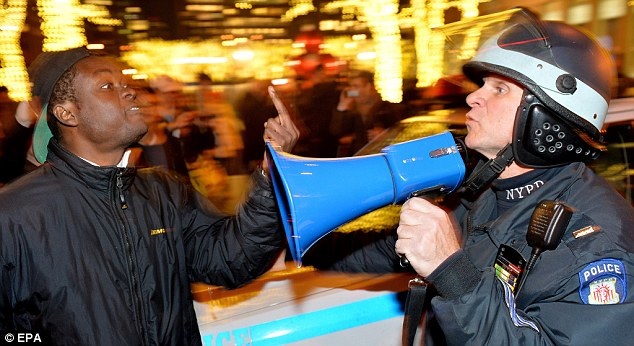
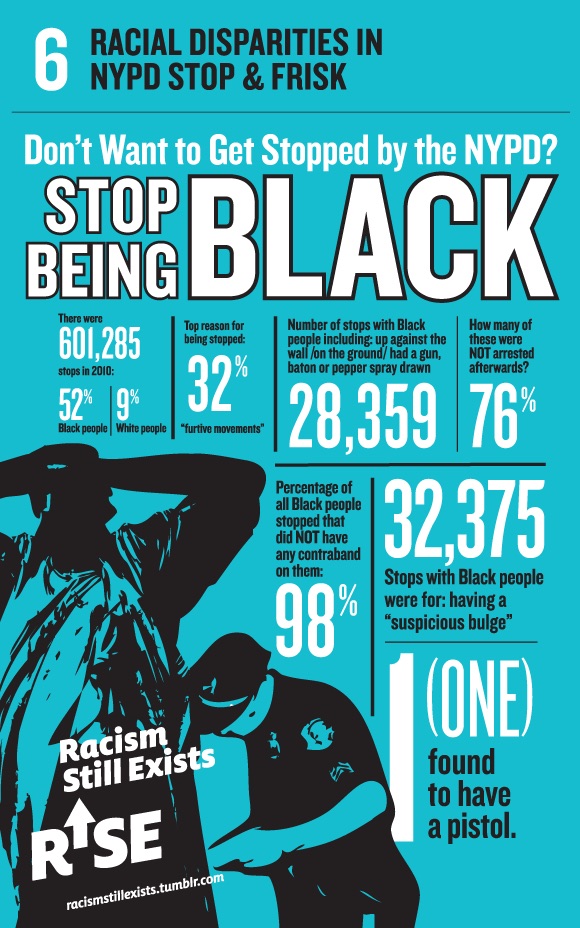
“Outbursts are prohibited,” City Councilman Peter F. Vallone Jr. warned as a hearing on bills centered largely on the New York Police Department’s controversial stop-and-frisk practices began on Wednesday morning.
But it did not take long for the calm to be disturbed. The hearing, which stretched on for nearly six hours, featured a series of outbursts, squabbles and sharp exchanges.
The hearing, before the Public Safety Committee, included testimony from about a dozen people on four bills aimed at police reform — three of which deal with street stops. The fourth bill would create an Office of Inspector General to monitor the Police Department, a measure both Mayor Michael R. Bloomberg and Police Commissioner Raymond W. Kelly oppose, arguing there is enough oversight already.
Most of the negative remarks were directed at Michael Best, the mayor’s counselor, who testified against the bills on behalf of Mr. Bloomberg and the department.
Councilman Jumaane D. Williams, a Brooklyn Democrat and a lead sponsor of the bills, collectively known as the Community Safety Act, voiced his frustration that Commissioner Kelly and Mr. Bloomberg did not attend the hearing. Mr. Williams likened them to 5-year-olds throwing temper tantrums and refusing to come to the table.
Mr. Best shot back: “We have discussed these issues with the Council on many, many occasions, and it’s unfair to characterize what we are doing here as a temper tantrum, which is wholly inaccurate.”
Mr. Williams responded, “There is a temper tantrum,” as Speaker Christine C. Quinn, who attended the hearing, placed her hand on his shoulder in an apparent gesture to calm him down.
“We’re not going away until changes have occurred,” he said.
The bills that address the stop-and-frisk tactic would do several things:
¶ Require police officers, when conducting stops, to identify themselves, provide their name and rank, and explain the reason for the stop.
¶ Seek to add teeth to an existing ban on racial profiling.
¶ Require that officers inform individuals of their right to refuse a search and obtain proof of their consent, if granted, in cases in which there is no other legal basis to search an individual.
During 15 minutes of testimony, Mr. Best argued that the Council did not have the authority to regulate the powers and duties of police officers, which, he said, were governed by state criminal law and federal constitutional law. He said the legislation would “place a number of burdens on police officers that are impractical” and bog down the city in costly lawsuits. He also expressed strong opposition to an inspector general.
“The N.Y.P.D. is already subject to a large amount of oversight by a number of different entities,” Mr. Best testified. He added that the bill would “violate the prohibition on curtailing the mayor’s authority.”
Councilman Brad Lander, a sponsor of the bills, called Mr. Best’s arguments “preposterous.”
“Every new law we passed would be considered curtailing,” Mr. Lander, a Brooklyn Democrat, said. “We should pack up and go home and not have a City Council.”
For more than two hours, several council members asked Mr. Best pointed questions. Councilman Robert Jackson, a Democrat from Manhattan, pressed Mr. Best on how to address growing anger among minorities over stop-and-frisk practices. He bellowed: “It’s not working and it needs to be totally reformed.”
“People are suffering,” Mr. Jackson added, as the crowd cheered and clapped. The sergeant-at-arms ordered quiet amid the pounding of a gavel.
Mr. Vallone, a Democrat from Queens, chided Mr. Jackson, saying, “This isn’t a forum to make speeches.”
That comment prompted Councilwoman Helen D. Foster, a Bronx Democrat, to say, “That should also apply to you, Peter.”
When Mr. Vallone began to respond, Ms. Foster said, “Hey, hey, Peter, I don’t work for you. I am not one of your boys. You will not talk to me like that.”
Ms. Quinn tried to broker peace. “I think it’s important to understand how emotional this topic is to people.”
Ms. Foster then suggested that if Mr. Vallone were a minority, he would be able to better empathize. “If his father were an 88-year-old,” she said, “who’s being pulled over and called ‘boy’ and fitting a description, then it would be different.”
At the start of the hearing, the first of three addressing stop-and-frisk practices, Ms. Quinn said changes were needed.
“I’ve long said that although I believe stop, question and frisk should remain a tool in the toolbox of police officers, that when you have almost 800,000 stops at the peak, targeting almost exclusively African-American and Latino men, in neighborhoods which are lower income, that is a problem,” she said.
She said the legislation must be reviewed. Ms. Quinn, who is likely to be a candidate for mayor next year, has repeatedly declined to say whether she supported the bills. When asked about the subject during a news conference Tuesday, she said: “I support the idea of ongoing reform. I have not yet taken a position on these four specific bills.”
During a class discussion on the novel The Color Purple, Cortney Sanders, a junior at the University of Texas at Austin, used it as an opportunity to talk about the African-American experience and stories her grandparents had shared about life under Jim Crow.
"The [white and Latino] student appreciated what I had to say and offer and after class told me after class, 'Wow, Cortney, I can't believe your family was able to relay such a powerful message through all of the things you've experienced as a race," she recalled in an interview with BET.com.
These types of eye-opening and often mind-expanding experiences are part of what's at risk as the U.S. Supreme Court considers Fisher vs. University of Texas at Austin. In the case, plaintiff Abigail Fisher, a recent graduate of the University of Louisiana, is arguing that she is a victim of racial discrimination and UT rejected her application because she white.
Speaking on the steps of the Supreme Court Wednesday, Rev. Al Sharpton argued that "there are no victims when you have racial diversity. There are only victims when you stop racial diversity."
He also said that when students who represent the American population learn together on campuses across nation, they go on to earn, decide and govern together.
"But the minute we start acting like people become victims when we open the door of inclusion for everyone, that's when we bring America backwards rather than going forward," Sharpton said.
Rev. Jesse Jackson Sr. noted that institutions of higher education consider many factors when reviewing applications, including gender, socio-economic status and ability to pay tuition, whether the applicant is a legacy and nationality.
"To make it race neutral is a kind of ethnic cleansing," he said. "In America, racial justice matters."
Debo P. Adegbile, acting president and director-counsel of the NAACP Legal Defense and Educational Fund, told BET.com that the justices had difficult questions for both sides, but the court continues to recognize the importance of diversity in higher education … and hopefully won't waver from the course that we've set ourselves to bring everybody together in the classroom."
Barbara Arnwine, who heads the Lawyers Committee for Justice Under Law, said that the plaintiff's attorneys offered a weak argument and were unable to prove that any real damage had been done. She predicted that the court will deliver a split decision, which would allow the University of Texas and other institutions to continue to consider race as just one factor in a student's application.
Sanders' white classmates and friends were surprisingly unaware of the Fisher case until she and other minority students discussed it with them, which perhaps underscores the argument for diversity.
"Talking to our caucuasion friends about the situation is exactly what we foresee in the future--the notion of spreading cultural wealth amongst each other," said Bradley Poole, a senior at UT. "Just us talking about this case [helps them] understand why affirmative action is important to minority students and on this campus and its climate and diversity."
What began as a series of routine media interviews denying that George Zimmerman is a racist blew up into a Twitter rant Monday night. Zimmerman's brother, Robert Zimmerman Jr., took to social media after midnight and vowed to make it his life's work to have one of the Martin family attorneys disbarred. He said he would expose the lawyers and their publicist, "one by one, day by day."
"I hope GOD grants you a long life so you live to repent for what you have done," Robert Zimmerman Jr. wrote in a tweet directed to Natalie Jackson, one of the lawyers for the slain teen's family.
In another, he wrote: "My Life's work equals you WILL be held accountable for your words/actions. You AINT seen NOTHIN' yet... I will see U disbarred."
The Supreme Court today takes up a case of affirmative action in college admissions that could change the landscape for white and minority applicants. The case is also being watched closely by employers, and by advocates for increased minority and female representation in the workforce.
In 2003, the Supreme Court affirmed the use of race as one of the factors that can be considered in college admissions for the purpose of promoting campus diversity (Grutter v. Bollinger, involving the University of Michigan Law School). The justices could now roll back the permissible use of race in admission decisions in the current case involving a white woman, Abigail Fisher, who didn’t get into the University of Texas, Austin (Fisher v. University of Texas at Austin). The court’s current ideological makeup could tilt the balance this time around against affirmative action, with sweeping implications for 43 other states that follow admission policies similar to those in Texas.
Affirmative action -- using race, ethnicity, or gender as one consideration in hiring decisions -- is generally legal in employment. In fact, it’s required under civil rights legislation passed in the 1960s for federal agencies and companies that contract with the federal government. It is also sometimes mandated by a court for companies that have a proven history of racial or gender discrimination in employment.
Margaret Simms at the Urban Institute says some form of affirmative action is part of the routine human resources practice of many employers. “Most large companies do engage in some kinds of affirmative action,” says Simms. “They think of it as a business proposition, not a social proposition--to have members of that population in their workforce, either because it generates ideas, or because it makes them sensitive to their customer base.”
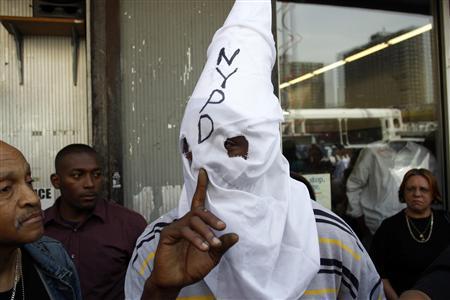
Nobody likes the word "racist" but if someone says that people are safer because of a "stop-and-frisk" policy that targets minorities, what would you call that? That's what Mayor Bloomberg said yesterday.
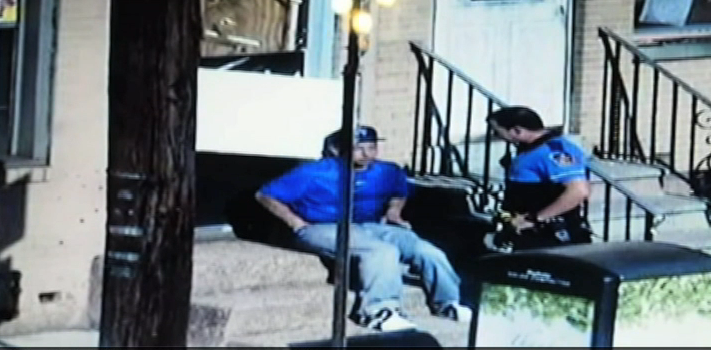
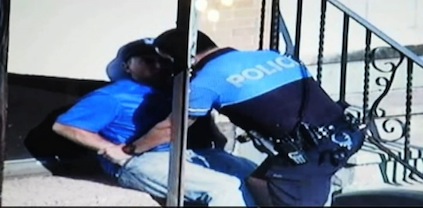
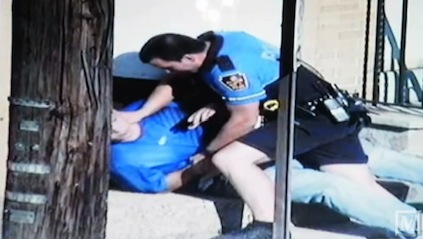
A new documentary has been released that contains audio of New York City police stopping a Harlem teen last June for looking "very suspicious." When asking for clarification as to why he was being held, the response was, "For being a f*ckin' mutt." The police continued to threaten him and said they would break his arm. The teen, Alvin, called 911 to report the abuse and is still awaiting mediation even though Alvin's dad is a traffic cop!
See the documentary entitled "The Hunted and the Hated: An Inside Look at the NYPD's Stop-And-Frisk" here. There is footage from police stating they were told to go "violate some rights." It's highly disturbing that even though they knew the kid's dad was a cop, they continued to harass him and even seemed to hurt him worse after that.
What does the mayor have to say about appointing an inspector general to look into this police brutality? He told David Seifman of the New York Post, "The last thing we need is some politician or judge getting involved with setting policy, because you won't be safe anymore. But today, you are. Think about that when you write your story."
Did stopping a teenaged son of a traffic cop make New Yorkers safer? People who are not stopped and frisked are generally okay with the policy. In other words, white people.
Perhaps Mayor Bloomberg is just having some logic issues as he recently decided that taxing New York's rich is a "dumb" idea too.
A North Carolina federal district court has found that the Billy Graham Evangelistic Association (BGEA) did not discriminate against Kimberly McCallum, formerly the only African-American employee in the group's Global Ministries office, in terminating her employment as an administrative assistant.
The court held that the BGEA's ministerial exception claim was inapplicable because McCallum's position was administrative, not pastoral. However, the court also dismissed McCallum's Title VII discrimination claim, finding no racial motivation in the BGEA's dismissal.
McCallum sued the BGEA after her position as an administrative assistant was eliminated. She claimed that the BGEA fired her in 2007 after she complained that African-American churches were not receiving equal invitation to participate in BGEA programming.
CT previously reported an earlier ruling in the case in 2011, which found that the discrimination case could continue.
Republicans often portray reducing the debt — which they insist must be done entirely through spending cuts — as a matter of principle as well as good policy. “In my view, it’s not just bad economics,” GOP presidential candidate Mitt Romney said in August. “It is immoral for us to pass these burdens on to coming generations.”
But a new report from the Urban Institute, flagged today in The New York Times, found that spending and tax exemptions that protect children from poverty and invest in their future will decline from 3 to 2.3 percent of the economy by 2022 — largely as a result of attempts to reduce the debt.
Much of the effect is due to the exhaustion of the 2009 stimulus combined with the spending caps imposed by the Budget Control Act of 2011, which averted the debt ceiling crisis. Some elements of support for children were exempted from the BCA, particular health care programs and income support. But other areas such as tax provisions, education, and nutrition support will see a significant hit...
The Oakland police officer who fatally shot 18-year-old Alan Blueford during a foot chase in May won’t face criminal charges because the Alameda County District Attorney’s Office has determined that the shooting was justified.
Senior Deputy District Attorney Kenneth Misfud said in an 18-page report completed last week and made public Tuesday that Officer Miguel Masso “had probable cause to believe that Mr. Blueford posed a threat of serious harm to him and to others present during the incident,” including to dozens of people at a family party nearby.
Blueford, who was planning to graduate from Skyline High School in Oakland in June, was fatally shot in the early morning hours of May 6 during a chase near 92nd Avenue and Birch Street in East Oakland.
Blueford’s death has led to disruptions at two recent Oakland City Council meetings because his family members and supporters have accused the Oakland Police Department of covering up for Masso and have said the officer wasn’t justified in shooting him. In addition, his family has filed a federal wrongful death suit against Masso and the city of Oakland.
Misfud said in his report that Blueford’s failure to submit to Masso’s command to stop, combined with the fact that he made no attempt to discard his handgun, “could reasonably be interpreted as a desire and intent to use the handgun against Officer Masso if necessary.”
With the purchase of SOE Software, SCYTL has increased its involvement in the U.S. elections process. SOE Software boasts a strong U.S. presence, providing results in over 900 jurisdictions.
In 2009, SCYTL formally registered with the U.S. Election Assistance Commission as the first Internet voting manufacturer in the U.S. under the EAC Voting System Testing and Certification Program.
Also that year, SCYTL entered into an agreement with another firm, Hart InterCivic, to jointly market a flexible and secure electronic pollbook purportedly to allow U.S. election officials and poll workers to easily manage the electoral roll on Election Day in an efficient and convenient manner.
SCYTL’s ePollBookTM already replaced the paper precinct roster in Washington, D.C.
During the midterm elections in November 2010, SCYTL successfully carried out electoral modernization projects in 14 states. The company boasted that a “great variety” of SCYTL’s technologies were involved in the projects, including an online platform for the delivery of blank ballots to overseas voters, an Internet voting platform and e-pollbook software to manage the electoral roll at the polling stations.
The states that used SCYTL’s technologies during the 2010 midterms were New York, Texas, Washington, California, Florida, Alabama, Missouri, Indiana, Kansas, Mississippi, New Mexico, Nebraska, West Virginia and Washington, D.C.
Just prior to the midterms, Washington, D.C., tested its own new electronic-voting system and discovered it had been hacked.
As a program security trial, the D.C. Board of Elections and Ethics reportedly encouraged outside parties to hack and find flaws in its new online balloting system. A group of University of Michigan students then hacked into the site and commanded it to play the school’s fight song upon casting a vote.
This is not the first time SCYTL’s systems have been called into question.
Voter Action, an advocacy group that seeks elections integrity in the U.S., sent a lengthy complaint to the U.S. Election Assistance Commission in April 2010 charging the integration of SCYTL systems “raises national security concerns.”
“Foreign governments may also seek to undermine the national security interests of the United States, either directly or through other organizations,” Voter Action charged.
The document notes that SCYTL was founded in 2001 as a spinoff from a research group at the Universitat Autonoma de Barcelona, which was partially funded by the Spanish government’s Ministry of Science and Technology.
SCYTL’s headquarters are in Barcelona with offices in Washington, D.C., Singapore, Bratislava and Athens.
Project Vote noted that in 2008, the Florida Department of State commissioned a review of SCYTL’s remote voting software and concluded, in part, that:












AMOS WILSON
ARCHIVE
DONATIONS























BOOKS BW IS CHECKING OUT

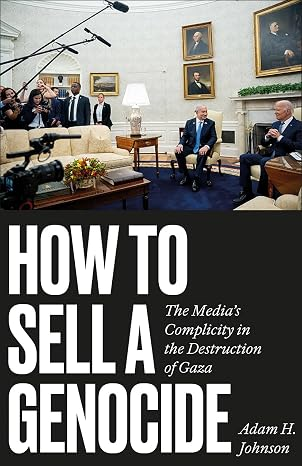
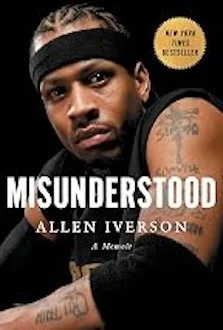
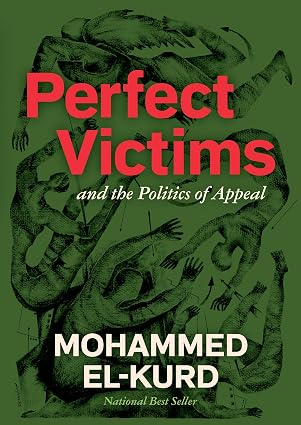

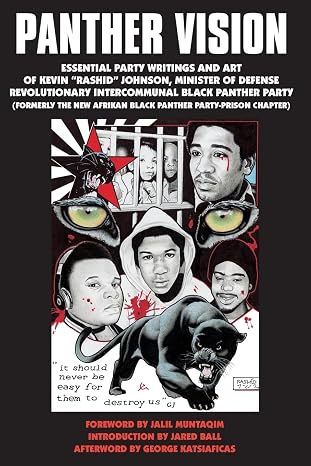
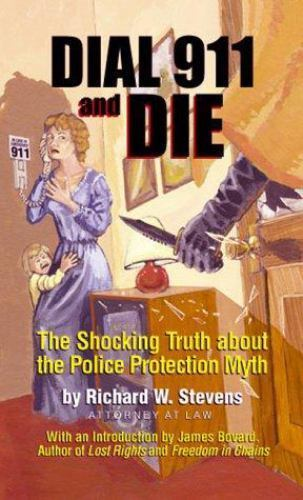


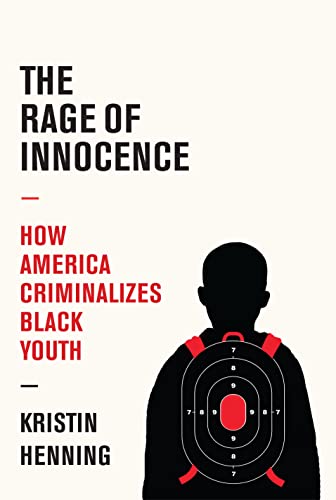



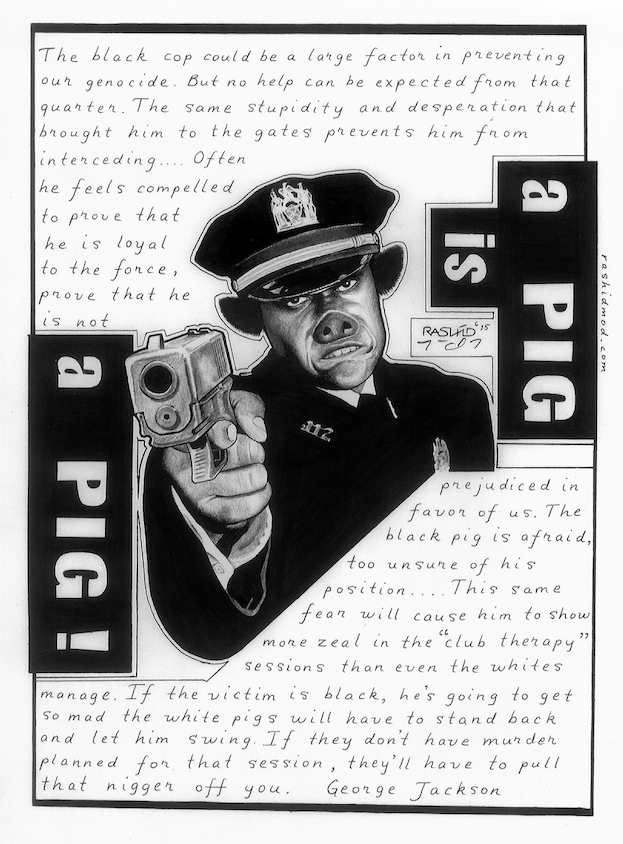




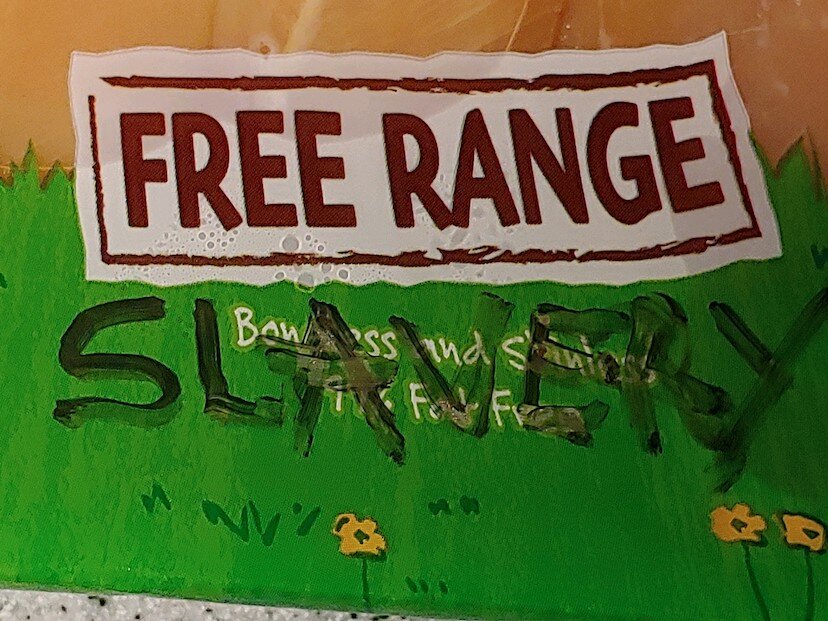
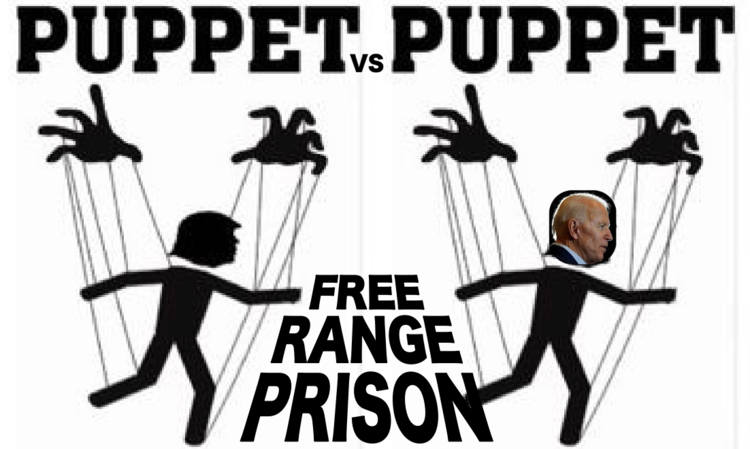






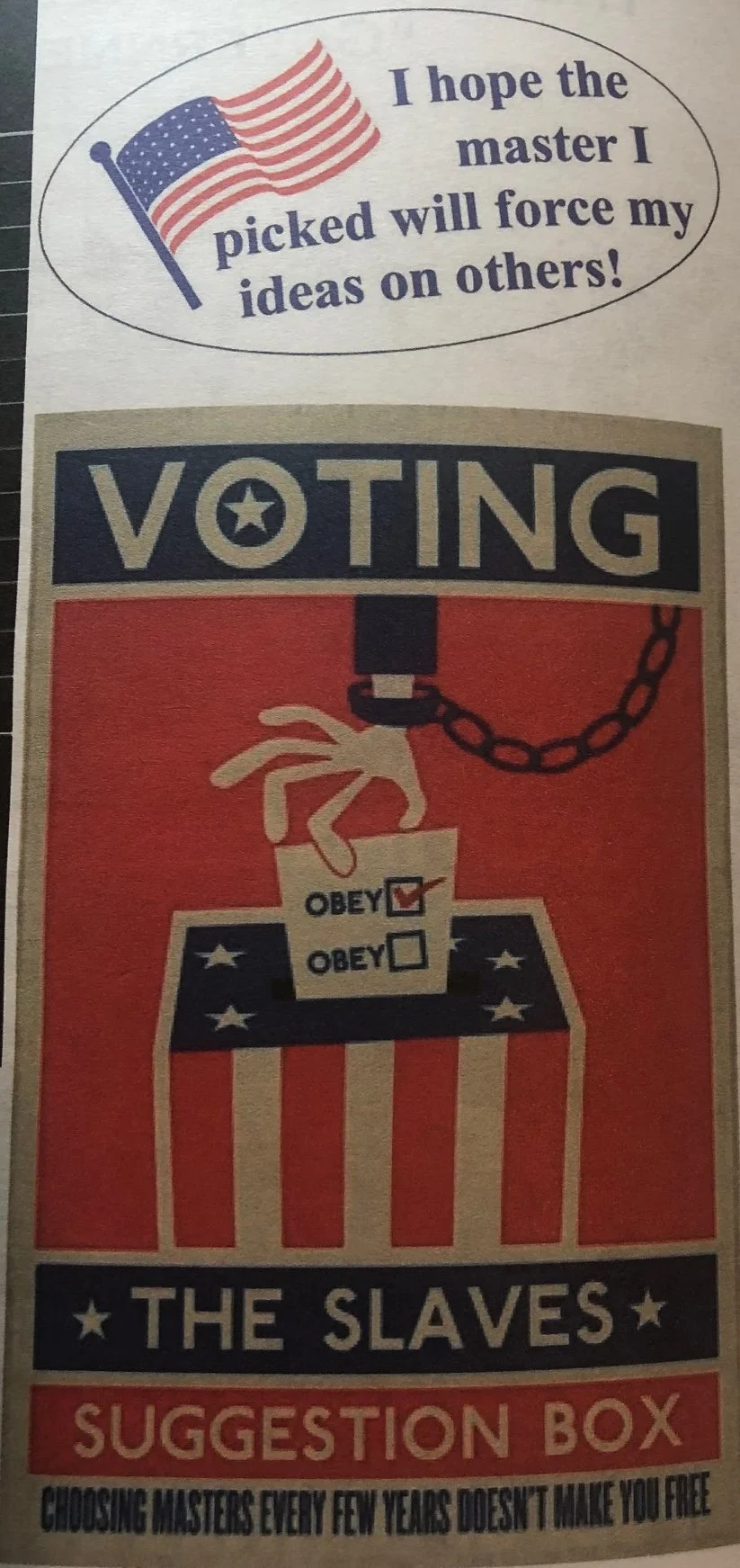
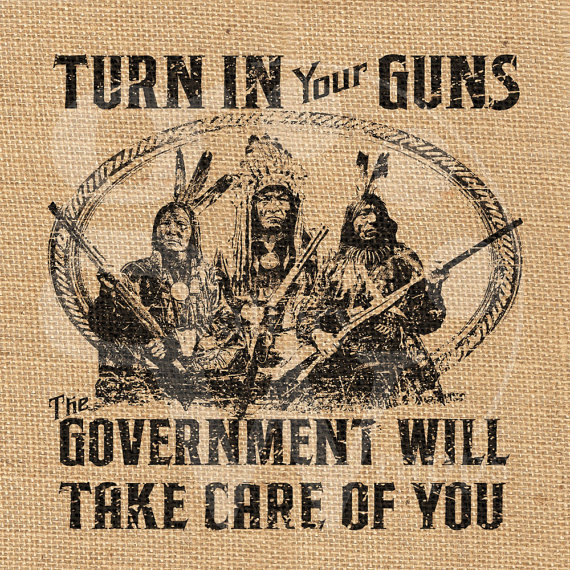
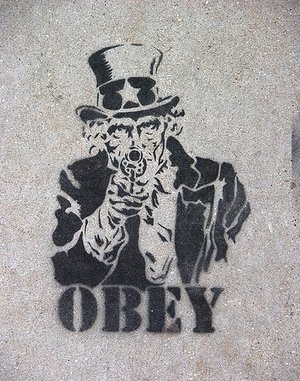
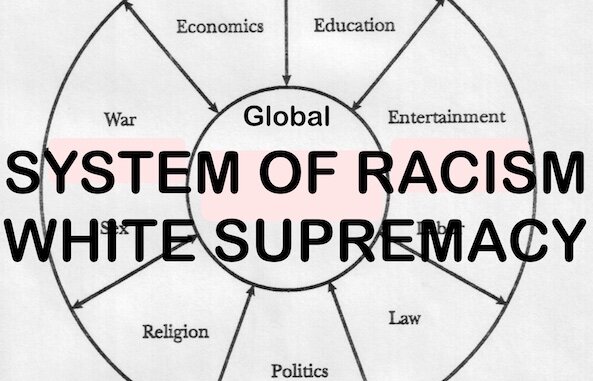
BrownWatch is a non-profit website that provides news and information for the purpose of liberation, education, self-reliance and greater self-knowledge. BrownWatch is intended to function as a tool to overcome info-gaps, verigaps and false programming toward the goal of “Endependence” within the meaning of FUNKTIONARY. It seeks to destroy the master/servant relationship maintaining the system of racism white supremacy and to unplug belief in systems of authority and all other granfalloons ensnaring humankind.
Any reproduction of copyrighted materials is done solely for the “productive uses” and “fair uses” of news reporting, sharing research, criticism, commentary, education and to provide an alternative contextual lens of such material within the meaning of the Copyright Act. 17 USCS § 107 (2019).
Powered by Squarespace.
Copyright © 2025, The BrownWatch. All rights reserved.