Keep fighting reinstatement of Portland police officer who shot Aaron Campbell, Mayor Adams urges council

OregonLive

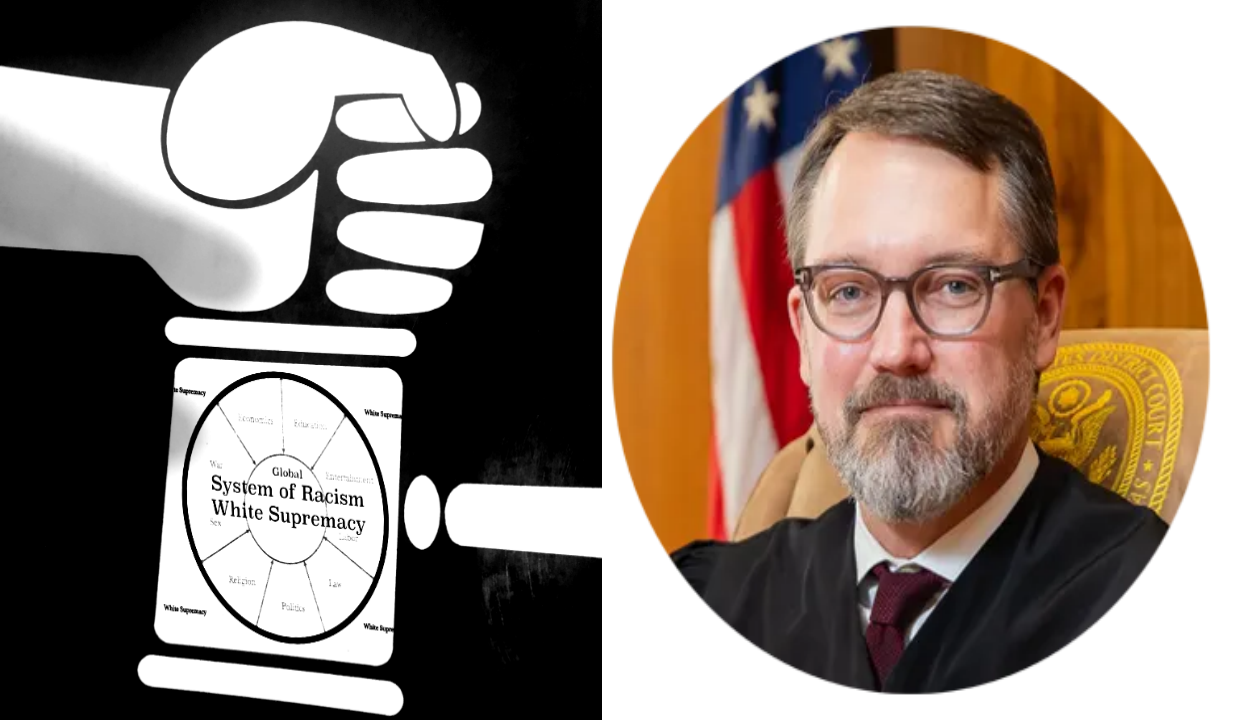
Portland Mayor Sam Adams Monday said he'll urge the City Council to appeal a state board ruling that ordered the city to reinstate fired officer Ronald Frashour to the police force with back pay and benefits. 

"I promised in April I would take this case as far as we can," Adams said, speaking at City Hall. 


Though the mayor said he's aware of the potential cost to the city should it lose in court, Adams said he's fighting for control of the city police force by the city's police commissioner, police chief and City Council. 


"What we're investing in here is to have more local control of our very own Police Bureau," Adams said. "It is totally worth it, and Portlanders want us to do this." 


The mayor and Police Chief Mike Reese fired Frashour for shooting an unarmed man in the back in 2010. 


In a ruling released Monday, the state Employment Relations Board unanimously ruled that the city violated Oregon's Public Collective Bargaining Act by refusing to follow an arbitrator's award in March that ordered Frashour be reinstated to the police force. The board ordered Frashour be returned to his job within 30 days, with back pay, benefits and 9 percent interest. 


The board did not issue the city a civil penalty, but said the city must post a public notice in the Police Bureau and other city offices that the city in a "calculated" action violated state law. 


The state's findings did not surprise city officials or Portland police union representatives. 


The city had argued that rehiring Frashour would violate public policy. The mayor hung his hat on a "public policy exception" adopted as state law in 1995 to limit an arbitrator's authority after several controversial and highly publicized arbitration awards. 


Attorneys for the city argued that Frashour's use of deadly force was unreasonable and disproportionate to the circumstances he faced. They said the Police Bureau's use of force policy is more restrictive than state law, which instructs officers to use the least amount of force possible. To reinstate him would violate the city charter, as well as the state and federal constitutions, the attorneys argued. 


But since 1995, rulings by the Oregon Court of Appeals and Oregon Supreme Court have narrowed the state board's focus. An arbitrator's award can only be ruled unenforceable if it orders a public employer to do something that lawmakers or courts have determined to be contrary to public policy. The analysis must focus on whether the arbitrator's award violates public policy, not whether the employee's conduct does. 


"We review the award, not the conduct," the board wrote in its Frashour decision. 

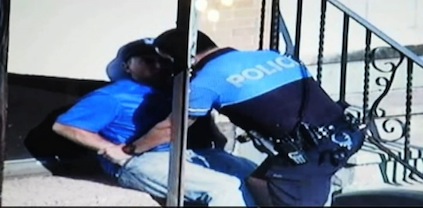
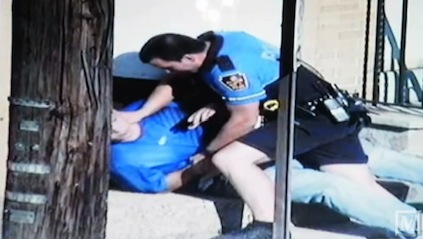
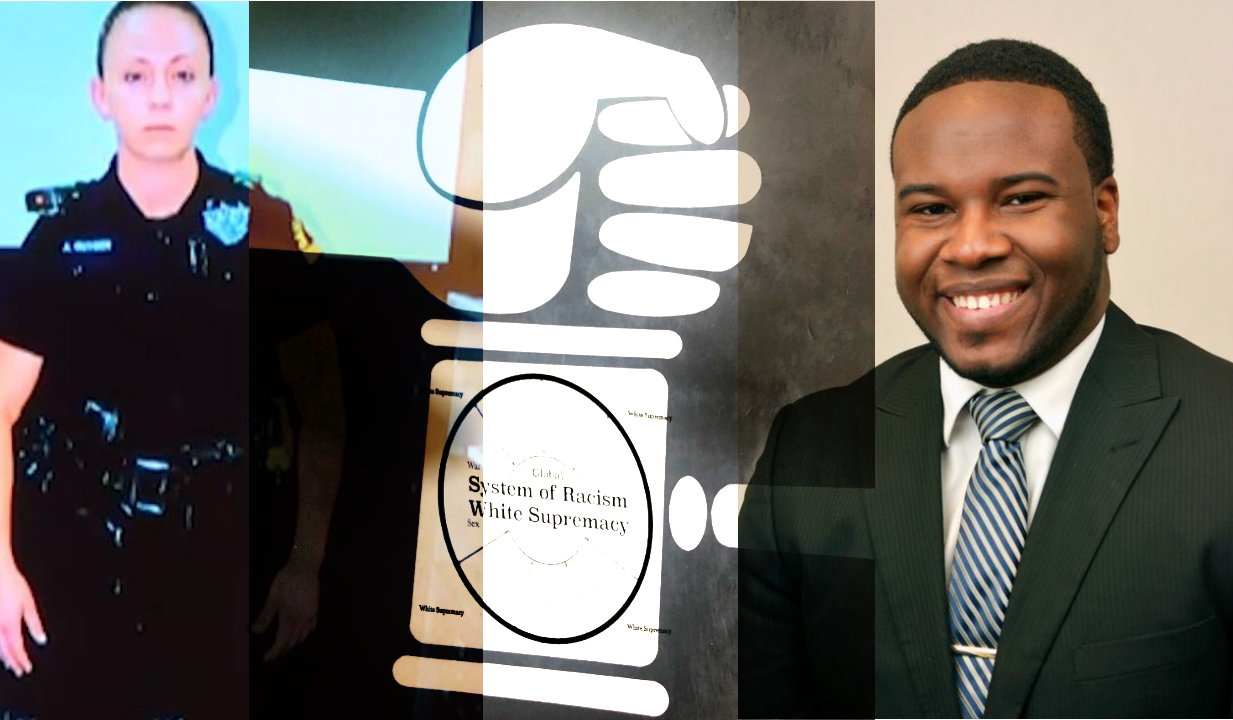
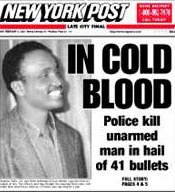
On Jan. 29, 2010, Frashour shot Aaron Campbell in the back with an AR-15 rifle after Campbell had been struck with multiple beanbag-shotgun rounds shortly after emerging from a Northeast Portland apartment. Frashour said he thought Campbell was reaching for a gun. Campbell was unarmed. 


The mayor and Police Chief Mike Reese fired Frashour on Nov. 8, 2010. But on March 30 of this year, arbitrator Jane Wilkinson ordered the city to reinstate Frashour, saying a reasonable officer could have concluded that Campbell "made motions that appeared to look like he was reaching for a gun." 


The mayor refused to follow the arbitrator's ruling -- the first time a Portland mayor has fought an arbitrator's ruling on an officer terminated for use of force. The police union filed an Unfair Labor Practices complaint on Frashour's behalf. 


The state board said it relied on a three-part test: Did the arbitrator find the employee guilty of misconduct? If so, did the arbitrator relieve the person of responsibility for the misconduct? And lastly, is there a clearly defined public policy that makes the award unenforceable? 


"We are not to substitute our judgement for the arbitrator's determination of whether the public employee engaged in the conduct resulting in discipline," the board wrote. 


The arbitrator in the Frashour case, the state board noted, concluded there was an "objectively reasonable basis" for Frashour to believe Campbell posed an "immediate risk of serious injury or

death to others." The arbitrator found the city did not prove Frashour violated the bureau's use of force policies.  


"There is no need for any further analysis" by the board if an arbitrator finds no misconduct by an officer, the board said. 


Union attorneys had predicted the outcome months earlier. Officer Daryl Turner, Portland Police Association president, said Frashour wants to get back to work. 


"The unnecessary battle that the city undertook should now be over," Turner said in a statement Monday. "The city has spent over $750,000 of taxpayer funds to keep Officer Frashour fired. That sum is unacceptable in a time where local governments are struggling to provide core services to their communities." 


Yet Adams pledged to make the Frashour discipline a "test case," frustrated by repeated arbitration rulings that have overturned the city's discipline of police. He said he'll urge the City Council to hold a hearing within 30 days to vote whether to challenge the board's ruling to the Oregon Court of Appeals. 


City Attorney James Van Dyke argued that the board failed to consider the legislative history behind the "public policy exemption." 


"We just feel like they got it wrong this time around," Van Dyke said. 


Commissioner Randy Leonard, a former president of the city firefighter's union, said he's leaning against a court challenge. Leonard said he considered Frashour's actions "outrageous" and supported his termination, but the city must abide by the terms of its police contract, which includes binding arbitration. 


The other three commissioners said they need to further review the board's ruling. 
Read More

Youth fail to realize online photos, video can follow them into court

GreatFalls

These days, even entry-level cellphones come standard with a decent digital camera and basic Internet access. That makes it easy to update your Facebook status or share pictures and video with family and friends in a matter of seconds.

But that convenience can lead to trouble, too —particularly among teenagers and young adults who don’t consider the consequences of their actions beforehand.

It’s something that Chuck Hagen, a longtime Tippecanoe County deputy prosecutor, witnesses often.

“The younger crowd uses technology to its fullest extent, including the criminal aspect,” he said. “… Everything is so easily recorded, so easily transferred, so easy to use.

“When I was in high school, it would take half an hour to load a photo. Now they just snap pictures of everything and share, at little cost.”

Take, for example, the two former Faith Christian School students, ages 13 and 14, who admitted sexually assaulting a 13-year-old girl last April in a wooded area near school property. Both were sentenced to an Indiana Department of Correction facility for youth.

According to court records, prior to the sexual assault, the 14-year-old took a photo of the victim topless, and without her knowledge, in December 2011. He then shared the digital image with other juveniles and used it to blackmail the girl for four months.

The same boy also recorded the April sexual assault, which lasted 45 minutes, and later watched it with other juveniles.

Technology did not prompt the crimes, but it played a key role in the blackmail and subsequent police investigation and prosecution.

The boy’s behavior and actions fall under what the U.S. Department of Justice calls cybercrime, described as using a computer as a target, a weapon or an accessory.

According to the National Crime Prevention Council, it’s just as important for parents, schools and caregivers to teach children about “cyberethics” as it is to protect them from Internet-related crimes.

“While youth who commit cybercrimes may realize that their actions are wrong, they may not know that their Internet behaviors are illegal,” an article on the organization’s website states.

Read More

Counties Use Loophole In Pennsylvania Voter ID Law To Prevent Voter Suppression

ThinkProgress

Two Pennsylvania counties are implementing a creative new solution to arm as many residents as possible with voter IDs before the November election, issuing identification cards that can be used to vote through county-run nursing homes and colleges. The move takes advantage of a loophole in the state’s restrictive voter ID law that allows the facilities to issue ID cards to anyone – not just those who attend the colleges or live at the nursing homes. It has been estimated that the photo ID requirement could disfranchise as many as 750,000 state residents, and officials in Allegheny and Montgomery Counties said they instituted the measure following complaints from residents who had trouble obtaining photo ID through the Department of Transportation. Philadelphia and several other counties are now considering similar measures.

California Governor Signs Bill To Allow Election-Day Registration

ThinkProgress

A bill to allow election-day voter registration in California was signed into law Monday by Governor Jerry Brown. The measure will not affect this year’s election; it will take effect on January 1, 2013 and will likely not be implemented until 2015, when a voter database known as Vote-Cal is expected to launch. Studies have found that same-day registration boosts voter turnout by an average of seven percentage points. “While other states try to restrict voters with new laws that burden the process, California allows voters to register online — and even on Election Day,” Brown said in a statement. California joins ten other states that have some form of election-day registration.

Read More

Environmental Racism: Kids Living Near Busy Roads More Likely To Have Asthma

ThinkProgress

Previous research showed that pollution from heavy traffic near homes can contribute to breathing problems, and now a new study finds that children who live near busy roads are more likely to develop asthma. Specifically, researchers from the University of Southern California found higher levels of asthma in kids who living within 250 feet of freeways, which they say causes 8 percent of the 300,000 cases of childhood asthma in Los Angeles.

Read More

Kwame Kilpatrick pal says he passed $90K to ex-mayor

The Grio

A college buddy who was granted immunity by federal prosecutors testified Tuesday that he delivered $90,000 in cash to Kwame Kilpatrick in 2008 while the former Detroit mayor’s family was settling in Texas after his resignation.

Mahlon Clift said he gave $50,000 to Kilpatrick in Dallas in September 2008, after the ex-mayor had pleaded guilty to lying in a civil trial. He said the balance changed hands at a Detroit apartment a month later, just days before Kilpatrick began a jail sentence.

The source of the money is a key part of the government’s case in Kilpatrick’s federal corruption trial. Clift testified that money came from Bobby Ferguson, the owner of a Detroit construction company and a co-defendant in the case.

Kilpatrick, 42, is charged with bribery, fraud, racketeering conspiracy and tax crimes. He’s accused of extorting money from people who wanted business from the city when he was mayor and rigging contracts to help Ferguson. Kilpatrick’s father and Detroit’s former water boss are also on trial.

Ferguson had a gift bag full of cash and said “hold onto this for Black,” Clift told the jury, referring to a Kilpatrick nickname. “I assumed it was Kwame.”

Clift, a Chicago resident, said he’s known Kilpatrick since the 1980s when they were students at Florida A&M University.

“It was a friend in need. I was trying to be a good friend,” Clift said of his courier role.

Clift said he flew to Chicago from Detroit with $90,000 in his pockets — nine rubber-banded stacks of $10,000 each — and then stashed the cash inside a vacuum cleaner at home.

He said he never got specific instructions from Ferguson. Clift said Kilpatrick was silent when they met in Dallas for the $50,000 delivery. During the testimony, it was disclosed that Clift has an immunity agreement with the U.S. attorney’s office.

The defense tried to cast doubt on the story. Ferguson attorney Michael Rataj said Clift would have looked like the puffy “Michelin man” as he walked through airports with stacks of cash in shorts under his jeans.

Clift acknowledged that he still can’t remember the date when Ferguson gave him the money, despite the extraordinary circumstances.

Tuesday’s second witness was Officer Michael Fountain, who said he was threatened into dropping misdemeanor trash violations against Ferguson shortly after Kilpatrick took office in 2002. Ferguson had been ticketed for high weeds, broken-down vehicles and debris that attracted rats to his property.

Fountain said he was confronted in the courthouse by Ferguson and two police officers who were members of Kilpatrick’s security team. He said Ferguson told him, “Your family wouldn’t like this.”

Fountain said he canceled the tickets and told the judge that he had made mistakes. He testified that he feared “something could happen to me or my family.”

Kilpatrick, a Democrat and son of ex-U.S. Rep. Carolyn Cheeks Kilpatrick, was a state lawmaker when he was elected mayor in 2001. He resigned in 2008 and pleaded guilty to obstructing justice by lying in a civil case about having sex with an aide. He subsequently served 14 months in prison for violating probation in that case.


Read More

Drug lab scandal might taint over 1,100 inmate cases

The Grio

More than 1,100 defendants are now serving prison sentences based at least in part on drug tests by a chemist accused of failing to follow protocols and deliberately mishandling samples in a now-closed state drug lab, officials said Monday.

That figure was released by David Meier, a defense attorney and former prosecutor appointed to help sort through the legal quagmire created by the lab scandal. Officials say chemist Annie Dookhan was involved in testing more than 60,000 drug samples involving about 34,000 defendants during her nine years at the Boston lab. Dookhan resigned in March during an internal investigation by the state Department of Public Health, which ran the lab until state police took over on July 1 as part of a budget directive.

Meier said he met with a group of district attorneys, defense attorneys and public safety officials on Monday and turned over a list of 690 people serving sentences in state prisons and 450 serving sentences in county jails.

Meier said it is unclear how many of those samples might have been tainted. But he said it’s up to the lawyers to bring those cases before a judge.

“That is our first priority, people who are presently incarcerated,” he said.

The list turned over Monday do not include thousands of people who are awaiting trial, are on probation or are serving federal sentences in cases in which Dookhan tested drug samples.

Dookhan hasn’t been charged, but the state attorney general’s office is conducting a criminal investigation.

Dookhan hasn’t responded to repeated requests for comment. But her father, Rasheed Khan, told The Associated Press that she had been “bullied and abused,” but he would not say by whom.

“No one has heard her side of the story,” Khan said outside his home in Kissimmee, Fla., on Saturday.

Since the lab was closed last month, judges in Suffolk and Norfolk counties have begun hearing motions filed by defense attorneys seeking bail reductions for drug defendants awaiting trial in cases handled by Dookhan. Prosecutors have agreed to many of the motions, citing possibly tainted evidence.

Also on Monday, a judge in Boston agreed to put the sentences of career criminal David Huffman on hold and set bail for him at $75,000 cash, with GPS monitoring. The 55-year-old Huffman had pleaded guilty in August to trafficking in heroin and cocaine, possession of oxycodone with the intent to distribute and unlawful possession of ammunition and a firearm as an armed career criminal

He began serving concurrent seven- to 10-year sentences last month.

Huffman’s lawyer, Bernard Grossberg, said the next step will likely be for the defense to ask that his client be allowed to withdraw his guilty plea.

“He would not have pleaded guilty to the gun charges if it was not part and parcel of his plea on the drug charges,” Grossberg said.

Jake Wark, a spokesman for the Suffolk district attorney, said prosecutors opposed the motion to put his sentence on the gun charges on hold. He said the gun evidence was tested in a different lab and was unaffected by the drug lab scandal.

“This is an individual who’s been involved in just about every type of property and violent crime over the course of 40 years,” Wark said. “We believe the judge should have treated the two cases separately.”

New polls suggest Romney behind in Ohio, Florida

The Grio

As Mitt Romney joins running mate Paul Ryan in Ohio for two days of campaigning, a new poll suggests the Republican ticket has some ground to make up.

A Washington Post poll out today shows President Barack Obama leading Romney 52 to 44 percent among likely Ohio voters.

The poll also shows Obama with an advantage in another competitive state, Florida. But the findings suggest he’ll need to make a strong push to get his supporters to the polls in Florida. The Post poll finds 51 percent of likely Florida voters favor the president, while 47 percent are backing Romney. However, among all registered Florida voters, the poll gives Obama a 9 percentage point lead.

The president is following Romney to Ohio. He has campaign stops scheduled in the college towns of Bowling Green and Kent tomorrow.

Obama recorded an appearance on ABC’s “The View” with wife Michelle Obama today, highlighting things his administration has done to help the economy, such as bailing out U.S. automakers. He repeated his assertion that Romney’s would bring back policies that led to the financial crisis and recession in the first place.

Ryan held a town hall-style meeting in a steel plant in Cincinnati today, arguing that businesses will be hobbled if the president doesn’t bring government debt under control.

Read More

Court monitor: Juvenile detention center in Mississippi failing to follow requirements of settlement with SPLC to stop abuse and neglect

SPLC

A juvenile detention center in Hattiesburg, Miss., has made “little or no headway” in addressing the dangerous conditions that led to an SPLC lawsuit – even though nearly a year has passed since officials settled the suit with promises to stop the abuse and neglect of children, a court-appointed monitor has found.

Read More

Timeline: A Guantanamo Death Foretold

Propublica 

Earlier this month, Adnan Latif became the ninth detainee to die in the U.S. prison at Guantanamo Bay. He was found dead in his cell. By the government’s own account, he didn’t still need to be there.

Latif was among the first prisoners at Gitmo. But he was not alleged to be a high-level terror suspect, and in 2010 a federal judge ordered his release on the grounds that the government couldn’t prove his connection to Al Qaeda. That ruling was later reversed, and he remained in prison.  Aside from the court battle over his detention, Latif had also been recommended for transfer multiple times by the military. 

Latif’s lawyers have described Latif as mentally unstable, attempting suicide on multiple occasions. The cause of his death has not yet been made public.

Here’s a timeline of Latif’s 11-year imprisonment. [MORE] 

Read More

Federal judge dismisses challenge to Florida early voting law amendment

JURIST

A judge for the US District Court for the Middle District of Florida [official website] ruled [opinion, PDF] Monday that Florida does not have to provide 96 hours of early voting for the November elections. Under a 2004 version of the state's early voting statute, the early voting period lasted 12 to 14 days with 96 hours of early voting. The statute was amended in 2011 when Governor Rick Scott signed an amendment [text] decreasing the days of early voting to eight with 48 to 96 hours of early voting. The amended version also prescribed that the voting period...

New Yorkers Tag Racist 'Savage' Jihad Subway Ads

Colorlines

An ad equating Islamic jihad with savagery were posted Monday in 10 New York City subway stations. "In any war between the civilized man and the savage, support the civilized man," the ad reads. "Support Israel/Defeat Jihad."

But hours after the ads went up a street artist tagged them with "racist" and "hate speech" labels.

The ads were initially rejected by the Metropolitan Transportation Authority, which runs New York's subway and train systems, because the advertisement failed to meet its standards which prohibit demeaning language of any group. But a federal court forced the MTA to run the ads saying it was protected speech under the First Amendment.

Pamela Geller, executive director of the American Freedom Defense Initiative has claimed responsibility for the ads.

"We don't think it's controversial," Geller said in an interview with CNN. "It's truth. The MTA has run anti-Israel ads before and no one had an issue about it. 'Any war on innocent civilians is savagery': What's controversial here?"

Geller also told CNN she had no qualms about releasing the ad amid ongoing protests against an anti-Islam film clip that left dozens in seven countries dead, including the U.S. ambassador to Libya. "If it's not a film, it's a cartoon, it's always some event," Geller said. "I will not sacrifice my freedom."

"We recognize the freedom of speech and Geller's right to be a racist and bigot. But we also recognize the responsibility of New Yorkers to denounce that bigotry," said Muneer Awad, director of Council of American-Islamic Relations.

"We must stop dismissing this as simple hysteria, and realize that the same racism inherent in this hate group's message, underlies the government policies of the elected officials associated with them," Awad went on to say in an email to Colorlines.com. "We will continue to expose these hate groups until our elected officials clearly denounce them and stop supporting discriminatory policies targeting American Muslims and all other minority communities."

The Interfaith Center of New York, joined by other groups including the Cordoba Initiative and Jews Against Islamophobia, have also denounced the ads, calling them "dangerous" and "hate speech."

Philip Weiss, on Mondoweiss.com, reports the savage ads have been altered with "racist" or "hate speech" labels in at least seven New York subway stations so far. He's published a collection of images showing the altered ads on his site.

The same ads also appeared on San Francisco buses last month. There, the San Francisco Municipal Transportation Agency put up their own counter ads and donated any proceeds from the ads to human rights organizations.

Read More

Jimmy Carter States That the Election Process in Venezuela is “the Best in the World” - paper receipt provided

MoneyLife

Former US President Jimmy Carter stated “As a matter of fact, of the 92 elections that we've monitored, I would say the election process in Venezuela is the best in the world" during the kickoff of the Annual Conversations at the Carter Center series. Basing his opinion on the vast experience amassed by the institution observing and monitoring elections around the world, Mr. Carter praised the South American nation for having a voting system that makes verifying results an easy task.

The technological solution developed by Smartmatic, which has been used in Venezuela since 2004, includes touch-screen voting machines that store votes electronically (encrypted and scrambled), and print a paper receipt for each vote. This characteristic, the full implementation of the VVPAT concept, gives the system a great advantage according to Mr. Carter.

The former President, who has an impressive record in electoral monitoring, also remarked that elections in Latin America have improved significantly over the past decades.

Unlike other countries that have earned renown in electronic voting, such as Brazil, India and the USA, Venezuela’s voting technology provided by multinational Smartmatic, offers several security mechanisms for audits and verification of results, which have been accredited by national and international observers including the Carter Center. In fact, Venezuela was the first country to deploy on a national scale, in 2004, an election using touch screen voting machines with printed paper receipts.

Among the many topics discussed by the former President in the Atlanta event were the efforts of the Carter Center in strengthening peace and democracy, in favor of health in Africa and the financing of electoral campaigns around the world.

About Smartmatic

Smartmatic is a multinational company that designs and deploys technological solutions aimed at helping governments fulfill, with the greatest efficiency, their commitments to citizens; it is a technology supplier with an extensive track record and proven experience in the United States, Asia, Africa, Europe, Latin America and the Caribbean. Smartmatic’s competitive advantage is based on its cutting-edge technology and experience in three key areas: Elections, Identity Management and Smart Cities.

Read More

Study Finds Memories Can Change with Each Recall; Researcher Sees Criminal Justice Implications

ABA Journal 

A Northwestern University researcher has found that memory retrieval may be like the game of telephone.

Just as a whispered message changes with each retelling, memories can change when they are recalled multiple times, according to the study by Donna Bridge, a postdoctoral fellow at Northwestern University Feinberg School of Medicine. A press release summarizes the findings published in the journal Neuroscience.

“A memory is not simply an image produced by time traveling back to the original event—it can be an image that is somewhat distorted because of the prior times you remembered it,” Bridge said in the press release. “Your memory of an event can grow less precise even to the point of being totally false with each retrieval.”

Bridge says her findings have implications for eyewitness accounts in criminal trials. “Maybe a witness remembers something fairly accurately the first time because his memories aren’t that distorted,” she said. “After that it keeps going downhill.”

Test subjects in Bridge’s study were asked to recall the location of objects on a grid in three sessions on three consecutive days. On the second day, the subjects were shown a subset on the first day’s objects and asked to move them to their original locations. On day three, the test subjects showed greater recall of the objects they manipulated on day two. But when test subjects made a mistake on day two, they were more likely to repeat the mistake on day three by placing the object closer to the incorrect than the correct location.

The Neuroscience study used 12 subjects, but Bridge has repeated the results. “When someone tells me they are sure they remember exactly the way something happened, I just laugh,” Bridge said in the press release.

Read More

Clinton: White Party voter suppression targeting African-American churches

Rawstory

Former President Bill Clinton is warning that President Barack Obama’s edge in the polls may not be enough to defeat GOP hopeful Mitt Romney because the Republican Party was using voter suppression techniques to target traditionally Democratic voters like African-American church members and the elderly.

“How much will the vote be lessened or reduced by the fact that in Florida except for four counties, the pre-election voting — advanced voting — has been cut down to and doesn’t include the Sunday before the election?” Clinton told CNN’s Fareed Zakaria in an interview that aired on Sunday.

The former president added that the tactic was “an arrow aimed straight at the heart of the African-American church, who pull up the church busses on the Sunday before the election and take elderly people who have no cars or people that are disabled to the polls so they can vote.”

“How much will those things work in Ohio, where the legislature eliminated advanced voting unless the local election council voted for it?” he continued. “In the Republican counties, the three Democratic commissioners — because they’re not hypocrites — voted with the Republican to allow advanced voting. In Cleveland, the three Republican commissioners voted against the Democrats so they can’t have advanced voting.”
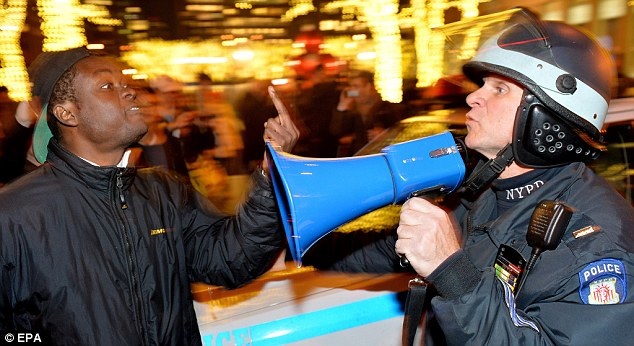
“How much is all that going to affect the turnout? In my lifetime, nobody’s ever done anything quite this blatant. So, I think you have to assume it’s going to be close race, assume it’s going to be a hard fight, and then fight through it.”
Read More

Why Won't Rupert Murdoch's Wall Street Journal Acknowledge Its Karl Rove Ties?

Media Matters

Rupert Murdoch's Wall Street Journal continues to trip over its Karl Rove conflict of interest, with the paper's newsroom routinely failing to mention that the man who helped found an anti-Obama super PAC is also a Journal employee. Time and again this election season the Journal has reported on Rove's campaign work with American Crossroads, and time and again the newsroom has neglected to acknowledge Rove works for the Journal as a political columnist.

The disclosure failure, and the obvious lack of transparency, is just part of the paper's ongoing ethical morass with regards to Rove. As Media Matters has reported, scores of editorial page editors have criticized the paper for failing to disclose in its opinion pages where Rove's anti-Obama columns appear, that Rove is closely associated with an anti-Obama campaign group.

The very fact that the Journal hired Rove, a GOP fundraiser, to write columns about the races Rove is trying to win for the GOP represents a glaring ethical lapse. The Journal's refusal to disclose those ties only compounds the problem; a problem that extends from the opinion pages to the newsroom.

Today's front-page Journal article examines whether conservative super PACs have been effective in denting the president's re-election chances. Rove's Crossroads group is featured as the pivotal conservative super PAC in the article. Yet nowhere in the piece is it reported that Rove also works for the newspaper.

That transparency failure has become commonplace. On September 6, the newspaper published an article about super PAC fundraising efforts by liberal and conservative groups and noted, "By contrast, American Crossroads and Crossroads GPS, two Republican groups founded with the help of Karl Rove, have spent $67 million combined."

There was no mention that Rove's a Journal employee.

On Sept. 5, the Journal focused on the surprisingly tight U.S. senate race in North Dakota, and the amount of outside money pouring into the campaign:

Crossroads GPS, a Republican campaign fund co-founded by Karl Rove in 2010, and Majority PAC, a group that aims to protect Democrats' Senate majority, have spent heavily and run negative ads in the state.

No mention that Rove's a Journal employee.

And back on July 19, the Journal reported that Crossroads was coming to the aide of Romney with new television ads designed to defend the candidate's career at Bain Capitol. The Journal noted the super PAC "was founded with the help of Bush White House aide, Karl Rove."

No mention though, that Rove's a Journal employee.

Read More

55 Guantanamo Detainees Were Cleared For Release Three Years Ago, But Are Still Held At Gitmo

ThinkProgress

The Justice Department released the names of 55 prisoners still being held in Guantanamo Bay three years after the Obama administration’s Guantanamo Bay Task Force cleared them for transfer. The disclosure comes a month after the ACLU filed a Freedom of Information Act request for the names and will help the detainees’ attorneys publicly advocate for their release.

DOJ previously suggested releasing the names “could confuse, undermine, or jeopardize our diplomatic efforts . . . and could put at risk our ability to move as many people to safe and responsible locations as might otherwise be the case.” Late last week, however, they announced that they no longer fear doing so will endanger diplomatic efforts:

In the over two years since the Task Force completed its status reviews, circumstances have changed such that the decisions by the Task Force approving detainees for transfer no longer warrant protection. The efforts of the United States to resettle Guantanamo detainees have largely been successful – they have resulted in 40 detainees being resettled in third countries because of treatment or other concerns in their countries of origin since 2009. In addition, 28 detainees have been repatriated to their countries of origin since 2009. Consequently, the diplomatic and national security harms identified in the Fried Declaration are no longer as acute. In Respondents’ view, there is no longer a need to withhold from the public the status of detainees who have been approved for transfer.

More than a third of the men who have been languishing in Guantanamo for the past three years are from Yemen, which is not considered stable enough to receive the detainees. One name not included on the list was Adnan Farhan Abdul Latif, who died earlier this month after the Department of Defense twice recommended he be transferred out of Guantanamo.

The Justice Department recently lost a case in which they attempted to block detainees’ access to counsel. The ACLU has also sued for the names of prisoners in indefinite detention, conditional detention and prosecution.

Read More