White Tulsa Cop Facing Suit for Shooting Black Man w/his Hands Up High: Reaching For an Imaginary Gun in the Sky

Seeing Things That Aren't There. Doc Blynd explains Racism is a "virus in the mind. A racist is a psychopath at war with his own being. [MORE] Suffering from the disease of constant comparison racists & their make believe beliefs [imagining themselves to be a part of a hierarchy wherein persons unable to produce color & lacking melanin are supreme; imagining themselves to be higher than what they imagine you to be] are in a state of non-reality, a play world. "A divided mind, with the an unconscious and a conscious one, can never apperceive things as they are. Truth is adulterated with falsehood in the same proportion to which one is unconscious." Anything such unconscious persons do or say will be stupid; know this while they are in your presence. 

From [HERE] Acquitted of manslaughter and back on desk duty, white Tulsa, Oklahoma Police Officer Betty Jo Shelby now faces a civil suit from the family of the unarmed man she killed last fall.

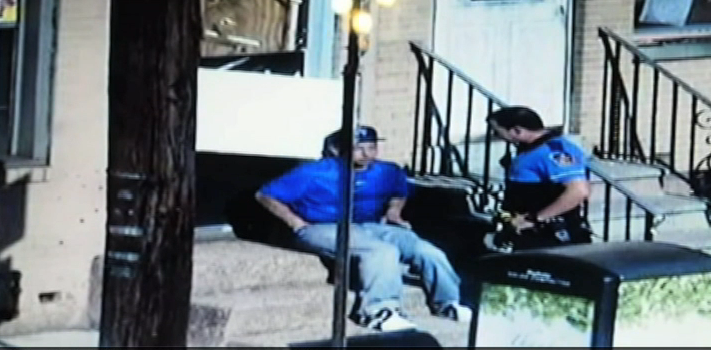
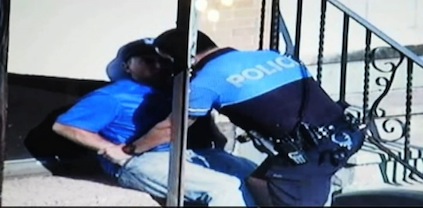
Terence Crutcher was empty-handed next to his vehicle when Shelby fired a single shot that killed him. Police cameras captured the final moments of the 40-year-old’s life from multiple angles, showing he had been walking slowly with his hands high above his head during the moments before the killing.

A jury decided last month that it could not convict Shelby of manslaughter in the case despite the video evidence. Defense attorneys persuaded jurors that Crutcher had made a move toward the open driver’s-side window of his stationary vehicle, and that Shelby’s decision in that moment to kill him was justified by what she perceived to be a reach for a gun that did not exist.

In a public letter after the trial, however, jurors indicated they believed Shelby’s actions were rash and Crutcher’s death was avoidable — just that none of what transpired satisfied the technicalities of the law they’d been asked to apply to the officer.

At 7:36 p.m. on September 16, 2016, police received a 9-1-1 call from a racist suspect about an abandoned vehicle in the middle of 36th Street North just west of Lewis Avenue. One racist suspect caller said: "Somebody left their vehicle running in the middle of the street with the doors wide open." "The doors are open. The vehicle is still running. It's an SUV. It's like in the middle of the street. It's blocking traffic." "There was a guy running from it, saying it was going to blow up. But I think he's smoking something. I got out and was like, 'Do you need help?'" "He was like, 'Come here, come here, I think it's going to blow up.'" The other racist suspect caller said: "There is a car that looks like somebody just jumped out of it and left it in the center of the road on 36th Street North and North Lewis Avenue." "It's dead in the middle of the street." "It's a Navigator. The driver-side door is open like somebody jumped out. It's on the yellow line, blocking traffic. Nobody in the car."

Police stated that Crutcher kept reaching into his pocket, refused to show his hands, walked towards his vehicle despite being told to stop, and then angled towards and reached into his vehicle. 

However, video and photographic evidence seems to contradict this, showing Crutcher's blood streaking the driver's side window from top to bottom after the shooting and indicating it was closed. Turnbough tased Crutcher, and Shelby shot him. Shortly before the shooting, officers in the helicopter conversed with each other: "This guy's still walking and isn't following commands." "It's time for a taser, I think." "I've got a feeling that's about to happen." "That looks like a bad dude, too, could be on something." Approximately two minutes after the shot, an officer checked Crutcher's pockets, and approximately 45 seconds later, someone crouched to offer aid. Police said Crutcher died in the hospital later that day. Tulsa police chief Chuck Jordan said no weapon was recovered from Crutcher's body or vehicle. [MORE]

The initial wrongful-death filing “contends Shelby had ‘ample opportunity to take ballistic cover’” with fellow officers close by, according to the Tulsa World.

But Crutcher’s surviving family members also appear ready to relitigate both the video footage and Shelby’s decision to shoot, this time in civil court.

Crutcher family lawyers argue the videos do not show “furtive, sudden, rapid, or aggressive movements” that would justify a “split-second decision” to fire — suggesting a civil jury will be asked to evaluate the same key frames of video and questions of officer training and department policy which were key to her criminal trial.

The civil suit also seems to reach further into the inner workings of Tulsa law enforcement institutions, laying blame on the very police policies and practices which helped keep Shelby out of prison.

“The dangers police officers generally face also do not provide a license to police officers to ‘shoot first and ask questions later,’ without properly evaluating the need for such force,” the family’s lawyers wrote.

Civil cases operate with a lower standard of proof. Wrongful-death cases generally require clear and convincing evidence to establish a claim while criminal cases require proof beyond a reasonable doubt. 

The white cop was reinstated to her police post shortly afterward and awarded more than $35,000 in back pay for time missed from work during the investigation.
Read More

Crying w/o Tears, Deluded White Cop Tells White Jury He Was Being Dragged by Unmoving Car in Murder of Sam DuBose

"A mind that is filled with belief is a mind which can project anything according to the belief. When you see things always remember this." [MORE In the presence of Blacks racists cannot see things as they really are. Racism white supremacy is a virus in the mind. [MORE]

Here, racist suspect officer misperceived reality and "believed" he was stuck to a moving car and was being dragged by it - b/c a Black man was present. His beliefs were actually delusions or misperceptions. [on cross he admits he misperceived being stuck to Black man's car- See video below at 1:45:51]. (Racists also believe they must act genocidally towards non-whites in order to survive. [MORE] and [MORE].) When the mostly white jury view the video will they see what is right in front of them with their eyes or will they see things only with their minds? [It Would Be Better If They Had No Eyes. At least there would have been no possibility of misunderstanding.] Don't hold your breath in racist system. 

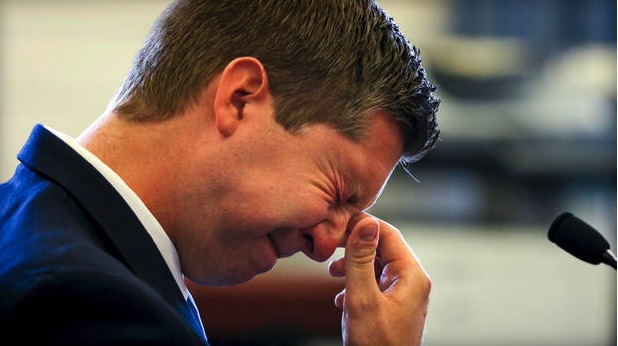
Some Racist Cops are Actors & Masterful Liars. [Just Cry & Tell White Jury You Were Scared of Black Man]. From [HERE] A crying white University of Cincinnati police officer on trial for the second time in the killing of an unarmed black motorist said on Friday that he feared for his life during the traffic stop when the shooting took place.

Officer Ray Tensing, 27, shot once, hitting 43-year-old Samuel DuBose in the head after stopping him for a missing front license plate on his car in July 2015, a body camera worn by Tensing showed.

Tensing, who is white, was charged with murder and voluntary manslaughter in a retrial of the case. A mistrial was declared last November in the first trial after jurors could not agree on a verdict.

Like the previous trial, the jury is mostly white: Nine whites and 3 African Ameircans (9 women and 3 men). [MORE] His previous jury was composed of 10 whites. [MORE] [Yes nearly all white in a City that is 45% Black. [MORE]]

Tensing fired his gun after DuBose started his car. Tensing stated that DuBose had begun to drive off and that he was being dragged because his arm was caught in the car. Prosecutors alleged that footage from Tensing's bodycam showed that he was not dragged and a grand jury indicted him on charges of murder and voluntary manslaughter. The encounter was captured on video and set off protests.

During the white cop's tearful testimony on Friday at the Hamilton County Courthouse in Cincinnati, Tensing, dressed in a dark suit, said that DuBose was evasive during the traffic stop and attempted to speed away.

"He just mashed the accelerator to the floor," said Tensing, who paused occasionally to wipe his eyes with a tissue. "I protected my life," Tensing said when asked by prosecutors if he had served and protected DuBose. Tensing said repeatedly that he shot to "stop the threat."

On July 19, 2015, Mr. Tensing pulled over Mr. Dubose’s 1998 Honda Accord a few blocks south of campus for having no front license plate.

Body-camera video released by prosecutors shows that Mr. DuBose shows the officer the missing license plate which was in his glove box after Tensing tells him he pulled over for not having a front tag. Mr. Tensing then is asking Mr. DuBose for his license and Mr. DuBose acknowledges that he does not have one with him after looking for it. DuBose says "I have a license, just run my name." He then says "I thought I did [have my licnese]. What did you pull me over for?" Tensing says "Again, the front tag." Dubose responds, "But it is not illegal to not have a front tag in Cincinnati." As if he did not hear, the officer asks again "do you have a license on you?" and then asks, "Are you suspended?" 

Tensing, who seems confused about what to do next starts to open the driver's door and orders DuBose to remove his seat belt. DuBose pulls the door closed, starts the engine, and puts the car in drive. Within the next few seconds, Tensing reaches into the car with his left hand, yells "Stop! Stop!", draws his pistol with his right hand, and fires once striking DuBose. Sources differed as to whether the car was moving before the shot was fired. According to the § Kroll Report, "it is difficult to determine with precision how much, if at all, the car moved [prior to the gunshot], but whatever movement may have occurred appears to have been minimal." 

After firing, Tensing falls away from the vehicle which accelerates as he and two other officers run after it. After travelling about 400 feet, the vehicle collided into a telephone pole and came to a stop. After the officers reach the car, the video shows DuBose inside with a gunshot wound to his head.

Then Cop Starts Lying. In bodycam footage, Tensing repeatedly tells other officers that he was dragged when his arm became caught in the car, possibly in the steering wheel. In the police report that he filed after the incident, he stated that he was dragged, forcing him to fire his weapon. Through lawyers, he released a public statement that he was afraid that he would be run over. He was allowed to view the video before making a police report. 

On July 29, authorities released Tensing's bodycam video, which, according to prosecutors, shows that Tensing was not dragged.

Black Man's Car Did Not Move Until After Cop Shot 

report by a risk-consulting firm hired by the university said that the video showed that Mr. Tensing was not being dragged, that the car had barely moved before the gunshot was fired and that Mr. Tensing had made several critical errors — including drawing his gun and reaching into the car.

UCPD officers [white] Phillip Kidd and David Lindenschmidt arrived at the scene just after the gunshot, and their bodycam footage shows Tensing getting up off the pavement. According to County Prosecutor Joe Deters, neither officer stated in his official statement to Cincinnati police that he saw Tensing being dragged. Officer-in-Training Lindenschmidt, who had started working in the field only that month, made what have been called "rookie mistakes" in picking up Tensing's fallen flashlight and moving Tensing's vehicle. [MORE]

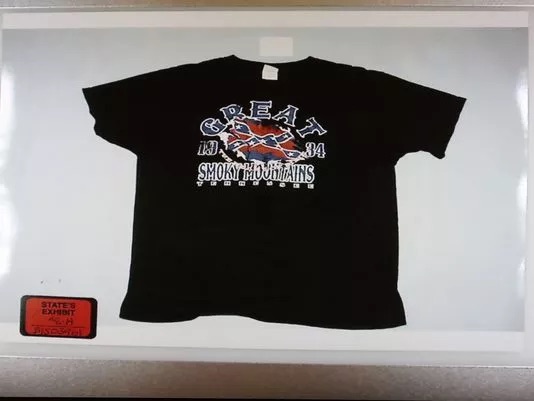
Was Wearing a Confederate Flag Under Shirt When He Shot Black Man. The white cop was wearing a T-shirt depicting a Confederate flag under his uniform at the time of the shooting. The shirt was presented as evidence in the previous murder trial against Tensing according to USA Today. Along with the Confederate flag, Tensing’s shirt read “Great Smoky Mountains, 1934.” [MORE]

Mr. Tensing was fired after the indictment.

Last January, the university agreed to pay $4.85 million to Mr. Dubose’s family and provide an undergraduate education to his 12 children.

Tensing is free on a $1 million bond. 

Read More

ACLU says Blacks in N.J. are arrested for marijuana 3 times as often as whites - a Disparity at an all time high

From [HERE] In New Jersey, African Americans are arrested for possession of marijuana about three times as often as Caucasians and Hispanics, and in some of the state’s smaller towns more than 25 to 30 times as often, according to a report issued by the American Civil Liberties Union of New Jersey on Thursday.

The ACLU’s two-year analysis of data from the FBI’s Uniform Crime Reporting Program revealed police in New Jersey’s rural and suburban towns were more likely to disproportionately arrest blacks for marijuana than police in urban communities between 2000 and 2013.

“The war on marijuana is a war on marijuana users, and it’s disproportionately a war on black communities,” ACLU-NJ interim executive director Diane DuBrule said in a statement released with the detailed 70-page report.

The arrests ranged from possession of a joint to as much as 50 grams (less than two ounces).

The report also noted that the rate of marijuana use among blacks and whites is similar, based on the 2013 National Survey on Drug Use and Health, while the arrest rate for blacks is much higher. The survey said that 42.1 percent of blacks reported having used marijuana, compared with 48.9 percent of whites.

“Racial disparities in New Jersey marijuana arrests are at an all-time high,” the report said. According to the ACLU, blacks were twice as likely to be arrested in 2000 and three times as likely in 2013. [MORE]

White Jury Believed Liar Race Soldier Cop & Uphold His Decision to Murder Philando Castile

Liar Cop's Testimony was In Accord with the Appetite of the White Jury Not with the Realities of Life.  From [HERE] The Minnesota race soldier cop who killed Philando Castile last year during an unlawful traffic stop has been acquitted by a mostly white jury (10 of 12) of all charges he faced over the gruesome death that was broadcast live.

Jeronimo Yanez shot Mr Castile after the black motorist informed him that he had a gun in his car. Mr Castile was licenced to have the weapon, and had been told to calmly inform officers of the firearm in those situations for his safety.

The Minnesota jury acquitted Mr Yanez of one count of second-degree manslaughter, and two counts of intentional discharge of a firearm that endangers safety. He faced the latter charges because Mr Castile's girlfriend and her four-year-old child were in the vehicle with him.

White Jury (13 out of 15 were white). The jury in the trial of St. Anthony Police Officer Jeronimo Yanez consisted of 15 individuals–nine men and and six women, with just two non-white people sitting on the bench (both were Black - however, they could have been alternates). Three of the jurors were dismissed as alternates at the trial's end and did not deliberate. The group was mostly white and skewed older. Profiles of the jurors are [HERE]

Mr Yanez was fired from his position on the police force following his acquittal. 

Just Tell White Jury You Were Really Scared of Black Man & Start Crying.

The Cop's Two Versions of What Happened Cannot Both Be True. The day after the incident occurred Yanez explained to police officials that he was not sure whether Castile was reaching for a gun. He told the police investigators he never actually saw a gun [MORE] and [complaint PDF]. Yanez also inconsistently told a fellow St. Anthony police officer minutes after the shooting,  "And I don't know where the gun was, he didn't tell me where the [expletive] gun was and then it was just getting hinky, he gave, he was just staring ahead, and the I was getting [expletive] nervous, and then I told him, I know I [expletive] told him to get his [expletive] hand off his gun." [MORE

However, at the trial he said that he saw the gun and Castile had pulled it out. Something that Castile's girlfriend Diamond Reynolds denied. Castile also denied it; as his last dying words were,  'I'm not pulling it out,' on a video released by proscecutors during trial. On the video Reynolds also responded by saying, 'he's not pulling it out."  Apparently, the white jurors did not find Castile or Reynolds to be credible and believed whatever the cop told them. 

Specifically, last Friday Yanez, testified he fired his weapon because Castile had his hand on a gun, not his wallet and identification papers.

"I had no other choice. I didn't want to shoot Mr. Castile. That wasn't my intention," CNN affiliate WCCO reported. "I thought I was going to die." Then he started to cry on the stand. Apparently, the white jury believed him and sympathized with him. Yanez told them he was scared of a Black man.

Mr Yanez testified that he feared for his life when Mr Castile grabbed for his firearm, even though he was told not to.

"It's your testimony today that you saw Mr. Castile pull out an object?" prosecutor Rick Dusterhoft said Friday.

"It was a gun," Yanez said.

"You said he pulled it out?"

"Correct," Yanez said.

"And he said he wasn't (pulling it out)?"

"Correct, but it doesn't always mean that's what he was doing," Yanez said.

Previously, Yanez said

"When Roseville police officers arrived you never warned them there was a gun did you?" Dusterhoft said.

"No," Yanez said.

Previously Yanez inconsistently stated to police investigators, "Castille put his hand around something."  He said Castile's hand took a C-shape, "like putting my hand up to the butt of the gun." Yanez said he then lost view of Castile's hand. "I know he had an object and it was dark," he said. "And he was pulling it out with his right hand. [MORE]

Previously, Yanez said he thought or believed Castile had the gun in his right hand and he had "no option" but to shoot. [MORE] On the video Yanez is yelling, “Don’t pull it out!” However, a year later on the witness stand he said he saw a gun. Both versions can't be true folks. 

Prosecutors said Yanez is not credible.

“Based upon the evidence, we believe that Castile never removed, nor tried to remove, his handgun from his front right pocket, which was a foot deep,” said Ramsey County Attorney John Choi. Yanez’s partner also didn’t see a gun. [MORE] On cross examination the race soldier cop was asked,

"When Roseville police officers arrived you never warned them there was a gun did you?" 

"No," Yanez said.

Prosecutors say Yanez acted negligently in using deadly force and had not given clear instructions.

According to prosecutors, Officer Yanez asked Castile to produce his driver's license and proof of insurance. Castile first provided him with his insurance card.

Castile then, calmly, and in a non-threatening manner, informed Officer Yanez, 'sir, I have to tell you that I do have a firearm on me.'

Before Castile completed the sentence, Officer Yanez interrupted and calmly replied, 'okay' and placed his right hand on the holster of his own, holstered, gun.

Officer Yanez then said, 'okay, don't reach for it, then.'

Castile tried to respond but was interrupted by Officer Yanez, who said, 'don't pull it out.'

Castile responded, 'I'm not pulling it out,' and Reynolds also responded by saying, 'he's not pulling it out.'

Then Officer Yanez screamed, 'don't pull it out!' and quickly pulled his own gun with his right hand while he reached inside the driver's side window with his left hand.

Officer Yanez pulled his left arm out of the car, and then fired seven shots in rapid succession into the vehicle.

The seventh and final shot was fired at 9:06 and two seconds p.m. After the final shot, Reynolds frantically yelled, 'you just killed my boyfriend!'

Philando Castile moaned and uttered his final words: 'I wasn't reaching for it.'

To which Reynolds loudly said, 'he wasn't reaching for it.'

Before Reynolds completed her sentence, Officer Yanez again screamed, 'don't pull it out!' [he testifed that it was already out]

Mr Castile's mother spoketo the media after the decision, expressing anger and sorrow with the verdict.

"There has always been a systemic problem in the state of Minnesota, and me thinking,common sense that we would get justice. But nevertheless the system continues to fail black people", she said. "I am so disappointed in the state of Minnesota".

[In the system of white supremacy/racism you can be executed anytime, anyplace by a race soldier cop. Until this system is replaced, justice in courts can only be random or coincidental] 

Read More

Will the Mostly White Jury Believe the Liar Race Soldier Cop's Testimony in the Philando Castile Murder Trial? Don't Hold Your Breath in Racist System

Just Tell White Jury You Were Really Scared of Black Man & Start Crying. From [HERE] and [HEREOn July 6, 2016, Philando Castile was fatally shot by Jeronimo Yanez, a St. Anthony, Minnesota race soldier cop, after being pulled over in Falcon Heights, a suburb of St. Paul. Castile was driving a car with his girlfriend, Diamond Reynolds, and her four-year-old daughter as passengers when he was pulled over by Yanez and another officer. According to Reynolds, after being asked for his license and registration, Castile told the officer he was licensed to carry a weapon and had one in his pants pocket. Reynolds said Castile was shot while reaching for his ID after telling Yanez he had a gun permit and was armed. The officer shot at Castile seven times.

Diamond Reynolds live-streamed a video on Facebook in the immediate aftermath of the shooting. It shows her interacting with the armed officer as a mortally injured Castile lies slumped over, moaning slightly and his left arm and side bloody.

Yanez, testified Friday he fired his weapon because Castile had his hand on a gun, not his wallet and identification papers.

"I had no other choice. I didn't want to shoot Mr. Castile. That wasn't my intention," Yanez said while wiping tears from his eyes, CNN affiliate WCCO reported. "I thought I was going to die."

An audio recording captured Castile telling Yanez that he had a gun in the car, and Yanez telling Castile not to reach for it.

"It's your testimony today that you saw Mr. Castile pull out an object?" prosecutor Rick Dusterhoft said Friday.

"It was a gun," Yanez said.

"You said he pulled it out?"

"Correct," Yanez said.

"And he said he wasn't (pulling it out)?"

"Correct, but it doesn't always mean that's what he was doing," Yanez said.

Previously, Yanez said

"When Roseville police officers arrived you never warned them there was a gun did you?" Dusterhoft said.

"No," Yanez said.

Now You See It Now You Don't. Previously Yanez inconsistently stated, "Castille put his hand around something."  He said Castile's hand took a C-shape, "like putting my hand up to the butt of the gun." Yanez said he then lost view of Castile's hand.

"I know he had an object and it was dark," he said. "And he was pulling it out with his right hand. 

Yanez said he thought Castile had the gun in his right hand and he had "no option" but to shoot, the complaint said. Most importantly, on the video Yanez is yelling, “Don’t pull it out!”

Prosecutors say Yanez is not credible.

“Based upon the evidence, we believe that Castile never removed, nor tried to remove, his handgun from his front right pocket, which was a foot deep,” said Ramsey County Attorney John Choi. Yanez’s partner also didn’t see a gun. [MORE] On cross examination the race soldier cop was asked, "When Roseville police officers arrived you never warned them there was a gun did you?" 

"No," Yanez said.

Prosecutors say Yanez acted negligently in using deadly force and had not given clear instructions.

Officer Yanez asked Castile to produce his driver's license and proof of insurance. Castile first provided him with his insurance card.

Castile then, calmly, and in a non-threatening manner, informed Officer Yanez, 'sir, I have to tell you that I do have a firearm on me.'

Before Castile completed the sentence, Officer Yanez interrupted and calmly replied, 'okay' and placed his right hand on the holster of his own, holstered, gun.

Officer Yanez then said, 'okay, don't reach for it, then.'

Castile tried to respond but was interrupted by Officer Yanez, who said, 'don't pull it out.'

Castile responded, 'I'm not pulling it out,' and Reynolds also responded by saying, 'he's not pulling it out.'

Then Officer Yanez screamed, 'don't pull it out!' and quickly pulled his own gun with his right hand while he reached inside the driver's side window with his left hand.

Officer Yanez pulled his left arm out of the car, and then fired seven shots in rapid succession into the vehicle.

The seventh and final shot was fired at 9:06 and two seconds p.m. After the final shot, Reynolds frantically yelled, 'you just killed my boyfriend!'

Philando Castile moaned and uttered his final words: 'I wasn't reaching for it.'

To which Reynolds loudly said, 'he wasn't reaching for it.'

Before Reynolds completed her sentence, Officer Yanez again screamed, 'don't pull it out!' [he testifed that it was already out]

Reynolds responded by saying, 'he wasn't.'

Prosecutors explained 'the mere mention or presence of a firearm alone cannot justify the use of deadly force.' 'Unreasonable fear cannot justify the use of deadly force.

Last Monday, as prosecutors began outlining their case against the officer, they presented a different video for the first time in public: dashboard camera footage of the shooting itself.

The footage, which prosecutors had previously described in court filings, left unclear important parts of the encounter between Philando Castile, the motorist, and Officer Jeronimo Yanez. But it showed the speed with which a cordial conversation deteriorated into gunfire, and seemed to capture Mr. Castile trying to allay the officer’s fears about a gun he had with him.

In cases like this one, with lots of video evidence, convictions are far from assured, and white jurors/judges often sympathize with officers who say they had to make a life-or-death decision in seconds.

Officer Yanez is being tried as a former University of Cincinnati police officer prepares to face a jury about 700 miles away in a different fatal shooting of a black motorist during a traffic stop. And a former Milwaukee police officer will be tried next week on a charge of reckless homicide in another death.

White Jury. The jury pool in the trial of St. Anthony Police Officer Jeronimo Yanez currently sits at 15 individuals–nine men and and six women, with just two non-white people sitting on the bench (both are Black - however, they could be alternates). Three of these potential jurors will be dismissed as alternates at the trial's end and will not deliberate. The group is mostly white and skews older. Profiles of the jurors are [HERE]

Defense lawyers tried to remove a young prospective juror who immigrated from Ethiopia as a child, saying she did not fully understand the American justice system and was incapable of serving. Prosecutors challenged the dismissal, saying that she was an accomplished student and that her exclusion was a veiled attempt at racism. Ultimately, the judge ruled that she would serve in the jury pool.

The mostly white jurors must determine whether Officer Yanez acted reasonably given what he knew at the time. Paul Engh, a defense lawyer, told jurors on Monday that the case was all about Mr. Castile’s gun.

“But for Mr. Castile’s continuous grip on that handgun, you would not be here,” said Mr. Engh, who called the shooting a “tragedy” but “most assuredly not a crime.”

Officer Yanez’s trial is the first time in modern Minnesota history that an officer has been charged for an on-duty fatal shooting, according to reports by local news organizations.

The stop took place on Larpenteur Avenue at Fry Street, just outside the Minnesota state fairgroundsat about 9:05 p.m. Riding in a 1997 white Oldsmobile with Castile were his girlfriend, Diamond Reynolds, and her four-year-old daughter. Castile was the driver, Reynolds was the front-seat passenger, and the child was in the back seat.  

Evidence shows Mr Castile, an elementary school cafeteria worker, was racially profiled. On police scanner audio, obtained by local NBC affiliate KARE, an officer can be heard racially profiling Philando Castile and his fiancé moments before they were pulled over by St. Anthony police in Minnesota.

“I’m going to stop a car,” the officer says on the recording. “I’m going to check IDs.  I have reason to pull it over.”

“The two occupants just look like people that were involved in a robbery,” the officer says. “The driver looks more like one of our suspects, just ‘cause of the wide set nose,” the officer continues. [MORE]

Read More

Video Shows Gang of White Cops in Jersey City Kicking & Dragging Latino Man who is on Fire After Car Crash

From [HERE] A video released on Wednesday that appears to show a white police officer in New Jersey kicking a Latino man shortly after he emerged, in flames, from a car accident has added a new dimension to an investigation into a police shooting.

The footage captured what may have been a case of mistaken identity. The man who came out from the flaming wreck was not the suspect who had just led Jersey City police on a miles-long car chase through the city on Sunday night, according to the Hudson County prosecutor’s office.

In a graphic video first released by Univision, the man, Miguel Feliz-Rodriguez, 28, appeared to be rolling on the sidewalk in an attempt to extinguish the fire that engulfed his torso. Esther Suarez, the county prosecutor, said he was an “innocent victim.”

The bystander filming the scene, Erik Roberto, 36, can be heard shouting: “Help him out! Help him out!” as a group of police officers approached Mr. Feliz.

Instead, one of the officers, whose gun was drawn, appeared to kick Mr. Feliz in the head.

After that, “they were dragging him to the street like he was an animal,” Mr. Roberto said in a phone interview. “I don’t think any human being should be treated in that way.”

The Hudson County prosecutor’s office opened an investigation into the episode before the video was released, as is common practice in cases of officer-involved shootings; the police had fired at the suspect, Leo Pinkston, during their pursuit. Mr. Pinkston is said to have caused at least one other car accident before crashing into Mr. Feliz. A spokesman for the prosecutor’s office said he could not comment on whether Mr. Pinkston was injured by any of the shots fired.

But the video has drawn a new level of scrutiny to the officers’ behavior.

“This video is now part of all the evidence we are considering as we investigate the actions of all individuals who were involved with the events of Sunday night in Jersey City,” Ms. Suarez said in a statement.

The episode began with a car chase shortly after 11 p.m. on Sunday. The police had tried to stop Mr. Pinkston, 48, in his vehicle, but he fled, evading the officers for about six miles before crashing into a utility pole and injuring Mr. Feliz, who had been driving on Tonnelle Avenue, the county prosecutor’s office said.

Both men were eventually transported for emergency medical care.

Mr. Pinkston has been charged with eluding officers and aggravated assault, both second-degree crimes.

Mr. Feliz remained hospitalized on Thursday.

“My brother at this moment is very bad,” the victim’s brother, Ramon Feliz, told Univision in Spanish. “He has 30 percent of his body burned.”

Jersey City police referred questions about the episode and continuing investigation to the city spokeswoman, Jennifer Morrill, who expressed “serious concerns about the conduct of this pursuit” but reserved judgment while the matter was being investigated by the county prosecutor.

“Once we clearly identify all the officers involved, we will be seeking termination in addition to any possible criminal penalties in appropriate cases,” she added in an emailed statement.

Mayor Steven Fulop of Jersey City said in a tweet on Wednesday that the episode was “unacceptable,” and raised the possibility of criminal charges against the officers involved.

But Carmine Disbrow, president of the Jersey City Police Officers Benevolent Association, said that the mayor’s “thoughts are with politics and not policing.”

“As it should be, this entire incident is being fully investigated,” Mr. Disbrow added in a statement. “Taking swift action isn’t always elegant, but this video clearly shows that the officers acted quickly to extinguish the flames, and pull this man out of harm’s way.”

Deluded White LVPD Cop who 'Thought He Saw a Carjacking' Charged w/ Inv Manslaughter after Murdering Unarmed Black Man

Frightened by Blackness. From [HERE] and [HERE] A white Las Vegas police officer has been charged in the death of a Black man whom he chased down last month from a hotel, shocked with a stun gun seven times and who along with three other white cops, held for more than a minute in an unauthorized chokehold, the authorities said on Monday. The other white cops were not charged. 

The officer, Kenneth Lopera, faces felony counts of involuntary manslaughter and oppression under the color of office in the death of Tashi Farmer aka Tashi Brown, Sheriff Joseph Lombardo of the Las Vegas Metropolitan Police Department said at a news conference. The felony charges each carry a minimum of one year in state prison and a maximum of four years.

The charges were brought against Officer Lopera, 31, after the Clark County Coroner’s Office determined that Mr. Farmer’s death was a homicide caused by asphyxiation from the chokehold. 

Officer Lopera, who is white, encountered Mr. Farmer, who was black, in the Venetian hotel on the Las Vegas Strip shortly before 1 a.m. on May 14. Mr. Farmer appeared panicked, was sweating heavily and told Officer Lopera and his partner that people were chasing him, according to an account of the episode that the Police Department provided last month. But Mr. Farmer ran off before the officers could talk to him, according to the account.

Inexplicably, the white cop begins to fervently chase [hunt] after Farmer as if he had committed a crime- ordering him to stop. [Under arrest or seized for what at this point? In order for the police to stop you the Supreme Court has ruled that police must have reasonable articulable suspicion that there is criminal activity afoot and the person detained is involved in the activity. Police may not act on on the basis of an inchoate and unparticularized suspicion or a hunch - there must be some specific articulable facts along with reasonable inferences from those facts to justify the intrusion. Clearly, these rules are only intended for white people.] 

During the chase Officer Lopera, who caught up to Mr. Farmer behind the hotel, said he believed Farmer was trying to carjack a pickup truck. As he ran behind him, the he cop claims he saw Farmer try to open the tailgate and then driver’s side door of a truck parked near the rear of the property. However, the driver of the truck told detectives he did not feel like he was being carjacked and apparently did not see him try to get into his car. [MORE] and [MORE]. The video also does not appear to show Farmer touching the car. He appears to run past the vehicle. He is about 10 feet from the vehicle when the cop orders him to stop and when the first stun gunshot comes. 

Lopera was trying to prevent Farmer from carrying out what he believed was a carjacking, according to Las Vegas Metropolitan Police Department (LVMPD) statement. The video shows that this statement is inaccurate. 

Farmer is then seen lying on the ground as the policeman is heard yelling “Don't move! Get on your stomach!” While the man cried out “I will,” still lying on the ground and attempting to pull the Taser probe out of his back, he was struck several more times.

During the tussle on the ground Lopera, assisted by up to three other white officers, also punched Farmer in the face and head. As the victim continued to struggle, the policeman applied a “rear naked choke,” a martial arts tactic which is not approved by police authorities, the LVMPD statement says.

The neck hold is not seen on the body camera footage, but it was better captured by the outside camera. Three people are seen assisting the officer during the attack on Farmer, who are subsequently replaced by three arriving police officers. 

Mr. Farmer, who also went by Tashi Brown, was pronounced dead at 1:39 a.m. at a trauma center, the authorities said.

None of the cops claimed 'they thought they saw a weapon.' He was unarmed and had committed no crime. Investigators concluded that no charges would have been filed against Brown had he survived the encounter, Undersheriff Kevin McMahill said in a news conference last month. [MORE]

Read More

White Harris County Cop Indicted for Murder for Assisting Her Husband in Strangulation, Pouncing Death of Latino Man

From [HERE] White deputy Chauna Thompson and her husband Terry Thompson, also white, were indicted Thursday in the death of John Hernandez, a Latino man. 

A grand jury handed down an indictment for murder in the case, and Harris County District Attorney Kim Ogg and Harris County Sheriff Ed Gonzales made the announcement Thursday afternoon.

"We believe this grand jury's true bill is a reflection of our community's belief that a crime occurred and that that crime was murder and it was participated in by Terry Thompson and his wife, Deputy Chauna Thompson," Ogg said.

Hernandez died three days after video showed Terry Thompson, the husband of Harris County Deputy Chauna Thompson, using a chokehold to detain Hernandez after a confrontation between the two men.

The charging document states Terry Thompson, 41, caused Hernandez's death "by placing a strangulating hold on (Hernandez) and maintaining pressure while placing the weigh of the defendant's body on (Hernandez)."

Twelve witnesses, as well as Hernandez's wife, were interviewed by the grand jury. Ogg said both the Thompsons declined to be interviewed.

Gonzalez said while it is difficult to see one of his deputies indicted for murder, he believes all the facts were presented.

Bond was set for the Thompsons at $100,000 each. Both could face five years to life in prison if convicted.

Deputies said Chauna Thompson, 45, and her husband arrived at the restaurant with their three children on the night of May 28 and saw Hernandez, 24, urinating in the restaurant parking lot. Investigators said Terry Thompson confronted Hernandez about his behavior, and a fight began.

Video shot by a witness showed the deputy and her husband pinning Hernandez to the ground. Terry Thompson was choking Hernandez with his forearm. Two white men witnessing the incident partially block the recording in an attempt to prevent the incident from being captured on camera. Although they appear to be accessories to the murder they were not charged by prosecutors, who are also white.   

Hernandez was hospitalized after the confrontation. He died three days later after he was removed from life support.

Read More

Ct. Says LRAD Sound Cannons Used by NYPD Can be Excessive Force - cause migraines, sinus pain, dizziness & facial pressure

From [HERE] The bulky black squares have been seen at protests in New York for years, sometimes hoisted on the shoulder of a police officer. Though they resemble heavy-duty speakers of the sort used to make announcements at high school football games, they are actually powerful sound cannons known as Long Range Acoustic Devices, or LRADs.

The police have often used LRADs to issue commands in an extra-loud voice. LRAD systems are used by law enforcement, government and defense agencies, as well as maritime and commercial security companies to broadcast audible notifications and warnings over distance. But the devices also have what the manufacturer calls a “deterrent” function. That was used during protests in Midtown Manhattan after a Staten Island grand jury declined to indict a police officer who had placed Eric Garner in a chokehold, killing him.
About 1 a.m. on Dec. 5, 2014, the police used a model called the 100X to emit a series of sharp, piercing beeps directed at people who in some cases were less than 10 feet away. Soon afterward, six of those who were nearby at the time and said they had developed migraines, sinus pain, dizziness, facial pressure and ringing in their ears filed a lawsuit challenging the police’s use of the device.

On Wednesday, a federal judge ruled that the sound it emitted could be considered a form of force.

The use of the device “as a projector of powerfully amplified sound is no different than other tools in law enforcement’s arsenal that have the potential to be used either safely or harmfully, one example being distraction devices — items like stun grenade, flash bang, or concussion grenades,” Judge Robert Sweet of Federal District Court in Manhattan wrote, adding, “It can be plausibly inferred that the use of a high-powered sound magnifier in ‘close proximity’ to plaintiffs was not appropriate.”

Judge Sweet dismissed the plaintiffs’ claims against William J. Bratton, who was the police commissioner at the time of the episode, and agreed with the argument by lawyers for New York City that the use of the device did not violate First and Fourth Amendment rights.

But Judge Sweet’s finding that the plaintiffs had a “cognizable claim” that their 14th Amendment rights had been violated, by an excessive use of force, means that their suit against the city and two members of the Police Department’s Disorder Control Unit can proceed.

“This is a decision that we are very proud of that we think has national significance,” Gideon O. Oliver, one of the lawyers for the plaintiffs, said, at a news conference on Thursday outside federal court in Lower Manhattan. “And it puts police departments on notice that they can no longer treat LRADs as glorified bullhorns.”

A Police Department spokesman did not respond to a request for comment on the ruling.

A spokesman for the city’s Law Department said by email: “The Long Range Acoustic Device is an effective and safe communication tool. We are reviewing the decision and evaluating our next steps.”

The device was developed in part as a response to a terrorist attack on a Navy destroyer, the U.S.S. Cole, off the coast of Yemen in 2000. It is capable of emitting sound bursts loud enough to repel potential attackers.

The Police Department first bought two of the devices in 2004, when the Republican National Convention was held in New York. The device’s shrill deterrent function was first employed by the police in Pittsburgh in 2009 during protests against Group of 20 meetings, resulting in a lawsuit that was settled without a ruling on whether the sound qualified as a form of force.

In a briefing written in 2010, the Disorder Control Unit said the device could produce a “piercing sound” that could “cause damage to someone’s hearing and may be painful.”

The model at issue in the lawsuit can be heard up to 600 meters (almost 2,000 feet) away, Judge Sweet wrote, and can produce a maximum continuous output of 136 decibels at a distance of one meter. The judge also wrote that when it was used during the 2014 protest, “the N.Y.P.D. did not have written policies and training materials in place for police officers using LRAD devices in the field.”

At one point during the protests, Judge Sweet wrote, “unidentified protesters threw objects, likely glass bottles,” while the police were making arrests. He added that the situation appeared to be “broadly in control.”

Two officers used one of the acoustic devices to order protesters onto sidewalks, but they also “employed the deterrent tone between fifteen to twenty times over a span of three minutes and at a rate that was ‘almost continuously,’” the judge wrote, adding that at points the officers used the device within 10 feet of the plaintiffs and angled it toward them.

One plaintiff in the case, Shay Horse, a photographer, said on Thursday that the sound that night was earsplitting and seemingly without respite.

“This is a sound version of a fire hose,” he said. “It’s like a noise flamethrower.”

Suit Claims Sumter Cops Murdered Unarmed, Surrendered Black Man by Shooting Him 17X in the Back at Close Range

From [HERE] and [HERE] and [HEREThe sister of a Black man who was killed by Sumter police (South Carolina) after a car chase claims in a lawsuit that three officers shot her unarmed brother 17 times in the back — as he lay on the ground.

Waltki Cermoun Williams "did not have a weapon" and was struck in total by 19 of the two dozen shots fired at him during the deadly confrontation on Dec. 10, according to a lawsuit filed in Sumter County.

The lawsuit alleges that Williams' death was caused by grossly negligent and reckless actions of the city and police department which failed to properly train and supervise officers in the standards and procedures involved during a pursuit and the use of deadly force.

35-year-old Williams reportedly had an altercation with his girlfriend at a mall. Police came to the scene, and a car chase ensued from Sumter Mall on Broad Street to the intersection of Miller Road and Guignard Drive, where Williams' vehicle crashed into another vehicle. He crawled out of a window. According to the lawsuit, police then fired 17 shots into his back even though he was unarmed.

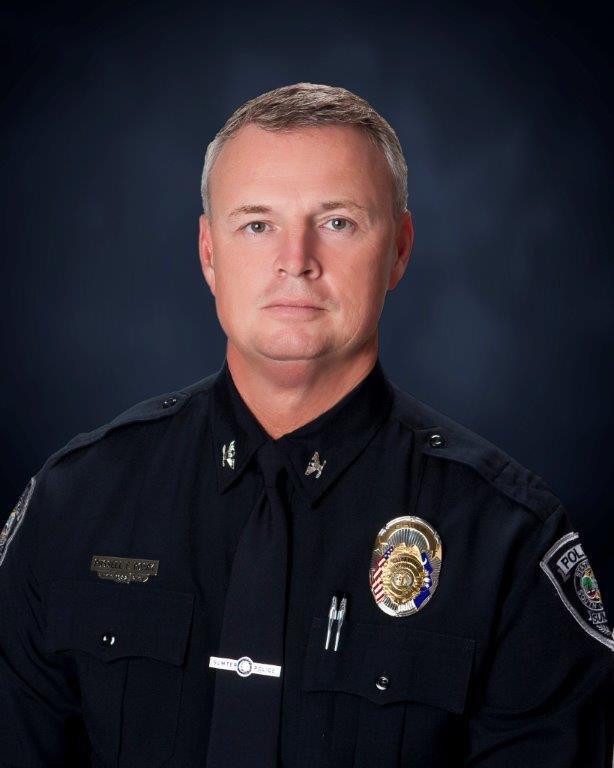
The race of the officers who filed the fatal shots was not specified in the court papers and they have not been identified. in photo above, racist suspect, Sumpter Police Chief Russell F. Roark.  

Police, in a news release, said they were responding to reports that "a female was afraid to go outside of the mall after an estranged boyfriend threatened to kill her and was seen outside pointing a firearm at her vehicle."

Police claim "Williams got out the vehicle, a short foot chase followed." The police statement states, "there was a brief struggle and then an exchange of gunfire, the details of which are under investigation by the State Law Enforcement Division."

However, there's are two eyewitnesses who saw it.

Photo above is from the Sumter Police official web page

The lawsuit lays out a different scenario — and there is no mention of any exchange of gunfire.

According to the lawsuit, Williams threw an object through the rear glass window of the vehicle and exited through that area. He then ran approximately 10 steps before he was tackled by officers and driven to the ground.

Williams "did not have a weapon and he was not a threat in any way," the lawsuit states.

"While on the ground the decedent did not have a weapon and he was not a threat in any way to the police officers on the scene," the suit states. "One of the officers moved away from the decedent (while he was still laying on the ground and not moving) and at least three (3) Sumter Police officers made the conscious decision to utilize inappropriate and improper use of deadly force by firing their service weapons indiscriminately at least twenty-four (24) times directly at and into the decedent.

The lawsuit states Williams was struck by at least 19 bullets - 17 of which went into his back. The plaintiff claims to have been informed that six bullets exited the chest; one bullet exited the right side of the neck; and other bullets struck the upper and middle portion of the left arm.

"Additionally, firing their weapons 24 times at close range at an unarmed man lying still on the ground is so extreme and outrageous that it shocks the conscious (sic)," according to the lawsuit.

Read More

Trial set for Palm Beach Cop Who Lied About Murdering Black Man Waiting for Tow Truck on Side of the Road

From [HERE] The trial of a Florida police officer who fatally shot a black man broken down on a highway has been scheduled for October.

Judge Samantha Schosberg Feuer set an Oct. 30 date Tuesday for the trial of 39-year-old former Palm Beach Gardens officer Nouman Raja.

Raja is charged with manslaughter and attempted murder for shooting 31-year-old Corey Jones, a drummer who was returning home from a performance when his SUV broke down on Interstate 95 before dawn in October 2015. Raja was fired after the shooting.

Raja was not in uniform and never identified himself as a police officer before opening fire on the motorist, prosecutors said — a direct contradiction to the arrested officer’s story. An audio recording shows that the cop lied over and over about what happened. 

Audio reveals the officer, who was investigating car burglaries, was immediately aggressive with Jones and began barking commands at him without ever saying he was with the force.

Jones was leaving a late-night gig on Oct. 18, 2015 when his car broke down on the side of I-95. The 31-year-old musician called AT&T roadside assistance for help, and the call was still connected when Raja, who is of South Asian descent, exited an unmarked white van and approached the stalled car.

That recording captured the exchange between the two men.

“You good?” Raja, dressed in a T-shirt and jeans, asked.

Jones said he was fine, prompting Raja to ask “Really?”

“Yeah,” Jones replied, according to the audio.

Suddenly, Raja became belligerent, and started yelling at Jones.

“Get your f-----g hands up! Get your f-----g hands up!” he shouted as Jones pleaded “hold on, hold on!”

“Get your f-----g hands up! Drop!” Raja screamed again before firing two shots, prosecutors said.

Jones began running down an embankment and into the grass as Raja fired several more shots, killing him. Jones' unfired gun was found about 75 feet from his SUV. Jones' body was found another 125 feet away.

In a 911 call that prosecutors say Raja placed about 30 seconds later, the officer yelled for Jones to drop his gun — even though they say he knew Jones had been hit and was dying on the ground. Jones’ family said he had recently purchased the gun to protect the expensive drum gear in his vehicle's trunk and had a permit for the weapon.

But about four hours after the shooting, Raja voluntarily sat down with a Palm Beach County sheriff's detective and recounted the shooting.

He claimed that he walked up to Jones’ van thinking it had been abandoned, and he was surprised to find Jones inside.

"The door swung open and, uh, this guy jumps outside immediately," Raja told the investigator. "He got out of the van and then he's like, 'I'm OK, I'm OK man.' And at which point I said, 'Hey, man, police, can I help you?'”

Raja claimed that when he identified himself as a cop, Jones became violent.

“And the second I said police, he jumped back and I clearly remember him drawing and...pointing a gun at me,” he said. "It's just like, you know, your family flashed in front of you, your kids flashed in front of you.”

He said he ordered Jones to drop the gun and then fired when he didn't. [MORE]

Suit Claims Plainclothes Norwalk Cops Unlawfully Stopped Black Man w/o Identifying Themselves & Assaulted Him Causing Brain Injury

From [HERE] and [HEREA judge announced it will allow a police brutality case against four Norwalk police officers to move forward. Cody Greene, a Black man, suffered from the alleged beating by public servants in July of 2014.

His attorney filed a $10 million lawsuit in Federal court against the City of Norwalk and four Norwalk police officers alleging civil rights violations. The 19-page lawsuit alleges that police officers violated Greene's civil rights and caused a series of injuries, some of which were deemed permanent. In addition to the City of Norwalk, defendants are police officers Steven Luciano, Felipe Taborda, Adam Mulkern, and Julio Rodriguez.

The action is being brought pursuant to 42 U.S.C. 1983 and 42 U.S.C. 1988 and the first, fourth, fifth, eighth, and eighteenth Amendments to the U.S. Constitution.

According to the lawsuit to be filed, Greene was visiting a friend at 16 School St. when a black vehicle with tinted windows pulled up next to him and the four defendants, all dressed in black exited the vehicle and began asking him questions.

"At no point in time did the individual defendants identify themselves as police officers, nor were the individual defendants wearing and/or displaying any clothing or badging that identified them as such. At that point, and for no reason, defendant Mulkern attempted to 'pat down' the plaintiff."

The complaint further alleges that the fearful plaintiff ran from the scene and the police officers engaged in a foot pursuit. During the foot pursuit, the suit further alleges that a gun was pointed at Greene and he was Tasered.

"The plaintiff tired, Tasered, and staggering fell with his arms outstretched ...Thereafter Defendant Luciano rolled the Plaintiff over on his back, placed his knees on the Plaintiff's outstretched arms, sat on the Plaintiff's chest, and beat the Plaintiff's head and face numerous times with closed fists and elbows," according to the complaint.

According to a police report dated July 19, 2012 police say: "We were dressed in black Raid type uniforms with 'POLICE' in bright yellow letters, making us immediately identifiable as Norwalk Police Officers."

His attorney, Phil Russell said, "Cody was accosted by four people in civilian clothes who demanded he submit to a search. When he ran away, he was chased and when he was caught he was Tasered and beat up...His injuries are prodigious and are outlined in the complaint. They are life-altering injuries and this is a tragedy."

Among the injuries to Greene claimed in the complaint are: Left orbital fracture, left upper and lower jaw fractures; fractured nose and septum; left eye hemorrhage; hemorrhage in posterior temporal lobe of brain; cerebral concussion and traumatic brain injury; stuttering disorder; post traumatic stress disorder; nerve damage to face and nose; post traumatic headaches and insomnia; facial numbness, impaired balance and gait; and deficits in attention, concentration, word finding, detail orientation, and short term memory.

The lawsuit alleges that, "The Plaintiff's injuries, or some of them, will be permanent in nature and/or permanently disabling."

Read More

[racism is done by deception &/or violence] White Miami Cops Claim Latino Man Resisted Arrest but Video Shows Otherwise

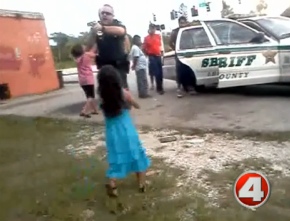
From [HERE] A man's family claims he was the victim of excessive force when he was arrested by undercover Miami-Dade police officers in an incident that was caught on camera.

Rafael Gonzalez-Miranda, 22, was arrested Tuesday on charges of resisting an officer with violence and battery on an officer.

The arrest report says officers were doing narcotics surveillance on 131st Place in southwest Miami-Dade when they saw two men buying drugs. That's when they say Miranda pointed at the undercover car letting the two men know they were being watched by undercover cops. The two men ran away leaving the teen alone to the face police officers, and the encounter was caught on surveillance camera.

Gonzalez-Miranda's father said the cops abused his son, and hired an attorney. The family believes their son didn't do anything wrong and was simply outside his home.

"It looks like absolutely excessive force, we can all see that from the video," defense attorney Harvey Watnick said. "I'll be looking into whatever there might be that is not on the video."

Miami-Dade police claim Gonzalez-Miranda was resisting arrest. The department issued a statement Thursday saying it "strives to provide professional service and remains committed to its core values of Integrity, Respect, Fairness and Service. The details involved in this incident are stated within the Arrest Affidavit and the proper departmental documentation has been completed. Anyone that feels they have not been treated in a professional manner is urged to contact our Professional Compliance Bureau."

Gonzalez-Miranda was given a $5,000 bond and has been released from jail.

Suit says Fairfax Cty White Cop Unlawfully Stopped Black Man Walking Down Street, Ordered him to Turn Around & Tasered Him in the Back

From [HERE] A federal judge said a lawsuit against Fairfax County that alleges a white police officer used excessive force can move forward.

The September 2015 incident showing an officer using a stun gun on Elton Cansler was recorded by witnesses on their cell phones in a shopping plaza in the Franconia area of Fairfax County.

During a hearing on Friday, the judge referred to the video calling it "pretty clear evidence" documenting what happened.

“I'm feeling good that everything is going forward,” said Cansler.

The lawsuit filed by Cansler and his attorneys states that the amount of force used by Officer Alan Hanks was excessive. “The suit alleges a violation of his Fourth Amendment rights,” said Maxwelle Sokol, Cansler’s attorney.

Those rights guarantee a reasonable amount of force during an arrest. The portion of the lawsuit states that department policies violate those constitutional protections.

One of the witnesses who took the cell phone video said at the time after the 2015 incident, “The gentleman just happened to be walking down the sidewalk and the cop pulls up in front of him, tells him to turn over, and as soon as he has his back turned towards him, he tases him. He didn’t see it coming.”

Several days after the incident, Fairfax County Police Chief Edwin Roessler held a press conference clearing Officer Hanks of any wrongdoing and saying he complied with policy.

Witness Testifies that San Antonio Cop Shot Marquise Jones in the Back & He Had No Gun in His Hand or Waist

From [HERE] and [HERE] The civil trial is underway following the death of young black man at the hands of a San Antonio cop. The family of Marquise Jones has brought the city of San Antonio and SAPD to court in a long-awaited lawsuit.

They're seeking damages in Jones’ death, which happened more than three years ago, in February, 2014.

The police officer who killed Jones, Robert Encina, was no-billed in 2015. But since the incident, numerous witnesses have gone on record giving their accounts.

On Tuesday, a new witness came forward with what the prosecution alleges is the clearest first-hand account yet.

James Brantley was at Chachos and Chaluccis the night Jones was killed. Encina shot Jones in the back as he ran away from the scene of a minor fender bender in the drive through.  

SAPD and the city have long maintained Jones had a gun, and that Encina was justified in shooting him

But Brantley said he had a clear view of not only his hands, but also the waist of his pants, and said without question there was no gun.

Brantley had just left a bar and wanted some chicken wings before heading home the morning of February 28, 2014, so he stopped by the Chacho's off Perrin Beitel Road. It was there, while parked in the restaurant's drive-thru lane, that Brantley claims he saw Robert Encina shoot and kill an unarmed Marquise Jones as he ran toward the street. 

In fact, Brantley says he was so close to the shooting his ears were ringing when the gunfire stopped. He says Encina, an off-duty San Antonio Police Department officer working security at the northeast side restaurant, walked up to his window after the shooting to ask Brantley if he saw a gun in Jones' hand. Brantley says Encina gave him a strange look and walked away when he replied, "He didn't have no gun. You killed that man" (another news account reported, “Man, I didn’t see nothing. You just killed a man.” -The federal courthouse does not allow cameras inside.)

Not long after that, another officer came and asked Brantley to move his car away from the scene. Brantley says the officer had to help him maneuver around bullet casings. No one from SAPD would interview Brantley or ask him for a witness statement that morning. If they had, Brantley's would have been the sixth witness account taken by police that morning indicating Jones did not have a gun in his hand when Encina shot him in the back. Brantley says he came forward sometime last year after seeing a news report that officials had cleared Encina of wrongdoing in the case. 

Then he got an unexplained visitor. 

In court Tuesday morning, as he testified in the trial over the federal lawsuit Jones' family filed against Encina and SAPD, Brantley claimed an unmarked police cruiser followed him to his car last spring, sometime after he signed an affidavit swearing that he witnessed the shooting and that Jones didn't wield a weapon at officer Encina when he was killed. Brantley said it was nighttime and he was walking to his car, about to go pick up his young daughter, when he noticed he was being followed. Eventually, a man got out of the unmarked cruiser, asked Brantley who he was, cuffed his hands behind his back, put him in the back of the car, and then started driving downtown.

Or as Brantley put it in his deposition: "I'm against the car, handcuffs, and back seat. That quick."

In court Tuesday, Brantley testified that he assumed the car was an unmarked police cruiser because that's what it looked like inside, including a metal grate with a rifle rack that separated the back from the front seats (he called it a "police cage"). The man who detained him — wearing a blue shirt, slacks and boots — looked like a cop, but didn't show Brantley a badge and wouldn't answer any of his questions. "You have to go downtown," was all the guy would tell him, according to Brantley's court testimony. 

Brantley says the mystery man drove him downtown, somewhere off Frio Street, where another car met up with them. The man who detained Brantley got out of the car and started talking to the other driver — Brantley estimates they chatted for maybe 20 minutes while he was still cuffed in the back seat. And then, the maybe-cop got back in the car and drove Brantley home, no explanation.
Read More

White Hanford Cop Claims Gold Chain Crucifix Can be a Deadly Weapon: Attacks Latino Man After Knocking Him Off Bicycle with Cop Car

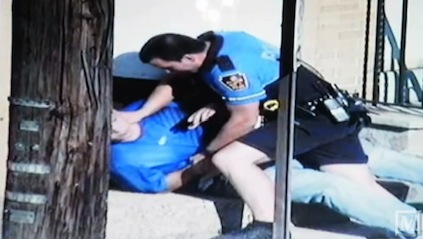
From [HERE] A Hanford police report says Michael Valdez was riding his bicycle on the wrong side of the street when white officer Larry Leeds attempted to stop him.

What happened next is the subject of a federal civil rights lawsuit in which Valdez, 49, and his attorney, Morgan Ricketts, accuse Leeds of using excessive force to arrest Valdez, actions that they say contributed to blinding him in one eye.

The lawsuit, filed in U.S. District Court in Fresno last week, says Leeds used his patrol car to knock Valdez off his bicycle. The officer then punched Valdez several times in the face and torso. After being treated at Adventist Medical Center, Valdez was booked into the Kings County Jail with a medical patch over his right eye.

The lawsuit accuses jail staff of repeatedly denying Valdez’s request for medical help, causing him to be permanently blind in his right eye. It also alleges that the Hanford Police Department and Kings County Jail destroyed evidence.

Valdez is seeking unspecified damages for violation of his civil rights, destruction of evidence, battery, and denial of medical care.

Hanford Police Chief Parker Sever said Friday: “We, unfortunately, cannot comment on pending litigation.”

Valdez acknowledged he has had run-ins with the police before. Around 2005, he said, he was arrested for fighting with several Hanford police officers and was sentenced to six years in prison. He was paroled in October 2009.

“That why I didn’t resist arrest (on New Year’s Day),” Valdez said, “because I learned my lesson.”

The incident at issue happened around 4:15 p.m. Jan. 1, 2016. The Hanford police report gives Leeds’ version of the incident:

After seeing Valdez ride on the wrong side of the street, Leeds activates his patrol car’s emergency red lights and siren. Because Valdez ignored the patrol car, Leeds pulled in front of Valdez to cut him off. Valdez’s bicycle then hit the patrol car, causing him to fall.

Valdez got up and began to walk away from Leeds. When it appeared Valdez was reaching for something in his waistband, Leeds drew his weapon and ordered Valdez to stop, show his hands and get on the ground.

At one point, Valdez grabbed his crucifix that was attached to a chain around his neck. Leeds believed Valdez was going to use it as a weapon. Valdez said in an interview Friday that if he did grab the crucifix, it was to say a prayer to God to protect him.

A struggled ensued. Leeds grabbed Valdez, punched him in lower torso and face, and then forced him to the ground. Another officer then helped Leeds handcuff Valdez.

After his hospital visit, Valdez was booked into jail on charges of felony resisting arrest and drug charges. His criminal trial is pending.

On Friday, Valdez said Leeds’s report is filled with lies, saying he never rode on the wrong side of the road or resisted arrest. He also said Leeds was “lying in wait to get me” and that Leeds never read him his Miranda rights.

In filing the lawsuit, Valdez and Ricketts said they would like another law enforcement agency or the grand jury to investigate the incident. Valdez also wants charges against him dismissed and wants prosecutors to charge Leeds with perjury and assault.

“Leeds went nuts,” Valdez said. “He’s too dangerous to be a police officer.”

Valdez’s lawsuit gives his account:

Valdez and a neighbor were working on a fence at his mother’s home on Malone Street, just south of Hanford High School, when he noticed a patrol car slowly drive by. The patrol car then made a U turn and parked.

After the neighbor went home, Valdez got on his bicycle and decided to visit a relative. He said he rode on the right side of the street, obeying traffic laws, when Leeds started to follow him at a high rate of speed.

Valdez took a shortcut, but once he completed the shortcut, Leeds drove rapidly toward him. Valdez “was forced to quickly dodge Leeds’ car and maneuver his bicycle around it,” the lawsuit says.

“You just tried to run me over,” Valdez yelled at Leeds, according to the lawsuit. Though Leeds ordered Valdez to come to his patrol car, he didn’t because he feared for his safety, the lawsuit says.

Valdez rode his bicycle toward a small store on 10th Avenue where there were customers in the parking lot. Leeds followed him, but “still had not activated his lights and sirens,” the lawsuit says.

Leeds then used his patrol car to ram Valdez’s bicycle, knocking him to the ground and causing him to hit his head on the pavement. The impact propelled the bicycle 10 to 15 feet in the air and caused Valdez’s belt to break and his pants to slip downward.

Leeds got out of his patrol car and drew his gun. “Rather than helping (Valdez), he grabbed (Valdez) and pulled him up off the ground,” the lawsuit says.

Valdez said he was so dazed and disoriented, he was unable to walk normally, unable to process what had happened and unable to respond to any commands from Leeds. The lawsuit says Leeds then punched Valdez in the torso, face and head and that Valdez “never resisted Leeds’ punches and never attacked Leeds.”

When Valdez called out for people in the parking lot to take a video, Leeds “seemed to become angry, and loudly ordered the people not to video,” the lawsuit says.

Read More

Without a Warrant White LVMPD Cops Terrorized Latino Teens Watching TV & Murder Dog in Their Own Home - Las Vegas Settles

From [HERE] and [HEREAn excessive force case will cost the Las Vegas Metropolitan Police Department and taxpayers nearly $200,000.   The LVMPD Fiscal Affairs Committee approved a settlement Monday in a 2009 case.  

White police officers mistook 4 Latino teens, Henry Rodriguez, Jordhy Leal and David Madueno for potential burglars of the house where Rodriguez lived with his family.  The family dog, a pit bull named Hazel, was killed  - shot in the face by a LVMPD officer, just feet away from her owner inside her own home.  All were wrongfully arrested and originally sued the Metropolitan Police Department in 2010, seeking $5 million in damages.

The case hinged on whether police infringed upon the plaintiffs’ Fourth Amendment protections against unreasonable searches when they entered the residence at 31 Onyx Way following a phone call from a neighbor about a potential burglary in the area. [MORE]

LVMPD says while the settlement was approved, they're not saying the officers involved did anything wrong. What facts did they disagree with? There was no warrant & they had no probable cause. The court's findings in the original case were as follows;

On October 24, 2009, the Las Vegas Metropolitan Police Department (“LVMPD”) received a 911 phone call from a witness, Albert Schouten, who said that he saw two white males between ages 18 and 20, one carrying a skateboard, jump a fence and start looking through the windows of a house in the neighborhood. There had been a recent pattern of youths burglarizing homes in the area.

Sergeant Roberts and Officer Dunn of the LVMPD, and later several of their colleagues, responded to the call, and arrived at the residence of Jesus Sandoval, Adriana Rodriguez, and their children. The officers entered the yard and saw open windows, doors, and gates, consistent with residential use, but did not identify any point of entry indicators suggesting a burglary. 

Roberts looked through an open bedroom window and saw “three young males” who were “younger than 18 to 20,” and were “about 14, 15.” Roberts conceded that the boys—Henry, then 18, who lived at the house, and his two friends, David, then 15, and Jordhy, then 16—“did not match” two of the three metrics that Schouten had given him: the number of suspects or the age of the suspects. As to race, Roberts agreed that the suspects, who were Hispanic, were “not the color of a white person that you typically think of as being white,” and that “[w]hen [he] saw them for the first time [he] thought they were either dark-skinned white males or Hispanic.” Two of the boys later testified that they had never before been described as white or confused for a white person. The boys were listening to music, watching TV, and playing video games.

Roberts did not ask the boys any basic identifying questions. Instead, Roberts pointed his gun at the head of one of the boys through the bedroom window, and gave the boys conflicting commands, telling them “don't move,” “[l]et me see your hands,” and “turn the music down.” Roberts told Jordhy to turn down the music, which Jordhy tried to do, and then told him, “I told you don't move, I could shoot you” or “I'll f* * *ing shoot you.” Roberts testified that the boys did not comply with his commands at this stage, but that they complied at all later stages. The boys, to the contrary, testified that they followed the officers' commands at this point and throughout the events that followed. Henry, for example, reported that when Roberts appeared in the window, the boys “all froze,” that they “didn't move,” and that he “didn't want to risk moving at all.” Roberts acknowledged that the boys may not have heard certain of his commands.

Roberts's colleague, Dunn, entered the house through the sliding glass door. Dunn, who could not see the boys, observed his partner pointing a gun and giving commands to someone through the window. He said that he entered the house because he thought that Roberts “could not control the suspects,” since he heard Roberts issue commands more than once and heard the tone of Roberts's voice change. As Dunn entered the house, he began giving commands at the same time as Roberts, and recognized that this could have created confusion.

Roberts ordered the boys to exit the bedroom. Henry asked to be allowed to put away the family dog, Hazel, a pit bull, before letting the officers into the home, but Roberts did not allow him to do so.

As the boys exited the bedroom, Hazel slipped in front of Henry and Jordhy, but continued to walk behind David, according to David's testimony. Dunn shot Hazel in the face, twelve inches from David, and in the direction of Henry and Jordhy. The officers ordered David and Jordhy to the floor, handcuffed them, and brought them outside. Henry was ordered outside, but was not cuffed until later, as he was carrying Hazel, who was bleeding to death. The boys testified that the handcuffing and other treatment by the officers caused them pain.

Only after the boys were cuffed and exiting the house did the officers begin to make their first inquiries as to the boys' right to be in the home.

Henry called his father, Jesus Sandoval (“Sandoval”), and told him that the police had entered the home and shot Hazel. Henry also asked an officer to call the animal hospital, but the officer said, “if you don't shut the f* * * up, I'm going to let your dog die right there.” Sandoval rushed home with his twelve-year-old daughter, Kenya, and found two of the boys handcuffed on the lawn, a swarm of officers and patrol cars, and Henry, covered in Hazel's blood. Sandoval, who was walking with a cane because of back surgery fifteen days earlier, thought his son had been shot, and tried to go to him. When officers told him he could not enter the property, he became upset. Roberts ordered officers to handcuff Sandoval.

As the officers pushed Sandoval against a squad car, Sandoval said, “please don't do this ․ I had a back surgery about 15 days ago․ I had major back surgery.” The officers grabbed Sandoval's arm to handcuff him, “pull[ed Sandoval] up by the arm,” and, “holding [Sandoval] from [his] belt or [his] pants,” “pushed” or “threw” Sandoval inside the patrol car. Sandoval began “screaming” that he was in “severe pain” and that he needed his medication. Sandoval was detained in the patrol car for 25 to 30 minutes, still “screaming in pain,” before officers responded to his requests for medication. Kenya witnessed all of these events.
Read More

White Vallejo Cop who Attacked Surrendering Black Man w/ Metal Flashlight has Similar Complaint Against Him From Last Year

From [HERE] The white Vallejo police officer, Spener Bottomley, seen in two viral videos attacking an unarmed Black man, Dejuan Hall, in a street median is the subject of a civil rights complaint filed in federal district court last October.

In court documents obtained by the Times-Herald, the complaint alleges Spencer Bottomley, along with four other Vallejo police officers, used excessive force during an April 2016 arrest. Derrick Shields alleges that while laying face down on his stomach, he was kicked, punched, and struck with a baton by the officers, according to the complaint. Shields also alleges Bottomley struck him with a flashlight during the incident.

“As a result of the police beating, plaintiff lost consciousness, experienced bruises all over his body and spine, swollen face, fractured jaw, abrasions, and broken teeth,” the complaint alleges. Shields is seeking compensatory and punitive damages, along with damages for emotional distress.

Two weeks ago the videotaped struggle between Bottomley and Dejuan Hall, 23, of Vacaville — which went viral nationally — has some residents concerned about excessive force by the police department.

The incident occurred about 3:15 p.m. on March 10, when police responded to a call from employees at the Valero gas station on Fairgrounds Drive that a customer, later identified as Hall, was acting erratically.

After Bottomley confronted Hall outside the store, Hall ran, and Bottomley gave chase. Witnesses said the first arriving white officer (Bottomley) chased him for several minutes until he finally gave up and sat down in the middle of the street.

Then, while he was sitting - surrendered on the ground in the median - the officer dove or pounced on him from behind. Perhaps surprised, Hall appeared to defend himself as the officer started striking him in his face with his fist and elbow. The officer then strikes the Black man with a metal flashlight. Subsequently, another white cop arrives and although both cops appear to have subdued him the cop continues to hit him with a metal flashlight. 

A second officer arrives and places his knee on Hall in an attempt to subdue him. Bottomley continues to strike Hall, while additional officers arrive on scene and demand the crowd back up from the incident.

“The kid surrendered,” said one witness who didn’t want to give his name. “The cop, on the other hand, came up right behind him and he was tired too. But he immediately dove on the kid and started wailing on him.” [MORE]

In response, numerous speakers at the March 14 Vallejo City Council meeting expressed concern regarding the content of the videos, with many demanding the council, mayor and city manager get involved and prevent similar incidents from occurring. Other speakers said officers need training on how to handle disabled individuals or persons with mental illness.

The local branch of the NAACP, Chapter 1081, issued a statement last week in response to the videos.

“Physical abuse or excessive police force is not an option,” wrote chapter president Jimmie Jackson. “With that on the table NAACP has launched its own independent investigation as to what occurred before, during and after the arrest of Mr. Dejuan Hall.

Read More

White Joliet Cops & DA Lied to Arrest, Charge & Detain Black Man: Supremes Rule 4th Amendment Applies to Pre-Trial Detention After Arrest

48 Days in Jail Off Lies & Bullshit. The US Supreme Court [official website] ruled [opinion, PDF] Tuesday that Fourth Amendment [text] protections against unreasonable seizure can continue after the legal process has concluded. In Manuel v. City of Joliet [SCOTUSblog materials], the court reversed the lower court in a 6-2 decision. [MORE] The opinion is [HERE] and [MORE] White supremacy/racism is carried out by deception & violence
Elijah Manuel, a Black man, was riding through Joliet, Illinois, in the passenger seat of a Dodge Charger, with his brother at the wheel. A pair of white Joliet police officers pulled the car over when the driver failed to signal a turn. According to the complaint in this case, officer Gruber immediately dragged Manuel from the car, pushed him to the ground, handcuffed him, and struck him repeatedly. Gruber yelled at him, saying, “[y]ou remember me, street punk? Now I got you, you fucking nigger.” Manuel claims that the police searched his car and tore it apart in the process.

The policeman then searched Manuel and found a vitamin bottle containing pills. Suspecting that the pills were actually illegal drugs, the officers conducted a field test of the bottle’s contents. The test came back negative for any controlled substance, leaving the officers with no evidence that Manuel had committed a crime. Still, the officers arrested Manuel and took him to the Joliet police station. 
There, an evidence technician tested the pills once again, and got the same (negative) result. But the technician lied in his report, claiming that one of the pills was “found to be . . . positive for the probable presence of ecstasy.”  Similarly, one of the arresting officers wrote in his report that “[f]rom [his] training and experience, [he] knew the pills to be ecstasy.” On the basis of those statements, another officer swore out a criminal complaint against Manuel, charging him withunlawful possession of a controlled substance. 

Manuel was brought before a [white?] county court judge later that day for a determination of whether there was probable cause for the charge, as necessary for further detention. The judge relied exclusively on the criminal complaint—which in turn relied exclusively on the police department’s fabrications—to support a finding of probable cause. Based on that determination, he sent Manuel to the county jail to await trial. In the somewhat obscure legal lingo of this case, Manuel’s subsequent detention was thus pursuant to “legal process”—because it followed from, and was authorized by, the judge’s probable-cause determination.

While Manuel sat in jail, the Illinois police laboratory reexamined the seized pills, and on April 1, it issued a report concluding (just as the prior two tests had) that they contained no controlled substances. But for unknown reasons, the prosecution—and, criticallyfor this case, Manuel’s detention—continued for more than another month. Only on May 4 did an Assistant State’s Attorney seek dismissal of the drug charge. The County Court immediately granted the request,and Manuel was released the next day. In all, he had spent 48 days in pretrial detention. 

The Supreme Court held that those objecting to a pretrial deprivation of liberty may invoke the Fourth Amendment when (as here) that deprivation occurs after legal process commences. The Fourth Amendment prohibits government officials from detaining a person inthe absence of probable cause. It applies at arrest pre-legal-process) arrest, but also for a person's (post-legal-process) pretrial detention - after a finding of probable cause by a judge.

In Manuel's case, cops initially arrested Manuel without probable cause, based solely on his possession of pills that had field tested negative for an illegal substance. Manuel could bring a claim for wrongful arrest under the Fourth Amendment. And the same is true as to a claim for wrongful detention—because Manuel’s subsequent weeks in custody were also unsupported by probable cause, and so also constitutionally unreasonable. No evidence of Manuel’s criminality had come to light in between the roadside arrest and the County Court proceeding initiating legal process; to the contrary, yet another test of Manuel’s pills had come back negative in that period. All that the judge had before him were police fabricationsabout the pills’ content. The judge’s order holding Manuel for trial therefore lacked any proper basis. And that means Manuel’s ensuing pretrial detention, no less than his original arrest, violated his Fourth Amendment rights.

Investigation Shows NYPD Hid Violent History of White Cop who Choked Eric Garner - Over 20 Records of Abuse, Among Worst on the Force

ThinkProgress has uncovered the disturbing secret history of the NYPD officer who killed Eric Garner. Documents obtained exclusively by ThinkProgress indicate that Officer Daniel Pantaleo, who is still employed by the NPYD (earning $120,000 a year), had a history of breaking the rules. These records are the subject of an ongoing lawsuit, and the city refuses to release them.

As you recall, on July 17, 2014, NYPD Officer Daniel Pantaleo wrapped his arms around Eric Garner’s neck and squeezed. He held tight as a gang of other white cops pounced on and slammed Garner, 43 years old and asthmatic, to the ground. Garner, who was unarmed at the time, gasped for air, arm outstretched, saying “I can’t breathe” over and over as officers piled on top of him. Then he was silent.

The next day, when the New York Daily News released video of the encounter, Garner had already died from neck and chest compression. His death sparked national protests about police violence against the black community, and his final words, “I can’t breathe,” became a rallying cry for the Black Lives Matter movement. On December 3, 2014, when a grand jury decided not to indict Pantaleo, thousands of people in cities all over the country stormed the streets to chant Garner’s dying words.

Pantaleo became a symbol of law enforcement that acts with impunity — especially with respect to white officers interacting violently with black men. Not only had Pantaleo killed a man accused of bootlegging cigarettes, but he’d used a chokehold prohibited by the NYPD to do it.

Before he put Garner in the chokehold, the records show, he had seven disciplinary complaints and 14 individual allegations lodged against him. Four of those allegations were substantiated by an independent review board.

Neither Pantaleo nor the NYPD responded to ThinkProgress requests for comment.

A pattern of problematic behavior

Pantaleo’s apparent disciplinary history was sent to ThinkProgress from an anonymous source who said they worked at the New York City Civilian Complaint Review Board (CCRB), an independent agency that receives and investigates complaints against NYPD officers. The source did not disclose their name or identity to ThinkProgress, but four New York City attorneys told ThinkProgress the documents match the appearance of summaries of disciplinary proceedings before the CCRB. Two of these attorneys declined to have their names associated with the verification of the documents, citing fear that they would be associated with the leak. (The documents can be found at the bottom of the article and [MORE on sources])

The documents show four of the allegations were substantiated by the CCRB, which recommended disciplinary action against Pantaleo years before he killed Garner. According to the records, the agency had sufficient evidence of an abusive vehicle stop and search by Pantaleo in 2011, which resulted in a two-part complaint. The agency also substantiated allegations about an abusive stop and frisk in 2012, which resulted in another two-part complaint that was reported by DNAinfo in April 2016.

According to the opinion of experts interviewed by ThinkProgress and our own review of CCRB data, this, along with the sheer number of cases, indicates a chronic history of complaints against Pantaleo and would make his disciplinary history with the CCRB among the worst on the force.

The documents indicate that the CCRB pushed for the harshest penalties it has the authority to recommend for all four substantiated allegations: charges that aren’t criminal, but “launch an administrative prosecution in the NYPD Trial Room,” according to the CCRB, and can result in suspension, lost vacation days, or termination. But the NYPD, which is not required to heed the CCRB’s recommendations, imposed the weakest disciplinary action for the vehicular incident: “instruction,” or additional training.

It also diverged from the CCRB’s stance on the 2012 stop and frisk. While the NYPD found Pantaleo guilty of unauthorized frisking, it cleared him of making an abusive stop. Instead of eight forfeited vacation days, per the CCRB’s recommendation, Pantaleo only had to forfeit two.

Jonathan Moore, a civil-rights attorney who represented Garner’s family and four of the Central Park Five, noted that the previous stop-and-frisk case was telling.

“Imagine that. Here’s the disposition of a substantiated charge for making a bad vehicle search and a bad vehicle stop, and the remedy is instruction,” Moore told ThinkProgress. “What happened on July 17th with Eric Garner was a bad stop and frisk.”

The documents also show allegations that Pantaleo refused to seek medical treatment for someone in 2009, hit someone against an inanimate object in 2011, made abusive vehicular stops and searches on two separate occasions in 2012, and used physical force during another incident in 2013.

The documents indicate that the 2009 and 2013 incidents were unsubstantiated by the CCRB, meaning “available evidence is insufficient to determine whether the officer did or did not commit misconduct.” So too were the vehicular stops and searches in 2012. The 2011 case was closed because the complainant was “uncooperative,” which the agency describes as not answering investigator requests for an interview or missing two interviews.

But legal experts say the number of complaints should have raised red flags, even if they weren’t substantiated.

“Regardless of the outcome, if you get three complaints in a year, you’re supposed to be on performance monitoring,” Moore said. “He got three in the course of two months in 2012.”

A record that stands out

Even a conservative reading of the documents indicates Pantaleo had among the worst CCRB disciplinary records on the force two years before his encounter with Garner. Yet the NYPD allowed him to stay on the streets.

When compared with publicly available data posted on the CCRB’s website, the records show that Pantaleo was subject to far more disciplinary allegations and substantiated complaints than the majority of his 36,000 fellow NYPD officers. The CCRB data, which is based on cases closed from 2006 to 2017, has its limitations: it does not appear to control for variables such as age or how long an officer has been on the force. For example, an officer with a decade in uniform may have the same number of complaints as an officer with just a year’s experience: common sense would say the less-experienced officer is the worse offender, but the records would make no distinction between these two hypothetical cases.


Nevertheless, a ThinkProgress analysis of available CCRB data found that only 1,750 current NYPD officers — or around 4.9 percent of the force — have received eight or more complaints, as Pantaleo has. The same data also shows that only 738 officers — about 2 percent — have two or more complaints with substantiated allegations.

Read More