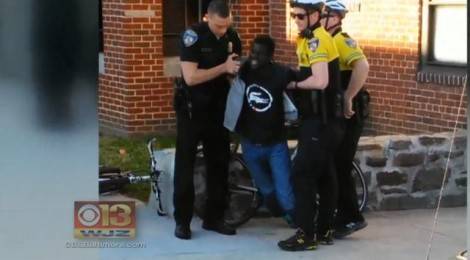
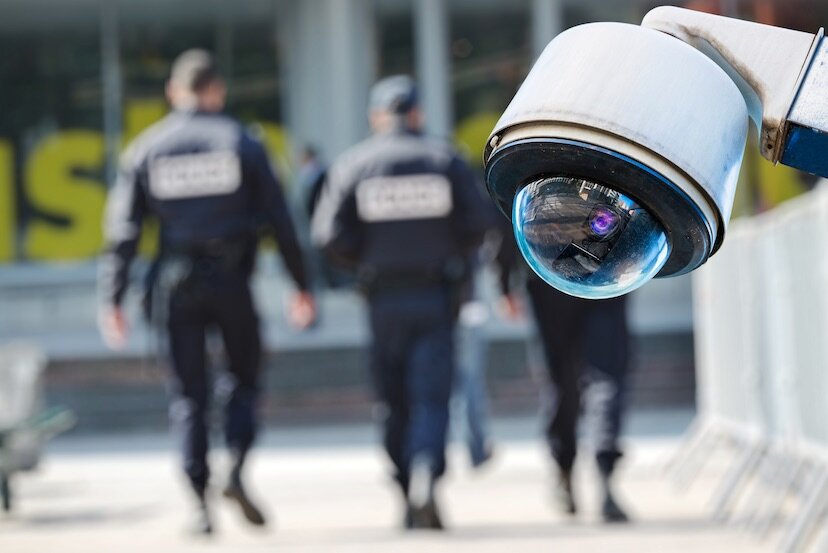
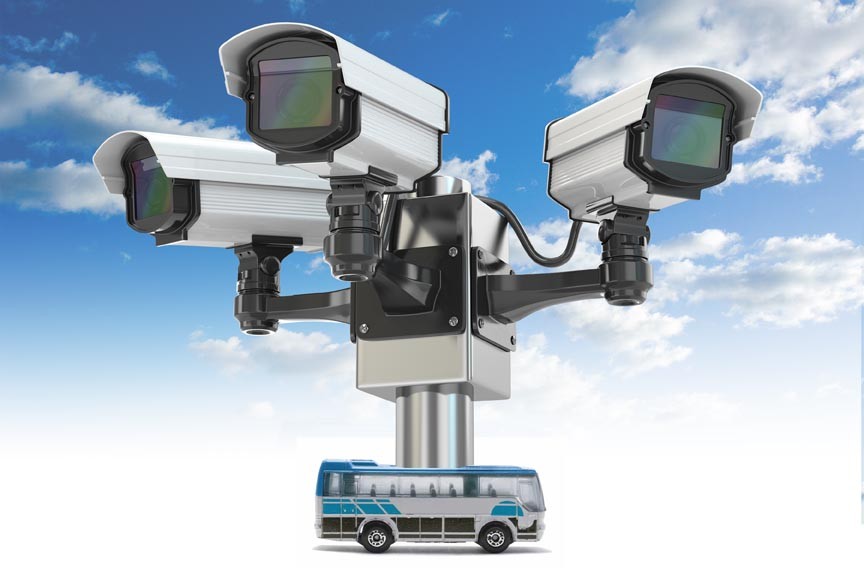
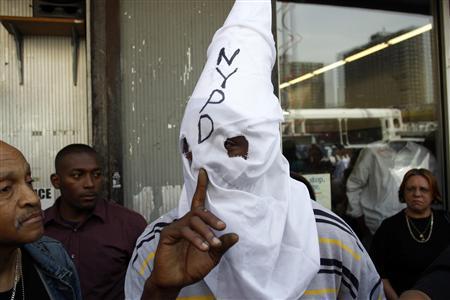
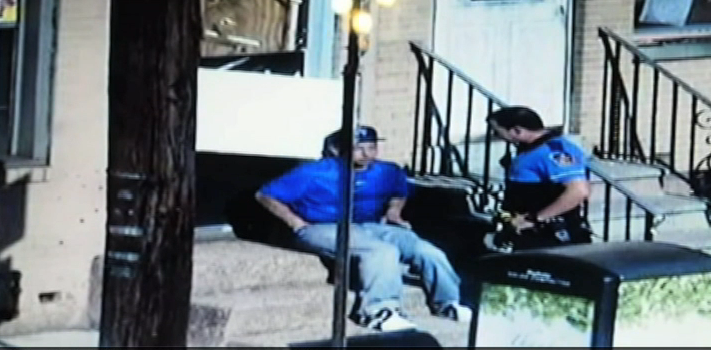
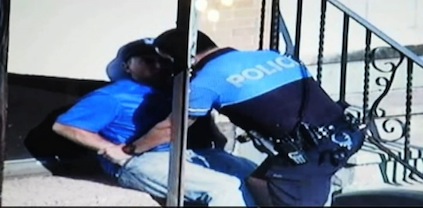
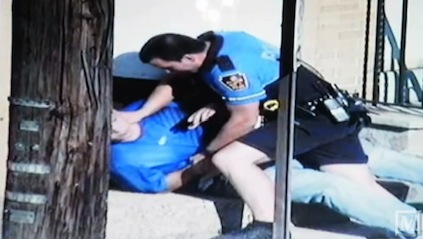
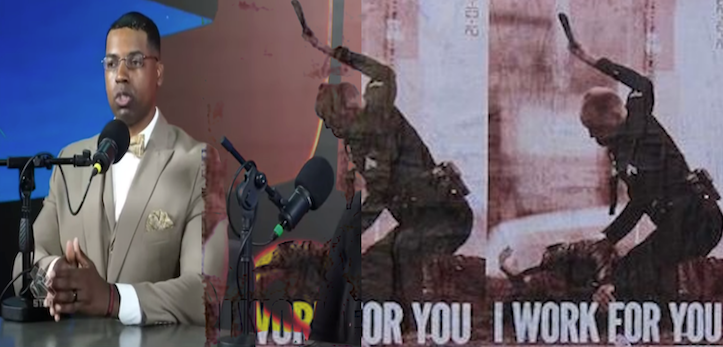
From [HERE] A surveillance camera at Yankee Stadium caught the startling actions of responding NYPD officers who stood over a Black man for 10 minutes as he lay unconscious after a severe asthma attack. All the officers appeared to be white.
Moments later, 25-year-old Barrington Williams went into cardiac arrest and was later pronounced dead at Lincoln Medical Center. Last year, Williams’ family filed a wrongful death lawsuit against the NYPD. The suit names Officers Joel Guach, Agenol Ramos, and Robert O’Brien as defendants, according to the New York Daily News.
Jason Leventhal, the family’s lawyer, reviewed the tape once investigators turned the video evidence over.
“For 10 minutes the officers were indifferent and apathetic to Barrington’s life, and those 10 minutes can be the difference between life and death,” said Leventhal.
Williams was caught selling MetroCard swipes on September 17, 2013 and ran from the police. He was eventually tackled to the ground and restrained by handcuffs at 1:57 p.m., according to the surveillance footage.
At 2:08 p.m., a medic arrived and administered chest compressions on Williams’ unconscious body. But the family was troubled that for 10 minutes in between the time he was handcuffed and the chest compressions, officers did not administer CPR.
Karen Brown, Williams’ mother, says her son dealt with asthma since the age of 12.
“I don’t believe he should have died for a MetroCard swipe,” she said.
In Racist System of Unequal Power Cops Can Kill You Anytime, Anyplace. Governors, attorney generals, chiefs of police, other white cops, prosecutors, jurors, judges, and the mainstream white media will support, finance and ultimately uphold the cop's decision or "right" to kill you.
From [HERE] A judge on Thursday found the sole officer charged with murder in the death of Freddie Gray in police custody not guilty of all charges, leaving prosecutors without a conviction for the third time in the high-profile case that engulfed the city in riots and unrest last year.
The verdict in the trial of Caesar Goodson Jr. is the second acquittal handed down by Baltimore Circuit Court Judge Barry G. Williams in the case. The judge last month acquitted the second officer who went to trial in Gray’s death. The first officer’s trial ended in a hung jury.
Goodson, 46, drove the van that transported Gray through West Baltimore the morning of April 12, 2015, when the 25-year-old was arrested. Gray suffered a severe neck injury in the back of the van and died a week later.
Over and over again when reading his ruling Thursday, Williams said the state did not have evidence to prove Goodson acted criminally. Prosecutors did not show Goodson gave Gray a “rough ride,” that Goodson knew Gray needed immediate medical care or that Goodson meant to harm Gray by failing to put him in a seat belt.
“There has been no credible evidence presented at this trial that the defendant intended for any crime to happen,” Williams said. [MORE]
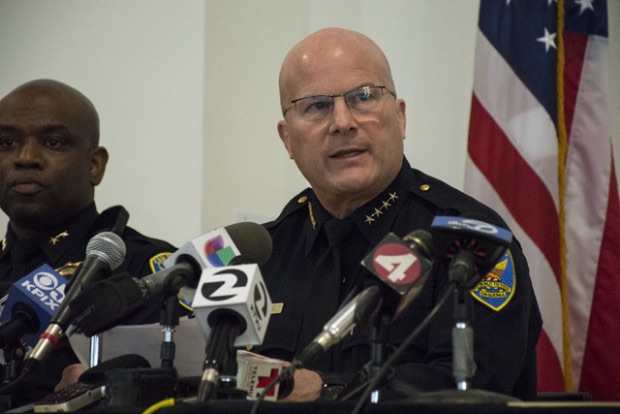
From [HERE] San Francisco’s police department is the latest embattled law enforcement agency to pledge to equip its officers with body cameras in response to charges of widespread police brutality against racial minorities. The city is joining an international chorus of advocates who are convinced that body cameras will reduce violent incidents between police and community members. But a mammoth new study shows that cameras can have precisely the opposite effect.
The study, which was led by Barak Ariel of Cambridge University, integrated the findings of 10 experiments in which police in different cities were randomly assigned to use a body camera during different shifts. Remarkably, the study captured the behavior of over 2,000 police officers and more than two million hours of law enforcement activity. The dismal result: Body cameras had no overall effect on how often police used force and was correlated with a statistically significant increase in assaults on police officers. Although violence between suspects and police went down in a few of the 10 study sites, these benefits were more than cancelled out by other sites where cameras made no difference or made violence more common. [MORE]
From [HERE] Luis Góngora, the Latino homeless man shot by San Francisco police on 7 April, was killed by a shot to the head from above, lawyers for his family alleged at a press conference as they announced the filing of a claim against the city and county of San Francisco for excessive force and wrongful death.
“This was like a mafia shot,” said Luis Poot Pat, Góngora’s cousin, who attended the press conference on Friday. “I can’t believe in the beautiful city of San Francisco this can happen.”
Attorneys for the Góngora family presented video and photographic evidence that they say shows that police officers shot Góngora from above, while he was either sitting down or lying prone. Photographs from a private autopsy show that Góngora was shot in the top of his head, as well as in the back, both arms, and the abdomen.
“The officer can be seen shooting down at the wounded man, with a handgun in one hand and a shotgun in the other, in a scene reminiscent of a gangster movie,” the claim states. The claim is a precursor to a lawsuit.
The lawyers played an enlarged, slow-motion version of surveillance video, previously released by the San Francisco Chronicle, that provides a partial view of the shooting. One of the officers can be seen firing three rounds.
“If you slow down this clip, you will witness that the officer who initially had the shotgun is pointing downward,” said Adante Pointer, one of the attorneys. “Mr Góngora was already down on the ground when this officer decided to pump three shots into his body.”
Racist suspects, Sgt. Nate Steger and Officer Michael Mellone were identified as the killer cops.
Pointer also told the Guardian that the absence of stippling or tattooing on Góngora’s body shows that police were more than arms-length away from Góngora when they shot him.
“They shot him to pieces,” Pointer said. “It’s ridiculous.”
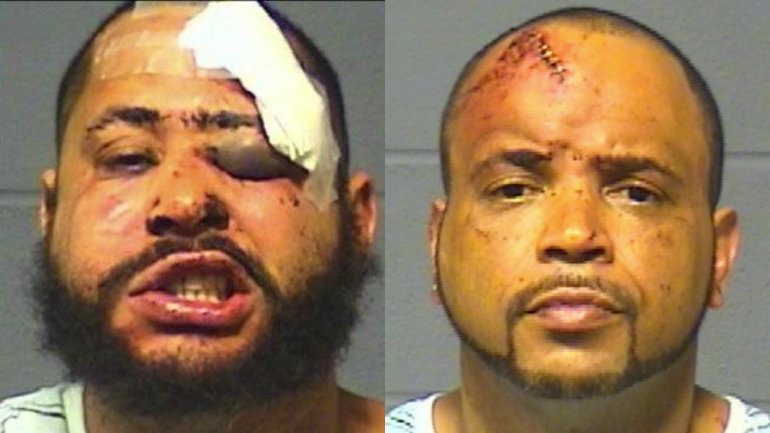
From [HERE] The two Latino men whose arrests prompted an excessive force investigation by the Hartford Police Department are considering their legal options. [yes the police investigating themselves]
Hartford Police announced their investigation earlier this week, after command staff questioned the men’s apparent injuries seen in their mug shots. Officers noted their facial injuries were inconsistent with what would have been caused in the crash that ended the chase and led to his arrest. The June 4 crash occurred on Flatbush Avenue, just over the city line into West Hartford.
Brinson told FOX 61 he visited the two men in jail Thursday, and plans to file a notice of intent to sue the cities of Hartford and West Hartford for excessive use of force. “We have to send a message back to the police departments that they can't get upset in the heat of the moment and take matters into their own hands,” said Brinson.
Perez is accused of driving a stolen car, fleeing from police and injuring a detective by almost running him over. The police report claims officers “violently struggled” while arrested Perez. Police say they had to use a Taser and punch Perez in the body to get him in handcuffs after he refused to get out of the car or submit to being arrested.
Perez described a different series of events to Brinson.
“Police shattered his window with a baton. They continued to use that baton to strike Mr. Perez in the head and he was also dragged to the ground, kicked and beaten and continued to be struck,” said Brinson.
Diaz was in the passenger seat, and officers say they struggled with him as well. The police report calls his injuries “minor,” but it is apparent in his mug shot he needed stitches. Brinson said he was hit in the face with a Taser, punched, tased, and beaten.
“Mr. Diaz was crying, crying on the ground and then was told if he continued to cry, ‘I'm going to continue to beat you.’ That really resonated with me when I sat with them today,” said Brinson.
From [HERE] The Bellefontaine Neighbors Police Department is all-white, policing a city that's 70 percent black. Britics of police practices say racism at the root of the problem. News 4 Investigates obtained video from 4 years ago of what appeared to be a routine traffic stop: white Bellefontaine Neighbors cops pulled over a black woman driving a rental car.
An officer admitted the stop was a mistake, so the police didn't write a report, often referred to as NRN, or no report needed, but in this case one of the cops used a racial slur to describe the woman leaving town and heading north.
The audio recorded him say "nigger running north," his version of NRN. Seconds later there is laughter. News 4 Investigates emailed questions about the recording and the identity of the cops to the interim police chief and mayor, but they did not respond. [nigger means non-white person who is subject to white supremacy. nigger is what is being done to you.]
Rev. Phillip Duvall has filed two complaints to the U.S. Department of Justice about policing practices in Bellefontaine Neighbors. "Those videos speak to not just a pattern, but a culture that exists in the Bellefontaine Police Department. That has existed for a very long time" said Duvall.
In the first case, a decade ago, suspects spray-painted nigger on a Bellefontaine home owned by a St. Louis firefighter and his wife. A cross was also burned on their property. The firefighter says police didn't treat the case seriously.
Following that, the firefighter was arrested, but police would not say why. In a complaint the firefighter filed with the police department, he said officers told him he was wanted by the FBI, even though he wasn't
The firefighter said one of the cops claimed they were pranking him, and that the firefighter's arrest was just a joke.
One of the officer's identified in the victim's complaint was Jeremy Ihler, the current interim police chief of Bellefontaine Neighbors, the heir apparent to the top job and a 20-year veteran of the department.
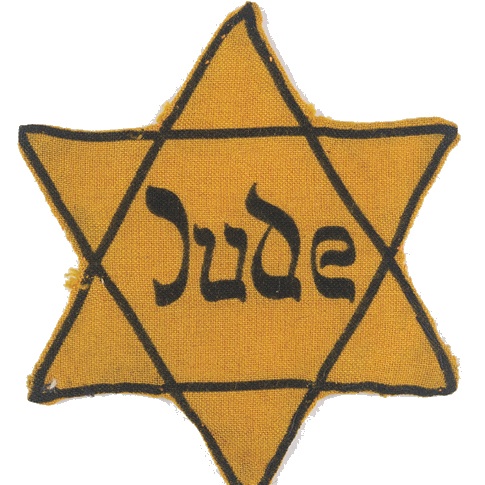
Targeted by Skin Color.In Nazi Germany , as part of the destruction process of the Jews, Hitler created an elaborate system of movement restrictions and identification measures that included personal Jew identification cards, passports marked with a J, assignment of names and the outward marking of persons with a yellow star. Jews age six years or older were allowed to appear in public only when wearing the Jewish star. The star enabled the police to pick up any Jew, anywhere, anytime.
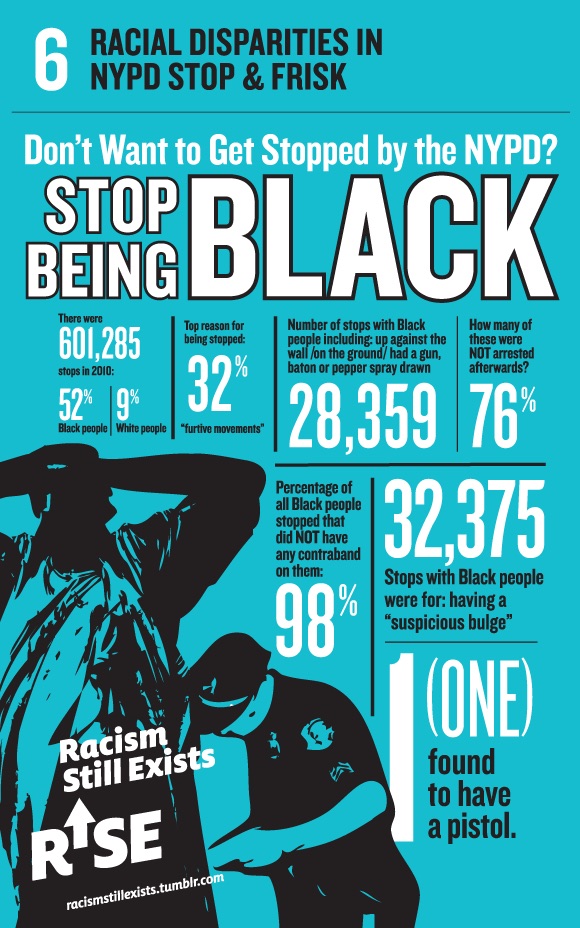
Remind you of "stop and frisk" or "papers please?" In this racist system there is no need for Blacks or Latinos to wear a star; non-whites are targeted by skin color. [MORE] and [MORE]. Know that the 4th Amendment is a joke - believe in it at your own risk.
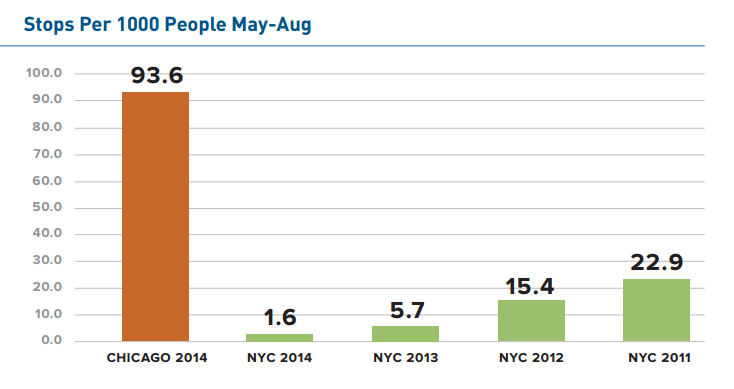
Blacks Make 75 % of All Police Stops yet are only 1/3 of populationFrom [HERE] The ACLU of Illinois found that the Chicago Police Department (CPD) is unlawfully stopping a “shocking number of people” and singling out people of color. “Chicagoans were stopped more than four times as often as New Yorkers at the height of New York City’s stop and frisk practice.” In the summer of 2014, CPD made over 250,000 stops that did not lead to an arrest. While blacks constitute about a third of the city’s population, they accounted for nearly three-quarters of all stops.
CPD has increased pedestrian stops under the leadership of Police Superintendent Garry McCarthy, who spent much of his career in the New York Police Department and was previously the police chief in Newark, New Jersey. Both those cities’ stop and frisk policies have received court challenges. CPD does not collect systematic data on all frisks or stops that result in an arrest or ordinance violation.
In order to begin to restore trust in the community, the ACLU recommends: collect data on all stops and frisks and make them public, provide regular training on legal requirements for stops and frisks, and require officers to issue a detailed receipt for every pedestrian stop. The report’s findings were also featured in Newsweek.
PHILADELPHIA POLICE CONTINUE STOP AND FRISKS WITHOUT REASONABLE SUSPICION
The Philadelphia Police Department continues to stop and frisk tens of thousands of individuals — particularly people of color — without legal justification, according to a recent report by the ACLU of Pennsylvania and the law firm of Kairys, Rudovsky, Messing & Feinberg. This is the fifth report since the city entered into a consent decree in 2011 following a lawsuit about its stop and frisk practices.
The report found that 37% of the over 200,000 pedestrian stops in 2014, and 39% of frisks were made without reasonable suspicion. Although Philadelphia's population is 55% black or Hispanic, racial minorities accounted for 80% of stops and 89% of frisks. The report notes that factors other than an individual’s race, such as neighborhood demographics or crime rates, do not fully explain these racially disparate outcomes. Furthermore, the report found that contraband was seized in only 5% of frisks in 2013. Attorney David Rudovsky explains: “The department has done a lot of retraining, but unless you properly supervise and hold people accountable, it's hard to get results.”
From [HERE] Prosecutors here, in an unexpected announcement, said Friday that they had filed homicide, manslaughter and misconduct charges against police officers in the death of Freddie Gray, who died after sustaining a spinal cord injury while in police custody.
In a news conference, the state’s attorney in Baltimore, Marilyn J. Mosby, described repeated mistreatment of Mr. Gray. Time and again, she said, officers abused him, arresting him without grounds and violating police procedure by putting him in handcuffs and leg restraints in the van without putting a seatbelt on him.
Ms. Mosby also said the officers had repeatedly failed to seek medical attention for Mr. Gray after he was injured. By the time he was removed from the van, she said, “Mr. Gray was no longer breathing at all.”
“We have probable cause to file criminal charges,” Ms. Mosby said.
The death, Ms. Mosby said, is believed to be the result of an injury Mr. Gray sustained while riding in the van without a seatbelt.
No Basis for Arrest
Ms. Mosby also said that the knife the police say Mr. Gray was carrying had not been a legitimate basis for his arrest. “The knife was not a switchblade, and it is lawful,” she said. She said the officers had “failed to establish probable cause for an arrest.”
As she announced the charges at the War Memorial here, there was cheering from people in the crowd. Dozens of police officers dressed in riot gear stood nearby after days of unrest in the city.
Charges
Ms. Mosby said six officers were being charged, one with second-degree murder. She said warrants had been issued for the their arrests; she said she did not know if anyone was in custody.
One officer, Caesar R. Goodson Jr. was charged with second-degree murder, manslaughter, assault and misconduct in office. Lt. Brian W. Rice was charged with manslaughter, assault, misconduct in office and false imprisonment. Officer William G. Porter and Sgt. Alicia D. White were each charged with manslaughter, assault and misconduct in office. Officers Edward M. Nero and Garrett E. Miller were charged with assault, misconduct in office and false imprisonment.
He Broke his Own Spine & Neck & White Cops made "arrest without force or incident" & no cameras captured the 1 mile chase. Cops Want Injury to be in Police Van b/c there are No Cameras or Witnesses Inside Van =no proof beyond a reasonble doubt.If you beleive this nonsense you want to be deceived [MORE]. From [HERE] and [HERE] and [HERE] After investigating thmeselves a preliminary police probe has found no evidence that 25-year-old Freddie Gray was fatally injured during his videotaped arrest in Baltimore, a local ABC affiliate reported on Thursday, citing sources briefed on the police report and on findings made by the medical examiner.
The medical examiner found Gray's catastrophic injury was caused when he was slammed into back of the police transport van and apparently broke his neck. Law enforcement sources also said Gray sustained a head injury that matches bolt in the back of police van, the affiliate reported.
A bystander stated that the officers were "folding" Gray like a crab—with one officer bending Gray's legs backwards, and another holding Gray down on his neck with his knee. Another witness told the Baltimore Sun that they had witnessed Gray being beaten with batons. [MORE]
According to the police timeline, Gray was placed in a transport van within 11 minutes of his arrest, and within 30 minutes, paramedics were summoned to take Gray to a hospital.[2] The van made four confirmed stops while Gray was detained. At 8:46 a.m., Gray was unloaded in order to be placed in leg irons because police said he was "irate." A later stop, recorded by a private camera, shows the van stopped at a grocery store. At 8:59 a.m., a second prisoner was placed in the vehicle while officers checked on Gray's condition, and 27 minutes later the van made its final stop so paramedics could transport an unconscious Gray to the hospital. He was taken to the University of MarylandR Adams Cowley Shock Trauma Center in a coma.
The statement of charges filed by Officer Garrett Miller against Gray accused him of possessing a switchblade. Miller wrote, "The defendant was arrested without force or incident." Officers also reported "that he suffered a medical emergency during transport". The white media has suggested the possibility of a so-called "rough ride"—where a handcuffed prisoner is placed without a seatbelt in an erratically driven vehicle—as a contributing factor in Gray's injury.
In the following week, Gray was resuscitated, remained in a coma, and underwent extensive surgery in an effort to save his life. He lapsed into a coma with three fractured vertebrae, injuries to his "voice box", and his spine "80% severed" at his neck. He died on April 19, 2015, a week after his arrest. [MORE]
The Baltimore Police Department identified the six officers involved in the arrest as Lieutenant Brian Rice, Sergeant Alicia White, Officer William Porter, Officer Garrett Miller, Officer Edward Nero and Officer Caesar Goodson. The three arresting cops were white. [MORE]
Barely 100 days into her tenure as the city’s chief prosecutor, State’s Attorney Marilyn Mosby will soon face a momentous decision: whether to pursue criminal charges against any Baltimore police officers in the high-profile death of Freddie Gray.
The case thrusts Ms. Mosby, a 35-year-old former insurance company lawyer who had never before held elected office, into the center of a national maelstrom over race relations and police practices.
On Friday, she is expected to receive confidential findings from a police department probe into how Mr. Gray, a 25-year-old black man, sustained serious spine injuries while in police custody after his April 12 arrest. He died a week later. Six officers have been suspended with pay; none has spoken publicly.
Mosby has been a vocal supporter of the police, a stand fraught with political risk in a city with Baltimore's history of police brutality allegations. “It is my genuine belief, despite what we might all want to think, what we might want to believe, the police officers in this city are doing their jobs,” she said. “I repeat, the police officers in Baltimore city are doing their jobs and taking bad guys off the street.”
Several new reports put the focus on what might have happened during a roughly 40-minute ride in the back of a police transport van. Among the revelations:
• Investigators found that Gray was mortally injured in the van and not during his arrest, a Washington television station reported, citing multiple law enforcement sources.
• Police told reporters they have learned of an additional stop the van made as it was traveling to a police precinct.
• The officer driving the van believes Gray was injured before being put into the vehicle, according to a relative who gave the officer's account to CNN.
• A second prisoner, who was picked up after Gray, told investigators that he thought Gray "was intentionally trying to injure himself, according to The Washington Post.
On Thursday, a Baltimore police investigation into Gray's death found no evidence he died as the result of injuries caused during his arrest, according to CNN affiliate WJLA, citing "multiple law enforcement sources briefed on the police findings."
The medical examiner had determined Gray's death was caused by a catastrophic injury after he slammed into the back of the police transport van while inside it, "apparently breaking his neck; a head injury he sustained matches a bolt in the back of the van."
The white media has reported that it was unclear what caused Gray to slam into the back of the van and whether Gray caused the injury.
The announcement of the additional stop by the police van was treated almost as a footnote in the police news conference.
"This new stop was discovered from a privately owned camera," Deputy Commissioner Kevin Davis said without elaborating.
Many observers, though, say the revelation makes the Gray case even more suspicious -- and there has been no shortage of protesters taking to the city's streets to express their doubts about police accounts of what happened between Gray's April 12 arrest and his death.
Attorney Andrew O'Connell, who is part of the Gray family's legal team, described the police time line as a "moving target," meaning it keeps changing over time.
"What I would like to know and what we have been asking for from the beginning are the radio runs that are recorded during these stops," he said. "Whenever a police officer makes a stop, he's supposed to radio it in. We haven't seen those. Those are usually the best way to get an accurate picture of what happened during an arrest."
Pay No Attention to your own ears and just believe whatever white media & cops tell you.
An official who had been briefed on the investigation told CNN that the stops are key to determining what happened, and as O'Connell pointed out, each stop is supposed to be logged, generally by the van's driver, and that didn't happen in this case. That's why the initial police time line was missing the new stop, the official said.
Hwang Jung, owner of the market at North Fremont Avenue and Mosher Street where the newly disclosed stop took place, said officers in suits came into his store last week asking to see surveillance footage from April 12 at around 8:30 a.m. After viewing the footage, the officers gave him their number and said two more officers would come copy the footage, which happened a few hours later, Hwang said.
The footage was lost, he said, when his store was looted in the days after Gray's death. He said he couldn't be sure exactly what day the officers came by but he thought it was early in the week of April 19.
On April 24 Deputy Commissioner Davis told reporters that there had only been three stops en route to the police station: the first to put leg irons on Gray, the second "to deal with Mr. Gray" (an incident, he said, that remained under investigation) and the third to pick up a prisoner in an unrelated matter.
The new stop, Davis said Thursday, came between the first and second stops.
Source: Officer believes Gray injured during arrest
The six officers involved in the case have been suspended, and none has spoken publicly about what occurred. But a relative of one of the officers spoke to CNN on the condition of anonymity. She is related to the officer who drove the police van, but said the officer didn't request the interview.
The relative said she worries all six of the officers who encountered Gray during his April 12 arrest will be incriminated when only some might be responsible.
"Six officers did not injure this man," she said. "Six officers didn't put him in the hospital. I'm worried that instead of them figuring out who did, that six officers are going to be punished behind something that maybe one or two or even three officers may have done to Freddie Gray."
She also told CNN that the officer doesn't know how Gray was injured but said he believes it happened during the arrest. "He believes that Freddie Gray was injured outside the paddy wagon," the relative said.
She also gave an explanation of why Gray was not buckled into the police van: He appeared belligerent. "They didn't want to reach over him. You were in a tight space in the paddy wagon. He's already irate," she said.
"He still has his teeth, and he still has his saliva. So in order to seat-belt somebody you have to get in their personal space. They're not going to get in his personal space if he's already irate."
Batts, the police commissioner, has said Gray should have been buckled in. "We know he was not buckled in the transport wagon, as he should've been. No excuses for that, period," Batts said last week.
Police have said five of the six officers have been interviewed by detectives, while the sixth invoked the right to decline to be questioned. WJLA reported the van driver was the officer who has not be interviewed.
Report: Gray was trying to hurt himself, prisoner says (what prisoner? what is his name? what is he charged with? is he detained? - why does white media find him credible w/o providing any details about him?)
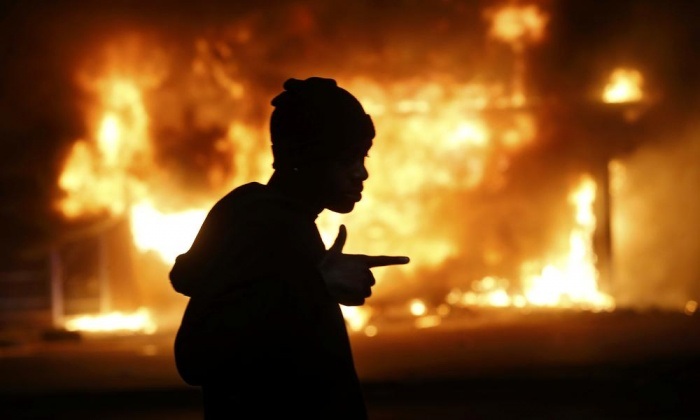
Law & Order Restored [the Same Law & Order that Hides the Everyday War Against You] From [HERE] Maryland National Guard troops fanned out here Tuesday and residents began to repair neighborhoods as the city’s mayor defended the response to a night of riots and looting fueled by the recent murder of a black man by white cops.
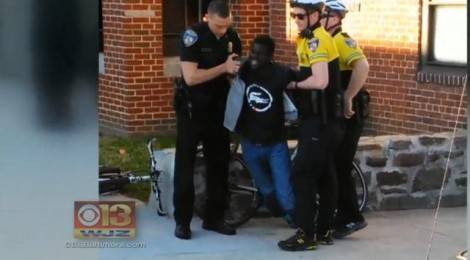
Upheaval roiled the city Monday night when roaming groups of youths faced off with police just hours after the funeral for Freddie Gray, a 25-year-old black man who was senselessly murdered earlier this month after white police arrested him. Gray died after his lawyer said that 80 percent of his spinal cord was severed at the neck while he was in custody, and that he later lapsed into a coma. Witnesses captured parts of Mr Gray’s encounter with the police on a cellphone video, in which screams can be heard as white officers drag him to a transport van.
Cops said he was arrested "without force or incident" on a "weapon" charge, according to police documents. The so-called weapon apparently was a legal size pocket knife, which the cops did not see until after he was handcuffed. Cops claimed they have no idea how his neck and back broke.
City officials said fires consumed 19 buildings and 144 vehicles, while at least 20 police officers were injured and 235 people arrested. The white media does not keep track of civilian injuries. [MORE]
White Cops have No Idea How Legs & Spine Broke - 'We Have the Finest Video Equiptment & We Did Not Record any Police Violence.' From [HERE] and [HERE] Freddie Gray, the Black man who died after his lawyer said that 80 percent of his spinal cord was severed at the neck while he was in Balitimore police custody, and that he later lapsed into a coma. Witnesses captured parts of Mr Gray’s encounter with the police on a cellphone video, in which screams can be heard as officers drag him to a transport van.
White police officers said he was arrested "without force or incident" on a "weapon" charge, according to documents obtained Monday.
While the court documents allege that Baltimore Police Department Officer Garrett Miller arrested Gray after finding a switchblade in his pocket, the Gray family attorney called the allegation a "sideshow." Gray was carrying a "pocket knife of legal size," attorney William Murphy told CNN.
The Police Department’s deputy commissioner, Jerry Rodriguez, said the police believed Mr. Gray was involved in a drug dealing activity. But Murphy has said there is no evidence that Mr. Gray committed a crime. Police did not see the knife until after they had subdued him.
Tried to stop him for what [4th Amendment purpose] again? According to a police timeline, four officers on bicycles tried to stop Mr. Gray at about 9 a.m. on April 12. When he ran away, the police said, the officers caught him and restrained him on the ground while awaiting backup. The timeline said Mr. Gray had been conscious and speaking when he was loaded into the van to be taken to the police station. After he arrived at the station, police officers called medics, who took him to a hospital.
But Mr. Murphy has disputed the police account. In a statement, Mr. Murphy said Mr. Gray’s “take-down and arrest without probable cause” had been captured by a police video camera, adding, “We believe the police are keeping the circumstances of Freddie’s death a secret until they develop a version of events that will absolve them of all responsibility.”
Gray was in perfect health until police chased and tackled him in Baltimore over a week ago, his lawyer said. Less than an hour later, he was on his way to a trauma clinic with a spinal injury, where he fell into a coma.
Sorry Ass White 'Cops have Taken the 5th'
On Monday, police may reveal details of what happened to him when they hold an afternoon news conference. Two witnesses hit record on their cell phones during what looked to be the 25-year-old's arrest. Police told CNN affiliate WJZ that they also have surveillance video of him.
But there appears to be a gap of some minutes left to account for. Police, according to their own timeline, spotted Gray, gave chase, caught him, cuffed him and requested a paddy wagon in fewer than 4 minutes. The transport van left with Gray about 11 minutes after that, police said, and another 30 minutes passed before "units request paramedics to the Western District to transport the suspect to an area hospital."
Gray died Sunday, a full week after the encounter.
When cell phones began recording, Gray was already on the ground with three officers kneeling over him. And he let out long, painful screams.
Black Lives Don't Matter to Racist Cops, Prosecutors, Jurors & Judges.
Officers had encountered him a minute earlier, police said. They were working an area where drug deals and other crimes are common, Deputy Police Commissioner Jerry Rodriguez said.
"Officers were working in an area that is known for violent crime and drug sales. Officers went to make an encounter with Mr. Gray when he fled from them," Baltimore Police Department spokesman, Capt. Eric Kowalczyk, said Sunday.
Pressed on why police initially stopped Gray, Kowalczyk said the department hadn't released that information because investigators are still conducting interviews. Wouldn't that information be in the arrest report, which is public information?
The officers called for a prisoner transport van. Cell phone video taken from two separate positions showed officers lifting Gray, whose hands were cuffed, up by his shoulders and dragging him to the back of the van.
He legs dangled behind him listlessly as he wailed in pain. Witnesses are recorded on video yelling at the cops, "his legs are broken, what are you doing?"
Officers put more restraints on Gray inside the van, police said, while surveillance video recorded him conscious and talking. The video has not been released to the public.
That was at 8:54 a.m.
At 9:24 a.m., police called an ambulance to pick Gray up at the Western District police station. Murphy wants to know what happened in those 30 minutes in between.
"He lapsed into a coma, died, was resuscitated, stayed in a coma and on Monday underwent extensive surgery at Shock Trauma to save his life," Murphy said. "He clung to life for seven days."
Tubes, wires and supports protruded from Gray as he lay in his hospital bed in a photo Murphy passed on to the media.
Police have not released the incident report or said how many officers participated in Gray's arrest. The officers have been placed on administrative duty, they said.
Murphy has accused police not releasing details of Gray's treatment by officers to cover for them.
On the evening of Gray's death, Baltimore's mayor, police commissioner and deputy commissioner promised to get to the bottom of the case.
"I understand the frustration of the community," said Mayor Stephanie Rawlings-Blake. "I want citizens to know exactly how it happened, and if necessary, I will ensure that we hold the right people accountable."
But no one promised quick answers.
Rawlings-Blake said that she wants to see a thorough inquiry and that the city will release additional details as investigations are completed.
There will be two criminal investigations, said Deputy Commissioner Rodriguez: one to determine if the arresting officers broke the law, and one that pertains to Gray.
Police have not grilled the arresting officers on what happened for legal reasons, Rodriguez said.
"We cannot interview an officer administratively and compel them, if an officer is the subject of the criminal investigation. Every person has the right against self-incrimination, so for us to compel an officer to provide a statement, that could potentially taint the criminal investigation," he said.
Investigators will submit their results to an independent review board, he said. There will also be a separate administrative investigation.
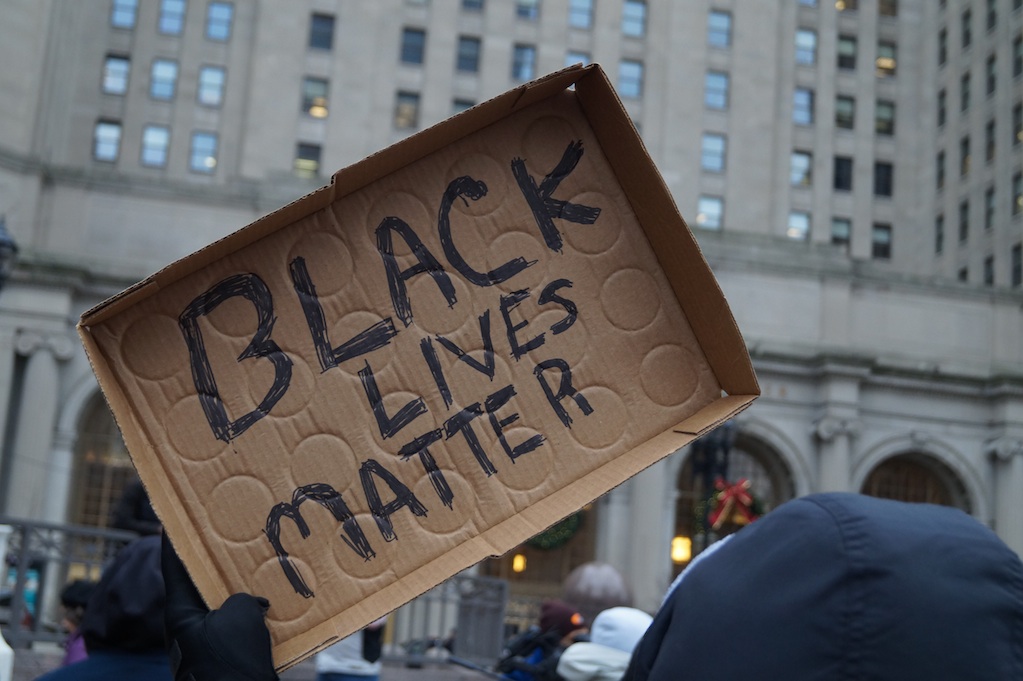
Gray's death Sunday, following a week of hospitalization, has spurred outrage. At a Monday morning protest outside the Baltimore Police Department, demonstrators co-opted slogans from other high-profile police shootings. They chanted -- "Hands up! Don't shoot!" and "I can't breathe!" -- and carried signs saying, "Stop police terror" and "Black lives matter."
Sharon Black, one of the rally's organizers, said police misconduct is routine in Baltimore, and described Gray's death as the "straw that broke the camel's back."
"The police act in an unrestrained and abusive way," she said.
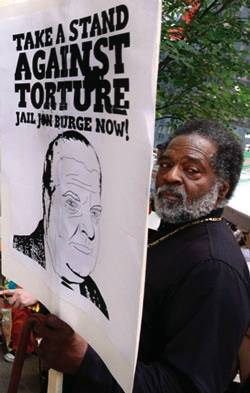
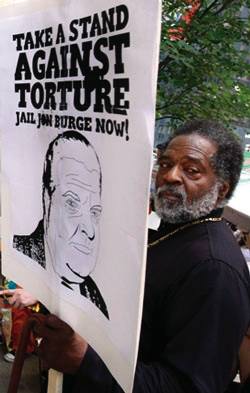
Sentencing Guidelines Apply to Racist Suspects? Like the recent Wash Post study found, white cops are routinely not punished for brutalizing non-white people. Even when their conduct has resulted in a monetary award of legal damages, cops rarely are held personally liable - they pay nothing, the Government pays. Here, after prosecutors asked for a 30 year jail sentence, Jon Burge was sentenced to only 4. He was then released early after serving only 3 yrs. He is still collecting a $3000 a month pension and the City of Chicago continues to be bound by court order to pay his legal fees. [MORE] In other words, like Donald Sterling who hit the jackpot after his racist episode, Mr. Burge is actually undercover rewarded by other whites for his racist acts.
From [HERE] Whenever white Chicago Police commander Jon Burge needed a confession, he would walk into the interrogation room and set down a little black box, his alleged victims would later tell prosecutors. The box had two wires and a crank. Burge, they alleged, would attach one wire to the suspect’s handcuffed ankles and the other to his manacled hands. Then, they said, Burge would place a plastic bag over the suspect’s head. Finally, he would crank his little black box and listen to the screams of pain as electricity coursed through the suspect’s body.
“When he hit me with the voltage, that’s when I started gritting, crying, hollering. … It [felt] like a thousand needles going through my body,” Anthony Holmes told prosecutors during a 2006 investigation into Burge. “And then after that, it just [felt] like, you know—it [felt] like something just burning me from the inside, and, um, I shook, I gritted, I hollered, then I passed out.”
Holmes, who eventually gave what he says was a false confession and was convicted of murder in 1973, is one of as many as 120 African-American men on Chicago’s South Side who were allegedly tortured by Burge between 1972 and 1991.
Though prosecutors accumulated evidence against Burge they thought “sufficient to establish guilt beyond a reasonable doubt,” the statute of limitations prevented prosecution. Burge instead went to jail for perjury later, for denying his role under oath.
On Tuesday, Chicago Mayor Rahm Emanuel announced the establishment of a $5.5 million fund for these victims. The compensation would “close this book, the Burge book on the city’s history,” Emanuel said according to the Chicago Tribune. [This simpleton can close whatever is he wants to close.]
'To Stop him from killing himsef I had to run him over at full speed' and Other Nonsense Repeated by White Media on behalf of White Cops. From [HERE] and [HERE] Dramatic dash-cam video released Tuesday shows a white police officer in a Tucson suburb (Marana) using his cruiser to run over an armed Latino suspect, hitting from behind and sending him flying in the air before the car smashes into a wall. The man survived the Feb. 19 crash, and white prosecutors cleared the officer of any wrongdoing [what is white collective power?].
Video from two different police cruisers shows Valencia walking down a street with a rifle in his hands. He shoots a single shot up in the air. In the video Valencia points the rifle at himself and threatens to kill himself. In the video the streets appear to be empty - 2 people appear but have no interaction with Valencia and do not seem to pay any attention to him. He kept the gun held under his chin as he quickly walked down street. It was only pointed at himself.
A police officer can be heard telling the approaching cop car to "stay off" or stay back. But within seconds, the approaching officer uses his cruiser to run the suspect over at full speed, sending him flying into the air. Because he hit him from the back Valencia did not see the officer coming. Then white officers with guns drawn quickly swarm the scene. [see the end part of the above video, it shows this angle].
The man who was hit, Mario Valencia, 36, faces several felony charges, including assault on a police officer. [the white media inserts this information in attempt to justify this psychopathic conduct. If he was not a suspect would it be less justified? Would he have done this to a white man? These are unproven charges or allegations and he is not been found guilty. The white media knows nothing of the charges except what the cops told them. To racist white people, all non-white men are existentially guilty so their psychopathic conduct requires no justification.]
Marana police Sgt. Chris Warren said Valencia robbed a convenience store in Tucson, broke into a church, invaded a home and stole a car. Valencia drove the stolen car to Marana, just north of Tucson, where he stole a rifle from a Wal-Mart. [all on the same day? or in the past?]
Marana Police Chief Terry Rozema, who is white, shared his thoughts on the incident with KVOA.
"The thought is to take a shot [at the suicidal guy], which would have been completely justified ... If I miss, he is going to turn and start firing on us and we are at a big disadvantage at that point," Rozema said. "These officers have no choice but to begin firing." [MORE]
The officer has been identified as Michael Rapiejko. Warren said Rapiejko was put on a standard administrative leave because the incident was considered use of force. The Pima County Attorney's Office cleared Rapiejko of any wrongdoing and he is back on the force, Warren said. [if you ran a white man over at full speed, on purpose, what do you think would happen to you?]
The figure, which comes 31 days after the release of the White House Task Force on 21st Century Policing report, averages out to more than three people killed in America each day by police officers.
Out of the 111 people who died during police encounters, the majority have been unarmed men of color. Many of the victims were mentally ill. And a number were both, Think Progress points out.
Despite an ongoing national conversation surrounding officer misconduct, racial profiling, and use of excessive force, the numbers seem to be steadily increasing.
In fact, March saw 36 more deaths at the hands of police than the previous month.
And if recently proposed legislation to withhold the identity of officers involved in a shooting is any indication, the law is leaning away from citizens and aiding police departments in their historically non-transparent practices.
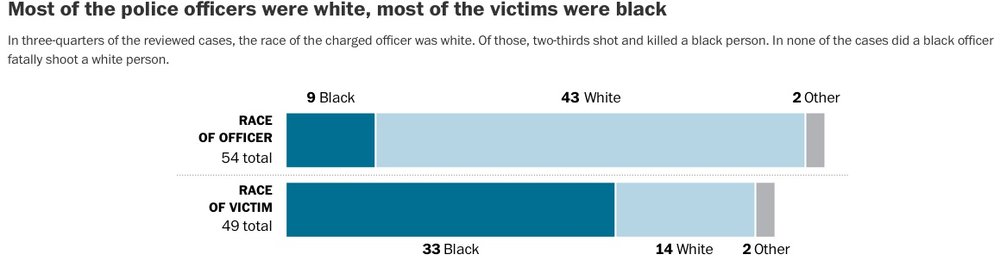
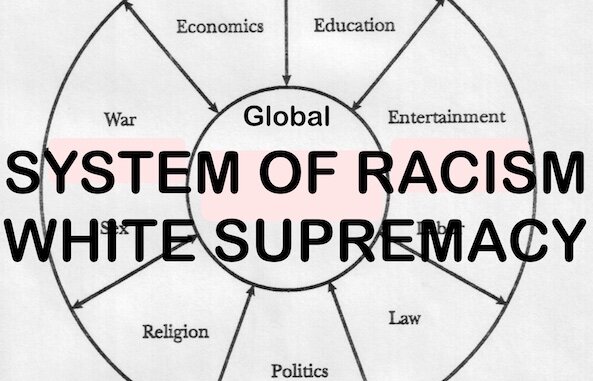
In System of Racism White Cops Must be Able to Legally Execute Non-White People. Among the thousands of fatal shootings at the hands of police since 2005, only 54 officers have been charged, a Washington Post analysis found. Most were cleared or acquitted in the cases that have been resolved. [That is, white cops were cleared or acquitted by white prosecutors, white jurors or white judges.]
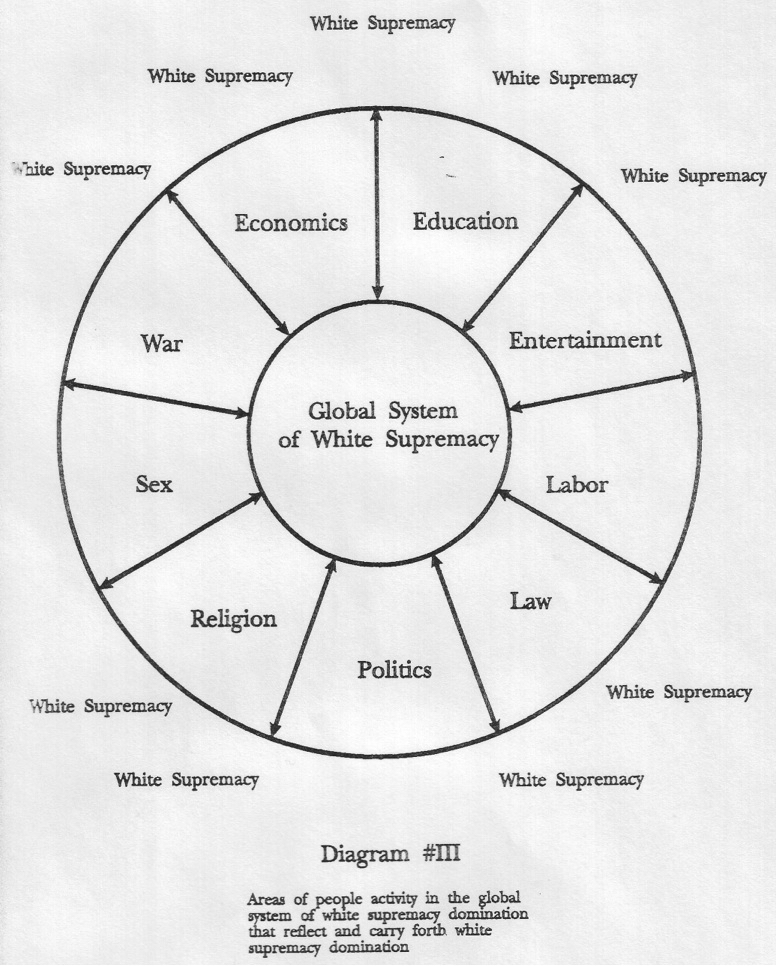
This article should be considered in the context of white supremacy/racism. Its white writers really don't know what to do with the data that nearly all of the victims were Black and all of the aquitted or cleared cops were white and there were no cases where a Black cop killed a white person. This supports what Anon has already told us -"in the history of modern law enforcement there has not been a single instance of a black police officer shooting or killing an unarmed white person."[MORE] Anon further states, "a Black police officer killing whites contradicts the purpose of having a police force in the first place: to protect property and white life -- in that order." [MORE]
From [HERE] On a rainy night five years ago, Officer Coleman "Duke" Brackney set off in pursuit of a suspected drunk driver, chasing his black Mazda Miata down rural Arkansas roads at speeds of nearly 100 miles per hour. When the sports car finally came to rest in a ditch, Brackney opened fire at the rear window and repeatedly struck the driver, 41-year-old James Ahern, in the back. The gunshots killed Ahern.
Prosecutors charged Brackney with felony manslaughter. But he eventually entered a plea to a lesser charge and could ultimately be left with no criminal record.
Now, he serves as the police chief in a small community 20 miles from the scene of the shooting.
Brackney is among 54 officers charged over the past decade for fatally shooting someone while on duty, according to an analysis by The Washington Post and researchers at Bowling Green State University. This analysis, based on a wide range of public records and interviews with law enforcement, judicial and other legal experts, sought to identify for the first time every officer who faced charges for such shootings since 2005. These represent a small fraction of the thousands of fatal police shootings that have occurred across the country in that time.
"Im Losing My Breath" in System of White Supremacy. From [HERE] The White Tulsa County deputy who shot and killed a Black man instead of using his Taser now faces a manslaughter charge.
In a written statement, Tulsa County District Attorney Stephen A. Kunzweiler said Bates is charged with second-degree manslaughter involving culpable negligence. It's a felony charge that could land the volunteer deputy in prison for up to four years if he's found guilty.
Scott Wood, an attorney who represents Bates, said the shooting was an "excusable homicide." [more here on the justifiable homicides of Black and Latino men by white cops]
"We believe the video itself proves that it was an accident of misfortune that occurred while Deputy Bates was fulfilling his duties as a reserve deputy," Wood said. "He is not guilty of second-degree manslaughter."
Investigators' efforts to defend Bates and the other deputies involved in the arrest have sparked a mounting chorus of criticism online. Harris' family is demanding an independent investigation of what they call unjustified brutality.
They're also questioning why the 73-year-old Bates -- the CEO of an insurance company who volunteers as a certified reserve deputy -- was on the scene in such a sensitive and high-risk sting operation.
Attorney: Deputy was donor who 'paid big money to play a cop'
Daniel Smolen, an attorney representing the Harris family, said Bates paid big money to play a cop in his spare time.
"It's absolutely mind boggling that you have a wealthy businessman who's been essentially deputized to go play like he's some outlaw, like he's just cleaning up the streets," he said.
Wood said his client -- who had donated cars and video equipment to the Sheriff's Office -- had undergone all the required training and had participated in more than 100 operations with the task force he was working with the day he shot Harris. But he'd never been the main deputy in charge of arresting a suspect, Wood said, but was thrust into the situation because Harris ran from officers during the arrest.
"Probably in the past four of five years since he has been working in conjunction with the task force he has been on, (there were) in excess of 100 operations or search warrants where he was placed on the outer perimeter," Wood said. "He has never been on an arrest team or been the one who is primarily responsible for the capture or the arrest of a suspect. He is there more in a support mechanism."
Bates, who worked as a police officer for a year in the 1960s, had been a reserve deputy since 2008, with 300 hours of training and 1,100 hours of community policing experience, according to the Sheriff's Office.
He was also a frequent contributor to the Tulsa County Sheriff's Office, including $2,500 to the reelection of Sheriff Stanley Glanz.
Tulsa County Sheriff's Maj. Shannon Clark denied accusations that Bates had paid to play a cop, describing him as one of many volunteers in the community who have contributed to the agency.
"No matter how you cut it up, Deputy Bates met all the criteria on the Council on Law Enforcement Education and Training to be in the role that he was in," Clark said.
'In a state of shock and disbelief'
After the shooting, Bates told investigators that he was "in a state of shock and disbelief" after realizing he'd fired his gun. He also said he believed there was a "strong possibility" that Harris had a gun. [belief is a mf. drop it. who was on pcp again? white folks are so compassionate to other white folks who kill Blacks though.]
Wood said Monday that Bates is upset over the shooting.
"Obviously he is very upset about what happened. He feels badly," he said. "The incident completely took him by surprise. He has all the requisite training. He is TASER-certified, and if you watch the video you know he was quite shocked when his gun went off."
Authorities say Bates thought he pulled out his Taser but "inadvertently" fired his gun. They've painted Harris as a dangerous, possibly PCP-addled illegal gun dealer who had recently sold methamphetamine to undercover police and who fled police that day in such a way as to give the impression that he had a gun in his waistband.
Though Harris was later determined to be unarmed, Sgt. Jim Clark of the Tulsa Police Department, who has been brought in to review the case, excused the behavior of Bates and an officer who is heard cursing at Harris in the video.
Clark said Bates was the "victim" of something called "slip and capture," where in a high-stress situation, a person intends to do one thing and instead does something else.
It's a controversial argument that drew sharp criticism online as soon as police started making it.
One expert told CNN the claim amounts to "junk science."
"It's not something that's supported by a testable theory. There's no peer-reviewed articles that would support this. ... It's not generally accepted by the scientific community," said Phil Stinson, an assistant professor of criminal justice at Bowling Green State University. "So it's something that in most courts would not be admissible as evidence."
Andre Harris told reporters Monday that claims his brother was violent and on PCP are false. He added that the shooting of his brother, who was African-American, wasn't a racial matter. [this person either wants to be deceived or wants to deceive you.]
"I don't think this is a racial thing. I don't think this has anything to do with race. It might have a hint there somewhere. ... This is simply evil," Andre Harris told reporters Monday.
If he Lies One Time Can You Believe Anything Else he Says?In photo, for several minutes after the shooting, Walter L. Scott remained face down with his hands cuffed behind his back. Racist cops lie everyday. Among other lies, the police report states that cops provided first aid and cpr. In this racist system you can be killed anytime, anyplace by a white cop. Teddy bear time again. [MORE]
From [HERE] and [HERE] A white police officer in North Charleston, S.C., was charged with murder on Tuesday after a video surfaced showing him shooting in the back and killing an unarmed black man while he ran away.
The officer, Michael T. Slager, 33, said he had feared for his life because the man had taken his stun gun in a scuffle after a traffic stop on Saturday. A video, however, shows the officer firing eight times as the man, Walter L. Scott, 50, fled. The North Charleston mayor announced the state charges at a news conference Tuesday evening.
The shooting unfolded after Officer Slager stopped the driver of a Mercedes-Benz with a broken taillight, according to police reports. Mr. Scott ran away, and Officer Slager chased him into a grassy lot that abuts a muffler shop. He fired his Taser, an electronic stun gun, but it did not stop Mr. Scott, according to police reports.
Moments after the struggle, Officer Slager reported on his radio: “Shots fired and the subject is down. He took my Taser,” according to police reports.
On Saturday the police released a statement alleging that Scott had attempted to gain control of a Taser from Slager and that he was shot in a struggle over the weapon. The Post And Courier reported the initial story: Police in a matter of hours declared the occurrence at the corner of Remount and Craig roads a traffic stop gone wrong, alleging the dead man fought with an officer over his Taser before deadly force was employed.
A statement released by North Charleston police spokesman Spencer Pryor said a man ran on foot from the traffic stop and an officer deployed his department-issued Taser in an attempt to stop him. That did not work, police said, and an altercation ensued as the men struggled over the device. Police allege that during the struggle the man gained control of the Taser and attempted to use it against the officer.
The officer then resorted to his service weapon and shot him, police alleged.
But the video, which was taken by a bystander and provided to The New York Times by the Scott family’s lawyer, presents a different account. The video begins in the vacant lot, apparently moments after Officer Slager fired his Taser. Wires, which carry the electrical current from the stun gun, appear to be extending from Mr. Scott’s body as the two men tussle and Mr. Scott turns to run.
Something — it is not clear whether it is the stun gun — is either tossed or knocked to the ground behind the two men, and Officer Slager draws his gun, the video shows. When the officer fires, Mr. Scott appears to be 15 to 20 feet away and fleeing. He falls after the last of eight shots.
The officer then runs back toward where the initial scuffle occurred and picks something up off the ground. Moments later, he drops an object near Mr. Scott’s body, the video shows.
Mr. Stewart said the coroner had told him that Mr. Scott was struck five times — three times in the back, once in the upper buttocks and once in the ear — with at least one bullet entering his heart. It is not clear whether Mr. Scott died immediately. (The coroner’s office declined to make the report available to The Times.)
Police reports say that officers performed CPR and delivered first aid to Mr. Scott. The video shows that for several minutes after the shooting, Mr. Scott remained face down with his hands cuffed behind his back. A second officer arrives, puts on blue medical gloves and attends to Mr. Scott, but is not shown performing CPR. As sirens wail in the background, a third officer later arrives, apparently with a medical kit, but is also not seen performing CPR.
On Monday, Slager sought to reinforce his narrative, this time releasing a statement through his attorney. From The Post And Courier:
Slager thinks he properly followed all procedures and policies before resorting to deadly force, lawyer David Aylor said in a statement.
“When confronted, Officer Slager reached for his Taser — as trained by the department — and then a struggle ensued,” Aylor said. “The driver tried to overpower Officer Slager in an effort to take his Taser.”
Seconds later, the report added, he radioed that the suspect wrested control of the device. Even with the Taser’s prongs deployed, the device can still be used as a stun gun to temporarily incapacitate someone.
Slager “felt threatened and reached for his department-issued firearm and fired his weapon,” his attorney added.
If the video had not surfaced, that’s where the story might have ended. In nearly all cases where an officer fires a weapon, that is the end of the story. A study by The State found “[p]olice in South Carolina have fired their weapons at 209 suspects in the past five years” but none were convicted. “We ruled all the shootings were justified – and we looked at dozens and dozens of them,” one former prosecutor told The State.
In this case, the video revealed a very different scenario. Scott, who was unarmed and fleeing, was shot in the back by Slager from a distance of at least 15 feet. After Scott was fatally shot, the video appears to capture Slager planting an object next to Scott.
North Charleston is South Carolina’s third-largest city, with a population of about 100,000. African-Americans make up about 47 percent of residents, and whites account for about 37 percent. The Police Department is about 80 percent white, according to data collected by the Justice Department in 2007, the most recent period available.
“When you’re wrong, you’re wrong,” Mayor Keith Summey said during the news conference. “And if you make a bad decision, don’t care if you’re behind the shield or just a citizen on the street, you have to live by that decision.”
The South Carolina Law Enforcement Division, the state’s criminal investigative body, has begun an inquiry into the shooting. The F.B.I. and the Justice Department, which has opened a string of civil rights investigations into police departments under Mr. Holder, is also investigating.
Mr. Scott had been arrested before, mostly for failing to pay child support or show up for child support court hearings, according to The Post and Courier newspaper of Charleston. Mr. Scott’s brother, Anthony, said he believed Mr. Scott had fled from the police on Saturday because he owed child support. In most jurisdictions fathers who fail to pay child support owed to the state [reimbursement to the state] face jail time without court appointed counsel.
“He has four children; he doesn’t have some type of big violent past or arrest record,” said Chris Stewart, a lawyer for Mr. Scott’s family. “He had a job; he was engaged. He had back child support and didn’t want to go to jail for back child support.”
Mr. Scott’s brother said his mother had called him on Saturday, telling him that his brother had been shot by a Taser after a traffic stop. “You may need to go over there and see what’s going on,” he said his mother told him. When he arrived at the scene of the shooting, officers told him that his brother was dead, but he said they had no explanation for why. “This just doesn’t sound right,” he said in an interview. “How do you lose your life at a traffic stop?”
137 Shots: [they're good at what they do] Cops Lie All the Time in Court & Judges Believe them. Do Not Expect Justice in System of Racism. In photo, White cops claimed they heard a gun shot & saw a gun thrown out of a window. The attorney general found car was prone to loud backfiring from muffler and there was no evidence of any gun.
From [HERE] and [MORE] His footprints were found on the hood of a beat-up Chevy Malibu that had been strafed by police gunfire, killing its two unarmed occupants after a high-speed chase over streets and freeways in and around Cleveland.
Yet Officer Michael Brelo told investigators he couldn't remember standing on the hood and firing the final 15 rounds of a 137-shot barrage down into the windshield — even though a police officer told those same investigators that Brelo talked about it days afterward.
"It's possible," Brelo allowed when questioned by investigators two weeks after the November 2012 shooting, "because I was so terrified that I was going to get run over."
"But I don't recall that, sir."
Brelo, 31, goes on trial Monday on two counts of voluntary manslaughter for the deaths of Timothy Russell, 43, and Malissa Williams, 30. He is the lone officer among the 13 who fired their weapons that night who is charged criminally because prosecutors say he stood on the hood and opened fire four seconds after the other officers had stopped shooting. [Yes, you read that right - only one white cop is charged out of 13 and he is not charged with murder. Were you expecting more from racist suspects who function as psychopaths in their relations with non-whites?]
A judge — not a jury — will decide whether Brelo is guilty or innocent. He faces a maximum sentence of 25 years if convicted.
Brelo's defense team has argued that all 49 rounds Brelo fired that night, including the last 15, were lawful and that the threat did not end until Brelo reached into the Malibu and removed the keys, preventing the suspects from using the car as a weapon. Russell and Williams were each shot more than 20 times.