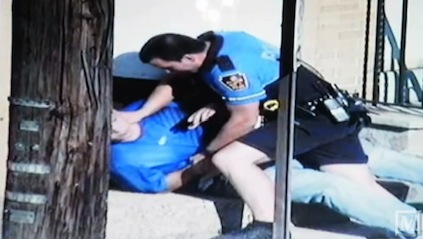
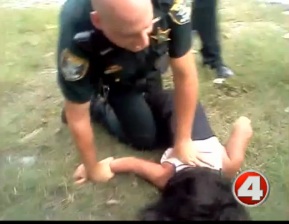
Although Video Impeached White Austin Cops & Proved They Faced No Imminent Harm, [all-obedient] Jury Upholds Cops’ Decision to Tase Black Man on His Knees with His Hands Up b/c He Disobeyed Orders
/LEGAL SYSTEM ANCHORED BY VIOLENCE. Michael Huemer explains, “As these examples illustrate, commands are often enforced with threats to issue further commands, yet that cannot be all there is to it. At the end of the chain must come a threat that the violator literally cannot defy. The system as a whole must be anchored by a non-voluntary intervention, a harm that the state can impose regardless of the individual’s choices.
That anchor is provided by physical force. Even the threat of imprisonment requires enforcement: how can the state ensure that the criminal goes to the prison? The answer lies in coercion, involving actual or threatened bodily injury, or at a minimum, physical pushing or pulling of the individual’s body to the location of imprisonment. This is the final intervention that the individual cannot choose to defy. One can choose not to pay a fine, one can choose to drive without a license, and one can even choose not to walk to a police car to be taken away. But one cannot choose not to be subjected to physical force if the agents of the state decide to impose it.”
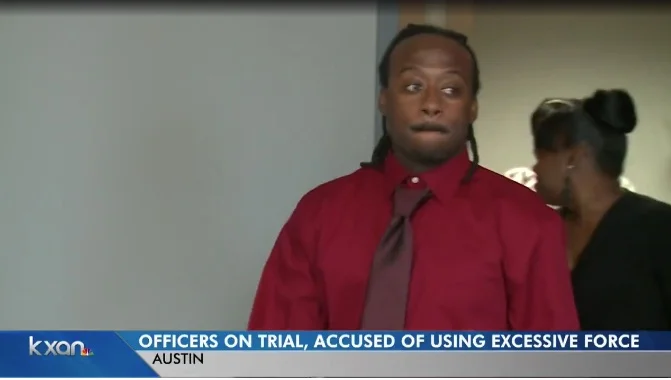
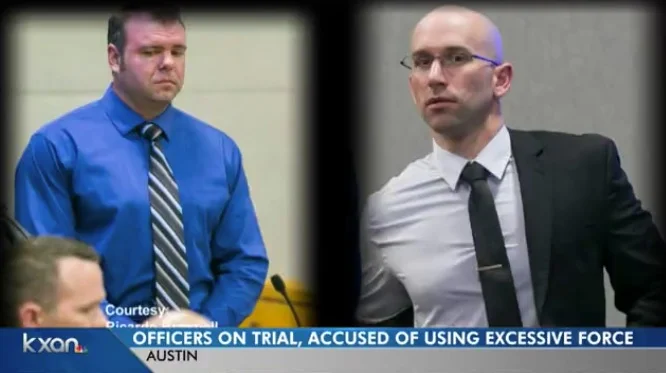
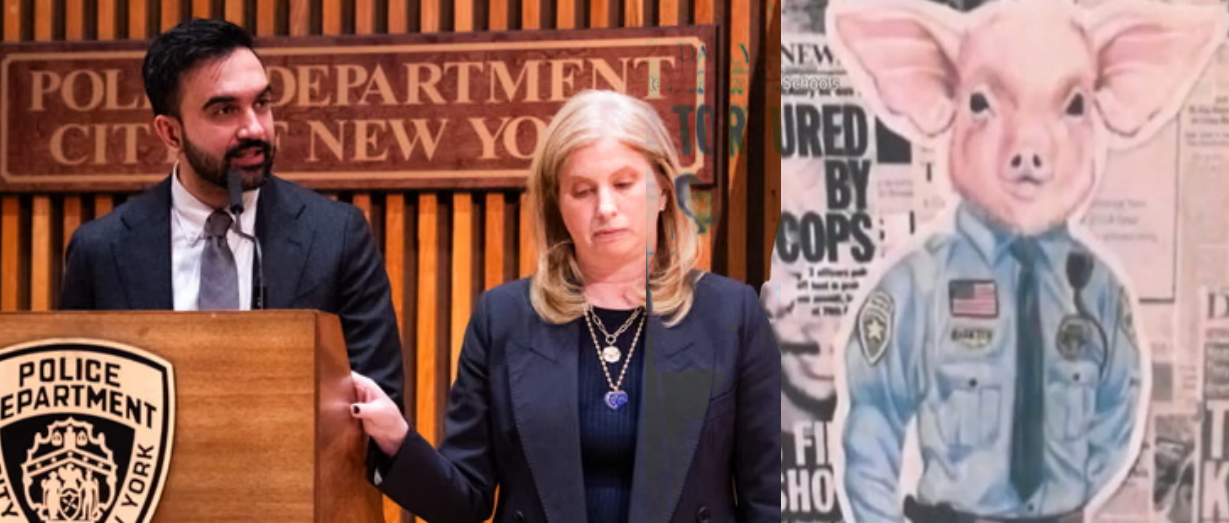
From [HERE] and [HERE] Two white Austin police officers accused of using excessive force earlier this year and lying about it have been found not guilty of all charges, according to local media reports.
After six hours of deliberations, the jury after 11 p.m. Wednesday came back with not guilty verdicts for Austin Police Department SWAT team officers Robert Pfaff and Donald Petraitis, who were indicted in March on numerous charges related to a February arrest on 12th and Red River streets.
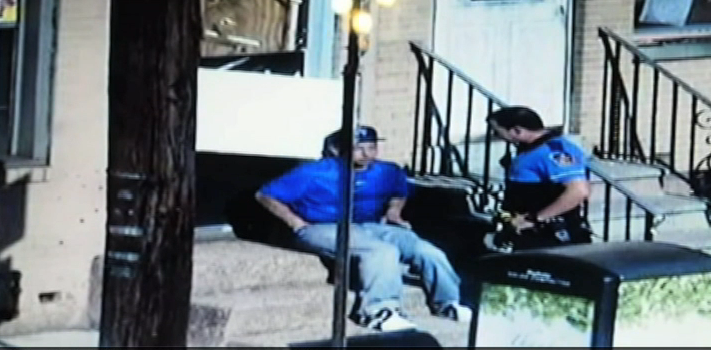
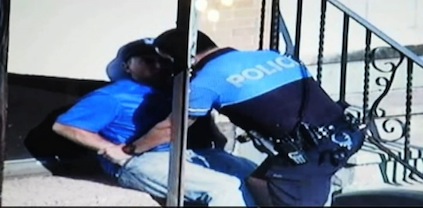
The charges are tied to an incident on Feb. 16, in which the officers tasered Quentin Perkins, a man who was a witness to a shooting the officers were responding to.
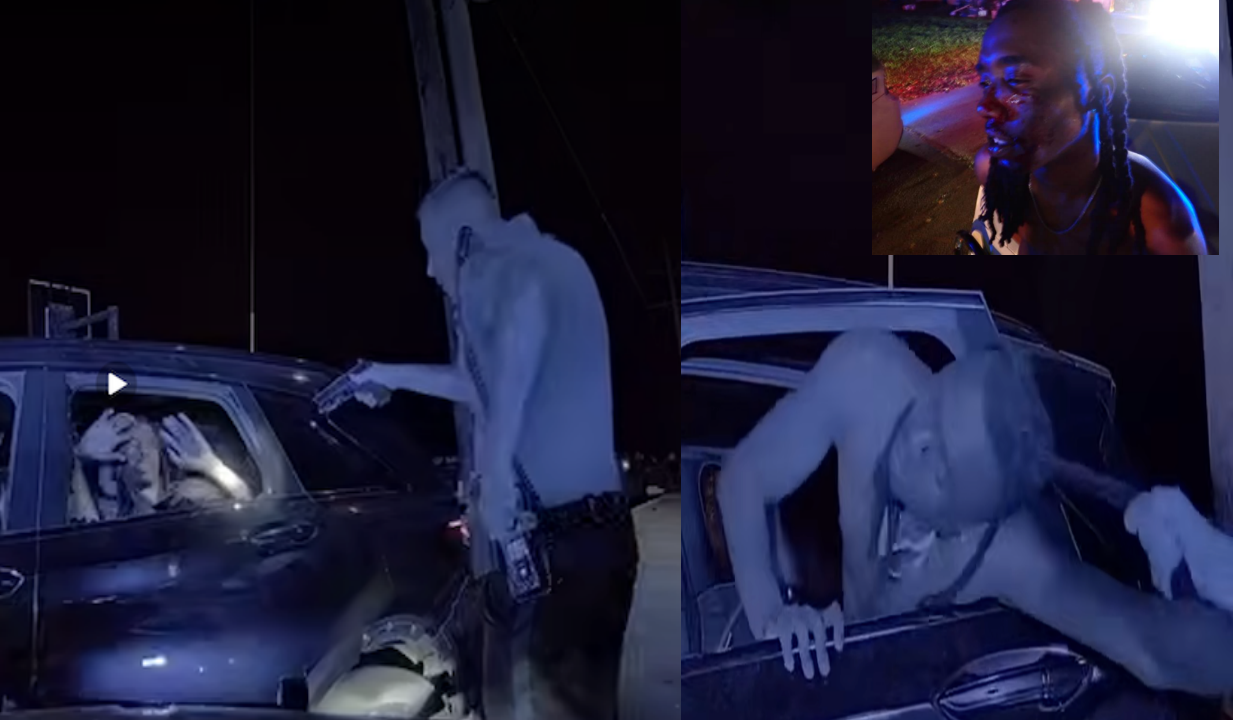
Prosecutors had said Pfaff used a stun gun on 30-year-old Perkins while he was on his knees with his hands up, which could be seen on another officer’s body camera footage.
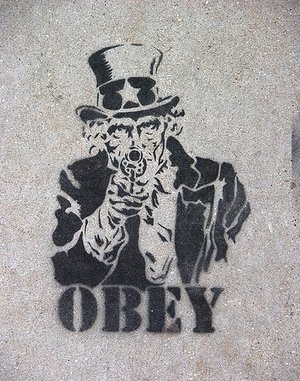
[Thus far, the media (as usual) has not provided any information about the racial make-up of the jury. It is likely that the jury was all-white in a system of injustice. It is also reasonable to conclude that it was an all-obedient jury: Obedience - “the highest form of the power-fear systemic. 3) slavery sold to both children and adults alike deceptively packaged in a respectfully sounding label. 4) reverse terrorism. You can compel obedience but you cannot compel responsibility or respect.” FUNKTIONARY.]
On Monday, the State of Texas called expert witness Dr. Howard Williams to the stand. He is a former APD commander and a current lecturer at Texas State University. He has either authored or co-authored five publications about the use of tasers, the injuries involved and effects it has on the body.
He studied body camera video from the scene of the arrest and concluded that the use of a taser was unreasonable. The witness was not resisting arrest and was cooperating with the commands given.
The prosecutors said the arrest was illegal and the use of the stun gun was not reasonable.
In fact, after the incident Austin Police Chief Manley said the officer's written report was not consistent with the recorded video. Multiple times after the incident the Chief said the officer wrote in his police report that Perkins was “on his feet and walking away from the officers when officers tased him but it is clear in the video that that is not what happened in this instance.” See video of statement above. [MORE]
Manley refused to release the public videos of the incident because of its use in the public criminal trial and pending civil case, which also will be public.
Donald Petraitis, an Austin police officer who has been with the department since July 2010, was accused of shocking Perkins with a stun gun while responding to a shooting. He was indicted on charges of abuse of official capacity, official oppression and assault--bodily injury.
The other white officer, Robert Pfaff, who has been with APD since May 2007, was accused of illegally shocking Perkins with a stun gun during the same incident.
Pfaff allegedly lied under oath by claiming that Perkins refused to comply with the officer's verbal commands to get on the ground and place his hands above his head. The indictment also alleges that the officer falsely said Perkins was about to escape, necessitating the use of a stun gun.
However, defense attorneys said the officers had ordered Perkins to lay on the ground with his face down after he had refused previous commands and attempted to walk away from the scene.
The officers responded Feb. 16 to a shooting at 12th and Red River streets and arrived to find a cluster of people around the victim.
According to the prosecutors, the officers had said they detained Quentin Perkins, who was among the crowd, after he began to walk away from the officers and headed toward a dark area, looking back as if to escape. [he was not under arrest and therefore he was free to leave insofar as the 4th Amendment applies to white citizens].
The officers ordered Perkins to lay on the ground with his arms out and face down, their attorneys said. Body-worn camera footage from the incident showed that Perkins was on his knees with his hands raised when the stun gun was used.
Defense attorneys argue that Perkins, by not getting fully on the ground, failed to follow the officers’ commands.
The defense made the argument that the tasing happened over a very short period of time and that people can easily make errors when filing reports.
They played videos of the officers recounting what happened to one another on the night of the incident, at that time the officers noted that Perkins was not dangerous, just that he was slow to follow commands. The defense also suggested that Pfaff and Petraitis would have been OK with letting Perkins go without an arrest that night, but other officers wanted to file charges.
“This man is at the scene of a shooting. He has not been searched, he has a hoodie on, and he is the only one who has disregarded orders,” Petraitis’ attorney, Ken Ervin, told jurors in his opening remarks. “What (the officers) did was entirely appropriate. ... Not to be forced to make some split-second decision but to control him.” [a blistering defense or racist, slave minded jurors or a limp wristed prosecution or all that?]
Prosecutors said Perkins did comply with the orders and contended that the officers issued different commands that might have been confusing to Perkins.
Perkins, who was arrested for disobeying a police order, has since sued the city and both officers, saying he was racially discriminated against and that he was stunned for no reason.
Prosecutor Dexter Gilford said footage showed about six seconds elapse from the time Perkins got on his knees to the time he was stunned. Gilford said Perkins was defenseless, and that the officers lied about the specifics of the incident in statements and reports.
During closing arguments Wednesday, prosecutors provided a timeline of critical moments they said showed Petraitis and Pfaff, both members of the Police Department’s SWAT team, had an opportunity to communicate with each other and get their story straight between the time Pfaff used his stun gun and the moment he provided his initial report to a supervisor.
Prosecutors argued that the officers’ reports describe Perkins trying to take off while video footage shows him on his knees complying with orders. Prosecuting attorney Sandra Avila Ramirez urged jurors to read the officers’ statements, formulate a picture of the incident they described, and compare it with the video footage captured by Austin police body-worn cameras.
“Then, you have to ask why they don’t match,” she said.
Ervin characterized the discrepancy in the report and video as a small detail that might have been misremembered.
Prosecutor Dexter Giford said the case wasn’t an instance of misremembering an event. Instead, he said, the events as described by Pfaff and Petraitis never happened at all.
Ervin pointed jurors to footage that showed the entire episode happened in the amount of time it took another responding officer to put on gloves. He went through in-car camera footage to show the interactions between Petraitis and Pfaff could not have amounted to the level of collusion the prosecutors alleged.
Gilford said he felt Perkins has been "depersonalized" during the entire trial, noting that someone like Perkins who got tased typically wouldn't be believed in a court of law, but in this case, Gilford said the officer's body camera video backed up Gilford's story. [probable translation here: in a credibility contest between a Black man and sworn white police officers, white jurors will believe almost anything the cops say. Why would cops lie? Because white jurors will believe it.]
In December 2015, a grand jury chose not to indict Pfaff after he shot and killed a woman, after he was called to the scene by Cassandra Bolin's boyfriend, who said she was suicidal.
The grand jury found that Bolin came outside and pointed the gun at her head, and then at officers. That's when Pfaff shot Bolin three times.
Senate Passes Sweeping Criminal Justice Reform [refinement] Bill but Doesn’t End System’s Racial Bias & Goal of Placing Non-Whites in Greater Confinement
/Dr. Blynd defines Reform as ‘the appearance of change sans the change. Reform is always in the service of the status quo and the politician: it serves the privilege of the past not the promise of the future. Reform is the first stage in the three “R”’s in hue-man evolution; the other two being revolution and rebellion.’
From [HERE] The US Senate approved the First Step Act Tuesday with an overwhelming bipartisan majority vote 87 to 12, marking a substantial overhaul of prison and sentencing laws aimed at reducing recidivism and prison populations.
The bill expands in-prison and post-release employment programming, includes components related to alternatives to prison for low-risk prisoners such as home confinement, prohibits restraints on pregnant prisoners, and mandates evidence-based treatment for opioid and heroin abuse, among others.
The bill revises the Controlled Substances Act’s harsh drug penalties, including a lowering of the “three strikes” rule for drug felons that had sent them to life in prison, now down to 25 years, and it changes the two or more felonies within the rule from any “felony drug offense” to “a serious drug felony or serious violent felony,” defined in the text of the bill.
According to the Congressional Budget Office, the First Step Act would reduce collective federal prison sentences by 53,000 years.
The Act is expected to pass in the House this week, and President Donald Trump said he would sign the bill.
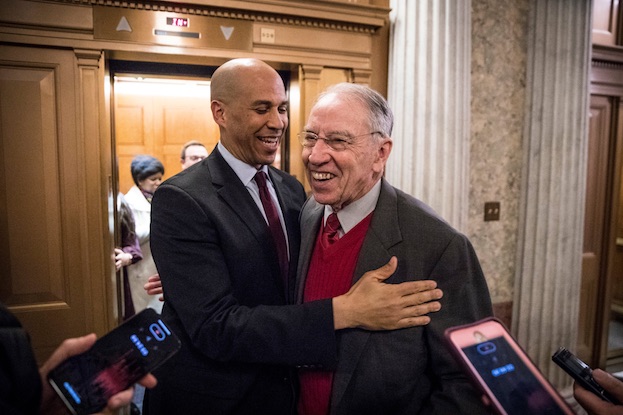
Bill Co-sponsor Senator Cory Booker (D-NJ) said in a press release:
But for the first time in a long time, with the passage of this bill into law, our country will make a meaningful break from the decades of failed policies that led to mass incarceration, which has cost taxpayers billions of dollars, drained our economy, compromised public safety, hurt our children, and disproportionately harmed communities of color while devaluing the very idea of justice in America.
The Sentencing Project stated;
“While many assume that broad criminal justice reforms would automatically reduce racial disparities that have become so pervasive in the justice system, data tell us this simply is not the case.
A new Urban Institute online tool, the Prison Population Forecaster, allows users to see how different approaches to state criminal justice reform would affect the number of people in prison. In every state we looked at, broad cuts to the number of people in prison — both overall and within individual offense categories — do little to reduce the share of the prison population made up of people of color.
New Jersey, for example, is often heralded as one of the most successful examples of reversing mass incarceration, passing justice reforms that led to a 26 percent decline in the state prison population between 1999 and 2012. However, the state did not target racial disparities in incarceration, and a 2016 Sentencing Project analysis found that black people in New Jersey were still more than 12 times as likely to be imprisoned as white people — the highest disparity of any state in the nation.
The reality is that implicit bias and structural racism ensnare people of color — particularly black, Latino and Native American people — in the justice system at astronomical levels, and the evidence is clear that people with identical criminal histories who have committed the same crimes are nonetheless treated differently because of the color of their skin.
For example, research shows that black people are more likely to be stopped, arrested and detained before trial; not have opportunities for reduced charges in plea deals; receive harsher penalties; and serve longer terms in prison than white people in the same situations.
For this reason, racial disparity is prevalent throughout the justice system and grows at every stage, from policing, to arrest and pretrial detention, to trials, sentencing and post-release opportunity.
Not only does this have a devastating impact on communities of color, it also undermines public safety by eroding their confidence in law enforcement. What’s more, it wastes criminal justice resources that could be used for prevention, treatment and services.
The bottom line is that efforts to undo the harmful legacy of mass incarceration must go hand in hand with explicit and intentional racial justice strategies.
Focus on correcting policies known to unfairly affect people of color.
State and local governments around the country are developing innovative ways to address racial disparity in the criminal justice system. At the local level, cities and towns can reform law enforcement practices to reduce concentrated overpolicing and prioritize promising community approaches instead. They can also reject unfair policies such as pretrial money bail.
State lawmakers can examine and reform policies that seem neutral but that can result in disparate outcomes, such as risk-assessment tools, discriminatory gang sentencing enhancements or geography-based school zone drug penalties.
Policymakers can also build checks and balances into the legislative process, such as requiring racial impact statements before any new criminal justice law or regulation is passed to evaluate the potential for unfair outcomes.
The private sector, too, has a role to play with ensuring that all returning citizens have access to the employment and housing they need to succeed.
As Michelle Alexander, author of the book “The New Jim Crow: Mass Incarceration in the Age of Colorblindness,” and many others have pointed out, the U.S. criminal justice system is deeply rooted in racism and inequality.
Coming to terms with this past requires policymakers, advocates and voters to commit to undoing the harm that has been done and moving forward on a better, fairer path.”
[call 911 or get a gun?] Federal Judge Rules School, Sheriff's Office Had ‘No Legal Duty’ to Protect Students in Parkland Mass Shooting
/The Government Provides “No Guarantee of Certain Minimal Levels of Safety and Security” [to Citizens They Subjugate & Control] From [ABA Journal] A federal judge in Miami has dismissed a lawsuit filed by 15 students present during the Valentine’s Day shooting at their school in Parkland, Florida.
U.S. District Judge Beth Bloom ruled last week that school and sheriff’s officials had “no legal duty” to protect the students, report the Sun Sentinel, NBC Miami and Local10.com.
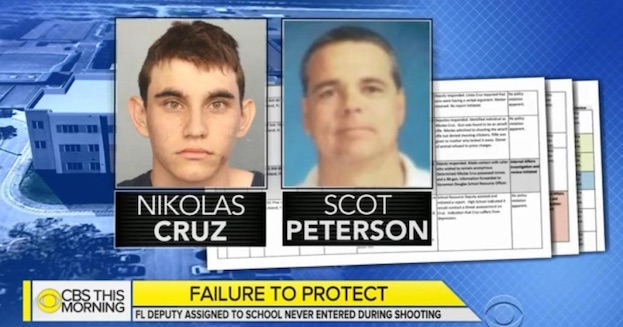
Nikolas Cruz, a former student, has been charged in the shooting that killed 17 students and school staff members and injured 17 others.
Among those named in the suit are officials at the Marjory Stoneman Douglas High School and the Broward County sheriff’s office.
Bloom said the students’ suit arises from the actions of Cruz, rather than a state actor.
Bloom did allow a separate allegation against former school resource deputy Scot Peterson regarding his search of a student’s backpack on the morning of the shooting.
The students who filed the suit had alleged a violation of their civil and due process rights under the 14th Amendment.
The lawsuit had claimed that a school monitor recognized Cruz as a danger. But rather than stopping Cruz, the monitor merely radioed a colleague about a suspicious person entering school grounds, the suit said.
The suit also alleged that Peterson had remained outside the building while Cruz was inside shooting students. And the suit claimed that a Broward sheriff’s commander at the scene prevented emergency responders from entering the building to confront Cruz or help the victims.
Bloom cited the 1989 Supreme Court decision DeShaney v. Winnebago County, which said that the due process clause “is phrased as a limitation on the state’s power to act, not as a guarantee of certain minimal levels of safety and security.”
The government does have a duty to protect when a person such as a prisoner is in custody, Bloom said.
But school custody doesn’t rise to a level that requires an obligation to protect, Bloom said, citing appellate precedent.
A Broward County judge reached a different conclusion in a lawsuit filed in state court, according to the Sun Sentinel. In that case, Judge Patti Englander Henning rejected Peterson’s contention that he had “no legal duty” to protect the students.
So why do we want to disarm law abiding citizens so only cops to have guns again?
Blackwater Mercenary Security Guard Convicted of Murdering Unarmed Iraqi Civilian - Without Provocation Race Soldier Fatally Shot an Aspiring Iraqi Doctor
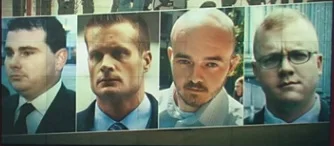
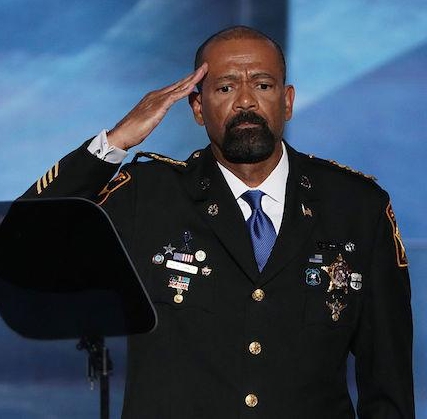
/From [HERE] and [HERE] Tried three times in connection to a 2007 Iraq shooting where 14 civilians were killed, former Blackwater security guard Nicholas Slatten [bald racist suspect in photo] was convicted by a federal jury on Wednesday of first-degree murder.
Blackwater USA, a now-notorious private security contractor, was hired by the U.S. State Department to protect diplomats during the Iraq War. In September 2007, Blackwater guards opened fire on Baghdad's Nisour Square, killing and injuring unarmed civilians.
Slatten was convicted of killing Ahmed Haithem Ahmed Al Rubia’y, 19, an aspiring doctor who was one of more than a dozen civilians killed by Blackwater guards in Baghdad’s Nisour square on 16 September 2007.
While escorting a diplomatic convoy, Blackwater guards opened fire in the bustling square with sniper rifles, machine guns and grenade launchers – allegedly without provocation – leaving at least 14 civilians dead and at least 18 wounded. The Iraqi government says the toll was higher.
Blackwater guards shot Iraqis without provocation, report says
The shooting deepened the resentment of Americans in Iraq four years after US forces toppled dictator Saddam Hussein and raised questions about the expanded use of armed contract guards by the US government.
Prosecutors presented 34 witnesses against Slatten, including four who traveled to the United States from Iraq specifically to testify.
The evidence showed that 10 men, two women and two boys, ages 9 and 11, were killed when Slatten and his fellow guards opened fire in the busy Baghdad traffic circle on Sept. 16, 2007.
According to the government’s evidence, Slatten, of Sparta, Tennessee, was the first to open fire.
In Nisour Square, on Sept. 16, 2007, Slatten was one of 19 Blackwater security contractors in a convoy of four heavily armed trucks using the call sign Raven 23. But after a car bombing earlier in the day, the team disregarded an order to stay in the Green Zone and set up a blockade in the square, prosecutors said.
A white Kia, driven by Al Rubia’y with his mother in the passenger seat, headed toward the blockade. Prosecutors alleged Slatten, of Sparta, Tenn., fired the first shots into the Kia and intentionally set off a rampage in which more than 30 people were shot, 14 fatally.
The Blackwater guards claimed that they feared the Kia might be used as a car bomb and that after they began firing on the Kia, the guards took small-arms fire from other sources which disabled one of the Blackwater trucks. The guards then fired into a bus and other vehicles, compounding the carnage.
“There had been a lookout for a white Kia,” the jury foreperson told The Post. “But there’s a million Kias in Iraq, you don’t just shoot every white Kia.”
The foreperson said the jury “didn’t believe the white Kia presented or could be perceived as a threat. And we didn’t perceive that the convoy was taking small-arms fire.” The foreperson said the jury believed shrapnel from grenades launched by the Blackwater guards damaged their own vehicle. [MORE]
No date was set for his sentencing. The US attorney’s office said the murder charge calls for a mandatory sentence of life in prison.
It was Slatten’s third trial on the charges. His first conviction was thrown out and the jury was unable to reach a unanimous verdict at his second trial.
Slatten was one of four Blackwater guards who were found guilty in 2014. He was originally sentenced to life in prison while the three others were given 30-year prison sentences
An appeals court has ordered that the three other Blackwater guards be resentenced. They are currently in custody pending resentencing.
Slatten was originally tried and convicted in 2014 alongside fellow Blackwater guards Paul Slough, Dustin Heard and Evan Liberty. The D.C. Circuit ordered a retrial for Slatten last year, however, and the Tennessee native’s second trial ended in a hung jury this fall.
The Justice Department touted Slatten’s conviction this afternoon, saying the jury reached its verdict after five days of deliberations in a trial that began on Nov. 5, 2018.
Federal Judge Blocks Trump Restrictions Preventing Non-White Immigrants who were Victims of Gang or Domestic Violence in their home Countries from Seeking Asylum
/From [HERE] A federal judge on Wednesday blocked Trump administration asylum restriction policies that prevented immigrants who were victims of gang or domestic violence in their home countries from seeking asylum.
The ruling came as a result of a lawsuit that the American Civil Liberties Union and the Center for Gender & Refugee Studies filed on behalf of 12 asylum seekers. These asylum seekers were denied asylum after taking part in interviews that were “designed to evaluate whether plaintiffs had a credible fear of persecution by their respective home countries.” After these interviews, the plaintiffs were denied asylum after officers applied “the standards set forth in a recent precedential immigration decision issued by then-Attorney General, Jefferson B. Sessions.”
In blocking these standards, the judge found that “the new credible fear policies are arbitrary, capricious, and in violation of the immigration laws.”
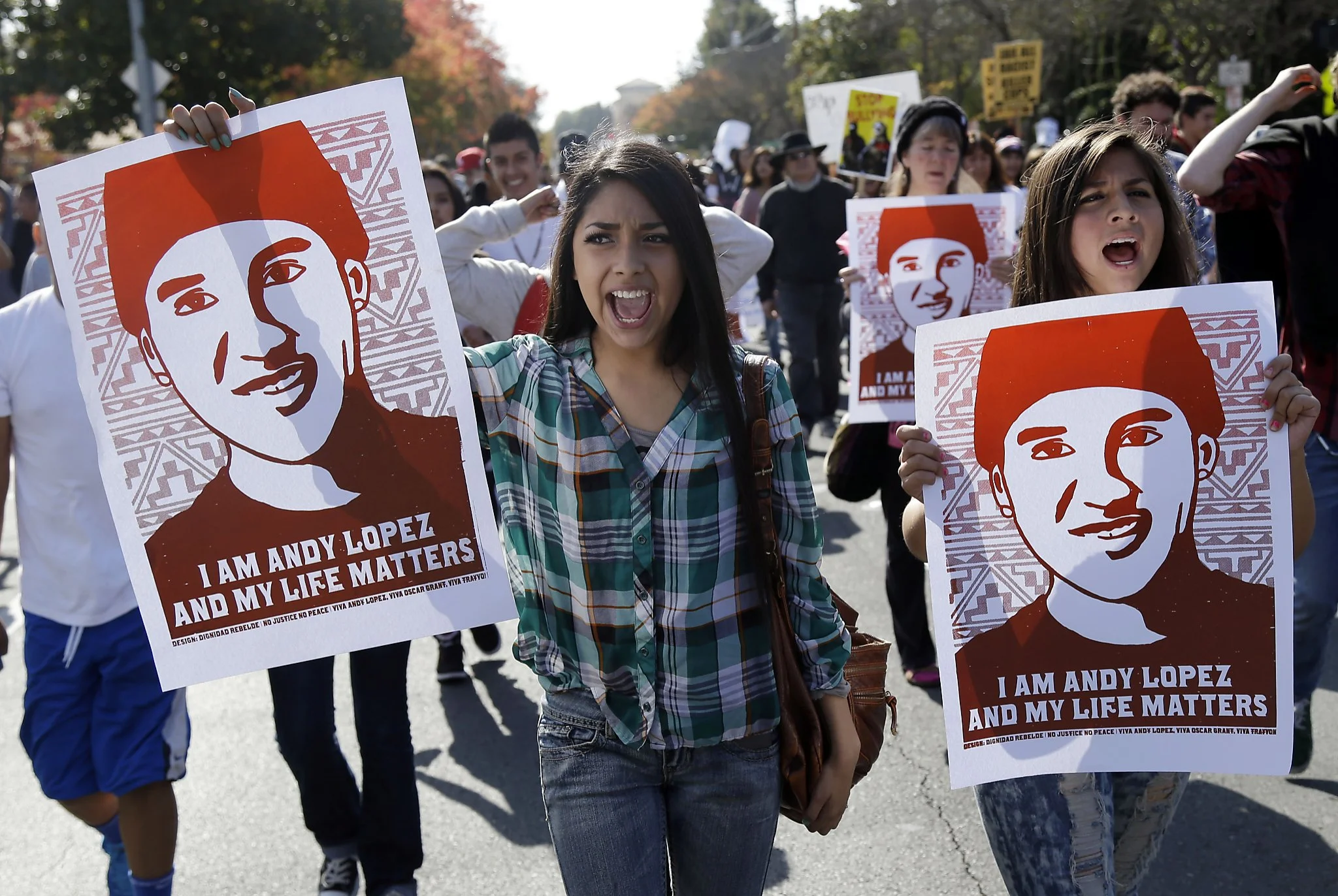
Sonoma to Pay $3M to Andy Lopez's Family: White Cop Executed 13-Yr-Old Latino Boy Holding a Toy AK-47 in an Unaggressive Manner, Pointed Towards the Ground, Shot Him 7 Times From 62 Ft w/o Warning
/From [HERE] Sonoma County will pay $3 million to settle a civil rights lawsuit filed by the family of a California teenager who was fatally shot by a sheriff’s deputy while holding a pellet gun.
The settlement was approved unanimously Tuesday by the county Board of Supervisors, bringing to a close a lawsuit filed in November 2013 by the family of 13-year-old Andy Lopez.
Lopez was fatally shot by Sonoma County sheriff’s deputy Erick Gelhaus [racist suspect in photo], who was carrying a toy replica automatic rifle by its grip. At all times, the toy rifle was pointed towards the ground, with Lopez’s hand on the grip, away from the trigger. Deputy Gelhaus shot at Lopez eight times, hitting him seven times, from approximately 62 feet. There was evidence that the first shot may have disabled the youth by striking the upper arm of the hand holding the replica rifle’s grip.
Lopez was casually walking mid-afternoon near a city street. Deputies Gelhaus and Schemmel, on rou- tine patrol, saw Lopez. The deputies were not respond- ing to a call of criminal conduct or suspicious activity. They had no reason to think Lopez was a gang member or that he was engaged in criminal activity, except that he was holding, in his left hand, the grip of what appeared to be an assault rifle, pointed towards the ground. Lopez did not attempt to evade the deputies and nothing about his conduct was suspicious. Lopez was just walking along, minding his own business.
A witness got within approximately fifty feet of Andy, he slowed down to look at the gun. When he saw it, he thought ‘it look[ed] fake.’ . . . the witness did not fear for his life or call the police; he continued on his way.” “Another witness estimated that Andy was ‘11 or 12 years old,’ and de- scribed him as ‘the little guy,’ ‘no more than five feet.’ ”
Once or twice, Gelhaus yelled from behind, “Drop the gun,” “Put the gun down,” or something similar. He did not use the patrol car’s loudspeaker, certainly a more effective method for communicating with a suspect.
At his deposition, Gelhaus was asked to reenact how Andy was holding the gun, “his turning motion,” and “what you saw him do.” The video depicted the gun in Gelhaus’s fully- extended arm and at his side as he turns, consistently pointed straight down towards the ground.
As Lopez turned, Gelhaus shot eight times, with seven bullets hitting Lopez. The court explained Gelhaus shot Andy without having warned Andy that such force would be used, and without observing any aggressive behavior.
The 9th Circuit panel majority noted:
At the time of the shooting, Andy was standing next to an open field in a residential neighborhood. The site of the shooting is also close to three schools and the shooting occurred when school was out of session. There were no other people present at the shooting. There were a few individuals walking in the surrounding neighborhood. Andy had been walking in the general direction of several houses before Gelhaus shouted, and Gelhaus submits that he did not want to let Andy get near them.
After summarizing the facts, the Ninth Circuit panel concluded, “On these facts, a reasonable jury could conclude that Andy did not pose an ‘immediate threat to the safety of the officers or others,’ George, 736 F.3d at 838 . . . and that Gelhaus’s use of deadly force was not objectively reasonable.” Further, “[T]he cases upon which Gelhaus relies to establish that his conduct was objectively reasonable involved threats to officers that were far more direct and immediate than that presented by Andy.”
Also, “Moreover, Gelhaus indisputably had time to issue a warning, but never notified Andy that he would be fired upon if he either turned or failed to drop the gun.” [MORE]
Sonoma County Sheriff Robert Giordano offered condolences to the Lopez family. He noted that Gelhaus was cleared of criminal wrongdoing but officials agreed the settlement was the best solution.
Gelhaus, was cleared of criminal wrongdoing in 2014 by District Attorney Jill Ravitch’s office [racist suspect in photo].
White Albany Cop Claimed Ellazer Williams Charged at Him w/a Knife but Video Shows Cop Shooting Black Man in the Back from 20 Ft Away, Paralyzing Him. No Charges Filed by [Caucasianal] Black DA
/Albany County DA David Soares, a Caucasianal straw boss representing kneegrows from the MoTeaSuh Tribe.
From [HERE] and [HERE] Lawyers for a 19-year-old man left paralyzed from the chest down in a police shooting sued the city of Albany in federal court Monday and released a video they say proves their client was a victim of excessive force.
Ellazer Williams contends a white city detective shot him in the back from a distance of 20 feet away as he was running away.
That contradicts the account that Albany County prosecutors say Detective James Olsen gave their investigators. Olsen, who fired the shot that struck Williams, told the investigators that Williams — armed with a large hunting knife — charged at him in a courtyard outside the former Tony Clement Center for Education at 395 Elk St.
Olsen said he had spotted a "shiny object" in Williams hand moments just before the encounter outside the former Tony Clement Center for Education at 395 Elk St.
Olsen had pursued Williams following a sequence of events that began when Williams and two other people allegedly caused a disturbance outside a store on Central Avenue.
"He yelled for the other detectives to watch (Williams') hands and, as Mr. Williams was running, he tripped onto the concrete and dropped a large hunting knife," Rossi said. "Olsen ordered Mr. Williams to get on the ground. Mr. Williams grabbed the big knife and got back up. At this time, Detective Olsen indicates that Mr. Williams ignored his command and ran in his direction with the knife."
Rossi said Olsen said that at the moment he fired his weapon he believed Williams posed deadly force to himself and other detectives.
Police also suspected Williams of carrying a gun at the time of the shooting,
A video released by the attorneys shows Williams running from Olsen, falling and then getting up to run away again before they say the shots were fired. The video does not appear to show the teen moving toward the detective.
Williams' suit filed in U.S. District Court comes three days after an Albany County grand jury cleared Olsen of any criminal wrongdoing. Williams still faces charges in Albany County Court of menacing of a police officer, a felony, and misdemeanor weapons possession.
An Albany County grand jury last week cleared Albany Detective James Olsen of criminal wrongdoing in an Aug. 20 shooting, but little changed for the 19-year-old man Olsen shot following a chase and alleged confrontation with a knife.
Anthony Muhammad, Albany NY Rep. of The Hon. Minister Louis Farrakkan, speaks as a group of Religious, Political, and Grassroot organizations hold a Justice or Else! rally/power point presentation for Ellazar Williams at the Albany Public Library on Henry Johnson Blvd. on Tuesday, Sept. 25, 2018 in Albany, N.Y. Ellazar Williams was shot in the back by an Albany Police Detective. [MORE]
Ellazar Williams still has a bullet lodged in his spine. He is still paralyzed from the chest down. He still suffers severe back pain. He is confined to a bed set up in the living room of his girlfriend's second-floor apartment. He has not been outside in two months. It is difficult for two men to carry him up and down the steep, narrow stairway. Medical transport workers said it is too dangerous to navigate the stairs, which has led to canceled doctor appointments. His girlfriend does not own a car. They live on a South End street punctuated by abandoned buildings marked by a red X.
"It's hard to stay positive," Williams said. "I get mad and have little outbursts sometimes. I can't move. I'd like to go outside and get some fresh air. I'm not used to being stuck inside all the time."
Williams faces a felony charge of menacing a police officer and misdemeanor weapons possession. His attorney, Steve Sharp, a public defender, and prosecutors continue to make legal maneuvers on the case. Private lawyers retained by Williams sued the city of Albany in federal court Monday for excessive force and released a video they contend shows that Olsen shot Williams in the back from a distance of 20 feet as he was running away.
Community activists are not satisfied with the grand jury report and remarks offered by Albany County District Attorney David Soares at last week's news conference. They are calling for further investigation into what they consider incomplete evidence and conflicting police accounts of the shooting. A community forum co-sponsored by the Center for Law and Justice is scheduled for Wednesday at 6 p.m. at the Howe branch of the Albany Public Library, 105 Schuyler St., in Albany's South End.
Williams is learning how to hoist himself into a sitting position and transfer his weight to a wheelchair, which also was donated. "I need to hold on tight, or I'll fall over," he said. "My balance is slowly getting better."
He has no movement and no feeling from the chest down. Before he was discharged from Albany Medical Center Hospital, surgery was ruled out because of the bullet's location. "If I try to remove it, you would die," the doctor told him.
West's friends started a recovery account for Williams on Go Fund Me, an online crowdfunding site. It was intended to pay for medications and supplies not covered by Medicaid, and monthly living expenses since West exhausted her modest savings. A total of $3,140 was donated. The goal was $25,000. The last donation was sent three weeks ago.
"I'm very grateful for the donations, but I spent all the money," West said. "We have a lot of expenses and it goes very fast."
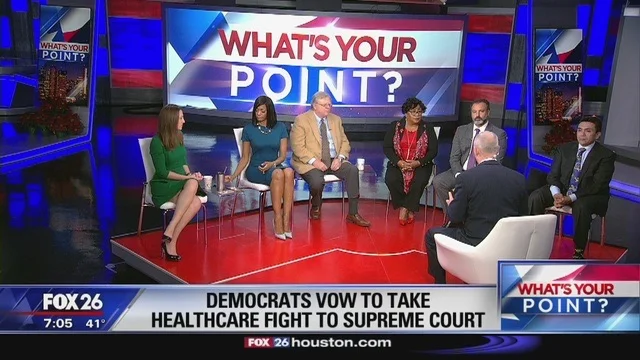
Contrary to Media DisInfoTainment, the Federal Trial Court's Obamacare Order Did Not Grant an Injunction, which Means the ACA Remains in Effect & the Ruling Does Not Affect Non-Parties to the Case
/From [JD SUPRA] As has been widely reported over the past few days, the federal district court for the Northern District of Texas has issued an order declaring that the individual mandate of the Affordable Care Act (ACA, commonly referred to as “Obamacare”) is unconstitutional, that the remaining provisions of the ACA are not severable from the mandate provision, and that the entirety of the ACA (which includes the Biologics Price Competition and Innovation Act (BPCIA) provisions that set out a biosimilar approval pathway) is therefore invalid.
The order grants only a declaratory judgment that the ACA is unconstitutional and invalid; it does not grant an injunction (which means that it does not prevent the ACA from having effect at this time) and does not affect non-parties to the litigation.
At least a few of the states that intervened to the defend the ACA have declared an intent to challenge the ruling (see press releases here, here, and here, and news coverage, e.g. at https://www.nytimes.com/2018/12/14/health/obamacare-unconstitutional-texas-judge.html.) The case would be appealed to the U.S. Court of Appeals for the Fifth Circuit, and is expected to end up at the Supreme Court.
The case was filed by 20 Republican attorneys general and governors and two individuals, Neill Hurley and John Nantz. Defendants are the US, the Department of Health and Human Services and its secretary Alex Azar, the IRS and David Kautter in his capacity as its Acting Commissioner. The States of California, Connecticut, Delaware, Hawaii, Illinois, Kentucky, Massachusetts, Minnesota, New Jersey, New York, North Carolina, Oregon, Rhode Island, Vermont, Virginia, and Washington, and the District of Columbia also intervened as defendants. [MORE]
We will continue to monitor developments in this case to report on any effect it may have on the BPCIA.
New Brennan Center Report Shows 2018 Rates of Crime, Violent Crime & Murder in Major American Cities are in Decline [Chicago Murder Rate Declined by 18%]
/CRIMINALIZING BLACKS TO JUSTIFY TREATING THEM LIKE CRIMINALS. President Trash Claims US Murder Rate 'Highest' in '47 Years', Despite Data Showing Otherwise
From [HERE] In September, the Brennan Center analyzed available crime data from the nation's 30 largest cities, estimating that these cities would see a decline in crime and murder in 2018. Our report, Crime and Murder in 2018: A Preliminary Analysis, concluded that crime and murder in 2018 are again declining nationwide, continuing the historic downward trend.
This analysis updates the September report and finds that, where data were available, rates of crime, violent crime, and murder in major American cities are estimated to decline through the end of 2018. However, murder rates in some cities remain above 2015 levels, demonstrating a continued need for evidence-based solutions to violent crime.
This report's main findings are:
Murder: The 2018 murder rate in the 30 largest cities is estimated to decline by nearly 6 percent. Large decreases this year in Chicago and San Francisco, as well as moderate decreases in other cities such as Baltimore, contributed to this decline. The murder rate in Chicago — which increased significantly in 2015 and 2016 — is projected to decline by 18.1 percent in 2018. The murder rate in San Francisco is estimated to fall by nearly 27 percent. Baltimore’s 2018 murder rate is projected to decline by 7.4 percent. Some cities are projected to see their murder rates rise, including Washington, D.C. (by 39.5 percent), and Houston (by 22.6 percent). Further study is needed to better understand the causes of these rises.
Crime: The overall crime rate in the 30 largest cities in 2018 is estimated to decline slightly from the previous year, falling by 1.8 percent. While this conclusion is based on preliminary data, if the trend holds, the crime rate will fall to its lowest since at least 1990.
Violent Crime: Violent crime rates are projected to decline in the majority of the 30 largest cities through the end of 2018. Overall, the violent crime rate is estimated to decrease by 2.7 percent, continuing a downward trend from 2017.
Estimates of crime and violent crime are based on data from 22 of the nation’s 30 largest cities; estimates of murder include data from all 30 cities. While the estimates in this report are based on early data, previous Brennan Center reports have correctly estimated the direction and magnitude of changes in major-city crime rates.
Six Ex-Governors Urge Gov. Jerry Brown to Clear California’s Death Row, which is 61% Black & Latino, and Permanently Cancel 740 Murders Scheduled to be Carried Out by the State
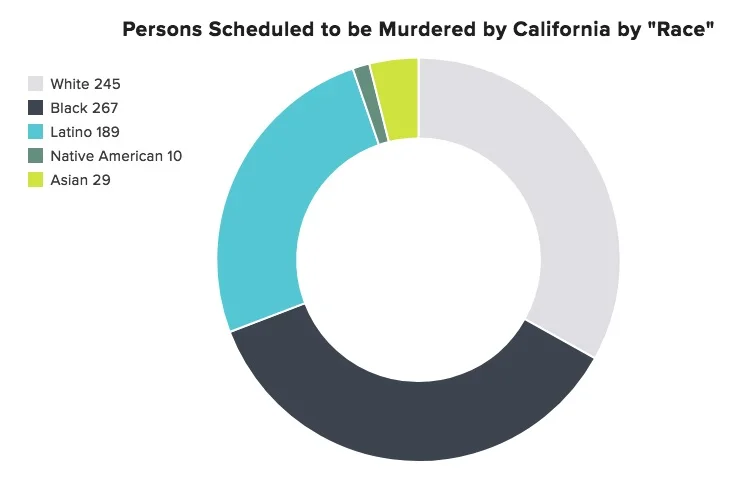
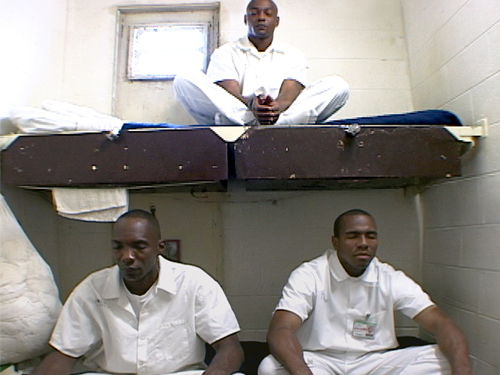
/Persons Scheduled to be Murdered by California by "Race" ["death row"]
From [HERE] Six former governors have urged California Governor Jerry Brown to “be courageous in leadership” and grant clemency to the 740 men and women on California’s death row before he leaves office on January 7, 2019. In a December 13 op-ed in the New York Times, the former governors—Ohio’s Richard Celeste, Oregon’s John Kitzhaber, Maryland’s Martin O’Malley, New Mexico’s Bill Richardson and Toney Anaya, and Illinois’s Pat Quinn—wrote that “Mr. Brown has the power to commute the sentences of 740 men and women, to save 740 lives. ... Such an act will take political will and moral clarity, both of which Mr. Brown has demonstrated in the past. In the interest of his legacy, the people of California need his leadership one more time before he leaves office.”
The governors called signing a death warrant “a terrible responsibility, hard even to imagine until you’re asked to carry it out, as we were. But we became convinced that it wasn’t something a civilized society should ask of its leaders. That’s why we halted executions in our states, and we call on Gov. Jerry Brown of California to do the same.” Each of the former governors granted clemency to at least one death-row prisoner during their tenures in office, and Anaya, O’Malley, and Quinn commuted the death sentences of all the prisoners on their states’ death rows. The ex-governors said, “we know it must weigh on Mr. Brown that, unless he acts soon, he will leave behind 740 men and women on California’s death row. It’s a staggering number and our hearts go out to him. From a humanitarian perspective, it is horrifying to imagine executing that many humans. As a practical matter, it’s beyond comprehension. ... If the state were to execute a single person every day, people would still be waiting on death row after two years.”
In late November, three former Ohio governors, Richard Celeste, Bob Taft, and Ted Strickland gave a joint interview to the Columbus Dispatch in which each told the paper that the toughest burden he had to bear as governor was deciding whether a condemned prisoner should live or die. Celeste commuted the death sentences of eight prisoners—four men and all four women on the state’s death row—towards the close of his second term. Although no one was executed during his eight years in office, Celeste said, “[a]s I look back on it, if I had really ... been bold, I would have ... just sa[id], ‘I’m going to commute them all to life [sentences], without the benefit of parole.’” Strickland said his biggest regret was not stopping executions in his state. “I wish I had done what my friend Jay Inslee, who’s the governor of Washington state, did when he became governor. He just said, ‘There will be no executions as long as I’m the governor of the state of Washington.’ And I wish I had had the courage to make that decision.” Strickland granted clemency five times, but allowed 17 executions to go forward. “I’m just convinced as long as we have the death penalty, innocent people are going to lose their lives .... [O]ur judicial system has serious problems that need attention,” he said.
FUNKTIONARY makes it plain: death penalty - legalized murder - the agents of the Corporate State way of purifying the blood on its hands via ritual sacrifice to the New God Economy and the Greaer System. The death penalty is looking for moral integrity in all the wrong places with all the wrong faces.
DEATH ROW - A PLACE WHERE THE ARCANA DOMINATIONIS HOUSES AND “ASSISTS” predominantly shades of black - fade to black. 2) A MEDIKILL DOCTOR’S WAITING ROOM (the medikill indu$try kILLS AROUND 300,000 PATIENTS YEARLY). 3) a section of the corporate state demand-created, owned and operated prison INDUSTRIAL COMBINE WHEREIN CRIMINALS AND POLITICAL PRISONERS OF VICTIMLESS “CRIMES” LIVE UP TO DEATH.
In their New York Times op-ed, the six former governors wrote: “The achievement of high office demands that one be courageous in leadership. Mr. Brown now has the chance to do what others in our ranks have done after they became aware of the price paid for taking a human life. We were compelled to act because we have come to believe the death penalty is an expensive, error-prone and racist system, and also because our morality and our sense of decency demanded it.” Brown, they said, should commute California's entire death row or “declare a moratorium on the death penalty and give Governor-elect Gavin Newsom the time he will need to figure out how to end a system broken beyond repair.” At an international conference on the death penalty at the Italian Parliament in November, the Community of Sant’ Egidio—a Catholic group with close connections to Pope Francis—and representatives of 25 countries, including the justice ministers of South Africa, Benin, Zimbabwe and Malaysia also called upon Brown to commute all death sentences in the state before leaving office.
Racist Suspect Betsy DeVos Seeks to Rescind Obama-era Guidance Intended to Reduce Racial Discrimination in School Discipline & Urges Public Fool Systems to Partner with Cops to Arm Personnel
/Public schools - the instrument of Hidalgo (the "Greater System") and the "State" whereby readers, writers and counters are produced who are certified as qualified to understand orders and obediently carry them out... the tenth gang-plank of the Communist Manifesto. (See: Compulsory Schooling, Indoctrination & Formal Education) - FROM FUNKTIONARY
From [NPR] A federal commission led by Education Secretary Betsy DeVos recommends rescinding Obama-era guidance intended to reduce racial discrimination in school discipline. And, DeVos says, it urges schools to "seriously consider partnering with local law enforcement in the training and arming of school personnel."
President Trump created the Federal Commission on School Safety following the mass shooting in February at Marjory Stoneman Douglas High School in Parkland, Fla. While student survivors rallied for gun control, DeVos said early on that would not be a focus of the commission's work.
The final report highlights a single concrete gun control recommendation, pertaining to the expansion of "extreme risk protection orders," which allow household members or police to seek the removal of firearms from a mentally disturbed person.
The recommendations on discipline form part of a broader effort by the Trump administration and DeVos to back away from Obama-era policies aimed at reducing racial disparities in suspensions and expulsions. The commission says those polices made schools reluctant to address unruly students or violent incidents.
"Students are afraid because violent students were going unpunished," said a senior administration official, who spoke to reporters on the condition that he not be identified. DeVos instead called for a "holistic view" of school safety.
A study by civil rights and education advocacy groups in the US claims non-white students are targets of police brutality in schools. The report, published this week, calls for the removal of school police officers, despite the risk of school shootings. Al Jazeera's Heidi Zhou-Castro reports from Philadelphia.
Civil rights and "discriminatory discipline"
The federal policies addressed in the report stem from 2014, when the Education Department under President Barack Obama issued detailed guidance on "how to identify, avoid, and remedy" what it called "discriminatory discipline." The guidance promoted alternatives to suspension and expulsion and opened investigations into school districts that had severely racially skewed numbers.
The guidance had its roots two decades earlier. After the passage of the Gun-Free Schools Act in 1994, more schools adopted "zero tolerance" discipline policies and added more police on campuses, particularly at low-income schools with many black and Hispanic students.
A growing body of research showed that being suspended, expelled or arrested at school is associated with higher dropout rates and lifelong negative consequences. "Just one suspension can make a difference," says Kristen Harper, director for policy at Child Trends, a nonprofit research organization. Statistics showed that these negative consequences fell far more often on students of color, disproportionate to their actual behavior. Black girls, for example, were suspended at six times the rate of white girls.
In the wake of the 2014 guidance, more than 50 of America's largest school districts instituted discipline reform. More than half the states revised their laws to try and reduce suspensions and expulsions.
And, a new analysis for NPR of federal data by Child Trends shows that suspensions indeed declined, particularly for Hispanic students. But the progress has been incremental, and black high school students are still twice as likely as whites to be suspended nationwide. So are students in special education.
This announcement on discriminatory discipline in some ways is better understood less in relation to the Parkland shooting and more as part of a series of actions by DeVos to reverse Obama-era guidance intended to protect the civil rights of students.
Under President Obama, the Education Department interpreted Title IX to protect transgender and gender-nonconforming students from discrimination. The department pushed campuses to take a stronger line in investigating sexual misconduct, also under Title IX, and issued guidance aiding schools' voluntary efforts to achieve racial integration.
DeVos has pulled back the guidance in each case, sometimes pleasing critics of federal overreach, sometimes in defiance of public consensus.
A new era?
Some of the federal safety commission's new recommendations, like directing resources toward mental health and social-emotional learning, actually echo the views of education experts who support discipline alternatives.
The question now is whether the government's latest reversal in direction on civil rights might bring a return to the days of zero tolerance.
Anurima Bhargava, a former Justice Department official who was involved in crafting the discipline guidance, says it was written to build consensus, with a great deal of consultation with school leaders and others. "So many people weighed in — there was nobody who was against it," she says. By that token, Bhargava finds it unlikely that the tide toward restorative and inclusive practices will fully reverse itself.
But during more than a dozen listening sessions, DeVos' safety commission heard from people who thought the push for alternative discipline had gone too far. Among them were Judy Kidd of North Carolina's Classroom Teachers Association, who said:
"Daily fights, concealed weapons and teachers assaulted are being ignored to reduce the number of incidents reported. This is unacceptable."
Without the federal government, there may be little pressure for change in places like Mississippi. That was the only state analyzed by Child Trends that saw an increase in suspensions each year between 2012 and 2016. Or in Allegheny County, Pa., where black students as of 2016 were suspended seven times more often than nonblack students.
Activists like 18-year-old Nia Arrington, of the One Pennsylvania Youth Power collective, feel abandoned by this announcement. As a student in Pittsburgh public schools, in Allegheny County, she fought successfully against arming school safety officers.
"I don't think when these people talk about keeping students safe that they have all students in mind," she says. "They don't think about the harsh reality some students may have faced with gun violence. A lot of students have been traumatized by guns in this country — and by the hands of the police."
Not a Flight Risk or Under Arrest or Charged with Any Crime But a Haitian Professor Seeking Asylum was Locked Up for 2 Years because US Authorities & a Judge Had Laws to Uphold Over Humanity
/From [HERE] They had decided to welcome him even if the United States would not, so Melody Hart and her husband, Gary Benjamin, arrived at the courthouse with gifts for an immigrant they’d never met. They carried outfits for him in three sizes and a new winter coat to guard against the Ohio cold. They brought instruction manuals to help him learn English, a booklet of hymns to sustain his spirit and bottles of champagne in case he walked out of the courtroom free after being detained by the U.S. government for 25 months.
They also brought a charter bus filled with 32 friends from Cleveland Heights, Ohio, a group consisting mostly of retirees, church members and community activists. Together they traveled four hours into Michigan to witness the latest court hearing in the ongoing saga of Ansly Damus, a Haitian ethics professor who had come to the California-Mexico border in the fall of 2016 to seek asylum. Rather than enter the country illegally, Damus had followed U.S. protocol by presenting himself to Border Patrol and saying he feared for his life. Then he had been handcuffed and flown to a detention facility with empty beds in Ohio, where he’d spent the past two years waiting for a final resolution in his case.
The government had denied Damus parole because it considered him a flight risk with no meaningful connections in Ohio, but now the courtroom was filled with Ohioans who had come to support him.
“I hope this shows that people in this country care about what’s happening to him,” Hart, 66, told her husband as a courtroom security guard left to get extra chairs. “He has to believe that he’s come to the right place.”
She had spent the past year trying to deliver that message to Damus, even as the country around her was becoming increasingly resistant to a rising number of asylum seekers including an estimated 7,000 who caravanned last month toward the California border on the same path that Damus had taken two years before. Most asylum seekers now wait at least several months for a final decision in their case, but there are also those like Damus, who became stuck in an overwhelmed system where cases can drag on for years.
He had been detained in Ohio for more than 14 months when Hart and Benjamin learned about his case from a friend involved in immigrant rights issues. Twice Damus had been granted asylum by the immigration courts, and twice the government had successfully appealed. The friend asked Hart and Benjamin if they could sponsor Damus’s parole application and offer him support. They were both active in the local Democratic Party. They volunteered for a half-dozen social justice organizations and served on the board of their church. “We’ll do whatever we can,” Hart remembered saying, and later that week she wrote her first of several dozen letters to Damus, using Google to translate it from the English he didn’t speak into the French that he did.
“My grandfather came here from Russia through Ellis Island,” she wrote in February. “It was different then, but this is a long tradition. We are right by your side. Keep the faith!”
“Your long wait will soon be over,” she wrote later that spring.
“Please don’t get discouraged,” she wrote in July.
“I truly believe we are a nation of freedom and justice,” she wrote in October, on Damus’s second anniversary in detention. “One day our prayers will be answered, and you will be free.”
Now Hart watched as two security guards led Damus into the courtroom. He wore one of Benjamin’s old suits. He had shackles affixed to his ankles even though he had never been arrested or accused of committing a crime. The last time he had appeared in front of a crowd, he was delivering a lecture in Haiti on the history of economics. “I am so embarrassed,” he whispered to his courtroom interpreter, speaking in Creole, and then he sank into his chair as lawyers presented the basics of his case.
Damus, 42, had once been a popular professor, fluent in three languages and possessing degrees in ethics and economics. Then, according to his asylum statements, he had given a lecture in 2014 about the unethical behavior of a local politician who he accused of collaborating with gangs, and later that same day gang members attacked him as retribution, burning his motorcycle and threatening to kill his wife and two young children unless he left the country. Damus fled a week later for Brazil, where he knew other Haitian refugees, and he spent nearly two years working in construction and living in a refugee camp before traveling by bus to the United States.
Those two years in Brazil were the reason U.S. officials wanted to deny his asylum claim, saying Damus had attempted to settle there permanently. Damus said he was threatened and persecuted as a Haitian immigrant in Brazil and always planned to come to the United States, but it had taken him two years to save money and plan for the trip.
This particular hearing was not about the merits of Damus’s asylum case but instead a federal court hearing about the condition and length of his detention: 766 days at a county jail intended for short-term stays, which meant the facility had no outdoor space, no exercise room and no Internet access for inmates.
“Yesterday was the first day Mr. Damus had seen daylight in over two years,” his lawyer told the judge.
The lawyer said Damus’s liberty was being unjustly violated and that he should be paroled immediately as his immigration case continued through the courts. The government said it had a right to detain Damus for the entire length of his asylum proceedings, no matter how long that took, and if he wanted to be released he could drop the case and be deported back to Haiti.
U.S. District Judge Judith Levy glanced at the briefings and then looked at Damus. She said the Ohioans in the courtroom were evidence that he had “a community that cared about him.” She said the government had offered no proof that he was a danger or a flight risk. She said: “This restriction on Mr. Damus’s liberty is extraordinary.” But then, instead of issuing an immediate ruling, she said she needed more time. Maybe she would make a ruling in the next hours, she said. Or maybe she would request more evidence and schedule another hearing in a week.
The judge stood to leave, and two security guards led Damus back into detention. “This is madness,” Hart said as the courtroom emptied around her. She went back to the bus and back home to Ohio, where late that night she sat down at her computer. If she wrote another letter to Damus now, she could mail it in the morning.
“I know our prayers will soon be answered,” she wrote. “Keep the faith.”
What she never told Damus was that her own faith in America was increasingly precarious, because so many facts about his detention made her question the country’s treatment of immigrants in 2018. “How can something like this be happening here?” she asked friends, politicians, pastors and lawyers, until together they decided to start a support group for Damus, hoping to compensate for what they saw as the government’s failings.
When they learned Damus was being held at a short-term facility with no access to outdoor space, they began mailing him pictures each month so he could see the seasons changing in Ohio.
When they discovered the jail’s library offered nothing in French or Creole, they started mailing Damus 20 pages of reading material each day, from “Madame Bovary” to Karl Marx.
When they found out he had no way to communicate with his wife because the jail didn’t allow detainees to use email or make international calls, they contacted his wife on Facebook and began relaying messages between them.
And when Hart learned that Damus had not had a visitor during his first 14 months in America other than a pro-bono lawyer, she and Benjamin decided to go see him. They went one afternoon in January during the jail’s allotted 30-minute visitation period. Hart picked up a phone attached to the wall and stared through a thick pane of glass, but instead of seeing Damus on the other side, she saw a computer monitor. The jail only allowed electronic visitation, and after a few seconds Hart saw Damus appear on the screen. He was somewhere else in the jail, and for the next half-hour they stumbled through a conversation. Damus spoke only a little English, so Benjamin tried using his rusty high school French. Hart thought the visit was awkward, distant and impersonal, until the screen flashed a two-minute warning and Damus began his goodbyes. “Thank you,” he remembered telling them. “This is my best day. You have given me so much hope.” [MORE]

Feds say Race Soldier Border Patrol Cops Were Just Following Orders Not their Own Judgment & Aren’t Responsible for Non-White Child's Death After Offering Her Water & Bathroom
/From [HERE] The Department of Homeland Security said Friday it will investigate the death of a 7-year-old Guatemalan girl who died in federal custody last week after crossing the U.S. border into New Mexico.
The Washington Post first reported that the girl started having seizures eight hours after she was taken into custody with her father by three Border Patrol agents south of Lordsburg, New Mexico, on the evening of Dec. 6. They were part of a group of 163 people who surrendered to Border Patrol agents after illegally crossing the border.
Emergency responders found the girl had a body temperature of 105.7 degrees and “reportedly had not eaten or consumed water for several days,” according to the Post. She was airlifted to an El Paso hospital where she died less than 24 hours later.
Officials have identified her as Jackeline Caal Maquin.
DHS said in a statement that Border Patrol agents had performed an initial health screening on the girl and her father following their apprehension and “found no evidence of health issues.”
The agency said her father also denied she was ill and that the girl and her father were offered food and water and access to a bathroom at that time.
DHS called Maquin’s death “incredibly tragic,” but said the situation is “not unique.”
“Each year, the Border Patrol identifies hundreds of people who either die attempting to illegally enter the United States, are injured in the attempt, or have to be rescued by Border Patrol. This past year alone Border Patrol rescued 4,311 people in distress,” the agency said.
According to DHS, the hospital has indicated the girl’s initial cause of death is septic shock, and an autopsy will be performed.
In early November, the Trump administration announced that migrants who cross between ports of entry could be barred from seeking asylum and face criminal prosecution.
But in recent weeks, asylum seekers at ports of entry in several cities along the southern border have faced long waits for their applications to be processed and have reported being turned away and asked to return later by border agents, according to the Post.
White House spokesman Hogan Gidley told the newspaper on Friday that the girl’s death is a “tragic situation,” but said the Trump administration was not to blame.
“Does the administration take responsibility for a parent taking a child on a trek through Mexico to get to this country? No,” Gidley said.
But the girl’s death has prompted outcry against the Trump administration from activists and a Democratic lawmaker.
Joaquin Castro, a congressman from San Antonio and the chairman-elect of the Congressional Hispanic Caucus, told NPR that he blames the girl’s death on the Trump administration’s immigration policies.
“By limiting the ability of folks to present themselves to the port of entry, the Trump administration is basically making it more dangerous for these folks,” Castro said.
Peter Simonson, executive director of the American Civil Liberties Union of New Mexico, called on the government to “institute reforms that prevent this kind of senseless tragedy from ever happening again.”
“When you turn away people who are legally seeking asylum at official ports of entry, they attempt to make contact with U.S. officials in remote and dangerous areas, and people die,” Simonson said. “When you militarize the border, including constructing border walls, desperate migrants will attempt to cross in the harshest desert regions, and people die.”
More than 400 migrants died along the U.S.-Mexico border last year, according to the ACLU.
The Office of the Inspector General for DHS said it will release its final report on the girl’s death to Congress and the public.
Bi-Partisan Senate Report says Russians Attempted to Trick the Black Votary into Believing that Life on Hillary’s Democrat Plantation Would Be No Different on Trump’s Republican Plantation
/From [HERE] The Russian influence campaign on social media in the 2016 election made an extraordinary effort to target African-Americans, used an array of tactics to try to suppress turnout among Democratic voters and unleashed a blizzard of activity on Instagram that rivaled or exceeded its posts on Facebook, according to a report produced for the Senate Intelligence Committee.
The report adds new details to the portrait that has emerged over the last two years of the energy and imagination of the Russian effort to sway American opinion and divide the country, which the authors said continues to this day.
“Active and ongoing interference operations remain on several platforms,” says the report, produced by New Knowledge, a cybersecurity company based in Austin, Tex., along with researchers at Columbia University and Canfield Research LLC. One continuing Russian campaign, for instance, seeks to influence opinion on Syria by promoting Bashar al-Assad, the Syrian president and a Russian ally in the brutal conflict there.
The New Knowledge report is one of two commissioned by the Senate committee on a bipartisan basis. They are based largely on data about the Russian operations provided to the Senate by Facebook, Twitter and the other companies whose platforms were used. [MORE]
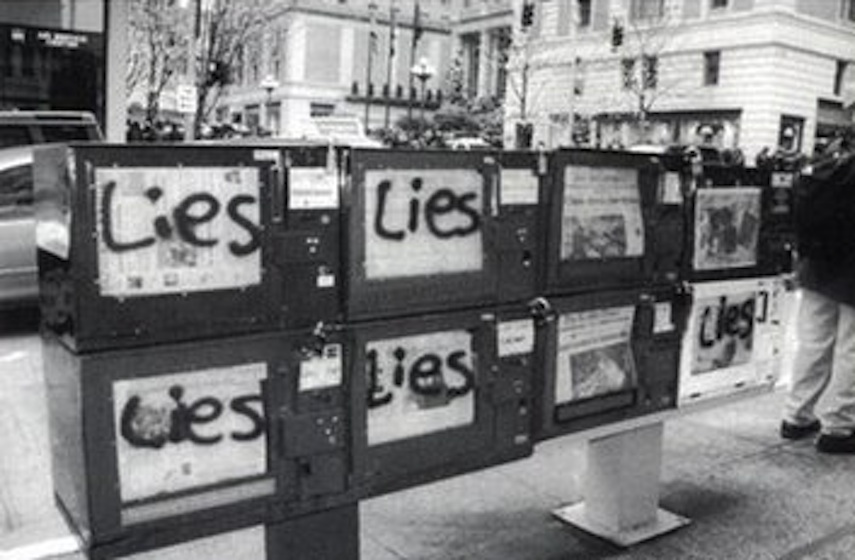
Undeceiver Larken Rose observes;
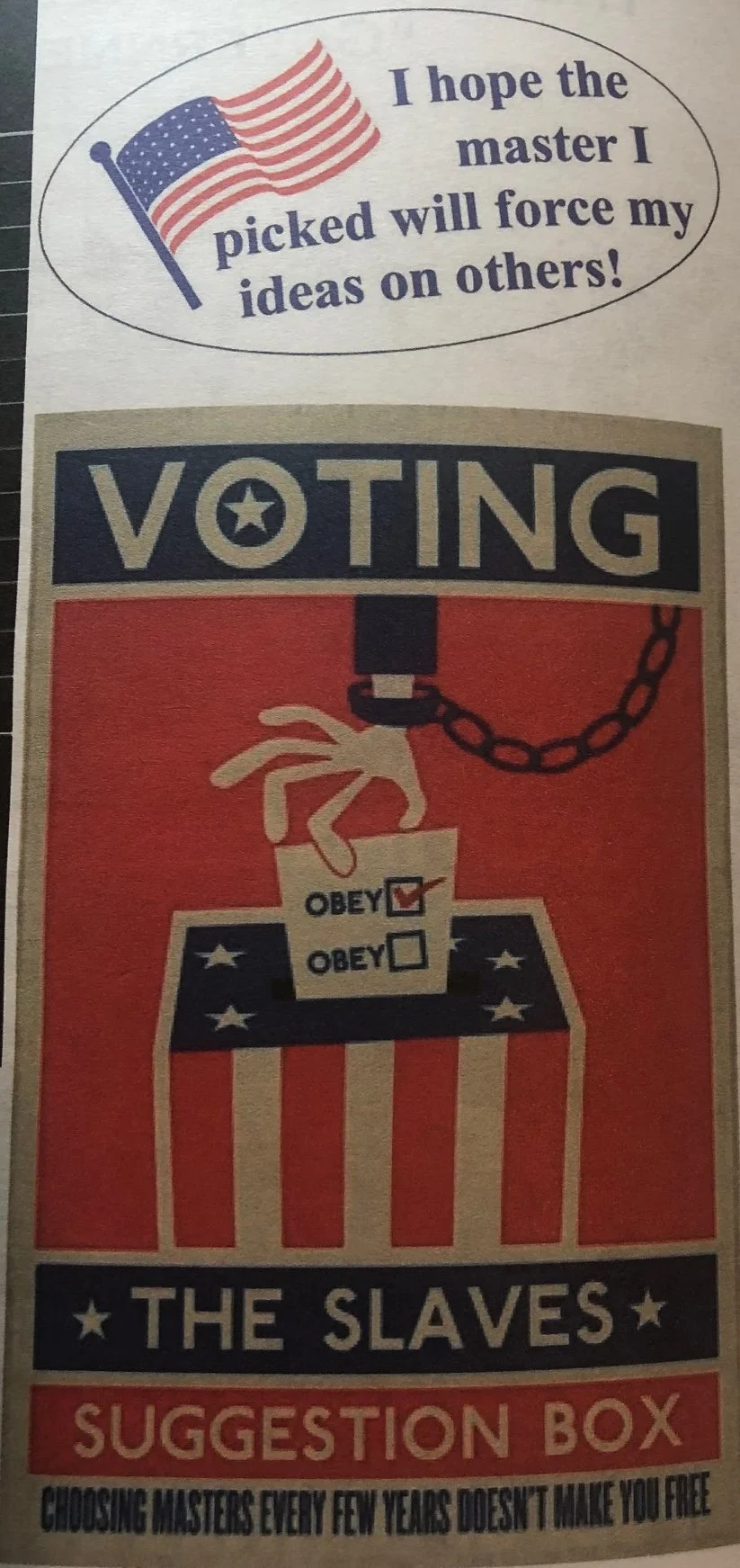
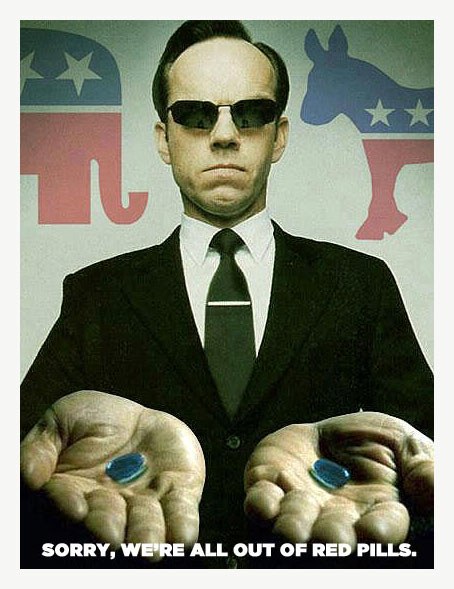
"Among those who vote Democrat or Republican – or for any other party – no one recognizes the underlying problem, and as a result, no one ever gets any closer to a solution. They remain slaves, because their thoughts and discussions are limited to the pointless question of who should be their master. They never consider – and dare not allow themselves to consider – the possibility that they should have no master at all. As a result, they focus entirely on political action of one kind or another, But the foundation of all political action is the belief in “authority,” which is the problem itself So the efforts of statists are, and always will be, doomed to fail. [MORE]

A Prison or a Democracy? Under No Threat or Provocation, Video Shows Israeli Soldiers Throwing Concussion Grenades at Palestinian Children over a Wall at a School in Hebron
/From [HERE] 12/16/18, International Solidarity Movement, Al-Khalil Team, Hebron, Occupied Palestine
At 1pm, 4 Israeli occupation soldiers entered Salaymeh neighbourhood, Hebron.
Activists were present from 12:30 pm and did not witness any stones thrown or other provocation.
The soldiers fired 21 tear gas rounds in under 5 minutes into the street outside the 3 schools and into two schoolyards.
here are 3 primary schools on the street where the tear gas was used:
Hebron School
UNRWA Hebron Basic Boys School
Khadijah School
There are also 4 other schools in the immediate area.
During this time the soldiers also threw three concussion grenades over a wall into the Hebron School. They were unable to see who was on the other side of the wall or where they were at the time.
The headmaster of Hebron School said that 5 tear gas rounds were fired into the schoolyard in total.
Older school students were still in Hebron School. 30 boys and 5 teachers suffered tear gas inhalation.
Activists also found a spent tear gas round in a garden in the grounds of the UNRWA Hebron Basic Boys School.
There was no threat to the soldiers or anyone else at the time yet the soldiers continued to fire tear gas into the neighbourhood even the streets were completely empty of people.
They seemed to stop only when they had run out of tear gas. The tear gas spread through the neighbourhood into schools and residential buildings along the streets where families live. It was a still afternoon and the tear gas stayed in the immediate area and dispersed very slowly continuing to effect local residents.
Last month 238 tear gas rounds and 51 concussion grenades were fired in this neighbourhood. See the November report on Education in Palestine from Christian Peacemaker Teams:
Palestine School Report: Education under Military Occupation November, 2018
This latest tear gas assault comes on the tail of two weeks when 6 boys between 10 and 14 years of age were abducted by Israeli occupation soldiers and Border Police.
Serving the Same Authority, White Louisiana Prosecutor Slaps White Cops On the Wrist for Body Slamming Non-Resisting Black Teen Twice in School to Teach Blind Obedience to Said Master’s Authority
/According to FUNKTIONARY
Public Fool System - a place where children are having unprotected education. 2) a syndromatic exercise in conformity and blind obedience to so-called "authority" (disguised repression). 3) systematic planned violence meted out on children and young adults—held hostage and hostile—daily, hourly, quarantined from the natural rhythm of things in life through Pavlovian bells and shrink-wrapped prefabricated and curriculum and distorted history. 4) a training boot camp for life-long slavery and indentured servitude to gangbankers and the Corporate State in a society created and based in violence, governed by fear, propaganda, psychogenic money and power.
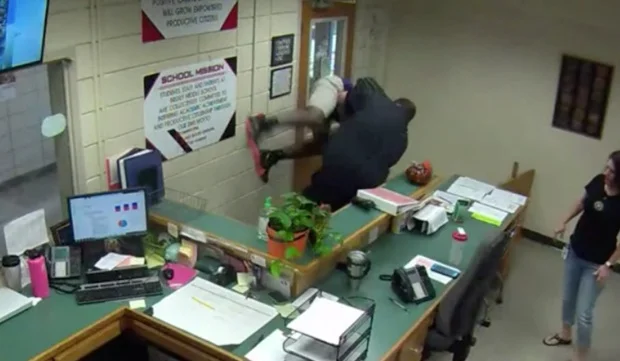
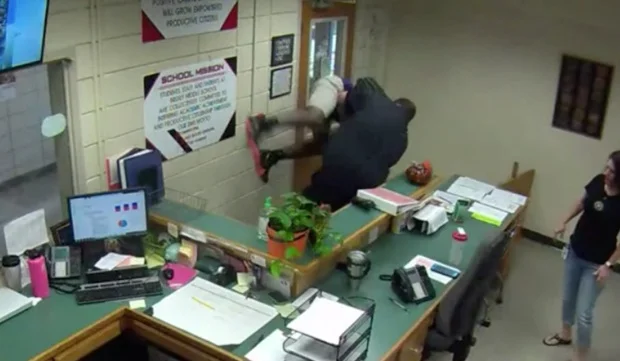
From [HERE] An attorney for a Black Louisiana teenager shown on video being slammed to the ground by large white police officers during an altercation at school says charges against two officers are a "slap on the wrist." The video, taken by a school surveillance camera, was sent anonymously to CBS affiliate WAFB-TV.
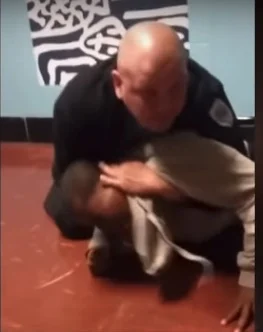
A grand jury in West Baton Rouge Parish indicted former Brusly police Officer Dan Cipriano on a charge of simple battery Friday, WAFB-TV reported. Another former officer, Kip Dupre, was indicted on a charge of malfeasance in office.
Both officers resigned in November after video from Brusly Middle School showed one officer wrestling with a 14-year-old male student before slamming him down. Full view of the scuffle between Dupre and the student is blocked by a desk in the Brusly Middle School office, but Dupre can clearly be seen wrestling the student and slamming him to the ground twice.
There is no audio in the video, but it appears in at least some of the encounter, Dupre rapidly thrusts his arm and shoulder up and down toward the youth, as if punching him, while school staff nervously look on.
Cipriano, arrived toward the end of the struggle to get the student in handcuffs, escort him out of the office and slams him against a desk.
The cops claimed that the student attempted to grab the cop’s gun. [which might be reasonable to do after he had been body slammed and if he believed the white cop was attempting to inflict serious bodily harm]
State police investigated and handed their findings over to the local district attorney, whose office presented the case to a grand jury.
Kwame Asante, an attorney for the student, said the family at first was glad the grand jury found enough evidence to indict the officers. But he said the family felt the evidence warranted stiffer charges.
"They feel the DA's office did an adequate job by bringing it quickly to the people but feel it was a slap on the wrist based on the tape and what they saw done to their grandson," Asante told The Advocate. "This young man will still be dealing with this for a long time."
The teen's grandmother said the incident left her grandson with bruises on his face and a cut on his chin. However, she's more concerned about the lasting psychological effects her grandson may suffer.
"Since the incident, he went in the hospital with more trauma," she told WAFB-TV. The station chose not to identify the grandmother to protect the identity of the student.
Asante previously said the problems started that morning because the boy was assigned to detention for cursing on the playground, then he got into an argument with an administrator over how long he had to be in detention.
The struggle began when the child tried to leave the office, according to Asante.
Brusly Police Chief Jonathan Lefeaux had previously said he asked for the officers' resignations because he believed the incident would make it hard for them to continue working in the community. The officers then resigned.
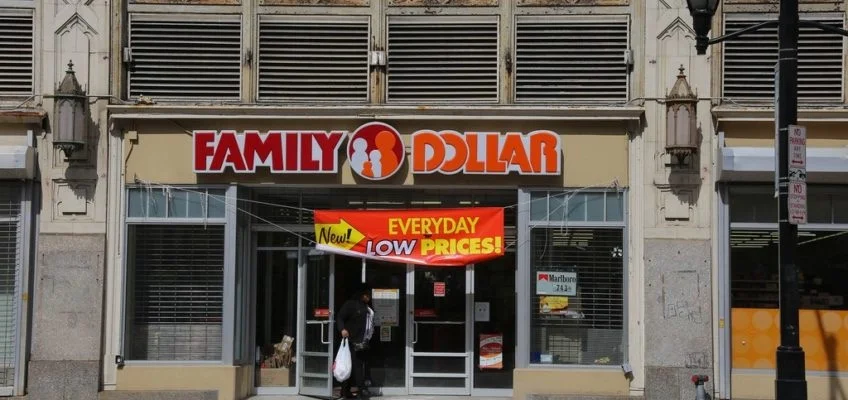
Report says Dollar Stores are Getting Rich by Preying on Black Communities & Invested in Maintaining a “Permanent Underclass"- Opening 4 Stores a Day to Expand its Ghetto Empire to 50,000 Outlets
/IF YOU SEE A DOLLAR STORE YOU MUST BE IN THE HOOD. From [Newsweek] Dollar-store chains like Dollar General and Dollar Tree are rapidly expanding by targeting the poor, particularly in predominantly black neighborhoods and rural areas, while planning for a permanent American underclass, according to a new report from the community development nonprofit Institute for Local Self-Reliance (ILSR). In cities, dollar stores concentrate in areas that already have few or no grocery stores. Their strategy of saturating these neighborhoods with multiple outlets can make it nearly impossible for new grocers and other businesses to take root and grow.
Though dollar stores sell no fresh vegetables, fruits or meat (Dollar General is testing produce in fewer than 1 percent of its stores), they are quickly becoming one of the primary ways lower-income Americans eat, with the combined grocery sales of Dollar General and Dollar Tree outstripping Whole Foods by more than $10 billion.
Selection is limited to processed or canned foods such as cereals, microwaveable meals and snacks. A section on the Dollar General website for “Fresh Food” advertises Banquet Mega Bowls fried chicken, frozen pizzas, Lunchables, Hot Pockets, blocks of cream cheese and pumpkins.
There are nearly 30,000 dollar stores nationwide, more than Starbucks and Walmart combined, and up from 20,000 in 2011. Dollar General and Dollar Tree are planning 20,000 more. Dollar General is opening four stores a day, a rate the company is expected to maintain through 2019.
Their customers are made up of three demographics: poor people, black people and rural people. The ILSR documented, with Tulsa, Oklahoma, as its test case, how the presence of dollar store chains can correlate even more strongly with race than income, with locations opening in food deserts historically neglected by supermarket chains.
“Essentially what the dollar stores are betting on in a large way is that we are going to have a permanent underclass in America,” real estate analyst Garrick Brown told Bloomberg in 2017.
Dollar General CEO Todd Vasos agreed, telling The Wall Street Journal, “The economy is continuing to create more of our core customers.” In other words, the more lower-income Americans struggle, the better dollar stores do.
The market tends to agree as well, with Dollar General Corp. valued far above the largest grocery chain, Kroger Co., which still has revenue five times that of its dollar-store competitor. One reason is the dollar-store profit margin, which is significantly higher than grocery stores thanks in part to small-quantity packaging designed to keep prices low even as the value drops, providing customers less for their money.
That isn’t a result of consumer irrationality, but rather is a necessity for lower-income households, whose pinched budgets don’t allow for bulk purchases.
More than a harbinger of how corporations will profit from a permanently stratified United States (and work to perpetuate that stratification: Dollar General joined other retailers in lobbying for the Republican attempt to fully repeal Obamacare earlier this year), dollar stores are both symptom and disease.
Dollar stores are multiplying rapidly. Since 2011, two dominant chains — Dollar General and Dollar Tree, which acquired Family Dollar in 2015 — have grown from about 20,000 locations to nearly 30,000 total. Both plan to expand even further. In their most recent annual reports, the two chains indicate they have identified locations for a combined total of 20,000 additional outlets. [MORE]
The report says “As our maps of Tulsa show, dollar stores have largely side-stepped the city’s whitest neighborhoods and have instead concentrated in census tracts with more African American residents. Indeed, the presence of dollar stores appears to correlate much more strongly with race than with income.“
While dollar stores sometimes fill a need in cash-strapped communities, growing evidence suggests these stores are not merely a byproduct of economic distress. They’re a cause of it. In small towns and urban neighborhoods alike, dollar stores are triggering the closure of grocery stores, eliminating jobs, and further eroding the prospects of the vulnerable communities they target. These chains both rely on and fuel the growing economic precarity and widening inequality that plague America.
As local grocery stores disappear, some communities are left with only dollar stores for buying food. Although most dollar stores sell only a limited selection of processed foods and no fresh produce, dollar stores are now feeding more Americans than Whole Foods is.
Dollar stores are a poor substitute for grocery stores. A typical dollar store carries no fresh produce, only a limited selection of processed foods. And they aren’t necessarily less expensive. Packaged in single-serving quantities, their food offerings have lower price points, but are often more expensive per ounce.
In conjunction with a longer feature, ILSR has published a detailed fact sheet for organizers, activists, lawmakers, and all concerned citizens on the impact of dollar stores and how to best address them in their communities.
While they provide an economic stop-gap for low-income populations, dollar stores have an ultimately damaging effect on economic wellbeing. They displace independent grocery and retail options, draining communities of their local character, history, and opportunity.
Dollar stores also provide fewer and lower quality jobs, often without benefits, than traditional Main Street businesses. Profits are ultimately being vacuumed up by corporate headquarters, not dispersed throughout the community or recirculated in the local economy.
Dollar stores employ fewer people than the grocery stores they eliminate. Dollar General outlets have a nine-person staff on average, while small independent grocery stores employ an average of 14 people.6 Dollar store jobs are not only fewer in number but also lowwage and low quality. Employees are monitored intensely and subject to a “web of contradictory work policies.” Store managers earn a salary of about $40,000 but must work long hours without overtime. Court records reveal that dollar chains frequently face class-action lawsuits for violating fair labor laws, typically paying millions to settle such suits out of court. These companies also lean heavily on taxpayers to subsidize their employees’ healthcare. [MORE]
Alongside urban black neighborhoods, another place the dollar chains think they will find enduring poverty is rural America. Small towns have been battered by corporate consolidation. Mergers have triggered plant closures. Agribusiness giants have slashed farmers’ incomes. As a result, rural communities have experienced little in the way of new business and job growth during the current economic recovery, new data show.