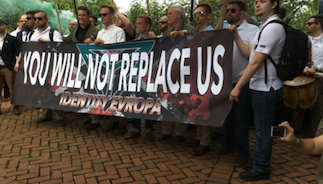
[Color Always Replaces Non-Color] Fearing Replacement, White Nationalists in France Seek Govt Power to Legitimately Commit Genocidal Acts of Violence on Non-Whites & Enforce a Re-Migration Fantasy

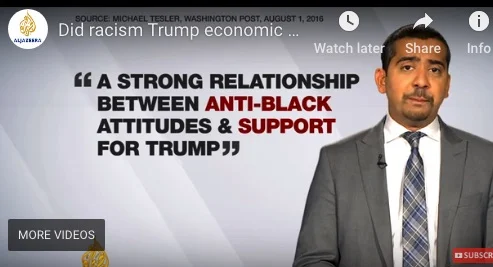
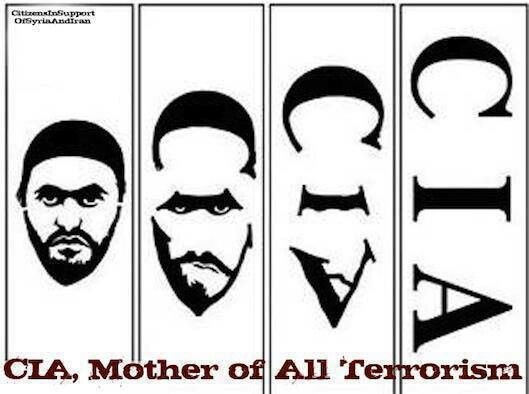
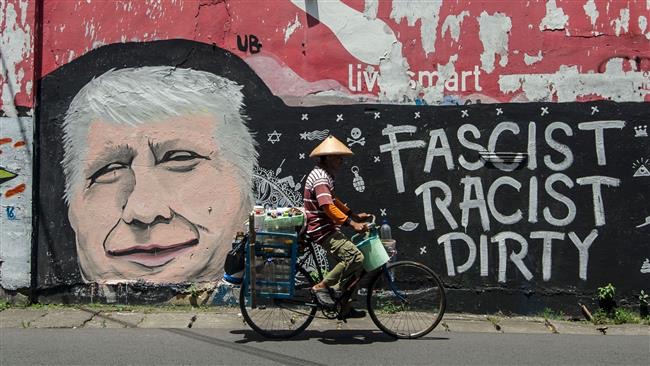
In a two-part investigation, Al Jazeera's Investigative Unit goes undercover to expose France's far-right and reveals secret links between violent extremists and one of France's biggest political parties. Marine Le Pen recently changed the name of the National Front as part of efforts to reform the party's image and make it more acceptable to French voters.
Neuropean Marie Le Pen is a French PUPPETICIAN and lawyer serving as President of the National Rally political party (previously named National Front) since 2011, with a brief interruption in 2017. She is known as the trump of france

Neuropean Marie Le Pen is a French PUPPETICIAN and lawyer serving as President of the National Rally political party (previously named National Front) since 2011, with a brief interruption in 2017. She is known as the trump of france

FUNKTIONARY explains that a "Caucasian" - is "One whose worst and most basic fear still remains genetic annihilation in the form of the fear of the impending "Black Planet." Whither goest thou white man? (See: Weiteko Disease, Yurungu, Western Civilization, Recessive Genes, Colored People, Melanin & Mutant). 

As explained by Dr. Frances Cress Welsing, “color always annihilates non-color.” Rarely discussed, it is scientific fact that white people are genetic recessive and are unable to produce color or melanin. Social integration or intermixing sexual relations with non-whites is considered white genocide to racists. Most white people consciously or subconsciously understand the following;

  • White plus Black equals Colored.

  • White plus Brown equals Colored.

  • White plus Yellow equals Colored.

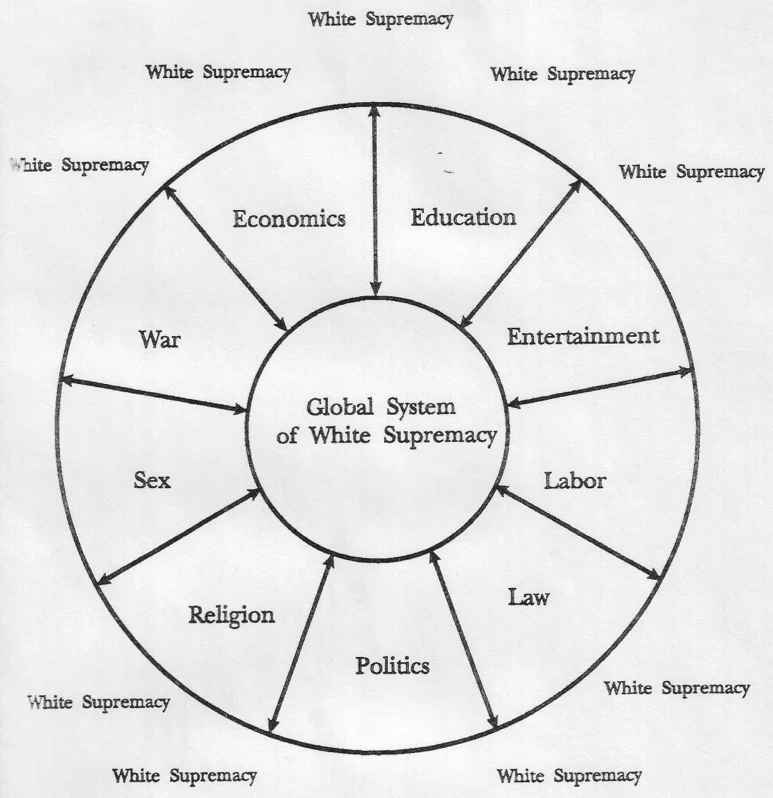
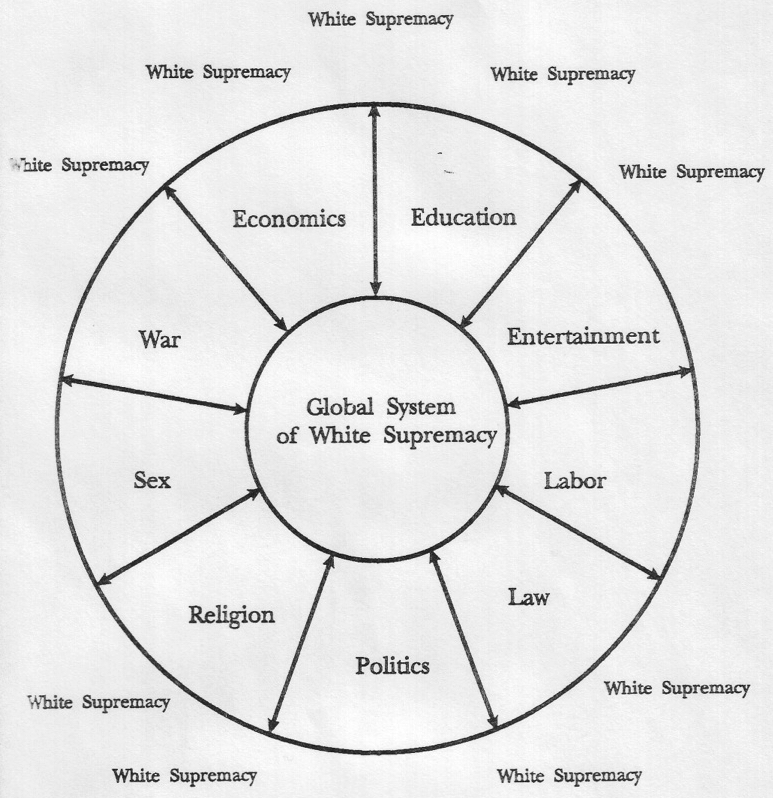
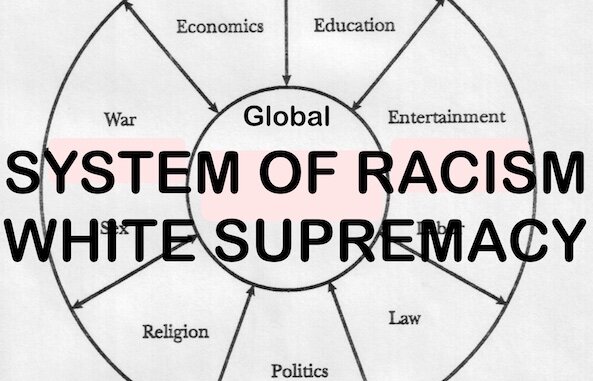
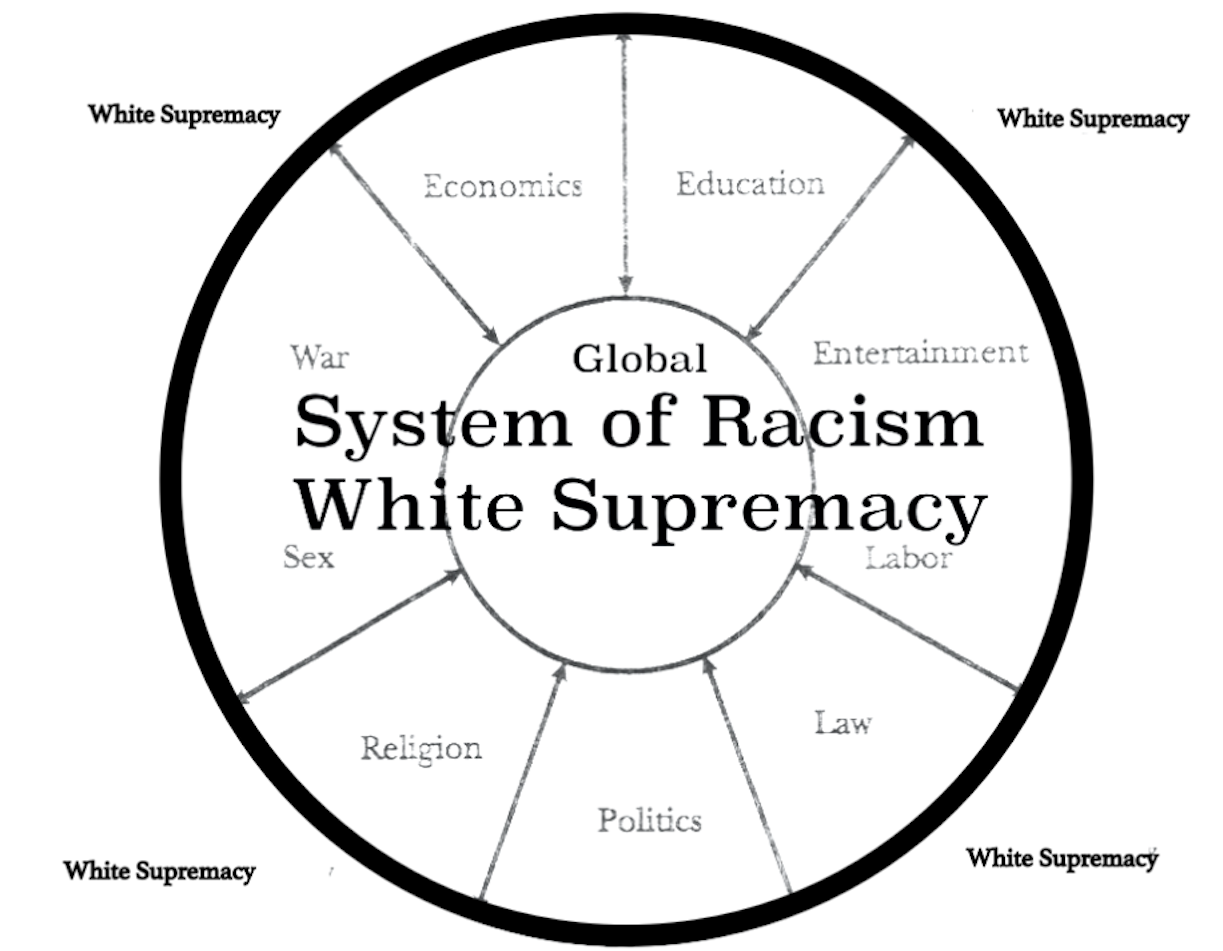
Most white people participate in the global system of racism white supremacy, a behavioral system created for their survival. 90% of the world’s 7 billion people are non-white. White people's behavior in all areas of people activity (economics, education, entertainment, labour, law, politics, religion, sex and war) is motivated by their fear of genetic annihilation. According to racist logic, white supremacy domination and oppression of all non-white people is essential for white global genetic survival. Welsing states, the white global collective remains genetically recessive to the black, brown, red and yellow global majority and lives each day and each minute of every hour in the continuous fear of white annihilation by the global majority of genetic dominants. 

As explained by Dr. Blynd, Yurugu is in a vicious spiral increasingly at odds with his own humanity—as fragmented, pathological, and distorted as it is. [MORE] FUNKTIONARY further defines;

Weitko Disease - the caucasian’s patapathetic fascination with the exploitation and control of nature and exploitation and genocide of his fellow man. [more]

European psychology - the pathological notion that: "If you can't understand it, fabricate it, identify with it, compete with it. discredit it, or assimilate it, then destroy it." (See: Yurugu & Weiteko Disease) [MORE]

france facists .jpg

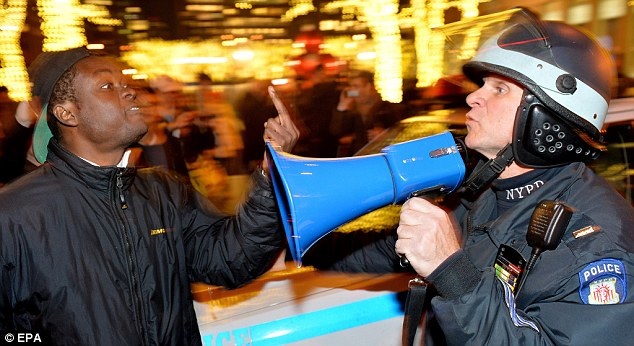
The Al jazeera documentary above shows the National Front’s attempt to attain governmental power for the sole purpose of Yurugu’s survival. Here, they are going through great pains to attain a popular level of legitimacy in a quest to attain government authority. Like a wave pretending to maintain “its” separateness from the ocean, racists’ psychopathic goals are to maintain their imaginary separate species or “race.”

These stupid (unconscious) people are believers caught up in Doggy’s trickbags. That is, they are ruled through empty representations or granfalloons; race, authority and government. A closer look reveals that these things are as real as Santa. According to FUNKTIONARY

believer - one who accepts that which has no basis in reality. 2) a person who enjoys being deceived. A believer does not seek—just accepts theologies and/or ideologies. 3) one who is addicted to vanity and/or chained to convention with conviction. - one who lives in a cloud of illusions, confounded by language and its deceptions. Believers are people who make their lives subjective slaves to a mere belief—engineered my limited and fragmented understanding and fostered by erroneous conclusions raised solely on effects and appearances. {MORE]

Race - a totally artificial theologically-driven, biologically-based, and scientifically-invalid "European" ideology of human genetic evolution and classification coinciding with the emergence of colonialism and the rise of the transatlantic slave trade. 2) hue-man's greatest and most manipulated myth—just a pigment of your imagination. Race is not real but the psycho-socio-economic effects of racism surely is. Race as a biological construct has been created to be wrongly confused with ethnic identity in order to establish the sense of "otherness" and de-humanization of melanated peoples around the globe. [MORE]

Racists live in a state of constant comparison, which Dr. Blynd defines as follows: 

comparison - a disease of the mind due to the ignorance of uniqueness. Each individual is unique and beyond the scope of comparison. Those who fall victim to comparison will either become egoistic or bitter. You don't belong to any hierarchy - nobody is lower or higher than what "you" imagine yourself and "others" to be. Comparison creates differences or distinctions only when there is not uniformity. Comparison limits the possibility of living in the moment. (See: Judgment, Problems, Moment, Running Man, Surrender, Value, Exchange Value, Uniqueness, Awareness & Compassion). [MORE]

Race is a "psychological retro-virus in people's minds."  Suffering from the disease of constant comparison racists imagine themselves to be a part of a hierarchy wherein persons unable to produce color & lacking melanin are supreme and they imagine themselves to be higher than what they imagine non-whites be. They play their imaginary survival game with white propaganda - “a game two can play—which consists simply in repeating '"i am better than you" and "you are utterly unlike (opposite to) me" over and over again; despite the historical record to the contrary.

The only purpose of race is to practice racism. Having little biological validity, the term "race" is better translated to mean organization. The sole purpose of such organization is to maintain white domination and world control of non-whites, who have been frictionalized into made up classifications of people by racists. [MORE]

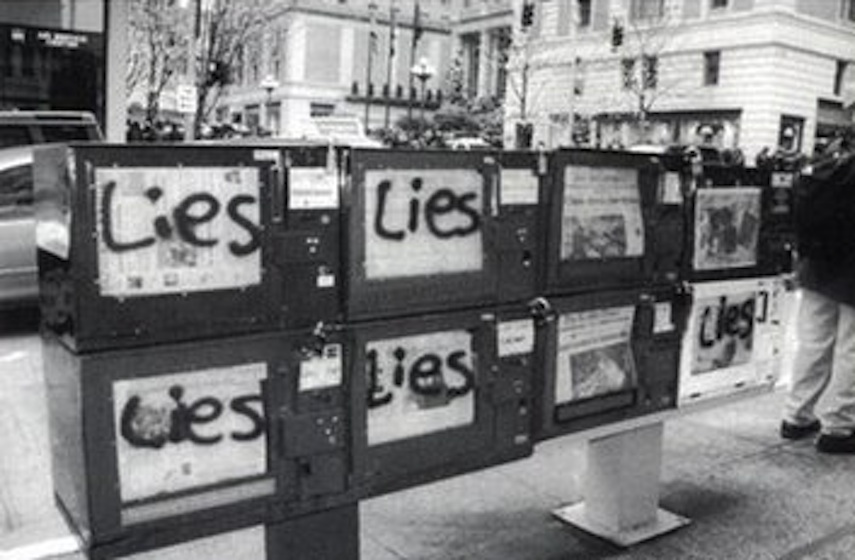
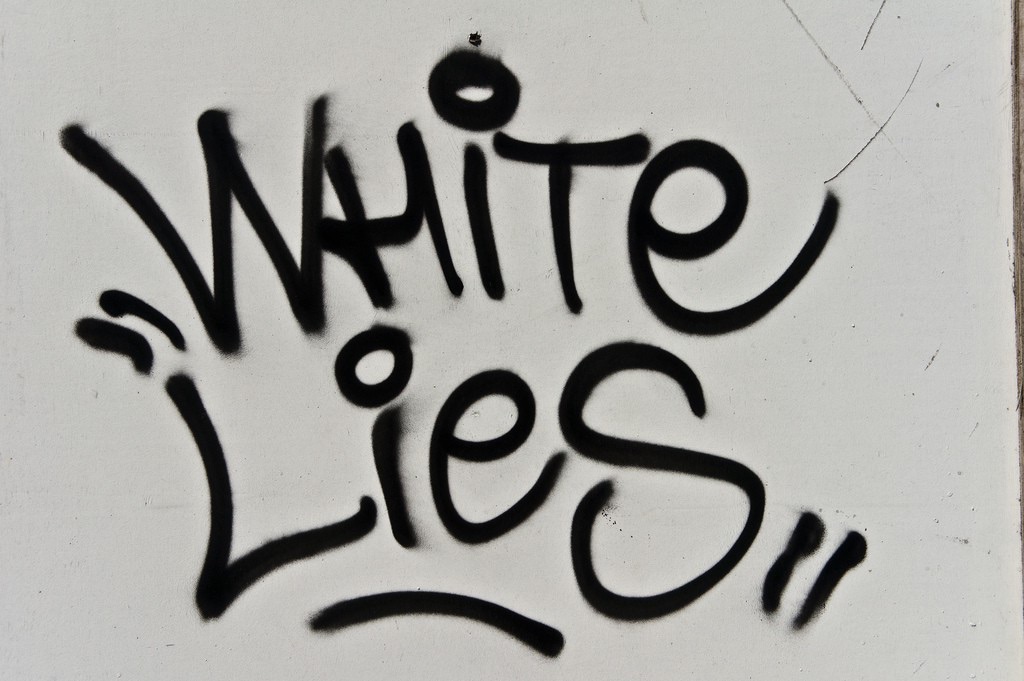
white lies.jpg

Government - The control of the mind." 2) an abstraction (hoax) created for the sole purpose of making theft respectable and mind-control acceptable. 3) the societal manifestation of mass individual psychological reversal, i.e., the statutes, regulations, agencies, and agents (so-called bureaucrats) needed to threaten and shrink one's comfort zone. 4) a granfalloon. 5) a fiction supported by those who kill on command and steal on demand under the guise of "protecting" their victims. [MORE]

Government “authority” can be summed up as the right to rule. “The concept of “government” is about certain people having some special right to rule. And that idea, the notion that some people – as a result of elections or other political rituals, for example – have the moral right to control others, in situations where most people would not, is the concept being addressed here. It is the idea that some people have the moral right to forcibly control others, and that, consequently, those others have the moral obligation to obey.” [MORE

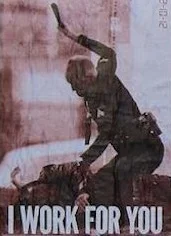
According to statist belief “the people” have delegated powers to politicians. And politicians have transferred or given government orderlies [such as cops] the moral right to commit acts of unprovoked violence on people. That is, police officers have acquired the moral right to initiate violence and commit acts of aggression against others (by way of so-called “laws”) “to protect” the people for their own benefit. [MORE]

Question here: can you delegate a right to someone that you don’t have? where does authority, the right to rule others, come from? Asked differently, you don’t have the right to initiate unprovoked acts of force against other people - so how can you delegate or authorize another person to do such things? How did politicians, judges, police and other orderlies acquire such super-human powers? 

Undeceiver Larken Rose states, “Despite all of the complex rituals and convoluted rationalizations, all modern belief in “government” rests on the notion that mere mortals can, through certain political procedures, bestow upon some people various rights which none of the people possessed to begin with. The inherent lunacy of such a notion should be obvious. There is no ritual or document through which any group of people can delegate to someone else a right which no one in  the group possesses, And that self-evident truth, all by itself, demolishes any possibility of legitimate “government. 

The average person believes that “government” has the right to do numerous things that the average individual does not have the right to do on his own. The obvious question then is, How, and from whom, did those in “government” acquire such rights? How, for example – whether you call it “theft” or “taxation”– would those in “government” acquire the right to forcibly take property from those who haw earned it? No voter has such a right. So how could voters possibly have given such a right to politicians? All modern statism is based entirely on the assumption that people can delegate rights they don’t have.” [MORE]

Rose states, “the belief in “authority,” which includes all belief in “government,” is irrational and self-contradictory; it is contrary to civilization and morality, and constitutes the most dangerous, destructive superstition that has ever existed. Rather than being a force for order and justice, the belief in “authority” is the arch-enemy of humanity.” People cannot delegate rights they do not have, which makes it impossible for anyone to acquire the right to rule (”authority”). People cannot alter morality, which makes the “laws” of “government” devoid of any inherent “authority.” Ergo, “authority”-the right to rule-cannot logically exist. A human being cannot have superhuman rights, and therefore no one can have the inherent right to rule. A person cannot be morally obliged to ignore his own moral judgment; therefore, no one can have the inherent obligation to obey another. And those two ingredients-the ruler’s right to command and the subject’s obligation to obey-are the heart and soul of the concept of “authority,” without which it cannot exist. And without “authority;” there is no “government.” If the control which the gang called “government” exerts over others is without legitimacy, it is not “government;’ its commands are not “laws;’ its enforcers are not “law enforcement.” [MORE]

Dr. Blynd explains "the difference between an outlaw and a lawman is mainly on paper - not on principle." Said principle is based entirely on people’s perceptions. Conduct carried out by non-government actors is characterized as trespass, robbery, extortion, assault and murder and is perceived as immoral, unjustified, and criminal. The same conduct carried by government orderlies is seen as valid and legitimate, “legal” and good.

Here the White Nationalist or facist outlaws above seek governmental power - as all psychopaths tend to do in order to enforce their stupid beliefs down other people’s throats. Thus, a problem featured here is not just the system of racism/white supremacy but the belief in authority and government itself. Not just that the wrong people seek to be masters in France but that masters exist in the first place.

Dr. Blynd states “There is no freedom in the presence of so-called authority, i.e. outside of one's Self and Self-Nature.) He further states, authority is rule through coercion. The real threat to "authority" is the masses overcoming info-gaps and verigaps through self-knowledge and the proliferation of symbols of opposition, not crime or destruction of property.” 
Trolling for a Traffic Violation, a White Cop Followed a Black Man all the Way Home & then Warrantlessly Searched His Apt Based on Smelling Weed from Outside his Door- Kansas Sup Ct Upheld Search

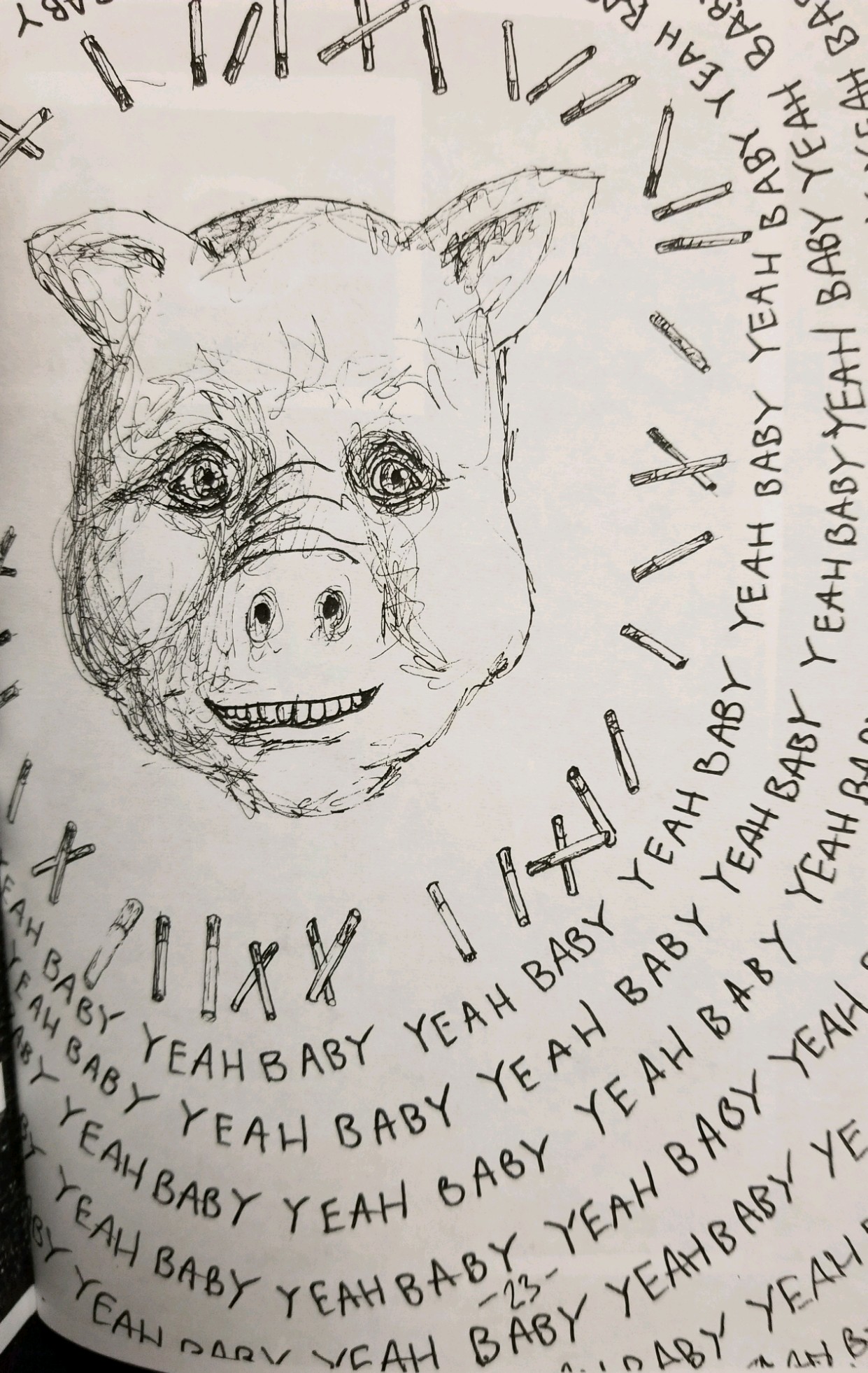
Hungry Cop Watching You.jpg

From [TechDirt] The Kansas Supreme Court has just given cops a pass to treat residents' homes like cars on public roads. Being in a car greatly diminishes your Fourth Amendment protections and many a warrantless search has been salvaged by an officer (or a dog) testifying they "smelled marijuana" before tearing the car apart.

Unlike a car on a public road, a person's home has traditionally been given the utmost in Fourth Amendment protections. The bar to search a home is higher than the bar to search a vehicle. Cops aren't supposed to be walking up to windows to peek inside. Nor at they supposed to hang out by the door, hoping to catch a whiff of something illegal.

But that's exactly what they'll be able to do now. If they can find a reason to approach someone's home, all they need to do is declare they smelled marijuana to get past the front door without a warrant. This completely subjective form of "evidence" can be used as probable cause to effect a warrantless search.

The stupefying opinion [PDF] opens with an equally-stupefying bit of exposition:

While on routine surveillance at a local convenience store, Lawrence Police Officer Kimberly Nicholson checked a vehicle's license plate. That records check indicated the car had been stopped several weeks earlier with Irone Revely driving. It was noted there was an active arrest warrant for Revely's brother, Chayln Revely. Nicholson confirmed Irone was the driver, and she believed the passenger matched Chayln's description.

Nicholson followed the vehicle, looking for a traffic violation that would permit a vehicle stop and might allow the officer to confirm the passenger's identity. No violation occurred, so Nicholson followed the vehicle to an apartment complex. The passenger got out and ran into an apartment. Irone trailed behind. Nicholson approached and asked Irone if the person who ran into the apartment was his brother. Irone did not answer and continued walking toward the apartment with Nicholson following.

Nicholson followed the vehicle, looking for a traffic violation that would permit a vehicle stop and might allow the officer to confirm the passenger's identity. No violation occurred, so Nicholson followed the vehicle to an apartment complex. The passenger got out and ran into an apartment. Irone trailed behind. Nicholson approached and asked Irone if the person who ran into the apartment was his brother. Irone did not answer and continued walking toward the apartment with Nicholson following.

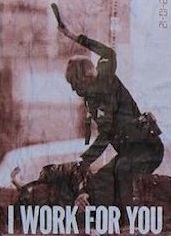
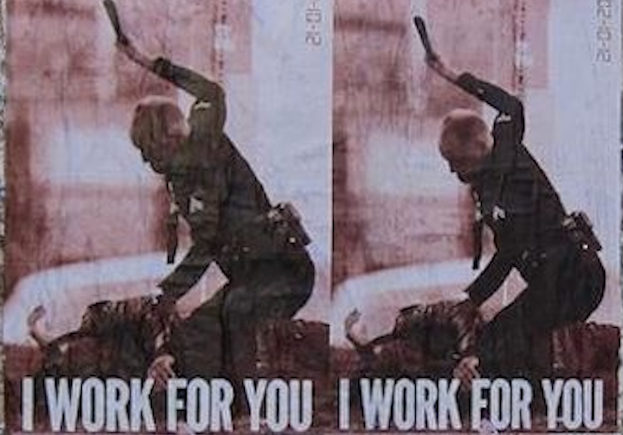
i+work+for+you (1).jpg

The Techdirt writer said “I'm still trying to wrap my mind around the phrase "routine surveillance at a local convenience store" that's just casually dropped into the opening of the opinion as if that collection of words made any sort of sense. Is this how we're spending our law enforcement dollars? Hanging out by local businesses and running plates? It seems, at best, incredibly inefficient. [the Techdirt writer misunderstands the purpose of police as he mistakenly believes cops are here to protect, serve and otherwise help you somehow. Other standouts here ‘to wrap your mind around’ are that the Supreme Court has said cops cannot follow or stop people for pre-textual reasons and also that flight alone (if evidence established that the driver was actually fleeing from the voyeuristic cop when he ran into his apartment] cannot support a basis to stop, search or arrest. However, such considerations entirely miss the point about the myth of authority in demockery. Cops so frequently abuse their power that In the face of such brazen 4th Amendment violations, no one—no motorist, no juvenile, no adult, no professional of any kind—could make a compelling argument that so-called constitutional rights afford any real protection from cops in this police state. Racist suspect statists oppose such arguments but fail to realize that one day they also may be subject to such governmental treatment. Everyday government power expands in some way and everyday your chains should be more visible to you]

That being said, the 7-11 stakeout (or whatever) led Officer Nicholson to the door of Lawrence Hubbard's apartment. That's when the law enforcement magic happened:

Nicholson later testified she was about 2 feet from the front door when Hubbard exited. She further testified she "smelled a strong odor of raw marijuana emanating from the apartment." The officer questioned Irone and Hubbard about the smell. Hubbard denied smelling anything and said his lawyer told him humans cannot detect a marijuana odor.

(That last sentence is equally stupefying. Marijuana does have an odor. That being said, that odor is not always present when an officer claims it is. See also: every search predicated on the smell of marijuana that fails to turn up any marijuana.)
More officers had arrived by that time and decided they might need a warrant. The officers told everyone present to leave until the apartment could be searched. Three officers, including Nicholson, performed a "security sweep" to make sure everyone had left. During this sweep, officers saw drug paraphernalia, a gun, and a locked safe. The warrant arrived and the safe was pried open, resulting in the discovery of 25 grams of marijuana.

Now, let's look at Officer Nicholson's claim:

Nicholson said she "smelled a strong odor of raw marijuana emanating from the apartment."

Here's what was found:

[O]fficers pried open the safe and found 25.07 grams of raw marijuana inside a Tupperware container…

So, from two feet outside the doorway, Officer Nicholson smelled raw marijuana located in Tupperware container inside a locked safe inside a bedroom inside the "back bedroom" closet. That's the story she stuck with, which seems facially unbelievable given the facts of the case.

Whatever, says the Kansas Supreme Court. Officer Nicholson was declared credible, given her past nasal expertise. The same with the other officer, who also smelled raw marijuana through the Matryoshka-esque layers shielding the contraband from random apartment visitors.

Among other things the defendant argued the cops fabricated smelling marijuana after the officer racially profiled him. [MORE]

Among its factual findings, the court concluded: (1) Nicholson had "detected the smell of raw marijuana 200 to 500 times and burnt marijuana 100 to 300 times" in her law enforcement training and professional experience; (2) when Hubbard came out of his apartment, closing the door behind him, both Nicholson and Ivener could smell what they identified as the odor of raw marijuana coming from the apartment; (3) Ivener testified the smell was "potent" and "overwhelming…"

LOL at "overwhelming." One burnt cig and 25 grams in a locked safe inside a sealed Tupperware container. Officer Ivener is more bloodhound than human and is obviously credible as fuck. This third attempt to suppress the evidence fails because the state Supreme Court says assertions that cannot be proven are all that's needed to waive probable cause search requirements. If an officer claims to smell marijuana, the exigent circumstances exception to the warrant requirement kicks in. After all, preventing someone from flushing weed down the toilet is more important than ensuring the rights of the policed.

[W]e agree with the panel that the probable cause plus exigent circumstances exception permitted the warrantless sweep. Therefore, to the extent the paraphernalia evidence and the search warrant were fruits of a warrantless search, the sweep was not illegal and the challenged evidence is not subject to exclusion.

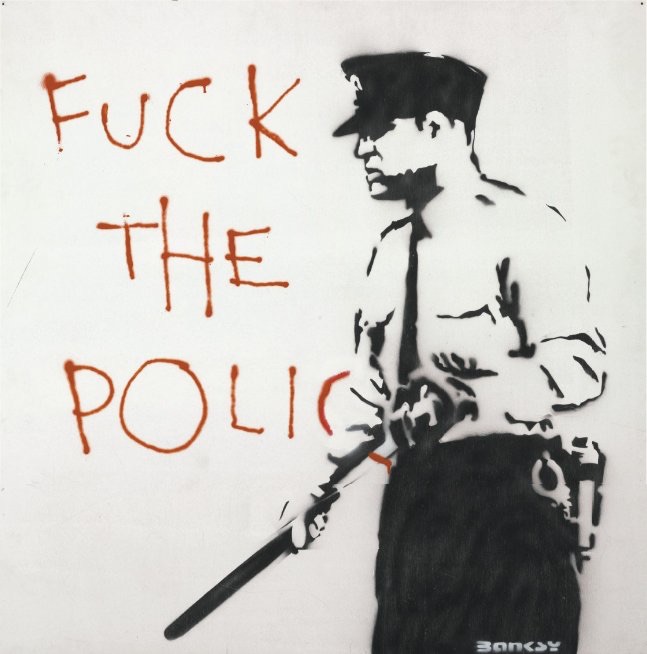
The sound you hear accompanying this sentence is the Constitution being run through the shredder like Banksy artwork:

We hold that the totality of the circumstances surrounding a law enforcement officer's detection of the smell of raw marijuana emanating from a residence can supply probable cause to believe the residence contains contraband or evidence of a crime.

There's all officers need to obtain a warrant. And since you can't have anyone destroying the evidence you claim you smell while you're waiting for a warrant, you get a free warrantless peek.

The panel focused on the second, fourth, and fifth Dugan factors. Under the second, the court highlighted Ivener's testimony that he did not know how many people had been in the apartment originally and whether they all left, so the officers could not know whether everyone was out. This weighs in the State's favor. Under the fourth factor, the panel noted there was evidence the occupants were aware of the officers' presence, so this also weighs in the State's favor because it demonstrates anyone staying behind would be alerted to the likelihood of an impending search.

The dissent says the lower court did not do enough to vet the officers' claims about their ability to identify the odor of raw marijuana a few dozen feet away from where it resided inside a sealed container inside a locked safe. It points out that if officers want to be considered experts on the odor of marijuana, they should be treated as expert witnesses when testifying. Instead, the lower court accepted their claims of expertise (the hundreds of past marijuana odor sniffs) but then decided they should only be held to the same standard as a lay person giving non-expert testimony. From the dissent:

The officers in this case were not testifying as mere lay persons. On the contrary, they specifically stated that the origin of their ability to smell and identify the source of their olfactory perception as raw marijuana stemmed from their brief exposure to the identified odor during their study at one or more police academies, followed by their experience with numerous cases in which they had successfully detected the substance. This uncontroverted dependency between the officers' training and experience on the one hand and the opinions they expressed on the other hand qualified their testimony about detecting the strong, potent, or overwhelming odor of raw marijuana as expert opinion testimony.

[...]

As urged by the defense, the science, if any, behind the officers' apparently sincere belief in their professed ability to detect an odor of raw marijuana should have been subjected to vetting under the rule of Daubert v. Merrell Dow Pharmaceuticals, 509 U.S. 579, 113 S. Ct. 2786, 125 L. Ed. 2d 469 (1993), which is now codified in subsection (b). The officers' expert opinion testimony should have been admitted on the critical issue of the existence of probable cause at the time of the sweep of the apartment only if "(1) [t]he testimony [was] based on sufficient facts or data; (2) the testimony [was] the product of reliable principles and methods; and (3) the witness[es] ha[d] reliably applied the principles and methods to the facts of the case." K.S.A. 2017 Supp. 60-456(b). The district judge erred by failing to exercise her gatekeeping function under subsection (b).

This would have given the defendant a chance to raise a Daubert challenge during trial, which could have resulted in the lower court finding in his favor on the unconstitutional search argument. Rather than officers simply saying "Oh, I've smelled weed a lot and also this time," they'd actually have to provide some evidence of their claims. Is there anything "scientifically valid" about claiming to have experienced the "overwhelming" odor of raw marijuana safely ensconced in a goddamn safe? Probably not. But we'll never know because Kansas courts won't apply that standard. And the state's courts will never have to apply the standard because the top court has stated it's now OK for cops to rescue a warrantless search simply by saying they smelled something illegal.

All Watched Up: Your Apps Know Where You Were Last Night, and They’re Not Keeping It Secret

From [HERE] The millions of dots on the map trace highways, side streets and bike trails — each one following the path of an anonymous cellphone user.

One path tracks someone from a home outside Newark to a nearby Planned Parenthood, remaining there for more than an hour. Another represents a person who travels with the mayor of New York during the day and returns to Long Island at night.

Yet another leaves a house in upstate New York at 7 a.m. and travels to a middle school 14 miles away, staying until late afternoon each school day. Only one person makes that trip: Lisa Magrin, a 46-year-old math teacher. Her smartphone goes with her.

An app on the device gathered her location information, which was then sold without her knowledge. It recorded her whereabouts as often as every two seconds, according to a database of more than a million phones in the New York area that was reviewed by The New York Times. While Ms. Magrin’s identity was not disclosed in those records, The Times was able to easily connect her to that dot.

The app tracked her as she went to a Weight Watchers meeting and to her dermatologist’s office for a minor procedure. It followed her hiking with her dog and staying at her ex-boyfriend’s home, information she found disturbing.

“It’s the thought of people finding out those intimate details that you don’t want people to know,” said Ms. Magrin, who allowed The Times to review her location data.

Like many consumers, Ms. Magrin knew that apps could track people’s movements. But as smartphones have become ubiquitous and technology more accurate, an industry of snooping on people’s daily habits has spread and grown more intrusive.

At least 75 companies receive anonymous, precise location data from apps whose users enable location services to get local news and weather or other information, The Times found. Several of those businesses claim to track up to 200 million mobile devices in the United States — about half those in use last year. The database reviewed by The Times — a sample of information gathered in 2017 and held by one company — reveals people’s travels in startling detail, accurate to within a few yards and in some cases updated more than 14,000 times a day.

[Learn how to stop apps from tracking your location.]

These companies sell, use or analyze the data to cater to advertisers, retail outlets and even hedge funds seeking insights into consumer behavior. It’s a hot market, with sales of location-targeted advertising reaching an estimated $21 billion this year. IBM has gotten into the industry, with its purchase of the Weather Channel’s apps. The social network Foursquare remade itself as a location marketing company. Prominent investors in location start-ups include Goldman Sachs and Peter Thiel, the PayPal co-founder.

Businesses say their interest is in the patterns, not the identities, that the data reveals about consumers. They note that the information apps collect is tied not to someone’s name or phone number but to a unique ID. But those with access to the raw data — including employees or clients — could still identify a person without consent. They could follow someone they knew, by pinpointing a phone that regularly spent time at that person’s home address. Or, working in reverse, they could attach a name to an anonymous dot, by seeing where the device spent nights and using public records to figure out who lived there.

Many location companies say that when phone users enable location services, their data is fair game. But, The Times found, the explanations people see when prompted to give permission are often incomplete or misleading. An app may tell users that granting access to their location will help them get traffic information, but not mention that the data will be shared and sold. That disclosure is often buried in a vague privacy policy.

“Location information can reveal some of the most intimate details of a person’s life — whether you’ve visited a psychiatrist, whether you went to an A.A. meeting, who you might date,” said Senator Ron Wyden, Democrat of Oregon, who has proposed bills to limit the collection and sale of such data, which are largely unregulated in the United States.

“It’s not right to have consumers kept in the dark about how their data is sold and shared and then leave them unable to do anything about it,” he added.

Mobile Surveillance Devices

After Elise Lee, a nurse in Manhattan, saw that her device had been tracked to the main operating room at the hospital where she works, she expressed concern about her privacy and that of her patients.

“It’s very scary,” said Ms. Lee, who allowed The Times to examine her location history in the data set it reviewed. “It feels like someone is following me, personally.”

The mobile location industry began as a way to customize apps and target ads for nearby businesses, but it has morphed into a data collection and analysis machine.

Retailers look to tracking companies to tell them about their own customers and their competitors’. For a web seminar last year, Elina Greenstein, an executive at the location company GroundTruth, mapped out the path of a hypothetical consumer from home to work to show potential clients how tracking could reveal a person’s preferences. For example, someone may search online for healthy recipes, but GroundTruth can see that the person often eats at fast-food restaurants.

“We look to understand who a person is, based on where they’ve been and where they’re going, in order to influence what they’re going to do next,” Ms. Greenstein said.

Financial firms can use the information to make investment decisions before a company reports earnings — seeing, for example, if more people are working on a factory floor, or going to a retailer’s stores. [MORE]

Taken by prosecutor, sold to police: Inside the Philadelphia DA’s side hustle — selling Black & Latino People's Seized Homes to Speculators and Cops

From [HERE] Maleny Vazquez remembers when the police came and took the house across the street. Vazquez has only lived on this block of Waterloo Street for a few years, but in this chaotic section of Kensington, riven by the drug trade, she has gotten used to seeing police empty homes.

“There were lot of guns and a lot of drugs in there,” she recalls. “They took 30 guns out of there.”

In neighborhoods across Philadelphia, the city sells homes that owe back taxes, or have fallen into foreclosure. But the sales in Vazquez’s neighborhood were different. Here, police seized properties after drug raids. Once they were taken, the district attorney auctioned them off to the highest bidder, for cash that went back to the law enforcement agencies. The legal process is known as civil asset forfeiture.

Vazquez has never heard this term, she just watched as neighbors were taken away in cuffs and their homes sold by the DA –– controversially, with no guilty verdict required. She doesn’t know exactly how many of the two-story rowhomes on her block were forfeited, but she knows it was a lot.

In fact, the number of seized homes on Vazquez’s block was more than anywhere else in Pennsylvania. No other jurisdiction in Pennsylvania took as much property as Philadelphia and no other block in the city saw as many forfeiture petitions as this narrow stretch of two-story rowhomes on Waterloo Street. On Vazquez’s block, the DA attempted to seize nearly one-quarter of the properties between 2011 and 2015 alone.

The escalation of America’s drug war in the 1980s saw police ramp up the use of asset forfeiture here and on other blocks in the shadow of Kensington’s infamous Gurney Street drug market, near an abandoned rail line that long attracted encampments of opioid users. Abundant evidence of drug activity and a lack of legal representation for indigent clients made securing a forfeiture petition from a judge easy work. A forfeiture petition for one property lists one gram of marijuana, a half gram of cocaine and some over-the-counter pills as justification for taking. In one case recently settled in a $3 million class-action lawsuit, Norys Hernandez nearly lost the rowhouse she and her sister owned after police arrested her nephew on drug dealing charges and seized the house. Another family named in the suit fought to save their house from the grip of law enforcement after their son was arrested for selling $40 worth of drugs outside of it. Of the lawsuit’s four named plaintiffs, three had their houses targeted for seizure after police accused relatives dealing drugs on the property. None of the homeowners were themselves accused of committing a crime.

As families fought to keep homes targeted by the DA, the revenues from the forfeiture sales became a big moneymaker for local law enforcement – netting some $6 million annually in the best years. The proceeds turned into an unregulated budget split between the police and DA. The money made off of the seized homes went to buy wish list items ranging from new submachine guns to custom uniform embroidery. But officials long maintained that these sales weren’t about the cash; they were meant to empower the city to kick out dealers, seal houses and move properties out of the hands of alleged criminals.

Forfeiture was supposed to improve communities. Or so authorities said.

But a PlanPhilly analysis of 1,682 deed records linked to properties auctioned by the Philadelphia District Attorney’s office between 1993 and 2018 uncovered a far more complex legacy. [MORE]

Delaware AG Drops Life Sentence Against Innocent Black Man Convicted by All White Jury, Judge & Prosecutor & Locked Up 39 years for Raping White Teen based on "Flawed" FBI Testimony

Elmer Daniels was released from Howard Young prison Thursday, December 13, 2018, just before lunchtime--one day after his 57th birthday. Daniels, who was 18 at the time, was convicted in 1980 for the rape of a 15-year-old girl. [MORE]

Elmer Daniels was released from Howard Young prison Thursday, December 13, 2018, just before lunchtime--one day after his 57th birthday. Daniels, who was 18 at the time, was convicted in 1980 for the rape of a 15-year-old girl. [MORE]

From [HERE] and [HERE] Elmer Daniels left prison this week a free man. He’s spent 39 years in prison.

Daniels, who turns 57 Wednesday, was given a life sentence in 1980 when he was convicted of raping a 15-year-old white girl in Wilmington.

The state has filed a motion to dismiss the charges, saying there was faulty FBI testimony on hair evidence and a mistaken witness identification - but won’t say he’s innocent.

Daniels’ attorney Emeka Igwe said his client, an African American, completely denies the charges.

Igwe argues the case is rife with racial bias. He says the prosecutor and the judge were white. And the jury which convicted him was all white.

“Race played a very big factor in this case," he said. "It’s not something we like to talk about, but the reality is the reality and the truth is the truth.”

The Delaware Attorney General’s Office said there’s not sufficient evidence he was wrongfully convicted.

Igwe strongly disagrees with that interpretation.

“Mr. Daniels was convicted wrongfully and incarcerated wrongfully for 39 years," he said. "And it’s a tragic, sad case of injustice and Mr. Daniels would have died in jail had we not got involved in this case.”

In 1980, an FBI agent testified in Elmer Daniels' rape trial that hair evidence found on both the victim and Daniels linked him to the assault. 

Thirty-nine years later, the FBI and the U.S. Department of Justice have determined that testimony – ironclad at the time – has "exceeded the limits of science" and is "invalid," court documents say.

The state won't go so far as to say Daniels, now 56, is innocent.

But it does say that dismissing the indictment is the "most just outcome." 

Given the minimum mandatory sentence for first-degree rape today, the state determined that if Daniels would have been found guilty now, he would have already served his sentence plus additional time. 

Daniels would be released after Superior Court accepts the state's motion.  

The Delaware Department of Justice was notified of the problematic testimony in this case from FBI Special Agent Michael Malone on Jan. 31, 2018, according to court documents.

The Innocence Project and the National Association of Criminal Defense Lawyers have been assisting the FBI in reviewing testimony regarding the use of hair evidence since 2015 when the federal agency publicly said FBI hair examiners were providing overreaching testimony.

In 2015, three defendants were identified among more than 250 cases nationwide in which this flawed testimony was provided. The Delaware cases were not made public.

Early this year, the state and Daniels learned that the testimony about the weight of hair evidence and its impact on the case may have reached too far.

What did the FBI agent do?

The agent said in court that because a hair sample found on Daniels' pants could have come from the victim, and head hair found on the victim's underwear could have come from Daniels, that it was considered a "double match," according to court documents and trial transcripts.

The state relied upon this testimony to argue that Daniels was the man who raped the woman, citing the agent's assertion that he had never had a case where the hair samples didn't link back to the people in the specific case, according to court documents.

The state can't retry the case because the evidence was destroyed after Daniels appealed to the Delaware Supreme Court and lost, according to court documents.

"The State has filed this motion in view of its broader responsibility for the integrity of the criminal justice process and in the broader interest of justice," Delaware Attorney General Matt Denn wrote in court documents, stressing that there is no belief that a legal error occurred.

State prosecutors have no other suspects and prosecutors wrote that they were unable to contact the victim despite exhaustive attempts to find her.

What happened on Jan. 15, 1980?

Court documents say that on Jan. 15, 1980, a 15-year-old girl was walking from a local party to a gas station to call her mother. At the time, she was with a person she had only met that day who was intoxicated, court papers say.

When they left the gas station, they sat near railroad tracks at the corner of Augustine Cut-off and Lovering Avenue in Wilmington when they were approached by an African-American man who they didn't know, according to court documents.

The man, who identified himself as a security guard for the railroad, "threw her down, choked her, and raped her," court papers say. The person with her witnessed the attack.

The victim gave police a description of her attacker, as did the witness, after she reported the crime to law enforcement and sought medical attention at a local hospital, according to court documents.

How did police handle the investigation?

Police then showed her about 300 pictures, but she couldn't identify the man who raped her.

A second set of photos – which would later be disputed at trial and in the years after Daniels' conviction – led the victim to identify her attacker, according to court documents.

The only reason Daniels appeared in the line-up was because the witness to the crime "identified the suspect as someone named Elmer he knew from school where they had been in the same 8th grade homeroom class," court papers say.

A teacher confirmed this accusation back in 1980, but newly produced school transcripts found this statement to be false – Daniels and the witness never attended school together.

Still, a Wilmington police detective testified at the trial that the woman positively identified Daniels as her attacker and said that "there was no doubt in her mind," according to court records.

Why is this coming to light now?

Back in 2015, the Justice Department and FBI acknowledged that for more than 20 years preceding 2000, nearly every examiner in the FBI's elite microscopic hair comparison unit gave flawed testimony in trials.

This affected cases to the prosecutors' benefit. The National Association of Criminal Defense Lawyers and the Innocence Project, which has been involved in this review, found that the testimony aided in more than 95 percent of the 268 trials reviewed by early 2015.

FBI gave flawed testimony in 3 Delaware trials

As this review process has continued, states like Delaware have been notified of cases they believe should be revisited. [MORE]

Caucasian Terrorist who Intentionally Ran Over Crowd & Murdered White Anti-Racist Protester at “Unite the Right" "Rally" in Charlottesville Sentenced to Life in Prison

James Alex Fields .jpg

From [HERE] A jury on Tuesday called for a sentence of life in prison plus 419 years for the Hitler admirer who killed a woman when he rammed his car into counter-protesters at a white nationalist rally in Charlottesville in 2017.

The decision capped a trial laced with survivors’ anguished testimony and details of the driver’s long history of mental illness.

James Alex Fields Jr, 21, stood stoically with his hands folded in front of him as he heard the jury’s recommendation.

It will be up to Judge Richard Moore to decide on the punishment at Fields’s sentencing, set for 29 March. Judges in Virginia often go along with the jury’s recommendation. Under state law, they can impose a shorter sentence but not a longer one.

The jury called for a life sentence for first-degree murder in the killing of Heather Heyer, a 32-year-old paralegal and activist, and also asked for hundreds more years on nine counts involving injuries Fields caused to others and for leaving the scene of the crash. [MORE]

html5 video converter by EasyHtml5Video.com v3.9.1

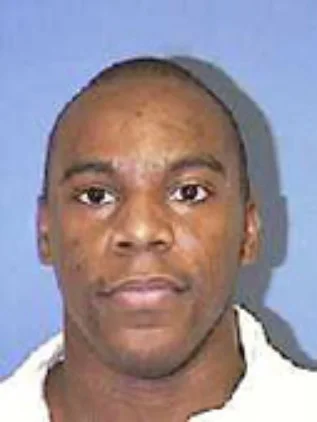
Texas Authorities Murder Black Man who Murdered a White Man when He was a Teenager [TX Death Row is 43% Black but State is only 11% Black]

alvin braziel.jpg

From [HERE] Texas executed Alvin Braziel, Jr. on December 11, 2018. Braziel was 18 years old in 1993 when he killed a white man and sexually assaulted a white woman after a failed robbery attempt. His age places him just above the legal boundary to be eligible for a death sentence, though recent neuroscience research on brain development indicates the deficits in judgment and impulse control that led the United States Court to exempt juveniles from capital punishment persist through an individual’s early 20s. As a result of that research, the American Bar Association adopted a resolution to bar the death penalty for offenders 21 and under, and a Kentucky trial court ruled that it would be unconstitutional to seek a death sentence against defendants who were under 21 at the time of their crime.

"I would like to apologize ... for her husband dying at my hands," Braziel said from the death chamber gurney. He also said he loved the White family and a person he named but who was not present, then told the warden he was finished.

Braziel became the 24th inmate put to death this year in the U.S. and the 13th executed in Texas, the nation's busiest capital punishment state. He will be the last Texas inmate executed this year. Although Blacks make up only 11.8% of the entire Texas population they constitute 43% of those scheduled to be murdered by the government [death row]. 

The execution was delayed about an hour after the six-hour window defined by the warrant began at 6 p.m. The Texas Court of Criminal Appeals rejected a last-minute appeal from Braziel's attorneys.

Braziel shot White once in the head and once in his heart.

Braziel’s appeals presented evidence that his trial attorney was ineffective and failed to present significant mitigating evidence. His appellate attorneys said Braziel suffered brain damage from head injuries as a child that rendered him intellectually disabled and therefore ineligible for the death penalty. Braziel was also exposed to drugs and alcohol in utero, experienced abuse and homelessness as a child, and has a family history of mental illness. None of that evidence was offered to his jury, which, the defense argued, might have been persuaded to impose a lesser sentence.

Braziel was the 13th person executed in Texas this year and the 24th in the U.S. The pharmacy that has provided lethal drugs to Texas has a record of safety violations, and five of the prisoners executed in the state this year have reported pain or burning as the execution drug was injected, which doctors have indicated may be a sign that the drugs are out of date or impure.

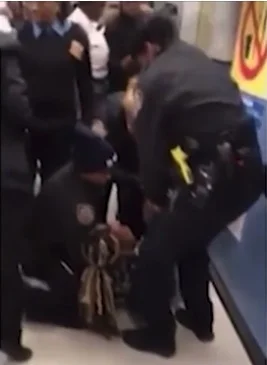
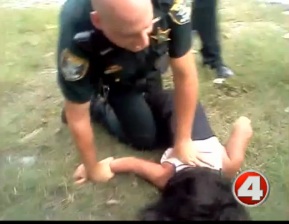
Video Shows NYPD Cops Ripping a 1 Year-Old Baby from Black Mother's Arms During an Assault to Force Compliance with the "No Sitting On the Floor Rule" at Welfare Office

System Based on Consent or Physical Coercion? Do You Ever Have a Choice to Not Comply? From [HERE] Friday was a busy day at the Human Resources Administration office in Brooklyn’s Boerum Hill, where New Yorkers can apply for food stamps and other forms of public assistance. Lines were moving slowly and the drab gray building was packed. Jazmine Headley just wanted to get a voucher for city-funded day care so she could find someone to look after her 1-year-old son, Damone, while she went to work as a cleaner, her mother would later tell reporters.

Instead, Headley, 23, ended up behind bars — and at the center of the latest viral video to inspire outrage over alleged police brutality.

The two-and-half-minute video posted to Facebook on Friday shows Headley lying on the floor, surrounded by uniformed New York police officers and security guards. She holds her 1-year-old son firmly in her arms as the officers forcibly try to yank the child away. “They’re hurting my son,” she screams again and again. Unmoved, the officers keep on tugging. As onlookers gather around and begin filming the commotion, one officer pulls out a stun gun.[MORE]

nypd cops drag black mother.jpg

White Supremacy System’s Winning Streak Continues as ‘the Washington NFL Team’ Shifts it’s Goals from Making the Playoffs to Selling as Many Hotdogs as Possible After Blowing Off Colin Kaepernick

Patriotism: the degree of voluntary servitude evinced.2) the result of one successful treason - until the next one is necessary. 3) re-inforced mindless symbolic conformism. (See U.S. citizen, Treason, USA, Corporate State, Nation, U.S. Senate, Coun…

Patriotism: the degree of voluntary servitude evinced.2) the result of one successful treason - until the next one is necessary. 3) re-inforced mindless symbolic conformism. (See U.S. citizen, Treason, USA, Corporate State, Nation, U.S. Senate, Country, Congress, Constitution & Human Resources) - from FUNKTIONARY

The Illusion of a Meritocracy in a White Over Black System: The Washington NFL Team’s #1 Priority was To Get a QB to Stand & Pledge Compelled Allegiance to Uncle Brother’s Almighty Authority.

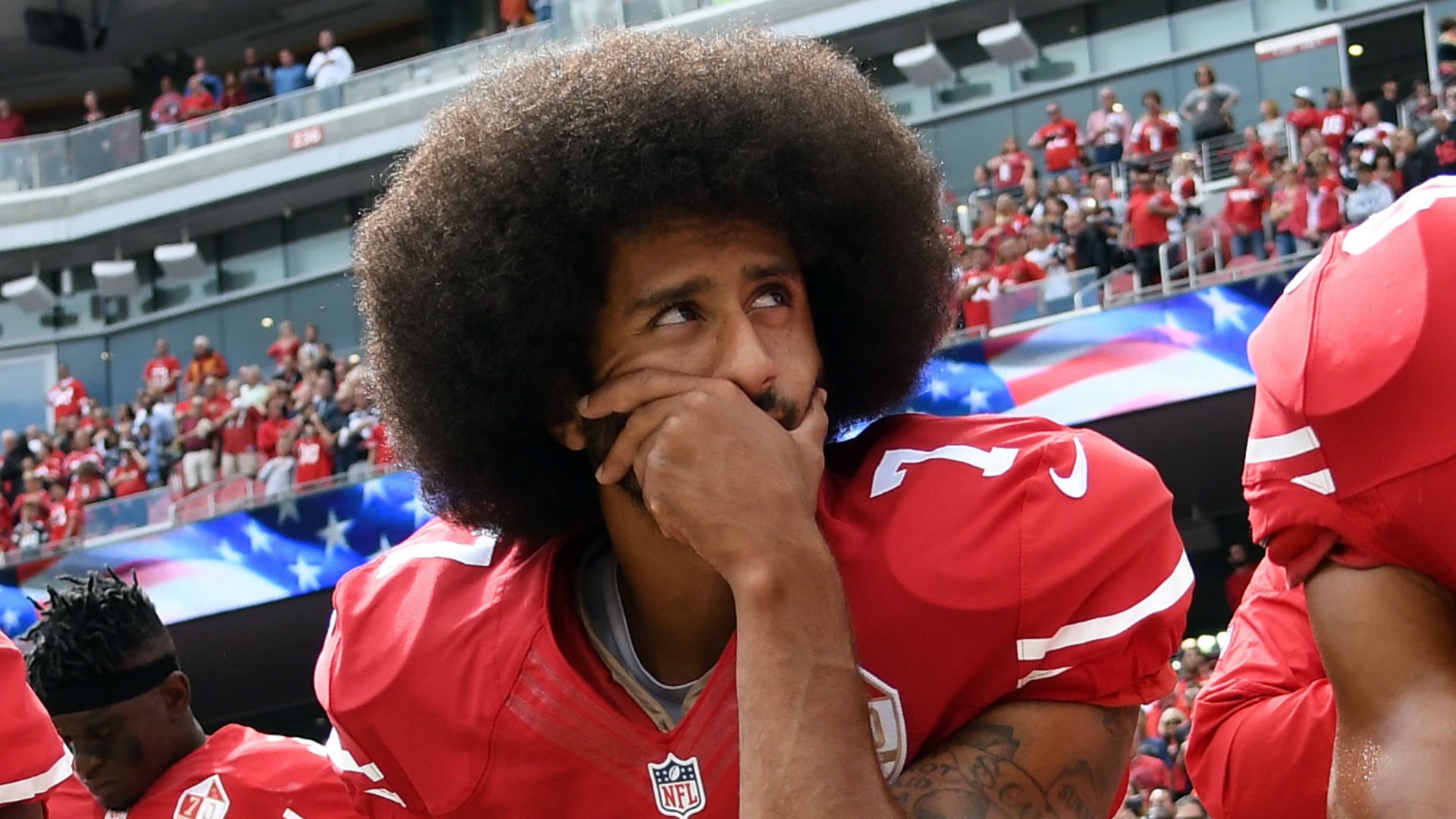
From [HERE] and [HERE] The ‘Washington NFL team’ head coach Jay Gruden said the organization "talked about and discussed" signing Colin Kaepernick on Tuesday, but Washington did not reach out to the free-agent quarterback this week, according to ESPN's Adam Schefter

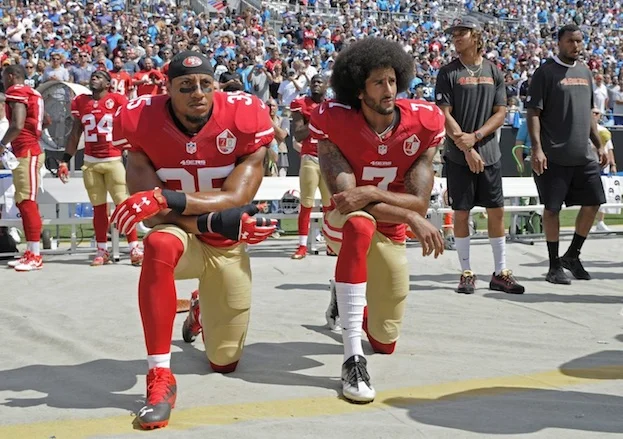
Kaepernick has not been contacted by a team this season, per Schefter. He was set to workout with the Seahawks in April, but the trip was postponed after Kaepernick declined to stop kneeling during the national anthem. 

His continued unemployment is maybe the NFL’s biggest black mark in recent memory. The league’s racist suspect owners are comfortable signing alleged or confirmed domestic abusers such as Adrian Peterson, Greg Hardy, Josh Brown, Joe Mixon, Tyreek Hill, Reuben Foster, and others. But Kaepernick, who silently kneeled during the “Star-Spangled Banner” offended racists with his protest.

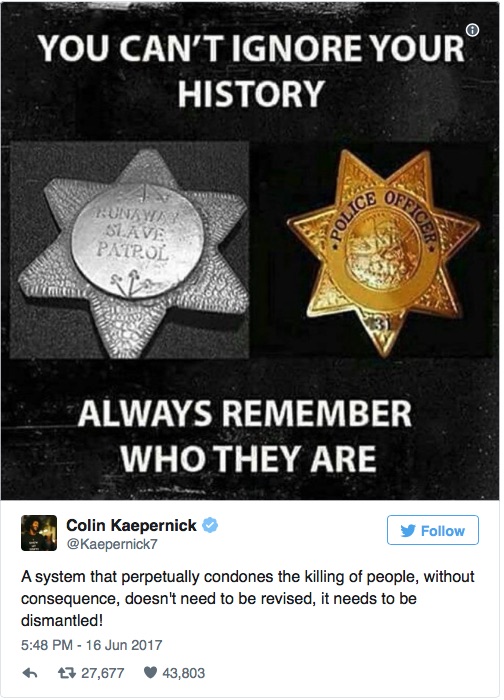
Let us not participate in any deception. Speaking out against acts of bigotry or the already unlawful use of excessive force by police is really not a radical thing to do. Complaining to the NBA demographic or to young hip-hop fans about the illegal conduct of cops is also not going out on a limb. For that matter, asking police to do their jobs properly or asking governments to enforce already existing laws to police conduct is also not radical protest. Kaepernick, on the other hand, took a risk and gambled his career ["only the gamblers know what life is"] with an NFL fanbase that is 83 percent white and 64 percent male. Kaepernick said, “I am not going to stand up to show pride in a flag for a country that oppresses black people and people of color,” [MORE] He spoke about a system that refuses to punish white cops who murder Blacks in broad daylight and rewards them for doing so. Kaepernick made it plain that cops function as a modern day "slave patrol" to enforce an oppressive white over Black system. He took it there and took it work because the NFL with its racist suspect owners and clients is apart of that same system. 

re-emerging rule here is: any act or attitude on the part of Blacks which appears to White Americans to defy White American authority, control or dominance may cause elite racists to filter you out or disappear you in any area of people activity. Such a reaction may also be triggered when any non-white person names and challenges the system of racism/white supremacy. Conversely, this is the exact opposite reaction to "Showcase Blacks" who are handsomely rewarded & showcased by elite racists for their obedience & worship of authority and SNiggering, mentacidal activities or activities conforming to re-assuring stereotypes [like NFL players engaged in criminal episodes] in all areas of people activity. [MORE] and [MORE]  

As Dr. Amos Wilson explained, It is also clear ‘that Blacks who demonstrate an apparent rejection of their African identity, African culture, history and values, and acknowledge their subordination to European domination, are rewarded with increased opportunities, material and social compensation, although restricted relative to White Americans.

Look no further than the Redskins to see this whitenology rule applied. Daniel Synder approved signing Foster just three days after his second domestic violence arrest in nine months. Yet, the Redskins had Mark Sanchez out there playing quarterback over the past 2 weeks.

colin+kaepernick+tweet+2 (1).jpg

The Redskins’ decision to sign Sanchez shatters every supposed football argument for avoiding Kaepernick. Sanchez, who was never good, last started an NFL game in 2015. He hasn’t played  much at all since 2014, when he started eight contests for the Eagles. 

Kaepernick, meanwhile, started 11 games for the 49ers in 2016 –– posting a passer-rating of 90.7. He also took them to the NFC championship twice. [MORE] He is a proven winner and the most qualified candidate in a league based on an alleged meritocracy. That is, the NFL that is presented by the media to non-whites pushes a “synthesized and packaged reality” where winning through teamwork and fair play are the ultimate goal and promotions are based on merit.

Sanchez was predictably awful during the Eagles’ 28-13 victory over Washington Monday. He completed 13-of-21 passes for 100 yards and an interception. Then today Mark Sanchez got his first start since Week 12 of the 2015 season, but his time in a 40-16 defeat to the New York Giants was dog shit to say the least. The 32-year-old completed two of his first eight passes for just 6 yards. Josh Johnson, signed last week, got the call in the second half after Sanchez completed six of his 14 passes for 38 yards and threw two interceptions, including one pick-six.

Due to said poor performances the team will soon be eliminated from playoff contention. Nevertheless, Yahoo News reported If the Washington team is willing to pick up the phone and call Colin Kaepernick, two sources close to the former NFL quarterback said he is ready and willing to play for the franchise. [MORE]

The Kaepernick episode shows us that winning in the NFL is secondary to the system of racism/white supremacy, a global, white over Black system of vast unequal conditions & unequal power that functions in all areas of people activity, including sports & entertainment. Racism is not merely a pattern of individual and/or institutional practice; it is a universal operating "system" of white supremacy and domination in which the majority of the world's white people participate. [MORE]. Racism is not primarily mean words, inconveniences and disrespect. As stated by Dr. Blynd, "racism/white supremacy is a power group dynamic, i.e., a defined group cooperatively via legacy institutions exerting structured, systematic injustice and power over another group. Racism is not individualistic, but institutional, cultural, economic, political, linguistic, self perpetuating and systematic. Racism is economic discrimination by a group against another for the purpose of subjugation and/or maintaining the imbalance of power through cooperative control and oppression." [MORE

white supremacy chart 2.jpg

Dr. Frances Cress Welsing explained that Black people must understand what the system of racism white supremacy is and how it functions in order to disempower and unplug themselves from it. She explained;

“this deep investigation and understanding is essential if Black and other non-white peoples are to succeed in playing the "black side of the chess board" (defense-offense) in contrast to the "white side of the chess board" (offense-defense) in the planetary game of chess (white supremacy) being played out between white and non-white. Currently, the players on the black side of the chess board are in a continuous state of checkmate (a losing streak that is centuries long). This has happened because of our failure to understand the game. Heretofore, non-white people have not decoded white genetic survival.”

FUNKTIONARY defines as follows:

Professional Sports - a socially insignificant form of amusement (synthesized and packaged reality) designed/used primarily to pacify the masculine population by absorbing their aggression and (secondly) to keep them distracted from liberation technology (by maintaining mental impoverishment), and lastly to peddle beer and unass them, i.e. take their “chicken” from them and leave them scratch. (See: Consumerism, Testosterone and Tumescence).

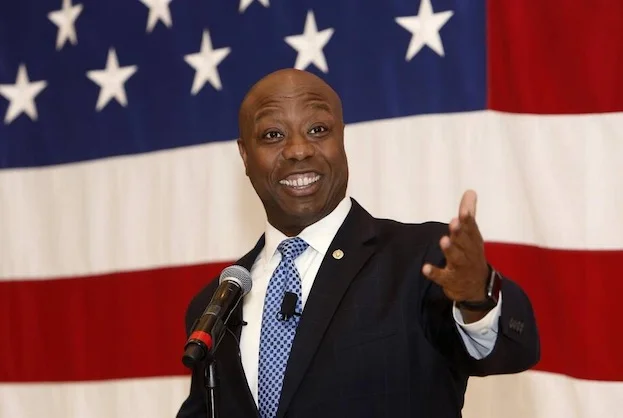
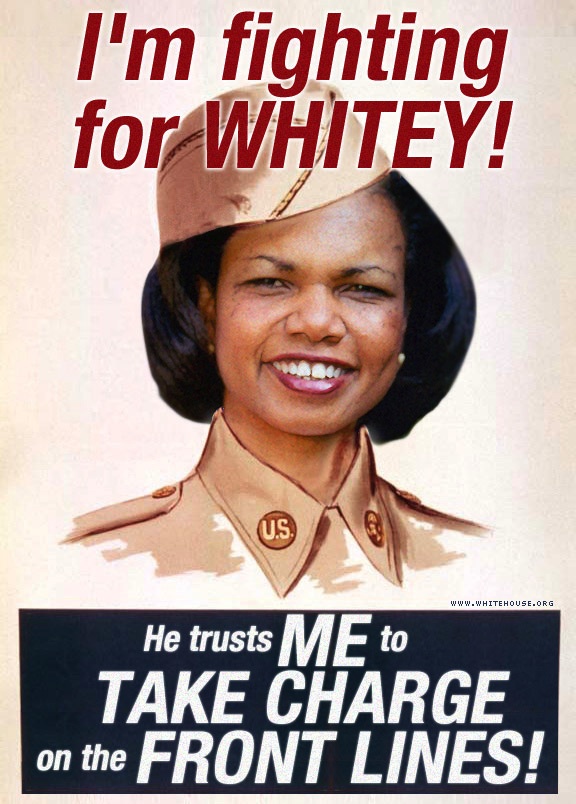
Senator Tim Scott, “a lost sheep in master's clothing," says ‘the GOP [a racial identity party] must do better with Racism’ - like a Westworld [Sleeping Tom] Rolebot, His Mind is Literally Not His Own

tim scott puppetician.jpg

From [HERE] Certified sambo puppetician Tim Scott (R-S.C.) recently made headlines after opposing Thomas Farr, a racist lawyer President Trump nominated to be a U.S. district judge despite accusations that he was in favor of measures to suppress the votes of black Americans. Many mentacidal Blacks and racists think he should be given props for rejecting an obviously unqualified neuropean. Deluded GOP operatives who really, truly think Black people are stupid, probably instructed Scott to do so - better to not blow his cover and status as an alleged “brother” for any future GOP ‘outreach to Blacks’ - actually intended to attract white moderates. As a role-bot, Tim Scott, “merely plays the role of the mask - the personae - [GOP] issued and approved.” For obvious reasons, discussing whether racists should be appointed to judgeships will not be discussed here and those who do so are in a deep sleep of mental slavery [niggers].

In the Wall Street Journal, Scott said that eradicating racism should be a major priority for Americans. He said,

“Unfortunately, there are those in this country who see racism in everything, and they are countered by those who believe racism no longer exists in any substantive way. While our nation has made significant progress over the past 50 years, there is no doubt we still have work left to do.”

“Regardless of the obvious issues the Democratic Party has on race, is that the Republican Party must strive to do better. We can build on the momentum of opportunity zones and criminal-justice reform to show we are serious about tackling real issues facing people of color. I know conservative solutions can transform lives, but if folks don’t trust us, implementing those solutions becomes impossible.”

“We must not seek to sow the seeds of discord, but rather embrace the power of unity. Simply put, if the Senate votes on a candidate that doesn’t move us in that direction, I will not support him or her. Our country deserves better.”

Scott fails to understand that racism is a behavioral system of white genetic survival. Racists practice racism to survive and maintain their dominant economic and social position in a white over Black system. Racism is white supremacy and white supremacy is racism. Dr. Blynd explains, racism is White Degeneracy wrongly cast as Supremacy. Racism—a psycho-socio-economic reality based on a pseudo-scientific biological myth—is a power group dynamic, i.e., a defined group cooperatively via legacy institutions exerting structured and enforced institutionalized and systemic injustice, oppression and power over another group. Racism is not individualistic, but institutional, cultural, economic, political, linguistic, self-perpetuating and systematic. Racism is economic discrimination by one group over and against another for the purposes of subjugation and/or maintaining the imbalance of power through cooperative control, misinformation, indoctrination, genocide and oppression. It is defined as:

Racism White Supremacy - psychopathic degeneracy. 2) "The local and global power system and dynamic, structured and maintained by persons who classify themselves as white, whether consciously or subconsciously determined, which consists of patterns of perception, logic, symbol formation, thought, speech, action and emotional response, as conducted simultaneously in all areas of people activity (economics, education, entertainment, labour, law, politics, religion, sex and war); for the ultimate purpose of white genetic survival and to prevent white genetic annihilation on planet earth—a planet upon which the vast majority of people are classified as non-white (Black, Brown, Red and Yellow) by white skinned people, and all of the nonwhite people are genetically dominant (in terms of skin coloration) compared to the genetic recessive white skin people." 

white supremacy chart 2.jpg

With regard to Blacks and Latinos the democrat and republican parties both function as plantations. The democratic party is the nicer, kinder master and its plantation offers more “respect”, privileges, opportunities and responsibilities to them. The GOP is clearly the mean cracker master and its genocidal plantation seeks to place Blacks in greater confinement. At election time a coerced Black votary smartly “chooses” to stay on the nicer plantation. [Said votary never wonders whether a world without masters is ever possible].

Much of the racist votary, have no greater concern other than their own survival in a mostly non-white world and the maintenance of a system of white domination. The Republican Party is the party of the vanishing majority or the shrinking white population in the US - it is "the White Party." As explained by Patrick Buchanan, 'Republicans now depend on this vanishing majority of whites for fully 90 percent of their votes in presidential elections. [MORE] "The Republican party is a racial identity party. It is designed to appeal to white people as white people... not as union-members or as unemployed people or as home-owners... but as white people.  It is a crude racial-identity party and the numbers bear that out. It is almost exclusively a white party. Many white people vote Democratic, but the Republican party is pretty close to all white. It identifies and caters to white people as an interest group." [MORE] and [MORE]. 

Racist Republicans see "Blacks as the primary impediment to governing." As explained by Dr. Amos Wilson, many working class, non-college educated whites express a profound distaste for blacks, a sentiment that pervades almost everything they think about government and politics. Blacks constitute the explanation for these white voters' vulnerability and provide an explanation for almost everything that has gone wrong in their lives; not being black is what constitutes being middle class; not living with blacks is what makes a neighborhood a decent place to live, etc. The special status of blacks is perceived by almost all of these individuals as a serious obstacle to their personal advancement. Indeed, so-called discrimination against whites has become a well-assimi­lated and ready explanation for their status, vulnerability and failures.' [MORE]

The GOP strategy centering around projecting the idea that the White populace is threatened by over­whelming alien forces, particularly Black criminals, non-white immigrants, Arab terrorists and non-whites demanding welfare and special entitlements, is not a strategy for governance. Yet racism unites an otherwise ad-hoc group of white people who otherwise have no unifying theory they agree on Wilson explains, The party's method deliberately coaxes emotional responses from white people — teases their anxieties over values they hold important in their own lives — but then walks away from the anger and proceeds to govern on its real agenda, defending the upper-class interest of wealth and corporate power. The Republican party is not a party of conservative ideology. It is a party of conservative clients. Wherever possible, the ideology will be invoked as justification for taking care of the client's needs. When the two are in conflict, the conservative principles are discarded and the clients are served.'

Tim Scott is literally out of his mind. Unbeknownst to this Sleeping Tom racists hate him regardless of his political affiliation with GOP masters. Dr. Blynd explains:

Black Conservative - a lost sheep in master's clothing. A black conservative typically has nothing of his own to conserve with the exception of his or her own double-consciousness. So-called "Black Conservatives" dodge the reality of their folly and posit is that what they truly are conserving is traditional "values" as if values ever had anything whatsoever to do with morality or ethics. A black conservative unknowingly preserves the differential power-relations and dynamics between those of African descent he and their bosses, the overruling overclass elite. A black conservative is a turncoat made of wooly hair with no one to turn to tie because when it comes to empowering his own people, his master will turn to him say: "Get your hat, your robe and coat and leave—you're still just a nigger Clarence!" (See: Sambo, Nigger, Somnamnesiac, Values, Status Quo, Strawboss, Double Consciousness, Overclass, Uncle Tom. Status-Quoticians & Assimilationism) 

double consciousness - the sense of looking at one's Self through the eye's (axiology) and distorted mirrors of others. 2) the psycho-mismanagement of one's neurosis. 3) intimately involved with what you hate, and torn apart from who you (think you) are. You cannot learn to use that which you refuse to acknowledge, i.e., one's heritage, roots, or asili. (See: Matah, Inauthentic, "Wille-Chip," Power, Anxiety, Anguish, LEARN & Asili.) 

Sleeping Tom - a person of Afrikan descent who has not consciously awakened to fully embrace his or her own asili (cultural heritage and imperative). 2) a socially unconscious person of Afrikan descent who participates in secret balloting (voting). A sleepin' Tom lives and reacts out of another culture's asili or out of the mind of another; not their own. 3) a Negro who is unaware that he is all souled-out. 4) a Negro who isn't aware that he is in fact and in deed a certified Sambo. 5) a broken, token Negro; a coin-operative. (See: Straw Boss, Doublemindedness, Sambo, Uncle Tom-Tom, Coin-Operated & Secret Ballots) 

Negrosis - the psychological disease affecting and afflicting native Black Americans, Afrikans, Afrikan-Americans, Negroes and all other people of Afrikan genetic heritage characterized by double-consciousness resulting from the falsification of Afrikan consciousness, history and applied spiritual sciences. (See: Double-Consciousness & Asili)

His mind is controlled by remote. Scott is lost in extreme gullibility or jesusized belief in the many many lies told to him by racists.  

Wilson explains that such a manufactured mind in a system of white supremacy "requires that Blacks involuntarily and obsessively deceive themselves. This collective self-deception, which is the benchmark of oppressed Black consciousness, is the main product of White-Black social power relations, motivated by anxiety and ignorance, founded on the denial and distortion of reality. Such a consciousness and its produced behaviors require that Blacks operate against their own best interests in the interests of their White oppressors; that they be self-denying, self-defeating, and oftentimes self-destroying, while convincing themselves that the opposite is true.' [MORE

Seeking better relations with racists or reforming racists misses the point entirely. Our role in the white over Black relationship itself empowers racists. As stated by Dr. Amos Wilson,

"The power relationship between Blacks and Whites is an interactive one — where White power, to a significant extent, arises out of certain types of social interactions between Whites and Blacks where Blacks unwittingly play a very important role in constituting and sustaining their powerlessness relative to Whites. White domination of Blacks in our current social context is primarily facilitated by the fact that Blacks think of themselves and of reality in terms created by the self-serving interests and perspectives imposed on them by Whites, and act on the basis of biased and false information provided them by Whites without realizing it. They therefore contribute to their powerlessness and domination by Whites simply by thinking about themselves and reality in a manner that allows them to be subjugated. Thus, White domination of Blacks is, to a significant degree, covered-over by ideology, beliefs which Blacks have been conditioned by Whites to unwittingly accept. To this degree, their domination and powerlessness is self-imposed. Blacks obscure their unnecessary domination by Whites and contribute to that domination by their own gullibility and too-ready acceptance of Eurocentric ideology and their obsequious willingness to think and act only within the confines of White-generated ideas, social definitions, relations and ethics (not often honored by Whites themselves). Hence, the minds of Blacks are Used to forge the links of their own mental chains. [MORE].

Under the Pretense of Preventing Mass Shootings Fed Appeals Ct Upholds NJ Ammunition Limit [except for Cops] to Ensure Gradually Disarmed Citizens Cannot Adequately Defend Themselves Against Tyranny

trump gat.jpg

From [HERE] The US Court of Appeals for the Third Circuit on Wednesday upheld New Jersey’s law limiting the amount of ammunition that can be held in a single firearm magazine.

New Jersey established the law in response to the dramatic spike in active and mass shootings in the twenty-first century. The court cited statistics to show the 160-percent increase in active and mass shootings from 2006 to 2015. The law places a 10-round limit on the amount of ammunition that can be held in a single firearm magazine at one time. Those exempt from the law include active and retired law enforcement officers, and active military members.

On the same day the bill was signed into law, the Association of New Jersey Rifle and Pistol Clubs and two of its members filed the lawsuit, seeking to strike down the law as unconstitutional and enjoin law enforcement officials from enforcing it.

The court upheld the law in accordance with the lower court’s decision, saying:

New Jersey’s law reasonably fits the State’s interest in public safety and does not unconstitutionally burden the Second Amendment’s right to self-defense in the home. The law also does not violate the Fifth Amendment’s Takings Clause because it does not require gun owners to surrender their magazines but instead allows them to retain modified magazines or register firearms that have magazines that cannot be modified.

The court further held that the law’s exemption for law enforcement officials does not violate the Fourteenth Amendment’s Equal Protection clause because they “have training and experience that makes them different from ordinary citizens.” The court also struck down the request for an injunction against the law’s enforcement.

[A STATE MONOPOLY ON WEAPONS? Last week NJ.com released a study that showed cops in New Jersey disproportionately assault, shoot, detain, search & arrest Black people despite a record low and consistently declining statewide crime rate.]

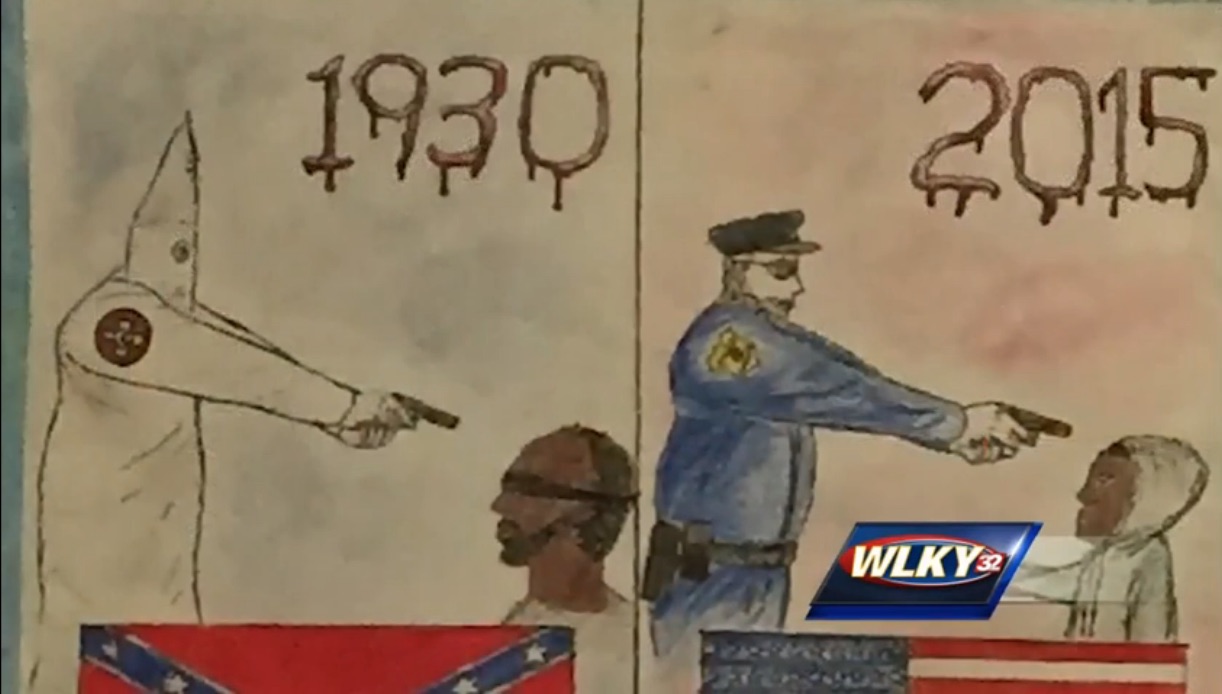
According to statist belief “the people” have delegated powers to politicians. And politicians have transferred or given police the moral right to commit acts of unprovoked violence on people. That is, police officers have acquired the moral right to initiate violence and commit acts of aggression against others (by way of so-called “laws”) “to protect” the people for their own benefit. [MORE]

Question here: can you delegate a right to someone that you don’t have? where does authority, the right to rule others, come from? Asked differently, you don’t have the right to initiate unprovoked acts of force against other people - so how can you delegate or authorize another person to do such things? How did police acquire such super-human powers? [MORE]

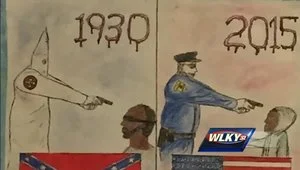
North+1Oldham+High+School+Painting+.jpg

According to FUNKTIONARY

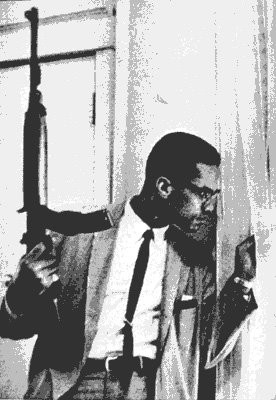
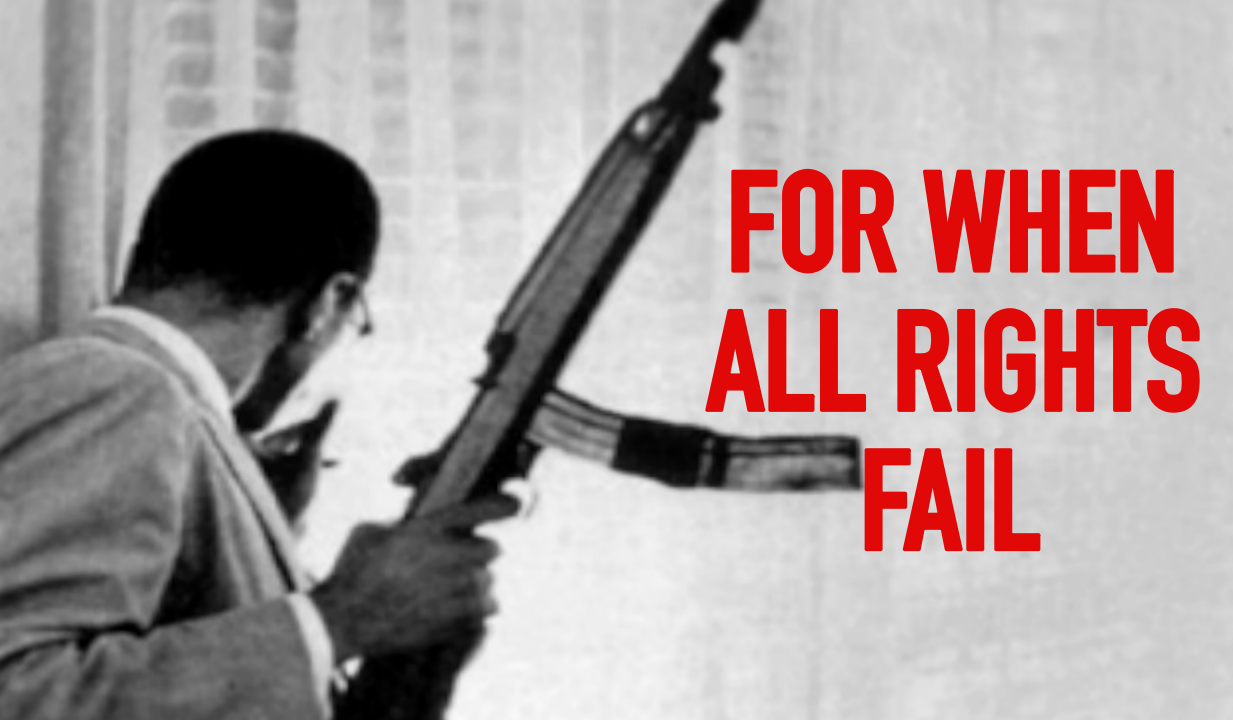
Second Amendment - (to the Constitution for the United States)—is only intended for a militia to enforce the First Amendment if and when deemed necessary. Every non-felon in the street has the guaranteed right to be packin' heat. Slave states (the overwhelming majority) are those that have criminalized openly carrying firearms. In the case of Silveira v. Lockver, Ninth Circuit Judge Alex Kozinski summed up the importance of the right to keep and bear arms: "The prospect of tyranny may not grab the headlines the way vivid stories of gun crime routinely do. But few saw the Third Reich coming until it was too late. The Second Amendment is a doomsday provision, one designed for those exceptionally rare circumstances where all other rights have failed—where the government refuses to stand for reelection and silences those who protest; where courts have lost the courage to oppose, or can find no one to enforce their decrees. However improbable these contingencies may seem today, facing them unprepared is a mistake a free people get to make only once." The right to keep and bears arms actually serves as more than an insurance policy, it also serves as a deterrent. For when would-be tyrants know that the citizenry is well-armed, they think twice about imposing tyranny. (See: Gun Control & Militia)

tyrants - there are none; only tyranny exists. How can one man or woman rule a multitude against their will except through mind-control and word-conditioning control? "Find out the exact amount of injustice any people accept, and you will find out the exact amount of injustice they receive." -Freddy D. "The evils of tyranny are rarely seen but by him who resists it." -John Jay, Castilian Days II, 1872. (See: Tyranny, Terms, "The Law," Dictatorship, Corporate State & Fascism)

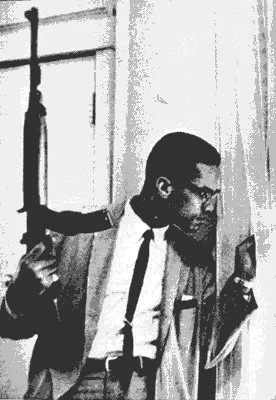
MalcolmX.jpg

tyranny - the miscarriage of self-government. 2) the absence of ethical anarchy. In our system, tyranny must have an accomplice. The perpetrator by intent must be accommodated by the perpetrator by consent. The former initiates, the latter accommodates. Of all tyrannies, the greatest is the tyranny of the ego-mind. "If the government is allowed to place a tax on what is a natural right it can raise that tax to the point where that right has been effectively destroyed. That is tyranny."" Butcher's Union Company v. Crescent City. "No man, no group, and no nation has the right to any man's individual freedom. No matter how pure the motive, how great the emergency, how high the principle, such action is nothing but tyranny. It is never justified." -John W. Parsons. Tyranny Law #1 - Any power that can be abused will be abused. Tyranny Law #2 - Abuse always expands to fill the limits of resistance to it. Tyranny Law #3 - If people don't resist the abuses of others, they will have no one to resist the abuses of themselves, and tyranny will prevail. The condition upon which God hath given liberty to man is eternal vigilance; which condition if he break, servitude is at once the consequence of his crime, and the punishment of his guilt. -John Curran. Retaining and exercising the unalienable right to distribute one's own property and wealth without restriction is the only guarantee of freedom from tyranny. (See: Labor, Anarchy, Appropriation, Income Taxes, IRS, Bill of Rights, Property, Freedom, Self-Determination, GIMME!, Autotyranny, Matrix, Organizations, Private Services & Liberation)

In a Credibility Contest Between White Cops & Black Witnesses who Wins? Camden Cops will Tell a Jury that a Black Man Broke His Own Neck & is a Quadriplegic Due to a Fall, Not Their Assault

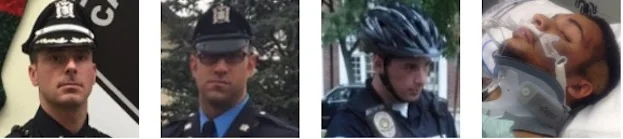
camden cops xavier ingram.jpg

[the Freddie Gray Defense - ‘We Were Just Trying to Help’] From [HERE] Xavier Ingram ran from the cops on June 12, 2014, and his life changed forever.

As the 20-year-old walked out of a store in Camden, he spotted the cops coming for him and took off. 

Moments later, he slipped and fell. Ingram would say later that two officers were on top of him immediately, kneeling on his neck and back, punching him as he screamed that he couldn’t feel his legs. Then a third cop approached.  

“He said, ‘Shut up.’ Then, Ingram said in a court deposition a year later, that the officer stepped on his neck.

 Ingram said, "I heard it crack,"

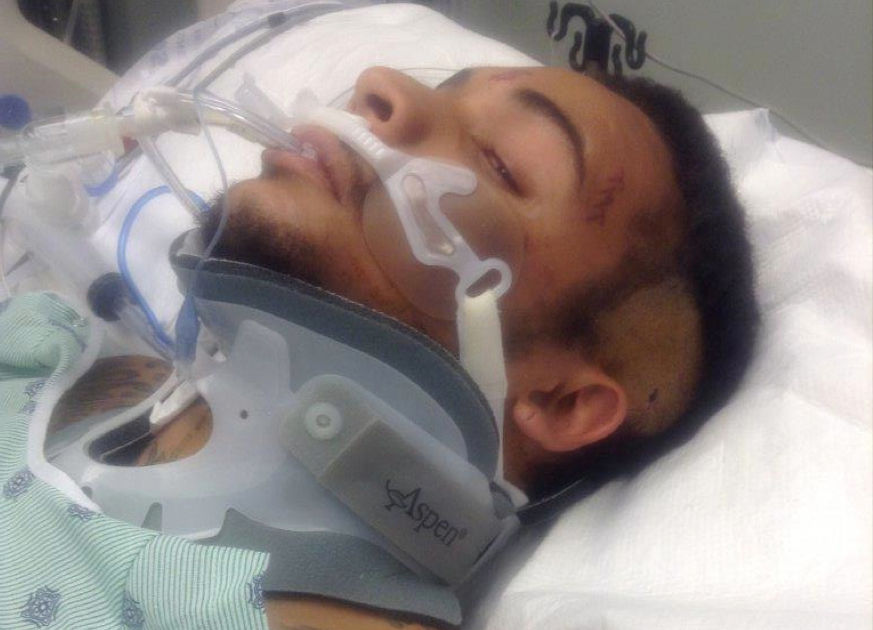
Ingram, now 25, will live the rest of his life in a hospital bed at a rehabilitation facility, unable to move anything below his neck. He eats and breathes through tubes surgically implanted in his body.

Camden County police dispute almost everything in Ingram’s version of events, saying the injuries occurred when he fell. “An accident of his own accord” was how Police Chief J. Scott Thomson put it in a statement a day later. The Camden County Prosecutor’s Office later concluded the same: the officers did nothing wrong.

The issue for who was to blame that night —  Ingram, for his decision to flee from police, or the officers, whom one witness described as “whooping his ass” as he lay on the ground — will ultimately be decided in federal court. Either way, a young man’s life will never be the same.

Also at issue is the reputation of the Camden County Police Department, which has been working to reinvent itself and win over wary residents since it replaced the city force in 2013. 

The civil rights suit Ingram filed in 2014 has been getting stronger as he lies in bed. Doctors hired by his attorneys have opined that his injuries are consistent with excessive force by police.

But the officers also have experts who swear that medical evidence proves Ingram hurt himself when he fell. If the case goes to trial, jurors will have to decide who to believe.

The chase in Ingram’s neighborhood began after police believed he hid a gun under a parked car to avoid being caught with it — something he denies. The only video footage of the fall and arrest is from a distant surveillance camera, blurry enough for both sides to interpret the footage to their benefit.

Details about the case and the warring expert opinions were revealed in hundreds of pages of depositions and reports filed in the case in U.S. District Court. 

While Ingram’s federal suit is at least inching forward, his criminal case is stalled. His medical issues mean getting him into the courtroom for a trial will be at best, extremely costly, and at worst, “almost impossible,” according to his criminal attorney, Robert Dunn of Morristown.

“He’s a quadriplegic in a nursing home and right now there’s no chance of him ever improving,” Dunn said. “Unless there’s a medical breakthrough.”

xavier ingram.jpg

Judges have pressed the prosecutor’s office to decide if it is really practical to try Ingram, given what it might cost the county to get him into court, but for now the case is in limbo. 

If prosecutors did drop the charges, that could weaken the county’s defense against the civil suit.

On behalf of the Camden County Police Department, spokesman Dan Keashen said Ingram’s claims are completely fabricated.

“The facts in this case are clear and transparent, Xavier Ingram’s individual actions created his injury and the circumstances surrounding the incident were self-manufactured through his activity on the night of June 12, 2014,” Keashen said. “The evidence has not changed since the original incident and the video from that night, showing the interaction with officers, still stands as uncontested and definitive.”

Attorneys for Ingram at the Roseland firm of Mazie Slater Katz & Freeman declined to be interviewed for this story, or to make Ingram available for an interview.

Ingram was raised mostly by his grandmother, after his mother died when he was 4 years old. He dropped out of Camden High School as a junior. He had four children by the time he was 20. 

Depositions from Ingram and his relatives describe him as more interested in playing video games — four or five hours a day — than getting into trouble.

But the Camden County police don’t buy that. They believe he was a drug dealer from a young age, prowling the streets of Camden with a stolen handgun in his waistband, according to court filings. Police said they found four bags of heroin and $300 cash in his pockets the night of his arrest and injury.

Ingram lived with his grandmother and aunt in Sycamore Court apartments in the city’s Bergen Square neighborhood. Together, Sycamore Court and next-door Chestnut Court are known as a drug hustling hotspot. That’s why three officers on patrol decided to walk through the area around 9:40 p.m. the night Ingram was arrested.

Sgt. Jeremy Merck, 32, (use-of-force records in Evesham and Camden) testified in his deposition that he was doing a “complex sweep” that night with two other officers. Nicholas Marchiafava, 25, (use-of-force record) and Antonio Gennetta, 31, (use-of-force record) were 11 and six months out of the police academy, respectively. 

They witnessed a group of men “huddled together” [can’t do that if you’re Black - that’s bad] in the courtyard of Chestnut Court, Merck said, but the group disbanded as officers approached. The officers testified that they saw Ingram, whom he knew, reach toward his waistband as though he had a gun hidden there.

Surveillance video shows that as Ingram walked away, he briefly stooped down between parked cars. He later said he was hiding because he had traffic warrants. Merck said he heard a sound and believed Ingram dropped a gun between the cars.

Ingram walked out of the courtyard with his hands in the air. Merck testified that he found a gun under a car and ordered Marchiafava to arrest Ingram, who was inside a nearby store.

Ingram came out, saw Marchiafava and started running. The surveillance video of the brief chase is very dark, but it shows Ingram fall, with his feet out in front of him.

The police department — and its experts — say Ingram fell flat on his back, and the fall broke his neck. His story is very different.

Ingram said he fell on his side and that when Gennetta and Marchiafava caught up, one put a knee on his neck while the other kneeled on his back. They punched and kneed him, he said. Ingram said Merck ran up and, moments later, stepped on his neck.

“I never felt this pain before. It was hurting bad. Two, three seconds later, I blacked out,” he said in his deposition. 

Marchiafava and Gennetta testified that they put knees on his back, not his neck, and the only use of force they officially reported were compliance holds. Merck has denied using any force.

This was before Camden cops had body cameras, so the only video of the incident is from one of department’s “eye in the sky” cameras, operated by staff at the police station. The quality of the video is poor, other than a 10-second span when the camera operator zooms in to the scene, but then zooms out again. 

It shows the two officers crouching and moving over Ingram’s body, and Merck running up to join them. Experts for the police officers’ side say the video proves he wasn’t punched, kicked, or stomped on, but Ingram’s experts say it shows the two officers kneeling near his neck and upper torso and shows Merck moving in the area of Ingram’s neck.

The video, in a gif below, also show the officers roll and lift him to a sitting position despite him saying he couldn't feel his legs. When Gennetta let go of his upper body, Ingram tipped forward onto the ground.

Gennetta testified that this was the point where they called an ambulance and supported Ingram's neck until paramedics arrived.

There are also at least four eyewitnesses who have described what they saw of Ingram’s arrest either to police or in court filings, according to a report completed by one of the plaintiff’s experts. Three witnesses said they saw Ingram being assaulted by police, the report said, while one said he didn’t see any blows but saw police push Ingram’s head and neck down “aggressively.” [the witnesses must be Black because the racist suspect reporter doesn’t give eyewitness testimony much weight here! A real journalism might have attempted to interview the 3 witnesses for this story.]

Dr. James J. Yue, an orthopaedic surgeon in Connecticut, Dr. William D. Matuozzi of Maryland, who specializes in radiology, and Paul C. Ivancic, a spinal biomechanics researcher from Connecticut will testify for Ingram. 

All three said they believe his injuries — a damaged spinal cord, a displaced vertebrae, and other issues — are consistent with force being applied to the back and side of his neck as he lay on his stomach with his head turned to the right.

They said the force it would take to cause such a violent injury is inconsistent with a slip and fall, and the lack of head trauma or swelling means he did not hit his head hard.

Yue said he believes that the first officer’s knee on Ingram’s neck started the dislocation of the vertebrae and that the compression from Merck’s foot on his neck completed or worsened the dislocation and caused the spinal cord injury.

The two doctors also concluded that the officers’ moving and dropping Ingram, after he repeated that he couldn’t feel his legs, made his injuries worse.

NYU Researchers Warn Against Police Use of Facial "Affect" Recognition Technology Designed to Predict Criminality Based on Physical Characteristics - Prone to Error & Not Based on Any Science

Hungry Cop Watching You.jpg

From [The INTERCEPT] FACIAL RECOGNITION has quickly shifted from techno-novelty to fact of life for many, with millions around the world at least willing to put up with their faces scanned by software at the airport, their iPhones, or Facebook’s server farms. But researchers at New York University’s AI Now Institute have issued a strong warning against not only ubiquitous facial recognition, but its more sinister cousin: so-called affect recognition, technology that claims it can find hidden meaning in the shape of your nose, the contours of your mouth, and the way you smile. If that sounds like something dredged up from the 19th century, that’s because it sort of is.

AI Now’s 2018 report is a 56-page record of how “artificial intelligence” — an umbrella term that includes a myriad of both scientific attempts to simulate human judgment and marketing nonsense — continues to spread without oversight, regulation, or meaningful ethical scrutiny. The report covers a wide expanse of uses and abuses, including instances of racial discrimination, police surveillance, and how trade secrecy laws can hide biased code from an AI-surveilled public. But AI Now, which was established last year to grapple with the social implications of artificial intelligence, expresses in the document particular dread over affect recognition, “a subclass of facial recognition that claims to detect things such as personality, inner feelings, mental health, and ‘worker engagement’ based on images or video of faces.” The thought of your boss watching you through a camera that uses machine learning to constantly assess your mental state is bad enough, while the prospect of police using “affect recognition” to deduce your future criminality based on “micro-expressions” is exponentially worse.

That’s because “affect recognition,” the report explains, is little more than the computerization of physiognomy, a thoroughly disgraced and debunked strain of pseudoscience from another era that claimed a person’s character could be discerned from their bodies — and their faces, in particular. There was no reason to believe this was true in the 1880s, when figures like the discredited Italian criminologist Cesare Lombroso promoted the theory, and there’s even less reason to believe it today. Still, it’s an attractive idea, despite its lack of grounding in any science, and data-centric firms have leapt at the opportunity to not only put names to faces, but to ascribe entire behavior patterns and predictions to some invisible relationship between your eyebrow and nose that can only be deciphered through the eye of a computer. Two years ago, students at a Shanghai university published a report detailing what they claimed to be a machine learning method for determining criminality based on facial features alone. The paper was widely criticized, including by AI Now’s Kate Crawford, who told The Intercept it constituted “literal phrenology … just using modern tools of supervised machine learning instead of calipers.”

Crawford and her colleagues are now more opposed than ever to the spread of this sort of culturally and scientifically regressive algorithmic prediction: “Although physiognomy fell out of favor following its association with Nazi race science, researchers are worried about a reemergence of physiognomic ideas in affect recognition applications,” the report reads. “The idea that AI systems might be able to tell us what a student, a customer, or a criminal suspect is really feeling or what type of person they intrinsically are is proving attractive to both corporations and governments, even though the scientific justifications for such claims are highly questionable, and the history of their discriminatory purposes well-documented.”

In an email to The Intercept, Crawford, AI Now’s co-founder and distinguished research professor at NYU, along with Meredith Whittaker, co-founder of AI Now and a distinguished research scientist at NYU, explained why affect recognition is more worrying today than ever, referring to two companies that use appearances to draw big conclusions about people. “From Faception claiming they can ‘detect’ if someone is a terrorist from their face to HireVue mass-recording job applicants to predict if they will be a good employee based on their facial ‘micro-expressions,’ the ability to use machine vision and massive data analysis to find correlations is leading to some very suspect claims,” said Crawford.

Faception has purported to determine from appearance if someone is “psychologically unbalanced,” anxious, or charismatic, while HireVue has ranked job applicants on the same basis.

As with any computerized system of automatic, invisible judgment and decision-making, the potential to be wrongly classified, flagged, or tagged is immense with affect recognition, particularly given its thin scientific basis: “How would a person profiled by these systems contest the result?,” Crawford added. “What happens when we rely on black-boxed AI systems to judge the ‘interior life’ or worthiness of human beings? Some of these products cite deeply controversial theories that are long disputed in the psychological literature, but are are being treated by AI startups as fact.”

What’s worse than bad science passing judgment on anyone within camera range is that the algorithms making these decisions are kept private by the firms that develop them, safe from rigorous scrutiny behind a veil of trade secrecy. AI Now’s Whittaker singles out corporate secrecy as confounding the already problematic practices of affect recognition: “Because most of these technologies are being developed by private companies, which operate under corporate secrecy laws, our report makes a strong recommendation for protections for ethical whistleblowers within these companies.” Such whistleblowing will continue to be crucial, wrote Whittaker, because so many data firms treat privacy and transparency as a liability, rather than a virtue: “The justifications vary, but mostly [AI developers] disclaim all responsibility and say it’s up to the customers to decide what to do with it.” Pseudoscience paired with state-of-the-art computer engineering and placed in a void of accountability. What could go wrong?

Surveilling People to Protect & Serve Them? Or as Enemies & Slaves of the State? Some Police Dept’s are Using Cameras w/Thermal Imaging to Make Identifications by Gender, Size & Skin Color

thermal cameral surveillance .jpg

From [MassPrivatel] BriefCam's "Transforming Video into Actionable Intelligence" allows law enforcement and retailers to secretly identify people by their gender, body size, color, direction, speed and more. 

BriefCam's Video Synopsis version V allows police and retail stores to use surveillance cameras to identify individuals and cars in real-time.

"BriefCam is the industry’s leading provider of Video Synopsis® solutions for rapid video review and search, real-time alerting and quantitative video insights. By transforming raw video into actionable intelligence." 

What is really disturbing about the video is no one knows where it is being used and by whom. BriefCam's limited disclosures, claim it is being used by top law enforcement agencies and governments but that's it.

BriefCam admits that the Statue of Liberty, the Empire State Building, Disney, the Javits Convention Center and Smart City initiatives in Boston and Beverly Hills are using Video Synopsis.

Watchlisting or "real-time alerting" goes hand-in-hand with biometric surveillance cameras.

NEC's NeoFace Watch software is being showcased at the International Security Expo 2018. NEC admits facial recognition is integral to smart cities.

"NEC and NPS will showcase a vast range of safety solutions to overcome challenges facing cities; including facial recognition system, automated fingerprint identification system (AFIS), CONNECT police platform, and video analytics solution.  The solutions will form part of Safer Cities that NEC and NPS aim to build, to contribute to realize a safe and secure society for all citizens." 

BriefCam, like NEC is so good at spying on everyone that even Homeland Security is impressed.

Aaron Miller, Director of the Office of Homeland Security and Emergency Preparedness for the City of New Orleans said, "with cameras covering the city and BriefCam’s unique ability to rapidly pin-point objects of interest, incidents can be solved more quickly, and trends in pedestrian, crowd or traffic behavior can be uncovered in a matter of minutes."

Police and retailers secretly use thermal imaging surveillance cameras

Looking through BriefCam's "Safe & Smart Cities" section reveals something truly frightening. Police departments are secretly using BriefCam's thermal imaging to spy on the public.

"BriefCam helps streamline law enforcement operations in numerous ways, from tracking and identifying suspects to proactive crime prevention. Officers are leveraging BriefCam by using the heat map surveillance features."

A look at BriefCam's partners list reveals that FLIR Systems thermal imaging is one of BriefCam's main selling points. A recent BriefCam article titled "How Video Data Can Help Retailers Maximize Store Layout and Navigation" reveals that retailers are secretly using thermal imaging surveillance cameras.

"With Video Content Analytics, retailers can apply heat maps to easily understand where shoppers tend to concentrate and the areas where they dwell the longest." (To learn more click here.)

Think about that for a moment, police departments and retailers are secretly using thermal imaging surveillance cameras.

Police smartphones can access surveillance cameras

If you are you still wondering why DHS is so excited, I give you BriefCam's spying police smartphones.

At approximately 6:00 into the video Hartford Police Sergeant John Michael O'Hare reveals that police can access surveillance cameras in real-time using their smartphones. 

BriefCam's entire business model appears to be focused on one thing, surveillance. Perhaps nothing says that better than suggesting stores use surveillance cameras, Video Synopsis and Data Fusion to identify people walking by their storefront.

"How many people pass the Duty-Free storefront? Of those, how many people enter the store? When correlated with the store’s revenue data, this information could help operations managers understand how many of those store entries turned into actual sales." 

The Massachusetts General Hospital was so excited with BriefCam's potential that they used it to identify how many people actually visited their museum on any given day. (To learn more click here.)

BriefCam euphemistically calls this "business intelligence" or as I call it corporate spying on Americans.

Everyone's privacy is at stake when police and corporations use surveillance cameras to identify individual people walking on public streets and travelling in their cars. 

[To Racists there is No Innocent Black or Latino male, just criminals who have not yet been detected, apprehended or convicted] NYPD Gang Database Arbitrarily Identifies People as Instant Felons

"In the context of White American domination there is no innocent Black male, just Black male criminals who have not yet been detected, apprehended or convicted. Their mere presence inspires in racists, fears of being assaulted, raped, robbed, or so…

"In the context of White American domination there is no innocent Black male, just Black male criminals who have not yet been detected, apprehended or convicted. Their mere presence inspires in racists, fears of being assaulted, raped, robbed, or some other indefinable dread of being criminally victimized." - Dr. Amos Wilson [MORE].

From [HERE] Keith Shenery was hanging out with friends in the courtyard of a Harlem public housing project when police saw him remove a small bag from his pants. When police approached him, he told them that it was “just weed.” When the officers searched him, they found a small bag of marijuana and a folding knife, a gift from his grandfather. Shenery, 21 at the time, was arrested and indicted for unlawful possession of marijuana and felony possession of a weapon — an unusually severe charge. Prosecutors asked for his bond to be set at a whopping $10,000. Shenery, they claimed, was a “known” gang member.

Shenery, who had only three nonviolent misdemeanor arrests on his record from when he was a teenager, could have been released that night on his own recognizance with a misdemeanor charge. He had no idea why prosecutors would call him a gang member and strongly denied the accusation. But as his case has dragged in court for nearly two years, prosecutors labeled him a gang member over and over — telling a judge, but providing no evidence, that he belonged to Harlem’s Cash Money Boys, “a violent narcotic sale crew based out of 1990 Lenox,” according to court files.

More than a year after his April 21, 2017, arrest, Shenery learned that prosecutors appeared to be basing their accusation on his inclusion in a database of more than 42,000 New Yorkers that the New York Police Department considers as “gang members.”

As The Intercept has reported, the NYPD’s gang database was massively expanded in recent years, even as gang-related crime dropped to historic lows. The information on the secretive list is available to prosecutors but not to those named in the database, who often learn that the police have labeled them gang members only if they are arrested and slammed with inexplicably harsh charges or excessive bond. The database has been widely criticized as arbitrary, discriminatory, and over-inclusive — with no clear process in place to discover or challenge one’s alleged gang affiliation. Like Shenery, an overwhelming majority of people in the database are young black and Latino men.

Last year, the Legal Aid Society, one of several New York organizations that have demanded greater transparency from the NYPD about the database, launched a website to help New Yorkers file public records requests to learn whether they are listed in it. So far, more than 300 people have filed such requests — but police have denied every one of them.

Shenery, who learned of the existence of the gang database after prosecutors called him a gang member in court, filed a Freedom of Information Law request last July to understand what earned him the label. Within a day, the NYPD denied his request. Shenery appealed and then sued in November after the NYPD responded that it had found “responsive records” for him but refused to turn them over.

Shenery declined to be interviewed for this article. A spokesperson for the NYPD did not respond to a series of questions by The Intercept about the gang database and Shenery’s lawsuit, but wrote in an email that the department “maintains among the nation’s most rigorous criteria for identifying an individual as being a member of a known criminal group.”

A spokesperson for the Manhattan District Attorney’s Office declined to comment on Shenery’s criminal case because it is still open, but referred to court documents in which prosecutors making the bond request cited his record, as well as previous failures to appear in court and a recommendation by the Criminal Justice Agency, an independent city agency that evaluates whether an individual is a candidate for release.

The spokesperson added that the DA’s office does not have direct access to the NYPD’s gang database and wrote that “our prosecutors would not have referenced inclusion in the NYPD’s gang database, standing alone,” and that “any reference to a defendant’s membership in a Manhattan-based gang would have been based on independent analysis from our Office, including our Office’s own independently-gathered intelligence.” Prosecutors’ claim that a defendant is a “known” gang member, the spokesperson added, is based on “information from community members and other law enforcement agencies, and our office’s own independently-gathered intelligence.”

Attorneys argue that calling someone a gang member, and providing no evidence, immediately impacts a defendant’s right to due process.

“The mere use of the label renders you guilty in the eyes of the court,” said Anthony Posada, a supervising attorney with Legal Aid’s Community Justice Unit, who is representing Shenery in his lawsuit against the NYPD. “We’re seeing people being criminalized, found guilty by association, in court, where you’re supposed to be presumed innocent until you’re proven guilty beyond a reasonable doubt. What is happening is a practice by which assistant district attorneys are relying on the gang database to label people and prejudice their cases.”

Smoking While Black

Although the NYPD has said little about how it uses the “criminal group database,” as the database is known internally, it is no secret that the department shares information about alleged gang membership with prosecutors and other law enforcement agencies. It’s also clear that designation as a gang member, even when based on questionable evidence and without that evidence being disclosed to the accused or their attorneys, can have a profound impact on one’s fate in court. While gang association by itself is not a crime, prosecutors regularly use it to bolster their cases.

That’s exactly what happened to Shenery.

Earlier this year, the Manhattan District Attorney’s Office announced that it would no longer prosecute the possession of small quantities of marijuana, calling on legislators to legalize and regulate its use and citing the lack of “moral justification for the intolerable racial disparities that underlie enforcement.” Shenery’s arrest preceded the policy change, but in a city where marijuana use was already effectively legal for most people, he fit the profile of the New Yorker most likely to be prosecuted: young, black, and from a poor neighborhood. Before the DA’s announcement, black New Yorkers were arrested for small marijuana possession at eight times the rate of white New Yorkers. In Manhattan, black residents were arrested on low-level marijuana charges at 15 times the rate of white residents.

“Gravity knives,” as prosecutors call the commonly used kind of folding knife that police found in Shenery’s pocket, have also been a controversial issue in New York City — with critics noting that criminalizing them has led to the arrest of thousands of working-class individuals, mostly people of color. While the gravity knife ban was originally intended to target dangerous switchblade-style knives, it has since been applied to even the most widely used pocketknives, common especially among manual laborers.

The DA’s spokesperson told The Intercept that the office either dismisses the cases of individuals found in possession of these knives for work purposes, if they are not re-arrested within six months, or offers them a disorderly conduct plea. But attorneys say that workers continue to be arrested and prosecuted over the knives.

While Shenery’s case highlights some of the city’s most intractable issues regarding race and policing, he would have been unlikely to receive a felony charge and an exorbitant bond had he not been identified by police as a gang member. “For almost anybody in New York, this would have been a misdemeanor arrest,” said Jane White, an attorney with Legal Aid who has been representing Shenery in his criminal case. “They don’t do this to most defendants, but they do it when they want to slam somebody, when there’s information that they want to get from somebody, or when they think somebody’s a so-called person of interest.”

In its response to Shenery’s request for records, the NYPD claimed that it could not disclose any records alleging his gang affiliation without revealing “non-routine” investigative techniques. But Legal Aid attorneys shot back that the techniques used by the NYPD to determine who is a gang member have already been discussed publicly, and that they are deeply problematic.

At a city council hearing last June, NYPD Chief Dermot Shea testified that individuals can be added to the database if they “admit” to being members of a gang or if they are identified as such by “two independent and reliable sources.” In the absence of identification, the NYPD may choose to add an individual to the list if they meet at least two of a wide-ranging list of criteria that include one’s presence at a “known gang location,” association with “known gang members,” social media posts, scars, tattoos, and the use of gang “signs” and “colors.” One document published by The Intercept in June showed a list of colors that the NYPD considered to be associated to gangs: black, gold, yellow, red, purple, green, blue, white, brown, khaki, gray, orange, and lime green.

Earning a spot on the list requires no evidence of criminality, but Shea said that the department has “instituted oversight mechanisms” to ensure that the recommendation to enter someone in the database is “backed up by evidence.”

Despite Shea’s testimony, when the NAACP Legal Defense and Educational Fund, or LDF, filed a public records request to obtain those criteria, the NYPD responded that it could not locate any. “Instead, the NYPD officer charged with responding to our requests insisted that NYPD personnel communicate this information verbally,” Marne Lenox, an assistant counsel at the LDF, wrote in an op-ed for the New York Daily News. “This, apparently, is the NYPD’s sophisticated ‘oversight mechanism’ to ensure the reliability of its database.” Shea did not respond to The Intercept’s questions about his testimony.

The problem with such vague, broad, and apparently unwritten criteria, critics say, is that it criminalizes perfectly innocuous behavior — like having friends in one’s neighborhood — and does so in a way that is discriminatory.

Because the NYPD is not complying with Shenery’s FOIL request, he and his attorneys don’t know what criteria put him on the list. “The DA and the NYPD, they share this information openly with each other and they just will not turn that over to us, which is absurd,” said White. The DA spokesperson told The Intercept that “the Office meets and exceeds its legal and professional obligations with regard to disclosures to criminal defendants, including in this matter.”

What is clear is that Shenery was targeted because he lives in a certain neighborhood and knows people in that neighborhood. After his arrest, prosecutors offered him a one- to three-year sentence, then told him that it could be significantly reduced if he gave them information they needed. “They wanted him to give them information that he didn’t have,” said White. “He has always said, ‘I’m not what they’re saying.’ He’s in the street hanging out because that’s what kids do in New York.”

Precision Policing

Prosecutors and police have regularly defended their enforcement practices as precise and surgical — even when they have led to mass raids and indictments. In law enforcement lingo, gang policing and prosecutions in the city have been “intelligence-driven” and “proactive.” But what that means in practice is that one need not have committed or intended to commit any serious or gang-related crimes in order to get swept up by law enforcement’s gang policing efforts.

A set of documents used by the Manhattan DA’s office for training purposes, obtained by The Intercept, shows how the “gang” label, an unproven allegation, can trigger a series of consequences and enhancements for individuals coming into contact with police over sometimes minor violations. In a PowerPoint presentation prepared by the office’s Crime Strategies Unit, as well as in a report by the office about investigative innovations, prosecutors lay out how, when an arrest alert is shared between police and prosecutors across jurisdictions, an individual’s presence in a series of law enforcement lists, including the gang database, is also flagged. The slides also list, under the header “case enhancement,” elements like suspects’ social networks or their nicknames. The DA’s spokesperson said that “case enhancement” can refer to identifying potential investigative steps or informing bail and sentencing recommendations.

Shenery’s case is a textbook example of how this works in practice.

“So he comes in on a marijuana charge,” Posada said, “and immediately under this form of policing that they have, what they call precision policing, they’ll dial up the charges on him and bump up his knife to a felony.”

“[The gang label] was weaponized in court, so the district attorneys could add more weight to their case,” he added.


Legal Aid is not the only group using the courts in an effort to force the NYPD to be more transparent about its gang policing efforts.

The LDF and the Center for Constitutional Rights have sued the department over its failure to comply with public records requests about the database. Darius Charney, a senior staff attorney at CCR, called the NYPD’s gang policing practices “a black box that, like stop and frisk before them, have subjected thousands of young people of color in New York City over the past several years to police surveillance, harassment, and worse.” The LDF also filed a similar records request with the Manhattan DA, and another one with the New York City Department of Education.

The gang database came under heightened scrutiny earlier this year at a city council hearing during which the NYPD disputed The Intercept’s reporting and the figures we cited about the database — even though those figures were released by the NYPD itself in response to yet another public records request.

Council Member Brad Lander, who has long advocated for police oversight, told The Intercept that the hearing “raised more questions than it answered,” prompting him and others to call on the Inspector General for the NYPD, which is tasked with independently monitoring the department’s work, to investigate its gang policing practices. After the hearing, the Inspector General indicated to stakeholders that it was considering an investigation — but has yet to announce one. BuzzFeed News reported that the office was “discouraged” from scrutinizing the database by Department of Investigation head Mark Peters, who was recently fired by Mayor Bill de Blasio. The Department of Investigation, which oversees the Inspector General for the NYPD, declined to comment.

“We don’t yet have a public commitment from them to do that investigation, but we have asked them to, they are taking the request seriously, and I hope they will in the near future,” Lander told The Intercept. “I had hoped that they’d move very quickly.”


“It says a lot about policing in general, but policing on this issue specifically, that the police want to operate with as little transparency as possible,” Josmar Trujillo, a community organizer who has long advocated against the NYPD’s gang policing practices, told The Intercept. “That’s generally how they like to operate but in this regard, they are creating an infrastructure that affects thousands and thousands of people, including young people who are middle-school age. The public has almost no means other than suing them in order to get it.”

Trujillo noted that the discriminatory and unchecked policing tactics the database is built on are nothing new, but the technology behind the NYPD’s growing emphasis on data-driven, proactive policing is unprecedented.

“People have a street sense that police can use this gang label, that an individual cop can just put a label on you and that prosecutors can pretty much do whatever they want in court. They know that from their experience and generational memory of what policing and prosecution is in communities of color,” he said. “I think what they don’t know is the extent to which police have codified it and what technology has allowed police to do. They’re not aware of how much infrastructure, how much investment, has gone into this type of policing for the future. You ask 100 New Yorkers and I think 99 of them won’t know what predictive policing is.”

“That doesn’t have to do with the public’s ignorance, that has more to do with the secrecy the NYPD has been allowed to operate under,” he added. “We have concerns now based on the little we know. Can you imagine if we knew the full extent of what the police is doing?”

But while much about the database and how it is used remains secret, its impact is already being felt.

Two years of fighting his charges has left Shenery exhausted and discouraged — so much so that at one point, he considered simply taking the felony conviction. He ended up pleading guilty, but under the terms of the agreement, the felony will be reduced to a misdemeanor after a year if he meets a series of conditions. But that means he’s regularly back in court. His next hearing is on Thursday.

“It’s been hard for him to have to hear these things said about him and know this case has taken the long path it’s taken because of this view of him that is just false,” said White. “He thinks it’s unfair and unwarranted and that they really have no basis to do what they’ve done, but he also feels that it’s a fruitless fight, and that the police will continue to treat him like a gang member when they see him.”

Illinois Appeals Ct Upholds [law over humanity] White Judge's 10-year Prison Sentence for Addicted, Homeless Black Man’s $33 Underwear Heist from a Family Dollar Store

“Lawless Society - a socio-juristic human relation confliguration where law is upheld, codified, and deified over humanity. If you fear or worry about its advent, you'll certainly never recognize its presence. 2) a Police State of the Overruling Cla…

“Lawless Society - a socio-juristic human relation confliguration where law is upheld, codified, and deified over humanity. If you fear or worry about its advent, you'll certainly never recognize its presence. 2) a Police State of the Overruling Class.” From FUNKTIONARY.

From [HERE] A divided Illinois Appellate Court panel has upheld a 10-year prison sentence that a Cook County judge gave a homeless drug addict convicted of the 2015 robbery of a Family Dollar Store on the West Side in which he got away with $33 of T-shirts and underwear.

Appellate Judge Terrence Lavin, writing for himself and Appellate Judge Mary Anne Mason, said it isn’t the job of the appeals court to substitute its judgment for that of the trial judge, Cook County Circuit Judge Mary Margaret Brosnahan. She imposed the harsh sentence on David Lundy, who had 10 prior convictions, most on theft and drug charges.

In a dissent that invoked Nelson Mandela, Appellate Judge Michael B. Hyman wrote that the “sentence punishes Lundy more for the numerous difficulties brought about by his economic status (impoverished), illness (drug addiction), and condition (homelessness) than for the offense for which he was convicted.”

Hyman wrote that the most serious offense Lundy previously was convicted of — robbery and aggravated battery causing great bodily harm — happened more than 22 years ago.

“Since then, Lundy has been convicted of drug offenses and theft,” Hyman wrote. “No violent crimes.”

He also cited a quotation from Mandela: “A nation should not be judged by how it treats its highest citizens, but its lowest ones.”

Lundy, now 52, was stuffing the underwear into his baggy pants and jacket, and, when a store employee confronted him, he pulled a pocket knife and warned her to back off.

As he left and employees tried to get the underwear back, Lundy threatened, “I’m going to kill you,” then added, after an epithet, “with this knife.”

The police, flagged down by store employees, arrested him and found three packages of T-shirts, a package of underwear and a red pocketknife in his pants pocket.

In his dissenting opinion, Hyman wrote: “The majority portrays Lundy as dangerous, a betrayal of the facts. Rather, the testimony of the two store employees describes a minor incident. Again, one employee said that Lundy’s behavior was ‘not that upsetting for a small woman like me,’ and the other expressed no fear or concern for her safety.”

He noted that Lundy’s sentence for armed robbery without a firearm amounted to one year in prison for every $3.33 of merchandise he took.

But the other two judges focused on the limited role of the appeals court, writing, “Our role to determine that the aggravating factors present in this case are outweighed by what the dissent characterizes as the ‘small, petty, and sad’ nature of the crime.“

Plantation Justice: Although Rolebotic Black Cops & Prosecutor Used Coerced Confessions to Lock Up Innocent Black Teen for 8 Yrs, White Judge Rules Bankruptcy Shields Detroit from Accountability

Law Over Humanity Borgs. Coming to a government agency, corporate outreach center or courtroom soon. ObedientBlack rolebots plugged into Doggy's operating system. These citizen servants are used by Neuropeans primarily against Black people to disgui…

Law Over Humanity Borgs. Coming to a government agency, corporate outreach center or courtroom soon. ObedientBlack rolebots plugged into Doggy's operating system. These citizen servants are used by Neuropeans primarily against Black people to disguise the system of racism/white supremacy. They worship rules, government and logic within the parameters of the lex-icon [law as image- the appearance of justice (the form) over the substance of justice via truth and law over humanity.]. With their fingers on the nuclear button they will do whatever master programs them to do.

IN PHOTO RACIST SUSPECT JUDGE LAWSON & MASTER’S HELPERS: WAYNE COUNTY PROSECUTOR KYM WORTHY, SERGEANT RUSSEL AND DEPUTY POLICE CHIEF TOLBERT.

AT THE END OF BLACK MAN’S PROCEDURAL DUE PROCESS IS LAW AS IMAGE. From [HERE] and [HERE] A federal judge dismissed Detroit from a civil rights lawsuit brought by a man who spent eight years in prison for four murders he didn’t commit, finding the city is immune from his claims of police misconduct because of its 2013 bankruptcy.

Davontae Sanford was 14 years old when he was convicted in 2008 of murdering four people after pleading guilty. Another person later confessed to the crimes and said Sanford was not involved.

An investigation found that Sanford’s confession was a result of misconduct by Detroit police. Sanford was freed in 2016 after spending eight years behind bars, and filed a federal lawsuit against Detroit and Officers Sergeant Michael Russell and Detroit deputy chief of police, James Tolbert [sambo rolebots in photo]. 

U.S. District Judge David Lawson [racist suspect in photo] ruled Tuesday that while Sanford can pursue his case against the officers, his claims against the city must be dismissed.

Lawson ruled Tuesday that Davontae Sanford couldn’t recover from the city of Detroit, even though his murder conviction wasn’t vacated until July 2016.

Sanford had been arguing actual innocence since at least 2008, making his claim “in fair contemplation” before the city declared bankruptcy, Lawson said. Courthouse News Service covered the decision.

“Detroit’s intervening bankruptcy bars Sanford’s claim against the city in this court because the final plan of adjustment discharged prepetition claims and the plaintiff is enjoined from pursuing his claim against the city except as the plan allows,” the judge wrote.

davontae sanford.jpg

Sanford was 14 years old at the time of the quadruple murder near his home in September 2007. When police arrived, Sanford approached them, still wearing his pajamas, and asked what was going on. Sanford was blind in one eye, functionally illiterate and had a learning disability.

There was no gunshot residue on Sanford’s hands, and no blood on his clothes or body. Nevertheless, he was unlawfully arrested, detained in violation of the 4th Amendment and questioned over two days without a parent or attorney present. Also Sgt. Russell’s failure to read Davontae his Miranda rights prior to interrogating him was a clear violation of Miranda, precisely the kind of two-step tactic (question first, Mirandize only after obtaining a statement) that the United States Supreme Court condemned. [MORE] He signed a written confession that said he was present when the shooting was planned. The only accurate part of the confession consisted of details of the crime inserted by officers, Lawson said.

“The defendants lied to Sanford during the interrogation, telling him he would be free to go afterwards, also falsely telling him that blood from the scene had been found on his shoes,” according to a summary of Sanford’s complaint in Lawson’s ruling.

In a second round of questioning, police “concocted another written confession” with additional details, Lawson said. “Sanford was charged with four counts of first-degree murder,” Lawson wrote, but during his trial, he “entered a midtrial guilty plea to the four murder charges,” which were “reduced to second-degree murder and one firearm count.” He was sentenced to 39 to 92 years in prison.

Two weeks later, police arrested another man who confessed to the crime, along with several other murders. The new suspect was a professional hit man, and he said Sanford was not involved in the quadruple murder. Russell, one of the questioning officers, told him to stop talking about the Runyon Street shootings.

Smothers was charged with eight of the 12 murders to which he had confessed his involvement, but was not initially charged with the Runyon Street killings.

Straw-Boss DEPUTY POLICE CHIEF TOLBERT MADE A DRAWING OF THE CRIME SCENE AND SAID A TEENAge suspect DREW IT.

Straw-Boss DEPUTY POLICE CHIEF TOLBERT MADE A DRAWING OF THE CRIME SCENE AND SAID A TEENAge suspect DREW IT.

Michigan State Police investigated the case in 2015, and Deputy Police Chief Tolbert [in photo] admitted that he had fabricated evidence to convict the Black teen. Specifically, the Black cop testified that Sanford drew a diagram of the crime scene from scratch - but the cop the drew it himself. Tolbert later became Flint’s police chief. [MORE]

Prosecutor Kym Worthy waited eight months before notifying Davontae Sanford’s attorneys about the exculpatory evidence, according to the Michigan State Police report.

Michigan’s code of conduct for prosecutors mandates that prosecutors “make a timely disclosure to the defense of evidence that could exonerate a suspect.” That Worthy wanted to investigate information from the report was not relevant to whether information was exculpatory and therefore should have been disclosed to the defense. Exculpatory evidence is any material evidence that may tend to negate guilt. Impeachment evidence like a confession that the police chief lied in court and told more lies to investigators should have been turned over immediately.

Sanford was released in July 2016 and sued the city 14 months later alleging due process violations, malicious prosecution and violations of the Americans with Disabilities Act.

MASTER’S DO GOODER PROBOT PROGRAMMED IN SERVICE OF WHITE DOMINATION, WAYNE COUNTY PROSECUTOR KYM WORTHY. According to the Funktionary, a probot is a propagandizing programmed robot. A probot is one who disseminates lies, distortions and convenient m…

MASTER’S DO GOODER PROBOT PROGRAMMED IN SERVICE OF WHITE DOMINATION, WAYNE COUNTY PROSECUTOR KYM WORTHY. According to the Funktionary, a probot is a propagandizing programmed robot. A probot is one who disseminates lies, distortions and convenient mass truths composed by a superior overruling elite. Ms. Worthy has been widely criticized for resistance accepting evidence of innocence and fighting claims of innocence, going so far as to argue that innocence is insuFficient grounds to reverse a plea deal and fighting claims against the states fund to compensate victims of wrongful prosecution.

ALTHOUGH THE SUPREME ourt HAS not prohibitED life-without-parole sentences for juveniles completely, it has said that punishment should be used only in the rarest cases — when the defendant “exhibits such irretrievable depravity that rehabilitation is impossible.” NEVERTHELESS, MS. WORTHY wants to re-sentence at least 60 JUVENILES to life without parole. [MORE]

He also claimed that Detroit endorsed the practice of handling high-profile cases by hastily arresting any available suspect while ignoring evidence that points elsewhere. He claimed the city of Detroit endorsed the conduct of the officers through policies and practices of pursuing rushed, shoddy investigations in high-profile cases to secure quick arrests and convictions of any available suspect.

The city argued that it was barred from being sued as a result of its 2013 bankruptcy, and Judge Lawson agreed.

“The courts that have considered the question uniformly have concluded that claims based on prepetition malicious prosecutions were barred,” Lawson wrote, “notwithstanding that the plaintiff could not file suit on his claims until his criminal conviction was overturned.”

Officers Tolbert and Russell argued that they too should be dismissed from the case, calling Sanford’s guilty plea and the appeals court’s upholding of his conviction “superseding causes” that bar his case.

But Lawson disagreed with the officers’ “curious position.”

“The defendants’ position that they should be absolved of liability for stacking the deck against the plaintiff because their efforts to corner him into a guilty plea succeeded is nonsense, and they cite no authority to support it,” the judge wrote.

The judge also allowed Sanford to pursue his ADA claim against the officers.

“He has plausibly alleged that his mental condition was such that he reasonably could have given his answer in the criminal proceeding inadvertently or by mistake – i.e., because he did not fully understand the nature and consequences of the question posed to him,” Lawson wrote.

The prosecution of the Black teen was carried out by Wayne County Prosecutor Kym Worthy, a Back probot.

Detroit TV journalist Bill Proctor helped bring the problems with Sanford's case to light, Sanford's story is "sickening," and called Kym Worthy's defense of how it played out "another horrific chapter."

“The real bottom line is…anybody with a title like prosecutor can stand behind process and procedure," Proctor said. "This was about her having in her hands, in her custody, with police backing, clear-cut information and evidence that an adult was paid to do these murders...

“And for her to show all these bits and pieces of paper, that this diminished 14-year-old child signed to say this is our proof and justification for incarcerating this innocent child, is crap.” [MORE]

State police asked for perjury charges against Tolbert after they say he admitted to detectives he'd drawn a map of the crime scene on Runyon. That statement conflicted with 2010 testimony in which he said Sanford had drawn the diagram.

Wayne County Prosecutor Kym Worthy declined to charge Tolbert, mainly because she said Sanford would not testify. Sanford called that “a lie” and said he was willing to testify against Tolbert after his case was formally dismissed. [MORE]

Sanford received $408,000 from the state of Michigan in a compensation program for wrongfully convicted people, the Associated Press reported in January.