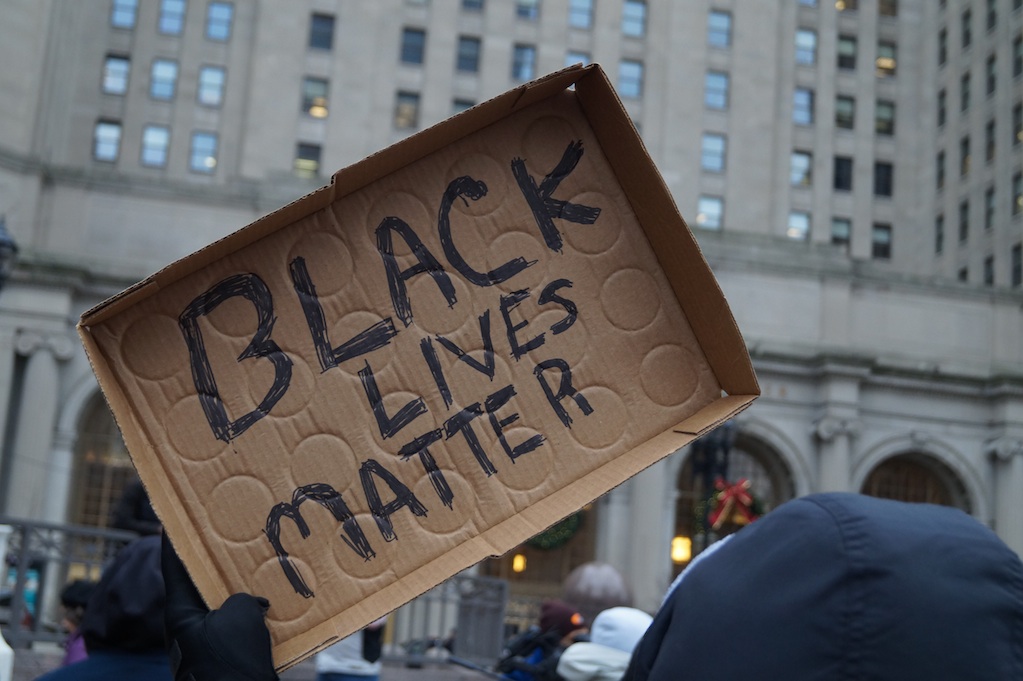
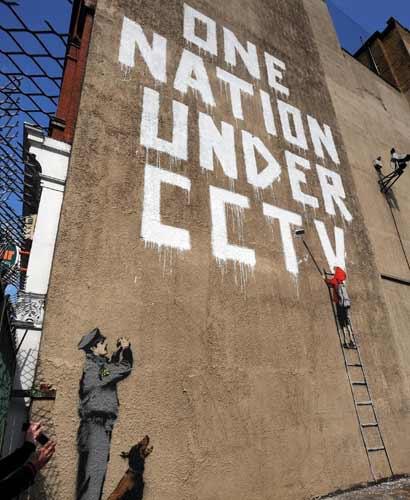
Federal Judge Rules Memphis Police Violated Consent Decree after Spying on Black Protesters & BLM

From [HERE] A federal judge ruled Friday that the Memphis Police Department violated a consent decree between the ACLU of Tennessee and City of Memphis by spying on protesters through the department's political spying program. 

U.S. District Judge Jon McCalla ruled on the Blanchard v. City of Memphis case that the department violated a consent decree from 1978 between the city and the ACLU of Tennessee by spying on political protesters and conducting investigations.

The judge ruled the city failed to train Memphis police officers on "political intelligence," which is prohibited by the consent decree. Sanctions were imposed by the court to "ensure future compliance" — including having officers revise their policy on political intelligence.

The court appointed an independent monitor to supervise the sanctions. 

The lawsuit was first filed on Feb. 22, 2017, in the U.S. District Court for the Western District of Tennessee in response to Memphis’ publication of a list of people who required a police escort while visiting City Hall.

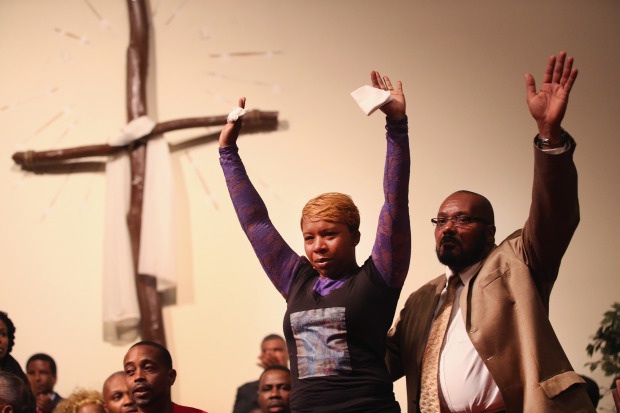
The list named several members of the Black Lives Matter movement, the mother of Darrius Stewart, a teen killed by Memphis police, representatives from local nonprofit organizations, and other local political organizers.

“This important decision ensures that activists in Memphis can continue to fight the good fight without fear of unwarranted police surveillance,” ACLU of Tennessee Executive Director Hedy Weinberg said in a statement.

“The right to free speech is crucial to our ability to speak out against injustice and to hold the government accountable. Especially in this day and age, being able to truly engage in dialogue about important issues without the threat of intimidation is vital to our democracy.”

Memphis Police Department could not be immediately reached for comment.

The ACLU of Tennessee intervened in the case on March 2, 2017.

Among the issues argued in an August trial was whether the ACLU of Tennessee had legal standing to sue. The state ACLU wasn't a party to the 1978 consent decree — rather, a west Tennessee chapter of the ACLU took part, and the city argued the state ACLU could enforce the rules, according to previous reports.

The judge also ruled Friday that the ACLU of Tennessee did have legal standing to file the suit. 

Evidence from the case showed Memphis police conducted extensive surveillance, including creating fake Facebook profiles to befriend protesters on social media and gain access to private messages. 

Evidence presented also showed Memphis police sent plainclothes officers to monitor protests, church services, a tree-planting ceremony in memory of a teen killed by Memphis police and a black-owned food truck festival, the ACLU of Tennessee said. 

The court listed seven findings during its examination: 

  • The police department conducted “political intelligence” as specifically defined and forbidden by the consent decree.

  • The department operated the Office of Homeland Security for the purpose of political intelligence.

  • The department intercepted electronic communications and infiltrated groups through the “Bob Smith” Facebook account.

  • The department failed to familiarize MPD officers with the requirements of the decree.

  • The department did not establish an approval process for lawful investigations into criminal conduct that might incidentally reveal information implicating First Amendment rights.

  • The department disseminated information obtained in the course of an investigation to individuals outside law enforcement.

  • The department recorded the identities of protest attendees for the purpose of maintaining a record.

“This ruling is a tremendous victory for free speech in Memphis and nationwide,” said Thomas H. Castelli, the ACLU of Tennessee legal director, in a statement.

“The court not only recognized that under the consent decree Memphis residents enjoy even stronger free speech protections than those afforded by the First Amendment, but that this uniquely positions Memphis to be a standard-bearer for cities across the country as they wrestle with how to protect individuals’ privacy and free speech in the face of ever-growing surveillance technologies.”

Racist Suspect Do-Gooders Cite Marsy's Law, Government won't release name of South Dakota Trooper who Shot Black College Student after Traffic Stop - Unnamed Cop Claims to be a Victim

Marty Jackley, South Dakota.jpg

Government Do-Gooders Abuse Victims Rights Law to Protect Unaccountable Cops who Prey on the Public [racism/white supremacy is carried under various pretenses]. From [HERE] When the state Attorney General's Office released a detailed report last week after a Highway Patrol trooper shot a man twice in Union County on Sept. 16, one key fact was missing — the name of the trooper. 

In fact, no details were provided about the trooper's identity, not the gender, age or years of service. 

When asked to provide this information, spokesperson Sara Rabern said she could not share it since the trooper invoked Marsy's Law, an amendment to the state constitution intended to protect the rights of crime victims. The amendment was approved by voters in 2016. 

"Due to officer safety and the subject being out on bond, and that the trooper has invoked the privacy provisions of Marsy's Law, the Attorney General’s Office will not be releasing the name," Rabern wrote in an email. 

According to Marsy's Law, a victim is "a person against whom a crime or delinquent act is committed." Someone becomes a victim once a crime is committed against them, not only if formal criminal charges are filed against the alleged perpetrator, Marty Jackley, South Dakota attorney general, said.

For example, he said, if someone was robbed and called the police, they would be a victim and could invoke Marsy's Law even if the robber is never found or prosecuted. 

Jackley said the officer was attacked by the man before shooting him, which made the trooper a victim.

"There was a legitimate officer safety concern. So based on that concern, the trooper and the patrol exercised that right” to invoke Marsy's Law, he said. 

According to the investigative report, the trooper conducted a traffic stop on 21-year-old Kuong Gatluak of Vermillion on Interstate 29 after reports that he made statements about harming himself and fled from a police vehicle. During the traffic stop, Gatluak threw what appears to be a flat, empty beer can at the trooper, according to the report and a photo of the item. He then immediately tackled the trooper and tried to steal the officer's gun, the report says. While Gatluak was still on top of the trooper, the trooper was able to aim the gun at Gatluak and fire twice, hitting him in the left shoulder and bicep. 

After backup arrived, the trooper and Gatluak were taken to separate hospitals, according to the affidavit in support of the arrest warrant for Gatluak, who is charged with two counts of felony aggravated assault for attacking the trooper, court records show. He is now out of custody after posting a $10,000 bond. 

The investigative report found the trooper was justified in shooting Gatluak as he "had the means and opportunity to cause serious bodily injury and was a clear and present danger to the trooper."

Gatluak's lawyer did not return a request for comment from the Journal. 

Except for parroting whatever white cops tell them, the white media has provided little information about Gatluak. The white media has its own law when it comes to covering police brutality of Black folks - racism/white supremacy. No images have been released of him. Apparently, he is a junior or senior college student at the University of South Dakota. He is a finance major. His YouTube video is quite a contrast to how police described him. His attorney should probably do some advocating here.

Jackley said two of the 19 crime victim rights in Marsy's law prevent his office from releasing information about the officer. One of the rights is the right to privacy. The other is the right to prevent disclosing information that could be used to locate or harass the victim. 

He said the trooper is a victim and invoked Marsy's Law, which means his office must follow the law's guidelines. No exception for law enforcement officers exists in the law, the attorney general added.

"We took a look at the constitutional amendment, that it doesn’t have an exception for any category," Jackley said. 

He did acknowledge that the trooper's identity is in the public record due to the criminal case against Gatluak. 

Both Jackley and David Bordewyk, director of the South Dakota News Association (SDNA), said they believe this is the first time a law enforcement officer has invoked Marsy's Law in South Dakota after shooting someone. 

However, the law was invoked by most of the eight North Dakota police officers who shot someone between Dec. 8, 2016 (when the law went into effect) and July 22, 2018, according to an investigation by the Grand Forks Herald. Invoking the law withheld officers' names until investigations were complete. 

North Dakota state attorneys' interpretation of the law varies, the article says. While some officers have had their names shielded, a state's attorney released the names of two Grand Forks police officers who were made aware of their rights under Marsy's Law after they fatally shot someone, saying their names aren't protected under the law.

Names were still withheld after the North Dakota attorney general released guidelines in January 2017 that said, "There is nothing under Marsy's Law that protects the name of a victim or the victim's family."

Bordewyk, who advocates for government transparency on behalf of the SDNA, said the decision to not release the South Dakota trooper's name is "an unfortunate consequence of Marsy's Law in our state."

"It's unfortunate that the AG's Office won't release that information about a public officer," he said, adding that the public has a right to know.

Bordewyk also said that not releasing this information could backfire by leading to rumors and misinformation.

"Lacking facts, lacking basic information, the public is left to wonder," he said.

Jackley declined to give his opinion on the fact that Marsy's Law can result in law enforcement officers having their names hidden from the public after they shoot someone. He said his job is to enforce the law, and his office can't change the constitution. 

He said if the public wants to create an exception for police officers who are victims, or any other changes to Marsy's Law, it's up to the public to propose an amendment through a ballot initiative or legislation. 

“If they need to have additional changes to it, they have the ability to do that," Jackley said.

He said he's aware of police officers having their names protected due to Marsy's Law in other states, and said it could happen again in South Dakota. 

Family of Botham Jean Files Federal Lawsuit Against White Cop who ‘Stood Her Ground’ in Black Man’s Apartment after Unlawful Entry

From [HERE] The family of a 26-year-old black man who was shot and killed in his own apartment by a white former Dallas police officer filed a federal lawsuit on Friday.

The suit argued that Amber Guyger used excessive force when she gunned down Botham Jean, a 26-year-old native of St. Lucia, inside his own apartment on Sept. 6. According to court records, Guyger reported she mistook his apartment for her own and thought she’d encountered an intruder.

Guyger and the city of Dallas are named as defendants in the lawsuit.

She was charged with manslaughter days after the shooting and has since been fired from the Dallas Police Department. The lawsuit also contends the department did not adequately train Guyger, and adds the agency trains its officers to use deadly force “even when there exist no immediate threat to themselves or others.”

An affidavit prepared by a Texas Ranger said Guyger went to the wrong apartment after ending her shift on Sept. 6. The door, according to the document, was ajar and Guyger opened it to find a figure in the dark apartment. She drew her firearm moments later and shot two times, hitting Jean once in the torso, according to the affidavit.

Lee Merritt, one of the attorneys for Jean’s family, has cast doubt on the narrative. Merritt has said that two independent witnesses told him they heard knocking on the door in the hallway before the shooting.

He said one witness reported hearing a woman’s voice saying, “Let me in! Let me in!”

‘Always being Offered the Image and Never the Reality’ in Rigged [s]Elections: Texas Authorities Confirm that Voting Machines are Switching People’s Votes to Ted Cruz

rigged election in tezas.jpg

No Voting Receipt in “Spectacle Society.” . From [HERE] Early voting in Texas began on Monday, but some Texans who showed up to cast a ballot were met with a rude surprise: Despite opting to vote straight-ticket for candidates of a single party, their voting machines tried to disobey their express instructions in certain races. This means, for example, that folks who intended to vote for Democrats found themselves staring at a screen commemorating their alleged support for Ted Cruz instead.

So far, the Texas Civil Rights Project has received about a dozen reports of this discrepancy, says communications director Zenén Pérez, and the pace picked up considerably after images began circulating on social media. But for those concerned that a massive conspiracy may be afoot to deprive Beto O'Rourke of a Senate seat or steal one from Cruz, depending on your point of view, Perez emphasizes that this is a nonpartisan problem that often manifests itself in more than one race on the ballot. And the culprit isn't some shadowy team of Russophilic voter fraudsters. It is likely the state's ancient voting equipment.

For nearly two decades, Texas has relied on Hart eSlate voting machines, which look sort of like giant PalmPilots and are manipulated using a selection wheel and an ENTER button. Manipulating both of these things at the same time, it seems, is what can lead to unintended and very unwanted results. "Texas just hasn't spent the resources necessary to modernize its elections," Perez told me. "Until they do, we're going to continue to see this kind of thing on a regular basis." The trend prompted elections director Keith Ingram—who operates under the aegis of the Republican secretary of state—to issue an urgent advisory to voters on Tuesday: When a preview of your ballot appears at the very end, double-check every line before pressing that SUBMIT button.

Finicky voting machines are just one of many ways in which Texas's archaic infrastructure and draconian state laws interfere with the democratic process. It is one of the few states that still do not allow for online voter registration, and counties routinely have trouble filing the inundations of paperwork they receive before each contest. When residents attempt to register at a site like vote.org, the best it can do is populate the requisite paper forms and then instruct the person to print them out, sign them, and mail them to the local elections office. This, Perez says, is the point at which frustrated users decide that the ordeal is more trouble than it's worth.

The state even refuses to allow Texans who renew their driver licenses online to register to vote at the same time. (Only those who renew in person have the option to register.) Earlier this year, in a suit brought by the TCRP, a federal court found that this practice violates the National Voter Registration Act of 1993, which requires state motor-vehicles departments to take affirmative steps to offer registration materials to their customers. The attorney general's office—also helmed by a Republican—has appealed the decision.

Texas's restrictions on in-person voter registration might be the most convoluted of all. In order to register someone to vote, prospective clipboard-toters must first get "deputized" by the county in which the prospective voter lives, and can face criminal penalties for their failure to do so. (Perez says Texas is the only state to criminalize violations of this type of rule.)

For example, take a voter-registration booth at the Texas State Fair, which takes place in Dallas County. If a volunteer deputized in Dallas County registers someone who traveled to the fair from neighboring Tarrant County—or from anywhere else in the state—that person becomes subject to prosecution for a Class C misdemeanor. Understandably, this is a risk that many volunteers are reluctant to take. Each of Texas's 254 counties runs its own deputization schemes, some of which include mandatory trainings or tests that are administered only during business hours. "It has a chilling effect over the entire state's voter-registration process," Perez says, "and is a big deterrent to national groups that want to come in and help get people registered to vote."

No one phenomenon explains why Texas experiences such low levels of voter registration, engagement, and turnout. But problems like these—and we haven't even gotten to the state's onerous voter-ID and voter-fraud laws, which are designed to combat a problem that does not exist—all contribute to that result. "It's a death by a thousand cuts," Perez says. These stray O'Rourke-Cruz flips are perhaps the least consequential symptom of a much deeper problem: Texas's elections aren't occurring in this century, and state officials don't seem very interested in investing the time or money to change that. [MORE]

Suspicious packages spotlight vast postal surveillance system - USPS photographs the outside of all mail and frequently shares images and metadata from mail with cops

Hungry Cop Watching You.jpg

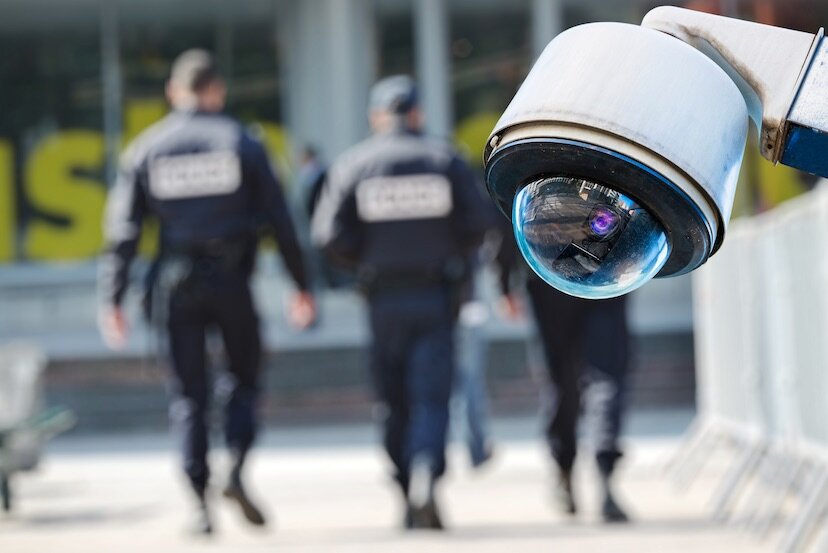
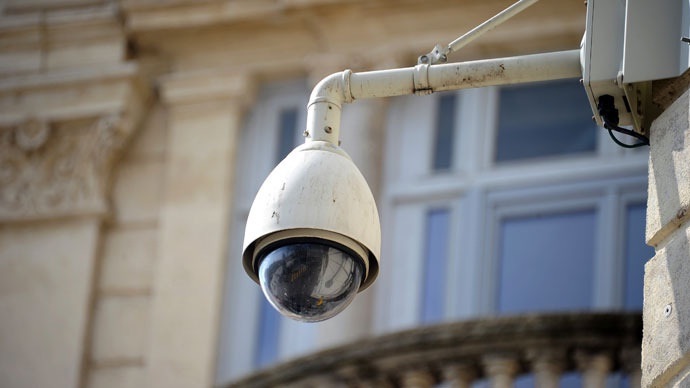
From [HERE] As law enforcement investigates possible mail bombs sent to prominent Democratic Party figures and liberal activists, the tools available at their disposal include digital images and delivery metadata commonly associated with mail sent in the United States.

The U.S. Postal Service regularly photographs the front and back of every piece of U.S. mail, or about 150 billion parcels, envelopes, and postcards every year. A longstanding practice known as the “mail cover” program enables law enforcement to obtain address information and images of the outsides of mail as part of an investigation without the need for a warrant through the Postal Inspection Service, the U.S. Postal Service’s policing arm.

According to a report from CBS News, authorities are currently using “data analytics” to spot similar packages to those identified as containing bombs. Images of packages shared with the press show a common return address, using the misspelled name of Representative and former Democratic National Committee chair Debbie Wasserman Schultz.

The Postal Inspection Service doesn’t generally comment on its investigative techniques. The agency referred questions from Fast Company to the Federal Bureau of Investigation, the lead agency on the case, which declined to comment, citing an ongoing investigation.


“INSUFFICIENT CONTROLS”

As part of the mail cover program, mail is routinely digitally photographed as part of the sorting process and even available for recipients to digitally preview in some areas. Apart from threats like bombs, the department says its main focus is on mail theft, fraud, and narcotics cases.

Because a mail cover involves reading only information on the outside of the envelope or package, courts have not ruled it a violation of the Fourth Amendment. But that hasn’t stilled concerns about privacy and abuse.

For decades, the relatively obscure program has come under criticism for its lack of protections, for allowing data to be shared in broader cases than postal regulations allow, and for operating largely outside of public view. Critics have also warned that extensive surveillance of someone’s mail, especially combined with other surveillance, could create privacy violations.

After an audit, the Postal Service inspector general determined in 2014 that the Inspection Service did not have “sufficient controls” in place to ensure that its employees followed the agency’s policies in handling national security mail covers.

“Insufficient controls over the mail covers program could hinder the Postal Inspection Service’s ability to conduct effective investigations, lead to public concerns over privacy of mail, and harm the Postal Service’s brand,” it warned in a report.

Mail covers drew fire in the 1970s as part of government surveillance of groups deemed subversive, after a 15-year-old girl was apparently put under surveillance for writing a letter to a radical group. She had reportedly actually intended to contact a similarly named organization as part of a homework assignment.

But in the ongoing mail bomb case, use of mail covers is probably justified and in line with regulations, says Steven Morrison, an assistant professor at the University of North Dakota, who was the author of a 2015 report from the National Association of Criminal Defense Lawyers calling for greater oversight of the program.

“This is going to have no difficulty in satisfying any regulation,” he says. “Clearly this is a good use of the mail cover program.”

UNBEKNOWNST TO MOST CITIZENS

Beyond names and addresses, exactly what data about mail is available and how it can be accessed and searched through the program isn’t publicly known.

While an agency spokesperson declined to comment on its techniques—”in order to prevent attempts to compromise the effectiveness of our investigative methods”—they say in an email that the agency had a “targeted strategy of specialized technology screening protocols and employee training” in place, and add that postal inspectors have various tools at their disposal when potentially dangerous mail is identified.[MORE]

Black Man Observes: ‘They Think This is a Game’ [yes & Black People are in a continuous state of checkmate]: Chicago Cops Do Nothing After White Man Pointed Gun @ his Head & Made Felony Threat

chicago cops car.jpg

From [HERE] Serious questions remain for the Chicago Police Department and Chicago Fire Department, after a white man later identified as a firefighter pulled a gun on a black man running in Bridgeport.

Two months after CBS 2’s Roseanne Tellez broke the story, no one has been arrested, prosecuted or even disciplined.

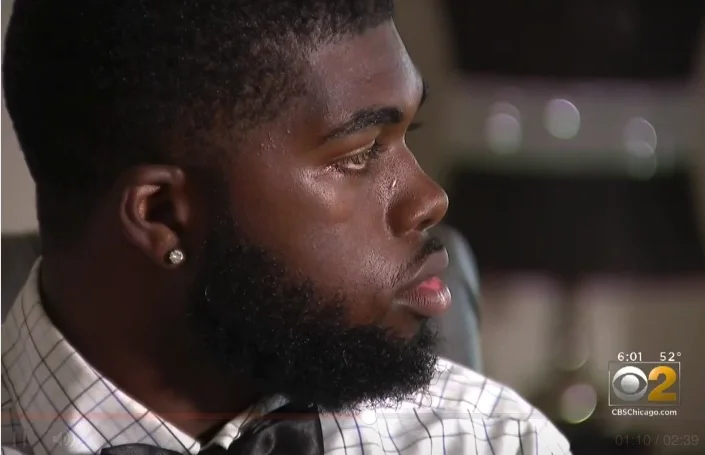
Jermayne Smith is fed up. Held at gunpoint in August, he wants the gunman held accountable, but there’s confusion over who’s even investigating the incident.

Smith said he was running an errand in Bridgeport on Aug. 24, when a man burst from a house, [falsely] identified himself as a police officer, and held him at gunpoint. [false id of a cop is a misdemeanor]

“He identified himself as a police officer and said, ‘Get on the ground. What are you doing in the neighborhood? Get on the ground before I shoot you,’” Smith recalled.

Police radio confirmed the man had a gun.

“John’s calling in, caller says he has a gun and he caught a guy breaking into his vehicle. He’s holding him at that location. He’s got a concealed carry,” the radio report indicated.

After briefly handcuffing him, Smith said police told him there was a misunderstanding, and let both men go. A police report on the incident makes no mention of the gun, or the identity of the gunman, whom they called a “victim that caught someone breaking into his vehicle. No report or arrest was made.”

j smith chicago cops.jpg

Smith wants the white man – who CBS 2 identified not as a police officer, but as a Chicago firefighter – held accountable. [Notice how the media protects the white man’s identity, even though he is government worker. Certainly his name is in police reports which are public record. Yet it will most likely not appear in any mainstream media report. Do a search.]

“If I did it, I would face punishment. So why shouldn’t he?” Smith said.

“His life was threatened, and his civil rights were violated,” said his grandmother, Brenda.

The city’s Office of Emergency Management and Communications has denied efforts to get a transcript of the original 911 call, citing a “Chicago Fire Department open investigation.”

However, the Fire Department said they’re “waiting for the outcome of the police investigation.”

The Chicago Police Department said, “it’s now a COPA case,” meaning the Civilian Office of Police Accountability. However, COPA said “it is our understanding this incident is being investigated by the Office of Inspector General.”

The inspector general’s office said it’s investigating, but that doesn’t mean the Police Department and Fire Department can’t investigate as well.

“I just feel like they’re not taking it serious. I feel like they think this is a game, or that it’s going to go away eventually,” Smith said.

“If it had have been a white child, and a black man did this, it would have been all over the media,” his grandmother said. “He’d have lost his job. He would have been in jail.”

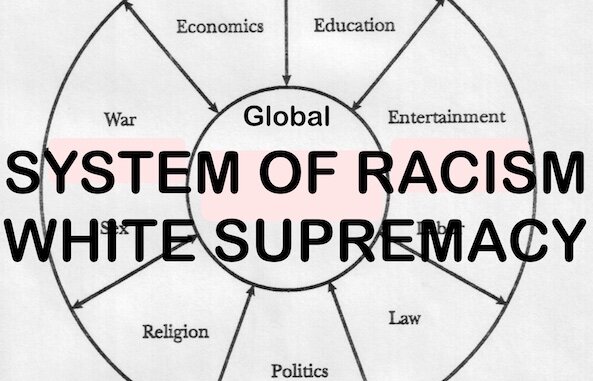
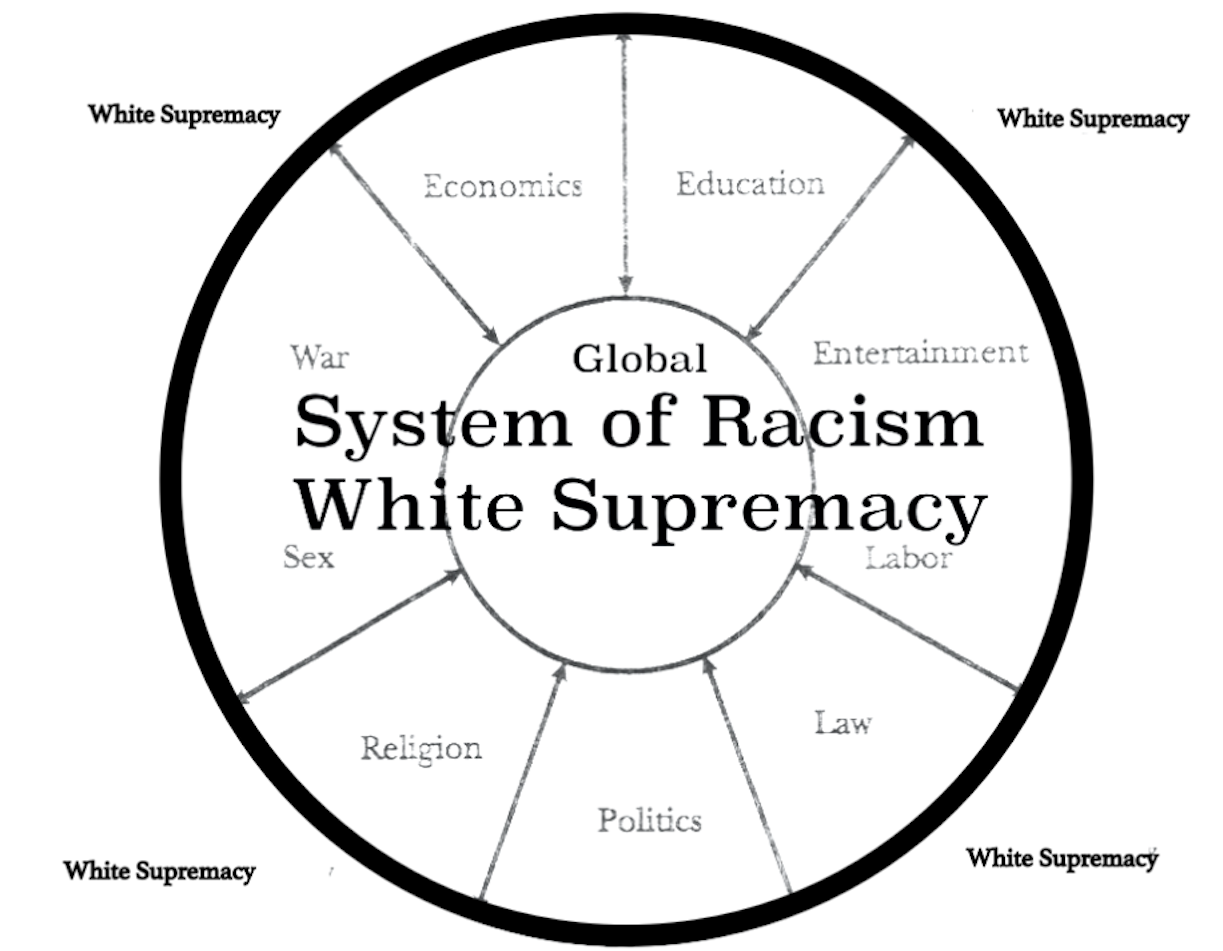
white supremacy chart.jpg

Despite the falling crime rate in Chicago, racists continue to propagandize Chicago violence for their political purposes. It is done under the pretense of concern about Black people and their communities. Thus, racists have no use for Mr. Smith’s story above. Dr. Amos Wilson explains,

"Alleged Black criminality, while evoking White American fear and loathing, reassures them of their vaunted self-worth, their assumed innately superior moral standing, of their self-congratulatory self-constraint in contrast with presumed Black American unworthiness, innate inferior moral standing, inherent criminality, lack of self-constraint and self-control.

White America's self-appreciation is enhanced as it insatiably feeds on overblown reports about Black criminality while denying its own incomparable criminal record, and its own racist-imperialist incubation and giving birth to the very same criminal forces which now threaten to destroy it.

Black criminals function as a negative reference group vital to maintaining the White American self-image. [MORE]

Neely Fuller explained that racists may have disagreements with one another about the best strategies or methods of practicing racism and maintaining the white over Black system. Nevertheless, most white people hate Black people and most white people participate in said system.

Racist republicans criminalize Blacks to otherize them and alleged Black criminality plays a very important role in defining the collective White American ego and personality. [MORE] Indeed the GOP is a racial identity party. “It is designed to appeal to white people as white people... not as union-members or as unemployed people or as home-owners... as white people.  It is a crude racial-identity party and the numbers bear that out. It is an almost exclusively white party. Many white people vote Democratic, but the Republican party is pretty close to all white.” [MORE] In fact, the White Party (GOP) now depends on white voters for fully 90 percent of their votes in presidential elections. [MORE]. 

However, often overlooked is how racist suspect liberals use so-called Black on black violence in Chicago and elsewhere to advocate for gun control and disarmament of law abiding Black folks.

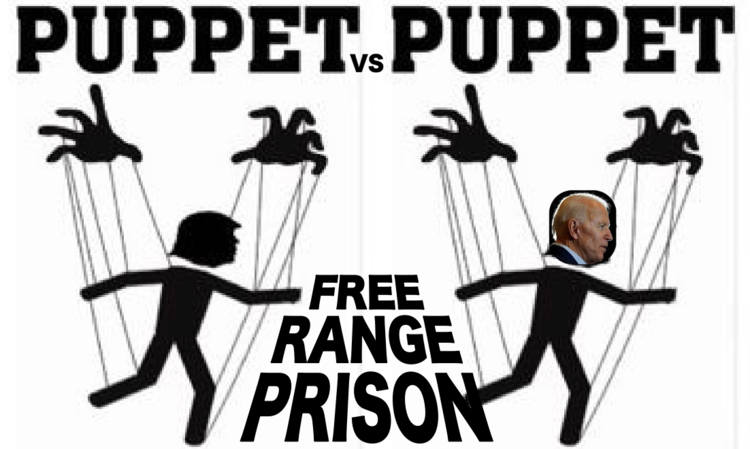
Pursuant to liberal ideology the cops are here to serve and protect us and they are primarily engaged in “police work” in the “community.” In reality, this is TV world nonsense [the world as it is presented to you by elites on TV - a standardized indoctrination in a battle for your mind]. Cops exist primarily to consensually manage the behavior of Blacks & Latinos within a free-range prison controlled by Government. Their goal is to place you in greater confinement.  Anything else cops do, good or bad, is random or incidental to said goals. As Dr. Blynd observes, "people who are awake see cops as mercenary guards that remind us daily through acts of force, that we are simultaneously both enemies and slaves of the Corporate State - colonized, surveilled and patrolled by the desensitized and lobotomized drones of the colonizers." [MORE] Their authority over you is not legitimate because none is - it is a main source of your oppression.

Ad hoc liberalism is simultaneously opposed to police brutality and abuse. There is obvious inherent tension between the positions of being against police brutality and pro gun-control in Black communities. Liberals desire to disarm law abiding Black citizens so that only cops & criminals have guns? What’s next, removing the dead bolt from your front door? Dr. Blynd explains “a gun ban is a precursor to servitude.” "Those who use guns to "break" (violate) the law [criminals] will have no problem breaking the law to get guns (to commit violent crimes against you). The same people who fear firearms in the hands of the people also fear information in the minds of people. He asks “If guns supposedly cause (or encourage) crime, why are we arming police officers?"

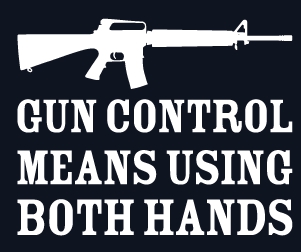
Above is a fine example of liberal propaganda about their pre-textual concerns over gun violence in Chicago. Banning guns does not stop criminals anymore than banning crack stopped drug dealers in the 90’s.

Dependent Black people exclusively relying upon police and prosecutors to protect them dial 911 and get dealt with like Jermayne Smith or Alonzo Grant. If more law abiding Black people were armed the unnamed white assailant might have thought twice before stepping to Mr. Smith in the first place.

As with racist republican drivel, liberalism in general cannot explain or address the phenomenon of this racist system of control [everywhere Blacks and whites live in proximity the whites are in control]. Ad hoc liberal positions are a patchwork of disjointed stances intended to increase the numbers of the Democratic party - not empower Black people or provide any meaningful explanation of the clearly visible phenomenon of racism. Blacks borrowing liberal ideology are like a traveler picking up the wrong luggage at the airport. Yet upon noticing he has claimed the wrong baggage he carries it home and tries to force himself into someone else’s clothing found in the bag. Liberalism among Blacks always involves a pathological appeal to the moral suasion of racists - white people who function as psychopaths in their relations with Blacks. They mostly complain that racism is about bad attitudes & behavior, mean words, stereotypes and inconveniences to Black people. Belief that racism is only bigotry is a vital part of false programming sold to Blacks by the vested interests for their cooperation and submission to their own oppression. [MORE] Defining racism in terms of bad attitude or bigotry leads to solving the wrong problems. [MORE]

Liberalism fails to recognize the system and culture of white supremacy because it is a part of it. Mr. Smith hopes that he is wrong but he is 100% correct - racists are indeed playing a survival game with Blacks - yet programmed Blacks don’t know it, lost in extreme gullibility or jesusized belief in the many many lies told by racists.

Dr. Frances Cress Welsing explained that Black people must understand what the system of racism white supremacy is and how it functions in order to disempower and unplug themselves from it. She stated

“this deep investigation and understanding is essential if Black and other non-white peoples are to succeed in playing the "black side of the chess board" (defense-offense) in contrast to the "white side of the chess board" (offense-defense) in the planetary game of chess (white supremacy) being played out between white and non-white. Currently, the players on the black side of the chess board are in a continuous state of checkmate (a losing streak that is centuries long). This has happened because of our failure to understand the game. Heretofore, non-white people have not decoded white genetic survival.”

Video Shows Michigan Trooper's Cruiser a few Feet from Black Teen Riding on ATV During 35 mph Chase, then White Cop Tasers Him, Intentionally Causing Deadly Flip & Crash - Murder Trial Underway

From [HERE] It took nearly nine months and several petitions by the Detroit Free Press until Michigan State Police (MSP) and Detroit Police allowed the body camera and dash camera footage to be released showing the minutes leading up to and the hours following the tasing murder of Damon Grimes by MSP Trooper Mark Bessner. The 16 hours of recordings show the horror, outrage, and insensitive comments made by many officers on the scene. One video even recorded the moment of his death. Now, Bessner is finally on trial for his actions.

On Monday, a jury was seated in Wayne County Circuit Court to hear the case against Bessner who is charged with second-degree murder for tasering the teen on the ATV.

Trooper Bessner decided against all policy and reason to fire his Taser at Grimes while both he and Grimes -- riding an ATV -- were traveling at 35 mph down a residential street. To add to the insanity of his act, Bessner was the passenger in the cruiser. Having initiated the pursuit, Bessner decided to end it by tasing Grimes. The result was the complete, gruesome destruction of a human being.

Grimes had been driving about 35 mph on an ATV when Bessner — a passenger in a moving patrol car — fired his stun gun at the teen during a chase on Detroit’s east side.

Grimes slammed into the back of a parked truck and flew off his ATV. The impact of the crash ripped gashes into his forehead, both cheeks and upper lip and dislocated his skull. Doctors pronounced him dead on arrival at St. John Hospital.

tropper killer bessner.jpg

Bessner is now facing murder charges. There's a good chance Grimes never knew he was being pursued. Earbuds were photographed at the scene of the fatal crash. No one involved in the pursuit has been willing to go on record as to whether they appeared to be in use at the time of death. Additionally, obtained footage shows the cruiser's emergency lights weren't activated until 24 seconds after the fatal crash.

Bessner’s lawyer says he was forced to make a split-second decision when Grimes refused to stop the ATV.

The August 2017 killing of the rising 9th grader stunned not only the community but Grimes’ family who immediately began calling for justice. They also filed a $50 million lawsuit against the Michigan State Police and demanded an inquiry into the death of their beloved family member.

Bessner radioed in the incident. He said:

Give us priority…Chasing an ATV east on Rossini from Reno. It’s a red quad. Black male, black shirt…He’s got a pulse, and he’s breathing. He’s unconscious…He slowed down. We tased him, and he crashed out.

In the video compiled by the Detroit Free Press, some officers voiced insensitivity and others outrage during the teenager’s final dying moments. What the Free Press has uncovered with this mountain of public records is staggering. Officers arriving at the scene expressed their disgust at Bessner's actions. One officer in particular registered her disbelief at what she was witnessing.

mark+bessner+2.jpg

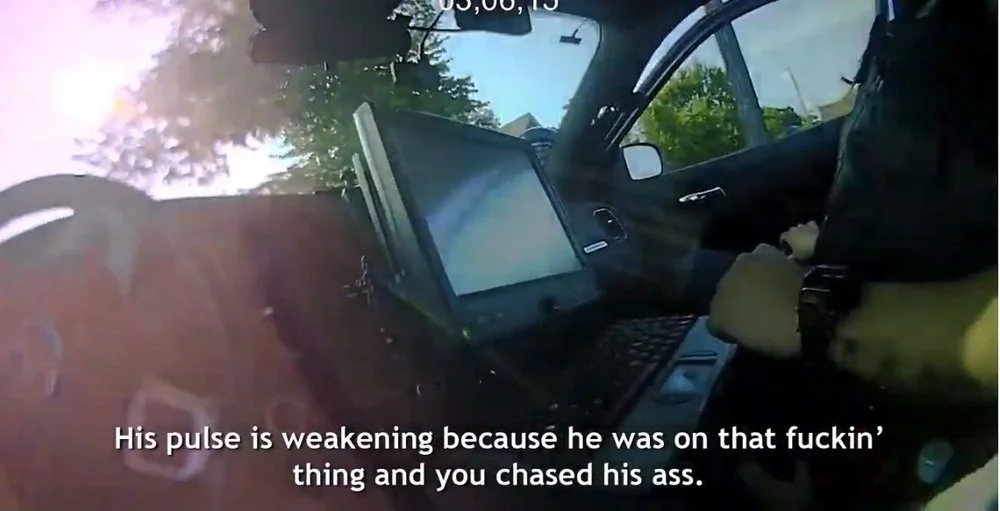
“His pulse is weakening because he was on that fuckin' thing, and you chased his ass,” Detroit Police officer Kimberly Buckner muttered to herself as she stepped out of her vehicle, her body camera recording every step and word.

As she walked toward Grimes, an unidentified Detroit police officer reached out his hand to cover the lens of Buckner's body camera quietly saying: "They fuckin' tased his ass while he was cruisin'."

Buckner showed more compassion than other officers, though. The unidentified officer she spoke with later stated police escorts for ambulances were reserved for injured officers not "bad-ass 15 [year olds]" who ran from the cops. The officer went on to state he had "no sympathy" for the dead teenager. Another unidentified officer is captured saying, "Don't run from the State Police. You'll get fucked up."

Unbelievably, Detroit PD officials had no idea this officer -- still unidentified -- had criticized the cooling corpse of a teen shot by an officer with a Taser while riding an ATV at 35 mph. Only at the prompting of the Free Press was an investigation instigated. The officer has been pulled from patrol duty while the investigation is underway.

Other officers were not so understanding and failed to realize Grimes had just finished the 8th grade. An officer told Buckner, “That’s a grown-ass man,” he said of Grimes, who was a 6-foot-1, 234-pound teenager. She corrected him saying, “No, he’s 15…. He’s 15 years old.” The male officer remarked with what seems to be heartless indifference and disassociation. He said:

He’s a bad-ass 15…No sympathy at all for bullshit. Motherfucker wanna be grown, ya act grown, you gotta fuckin’ deal with it.

Hardly an adult, Grimes was likely expected to make mistakes by the community and his family. Little did he likely suspect a cavalier rogue cop would attempt to tase him as he rode his ATV through the streets. There was some indication Grimes did not even know he was being pursued by the Michigan State troopers. The footage seems to indicate the patrol car’s emergency lights were not even on at the time he was tased.

Buckner continued to be the voice of reason among the police officers. She can be heard whispering to fellow cops, “They tased his ass while he was driving…causing him to flip and crash.”

Tasing anyone from a moving vehicle is a violation of Michigan State Police policy. As a result, county prosecutor Kym Worthy charged Bessner with murder.

As one member of the community remarked in the days and weeks following the boy’s murder, “two mistakes were made that day.” It’s true, Grimes should not have been riding his bike on the road. And it’s also true Bessner should never have thought about deploying his taser from one moving vehicle to attempt to strike another person on another moving vehicle.

One action was a misdemeanor. The other was a felony, allegedly committed by a man who should have been better trained, more understanding, and looking out for the safety of his 8th grade suspect. Either way, it’s a senseless tragedy which could have been avoided.

Bessner now faces the possibility of life in prison if convicted.

White Cops/Media say it was just “an accident" - Suit filed after White SAPD Cop’s Reckless Murder of Black Teen. Cops Broke In Home & Began Firing w/o Identifying Themselves During No-Knock Raid

sapd chief.jpg

From [HERE] and [HERE] The family of a San Antonio teenager who was shot and killed last week has filed a wrongful death lawsuit against the city and the San Antonio police officer who fired the shot, federal court records confirmed Thursday.

Charles Roundtree, 18, died Oct. 17 after a bullet fired by the officer passed through a man who police said was trying to pull out a gun from his waistband and struck Roundtree as he sat inside a home in the 200 block of Roberts Street.The officer, identified as Steve Casanova, had been responding to the home for an assault call.

The 23-year-old suspect with the gun was identified Thursday as Davante Snowden, who has been charged with felony gun possession.

The lawsuit claims Roundtree's death was due to excessive force. It claims Officer Steve Casanova opened the door without a no-knock warrant, did not identify himself as an officer and began shining a light in the faces of Charles and his two friends Taylor Singleton and Davanta Snowden. The three were supposedly on the computer and listening to music at the house. He then fired at Roundtree, Snowden and a woman as they attempted to move to the back of the house.

The suit states that Casanova did not provide medical attention to Roundtree after he was shot in the chest.

The suit contradicts official San Antonio Police Department accounts of the shooting and claims that Snowden was not armed during the fatal incident.

Casanova, a five-year veteran of SAPD, was placed on administrative duty following the shooting as part of the department's standard protocol.

The lawsuit states that SAPD has a "longstanding record" of not providing its officers with adequate training, supervision or discipline.

SAPD officials have described the home where the shooting took place as a "known drug house."

Officers had responded to the home more than 50 times since Jan. 1, SAPD Chief William McManus said last week.

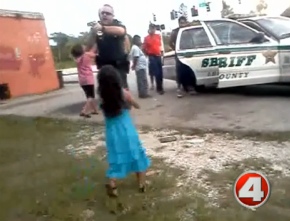
La Mesa (CA) Police Sued. Race Soldier Escorted non-resisting Black Teenage Girl Outside High School and then Body Slammed Her Onto Concrete, 2 Times

From [HERE] and [HERE] A Black Helix Charter High School student is suing a white La Mesa police officer and the city for excessive force and violating her civil rights.

In the suit filed Thursday, Brianna Bell, then a 17-year-old senior at the school, alleges La Mesa police School Resource Officer Scott Wulfing used excessive force when arresting and removing her from campus. The suit further alleges the city of La Mesa ignored similar actions by Wulfing and other officers and failed to discipline its officers.

The city said it has hired a neutral third party to investigate the incident but the investigation was on hold because the investigator has not been able to talk to Bell about the incident.

la mesa race soldiers.jpg

Bell, who has since graduated and is attending college out of state. According to the lawsuit, the teen went to the school nurse’s office on Jan. 18 because she wasn’t feeling well. Her purse was checked for drugs, and while none were found, a can of pepper spray was found and she was suspended.

She returned to the campus the next day for a scheduled meeting with the principal, then was told to leave, the lawsuit said.

She went instead to look for a teacher, and police were called.

Officer Scott Wulfing told her to leave or be arrested, then handcuffed her hands tightly behind her back, the lawsuit says.

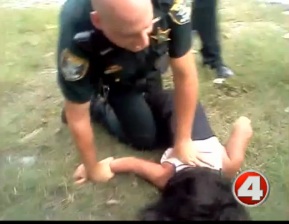
“After causing her pain,” the suit alleges, “(Officer Wulfing) stopped and grabbed the seventeen-year-old girl with both hands and body-slammed her into the concrete walkway at Helix High School. He then pulled (her) to her feet by her handcuffed arms and then body-slammed her a second time onto the concrete.”

La Mesa police Chief Walt Vasquez said in a statement after the incident that the girl tried to pull away from the officer.

“To prevent the student from escaping, the officer forced the student to the ground,” Vasquez said.

A video shared through social media shows Wulfing threw Bell down to the ground while escorting her off campus handcuffed. The suit alleges the handcuffs were on “painfully tight” and Bell told the officer he was hurting her when he “angrily pulled her in the direction he wanted her to walk.”

The suit also alleges Wulfing “body-slammed” Bell to the ground and pulled her by her handcuffed arms to her feet and then body-slammed her again. The second time was caught on cell phone video.

Bell was arrested for trespassing and resisting arrest but the San Diego County District Attorney’s Office declined to press charges against her, according to the suit.

A D.A. spokeswoman said the office does not discuss charging decision but said the office only accepts cases when they can be proven beyond a reasonable doubt.

Bell is suing for unspecified damages, intentional infliction of emotional distress, assault and battery, and violation her civil rights.

Wulfing has been on administrative duties since the incident.

Jury Didn’t Believe Syracuse Police: Liar Cops Brutally Assaulted & Falsely Arrested Black Man who Called for Help - Alonzo Grant Awarded $1 Million

alonzo+grant+2.jpg

From [HERE] A Black man won more than $1 million in a case of police brutality.

Alonzo Grant sued the city and police, accusing officers of using excessive force and falsely arresting him. The incident happened back in June 2014. A jury found that Syracuse Police officers falsely arrested Grant and used excessive force.

Due to being struck repeatedly by officers, Grant suffered a broken nose, concussion, split lip, cut on his eye, a twisted arm, numerous cuts and serious post-concussive syndrome, including nightmares flashbacks and fear of the police department, The city was dismissed in the case, but the two officers were ordered to pay grant and his family. His wife was awarded $450,000.

The incident started after Grant called police to report an argument between his daughter and a neighbor in the front yard. But when officers arrived, the dispute had ended.

An officer ordered Grant out of his house to talk to another officer. As he left, Grant opened (prosecutors say "punched") the screen door. That appeared to trigger officers to bring Grant under arrest (breaking his own screen?). "Almost immediately following Mr. Grant's action, the police decided to arrest for him disorderly conduct," the DA's office stated.

According to his attorney, Charles Bonner, Grant started walking down his front steps, an officer behind him violently, without warning, charged Mr.. Grant from behind and flung him viciously across his wrought iron railing face down to the ground.  He says the second officer put on his black leather gloves, dropping his knees on Mr.. Grant's back.  During the scuffle, Bonner claims one of the officers held Grant in a choke hold, pulled back his arm and struck him repeatedly in the face.

Grant says he never turned violently and grabbed the officer. "I wasn't fighting with them. I wasn't looking back, the (officer) was behind me. He grabbed me, my arms behind my back, the other (officer) grabbed my feet and they threw me over." His wife agreed that Grant never fought with police.

Witness Corey McMullin said: "He was blindsided. He never saw it coming. He wasn't even aware of what was happening." And Sharon Hayes said: "Alonzo never turned around at all."

"It's not about the money. It's never been about the money. It's the message that people should feel safe in their homes," Alonzo Grant said.

All charges against Grant were eventually dropped by the Onondaga County District Attorney's Office. DA William Fitzpatrick - who also testified Friday - said Grant's good character was considered when determining whether or not to bring charges.

The DA's office has ruled out criminal charges against the police officers, Chief Assistant District Attorney Alison Fineberg has said.

Judge says a jury must decide b/c Conflicting Police Narratives Cannot Both be True - Latino Man Posed No Imminent Danger when Shot to Death by Fresno Cops

fresno race soldiers.jpg

From [HERE] The family of a Fresno man shot and killed by police three years ago can move forward with a civil rights lawsuit that accuses the Fresno Police Department of excessive force and negligent wrongful death, a federal judge ruled this week.

In making his ruling, U.S. District Court Judge Anthony Ishii said a jury must decide whether officer Trevor Shipman was justified in shooting Casimero “Shane” Casillas outside an east Fresno home in September 2015.

Police contend Shipman feared for his life because Casillas was about to strike the officer with a metal pipe. Shipman fired three times, mortally wounding Casillas.

But Ishii said Shipman and police officers made contradictory statements about the shooting, including whether Casillas put Shipman in danger.

For example, the ruling says Shipman said “he ordered Casillas to halt his approach, yelling at the top of his lungs.” But two police officers and two bystanders who were near where Casillas was shot never reported hearing Shipman’s commands, the ruling says.

Shipman also said “Casillas held the pipe at chest level.” But two officers said Casillas had the pipe down by his side, the ruling says.

In addition, Shipman said Casillas rushed toward him. But other officers said Casillas moved slowly.

“The court cannot ignore the possibility that Officer Shipman’s testimony may be self-serving,” the ruling says. The officers’ contradictions, the ruling says, “raise genuine issues of material fact as to the kind of threat Casillas posed to Officer Shipman. “

Liar Chicago Cops Often Fabricate ‘Cover Charges’ like resisting arrest to Justify Excessive Force [b/c white prosecutors, jurors & media will believe whatever they say]

From [HERE] Had Laquan McDonald somehow survived the volley of 16 bullets fired by Chicago police officer Jason Van Dyke, he would have been charged with aggravated assault of a police officer.

The charges would have been based on reports from officers at the scene on the night of Oct. 20, 2014, who said McDonald raised the knife over his shoulder in “an aggressive manner,” forcing the officer to shoot the 17-year-old in self-defense. Those reports were refuted by the infamous dashcam video and three of the officers who filed them are set to go on trial next month for conspiracy, obstruction of justice and official misconduct.

That trial and Van Dyke’s conviction earlier this month for second-degree murder and aggravated battery with a firearm are exceedingly rare. Much more often, it’s the person on the other end of police force that ends up arrested, charged and convicted.

A Chicago Reporter investigation has found a troubling pattern of Chicago police officers charging people they’ve assaulted with aggravated battery to a police officer, aggravated assault of a police officer, or resisting arrest. Defense attorneys call these “cover charges” and say it’s a way to cover up bad behavior or justify their excessive use of force.

Two out of every three times a CPD officer reported using force since 2004, they arrested the subject on one of these charges.

Being arrested on these charges can have a profound impact on a person’s life, including spending days or even weeks in jail, losing a job, borrowing money to pay for legal fees, and ending up with a violent offense on your record.

Cover charges are alleged in nearly one in five of the 1,112 police misconduct lawsuits paid out by the city between 2011 and 2017, making it among the most common types of misconduct leading to a settlement.

This type of misconduct has cost Chicago taxpayers more than $33 million in legal settlements since 2011, according to the Reporter’s database of police misconduct payouts. That figure does not include millions of dollars more in legal defense fees and the interest that accrues when the city borrows money to cover settlement payments.

Cover charges are filed in police shootings, as in the case of Alfontish “Nunu” Cockerham, a 23-year-old who was shot five times by CPD officer Anthony Babicz in South Shore in June 2015. As he lay in a hospital bed with bullets lodged in his buttocks and right thigh, a judge found probable cause for aggravated assault to a police officer with a weapon charges, based on Babicz’s account that Cockerham pointed a gun at him. He died in the hospital the next day. Video footage later showed Cockerham running away from the officer, raising doubts about the officer’s account.

But more often they are filed in routine interactions between police and the public, the kind that occur on a daily basis in black and brown neighborhoods in Chicago. For example, an 18-year-old girl stopped by two officers for holding a 40-ounce bottle of King Cobra malt beer on a sidewalk in Englewood. When she didn’t give them her ID, the officers tackled her to the ground and forced her into their squad car, then arrested her for aggravated assault to a police officer and resisting arrest, along with underage drinking. The charges were later dropped.

The ‘holy trinity’ of cover charges

Police in Chicago also routinely arrest people for the singular charge of resisting arrest—a phenomenon experts say is concerning, and could mean the problem is far more expansive than the settlement data indicate.

Chicago Police made more than 1,300 arrests between 2012 and September 2016 where the only charge was resisting arrest, according to a Reporter analysis of Cook County court data. More than half of these cases were ultimately dismissed.

“What was the person resisting if there’s no underlying charge?” said Samuel Walker, a professor emeritus at the University of Nebraska and a national expert in police accountability. “That’s just a gigantic red flag that the officer probably used force and is using this resisting arrest charge to provide cover or an explanation.”

Other times cover charges arise from low-level offenses—traffic stops, marijuana possession—that escalate when an officer feels disrespected, said Christy Lopez, a former U.S. Department of Justice official who helped lead the department’s investigation into CPD and wrote a paper about this kind of police misconduct.

“What the police are doing is essentially being bullies,” Lopez said. “I’m going to use force against you because you made me mad.” [MORE]

Victims Rights Laws being Abused to Hide the Identities of Cops [prosecutors represent the gov, not the victims or their families. Criminal defendant is the only party with rights in courtroom]

From [HERE] A law filled with good intentions and vague wording is, more often than not, a law named after the victim of a crime. So-called "Marsy's Laws" are being passed in states that grant crime victims extra rights, often at the expense of the accused's Constitutional rights. As Scott Greenfield explains, "Marsy's Laws" insert crime victims into a process that isn't theirs to be inserted into. Once a crime has been committed, the government takes over and it's between the prosecutor and the accused from that point forward. As harsh as it may sound, crime victims aren't in need of extra rights. Any effort made to "fix" this nonexistent problem only deprives others of their rights.

Prosecutors represent the government, not the victims or their families. The only party with rights in a criminal courtroom is the defendant, both because the Constitution provides it and because the defendant is the only person whose liberty is at stake.

It’s not that there is no way for a victim, or family, to obtain “justice.” They can sue civilly for their loss, in which case they will be a party to the proceeding, will be capable of choosing their own strategy and pursuing it as they deem fit. But the force of the state, the power of the police, the punishment of imprisonment or worse, is not there for the sake of the victims. It’s not theirs to use, and they get no say in the decisions that are ultimately made.

Most of these laws grant crime victims extra privacy. The laws block the release of identifying info about victims under the theory this will head off harassment of victims and their families. This privacy shield contains no exceptions for government employees, so of course it's being abused to protect people whose public service positions wouldn't normally allow them to keep their names out of the news. Scott Shackford has more details at Reason:

What on earth does a victim's rights law have to do with a police officer demanding to conceal his identity from the public? According to the Rapid City Journal, the officer in question shot 21-year-old Kuong Gatlauk following a confrontation during a traffic stop. According to the police report, Gatlauk made statements intending some sort of self-harm and fled from a police vehicle. In a confrontation, he apparently threw a beer can at the trooper and then tackled the trooper and tried to steal the trooper's gun, according to this report. The trooper was able to keep his gun and shot the suspect twice.

Because Gatlauk was subsequent charged with assaulting the trooper, the trooper is claiming the right under Marsy's Law to have his or her name kept confidential, even though this action happened in the course of public police work and much of the records involved are public records. The state's attorney general has agreed.

Considering how easy it is to "assault" an officer during the course of an arrest, this law could be used to hide the identities of officers accused of deploying excessive force or other unconstitutional policing. South Dakota's version of the law doesn't even require criminal charges to be officially filed by prosecutors for these protections to take effect. All it takes is being booked on charges, even if prosecutors decide not to move forward.

All the good intentions in the world won't undo the collateral damage. Police officers -- who already have access to a wealth of extra rights -- now have one more to use to further separate themselves from accountability. And it's all because tragedy tends to blind legislators to the possible negative side effects of feel-good legislation that grants one group special rights at the expense of everyone else.

Gallup Poll says Only 49% of Americans think the "Death Penalty" is "applied fairly"

From [HERE] Fewer than half of Americans now believe the death penalty is fairly applied in the United States, according to the 2018 annual Gallup crime poll of U.S. adults, conducted October 1-10. The 49% of Americans who said they believed the death penalty was "applied fairly" was the lowest Gallup has ever recorded since it first included the question in its crime poll in 2000. The percentage of U.S. adults who said they believe the death penalty is unfairly applied rose to 45%, the highest since Gallup began asking the question, and the four-percentage-point difference between the two responses was the smallest in the history of Gallup's polling.

The poll also found that, even as the number of new death sentences are near historic lows, the percentage of Americans saying that the death penalty is imposed too often continued to rise and the percentage saying it is not imposed enough continued to decline. 57% of U.S. adults said the death penalty was imposed either "too often" (29%) or "about the right amount" (28%). In 2010, just 18% said the death penalty was imposed too often. While a plurality of 37% said the death penalty was not imposed enough, that figure was down 16% from the 53% level who in 2005 said it was not imposed enough. Gallup analyst Justin McCarthy wrote that "as executions in the U.S. have decreased along with the generally sinking crime rate, Americans have become more likely to say capital punishment is unfairly applied and that it is imposed too frequently." 

Gallup measured overall support for capital punishment at 56%, which McCarthy described as "similar to last year's 55%." 2017, he said, "marked the lowest level of support for the practice since 1972." He said "support for capital punishment ... has been trending downward since peaking at 80% in the mid-1990s during a high point in the violent crime rate." The poll measured opposition to the death penalty at 41%, the same as last year's 45-year high. A national Pew Reseach Center poll released in June 2018 reported support for the death penalty at 54% and opposition at 39%. A 2017 study reported that murders in the 37 states that authorized the death penalty in 1994 declined by 35.4% between then and 2014, but that death sentences declined by 76.5%—more than double that rate—over the same time frame. 

Wash High Court to Hear Appeal of Black Man’s Conviction for Passively Refusing to Open his Door for Cops to Allow Warrantless Intrusion and Search of his Apt.

popo+everywhere+2.jpg

From [HERE] If his conviction stands, it could criminalize people who refuse to do things like unlock their phones or garages at police request.

At around 2 a.m., two Shoreline police officers responded to a report of a loud argument coming from Solomon McLemore’s apartment. When they arrived, the officers heard a woman yelling, “you can’t leave me out here” and “I’m going to call the police.” The officers could tell that the yelling was coming from a second floor balcony, but could not see what was happening on the balcony.

The officers went to the door of the apartment and began knocking, ringing the doorbell, and announcing their presence. They later testified they were concerned that the woman yelling from the balcony might be hurt. When the officers knocked, the arguing abruptly stopped, but the officers continued knocking, ringing, announcing their presence, and addressing the apartment’s occupants through a patrol vehicle’s public“ address system. After about twenty minutes, the officers twice heard the sound of glass breaking and called the Shoreline Fire Department to request help breaching the apartment door.

Open the fucking door,” one officer demanded during the 15-minute exchange.

McLemore declined and stood by as police, having heard glass shatter inside the home, broke down the door. As the officers attempted forcible entry, McLemore began speaking with them through the closed door. McLemore told the officers that he did not have to let them in, that they were violating his civil rights, and that they needed a search warrant. At some point, the officers heard McLemore tell the woman inside to let the officers know that she was all right, which the woman did by calling to them from inside the apartment. When the officers finally broke through the door, they immediately arrested McLemore for obstruction of a law enforcement officer for failing to open his home to police. He was convicted as charged on Sept. 29, 2016, following a three-day jury trial. Sentenced to 20 days under house arrest, McLemore began a series of appeals that landed his case in the Washington Supreme Court, which is expected to hear oral arguments Thursday.

According to the ACLU amicus brief, “

McLemore does not argue that the officers’ warrantless entry to his apartment violated the protections afforded by the Fourth Amendment to the United States Constitution or article I, section 7 of the Washington Constitution. He concedes that the forcible entry was justified under the “community caretaking” exception to the warrant requirement.2 But McLemore argues that the conduct for which he was prosecuted—his passive refusal to unlock his door and help officers accomplish a warrantless entry to his home—cannot constitute the crime of obstruction.”

If McLemore’s conviction stands, Washington would most likely be the only state to criminalize the passive refusal to assist police in a warrantless search.

His court-appointed attorney, David Iannotti, contends McLemore had no obligation to help police conduct a “community caretaking” search of his home.

Iannotti agreed police were within their rights to enter McLemore’s apartment. State appellate courts have held police may enter if officers reasonably believe someone needs immediate help. But Iannotti argues that the lawfulness of the search doesn’t obligate McLemore to assist in it.

“He didn’t fight with the officers. He didn’t do anything to prevent the officers from entering,” Iannotti said.

“The question isn’t whether the officers have a right to enter; the question is do you have an obligation to unlock the door for the officers,” he explained.

The ACLU argued “This Court should reverse McLemore’s obstruction conviction because it makes a person’s assertion of their rights a crime, contrary to ample precedent.”

McLemore was convicted of obstruction of a law enforcement officer, a charge that criminalizes otherwise lawful conduct—standing on a sidewalk, remaining inside a home or leaving a parked car—that impedes a police officer. Critics sometimes deride the charge as “contempt of cop.” Whether a person’s behavior constitutes obstruction largely depends on the police view of that conduct, the American Civil Liberties Union of Washington has argued in McLemore’s case.

Obstruction charges can be brought in a broad range of circumstances, providing prosecutors and police an unusual amount of discretion in pursuing charges, said Nancy Talner, an attorney with the ACLU’s Seattle chapter. That breadth in discretion allows for arbitrary and racially disparate charging, and proves particularly problematic when people attempt to exercise their rights to privacy or free speech. But, according to the ACLU, no other jurisdiction has criminalized a person’s passive refusal to open their home to a warrantless intrusion.

The U.S. Supreme Court has long held that the Fourth Amendment requires authorities in most circumstances to obtain a warrant from a judge before forcing their way into a home.

Court decisions on when police can enter a home without a warrant teeter between protections against police overreach and the practicalities of emergency response. But residents aren’t required to conduct a constitutional analysis when facing a police officer without a warrant; courts have found they can assert their perceived right to privacy as long as they don’t commit another crime to do so.

The intrusion into McLemore’s home was ruled to be justified because officers reported hearing glass shatter inside the home. Prosecutors contend McLemore broke the law because his refusal to assist delayed a legitimate search of his home.

Washington’s Supreme Court previously ruled residents cannot be accused of obstruction for speaking or refusing to speak. But an untested 2011 appeals court decision may have cleared the way for obstruction charges against people like McLemore who ignore requests from police.

That Washington Court of Appeals decision upheld the conviction of Ronald Steen, who was charged with obstruction after failing to leave his travel trailer at the request of police officers.

One of the officers responding to a report of a disturbance on a rural property ultimately climbed through a window on the trailer, they said, to check inside for injured people. They found Steen, whom they arrested. Steen refused to give police his name, which is allowed under Washington law, but was charged with obstruction for failing to leave the trailer when police knocked.

In a 2-1 decision, the appellate panel upheld Steen’s conviction with the majority citing an earlier decision related to a man arrested after refusing to leave his car during a traffic stop. The majority opined that “an individual’s willful refusal to obey a lawful police order may constitute obstruction if the refusal hinders, delays, or obstructs the officer.”

The dissenting judge noted that common law and Washington state law affords special protection against searches of a person’s home, and cited a then-six-month-old U.S. Supreme Court decision.

“When law enforcement officers who are not armed with a warrant knock on a door, they do no more than any private citizen might do,” Justice Samuel Alito wrote for the majority in that decision, Kentucky v. King. “And whether the person who knocks on the door and requests the opportunity to speak is a police officer or a private citizen, the occupant has no obligation to open the door or to speak.”

The state Supreme Court declined to hear an appeal of the Steen case, which has been used to support McLemore’s conviction. Iannotti said a decision in favor of McLemore would most likely invalidate the earlier appeals court decision.

In a brief supporting McLemore, the ACLU, the Washington Association of Criminal Defense Lawyers, and the Washington Defender Association called for a reversal. Washington, they noted, “appears to be the only jurisdiction in which an individual can be convicted for peacefully refusing a warrantless home intrusion.”

“Washington appears to be alone in applying an obstruction statute this way,” attorneys for the organizations opined in the amicus brief. “Amici are aware of no case, from any jurisdiction, holding that a resident can commit obstruction merely by refusing to acquiesce when an officer demands warrantless entry to a home. …

“Where the privacy of the home is at stake, courts have uniformly held that the crime of obstruction does not encompass acts such as closing a door, locking a door, or refusing to unlock a door.”

Briefing the Supreme Court, a city of Shoreline prosecutor cast the question before the court as “whether a homeowner who purposefully obstructs an officer’s lawful constitutional entry into his home may be punished for his behavior.”

“Where an officer is licensed to make an entry, a person’s resistance, whether passive or active, to an officer’s lawful entry may result in consequences,” Assistant City Prosecutor Carmen McDonald argued in court papers.

“It is black letter law that a person may not be penalized for exercising a constitutional right,” McDonald continued. “A person may, however, be penalized for refusing to cooperate with a lawful order.”

Testifying at trial, McLemore said the lawfulness of the police intrusion stood at the front of his mind when he refused to help officers enter his home. He said he was afraid that, whatever the officers were going to do once they came inside, it “was not going to be good” for him or his family.

“I said [to an officer], look man, you’re violating my civil rights,” McLemore told the jury. “I said I have rights. … I thought I was acting on my Fourth Amendment.”

When McLemore’s jury asked the court during deliberations to clarify whether McLemore had “the legal obligation to follow police instructions,” jurors were told to review the directions they were given.

Iannotti and the ACLU contend the framework put forward by prosecutors could lay the groundwork for obstruction charges against people who refuse to do things like unlock their phones or garages at police request. It makes it dangerous for residents to stand up for their rights.

“You have a right to be free of searches without a warrant,” Iannotti said. “A person shouldn’t be penalized for exercising that right.”

After Killing 2 Black People in Grocery Store, Alleged Terrorist Murderer & Misinformed Neuropeon said "Whites Don't Shoot Whites"

racist suspect trash killer.jpg

From [HERE] and [HERE] New details are emerging about a man suspected of shooting and killing two people at a grocery store outside of Louisville, Ky.

Law enforcement officials today released the name of the suspect — Gregory Allen Bush — and revealed he is in custody. Bush is suspected of killing a man inside a Kroger in Jeffersontown, Ky., and a woman in the parking lot of that store.

Police have not yet released a potential motive for the killings.

A bystander who had a tense standoff with Bush in the parking lot says the alleged gunman made a racial remark, a video taken after the shooting and local media reports show.

Ed Harrell was in the parking lot of the Kroger when the gunshots rang out. He grabbed his own revolver, he says, and crouched down next to his car. He then saw a man walking with a gun in his hand. He asked what was going on and the man, who is believed to be Bush, said he wouldn't shoot Harrell.

"Don’t shoot me," Harrell says the man told him. "I won't shoot you. Whites don’t shoot whites."

The man then entered a vehicle and drove off.

The Louisville Courier-Journal reports that one of the victims was Maurice Stallard, who is the father of Louisville Mayor Greg Fischer's racial equity officer. It is unclear if Stallard's killing was targeted or random. Witnesses say Stallard, who is black, was shot in the back of the head. Police say the other victim of the shootings is Vickie Lee Jones, who is also black. Speculation spread quickly online that the shootings were racially motivated.

Security footage shows Bush attempting to enter the nearby predominantly black First Baptist Church of Jeffersontown shortly before his shooting rampage at Kroger.

Meanwhile, some signs indicate mental illness may have played a role in the killings.

The owner of a Facebook account under the name Gregory Bush in the Louisville area has made reference to suffering from paranoid schizophrenia. That account features a profile picture that highly resembles a photo of the suspect released by police.

"I have worked most of my life and battled mental illness throughout my life," the account's profile states. "My paranoid-schizophrenia finally stopped me from working and now am on mental disability. I'm lucky I made it this far with all the trouble I've caused myself when I get off my medicine. I'm lucky my parents are in good health as it took 2 years too finally get my disabilty (sic). maybe one day I can work again. I'm hoping for the best."

The account follows a number of conservative sites, pro-Trump and Blue Lives Matter pages as well as multiple sites about interracial dating, the movie Black Panther and other content specifically about people of color. Most of the posts on the page are about comic books, University of Kentucky football and movies.

A Twitter account also featuring the same photo very much like the photo released by police follows a similar pattern, though it does make reference to "trouble" the poster has gotten into on the site that may have led to a suspension.

Court records show Bush had at least two run-ins with the law prior to the shootings. In one 2009 incident, he choked his elderly parents in the home he shared with them. In 2009, Bush also punched a family court deputy trying to subdue him after Bush yelled obscenities at his ex-wife. He was listed as a suicide risk following the scuffle. Bush was charged with menacing for another incident in 2003 in which he came up behind a 15-year-old in a movie theater restroom and grabbed her by the waist. 

The Federal Bureau of Investigation is looking into the killings.

"FBI Louisville is evaluating the evidence to determine if there were any violations of federal law," Supervisory Special Agent Timothy Beam said in a statement.

The Jeffersontown Chief of Police is expected to release updates about the case tomorrow. Bush is being held on $5 million bond. His next court appearance is Nov. 5.

NAACP LDF Files Voter Suppression Claim Against Waller County (TX) Authorities for Refusing to Provide Early Voting Location on Campus of Black HBCU

From [HERE] The NAACP Legal Defense and Educational Fund (LDF) on Tuesday filed a federal lawsuit against election officials of Waller County, Texas, accusing them of voter discrimination.

The LDF claims that officials refused to provide any early voting location on the campus of Prairie View A&M University (PVAMU), a historically black university, during the first week of voting. “In general, the County has provided fewer early voting opportunities to PVAMU students who are one of the highest users of this opportunity as compared to other voters in Waller.”

LDF Deputy Director of Litigation Leah Aden said that Waller County has continually tried to suppress black voters since the ratification of the Twenty Sixth Amendment in 1971.

In keeping with this troubling pattern, Waller County officials have refused to come close to providing the same number of early-voting opportunities as they have to non-Black and non-student voters before next month’s election. LDF is hopeful that the court will order Waller County to fulfill its obligation to protect every voter’s rights under the Voting Rights Act and the U.S. Constitution.

The suit notes that in the majority-white city of Waller, voters have two early voting locations and overall 11 days of early voting. In contrast, PVAMU has no early voting locations during the first week, and only 3 early voting days on campus.

The suit was brought on behalf of five Prairie View A&M students, all registered voters and residents of Waller County.