Aaron Swartz: Prison State: Mass Incarceration
/The era of big government is over.1 Every culture, every class, every century, constructs its distinctive alibis
for aggression.2 It’s too soon to tell.3
The change began with little official notice or fanfare. There were no presidential speeches to Congress, such as the ones pledging to land a person on the moon within a decade or declaring war on poverty. No catastrophic event, such as the attack on Pearl Harbor or 9/11, mobi- lized the United States. No high-profile commission issued a wake- up call, as the Kerner Commission did in warning the nation that it was moving toward two separate and unequal societies and, decades later, as the 9/11 Commission did in exposing the country’s vulnera- bilities to terrorism. Indeed, to see the change of interest – the mas- sive buildup of the U.S. prison population that began in the 1970s – one has to look to the statistical record. There was little bark (at least at first), but a great deal of bite.
Beginning with modern record keeping in 1925 and continuing through 1975, prisoners represented a tiny segment of the U.S. pop- ulation. In 1925, there were 92,000 inmates in state and federal pris- ons. By 1975, the number behind bars had grown to 241,000, but this increase merely kept pace with the growth of the general population. The rate of imprisonment remained stable, at about 110 inmates per 100,000 residents.4 Indeed, during the early 1970s, two well-known criminologists argued that society kept this ratio (inmates over popu- lation) at a near constant to meet its need for social integration.5 As the
1
2 prison state
crime rate went up or down, like a thermostat, society would adjust its imprisonment decisions to ensure that the rate of imprisonment would remain close to 110. Then, in the mid-1970s, the thermostat was dis- connected. The imprisonment furnace was turned on full blast.
The number of prisoners shot upward and would continue on that trajectory for 25 years. By the end of the twentieth century, there were 476 prison inmates per 100,000 U.S. residents, or more than 1.36 mil- lion people in prison.6 And the furnace has not yet been put to rest. By year-end 2005, the number behind prison bars had risen even further, to 1.5 million.7 In the 12-month period ending in December 2005, for example, the prison population increased by 21,500 inmates, an annual growth rate of about 1.9%.
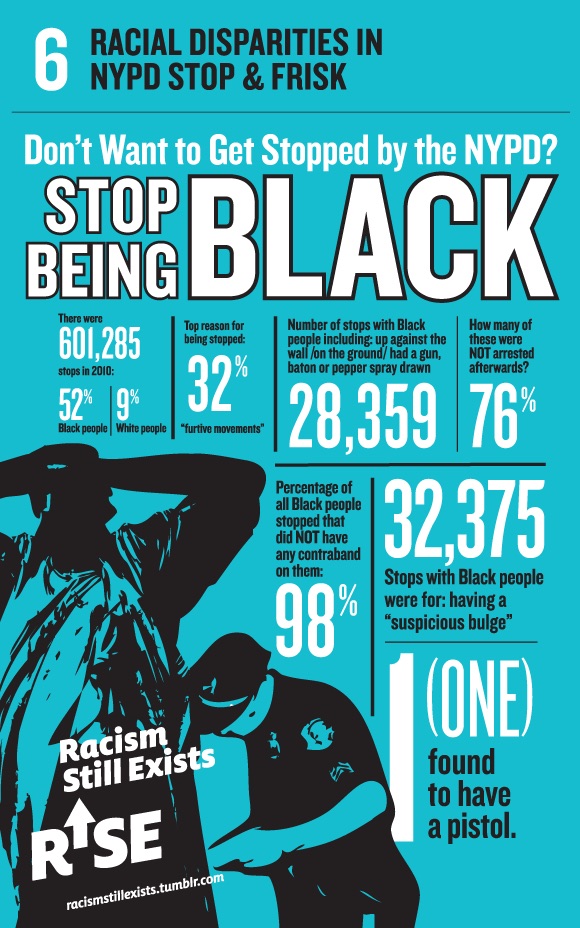
To add some perspective, if assembled in one locality, the prison population would tie Philadelphia for the fourth largest U.S. city. If “prisoner” could be thought of as an occupation, one in fifty male workers would have this “job”; there would be more people in this line of “work” than the combined number of doctors, lawyers, and clergy. For certain demographic groups, the proportion serving time in prison has become extraordinarily high. By year-end 2004, 8.1% of black males between the ages of 25 and 29 were in prison.8 About one-third of all African American males are predicted, during their lifetime, to serve time in a state or federal prison.9 In 1975, 241,000 inmates in state and federal prisons were serving 8.4 million inmate- days. By the end of 2005, 1.5 million inmates were serving more than a half-billion inmate-days per year and consuming 1.6 trillion meals.
Our topic is the prison population buildup. Why did the United States embark on this course? What were the consequences for society? This transformation did not occur spontaneously, and it has had conse- quences. There are a profusion of claims about this choice. Proponents of the buildup tend to see only virtue and necessity. We had to build more and more prisons, in this view, to stem the tide of disorder and crime on the streets. The buildup was a farsighted investment in our future, and we are now reaping the benefits. Critics tend to see only vice and human folly. The buildup has done far more harm than good. In one argument, putting more people in prison adds fuel to the fire by stigmatizing millions of low-level offenders as hard-core felons and schooling them in crime. Mass prison is not only a massive waste of
the buildup to mass incarceration 3
public resources, but it is also socially destructive. Hard-nosed realism requires something other than more prisons.
These points of view have been expressed on the opinion/editorial pages of newspapers and television talk shows, been the subject of numerous stump speeches by politicians seeking elected office, and, from time to time, been given serious study by scholars. Still, we may be no closer now to consensus over the “prison question” than we were halfway through the buildup. With the arguments well worn, both sides now play the common-sense card: everyone knows that more prison causes (or does not cause) less crime and that the motives behind the buildup were noble albeit tough minded (or ill conceived). The goal of this book is to get past these self-confident assertions.