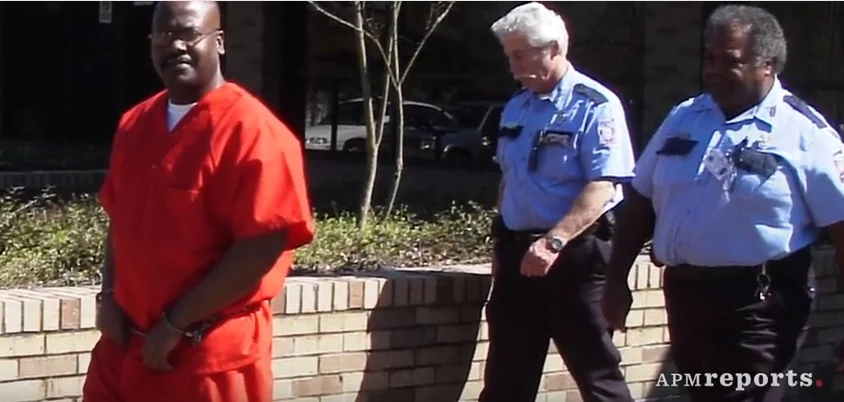
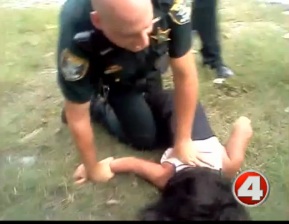
Jury Finds Angola Prison Major Guilty for Beating & Stomping Shackled, Handcuffed Black Man Along with 3 Other White Cops in Conspiracy & Cover-up

angola 2.jpg

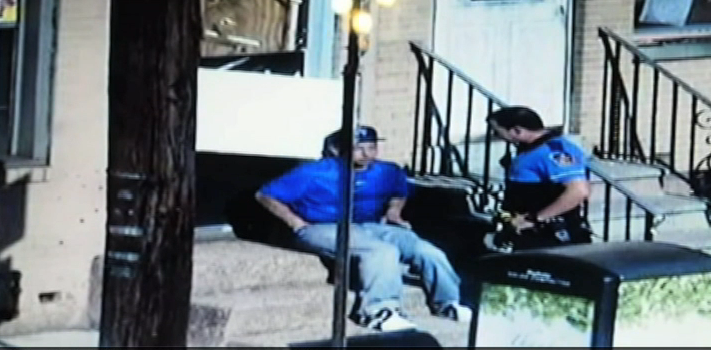
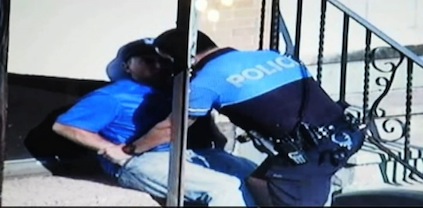
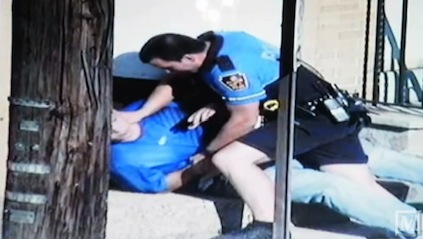
From [HERE] and [MORE] Daniel Davis, 41, a former Major at Louisiana State Penitentiary (LSP) in Angola, Louisiana, was found guilty by a jury today in federal court for beating an inmate who was handcuffed, shackled, and not resisting. In a previous trial in January, Major Davis was convicted of conspiring with other officers to cover up the beating by devising a false cover story, submitting false reports documenting that cover story, tampering with witnesses, and lying under oath.Four other officers also pleaded guilty for their roles in the beating and attempt to cover it up.

Four other officers—former Captains James Savoy, John Sanders, and Scotty Kennedy, and former Sergeant Willie Thomas—have all previously pleaded guilty for their roles in the beating and cover up. At Davis’s trial, Captains Sanders and Kennedy testified for the government and described the abuse and the extensive cover up.

After hearing testimony over the course of three days, the jury convicted Davis of willfully depriving the inmate of his right to be free from cruel and unusual punishment. The evidence showed that Davis initiated the beating by yanking the inmate’s leg chains, causing the inmate to fall face-first onto the concrete breezeway. At that point, Davis and the other officers punched, kicked, and stomped on the inmate, leaving the inmate with a bloody gash under his eye, a dislocated shoulder, broken ribs, and a collapsed lung.

According to the indictment, Major DANIEL DAVIS, Captain JOHN SANDERS and Captain JAMES SAVOY beat an unnamed inmate, who suffered bodily injury as a result.  They repeatedly punched, kicked, and stomped an inmate, causing serious injury including a bloody gash under his eye, a dislocated shoulder, broken ribs, and a collapsed lung,"

The defendants then created a false cover story, asserting that the officers used reasonable force to get the inmate under control after he had gotten out of his cell and fought with officers.  To corroborate that false cover story, members of the conspiracy instructed subordinates to clean up the inmate’s blood before internal investigators could document it, falsified official prison reports and records, ordered subordinates to lie to internal affairs investigators and lied under oath in a federal civil proceeding arising out of the incident. [MORE]

A fourth defendant, former Captain SCOTTY KENNEDY, age 48, of Beebe, Arkansas, pled guilty on Tuesday, November 1, 2016, for his role in the incident. [MORE]

“Mr. Davis abused the justice system by beating an inmate, writing false reports, and using his influence and power as a corrections officer to encourage others to lie,” said Assistant Attorney General Eric Dreiband of the Civil Rights Division.

No date has been set for Davis’s sentencing. He faces a maximum penalty of five years of imprisonment on the conspiracy and perjury counts, 10 years of imprisonment on the excessive force count, and 20 years of imprisonment on each of the remaining obstruction counts.

Long Beach to Approve $925k Settlement: Gang of Cops Unlawfully Stopped Black Man, Beat him with Batons & Put him in Chokeholds before Shocking him with Taser several times

From [HERE] The Long Beach City Council Tuesday, Nov. 13, may approve a $925,000 settlement in a case in which jurors found Long Beach police officers used excessive force while arresting a Long Beach man.

A federal jury in May 2017 awarded $620,000 to then-62-year-old Ray Webb and ruled officers used excessive force when they beat, repeatedly choked and shocked him during an October 2011 racially profiled traffic stop for a broken tail light. As part of the ruling, the court also ruled the city must pay Webb’s attorney fees.

Webb was hospitalized for two days after officers struck him more than 20 times with batons and a flashlight, according to court documents.

The Long Beach police officers involved in the incident were identified as Alejandro Cazares, Julie Lacey Ackerman, Harrison Moore and Tomas Diaz.

The jury found that officers illegally searched his vehicle, ordered him out of the car and proceeded to beat him with flashlights and batons before shocking him with a Taser several times. Webb, who has a heart condition, has suffered a heart attack and experienced severe vision problems since the October 2011 incident, according to the lawsuit.

Mr. Webb was allegedly stopped for a busted taillight. Somehow, police discovered that Mr. Webb's passenger was a probationer and asked both Mr. Webb and passenger to exit the vehicle. Then a search was conducted, which allegedly uncovered drugs. When Mr. Webb was approached by an officer, they accidentally collided, which set off the officer.

"I knew they was upset," Webb, a retired truck driver who has lived in Long Beach for nearly four decades, said in a phone interview on Wednesday. "I seen them coming at me and that told me just to drop."

Webb said he crumpled to the ground and raised his arms to protect himself. The officers then struck him at least 20 times with batons and "heavy-duty flashlights," the complaint said. Webb lost consciousness at least twice during the clash, as officers "took turns" placing him in chokeholds, according to the suit.

"Although at least four officers were present, they made no attempt to communicate with each other, deescalate the situation or even handcuff Plaintiff throughout the assault," according to the lawsuit. "At no time during the encounter was a specific command or an opportunity to comply with any order, lawful or otherwise, ever given to Plaintiff, who was vastly outnumbered, unarmed, made no threats, and struck no one."

Mr. Webb was beaten with batons, flash lights, placed in choke holds, despite providing no indication that he was not willing to comply. The beating lasted for several minutes, with four officers participating, during which Mr. Webb did not fight back. In addition to the beating, Mr. Webb was also charged criminally for the drugs allegedly found in his vehicle.

Webb said that he was kept in a chokehold the entire time and that one officer approached him and began swinging a baton, without a word. As the blows rained down, two officers also took turns choking Webb to the point of unconsciousness, Tiomkin said.

The search of the vehicle was later deemed to be unlawful in violation of the 4th Amendment by a Superior Court judge, according to court records. The judge granted a motion to suppress evidence due to the illegal search. After the drugs were suppressed, the criminal charges against Mr. Webb were dropped.

Even more shocking, of the four officers involved, three are still employed by the department and remain on active patrol duty, and one resigned last year.Sgt. Brad Johnson, a Long Beach police spokesman, said Cazares, Ackerman and Moore remain on duty and assigned to the patrol bureau. Diaz resigned in April 2016 and is no longer employed by the city, according to Johnson, who would not say why.

Johnson declined to comment on Webb's description of events or the verdict. He also declined to say what, if any, discipline the officers faced, citing state law that bars such information from being made public. [MORE]

Kentucky Sheriff’s Office Agrees to $337,000 Settlement after White Cops Cruelly Handcuffed Disabled Black Children in Elementary School

From [HERE] and [HERE] On Thursday, a sheriff’s office in Kentucky has agreed to pay more than $337,000 for the painful and unconstitutional handcuffing of elementary school students with disabilities. The two plaintiffs, both of whom were children of color and both of whom have disabilities, were so small that the deputy sheriff locked the handcuffs around the children’s biceps, forcing their hands behind their backs. 

One of the cuffings was recorded in a video that went viral. The footage of the little boy, identified as “S.R.,” painfully squirming and sobbing in handcuffs drew national media attention and sparked debate over the role of law enforcement officers in schools.

Despite this video, and information that the deputy sheriff had handcuffed several other elementary school children — one as young as five — the Kenton County Sheriff’s Office insisted that the handcuffings were a proper use of force and refused to reconsider its policies. The ACLU, along with the Children’s Law Center and Dinsmore & Shohl, filed suit. In October 2017, a federal district court ruled that the punishment was “an unconstitutional seizure and excessive force.” 

After the handcuffings, both children had repeated nightmares, started bed-wetting, and would not let their mothers out of their sight. Both families left the school district, and moved to areas where their children could receive the treatment and accommodations they needed. 

The settlement comes as the national debate heats up over whether to boost the number of law enforcement officers in schools. The plaintiffs in this case were small children in need of support and understanding. They needed someone who understood the effects of their disability on their behavior and could help them with appropriate accommodations. Law enforcement does not have those tools.  Indeed, the tools they do have — handcuffs, batons, pepper spray, and guns — are particularly inappropriate and harmful in the school environment.

There is no evidence that putting police officers in schools makes children any safer. What we do know is that 1.7 million children attend public schools that have cops but no counselors. Three million students attend schools with law enforcement officers, but no nurses.  And six million students attend schools with law enforcement officers, but no school psychologists. 

The brunt of these staffing choices falls most heavily and students with disabilities — especially students of color with disabilities. Students with disabilities are three times more likely than students without disabilities to be referred to law enforcement. Black girls with disabilities are 3.33 times more likely to be referred to law enforcement, and Black boys with disabilities are 4.58 times more likely to be referred to law enforcement. 

The six-figure settlement is a small victory in the context of all the work that remains. But it highlights the harm of having law enforcement in schools — especially for young students with disabilities.  We hope it will also open the door to more thoughtful discussions of how schools and our country can best support and educate our youth.

Judge Stops Construction of the Keystone XL Oil Pipeline. Trump Granted Permit without Any Public Input or Regard for Native American Treaties, Water Systems, Resources & Historic Properties

keystone+xl.jpg

From [HERE] A federal judge in Montana on Thursday granted a temporary injunction bringing an immediate halt to the construction of the $8 billion Keystone XL pipeline project.

Judge Brian Morris ruled in August that the US State Department must conduct a more thorough environmental review of the Keystone XL pipeline project, which was continued in Thursday’s ruling.

Then-president Barack Obama rejected the pipeline in 2015 on climate change grounds, but President Donald Trump gave the project a green light shortly after his inauguration in 2017 via a Presidential Permit. Morris held Thursday that the Trump administration violated the Administrative Procedure Act and National Environmental Policy Act (NEPA) when it restarted the Pipeline construction without producing an updated and thorough environmental impact report.

The court said that the State Department’s analysis of the several environmental issues fell short of the “hard look” the NEPA required. Morris ordered the Department to supplement its 2014 environmental impact report in order to comply with its obligations under NEPA, including publishing:

  • The effects of current oil prices on the viability of Keystone;

  • The cumulative effects of greenhouse gas emissions from the Alberta Clipper expansion and Keystone;

  • A survey of potential cultural resources contained in the 1,038 acres not addressed in the 2014 Report; and

  • An updated modeling of potential oil spills and recommended mitigation measures.

According to the suit,

TransCanada’s permit applications had been denied two previous times, but on January 24, 2017, President Donald J. Trump signed a memorandum “invit[ing] TransCanada . . . to promptly re-submit its application to the Department of State for a Presidential permit for the construction and operation of the Keystone XL Pipeline.” Memorandum: Construction of the Keystone XL Pipeline, 82 Fed. Reg. 8,663, § 2 (Jan. 24, 2017) (“the Memorandum”). Unlike in the two previous permit applications, Defendants initiated no public process or environmental review of any kind for the third permit application.

Despite the lack of any public process and review, on March 23, 2017, the Department of State published its Record of Decision and National Interest Determination (“2017 Decision”). Plaintiffs’ Exhibit A; see 82 Fed. Reg. 16,467 (Apr. 4, 2017). Under Secretary of State for Political Affairs Thomas A. Shannon, Jr., granted TransCanada’s permit application and issued it a presidential permit (“the Permit”).

In granting this third application, Defendants reached the exact opposite conclusion as the previous administration on the very same record, in violation of the Administrative Procedures Act. 5. In granting this third application, there was no analysis of the trust obligation the federal government owes to the Rosebud Sioux Tribe and their unique water system, no analysis of the potential impact of the Pipeline on treaty rights, no analysis of the subpar leak detection system and the potential impact of spills on Rosebud Sioux Tribe’s members, and no analysis of the potential impact on the Rosebud Sioux Tribe’s cultural resources and historic properties in the path of the Pipeline, in violation of the National Environmental Policy Act and the National Historic Preservation Act [MORE]

The court held that the State Department did not violate the Endangered Species Act when it neglected a number of measures and effects, but it did order the Department to consider potential adverse impacts to endangered species from oil spills associated with Keystone in light of the updated data on oil spills and leaks.

Tom Goldtooth, Executive Director for one plaintiff, the Indigenous Environmental Network, said in a press release, “This is a win for Lakota, the Oceti Sakowin and other Tribal Nations, for the water, and for the sacredness of Mother Earth. This decision vindicates what we have been saying all along: Trump’s approval of this pipeline was illegal, violated environmental laws and was based upon fake facts.”

According to Uncle Brother’s Records the DEA and ICE are Hiding Surveillance Cameras in Streetlights & Using Digital speed-display road signs that contain license plate reader technology

cameras everywhere worldwide.jpg

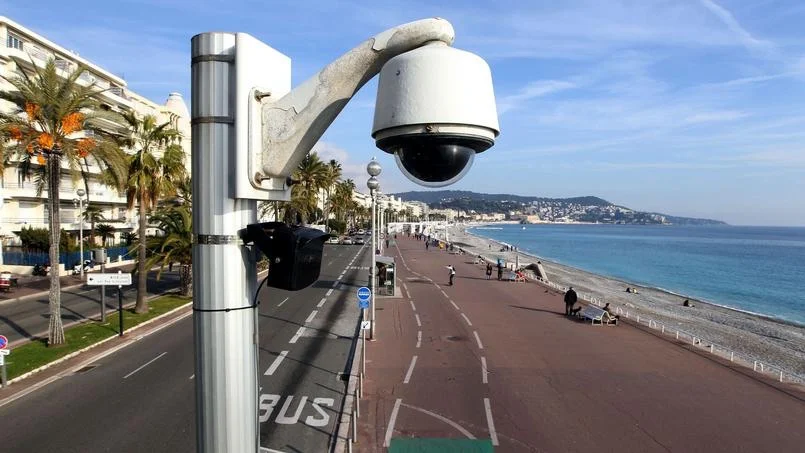
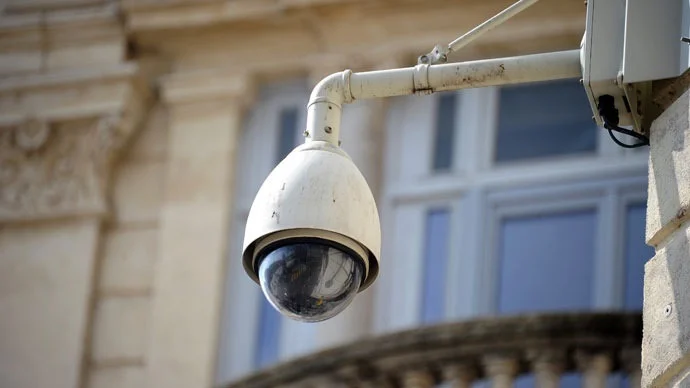
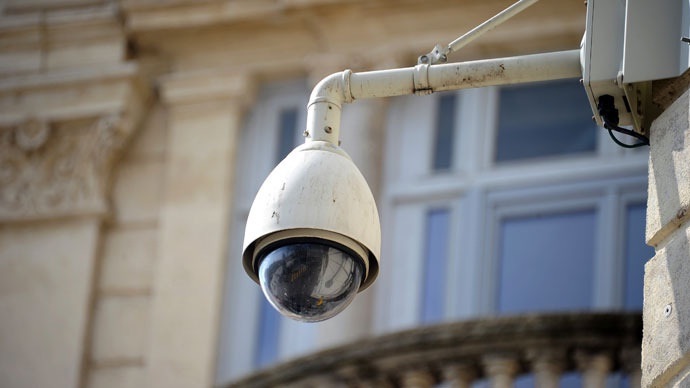
From [HERE] The US Drug Enforcement Administration (DEA) and Immigration and Customs Enforcement (ICE) have hidden an undisclosed number of covert surveillance cameras inside streetlights around the country, federal contracting documents reveal.

According to government procurement data, the DEA has paid a Houston, Texas company called Cowboy Streetlight Concealments LLC roughly $22,000 since June 2018 for “video recording and reproducing equipment.” ICE paid out about $28,000 to Cowboy Streetlight Concealments over the same period of time.

It’s unclear where the DEA and ICE streetlight cameras have been installed, or where the next deployments will take place. ICE offices in Dallas, Houston, and San Antonio have provided funding for recent acquisitions from Cowboy Streetlight Concealments; the DEA’s most recent purchases were funded by the agency’s Office of Investigative Technology, which is located in Lorton, Virginia.

Christie Crawford, who owns Cowboy Streetlight Concealments with her husband, a Houston police officer, said she was not at liberty to discuss the company’s federal contracts in detail.

“We do streetlight concealments and camera enclosures,” Crawford told Quartz. “Basically, there’s businesses out there that will build concealments for the government and that’s what we do. They specify what’s best for them, and we make it. And that’s about all I can probably say.”

However, she added: “I can tell you this—things are always being watched. It doesn’t matter if you’re driving down the street or visiting a friend, if government or law enforcement has a reason to set up surveillance, there’s great technology out there to do it.”

Earlier this week, the DEA issued a solicitation for “concealments made to house network PTZ [Pan-Tilt-Zoom] camera, cellular modem, cellular compression device,” noting that the government intended to give the contract to Obsidian Integration LLC, an Oregon company with a sizable number of federal law enforcement customers.

Just a few days earlier, the Jersey City Police Department awarded a contract to Obsidian Integration for “the purchase and delivery of a covert pole camera.” The filing did not provide further design details.

Obsidian did not respond to a request for comment, nor did Morgan Hairston, the Department of Justice contracting officer handling the bids.

In addition to streetlights, the DEA has also placed covert surveillance cameras inside traffic barrels, a purpose-built product offered by a number of manufacturers. And as Quartz reported last month, the DEA operates a network of digital speed-display road signs that contain automated license plate reader technology within them.

Chad Marlow, a senior advocacy and policy counsel for the American Civil Liberties, says efforts to put cameras in street lights have been proposed before by local law enforcement, typically as part of a “smart” LED street light system.

“It basically has the ability to turn every streetlight into a surveillance device, which is very Orwellian to say the least,” Marlow told Quartz. “In most jurisdictions, the local police or department of public works are authorized to make these decisions unilaterally and in secret. There’s no public debate or oversight.”

The impact of surveillance cameras will increase as the development of facial recognition algorithms become more commonplace among law enforcement agencies. Amazon has been particularly interested in outfitting cameras operated by the US Department of Homeland Security (DHS) with facial recognition, according to emails recently unearthed by the Project on Government Oversight.

“We are ready and willing to support the vital [Homeland Security Investigations] mission,” an Amazon employee wrote in an email that touted the company’s facial recognition software.

Teaching Double Standards of Behavior & Morality White Cops Slam Black Student Down & Put a Knee Into his Back While Other low-level White Orderly Tries to Block Camera @ FLA School

According to FUNKTIONARY

Public Fool System - a place where children are having unprotected education. 2) a syndromatic exercise in conformity and blind obedience to so-called "authority" (disguised repression). 3) systematic planned violence meted out on children and young adults—held hostage and hostile—daily, hourly, quarantined from the natural rhythm of things in life through Pavlovian bells and shrink-wrapped prefabricated and curriculum and distorted history. 4) a training boot camp for life-long slavery and indentured servitude to gangbankers and the Corporate State in a society created and based in violence, governed by fear, propaganda, psychogenic money and power. 

florida cops at school.jpg

According to Larken Rose:

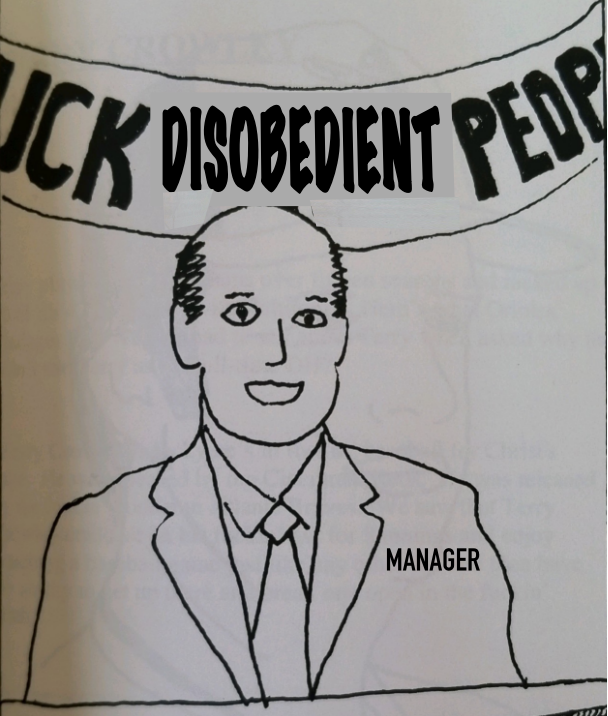
Teaching Blind Obedience. The purported purpose of schools is to teach reading, writing, mathematics, and other academic fields of thought. But the message that institutions of “education” actually teach, far more effectively than any useful knowledge or skills, is the idea that subservience and blind obedience to “authority” are virtues. Simply consider the environment in which the majority of people spend most of their formative years. Year after year, students live in a world in which:

• They receive approval, praise and reward for being where “authority” tells them to be, when “authority” tells them to be there. They receive disapproval, reproach and punishment for being anywhere else. (This includes the fact that they are coerced into being in school to begin with.)

• They receive approval, praise and reward for doing what “authority” tells them to do. They receive disapproval, reproach and punishment for doing anything else, or for failing to do what “authority” tells them to do.

• They receive approval, praise and reward for speaking when and how “authority” tells them to speak., and receive disapproval, reproach and punishment for speaking at any other time, in any other way, or about any subject other than what “authority” tells them to speak about, or for failing to speak when “authority” tells them to speak.

• They receive approval, praise and reward for repeating back whatever ideas the “authority” declares to be true and important, and receive disapproval, reproach and punishment for disagreeing, verbally or on a written test, with the opinions of those claiming to be “authority,” or for thinking or writing about subjects other than what “authority” tells them to think or write about.

• They receive approval, praise and reward for immediately telling “authority” about any problems or personal conflicts they encounter, and receive disapproval, reproach and punishment for trying to solve any problems or settle any disagreements on their own.

• They receive approval, praise and reward for complying with whatever rilles, however arbitrary, “authority” decides to impose upon them. They receive disapproval, reproach and punishment for disobeying any such rules. These rules can be about almost anything, including what clothes to wear, what hairstyles to have, what facial expression to have, how to sit in a chair, what to have on a desk, what direction to face, and what words to use.

• They receive approval, praise and reward for telling the “authority” when another student has disobeyed “the rules,” and receive disapproval, reproach and punishment for failing to do so.

The students clearly and immediately see that, in their world, there are two distinct classes of people, masters (”teachers”) and subjects (”students”), and that the rules of proper behavior are drastically different for the two groups. The masters constantly do things that they tell the subjects not to do: boss people around, control others via threats, take property from others, etc. This constant and obvious double standard teaches the subjects that there is a very different standard of morality for the masters than there is for the subjects. The subjects must do whatever the masters tell them to, and only what the masters tell them to, while the masters can do pretty much anything they want.

Not long ago, the masters would even routinely commit physical assault (i.e. “corporal punishment”) against subjects who did not quickly and unquestioningly do as they were told, while telling the subjects that it was completely unacceptable for them to ever use physical violence, even in self-defense, especially in self-defense against the masters. Thankfully, the use of regular, overt physical violence by “teachers” has become uncommon. However, though the force has become less obvious, the basic methods of authoritarian control and punishment remain.

In the classroom setting, the “authority” can change the rules at will, can punish the entire group for what one student does, and can question or search any student – or all students – at any time. The “authority” is never seen as having any obligation to justify or explain to the students the rules it makes, or anything else it does. And it is of no concern to “authority” whether a student has a good reason to think that us time would be better spent being somewhere else, doing something else, or thinking about something else. The “grades” the student receives, the way he is treated, the signals he is sent – written, verbal, and otherwise – all depend upon one factor: his ability and willingness to unquestioningly subvert his own desires, judgment and decisions to those of “authority.” If he does that, he is deemed “good.” If he does not, he is deemed “bad.”

This method of indoctrination was not accidental. Schooling in the United States, and in fact in much of the world, was deliberately modeled after the Prussian system of “education,” which was designed with the express purpose of training people to be obedient tools of the ruling class, easy to manage and quick to unthinkingly obey, especially for military purposes. As it was explained by Johann Fichte, one of the designers of the Prussian system, the goal of this method was to “fashion” the student in such a way that he “simply cannot will otherwise” than what those in “authority” want him to will. At the time, the system was openly admitted to be a means of psychologically enslaving the general populace to the will of the ruling class. And it continues to accomplish exactly that, all over the world, including in the United States.

The reason most people do whatever “authority” tells them to, regardless of whether the command is moral or rational, is because that is exactly what they were trained to do. Everything about authoritarian “schooling” (and authoritarian parenting), even the modern version that pretends to be caring and open-minded, continually hammers into the heads of the youngsters the notion that their success, their goodness, their very worth as human beings, is measured by how well they obey “authority.”

Is it any wonder, then, that rather than applying logic to evidence to reach their own conclusions, most adults look for an “authority” to tell them what to think? Is it an]ywonder that when a man with a badge starts barking orders, most adults timidly obey without question, even if they have done nothing wrong? Is it any wonder that most adults sheepishly submit to whatever interrogations and searches “law enforcers” want to inflict upon them? Is it any wonder that many adults will run to the nearest “authority” to solve any problem or settle any dispute? Is it any wonder that most adults will comply with any order, however irrational, unfair, or immoral it may be, if they imagine the one giving the order to be “authority”? Should any of this be surprising in light of the fact that nearly everyone went through many years of being deliberately trained to behave that way?

Dr. Milgram’s experiments made it quite clear that the kind of people produced even by our modern, supposedly enlightened society, even in the good old U.S.A. – that supposed bastion of liberty and justice – are, for the most part, callous, irresponsible, unthinking tools for whichever megalomaniac claims the right to rule. When the people are intentionally trained to humbly submit to the beast called “authority” – when they are taught that it is more important to obey than it is to judge – why should we be at all surprised at the extortion, oppression, terrorism and mass murder that are committed just because a self-proclaimed “authority” commanded it? All of human history makes the deadly formula as plain as it could possibly be: A few evil rulers + many obedient subjects = widespread injustice and oppression. [MORE]
Judge Rules Somali Man Indefinitely Detained by ICE in Dover for More Than 8 Months Can Finally Get a Bond Hearing

From [HERE] A federal judge ruled in Concord Tuesday that a man held in immigration custody in New Hampshire for more than eight months will get a hearing.

Abdigani Faisal Hussein is a Somali national who came to the U.S. as a refugee in 1996. His lawyers say he has three daughters who are American citizens.

Hussein was detained because of a 16-year-old conviction involving khat, a mild stimulant chewed or brewed in tea by many Somalis. For more than a decade after being sentenced to one year of probation, Hussein was allowed to live and work in the U.S. if he consented to occasional check-ins with immigration officials and other requirements.

But that changed in March of this year, when he was arrested by Immigration and Customs Enforcement. Up until now been Hussein had been denied what's called a bond hearing, which would allow his attorneys to argue it's safe for him to challenge deportation outside of detention.

"This is a big win to provide an individualized bond hearing for a detained immigrant who is from Maine but is currently detained in Dover, New Hampshire," said SangYeob Kim, immigration legal fellow with the ACLU and one of the attorneys representing Hussein.

During the hearing Tuesday, U.S. District Court Judge Joseph Laplante said it was a difficult matter to rule on. “We don’t hear much about immigration in this court,” Laplante said.

Kim, who’s part of a team of lawyers with the the ACLU’s newly formed Immigrants’ Rights Project in New Hampshire, said there are other detained immigrants in the state who fall into a similar situation involving indefinite detention.

“One of our objectives for the project is to allow detained immigrants to have individualized bond hearings to show that [these] immigrants are not a danger to the community for a flight risk,” Kim said.

Twain Braden, another attorney representing Hussein, said the issue of indefinite detention is a “ripe issue nationally,” pointing to a similar case making its way through the U.S. Supreme Court.

“I think what we’re also seeing with these sorts of things is when you had a regime change that was suddenly anti-immigrant, you had the government suddenly -- and when I say the government I mean ICE -- not doing what it believed was the right thing but doing what it believed it could get away with,” Braden said.

As part of Judge Laplante’s ruling, Hussein will get a bond hearing later this month.

A spokesperson with the U.S. Attorney’s Office said there would be no comment at this time, citing pending litigation.

Family says Winnfield Cops Battered Black Woman & Tased Her in Her Right Eye Causing Blindness, Broken Bones - Hospitalized for 3 Days after Calling Cops for a Ride

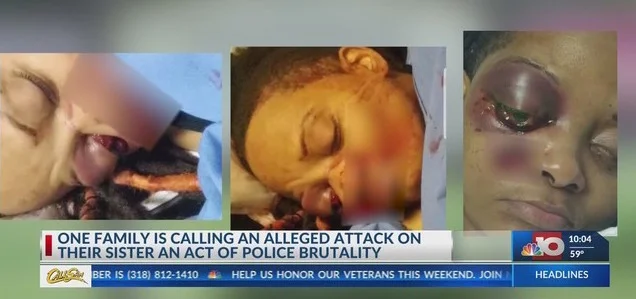
From [HERE] An alleged attack so bad that it  has one family heartbroken and wondering what happened between their sister and police. These pictures tell a painful story.

"It hurts me so bad to see her laying up there like this," said sister to the victim, Tramika Coleman. 

On Monday night, Coleman indicated that police attacked her sister leaving her with several broken bones, bloodied and badly bruised.

“I couldn't’t see, I was screaming, It felt like I was getting electrocuted," said victim Tanisha White.

Corporate Police State - the enforcer of the commodification of life within the Spectacle Surveillance Society. Anyone who thinks that he or she is immune to the baseless destruction of his or her life (including immediate family members) by a "gove…

Corporate Police State - the enforcer of the commodification of life within the Spectacle Surveillance Society. Anyone who thinks that he or she is immune to the baseless destruction of his or her life (including immediate family members) by a "government" or corporation does live in a happy menagerie—enjoy your illusions. (See: GUPI & Judicial Victimization)

White explained that she was at a friends house when she called Winnfield police for a ride home, something she’s done many times before. She believes a misunderstanding led to her brutal attack. 

"The police officer pulled the taser out and started shooting in my right eye," she recollected. 

She woke up with injuries so bad, her family says her life will never be the same. White has been in the hospital for three days and she’s just learned what some would consider the worst news possible, that she’ll never see out of her eye again.

Winnfield Cops.jpg

"It's already hard living day to day, I have to stay with my parents you know, so this is just going to make my life even harder," said White as she reflected.

She's an army veteran who suffers from PTSD,  anxiety and depression. 

"When I saw her, the first thing that came to mind was Emmett Till because that’s how bad it was," said her sister as she recounted the moment she laid eyes on White.

Louisiana state police are investigating the allegations.

Racist Vote Counter Scrambled to Patch Massive Vulnerabilities in Georgia's Voter Registration System After Insisting It was Totally Secure

brian kemp racist troll.jpg

From [HERE] Yesterday we had a rather incredible story about Georgia's Secretary of State, Brian Kemp, who, despite the conflict of interest, is both running for Governor and in charge of making sure Georgia's elections are fair. Over the weekend, Kemp had made a highly questionable claim that his opponents in the Democratic Party of Georgia had attempted to hack the voter registration system, and he was opening an investigation. As we noted, what appears to have actually happened was that an independent security researcher had discovered massive, stunning, gaping security flaws in Georgia's voter registration system, that would potentially allow anyone to access anyone else's information and even modify it. That's an especially big deal in Georgia, where the very same Secretary of State Brian Kemp had pushed for laws that meant that if any of your ID information was different from what was in the voter system, you didn't get to vote.

Incredibly, despite multiple security experts pointing out some fairly basic flaws, Kemp's office insisted the site was secure. According to press secretary Candice Broce:

“We can also confirm that no personal data was breached and our system remains secure.”

Elsewhere the Secretary of State's Office insisted there were no problems with the site. However, as ProPublica is now reporting, late Sunday night, after it had insisted there was nothing wrong, it appeared that someone behind the scenes was scrambling to patch the vulnerabilities:

ProPublica’s review of the state’s voter system followed a detailed recipe created by the tipster, who was described as having IT experience and alerted Democrats to the possible security problems. Using the name of a valid Georgia voter who gave ProPublica permission to access his voter file, reporters attempted to trace the security lapses that were identified.

ProPublica found the website was returning information in such a way that it revealed hidden locations on the file system. Computer security experts had said that revelation could give an intruder access to a range of information, including personal data about other voters and sensitive operating system details.

ProPublica’s attempt to take the next step — to poke around the concealed files and the innards of the operating system — was blocked by software fixes made that evening.

The same Candice Broce who had insisted that there was absolutely nothing wrong with the site then told ProPublica two obviously bullshit claims. First, that the setup that allowed users to see exactly where files were stored was standard practice, and so was making last minute changes to a voter registration website two days before an election:

Broce said the ability to see where files were stored was “common” across many websites, and she said it was not an inherent vulnerability. She did not deny that the website’s code was rewritten and would not say whether changes were made as a result of the possible security holes.

“We make changes to our website all the time,” Broce said. “We always move our My Voter Page to a static page before Election Day to manage volume and capacity. It is standard practice.” By Monday afternoon, the page did not appear to be static in the way Broce described, and she did not respond to a request to provide evidence of the change.

Of course, as anyone who has done any serious website building in, let's say, the last 10 to 15 years, knows well, that is not at all standard practice. But, let's see the quote from an expert anyway:

Joseph Lorenzo Hall, the chief technologist at the Center for Democracy and Technology in Washington, D.C., disputed that visibility into file storage was common. “It’s definitely not best practice,” he said. He said it appeared the state had made the change in response to being notified of the problem and could see no reason why officials would otherwise make such a change ahead of Election Day.

Security experts frown on making such seemingly ad hoc changes close to major events, such as an election, because they can create unforeseen problems when made so quickly.

Basically, it appears that Kemp and the Secretary of State's office are betting on voters in Georgia being totally ignorant. Meanwhile, this is the same office that just a couple months ago made the following bold statement:

“There has never been a breach in the Secretary of State’s office. We have never been hacked, and according to President Trump and the Department Of Homeland Security, we have never been targeted. Georgia has secure, accessible, and fair elections because Kemp has leveraged private sector solutions for robust cyber security, well before any of those options were offered by the federal government.”

I don't care what side of the partisan divide you fall on, but Kemp's actions in failing to protect the system, overseeing the voting in his own election, then attacking the messenger for pointing out his own vulnerability, denying the vulnerability, and then scrambling to fix the vulnerability at the last minute without telling anyone, should disqualify him from running a Burger King, let alone being Governor of the state of Georgia.

"Surveillance State" defined in FUNKTIONARY

"Surveillance State" defined in FUNKTIONARY

Surveillance State - the Orwellian Utopia. We are being all "watched-up." When we are being watched-up (spied upon) by what passes as "government," our unalienable rights have a lien on them and our rights, ostensibly protected under the Constitution, are all washed-up. When our rights and minds are washed-up by the same "government" we are being "watched-up" by, then we find ourselves in the spin cycle of the Spectacle. Between the government-supplied public fool system, social conditioning, voluntary privacy-dumping (via Internet navigation, e-mail, grocery store cards, credit-debit card purchases, cell phone usage and movement tracking, etc.) accentuated by all-pervasive predictive programming, our thoughts, speech, acts, behavior patterns, routines, virtues and vices, tendencies and deeds are well-known even before we commit them. They now know us better than we know ourselves. We are living in a reflecting pool and we can't see how we're being controlled, manipulated, downloaded and fooled. Majority rule = majority fooled.

Read More

Camera-to-Human Surveillance Program Created for Homeland Security will Enable Public Cameras to identify everyone by "talking to their cellphones"

From [HERE] Surveillance cameras will soon be able to identify everyone by talking to their cellphones.

“This system basically allows surveillance cameras to talk to the public through their individual phones,” Purdue Univeristy doctoral student Siyuan Cao said.

As the above video illustrates, soon no where will be safe from Big Brother's prying eyes.

Purdue University's SIMBA Labs has developed a camera-to-human surveillance program called PHADE otherwise known as Private Human Addressing. The name of this new program, seems appropriate as everyone's privacy will soon phade fade away.  (Pun intended.)

Before I discuss PHADE I would like to point out a few important facts.

Purdue University is also known as "Purdue Homeland Security Institute (PHSI)."   PHSI's mission is to "enhance Homeland Security.and validate Homeland Security technology."

cameras to cell phone.jpg

DHS/PHSI also has an entire section devoted to giving threat assessments of K-12 grade students, "we have created a threat assessment tool that schools can use for an all-hazards approach."   You cannot make this stuff up.

PHADE's effect on everyone's privacy cannot be understated.

Forget Facebook and Twitter's massive surveillance program, PHADE will make those programs look trivial due to its sheer size. With the number of cellphone users expected to reach 4.68 billion by next year, PHADE will allow governments to pry into people's lives like never before.

Purdue University's newsroom claims PHADE will protect everyone's privacy by blurring "partial details." But contradicts itself by boasting that "government agencies can use PHADE to enhance public safety."

Unknown IP/Mac address; PHADE knows who you are 

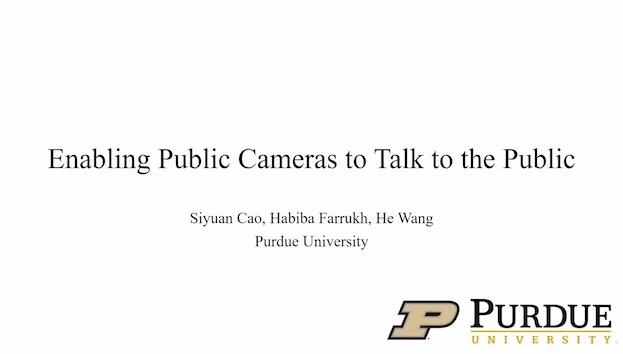
A white paper titled "Enabling Public Cameras to Talk to the Public" is so Orwellian in nature that I find it extremely difficult to write about.

"This paper asks: Is it possible for cameras in public areas, say ceiling cameras in a museum, to send personalized messages to people without knowing any addresses of their phones? We define this kind of problem as Private Human Addressing and develop a real-time end-to-end system called PHADE to solve it. Unlike traditional data transmission protocols that need to first learn the destination’s address, our cameras rely on viewing user’s motion patterns, and use the uniqueness of these patterns as the address for communication. Once receiving the wireless broadcast from the cameras, the user’s phone can locally compare the motion address of the packet against its own motion sensor data, and accept the packet upon a good match."

This is truly frightening, PHADE allows CCTV cameras to identify people in real-time even if they do not know the cellphones IP/MAC address.

"Without knowing users’ smartphone addresses, PHADE is able to communicate with them relying on the motion patterns captured by cameras and using these patterns as destination addresses."

The paper goes onto to warn people that PHADE can identify people by how they walk and what they are looking at in real-time.

Edward Snowden: Israeli Spyware Used By Governments to Pursue Journalists Targeted for Assassination

From [HERE] NSA whistleblower Edward Snowden told an Israeli audience on Tuesday that surveillance software designed by an Israeli company had been used to target groups of journalists in Mexico as well as Saudi journalist Jamal Khashoggi who was murdered last month in the Saudi consulate in Istanbul.

Snowden, speaking to a Tel Aviv conference hosted by Israeli public relations firm OH! Orenstein Hoshen via video feed, stated that secretive Israeli cyberwarfare firm NSO Group Technologies has been “selling a digital burglary tool” that has been used by governments to spy on citizens and journalists in particular. Snowden did not attend the conference in person due to concern that he could be handed over to U.S. authorities. He was granted asylum by the government of Russia, where he currently resides, in 2013.

He explained that even if some “good actors” use NSO’s surveillance software, known as Pegasus, “it is not just being used for catching criminals and stopping terrorist attacks…not just for saving lives, but for making money…such a level of recklessness…actually starts costing lives.” Pegasus is a government-exclusive “lawful intercept” spyware program that is not available to the general public or even non-state clients.

During the conference, Snowden stated that NSO’s software had been used to track Saudi journalist and U.S. resident Jamal Khashoggi prior to his murder in Istanbul last month. Snowden’s assertion comes after a report last month revealed that Israel sold Pegasus to Saudi Arabia after a series of covert meetings in the United States and the United Kingdom as part of a deal that netted Israel an estimated $250 million.

Additionally, a group of Canadian academics revealed last month that they had noted a “significant expansion of Pegasus usage” by Gulf states such as Saudi Arabia and the United Arab Emirates and that these governments were largely targeting dissidents and journalists living abroad. Saudi Arabia also recently came under fire for using the software to target global human rights advocacy group Amnesty International.

Snowden’s statements regarding the kingdom’s use of Pegasus to pursue Khashoggi are highly relevant given that Saudi Arabia recently tortured another dissident journalist to death in a Saudi prison. The death of Turki bin Abdulaziz al-Jasser, a Saudi dissident writer and journalist, was made public on Tuesday. Al-Jasser is alleged to have been the individual behind a Twitter account that was critical of top Saudi officials and the ruling House of Saud.

Al-Jasser’s identity is believed to have been made known to Saudi authorities after a team of the cyberspies working for the kingdom infiltrated Twitter’s Dubai-based headquarters.

It remains unknown whether Israeli-made Pegasus software was involved in this particular Saudi cyberwarfare operation. However, given that the kingdom has used the program to track other dissidents and journalists, it is a likely possibility.

Beyond highlighting the misuse of Pegasus by Saudi Arabia’s government, Snowden also noted that the NSO Group’s most notorious software product was regularly used by the government of Mexico to target journalists. The Mexican government’s use of the Pegasus software, which is believed to have begun in 2011, coincided with a dramatic uptick in the assassinations of Mexican journalists. In 2017, Mexico was the most dangerous place in the world to work as a journalist outside of warzones due to the high number of murders.

Since then, the high rate of journalist assassinations and disappearances in Mexico has continued, with nine journalists killed so far this year, making it the second-deadliest country for journalists in the world just behind war-torn Syria. Many of those killed, including Mario Gomez who was assassinated in late September, had been murdered after reporting on government corruption.

In addition to journalists, the Mexican government has also used the software to target human rights lawyers and anti-corruption activists within the country as well as their families. According to the New York Times, Mexico has purchased at least $80 million in Israeli-made spyware since 2011.

Authoritarian Netanyahu Pushes Death Penalty Law that Only Applies to Palestinians in Israel’s Uncivilized Dual Legal System

Authoritarian Netanyahu Pushes Death Penalty Law that Only Applies to Palestinians in Israel’s Uncivilized Dual Legal System

authoritarians - the great unweaned of the world 2) violentists. 3) 'reality-violaters.' 4) uniform (costume-wearing) and non-costume wearing purveyors of the absolute worst crimes against humanity. 5) the coercive class within an economic and social caste-based society. While the State is a military formation, it is first and foremost a fruit of justice—not to be confused with (or extrapolated to imply or mean that) justice is a seed of the State. There is a high correlation between justice systems and the development or proliferation of the State. (See: Justice, Control, BOG. Statists, Power. Psychopaths & Violence)

Read More

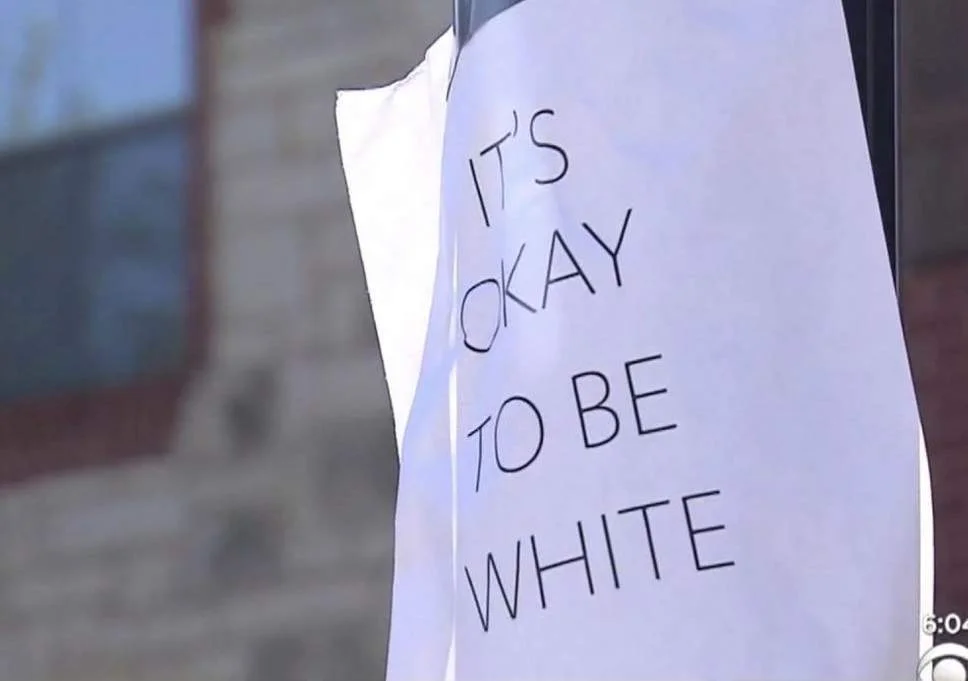
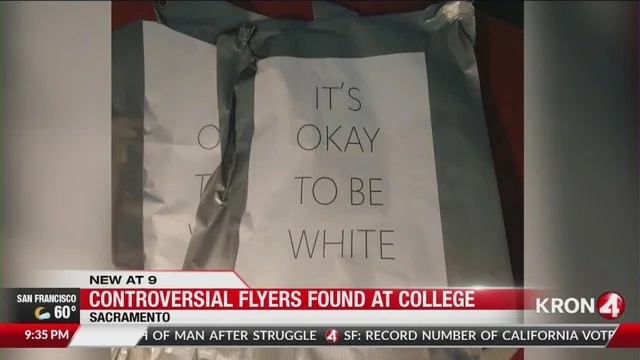
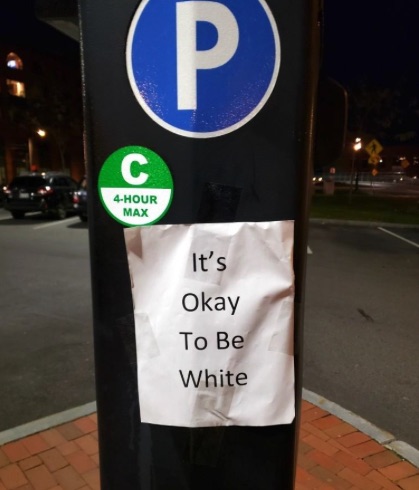
White Propaganda Signs, "It's Ok to be White," Popping Up Across the US [Not Ok to Have a Master-Servant Relationship with Non-White People or Organize Them into Groups for the Purpose of Domination]

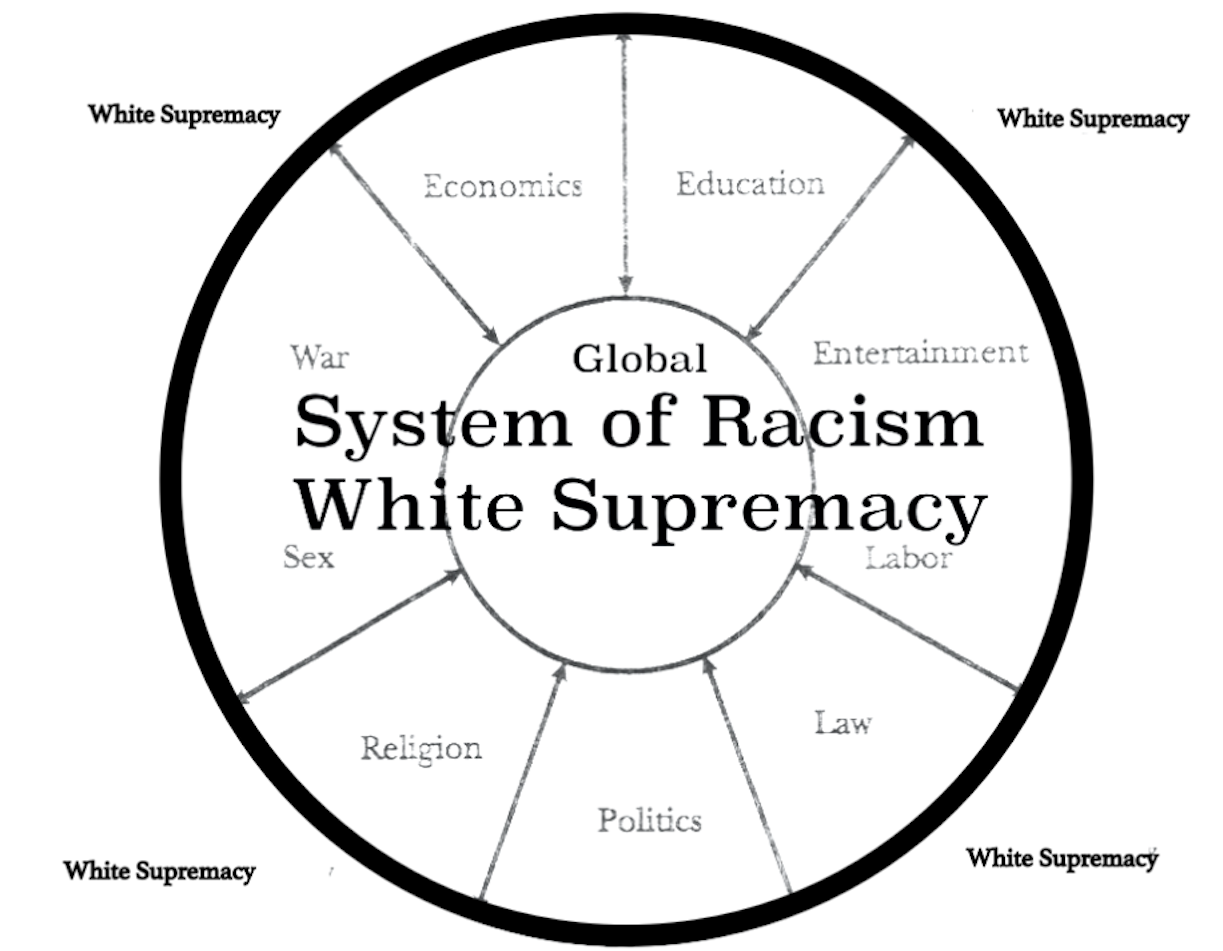
White Propaganda - “a game two can play—which consists simply in repeating '"I am better than you" and "you are utterly unlike (opposite to) me" over and over again; despite the historical record to the contrary - FUNKTIONARY“People who classify the…

White Propaganda - “a game two can play—which consists simply in repeating '"I am better than you" and "you are utterly unlike (opposite to) me" over and over again; despite the historical record to the contrary - FUNKTIONARY

“People who classify themselves as White, who wish to be taken seriously, and who are righteous and responsible, will only talk about ending White Supremacy (Racism) and replacing it with Justice.” [MORE]

From [HERE] Signs bearing the words: “It’s OK to be white,” have appeared in a Texas neighbourhood days before a divided nation prepares to go to the polls

Reports said the signs, attached to lamp posts and other property, appeared in parts of the north of the city of Fort Worth. [MORE] Signs have also popped in other parts of the country at various mostly white universities. Such as the University of Vermont which is 89% white. [MORE] Apparently, Neuropeans are in great anxiety over this small presence of color. Since last week the posters have appeared at American River College, Duke University, North Carolina State University, Tufts University, the University of Delaware, the University of Denver , the University of St. Thomas, in Minnesota, University of Idaho , William Paterson University, Sacramento Community College and Champlain College. The signs also were put up in downtown Portsmouth last week.
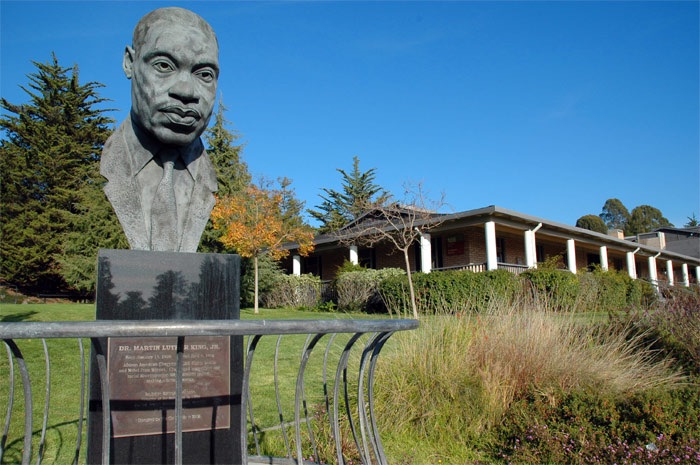
Also the well loved statue of Martin Luther King Jr. at Cabrillo College (CA) was plastered with flyers containing a handwritten racist message saying "it's okay to be white."[MORE]

The trend is not confined to the United States. One Canadian institution, the University of Manitoba, also had the posters turn up. In Australia, the use of the phrase by some politicians has set off a major political debate (and appearance of the posters), but in that case, the focus is not in higher education.

Also last week, white nationalist posters turned up at California State University at San Marcos.

Colleges have generally removed the posters as soon as they are discovered. Colleges generally require those putting up posters to identify themselves and/or get permission to place them. That hasn't happened in these cases. So while college leaders have condemned the message behind the posters, they have not faced free speech challenges because those putting up the posters have violated college rules. [MORE]

Race is not real but racism is. [MORE] Racists are obsessed with skin color and their inability to produce color. Dr. Francis Cress Welsing explains that 'the global white collective maintains a different appearance from the rest of humankind, and many of them dislike this difference. "Racism (white supremacy), having begun as a form of self-alienation, has evolved into the most highly refined form of alienation from others as well. They created the concept of race out of thin air.
The only purpose of race is to practice racism. Having little biological validity, the term "race" is better translated to mean organization. The sole purpose of such organization is to maintain white domination and world control of non-whites, who have been frictionalized into made up classifications of people by racists. [MORE] See Dr. Blynd for more medicine. 

Credit Acceptance Corporation is 'Changing Lives' by Crushing Poor Black Folks: Subprime Auto Lender has Consumed Detroit with Debt & Turned its Courthouse into a Collections Agency

Credit Acceptance Corporation.jpg

From [HERE] When Don Foss started his career as a car salesman, he recognized early on that most of his prospective customers had shaky credit, leaving them with few options for financing to buy a vehicle. So in 1972, he started subprime auto lending company Credit Acceptance Corporation to fill that void. He knew lending money to buyers with low credit posed an inherent risk, and he knew the business couldn't solely be focused on closing sales. It had to excel at collecting loan payments too.

"I began to realize that, even as I worked as hard as I possibly could at selling cars, we would have to do better on the collections side," Foss said in 2009, reflecting on how he'd managed to grow and sustain a business that had provided financing to low-credit car buyers for nearly 40 years. It certainly ended well for Foss, who stepped down last year, netting $128 million upon retirement by selling off his company shares.

Indeed, over time, the collections side of the business has transformed into a fundamental pillar of the Credit Acceptance model, sparking numerous government investigations and lawsuits over alleged deceptive practices, while exposing some of its customers to ceaseless debt.

The company has acknowledged it repossesses about 35 percent of all vehicles it finances, and its aggressive methods to pursue buyers for non-payment is widely known. Debt collectors retained by the company chase after defaulted buyers for as long as 20 to 25 years, garnishing their wages and recouping sums that sometimes exceed two times the original loan amount.

But it's even worse than many know. The extent of Credit Acceptance's well-oiled debt collection machine is perhaps best illustrated in the company's backyard: Detroit.

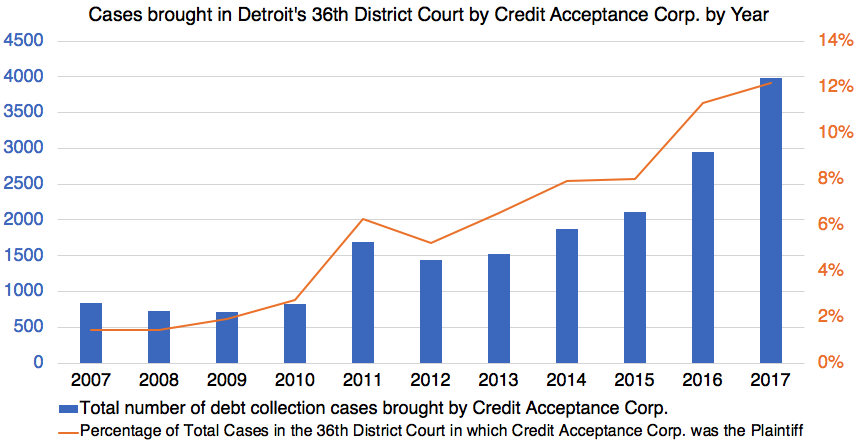
In 2017, one out of every eight civil lawsuits filed in Detroit's 36th District Court, the largest district court in the state of Michigan, was a collection case brought by Credit Acceptance, according to an analysis of publicly available court records by Jalopnik. Credit Acceptance alone — a company meant to service subprime car loans under the cheerful motto of "We change lives!" — absolutely dominates the civil case volume of one of the country's busiest courts.

"Oh my god," says Robert Lawless, a law professor at the University of Illinois who co-authored a study this year that examined the effect debt collection suits have on consumers who ultimately file bankruptcy. "That's an incredibly high number."

subprime-graph-2.png

The issue was raised in three reports by a legal transparency nonprofit group called PlainSite over the last year. PlainSite had the idea to scrape court records from Detroit's 36th District court to obtain information about CAC. It also made its source code for analyzing the Detroit court records publicly available; Jalopnik independently verified and expanded on PlainSite's methods by building its own software to scrape the records data, and conducting additional interviews.

Jalopnik's analysis also raises the specter that Detroit's court system, which teetered on insolvency just five years ago, is now staying financially afloat with help from the fees it collects in cases filed by Credit Acceptance's debt collectors. The nonprofit Center for Responsible Lending, in a study earlier this year on debt collection suits clogging Oregon courts, pointed out that consumers there have to pay an appearance fee to the court before they can file a response to contest the debt, or other court fees.

"It costs to file a case in the first place, it costs to file a complaint, and then — as we found in Oregon — it costs a decent amount of money, a couple hundred dollars, to file a response," says Lisa Stifler, deputy director of state policy at the Center for Responsible Lending. "It's not all cases, but it's money that, yes, if courts were funded by states more fully, then perhaps some of those fees wouldn't need to be as high because they have operating budgets that are covering some of those expenses. There's some sense that court filing fees do end up paying for running the courts."

Reached by phone, Foss deferred comment to Credit Acceptance. The lender didn't respond to a request for an interview, and did not answer a list of detailed questions.

The lender's practices have had lasting implications in Detroit, where one out of every three residents live in poverty and, with shoddy public transportation, a car is virtually essential for work. About 70 percent of the city's residents have to commute to jobs in the suburbs.

In other words, the number of debt collection suits makes a bad situation in Detroit even worse. The loosely regulated auto lending market lets dealers arrange loans with exorbitantly high interest rates, financed by companies like Credit Acceptance.

High interest is associated with a higher chance of default, and if a low-income driver falls into default, loses their car to repossession, and then gets hit with a collections suit, they run the risk of Credit Acceptance garnishing up to 25 percent of whatever wages they're earning, and possible insolvency. A study published in July found a borrower who loses their vehicle to repossession is twice as likely to file for bankruptcy.

"The real concern should be that borrowers who are unaware of the consequences of default/repossession are taken advantage of," says Erik Mayer, a finance professor at Southern Methodist University and co-author of the study. "In some cases, lenders may know the borrower won't be able to repay the loan in the end, but it may still be profitable to make the loan due to high interest rates, fees, and the ease with which they can repossess the car in the case of default."

By analyzing publicly available records from Detroit's 36th District Court dating back to 1995, Jalopnik found:

• Credit Acceptance filed at least 32,799 collection suits against 39,714 Detroit car buyers, more than 4 percent of all available civil cases.

• In 2017, the company's collection suits represented 12.18 percent of all 32,660 publicly available civil cases in Detroit, up from just 1.45 percent in 2007. (The court reports that it handled more than 43,000 civil cases last year, and says it's "not responsible" for any omissions in the online 36th District Court Case Inquiry System. At that rate, Credit Acceptance still comprised over 9 percent — or nearly one in 10 — of the court's caseload last year).

Jalopnik counted a "case" as an action against one or more defendants; in some instances, two or more defendants are named in the same suit.

• The company secured judgments against 6,556 defendants that were eventually paid off in full. 6,150 of these judgments were default judgments — meaning cases when the car buyer didn't show up to defend themselves. Defendants sometimes didn't show up in court because they weren't even notified to appear, several consumers say. In those cases, Credit Acceptance garnished at least $27.5 million in wages and income-tax refunds.

• Lawsuits against at least 33,158 Detroit car buyers remain pending. In those cases, Credit Acceptance has secured 22,802 default judgments worth at least $162.6 million. It's unclear how much has been garnished and collected from those suits to date, but records show that 40 percent have been ongoing for at least 10 years, and at least 2,200 have been pending for more than 20 years.

It's unclear exactly what led to the situation in Detroit, although the tough economic situation for the city and its residents in recent years has certainly contributed. The company has been investigated by regulators for potential wrongdoing, and it has faced accusations in cases across the U.S. of duping car buyers into taking on untenable loans, however no current probes in Michigan against Credit Acceptance appear to exist.

But what's clear is that, in recent years, Credit Acceptance has sharply increased the number of debt collection cases it has filed in the Motor City — and in a state where its practices have been called into question before. Credit Acceptance's main debt-collection attorney was indicted in 2005 for falsifying hundreds of court documents, claiming he'd notified consumers to appear in court when he hadn't.

Credit Acceptance had also been accused in the past by a suburban Detroit court of providing insufficient documentation to support its requests to garnish borrowers' wages. The court's clerk had discovered reams of errors in its filings, but when Credit Acceptance sued the court for subjecting its garnishment requests to more scrutiny, the Michigan Supreme Court sided with the lender, leaving courts barely any leeway to substantively review the accuracy of its filings.

"With the Michigan Supreme Court case, it makes it very easy for them to do this," Stifler says. "It's like a lawsuit mill. They don't need to make sure they have the paperwork in order or be absolutely sure that what they say is owed is actually owed. They have pretty free rein to file what they want."

The company has long portrayed itself as a do-gooder, a lender of last resort for consumers who otherwise had no other options. But consumer advocates characterized Jalopnik's findings about Detroit as alarming, and say it calls into question whether Credit Acceptance is even providing its customers with a sound loan product.

The figure "is pretty striking in terms of numbers," Stifler says. "If you're not putting out an affordable product, or if you're putting out a predatory product and/or not looking at whether people can actually repay it," she says, "the fact that [there are] high collection lawsuits is not all that surprising."
"It's entirely structured to be about collection," says Missouri attorney Bernard Brown, who has waged legal battles against Credit Acceptance since the 1990s. "That's fundamental to their model."

Supreme Ct to Review Curtis Flowers' Mississippi Death-Penalty Case in which a Racist Suspect Prosecutor Systematically Excluded Black Jurors in his Six Separate Trials for the Same Murders

doug evans.jpg

From [HERE] The U.S. Supreme Court has agreed to review whether a prosecutor with a long history of racially discriminatory jury-selection practices unconstitutionally struck black jurors in the trial of Mississippi death-row prisoner Curtis Giovanni Flowers (pictured). On November 2, 2018, the Court granted certiorari in the Flowers’s case on the question of “[w]hether the Mississippi Supreme Court erred in how it applied Batson v. Kentucky,” the landmark 1986 Supreme Court decision barring the use of discretionary strikes to remove jurors on the basis of race. 

Flowers has been tried six times for a notorious 1996 quadruple murder in Winona, Mississippi. He was prosecuted each time by Doug Evans, the District Attorney in Mississippi's Fifth Circuit Court District since 1992. Flowers was convicted by all-white or nearly all-white juries based on questionable circumstantial evidence and the testimony of a jailhouse informant (who has since recanted) that Flowers had confessed to the murders. Court pleadings and the American Public Media (APM) podcast series, In the Dark, have cast doubt upon much of the evidence in the case, and a prominent pathologist who examined the autopsy reports and crime scene photograph has disputed the prosecution’s theory that the murder was committed by a single perpetrator.

curtis flood 2.jpg

In the Dark conducted a study of jury selection in the Fifth Circuit Court District during the 26-year period from 1992 to 2017 in which Evans was District Attorney, analyzing prosecutorial strikes or acceptances of more than 6,700 jurors in 225 trials. APM found that throughout Evans's tenure, prosecutors struck prospective black jurors at nearly 4½ times the rate of white prospective jurors.

In Flowers’s case, Evans struck nearly all of the African-American jurors in each trial. In his first three trials, the Mississippi Supreme Court overturned Flowers’s convictions because of prosecutorial misconduct, with courts finding that Evans had violated Batson in two of those trials. The fourth and fifth trials ended in mistrials. In the sixth trial, in June 2010, Evans accepted the first qualified African-American potential juror and then struck the five remaining African Americans in the jury pool.

Flowers challenged the prosecution’s jury strikes on appeal, but the Mississippi Supreme Court, over the dissents of three justices, rejected his claim. In June 2016, the United States Supreme Court vacated the state court’s ruling and returned the case to the Mississippi Supreme Court to reconsider the issue in light of the Court’s decision one month earlier in Foster v. Chatman, finding that prosecutors in a Georgia capital case had unconstitutionally stricken jurors because they were black. However, over the dissents of three justices, the Mississippi Supreme Court again affirmed, writing that the prior adjudications that Evans had already twice violated Batson “do not undermine Evans’ race neutral reasons” for striking black jurors in the sixth trial and that “the historical evidence of past discrimination ... does not alter our analysis.” The U.S. Supreme Court has not yet set a date for oral argument in the case.

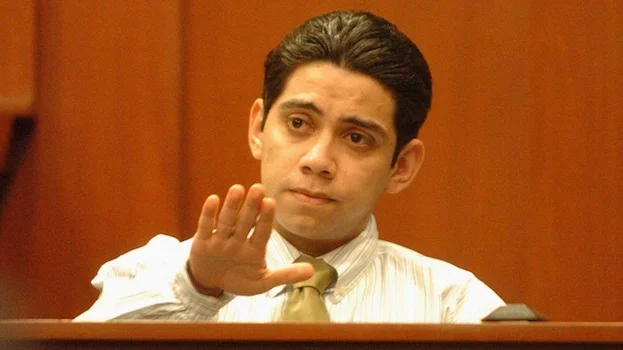
Florida Cancels its Plans to Murder Latino Man Exonerated After DNA Implicates Prosecution Witness - Spent 10 Years on Death Row

Clemente Javier Aguirre.jpg

From [HERE] and [HERE] With newly discovered confessions and DNA evidence pointing to the prosecution’s chief witness as the actual killer, prosecutors dropped all charges against Clemente Javier Aguirre (pictured, center, at his exoneration) in a Seminole County, Florida courtroom on November 5, 2018. The dismissal of the charges made Aguirre the 164th wrongfully convicted death-row prisoner to be exonerated in the United States since 1973 and the 28th in Florida. The announcement that prosecutors were dropping all charges against Aguirre came after jury selection for his retrial had already begun. The Florida Supreme Court unanimously overturned his conviction in 2016. “Mr. Aguirre was nearly executed for a crime he didn’t commit,” said Joshua Dubin, one of Aguirre's attorneys. “While we are overjoyed that his ordeal is finally over, the case of Clemente Aguirre should serve as a chilling cautionary tale about how dangerous it is when there is a rush to judgment in a capital case.”

Aguirre was convicted and sentenced to death in 2006 for the murder of two neighbors: an elderly woman and her adult daughter. He steadfastly maintained his innocence, saying he had discovered the women only after they had been killed. He did not report the murders to authorities, he said, because he was an undocumented immigrant and feared deportation. Evidence has increasingly pointed to the victims' daughter and granddaughter, Samantha Williams, as the likely perpetrator, and an affidavit filed last week undermined Williams's alibi. DNA testing had revealed Williams's blood in several locations at the crime scene but had found none of Aguirre’s blood. Williams also has reportedly confessed to the crime on at least five occasions. A sworn affidavit from the wife of Mark Van Sandt, Williams’s boyfriend at the time of the crime and her key alibi witness, says that Van Sandt told his wife he saw Williams crawling out of his bedroom window on the night of the murders. Prosecutors said that they dropped charges “based upon new evidence that materially affects the credibility of a critical State witness.”

Aguirre is an undocumented immigrant from Honduras, and his attorneys say they plan to file an asylum application on his behalf. Joshua Dubin said in a statement: “If there were ever a person that deserved a chance to become a United States citizen, it is Clemente Aguirre. He has been fully exonerated, so we are going to be asking the immigration judge to set a bond and allow Clemente to be released while his application for asylum proceeds.” Aguirre is the third foreign national to be exonerated in the last year. Gabriel Solache was exonerated in Illinois on December 21, 2017 and Vicente Benavides was released on April 19, 2018 after nearly 26 years on California's death row. Both Solache and Benavides are Mexican nationals. While there has been one exoneration for about every nine executions in the U.S. overall, there has been one exoneration of a foreign national for every 6.17 executions of a foreign national, suggesting that foreign nationals may be more likely to face wrongful convictions and death sentences than U.S. citizens.

Aguirre was sentenced to death by the trial judge despite non-unanimous 7-5 and 9-3 jury votes for death in the two murders. 20 of the 22 Florida exonerations for which researchers have been able to determine the jury vote have involved judges imposing the death penalty despite a jury recommendation for life or after a non-unanimous jury recommendation for death. Florida now requires a unanimous jury recommendation before a judge can impose a death sentence. Florida has had more death-row exonerations than any other state.

In Racist Police State Every Law is a Threat Backed by Force & Even a Seat Belt Traffic Stop Can be Niggerizing for a Black Passenger: Black Man's Suit Against White Hammond Cops Delayed Again

“As these examples illustrate, commands are often enforced with threats to issue further commands, yet that cannot be all there is to it. At the end of the chain must come a threat that the violator literally cannot defy. The system as a whole must …

“As these examples illustrate, commands are often enforced with threats to issue further commands, yet that cannot be all there is to it. At the end of the chain must come a threat that the violator literally cannot defy. The system as a whole must be anchored by a non-voluntary intervention, a harm that the state can impose regardless of the individual’s choices.” [MORE]

From [HERE] The lawsuit and trial were postponed again for a man who was the subject of a 2014 Hammond traffic stop that made national news.
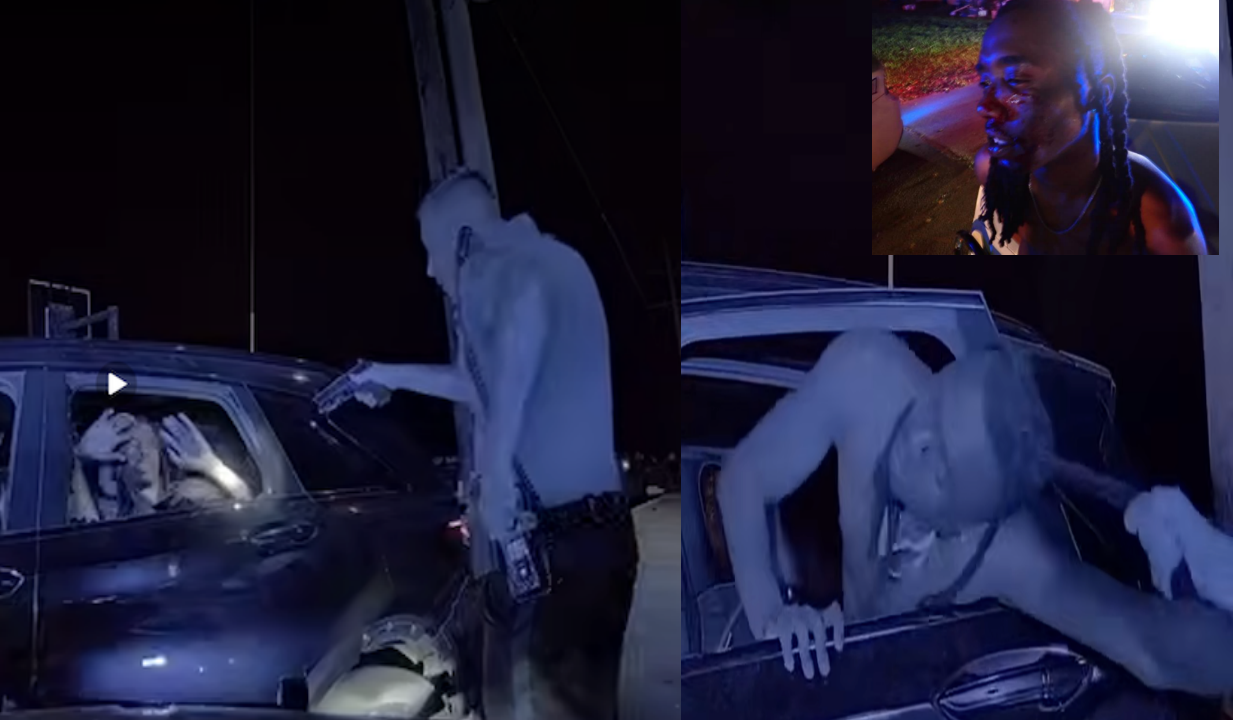
Cellphone video circulated online after Jamal Jones and his girlfriend, Lisa Mahone, along with a 14-year-old and 7-year-old in the back seat, were stopped Sept. 25, 2014, at 169th Street and Cline Avenue.

The couple filed a federal lawsuit claiming Hammond police officers used excessive force when they used a stun gun and broke a window, records show.

Jones, 31, of Hammond, was charged with resisting law enforcement, court records show. He said after the incident that he didn't get out because he was afraid of the police.

A gag order previously was put in place in the Lake Superior Court case.

Jones was scheduled for a retrial in August, which was pushed back. He previously had a mistrial in October 2016 after one of the witnesses mentioned another alleged unlawful force incident by an officer while the witness was being cross-examined.

Last month, Jones’ attorney, Scott King, withdrew from the case. Jones is now scheduled for a pretrial conference in September, court records show.

The federal lawsuit has lingered for months as attorneys file status reports updating the progress of Jones' criminal case. Jones had a telephonic status conference Nov. 1 in Hammond’s federal court for his lawsuit. In light of the developments in his criminal case, and attorneys were told to file status report in January, court records show.

Jones is currently in custody at the Stateville Correctional Center, according to the Illinois Department of Corrections, and is expected to be released Nov. 7. He is in custody for Cook County charges of aggravated unlawful use of a weapon and aggravated DUI, license suspended or revoked, according to the DOC.

During the Hammond traffic stop in 2014, officers stopped Mahone for an alleged seat belt violation. The situation escalated after police asked Jones, who was in the front passenger seat, for his identification, but Jones said he did not have it on him, according to court documents.

Hammond Mayor Thomas McDermott Jr. previously said he was adamant that he did not want to settle the civil case.

Police ordered Jones to exit the car multiple times, but Jones did not comply, saying he refused because he was afraid of the officers, according to the lawsuit. Officers said they became concerned when Jones reached in the back of the car, but Mahone and Jones argue the officers' reaction was excessive.

Mahone's teenage son filmed part of the stop from the back seat of the vehicle. In the video, a child is heard crying after police broke a window and removed Jones from the vehicle, using a stun gun and putting him in handcuffs.

The video of the traffic stop spread across the internet and national media as discussion about excessive force made headlines. About a month and a half before the traffic stop, Michael Brown was fatally shot by police in Ferguson, Mo., leading to riots in that community.