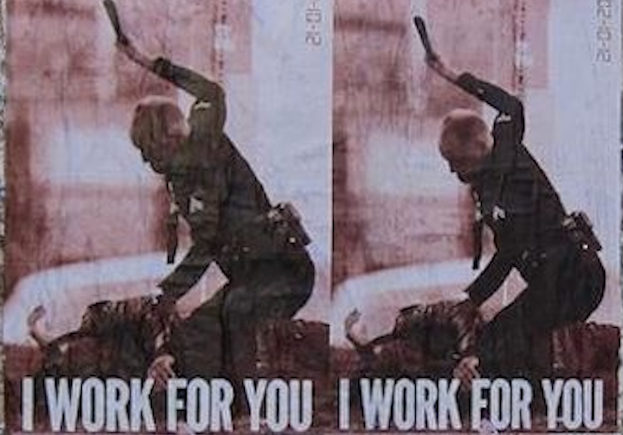
[hiding public video to serve you?] Blytheville Releases 1 Minute of Edited Bodycam Video from White Cop who Crushed Black Man’s Windpipe, Leaving him Comatose - suit filed

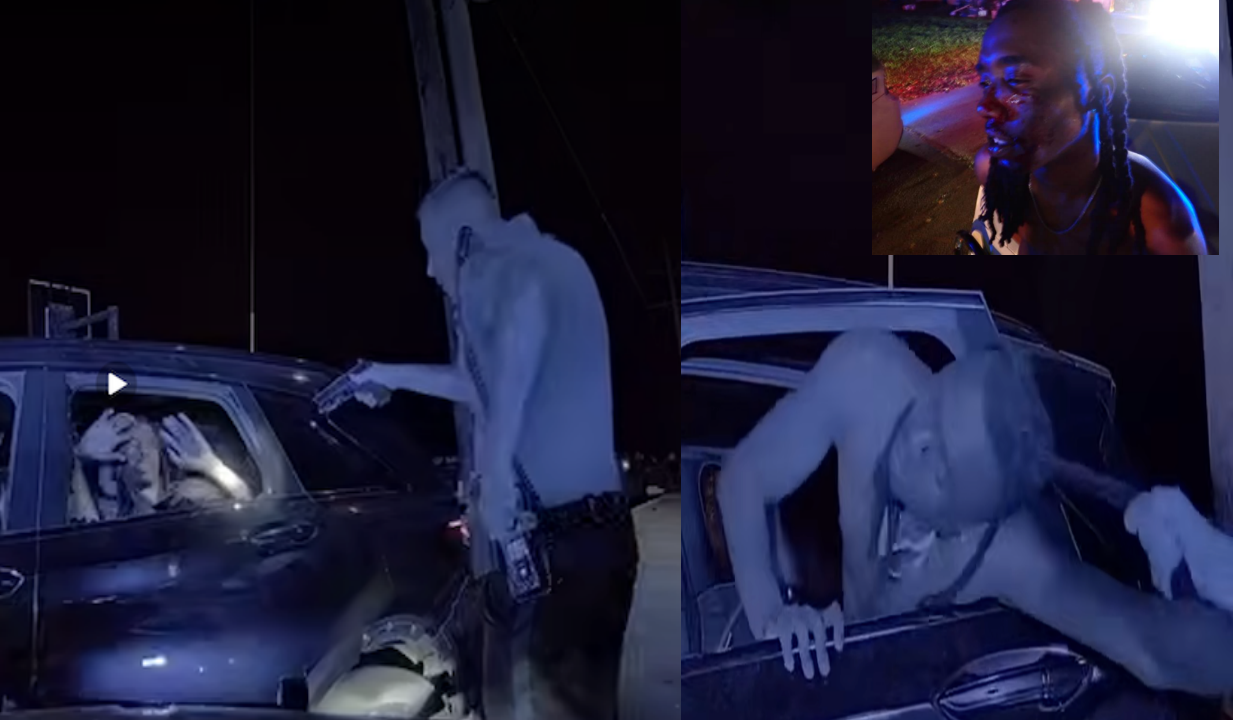
PROTECTING THE MASTERS. From [HERE] and [HERE] A lawsuit was filed Tuesday against the city of Blytheville after attorneys accused Officer Doyne Driskell of using excessive force on their client in September.

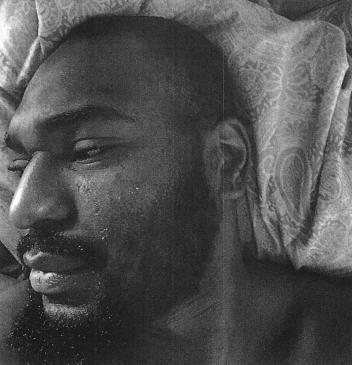
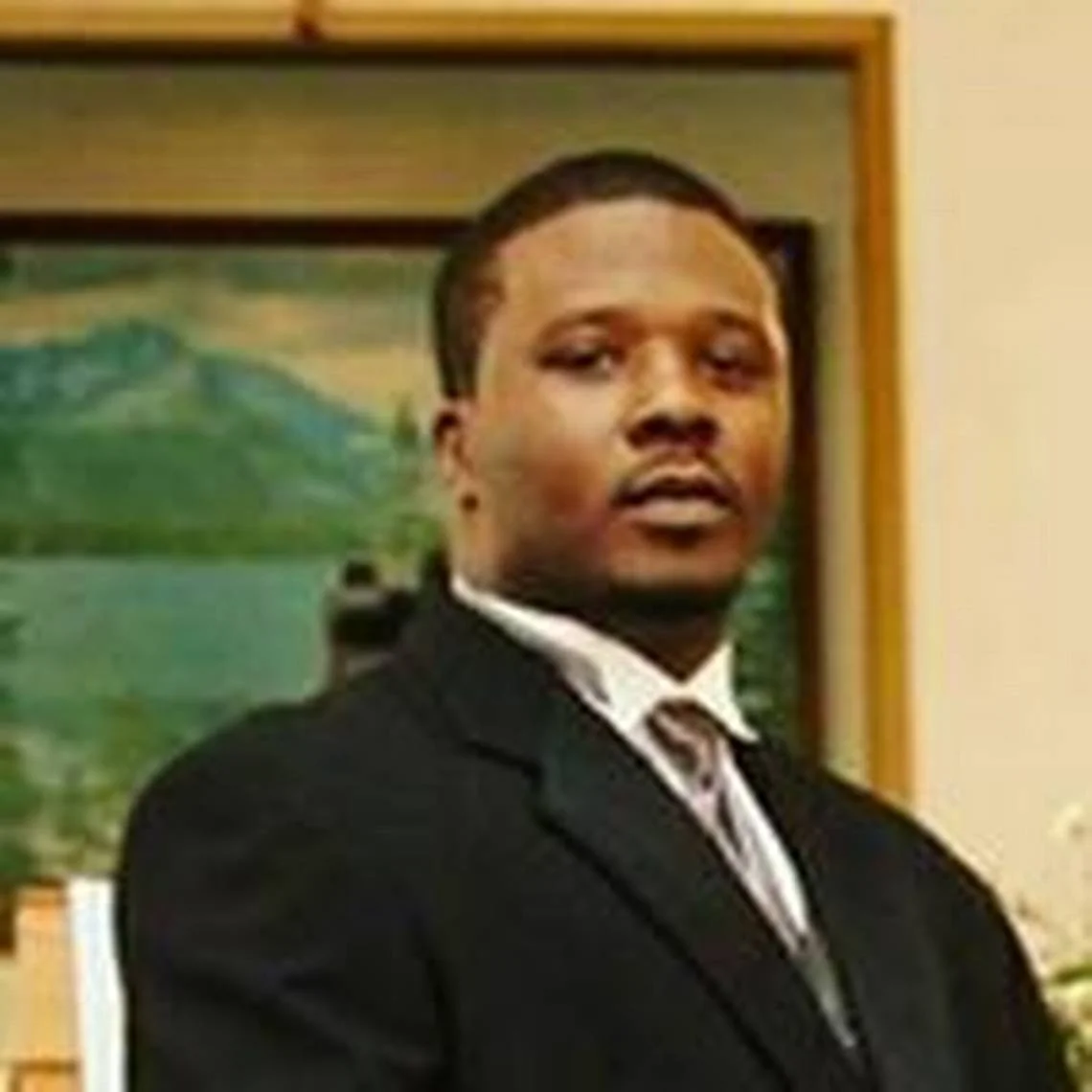
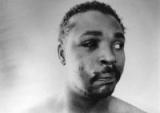
The lawsuit, filed Tuesday, claims 30-year-old Rayshawn Warren remains at a hospital in Jonesboro in a permanent vegetative state resulting from injuries sustained during his arrest.

Attorneys said Warren's medical bills already surpass $250,000.

The lawsuit claims the white officer has a history of excessive force. It also called excessive force an "institutionalized practice" at the Blytheville Police Department.

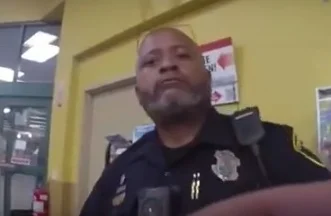
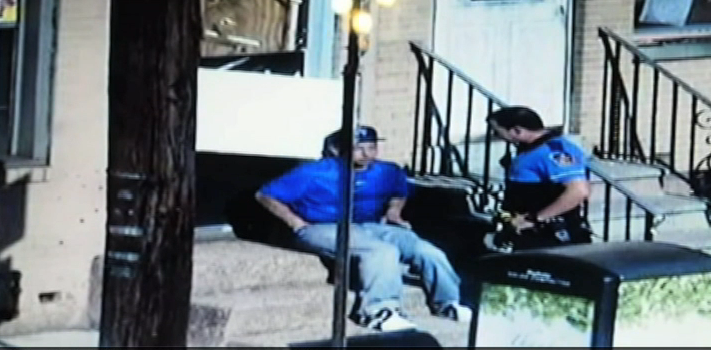
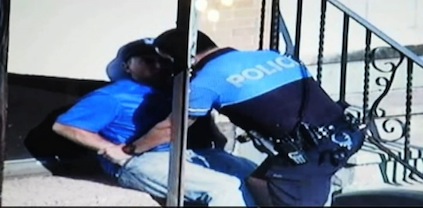
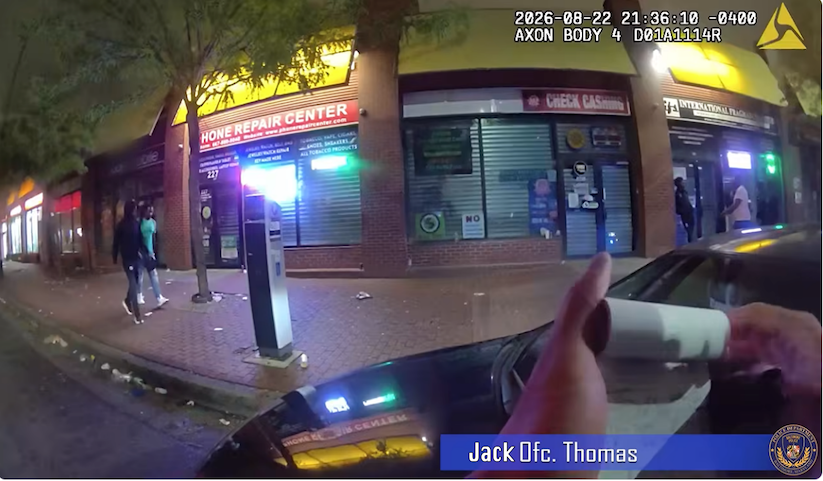
WREG requested more than two hours of police body camera footage from Blytheville police Wednesday. Police released portions of two videos amounting to a little more than one minute. One shows police talking to a woman who had complained Warren was trying to barge into her home. The other video shows an officer chasing Warren, then making contact with him before Warren runs off again.

In the edited, remixed video body camera footage showed the officer chasing 30-year-old Rayshawn Warren near 7th and Main Street in Blytheville, Arkansas.

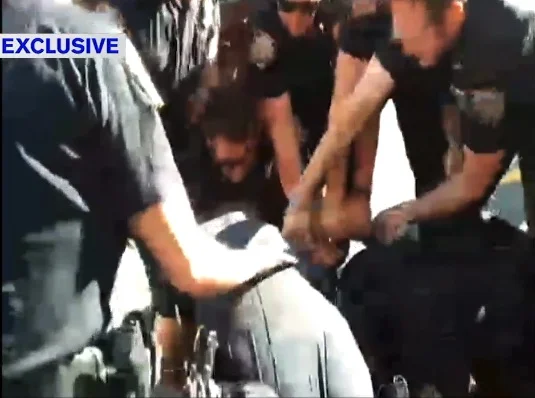
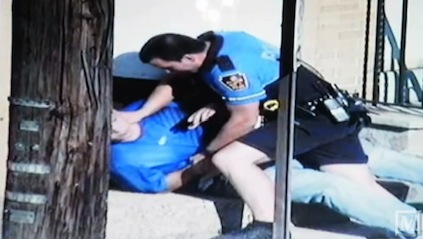
It stops before you can see the actual confrontation but Warren's attorneys said Officer Driskell left him with a crushed trachea, unconscious and with little to no chance of ever getting better.

The lawsuit claimed the officer used “arm bar restraint” and has a history of being overly aggressive in his arrests.

Rayshawn Warren.jpg

Blytheville Police told us in a released statement that it was Warren who was being overly aggressive.

Police responded after getting several calls of Warren knocking on doors and trying to force his way in.

They released body camera footage of a neighbor describing what happened. The neighbor said Warren was trying to smash the door open and his eyes were big like he was under the influence.

Tonia Daniel, who lives next door to the house, said she believes Warren had meant to come to her house as he's done before to rest and get a drink of water.

"He would come here to rest and he would knock on the door. He knocked on the wrong door unfortunately," Daniel said.

Blytheville police said medical records show Warren had amphetamines [used to treat ADHD and sleep disorders] and THC [marijuana does not cause violence conduct] in his system.

Officer Driskell said he had to tackle Warren to the ground, where Warren resisted arrest by kicking the officers.

Warren’s attorneys said they want to see the confrontation for themselves so they can know what really happened that night.

Blytheville police said this is an ongoing investigation so video showing the confrontation cannot be released.

They said Warren also suffered from cardiac arrest at some point during the arrest, due to the drug use.
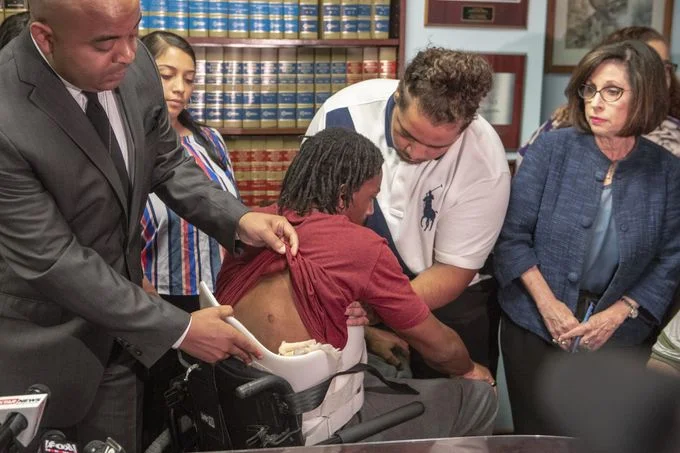
$50 Million Suit Filed Against Phoenix: White Cop Shot Black Man in the Back with hollow-tipped Bullet Causing Paralysis - Not Under Arrest, Chased because He Ran

phoenix cops.jpg

From [HERE] Edward Brown lost his ability to walk when a Phoenix police officer shot him in the back Aug. 5.

The paralyzed Black man filed a claim with the city of Phoenix seeking $50 million in damagesThe Arizona Republic reported.

Last week, Former Arizona Attorney General Tom Horne filed a notice of claim against the city of Phoenix, the Phoenix Police Department and Officer Kenneth Silvia, on behalf of 35-year-old Edward Brown, who was shot in August. 

The claim -- a precursor to a lawsuit -- says that Silvia committed battery, used unreasonable force and violated Brown's rights during the incident. The officer fired a hollow-tipped bullet that shattered Brown's spine and punctured his lungs.

The Phoenix Police Department confirmed to The Arizona Republic that neither officer involved in the incident was equipped with a body-worn camera.

"Prior to the shooting he was a physically active person," the claim says. "This is a cosmically tragic event for him, for the rest of his life... Evaluating a number for losing the quality of one's life is obviously subjective. However, considering all the circumstances, we are willing to settle this case for $50 million."

Brown previously said he was racially profiled during the incident, according to KNXV-TV.

According to police documents, officers responded to the area of 21st Avenue and Glenrosa on Aug. 5 because of reports of “possible drug activity” in an alley.

When officers arrived, there was a group of people in that area that scattered.

The incident report stated Brown ran away, tried to jump a fence, reached down toward his foot, turned around and ran back toward the officer and “swiped” at the officer’s gun.

The officer, according to court documents, shot Brown because he tried to get the officer’s gun.

Brown, who was unarmed, denied trying to grab the officer’s gun.

“If Edward had been trying to take a gun away from the police officer, as has been alleged, as it has come from the police department, he would've been shot in the front, not in the back,” said Horne.

The incident report also stated during an interview, “Brown admitted to running from officers because he had a felony warrant.” [As it pertains to white citizen subjects, the Supreme Court has held that without more, flight or running from the presence of cops is not a basis for arrest and does not establish probable cause. [MORE

The attorney also said that his client was mistreated while he was held in jail, alleging that corrections officers did not help Brown get from his bed to the toilet. Instead they left him alone in his wheelchair. Horne said Brown's catheter was removed before his imprisonment and officers eventually found him soaked in his own urine and feces.

"The way [Brown] was treated constitutes cruel and unusual punishment under the Eighth Amendment of the United States Constitution," he said.

A grand jury indicted Brown for aggravated assault of a police officer and possession of marijuana — despite Brown possessing a medical marijuana card. He has a hearing scheduled for November 6 in Maricopa County Superior Court. 

“I definitely feel like it was racially motivated,” said his sister-in-law Jodi Jackson. “Hearing him suffer, not receiving medical attention, it's been difficult.”

The family has created an online fundraiser to help pay for legal expenses: https://www.gofundme.com/another-innocent-unarmed-suspect

Activists Claim White DA Undermined her Own Grand Jury to Avoid Indicting White Rochester Cops with Felonies after their Brutal Attack on Black Man Causing Broken Facial Bones

rochester da 2.jpg

From [HERE] and [HERE] The message Friday afternoon was disappointment-- both in the district attorney and in the grand jury itself.

Activists called Friday's indictment a 'half step' rather than what they wanted.

Christopher Pate, 37, said he was approached by officers in an unmarked vehicle at Fulton Avenue and Bloss Street around 4:45 p.m. on May 5. Officers claimed that Pate matched the description of an individual on their "most wanted" board.

Pate said that after he provided his identification and proved he wasn't the person they were seeking, the officers continued to escalate the situation and initiated a physical confrontation.

According to Pate, the officers tased and handcuffed him then punched him repeatedly, breaking bones in his face.

“I saw the officer on top of him, beating him," said Tina Davis, who saw the incident happening right outside her front door on Fulton Avenue, near Bloss Street. "The guy was yelling and asking him why are they beating him, because he wasn’t resisting or anything, because he wasn’t. From that point on, they took him down to the ground and was on top of him and being real aggressive.” [MORE]

During a press conference after the incident, the chief and mayor said, after reviewing the body-worn camera footage, they believe the purported actions of the officers rises to the level of possible criminal charges.

Reverend Lewis Stewart, the president of the United Christian Leadership Ministry, says he spoke with Christopher Pate on Friday following the DA's announcement. 

Stewart says Pate and his supporters feel let down that both officers were not charged with felony assault. Stewart is still demanding that body camera video of the incident be made public.

He is also blaming the decision by the grand jury on bias.

"In fact, most people will say 'well we have to respect the decision of grand juries.' I don't because sometimes grand juries are ignorant and stupid," exclaimed Rev. Stewart. "...and they were ignorant and stupid in this case. And Sandra Doorley should have given more direction and instruction to the grand jury and the jurors in terms of the fact that this is the outcome that she's seeking and she did not do so." 

Stewart says he's waiting for the results of the police internal investigation.

Two White Elkhart Cops Face Charges after Video Shows them Beating a Latino Man Handcuffed to a Chair in Police Station

From [HERE] Two white Elkhart police officers face charges of criminal battery. That's a misdemeanor.

Corporal Cory Newland and Corporal Joshua Titus are accused of using excessive force while arresting a suspect back in January.

They were arresting a man for domestic battery, battery to a police officer, public intoxication and resisting police.

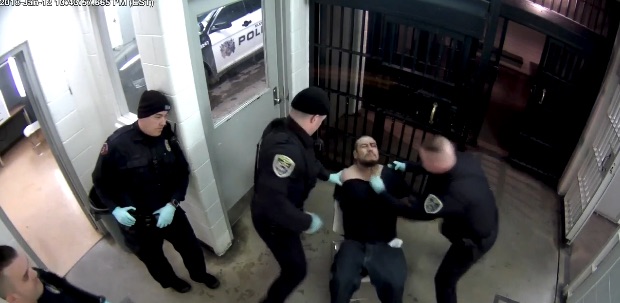
Video shows the white cop apparently daring the handcuffed Latino man to spit on him. He does. Then the two officers then begin to punch & attack him while he is handcuffed to the chair.

The officers have been placed on administrative leave pending the outcome of the criminal case.

elkhart cops.jpg

Suit says a Gang of White NYPD Cops Surrounded Black Man Exiting His Car, Demanded He Answer Questions & then Assaulted Him During Unlawful Arrest & Stop

From [HERE] A Black man from Queens has filed a lawsuit against the NYPD and New York City over what he says was a case of excessive force against him.

Rudy Collins, 25, of Long Island City, said on Wednesday that the incident happened in the 1000 block of 10th Street around 9:30 a.m. on Aug. 30, 2017.

The youth basketball coach was on his way to a game when he stopped for coffee. When he got out of the car, he was met by patrol officers who he says demanded to know where he was coming from and where he was going.

To this day, he says he still doesn't know why the officers approached him, but he answered their questions and said he complied with their commands.

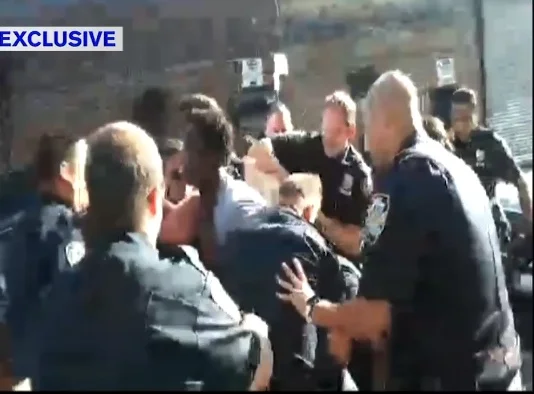
He said despite following their orders, he was still wrestled to the ground and put into handcuffs by at least eight officers. He claims he was beaten and one officer even twisted his genitals.

Collins said he was scared for his life.

He said he was taken to the 114th Precinct for several hours and claims he was questioned about recent shootings in the area.

Collins said he told the officers he knew nothing about the shootings and was then issued a ticket for a seat belt violation and for failing to obey a police command. He was not charged with resisting arrest.

He was later treated and released from Elmhurst Hospital for wrist and shoulder sprains.

His attorney, Nora Constance Marino, has filed a civil rights lawsuit against the City of New York and the police department for false arrest, excessive force and for violation of his Constitutional rights.

The NYPD has declined to comment.

Collins said he was unable to coach his youth basketball team so the team was left without a coach and the children were forced to forfeit their game.

Documents Reveal NYPD Did Nothing but Reward the White Cop who Grabbed an 11 year Old Black Girl by the Neck, Threw Her to the Pavement & Then Lied About it

From [HERE] In 2015, video surfaced of New York City police lieutenant Paul Gaglio assaulting an 11-year-old girl on a Bronx street corner. The incident happened six months after Eric Garner’s death and showed the cop using an illegal choke hold, proved he lied under oath, and yet he still has his job. His employment also comes in spite of the fact that he frequently posts anti-Muslim and anti-black content on social media.

Not only was this cop not fired for lying under oath, attacking an innocent 11-year-old girl, and posting racist comments on social media—but he was never even disciplined—and the department justified his brutal actions.

Alluding to the fact that they knew what they were doing was wrong, the NYPD attempted to cover up the investigation they claimed they carried out.

As Buzzfeed News reports: Confidential department documents and court records reviewed by BuzzFeed News show that in August 2016, the NYPD secretly declined to punish the lieutenant, determining that he had not used excessive force. Then-commissioner Bill Bratton went the extra step of shutting down an internal examination of the officer’s actions, sparing Gaglio from standing trial in front of the department’s in-house tribunal. Today, Gaglio patrols Yankee Stadium, earning $163,000 last year. On Facebook, he has shared anti-gay memes, images denigrating Islam, and posts demeaning black people. (The posts were deleted after BuzzFeed News inquired about them.)

While speaking about his actions that day, Gaglio stated under oath that the girl, wrongly accused of trying to steal a cellphone, tried to resist arrest through “intimidation, physical force, or interference,” and that the two of them had slipped on a patch of ice. However, video footage proved that Gaglio lied and he was the aggressor.

nypd cops  Paul Gaglio.jpg

In the video, the large male cop forced the girl against the wall, then grabs her around the neck and throws her to the pavement, where he handcuffs her before leading her away.

In a sworn statement, the police lieutenant lied about what happened, saying she “and I both slipped and fell to the ground. On the ground [she] continued to flail her arms and thrash her body, preventing me from placing handcuffs on her. We continued to struggle until I was eventually able to place handcuffs on [her].

As we can see in the video below, no one slipped to the ground, and the girl was not flailing and thrashing. It is pure brutality. The assault was just another example of NYPD harassment in minority communities, perhaps motivated by racism, all too similar to the circumstances leading to Eric Garner’s death.

According to civil rights lawyer Bob Herbst, who represents the family, the girl was simply an innocent bystander to a situation that could have been resolved peacefully.

“This past February, after school was out for the day, some boys from the school were throwing snowballs at a passing car. When the driver got out to yell at them — and put one of the boys in a headlock — his smartphone fell out of his pocket and another boy picked it up. Upon realizing his phone was gone, the driver chased down one of the boys and threatened to call the police if the phone was not returned, and when it was not forthcoming, he did, apparently using someone else’s phone. This 6th grader — let’s call her Angie — and a classmate were walking from school to the bus stop when they saw some of this. They were bystanders who had nothing to do with either the snowballs or the phone. But as the police arrived, the girls exchanged words as to whether they should stay to watch, or go, and then took off running for a block before stopping. The driver — the man in the white jacket with the knapsack in the video — seeing Angie running, suspected — wrongly — that she was part of the group and had his phone. He approached Angie and asked for his phone. She told him she didn’t have his phone. Shortly thereafter, as the video starts, this police lieutenant crossed the street, motioning for Angie to come toward him, which she did.”

It seems that running away was enough for the enraged cop to brutalize the girl instead of peacefully ascertaining that she did not have the phone.

If this wasn’t enough for the girl’s psyche, the Corporation Counsel of the City of New York (which prosecutes Family Court proceedings) began a juvenile delinquency proceeding against her. This happened one month after the girl’s parents decided to file claims of police assault and battery and the use of excessive force. Since no action was taken against the girl for four months after the arrest, the proceeding raised the suspicion that the Counsel retaliated after the family said they intended to sue.

Fortunately, the video was preserved by the noble shopkeeper who allowed it to be copied onto the mother’s phone, and this is what proved the cop to be a liar. The obvious unprovoked brutality forced the Counsel to dismiss the case six months later, according to Herbst.

The police lieutenant’s gross abuse of power and the city’s shameful attempt at prosecuting the 6th grade victim has put the girl in a state of psychic distress.

NACDL Suit Alleges Federal Prison Authorities are Monitoring Prisoners’ Emails with their Attorneys & Sharing Info with Prosecutors’ for use against Them in Court

Hungry Cop Watching You.jpg

From [HERE] The National Association of Criminal Defense Lawyers (NACDL) filed suit in federal court demanding that the Federal Bureau of Prisons (BOP) and Department of Justice (DOJ) release records about their monitoring of the attorney-client communications of individuals in federal prisons as well as federal prosecutors’ use of those emails against those individuals in court.

“Denying individuals in federal prisons access to attorney-client privileged email makes absolutely no sense,” said NACDL President Drew Findling. “Clients in the federal prison system are often incarcerated far from where their attorneys are based. This means that, short of using traditional postal mail or scheduling an unmonitored call, either of which often takes weeks, counsel is forced to expend significant travel time to engage in the constitutionally-protected, privileged communications to which our clients are entitled. And all because the federal government chooses to impose this burden on defense lawyers and our clients and to deny protection for the far more efficient and readily available mode of communication in the 21st century -- email. NACDL is committed to shining a light on this serious and wholly unnecessary problem and bringing it to an end.”

There are more than 150,000 individuals in federal custody held in BOP facilities. To send email, these individuals must use a BOP system known as TRULINCS. This system requires them to acknowledge that their communications, including messages to or from their attorneys, will be monitored and not treated as privileged. The federal government can—and has—used emails sent between individuals in federal prisons and their attorneys against those individuals in court.

While courts have ruled that the government is barred by the Constitution from reading the legal postal mail of individuals in federal prisons, courts have not resolved this question for email, and the government has taken the position that it is entitled to read these individuals’ legal email. “If the Constitutional rights already established by the courts are going to carry forward into the 21st century, then they must apply equally to email communications,” said Catherine Crump, Director of UC Berkeley School of Law’s Samuelson Clinic for Law, Technology & Public Policy, and lead counsel on the case.

In order to bring this problem to light and inform the critically important policy discussions that are called for on these issues, NACDL submitted Freedom of Information Act (FOIA) requests to the BOP and to multiple other DOJ components seeking the release of records concerning the federal government’s collection and monitoring of email communications between individuals in federal prisons and their attorneys, copies of which requests are annexed as Exhibits A and B to NACDL’s October 18, 2018, Complaint. The deadline for the agencies to respond under the FOIA has long since passed, and no requested records were produced. Accordingly, NACDL today filed this federal lawsuit in the U.S. District Court for the District of Columbia.

Ms. Crump, Director of UC Berkeley’s Samuelson Clinic for Law, Technology, & Public Policy is lead counsel in this matter. Megan Graham, Clinical Teaching Fellow at the Samuelson Clinic, is serving as co-counsel and Berkeley Law students Diane Aguirre-Dominguez, Nomi Conway, and Ernan Kiselica participated in preparation of the lawsuit. NACDL Past President Barry J. Pollack, a partner at Robbins, Russell, Englert, Orseck, Untereiner & Sauber LLP, is also serving as counsel.

Lesson in Blind Obedience to Authority Goes Wrong: Cincinnati & Kroger to pay $240K after Rolebotic Black Cop Tased 11-year-old Black Girl with Taser

‘IM JUST FOLLOWING MY MASTERS ORDERS.’ he would never do it to a white child and still have a job.

‘IM JUST FOLLOWING MY MASTERS ORDERS.’ he would never do it to a white child and still have a job.

From [HERE] The city of Cincinnati and Kroger agreed to pay $240,000 to the family of Donesha Gowdy, an 11-year-old girl who was stunned with a Taser by a Black police officer according to a news release from family attorney Al Gerhardstein.

Cincinnati Police Department chief Eliot Isaac announced Tuesday the off-duty officer who stunned her had been reassigned to a position with the Telephone Crime Reporting Unit and would soon face additional discipline, including a seven-day suspension and use-of-force training.

"We take these matters very seriously and are extremely concerned when force is used by one of our officers on a child of this age," Isaac said in a news release.

Gowdy had been allegedly shoplifting from the Kennard Avenue Kroger on Aug. 6 when Officer Kevin Brown, who was on security duty, ordered her to stop. She didn't. The officer fired his Taser as she walked away. One probe struck her at the base of her spine; the other hit between her shoulder blades. 

The incident prompted an apology from Mayor John Cranley and a promise from Vice Mayor Christopher Smitherman to review the Cincinnati Police Department’s protocol on Tasers. At the time of the incident, the policy permitted officers to use a Taser on any person between the ages of 7 and 70.

"I think that we have work to do to make sure that our use of force on children is racially fair and balanced in terms of the harm that we can really expect from them," Gerhardstein said.

Isaac promised "a very thorough review" of Brown's actions as well as the department’s use-of-force policies as they pertain to juvenile suspects. As of Tuesday, he had also authorized three reprimands, a forthcoming seven-day suspension of duty and additional use-of-force training to discipline Brown, who would be placed on an intervention plan with a supervisor.

"We take these matters very seriously and are extremely concerned when force is used by one of our officers on a child of this age," Isaac said in a written statement. "As I committed earlier, the department took a very thorough review of this incident and our department standards."

Donesha wrote this apology to Kroger: 

“I Donesha Gowdy is writing this letter to apologize to the Kroger company … to say I’m sorry for stealing from the store in will not do it again.”

Law Firm Finds Cincinnati Cops Tased 110 Children Over the Past 5 Years - All but 6 Were Black

From [HERE] The Tasing and settlement in the case of an 11-year-old girl after an August shoplifting incident is shining new light on juvenile policing practices in Cincinnati. Gerhardstein & Branch, the law firm representing Donesha Gowdy's family, says Cincinnati Police Tased more than 100 minors in the last five years.

As part of an ongoing refresh of the Collaborative Agreement, Cincinnati is scheduled to review cases of racial imbalance, trauma and overall force. Gowdy's family requested a broad review of the principles governing the use of force on juveniles.

TaSer barbs in a racist suspect’s hand. Barbs that fire from a Taser cause a great amount of pain.

TaSer barbs in a racist suspect’s hand. Barbs that fire from a Taser cause a great amount of pain.

Gerhardstein & Branch combed through Cincinnati Police records and found between January 1, 2013 and August 14, 2018, police Tased 110 minors. It says all but six of the minors Tased were black; 48 were between the ages of 11 and 15. Police policy says officers can Tase anyone between the ages of seven and 70.

"Our investigation shows a pattern of excessive force against nonviolent young people," Attorney Al Gerhardstein says.

Gowdy apologized to Kroger in a letter. Cincinnati and Kroger agreed to pay $240,000 to settle the claim of excessive force. Gerhardstein says a police officer working at the Spring Grove Village Kroger Tased Gowdy, who weights 90 pounds and is 4'11" tall.

Meanwhile, Police Chief Eliot Isaac announced Tuesday discipline for the officer who Tased Gowdy.

A statement says Officer Kevin Brown will receive a written and two oral reprimands for violating department policy. Brown will also be suspended from duty for seven days, and is prohibited from working outside the department for two months. He'll also have to undergo use of force training. Brown has been working on the Telephone Crime Reporting Unit.

The statement says the department is committed to developing a juvenile problem-solving team.

Judge Rejects Native American Challenge to North Dakota Voter Law

From [HERE] Chief Judge Daniel Hovland of the US District Court for the District of North Dakota on Thursday rejected a request by Spirit Lake Sioux Tribe to prevent the enforcement of a voter address rule requiring a residential street address in order to vote.

The challengers sought to enjoin the enforcement of the North Dakota Century Century Code (NDCC) sections 16.1-01-04.1(2)(b) and 16.1-01-04.1(3)(b) that require a voter to have identification that includes a “current residential street address” before casting a vote. The law had been previously challenged and the US Supreme Court refused to intervene after the appeal from the Eighth Circuit, which ruled in favor of the law.

The challengers initially brought this complaint due to the disparate impact of the laws on the Native American communities, alleging voter suppression. They sought a Temporary Restraining Order to prevent the laws from affecting the coming election. The Chief Judge denied the request for the emergency order given that granting such an order would cause voter confusion.

Some of the reservations in North Dakota do not have street addresses or number the homes on the reservation. Before the current law, the people who lived on reservations were able to use a PO Box address for voting. The enforcement of the laws has caused the tribes in North Dakota to struggle to make sure that their members can vote. North Dakota is a key state in the battle for control in the Senate and a majority of the state’s tribal citizens cast votes for Democratic candidates, which could affect an outcome in a close race.

Federal Judge Grants Emergency Injunction to Block Georgia ‘exact match’ Voter ID [juan crow] Law Over Citizenship Question

From [HERE] A federal judge ruled Friday that the “exact match” requirement for voter identification in Georgia will not apply to Tuesday’s midterm election as it “places a severe burden” on prospective votes.

US District Court Judge Eleanor Ross for the Northern District of Georgia imposed the emergency injunction to this specific issue, arising from a lawsuit regarding Georgia’s “exact match” process, which requires identification information on voter registration to match precisely what is listed within the Georgia Department of Driver Services or the Social Security Administration.

According to the order, the “exact match” rule could affect approximately 51,111 individuals who have been flagged by the State of Georgia as “ineligible to vote due to alleged errors with their voter registration information.” For about 3,100 of these 51,111, the reason is due to a citizenship status question, and they specifically are the target of the injunction.

Ross held Friday that those who have been flagged due to this citizenship question will still be permitted to cast a ballot by furnishing proof of citizenship such as a passport or birth certificate to poll managers or deputy registrars, and upon doing so may cast a regular ballot and a counted vote.

“These individuals will suffer irreparable harm if they lose the right to vote, [and] this harm outweighs any harm to Defendant, and granting an injunction is in the public’s interest.”

Last week, a Georgia judge also blocked enforcement of a “signature match” voting law on procedural due process grounds.

The signature match and “exact match law” have both generated controversy as Georgia’s Secretary of State Robert Kemp is also running as the Republican Party nominee for Georgia’s governorship. The enforcement of the laws are seen as a way to lower turnout for democratic candidate Stacey Abrams and favor the secretary of state.

Federal Appeals Ct: Ohio Voters Purged from Rolls [mostly Black & Latino] Must be Allowed to Cast Provisional Ballots [a placebo ballot = ‘please don’t start any shit in polling place ballot’]

From [HERE] The US Court of Appeals for the Sixth Circuit ordered on Wednesday that boards of elections in Ohio must count 2018 midterm votes from certain Ohio residents who were previously purged from state voter rolls.

In Ohio, voters who fail to cast a ballot for two years will have notices repeatedly sent to them. If they do not respond to the notices, do not vote within the next four years and do not change address, their voter registration will be canceled.

The court’s three-judge panel ruled 2-1 that a vote cast by a resident purged under this policy between 2011 and 2015 must be counted. The resident must also live in the same county where they last registered, and must not be disqualified from voting due to a felony conviction, mental incapacity or death.

The order comes as the result of an appeal from a previous Ohio District Court ruling that upheld the state’s voter purging process. This ruling dismissed a lawsuit claiming that purges from 1995 to 2016 were unlawful because “the state’s notices to inactive voters didn’t comply with the National Voter Registration Act of 1993.”

Federal law requires forms such as the ones sent to residents during Ohio’s purging process to state that the voter “will be removed” if they fail to vote, or something similarly definitive. Ohio‘s forms currently say that a voter “may be removed” or that their registration “may be cancelled,” which appellants argue is in violation of this law.

The court of appeals did not rule fully on the previous district court decision in the process of giving its order to the state’s boards of elections. However, the panel of appellate judges stated that the voter advocacy groups who brought the appeal would have “a good chance of winning at the appellate level.”

Echoing Government Liars in Flint, Mich., Newark Initially Denied Widespread Lead Contamination Problem in Drinking Water - Now Giving Away Filters to Residents (75% Non-White)

From [HERE] For nearly a year and a half, top officials in Newark denied that their water system had a widespread lead problem, despite ample evidence that the city was facing a public health crisis that had echoes of the one in Flint, Mich.

Even as the risk persisted in the spring, the officials in Newark, New Jersey’s most populous city, took few precautionary measures, instead declaring on their website, “NEWARK’S WATER IS ABSOLUTELY SAFE TO DRINK.”

But this month, facing results from a new study, the officials abruptly changed course, beginning an urgent giveaway of 40,000 water filters across the city of 285,000 people, targeting tens of thousands of residences.

The revelation that Newark is facing a potentially widening public health crisis over tap water has angered many residents and raised questions about whether the city’s negligence has placed young children at risk.

Officials were finally compelled to act after an engineering study commissioned by the city found that measures to prevent lead from leaching into drinking water were failing at one of Newark’s two treatment plants.

State officials are warning that children under 6 in homes with lead pipes served by the plant should not drink unfiltered tap water.

Concerns over lead in tap water have been heightened since the crisis in Flint, where dangerous levels of lead in improperly treated water led to criminal indictments against local and state officials and left residents relying on free bottled water. Like Flint, Newark has a large black population and a high poverty rate.

“The parallels to Flint are fairly clear: The city was denying a problem even though its own data was showing problems,” said Erik Olson, a top official at the Natural Resources Defense Council, which filed a lawsuit against Newark in the summer, accusing it of violating federal safe drinking water laws. “Newark is not as extreme as Flint but still a serious problem.”

But Newark’s mayor, Ras Baraka, has defended the city’s response even as the issue of lead in the water has attracted intense local media attention. “When you make a statement that the drinking water is not safe, it is yelling fire in a crowded room,” he told reporters at a recent news conference. “In fact, Newark has some of the best drinking water. The problem is that our infrastructure is not safe.”

Some residents are frustrated at how long it took the city to admit the problem. “I applaud the city for now, finally, acknowledging the issue, but they first denied it,” said Bishop Jethro C. James Jr., the senior pastor at Paradise Baptist Church. “The denial was an insult to the citizenry.”

Candice Grant, 25, an administrative assistant, did not even know there was a lead issue until she got an alert on her cellphone about the filter giveaway.

“Whoa, there’s lead in the water?” Ms. Grant remembered thinking.

Her mind flashed to her 7-month-old son, and she immediately called her husband. “I said, ‘Get more bottled water because we’re not giving the baby any more from the house.’”

No amount of lead exposure is known to be safe for children, whose mental and physical development can be impaired, according to the Centers for Disease Control and Prevention. In adults, lead can increase risks of high blood pressure and kidney disease; it can cause complications, including miscarriage, for pregnant women.

In Newark, about a quarter of the more than 14,000 children under 6 who were tested in 2016 had measurable levels of lead in their blood, according to an analysis by Advocates for Children of New Jersey of the most recent publicly available state data.

“This suggests a pervasive problem throughout the city coming from a variety of sources, and water could easily be one of them,” said Peter Chen, policy counsel at A.C.N.J.

Supreme Court Allows Black Man's Capital Murder Sentence to Stand after Houston County Clerk's Office Destroyed Trial Audio Recording while Appeal was Pending. Now Texas is set to Murder Him

Tawuan Townes.jpg

From [HERE] US Supreme Court Justice Sonia Sotomayor issued a statement on Monday conveying “deep concern” over an Alabama court’s failure to preserve an original recording of jury instructions for a capital murder case.

Sotomayor concurred with the US Supreme Court’s denial of certiorari in the case of Tawuan Townes because without the tape Townes could not show the procedures amounted to constitutional error.

“Petitioner Tawuan Townes was convicted of capital murder committed in the course of a burglary and sentenced to death. At trial, the crucial question for the jury was whether Townes possessed the requisite intent for a capital murder conviction.” The constitutionality of the instruction hinged on whether the trial court instructed jurors whether they “may” infer the defendant’s intent to kill a victim during a burglary, or whether they “must” infer his intent to kill. The former being an appropriate instruction and the latter unconstitutional.

Townes successfully appealed his 2014 conviction by relying on the original certified transcript which indicated that the unconstitutional instruction was given. However, following the reversal, the trial court judge filed a “supplemental record” with the appellate court stating that the certified trial transcript had been transcribed in error, insisting that the instructions delivered to the jury were proper.

Upon receiving the trial court’s filing, the Court of Criminal Appeals directed the trial court to appoint a new court reporter to listen to the audio recording and re-transcribe the proceedings. The new transcription differed from the original by one word, saying “may” where the original had said “must.”

On the basis of the new transcript, the Alabama Court of Criminal Appeals withdrew its reversal and affirmed the trial court’s conviction and death sentence.

After failing to obtain review by the Alabama Supreme Court, Townes filed a petition for writ of certiorari with the US Supreme Court. Upon receiving the petition, the Supreme Court specifically requested the written transcripts, as well as the original audio recording from the Houston County Clerk’s Office, but was informed that the audio recording no longer exists.

The statement noted the trial court’s “unilateral intervention” of Townes’ appeal, mentioning how they “failed to preserve the recording at issue—despite the fact that Townes’ case was still pending direct review.”

Sotomayor concluded: “A reliable, credible record is essential to ensure that a reviewing court—not to mention the defendant and the public at large—can say with confidence whether those fundamental rights have been respected. … By fostering uncertainty about the result here, the trial court’s actions in this case erode that confidence. That gives me—and should give us all—great pause.”

Lawless Court Dismisses Most Claims against Glassboro Over Improper Notice: White Cops Slammed Black Man’s Head Into Hood, Used K9 & Suffocated Him After Unlawful Bicycle Stop

"Lawless Society - a socio-juristic human relation confliguration where law is upheld, codified, and deified over humanity. If you fear or worry about its advent, you'll certainly never recognize its presence. 2) a Police State of the Overruling Cla…

"Lawless Society - a socio-juristic human relation confliguration where law is upheld, codified, and deified over humanity. If you fear or worry about its advent, you'll certainly never recognize its presence. 2) a Police State of the Overruling Class" - from FUNKTIONARY.

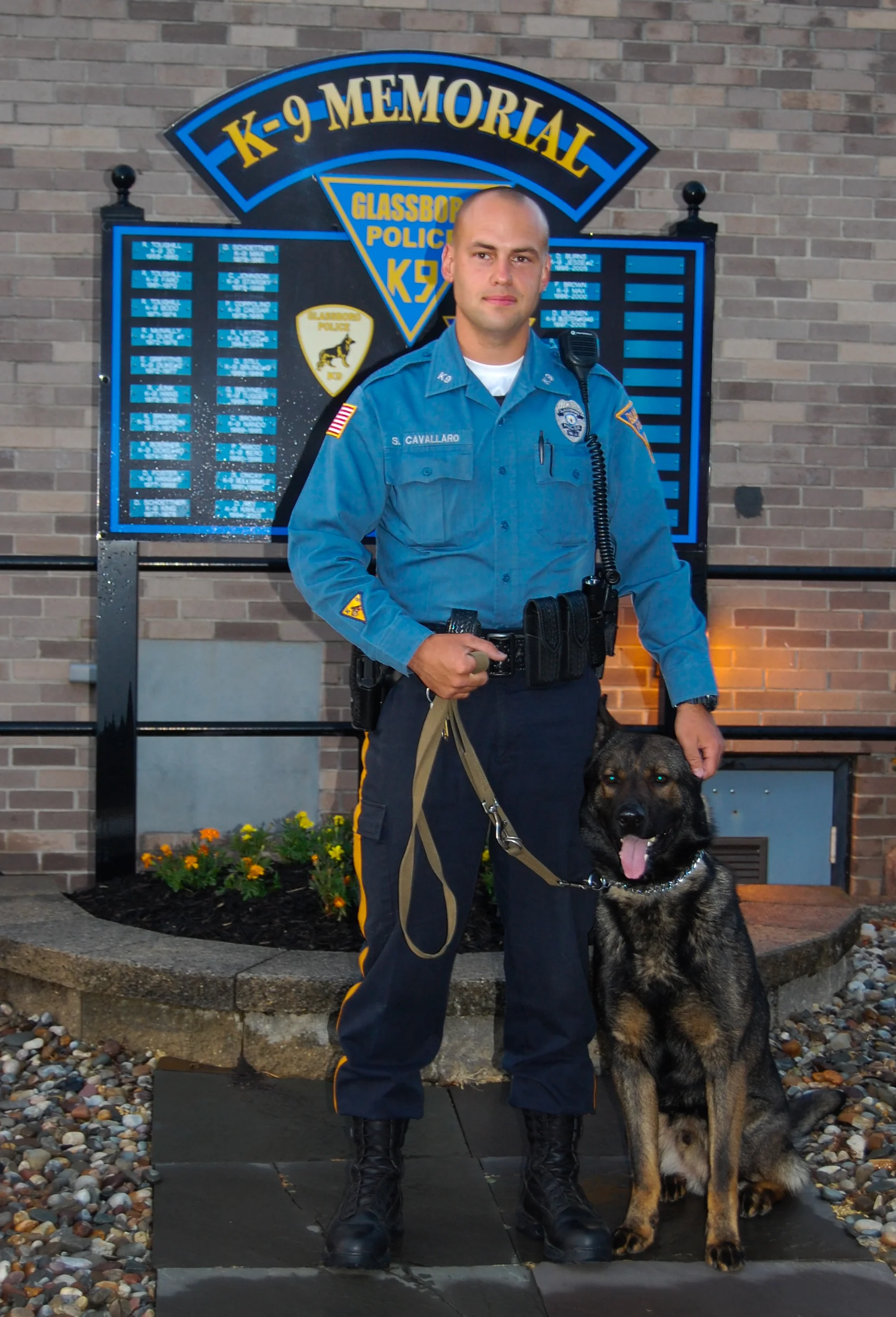
From [HERE] A federal judge has ruled a Glassboro man can pursue a civil rights lawsuit against two police officers who allegedly used excessive force during an arrest.

But Kameron Teel can only ask a jury to consider a single claim in his lawsuit – and not additional allegations against Glassboro and several of its police officers, the ruling said.

Teel alleges Glassboro police Sgt. Daniel Eliasen "climbed on top of him, choked him, sprayed him with pepper spray and handcuffed him,” Kugler’s ruling noted.

The suit contends a second officer, Domenic Visceglia, threatened to unleash a K-9 on Teel, who was then 26. It also says either Eliasen or Visceglia "slammed (Teel's) head into the police vehicle multiple times,” the judge noted in the decision issued Friday.

Teel was accused of resisting arrest and other offenses, but the charges were dismissed a month later.

kameron teel.png

Teel, who worked as a substitute teacher, sued the borough, Eliasen and several unnamed officers in April 2017. He has no criminal record.

He amended his complaint in January of this year to name Visceglia and other officers. Kugler's ruling accepted the borough’s argument that Teel had failed to file a required tort claim notice before amending his lawsuit. The judge said that lapse barred Teel from pursuing almost all of his claims.

But Kugler said Teel could still argue that Eliasen and Visceglia violated his constitutional rights by failing to intervene to stop his alleged mistreatment in the park.

That claim isn't subject to a state law that requires tort notices in advance of lawsuits against public entities, the judge noted.

On June 24, Teel was riding his bike through New Street Park when Glassboro Police Sgt. Dan Eliason yelled at him to get down on the ground, according to the suit. Teel did as he was told as another officer pulled up to the scene with a K-9. 

The suit claims that Teel was laying on the ground, complying to police orders, when Eliason put his knee on Teel's back, making it difficult for Teel to breathe and causing extreme pain. 

Teel allegedly yelled "I can't breathe, I can't breathe. They are trying to kill me and I don't want to die." 

Teel alleges he was pepper-sprayed and handcuffed. After leading him to a police vehicle, an unidentified police officer allegedly "slammed" Teel's head into the hood. After seeing the damage to the vehicle, the officer allegedly told Teel he would be charged with destruction of governmental property.

Teel was also injured when he was bitten numerous times on his legs and hands by the police K-9, he claims in the lawsuit.

At the time of Teel's arrest, according to court documents, police were seeking a suspect in drug activity in the park. The suspect was, however, described as being a black male, approximately 13 years old. According to the lawsuit, Teel's body type is "extremely large and muscular as he was a scholarship soccer player for La Salle University, as well as a judo and soccer coach/trainer" and was not a match for the suspect's description, the lawsuit claims.

Teel's lawyers said a police video of the incident exists, but the borough has not provided it to them. 

"I think it's kind of ridiculous that a police officer would slam his head into a car, write up the police report and then retract the story and keep the tapes," D. Wesley Cornish of Cornerstone Legal Group said. "The city has put up a lot of resistance in letting us see the tape but the public has a right to know." 

Cornish explained that tapes such as this are typically provided in the discovery part of criminal legal cases, however, Teel's charges were dropped and the case was dismissed before it could go to discovery.

Meriden Settles Lawsuit. White Cops Surrounded Handcuffed Black Man in Holding Cell. Then Tased & Pinned Him Down to Do Cavity Strip Search

From [HERE] The city has agreed to settle a civil rights lawsuit filed against the police department in 2013 for $97,500.

The lawsuit was filed by resident Derrick Bryant, who alleged several officers illegally performed a cavity search on him and used excessive force while he was in a holding cell at police headquarters following an arrest in 2011. According to police, Bryant was arrested in March 2011 during a drug sting on Hanover Street and was strip-searched after trying to conceal a bag of crack cocaine in his anus.

The $97,500 settlement amount will be paid by Trident Public Risk Solutions, the city’s risk insurance company. In agreeing to the settlement, the city admitted no liability or wrongdoing. 

Bryant’s lawsuit alleged current and former officers, including John Slezak, Kenneth Egan, and four others, used excessive force in violation of the Fourth Amendment protection against unreasonable searches and seizures by the government. 

The lawsuit went to trial, and in April 2016 a six-member jury ruled the officers did not improperly conduct the cavity search. The ruling, however, was overturned by U.S. District Court Judge Stefan Underhill, who said the jury failed to consider the fact that Bryant was tased at least once while being held in the holding cell handcuffed. 

Both parties testified at the trial that officer John Slezak tased Bryant at least one time in the holding cell after Bryant had been tackled to the ground by Slezak and another officer. Video showed that Bryant was tased while handcuffed as two additional officers entered the cell to assist in pinning him down in an effort to remove a bag of cocaine from Bryant’s anus. 

"Like other courts before me, I hold as a matter of law that it was clearly established in March 2011 that officers could not employ a significant degree of force, such as a taser, against a suspect who was handcuffed, surrounded by multiple officers, in a police station holding cell, and who did not pose either a threat to the officers or a threat of escape," Underhill wrote in his ruling, adding the jury’s decision was a “seriously erroneous” result justifying a new trial. 

Slezak and Egan, the two officers present at the time of the tasing, sought a review based upon qualified immunity, but Underhill concluded Egan and Slezak are not entitled to "qualified immunity on that claim," according to court records. The jury's findings on the other four officers stand, according to court records.

Meriden Police appealed the order for a new trial, which was rejected 3-0 by a federal appeals court. The city opted to settle the case rather than going through with a new trial. The settlement agreement, recently approved by the City Council, states that the city admits no liability or wrongdoing. 

Federal authorities have since arrested Bryant and 13 other suspects on drug charges as part of a sting in July 2017. 

City Attorney Deborah Moore said the city’s insurance deductible of $50,000 for the case “was paid long ago,” so “the expenses incurred after that, including this settlement, were paid by the insurance company.”

A bystander captured the arrest of Derrick Bryant who was accused of possession narcotics. Some of the video from the holding cell is in the video mid page.

Racist White Man became Angry [in the Presence of Color] when a Black Man Walked by his House. He then Provocatively Stalked and Harassed Him, saying ‘NGHR I own you’ - cops made arrest
‘The RACIST personality, in the presence of color, can be stabilized only by keeping Blacks and other non-whites in obviously inferior positions. The situation of mass proximity to Blacks is intolerable to whites because Blacks are inherently more t…

‘The RACIST personality, in the presence of color, can be stabilized only by keeping Blacks and other non-whites in obviously inferior positions. The situation of mass proximity to Blacks is intolerable to whites because Blacks are inherently more than equal. People of color always will have something highly visible that whites never can have or produce- the genetic factor of color.’ [MORE] ‘in their relationship with BlackS RACISTS FUNCTION AS PSYCHOPATHS.’ [MORE]

From [HERE] A Pasco County man was arrested over the weekend for stalking a man who walked by his home and later resisting arrest.

The incident happened after 7 p.m. Saturday on Congress Street near Kentfield Avenue in New Port Richey.

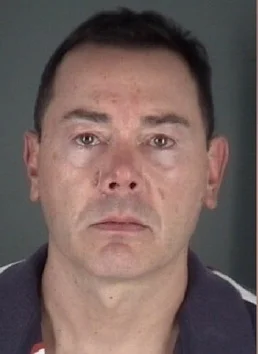
According to an arrest report, 44-year-old Dennis Bayona saw a black man walk by his house and started following him. Deputies say Bayona tried to grab the victim's shoulder, but the man pulled away and started walking faster to get away.

Bayona is accused of following and harassing the man for about a mile. The victim says he asked Bayona several times to stop following him and leave him alone.

The victim told deputies Bayona called him NGHR. Bayona is also accused of telling the victim he "owned" him.

A deputy who was in the area noticed the victim being followed by Bayona. The deputy then started investigating and said in the arrest report that Bayona was acting belligerent as he kept going up to the victim.

The deputy then stepped between the two and told Bayona to calm down and back away. Bayona was eventually arrested when he continued to act belligerent and disorderly, according to the arrest report.

The arrest report says Bayona started pulling away from the deputy after one handcuff was placed on him. The deputy had to physically restrain Bayona on the ground to arrest him but says Bayona continued to resist.

After his arrest, Bayona admitted he started following the victim and said the victim did not commit any crime. 

Bayona was arrested for stalking and resisting arrest without violence. His arrest report lists his occupation as "A/C repair."

Lawsuit Against Stanly County and Axon Enterprises Alleges that White Cops Tased Black Man 26 Times in 5 Minutes Causing His Death

Sheriff Burris is dedicated to enforcing the law and serving the public

Sheriff Burris is dedicated to enforcing the law and serving the public

From [HERE] and [HERE] The estate of a Badin man who was killed during an encounter with law enforcement has filed a wrongful death lawsuit.

Attorneys for the estate of Marlon Bryan Lewis filed the lawsuit earlier this month against Axon Enterprises, formerly Taser International, deputies Cpl. Timothy Hill and Andrew Furr as well as the Stanly County Sheriff’s Office.

Lewis died during the early morning hours of Dec. 15, 2016. after he allegedly attacked Badin police officer Brad Lowder while responding to a 911 call at the corner of Mayo and Dewey streets. Lewis is believed to have made the 911 call, citing that someone was after him, police said.

“I believe (the deputies) showed commendable restraint,” said Scott MacLatchie, the attorney for the sheriff’s deputies. “When someone tries to remove your gun from your holster, you are authorized to use deadly force. And they did not elect to do that here.”

The government pathologist who conducted Lewis’ autopsy said she did not believe the electrical shocks killed him. Instead, the pathologist wrote, it was her opinion that Lewis died from cocaine toxicity.

But the lawsuit — filed this month against the Stanly County Sheriff, two of his deputies and the company that manufactures the Taser device — asserts that Lewis died “as a direct and proximate result” of being tased 26 times in less than five minutes. Furr used a Taser on Lewis four times during that same span, for a combined total of 27 times, according to court records filed Oct. 16 with the Stanly County Clerk of Superior Court.

Marlon Lewis.jpg

The lawsuit further contends Hill’s certification to operate a Taser expired in December 2015, a year before Lewis’ fatal confrontation, and a policy violation within the Sheriff’s Office.

Attorneys for the family allege in court documents the officers misrepresented facts of the deadly encounter to the N.C. State Bureau of Investigation, which conducted an independent probe.

His encounter with law enforcement began shortly after 3 a.m. on Dec. 15, 1016, after he called 911 to report that he was in distress, according to the lawsuit. It happened in Badin, a small Stanly County town about 55 miles east of Charlotte.

When law enforcement officers arrived, Lewis began acting erratically, stating “someone is going to kill me,” according to a medical examiner’s report. Then Lewis got into a fight with law enforcement officers, who tased him, the report states. According to the lawsuit, Lewis was unarmed.

MacLatchie, the attorney for the deputies, said his investigation found that when a Badin police officer arrived, Lewis jumped on the hood of his patrol car, fought with him and tried to grab his gun. When the two sheriff’s deputies later arrived, Lewis also struggled with them and tried to grab their holstered handguns as well, MacLatchie said. At one point, Lewis grabbed the grip of one of the officer’s guns and refused to let go, the attorney said.

Lewis, who stood 6 feet tall and weighed 228 pounds, was exhibiting “an abnormally high amount of strength” and seemed impervious to pain, MacLatchie said.

There were no police dash cameras or body cameras to record the struggle, MacLatchie said. But a bystander did shoot grainy cellphone video after the officers finally had Lewis restrained on the ground, he said.

That video shows that Lewis had “purposeful movement for several minutes” after he was tased, according to the autopsy report. He had been placed “prone and handcuffed,” the autopsy states, but “became unresponsive several minutes after law enforcement agents ceased physical contact with him.”

Unsafe for the human heart?

The lawsuit also contends that Axon knew that the Taser models used on Lewis produce charges that are “significantly more powerful than the level that is safe for human cardiac function.”

One of the Taser models that was used to shock Lewis does not automatically cut off after five seconds, contrary to the company’s representations, the lawsuit asserts. In Lewis’ case, one of the electrical shocks lasted nine seconds, according to Taser logs filed with the lawsuit.

The logs also show that the two Taser devices used that night were fired a total of 26 times. That amounted to excessive force, the lawsuit maintains, and violated the Constitutional prohibition against cruel and unusual punishment.