More Talk on Ending the Drug War - w/o talking about Ending White Supremacy

SentencingProject

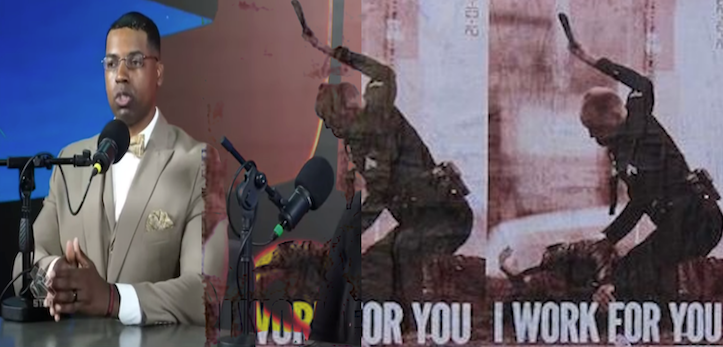
The Sentencing Project's Jeremy Haile, Federal Advocacy Counsel, recently appeared on The Inside Scoop with Mark Levine to discuss alternatives to our failing drug war. The Congressional Research Service recently found that the explosive growth of the federal prison population has been driven by policy changes, including increased mandatory minimum sentences for drug offenses, and that persons convicted of drug offenses make up the largest portion of newly admitted inmates.  The war on drugs is not only ineffective, but it is prosecuted unfairly, with the harshest effects on communities of color.  You can listen here.

super healthy Five Guys Franchise Owner Tries To Avoid Giving His Workers Health Benefits Under Obamacare

ThinkProgress

Mike Ruffer, a Five Guys franchise owner who operates eight of the chain restaurants in the Durham, North Carolina area, has decided to join the restaurant industry’s war on health care reform, claiming that the additional costs of providing his workers with health care coverage will raise the prices of hot dogs and burgers for customers who patronize his establishments.

“Any added costs are going to have to be passed on,” Ruffer told the Examiner:

Ruffer was the star witness at a Monday Heritage Foundation seminar on the impact Obamacare will have on small businesses. He is typical of many: Because he has enough full time employees to activate the law, he faces either coughing up the money to provide health insurance or paying a fine of up to $3,000 per worker.

Ruffer initially thought he would escape the law because he created each restaurant as its own company. But the law doesn’t recognize that distinction, so now he’s trying to determine if he can fire enough workers, or cut enough hours, to slide out of the grasp of Obamacare.

As the Examiner explicitly states, Ruffer is actively trying to “escape” the health reform law, and has had his mind made up about it for a while. That’s become an increasingly common position among large employers — particularly in the service industry, where large restaurant chains have been threatening to cut workers’ benefits by shifting costs onto them, cut back on wages, cut back on hours, or raise their products’ prices. Ruffer has, by his own admission, considered every single one of those options. But that isn’t a reflection of the reform law itself — it’s a reflection of companies’ desire to protect their own bottom line by having their low-wage employees go uninsured or obtain coverage through Medicaid, rather than provide them with basic benefits.

To date, these employers’ efforts have not been met with much public enthusiasm, and have even resulted in massive PR backlashes. Employers who choose this route are also putting themselves at risk of driving away potential employees who would rather take jobs that offer more robust benefits, as the vast majority of employers plan to keep offering health coverage plans under Obamacare

Manufacturing Consent: Koch Brothers Looking To Purchase Several Major American Newspapers

ThinkProgress

Right-wing funders and business industrialists David and Charles Koch may purchase the Tribune Company newspapers, which include the Chicago Tribune, Baltimore Sun, and the Los Angeles Times. The brothers are “interested in the clout they could gain through the Times’ editorial pages,” the Hollywood Reporter notes. Responding to the report, a spokesperson for Koch told the website that the brothers are “constantly exploring profitable opportunities in many industries and sectors”:

Missy Cohlmia, a spokeswoman for Koch Companies Public Sector, LLC, issued the following statement to THR: “As an entrepreneurial company with 60,000 employees around the world, we are constantly exploring profitable opportunities in many industries and sectors. So, it is natural that our name would come up in connection with this rumor. We respect the independence of the journalistic institutions referenced in today’s news stories, but it is our long-standing policy not to comment on deals or rumors of deals we may or may not be exploring. ”

The Los Angeles Weekly was the first to report that the Kochs could be mulling the purchase of the newspaper assets, which make up $623 million of the company’s $7 billion holdings.

The Koch brothers own Koch Industries, the second-largest private company in America, and bankroll a network of Tea Party groups and Republican political war chests.

In 2012, the brothers spent millions to defeat President Obama and even sent mailers to employees urging them to support Mitt Romney and other conservative candidates.

Venezuela to probe Chavez cancer 'poisoning'

Aljazeera

The Venezuelan government has said that it will set up a formal inquiry into suspicions that the late President Hugo Chavez's cancer was the result of poisoning by his enemies abroad.

The decision to probe the circumstances surrounding the former president's death comes days after Iranian president Mahmoud Ahmadinejad, one of the foreign dignitaries at Chavez's funeral, alleged he died of a "suspect illness".

Acting President Nicolas Maduro, handpicked by Chavez to run the country as the president underwent surgery in Cuba, also said the socialist leader had been "poisoned".

"We will seek the truth," Maduro told regional TV network Telesur late on Monday.

"We have the intuition that our commander Chavez was poisoned by dark forces that wanted him out of the way."

Foreign scientists will be invited to join a government commission to probe the accusation, the OPEC nation's acting leader said.

But the the accusation has been derided by critics of the government, who view it as a typical Chavez-style conspiracy theory intended to feed fears of "imperialist" threats to Venezuela's socialist system and distract people from daily problems.

Maduro, a candidate in the April 14 snap election to choose Venezuela’s new president, is trying to keep voters' attention firmly focused on Chavez to benefit from the outpouring of grief among his millions of supporters, analysts said.

Morbid exploitation

The opposition is centering its campaign on portraying Maduro, a former bus driver, as an incompetent who, they say, is morbidly exploiting Chavez's demise.

"They're attacking him saying he isn't Chavez. Of course Nicolas isn't Chavez. But he is his faithful, responsible, revolutionary son," senior Socialist Party and campaign official Jorge Rodriguez told reporters.

"All these insults and vilification are going to be turned into votes for us on April 14."
 
Running for the opposition's Democratic Unity coalition is a business-friendly state governor, Henrique Capriles, 40, who lost to Chavez in a presidential vote last year.

Tuesday was the last day of official mourning for Chavez, although ceremonies appear set to continue. His embalmed body was to be taken in procession to a military museum on Friday.

Millions have filed past Chavez's coffin to pay homage to a man who was adored by many of the poor for his humble roots and welfare policies, but was also hated by many people for his authoritarian style and bullying of opponents. 

Israel harms Palestinian economy: report

Aljazeera

Israeli restrictions and closures coupled with the worsening fiscal situation of the Palestinian Authority is causing "lasting damage" to the competitiveness of the Palestinian economy, the World Bank warns.

In a report issued on Tuesday ahead of a meeting of global donors in Brussels on March 19, the World Bank explored the long-term damage to the economy as a result of the worsening financial crisis facing the Ramallah-based government and the absence of peace talks, which have been stalled since late September 2010.

And it warned that the fiscal stress "could worsen in 2013."

"While urgent attention to the short-term financing shortfalls is essential, it is important to recognise that the continued existence of a system of closures and restrictions is creating lasting damage to economic competitiveness in the Palestinian Territories," the report said.

"The longer the current, restrictive situation persists, the more costly and time-consuming it will be to restore the productive capacity of the Palestinian economy," it concluded.

The Palestinian Authority welcomed the report, saying the only way to avert the threat to the economy would be to secure "an end to Israel's occupation."

"Israel's continued military occupation, its system of restrictions and controls, the settlement regime and full control over Area C is an assault on Palestinian national rights to statehood and economic potential," spokeswoman Nour Odeh said in a statement.

She said the current crisis sparked by Israel's withholding of tax monies it collects on behalf of the PA had already  "devastated short and long term effects" and that the crisis meant Palestinian state-building achievements were under threat.

"At the core, the only durable and real solution is an end to Israel's occupation."

Following robust GDP growth in recent years, economic activity significantly slowed in 2012, the World Bank found.

"This slowdown reflects in part the absence of further easing of Israeli restrictions, the withdrawal of fiscal stimulus due to a persistent shortfall in donor aid, and uncertainty created by the PA's fiscal challenges," it said.

Financing shortfalls

The study showed the economy was in danger of losing its capacity to compete in a global market, with its ability to export goods and services having "substantially deteriorated" since the late 1990s.

A key aspect has been the decline of both the agriculture and manufacturing sectors with the share of exports in the Palestinian economy dropping from around 10 percent in 1996 to around seven percent in 2011, one of the lowest figures in the world.

Since the mid 1990s, the manufacturing sector has largely stagnated and over the same period, the productivity of the agricultural sector has roughly halved meaning the economy relies largely on food imports to meet its own needs.

A high level of unemployment is also having a negative impact on the long-term competitiveness of the economy, the report's authors say.

"With low labour force participation and high rates and duration of unemployment, many Palestinians of working age do not have the opportunity to develop on-the-job skills," the report's authors wrote.

The quality of infrastructure in key sectors like water and transport is deteriorating and causing damage to the future viability of the economy, with the impact most severe in Gaza where "significant resources are required" to bring it up to a desirable level.

It suggested $870m was needed for Gaza's water and wastewater sector, $430m for municipal services, $200m for the electricity sector and $1 bn for the road sector.

"Continued financial support by the donor community and reform efforts by the PA are therefore essential to manage the financing shortfalls of today," the authors wrote, while stressing the need of real private sector-led growth.

California seizes guns from owners - and it might become a national model

RT.com

In California, the government is already coming for the guns.

Notwithstanding the Second Amendment, rules and regulations across the United States outline certain restrictions for who can legally possess a firearm. In the state of California, factors such as a felony conviction or a history of mental health issues mean roughly 20,000 gun owners are holding onto their firearms illegally. Slowly but surely, though, Golden State police officers are prying them away. There’s more, though: backers of the program suggest this becomes a nation-wide practice, and are asking the White House to help make it happen.

“Very, very few states have an archive of firearm owners like we have,” Garen Wintemute of the Violence Prevention Research Program tells Bloomberg News. Wintemute helped set up a program on the West Coast that monitors not just licensed gun owners but also watches for any red flags that could be raised after admittance to a mental health institute or a quick stint in the slammer.

Wintemute says that as many as 200,000 people across the United States may no longer be qualified to own firearms, and in California they are making sure that number drops day by day. In one example cited in this week’s Bloomberg report, journalists recall a recent scene where nine California Justice Department agents equipped with 40-caliber Glock pistols and outfitted in bulletproof vests knocked on a suburban residence, requested to speak to a certain gun owner and then walked away with whatever arsenal they could apprehend.

California Attorney General Kamala Harris seized roughly 2,000 weapons last year, reports Bloomberg, as well as 117,000 rounds of ammunition and 11,000 high-capacity magazines. But as concerns escalate about a possible war against the right to bear arms in America, will other states soon follow suite?

In California, some shortcuts are already meaning weapons are being removed from lawful owners. Bloomberg reports cite the example of 48-year-old Lynette Phillips, a California woman who was recently hospitalized for mental illness. When a team of agents went to collect her two registered firearms, they also walked out with one registered to her husband.

“The prohibited person can’t have access to a firearm,” regardless of who the registered owner is, said Michelle Gregory, a spokeswoman for the attorney general’s office.

In other cities and towns across the country, Americans are standing up against what many say are unconstitutional attempts to disarm the United States. In New York State, new legislation is making it harder for Americans to purchase firearms, and one provision will provide gun owners with a felony charge if they ignore new registration rules — which is enough on its own to make owning guns illegal. Across the board more states are demanding stricter background checks, but as efforts to remove weapons from the hands of Americans — voluntarily and involuntarily — are ramped up, though, those that disagree are doing what they can to keep their country armed.

In the wake of last year’s massacres in Aurora, Colorado and Newtown, Connecticut — among others — lawmakers and the public at large have called on Americans for a mass disarming. Gun buyback programs are being touted in countless cities, and in California the attorney general is hoping for even more help at getting guns away from their once-lawful owners — Attorney General Harris has asked Vice President Joe Biden for help and has asked state lawmakers to increase the number of agents tasked with collecting weapons up to 33. She also told Mr. Biden that she thought the efforts coming out of California could be a good model of a national program, reports Bloomberg.

Meanwhile, though, others are making sure weapons aren’t being put to waste. Residents in Maine hit the polls this week to vote on a law that would require everyone in the town of Byron to register a high-powered weapon.

"It was never my intention to force anyone to own a gun who doesn't want to. My purpose was to make a statement in support of the Second Amendment,” Head Selectman Anne Simmons-Edmund tells US News & World Report.

"I'm just here because I'd rather see weapons stay with people, rather than turned in to be melted," a man named Joe, who declined to provide his last name, tells the Bainbridge Island Review. "I'm here to exercise the Second Amendment," he added. "Even if I don't get anything, honestly, I'd just rather see people keep them."

Latino Families of Those Killed by NYPD Lose Faith in District Attorneys

Politic365

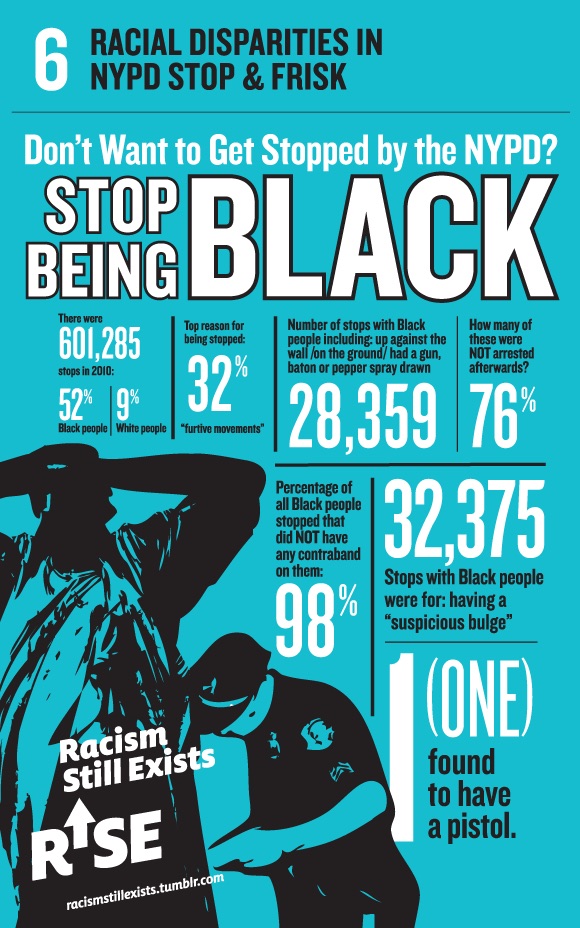
In many ways, New York City has been the epicenter of the struggle over police racial profiling. According to the New York Civil Liberties Union “innocent New Yorkers have been subjected to police stops and street interrogations more than 4 million times since 2002,” and the overwhelming targets have been people of color.  Nearly nine out of 10 stopped-and-frisked New Yorkers have been completely innocent, according to the New York Police Department’s own reports. But for some New Yorkers of color, encounters with the police have yielded deadly results.

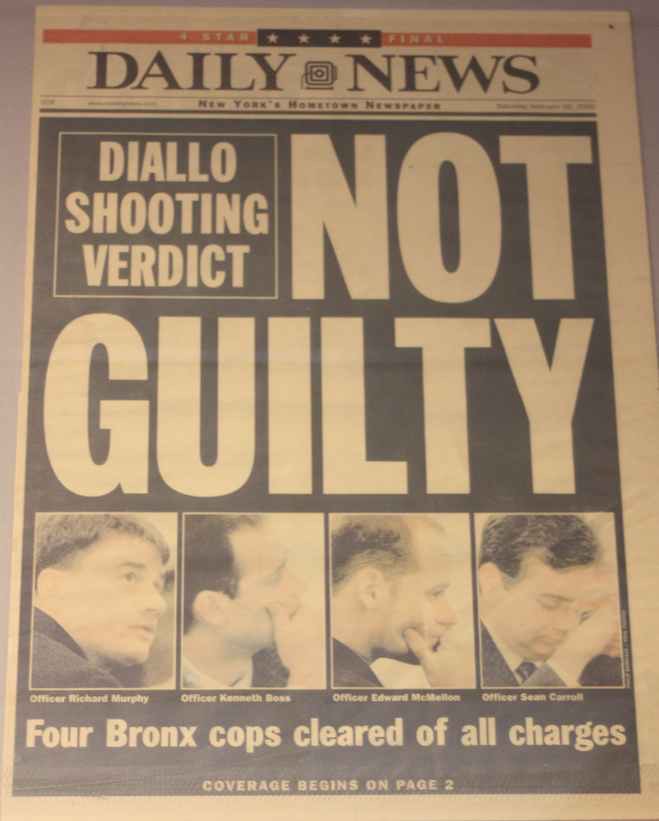
In the late 1990s through the early part of the current millennium, there have been numerous instances of unarmed men of color being killed by NYPD officers. Names like Amadou Diallo and Anthony Baez made national and international headlines and brought thousands of people, including activists and politicians to the streets in protest of what some have called “summary executions.” Recent cases of young Latino men dead at the hands of the NYPD have not garnered such attention however, and many local activists and members of the press are wondering why.

Last month, a jury declined to indict police detective Hassan Hamdy on any charges in the fatal shooting of 22 year old unarmed, National Guardsman Noel Polanco. [MORE]

Solitary Confinement: Punishment Or Cruelty? (answer is cruelty)

NPR 

An estimated 80,000 American prisoners spend 23 hours a day in closed isolation units for 10, 20 or even more than 30 years.

Now, amid growing evidence that it causes mental breakdown, the Federal Bureau of Prisons has decided for the first time to review its policies on solitary confinement.

Eastern State Penitentiary in Philadelphia, which pioneered solitary confinement, is a castle of a prison that was meant to reform incarceration itself when it opened in 1829. The idea behind the prison's solitary confinement areas was to use sensory deprivation to reform inmates. The thought was that the isolation and quiet would free the innately good soul.

"They believed that isolation here was going to bring about the best of these inmates. Change them for life. Make them penitent," says Sean Kelley, director of public programming at the historic site. "There is a lot of evidence that that is not what happened."

For many reasons that sound familiar today – including cost and questionable effectiveness — Eastern State dropped the practice in 1913, but by then the blueprint of this penitentiary had been copied more than 300 times across the Western world. The prison, once a state-of-the-art facility, closed its doors in 1970, and is now a museum.

An Uncertain Method

Solitary confinement exploded with the law-and-order policies of the 1980s, when almost every state built what's called a "supermax" for the so-called "worst of the worst." But since then, more questions have been raised about the mental health of prisoners held this way.

Last summer, Sen. Dick Durbin, D-Ill., chair of the Constitution, Civil Rights and Human Rights subcommittee, led hearings to address solitary confinement practices. He says it was prompted by a New Yorker article by Boston surgeon Atul Gowande titled "Hellhole."

"I read it, and I couldn't forget it," Durbin tells Jacki Lyden, host of weekends on All Things Considered. "It was all about the impact of segregation and isolation on prisoners, and I started thinking about it as part of my agenda for my subcommittee on human rights."

Testifying in front of the committee was Charles Samuels, director of the Federal Bureau of Prisons. Samuels explained the necessity of the solitary confinement to keep violent inmates apart from guards and other prisoners.

"The use of any form of restricted housing, however limited, remains a critical management tool that helps us maintain safety, security and effective reentry programming for all federal inmates," Samuels said.

The BOP wouldn't grant an interview for this story, but provided a comment saying the bureau is confident the review "will highlight both the strengths that the Bureau brings to corrections management, as well as innovative ideas from the states."

Solitary confinement already doubles to triples the costs of incarceration, up to $60,000 a year per inmate. But wardens who've seen its wide use now in the last 30 years have their own evaluation of whether it does more harm than good.

"I really believed when I got close to the situation at the supermax in Wisconsin that one of the things that I was seeing was mentally ill people who didn't come in mentally ill," says Walter Dickey, formerly the secretary of corrections for Wisconsin.

Dickey tells NPR's Lyden that the level of security and the overcrowding he saw were detrimental to a prisoner's mental health, even when they didn't start out in isolation. He doesn't, however, think the practice should be dropped.

"[The feds] had experiences in which they had inmates kill multiple staff members and multiple inmates," he says. "People like that need to be isolated, at least temporarily, if not for a longer period of time until you can release them into the population, the general population, with some confidence that they're not going to do severe damage to other people."

At the hearing, Durbin noted that after Mississippi had done away with solitary confinement, prison violence went down by 50 percent and the cost of incarceration went down as well.

"It was a wake-up call to all of us to take a hard look at it," he says. "Maybe this just isn't the best way to deal with these problems."

Living Through Isolation

As prisoners testify about suicidal depression, self-mutilation, lethargy, hallucinations and other ills, more attention is being paid to inmates who have lived through the extreme, often uncertain isolation.

Robert King is one of the Angola Three — one of the men serving the longest sentences in the country in solitary confinement — in his case at Angola State Penitentiary in Louisiana. King was released in 2001, after serving 29 years in solitary, at times in a 3-by-6 cell that he describes as a "tomb."

"There was a slab of concrete that you slept on ... and during the winter time you froze, and during the summer time you overheated," King says.

During his time in prison, King says he saw the system, and the solitary confinement, change people. He says he saw once open people become more withdrawn as time went on.

"I kind of insulated myself when I saw what happened to them; I think it created a steel resolve in myself to not succumb to that," he says.

After his release, King published a book, and he also speaks internationally, but despite his post-incarceration success, he says the effects of his solitary confinement still lingers.

"I don't think a person could get dipped in waste and not come up smelling," he says. "Even though it may not be totally apparent, the impact and the effects are there."

The Right to Counsel: Badly Battered at 50

NY TIMES 

A half-century ago, the Supreme Court ruled that anyone too poor to hire a lawyer must be provided one free in any criminal case involving a felony charge. The holding in Gideon v. Wainwright enlarged the Constitution’s safeguards of liberty and equality, finding the right to counsel “fundamental.” The goal was “fair trials before impartial tribunals in which every defendant stands equal before the law.”

This principle has been expanded to cover other circumstances as well: misdemeanor cases where the defendant could be jailed, a defendant’s first appeal from a conviction and proceedings against a juvenile for delinquency.

While the constitutional commitment is generally met in federal courts, it is a different story in state courts, which handle about 95 percent of America’s criminal cases. This matters because, by well-informed estimates, at least 80 percent of state criminal defendants cannot afford to pay for lawyers and have to depend on court-appointed counsel.

Even the best-run state programs lack enough money to provide competent lawyers for all indigent defendants who need them. Florida set up public defender offices when Gideon was decided, and the Miami office was a standout. But as demand has outpaced financing, caseloads for Miami defenders have grown to 500 felonies a year, though the American Bar Association guidelines say caseloads should not exceed 150 felonies.

Only 24 states have statewide public defender systems. Others flout their constitutional obligations by pushing the problem onto cash-strapped counties or local judicial districts.

Lack of financing isn’t the only problem, either. Contempt for poor defendants is too often the norm. In Kentucky, 68 percent of poor people accused of misdemeanors appear in court hearings without lawyers. In 21 counties in Florida in 2010, 70 percent of misdemeanor defendants pleaded guilty or no contest — at arraignments that averaged less than three minutes.

The Supreme Court has said that poor people are entitled to counsel “within a reasonable time” after a case is initiated. But defendants, after their arrest, can spend weeks or even months in jail without a lawyer’s help. In a Mississippi case, a woman charged with shoplifting sat in jail for 11 months before a lawyer was appointed.

The powerlessness of poor defendants is becoming even more evident under harsh sentencing schemes created in the past few decades. They give prosecutors, who have huge discretion, a strong threat to use, and have led to almost 94 percent of all state criminal cases being settled in plea bargains — often because of weak defense lawyers who fail to push back.

The competency of lawyers is, of course, most critical in death penalty cases. In dozens of states, capital cases are routinely handled by poorly paid, inexperienced lawyers. And yet, only very rarely are inmates ever granted a new trial because of incompetent counsel.

In a Georgia death penalty case last year, the United States Court of Appeals for the 11th Circuit ruled that even though the main defense lawyer drank a quart of vodka each night of the trial, there was no need for a retrial. The lawyer was himself preparing to be criminally prosecuted for stealing client funds, and presented very little evidence about the defendant’s intellectual disability. But the court said the defendant had a fair trial because proof that he killed a sheriff’s deputy outweighed any weakness in his legal representation.

In an infamous 1996 Texas death-penalty case, the Texas Court of Criminal Appeals upheld a defendant’s death sentence even though his lead counsel slept during the trial.

The Supreme Court has made it possible for courts to uphold such indefensible lawyering. In 1984, in Strickland v. Washington, the court said that for a defendant to be entitled to a new trial, he must show both that his lawyer’s advice was deficient and that the deficiency deprived him of a fair trial — a very high hurdle. And the court’s majority defined competency as requiring only that the lawyer’s judgment be “reasonable under prevailing professional norms.”

Justice Thurgood Marshall, writing in dissent, said the result of this empty standard “is covertly to legitimate convictions and sentences obtained on the basis of incompetent conduct by defense counsel.” That is exactly what has happened in the past three decades. In fact, incompetent counsel for poor defendants is so widespread that under this standard the prevailing professional norm has been reduced to mediocrity.

After 50 years, the promise of Gideon v. Wainwright is mocked more often than fulfilled. In a forthcoming issue of The Yale Law Journal, Stephen Bright, president of the Southern Center for Human Rights in Georgia, and Sia Sanneh, a lawyer with the Equal Justice Initiative in Alabama, recommend that all states have statewide public defender systems that train and supervise their lawyers, limit their workloads and have specialized teams in, for example, death-penalty cases.

There is no shortage of lawyers to do this work. What stands in the way is an undemocratic, deep-seated lack of political will.

Kwame Kilpatrick Gone. Facing up to 20 yrs. Ex-Detroit mayor convicted of widespread corruption

Chicago Tribune

Former Detroit Mayor Kwame Kilpatrick, once seen as a rising star in Democratic Party politics, was convicted on Monday on two dozen federal charges of corruption and bribery during his seven-year tenure.


Prosecutors accused Kilpatrick, 42, of widespread corruption, extorting bribes from contractors who wanted to get or keep city contracts, and turning the mayor's office into "Kilpatrick Incorporated" from 2001 until he resigned in 2008.


Kilpatrick could face prison sentences of up to 20 years for the most serious charges for steering more than $83 million worth of municipal contracts to his friend Bobby Ferguson, a city contractor, who shared some of the money with the former mayor.


"Kwame Kilpatrick didn't lead the city. He looted the city," Barbara McQuade, the attorney in Detroit, told a news conference. "While Kwame Kilpatrick enjoyed a lavish lifestyle, he watched the quality of life erode for the people of Detroit."


Many people in Detroit believe Kilpatrick contributed to the decline of the city, home of the auto industry. The verdict was handed down as Detroit's financial crisis was nearing a new low, with Michigan state soon expected to appoint an emergency financial manager, a move that could lead to the biggest municipal bankruptcy in the United States.


The 12 jurors, who deliberated for 14 days from mid-February in a District Court trial that started last September, returned a sweeping verdict against Kilpatrick following the biggest public corruption probe in Detroit in decades.


Jurors found Kilpatrick guilty of racketeering, extortion, bribery, mail and wire fraud, and tax charges.


District Judge Nancy Edmunds ordered Kilpatrick and Ferguson, who was found guilty of racketeering, extortion and bribery, immediately taken into custody pending sentencing after a hearing on Monday afternoon. Both men had been free on bail during the trial.


"You showed disregard and contempt for the people of the city of Detroit, and a willingness to lie," she told Kilpatrick.


No sentencing dates have been scheduled.


Kilpatrick's father, Bernard Kilpatrick, who was also charged in the corruption case, was convicted on a single count of signing a false tax return.


Edmunds, before reading the decisions, said the jurors reached the verdicts late on Friday, but "wanted to go home and sleep on it" until Monday. They were unanimous on 40 of the 45 charges against the three defendants.


Kwame Kilpatrick, who wore a dark suit and patterned tie in court, was quiet as the verdicts were read, resting his chin on folded hands. At times, Kilpatrick shook his head.


INTENSE DELIBERATIONS


Lawyers for the three men had argued that the government's case was built on weak evidence and witnesses who lied to gain favor with prosecutors in their own public corruption cases.


James Thomas, Kilpatrick's attorney, said he would argue for a relatively light sentence and planned to appeal.


"We came here with a lot of baggage," Thomas said after Kilpatrick was taken into custody. "It was a tough case."


"He might not show it, but obviously this is affecting him," Thomas said of Kilpatrick.


Ferguson's attorney, Michael Rataj, told reporters after the verdict that it was too soon to talk about possible appeals.


Jurors told reporters the deliberations were intense at times. They asked not to be identified for privacy reasons.


"There was always respect, (but) sometimes arguments got a little heated," one juror said.


Another juror said she had twice voted for Kilpatrick for mayor, but changed her mind about him after hearing the evidence.


"I saw a lot that really turned my stomach, and I couldn't believe this type of thing was going on," she said.


Few people awaited the verdict outside the courthouse in downtown Detroit. A handful of passersby spoke to reporters.


James Jones, 42, and Arthur Bryant, 59, both lifelong Detroit residents, stood across the street from the courthouse and yelled encouragement to the former mayor.


"It's not like this is the first time," Jones said. "There has been pay-to-play in every city, every state, for a long, long time. They are singling him out because he's a black man. Why aren't they going after the ones who paid him?"


Others supported the prosecution and verdict.


"I'm not happy that he's guilty, but I'm happy that we are getting justice," Asaeli Giles said. "It would have been a travesty if they had gotten away with this."


Kilpatrick was elected Detroit mayor at age 31 in 2001 and re-elected in 2005, but his tenure was marked by accusations of cronyism, nepotism and lavish spending. The allegations spanned Kilpatrick's tenure as mayor and the year before and after.


Witnesses in the trial included a top former mayoral aide, a mayoral fundraiser and a former city contractor. The evidence ranged from text messages to bank checks, federal wiretaps and surveillance video.


Former Detroit Councilwoman Sheila Cockrel, who teaches Detroit political history at Wayne State University, has said she believes the culture under the Kilpatrick administration exacerbated the city's already deeply compromised financial infrastructure.


Detroit has lost more than half of its population since the 1950s, it had about 706,000 residents according to the 2011 U.S. Census, leaving it with a shrinking tax base and huge debts.


The verdict is seen as a major victory for prosecutors, who have now racked up 35 convictions since 2008 from investigations aimed at purging Detroit's cash-strapped government of graft and corruption. A previous trial for Ferguson resulted in a mistrial after a lone juror held out and deadlocked the jury.


Kilpatrick resigned in 2008 and pleaded guilty to charges that he lied on the witness stand in a civil lawsuit over the firing of a police officer unrelated to the current case.


He later served 14 months in prison for violating his probation for concealing assets to avoid paying restitution to the city of Detroit.


Detroit Mayor Dave Bing said in a statement that he was pleased the trial was over and "we can finally put this negative chapter in Detroit's history behind us.


"It is time for all of us to move forward with a renewed commitment to transparency and high ethical standards in our city government," Bing said.

Oklahoma Supreme Court: people can sue jails for use of excessive force

Fox23


A new Oklahoma Supreme Court decision could impact county jails and taxpayers across the state. 


The court ruled Oklahomans do have a constitutional right to sue jails for use of excessive force.


The decision was based largely on a video from the Cherokee County Jail that shows a handcuffed man being severely injured by guards while handcuffed. 


Daniel Bosh was arrested for unpaid court fines in September, 2011. Jailers claim Bosh was being argumentative, and even tried to spit on one of them. 


The video then shows one of the guards slamming Bosh's head into a counter, then, with Bosh in a headlock, caused him to fall head first onto the floor.


Bosh shattered a vertebrae, and after major surgery still walks with a cane and continues to deal with tremendous pain. 


"I still have to have my wife put on my socks and shoes for me, because I can't bend over that far," Bosh said. 
 

Bosh was unable to meet in person for an interview, so FOX23 News talked to him on the phone. 


"It's very frustrating. I don't know...you know, I can't provide for my family," Bosh said. "That makes me feel like less of a man."

 

Bosh filed a lawsuit against the jail and the guards later that year. 


But they were protected from such lawsuits because of Oklahoma statutes. 


"These people were protected by something the legislature had put in called the Oklahoma Governmental Tort Claims Act, which had provided immunity for certain people doing certain actions, as long as they were acting within their job," Mitchell Garrett, Bosh's attorney, said. 
 

But this week the Oklahoma Supreme Court ruled in Bosh's favor. 


"Their answer was basically that there is a constitutional right that Oklahoma citizens have to go after people that use excessive force against them," Garrett said. 

 

The ruling only applies to people in jail who haven't been convicted of a crime. The court said the ruling could be applied retroactively, but only for those lawsuits filed since Bosh filed his in 2011. 


"I don't think it'll open the door for a lot of lawsuits," Garrett said. 
 

But not everyone agrees. Several counties and other state agencies have already appealed to the court, asking it to reconsider the decision. 

 

Major Shannon Clark with the Tulsa County Sheriff's Office, which operates the Tulsa County Jail, worries the ruling opens the door for any inmate who didn't enjoy their experience in jail to try and sue. 


"What worries us is that people may be reluctant to do their job or to respond to an attack because they're scared that that might be viewed as inappropriate," Clark said. 

 

He also worries the ruling will discourage people from becoming detention officers, when there's already a state-wide shortage of people willing to take on the job. 


But Garrett says rather than worrying about lawsuits and how guards approach their jobs, they should instead focus on not allowing incidents like Bosh's to happen. 


"We believe by having the counties and the jails redoubling their efforts on training will keep everyone safe and will hopefully keep this type of incident from happening in the future," Garrett said. 
 

Clark said more training for detention officers would be great, but there's no money available for such training. 


He said most excessive force incidents happen when jails are understaffed. Therefore, he says, the best way to avoid cases like Bosh's is for the state to increase funding for jails so they can hire more guards. 


County jails and governments in Oklahoma generally have very large insurance policies to cover liability lawsuits they may face. This ruling could force them to increase their coverage, the costs of which would likely be passed on to taxpayers. 

Justice Department urges Maryland court to uphold citizens’ right to film police

RawStory

The Justice Department filed a statement of interest Friday in the case of a journalist arrested in 2011 for filming police officers in Montgomery County, Maryland. According to Politico, the Department affirmed the right of individuals to record police under the First Amendment.

The Civil Rights Division of the Justice Department filed a statement in Maryland federal court that argued not only that individuals have a First Amendment right to record police officers doing their duties in public, but that those recordings are protected from seizure without a warrant or due process under the Fourth and Fourteenth Amendments.

The Department urged the court to uphold these rights and declined a motion to dismiss by Montgomery County in the case Garcia v. Montgomery County.

“The United States is concerned that discretionary charges, such as disorderly conduct, loitering, disturbing the peace and resisting arrest, are all too easily used to curtail expressive conduct or retaliate against individuals for exercising their First Amendment rights. … Core First Amendment conduct, such as recording a police officer performing duties on a public street, cannot be the sole basis for such charges,” the statement said.

In Garcia v. Montgomery County, photojournalist Manny Garcia is suing after an incident in which Baltimore police officers arrested him and confiscated his camera’s memory card when Garcia filmed officers arresting two men using what Garcia believed to be excessive force. Garcia informed police that he was a journalist and complied with all of their instructions except to stop filming.

Nonetheless he was placed in handcuffs and arrested. Police confiscated his camera, removing the battery and memory card. According to the complaint they also kicked him to the ground, taunted and insulted him, and threatened to arrest his wife if she tried to take his camera.

The ruling in the case will have repercussions for several cases nationwide. Police personnel are coming under increased scrutiny thanks to the ubiquity of smart phones. In most cases in which police departments have attempted to prosecute individuals who film officers, the federal government has ruled that the First Amendment supports their right to do so.

Politico’s Tal Kopan wrote, “Federal appellate courts have upheld a First Amendment right to record police in cases including Glik v. Cunniffe in 2011, Smith v. Cummings in 2000 and Fordyce v. City of Seattle in 1995, all of which Justice cites in its statement in the Garcia case.”

Derrick Jones Wrongful Death Case Against OPD Heads to Trial

EastBayExpress

A wrongful death lawsuit brought by the ex-wife of a 37-year-old man killed by two Oakland Police officers in November 2010 is scheduled for trial on Monday morning at the federal courthouse in downtown Oakland. On November 8, 2010, OPD Officers Eriberto Perez-Angeles and Omar Daza-Quiroz shot and killed Derrick Jones in East Oakland. Jones, who had been involved with an altercation with a woman in his barbershop on Bancroft Avenue earlier that that day, fled the two officers when they attempted to question him. Perez-Angeles and Daza-Quiroz unsuccessfully tried to stun Jones with a Taser while he ran, and then shot him to death in an alley on Trask Avenue after they mistook a digital scale in his hands for a weapon.

Jones' death, which came just days after mass protests over the two-year sentence given to ex-BART police officer Johannes Mehserle for killing Oscar Grant on January 1, 2009, touched off another round of vehement demonstrations in Oakland.

 Last month, the Oakland City Council approved a settlement of $225,000 in relation to a separate wrongful death suit brought by Jones' parents, Nellie and Frank Jones. However, Jones' ex-wife, Lanell Monique Jones, did not drop her suit. US District Court Judge Yvonne Gonzalez Rogers will preside over the trial.

At the time of his death, Jones was on parole for a gun offense, fact cited by his relatives as a possible reason for why he fled from police following an altercation with a woman he was formerly involved with.
Both Perez-Angeles and Daza-Quiroz also were involved in the July 19, 2008 fatal shooting of Leslie Allen, according to records from the Alameda County District Attorney's Office. The Alameda District Attorney's office cleared both officers of criminal misconduct in the Jones and the Allen shootings.

In addition, records from the City of Mountain View reveal that while Perez-Angeles was in the US Marine Corps and living in Burlingame, he and two other men were arrested by police for assaulting a man outside a bar on March 3, 2000. Perez-Angeles was charged with battery causing serious bodily harm and pleaded no contest to an infraction in Santa Clara County court later that year.

Comply with Police Unless it is Not in Your Best Interest to do so 

Foul sewage flooding raises Palestinian ire

Aljazeera

Gazans are crying foul after Egypt stepped up its campaign to wipe out an underground network of transportation tunnels by blasting raw sewage down them, sometimes with deadly results for Palestinian workers.

Some 2,000 men and boys work in the tunnel trade in the Gaza Strip. But over the past three months, more than 80 percent have lost the only work and benefits available in besieged Gaza, which remains stuck in an Israeli blockade.

That occurred after the government of Egyptian President Mohammed Morsi ordered the destruction of the underground transportation network. As part of that effort, the military began dumping raw sewage into the passageways.

It's the most serious - and arguably the most dangerous - attempt by Egypt to close down the tunnels since 2006, when Palestinians began digging the warrens after Israel sealed off its borders with Gaza following Hamas' election victory.

An estimated 30 percent of goods that reach Gaza's 1.7 million Palestinians come through the tunnels.

Heralded by Israel as a necessary step to prevent weapons sales into Gaza and to keep attackers out, the blockade has resulted in Palestinians being cut off from many essential items such as food, fuel and building materials.

Egypt frequently seals its border in Rafah citing security concerns, as attackers have launched assaults on security forces on the Sinai peninsula by using the underground network. 

Hundreds of tunnels have been burrowed over the 14-kilometre stretch of land linking Egypt to Gaza. 

The transportation lines have come at a cost. Israel's Air Force frequently bombs them, resulting in the deaths of at least 20 Palestinians by direct missile hits, according to statistics from the Al Mezan Center for Human Rights.

One tunnel owner who identified himself as Abu Suliman said only 50 tunnels are functioning, as opposed to about 550 working at full capacity following Israel's last military operation on Gaza in November 2012.

Egypt's Interior Ministry spokesman, Islam Shawan, estimates about 900 tunnels had been operational between Gaza and Egypt until the recent campaign to flood them with sewage water.

Security versus bread

Israel's air, sea and land blockade of Gaza has led to a booming tunnel excavation business that supplies basic food staples, medicine, and even cars to cut-off Palestinians.

Amer, who gave only one name as he feared reprisals for talking about the issue, sits against the wheel of a truck parked on the border area, waiting for a shipment to turn up. Every morning he comes from the north of Gaza to the south in search of work. He has been waiting for eight hours in vain, and is ready to return home empty-handed.

The owner of the tunnel where Amer works says it was destroyed by sewage pumped in by the Egyptian military.

For the past month Amer, 22, had mostly been hauling gravel, which like all construction materials is denied entry into Gaza by the Israeli government.  

In the past, he could earn $26 per day, which helped feed his family and pay part of the school tuition for his two brothers.

When asked what he plans to do with work opportunities dried up, he looks frustrated. "I don't know. This was the only way I could earn living and put food on the table for my brothers and mom. It may take some time to find another way," says Amer.

A friend nearby has a solution: "There is always a way to dig deeper. We dug 20 metres before - now let us dig 30 meters instead," says Mahmoud, who also asked that only his first name be used.

But 30 metres is risky work. Many coworkers have died inside tunnel collapses, and it sometimes takes days to find their bodies, the Palestinian men say.

The number of workers killed since January is seven, for a total of 236 victims since 2006, according to the Al Mezan Center for Human Rights.

Endangered and abused

Essam Hadded, national security advisor to President Morsi, recently told Egyptian reporters that the move to shut down the tunnels is in response to weapons smuggling, which "shakes the security in Sinai".

Last August, 16 Egyptian border guards were killed by fighters near the Gaza border, highlighting the lawlessness in the Sinai desert region adjoining Israel and Gaza.

Hamas, meanwhile, says it is concerned over Egypt's move to pump the tunnels full of stinky wastewater. "Tunnels are considered to be the artery of life for the population of Gaza," says Yousef Rezqa, political advisor to Prime Minister Ismail Haniyeh.

A tunnel worker from the Al Shaer family in Rafah - who also requested anonymity fearing retribution for speaking to the media - says the Egyptian military recently dumped sewage into his tunnel for the fourth time. He says he and his coworkers are tired of cleaning out the filth, and worry the toxic material threatens their health.

Worker abuse is also rampant, with tunnel owners underpaying and overworking the vulnerable labour force. The average excavator works 12 hours a day.

Advocate Hazem Hanyia, of the Independent Commission for Human Rights, conducted a study on the tunnels and found that working conditions do not meet minimum safety standards and violate Palestinian labour laws.

Amer says some tunnel owners create imaginary problems three or four hours into a shift in order to kick workers out and not pay them for a full day's work.

"We never knew there is something called labour rights in this work," says Amer. "It feels like an animal farm, and the tunnel owner comes and collects how much he needs, and he would not mind if we die."

Compensating death

It is an unwritten rule that if a single tunnel worker dies his family receives $5,000 in compensation, while a married labourer's family gets $10,000 as a one-time pay-off.

But this money often doesn't find its way to bereaved relatives. Bassam Khader disappeared while working underground in Rafah last month, after heavy rain and flooding collapsed a tunnel.

His difficult-to-identify body was recovered nine days later, but his family is still without compensation. Khader had a young wife and nine children.

Suddenly during an interview, a group of young men surface and hurry an injured worker on their shoulders out of the ground to a medical facility, their faces and clothing covered with mud.

An hour later, health officials at Abu Yousef Al Najjar hospital confirm 18-year-old Mohammed Khalil Irbaia was killed by electric shock, as sewage water flooded the tunnel where he was working.

When the news of Irbaia's death reaches coworkers at the tunnels they stand silent, remembering how he had been searching for a job just the previous morning.

During Egyptian President Hosni Mubarak's time, Amer recalls, soldiers fired tear-gas into the tunnels. Although some friends were killed by the gas, Amer says he fears the sewage water more.

The Media’s Stereotypical Portrayals of Race

AmericanProgress

I’m no longer sure that seeing is believing.

As a former newspaper journalist, I’m disheartened to say that what you now see in the media isn’t always an objective reality. Even when an article or broadcast reports the truth, the accompanying pictures and images can sometimes impress upon readers or viewers another set of facts that may be at odds with the story.

Harvard University professor Henry Louis “Skip” Gates, for example, delights in detailing how he used the gross distortion of media imagery of black men in sports to win a bar bet with the folks at the Veterans of Foreign Wars, or VFW, post in his hometown of Piedmont, West Virginia.

In an essay written for Sports Illustrated, Gates, an authority on African American literature and culture, told his drinking buddies that there were approximately 35 million black people living in the United States. He then wagered $5 to anyone who could tell him how many African Americans make a living playing professional sports in the United States.

The group of sports-loving men smiled, knowing they had a sucker in their midst. Everyone at the VFW post knew that blacks dominate some of the most popular sports in America. All they had to do was turn on their televisions, right?

Gates, a great raconteur, tells the story:

“Ten million!” yelled one intrepid soul, too far into his cups.
“No way … more like 500,000,” said another.
“You mean all professional sports,” someone interjected, “including golf and tennis, but not counting the brothers from Puerto Rico?” Everyone laughed.
“Fifty thousand, minimum,” was another guess.

At the end of the day, nobody won the money—all of the men grossly exaggerated their numbers. As Gates reported in Sports Illustrated, the facts about black athletes in America at the time his article was published were stunningly low:

  • There were 1,200 black professional athletes in all U.S. sports.
  • There were 12 times more black lawyers than black athletes.
  • There were 20 times more black dentists than black athletes.
  • There were 15 times more black doctors than black athletes.

Arkansas Gazette sportswriter Jon Entine surveyed all professional sports teams in 2008 and figured that while 13 percent of the nation’s population is black, 80 percent of the players in the National Basketball Association and 67 percent of the players in the National Football Association are black. Or, to put it another way, Entine calculated that the odds of a black teenager in America becoming a professional athlete are 4,000-to-1.

Such hard-to-believe facts contradict what so many Americans imagine they know based on what they see on TV. After all, this is a sports-crazed nation, and what sports fan doesn’t watch ESPN—and especially its popular “SportsCenter” program—where black people are overrepresented as athletes and announcers? The sports media industry doesn’t have to say explicitly that black athletes dominate sports. They just show an endless highlight reel of slam dunks and touchdown runs, and the pictures speak for themselves.

But a picture can—and often does—lie.

Which brings me to the cover art of last week’s Bloomberg Businessweek magazine. Illustrating a story about the rebounding U.S. housing market, the Bloomberg editors chose inexplicably to run a cartoonish drawing of people with overt racial and ethnic features apparently swimming in a cash-filled house.

The cover drew almost immediate—and all negative—reactions. My colleague at ThinkProgress, Alyssa Rosenberg, described the cover as “awful as art” and quoted media critic Ryan Chittum’s description of the cover in the Columbia Journalism Review as “awful as journalism.”

Of course, a Bloomberg Businessweek editor soon apologized. “Our cover illustration last week got strong reactions, which we regret,” Josh Tyrangiel, the magazine’s editor, wrote in a statement sent to several news outlets. “Our intention was not to incite or offend. If we had to do it over again, we’d do it differently.”

But that’s not good enough. As Rosenberg argues, the magazine’s editors and publishers need to come clean, not issue a mealy mouthed apology. “If you want to walk a line and publish edgy covers, you have a particular obligation to think about where the line is,” she writes. “And if you want forgiveness, you need to actually look at yourself and your practices in a systemic way.”

The NAACP, the National Council of La Raza, the National Fair Housing Alliance, and the Center for Responsible Lending have taken up the charge as well, demanding a full explanation and apology for the offensive cover. In an email sent to NAACP supporters, Dedrick Muhammad, senior director of the NAACP Economic Department, condemned the magazine:

The insulting part of this cover isn’t just the derogatory and cartoonish depiction of racial and ethnic minorities, but rather the insinuation that homeowners—coincidentally all people of color—are somehow greatly profiting today as the housing sector slowly recovers … We know where the fault really lies: unscrupulous banks and predatory lenders who exploited our most vulnerable citizens with reckless abandon. It is these institutions who have had a “Great American Rebound” as the article itself notes.

But that’s not what the image shows. Whether in professional sports or big business, stereotypical images steep into the collective consciences of those who view them and mistakenly believe they’ve seen the entire truthful picture.

Sam Fulwood III is a Senior Fellow at the Center for American Progress and Director of the CAP Leadership Institute. His work with the Center’s Progress 2050 project examines the impact of policies on the nation when there will be no clear racial or ethnic majority by the year 2050. 

Fmr. Denver Mayor: "John Boehner’s proved once and for all, he has destroyed the myth of white supremacy. Because he ain’t that smart,”

DenverPost

Wellington Webb, Denver’s first black mayor, ripped U.S. House Republican Speaker John Boehner at the Colorado Democrats’ annual fundraiser over the weekend, saying “he has destroyed the myth of white supremacy.”

Former Colorado House Speaker Andrew Romanoff also took a shot at Boehner during the event, with his faux Academy Awards presentation where he handed out “Boehners.”

But it was Webb’s remark that has some Colorado Republicans upset, after they saw a tweet about his white supremacy comment while accepting the party’s Lifetime Achievement Award at its annual Jefferson Jackson Dinner.

“Colorado Democrats continue to embarrass our state,” said former Colorado Speaker Frank McNulty, of Highlands Ranch. “Mayor Webb should use his position to bring our state together instead of hurling racially charged comments at the U.S. speaker.”

Rick Palacio, chairman of the Colorado Democratic Party, laughed when he heard McNulty’s remarks.


“Colorado Republicans continue to embarrass our state,” Palacio said. “Coloradans were so embarrassed by Republicans that they sent them a message in 2012 and got rid of Frank McNulty as speaker and sent him to the minority, where he lobs his baseless attacks on the party in charge.”
But Joshua Sharf, a Denver Republican, blogger and former legislative candidate, also was taken aback by Webb’s comment.

“Politics is full of sharp elbows, to be sure,” he said. “But given the Democrats’ history on race, Webb’s throwing stones from glass houses. Their coalition and policies are always explicitly race-conscious: first for Southern whites, now minorities.
“Republicans want everyone to succeed regardless of race.”

A Google search shows Webb repeated a line used before. Rep. Charles Rangel, D-N.Y., used the myth of white supremacy phrase in reference to President George W. Bush when asked about the economy in 2008.

Webb’s remarks came after he praised Colorado’s two Democratic U.S. senators, Michael Bennet and Mark Udall, and mentioned a fight with the Supreme Court.

“But Mark, it’s getting easier because they have John Boehner and John Boehner’s proved once and for all, he has destroyed the myth of white supremacy. Because he ain’t that smart,” Webb said, to laughter and applause.

Afterward, Webb said the Supreme Court issue he is referring to involves the 1965 Voting Rights Act, designed to prevent racial discrimination at the polls, and a division among justices as to whether a key provision in it is still is needed.

As for Romanoff, who now is running for Congress, over the years he has delighted Democrats at the JJ Dinner with his play on the Academy Awards. When McNulty heard what Romanoff said, he burst out laughing.

“Andrew Romanoff has a great sense of humor,” he said.

Romanoff presented awards from “The Republican Academy for the Censorship and Denial of Science,” honoring the “most tearjerking award in a major melodrama, the awards known as the ‘Boehners.’” Because of cutbacks due to sequestrian, he said the academy had reduced the number of awards to one category, to a Republican in a “misleading role.”

The nominees, according to Romanoff:

Mitch McConnell and Lindsey Graham in “Beasts of the Southern Wild.”

Rick Santorum in “Magic Mike,” Michele Bachman, producer.

Newt Gingrich in “The Hobbit: An Unexpected Journey,” Sheldon Adelson, producer.

Rick Perry in “Total Recall.”

And the winner goes to — Mitt Romney, in “The Departed,” the American people, producer.

ANC Statement on Henke Pistorius' Racist Statement

AllAfrica

The African National Congress rejects with contempt the accusation made by Henke Pistorius (the father to Oscar Pistorius) to a UK newspaper that "the ANC government is not willing to protect white South Africans".

Not only is this statement devoid of truth, it is also racist. It is sad that he has chosen to politicise a tragic incident that is still fresh in the minds of those affected and the public.

This tragic incident has affected two families that are still trying to come to terms with what happened and this latest racist slur is not assisting these families. We think it is ill-advisable for anyone to start apportioning undue blame.

The ANC believes that the Pistorius and Steenkamp matter is in the capable hands of our competent courts who are expected to handle the matter objectively and in accordance with our laws. Any speculation can only prejudice the case.

We welcome the statement of the Pistorius family that distances Oscar and his family from the statement made by Henke Pistorius. The ANC believes that this is a difficult period that both families are going through.

We call on South Africans to desist from wild and prejudiced speculation. Let us give our courts a chance to deal with this matter.

Boo f****ing Hoo. Racist Suspects Hurt about Stephen A. Smith's Hockey Comments

CBS and Yahoo

Stephen A. Smith is the embodiment of everything hockey fans ferociously loathe about the way ESPN covers the NHL on its networks.

It’s that drive-by, superficial analysis from basketball fans, treating hockey coverage with the enthusiasm of a child forced to visit that creepy old relative who smells like mothballs and is always cooking cabbage. It’s that ignorance of the sport, acting like a heavyweight boxer being asked to opine on the intricacies of Quidditch.

And more to the point: It’s the damn, stupid, insipid, insulting, unprofessional pride with which they flaunt that ignorance.

Like when Stephen A. Smith on SportsCenter Monday morning boasted that he was unaware that Columbus has a National Hockey League team; despite 13 years of existence and, at the very least, having been the trading partner with the New York Rangers for Rick Nash, the same Rangers team that plays in the city where Smith has a daily radio show to, presumably, talk local sports.

That buffoonery emerged at the end of Monday’s S.A.S. rant about the NHL, specifically the Chicago Blackhawks’ 21-game point streak to start the season, obliterating the previous League record. Because ESPN can never judge the NHL on its own merits, the gimmick here was the comparison between the Miami Heat’s 14-game NBA winning streak vs. Chicago’s completely incomparable streak in a completely incomparable sport.

Cue Stephen A. Smith, who apparently hasn’t watched an overtime game since 2004:

Hockey … has … ties?


Here’s the full S.A.S Blackhawks’ take, with some additional context:

“Excuse me … it wasn’t 21 games. It was really an 8-game streak. There are three ties. I’m sorry, that doesn’t count.”

Well, of course it does. That’s why the Blackhawks’ record isn’t called a “winning streak” by anyone with a tangential knowledge of the NHL, but rather a point streak. In fact, that’s what the ESPN graphic said to begin the segment. Why would a point streak be counterfeit because of a “tie”?

Better question: Why is this national sport commentator unaware that the NHL changed its playoff format two work stoppages ago?

“I’m not into the tie business. This isn’t soccer. OK?”

First off: That's a lovely tie he's wearing. But there are no ties in the NHL. There are ties, however, in the NFL, just like in soccer. Maybe it’s a fu[oo]tball thing.

“And and and and and and the hockey stuff, I’m sorry, I’m not buying it.”

You don’t have to. There are no ties. Go yell at the NFL.

“Not only that: If you go to the overtime you get a point. If you win the game, you get a couple of points. I’m sorry, you want a cookie? Last time I checked, when you take to the ice, it’s to actually win. It’s not to tie. So I don’t get all of this stuff. Hockey’s clearly all about points, because if you go to overtime 20 times you get 20 points. I don’t understand that. You either win or you lose in sports.”

Here’s the part where we drop the snark and applaud S.A.S. for his indirect railing against the charity point. Imagine if ESPN had someone qualified to discuss issues like forced parity and playoff seeding inequity among its scream-a-ratti? Rather than, “Man I hate ties because soccer, that’s why.”

You know, the multi-billion industry that ESPN is desperately attempting to corner the market on for American television?

“When the Stanley Cup champion is crowned, is it because of a tie? No, it’s because of a win.

If only someone, somewhere at some point had said the Stanley Cup Playoffs are vastly superior to the regular season for that very reason …

ESPN television bloviators talking about hockey is like your mom watching “Community” and complaining that the “stories don’t make sense.”

Please, no more of this Stephen A. Smith on the NHL. Give us Wilbon or Kornheiser. As least they knew how to fake it better when writing columns about the Capitals back in their ink-stained days with the Post.