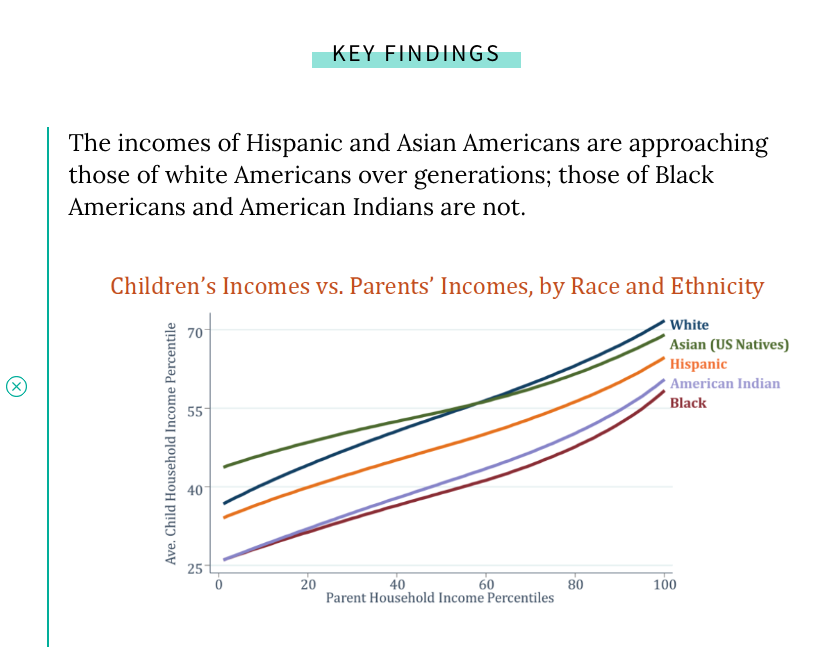
From Tap Dance to the Lap Dance: Decontextualized Harvard Study Demonstrates that Treadmilling Blacks are Not Closing the Income Gap Between them and Whites Over Generations, Unlike Latinos/Asians
/
For nearly a decade, researchers with Opportunity Insights, a nonprofit think tank based at Harvard University, have studied economic mobility to identify factors that lead to greater outcomes for children and to find potential remedies for obstacles that get in the way.
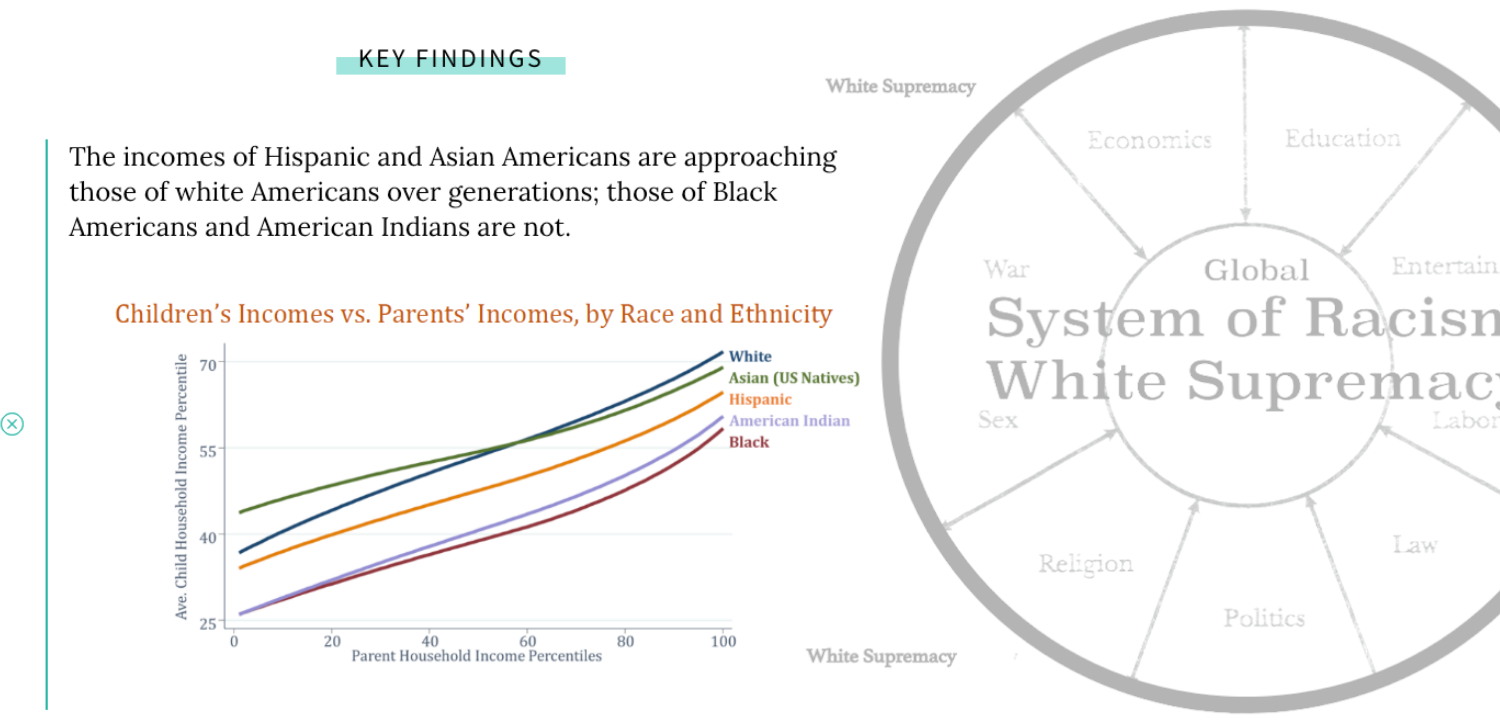
“The incomes of Hispanic and Asian Americans are approaching those of white Americans over generations; those of Black Americans and American Indians are not,” the group notes on its website. “Differences in family characteristics — parental marriage rates, education, wealth — and differences in ability explain very little of the black-white intergenerational gap.”
The group says universal basic income programs, minimum wage increases and other efforts affecting a single generation “can help narrow racial gaps at a given point in time. However, they are less likely to narrow racial disparities in the long run.” [MORE]
Racial disparities in income and other outcomes are among the most visible and persistent features of American society. The sources of these disparities have been studied and debated for decades, with explanations ranging from segregation and discrimination to differences in family structure and genetics.
Most previous work on racial disparities has studied inequality within a single generation of people. We analyze how racial gaps change across generations, allowing us to identify the factors that lead to disparities between racial groups that persist over time. Using de-identified data from the U.S. Census Bureau covering 20 million children and their parents, we measure the differences in incomes in adulthood between children of different races who grow up in families with similar parental incomes. We show how these intergenerational race gaps vary across areas of the U.S. and discuss implications for pathways to reduce racial disparities. [MORE]