The number of male black medical school applicants is continuing to fall

NationalJournal

The number of male black medical school applicants is continuing to fall, despite a growing pool of diverse applicants overall. The diversity report, published by the Association of American Medical Colleges, found that males made up just more than one-third of the total percentage of black first-time medical school applicants, the smallest group of males for any of the five major racial groups.

Overall, people of color made up 45.4 percent of the total number of medical school applicants in the U.S. From 2010 to 2011, the number of Latino applicants grew by 5.7 percent, and black applicants by 5 percent, making up about 15.2 percent of all applicants. In addition to the decline of male black applicants, the number of American Indian or Alaska Native applicants declined sharply by 11.4 percent.

Despite making some strides, the AAMC report suggests focusing on recruiting males--especially those from lower socioeconomic backgrounds--into the field by strengthening school pipelines to attract more racial and ethnic diversity.

Overall, more women than men from all the major racial groups are applying to medical school. The disparity for blacks, however is more stark: Black women now outnumber black men in medical school by 2 to 1, The Grio reports.

The “why” isn’t immediately clear, but AAMC’s chief diversity officer Marc Nivet suggests to The Grio a number of factors, including lower high school graduation rates and a lack of preparedness for college-level work among black men; ineffective interventions for at-risk youth; and a persistent stereotype that medical school is reserved for well-to-do students.

The lack of resources and preparation for higher education may be creating a catch-22 for those who are interested.

“Unfortunately, minority males aren’t properly prepared for the application process,” Alden Landry, an associate director at Beth Israel Deaconess Medical Center, told The Grio. “Be it exposure to rigorous science courses or even going to college, black males just aren’t prepared.”

Bill Would Posthumously Grant Freedom to NH Slaves

ABCNews

A supporter of a New Hampshire bill that would posthumously grant the request of 20 African slaves who petitioned for their freedom during the Revolutionary War says it's never too late to right a wrong.

Woullard Lett of the Manchester chapter of the NAACP testified at a Wednesday hearing that he hopes passage of the bill will mean the Legislature doesn't plan to wait another 200 years to address the concerns of the black community today.

The bill is sponsored by state Sen. Martha Fuller Clarke, D-Portsmouth, who is white. It also would bring attention to Portsmouth's plan for a memorial park at the site of a once forgotten colonial-era African-American burial ground on the edge of downtown. The park will feature engravings of lines written in the freedom petition.


White Judge Eugene Hyman Discusses Racial Gap in Sentencing

Legalbroadcastnews

A recent report by the U.S. Sentencing Commission says that sentences for black males are getting longer, suggesting that the racial gap is widening even more when it comes to criminal sentencing.

Retired Superior Court Judge of Santa Clara, California, Eugene Hyman, believes that more training for judges needs to happen.  He says that judges need to be trained on recognizing situations where there are disparities and subtleties with respect to biases.

The federal government has made sentencing more similar than in the past for crack cocaine and powder cocaine, as crack cocaine has a tendency to be tied more with minorities.  Hyman hopes that the racial gap the report suggests more of a subtle and not overt racial discrimination and thinks that the gap might relate more to the legislative cocaine challenges.

While the report doesn’t indicate where in the U.S. this racial gap occurs, Hyman suspects it’s probably widespread, with possible differences in certain states.  He also believes that what is occurring is not just judicial bias but also includes “every actor” that touches a case, to include prosecutors and probation officers.

Honorable Judge Eugene Hyman has received numerous awards and recognition for his work with families and children and has appeared on numerous television news shows. For more information, visit www.judgehyman.com. He is also a featured commentator on The Family Law Channel and The Legal Broadcast Network.

U.S. Wasted $10 Billion "Rebuilding" Iraq

ThinkProgress

As the 10th anniversary of President George W. Bush’s invasion of Iraq approaches, the body charged with overseeing Iraq’s reconstruction has issued its final report, capping a tale of spending far too much money for very little results.

Appointed in Oct. 2004, over a year into War in Iraq, the Special Inspector-General for Iraq Reconstruction (SIGIR) was charged with being a watchdog over the use of funds provided for rebuilding the Iraqi state after the downfall of Saddam Hussein. Those reconstruction and stabilization efforts wound up costing nearly $60 billion — or about $15 million per day — with up to $10 billion of that amount wasted, according to SIGIR Stuart Bowen.

The examples provided of fraud and abuse of the system are staggering both in number and nature. Among the most telling boondoggles is an $108 million waste-water treatment facility in Fallujah, Iraq that will be completed eight years over schedule. Once finished in 2014, it will only service 9,000 homes and require an additional $87 million from Iraq to provide service to the rest of the buildings in the city.

In terms of outright abuse, Iraqis and Americans alike were culprits, with one former Iraqi Defense Minister’s squandering $1.3 billion. Earmarked to provide for an Iraqi “quick reaction force,” the money was instead spent on various bribes, kickbacks, and purchasing useless equipment. Likewise, former U.S. Army Major John Cockerham was sentenced to 17.5 years in prison for siphoning off millions of dollars from reconstruction projects by accepting bribes from various contractors.

The majority of Bowen’s lessons learned provided to Congress deal extensively with the completely unprepared way in which the United States chose to rebuild Iraq. Bowen gives seven ways to better perform rebuilding operations in the future:

1. Create an integrated civilian-military office to plan, execute, and be accountable for contingency rebuilding activities during stabilization and reconstruction operations.

2. Begin rebuilding only after establishing sufficient security, and focus first on small programs and projects.

3. Ensure full host-country engagement in program and project selection, securing commitments to share costs (possibly through loans) and agreements to sustain completed projects after their transfer.

4. Establish uniform contracting, personnel, and information management systems that all SRO participants use.

5. Require robust oversight of SRO activities from the operation’s inception.

6. Preserve and refine programs developed in Iraq, like the Commander’s Emergency Response Program and the Provincial Reconstruction Team program, that produced successes when used judiciously.

7. Plan in advance, plan comprehensively and in an integrated fashion, and have backup plans ready to go.

Many of those suggestions belie the cavalier attitude struck by Republicans at the beginning of the war in 2003, despite a near complete lack of planning by the Bush administration to provide for rebuilding Iraq. “Each day it gets better,” then-Secretary of Defense Donald Rumsfeld said in May 2003 of the reconstruction efforts. Rumsfeld also insisted that “the bulk of the funds for Iraq’s reconstruction will come from Iraqis” in October of that year. $60 billion later, Iraq has proved to be nowhere near the “cakewalk” predicted by George W. Bush adviser Kenneth Adelman predicted in 2002.

Maryland Senate Votes To Repeal Death Penalty

ThinkProgress

Earlier today, the Maryland senate voted 27-20 to repeal the death penalty in that state. The repeal bill, which is a top priority for Gov. Martin O’Malley (D), will now move on to the state house, where it appears likely to pass. The bill has 67 co-sponsors in the house, and only 71 are needed for it to pass.  This bill reflects a growing national trend away from the death penalty in states that 

Bill requires welfare recipients to sign waiver of their Fourth Amendment rights

RawStory

Low-income parents seeking federal assistance would be forced to sign away their Fourth Amendment rights under a bill proposed last week by Republican Rep. Stephen Fincher of Tennessee.

The Welfare Integrity Act of 2013 would require applicants for and recipients of assistance under the Temporary Assistance for Needy Families (TANF) program to sign a waiver of their constitutional rights and submit to random drug tests. The program helps poor families with children pay for living expenses such as rent, heat, utilities and personal care items.

“Currently the federal government enables drug abusers a safety-net by allowing them to participate in the TANF program,” Fincher said Monday in a statement. “Instead of having to make the hard-choice between drugs and other essential needs, abusers are able to rely on their monthly check to help them pay their bills.”

“By allowing random drug checks, we can ensure families who receive TANF benefits use them for their intended purpose of feeding, clothing and providing shelter for their children, while cutting the tie that enables drug abuse,” he added. “It’s not unreasonable to ask folks to stay clean in order to receive federal assistance.”

Those who tested positive for drug use or have been convicted of drug-related crimes would be temporarily denied TANF benefits under the bill. Those denied three times would be permanently barred from the program.

Similar legislation, the Drug Free Families Act, was introduced to the House in 2011, but died in committee.

Republicans in state legislatures across the country have pushed to require welfare recipients to submit to drug tests. Last week, the U.S. Court of Appeals for the Eleventh Circuit upheld a temporary ban on Florida’s law, ruling that requiring the drug tests violated the Fourth Amendment’s protections against unreasonable search and seizures.

Michigan has also attempted to implement a welfare drug testing law, but it was struck down as unconstitutional by the U.S. Court of Appeals for the Sixth Circuit in 2003.

Judge Declares Mistrial in Black Man's Drug Case at Center of Landmark Supreme Court GPS Surveillance Ruling

BLT

For the U.S. Justice Department, the third time wasn't the charm in the high-profile drug prosecution of Washington nightclub owner Antoine Jones. A federal judge today declared a mistrial, the latest setback for the government after a loss in the U.S. Supreme Court last year.

The trial was the third for Jones, who represented himself, and the government after an earlier mistrial in 2007 and then last year's historic Supreme Court ruling that voided Jones's life sentence. The high court concluded the warrantless use of a tracking device violated Jones' rights under the Fourth Amendment, a ruling whose scope is being assessed in courts across the country.

In the third trial, the government was prohibited from using the GPS tracking device data to try to connect Jones to a house in Maryland where the authorities, in 2005, found hundreds of thousands of dollars in cocaine and cash. Jones in recent weeks filed numerous handwritten motions that questioned court orders and government evidence.

Jurors last week told U.S. District Judge Ellen Segal Huvelle in Washington several times that the panel was deadlocked. (The panel, in the end, was split 6-6.)

"Judge Huvelle, after exhausting deliberations we the jury cannot come to a unanimous decision," the foreperson wrote in a note filed February 28. "As jurors we have listened repeatedly to wiretaps, reviewed every transcript and in addition we have examined pictures numerous times, and weighed the credibility of witnesses."

A spokesman for the U.S. Attorney's Office said it expects to retry Jones. The government declined to comment about the mistrial. Jones has remained in custody since his arrest in late 2005.

Following a mistrial in 2007, prosecutors secured a conviction on a conspiracy charge in 2008. Huvelle sentenced Jones to life in prison. The U.S. Court of Appeals for the D.C. Circuit struck the conviction and prison sentence, however, after the court concluded the government's warrantless use of a Global Positioning System tracking device violated Jones' rights. (The Supreme Court ruling is here.)

Prosecutors had relied on GPS data to connect Jones to the Maryland drug house. The authorities never caught Jones with any drugs, a point he stressed in his opening remarks to jurors on January 28.

"I'm fighting for my life," Jones said in his opening statement. At one point, he tore up a copy of charging documents, telling jurors "this is what we're going to do with the indictment." Jones also urged jurors to assess the credibility of government cooperators.

Jones has dealt with quite a few lawyers over the years, and the relationships haven't all been smooth.

His earlier counsel, A. Eduard Balarezo, withdrew last year after the Supreme Court victory. Balarezo, calling the attorney-client relationship in the case "irretrievably broken," said Jones refused to accept his advice—instead insisting he act as his own attorney.

Huvelle appointed Jeffrey O'Toole of Washington's O'Toole Rothwell to represent Jones in the third trial. Jones, however, proceeded on his own. (O'Toole was on hand, in court, as standby counsel. He declined to comment today about the mistrial.)

In the D.C. Circuit and in the Supreme Court, Washington attorney Stephen Leckar represented Jones. (O'Melveny & Myers partner Walter Dellinger was on the high court brief with Leckar.)

Leckar, who was not involved in the third trial, said "the U.S. attorney's office is not going to take this rejection lightly." He questioned whether continued prosecution is a wise use of government resources.

The government has 70 days to bring Jones to trial again--for the fourth time.

To Stem Juvenile Robberies, Overseer NYPD Cops Trail Youths Before the Crime

NYTimes

Three police officers knocked on the apartment door of a 15-year-old boy. He had already been on both sides of a police blotter: shot and stabbed, but also arrested on robbery charges. He ran in an East Harlem gang and lived with his grandmother on the seventh floor of a public housing building, where the stairwells reeked of marijuana.

He was the type of teenager destined for trouble. And that was precisely why the officers were at his door on a recent winter night.

The New York City Police Department has embarked on a novel approach to deter juvenile robbers, essentially staging interventions and force-feeding outreach in an effort to stem a tide of robberies by dissuading those most likely to commit them.

Officers not only make repeated drop-ins at homes and schools, but they also drive up to the teenagers in the streets, shouting out friendly hellos, in front of their friends. The force’s Intelligence Division also deciphers each teenager’s street name and gang affiliation. Detectives compile a binder on each teenager that includes photos from Facebook and arrest photos of the teenager’s associates, not unlike the flow charts generated by law enforcement officials to track organized crime.

The idea, in part, is to isolate these teenagers from the peers with whom they commit crimes — to make them radioactive.

“We are coming to find you and monitor every step you take,” said Joanne Jaffe, the department’s Housing Bureau chief. “And we are going to learn about every bad friend you have. And you’re going to get alienated from those friends because we are going to be all over you.”

The police also keep tabs in more covert ways.

Detectives spend hours, day and night, monitoring the Facebook pages and Twitter accounts of teenagers in the program, known as the Juvenile Robbery Intervention Program, or J-RIP, and of their criminal associates. To do so, detectives create a dummy Facebook page — perhaps employing a fake profile of an attractive teenage girl — and send out “friend requests” as bait to get beyond the social network’s privacy settings.

At the same time, officers seek to forge relationships with the teenager’s family, drawing them in with perquisites like a hand-delivered turkey on Thanksgiving Eve and toys and brand-name sneakers for younger siblings. Officers also provide tailored help, shuttling family members to doctors’ appointments, connecting them with alcohol and drug-abuse counseling and filling out applications for low-income housing, food stamps, child support and child care.

The approach in New York comes at a time when gang violence has been blamed for higher murder and crime rates in cities like Chicago and Detroit, prompting federal and local law enforcement authorities to contemplate new initiatives to try to quell the cycle of gang activity and violence.

New York’s program is no panacea to violent crime; only a few hundred teenage robbers will be in the program at any one time, all from East Harlem or the Brownsville section of Brooklyn.

Nonetheless, the city’s efforts have drawn notice; the Police Department has given presentations on its program at conferences from Monterey, Calif., to Washington, D.C.

“I’m not aware of any police department nationally coming up with the same strategy or replicating what the N.Y.P.D. has done here,” said David M. Kennedy, director of the Center for Crime Prevention and Control at John Jay College of Criminal Justice in Manhattan.

The program builds, in part, on Mr. Kennedy’s successful homicide-reduction strategy, called Operation Ceasefire, that began in Boston in the 1990s and was later implemented in scores of cities. But New York’s program has a different and more narrow focus: Juvenile offenders who live within specific neighborhood borders yet commit robberies beyond those boundaries.

Getting to Know Gangs

It is the Police Department’s own brand of tough love.

“We tell these teens, ‘You have a choice,’ ” Chief Jaffe said. “You will not victimize anyone else. If you commit a new robbery or any other crime that is going to hurt people, we are going to do anything we can when you get arrested to put you in jail. Your friends will get out. You are not getting out.”

Youths in the program are flagged in police and court databases, so if one is rearrested, the police and prosecutors will coordinate their response.

Officers who run the program said they recognized what they were up against. Of the 165 East Harlem juveniles currently in the program, 55 are members of a crew, a ganglike fraternity whose members are aligned with one housing project or another. In Brownsville, more than a dozen J-RIP youths have been shot, one fatally and another who survived his fourth shooting this past summer. Last month, a program teenager was jumped by rival gang members and stabbed three or four times. He remains paralyzed.

Many teenage girls in the program have babies.

“You’ll see 14-year-old mothers, 28-year-old grandmothers, 40-year-old great-grandmothers,” said Lt. David Glassberg, who runs the program in Brooklyn. “It’s crazy.”

Chief Jaffe created the program in January 2007 after she noticed a spike in robberies in Brownsville, a neighborhood with 21 public housing developments within 2.2 square miles. She tried traditional policing strategies, like increased foot patrols, but the robberies persisted, she said.

She decided to identify every juvenile under 18 who lived in Brownsville public housing and had been arrested for robbery, anywhere in the city. The result was a list of 106 teenagers linked to 132 robbery arrests in 2006. Only 24 percent of the robberies occurred on housing property — a distinction that was important to Chief Jaffe, because stopping these teenagers in Brownsville would have a beneficial impact throughout New York City.

Part of that effort can be seen in the online work performed by Detective Patrick Kennedy and his partner, Officer Victor Ramos. They monitor the Facebook pages and Twitter accounts of dozens of J-RIP teenagers from computers inside a precinct station house in East Harlem. The sand-colored brick walls are papered with color photographs, printed from Facebook, of program teenagers posing, or “mobbing,” with peers in crews with names like “Broad Day Shooters” and “True Money Gang.”

Looking at one photo, Detective Kennedy pointed out a J-RIP teenager who was flashing a crew hand signal; he was among the smallest of the group, all wearing designer Marmot and North Face jackets in lime green, purple, orange and electric blue.

“When they are all colored up like this in jackets and they go walking around other developments, that’s a problem,” Detective Kennedy said. “They call that mobbing.”

“To be familiar with the J-RIP kid, you have to be familiar with the crews he or she runs with as well,” Detective Kennedy continued. “We know all of the kids. And as much as we know them, they know us.”

For Facebook, Detective Kennedy creates an avatar, typically the persona of a female teenager, and sends out “friend requests.” Sometimes, accepted requests are followed by a come-on from the targeted teenager, like an inquiry about where the “girl” lives or whether she wants to meet up.

Department rules bar the detective from engaging, but he and Officer Ramos spend at least two hours daily monitoring the teenagers’ chatter — alert for talk of fights, party plans and criminal activities. If a program teenager is looking for trouble, Detective Kennedy said he could often see it coming and hopefully intervene.  

These concentrated efforts have helped produce results: Of the 106 Brownsville teenagers, only 14 were arrested for a new robbery in 2007. The success led the department to expand the program to East Harlem in 2009.

Resistance to Change

Leonardo Agosto, 19, entered the program that year, overseen by two police officers whose guidance continues to this day. He grew up in East Harlem, raised by a single mother who struggled with mental illness. He then described a childhood of mental abuse and poverty.

He was 15 when he and his twin brother robbed two other teenagers near Central Park on 86th Street on an October 2008 night. Leonardo delivered the first blow, knocking one of the victims to the ground. “I hooked him — pow. His head went flying,” he recalled.

The police later showed Leonardo a photograph of the victim’s swollen and bloodied face, the result of a fractured nose and broken jaw. The image, said Leonardo, has stuck with him.

Leonardo spent seven months in a juvenile detention center. When he got out, the two officers, Gilberto Ortiz and Rafaela Rosario, began their intervention. They secretly paid for a cap and gown so Leonardo could participate in high school graduation ceremonies. They later put him on a bus to the State University of New York in Delhi. The town’s rural landscape, more than 150 miles from East Harlem, might as well have been the moon. He arrived for freshman-orientation weekend, greeted by a creek and an unsettling quiet. He recalled shutting his hotel room door; fear and pride welling up as he began to cry.

He has stayed out of trouble, but challenges remain. He dropped out of college, and returned to East Harlem with nowhere to go. He now lives in a Bronx homeless shelter, sharing a room with seven older men. But he has a paid internship with a Harlem-based community organization.

John Rivera, 19, who lives with his parents at the Van Dyke Houses in Brownsville, recalled how he was “chilling with the wrong crowd” at the time of his robbery arrest. His involvement in the program has made him unpopular with his former friends.

“Some of them were like, ‘Oh, you working for the cops,’ ” he said. “But they just friends. Friends come and go.”

Now he talks of the officers’ impact on his life. He was given a new pair of basketball sneakers — “My first LeBrons,” he announced proudly — and has been taking steps toward a G.E.D., although his police mentors were upset that he failed to show up at the J-RIP trailer near Sutter Avenue to prepare for the test.

“Stop messing around,” Sergeant James Lawrence told him. “You keep telling me, ‘Yeah, yeah,’ every time I see you, and then I don’t see you,” the sergeant said.

Not every effort pays off.

Last winter, while driving through Brooklyn, scanning the streets for teenagers in the program, Lieutenant Glassberg said he spotted a flash of orange — deer-hunter bright. It was not the $500 orange Marmot jacket that caught his eye; it was the reedy teenager wearing it. He said he immediately suspected that the teenager, a 17-year-old gang leader named Laquan, had stolen the jacket.

Lieutenant Glassberg dispatched a detective to investigate. For more than a year, the lieutenant had invested heavily in the teenager. He checked up on him at home, where he lived with a single working mother. He took him on trips to the Statue of Liberty and a Staten Island Yankees baseball game, got him a summer job and personally drove him to sessions with a therapist.

Laquan entered the program in 2010 after he struck a 14-year-old boy in the head and stole his cellphone. When Laquan was indeed arrested for stealing the jacket on that January 2012 day, Lieutenant Glassberg said the teenager’s reservoir of second chances had bottomed out.

“Everybody had a stake in this kid, and when he got in trouble again, I thought, ‘Well, that’s it,’ ” the lieutenant said. “He used up all his chits.”

The judge agreed to hold Laquan at Rikers Island, where he remains.

Breaking a Cycle

When Chief Jaffe asked him to help start the program, Lieutenant Glassberg, 44, said he saw an opportunity to break the trajectory of those born into poverty and neglect, and winding up behind bars before their 18th birthday.

On a recent rainy evening, the lieutenant and his team of officers piled into an unmarked police van. At about 6 p.m., they parked in front of the Howard Houses, a boxy brick high-rise building on Mother Gaston Boulevard in Brownsville, to visit a 17-year-old girl who has been in the program since last spring.

Police arrested her on a gun-possession charge when she was 15. Last March, she was arrested for stealing an iPhone and beating up the victim. She gave birth to a baby born about six months ago and stopped attending school.

The girl sat on a couch in the living room; her younger sister was slumped next to her, wearing an expression that conveyed petulance and boredom. Their younger brother, 10, sat at a computer, its glowing screen the only source of light. When the officers arrived, four other teenage friends scattered, disappearing down the hall to a back bedroom.

“Where’s your mother?” Lieutenant Glassberg asked. The girl said she was visiting a sick aunt. The lieutenant told her about a new day care that has agreed to take the baby while she is in school. “We are going to bring you over there this week or next week; it’s brand new, beautiful,” he said. She stared at him blankly.

On his way out, Lieutenant Glassberg instructed the girl’s younger siblings to clean up their bedroom and reminded the boy, who sat nervously sucking on his T-shirt, to keep the peanut butter jar in the kitchen. “You know we have problems with some critters in this place,” the lieutenant gently chided. Moments later, the boy appeared in the first-floor apartment window and waved goodbye.

Overcoming Skepticism

This approach to law enforcement is rarely seen by residents in some of the city’s most crime-stricken neighborhoods, where tensions between police officers and residents, particularly over stop-and-frisk policing tactics, have put up walls not easily breached.

“In low-income areas, nobody really believes in the police,” a Brownsville resident, Renee Smith, said. When officers first visited her apartment after her 16-year-old nephew was arrested for robbery, Ms. Smith was suspicious and bemused. She looked at the two baby-faced officers, standing earnestly at her apartment doorway, prattling on about the program.

“I’m thinking it was some sort of trick to get into your business and get you in trouble,” Ms. Smith recalled in a recent interview.

Initially, doors slammed shut, often with an obscene gesture and a few choice words.

The two officers, Josh Carvajal and Richard Elliott, eventually won over Ms. Smith and her nephew, Ramell, whom she adopted at age 2 because her sister had a drug problem. “They are like a father figure, like big brothers. They make Ramell laugh. They make Ramell believe in himself,” she said. Last month, Ramell earned his G.E.D.

Ms. Smith, like others who have come into contact with the program, drew a distinction between these officers and the ones who patrol their neighborhoods.

When Sergeant Lawrence showed up at a teenager’s apartment to drop off information about a free trip to Alaska, the teenager’s father brought up a recent stop-and-frisk police encounter.

“You know they ran up on me last night,” said Anthony McCrae, 44. “I come out of the store and walked around the corner and I heard, ‘Hey you? You!’ And their lights were flashing and everything.”

“Well, there’s been a problem over there with robberies,” Sergeant Lawrence offered, delicately.

“I’m not out here robbing nobody. Come on,” Mr. McCrae said.

Officer Carvajal changed the subject. “I forgot to tell you, starting next week, we are going to start to tutor your son. He needs some help in writing,” the officer said.

Mr. McCrae, who got out of prison in 1995 after he served more than seven years for attempted murder, said he did not want his 15-year-old son to “go down that path.”

“These brothers here — they real good,” Mr. McCrae said to a reporter. “They try to help out. Get my son on the right track.”

Wrongful Convictions of Black People Throughout History

InnocenceBlog

Racially disparate treatment has permeated the United States criminal justice system throughout history. During the Jim Crow era, blacks were legally barred from voter rolls in several southern states and were therefore barred from serving on juries. In this era of racial strife, the police, prosecution, defense attorneys, judges and jurors were almost always white. Cross-racial misidentifications, forced confessions, all-white juries, and blatant racism led to the wrongful convictions of countless innocent black people.
 
Between the 1870’s and 1960’s, a significant number of black defendant/ white victim allegations never made it to trial. The Tuskegee Institute Archive estimates approximately 3,500 lynching deaths of blacks. How many of the lynched were actually innocent will forever be a mystery.
 
The presumption of innocence barely arose in the case of Ed Johnson, arrested for sexually assaulting a white female in Chattanooga, Tennessee, in 1906. The victim was allegedly knocked unconscious with a leather strap. Johnson became a suspect when a witness claimed that he saw him carrying a leather strap, though Johnson denied owning one. Johnson provided numerous alibi witnesses at trial. Nevertheless, he was convicted by an all-white jury and sentenced to death. While the U.S. Supreme Court granted a stay of execution, a mob broke through the jail and brutally murdered Johnson in a public hanging. Johnson’s tombstone reflects his professed innocence, “God Bless you all. I AM a Innocent Man.” In February 2000, his conviction was finally posthumously overturned.
 
A quarter century later, the Scottsboro Boys convictions raised public awareness about racial injustice and galvanized the Civil Rights Movement. In 1931, a fight occurred between black and white boys on a freight train traveling through the town of Scottsboro, Alabama. The police rounded up all black boys riding on the train and ultimately arrested nine black boys, ranging in ages from 12 to 19 years old. Two white girls then came forward alleging that they were gang raped on the train. All nine defendants claimed innocence. After four separate one-day trials with all-white juries, eight of the nine were convicted and sentenced to death. 
 
Their appeals would last over 20 years. On re-trial, one of the rape victims testified that the rape was fabricated, yet all-white juries again returned guilty verdicts. In the end, after facing multiple re-trials, all of the Scottsboro boys had their convictions dropped or were sentenced to lesser charges. The Alabama Legislature recently introduced a bill to posthumously exonerate the nine Scottsboro Boys.
 
Meanwhile, a landmark Supreme Court decision in the Brown v. Mississippi case addressed concerns about confessions obtained through violence. In 1934, after a white farmer was killed in Mississippi, three black sharecroppers were arrested for the crime. Ed Brown, Arthur Ellington, and Henry Shields were all beaten and tortured into confessing. Even more ludicrous, the police did not dispute torturing the defendants, who appeared visibly in pain as they sat through their trial. An all-white jury convicted the three and sentenced them to death by hanging. In 1936, the U.S. Supreme Court overturned the convictions, arguing that coerced confessions cannot constitute evidence in a court of law. This historic ruling paved the way for the Miranda rulings to come decades later. Ellington, Shields and Brown were never fully exonerated because they took short plea deals for fear of facing another unjust re-trial.
 
Black women were also subjected to the same unequal treatment in the criminal justice system. In 1945, the state of Georgia executed Lena Baker for killing a white man who had kidnapped and assaulted her. She claimed that she had shot him in self defense. Baker was convicted by a jury of white men and became the only woman ever executed by electrocution in Georgia. In 2005, the Georgia Board of Pardons and Paroles granted Baker a pardon saying that the state had committed a grievous error.
 
Finally, wrongful convictions based on racial bias were not just a Southern phenomenon. In 1948, the “Scottsboro Boys of the North,” also known as the Trenton 6, were arrested for the killing of a white furniture store owner in Trenton, New Jersey. Witness descriptions of the assailants ranged from “two to three black men” to “two to four light-skinned teenagers.” The six black men who were arrested did not match the descriptions. Five of the Trenton 6 signed inconsistent confessions, which they maintained at trial were coerced. All provided rock-solid alibis. Nonetheless, an all-white jury convicted the Trenton 6 and sentenced them to death. On appeal, their convictions were overturned due to weak evidence and the perjury of the medical examiner. After multiple re-trials, four of the Trenton 6 were acquitted, and two were found guilty of lesser sentences.
 
These cases, and many others, showcase decades of racial bias in the criminal justice system. Because media reports and public outrage expose only the most prominent wrongful convictions, we will never know how many innocent African-Americans were falsely convicted or executed. My part-two blog post will illustrate similarities of these historical injustices to contemporary stories of DNA exonerations of African-Americans.

Prison slavery, Jurors: Know your rights, Sleeping with undercover cops

Rt.com

On this episode of Breaking the Set, Abby Martin talks to Nicole Porter, director of advocacy for the Sentencing Project, about prison sentencing, racial disparities, slave labor and other aspects of the US prison-industrial complex. Abby then talks to Kirsten Tynan, the national coordinator for the Fully Informed Jury Association, about the concept of jury nullification, the incarceration of peace activist Mark Schmidter and the importance of jurors knowing their rights. BTS wraps up the show with a look at a number of cases where law enforcement entrapped everyday people, and how undercover operations are becoming more pervasive in the expanding police state.

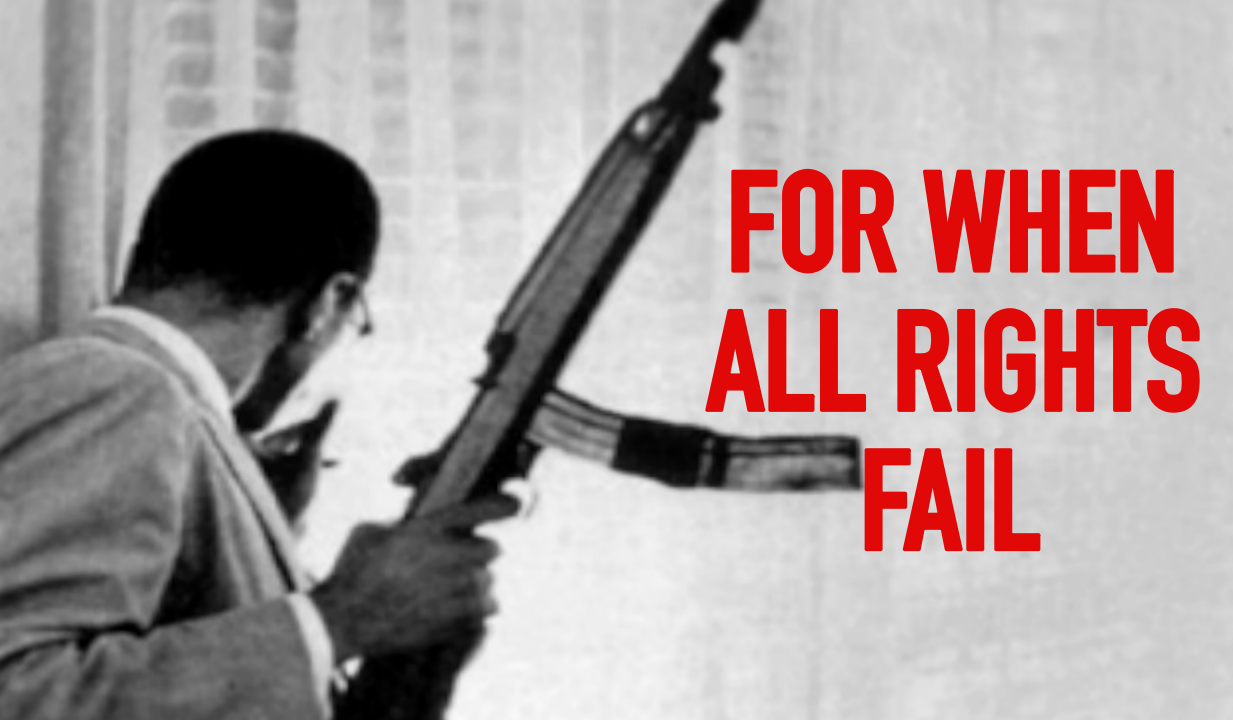
NRA rolls out new ad targeting Black Audience

TheGrio

The National Rifle Association is aiming its latest ad at minorities, and African-Americans in particular, by featuring YouTube sensation and gun advocate Colion Noir.

The self-described “urban gun enthusiast” talks for just under 90 seconds, encouraging Americans to arm themselves for protection.

“The only person responsible for your safety is you,” Noir says. “Cops can’t always be there. Obama definitely can’t [physically] be there.”

Referencing history, the new NRA contributor tells listeners they can’t depend on the government to protect them.

“No one wants to fight for their protection, they want the government to do it,” Noir opens the the video. “The same government who at one point hosed us down with water, attacked us with dogs, and wouldn’t allow us to eat at their restaurants and told us we couldn’t own guns when bumbling fools with sheets on their heads were riding around burning crosses on our lawns and murdering us.”

Ninth Circuit blocks day laborer provision of Arizona (non-white) immigration law

 [JURIST]

The US Court of Appeals for the Ninth Circuit [official website] on Monday affirmed [opinion, PDF] a preliminary injunction [JURIST report] barring the enforcement of an Arizona immigration law that prohibits motorists from stopping traffic to pick up workers. The injunction applies to two provisions of Arizona's SB 1070 [text, PDF], which make it unlawful for a motor vehicle occupant to hire or attempt to hire a person for work at another location from a stopped car that impedes traffic, or for a person to be hired in such a manner. The appeals court held that although Arizona has a significant government interest in promoting traffic safety, the day laborer provisions failed the requirement set forth in Central Hudson Gas & Electric Corp. v. Public Service Commission of New York [opinion] that restrictions on commercial speech be no more extensive than necessary to serve that interest.

SB 1070 has gained notoriety for its controversial provision requiring law enforcement officials to check the immigration status of persons they stop or arrest if there is a reasonable suspicion that the person is in the US illegally. In June the US Supreme Court [official website] ruled [JURIST report] in Arizona v. United States [SCOTUSblog backgrounder] to strike down sections of the Arizona law, but upheld the controversial portion allowing police officers to check immigration status of anyone arrested. Currently, the Ninth Circuit is considering another questionable provision of the law that prohibits the harboring of "unlawful aliens." The harboring ban had been in effect since SB 1070's inception in July 2010 until it was struck down [JURIST report] by the US District Court for the District of Arizona in September. Arizona Governor Jan Brewer [official website], who signed the bill into law, appealed [JURIST report] the lower court's injunction in late September.

How Private Prisons Game the Immigration System

TheNation

Thirty years ago in January, Corrections Corporation of America (CCA), now the biggest operator of private prisons in the world, opened its first prison, a federal immigrant detention center in Houston, Texas. Three Decades of Service to America, a page on the company’s website, features a video interview with the company’s founders looking back on that first contract. “We saw this big ol’ sign, ‘Olympic Motel,’ made an offer to lease the motel for four months,” recalls Don Hutto, who chuckles with fellow co-founder Tom Beasley, the former chairman of the Tennessee Republican Party, as they remember hastily converting the building and staffing it with family members. The night of Super Bowl Sunday, “we got our first day’s pay for eighty-seven undocumented aliens,” says Hutto, who even fingerprinted the inmates himself.

Three years after the company’s first contract in 1983, according to Southern Changes magazine, the company spent some $100,000 lobbying the state of Tennessee to secure a correctional facility privatization bill, which helped propel the business to financial success. Last year, the company brought in $1.7 billion in revenues, about a quarter of which came from contracts with the Immigration and Customs Enforcement (ICE) and federal Bureau of Prisons to incarcerate non-citizens in the United States.

For a company that began and later thrived by imprisoning immigrants, the federal immigration policy overhaul expected this year presents both opportunities and challenges.

On the one hand, a pathway to citizenship and legal reforms sought by advocates could reduce the number of immigrants detained by CCA and its competitors in the private prison industry. “Private prison corporations have an enormous stake in immigration reform,” says Bob Libal, a prison reform advocate with Grassroots Leadership. “A reform that provides a timely pathway to citizenship without further criminalizing migration would be a huge hit to the industry,” he says.

On the other hand, Libal observed that a bill with increased security measures “could be very profitable” for the industry. Legislators and the Obama administration could adopt a plan that mirrors Republican proposals for an “enforcement first” approach, which include increased police powers, new mandatory detention and sentencing laws, further militarization of the border and proposals for more prisons and detention officers.

Damon Hininger, the chief executive of CCA, sounded an optimistic note when asked about the impact of reform on an investor call earlier this month, noting, “There’s always going to be a demand for beds.”

In recognition of the profits at stake, the prison companies have invested in key legislators leading the reform process—although the companies are coy about their purpose, denying that they are attempting to influence Congress’s deliberations.

Their lobbying efforts are nothing new. CCA and other large private prison companies have forged ties with political insiders by spending huge sums on lobbying firms, campaign contributions and grants to friendly think tanks. An analysis by the Associated Press last year found that the three major private prison corporations—CCA, the Geo Group, the industry’s largest two companies, along with a smaller company, the Utah-based Management and Training Corporation—spent roughly $45 million over the past decade to influence state and federal government.

The private prison industry has cultivated support from Republican leaders on immigration policy, from Senator Marco Rubio, the “face of comprehensive immigration reform,” to the right edge of the House Republican caucus, a review by The Nation has found.

Unlike other stakeholders involved in today’s process, prison companies have stayed away from the headlines, and have told reporters that they are not planning to engage.

Pablo Paez, a vice president for corporate relations with the Geo Group, e-mailed The Nation to say that his company “has never directly or indirectly lobbied to influence immigration policy.” Correction Corporation’s spokesperson, Steve Owen, echoed that position, telling The Nation that his company does not lobby on any “sentencing or detention enforcement legislation” and “will not take a position on or advocate for or against any specific immigration reform legislation nor will our government relations team on our behalf.” Management and Training Corp. did not respond to a request for comment.

Regulatory filings and lobbying documents, however, undercut the industry’s claims of neutrality.

CCA, in a 2011 SEC filing, warned investors that “any changes with respect to drugs and controlled substances or illegal immigration could affect the number of persons arrested, convicted, and sentenced, thereby potentially reducing demand for correctional facilities to house them.”

Last year, disclosures with the Senate show that the company tapped one of its lobbying firms to begin monitoring immigration policy issues.

“Immigration reform laws which are currently a focus for legislators and politicians at the federal, state and local level also could materially adversely impact us,” notes the Geo Group’s 2011 annual report, which specifically cited the “relaxation of criminal or immigration enforcement efforts.”

Both companies may be wary of engaging publicly on immigration reform this year given the backlash over their involvement with recent anti-immigrant laws in the states. In 2010, Arizona enacted SB1070, a measure that centers on a requirement that local police to arrest and charge anyone found without proper immigration documentation. The bill, developed in consultation with private prison lobbyists through a group called the American Legislative Exchange Council, spawned copycat laws in Alabama, Georgia, Indiana, Utah and South Carolina.

Asked on an investor call about the effects of the Arizona law shortly after its passage, Wayne Calabrese, then the chief operating officer of the Geo Group, said, “I think people understand there is still a relatively low threshold of tolerance for people coming across the border and those laws not being enforced.… And that to me at least suggests there’s going to be enhanced opportunities for what we do.”

The association with the wave of state-level enforcement laws—prison companies hired local lobbyists and donated generously to many of the state lawmakers behind the Arizona effort in particular—generated unwanted attention on the industry. It also set off nationwide protests, including a demonstration at the Nashville, Tennessee, headquarters of CCA.

The Prison Problem

Harvardmagazine

WHEN JERRY ENTERS the pizza place next to Boston’s Government Center, he shakes Bruce Western’s hand heartily. Jerry, who has served 25 years for armed robbery and aggravated rape, was released two months ago. Western is studying what happens to prisoners after their release and has come to interview Jerry about his experience.

After ordering them coffees, Western, a sociology professor and faculty chair of the Harvard Kennedy School (HKS) Program in Criminal Justice Policy and Management, turns on his tape recorder. “Today is the sixth of November,” he says, setting the recorder down on the table. “My ex-wife’s birthday,” Jerry (not his real name) notes wryly. Western reads out the four-digit number that identifies Jerry for the purposes of the study. “I should play that number in the lottery tonight,” Jerry says.

Jerry is quick with a joke, charismatic and likable—not what comes to mind when one hears “convicted rapist.” For Western, this has been one of the study’s chief lessons. Although he is one of the foremost experts on incarceration in America, in the past he primarily studied prisoners through datasets and equations. Meeting his subjects in person put a human face on the statistics and dashed preconceived notions in the process.

Western has come to believe that just as offenders’ crimes carry a cost to society, so too does the shortage of social supports and rehabilitative services for offenders. A crime-control strategy of locking up more people, and keeping them locked up longer, isn’t working, he says. He is determined to help the American public understand how crime is shaped by poverty, addiction, and histories of family violence, in an effort to promote a more humane—and more effective—prison policy.

“Luck, Not a Plan”

MORE THAN 2.2 million Americans are incarcerated. This population is dynamic: hundreds of thousands of people (mostly men) are released from U.S. prisons each year to try to make a go of it in a world where they have failed before—with the added disadvantage of a prison record. More than two-thirds will be rearrested within three years; half will go back in prison.

Those released from prison are, as a group, little studied, partly because maintaining contact with them is so difficult. The men tend to be “very loosely attached to families and jobs,” Western explains. Prison time strains relationships with partners and children, and the men often live separately after their release. They may move frequently, sleeping on the couches of friends and relatives or even becoming homeless as difficulty in finding employment begets financial trouble.

Tracking this group, though complicated, is essential to Western’s goal of understanding what challenges prisoners encounter in reintegrating into communities. With funding from the National Institutes of Health, he is tracking a sample of inmates released from the Massachusetts prison system who return to Boston-area addresses during the course of a year. The researchers collect friends’ and relatives’ information (to maintain contact when, for example, a subject’s phone is disconnected for nonpayment) and work with community street-workers and the Boston police, who may have information on the former prisoners’ whereabouts. Ultimately, Western hopes to learn what services might most effectively help the formerly incarcerated lead productive lives and what alternatives to prison might better improve public safety.

The challenges are great. The difference between the prison environment and the outside world can be jarring in the extreme. Jerry confides during his interview that he’s had trouble sleeping at the shelter for homeless veterans where he lives: he isn’t used to other people in his sleeping space. Inside the medium-security prison, inmates fought all day long, he says, but “when the cell door would click closed at night, that was the only time you were safe. No matter what beef anyone had with you, it had to wait until morning.” At the shelter’s dorm-style room full of bunk beds, with people moving around all night, Jerry is constantly on edge: “It’s like my body left the prison, but my mind is still in there.”

The outside world brings an onslaught of stimulation, the sudden need to make dozens of small decisions each day, when before, the prisoners were expected to do as they were told. “Adaptive behavior in prison is maladaptive behavior outside,” explains Marieke Liem, a postdoctoral fellow at Western’s HKS program. She is investigating the effects of long-term incarceration and prisoners’ reentry using data from the United States and her native Netherlands. In both her study and Western’s, subjects have said they simply can’t cope on the outside—that going back to prison seems comforting and familiar.

The psychological challenge of reintegrating is often layered on top of other adversity—for example, childhood trauma. Jerry was five when his father went to prison for three years for shooting Jerry’s mother in the head during a drunken fight. (Luckily, the bullet went through her ear and her jaw, not her brain; deafness in one ear was the only lasting effect.) After his father’s return, Jerry recalls, “I would stay awake at night listening to them fight, wondering what he was going to do to her.” In many cases, says Western, “the violence people bring into the world has its roots in violence they witnessed, or which was done to them, at very young ages.” With stories like Jerry’s, he notes, “the line between victim and offender is very fuzzy indeed.”

Jerry started drinking when he was nine and left school after the ninth grade. This history of alcohol abuse is also typical among current and former inmates: at least two-thirds are thought to have substance-abuse problems—no surprise, given that people steal to get money for drugs, or commit other crimes due to impaired judgment while under the influence. In effect, American prisons are used as surrogate mental-health and substance-abuse facilities. The nonprofit Human Rights Watch found that 56 percent of U.S. inmates are mentally ill.

Jessica Simes, a doctoral student who is a research assistant in Western’s study, tells of one subject, mentally ill and addicted to drugs, who failed a drug test that was a condition of her parole and was sent back to prison for the remaining 15 months of her sentence. She had received prescription anti-anxiety medication while in prison, but bureaucratic delays held up a new prescription once she got out. Besieged by anxiety and desperate to feel calm, she used heroin. “The medical community has determined that addiction is a disease,” says Simes, “but the criminal-justice community considers it a crime.”

In cases like these, the reasons people landed in prison in the first place make them more likely to end up there again. This is why Western favors more robust support for prisoners who are released. “In most cases,” he says, “these are poor people with few social supports, real behavioral problems, or tragic family histories.”

Although Western’s team is still conducting interviews, the researchers have already identified some factors that seem to aid prisoners in reintegrating. As it happens, Jerry exited prison with several advantages. First, he is 51. Older offenders are less likely to commit new crimes and end up back in prison, perhaps because youthful tempers fade, or because maturity brings an awareness of what one has missed.

Moreover, Jerry has housing—he can stay in the shelter for the first year. He had $5,800 in the bank at the time of his release, saved from his work-release job. And his sister lets him come over and search job postings on her computer in exchange for doing her dishes.

Jerry also has good relationships with his sons, ages 28 and 29, even though he’s been absent for most of their lives. He speaks with each of them daily. When he thinks about his sons, Jerry feels motivated to find a job. He wants to get his own apartment so he can offer them a place to stay, save up a bit of money to loan to them if they need it. “I want to be their shelter in the storm,” he says. “Be there for them because all those years I couldn’t.”

Still, finding work might prove difficult. Jerry makes an excellent first impression—neatly groomed, intelligent, self-aware—but he struggles with emotional control. When a nurse declined his request for anti-anxiety medication at a recent appointment, he told her, “When you see me on the six o’clock news, you’ll know you made the wrong decision.” The nurse called security and Jerry was detained for 45 minutes, frisked, asked to remove his shoes and belt. “It was embarrassing,” he says. “Very embarrassing.” Many, perhaps most, former prisoners have trouble handling difficult emotions and keeping their cool during disagreements—crucial skills for workplace success.

“So many pieces have to come together” to set newly released prisoners on the path to a productive, stable life, says Caroline Burke ’13, a social studies concentrator who is one of Western’s research assistants. “If someone isn’t on the right track after the first few weeks, there’s a snowball effect.”

The few inmates who do reintegrate without much difficulty, who are best positioned to deal with the psychological effects of the transition, have the “big three” in place: they have a job lined up or find one quickly (e.g., through a trade union they previously worked with); they have housing (often with a relative or through a social-service program); and they have access to healthcare and treatment for substance-abuse and mental-health issues as necessary. The most effective reentry programs address these factors, and Western recommends directing more resources their way.

One more factor that can tip the odds is a mentor. Anthony Braga, M.P.A. ’02, a senior research fellow in the HKS program and chief policy adviser to Boston’s police commissioner, found that this was the key feature of the successful Boston Reentry Initiative. A joint project of local, state, and federal government, it matches each inmate being released with a mentor from a community organization. Braga, a longtime lecturer at Harvard who is now a professor at Rutgers, found that high-risk offenders who participated in the program and received mentoring took 30 percent longer to end up back in prison, and their offenses were far less likely to be violent crimes when they were rearrested. He says these results “show that you can make inroads and start getting them away from the pressures that lead them to falling back into their old ways.” (But Western notes that keeping expectations modest is important: “Some of the most successful reentry programs,” he says, “only reduce recidivism by 10 percent.”)

Jerry does have a mentor, his case worker at the shelter, a woman he calls “an angel.” Most recently, when his state-paid health insurance was canceled in error, she helped him get it reinstated. Not all former prisoners have advocates like this, notes Catherine Sirois ’10, the project manager for Western’s study; most are released into a piecemeal system where the assistance they receive relies on “luck, not a plan.”

The Prison Pipeline

THE UNITED STATES has the dubious distinction of having the world’s highest incarceration rate: more than seven-tenths of 1 percent of the population (about 1 in 100 adults) are in prison. Only eight countries have rates above one-half of 1 percent. The United States, with less than 5 percent of the world’s population, has nearly one-quarter of its prisoners.

Stricter treatment of drug offenses, and longer sentences for violent and repeat offenders, underlie this high rate. The United States currently has 41,000 inmates serving life sentences without parole, according to a recent report; England has just 41. Yet as recently as the 1970s, the U.S. incarceration rate was one-fifth its current level. Then tough-on-crime laws passed at the state and federal levels with bipartisan support.

Now, the United States has reached “mass incarceration”—“a level of imprisonment so vast that it forges the collective experience of an entire social group,” Western writes. He has found that 60 percent of black male high-school dropouts in the United States will go to prison before age 35. The deterrent effect of incarceration is lessened if it becomes so common that it no longer carries any stigma. “The American prison boom is as much a story about race and class,” he writes, “as it is about crime control.” Reentry services for released prisoners go only so far; making a real dent in the size of the prison population will require intervening in a cycle that begins long before any crime is committed.

But making that dent requires an honest look at hard-to-face truths. Two factors greatly increase the odds of going to prison sometime during one’s life: being black or Hispanic, and being poor. Poor minorities do commit more crimes, but that only explains part of the disparity. “Small race and class differences in offending are amplified at each stage of criminal processing, from arrest through conviction and sentencing,” Western writes. A criminal history accumulates that reflects not just criminal conduct, but the influence of race and poverty, and this in turn shapes later decisions about sentencing and parole release. Western and many fellow prison-policy scholars have observed that American criminal-justice policy is built on the rhetoric of personal responsibility—paying for one’s bad decision—to the exclusion of asking why minority and low-income groups are so much more likely to make bad decisions, or how society fails them.

 Two other factors that greatly increase one’s odds of going to prison—low educational attainment and a lack of employment opportunities—are closely linked, and are connected to one decision: to drop out of school. That decision is often made by teenagers leaving public-school systems ill-equipped in any case to prepare them well for the modern work force. The dimensions of this multifaceted disadvantage may be even more closely linked than is immediately obvious. As one example, Patrick Sharkey, Ph.D. ’07, a sociologist at New York University, found that children’s scores on vocabulary and reading tests fell in the days after a homicide in their neighborhood, presumably due to emotions such as fear and anxiety. In a neighborhood violent enough to affect long-term school performance, even education is not an easy ticket out of poverty.

One of Western’s students has found that the disparities begin even earlier. For her thesis in sociology and African-American studies, Tiana Williams ’12 drew connections between race-based disparities in discipline in K-12 education, and race-based disparities in incarceration. Analyzing data from a large national survey, she found that African-American students were significantly more likely than white students to be suspended from school, even though they did not misbehave any more frequently. She also showed that students who were suspended were more likely to be arrested subsequently than students who were never suspended—indicating that the way children are treated in school helps set them on a path for later life.

Unless underlying social problems are addressed, says Catherine Sirois, nothing will change: “Our priority should be, how do we keep children from growing up in communities where selling drugs is their best career option?”

“A Reform Moment”

AS PRISON POPULATIONS and expenditures ballooned, states began to realize their policies were unsustainable. Yet, even as politicians and the media focused in on prison reform, actual change came slowly.

Take the case of California, which made headlines last year when the amount budgeted for corrections surpassed that earmarked for higher education. (Incarcerating one person for a year costs tens of thousands of dollars, and in some places rivals the price of tuition at an elite university.) In the wake of a Supreme Court order to ease prison overcrowding by releasing more than 30,000 inmates, California voters in November scaled back their “three strikes” law, so the mandatory 25-years-to-life sentence for a third offense is restricted to serious or violent crimes.

This was not the first time California voters had considered such a change. Western believes the United States has finally reached “a reform moment” for prison policy. As voters chafe at swollen prison budgets and the costs of social disruption—an estimated two million American children are growing up with a parent behind bars—other states have also revisited mandatory-minimum sentence laws, increased use of parole, and placed drug offenders in treatment instead of prison. Several states have also decriminalized recreational use of marijuana (most recently, Washington and Colorado)—another indication that harsh drug sentences are falling out of favor.

The U.S. Congress has reduced crack/powder cocaine sentencing disparities (a contributor to the racial disparity in incarceration), and the Second Chance Act, signed into law by President George W. Bush in 2008, funds rehabilitative services for prisoners, such as reentry programs, prison education, and drug treatment, as well as research on the effectiveness of those services. More than $250 million has been awarded under the act so far—tiny compared to the combined state and federal prison budget of $75 billion annually, but an encouraging sign, says Western.

Economic concerns remain the most persuasive argument in driving prison reform. But Western has an even more compelling argument: locking up more Americans, he asserts, has not greatly reduced crime. After peaking in the early 1990s, the U.S. homicide rate fell throughout the rest of the decade, and has remained relatively low since then. The rates of other violent crimes and property crimes fell precipitously, too.

Western concludes that nine-tenths of this drop in crime would have occurred without any increase in the incarceration rate. He points to increased police spending and presence as a major contributor (more and better policing keeps crime down even if people aren’t being sent to prison). The trend may also represent regression to the mean after a historic high. He notes that crime dropped in Europe, Canada, and Latin America during the same period, even though incarceration rates in those places did not have the same steep upward slope. What’s more, New York maintained very low crime rates throughout the first decade of this century even as it shrank its prison population.

Because it is impossible to say how many crimes a given individual would hypothetically commit if free instead of imprisoned, such analyses necessarily rely on comparisons and statistical assumptions. Western’s conclusion is controversial, and other scholars have obtained different answers to the same question—notably, a widely cited analysis by University of Chicago economist and Freakonomics author Steven D. Levitt ’89, JF ’97, who observed what happened in 12 states after large numbers of prisoners were released from overcrowded facilities under court order. The two scholars essentially disagree about the statistical assumptions underlying their calculations: Western does not believe one can generalize from the specific situation Levitt used to generate his assumptions; Levitt stands by his claim that locking more people up was the major driver of the 1990s drop in crime. But even Levitt recently told The New York Times that he believes that the trend has gone too far and the prison population should shrink “by at least one-third.”

The Case for Change

Western has helped lead two national task forces on the causes and consequences of mass incarceration. Now he is embarking on an action-oriented initiative, convening leaders from law enforcement, lawmaking, the judiciary, public policy, and substance-abuse and vocational services—as well as some former inmates—for a series of meetings at the Kennedy School during the next three years. Their goal: to overcome the political gridlock that has inhibited major criminal-justice reform in America.

Some say the “prison-industrial complex”—those who work at prisons, sell goods to prisons, and benefit from cheap prisoner labor—has become a large and powerful lobby that prevents change. Western believes this argument is “oversold,” and the real explanation is simpler: for all the dissatisfaction with the amount of money spent on prisons, tough-on-crime arguments are still popular. “If the crime rate drops, people say, ‘see, prisons work. We have to spend more money on them,’” explains Marieke Liem. Conversely, “If the crime rate rises, people say, ‘We have to spend more money on prisons.’” Western seeks to broaden the options.

One example: services for youths who have not yet committed crimes. Anthony Braga, who has studied gang violence extensively, says the average gang comprises about 30 young men, but “only five or six are what I would call truly dangerous; the rest of the kids are what we call situationally dangerous. They recognize that there is the potential to be doing something better with their lives. If you can work with those kids, you can make a big impact.”

Helping divert youths from the path to prison may help stem the tide of urban violence and heal communities suffering from the absence of husbands, fathers, brothers, and sons. “The prison walls we built with such industry in the 1980s and ’90s did not keep out the criminal predators,” Western writes, “but instead divided us internally, leaving our poorest communities with fewer opportunities to join the mainstream and deeply skeptical of the institutions charged with their safety.”

Breaking this cycle is a tall order, but keeping people out of prison is clearly preferable to trying to help them once they’re already there. The prison experience shreds social ties with the outside world, leaving inmates with convicted criminals as their only friends. Prison also gets them out of the habit of getting up and going to work each day—Western often refers to employment as a means of social control. And prison decimates former inmates’ employment prospects. When someone can’t get a job and his social circle consists of other criminals, making money through criminal activity—i.e., recidivism—becomes his most likely path.

Western does not believe it is a coincidence that when social-welfare programs were trimmed throughout the 1970s and 1980s, large increases in crime ensued. “We may have skimped on welfare, but we paid anyway, splurging on police and prisons,” he writes. “Dollars diverted from education and employment found their way to prison construction.” Assistant professor of sociology and social studies Matthew Desmond agrees, noting, for example, that the United States serves a smaller segment of its population with public housing than do most European countries—but makes up for it in spending on prisons, which are used as de facto public housing. Says Desmond: “We’re going to house the poor one way or another.”

Liem, a practicing forensic psychologist in the Netherlands who first came to Boston in 2009, was struck by the way American inmates are “treated as subhuman.” That they wear jumpsuits and are referred to by number instead of name; that sex offenders are made to register publicly; that felons in some states lose their voting rights for life—all contribute to a “sense of otherness,” she says. “This idea that once you made a mistake and forever you have to pay for it is striking.” She suggests that instead it is possible to have compassion for both the victim and the perpetrator. For his part, Braga says he understands public opposition to services for convicted criminals, especially for violent offenders. But, he says, “if we’re trying to reduce overall levels of victimization, it seems like you’d want to do something that makes it less likely that people are going to continue committing crimes.”

Western estimates that the cost of providing job placement, transitional housing, and drug treatment for all released prisoners who need it would be $7 billion—one-tenth of current state and federal spending on corrections. He has been disappointed that the Obama administration has not taken a stronger stand on prison reform. “We’re still in an era where being soft on crime carries political risk,” he notes, but he has fresh hopes for the president’s second term.

EARLIER IN HIS CAREER, Western, the son of a sociology professor at the University of Queensland, Australia, wrote about labor markets and statistical models for sociology. A chance conversation with a colleague prompted him to reenvision prisons as a “labor-market institution”: he became aware that people who would receive vocational, substance-abuse, and mental-health services in many European countries are incarcerated instead in the United States. His scholarly work then proceeded in a new direction.

Examining prisons’ role vis-à-vis U.S. labor markets, Western found that the United States owes its (historically) comparatively low unemployment rate in part to its high incarceration rate: people who would otherwise be unemployed are excluded from the calculations. He has also documented the reduction in pay suffered by people with a prison record, compared to their peers with no record, and how incarceration contributes to income inequality in the United States by condemning some people to very low pay. He has explored the interconnectedness of race, lack of employment opportunity, and incarceration (finding, in research with his former Princeton colleague Devah Pager, that a black man without a criminal record had about the same chance of being called after applying for a job as a white man with a criminal record). And he found that the high incarceration rate had the perverse effect of seeming to raise the average wage for African-American men: because so many low-earning African-American men are in prison, racial equality in pay is more apparent than real.

During his time on the faculty at Princeton, he first ventured inside a correctional facility to teach a sociology course for incarcerated men. For someone who “had spent most of my career crunching numbers on a computer and teaching Ivy League students,” Western remembers, that experience was “unbelievably powerful.”

Since coming to Harvard in 2007, he has worked with Kaia Stern, a lecturer in ethics at Harvard Divinity School, to take groups of undergraduates into Massachusetts state prisons for courses on urban sociology. The Harvard students learn alongside inmates who are also pursuing bachelor’s degrees—and in the process, learn to view issues of crime and punishment in a more nuanced way. Because of this experience, Western, a married father of three daughters, has gained empathy for Jerry and others who have committed violent crimes. “Often we want to say that people in prison are criminal and evil and unredeemable, or that they’re innocent and victims of circumstance,” says Western. “The truth is that they’re neither of those things. You can do some very terrible things in your life and yet be deeply human at the same time.”  

Freelance writer Elizabeth Gudrais ’01 lives in Madison, Wisconsin.

Fourth Amendment going to the dogs

Forbes

The United States Supreme Court showed its bias toward academic degrees, and its predilection to undervalue the dictates of experience on the streets, when it unanimously ruled in mid-February that it did not matter that a drug-sniffing dog might perform abysmally in the field. According to the Court, a search initiated by a dog is kosher as long as the dog sports a certificate that he has gone through one of those controversial “training” programs that supposedly equip a dog to alert a police handler to the presence of narcotic drugs. This elevation of credentials over demonstrated skill should come as no surprise: Of the nine justices sitting on the high court, five were full-time academics at some point before joining the Court, three were adjunct professors and only one – Clarence Thomas – earned his stripes, such as they are, exclusively in the real world.

But this gets us ahead of ourselves. The serious question to ask about the Court’s bizarre opinion in Florida v. Clayton Harris is how it is that nine intelligent and accomplished jurists could have overturned an opinion of the Florida Supreme Court that relied on the most elemental experience in an important area of citizens’ privacy rights. The state high court ruled that just because a drug-sniffing dog received training and a certificate of graduation does not mean that the dog should be deemed capable of detecting by smell whether an automobile, container, suitcase or other receptacle is hiding illegal drugs. Rather, the court ruled, a dog’s reliability must be gauged by how he actually performs. In particular, this pivotal question must be asked: Does the dog have a history of really being able to detect the presence of hidden drugs, or has the animal simply signaled drugs in such a large number of encounters that by the law of averages he managed to catch a few real stashes? Or has the dog simply learned that the best way to please his handler, and perhaps earn a treat, is to signal the presence of drugs? Put another way, if a dog’s number of true drug identifications is overwhelmed by a much larger number of false alarms, can the dog be said to be reliable?

Reliability is a crucial standard in the law of search-and-seizure. The Fourth Amendment to the U.S. Constitution assures “the right of the people to be secure in their persons, houses, papers, and effects, against unreasonable searches and seizures.” As such, the law requires that an officer have “probable cause” to believe that a search would turn up contraband or other evidence of crime before he is allowed to conduct a search. This is why there has been such a heated debate between law enforcement officers and law-and-order advocates on the one hand, and civil libertarians and other privacy advocates on the other, over the question of whether a wagging tail from a drug-sniffing dog should be enough to allow a policeman to search a vehicle or other private receptacle that the owner otherwise has a reasonable expectation will remain private.

This particular battle between the Florida high court and the U.S. Supreme Court boiled down to whether Aldo, the drug-sniffing dog that signaled the presence of illegal drugs in this case, had a history of signaling the presence of such drugs even in many cases where no drugs were found. In other words, can Aldo really supply “probable cause” to believe that drugs will be found if he does his tail-wag routine regardless of whether drugs are or are not in fact present? Does Aldo’s actual performance history indicate that his degree of accuracy is no better than the rule of chance? The Supreme Court ruled, essentially, that Aldo’s actual accuracy doesn’t matter. Justice Elena Kagan wrote for herself and the other eight justices on the U.S. Supreme Court that a “flexible, common-sense standard” of what constitutes “probable cause” is better than the rule-of-thumb enunciated by the Florida court, which held thatthe State must in every case present an exhaustive set of records, including a log of the dog’s performance in the field.”

In the case of Clayton Harris, Officer William Wheetley, a K-9 unit officer in the Liberty County, Florida Sheriff’s Office, pulled Harris over and let his drug-sniffing canine companion loose to explore the exterior of Harris’ truck. Aldo was trained to detect a certain array of illegal drugs, and he “alerted” to the presence of such drugs in the truck. Well, it turned out that the truck did not contain any of the drugs that were in Aldo’s academic repertoire but did have pseudoephedrine, used in the manufacture of illegal methamphetamine. No matter that Aldo was not trained to detect pseudoephedrine – the trial court in Florida deemed the search constitutional, based upon the “probable cause” supplied by Aldo’s wagging tail. This was the decision reversed by the Florida Supreme Court, but subsequently upheld by the U.S. Supreme Court when it disagreed with the Florida high court.

It did not matter much to the U.S. Supreme Court that Aldo had no training to detect the particular drug found and in this very case had signaled the presence of drugs other than those which in fact were found. Nor did the court focus on the number of times in the past that the dog signaled the presence of illegal drugs when none turned up. What mattered was that he had successfully completed “a 160-hour course in narcotics detection offered by the Dothan, Alabama Police Department” along with a similar “120-hour course given by the Apopka, Florida Police Department.” The dog even went on to graduate study and received “a one-year certification from a private company that specializes in testing and certifying K-9 dogs.” This sterling curriculum vitae was supplemented by a “40-hour refresher course in Dothan.” Does all of this education truly amount to naught, just because Aldo might have a disconcerting habit of signaling the presence of drugs where none are found, or of signaling drugs for which he was not trained?

In fact, it would have been difficult in this particular case to make an inquiry into how often Aldo signaled the presence of illegal drugs where none were found, because Officer Wheetley “acknowledged that he did not keep complete records of Aldo’s performance in traffic stops and other field work; instead, he maintained records only of alerts resulting in arrests.” In other words, the dog’s official performance record consisted only of his successes, never balanced against his failures.  Still, the U.S. Supreme Court deemed the dog’s tail sufficiently reliable to meet the Fourth Amendment’s standard of “probable cause” to believe that a search of the truck would produce contraband. Such is the power of a diploma.

The justices, of course, had to try to justify this patently absurd conclusion. They sought, they claimed, to reject “rigid rules, bright-line tests, and mechanistic inquiries in favor of a more flexible, all-things-considered approach.” “Probable cause,” the court rationalized, “is a fluid concept.” They decried the justices on the Florida Supreme Court for elevating “records of a dog’s field performance as the gold standard in evidence.” (The federal justices have apparently forgotten the warning by the great Justice Oliver Wendell Holmes: “The life of the law has not been logic; it has been experience.”) The nine justices concluded: “Evidence of a dog’s satisfactory performance in a certification or training program can itself provide sufficient reason to trust his alert.” Put another way, since the dog passed his examinations and obtained his degrees, his judgment must be trusted, even when the privacy rights of a citizen are at stake, and even when actual performance in the field does not measure up.


One tries not to be cynical about the reason for such rare agreement among all of the liberal and conservative justices on the high court. But one cannot ignore the single element that is found in the backgrounds of all but one of the justices. Justice Elena Kagan, who wrote the high court opinion, taught at the University of Chicago and later at Harvard Law, where she became dean. Justice Stephen Breyer was a law professor at Harvard, and Justice Antonin Scalia held a similar post at the University of Chicago. Justice Anthony Kennedy taught at McGeorge School of Law at the University of the Pacific. Chief Justice John Roberts was an adjunct professor at Georgetown, while Justice Sonia Sotomayor held a similar position at New York University and Columbia Law School. It is difficult to figure out why Clarence Thomas went along with his eight academically-steeped brothers and sisters on the Court. Following his usual practice, he asked no questions from the bench during oral argument, giving no indication why he, too, supported the notion that it’s the academic degree—not the demonstrated skill—that counts.
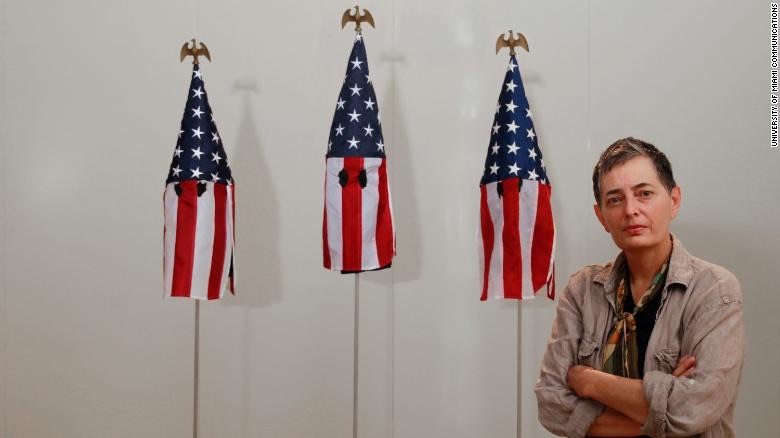
Obama grants pardons to 17 people for nonviolent offenses

WashPost

President Obama pardoned 17 people for nonviolent offenses Friday, a rare move that nearly doubled the number of pardons he has granted since taking office just over four years ago.

The individuals came from 13 states and were sentenced years if not decades ago for such minor federal offenses as falsely altering a U.S. money order, possessing an unregistered firearm, embezzling bank funds and acquiring food stamps without authorization.