Guantanamo Hunger Strike Continues - No Legal Basis for Holding Prisoners
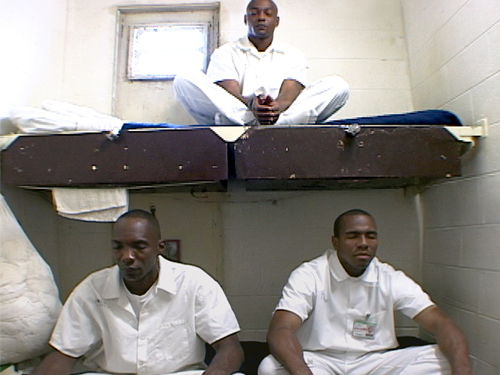
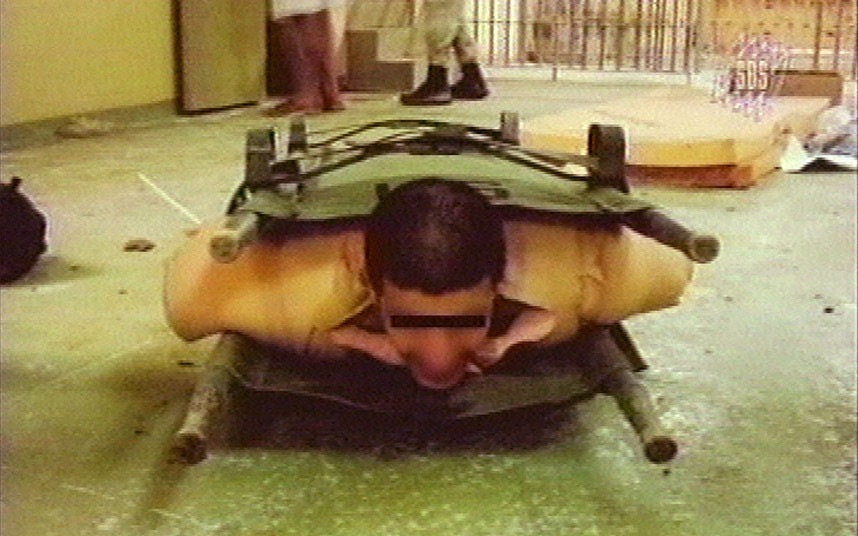
/The reasons for the hunger strike are--the main reason, apparently--and I wasn't down there, but other attorneys were--was really a misuse by the military of the Quran, the way they either looked for it or inspected it or cleaned it, which always causes issues among the Muslim population at Guantanamo. Second issue is, apparently, deteriorating conditions at Guantanamo. A third issue, which is obvious, is, as I said, 166 people who may be there forever, who may have the only way of getting out of there as being death--and 86 of those, as I said, are clear. But there is no way out. And the hunger strike is a way of bringing attention to it.
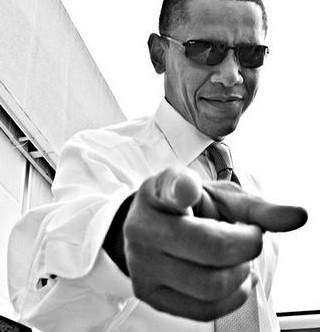
Now, you might ask at this point: why--considering Obama promised to close it within a day or two of taking office over four years ago, why hasn't he closed it? He wrote an executive order. It says, close it in a year. And that would have made it closed in 2010, January 20, 21. It was one of his first acts of office in doing so. And somehow, over three years later, it has not been closed. And, in fact, there's no plans for even getting another person out of it.
There are a number of reasons why nothing has happened to close Guantanamo. I put most of them at Obama's feet. But, of course, there's antediluvians in our Congress and in our government.
But let's go through what those three reasons are. The first is Obama showed tremendous weakness even after signing the executive order saying it should be closed. The first case that came to him was a few weeks after he was in office, the case of the Uyghurs, Muslims from Western China. They had been caught, caught, captured--taken prisoner is the better word--and some kind of bribes in Afghanistan, brought to Guantanamo. But it was soon realized that they hadn't done anything and they shouldn't be there. The federal court ordered them released into the United States. The Uyghur community in Washington said, we'll take them. No risk to anybody. Obama gets clay feet, cold feet, whatever kind of feet you want to call them, and says, I'm not going to bring them into the United States; it's I who decide that; the court doesn't. At that point, Obama looks incredibly weak on this issue.
Then what happens is Congress gets into the issue. Congress passes, over the last three years, various versions of the National Defense Authorization Act, which we've talked about on this show before, that has to do with Americans and whether they can be captured and all that. It also has to do with how our military's supported. But it also has provisions about Guantanamo, and it says that any person transferred from Guantanamo--not just to the United States; you can't do that at all under the NDAA--but to another country, you have to notify Congress 30 days in advance. And there has to be a certification by the attorney general of various factors, that the person is not a danger, etc. Well, you know, Obama could tomorrow direct his attorney general to take the 86, certify each one, and give notice to Congress, and transfer them. It doesn't say Congress is going to stop it; it just requires his certification. But has Obama done it once? Has he certified one person to be transferred out of Guantanamo under the NDAA? The answer is no.
JAY: Michael, I don't get--according to the Obama administration, what is the legal basis for keeping people who have been cleared in jail?
RATNER: Paul, the answer is: there is no legal basis, none at all. Under even their worst legal scenarios that they make up, they're obviously--if they were prisoners under criminal law, they're not charged with anything, they should be out. If they were held under the laws of war as, you know, prisoners of war or captives in a war, then they could be held to the end of war. But they're not being held as that, because they're not considered to be combatants or captives. They were cleared of any of that. So there's no reason under military law. And there's no reason under what we call the third way, the U.S. idea that it can pick up terrorists--quote, "terrorists"--anywhere in the world and hold them indefinitely. They're not under that category.
So there is absolutely no legal basis. The courts know there's no legal basis. The courts have on occasion ordered them to be released, that they're ignored by the administration. The administration says it rules where people go. Congress has now gotten in the act, saying they have to be certified. As I said, the second basis for releasing them would be a certification. Obama has not done that and hasn't done that.
The third reason they have been held up is a number of them are from Yemen. Perhaps half of them are from Yemen. Yemen is a country, according to our government, that's unstable, that has problems. And even though 56 of the cleared people are from Yemen and have been cleared, they're not being sent to Yemen. Obama put a moratorium on sending anyone to Yemen, even though they're as innocent as you and I going to Yemen. Somehow they fear that if they go to Yemen, they'll become terrorists or something like that. I don't know. But there's a moratorium on Yemen.
So if you look at the three things, it's Obama's weakness, it's Congress, which made it difficult and requires a certification, which Obama has so far not been willing to do, and there's Obama having a moratorium on sending people to Yemen.
So here we sit with 186 people [sic] at Guantanamo, 86 on no charges, and the world should be screaming. I mean, I don't understand it. And the question is: what are we going to do about it?
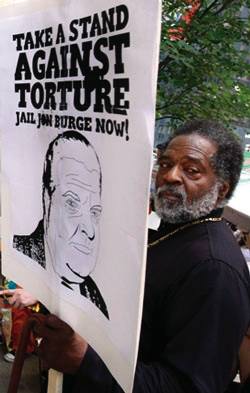
There is some activity. There's--the Center for Constitutional Rights has a number of actions on the website. But also, starting on March 24, there's a one-week hunger strike here in solidarity in the United States and around the world. The group is called Witness Against Torture. Their website is WitnessTorture.org. And you can go to that site. There's a number of actions you can take, including joining in a seven-day hunger strike, or even missing a meal, certainly writing letters and all of that, but actually showing your outrage.
I mean, we used to ask ourselves--and, of course, it's not close to what happened in places like Germany or Chile or other places, but where was the population while this was going on, while a human outrage is going on? And each of us has to ask ourselves. People stranded and left forever in an offshore prison, and the United States population and its media is completely passive about it. [MORE]