An Unwanted, UnDeclinable “Public Service:” Ohio Cops [allegedly] Get Their Power from the People but the Legislature Never Authorized Cops to Use Drones to Surveil People
/From [HERE] Law enforcement agencies across southeast Ohio are increasingly turning to drones—not just for search and rescue, but “to deter crime, pursue suspects and gather aerial intelligence in high-risk areas.” But the ACLU of Ohio warns that without appropriate legislation, these tools could overstep constitutional boundaries. [without legislation here means without approval from citizens; lawmakers represent the people who are allegedly bound to the will of the people. Police departments, like all government agencies, are made up of unelected officials who are said to be servants subject to lawmakers.]
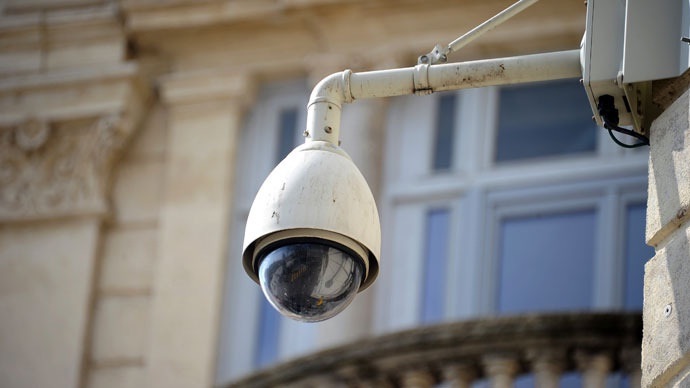
Departments in Perry and Athens Counties expanded their drone programs recently, using unmanned aerial systems equipped with thermal imaging and zoom cameras. While originally intended for emergencies and missing persons cases, the drones are now being deployed for broader crime-fighting operations.
Lt. John Morris of the Athens County Sheriff’s Office said technological improvements allowed them to begin using drones in more advanced ways.
The drones also patrol high-crime neighborhoods at night, detecting heat signatures of people who might be committing crimes.
Jeff Wilson, Perry County Sheriff’s Office drone program coordinator, said the department has flown more than 140 missions since 2020, using drones in mental health crises, criminal pursuits and to assist in firefighting.
But the growing use of drones for surveillance raises privacy concerns—especially when flights are conducted over private property or in residential areas.
Both Wilson and Morris said that law enforcement drone operators follow FAA guidelines and attempt to limit data collection until reaching their target. Flights are generally not recorded unless there is evidentiary or training value.
Both officers acknowledged that drones can legally fly over private property without permission or a warrant, so long as they remain within regulated airspace.
This is what worries the ACLU.
Gary Daniels, a policy analyst with ACLU Ohio, said the organization is pushing for laws at the local and state levels to regulate drone use.
“We think it’s a no-brainer,” Daniels said. “If law enforcement is intent on saying and claiming that, ‘we’re only going to use it for these specific purposes, emergency purposes, exigent circumstances, you know, lay those out. Let’s get a law passed at the local or the state level so that law enforcement can go ahead and use these technologies for those types.”
Daniels noted that although some agencies, like Perry County, have internal drone policies —such as retaining footage for no more than 60 days unless needed for evidence— these policies are not legally binding and don’t offer adequate protection.
He argues that without legislation, there’s nothing stopping law enforcement from expanding drone use in ways that infringe on civil liberties (or from so called “public servants” doing things that “public masters” don’t want them to do in a so-called representative democracy).
Ohio lawmakers are considering House Bill 251, which would require warrants for most forms of drone surveillance, ban weaponized drones and mandate public transparency and data retention policies. It would still allow warrantless use in specific scenarios, such as emergencies, natural disasters or monitoring traffic.
Until such law is passed, Daniels says the risk of unchecked surveillance remains. [MORE]