Ending White Supremacy Not on the agenda @ The Black Agenda Summit at Howard
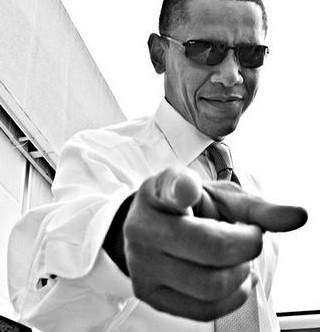
/On the first day of Black history month, policy experts analyzed the current economic state of Black Americans during a summit at Howard University. One featured participant said President Obama, “does not deserve a pass anymore” regarding confronting Black issues head on and asked that the President “summon his courage” and “find his voice” on economic inequality in America.
Today’s 4th Annual Summit on African American Economics was hosted by Howard University and the Joint Center for Political and Economic Studies. Participants included Rep. Bobby Scott (D-VA), Dr. Bernard Anderson, Ralph Everett of the Joint Center, William Spriggs of the AFL-CIO, William Darrity of Duke University, and Profs. Dr. Charles Betsey, Dr. Rodney Green, Dr. Enrique Lopezlira, and Dr. Lorenzo Morris of Howard.
A growing sense of urgency at the start of President Obama’s second term could be heard at today’s forum as well as other events hosted by a growing chorus of experts hoping to put policy focus on a specific “Black agenda.” The first such event was in December.
“We’re talking about an economic system that is shot through with discrimination against Black people — it denies them opportunities to participate full in this economy. Until we attack that head on we will never solve the problem,” said Dr. Bernard Anderson, an economist at the University of Pennsylvania’s Wharton School of Business who is also a former Labor Department official.
There has been lots of discussion on what some refer to as a “cone of silence” over the Obama presidency regarding issues dealing with race and racial disparities in the U.S. The Washington Monthly magazine featured Obama and race on their front cover in January.
Last Friday in Washington, leaders from the NAACP, National Urban League, National Action Network and Leadership Council on Civil Rights along with a large group of other representatives from other groups, convened to discuss many of the same agenda items highlighted today — with the goal of presenting specific policy to the President. Today’s summit at Howard outlined where the Black community currently stands and featured ideas and policy that may improve outcomes.
As the White House signals that immigration and gun control will be the first two issues the President will spend political capital on at the start of his second term, Black leaders are hopeful the next four years will include attention on their economic and job agenda.
Saying that Black Americans gave President Obama a “pass” on Black issues during his first term, Anderson, who has been an enthusiastic supporter of the President, (including hosting a fundraiser in 2008) said the days of Obama getting a “pass” from Black Americans is over.
“He is not going to run again for anything. He does not deserve a pass anymore. Let him not only find his voice but summon his courage and use his political capital to address racial inequality. He owes that to the African American community,” Dr. Anderson concluded.
African Americans supported the President with 98% of their vote in November. At the end of President Obama’s first term, the statistics for Black America are daunting and participants clicked off a list of many well known facts. for example:
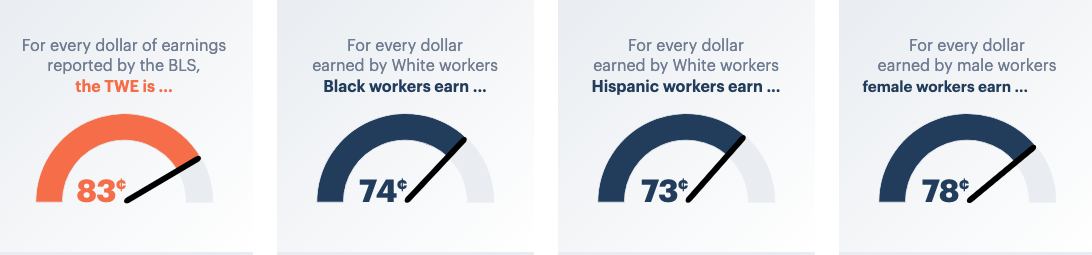
— Between 2007 and 2010, Black net worth declined more than 50% to $5,400 for Black families while net worth was $116,000 for white families.
— The Black youth unemployment rate in the last two years has hovered near 40%
— The median income in 2010 of Black families is $35,000 — white families is $54,000
— The wealth gap between whites and blacks remains wide as Black families have never had more than $6 for every $10 held by white families since data has been recorded (40 years).
— The continuing problem of poverty, 46 million, 1 of 7, live below the poverty line.
“African Americans and their allies have worked long and hard to gain economic security for Black people and the evidence shows their efforts have been met with limited success,” Anderson concluded. The question of a failure in Black leadership was echoed by another panelist, Prof. Lorenzo Morris.
Participants, particularly Congressman Scott of Virginia, mentioned that President Obama inherited the worst economy since the Great Depression as a result of the economic policies of President George W. Bush. Scott used a powerpoint presentation to display several charts displaying how Republican policy of tax giveaways to the wealthy and to “dead multi-millionaires” (i.e.: the estate tax) have increased debt.
Still, there is increased talk among some in Black leadership that the President should turn his attention to the specific needs of the Black community. Last Friday, Black leaders proposed he mention an urban jobs initiative in his State of the Union address on February 12.
Dr. Anderson spoke directly on the need, “for the President to find his voice, summon his courage, and use some of his political capital to eliminate racial inequality in American economic life — we know he’s not President of Black America. He’s the President of the United States and we are proud of that. But asserting that a rising ride lifts all boats is not enough,” he said.
Focusing away from President Obama, Dr. Lorenzo Morris said that an outside force and effort has to occur for policies to change.
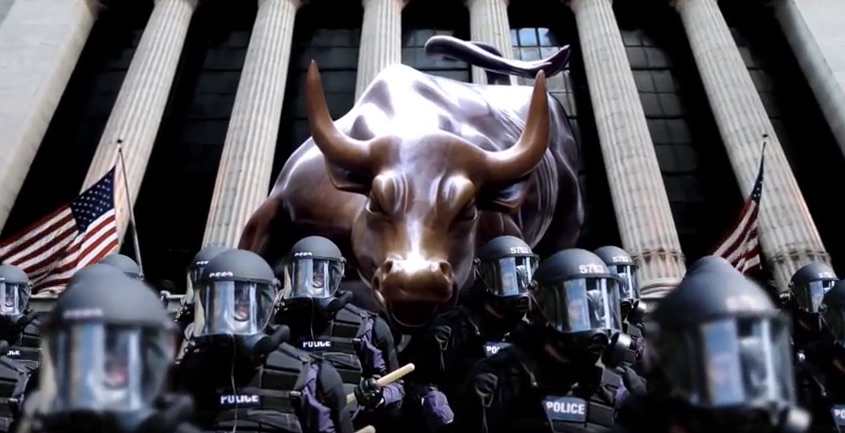
“I think Obama in 2008 said ‘we are the change we’ve been waiting for to refer to the concept of pragmatism that I think defines him –which is a pragmatism made up of associations rather than ideological range. I think we may have waited too long. I think that the concept of the ‘change we have been waiting for’ refers to what was most likely to happen in the second term. Things like Occupy Wall Street are indications that unless there is a mobilization outside of the Black community the possibility of getting the change we’ve been waiting for is limited.”
The AFL-CIO’s William Spriggs spoke on the importance of raising the minimum wage, which has not been increased since the first Bush Administration. Spriggs also talked of the “inside and outside” game in dealing with the Obama Administration.
“If you don’t speak the truth — if you try to negotiate with yourself before you negotiate with the Administration you hurt the debate that goes on inside the Administration. We have to learn how to play the inside/outside game in a far more aggressive way,” Spriggs said.
“The train is at the station. It’s time to get on board,” Dr. Anderson said near the conclusion of his remarks.
Today’s event ran for eight hours with the first two featured panels focused on Black unemployment, the wealth gap and economic disparities. Later panelists talked on education, historically Black Colleges and Universities and veterans issues.
Other sponsors of the summit were the Howard University Department of Economics, the Howard University Center for Urban Progress, the Howard University Center on Race and Wealth, Duke University’s Research Network on Racial and Ethnic Inequality, the Joint Center for Political and Economic Studies and the Ron W. Walters Leadership and Public Policy Center at Howard University.