China Builds World’s First Giant Underwater Drone Mothership
/China is reportedly constructing the world’s first purpose-built mothership for giant uncrewed underwater vehicles, potentially transforming experimental submarine-sized drones into a deployable force capable of operating far beyond protected Chinese waters.
Commercial satellite imagery dated 15 September 2026 shows the unidentified vessel under construction at Shanghai’s Hudong-Zhonghua shipyard, although Beijing has neither acknowledged the ship nor confirmed its intended operator, designation, or mission.
Open-source analysis indicates a hull approximately 205 metres long and 27 metres wide, combining an amphibious-ship silhouette with internal arrangements seemingly optimised for launching, recovering, maintaining, and transporting exceptionally large underwater drones.
Its defining features reportedly include a bottom-opening wet well-deck, a cradle suspended by 12 vertical jack-up arms, and an enclosed hangar potentially accommodating four extra-extra-large uncrewed underwater vehicles, or XXLUUVs. [MORE]
Charlie Kirk’s TPUSA Sponsored by Israeli Govt-aligned Outfit, Leaked Contract Shows
/One year after Charlie Kirk’s [faked] killing, The Charlie Kirk Show is distributed by a federally registered agent of Israel and his widow, Erika, has reversed his critical positions on the US-Israeli special relationship.
Now, The Grayzone can reveal that the Turning Point USA (TPUSA) organization he founded is holding faith events sponsored by an Israel-based non-profit with close ties to the Israeli government.
A leaked contract obtained by The Grayzone reveals that TPUSA entered into an agreement with the International Fellowship of Christians and Jews (IFCJ) to sponsor a series of ostensibly Christian faith-based summits between 2025 and 2027. Signed on May 16, 2025, the contract committed IFCJ to pay $700,000 to TPUSA over two years. In exchange, the group was to receive a series of promotional benefits including main stage speaking slots for its President, Yael Eckstein, and the distribution of pro-Israel “activism kits” to over 200 college campuses. [MORE]
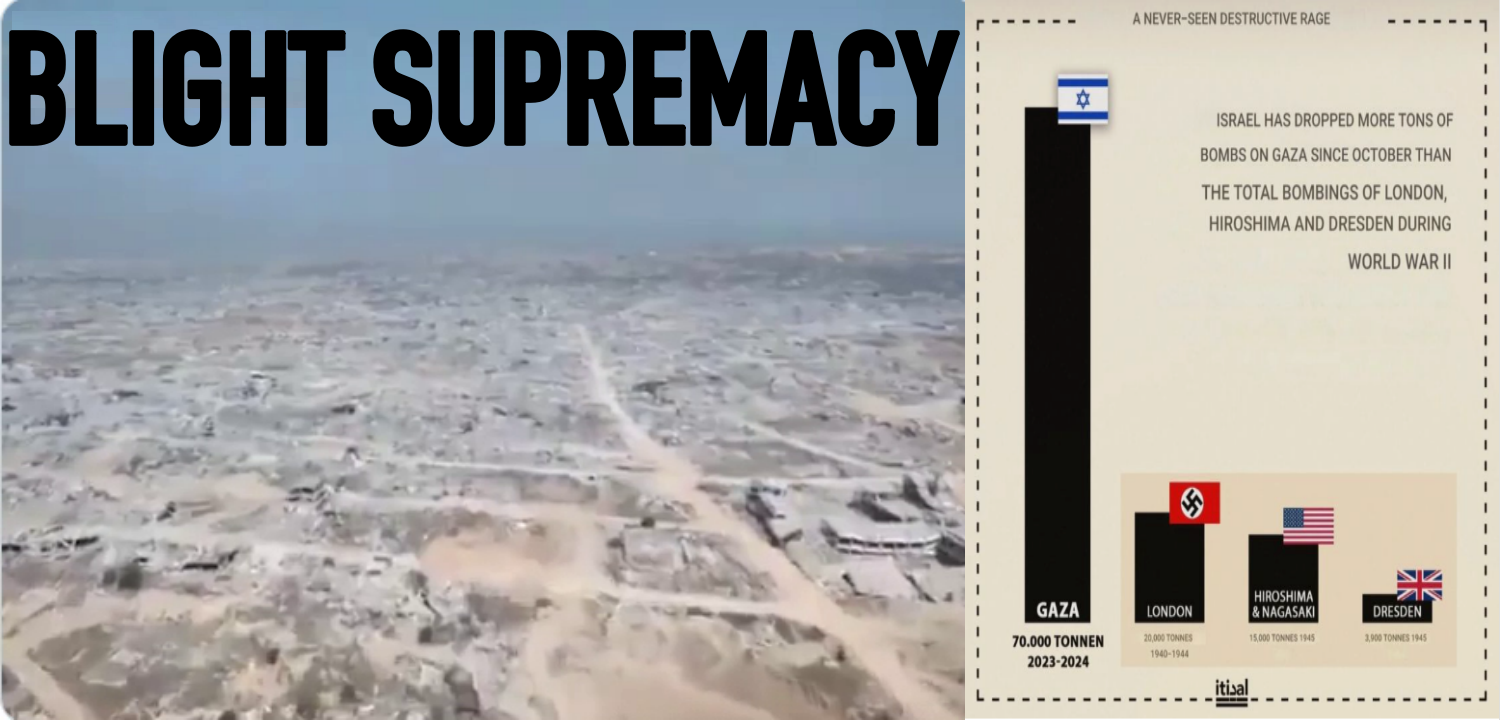
Barbaric Israeli Authorities Destroying Evidence of Their Genocide
/Remember how we were always hearing that the official death toll in Gaza is an undercount because there are thousands of bodies trapped under the rubble?
Well, it looks like Israel has been moving those remains along with the rubble, conveniently destroying evidence of genocide.
Drop Site News reports:
“The Palestinian Center for Missing and Forcibly Disappeared Persons has accused Israel of destroying evidence that could identify thousands of Palestinians buried beneath Gaza’s rubble or reveal the fate of those forcibly disappeared.
The center says Israeli forces are moving hundreds of tons of debris each day from destroyed neighborhoods inside closed military zones. Crushing and removing it could pulverize human remains, mix them with rubble and waste, erase the locations of burial sites, and destroy DNA and other forensic evidence.
Around 7,000 Palestinians remain missing in Gaza, including an estimated 4,000 to 5,000 believed trapped beneath the ruins.
“These sites are not merely construction waste,” the center warned. It called for urgent UN and Red Cross intervention, access for rescue and forensic teams, and independent oversight of all future rubble removal.”
Last month, a report by Euro-Med Human Rights Monitor estimated that “at least 10 million tonnes of rubble have been removed, crushed, or moved from their original sites within the areas under Israel’s unlawful military control.” [MORE]
Israel Causes Large Earthquake in Lebanon After Dropping 1,100 Tons of Ordinance on Underground Bases
/From [HERE] Footage from Lebanon has shown one of the largest air strikes on record as a result of an Israeli air strike on a major underground Hezbollah military complex beneath the strategic Ali al-Taher Ridge in southern Lebanon. The more than 1,100 tons of explosives reportedly used produced a seismic event, which registered as a 4.1-magnitude earthquake. The operation highlights the extraordinary scale of underground infrastructure constructed by Hezbollah over decades and the growing importance of subterranean warfare in Israel’s campaign to establish a security zone along its northern frontier.
The Israel Defence Forces announced on September 10 that it had completed the destruction of an approximately 2-kilometre-long underground network beneath the ridge, after previously claiming that its forces had gained operational control of both the surface and underground portions of the position. Israel said the complex belonged to Hezbollah’s Badr unit and contained command facilities, weapons storage areas and living quarters intended to allow fighters to remain underground for extended periods. The network reportedly contained rockets, drones and explosive devices. The scale of the demolition was particularly striking, with the U.S. Geological Survey reportedly detecting the event at a depth of approximately 10 kilometres. [MORE]
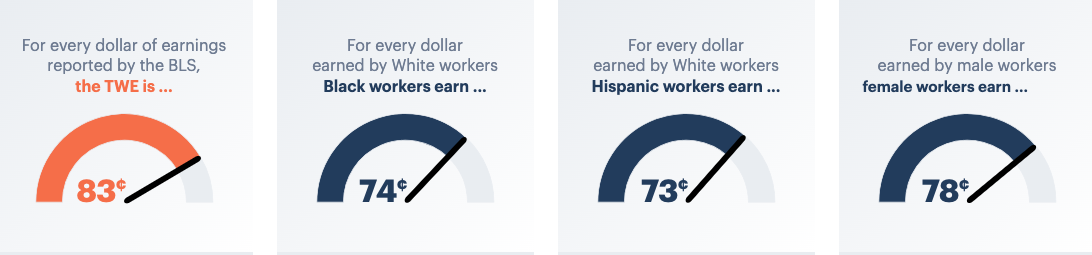
"The True Rate of Unemployment" for Black People is 27.3%, Nearly 5X what BLS Reported. Only 5 Out of 10 Blacks have a Full Time Job Earning More than $20k Year- According to LISEP
/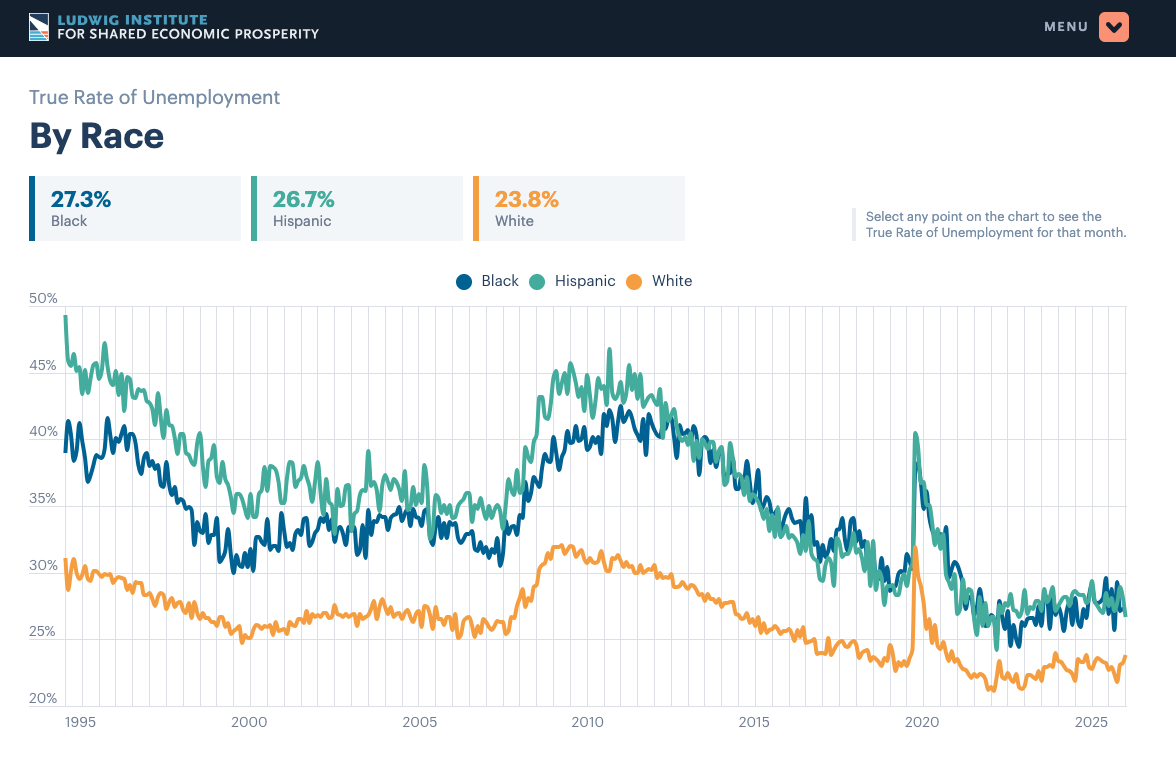
According to the LUDWIG Institute, The True Rate of Unemployment (TRU), as defined by LISEP, measures the percentage of the U.S. labor force that is functionally unemployed.
Using data compiled by the federal government’s Bureau of Labor Statistics, the True Rate of Unemployment tracks the percentage of the U.S. labor force that does not have a full-time job (35+ hours a week) but wants one, has no job, or does not earn a living wage, conservatively pegged at $26,000 (in 2025 dollars) annually before taxes.
Just as an accurate census is a prerequisite to funding American communities equitably, policymakers depend on economic indicators to shape economic policy. LISEP developed the True Rate of Unemployment to provide analysts and decision-makers with a more accurate measure of Americans’ financial well-being.
Measuring Better: Development of ‘True Rate of Unemployment’ Data as the Basis for Social and Economic Policy
By The Ludwig Institute for Shared Economic Prosperity (LISEP)
From [LISEP] For decades, the development and implementation of social and economic policy at the federal, state, and local level has largely relied on a collection of economic indicators that includes, among others, gross domestic product (GDP), consumer price index (CPI), and one of the most closely watched measures – the unemployment rate. Generally speaking, the unemployment rate is calculated by simply dividing the number of unemployed persons – as defined by the U.S. Bureau of Labor Statistics (BLS) – by the number of persons in the labor force (employed or unemployed who are actively seeking employment) and multiplying by 100. While this measure may be elegant in its simplicity, it presents a very incomplete and, in many ways, misleading picture.
The years following the Great Recession of 2008 – up until the onset of the coronavirus pandemic – technically represented the longest period of economic expansion in the nation’s history by traditional economic measures. Yet anecdotally, it is easy to find examples throughout the nation of many communities that did not share in this prosperity. One need look no further than struggling industrial communities around the country – cities like York, Pa., Flint, Mich., or Albany, Ga., for example – that were thriving in the 1970s, but have now been forgotten by cosmopolitan America. And it’s not just smaller, rural cities; even in pockets of the most prosperous cities in America, working- and middle-class families are struggling to keep their heads above water. This lends rise to the question: How was this economic expansion happening without anyone in these communities seeing any benefit?
The answer lies, in large part, with the development and subsequent implementation of government economic policy. Almost without fail, whatever economic policies have been emerging from government, the underlying reality is an unacceptable outcome for a vast portion of the population. By some measure, those who have neglected the plight of working- and middle-class America should be given a pass. After all, the indicators used to gauge whether things are headed in the right direction measure only a sliver of what really matters. In a world of increasing data sophistication and economic disparity, the broadly accepted standards of measurement – from GDP to the stock market to unemployment figures – overlook what is happening in places like York, Flint, and Albany, let alone other discrete areas of economic deprivation. Yet those are the conventional ways we gauge the economy’s health from month-to-month, and year-to-year. You can’t overstate how the prism through which we view the economy affects the choices businesses and policymakers make about how to shape the future.
This continued dependence on aggregate U.S. economic data constructed for a bygone era has been clouding the basic understanding of what’s happening on the ground. New measures are needed if we are to understand what’s really going on. And new solutions to achieve meaningfully remunerative employment are essential.
The Ludwig Institute for Shared Economic Prosperity (LISEP) seeks to address these challenges, beginning with an in-depth analysis of the labor market through the creation of a statistic to better convey the quality of employment of the nation’s workforce. This statistic, known as “True Rate of Unemployment” (TRU), can serve as a tool for policymakers to better measure the state of the labor force and appropriately formulate policy and direct resources. True Unemployment essentially corrects the unemployment rate by preventing bad jobs and part- time jobs from looking better than they are on paper – something that the BLS unemployment rate fails to do.
Methodology
LISEP’s data were derived from the Current Population Survey conducted by the BLS, which is used to generate its U-3 unemployment rate. This helps to ensure an “apples-to-apples” comparison between LISEP’s “True Rate of Unemployment” and “True Rate of Unemployment Out of the Population” described below, with the much relied upon BLS unemployment rate and employment to population ratio. LISEP’s definition of “True” employment or unemployment accepts the U-3 rate for comparison purposes, but modifies it by adopting two important stipulations. The first stipulation deals with the workweek. To be employed for the purposes of LISEP’s true employment concept, an individual must either have a full-time job (35+ hours per week) or have a part-time job but no desire to be full-time (e.g., students). The second stipulation is that an individual must earn at least $20,000 annually. This annual wage is adjusted for inflation, calculated in January 2020 dollars. ($20,000 was chosen because LISEP concluded that anything beneath that wage could fairly be considered a poverty wage, based on the U.S. poverty guidelines put out by the Department of Health and Human Services, which considers a three-person household to be in poverty if it has an income of less than $20,000 per year).
Specifically, LISEP employs the Current Population Survey’s Outgoing Rotational Group Study, a study that takes one-fourth of the survey respondents to ask specific questions about their wages. This dataset is merged with the Annual Social and Economic Supplement to account for the self-employed workforce. Using the self-employed wage and business income, and the rest of the labor force wage and bonus (overtime and tips) income, the final number reflects the amount of the labor force – defined by the BLS as people actively looking for work within the last four weeks – that is truly employed.
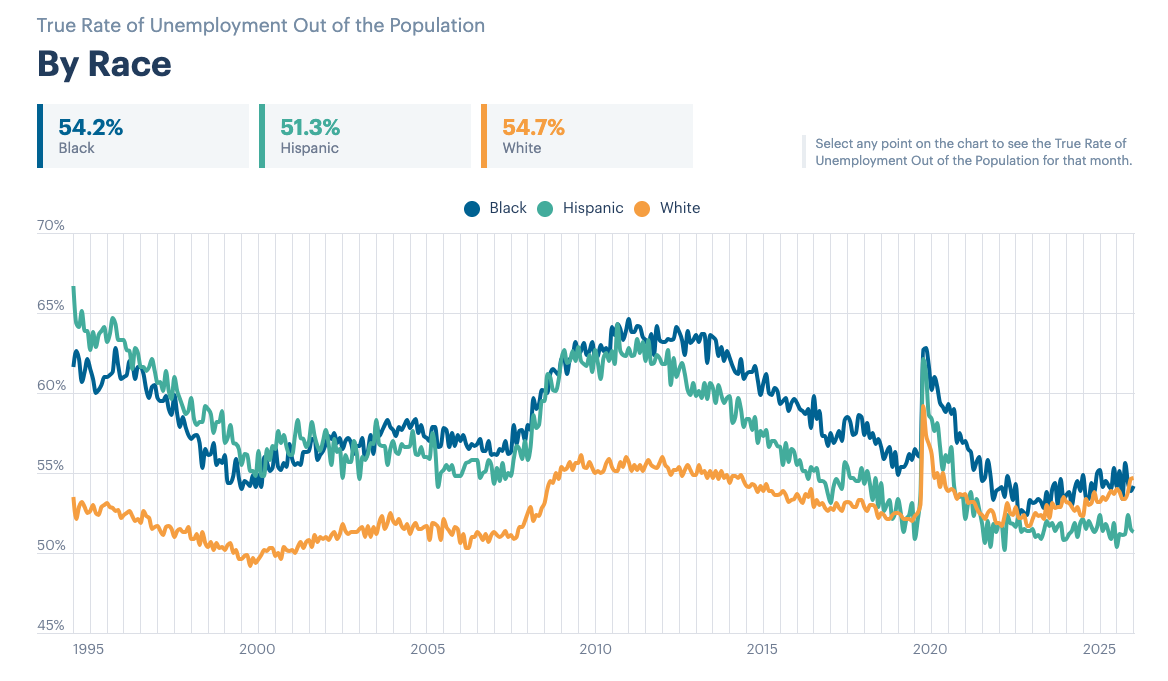
Furthermore, LISEP calculates the “True Rate of Unemployment Out of Population,” using the same statistical definition of True Rate of Employment, but instead taking this number from the entire working-age population (aged 16+) rather than the BLS-defined labor force.
Inadequacies of BLS Unemployment Measures
LISEP’s findings indicate a radical underreporting in the percentage of the population that is described as unemployed, from a living wage/full-time employment perspective. Although not technically false, the low rate reported by the BLS is deceiving, considering the proportion of people who are categorized as technically employed, but are employed on poverty-like wages (below $20,000 a year) and/or on a reduced workweek that they do not want. Neither of these factors is conducive to prospering, nor to providing for a family.
LISEP’s True Rate of Unemployment measure is very revealing. For example, LISEP estimates that in January 2020, True Rate of Unemployment was 23.5 percent, which is nearly seven times what was reported by the BLS (3.6 percent). The economic recession spurred by the coronavirus pandemic worsened the True Rate of Unemployment to 32.6 percent in April. This significant increase in the True Rate of Unemployment compared to the BLS-reported unemployment rate indicates the fragility of the workers’ situation that the BLS reports as employed. In the pandemic, the unemployment rate tripled, while the True Rate of Unemployment rate only increased 9 percent, showing that the majority of the displaced workforce was part-time or low-wage workers – the first to lose a job in a recession.
Measuring Issues of Inequality
The pain has not been spread evenly. Black Americans, marginalized for hundreds of years in America, are still burdened by challenges that dramatically narrow their economic base and deplete their opportunities to live the American Dream. And that’s as true in East New York and on the South Side of Chicago as it is in York, Flint, and Albany.
Not only can we see the disparity of recessionary causes in the type of workforce (part-time and lower-income workers have become increasingly represented), but it is also transparent in the racial breakdown of the True Rate of Unemployment. Not only is the Black True Rate of Unemployment higher every single month since 1995 than its White equivalent, but Black Americans are also more negatively impacted by and recover more slowly from recessions. For example, during COVID, the True Rate of Unemployment thus far peaked in April. Black True Rate of Unemployment in April was 34.8 percent, whereas the White True Rate of Unemployment was 30.7 percent. By October, the White True Rate of Unemployment had recovered to 22.9 percent. Meanwhile, the Black True Rate of Unemployment in October was 31.1 percent and the Hispanic rate sits at 31.9 percent -- both nearly 10 percent higher than their White equivalent. The bounce back in unemployment hasn’t been colorblind.
If this were not disturbing enough, out of the entire population (aged 16+), the numbers are staggering. If you consider the whole population instead of just the labor force, the rate for the entire population in October was 54.1 percent. But for the Black American population, the rate is 58.2 percent, nearly 5 percent higher. This means that only four out of 10 Black adults had a fulltime job that earned more than $20,000 per year.
The educational divide has also been exacerbated by the COVID crisis. Furthermore, recovery among different levels of education has not been equal. The TRU for those with advanced degrees in October was 13.1 percent, only slightly higher than its January level of 12.4 percent. Meanwhile, at the other end of the spectrum, those with lower educational levels have struggled. In January, the TRU for those with less than a high school education was 45 percent, but has grown progressively worse through the pandemic, with a rate of 50.2 percent for October.
Consequences of Inadequate Data
National statistics throughout the post-Great Recession expansion advanced the prevailing narrative that everything was going well in America, and indeed getting better. Specifically, political leaders and policymakers alike have pointed to GDP and the unemployment rate as proof of a thriving nation.
But these two so oft-cited and relied-upon headline statistics that have driven narratives espoused by political and economic thought leaders are juxtaposed to the tangible reality of dying industrial towns, burned out inner-cities, opioid-infested rural areas, and we could go on. These misleading statistics have also led policymakers down the path of pursuing sub-optimal policies.
This lack of accurate information does not just have an impact on how the average citizen perceives the economy: Policymakers and political leaders make crucial decisions using this information. By continuing to use inaccurate or misleading indicators about the economic health of the nation, the result will be inadequate, and possibly injurious, economic policy. For instance, if policy is developed based on what is perceived as “full employment,” livable-wage job creation initiatives will be curtailed. Indeed, simple domestic job creation will be curtailed for fear of bumping up against labor market constraints. And meanwhile, millions of Americans will continue to be relegated to sub-par, part-time work situations that challenge their ability to provide for themselves or a family.
The wealth gap is widening, and COVID is exacerbating a pre-existing bad situation for low- and moderate-income Americans. Just as an accurate census is needed to properly fund ommunities, accurate economic indicators are required to tell the true story of Americans’ well-being. Without it, policymakers will be unable to know where to focus their efforts.
Conclusion
The headline data currently being used to understand the economy is misleading in many instances, and otherwise fails to give a complete picture of the economic landscape for the majority of Americans. This misleading data has resulted in policymakers creating and implementing economic policy that is often totally off the mark, to the serious detriment of lower- and middle-income Americans.
LISEP’s initiative to generate better headline data, starting with a new take on unemployment statistics, has already created some eye-opening results by taking into account the economic benefits of a livable-wage, full-time job. Specifically, LISEP has created the concept of True Rate of Unemployment as a more meaningful way to understand unemployment data than the current statistics published by BLS. This concept of true employment – the number of Americans with full-time jobs with earnings above the poverty level – gives us a better understanding of the economic circumstances relevant to the majority of Americans.
The comparison between the unemployment rate, as published by the BLS, and the LISEP True Rate of Unemployment is profound. It suggests a much weaker economy, certainly for lower- and middle-income Americans. And accordingly, begs for policy solutions that may have seemed less pressing otherwise. Furthermore, LISEP has broken down the True Rate of Unemployment for important populations, with some revealing results: Black Americans have a meaningfully higher True Rate of Unemployment than White Americans every month since 1995. Once again, this is an issue begging for a policy solution that would not be revealed based on normally reported government data.
LISEP is hopeful that by not focusing just on quantity, but quality of jobs, these data will give policymakers a better idea of the state of the labor force, and the tools they need to launch economic initiatives aimed at producing full-time, living-wage employment, to the benefit of lower- and middle-income Americans. As the nation moves toward a post-pandemic recovery, the quickest path must involve bolstering the upward economic mobility of this segment of the American workforce, thus closing the wealth gap and creating opportunity for the nation as a whole.1
Cause [slavery, oppression] and Effect: Survey Finds a Vast Wealth Gap in Massachusetts; the Median Net Wealth for White Families is $549,200 but Only $7,800 for Black Families ($1,200 for Latinos)
/From [HERE] Massachusetts families held a median net wealth of more than $370,000 last year, according to a new study that found this metric varies dramatically across key factors like race, age, educational attainment, homeownership and place of residence.
Just over a third of families also said they would be unable to cover a $400 emergency expense such as car repairs or an illness with cash or “its equivalent” in 2025, according to the report released Wednesday by the Federal Reserve Bank of Boston.
The Boston Fed worked with The Boston Foundation — plus the Barr Foundation, Eastern Bank Foundation and the Greater Boston Chamber of Commerce — on the Massachusetts Economic Conditions and Household Opportunity Survey that captures household assets and debts, and whether Bay Staters have sufficient wealth reserves to cope with “unstable prices or unexpected expenses.” Sent to 32,817 randomly selected Massachusetts addresses, the survey yielded 5,018 responses.
The survey highlighted long-standing racial wealth gaps.
White families had an estimated median net wealth of $549,200, compared to $305,000 for Asian American, Native Hawaiian and Pacific Islander families. Median net wealth was just $1,200 for Hispanic families and $7,800 for Black families. About 41% of Hispanic families and 31% of Black families held zero or negative net wealth.
“Having wealth is the ability to financially navigate an unexpected job loss, a serious illness, or buy and/or maintain a home,” Barr Foundation CEO Ali Noorani said. “It is the difference between one’s ability to live to their fullest potential and a trajectory that mires them in debt.” [MORE]
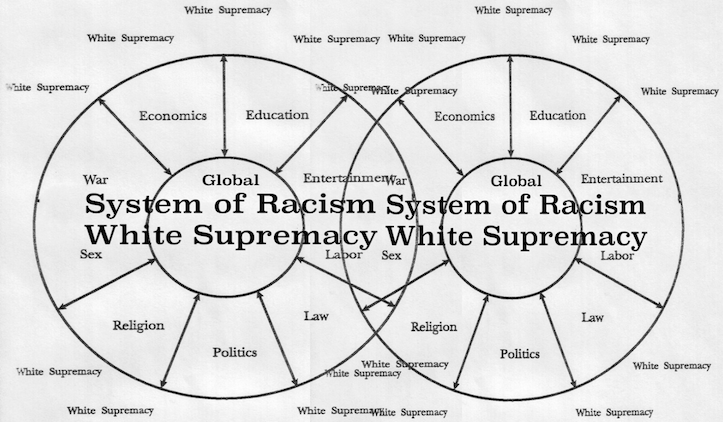
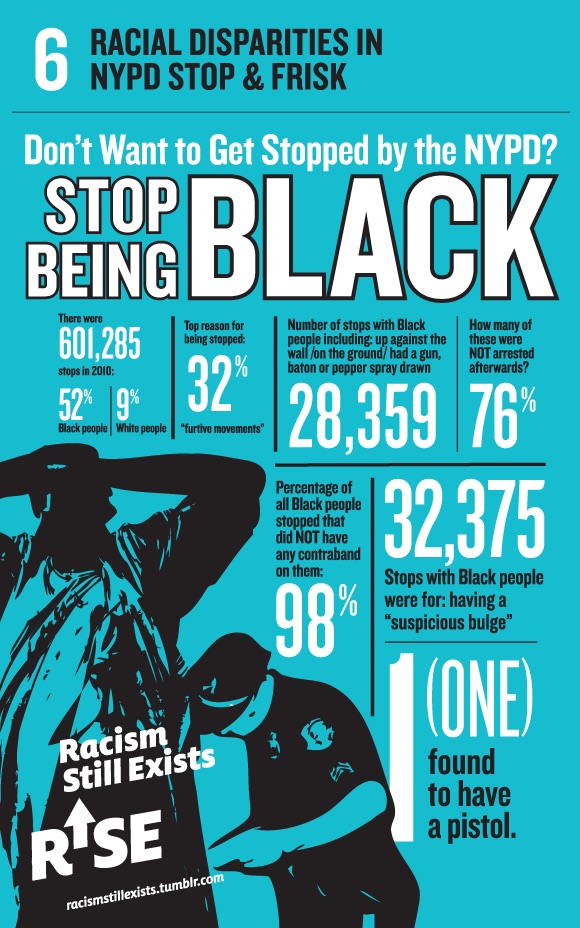
It takes a profound denial to not see the vast unequal power and disparity between white and Black people. Yet, most white folks don’t recognize it as a problem.
The insightful Black political scientist Mack Jones made the obvious logical statement, “An elementary rule of causal analysis says that the cause must exist prior to the effect.” He said vast racial disparity in all measures of socioeconomic well being dates back directly to emancipation from physical slavery. But, he observed, in any analysis of “race” you often must indulge in non-logic, “clogic,” and frivolous concepts because the normal rules of logic don’t apply.
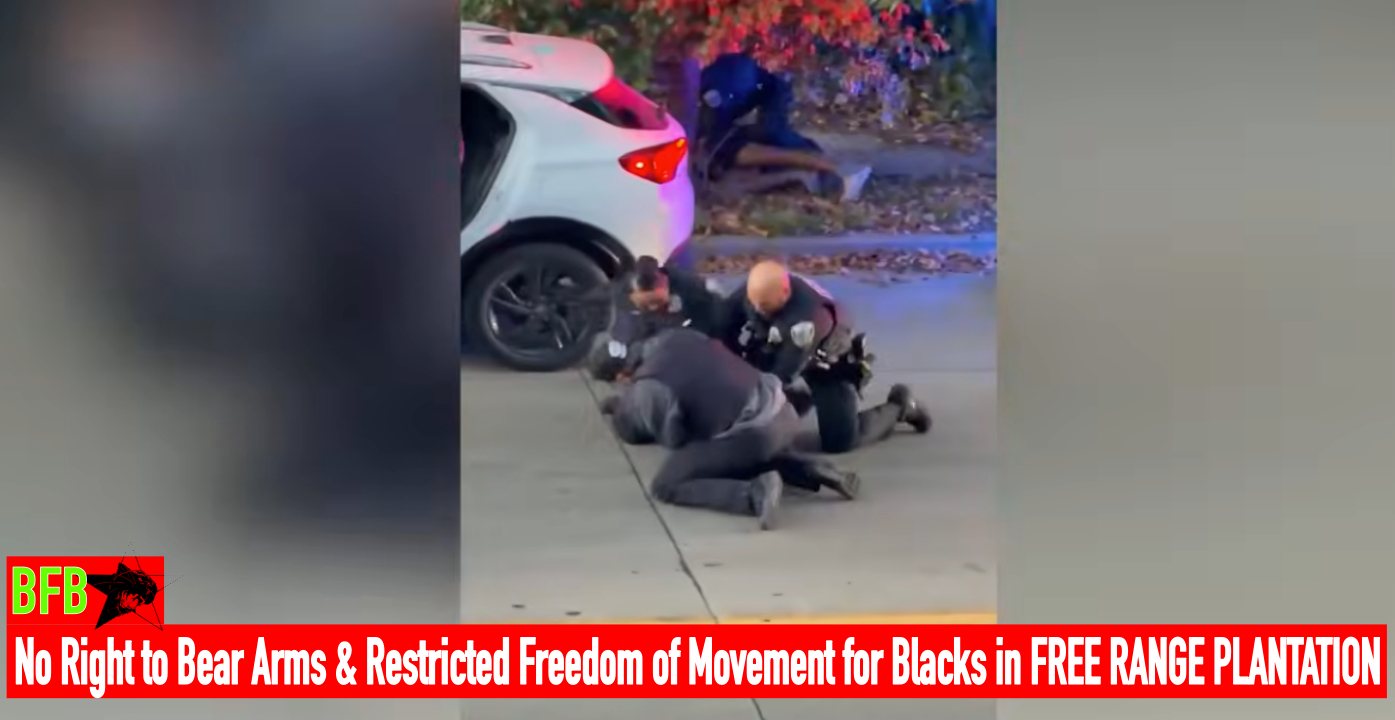
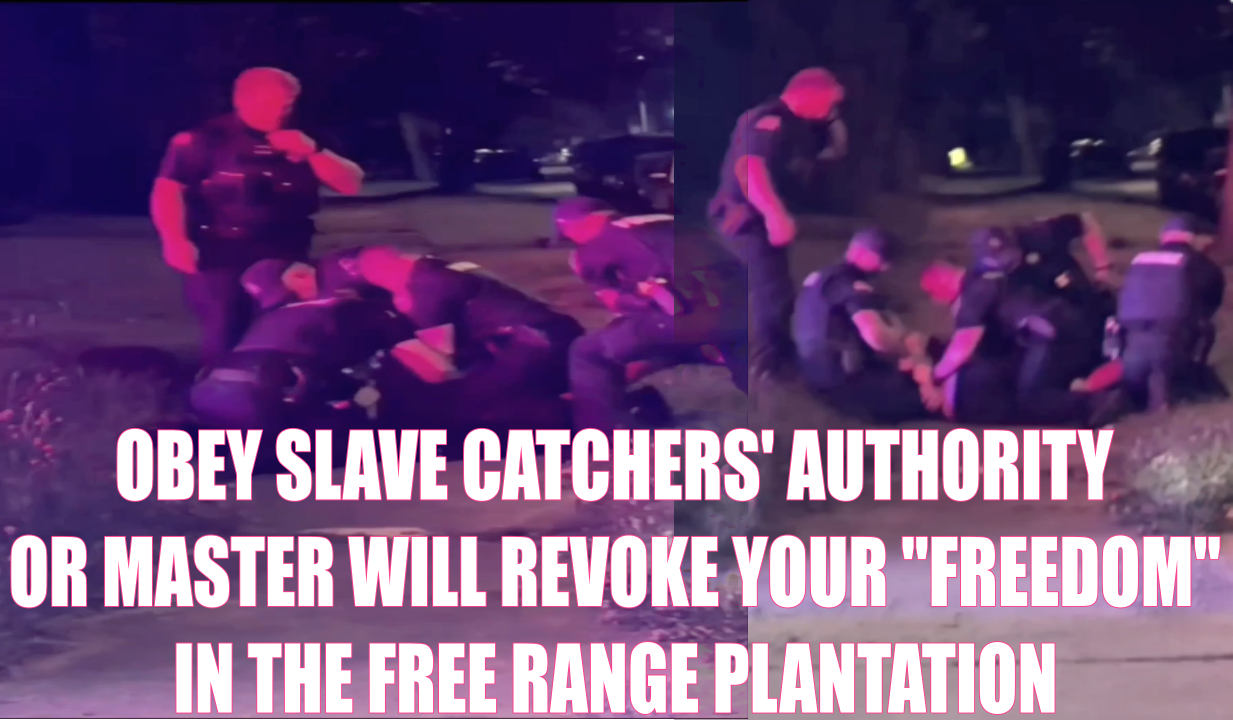
Black Man Posed No Threat but Disobeyed Authority so Slave Patrol Destroyed His “Freedom:” 7 White Indiana Cops Beat and Piled On Top of Him while He Begged for his Life after Violating Car Light Law
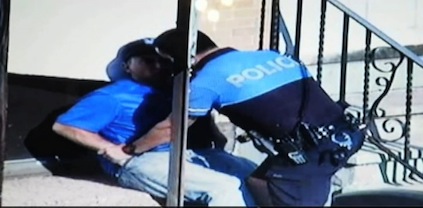
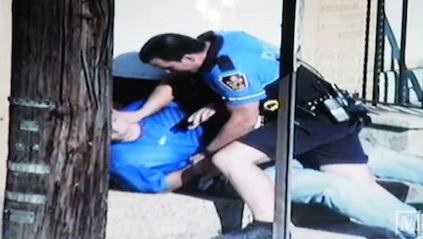
/From [HERE] Outrage erupted online after five Indiana police officers were seen kneeling on a black man’s back while appearing to ignore his pleas as he repeatedly said, “I can’t breathe.” The incident occurred in Fort Wayne. It was alleged that the man started running after police began chasing him following an alleged car crash.
In the shocking video, five police officers were seen on top of the man’s back as he lay on the ground while they attempted to handcuff him. One officer also appeared to punch him in the face. The man could be heard repeatedly saying, “I can’t breathe.” However, the officers appeared to ignore his pleas, with one of them telling him, “shut the [expletive] up.”
The officers continued trying to handcuff the man as he repeatedly begged them. One of the officers also continued yelling and cursing at him. The camerawoman, who was the mother of the man’s children, kept filming the arrest. An officer then appeared to threaten her, saying, “If you don’t want to be involved, you might want to [expletive] disappear!”
As the woman continued filming, the same officer told her, “you heard what I said.” At that point, three officers were still around the man and attempting to handcuff him. The man then said that he needed an ambulance. An officer, however, appeared to mock him by responding, “You need an ambulance? You ran from us.” More officers surrounded the man and some began cursing at him, while one officer even said, “You’re lucky you didn’t get more!” It was claimed that the man was arrested after the video ended.
The woman filming, named La Shay, later shared additional details online. In another video, she filmed the car that police believed had been involved in the incident. Based on the footage, La Shay and some viewers believed the vehicle did not appear to have any scratches or visible damage indicating that it had been involved in a crash.
La Shay also shared a screenshot of the charges against the father of her children. The charges included “resisting law enforcement -physical,” “leaving the scene of a crash -property damage,” and “habitual traffic violator.” In the post, La Shay addressed the Fort Wayne Police Department. “What damages were done other than seeing bird [expletive] in a few spots‼‼,” she wrote.
Adding to her criticism of the arrest, La Shay shared another post directly calling out the Fort Wayne Police Department. She demanded that the department release the full bodycam and chase footage. She contested the justification for the stop, writing, “He led yall dumb [expletive] right to me and once y’all realize y’all was right in-front of his house y’all looked at me and told all the other officers to be quiet,” before adding that she heard an officer say, “the only reason he pulled him over was bc he ran a stop sign.”
La Shay further challenged the officers’ use of force and their version of events. “So please come up off that evidence y’all do have,” she said. La Shay then claimed that “none of y’all suffered any [expletive] injuries.” She also claimed that police pursued him in their vehicles rather than on foot, stating, “as he was running on foot I watched yall drive y’all [expletive] cars to the [expletive] house none of ran on foot to chase him yall used them cars.”
American soldiers refusing to fight? Conscientious objections on the rise in U.S. military
/
From [THE FINAL CALL] Since the United States and Israel launched military strikes on Iran on Feb. 28 of this year, veterans’ groups and legal counselors say they have fielded a wave of active-duty service members asking how to become conscientious objectors—including officers.
The Center on Conscience and War (CCW), which has advised troops on their rights since 1940, says applications have increased six-fold since the war began, with roughly 140 applicants taken on so far, compared with about 50 in a typical year.
CCW Executive Director Mike Prysner said many current applicants have served more than a decade, span ranks up to major, and in some cases attended military service academies.
“The Iran War was really the breaking point for them when they realized that they had to take action to make sure that they did not participate in something that they were going to regret for the rest of their lives,” said Mr. Prysner to MS NOW in an August 26 interview.
Quaker House’s GI Rights Hotline reported a parallel spike of 429 inquiries in March and 440 in April, with elevated demand persisting since then. The group reported that it is working with about 30 people actively pursuing CO applications, compared with five to 10 before the war. [MORE]
High Resolution Chinese Satellite Imagery Linked to Deadly Iran Strike on US Base in Jordan
/From [HERE] Iran reportedly obtained high-resolution Chinese satellite imagery before and after its deadly July 17 ballistic-missile strike on Muwaffaq Salti Air Base, potentially transforming commercial space surveillance into a decisive targeting instrument against deployed United States forces.
Unnamed American officials described the imagery connection as the clearest evidence that support originating from Chinese entities produced lethal battlefield consequences, although Washington has neither identified the suppliers involved nor publicly released forensic evidence establishing the transfer chain.
The attack killed First Lieutenant Tyler James Feehan, Private Isabella Gonzales and Sergeant Angel S. Rampersad, making the strike a strategically consequential breach of layered United States air defences rather than another unsuccessful Iranian demonstration of missile volume.
Muwaffaq Salti, located near Azraq approximately 80–100 kilometres east of Amman, supports American combat aircraft, intelligence platforms and air-defence forces, giving Iran a concentrated target whose disruption could weaken regional sortie generation and defensive coverage.
Iran employed ballistic missiles and one-way attack drones during three strikes conducted within approximately 24 hours, creating a multidirectional penetration problem intended to overload sensors, interceptors, command networks and personnel-protection procedures surrounding the Jordanian installation. [MORE]
‘The US is at War with Russia b/c US Controls NATO Forces. Nuclear War May be Imminent b/c NATO is Striking Targets in Russia and Sent Nukes to Ukraine' [Massa Media Conceals Reality] - Tucker Carlson
/
Tucker Carlson has warned that the world is on the brink of a global conflict that could end with the use of nuclear weapons, in an interview with Going Underground host Afshin Rattansi broadcast on RT on Saturday. (that video is below)
Carlson argues that the US is already effectively at war with Russia through Ukraine and warns that further escalation risks a nuclear confrontation.
“The CIA is running the war. The US intelligence services are running the war out of Ukraine against Russia,” he says. “The United States is at war with Russia, and the only kind of conceivable end stage if this continues is a nuclear exchange in which everyone is killed.”
The Ukraine conflict and the US-Israeli war on Iran “have merged into a global war,” he argued, warning that the confrontation now risks the very existence of the US.
Carlson also accuses the Trump administration of abandoning the agenda it campaigned on, saying President Donald Trump and his advisers have “almost systematically betrayed the people who voted for him in 2024.”
He called this “the greatest betrayal that I’m aware of in the history of American politics.”
The interview also covers political censorship in the US, the rise of BRICS, China’s growing global influence, and the changing balance of power internationally. [MORE]
Insider Trading Proves 9/11 Foreknowledge
/From [HERE] On September 12th 2001, chaos reigned supreme. Yet, as governments the world over struggled to make sense of the previous day’s catastrophe, and before a motive was established, any perpetrators identified, or other basic facts ascertained, the US Securities and Exchange Commission launched an investigation into potential insider trading by unknown figures with apparently precise foreknowledge of 9/11. The evidence seemed overwhelming. Mainstream journalists openly mocked the implausibility of numerous deeply abnormal stock market trades immediately prior to the attacks being pure coincidence.
For one, several companies prominently impacted by the event were abruptly ‘shorted’ at inexplicable levels over the preceding weeks. In other words, investors bet certain stocks would perform poorly in the near future, and sought to profit accordingly. For example, just five days before 9/11 over 2,000 shorts were placed against United Airlines - 90 times more in a single day than over the entirety of August. The company’s share price collapsed following the attacks, turning $180,000 in shorts into $2.4 million.
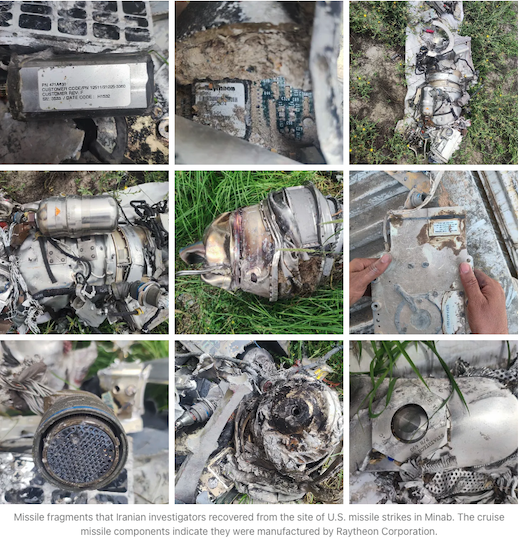
Meanwhile, substantial investments were serendipitously made in private security, intelligence and defence firms that benefited enormously from the 9/11 attacks and ensuing ‘War on Terror’. On September 10th, purchase of shares in major US defence contractor Raytheon surged sixfold. Just one week later, as the Pentagon began bulk purchasing Raytheon’s flagship Patriot and Tomahawk missiles in preparation for invading Afghanistan, the firm’s shares rocketed 37%. Other major defence stocks, including Boeing and Lockheed, also experienced abnormal trading pre-9/11. [MORE]
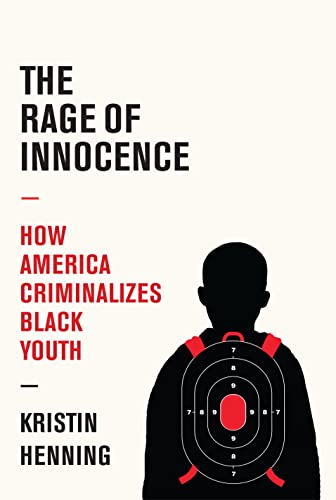
TrumpStein Believes that 4% Black Enrollment Means Too Many Blacks Get a Legal Education at UC Berkeley. Racist System Requires the Legal Profession to be Lilly White (Only 5% Attorneys are Black-ABA)
/
CONTRARY TO IMAGES PRESENTED TO US ON TELEVISION, movies AND SOCIAL MEDIA, according to the ABA only 5% of all attorneys are Black. [MORE] Said number has remained steady since 2009. The legal profession is overwhelmingly white: specifically, it is 85% white, 5% Black, 5% Latino, 2% Asian American and 1% Native American. [MORE] and [MORE]
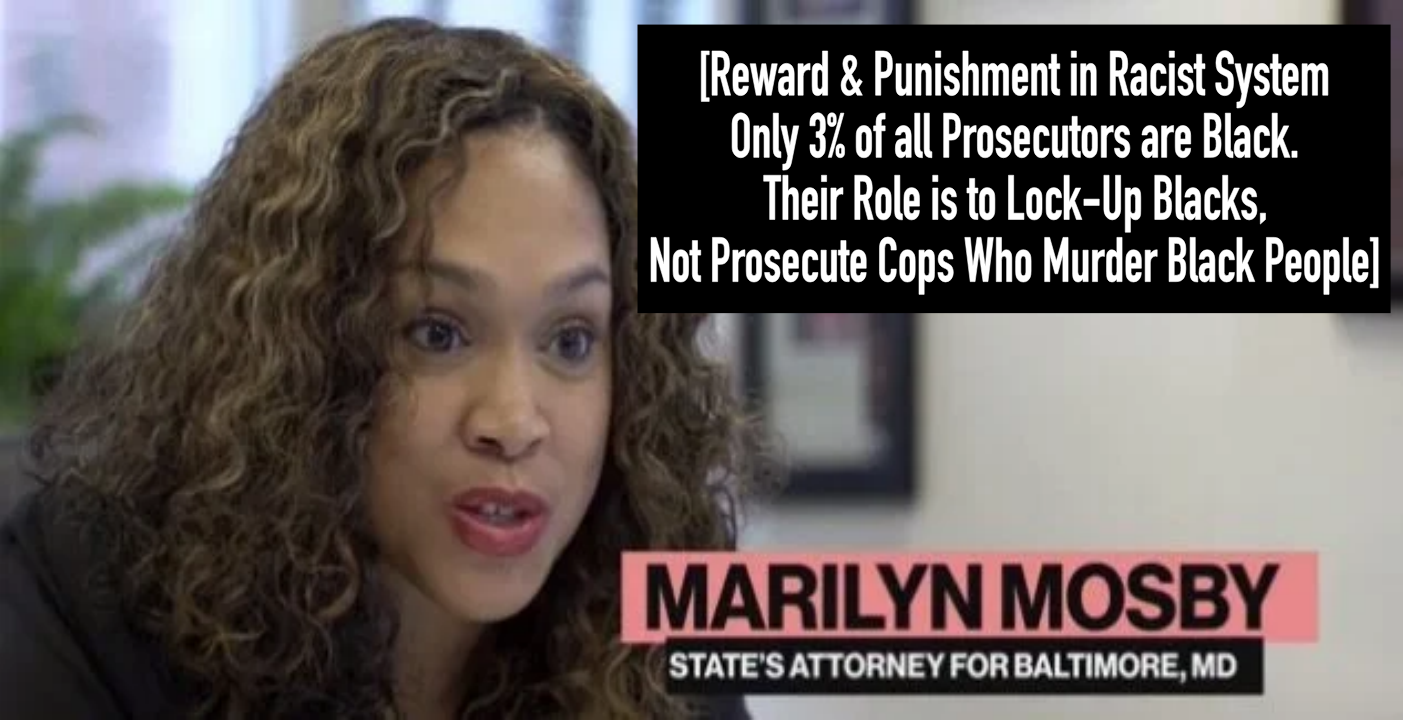
ALSO, According to a recent study only 1% of all elected prosecutors are Black women. [MORE] According to the same study only 2% of all elected prosecutors are Black men while 95% of all prosecutors are white.
The U.S. Justice and Education Departments alleged on Wednesday that admissions practices at the University of California, Berkeley School of Law deliberately favored Black applicants and discriminated against white and Asian candidates.
A joint probe by the two federal departments whose findings were announced on Wednesday marked the latest crackdown on diversity initiatives in universities by President Donald Trump's administration.
The administration alleged the UC Berkeley School of Law uses "race, essay prompts, and other tactics to further its admissions diversity goals."
Erwin Chemerinsky, dean of the UC Berkeley School of Law, said on Wednesday that the school's "admissions policy is clear that race is not considered in any way in admissions decisions."
UC Berkeley's central administration said the university "will spare no effort to provide ample evidence" to show the university complies with all relevant laws, policies and rules governing admissions.
Trump, who casts diversity goals as anti-merit and discriminatory against white people and men, has signed orders to dismantle them. Rights advocates say diversity practices address historic inequities for marginalized groups like ethnic minorities, the LGBT community and women.
The U.S. Supreme Court rejected affirmative action at colleges in 2023 when it struck down race-conscious admissions programs at Harvard and the University of North Carolina.
"The data produced by Berkeley Law demonstrates a strong bias against Asian and white applicants, with a corresponding bias in favor of Black applicants," the Trump administration said, adding Black applicants had 5.8 times higher odds of admission than comparable white applicants in 2025.
The law school's October 2025 enrollment data showed 1,128 law students, of whom 516 were white and 293 Asian, with 51 Black students.
The Department of Justice said it sought a voluntary resolution agreement with the school. [MORE]