

Analysis of Iran War Video Reveal US Military Strikes were Ineffective; Hitting Already Destroyed Sites, Abandoned Buildings, Empty Boats, etc
/From [HERE A systematic analysis of footage released by US Central Command (CENTCOM), together with open-source videos circulating on Iranian social media, suggests a campaign that has largely exhausted its finite target bank and is approaching the limits of its military effectiveness.
The visual record
CENTCOM's released strike footage follows a consistent and familiar narrative. The targets are presented as militarily significant, the imagery is clean, and the message of precision and operational purpose is carefully reinforced.
But a closer examination of that footage – alongside videos recorded by Iranian civilians and journalists and shared on Telegram, X, and Iranian news platforms – suggests a different reality.
Every air campaign against an adversary faces the same structural constraint: its target bank is ultimately finite. The United States entered this campaign with an intelligence picture built over decades of satellite surveillance, signals intelligence, and human intelligence, identifying what it assessed to be Iran's highest-value military targets.
The evidence now emerging suggests that much of that target bank has already been worked through. What remains is an increasingly limited pool of objectives with far lower strategic value, raising questions about how much military utility the continuing strikes can still deliver.
This shift toward increasingly ambiguous targets is operationally revealing. A campaign that has exhausted its pool of high-value objectives and is increasingly striking targets of questionable military significance is, by definition, one that has reached its limits.
At that point, the relationship between individual strikes and any meaningful strategic effect becomes progressively more difficult to establish.
The official record
The following footage was released by CENTCOM itself as part of the public record of the campaign. Yet rather than documenting strikes on high-value nuclear, missile, or command-and-control targets, the videos frequently reveal a different pattern: attacks on objects whose military significance is unclear or appears limited at the time they were engaged.
1. A strike on an already-destroyed structure, southern Iran
The structure targeted in this clip shows clear signs of prior damage, collapsed sections, exposed structural elements, and debris consistent with an earlier strike. Whatever this structure once was, it had already been rendered non-functional prior to this particular engagement.
The repetition of strikes on already-degraded locations is a clear indicator of target bank exhaustion. Analysis of the visual record shows multiple instances of sites being struck in successive waves.
This pattern is difficult to explain on purely military grounds once a target has been rendered non-functional. When such a pattern of repetition extends across a broad range of target types, including sites that were not hardened to begin with, it suggests that the military campaign is desperately trying to maintain operational tempo against a shrinking pool of identified targets.
2. A strike on a moving bulldozer
This clip shows a single bulldozer, in motion, with no visible markings or context tying it to military use.
Construction equipment of this kind is hardly a strategic asset, as it would be a phone call away from procurement in a country like Iran. Moreover, there is nothing in the footage to confirm it was even military-related rather than civilian machinery.
3. A strike on a small boat, abandoned on land
The boat shown has no engine and no equipment aboard, and it rests on land rather than in water or in the proximity of a fortified base. The absence of propulsion or mounted military gear is consistent with a vessel that had already been abandoned, retired, or taken out of commission well before the strike.
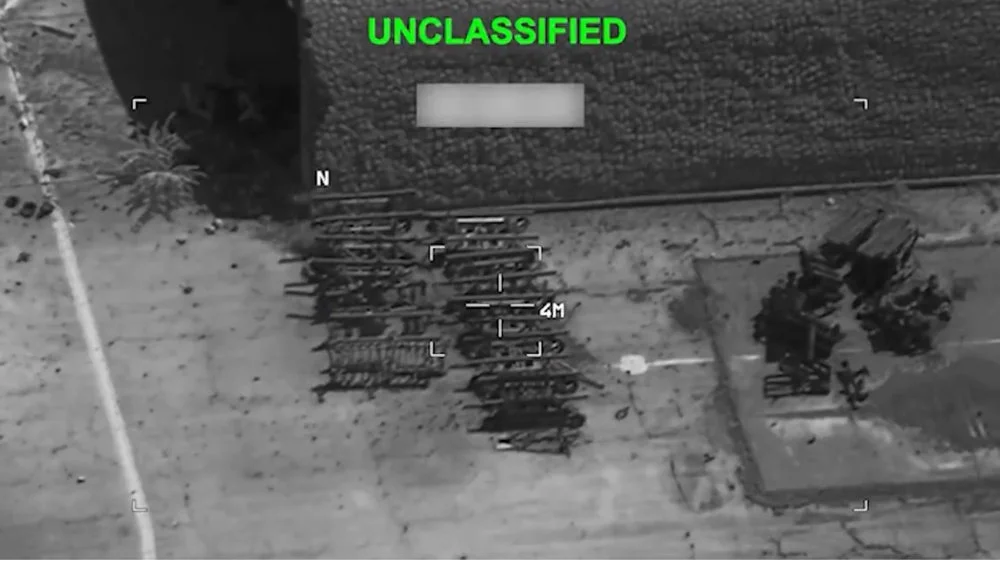
CENTCOM strike footage, Bushehr Airport storage (Above). Satellite imagery comparison, the casings can bee seen in the same location over the years (Below)

4. A strike on a waste storage site at Bushehr Airport
Satellite imagery of this location shows the same waste storage area present for roughly fifteen years prior to the strike. This location, which contains what seems to be empty bomb casings, had seen no change for many years.
A site with over a decade of unchanged storage use in the historical record is difficult to characterize as a target of present-day significance. [MORE]
Experts say a US Cruise Missile, not ricochet, Struck a Wedding in Iran Murdering Defenseless People: Massa Media Ignores US War Crimes
/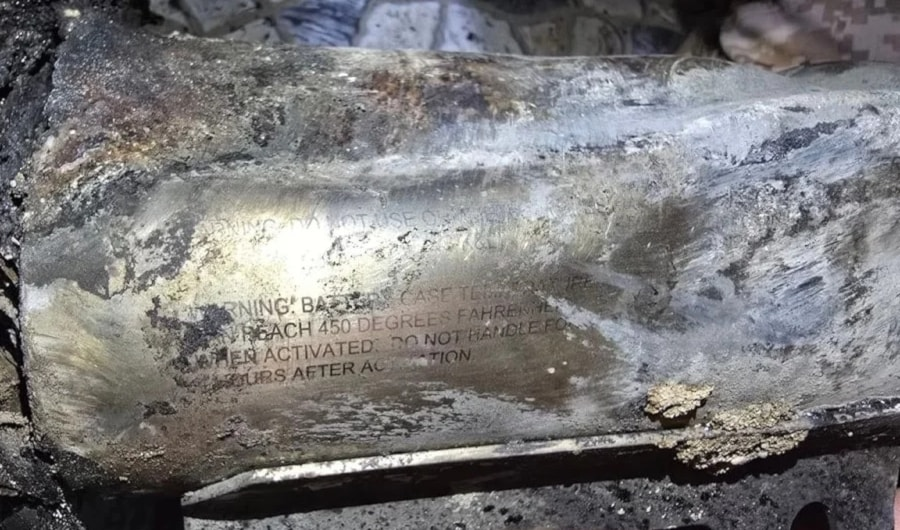
A US munition struck a home hosting a wedding celebration in southern Iran directly, rather than ricocheting from another target, weapons experts who reviewed images and video verified by Reuters revealed.
The strike in the small town of Kuhestak on Tuesday killed five people and injured at least 70 others. The harrowing massacre has renewed concerns over civilian casualties in the US war on Iran and is the most significant such case since a missile hit an Iranian primary school in February, killing scores of children and teachers.
US Central Command claimed its forces carried out multiple strikes across southern Iran on Sept. 1, targeting Islamic Revolution Guard Corps air defense positions, radar systems, and communications facilities. The attacks followed earlier Iranian retaliatory strikes against US military assets in the Gulf in response to ongoing US aggression.
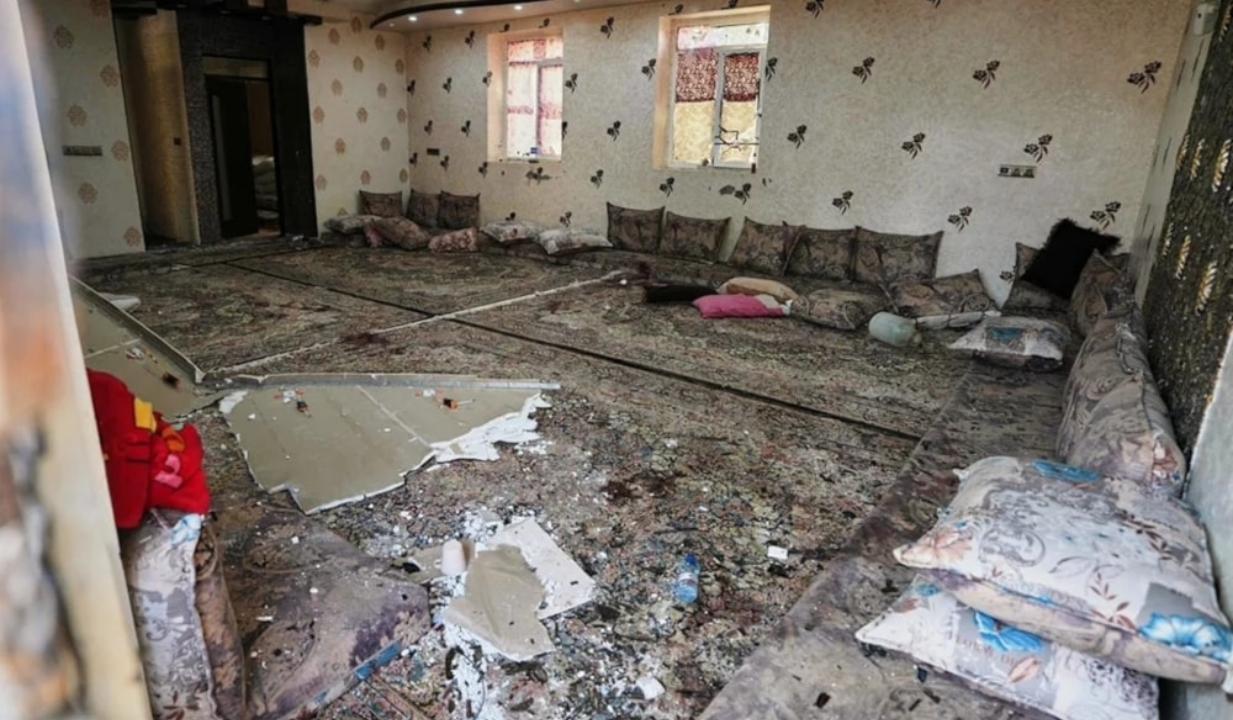
On Thursday, US Vice President JD Vance claimed Washington was investigating the incident.Dozens of residents had gathered at a home in Kuhestak for a wedding ceremony on the night of the US aggression, according to eyewitnesses. Images and video verified by Reuters and examined by weapons experts indicate that a munition likely struck the roof of the house during the celebration.
Footage recorded after the strike shows debris scattered throughout the home where the wedding was taking place. Dress sandals and colorful decorations associated with local wedding traditions can be seen among the wreckage.
Four military weapons experts who checked visual material told Reuters that the damage was consistent with a direct strike rather than secondary damage caused by a munition ricocheting from another target. Three of the experts stressed that the weapon was likely American rather than a misfired Iranian air defense missile.
'Many people are under the rubble'
Images from the scene showed bloodied shoes scattered across the rubble, alongside wedding decorations commonly used in the area.
One eyewitness sent Reuters a voice message shortly after the strike, saying, “Kuhestak is destroyed. Four, five, ten houses were destroyed. Many people are under the rubble. God help us.”[MORE]
Latino Congresswoman Acknowledges 'Our Bombs Murder Civilians from Palestine to Iran'
/A day meant to celebrate a couple’s new beginning instead turned into devastation, Congresswoman Delia C. Ramirez said in a post on X, as she accused the United States of killing innocent women and children with its bombs in Palestine and Iran.
“From Palestine to Iran, our bombs are killing innocent women and children,” Ramirez wrote.
Ramirez referred to a US aggression on the small town of Kuhestak on Tuesday that killed five people and injured at least 70 others. The harrowing massacre has renewed concerns over civilian casualties in the US war on Iran and is the most significant such case since a missile struck an Iranian primary school in February, killing scores of children and teachers.
Ramirez said Congress could no longer “turn a blind eye” to war crimes by President Donald Trump and Secretary of War Pete Hegseth.
“The time to hold warmongers accountable is now,” she wrote, calling on Congress to pass the Block the Bombs Act, reclaim its power, and “put an end to this endless war.”
Ramirez’s call for Congress to challenge the administration’s wars comes as concerns grow over the potential consequences of further escalation with Iran. Conservative commentator Tucker Carlson has separately warned in late August of the risk of a nuclear strike, calling for Trump to be removed immediately. [MORE]
Pentagon Admits To Committing Major Civilian Murder Massacres in Yemen Last Year
/The Pentagon has admitted in its annual report on civilian casualties to Congress that it committed two large-scale massacres of civilians in Yemen during its bombing campaign against the Houthis, officially known as Ansar Allah, last year, which War Secretary Pete Hegseth dubbed “Operation Rough Rider.”
In the report, the Pentagon acknowledged that the bombing campaign killed at least 153 civilians and injured 243, numbers that are a significant undercount. According to the Yemen Data Project, at least 238 civilians, including 24 children, were killed, and 467 civilians were injured.
The Pentagon acknowledged that civilians were killed in three strikes, including two that were among the deadliest US attacks on civilians in recent decades: the April 16, 2025, bombing of the Ras Isa fuel port in Hodeidah, and the April 25, 2025, strike on a migrant detention facility in the northern Saada province. [MORE]
Big Oil Stocks Surged Due to Iran War—and New Filings Show TrumpStein is Cashing In
/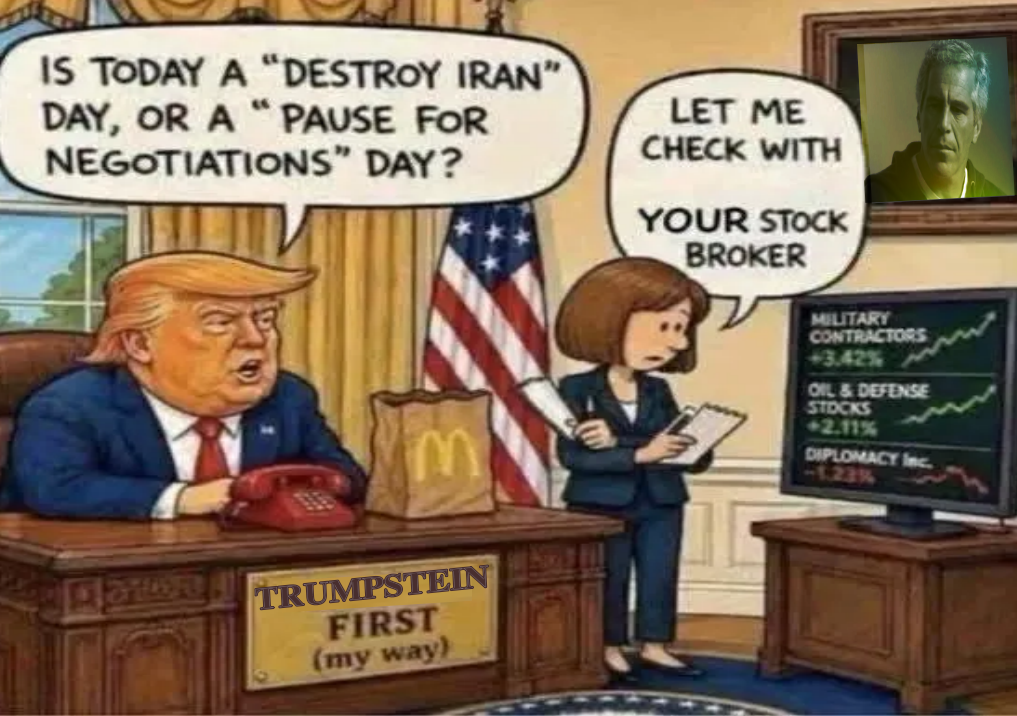
In a mandated filing with the Office of Government Ethics released Thursday, President Donald Trump was found to have made more than 1,000 stock transactions in June, including thousands of dollars invested in energy companies that were reaping record profits from the war Trump started with Iran.
Trump submitted financial disclosure forms to the OGE covering the second quarter of 2026, during which the Iran War continued, was paused for a ceasefire, and restarted again.
CBS News pointed to a “notable large transaction” on April 7, the day Trump declared a ceasefire with Iran after having threatened to destroy the country’s “entire civilization.” His investment accounts sold between $500,000 and $1 million of ExxonMobil stock that same day.
The filings were submitted days after Democrats on the Joint Economic Committee (JEC) estimated that Trump’s oil and gas stocks have soared in value since before he began attacking Iran in February—an act that raised oil prices due to Iran’s retaliatory closing of the Strait of Hormuz. The holdings were estimated at $13 million to $46 million at the start of 2026 and $17 million to $61 million this month. [MORE]
Kidnapped Venezuelan President Maduro and wife Ask Court to Dismiss Fake Charges in Rigged Case
/Ousted Venezuelan President Nicolás Maduro and his wife Cilia Flores, filed separate motions Wednesday in Manhattan federal court seeking dismissal of the charges against them. Maduro argued that he remains Venezuela’s head of state for immunity purposes, notwithstanding the United States’ refusal to recognize him as the country’s legitimate president. Flores contended that she is also protected as the spouse of a sitting head of state.
Maduro’s attorney, Barry Pollack, filed two motions before US District Judge Alvin K. Hellerstein. The first seeks the dismissal of the entire Fourth Superseding Indictment. In a supporting memorandum, Maduro argued that customary international law grants him status-based head-of-state immunity. His lawyers cite the International Court of Justice’s Arrest Warrant case, which recognized broad immunity from foreign criminal jurisdiction for incumbent holders of certain senior state offices.
Additionally, Maduro claimed conduct-based immunity as the indictment relies partly on actions allegedly performed through his governmental positions. His attorneys characterized the issuing of diplomatic passports, deploying the military, and implementing foreign policy as official acts attributable to the Venezuelan state.
Maduro’s second motion seeks dismissal of count one, that of narco-terrorism conspiracy under 21 U.S.C. § 960a. His memorandum argues that the indictment fails to establish statutory jurisdiction or a sufficient nexus to the United States, and improperly applies the law to foreign conduct.
Flores’ separate motion seeks the dismissal of counts two, three and four. Her memorandum argues that she shares Maduro’s status-based immunity as the spouse of Venezuela’s head of state, and also possesses conduct-based immunity. Her lawyers wrote that her immunity “is an attribute of Venezuela’s sovereignty, and only Venezuela may surrender it.” [MORE]
White San Diego DA Declines to Charge White Officer who Murdered Konoa Wilson. Black Teen was Running from a Criminal who was Shooting at Him when Cop Saw Him for 1 Second and Shot Him in the Back
/
The San Diego County District Attorney’s Office will not be filing charges against a San Diego police officer who fatally shot a 16-year-old boy near the Santa Fe Depot early last year.
Summer Stephan is the San Diego County District Attorney. She is white. San Diego is a city controlled by elite white dumbocrats.
Koana Wilson was recklessly shot by a white San Diego police officer Daniel Gold II while the Black teen was running away from gunshots fired by another person. He was unarmed and seeking safety and the officer saw him for only one second or less before firing as he turned the corner (see video below).
Surveillance and body-worn camera footage from Jan. 28 showed Wilson running away from someone who pulled a gun and fired at him in a downtown train station. As he exited the station, Wilson encountered San Diego Police Officer Daniel Gold. Without any warning the officer fired two shots at Wilson. The shooting happened at the Santa Fe Depot located at 1050 Kettner Blvd. in San Diego. Wilson was pronounced dead at UC San Diego Health Medical Center less than an hour later.
“After more than a year of analysis of the facts, law, and expert opinions, the District Attorney’s Office has completed its review and concludes that in this matter there is not a criminal charge provable beyond a reasonable doubt,” a news release released by the DA’s office on Friday stated. [MORE]
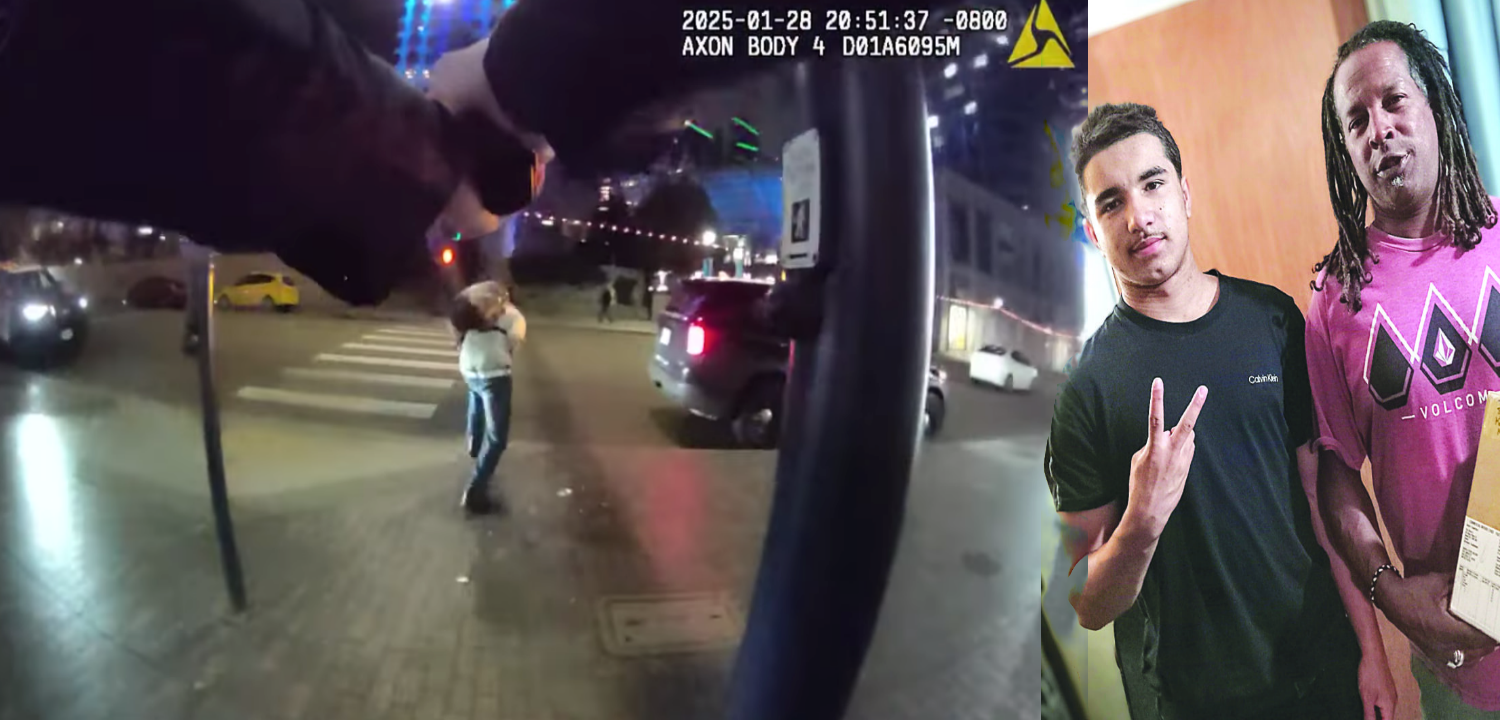
According to the complaint (Wilson is referred to as “decedent” in the document)
On January 28, 2025 at approximately 8:50 P.M., Defendant GOLD and another unidentified SDPD officer were responding to an unrelated call near Santa Fe Depot.
At the same time, DECEDENT and a friend entered Santa Fe Depot at approximately 8:50 P.M.
At approximately 8:51 P.M., DECEDENT was standing on the platform next to the Santa Fe Depot train tracks when a person, unknown to DECEDENT, took out a firearm and fired gunshots in DECEDENT's direction.
DECEDENT proceeded to run away from the gunshots down a corridor of the Santa Fe Depot in hopes of reaching a place of safety.
When the unknown SDPD officer heard gunshots in the area, he called "I got shots fired" over the police radio without any description of the shooter or suspects involved.
As DECEDENT exited the Santa Fe Depot corridor, he turned right onto Kettner Blvd. Immediately upon turning the comer, DECEDENT crossed paths with Defendant GOLD who instantly, without any warning (verbal or otherwise), fired two gunshots at DECEDENT, striking DECEDENT in the right side of his torso/back area. Prior to firing the gunshots at DECEDENT, DECEDENT was only observable to Defendant GOLD for one (1) second before Defendant GOLD began shooting at DECEDENT
At no point during these events did DECEDENT brandish a weapon nor did he present a threat to the physical safety or well-being of Defendant GOLD or any other person. DECEDENT was simply running away from an unknown person who was shooting in his direction while he was on the train platform.
Immediately after being shot by Defendant GOLD, DECEDENT fell into the roadway of Kettner Blvd., screaming and writhing in pain. There, he began to bleed-out into the street.
Only after shooting DECEDENT and watching him fall to the ground did Defendant GOLD finally announce "San Diego Police." [MORE]
Oakland to Pay $17M to Settle "Lolo" Soakai Case: Cops Engaged in High Speed Chase Without Lights or Sirens Causing Crash. Police Officers Caught on Video Laughing and Wishing He Was Dead- and He Was
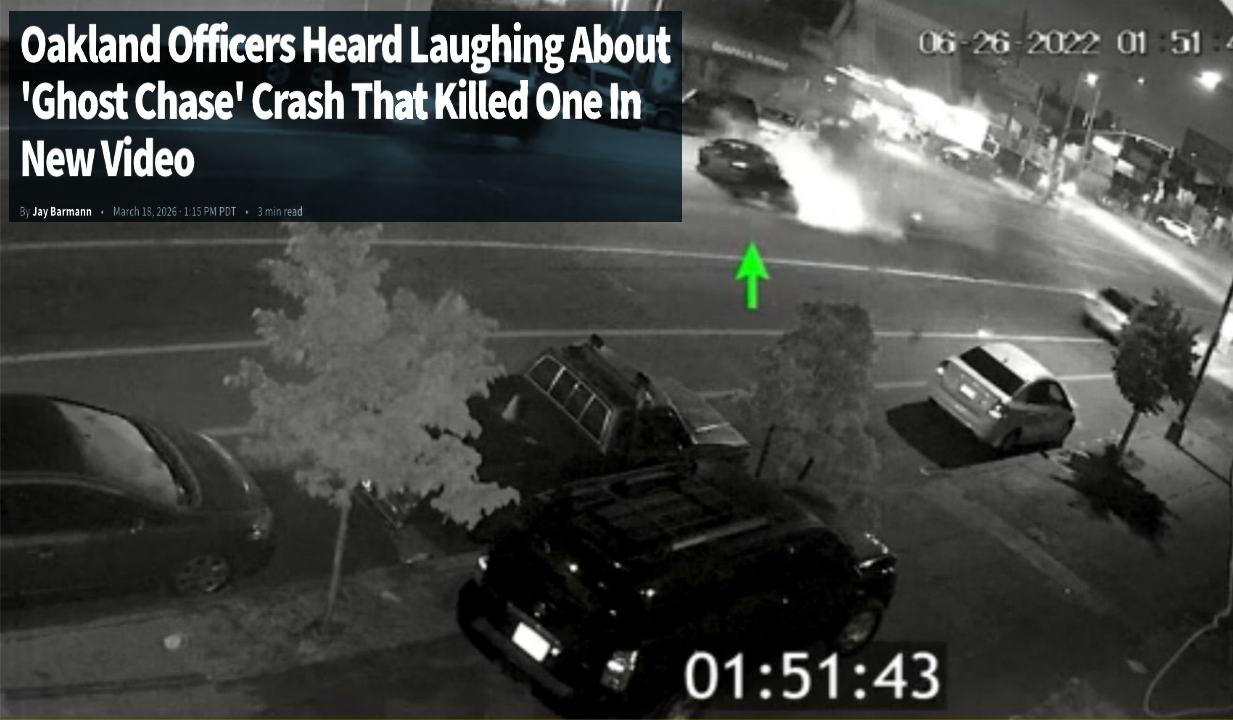
/
The city of Oakland has agreed to pay one of its highest-ever legal settlements to the family of a 28-year-old man who was killed four years ago in a crash that was indirectly caused by a chase initiated by two rookie Oakland police officers.
As a trial was pending in a wrongful death case stemming from the June 26, 2022 death of Lolomania "Lolo" Soakai, following years in which the city and the police officers involved tried to argue that they weren't civally liable under statutes giving law enforcement "qualified immunity" in such cases, Oakland officials reached a settlement in late July, as KTVU reports.
Oakland has agreed to pay $17 million to Soakai's mother, Lavinia Soakai and his cousins, Daniel Fifita, Ina Lavalu, and Samieuela Finau, all four of whom were injured in the June 26, 2022, crash, along with Soakai who was killed.
The family members had all be standing near a taco stand at International Boulevard and 54th Avenue, just after 1 am on June 26, 2022, when a violent crash involving a speeding driver, several parked cars and a parked motorcyle led to the tragedy. A chain reaction reportedly led to the motorcycle becoming airborne and landing on Soakai.
19-year-old Arnold Linaldi had been seen doing donuts at a sideshow earlier that night by OPD officers Walid Abdelaziz and Jimmy Marin-Coronel. The officers followed Linaldi away from the sideshow and initiated a so-called "ghost chase," speeding after him without their lights or siren on — likely because such chases were not authorized under department policy for non-violent offenses.
While pursuing Linaldi down International Boulevard, the officers saw him crash into the parked vehicles and spin out at 54th Avenue. In bodyworn camera footage that would later become public, Abdelaziz and Marin-Coronel could be heard chuckling and joking about the crash, and audibly expressing hope that Linaldi died. [MORE]
A White Arkansas Trooper Removed a Back Seat Passenger by Grabbing His Dreadlocks and Pulling him Thru a Broken Window, then Punched Him; Cops Drove 130Mph to Enforce Speeding Law and Keep Whites Safe
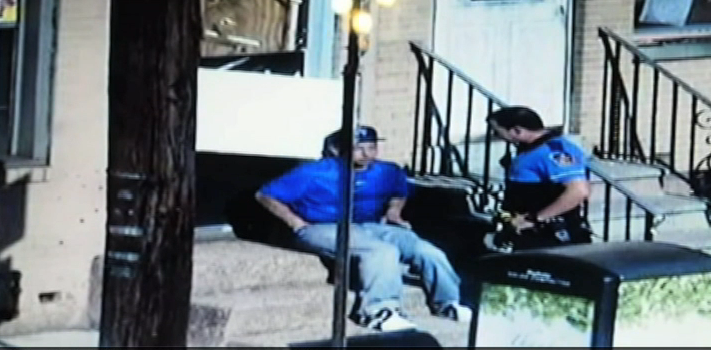
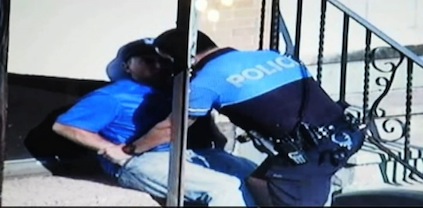
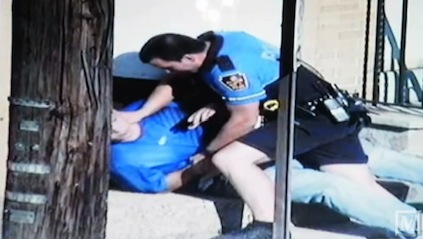
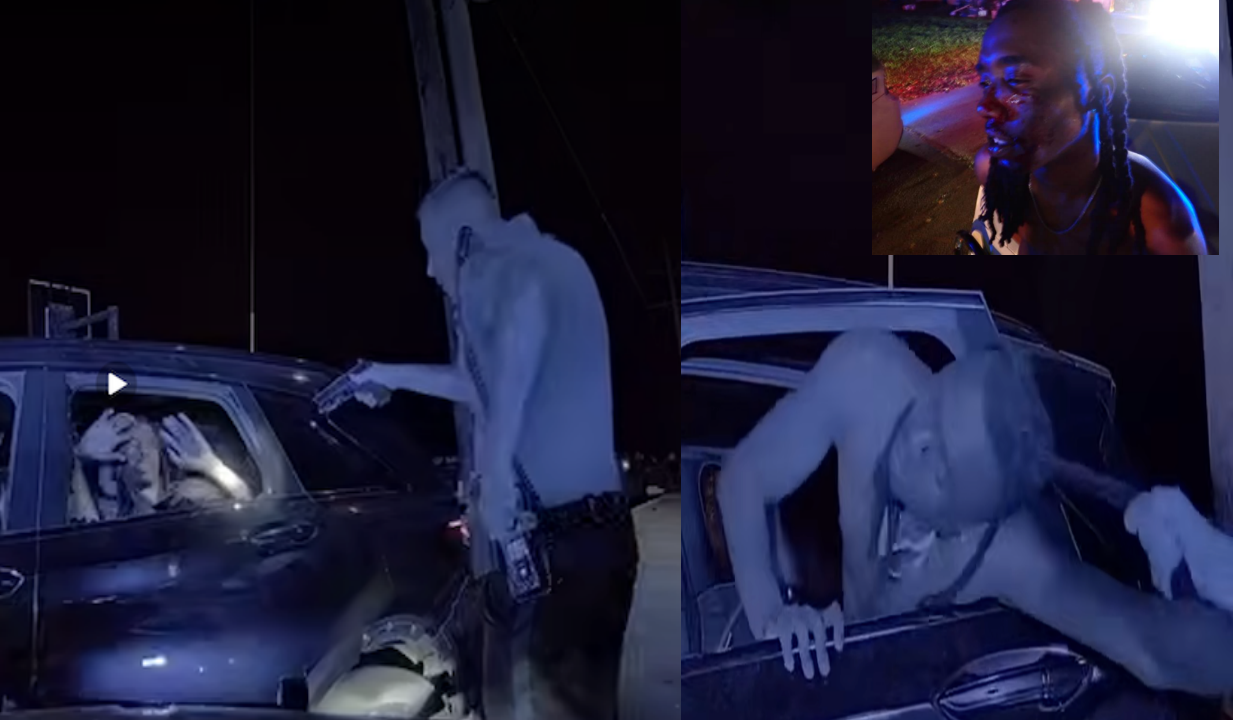
/Police video on 8/29/26 shows a white Arkansas State Police trooper breaking an SUV’s rear window, gripping a Black back-seat passenger by his arm and dreadlocks and pulling him toward the opening before punching him during an arrest.
Trooper Theodore Henderson reported striking the passenger, 23-year-old Tedrick Washington, a second time after the struggle moved to the ground.
Washington was a passenger in the vehicle. He was later charged with obstruction of governmental operations and resisting arrest. Massa media did not explain what crime Mr. Washington was under arrest for or provide any factual basis for how he resisted arrest. [MORE]

Keeping the Hood Safe or Just Fucking with Folks? A Baltimore Cop Moved in Front of a Fleeing Black Man’s Car and Shot Him thru the Driver Window. Cop was Impounding his Car “b/c Old Registration”
/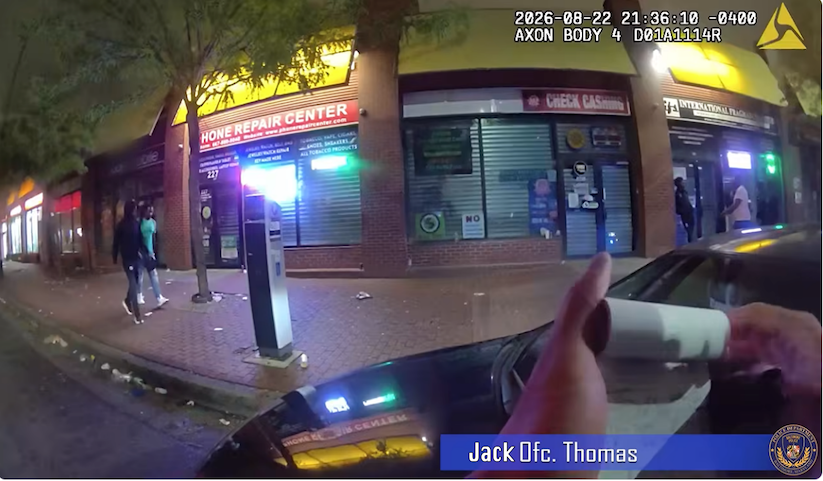
The Baltimore Police Department (BPD) released body-worn camera video Friday showing a police shooting that took place on Aug. 22 near Lexington Market. The shooting happened around 9:30 p.m. on Aug. 22 in the 300 block of N. Eutaw Street.
The officer involved was identified as Samuel Thomas, a 20-year veteran of the BPD. [MORE]
Instead of protecting Black people from ongoing crime at night, Baltimore authorities have a policy of aggressively searching, ticketing and stealing residents’ cars with expired registration, out of state tags or other petty parking infractions. It should go without saying, but for most working and poor people the loss of your car means the loss of the ability to participate in economic life and to take care of yourself and others. It also is a deprivation of a host of freedoms such as; preventing or inhibiting an individual from obtaining food, medicine, other necessities, seeing their children etc and restricting their freedom of movement to come and go as you please. Government authorities dominant Black people and other poor people with ticket fines that they treat as monetary debt. It should also go without saying but when people are living like insects (avoiding utility shut-offs, eviction, car repossession and juggling what bills to pay this month) then paying the government for some bullshit ticket is a low priority.
In this matter, the cop found a car a parked in the hood and went to work for his liberal masters. As such, mission accomplished as another Black person is physically harmed and deprived of their property by the government.
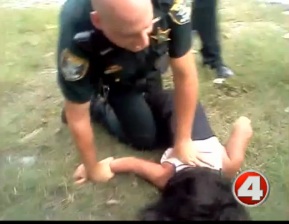
Video Shows 3 Large Saginaw Cops Beating a Small Black Woman Laying on Her Back in the Street in a City Controlled by Elite White Liberals
/
Electing a “Black” mayor or thousands of liberals does not stop authority from routinely destroying Black people’s freedoms and murdering them with impunity.
LAPD Recite Cop Mantra, "he spit on me," to Justify Beating and Smothering Defenseless Latino Man to Death in Jail
/The Los Angeles Police Department released a video that shows a gang of white police officers at the Valley jail beat and smother a Latino inmate who died after he was left handcuffed with a bag over his head while laying prone on the bunk in his cell. The cops weren’t defending themselves. All forced used offensively is excessive.
The LAPD released footage of an incident that led to the murder of 58-year-old Jose Carlos Hoyos-Munoz at Van Nuys Regional Jail.
An LAPD spokesman said officers used force on Hoyos-Munoz after he was uncooperative and spit on them.
Mayor Karen Bass said after the footage was released that she is issuing an executive order authorizing “an independent evaluation of officer-involved deaths and severe injuries,” particularly those involving individuals experiencing a mental crisis.
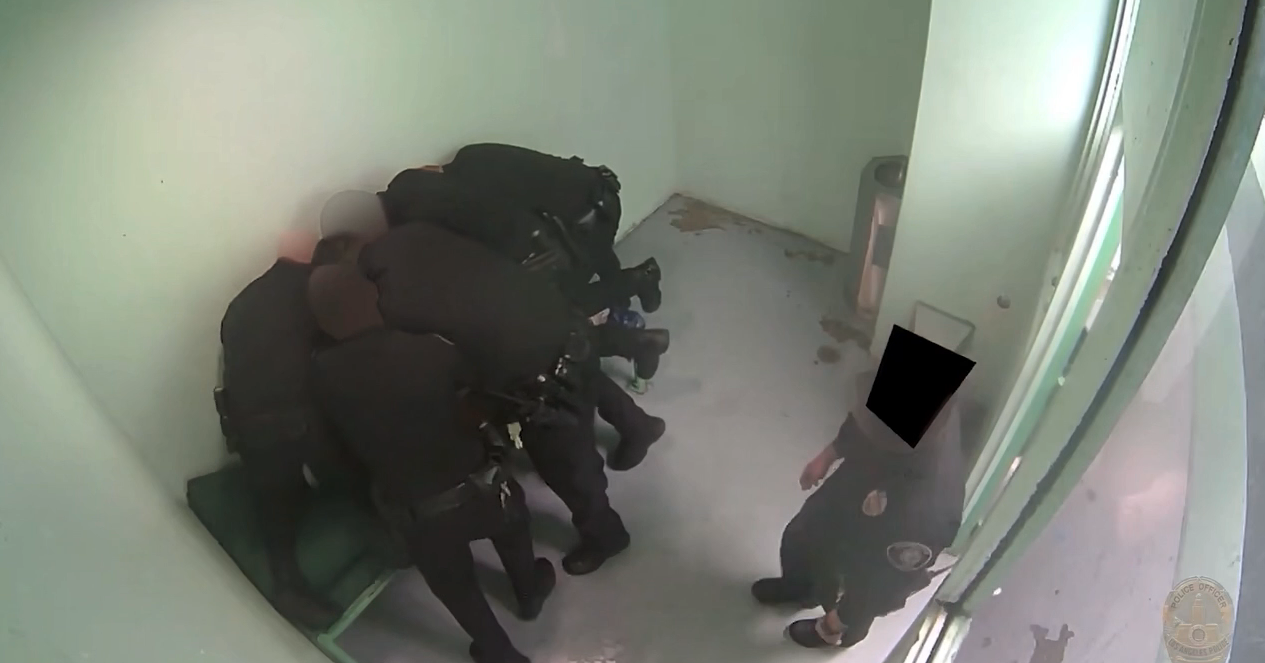
LAPD officials on Friday released security camera footage showing a group of officers piling on top of a man and beating him before he died in a San Fernando Valley jail cell, one of two recent incidents that prompted Los Angeles Mayor Karen Bass to call for an independent review of police killings of people in mental distress.
A police spokesperson said officers at Van Nuys Regional Jail used force on Jose Carlos Hoyos-Munoz, 58, after he was uncooperative and spit on them.
The footage released by the LAPD showed officers converge on Hoyos-Munoz several times after he behaved erratically in his cell in the early morning hours of July 15. He was struck several times while pinned down and in handcuffs.
The officers placed a hood over Hoyos-Munoz’s head after he they claimed he ‘spit on them,’ the LAPD spokesperson said, and he was left with the covering on while he lay prone with his hands behind his back. [MORE]
White Cop Promoted by Alabama DOC after He Hit a Non-Resistant Inmate in the Head w/a Metal Stick, Body Slammed Him and Stomped on His Head, which 'Bounced Like a Ball,' Causing Murder - DOJ Report
/
[MORE]
From [PLN] "I wanted to tell you; your son was beaten to death by an officer. That was a murder.”
Sondra Ray received that message from an unidentified Alabama Department of Corrections (DOC) official after receiving a false accounting of the death of her son Steven Davis while he was incarcerated at the Donaldson Correctional Center in Bessemer. According to DOC officials, Davis had “attempted” to attack another prisoner when guard Roderick Gadson and five other guards responded. DOC officials said Davis “refused to comply” with orders to drop two make-shift plastic knives, so the guards “had no choice” but to “spray him with Mace” and to “restrain him using justifiable force.”
At Gadson’s deposition, he was shown a photograph of Davis. In the image, Davis lay on an ICU bed, breathing through a tube, his mangled face bruised and covered in blood, with his sunken black eyes visible. An attorney asked Gadson if he felt like the amount of force he had used against Davis was “justifiable.” Gadson answered: “I don’t feel like nothing. I just did my job.”
Eyewitnesses to Davis’s killing gave a sharply different account of the incident.
They said that Davis had put down the plastic knives and lay prone and unresistant on the ground when the guards attacked. Gadson hit Davis “with his metal stick in the head, picked him up and throwed him down. [Gadson] stomped [Davis] with his size 15 boot. [Davis’s] head bounced like a basketball.”
A U.S. Department of Justice (DOJ) investigation would later reveal that Davis was transported by helicopter to a hospital. A medical examination showed that Davis had sustained “multiple fractures to his skull, eye sockets, left ear and cheekbone, and to the base of his skull.” There was internal bleeding on his brain. Davis died the following day. His cause of death was “officially recorded as homicide caused by blunt force injuries of head sustained in an assault.”
Despite this evidence, neither Gadson nor any of the other guards involved in the killing of Davis were disciplined, even though the DOC paid $250,000 to settle Ray’s lawsuit alleging, inter alia, wrongful death and excessive force. Six months later, Gadson was promoted to sergeant. Documents and lawsuits show he continued his abuse of prisoners, yet in July 2021, the DOC rewarded Gadson with a second promotion to lieutenant.
The killing of Davis and the lack of consequences for his killers is only a fraction of the focus of a documentary recently streamed on HBO Max. The documentary, titled The Alabama Solution, takes its name from a statement made by the state’s Republican governor, Kay Ivey. Commenting on Alabama’s refusal to implement changes recommended by the DOJ to abate the abuse of prisoners within the DOC, Ivey said there was no need for federal intervention because the state would address “the Alabama problem with an Alabama solution.”
But the “Alabama problem” only seems to be getting worse. The DOC’s 27 facilities are currently operating at 200% capacity with only one-third of the required staff. And the DOC has the “highest overdose, murder, and suicide rates in the nation.” The per-capita death rate in Alabama prisons in 2024 was the highest of every state in the nation and was almost double that of the second highest. That same year, the DOC’s mortality rate was 101.81 per 100,000 incarcerated people with 277 prisoners dying that year. Georgia, the state with the second-highest prison mortality rate in 2024, reported 65.29 per 100,000.
The Alabama Solution provides a unique view by featuring raw, uncensored cell phone footage of the appalling and horrifying conditions inside the DOC’s facilities. This footage was captured by Alabama prisoners Robert Earl Council, Melvin Ray, and Raoul Poole on cell phones purchased on the prison’s black market. These men risked their lives documenting, in real time, the disarray, violence and drug abuse inside Alabama’s prison system.
Indeed, the documentary begins with Council serving “five years of solitary confinement as punishment for his organizing; later in production, he is nearly beaten to death by guards and loses sight in one eye.” But such is the price of exposing the fallacies of the DOC and creating a counter-narrative to the DOC’s stance against federal intervention. Council, Ray, and Poole credit their advocacy and activism for change inside the DOC to a “self-directed course of study organized by prisoners who were active in freedom movements during the civil rights era.”
Ray and Council also formed the Free Alabama Movement (“FAM”) as a means to remedy the fact that prisons are the only state-run institutions “that the public and the media have no access to.” FAM rallies “family members to push for prison reform from the outside.” The documentary also includes the work of reporters Andrew Jarecki and Charlotte Kaufman. These reporters have covered prisons for a number of years. In 2019, they were invited to visit the DOC’s Easterling prison in Barbour County. Generally, the DOC prohibits media access. But on this particular day, Jarecki, Kaufman, and others were permitted to document Easterling’s annual volunteer-run barbecue. On camera, incarcerated men—the majority of them Black—danced, smiled and ate fresh roasts while listening to live music and sermons. But off camera, many of the men told stories of “horrific beatings, unreported stabbings, unimaginable violence swept under the rug and appalling conditions that ‘ain’t fit for human society.’” Whenever Jarecki approached filthy corners in response to cries for help, prison officials “shut down filming, claiming that it was unsafe for him to speak to the men without a police chaperone.”
Jarecki recounted, “It was very clear that there were areas of the prison that we were not allowed to see. They use the idea that it’s all about safety and security because they don’t want you to understand what they’re doing. These prisons are like black sites.” The film crew received the same basic message from prisoners over and over: “We don’t have access to the outside world. Please share this.”
The ghastly cell phone footage shows rat-infested cells, piles of human excrement, rotting food, and blood-streaked floors. Also depicted are routine officer beatings and men carried out in body bags. Hallways are seen filled with men in near-catatonic states induced by drugs sold by guards on the black market. Throughout the documentary, viewers will see incarcerated men “nodding out,” a term used to describe the condition of sleeping while standing or sitting upright as a sign of opioid abuse. Overdoses in the DOC’s facilities are the major contributor to the skyrocketing number of deaths in those facilities. In 2023, at least 122 incarcerated persons died from drug-related causes in Alabama’s prisons, up from just nine drug-related deaths in 2019. Yet Gov. Ivey has failed to address the drug crisis in any meaningful manner. Less than 5% of DOC prisoners participated in any drug treatment program in 2024, a sharp decline from 15 years ago, when about 20% of Alabama prisoners participated in drug treatment programs.
Illicit drugs are a major factor driving the violence and death through the DOC’s prisons. The overdose mortality rate in 2023 was 20 times higher than the national average across all state prisons in 2019 (the last year for which nationwide data was available). In October 2024, the Alabama Legislature’s Commission on Alabama Opioid Settlement Funds applauded the “30% drop in drug overdoses” in Alabama (that “drop” apparently did not include overdoses within the DOC). But when DOC official Deborah Crook was asked about the agency’s use of funds for Medication-Assisted Treatment (MAT), she said “[f]inancially, we haven’t used all of the money allocated.” She explained that the DOC had “served 500 incarcerated people in the MAT program and at the time had 256 people in treatment.”
Illicit drugs are frequently brought into the prisons and sold by DOC staff. Publicized arrests and interviews with incarcerated people demonstrate that to be the case. The problem isn’t unique to Alabama. Guards working in prisons throughout the United States supplement their meager wages with profits from drug sales. Former DOC guard Stacey George explained that “the system turns a blind eye to drug smuggling because of understaffing. If a guard was caught bringing drugs inside, officials would have no choice but to fire him, exacerbating the [staff] shortage.” George added, “There’s no checkpoints out front. There’s no dogs anymore. So, they’re not even paying attention.”
Lack of Guard Accountability
While the DOC’s prisoner population has decreased by 4,000 in the last ten years, incidents resulting in the use of force by staff have increased by 47% in that same ten-year period. The year 2020 reported the highest number across all of the DOC’s facilities, with 2,659 incidents involving use of force. Three prisons reported more than 300 uses of force in 2020 (another all-time high): Donaldson Correctional Facility reported 300 use of force incidents; Limestone Correctional Facility reported 308; and Tutwiler Prison for Women reported 329. Former DOC Warden David Wise, who retired after working in the DOC’s prisons for 28 years, said: “So much of this violence by officers is senseless and unnecessary. There’s not a convict in the system that, if he refuses an order, I can’t put in a cell without hurting him.”
The DOC’s use of force policy permits officers to use force “if a prisoner is aggressive, for self-defense, the protection of others and property, to prevent escape, quell a disturbance or when an inmate exercises physical resistance to a lawful command.” Wise said that the last justification in that list is “where some officers push the bounds of what’s legal and necessary. Some of them take that to say, ‘OK, well you disobeyed my command. I can whoop your ass.’ That’s not the way it’s supposed to go. If they use proper strategy and do what they’re taught in the academy, there should be very few incidents and lawsuits.”
The DOJ reported its findings to Ivey and other Alabama officials in July 2020. Among the many findings was that excessive force was “used frequently” in 12 of the DOC’s major facilities. The DOJ report cited 17 specific incidents as well as two that had resulted in death.
In Ray’s lawsuit naming Gadson and the other guards responsible for the killing of Davis, she cited 14 incidents of excessive force by DOC guards against incarcerated people between 2016 and 2019. The Court concluded that “fourteen incidents in three years is sufficient to plead ‘obvious, flagrant, [and] rampant abuse,’ especially when these incidents were purportedly brought to the attention of the supervisory officials in question.” In her suit, Ray also explained that, ordinarily, allegations of excessive force are investigated by staff at the facility where the incident occurred. But because Davis was killed, the DOC’s Intelligence and Investigation (I & I) Division investigated. Pointing to the DOJ’s report, Ray asserted that investigators understood that their job is “to protect the [DOC], not to hold inmate abusers accountable.” The DOJ report revealed “the lack of discipline and investigation occurred not only with institution-level investigations but also was a component of I & I investigations.” This lack of accountability, according to the DOJ, encouraged a “pattern of excessive force … specifically in Alabama’s male prisons” that included “the use of batons, chemical spray, and physical altercations such as kicking, and often result in serious injuries and sometimes death.”
The DOJ report observed that a “review of a statistically significant set of [DOC’s] use of force incident reports and accompanying documentation from a six-month period demonstrated that a large number of reported uses of force [in 2017] were unjustified under the legal standard.” See: Ray v. Gadson, 2023 U.S. Dist. LEXIS 196958 (N.D. Ala. Nov. 2, 2023). As of 2025, Gadson himself has been named a defendant in 26 separate lawsuits alleging excessive force. Standing at over six-feet tall and weighing almost 300 pounds, Gadson is known within the prisons as “Big G.” The son of a police officer, Gadson began working for the DOC in 2007.
Gadson has worked inside 13 of the DOC’s prisons. He often worked inside the segregation unit at Donaldson. This is where Gadson and his compatriots killed Davis. It is also where he was first named a defendant in a lawsuit alleging excessive force in 2008, just a year into his “career.” The DOC settled that suit with a payment to prisoner plaintiff Kenneth Knabenshue. Not one of the 26 lawsuits has led to prosecution or even disciplinary action against Gadson. While the state has paid out $426,350 in settlement funds to plaintiffs in ten of those suits—and an additional $2.5 million in legal fees defending Gadson—the guard himself has not paid a penny. In fact, when questioned about the suits, Gadson seemed unaware that he was even named a defendant in many of the filings.
This lack of accountability and consequences perhaps explains the increased severity of Gadson’s brutality and the size of the payouts as his attacks on prisoners progressed over the 15-year period from the Knabenshue settlement in 2009 to the Davis settlement in 2024. For example, prisoner William Harris alleged that on May 4, 2010, Gadson and another guard “handcuffed him, then pepper sprayed him in the face before beating him with a night stick until he passed out.” Harris wrote, “[t]hey beat me viciously, as if I were a plastic punching bag instead of a human being.” The case settled with Alabama paying $30,000 to Harris without any admission of responsibility. On April 12, 2017, Gadson went for a “two-fer,” committing at least two separate assaults at Donaldson that resulted in lawsuits. Prisoner Terry Carsterphen alleged he was Maced in the face by one guard and then Gadson “began striking me in the head with a metal baton, busting my head in the process.” (Unfortunately, this case was dismissed due to Carsterphen’s inability to pay a $17-filing fee).
Also on April 12, 2017, Zackery Wilson alleged that Gadson “maliciously assaulted” him while Wilson was “inside my cell not causing any type of disturbance.” Gadson “punched Wilson” repeatedly in the face, then stomped on Wilson while he was on the ground, causing a contusion at his left eye and a permanent knot on the left side of his head. In a case stemming from an incident that occurred in 2017, the DOC agreed to pay $40,000 to settle another lawsuit involving excessive force alleged against Gadson. The prisoner was rushed to a hospital where he spent three nights undergoing treatment for a collapsed lung, broken vertebrae, and broken ribs.
Gadson attacked another prisoner inside the segregation unit at Donaldson just three months prior to killing Davis. The prisoner survived the beating but had to be taken to a hospital via ambulance. He suffered multiple injuries, including a broken leg and broken nose, and numerous fractures to his hand requiring surgery. The DOC settled the subsequent suit for $10,000. Gadson’s brutality continued escalating, culminating in the death of Davis and the payout of $250,000. Gadson’s beating of Davis was so savage that the Court granted the Defendant’s request for a protective order prohibiting the disclosure of Davis’s autopsy photos “because the inflammatory nature of the photographs would ratchet up the potential for retaliation against the defendants.” See: Ray v. Gadson, USDC (N.D. Ala. 2023), Case No. 2:20-cv-00499.
Gadson is not the only serial abuser of prisoners in Alabama. Between 2018 and 2024, the DOC paid $198,000 to settle five lawsuits against Lieutenant Akeem Edmonds. One of those suits accounted for $140,000 that was paid to former prisoner Koty Williams. While incarcerated at the Bibb Correctional Facility in November 2018, Williams entered a dormitory to register for a Christian-based reentry program. While waiting, the Correctional Emergency Response Team (CERT) entered the dormitory, announced a shakedown, and instructed the prisoners to stand by their assigned bunks. Williams approached the only vacant bunk but explained to the CERT officers that it was not his bunk. The CERT guards ordered Williams and some other prisoners into the bathroom for a strip search.
While Williams was in the bathroom, guards found contraband (two cell phones, a charger, and two hypodermic needles) in the area near the vacant bunk. Williams denied that any of the contraband belonged to him and again explained that he did not live in that dorm. Edmonds and four other guards ordered Williams into the nearby inmate barber shop. Once inside, Edmonds asked Williams why he would not “own up to the contraband” and then punched Williams in the face, knocking him to the floor. While Williams lay on the floor bleeding from his nose, the other guards punched and kicked him. Edmonds then grabbed Williams by the waist of his pants and his shirt, picked him up, and slammed him onto the wooden bench ordinarily used by men waiting for a haircut. Among the injuries Williams suffered was an “ intertrochanteric fracture of the left hip.” The injury left Williams unable to walk, so Edmonds pushed Williams to the infirmary in a wheelchair. Edmonds denied injuring Williams, and claimed he had observed Williams limping. When he asked Williams why he was limping, Williams had said that he was jumped.
An agent from the DOC’s Law Enforcement Services Division (LESD) visited Williams in the infirmary. But the LESD agent did not photograph Williams’ injuries and later said in a deposition that he did not visit the barbershop or speak with any witnesses. After Williams suggested video surveillance in the dorm would show he was not limping when Edmonds and the guards escorted him into the barbershop, the LSED agent said that he had received a message from the warden stating no video footage of the incident existed. Undeterred, Williams then suggested that the camera in the dorm’s bay area would have captured the incident from another angle. But, “mysteriously,” no one ever checked that footage. The captain in charge admitted he should have checked it, but couldn’t offer any explanation as to why he had not done so.
Edmonds’ personnel file revealed that former DOC Commissioner Jeff Dunn attempted to demote and fire Edmonds for using his utility belt to beat a prisoner who had taken food from a staff refrigerator. But the state personnel board reinstated Edmonds as a sergeant. After the assault charges related to the incident were dropped upon a motion from the prosecution, the DOC promoted Edmonds to lieutenant.
A review by the non-profit news outlet Alabama Reflector found that the DOC settled 124 lawsuits between 2020 and 2024, with 94 of those alleging excessive force. Forty-five percent of the incidents of excessive force described injuries severe enough to require hospitalization, including lacerations that required stitches and surgical repair of broken bones. In one incident, a man had both arms broken. Others had broken ribs and broken bones in their back. Nineteen of the complaints detailed traumatic brain and head injuries. At least seven suits alleged catastrophic injuries that left the victims permanently disabled and/or disfigured.
In one complaint from 2018, a prisoner described being cuffed with his hands behind his back and the officer then striking him from behind, “breaking his jaw in two places, sending a large portion of his jawbone between his teeth and spraying blood all over the wall.” The DOC terminated the accused guard and paid the prisoner $90,000. In a 2019 incident, a guard placed a prisoner in a takedown position that is known to cause “excruciating pain” in the shoulders while another guard kicked his legs, causing the prisoner’s head to strike the floor. Several other guards sprayed him with Mace while kicking and punching him. The prisoner suffered a traumatic brain injury, permanent hearing loss, and multiple contusions. Released from prison, he died from an overdose in 2023. The DOC paid his mother $9,000.
Five settlements stemmed from a CERT raid at the Holman Correctional Facility in Atmore in 2016. CERT guards charged into a dorm of sleeping men, screaming and beating them with batons. At least one of the men sustained multiple serious injuries requiring hospitalization. The settlements totaled $13,500. Two years later, CERT guards assaulted a man in a wheelchair at Holman. The CERT team slapped him and then busted his head with a baton, causing him to fall facedown out of his wheelchair. He wrote in his complaint that while he lay on the ground, the CERT guards “kicked and stomped on me so viciously until I defecated on myself. I was knocked out unconscious.” His suit settled for $7,000. Some of the complaints alleged excessive force against prisoners seeking medical attention. Guards at Bibb beat a man in the infirmary while he was experiencing an epileptic seizure “strapped to a gurney.” When his seizure ended, the guards accused him of using drugs and then “chained [him] to a wall as he continued to bleed and exhibit signs of a seizure.”
When denying the guards’ motion to dismiss, U.S. District Judge Karen Owen Bowdre wrote: “The Court finds that a reasonable jury would have difficulty not concluding that prison officers beating a fully restrained, possibly unconscious prisoner who had just suffered an epileptic seizure ‘offends contemporary standards of decency.’” The case settled for $30,000. Most of the complaints were handwritten by prisoners using ballpoint pens. While details varied, their fear of the DOC guards’ brutality was a common theme: “I am requesting an emergency transfer before these officers kill me,” wrote one man from St. Claire Correctional Facility. Another man from Holman wrote: “I am more afraid now than I ever have been since I was first incarcerated.” Perhaps most chilling were the words from a man locked up at Donaldson Correctional Facility: “Don’t let these people kill me. I’m scared for my life and that they will say I killed myself.”
Former DOC Warden Wise said the record number of excessive force complaints resulting in settlements ought to be a red flag to state officials in Montgomery. “You should have enough confidence to be able to, even when there is a lawsuit, defend it, not settle it. The system needs that money, not for lawsuits, it needs that money to make it better.”
“Excessive force should always be treated like a big deal,” echoed former Washington Department of Corrections Secretary Steve Sinclair, who had a 32-year career in corrections. “If you minimize it, that’s what builds a horrible culture. And you shouldn’t have to wait for a court to tell you.” Commenting on the number of suits brought against the DOC, Sinclair said: “It’s pretty much routine to have lawsuits for various reasons, and not all of those are legit lawsuits. But certainly not 60 or 80 plus. It’s inconceivable to me.”
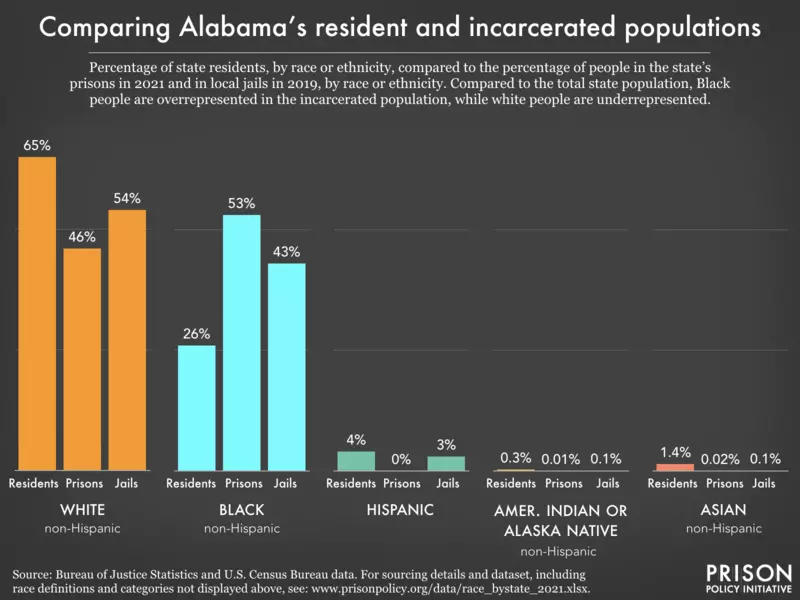
While the overwhelming majority of lawsuits alleged excessive force, other suits described even worse horrors. The DOC has been “dubbed America’s ground zero for prison brutality.” Between 2019 and 2024, a total of 1,377 people died while in the custody of the DOC. The majority of the deaths were from homicide, drugs, and suicide, fewer than half were from natural causes. Nearly 50% of the dead incarcerated persons (660 of them) were Black, a stunningly disproportionate number considering that only about 25% of the state’s population is Black. Many of the lawsuits alleged failure to protect, wrongful death, and even sexual assaults.
In 2019, a prisoner at Bullock Correctional Facility informed the warden he was in danger from another prisoner assigned to the same dorm who had threatened him. The warden laughed and a guard snickered, saying “maybe they will kill your cracker ass.” The plaintiff was later raped by the man who had threatened him. After the sexual assault, the plaintiff was taken to an outside facility for treatment. Unbelievably, the plaintiff was then returned to the same dorm with the same assailant who raped him a second time. The DOC paid a settlement of $10,621.70.
Joseph Wood was killed in 2017 at St. Clair Correctional Facility just two months after his arrival. He had written to his mother that other prisoners were extorting him and that guards were involved. She wrote in her lawsuit: “No one has ever told me who was responsible for killing my son. I learned about his death after [DOC] released his body to me for burial. I saw he had been beaten, stabbed, and strangled. The Department of Corrections failed to protect my son.” After five years of litigation, the DOC paid Wood’s mother $125,000. The attorneys representing the defendants were paid over $400,000 for their legal work. Pastor Robert White said at a Joint Prison Oversight Committee meeting that DOC prisoners were “intimidated or extorted,” forced from their bunks by other prisoners. They have to sleep on the floor in very deplorable conditions because someone has taken their bunk from them.” Describing the violence, White went on to say: “If I could pick one issue that we have to address, it is sexual assaults. That destroys a man, and reduces him to that of an animal.”
The DOC reported a whopping 1,600 assaults in its prisons from January 2025 through October 2025. But the DOC does not categorize assaults, making unclear how many involved sexual violence. Limestone County ranked first with 247 assaults, while the Julia Tutweiler Prison for Women came in second with 146. In addition to the incalculable price of human suffering and misery, the financial payout by the DOC is staggering. Since 2020, the DOC has paid $57 million defending against legal claims, including settlements to plaintiffs and fees to attorneys defending the DOC.
Alabama’s Penchant for Slavery Is Contributing Factor to Unsafe Prisons
At least one commentator has opined that one reason the DOC keeps its higher-security prisons in terrifying conditions of violence is to threaten prisoners at lower-security institutions with transfers if those lower-security prisoners refuse to participate in the DOC’s “work-release program” that is generally considered “forced labor.” [MORE]
Only 1yr in Jail for a White Cop who Struck a Black Man 40X w/Brass Knuckles while Restrained by other White Cops in VA Prison. Officer Enraged b/c a Police Dog Got Injured During the Unlawful Assault
/
From [HERE] A white correctional officer was sentenced to 12 months in prison Thursday for striking an inmate in the head more than 40 times in what his supervisor called a “disgusting” use of excessive force at Wallens Ridge State Prison.
David McMurry held handcuffs in his fist — essentially using them as brass knuckles — to deliver the blows to a mentally ill inmate who was being held down by other officers at the time, court records show.
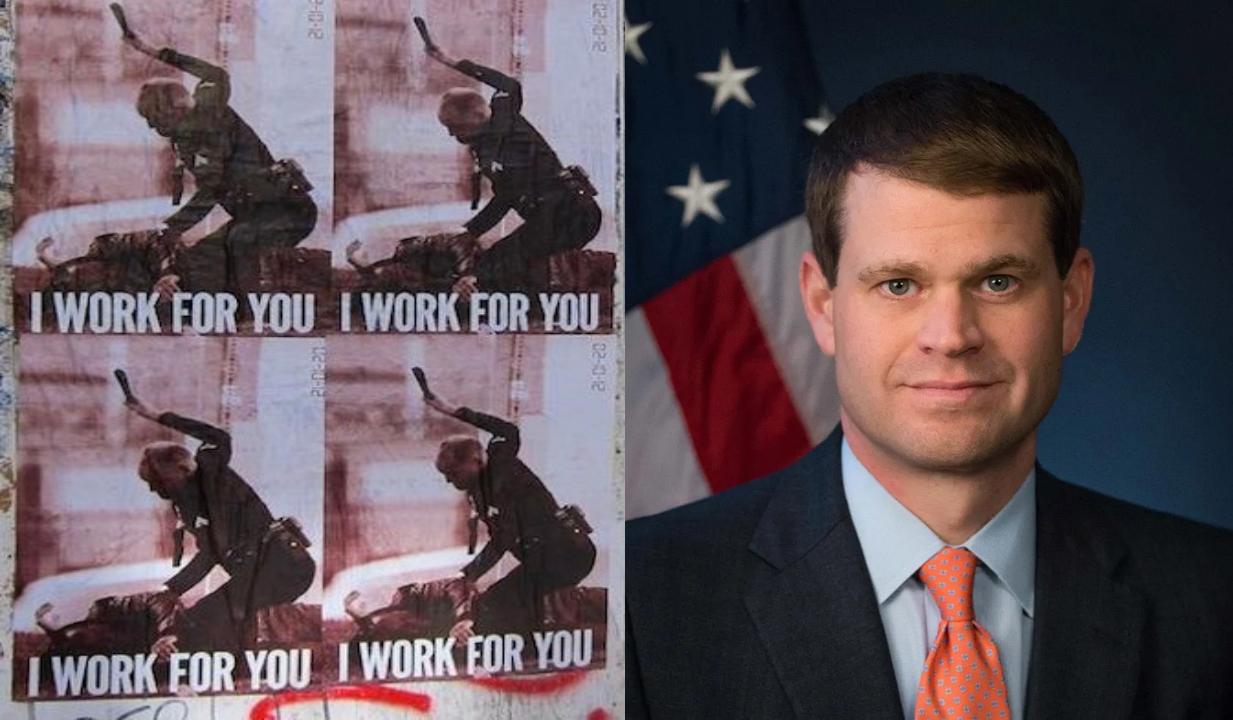
U.S. District Judge Thomas Cullen (wearing the tie in photo above) imposed the sentence at a hearing in Abingdon’s federal court.
Although claims of excessive force at the maximum-security prison in Big Stone Gap are common, usually made by inmates representing themselves in civil cases, it is unusual for criminal charges to be filed against a prison guard.
Wallens Ridge State Prison is a Level 5 supermax facility in Big Stone Gap, Virginia, housing approximately 1,200 male inmates. The prison’s demographic composition has historically been defined by the transfer of Black and Latino inmates from urban areas to a predominantly white rural region, creating significant racial dynamics. Most of the inmates are Black or Latino and all the guards are white. [MORE] See Klanarchy in the Funktionary for a deeper dive.
McMurrry — who according to prosecutors once said he loved using force against inmates — told investigators after viewing a video of his actions: “You’re telling me I could go to jail for that?”
“It is imperative that the Court answer that query with a resounding yes,” Assistant U.S. Attorney Danielle Stone wrote in a sentencing memorandum that asked Cullen to impose the maximum sentence of 12 months.
McMurry had initially been charged with a felony, depriving an inmate of their constitutional right to be free from cruel and unusual punishment under the color of law, that carried a maximum sentence of 10 years in prison. Sentencing guidelines called for a range of 51 to 63 months.
But a plea agreement reduced the charge to a misdemeanor.
The incident at the prison near the Kentucky border happened June 18, 2022, as a team of correctional officers were attempting to extract an unruly inmate from his cell after he threatened them with a piece of plastic that had been hand-crafted into a knife, better known as a shank.
Attorneys for McMurry, 52, said that he resigned after realizing the magnitude of his actions, which he now admits were an abuse of his authority and a severe lapse in judgment.
However, he had a valid fear of harm during “a dangerous, highly emotionally charged and chaotic situation … in a cell extraction of an uncooperative and aggressive mentally ill inmate armed with a seven-inch shank,” his attorney, Assistant Federal Public Defender Nancy Dickenson-Vicars, wrote in court records.
Despite being struck in the head about 45 times in less than one minute, the inmate, identified in court records only by the initials D.B., was not injured to the point that he required hospitalization (if you believe that BW has a bridge to sell you = means denied medical treatment by the Klanarchy that run said prison).
McMurry falsely described his use of force as a “stunning technique” during an investigation by prison officials, prosecutors said.
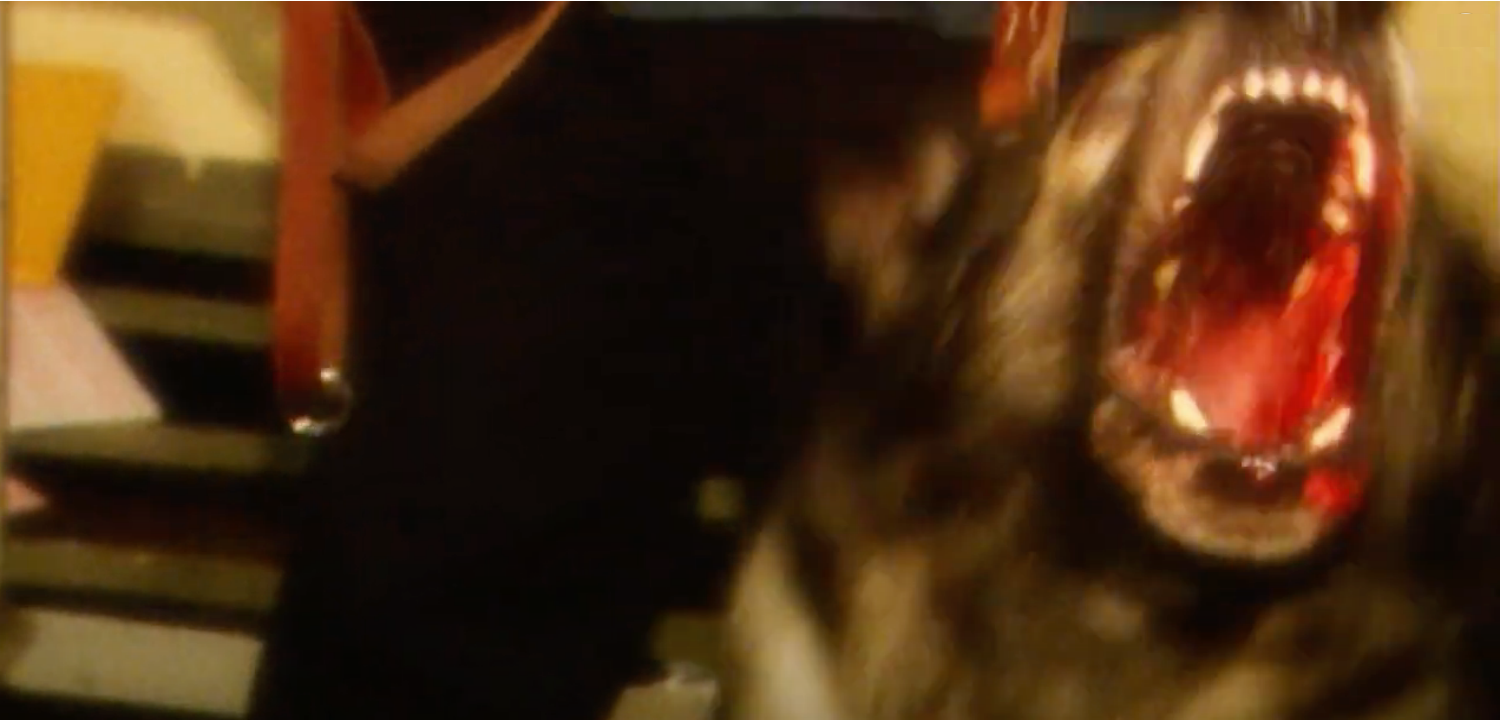
Body camera footage showed a scene in which a team of correctional officers, accompanied by one of the attack dogs regularly used at the prison, entered D.B.’s cell after six bursts of pepper spray though a meal tray slot on the door failed to subdue him.
D.B. had earlier refused to surrender his weapon and threatened to kill anyone who came into his cell, according to court records filed by the defense.
During a scuffle that followed, the inmate attempted to stab the dog, which apparently was the reason for what happened next. After climbing onto a prison bed, where D.B. was being held down by other officers, McMurry began to strike him in the head while exclaiming: “That’s how the dog felt, mother——.”
It is against Virginia Department of Corrections policy to use dogs during cell extractions, which contributed to “a dangerous situation for all involved,” Dickenson-Vicars argued. [MORE]
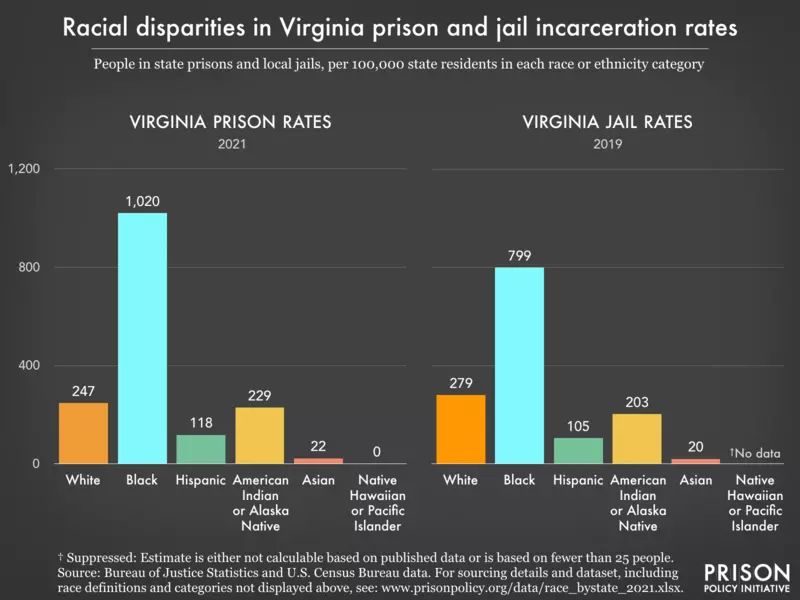
As a Matter of Routine Policy Virginia’s Prisons Use Attack Dogs on its Mostly Black Inmates (54%) [VA is a Mostly White State (61%)]
/
In 2006 Human Rights Watch reported that the United States was the only country on Earth that uses attack dogs in its prisons as a matter of routine policy. In the words of the report, “the U.S. is the only country we know of that authorizes dogs entering a locked cell to bite a noncompliant prisoner as standard policy.” It is a kind of abuse more frequently associated with conflict zones and, when it happens in those, it is often investigated as a war crime—for example, when U.S. soldiers used the threat of a dog attack as a form of torture in Abu Ghraib prison, or claims documented by the United Nations that Israel has set dogs upon Palestinian detainees.
Against this backdrop, little has changed in the two decades since the Human Rights Watch’s explosive report. Twelve states allow the use of attack-trained dogs in prisons, including Virginia. From 2017 to 2022, there have been 295 documented cases of dogs attacking people incarcerated in the United States; 271 of those cases took place in Virginia alone. In other words, Virginia’s taste for canine violence makes the state an outlier even within a global outlier.
These statistics flatten the terror and the enduring harm caused by each and every one of these attacks. The following narrative was shared with Inquest by Jaeon Chavis, an incarcerated victim of one of those many attacks in Virginia. We were connected with Chavis by the Georgetown University Law School Civil Rights Clinic, which is representing him in federal court. Inquest reached out to the Virginia Department of Corrections for comment but received no reply by the time of publication. [MORE]