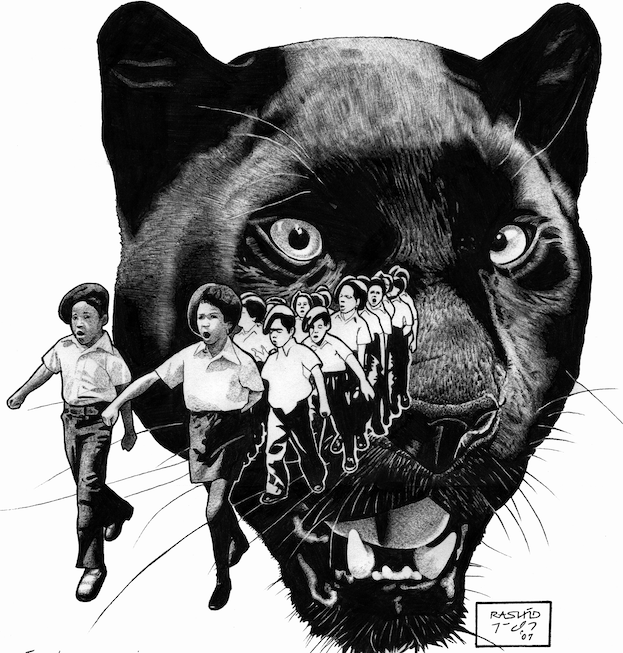
New California Law Results in Death Sentence Reversal for Anthony Bankston, a Black Man Characterized by White Prosecutors as a ‘Bengal Tiger’ to a Jury
/On June 1, 2026, the California Supreme Court reversed the death sentence of Anthony Bankston under the retroactive application of the California Racial Justice Act (CRJA) – the first capital punishment reversal under this Act in California’s history. The opinion asserts:
“In light of the passage of the RJA, we now make clear that, whatever the intent behind telling the story may be, the Bengal tiger story should no longer be told in California courtrooms. We have previously cautioned that there is frequently a thin line between permissible comment on the evidence and impermissible appeals to considerations that have no place in the judicial process. And as the legislative findings indicate, the oft-told Bengal tiger story is one that carries with it a recognized risk of crossing that line. There is no reason to permit prosecutors to continue running the risk of appealing to biases that undermine the very foundation of a system of equal justice, simply to make an unremarkable point about a defendant’s behavior outside a controlled courtroom setting.”
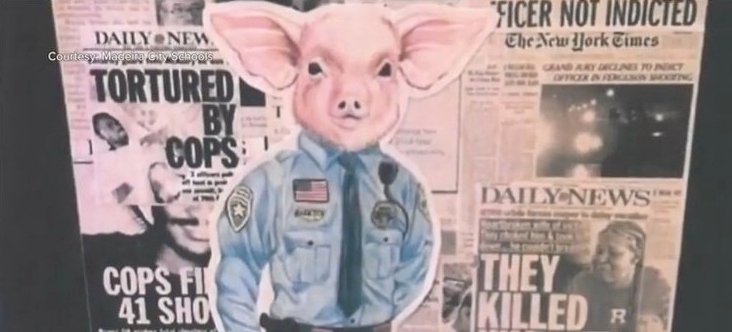
After being convicted and found guilty of murdering a rival gang member, Mr. Bankston represented himself in court in 1991. During closing arguments, the prosecutor characterized Mr. Bankston as a Bengal Tiger, telling the jury “[W]e see him here in court. We know that he’s able to represent himself. You see him in a nice little tie and a suit. You see that he’s articulate. But, ladies and gentlemen, the person that we see here in court is not the person that was out on the streets, it’s not the person that conducts himself in the manner in which we heard about in custody.” The opinion acknowledges that such statements are “highly offensive and inappropriate” and “[b]ecause use of animal imagery is historically associated with racism, use of animal imagery in reference to a defendant is racially discriminatory and should not be permitted in our court system.” This validates the experiences of a number of Black capital defendants in courtrooms and research that notes: “The use of animal imagery to describe Black criminal defendants plays into a long and brutal history of dehumanizing Black people. Twentieth century newspapers compared Black men to ‘the eyes of a trapped animal’, ‘a human hyena’, ‘the predators of the African plain’ when covering their executions.” The CRJA explicitly states:
“The state shall not seek or obtain a criminal conviction or seek, obtain, or impose a sentence on the basis of race, ethnicity, or national origin.”
A defendant can prove a violation of the CRJA by bringing forth a claim of racially discriminatory language defined as “…language that, to an objective observer, explicitly or implicitly appeals to racial bias, including, but not limited to, racially charged or racially coded language, language that compares the defendant to an animal, or language that references the defendant’s physical appearance, culture, ethnicity, or national origin.” With this in mind, the Court accepts a prosecutor’s use of referring to a defendant as an “eager beaver,” “happy as a clam,” “free as a bird,” or “quiet as a mouse.” as “none would appear to raise racial discrimination concerns.” [MORE]