While Downplaying Khashoggi's Murder, Fox News Lies to It’s Audience of Sheople: “Saudi Arabia is one of the safest places to be a journalist in the world"

saudi oil.jpg

From [HERE] Fox News contributor Jonas Max Ferris downplayed the murder of Washington Post contributor Jamal Khashoggi by arguing that Saudi Arabia “is one of the safest places to be a journalist in the world” and touting the country’s investments in U.S. businesses.

In response, host Neil Cavuto acknowledged that Saudi Crown Prince Mohammed bin Salman, the de facto ruler of the country, has engaged in oppressive practices against critics. But he also downplayed Khashoggi's murder, saying, “It is a reminder how this one journalist death, tragic though it is, has disproportionately skewed the picture.”

Khashoggi, who was critical of the Saudi government, was killed during a visit to a Saudi Arabian consulate in Turkey earlier this month. After initially claiming that Khashoggi had left the consulate after his October 2 visit, the Saudi Arabian government has now acknowledged that he was killed, implausibly claiming that he died after a fight broke out inside the diplomatic facility.

Reacting to those developments, Ferris argued that “investors know Saudi Arabia isn’t really the enemy” and that “Saudi Arabia is one of the safest places to be a journalist in the world” during the October 20 broadcast of Cavuto Live:

JONAS MAX FERRIS: They’re turning their oil revenue slowly into an investment fund of epic proportions that keeps Silicon Valley -- it’s one of the major sources of cash --

NEIL CAVUTO (HOST): And we want to be part of that.

FERRIS: Of course we do, which is why in some ways the president’s not being diplomatic, which is possibly good. The end of the day, investors know Saudi Arabia isn’t really the enemy. Saudi Arabia is one of the safest places to be a journalist in the world, believe it or not. If you go to the Committee to Protect Journalists, which is a very excellent site with a database, it’s almost 1,000 journalists killed since 1993. It’s only one in Saudi Arabia and that was by Al Qaeda in 2004.

Ferris cited a database maintained by Committee to Protect Journalists (CPJ) to claim that Saudi Arabia is a safe country for journalists. While he is correct that the database includes the murder of only one journalist in the country, in 2004, Ferris failed to note that Salman has ratcheted up oppression of journalists leading up to Khashoggi being targeted for murder.
CPJ -- which has called Saudi Arabia’s explanation for Khashoggi’s death “ridiculous” and said that the government “lied to the world” -- has documented the oppressive conditions journalists work under in Saudi Arabia.
As CPJ explained in an October 6 statement about Khashoggi, “Saudi Arabia's repression of journalists has intensified since Crown Prince Salman rose to power as the apparent heir to the king last year. CPJ recently documented a steadily increasing number of bloggers and journalists detained in unknown locations without charges since the start of what Saudi authorities term an anti-corruption campaign in September 2017.”

Meet the new head of the United Nations panel on Human Rights: the Kingdom of Saudi Arabia. Abby Martin takes us inside the brutal reality of this police-state monarchy, and tells the untold people's history of resistance to it.

Activists say Ongoing Israeli Genocide is Causing a Humanitarian Crisis at Gaza, Palestinians Killed & Injured While Trapped in an Open Air Prison with 3-5 Hours of Electricity per Day

palestinians murdered .jpg

From [HERE] Ahead of Great March of Return protests slated to continue at the fenced border of the Gaza Strip on Friday, Amnesty International condemned Israel’s reported “zero tolerance” policy toward such demonstrations, warning it likely will lead to more bloodshed after more than six months of confrontations during which Israeli forces have killed more than 150 Palestinians and injured thousands more.

“Given Israeli forces’ horrific track record of using deadly force against Palestinian demonstrators in Gaza, as well as journalists, medics, and others, the announcement of a ‘zero tolerance’ policy is deeply alarming,” declared Saleh Higazi, deputy director for the Middle East and North Africa at Amnesty International.

Noting that “Israel has repeatedly used lethal force unnecessarily and excessively against unarmed protesters in shameless violation of international law,” Higazi emphasized that “there are serious fears that this policy will further sanction the use of deadly force against unarmed protesters during today’s demonstrations, and that Israeli forces will be given carte blanche authorization to carry out large-scale, unlawful killings escalating the bloodshed.”

While the details of the policy have not yet been publicly disclosed, Higazi called on world leaders to pressure the Israeli government to scale back its response to the ongoing protests of the decades-long Israeli occupation and 11-year blockade of Gaza. He concluded, “It is now time the international community shows ‘zero tolerance’ towards Israel’s flagrant contempt for Palestinian lives and disregard for its obligations under international law.”

Since the series of weekly demonstrations began on March 30, foreign leaders and human rights advocates have fiercely denounced the Israeli government for authorizing the Israel Defense Forces (IDF) to use live ammunition on unarmed protesters and demanded an immediate end to the blockade that Israel and Egypt have imposed since Hamas took control of Gaza in 2007.

Hagai El-Ad of the Israeli human rights group B’Tsalem addressed the United Nations Security Council on Thursday to call for international action against Israel’s treatment of Palestinians, and appeared on Democracy Now! Friday morning to discuss the uprising and the humanitarian crisis in Gaza that’s resulted from the blockade:

Video of Jerusalem Municipality Demolishing a Family’s Home [4 adults, 4 kids] in East Jerusalem, Jabal al-Mukabber

This morning, 17 Oct. 2018, at about 6:00 A.M., Jerusalem Municipality personnel, accompanied by Police and Border Police officers and equipped with a bulldozer, came to the Jabal al-Mukabber neighborhood of East Jerusalem. The forces demolished the home of a family of eight, four of them children.
israel genocide eviction.jpg

Federal Appeals Court Says the Use of the Word “NGHR" just One (1) Time in the Workplace is Enough to Trigger a Hostile Work Environment Claim
From [HERE] In a recent decision, the Eleventh Circuit Court of Appeals held that the use of the N-Word in the workplace one time is sufficient to trigger a hostile work environment. Additionally, the Eleventh Circuit held that an employer may be held liable for workplace harassment when the plaintiff admitted that she did not complain of harassment until her final day of employment (and when the employer alleged that the plaintiff never complained of harassment). In light of this decision, and in light of the increased focus on workplace harassment over the past year, employers should use this case as an opportunity to review their No Harassment Policies and update their employment law training—to proactively ensure that harassing conduct does not occur in their workplaces.

When faced with allegations of a hostile work environment, employers often rely on two defenses: First, in order to be actionable, a hostile work environment must be both “subjectively” and “objectively” hostile. In other words, the plaintiff must subjectively perceive the harassment to be abusive, and the work environment must be one “that a reasonable person would find hostile or abusive.” Over the years, courts have typically required multiple instances of inappropriate or harassing behavior, in order to meet this standard. Second, if the harassing behavior was committed by co-workers, the plaintiff must have complained of the harassment. In other words, the employer must have knowledge of the harassing conduct (either actual or implied—companies cannot hide their heads in the sand) before it can be held liable.

In a recent decision, however, the Eleventh Circuit Court of Appeals held that use of the N-Word on one occasion could create a hostile work environment, and the Court held that the employer could be held liable even though the plaintiff admitted that she never complained about alleged harassment until (allegedly) right before her termination. (In fact, the company denied that she ever complained at all.)

Given the increased media focus on workplace harassment, this case provides a good opportunity for employers to review their anti-harassment policies and procedures, in order to proactively ensure that harassment-related issues do not proliferate in the workplace.

Background on the Case

In Smelter v. Southern Home Care Services, Inc., the plaintiff had been hired by Southern Home Care Services in July 2013 as a customer service supervisor. As part of her job, the plaintiff was responsible for coordinating with caregivers and clients, scheduling in-home visits, and accurately recording all caregivers’ work time. There was no dispute that the plaintiff required extra training and committed many mistakes during her employment. In September 2013, she was terminated for poor performance, after a final incident in which she got in a heated argument with and yelled at a co-worker. Following her termination, the plaintiff asserted the following allegations:

  • She had endured racist remarks from her co-workers nearly every day during her employment.

  • During the argument with her co-worker on the last day of her employment, her co-worker had called her a “dumb black [N-Word].”

  • Her co-workers had made derogatory comments about black men, black women, President Obama, and compared the plaintiff with a monkey from the movie Planet of the Apes.

  • Her supervisor thought the racist comments were funny.

Although the plaintiff admitted that she had never complained about any of the comments prior to the final incident, the plaintiff alleged that she had told her supervisor about the harassment before she was terminated. Her supervisor claimed that she never complained about any race-related comments, and the plaintiff’s exit interview paperwork—which both the plaintiff and her supervisor signed—had no mention of any harassment-related complaints.

Ultimately, the district court granted summary judgment for the company, finding that the harassment the plaintiff allegedly experienced was not sufficiently severe or pervasive enough to constitute a hostile work environment, as a matter of law, and that the company had no knowledge of the alleged harassment. The plaintiff appealed to the Eleventh Circuit.

The Eleventh Circuit’s Opinion

On appeal, the Eleventh Circuit reversed the district court’s dismissal of the plaintiff’s hostile work environment claim. In doing so, the Eleventh Circuit made two significant holdings:

First, the Court held that even standing alone, the single use of the N-Word was sufficient to constitute severe harassment. The Court explained:

Southern Home argues that [the co-worker]’s “one-time use” of [the N-Word] was insufficient to establish severity as a matter of law. We strongly disagree. This Court has observed that the use of this word is particularly egregious when directed toward a person in an offensive or humiliating manner.

The Court also held that the other comments alleged by the plaintiffs were similarly sufficiently severe to create a hostile work environment, and consequently, the plaintiff had alleged a legally actionable hostile work environment claim.

Second, the Court disagreed with the district court that the employer did not have knowledge of the alleged harassment. Although it was undisputed that the plaintiff failed to report any harassment until the final day of her employment (and the company disputed whether she had even reported it then), the plaintiff had alleged that the racist slurs were “funny to everybody that worked in the . . . office,” including her supervisor. The Court found that this was sufficient evidence to hold that the supervisor had knowledge of the comments, since she could not have found the comments funny if she did not hear them.

Thus, the Court found that the plaintiff had alleged an actionable hostile work environment claim, and it remanded the case to the district court for trial. [MORE]

In Latest Fit of Censorship, Facebook Deletes Video Detailing Racist, Brutal Legacy of Christopher Columbus

From [HERE] With nothing but a vague “violation of community standards” note and offering no ability to appeal the decision, Facebook has once again blocked a piece of critical journalism—this time a short documentary video depicting the brutal legacy of Christopher Columbus—from its global online platform.

“Monbiot’s piece of video journalism was about the airbrushing of history; therefore, there is a great irony in the fact it has now been airbrushed from their platform.” —Yannis Mendez, Double Down News

The short video—produced by Double Down Newsand titled “The true legacy of Christopher Columbus: ‘Western Civilisation’“—features author and journalist George Monbiot recounting the infamous European explorer’s history of subjugation and brutalization of the Indigenous people he encountered when he arrived in the so-called “New World” in the late 15th Century.

After being up for more than a week, and raking up more than 900,000 views, DNN co-founder Yannis Mendez says the video, “a serious piece of historical journalism,” was deleted by Facebook on Tuesday without warning, a specific reason, or any avenue of recourse.

In the piece, Mendez explains, Monbiot “recounts the horrors of history in vivid detail. Therefore, at times, we understand the film may have been uncomfortable for some to watch. A number of visuals used, taken from the film 1492 and historical documentary footage, were graphic in nature. Facebook could have opted to put a warning screen on the video, which we would of had no problem with.”

As of this writing, the video remains deleted from Facebook—it was originally posted at this link—and its producers have been given no further explanation for why it was taken down. The video remains available on YouTube.

Connecticut Federal Court Holds There is No Constitutional Right to a Minimally Adequate Education [purpose of school is to teach blind obedience to authority]

From [HERE] In a long-standing effort to desegregate Connecticut’s schools, the State has created a myriad of educational options for families including inter-district magnet schools, charter schools and the open choice program that allow students in one district to attend open seats in schools in other districts. There are often long waiting lists for these schools and a large number of students each year are turned away due to the lack of space in these programs.  Several families from urban districts who have unsuccessfully applied for seats in these alternative schools filed a federal lawsuit in 2016 alleging that the State’s statutes, which they allege put a moratorium on building new magnet schools, limit the number of available charter school seats and discourage suburban districts from offering additional open choice seats, violated their federal constitutional rights to equal protection and due process.  At the core of their complaint in Martinez v. Malloy et al, an action in Federal Court in Connecticut, was an allegation that the students, who are all minorities, are deprived of their “fundamental right to a minimally adequate education” and their “fundamental right to a substantially equal education” because of the State’s limitations on enrollment in these alternative programs.

The United States Supreme Court ruled over forty years ago in San Antonio Independent School District v. Rodriguez, 411 U.S. 1 (1973) that education is not a fundamental right under federal law.  In that case, the plaintiffs contended that Texas’s school financing system violated the Equal Protection clause of the U.S. Constitution because it relied heavily on local property taxes, resulting in wide disparities in per pupil expenditure among districts.  The Court held that there was no fundamental right to an education, and therefore, no equal protection violation in a funding system that resulted in large disparities of resources among districts but that did not systematically discriminate against all lower-income families throughout Texas.

This is contrasted with the later U.S. Supreme Court decision in Plyler v. Doe, 457 U.S. 202 (1982).  In that case, the Court addressed a Texas law that denied the children of illegal aliens the right to enroll into public schools and entirely withheld funding from schools for the education of the children of illegal aliens.  While again affirming that public education was not a right guaranteed under the Federal Constitution, the Court this time found an Equal Protection violation based in large part on the fact that these children were denied the right to any public education at all based solely on the fact that their parents were illegal aliens.

In Martinez, the Federal District Court rejected the plaintiffs’ claims that the various Connecticut laws that limit the availability of seats in magnet, charter and open choice schools violated either the Equal Protection or Due Process clauses of the U.S. Constitution.  The Court reasoned that because there is no fundamental right to education under the U.S. Constitution, then there is no “right to substantial equality of educational opportunity under the Equal Protection Clause” of the U.S. Constitution.  The District Court similarly held that because there was no fundamental right to an education, then there also was no federal constitutional right to a “minimally adequate education.”  Because the laws in question apply equally to all children and because there is not a claim that an entire group of children are being denied any education at all, the District Court found that the rational basis test applied.  The Court then held that the plaintiffs had failed to establish a lack of rational basis for the laws in question and dismissed the complaint.

This is not the end to the question of educational equality in Connecticut, especially because the Connecticut Constitution provides a different framework for answering it. Earlier this year, the Connecticut Supreme Court in Connecticut Coalition for Justice in Education Funding, Inc. v. Rell ruled that “It is not the function of the courts . . . to create educational policy or to attempt by judicial fiat to eliminate all of the societal deficiencies that continue to frustrate the state’s educational efforts.  Rather, the function of the courts is to determine whether the narrow and specific criteria for a minimally adequate educational system under our state constitution have been satisfied.”  In that case, the Court held that under the Connecticut Constitution (as opposed to the Federal Constitution) students are entitled to a minimally adequate education and found that the State had met that requirement.  More information on this case can be accessed in previous posts.

Additionally, the recently filed case Robinson v. Wentzell, filed in the Federal District Court in Connecticut, involves a U.S. constitutional challenge to the systems used by the State of Connecticut to seat children in magnet schools.  Oral arguments on motions to dismiss filed by the defendants in that case were heard this week and it is anticipated that a decision will be issued shortly.  Finally, the parties in Sheff v. O’Neill have been unable to reach a new settlement, prompting the plaintiffs to request Connecticut Superior Court intervention.  If settlement is not reached between the parties, this case is likely to be heard by the Superior Court in the near future.  Thus, it is likely that within the next year, Connecticut will have more clarity on the question of educational equality and access across the State.

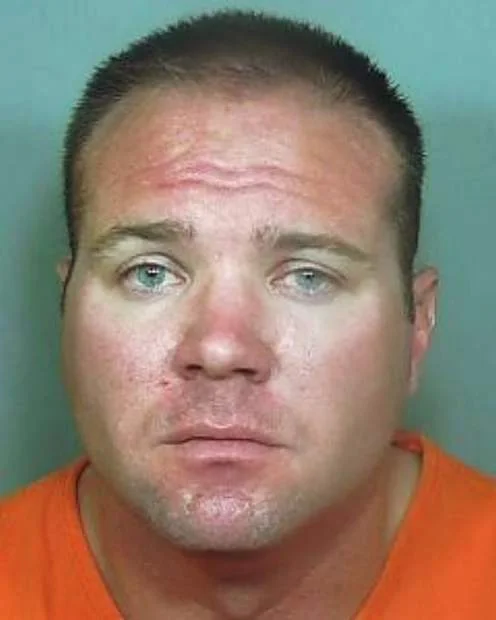
Although Fellow Officer heard White Cop say, “Yeah, I slipped & fell. I’ll go with that" - after ‘Launch Kicking’ Latino Man Off the Roof of a Building, Jury Found Cop Credible in Mistrial

JimCookCourt.jpg

From [HERE] The excessive force case against an Adams County Sheriff's Office deputy ended this past week in a mistrial.

About 8 p.m. Friday, after less than five hours of deliberations, a Weld County jury told the court it was unable to agree on whether to convict or acquit 34-year-old James Cook of felony second-degree assault causing serious bodily injury. In response, Weld District Court Judge Julie Hoskins declared a mistrial.

A decision has not yet been made about whether Cook will be retried, said Krista Henery, spokeswoman for the Weld District Attorney's Office.

The charge stems from March 21, 2017, when Cook, a K9 handler with the Adams County Sheriff's Office, along with 10 other officers from four separate police agencies, were trying to locate Alejandro Martinez, a suspect in an earlier reported domestic violence incident.

Police had been looking for Martinez for well over an hour when he was found hiding up in a pine tree at 12988 Weld County Road 4. Officers ordered Martinez, in English and Spanish, to give himself up. But Martinez climbed onto the roof of an outbuilding and nonchalantly lit a cigarette.

When he didn't give himself up, Cook, along with his K9, Bayou, went up on the roof after him. Moments later, Martinez was on the ground with a broken pelvis. A Weld deputy later filed an excessive force complaint, saying Cook kicked Martinez off the roof.

A four-day jury trial took place last week. Cook took the stand Friday in his own defense testifying he slipped on some debris and, while falling to the ground, inadvertently kicked Martinez, causing him to fall off the roof.

While helping Cook and Bayou off the roof, responding officers noticed Cook had injuries to his left elbow and left arm, as well as rips near the left knee of his pants. One officer commented, saying it looked like Cook had taken a hard fall.

"Deputies say they saw Mr. Martinez 'launch' off the roof, 'explode' off that roof and 'slam' into a tree," Weld Deputy District Attorney Tate Costin said. "Those words are important because they're not consistent with someone simply falling off a roof." [MORE]

At least one Weld deputy heard Cook respond, “Yeah, I slipped and fell. I’ll go with that.” The comment is what prompted the excessive force complaint. Cook denied at trial making any such comment.

Black Whistleblower Agent [who Misunderstood his Role] Released Info to Reveal FBI Harassment & Intimidation of Blacks, Muslims & Latinos, Sentenced 48 Months for Leaks

On Thursday, black Judge Wilhelmina Wright, sentenced Terry Albury to 48 months in prison, telling him that his disclosure “put our country at risk.”

From [HERE] BURHAN MOHUMED WAS home alone one afternoon in July 2016, when two FBI agents knocked on his apartment door in the West Bank neighborhood of Minneapolis and asked to be let in. They wanted to talk to him, they said through the door, about “radicalism in the community.” In three days, Mohumed was set to co-host a community event about the government’s controversial Countering Violent Extremism program, which many in Minneapolis’s large Somali-American community saw as surveillance and harassment of Muslims under the guise of outreach. Some of Mohumed’s friends had already received visits from the FBI, and he knew they were on a quest to recruit informants. Without opening the door, he took his phone and started recording.

“You got a warrant?” he asked. “We don’t need a warrant,” one of the agents replied. “You could just make this easier or make this hard.”

“I was really nervous,” Mohumed told The Intercept during a recent interview. “I’m thinking, they could knock the door down, they can plant something, I could be set up. … The power they held over the situation is what scared me. They could literally do anything to me.”

Mohumed, invoking his constitutional rights, refused to let the agents in. “It’s kind of scary to have two white guys coming into the neighborhood looking for people,” he told them.

“I’m not white, brother,” one of the agents replied.

That agent — who only told Mohumed his name was “Terry” — was Terry Albury, a 17-year veteran of the FBI and the only black agent in the Minneapolis field office. Last April, Albury pleaded guilty to two federal charges of violating the Espionage Act after he was accused of taking dozens of FBI documents, including several that were classified, and leaking some to the press. Court documents filed against Albury did not identify the news outlet he was accused of leaking to, but reports linked the charges to a series of stories published by The Intercept regarding secret guidelines for the FBI’s use of informants, surveillance of journalists, and other topics.

Albury’s sentencing is scheduled for Thursday. The government wants him imprisoned for 52 months; Albury’s attorneys say that his was an “act of conscience” and have asked the judge for no time.

Albury, his attorneys say, was driven to his actions by the racism he witnessed throughout his career at the FBI, both within the agency and in the ways in which the bureau interacted with the communities it policed — particularly the Somali-American community Albury was tasked with surveilling in Minneapolis.

That day in 2016, Albury and his colleague left Mohumed’s home without entering or giving him their full names or business cards. They later showed up at his workplace, and Mohumed ultimately turned to Minnesota’s chapter of the Council on American-Islamic Relations for legal representation. According to a sentencing memo filed by Albury’s attorneys, “This was an every-day encounter for Mr. Albury. He comported himself in this setting as a model FBI agent. But the conflict and depression generated by these routine but soul-destroying events took its toll.”

Last April, at the time of Albury’s plea, I reached out to members of Minneapolis’s Somali-American community — including Mohumed, who had by then changed his name to Burhan Israfael Isaaq. At the time, neither he nor I knew that Albury was one of the agents who had paid him an unannounced visit two years earlier. “I think he did a great service to the citizens of this country and especially to the people who are vulnerable to harassment from the FBI,” Mohumed told me then. “More power to him. People are definitely grateful.”

sweaty pig.jpg

Today, Mohumed is less forgiving, and says he’s “adopted a more radical understanding.”

“I do think what he did as a matter of public record is great, I think it really shed light for people,” he said. “But the FBI in and of itself is too problematic. Anyone who involves themselves with it and who naively thinks that they can do good work for them, do community work, is misled and misguided.”

In court filings, his lawyers described Albury as “a consummate professional,” a devoted husband and father of two small children with an impeccable record and little time left to a comfortable retirement. “Why would someone with such a stellar career, a history of probity, young children, and just three years from a pension, jeopardize all he had?” they wrote in a sentencing memo. “The answer lies in the FBI’s own checkered history with race.”

“His objective in disclosure was to alert the U.S. public to practices and procedures that he believed represented both a systemic departure from the FBI’s proper mission in counterterrorism, and abuses of the enormous investigative authority the FBI has been granted since 9/11,” the lawyers argued.

In an online fundraiser set up to help cover his legal fees, friends of Albury wrote that, at the FBI, “he soon found himself immersed in an institutional culture that, in his view, demeaned, demonized, harassed, and intimidated the very people he was sworn to protect and serve.”

“Worse yet,” they added, “Terry was required to implement FBI investigative directives that sanctioned the use of race and religion as basis for targeting wide swaths of communities throughout Minnesota, and other locations in which he served.”

The government, for its part, has argued that Albury was a criminal, who, over an 18-month period, stole information from more than 70 documents, including about 50 classified ones, taking photographs and copying and pasting them in order to avoid detection. The FBI claims, offering no specifics, that his actions could harm national security.

“This case is not about race. Nor is it about blowing any whistles,” prosecutors wrote in a sentencing memo. “What it is about is the unlawful transmission and retention of classified national defense information by someone who fully understood how wrong his conduct was.” [MORE]

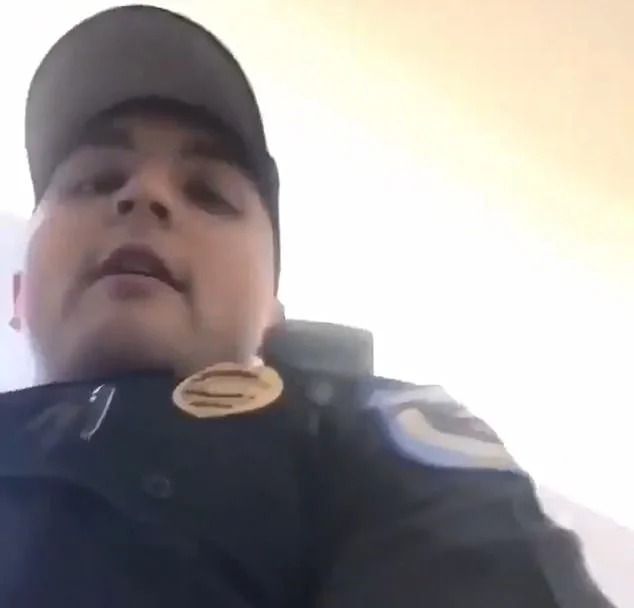
Instead of merely Filming Injustice or Begging Another Cop ‘to make it right’, Black Woman Uses Force in Effort to Stop Racist Suspect Cop Restraining her 12-year-old Nephew at Mall

From [HERE] Police are investigating the arrest of a 12-year-old black rapper after a video of him being manhandled by a white officer went viral.

The Georgia cop sparked outrage after he was caught on video apprehending Corey J, also known as Lil C-Note, who performed on the Ellen Show last year.

He can be seen gripping the child's arm and threatening to send him to jail as he tries to wriggle free.

The Cobb County cop also seemingly got into a physical altercation with the child's aunt, who filmed the incident at Cumberland Mall, Atlanta, on October 6.

They were both arrested on charges including misdemeanor criminal trespass.

Cobb Police Chief Mike Register said the department launched a probe Tuesday into the incident.

'You’re 12?' the officer is heard asking the boy. 

'You’re about to go to jail. You’re going to go to a youth detention center if you don’t...'

Corey J's aunt continued to film as the officers prepared to arrest him. She pleads with the officer to talk to the boy's father on the phone.

'He’s got his rights. He’s not doing anything right now sir,' she says to the cop with panic in her voice.

She adds: 'I have his father on the phone and you won’t even speak to him.'

The officer simply replies: 'Yup'.

Corey asks to be let go but the officer cuts him off.

The camera then suddenly seems to fall from the aunt's hand and an altercation between her and the officer appears to take place as she shrieks.

In a threatening tone, the officer says: 'You put your hands on me again...'

'You put your hands on my motherf***ing nephew!' she screams through tears. [MORE]

Non-violence and obedience to authority has made Black people like butter. Larken Rose states, “The idea of average people imposing justice upon wayward “law enforcers” existentially terrifies statists, even when a “law enforcer” has done something as serious as committing murder. In the eyes of the well indoctrinated, the only “civilized” course of action in such a situation is to beg some other “authority” to make things right, but never to “take the law into one’s own hands.” People may complain about and condemn “legal” injustice, but few are even able to consider the possibility of engaging in premeditated, “illegal” resistance, even when agents of “government” are inflicting vicious brutality upon unarmed, non-violent targets. And if, through prolonged brainwashing, a people can be rendered psychologically unable to resist the oppressions done in the name of “authority,” then it makes no difference whether those people have the physical means to resist. Modem tyrants and their enforcers are always outnumbered (and often outgunned) by their victims by a factor of hundreds or thousands. Yet tyrants still maintain power, not because people lack the physical ability to resist, but because, as a result of their deeply inculcated belief in “authority,” they lack the mental ability to resist. As Stephen Biko put it, “The most potent weapon in the hands of the oppressor is the mind of the oppressed.“

White Glendale Cops on the Lookout “for 4 Black Men" Rammed Cruiser into Black Woman’s Parked Her, Smashed Windows w/Batons & Forced Her to Crawl Out at Gunpoint

glendale cops 2.jpg

From [HERE] and [HERE] Wisconsin woman is suing the city of Glendale, Wisconsin, and several of its police officers after she claimed she was wrongfully stopped and frisked.

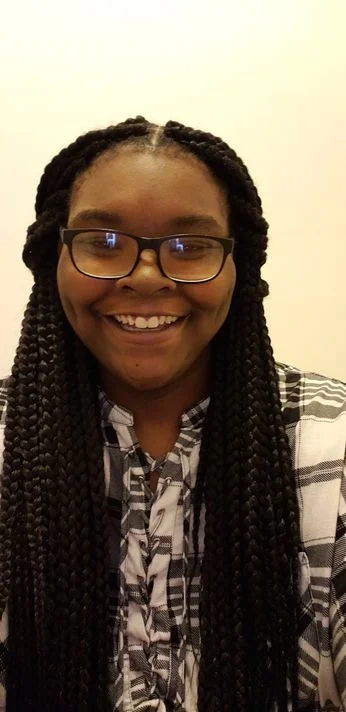
Robin Anderson, 20, told the Milwaukee Journal Sentinel that she filed a lawsuit on Monday against two Glendale police officers for alleged racial profiling. Anderson, who is black, told the newspaper that she had arrived early for a job interview at the Bayshore Town Center in Glendale on December 20, 2017, when police hit her car and broke her window.

Anderson said she was parked outside of a cellphone store next to the Applebee’s at the center when the incident occurred, the Journal Sentinel reported. Glendale police had been alerted to multiple robberies at cellphone stores in Milwaukee, Mequon, Brookfield, and Wauwatosa, according to a civil rights complaint obtained by the Journal Sentinel. Police were looking for four black males in a black Hyundai Elantra and had specific license plate numbers, the paper reported."They pulled up to the car, hit her door, got out, jumped around, smashed the window on the other side, pointed their guns. They had her get out of the car crawling over glass,” Mark Thomsen, Anderson’s attorney, told news station CBS 58. “She was scared to death.”

Anderson’s car was a different Hyundai model and had a different license plate than the one the police were searching for, according to the Journal Sentinel. Anderson told CBS 58 that she was screaming and crying during the incident.

"The only thought going through my mind: If you move, they will have a reason to shoot you," Anderson told the news station.

In a statement to Newsweek, the Glendale Police Department said it had heard of the lawsuit but has not been served yet. 

robin glendale cops.jpg

"At this point, we can confirm that Glendale Police Officers were involved in the incident in question, and that we are taking these allegations very seriously," the statement read. "Since we have not been provided with a copy of the suit and have not had an opportunity to review any of the specific allegations, we do not feel it is prudent to comment on the specifics of the incident itself."

Since the incident, Anderson said, she has had panic attacks and cries every time she sees a police officer, according to the Journal Sentinel. She says she hopes the lawsuit will prevent others from going through what she experienced.

“This is something that I see all the time, everywhere: that African-Americans are being stopped for no reason and police officers aren’t being held accountable for the situations when they are wrong,” Anderson told the paper. “I just want it to stop. I just want them to know this is not OK.”

A similar incident occurred in July when a black man filed a lawsuit against a Pennsylvania police officer after he was shot with a stun gun. Sean Williams filed a lawsuit alleging that officer Philip Bernot of the Lancaster Police Department used excessive force and violated his civil rights when the officer shot him with the stun gun. Williams told NBC Miami that he was asked by two police officers to sit on the curb of the sidewalk before he was shot.

Video Shows Mentacidal Black Chicago Police Sgt’s Attempt Murder of Unarmed, Mentally Disabled Black Teen Posing No Threat, Shot Him from his Car from 20 ft away

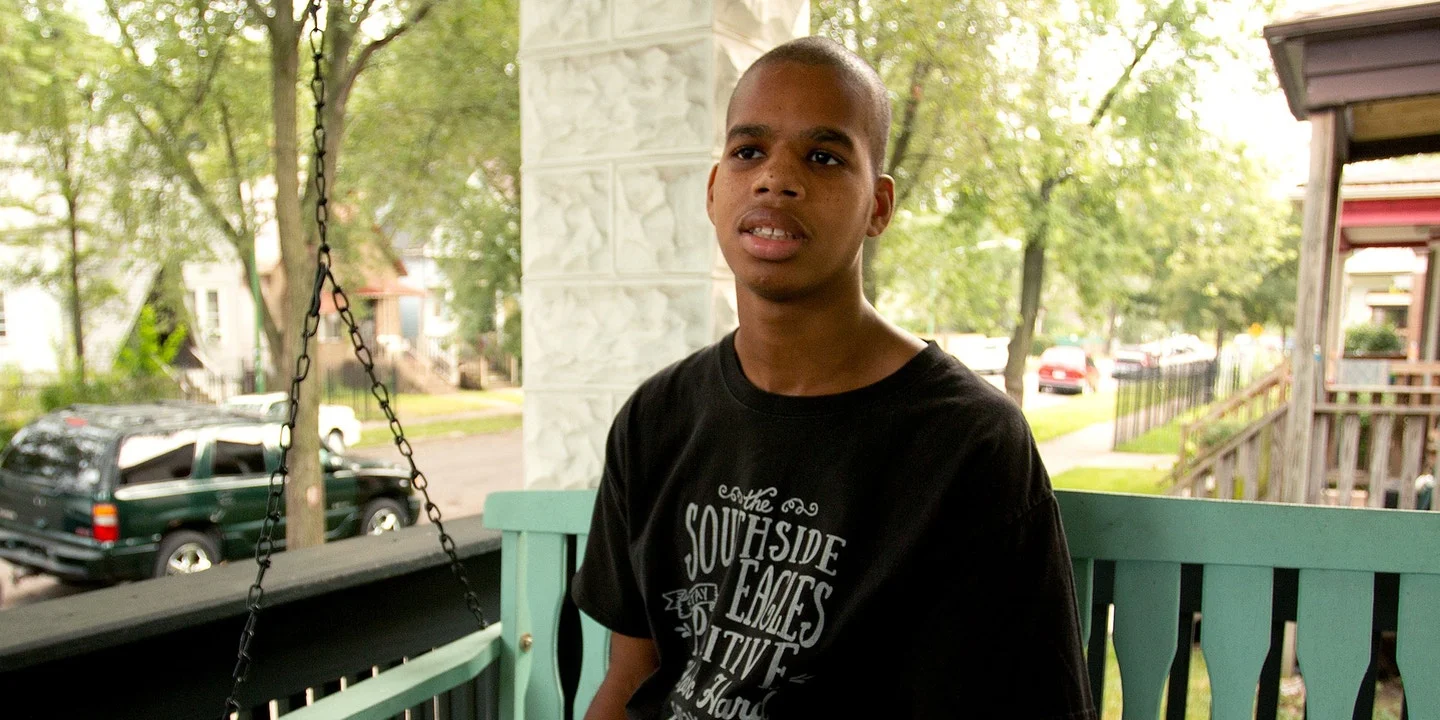
Ricardo Hayes, then 18, was shot and wounded in the arm and chest by an off-duty police officer, Sgt Khalil Muhammad. The teenager's family had reported Hayes missing only hours before, advising police he had developmental problems and autism. The police officer is heard on a 911 call saying that Hayes had a gun and he shot in self-defence, but the family is now suing for excessive use of force. The incident happened in August 2017 but the video has only just been released.

Mentacide refers to the deliberate, systematic destruction of a group's mind, Dr. Bobby Wright says it is the ultimate threat to Black people’s survival [MORE].

Ricky-hayes-5-1539696048-e1539696167283.jpg

From [HERE] and [HERE] CHICAGO’S CIVILIAN OFFICE of Police Accountability, or COPA, today released video footage of the August 13, 2017 shooting of an African-American teenager named Ricardo Hayes by police officer Khalil Muhammad.

Viewed against the backdrop of the recently concluded trial of officer Jason Van Dyke for the murder of 17-year-old Laquan McDonald, the release of the Hayes video is an occasion to ask what has and has not changed since the release of the McDonald video in the fall of 2015 precipitated a political upheaval and demands for reform.

At the time of the incident, Ricky Hayes was 19 years old, but apart from his height, everything about him was childlike. He is developmentally and intellectually disabled. He looks like a child and has the mind of a child. A ward of the state, he lives with a caretaker in a neighborhood on the far south side of the city.

According to his lawyer Gabriel Hardy, Hayes frequently sneaks out of the house and has a history of getting lost out in the city. At roughly 1:25 a.m. on August 13, 2017, his caretaker checked his room and found that he wasn’t there. She immediately called the police to report him missing. About half an hour later, police officers arrived. The caretaker filled out a missing person report and told the officers about Hayes’s disabilities.

In a civil suit against Muhammad and the city of Chicago, Hardy alleges that multiple surveillance cameras recorded Hayes as he wandered his neighborhood. Dressed in shorts, a short sleeve shirt, and sneakers, he can be seen skipping and singing to himself.

At about 5:00 a.m. Muhammad, who was off-duty and was driving his own pick-up truck, saw Hayes and began chasing him. At one point, he drove his truck up on the sidewalk within a few feet of Hayes. Frightened, the boy ran away. The officer continued the pursuit.

Eventually, Hayes stopped running and stood motionless with his hands at his sides on the front lawn of a house. What happened next was captured by a surveillance camera mounted on that house.

Muhammad pulled up and stopped roughly 20 feet from Hayes. Sitting in the cab of his truck, he opened fire with his service weapon, striking Hayes in his chest and arm. Wounded, Hayes again ran away. Muhammad pursued him in his truck, caught up with him, and ordered him to lie face down on the ground.

Muhammad then called 911 and requested an ambulance. I obtained an audio recording of the call through a Freedom of Information Act request. When the dispatcher asks what happened, Muhammad replies, “The guy pulled like he was about to pull a gun on me, walked up to the car, and I had to shoot.” [MORE]

Racist Suspect Florida Politician Charged with Murder for Shooting Unarmed Latino Man who Posed No Threat Walking Away From Him, Exiting Store

michael-dunn-.jpg

From [HERE] A racist suspect city commissioner in central Florida was indicted on the charge of second degree murder in the death of a suspected shoplifter at his military surplus store earlier this month, a state attorney said Friday.

The Oct. 3 shooting was captured on store surveillance and showed Lakeland City Commissioner Michael Dunn firing at Christobal Lopez, 50, at the front door of Dunn's Vets Army & Navy Surplus.

Dunn could be seen grabbing Lopez, an agricultural laborer, as he tried to leave, then firing a semiautomatic Glock at him. Lopez was holding a hatchet in his right hand that belonged to the store, police said, but wasn't seen in the video physically threatening Dunn.

Dunn, who was booked into Polk County Jail, has not commented about the incident. Second degree murder carries a maximum sentence of life in prison.

Genocidal White Man Pleads Guilty to Shooting 3 Black Men During Katrina - Admits he Shot Them because of their “Race"

DR. FRANCES CRESS WELSING STATES, “Failing to comprehend the environmental context of the white supremacy system and its ultimate goal of white genetic survival, Black people also fail to grasp the deeper sense of what actually is occurring in front…

DR. FRANCES CRESS WELSING STATES, “Failing to comprehend the environmental context of the white supremacy system and its ultimate goal of white genetic survival, Black people also fail to grasp the deeper sense of what actually is occurring in front of our eyes. We do not realize that the massive deaths of Black males constitute the genocide of Black people (as it takes Black males to make Black babies and ensure future Black generations).” [MORE]

DR. BLYND EXPLAINS, “Yurugu also expresses itself and manifests as the pathological condition that utterly fails to convince those in geographical proximity of its harmlessness, therefore has to kill them. Yurugu is in a vicious spiral increasingly at odds with his own humanity—as fragmented, pathological, and distorted as it is.“

From [HERE] A white man who fired a shotgun at three African Americans amid the chaos that followed Hurricane Katrina in New Orleans more than 13 years ago pleaded guilty on Wednesday to two federal criminal counts.

Roland Bourgeois, 55, was indicted in 2010 and originally pleaded not guilty. His case dragged on for years, with a series of delays and hearings related to his physical and mental health and his competency to stand trial. He was out on bond at times but was returned to custody last year after an unspecified bond violation.

Prosecutors said Bourgeois, who lived in Mississippi when he was first charged, fired a shotgun at three black men, wounding one seriously. Authorities said Bourgeois and others used racial epithets in discussing shooting black people and defending the Algiers Point neighbourhood of New Orleans from "outsiders" after the storm.

According to local media, the guilty plea came just a little over a month before Bourgeois's trial was expected to begin. 

Bourgeois had waived a grand jury hearing and prosecutors filed amended charges in a bill of information: Interfering with the victim's rights because of their race and using a firearm in a crime of violence.

US District Judge Mary Ann Vial Lemmon still must review the guilty plea. New Orleans news outlets say sentencing was tentatively set for January 17.

Final resolution of the case will mark the end of one of a handful of violent post-Katrina incidents that added to the slow and painful recovery from the storm that, when levees failed, flooded 80 percent of New Orleans.

Two others involved police, including the deadly shooting of unarmed civilians at the Danziger Bridge in the days after the storm - a case that led to eventual guilty pleas from several officers during a long and complicated court case.

In an unrelated post-Katrina case, five other officers were tried on charges related to the death of 31-year-old Henry Glover, who was fatally shot outside a strip mall before his body was burned. The officer who burned the body was the only one who stood convicted when the case was over. The officer who fatally shot Glover was convicted of manslaughter but was later acquitted by another jury after an appeals court awarded him a new trial.

Report says 73% of Prisoners on NC’s Death Row were convicted Under Obsolete Death Penalty Laws & Wouldn’t be Sentenced to Death if Tried Today - Most are Black

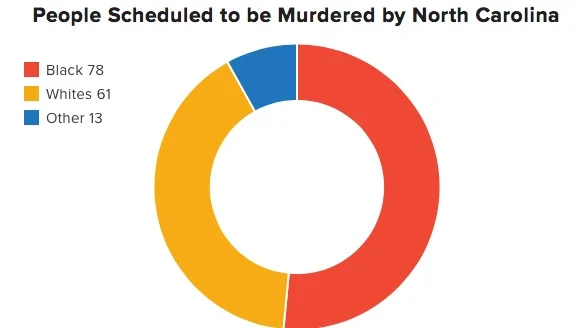
NC STATE MURDERS by race.jpg

THE RULE OF A RACIST, BARBAROUS SOCIETY. Although Blacks make up only 21% of the entire North Carolina population they constitute 52% of those scheduled to be murdered by the government [death row].

73% of North Carolina's Death Row Sentenced Under Obsolete Laws, New Report Says. From [HERE] Most of the 142 prisoners on North Carolina’s death row were convicted under obsolete and outdated death-penalty laws and would not have been sentenced to death if tried today, according to a new report by the Center for Death Penalty Litigation. The report by the Durham-based defense organization, titled Unequal Justice: How Obsolete Laws and Unfair Trials Created North Carolina’s Outsized Death Row, says that nearly three-quarters of the prisoners on the nation’s sixth-largest death row were tried and sentenced before the state enacted significant reforms in prosecution, defense, and trial practices. “[I]f these people on death row had been tried under modern laws, most of them would be serving life without parole sentences instead of facing execution,” said Gretchen Engel, the Center’s executive director.

Seventy-three percent of the men and women on North Carolina’s death row (103 prisoners) were tried and sentenced to death before July 2001, when North Carolina repealed a 1990s-era law that had required prosecutors to pursue the death penalty in every aggravated murder case, irrespective of reasons that might call for mercy, and created a statewide office to represent indigent defendants in capital trials and appeals. North Carolina was the only state in the country that denied prosecutors the discretion to decide when to seek the death penalty, and as a result, there were more than fifty capital trials in the state each year, including cases involving defendants who were seriously mentally ill or intellectually disabled or were comparatively minor participants in a murder. Capital trials fell to an average of sixteen per year in the decade following the change. The creation of the capital defender office that same year dramatically improved the quality of representation, and further reduced the number of cases in which death verdicts were returned. Since then, North Carolina has enacted additional reforms aimed at ensuring fairer trials in capital cases. In October 2004, the state became the first in the country to require prosecutors to make all witness files, police reports, other investigative records, and physical evidence available to capital defendants prior to trial. In 2008, it adopted a series of eyewitness identification and interrogation protocols designed to prevent mistaken identifications and false or coerced confessions.

The report states that during the 1990s, before the reforms were enacted, “courtrooms were dominated by prosecutors like Ken Honeycutt in Stanly County, who celebrated new death sentences by handing out noose lapel pins to his assistant prosecutors.” “Today,” Engel said, “we are living in a different world .... Public support for the death penalty is at a 50-year low, and North Carolina has stopped executing people. Juries now see life without parole as a harsh and adequate punishment for the worst crimes.” That, however, has produced its own historical inequities. In terms of moral culpability, Engel said, the defendants facing trial in 1995 and 2015 “are equal. And yet, one of them is being subjected to execution and other is not and that is an unfairness that as a fair society, we can not tolerate.”

Court Stays Texas’ Scheduled Murder of Mentally Ill Black Man with Schizophrenia Amid Concerns he is Not Competent to be Executed

Although Blacks make up only 11.8% of the entire Texas population they constitute 43% of those scheduled to be murdered by the government [death row]. 

RockwellBig.png

From [HERE] The Texas Court of Criminal Appeals on October 19, 2018 stayed the execution of Kwame Rockwell (pictured), a severely mentally ill death-row prisoner suffering from schizophrenia, who had been scheduled to die on October 24. The court found that Rockwell had raised “substantial doubt that he is not competent to be executed” and reversed a ruling by the Tarrant County District Court that had rejected Rockwell’s competency claim without an evidentiary hearing and without providing funds for him to obtain a competency evaluation. The appeals court ordered the trial court to appoint “at least two mental-health experts” to evaluate Rockwell’s competency. On October 16, Rockwell’s lawyers had appealed the Tarrant County order arguing that the trial court had abused its discretion in rejecting his competency claim The appeal argued that Rockwell “does not understand he is to be executed,” “has no understanding that he was convicted of capital murder and sentenced to death,” and “does not comprehend that he has been incarcerated on death row since 2012 or even that he is presently incarcerated in a Texas prison.”

The U.S. Supreme Court ruled in Ford v. Wainwright (1986) that the Eighth Amendment prohibits the execution of prisoners who have become “insane”—which the Court defined as being “unaware of the punishment they are about to suffer and why they are to suffer it.” In 2007, in the Texas case of Panetti v. Quarterman, the Court explained that a prisoner whose delusions prevent him from having a “rational understanding” of these circumstances is incompetent to be executed. A neuropsychologist who examined Rockwell in July reported that Rockwell said he saw snakes and demons that were inside of him, appeared to be hearing voices, and, in response to a question about his name, said “my name is God.” The doctor’s affidavit said Rockwell “does not understand or appreciate where he is, the nature of his charges, why he is in prison, or the nature of his punishment.” Rockwell’s lawyers also presented the court with evidence of his significant family history of psychotic illness, including twelve family members across three generations of his family with mental illness diagnoses, and Rockwell’s own mental illness in childhood and as an adult. Citing prison records, the appeal states: “Rockwell has consistently experienced intense hallucinations and auditory delusions, despite spending the majority of his sentence on four or more antipsychotic medications concurrently. He is haunted by snakes and demons. No medications have been able to eliminate his hallucinations or delusions.”

The U.S. Supreme Court has never categorically excluded people with serious mental illness from being sentenced to death or executed. A 2014 poll found that Americans by a two-to-one margin oppose executing people with mental illness. Several states have recently considered, but not adopted, legislation to bar the death penalty for people with severe mental illnesses. Rockwell’s trial lawyer did not present to the jury mitigating evidence of Rockwell’s schizophrenia or his family’s history of psychotic mental illness. Nonetheless, the Texas state and federal courts denied Rockwell’s claim that he had been provided ineffective representation at sentencing. In an opinion piece for Pacific Standard written before the Texas Court of Appeals granted the stay, David M. Perry compared the courts’ treatment of Rockwell’s case with the recent stay of execution granted to fellow Texas prisoner Juan Segundo. Segundo was granted a stay so the Tarrant County court could reconsider his claim of intellectual disability after the Supreme Court had ruled that the standard Texas had previously applied unconstitutionally risked that some people with intellectual disability would still be executed. “America still doesn't have clear protections for people with severe mental illness,” Perry explains. “These two cases in Texas remind us of the unfortunate diagnostic limitations that protect only some people with disabilities from the death penalty.”

Court says When the [mostly white] Missouri Parole Board Denied Parole for [mostly Black] Juveniles Serving Life Sentences, It violated the 8th Amendment Prohibition on Cruel & Unusual Punishment

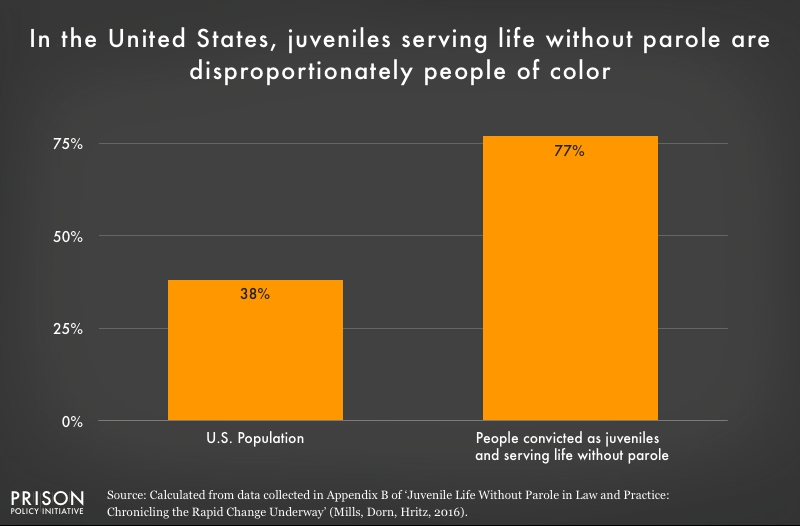
While a number of states continue to use life without parole sentences for juveniles, new research shows that those juveniles are largely and increasingly people of color. A recent study by researchers from the Phillips Black Project found that people of color are overrepresented in the juvenile life without parole population “in ways perhaps unseen in any other aspect of our criminal justice system.”

Young black people are hit hardest by prosecutors’ punitive approach. This is unsurprising. Black children are more likely to be punished by their teachers for the same behaviors, are 2.3x more likely to be referred to law enforcement by school officials, and 3x more likely to be suspended or expelled than their white peers.

Being sentenced to die behind bars, however, is especially egregious. The Phillips Black Project found that black youth are twice as likely to receive a juvenile life without parole sentence compared to their white peers for committing the same crime. [MORE]

The Missouri Board of Probation and Parole allegedly toyed with prisoners during hearings by PLAYING WORD GAMES DURING HEARINGS - trying to get them to say a chosen word or song title of the day, such as “platypus” and “Hound Dog.” [more] THE PAROLE…

The Missouri Board of Probation and Parole allegedly toyed with prisoners during hearings by PLAYING WORD GAMES DURING HEARINGS - trying to get them to say a chosen word or song title of the day, such as “platypus” and “Hound Dog.” [more] THE PAROLE BOARD CONSISTS OF 6 MEMBERS, 5 are white.

From [HERE] A judge for the US District Court for the Western District of Missouri ruled Friday that recent parole hearings violated the constitutional rights of inmates who are serving life without parole for juvenile offenses (JLWOP).

The plaintiffs in this case are all people in Missouri prisons for homicide offenses committed when they were less than 18 years old. Originally, they all received sentences of life without the possibility of parole. “However, the United States Supreme Court recently held that a mandatory sentence of life without parole for a person who was under the age of 18 when he committed the offense violates the Eighth Amendment prohibition on cruel and unusual punishment.” Each of the plaintiffs in this case had a parole hearing, and each of them were subsequently denied parole.

In the order, the judge gave the Missouri Parole Board 60 days to present “a plan for compliance with applicable statutory and constitutional requirements.” This plan should have revised procedures to ensure that all inmates serving JLWOP sentences “are provided a meaningful and realistic opportunity for release based on demonstrated maturity and rehabilitation.”

Missouri has 94 juvenile inmates serving life. [MORE] Most of them are non-white. [MORE]

Rule by Force & Slavery: Former Political Prisoner says Saudi Tyrants are Using Khashoggi’s Disappearance to Send Message to Critics 'If You Oppose Us this is what will Happen to You'

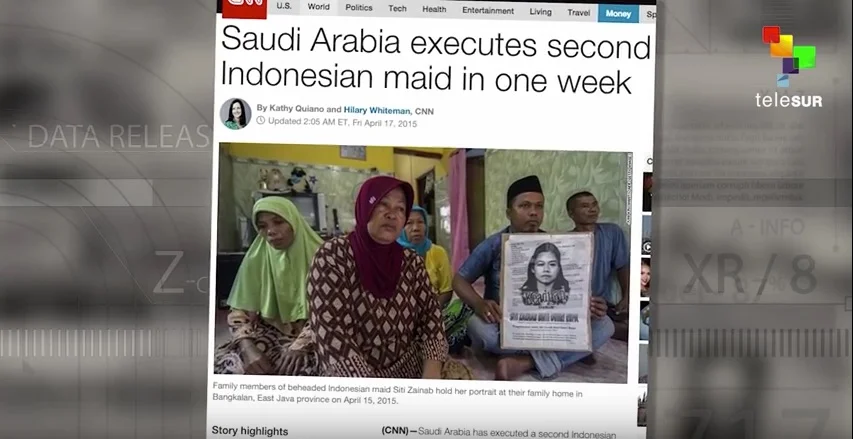
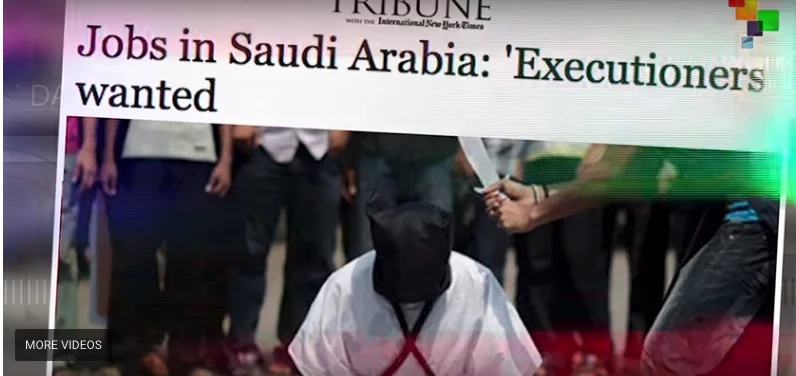
https://democracynow.org - Saudi Arabia will allow Turkey to search its consulate in Istanbul Monday afternoon, nearly two weeks after prominent journalist and Washington Post columnist Jamal Khashoggi disappeared after entering the consulate on October 2. He has not been seen since.
saudi executions.jpg

[MORE] and [MORE]

saudi oil.jpg

Testi-Lying Straw-Boss, Black Police Chief Offers a Vigorous Defense of His Master’s History of Brutalizing Blacks in Case of Syracuse Cops’ Cover Up & Beating of Black Man who Called 911 for Help

fowler straw boss.jpg

According to FUNKTIONARY:   

Straw-Boss  - a Sambo who is appointed a certain oversight role for the white power Overseer. It is the job of the Straw Boss to establish a formal organization to effectively and systematically carry out the wishes of the white supremacist power matrix while serving his own personal needs and ends through patronage power. 2) a ranking SNigger. 3) Toby. 4) "Safe Negro." 5) responsible (to the white supremacist ideology) Negro. 6) the gatekeeper for black professional positions gained through (acquiesced) to various sexual positions. 7) Pork Chop Boy. (See SNigger & McNegro)

Negro - a man or woman of Afrikan descent living in pathological mental state of cultural abstinence and historical amnesia— one who wants to impress his or her oppressor while ignoring the effects and plight that his or her accommodationist posture inures. [MORE

Alonzo Grant injuries.png

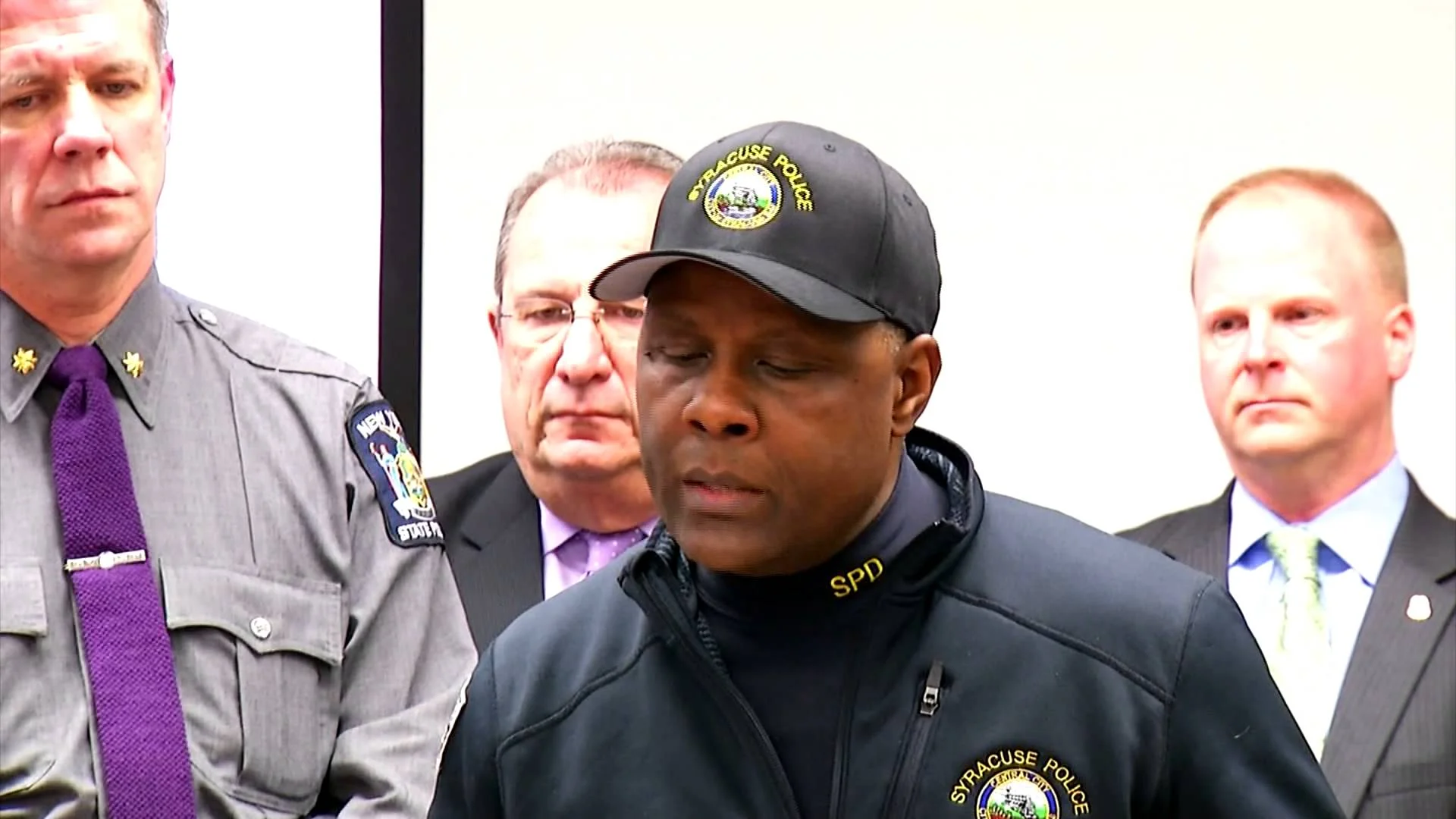
From [HERE] Syracuse police Chief Frank Fowler [in top photo above] spent four often-contentious hours on the witness stand Friday defending his department's history on the use of force and discipline.

Fowler was the last witness to take the stand Friday in a federal lawsuit against three of his officers and the city. Alonzo Grant Sr. claims officers violated his constitutional rights by beating him up after he called for help resolving a dispute involving his daughter in 2014. 

The lawsuit accuses the officers of false arrest, falsified police reports and conspiracy to deprive Grant of his constitutional rights. The suit also accuses the Syracuse Police Department of discriminatory policies and practices.

Grant's attorney, Charles Bonner, argued Fowler and his department have routinely allowed officers to get away with excessive force. The lawyer raised several past claims against the department.

Bonner effectively put on trial Fowler's management of the department he's run for nine years, showing how rarely he's disciplined cops for brutality. Fowler is leaving the job at the end of this year.

Fowler was having none of it. 

He defended his department's policies and refused to accept lawyers' characterizations of those previous cases of violence between police and civilians. He didn't discipline officers in Grant's case, he said, because the officers' actions didn't violate the department's use of force policy.

Grant, Fowler said, resisted arrest by attempting to assume a "tabletop position" on all fours while two officers tried to subdue and handcuff him. Officers had grabbed Grant from behind and tackled him to the ground after he punched a screen door while leaving his home.

The officers - Damon Lockett and Paul Montalto - punched and kicked Grant, according to his attorney, leaving Grant with a concussion, broken nose and other injuries. The lawsuit also names Sgt. Brian Novitsky, who Grant claims lied in police reports to cover up the excessive force used in the arrest.

Grant worked at St. Joseph's Hospital Health Center for more than 30 years and has no criminal record.

All charges against Grant were eventually dropped by the Onondaga County District Attorney's Office. DA William Fitzpatrick - who also testified Friday - said Grant's good character was considered when determining whether or not to bring charges.

BLACK ON BLACK CRIME IN SERVICE OF RSW. Officer Damon Lockett, acknowledged that he punched Alonzo Grant in the head 10 times during a bloody arrest, but he testified that his actions were justified. [MORE]

BLACK ON BLACK CRIME IN SERVICE OF RSW. Officer Damon Lockett, acknowledged that he punched Alonzo Grant in the head 10 times during a bloody arrest, but he testified that his actions were justified. [MORE]

After the department received an anonymous complaint about Grant's case, it was investigated by former Cpt. Thomas Galvin, who was head of professional standards (commonly called internal affairs). Galvin issued a report saying the claims were unfounded and no discipline was recommended against the officers. Fowler reviewed and approved the report.

Bonner described that report as incomplete, since Galvin didn't interview the witnesses listed on the complaint form.

Fowler said Galvin tried to interview Grant's wife. When Galvin reached her, however, she said her attorney - Bonner -- had advised her not to be interviewed. Bonner later contested that timeline.

During his testimony, Fowler described the internal system the police department uses to track all instances of physical force, called Blue Team. That system, he said, flags an officer if he or she has multiple physical altercations in a short period and alerts command staff.

He described at least one instance in which an officer was disciplined and later resigned after an accusation of excessive force.

Grant's case, he said, was processed in Blue Team.

Bonner repeatedly asked Fowler whether the officers' actions during Grant's arrest constituted excessive force. Fowler stood by Galvin's report justifying the use of force.

Bonner then shared with Fowler a "hypothetical" scenario that mirrored the Grant's version of the events. He described two officers -- one white, one black -- throwing a man off a stoop then hitting and kicking him, even after he was handcuffed.

He asked Fowler if a reasonable officer would consider that to be excessive force.

"It could be," Fowler said after a long pause.

"It could be? Is that your answer?" U.S. District Court Judge David Hurd interjected.

"It could be, yes sir," Fowler said.

Throughout his testimony, Fowler was unwavering as Bonner described a department lacking in accountability to the citizens of Syracuse. Bonner implied Fowler and the department shirked their duties to protect Grant's 4th Amendment rights against unreasonable searches and his right to safety and security in his own home.

Bonner detailed instances in which officers used physical force against citizens and were not disciplined. 

He referred to Brad Hulett, a disabled man who cops Tasered then dragged off a Centro bus in 2013. He brought up Elijah Johnson, Micah Dexter, Louise Thompson and at least one other person, who all have accused officers of excessive force.

Attorney John Powers, representing the city, pointed out that a jury acquitted officers in Dexter's case, even though the Citizen Review Board requested discipline. He said Bonner did not present the facts of any of the cases and one of the instances of violence occurred in 2001, long before Fowler was chief.

Bonner countered that other cases were resolved in favor of victims, like Hulett's. The city paid Hulett $2 million to settle that case.

Throughout his testimony Fowler often challenged Bonner's questions, asking him to be clearer or denying the accuracy attorney's statements.

Fowler said he would not or could not answer some specific questions about past incidents. He earned several rebukes from Judge Hurd. At one point, as the court waited several minutes for Fowler to read through a series of documents, the judge, growing impatient, asked Fowler if his lawyers had prepared him to testify.

"You knew you were going to testify today," Herd said. "Did you review these documents?"

Fowler replied he had.

Later, when Fowler responded to one of Bonner's questions with a question, Hurd chided him again.

"You don't ask questions," Hurd said.

As Bonner sought to demonstrate whether the officers violated the department's use of force policy, he described a video in which Grant asked one of the arresting officers "Why are you choking me?"

An officer is only permitted to choke someone if that person is an immediate threat to an officer or to another person. 

Fowler would not confirm the video as evidence Grant was being choked, merely that he said he was being choked.

Both Fowler and city attorneys also criticized the efficacy of the Citizen Review Board - an appointed group of citizens who listen to claims of misconduct against police and recommend action to the chief.

Bonner used CRB reports to claim Fowler has ignored claims of excessive force and false arrest in years leading up to Grant's case.

That board, city attorneys said, doesn't take testimony under oath, nor does it interview officers for a thorough investigation. And Fowler said he heeds their recommendations when warranted. He shared an example of a change made at the CRB's request: adding seatbelts and video cameras to the back of prisoner transport vehicles. [MORE]