What led to Detroit police shooting before fireworks show
Gonzalez and his partner, Joseph Wafer, weren’t looking for Lee-Perkins that day. They had pulled into Cadillac Square to help another unit with an arrest of someone else. Then the 18-year-old walked away from that group and past their squad car, appearing to be holding something near his waistband, according to Detroit police.
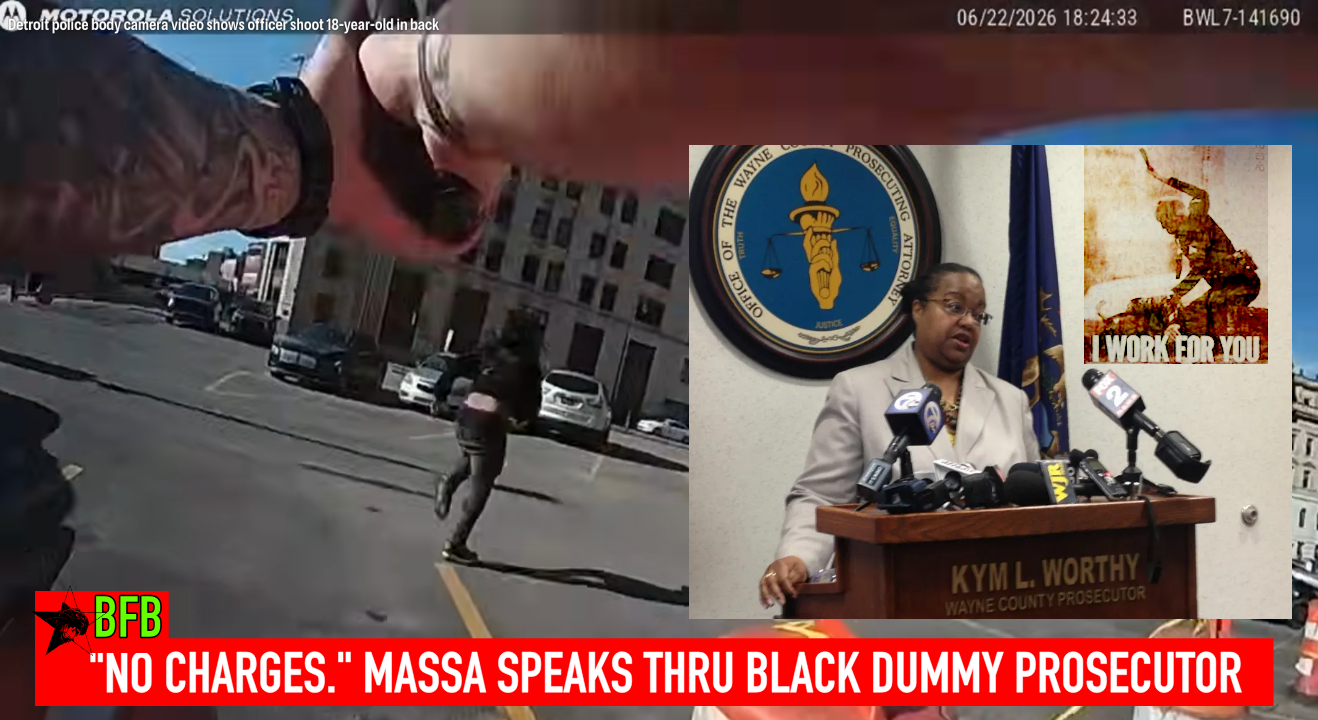
Gonzalez told him to stop. Lee-Perkins ran. Thus, at the time he was shot the police did not have reasonable suspicion or probable cause that he had committed a crime.
A gun was recovered near where Lee-Perkins lay wounded, and he later told investigators he had one in his waistband. But the body camera footage doesn’t appear to show him holding a weapon, and it’s unclear in the video how the gun ended up on the ground.
Kriger, the defense attorney, says he never pulled it out or pointed it at officers. She argued during a July 31 hearing in 36th District Court that the stop was unlawful from the start – a hunch that someone has a weapon isn’t reasonable suspicion, she said.
Wafer, who testified in court about the chase, said under oath that he never saw a gun and said what Lee-Perkins was holding could have been a phone or a wallet.
Gonzalez invoked his Fifth Amendment right against self-incrimination, while prosecutors continued to maintain that Lee-Perkins’ hands suggested he was armed.
The video obtained by the Free Press begins mid-chase – Kriger questioned whether the police have more video. Lee-Perkins appears to have been shot after jumping over construction barrels. In the video, it appears he’s about to get away from Gonzalez when the officer shoots.
When Gonzalez approaches Lee-Perkins on the ground, an officer tells him to pick up the weapon – he does with bare hands – and then another officer reminds him not to pick it up. He drops it.
Then Gonzalez is briefly interviewed by an officer, and other cops come and leave the scene, the video shows. Detroit Police Commander Matthew Fulgenzi of the downtown precinct gave Gonzalez a thumbs up when he arrived.
Kriger said she finds it surprising that the video she received from Gonzalez’s body camera footage begins mid-chase.
Did Detroit police violate policy?
The footage and testimony from Gonzalez’s partner raise questions about whether the shooting followed Detroit police’s own rules, both in chasing Lee-Perkins and in firing.
Running on its own isn't enough reason to give chase under department policy. Officers are supposed to weigh the risks first, consider alternatives and promote de-escalation.
The rules on shooting are stricter. Officers can’t fire to catch someone merely suspected of a crime, and according to their own training, just because they have a gun.
Deadly force against someone who is fleeing is reserved for a short list of violent felonies, such as murder and armed robbery, and only if the officer believes the person would be a deadly threat. Officers can’t shoot if bystanders are in danger.
Carrying a concealed weapon isn’t on the list. And Gonzalez fired in downtown Detroit as crowds gathered for one of the biggest nights of the year.
Detroit police’s use-of-force policy warns against that instinct, citing research that finds an officer’s urge to keep pushing forward instead of backing off is among the most common factors in excessive force. Often, the policy says, the better move is to disengage, contain the area or call for backup.
“Research indicates that one of the most common factors found in both police excessive or unjustified use of force, and officer injuries and fatalities during force encounters, is an officer’s perceived compulsion to press forward rather than to disengage (e.g., “back off”) and explore other options,” the policy reads.
“The most appropriate response choice to a situation often involves de-escalation, disengagement, area containment, surveillance, waiting out a subject, summoning reinforcements, or calling in specialized commands.”
A 2025 Free Press investigation found that 20% of Detroit police shootings over the past decade began as nonviolent stops, often for suspected gun possession, that turned into foot chases.
Click here to watch a longer version of the police body camera video on the YouTube channel of the Detroit Free Press.