Lawsuit says the NYPD Covertly Collects and Stores DNA from [mostly Black] Suspects and then Runs Those profiles Against Every Past and Future Crime Scene DNA Sample in City's Database with No Warrant
/
From [HERE] An unusual left-right legal coalition asked a federal appeals court on Wednesday to shut down what they called the largest known municipal DNA database operating without legislative authorization in the United States: the NYPD's "Suspect DNA Index," a shadow genetic registry holding profiles from more than 34,000 New Yorkers — including hundreds of children — collected covertly, without warrants, and compared automatically and permanently against every piece of crime scene evidence the city accumulates.
The American Civil Liberties Union, the New York Civil Liberties Union, and the libertarian Cato Institute filed a joint amicus brief with the U.S. Court of Appeals for the Second Circuit in Leslie v. City of New York, backing The Legal Aid Society's class action challenge to the NYPD's decade-long practice of covertly collecting DNA from suspects in police interrogation rooms — and then running those profiles against every past and future crime scene DNA sample in the city's database, indefinitely, with no judicial oversight and no expiration.
Any New Yorker who accepted a drink of water or a cigarette during NYPD questioning may be in that database right now.
How the NYPD Builds Its Genetic Surveillance Archive
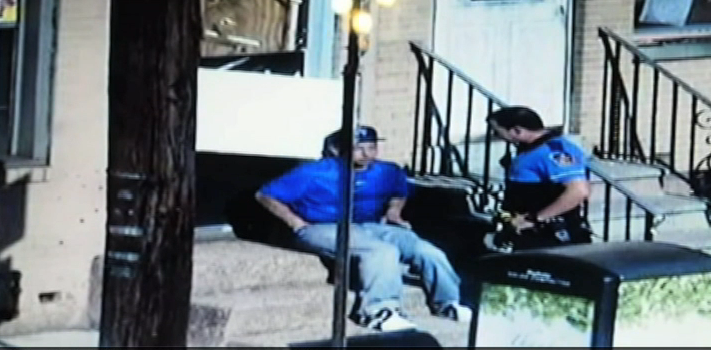
The collection method reads like a ruse. According to court documents from the underlying lawsuit and the ACLU's filing, NYPD detectives bring persons under questioning into interrogation rooms that have been specially cleaned and prepared to capture biological material. Officers then offer the detained person a beverage, a soda, or a cigarette. When the person is escorted out, officers collect the cup, bottle, or cigarette butt and ship it to the Office of the Chief Medical Examiner.
At the OCME, forensic technicians extract DNA from the sample and run a short tandem repeat (STR) analysis — the same standard technique used in criminal identification — to build a numeric genetic profile. That profile is then entered into the Local DNA Index System (LDIS), a database maintained by the OCME that is entirely separate from the state-authorized New York DNA Identification Index (Article 49-B), entirely separate from the national CODIS database, and entirely unauthorized by any legislation or court order. The New York City Bar Association has documented the database's status as the least restricted and most expansive municipal DNA index in the country.
What happens next is what the amicus brief calls the database's defining constitutional problem: that profile is then searched — automatically and perpetually — against every DNA crime scene evidence sample that enters OCME's system. New case comes in? Every one of the 34,000 profiles is checked against it. The person who accepted the water cup in a 2019 interrogation, whose charges were later dropped, is searched against a 2026 crime scene today. They do not know this is happening. No judge has authorized it. No law permits it. The Legal Aid Society's case page describes this architecture as a "perpetual genetic lineup."
This architecture — a perpetual automated genetic lineup — distinguishes the Suspect Index from a standard arrest record or even a conviction database. The database does not merely store a profile. It conducts a new de facto Fourth Amendment search against its subjects every time a new crime scene sample enters the system.
What a Soda Can Cost in New York City
One 12-year-old boy, documented in the original lawsuit's complaint, received a McDonald's soda during NYPD questioning. His mother had come to the precinct to be with him. The NYPD never sought consent from either of them. After the boy left, officers collected the straw and sent it to OCME. His family had to petition a court and file an appeal to get the profile removed — a process that took more than a year.
Shakira Leslie, the named plaintiff in the class action, was 23 when she was arrested in 2019 after a gun was found in the car she was riding in. She accepted a drink of water after 12 hours in custody. She was never charged with any crime related to the gun. Her DNA profile remained in the Suspect Index.
Eugean Burgos, 22 at the time, was arrested in 2019 after a firearm was found in the trunk of a car in which he was a passenger. Officers provided him a cup of water and a cigarette during interrogation. The charges against him were ultimately dismissed. His genetic profile remained in the database — automatically queried against each new crime scene submission.
Terrell Gills never gave the NYPD a drink or a cigarette. He was a regular customer at a Dunkin' Donuts in Jamaica, Queens. In May 2015, that store was robbed. Police swabbed the touchscreen cash register and found a DNA mixture including Gills's profile, which was already in the Suspect Index. Officers arrested him and put him on Rikers Island, where he remained for 18 months awaiting trial. Another man was arrested for two additional Dunkin' Donuts robberies the same week, same neighborhood, same method — knife, same distinctive hat — and eventually pleaded guilty. Gills was acquitted. He had simply been a devoted coffee shop customer. The S.T.O.P. Surveillance Technology Oversight Project has documented the Gills case as emblematic of the systemic risks embedded in the LDIS's perpetual-comparison design.
Science the NYPD Refused to Validate
The wrongful arrest risk is compounded by the OCME's documented history with unvalidated forensic techniques. From 2006 to 2017, the NYPD used a method called Low Copy Number (LCN) DNA analysis on trace and mixed samples — the kind of minute genetic material left on a touchscreen register by anyone who touched it. LCN analysis amplifies extremely small DNA samples far beyond standard protocols, dramatically increasing the risk of contamination and the production of false allele signals.
Marina Stajic, the OCME's own laboratory director at the time, recommended that a state oversight body demand a validation study for the technique — she was concerned it could land innocent people in jail. The OCME did not produce a validation study because it did not have one. The OCME promptly fired Stajic.
The OCME's in-house Forensic Statistical Tool (FST), software used to calculate the probability that a mixed DNA sample contained a specific person's DNA, was later thrown out by a state court. The FBI expert who had previously authorized its use stated he could no longer approve it. The math, as one creator of the FBI's own DNA database testified, was "not defensible."
A documented contamination incident also produced a wrongful arrest. Darrell Harris was arrested in 2018 for a Queens home burglary after police reported finding his DNA on the window. He had an alibi — he was in New Jersey, DJing a birthday party. He spent $25,000 on a lawyer and lost his job at JFK Airport before the charges were dropped. An investigation found that an OCME lab technician had contaminated the window sample with DNA Harris had separately provided in an unrelated sexual misconduct investigation.
Former OCME official Howard Baum, who helped build the database, told a 2020 City Council hearing that a DNA match alone no longer means a person is guilty: the more sensitive testing becomes, and the more people who are compared, the greater the potential for wrongful hits.
The Constitutional Argument: Carpenter Meets Shed DNA
The amicus brief advances two arguments. The first is straightforward state law: New York's DNA identification index under Article 49-B sets explicit rules about whose DNA may be collected, under what circumstances, for what purposes, and when profiles must be deleted. The NYPD's Suspect Index ignores all of them. No legislature ever voted to create it.
The Fourth Amendment argument is where the brief breaks new constitutional ground. The NYPD has defended its practices under what lawyers call the "abandoned property" doctrine — the principle established in California v. Greenwood (1988) that people who leave items in the trash surrender their Fourth Amendment interest in those items.
The civil liberties groups argue that doctrine cannot be extended to involuntarily shed DNA without becoming a legal fiction so sweeping that it eliminates genetic privacy entirely. Every few minutes, the human body sheds skin cells sufficient to cover significant surface area; a single sneeze expels thousands of droplets; hair falls involuntarily; every object a person touches becomes a potential collection site. The brief argues that DNA is not "abandoned" in any meaningful sense when it is left on a water cup handed to a person in police custody in a room specifically cleaned to facilitate covert collection.
The groups invoke Carpenter v. United States, the 2018 Supreme Court decision in which Chief Justice Roberts wrote for a 5-4 majority that warrantless government access to seven or more days of cell-phone location data violates the Fourth Amendment — even when that data had been shared with a wireless carrier. The Carpenter majority held that old rules permitting warrantless searches of third-party records cannot be automatically extended to new technological capabilities that produce comprehensive personal profiles without traditional investigative work.
Vera Eidelman, a senior staff attorney in the ACLU's Speech, Privacy, and Technology Project, made the parallel explicit. "The government cannot treat our DNA like it treats our garbage, and seize, search, and store it without a warrant," she said. "Usually we rely on hypotheticals to highlight the dystopian possibilities of this kind of privacy invasion, but no hypothetical could be more troubling than New York City's actual practice: amassing thousands of people's DNA without their knowledge, their consent, or any court-ordered or legislative guardrails. If the Second Circuit does not intervene, all I can say is: New Yorkers, hold on to your trash."
A genetic profile is, by any reasonable assessment, more sensitive than location data. It can reveal medical predispositions, ancestry, and — through familial matching — expose biological relatives who have no connection to any investigation. The brief argues the Carpenter logic applies to shed DNA with even greater constitutional force.
Why Libertarians and Civil Libertarians Share a Courtroom
The ACLU and the Cato Institute do not often file joint briefs. Their alignment here illustrates where ideological opposition to unchecked government power converges.
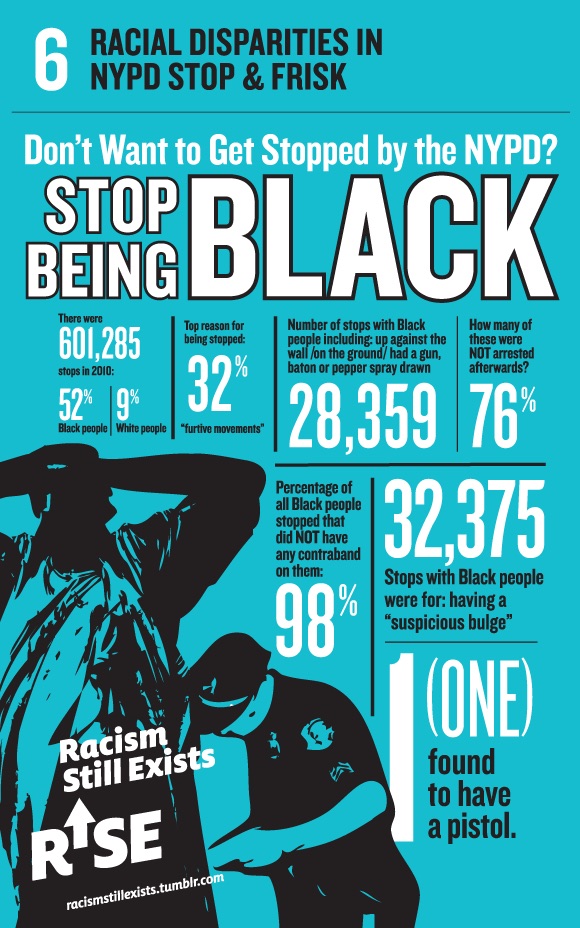
For the ACLU and NYCLU, the Suspect Index is a racial surveillance apparatus operating without democratic sanction. The demographics of the database reflect and extend the racial disparities documented in other NYPD enforcement practices: the database is disproportionately composed of Black and Latino New Yorkers. "For more than a decade, the NYPD has been operating a rogue DNA database not authorized by law," said Beth Haroules, the NYCLU's director of disability justice litigation. "No New Yorker should have their DNA taken illegally and stored in a secret database. This destructive practice disproportionately targets Black and brown New Yorkers and violates our Fourth Amendment rights."
For the Cato Institute, the issue is governmental overreach without legislative accountability — a state apparatus that invented its own authority and expanded it unchecked for more than a decade. "The secret, dragnet collection of DNA for inclusion on a 'Suspect Index' sounds dystopian," said Matthew Cavedon, director of Cato's Project on Criminal Justice. "Yet it's an affront to privacy and the presumption of innocence tens of thousands of New Yorkers have already suffered. The Fourth Amendment protects against this — and hopefully, so will the Second Circuit."
Once Added, Your DNA Is Searched Every Time NYPD Gets New Crime Scene Evidence
What makes the Suspect Index qualitatively different from an arrest record is that it does not stop working when a case closes. A person whose case was dismissed, who was acquitted, or who was expressly excluded as a suspect in the specific investigation that led to their DNA collection — all of them remain in the LDIS perpetual comparison system.
The database currently includes samples from people who have been expressly excluded as suspects in specific crimes, arrestees who have never been convicted of any crime, people who were acquitted or exonerated, and children as young as eleven years old. Its demographic profile, by the plaintiffs' account and by the documented arrest statistics the Legal Aid Society submitted, is overwhelmingly Black and Latino.
The NYPD has promised reform before. In February 2020, the department announced it would review profiles and expunge those of people not convicted of any crime. In a 2021 City Council hearing, officials pledged specifically to address juvenile profiles and people with no criminal conviction. According to data the OCME has published and the Legal Aid Society has documented, the database continued to grow.
The Policing Project, a law-and-policy organization affiliated with New York University School of Law, filed its own amicus brief in the district court proceedings, concluding that the NYPD and OCME had "overstepped carefully drawn legislative boundaries" when they "unilaterally created a program that surreptitiously captures the DNA of people who have been convicted of no crime and stores those DNA profiles."[MORE]