The Imprisonment Rate for Black Women is 1.7 times the rate of imprisonment for white women - but has Declined as the Overall Rate for Women has Substantially Increased
/
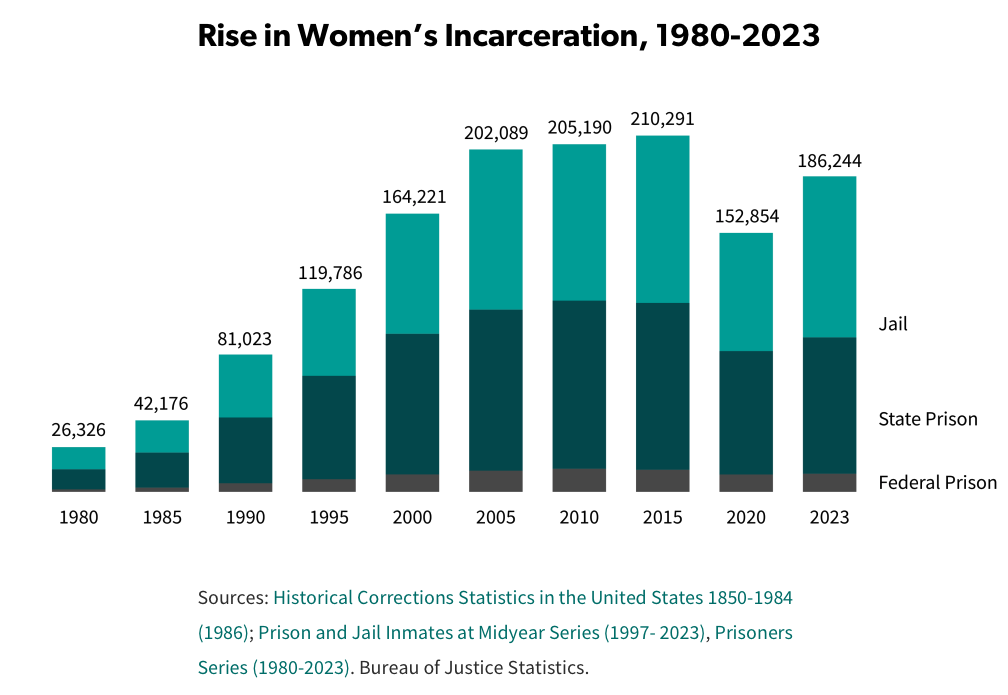
From [HERE] Research on female incarceration is critical to understanding the full consequences of mass incarceration and to unraveling the policies and practices that lead to their criminalization. The female incarcerated population stands over seven times as high than in 1980.
Over the past quarter century, there has been a profound change in the involvement of women within the criminal legal system. This is the result of more expansive law enforcement efforts, stiffer drug sentencing laws, and post-conviction barriers to reentry that uniquely affect women. The female incarcerated population is over seven times as high than in 1980. Over sixty percent (62%) of imprisoned women in state prisons have a child under the age of 18.1
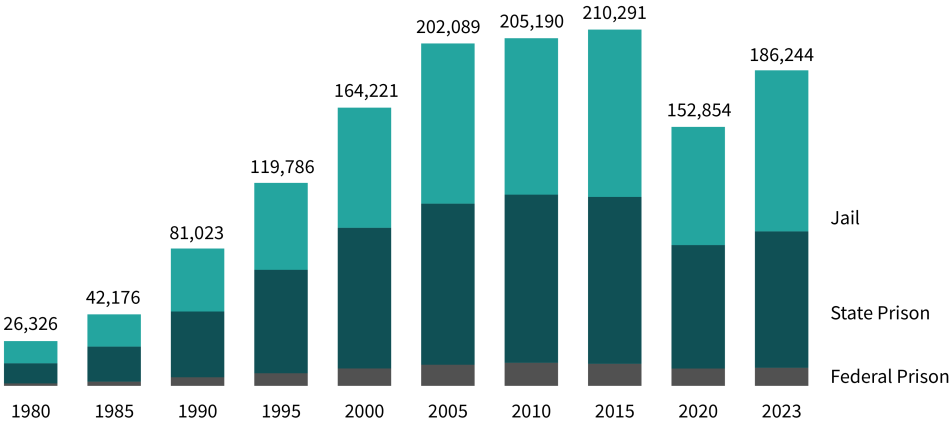
Between 1980 and 2023, the number of incarcerated women increased by over 600%, rising from a total of 26,326 in 1980 to 186,244 in 2023. While 2020 saw a substantial downsizing due to the COVID-19 pandemic, this trend reversed with a 22% increase in 2023.
Though many more men are in prison than women, the rate of growth for female imprisonment has been twice as high as that of men since 1980. As of 2023, over 1 million women are under the supervision of the criminal legal system.
Race and Ethnicity in State and Federal Prisons
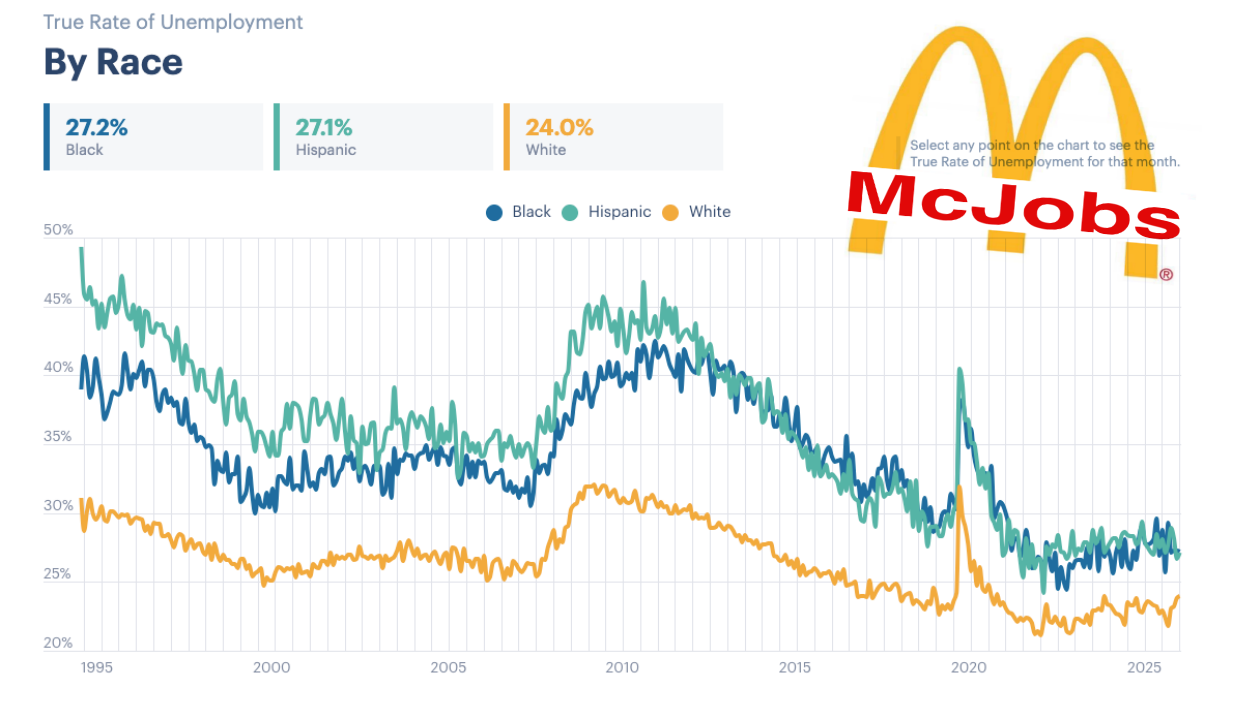
In 2023, the imprisonment rate for Black women (68 per 100,000) was 1.7 times the rate of imprisonment for white women (41 per 100,000).
Latina women were imprisoned at 1.2 times the rate of white women (51 vs. 41 per 100,000).
Between 2000 and 2023, the rate of imprisonment declined by 69% for Black women, while the rate of imprisonment for white women rose by 18%. For Latina women, the rate of imprisonment has declined 15% between 2000 and 2023. [MORE]