Over 1.5 Million People Who Reported COVID Shot Injuries Can't Get Compensation: Gov Requires Injury to be “life-threatening” or result in 'permanent loss of body function' or permanent body damage
/
Over 1.5 million people who reported a COVID-19 vaccine injury to the Vaccine Adverse Event Reporting System (VAERS) cannot even apply for compensation from the government program that covers COVID-19 vaccine injuries — that’s because the program covers only death or “serious physical injury.”
According to the government’s definition of “serious physical injury,” the injury must either be “life-threatening,” result in “permanent impairment of a body function or permanent damage to a body structure,” or require “medical or surgical intervention to preclude permanent impairment of a body function or permanent damage to a body structure.”
According to OpenVAERS, there are over 1.5 million people who suffered injuries that weren’t life-threatening and were not life-ending. These individuals are shut out of the Countermeasures Injury Compensation Program (CICP).
Injuries such as chronic headache, chest pain, digestive issues, dizziness, fatigue, nausea and rapid heartbeat are not serious enough to qualify for compensation since CICP only provides “compensationto an eligible individual for a covered injury — as in, serious injury or death.”
COVID-19 shots were classified as “countermeasures” during the COVID-19 pandemic, which means they are governed under the Public Readiness and Emergency Preparedness (PREP) Act.
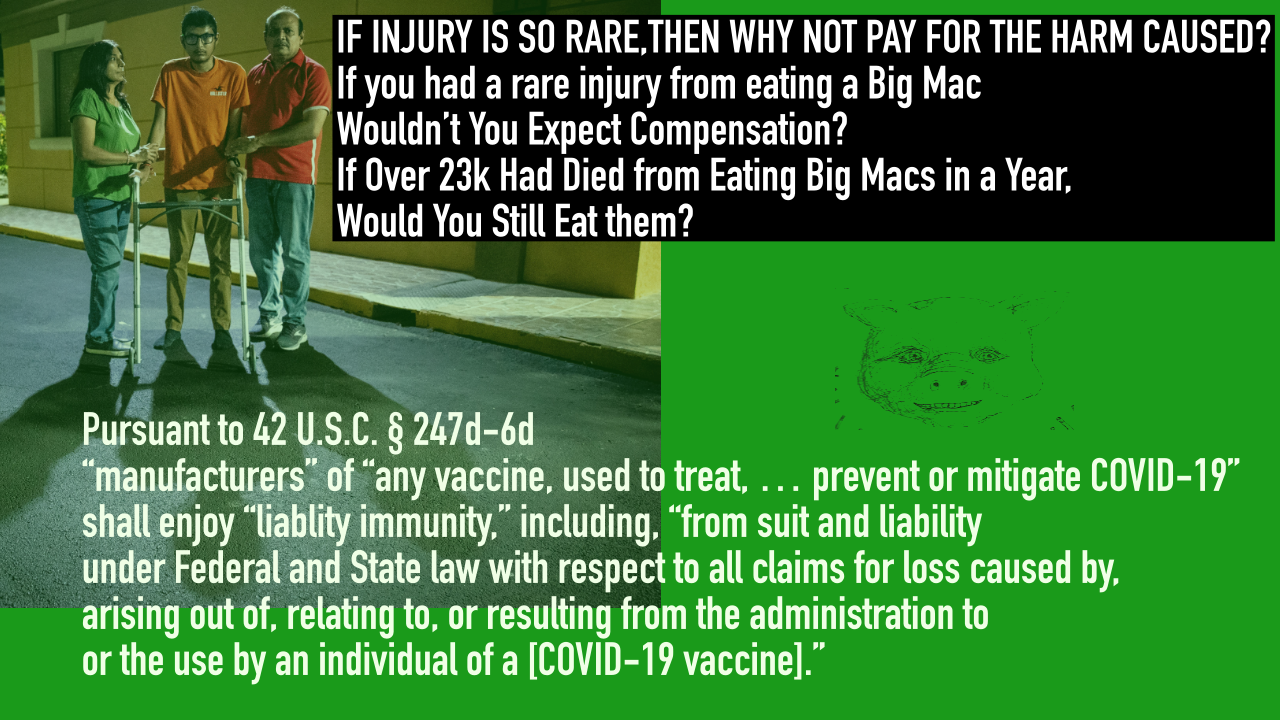
The PREP Act grants blanket liability protection to COVID-19 vaccine manufacturers for nearly every type of injury caused by the vaccines.
Instead, the injured must submit a claim to the little-known CICP within one year of injury. CICP is the federal program that “provides compensation for covered serious injuries or deaths that occur as the result of the administration or use of certain countermeasures,” including COVID-19 vaccines.
‘I will be dead by the time they compensate people’
Even for those whose injuries meet the criteria for submitting a claim to CICP, the odds are slim that they will be compensated quickly, sufficiently, or at all.
As of June 1, CICP had received 13,836 COVID-19 vaccine injury claims and had compensated only 39 — less than 0.3%.
CICP isn’t keeping up with the number of claims, according to its website. As of June 1, the program had yet to review or was still reviewing 9,423 of the nearly 14,000 claims submitted since the start of the pandemic.
Among those is Doug Cameron, an Idaho man who received a COVID-19 vaccine when his employer “strongly implied” he should get the shot. Ten days later, he was permanently paralyzed from a blood clot. He filed a CICP claim in 2022.
In a November 2024 interview with The Defender, Cameron’s wife said that every time she calls to check on their claim, she is told, “Yeah, it’s still sitting on somebody’s desk for medical review.”
That is still the case today, Cameron told The Defender. “No word. I will be dead by the time they compensate people,” he said.
Cameron’s injury resulted in about $2 million in medical expenses.
For those few compensated by CICP, the payouts likely didn’t cover their medical expenses. The median payout was $4,182. Due to two anomalous payments, the average payout was just over $80,000.
In 2022, React19, whose mission is to support the COVID-19 vaccine-injured, launched React19 Care Fund to provide financial help for medical treatments and therapies for people injured by the shots.
Cameron hasn’t applied for a grant. “Other people need the money more than I do,” he said.
In January, the nonprofit surpassed $1 million in its latest round of grants. “To date, we have given out $1,292,169.79 to 175 recipients,” React19 Co-Chairman Joel Wallskog told The Defender in an email.
Wallskog, an orthopedic surgeon who was injured by Moderna’s shot, said he applied to CICP in early to mid-2021. “It took me 18 months to receive my denial,” he said.
Wallskog immediately appealed. “It took about 14 months after submitting the appeal to get denied again,” he said.
How can the government fix this? [MORE]