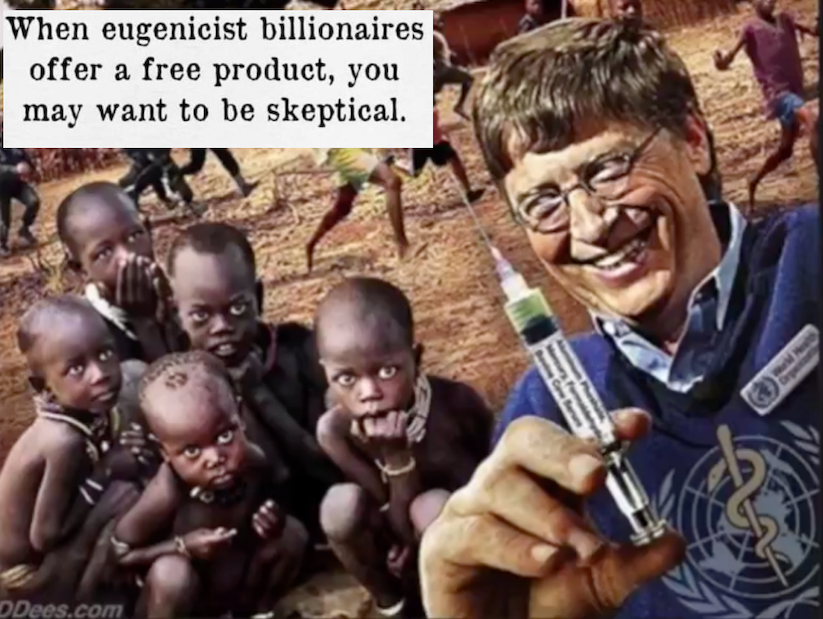
Anti-Human: Vaccines, Depopulation, and Nanotechnology Sponsored by Bill Gates Part 1
/
On May 8, 2025, Bill Gates announced that he will donate most of his fortune to his foundation over the next 20 years, and then it will terminate on December 31, 2045.
In an article posted on gatesnotes.com he stated, “This is a change from our original plans. When Melinda and I started the Gates Foundation in 2000, we included a clause in the foundation’s very first charter: The organization would sunset several decades after our deaths. A few years ago, I began to rethink that approach. More recently, with the input from our board, I now believe we can achieve the foundation’s goals on a shorter timeline, especially if we double down on key investments and provide more certainty to our partners.”
He went on to say that he expects the foundation to spend more than $200 billion between now and 2045. He then goes on to state, “We were central to the creation of Gavi and the Global Fund, both of which transformed the way the world procures and delivers lifesaving tools like vaccines and anti-retrovirals… we’ll continue supporting new uses of artificial intelligence, which can accelerate the quality and reach of services from health to education to agriculture.”
The Gates Foundation along with the Clinton Global Initiative and George Soros’s Open Society Foundation, are strategic partners with the United Nations Population Fund, which stated, “In a major step toward expanding access to voluntary family planning for millions who need it, the Bill & Melinda Gates Foundation, in September 2023, has made a long-term commitment of up to $100 million to the UNFPA Supplies Partnership to support commodity procurement directly.”
As stated on their website, “UNFPA is the United Nations sexual and reproductive health agency. Our mission is to deliver a world where every pregnancy is wanted, every childbirth is safe and every young person’s potential is fulfilled.”
One of goals of the UNFPA is to end unmet need for family planning, as they go on to say, “We are the world’s single-largest provider of donated contraceptives to developing countries, and our programs increase the availability of contraceptives and dismantle barriers to services.” The UNFPA views access to contraception as a human right. In the “Human Rights” section, they say, “Population dynamics can be affected by policies. But these policies must strengthen, rather than weaken, fundamental human rights and freedoms. Population dynamics are and must remain the cumulative result of individual choices and opportunities, and they are best addressed by expanding these choices and opportunities – especially those related to sexual and reproductive health and rights. When couples can freely decide the number, timing and spacing of their children, evidence shows more children survive and thrive, and overall fertility levels trend downward.” [MORE]