NFL Commissioner/Circus Master Won’t Acknowledge Link Between Football And Brain Injuries

ThinkProgress

In a pre-Super Bowl interview on CBS’ Face The Nation, National Football League commissioner Roger Goodell repeatedly refused to acknowledge a link between brain injuries and football, even as a growing amount of research is making the link between the game and the development of debilitating cognitive diseases ever clearer and perhaps even overwhelming.

CBS host Bob Schieffer asked Goodell point blank if he would acknowledge the link between football and brain injuries. Goodell demurred: “That’s why we’re investing in the research. So that we can answer the question, what is the link? What causes some of the injuries that our players are still dealing with? And we take those issues very seriously.”

Later, Goodell again ignored the question. “We’re going to let the medical individuals make those points,” Goodell said. “We’re going to give them the money, advance that science. In the meantime, we have to do everything we can to advance the game and make sure it’s safe.” The NFL, he added, has not covered up the links between concussions and brain disease. Instead, “the NFL has led the way.”

Taken together, research has formed a strong link between football and degenerative brain diseases. NFL players are four times more likely to die from Alzheimer’s or Lou Gehrig’s Disease than the general population, and recent studies have bolstered the links between football and degenerative brain diseases like chronic traumatic encephalopathy (CTE), which has been linked to dementia, depression, and suicide. Other studies have shown that football players perform worse on cognitive tests than non-football players.

And the NFL has hardly “led the way” into concussion research, as Ta-Nehisi Coates and Malcolm Burnley showed recently in a timeline of the NFL’s response to concussions. The first chair of the league’s concussion task force, formed in 1994, regarded concussions as an “occupational hazard,” and the league rejected the American Academy of Neurology’s guidelines for returning concussed players to competition in 2000. It was still publishing research skeptical of the dangers of concussions in 2005; in 2007, it still claimed that research did not show that “having more than one or two concussions leads to permanent problems if each injury is managed properly,” even though CTE had already been found in multiple dead former football players.

That’s not a history of leading the way. That’s a history of standing in the way. The league and Goodell have plenty of reason to continue standing in the way, given that acknowledging a link between football and brain injuries, as well as the league’s role in obscuring that link in the past, would open it up to legal and medical liabilities it doesn’t want and possibly can’t afford. It would turn the discussion from one centered around how to make football safer to one centered around whether football can be made safer. And that discussion would jeopardize the $8 billion (and growing) industry that is professional football. Goodell isn’t obstinate in the face of an increasingly clear reality because no link exists. He’s obstinate because acknowledging that link would threaten the business he oversees.

Pentagon Expects US to Retain Presence in Afghanistan

CitizensforLegitGov

The Pentagon’s top civilian and military officials on Sunday expressed an expectation, even a desire, that American troops would remain in Afghanistan after the NATO mission ends in December 2014, although they emphasized that no decision had been made. Defense Secretary Leon E. Panetta and Gen. Martin E. Dempsey, chairman of the Joint Chiefs of Staff, said the United States would sustain a strategic partnership with Afghanistan, and they cited a decision by the NATO heads of state during a summit meeting last year in President Obama’s hometown, Chicago, that long-term support for Kabul would include military assistance.

Office charged with shutting Guantanamo Bay closes

CitizensforLegitGov

The US has shut down the office of its special envoy charge with the closure of Guantanamo Bay, in a sign of the fading hopes of shutting the controversial jail. Daniel Fried, the special envoy in charge of the dossier, will now move to coordinate the State Department's sanctions policy, including for Iran and Syria, and his "former responsibilities will be 'assumed' by the office of the department's legal adviser," according to The New York Times. Mr Fried, a veteran diplomat and former ambassador to Poland, was appointed special envoy in May 2009, only months after President Barack Obama ordered the notorious jail at the US naval base in Guantanamo Bay, Cuba, to close.

Egyptian protesters clash with police outside presidential palace in Cairo

WashPost

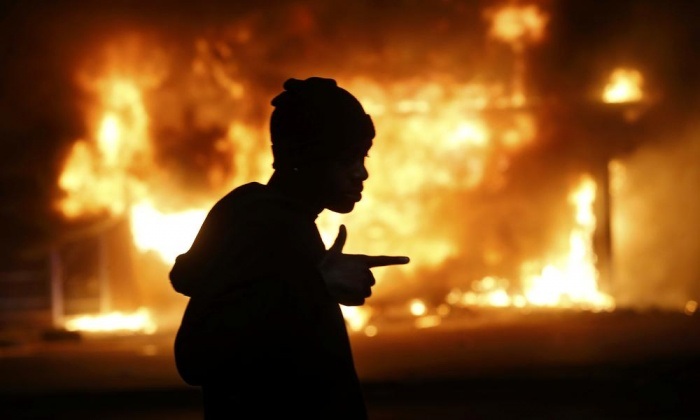
Protesters armed with Molotov cocktails clashed with police outside the presidential palace in Egypt’s capital Friday evening, as demonstrations against President Mohamed Morsi carried into a second week in major cities across the country.

Local TV footage showed a chaotic scene, with trees along the palace walls consumed by flames. Later, riot police fired shotgun pellets, tear gas and powerful jets of water from fire hoses in an effort to push back protesters and extinguish the blazes. The presidency said in a statement that it would not hesitate to use force to protect state property.

At least one protester was shot dead, the Health Ministry confirmed, and local media reported dozens of injuries, mostly from tear-gas inhalation.

The crisis gripping Egypt has exposed a growing disconnect between the opposition movement’s political leadership and many of the young protesters in the streets. The latest violence came a day after top opposition figures held a dialogue session with Morsi’s backers in the Muslim Brotherhood and other conservative Islamists, later joining with them to issue a statement condemning violence.

Many of the protesters who began rallying outside the palace earlier in the day expressed skepticism about the dialogue effort, and some openly defied the call for nonviolence as they hurled firebombs at the complex from which Morsi administers the country.

As fires raged Friday night, Morsi and the Muslim Brotherhood used Twitter to urge protesters to retreat and pointed fingers at the opposition. “We consider political forces that could have contributed, by instigating, to have full political responsibility, pending the results of an investigation,” Morsi tweeted as night fell.

Earlier Friday, smaller crowds in Cairo and key Suez Canal cities — where the recent violence has been most intense — had appeared to suggest that the crisis was abating, despite opposition calls for more marches. Protesters said blustery weather, fatigue and disagreements in their ranks over their movement’s goals stifled turnout after a week of clashes that left dozens dead and more than 1,000 injured.

For most Egyptians, the first day of the country’s weekend passed at its usual quiet pace.

The sheik of Al-Azhar, Egypt’s highest religious authority, hosted Thursday’s dialogue session, which was attended by leaders of the National Salvation Front (NSF), a loose alliance of liberal and secular opposition figures; the ultraconservative Salafists; and members of the Muslim Brotherhood. The joint statement yielded by the meeting denounced the use of violence by all parties.

But it was unclear what, if any, impact the dialogue had on Friday’s demonstrations. Many participants said they were disappointed in the NSF, which has called for a national unity government, and would keep protesting until Morsi was ousted.

The opposition movement has been plagued by divisions over goals and tactics, even as it widened in the past week on the back of a wave of popular anger over police brutality.

Monitor's Report says Oakland Police Officer Pointed his Gun at a Sleeping 19 Month Old Black Child During Misdemeanor Investigation

MercuryNews

Police Chief Howard Jordan shot back at the department's court-appointed monitor Friday for criticizing police over an incident where officers allegedly pointed a gun at a sleeping 19-month-old.

The allegation is "just not factually correct," Jordan said during a hastily-planned Friday news briefing. "It's a mischaracterization of what happened."

Jordan's comments were the city's strongest public rebuke of Robert Warshaw, the former Clinton Administration official responsible for tracking the police department's progress in a decade-long reform effort.

The city's relationship with Warshaw frayed recently. City officials have privately questioned his fairness in assessing the department's progress in achieving reforms aimed at helping it better police itself. And last year City Administrator Deanna Santana filed a complaint accusing Warshaw of making sexual advances against her, according to sources.

Warshaw's latest progress report, released late Wednesday, criticized the department for continuing to backslide on reforms that were supposed to be completed five years ago.

One of Warshaw's most persistent critiques of the department is that officers too often draw their weapons without provocation and that the suspect at the opposite end of the gun is almost always African-American or Latino.

Tucked inside the 85-page report was a single paragraph about two officers who "pointed their

Believing in (democracy) criminal justice system requires ignoring (white supremacy) bad police

Nola

The beauty of our criminal justice system -- if it's right to use the word "beauty" in this context -- is that it can't get so corrupt that we stop believing in it. No matter how many dead bodies we see stacked up, no matter how many reports there are of unconstitutional arrests and harassment, we are still primed to reflexively take the word of the police over those accusing them of misconduct.

In the last three years, there have been 37 complaints lodged against Jayson Germann, a police officer who has worked for the River Gardens complex on a private security detail. Germann's been accused of excessive use of force, verbal intimidation, theft, wrongful arrests, filing false reports and unprofessionalism. But who among us doesn't do mental contortions to believe the officer over the residents who complain that he's out of control?

Ronald McCoy, a spokesman for the residents of River Gardens and an organizer with Safe Streets/ Strong Communities, said, "He's wreaking havoc in this community the way he roughs people up, physically assaults people and is constantly threatening people." The residents' group also has a problem with Armand Clavo, the quality of life officer at the complex. The 21 complaints filed against Clavo led the New Orleans Police Department to suspend him five times over a 10-year-period.

Residents say they don't want problem police around, and who could blame them? But the president of HRI Management, the company that manages River Gardens, says that the officers are in good standing with the Police Department, and that's enough for HRI. Germann's attorney, Raymond Burkart III, said, "It's not uncommon for people to make false allegations against police officers. It's a way to retaliate and besmirch the officer."

It's not uncommon for our police to make false allegations against residents or to use excessive force. Such violations were so common, in fact, that a 2011 report from the U.S. Department of Justice concluded that many New Orleans police officers "either do not understand or choose to ignore the boundaries of constitutional policing."

The report detailing wide-scale misconduct in the Police Department prompted the city to enter into a consent decree with the federal government. Mayor Mitch Landrieu now wants out of the agreement because, he says, the projected cost of compliance plus a subsequent bill to pay for fixes at Orleans Parish Prison will bust the budget. And now that one of the report's contributors has been exposed for his own misconduct, the city's wondering if the reported corruption was as bad as described.

Sal Perricone, who was the third-ranking prosecutor at the U.S. Attorney's Office, used pseudonyms to insult Landrieu and Police Superintendent Ronal Serpas in the comments section of NOLA.com even as he was served as the Department of Justice point man in consent decree negotiations with the city. And in a motion it filed Thursday to be released from the consent decree, the city reveals that Perricone had applied for the job Serpas now holds and that he had used one of his pseudonyms to criticize the hire .

Perricone's involvement is problematic, but we have reason outside that report to be wary of the New Orleans Police Department: the bloodbath police unleashed on Danziger Bridge, the killing of Henry Glover and the incineration of his body, the beating death of Raymond Robair, last year's fatal shooting of the unarmed Wendell Allen. All are examples of a Police Department run amok.

And three dozen complaints against a single officer in three years should generally be taken as a sign that said officer has run amok. Apparently police officials did. In October 2011, Germann was enrolled in the department's Professional Performance Enhancement Program, a six-month refresher course on the ethics that should guide officers. A police spokeswoman says that the number of complaints made against Germann have fallen drastically since his completion of that program. Even so, there were five complaints made against him last year, and they include multiple accusations that he filed false reports and used unauthorized force.

Complaints made against officers are typically hard to prove, so police defenders generally insist that we only pay attention to complaints that were substantiated. But as police monitor Susan Hutson counters, "If a suspect is arrested for something and has a long arrest history, regardless of whether he's been convicted, it would be touted by the police." Exactly. A series of complaints against a civilian is offered as prima facie evidence of guilt. A series of complaints against an officer is described as irrelevant, and most of us shrug and move on.

We want to believe that the system's still reliable even when we see an abundance of evidence to the contrary.


(Cress Welsing -- Failing to comprehend the environmental context of the white supremacy system and its ultimate goal of white genetic survival, Black people fail to grasp the deeper sense of what actually is occurring in front of our eyes. [MORE]. )

Jesse Jackson to Join Protest for Hanna case

SunTimes

It’s been two years and nearly three months since Darrin “Dagwood” Hanna died a week after his arrest by police, and his family has no intention of letting anyone forget it.

Hanna’s extended family and their supporters will hold a rally and press conference before the next meeting of the North Chicago City Council on Monday. It will be the fourth such rally since Hanna’s death on Nov. 13, 2011, and the third attended by representatives of the Chicago-based civil rights group Rainbow/PUSH Coalition.

Latinos soon to outnumber whites in California

Sfgate.com

The number of Hispanic people in California will equal the non-Hispanic white population by the middle of the year and surpass it as the largest single racial or ethnic group in the state by 2014, according to projections released Thursday by the state Department of Finance.

The demographic changes will continue, and in 2060 nearly half of California's population will be Hispanic. It's a transformation that will have a profound impact on education, job growth and the economy, according to experts.

If the calculations prove correct, California will become the third state in the nation in which non-Hispanic white citizens are outnumbered by those of another race or ethnic group. New Mexico also has more Hispanics and Hawaii has more Asians than any other individual race.

"It's an exciting time not only for the Hispanic population in California, but for the country, but we also need to be aware of what the repercussions could be if this rapidly rising population is not educated at the rate our job industry needs," said Mark Martinez, the president and chief executive officer for the California Hispanic Chambers of Commerce. "Studies show that higher-education attainment in the Latino community is increasing, but nowhere near where it should be at. If we do not pay attention to education and job growth, then California's economy will suffer."

The demographic shift is occurring in large part because California's 10 million Baby Boomers, the vast majority of them white, are moving into retirement age, said the Department of Finance study, which analyzed age, fertility rates, migration and demographic patterns taken from the 2010 census. Meanwhile, younger Hispanics of child-bearing age are moving into the state.

Bombs, guns and swastikas found in Connecticut home

Salon

Just down the road from the scene of the December school massacre in Newtown, Conn., police in Stamford have discovered a home filled with bomb-making materials, assorted firearms and white supremacist and anti-police propaganda.

Stamford police and FBI agents today identified and interviewed a middle-aged man who apparently had been illegally living in the home, triggering an inspection Wednesday by health inspections. The home is less than 700 feet from a middle school. The suspect, whose name hasn’t been released, has not been charged while authorities discuss whether to proceed with state or federal charges.

Police discovered loaded weapons, including rifles and shotguns, near entry points to the home, white supremacist and anti-police propaganda, a monitoring system to watch the outside of the home and a reinforced escape tunnel that ran underground through the backyard, the Stamford Patch reported. They also found bombs that were being prepared with PVC pipes loaded with nuts and bolts that were apparently meant to serve as anti-personnel shrapnel.

In addition to swastikas, a poster inside the home depicted a police funeral with a derogatory message scrawled across it, Stamford Police Chief Jon Fontneau told the newspaper. Loaded firearms were discovered near entry points to the home.

“I’ve been on hundreds, if not thousands, of search warrants,” the chief said, “and I’ve never seen anything like this.”

Solitary Confinement death at Rikers spurs advocates to call for justice

Amsterdam News

Early last Monday, advocates and community members began the week with a rally at 1 Centre St., home of New York City’s Board of Corrections (BOC). During the rally, the group, under the name NYC Jails Action Coalition (NYCJAC), called out for justice on behalf of 25-year-old Jason Echevarria. Echevarria died in a solitary confinement unit on Aug. 19, 2012, at Rikers Island after fatally ingesting soap. Echevarria, who suffered from mental illness, reportedly swallowed the soap as a ruse to escape solitary confinement.

Unbeknownst to Echevarria, according to reports, the soap he ingested was concentrated (used to clean the cell block) and, like bleach, was fatal when ingested.


Details related to Echevarria’s mental illness are unknown, as are details related to exactly why Echevarria’s corpse was covered with bruises. The Department of Correction (DOC) initially attempted to label the death as a suicide, but the medical examiner recently determined it a homicide.

These bruises and DOC’s alleged initial cover-up has evoked suspicion about everything surrounding Echevarria’s death, including whether Echevarria willingly swallowed the soap.

Reportedly, Echevarria’s death was the first of its kind in 2012. Yet, NYCJAC say DOC’s overuse of solitary confinement does little to help prevent deaths like that of Echevarria’s from occurring in the future. According to the group, Echevarria was just one of 1,200-plus adolescents who were collectively sentenced to more than 67,000 days (an average of 56 days per person) in solitary confinement between March and November 2012.

“One of the things that brought this group together was the expanded use of solitary confinement,” said Jennifer Parish from the Mental Health Project at the Urban Justice Center. Parish is one of the vocal advocates of NYCJAC.

“We want the Board of Corrections to be more transparent about what happened. We want to know which correction officers were involved and how Jason died. We don’t believe that anyone with a mental illness should be locked up in solitary confinement.”

Another of NYCJAC’s goals during their protest was to draw attention to Echevarria’s story and to force the BOC, which oversees DOC, to investigate allegations of brutality and overuse of solitary confinement.

Following the rally, NYCJAC can claim partial victory in that goal. Last Monday, the nine members that constitute the BOC met for their first of six meetings scheduled for this calendar year. After the rally, members of the group attended the meeting, where they learned that an investigation would be taking place.

The BOC declined to respond to questions about the case by press deadline.

The NYCJAC is a grassroots collection of activists, including formerly and currently incarcerated people, family members and other community members working to promote human rights, dignity and safety for people in New York City jails. The group’s mission includes increasing transparency in DOC policies in New York City jails and accountability for DOC practices and abuses; ending the use of solitary confinement (also known as punitive segregation, “SHU,” “the Box,” “the Bing”) in New York City jails and opposing the DOC’s planned increase in punitive segregation cells; addressing the medical and mental health needs of people in New York City jails; ensuring access to continuing care in the community upon release; advocating for more rehabilitative services inside jails to promote reintegration; and fighting against the racist and discriminatory policies that lead to mass incarceration.

The group meets regularly, with their next meeting to take place on Thursday, Jan. 31, for a span of two hours beginning at 6 p.m. at a place still to be determined. Interested parties can find out more about NYCJAC by visiting the website at www.nycjac.org or calling NYCJAC Outreach Coordinator Susan Goodwillie at 646-459-3063.

Jury finds trucking company, A.C. Widenhouse discriminated against Black Workers

WBtv

In a legal victory for the U.S. Equal Employment  Opportunity Commission (EEOC), a North Carolina federal jury has awarded compensatory and punitive damages against A.C. Widenhouse, Inc., a Concord-based trucking company, the agency announced Friday. 

On Jan. 28, the Winston-Salem jury of eight returned a unanimous verdict finding that Contonius Gill and Robert Floyd, Jr., former Widenhouse employees, were discriminated against based on their race, African-American. 

The jury also found that Gill was fired in retaliation for complaining about racial harassment at Widenhouse.  The jury awarded a total of $200,000 in compensatory and punitive damages to the men.  The court will now decide back pay damages for Gill and injunctive relief.

According to the EEOC's lawsuit, Gill and Floyd worked as truck drivers for the company.  From as early as May 2007 through at least June 2008, Gill was repeatedly subjected to unwelcome derogatory racial comments and slurs by the facility's general manager, who was also his supervisor; the company's dispatcher; several mechanics; and other truck drivers, all of whom are white. 

The comments and slurs included "n----r," "monkey" and "boy."  Gill testified that on one occasion he was approached by a co-worker with a noose and was told, "This is for you.  Do you want to hang from the family tree?"  Gill further testified that he was asked by white employees if he wanted to be the "coon" in their "coon hunt." 

Floyd testified that he also was subjected to repeated derogatory racial comments and slurs by the company's general manager and white employees.  Floyd testified that when he was hired in 2005, he was the only African-American working at the company.  Floyd said the company's general manager told him that he was the company's "token black." 

Floyd testified that on another occasion the general manager told him, "Don't find a noose with your name on it," and talked about having some of his "friends" visit Floyd in the middle of the night.   Gill repeatedly complained about racial harassment to the company's dispatcher and general manager and Floyd complained to an owner of Widenhouse, but both men testified that the harassment continued. 

Gill intervened in the lawsuit and in addition to the EEOC's claim of racial harassment, Gill said Widenhouse fired him based on his race and in retaliation for complaining about the racial harassment.  The jury also returned a verdict in favor of Gill on both of his discriminatory discharge claims.

Race discrimination, including racial harassment, and retaliation for complaining about it, violate Title VII of the Civil Rights Act of 1964.  The EEOC filed suit (Equal Employment Opportunity Commission v. A.C. Widenhouse, Inc., 1:11-cv-00498), in U.S. District Court for the Middle District of North Carolina after first attempting to reach voluntary settlement through its conciliation process.

"This is the second jury verdict we have had within the last few months in a case alleging racial harassment," said EEOC General Counsel P. David Lopez.  "It is unfortunate that work¬place racial harassment persists in the 21st century, and the EEOC will take those cases to trial, if necessary, to vindicate the rights of the victims."

"The jury verdict in this case is significant because it is a reminder to employers that race harassment and racial discrimination cannot be tolerated in the workplace," said Lynette A. Barnes, regional attorney for the EEOC's Charlotte District Office.  "The jury, acting as the conscience of this community, properly found that Widenhouse engaged in conduct that warranted an award of punitive damages.  Such damages are designed to punish Widenhouse's past conduct and to deter this employer, as well as other employers, from engaging in this type of race discrimination.  We are hopeful that this verdict sends a strong message to employers."

EEOC Trial Attorney Nicholas Walter, who tried the case, added, "We are pleased with the verdict and happy for Mr. Gill and Mr. Floyd.  The jury took less than an hour to vindicate the rights of these gentlemen.  The EEOC will pursue future cases of racial harassment and discrimination with the same diligence and fervor it did in this case against Widenhouse."

The EEOC enforces federal laws prohibiting employment discrimination.  Further information about the EEOC is available on the agency's web site at www.eeoc.gov.

South African Gold Miners Sue Over Deadly Lung Disease

CorpWatch

Thousands of gold miners have asked permission from South African courts to sue some 30 mining companies over negligence in health and safety that the miners allege has caused them to contract silicosis, a debilitating and potentially fatal lung disease.

Just before Christmas, Richard Spoor, a South African lawyer, filed papers with the South Gauteng High Court in Johannesburg requesting permission to conduct a class action lawsuit on behalf of 17,000 former miners. Hundreds more are signing up with Spoor every month.

Anglo American, AngloGold Ashanti, Gold Fields and Harmony Gold are four of the 30 major companies named in the legal papers that operated 78 different mines from 1965 to the present. Lead plaintiffs include Bongani Nkala, a 59-year-old former mine worker from Mthatha, among 30 other former mine workers.

“I could see, taste and smell dust while I worked underground, particularly after blasting took place during a shift and we were not evacuated from the mine . . . I cough heavily all the time and I have constant chest pains," Mokholofu Boxwell, one of the petitioners declared in an affidavit submitted by Spoor. "Apart from no longer being able to provide for my family, I am no longer able to partake in community activities. I feel depressed and alone," added the former gold mine worker who now lives in Butha-Buthe, Lesotho.

“We seek no more than the application of the ‘polluter pays’ principle to be applied to an industry that generates sick men as surely as it produces great wealth for its shareholders," Spoor said in a press release. "When mine owners skimp on the cost of providing proper ventilation, workers get sick. These men have become ill through no fault of their own, yet, when they do, they are simply dismissed, and they and their families are left to languish in poverty and disease."

Spoor has a track record in such lawsuits. He won a $154 million out-of-court settlement on behalf of thousands of asbestos miners who had contracted asbestosis with the legal and financial backing of Motley Rice, a major U.S. laws firm. 

Poverty and Progress: Comparing the US and Venezuela

StopImperialism.com

What does it mean to be “Third World” in 2013?  If we are to take the traditional definition of the term, then “Third World” refers to those (non-white) countries that struggle to attain high levels of economic development and which, for the most part, are reduced to the periphery of the global economy.  However, since the onset of the economic crisis beginning in 2007-2008, many of the economic problems of those traditionally poor countries have become ever more apparent in the so-called developed world.  Socio-economic maladies such as extreme poverty, hunger, and unemployment have skyrocketed in advanced capitalist countries like the United States, while politicians and the media continue to trumpet the mirage of an economic recovery.  Naturally, one must ask for whom this is a recovery…for the poor or for Wall St?  Moreover, it has forced the world to examine what progress looks like.  One way of doing so is to analyze what the statistics tell us about the United States versus Venezuela.  In so doing, one begins to get a much clearer picture, free from the distortions of media and politicians alike, of just how much progress has been made in the Bolivarian Revolution while the situation of the poor and working classes in the US continues to deteriorate.

What Is Poverty?

Before one can reach any definitive conclusions about poverty in the US and Venezuela, it is essential to first establish the stark difference in the way in which poverty is measured in the two countries.  With respect to the US, poverty is measured purely by household income, with a certain threshold known as the “poverty line” determined by the Census Bureau.  This measurement, based on a purely arbitrary delineation between poverty and “non-poverty”, is the one by which many make determinations about the state of the poor in the US.  As should be self-evident, this system of analyzing poverty ignores the obvious fact that there is little tangible difference between the lives of those slightly over and slightly under the poverty line in that both live in a constant state of privation.  Moreover, as increasing inflation, decreasing wages and other factors continue to impact the purchasing power and actual lives of the poor, the poverty line becomes even more problematic.

In contrast, the Venezuelan government has a distinctly different set of measurements to determine true poverty including: access to education, access to clean drinking water, access to adequate housing, and other factors.[i]  Essentially then, in Venezuela, poverty is not a measure of income, but of quality of life.  By measuring poverty in this way, the Venezuelan government provides a far more comprehensive picture of the socio-economic situation in the country.  It is important to note also that, unlike in the United States, poverty statistics in Venezuela are one of the primary driving forces behind the formation of government policy.  While in the US, poverty has become a dirty word (as evidenced by the subject’s total absence from last year’s presidential debates), Chavez and the Bolivarian Revolution have made it the centerpiece of public policy in all aspects.

What the Numbers Show

When one examines the statistical data compiled by the Census Bureau in the United States, many very troubling facts emerge.  First, it’s critical to note that, in 2012, the poverty line for a typical family of four was at a combined gross income of $23,050.[ii]  Note that this indicator is derived from gross income as opposed to net income, so it doesn’t even reflect the gravity of the situation faced by these families.  Anyone who has even a rudimentary understanding of the current costs of living in the United States can immediately surmise that the “poverty line” is a cruel joke.  This level of income means abject poverty, it means a lack of basic necessities for human life.  So, in essence then, we’re not talking about “the poor”, but those on the verge of death with problems such as malnutrition, serious illness from treatable conditions, and countless other hindrances to basic existence.  In addition, it should be noted that median family income (for all families, not just those in poverty) continues to decline dramatically, with a decrease of 8.1% since 2007.[iii]  Therefore, it becomes apparent that, not only is poverty widespread, it is growing.

California, long touted as the most economically vibrant state in the US, is now known as more than just the home of Silicon Valley and beautiful coastline, it is also home to the highest levels of poverty in the United States.  According to the Supplemental Poverty Measure of the US Census Bureau, California boasts a 23.5% poverty rate[iv] which, if included with those who do not technically fit the poverty measure but who still live very much on the economic margins, shows that poverty is fast becoming an epidemic in California. As University of Wisconsin Madison economist Timothy Smeeding explained, “As a whole, the safety net is holding many people up, while California is struggling more because it’s relatively harder there to qualify for food stamps and other benefits.”[v]  Essentially then we see that, in the nation’s most populous and, arguably most economically important state, the situation of the poor is a dire one as more and more people become dependent on government programs just for survival. This is, of course, against the backdrop of austerity or so-called “entitlement reform” championed by both Republicans and Democrats, which would cut these same programs which are becoming ever more critical for millions of Americans. [MORE]

Ending White Supremacy Not on the agenda @ The Black Agenda Summit at Howard

African Americans supported the President with 98% of their vote in November. At the end of President Obama’s first term, the statistics for Black America are daunting and participants clicked off a list of many well known facts. for example:

Between 2007 and 2010, Black net worth declined more than 50% to $5,400 for Black families while net worth was $116,000 for white families.
— The Black youth unemployment rate in the last two years has hovered near 40%
— The median income in 2010 of Black families is $35,000 — white families is $54,000
The wealth gap between whites and blacks remains wide as Black families have never had more than $6 for every $10 held by white families since data has been recorded (40 years).
The continuing problem of poverty, 46 million, 1 of 7,  live below the poverty line.

Read More

Arkansas State Senator Jason Raper: Bigot Is Also Liar

NYMag

By Dan Amira

In 2011, Arkansas State Senator Jason Rapert had some pretty racist things to say at a tea party rally, according to a video just posted to YouTube:

"I hear ya loud and clear, Barack Obama. You don’ represent the country that ah grew up with. And yer values is not gonna save us. Wer gonna try to take this country back fer the Lord. Wer gonna try to take this country back fer conservatism. And wer not gon' allow minorities to run roughshod over what you people believe in!"

The crowd cheered, because Arkansas. But what exactly was it that Rapert was so riled up about in the first place?

"I wonder sometahms, when they invahted all the Moslims to come into tha White House, and have 'em a lil' Ramadan supper, when our president could not take the time to go attend a National Prayer Breakfast. I wonder what he stands fer."

Not that it really matters, but President Obama did attend the National Prayer Breakfast in 2012:

U.S. President Barack Obama (C) takes his seat while being applauded by first lady Michelle Obama (L) and Sen. Jeff Sessions (R-AL) after addressing the National Prayer Breakfast February 2, 2012 in Washington, DC.  Obama defended his economic policies, echoing his recent State of the Union address.

And in 2011:

First lady Michelle Obama (L) and U.S. Rep Jeff Miller (R-FL) (R) applaud U.S. President Barack Obama during the National Prayer Breakfast at the Washington Hilton February 3, 2011 in Washington. DC. Obama talked about his own faith, the events in Egypt and the recovery of U.S. Rep. Gabrielle Giffords (D-AZ), whose husband was in attendance.

And in 2010:

US President Barack Obama acknowledges applause after speaking at the 58th US National Prayer Breakfast February 4, 2010 at a hotel in Washington, DC.

And in 2009:

US President Barack Obama speaks during the National Prayer Breakfast at the Washington Hilton in Washington, DC, February 5, 2009.

In short, Obama attended the National Prayer Breakfast every year. And, not that it really matters, but President Bush held a Ramadan dinner in the White House in 2008:

President George W. Bush makes remarks during the Iftaar dinner with ambassadors and Muslim leaders held in the State Dining Room of the White House September 17, 2008 in Washington, DC. The meal marks the end of the daily fast being held for the Isamic month of Ramadan.

And 2007:

Navy Imam Chaplain Lt. Cmdr. Abuhena M. Saifulislam (L) gives the prayer at the Iftaar Dinner as President George W. Bush (R) and His Excellency Aziz Mekouar (C), Moroccan ambassador to the U.S., look on in the State Dining Room of the White House October 4, 2007 in Washington, DC. During the traditional meal that breaks the daily fast during Ramadan, President Bush said that the U.S. has a proud history of standing with Muslims.

And 2006:

US President George W. Bush speaks during an iftar dinner in the State Dining Room at the White House 16 October 2006 in Washington. The White House hosted its 6th iftar, the meal which breaks Muslims' daytime fasting during the holy month of Ramadan.

And 2005:

US President George W Bush (R) speaks to guests during an iftar dinner, breaking the Ramadan fast, in the State Dining Room at the White House 17 October 2005 in Washington with ambassadors from Islamic nations. On left is Saudi ambassador to the US Prince Turki al-Faisal, others are unidentified.

And 2004:

U.S. President George W. Bush (C) speaks at an Iftaar dinner hosted in the State Dining Room at the White House on November 10, 2004 in Washington, DC. The Iftaar Dinner ends the daily fast during the Muslim holy month of Ramadan.

And 2003:

And 2002:

US President George W. Bush (L) addresses an Iftaar dinner 07 November, 2002, at the White House State Dining Room, to celebrate the start of the Islamic holy month of Ramadan. United Arab Emirates Foreign Minister Sheikh Hamdan bin Zayed Al Nahayan (R) and Khaled Saffuri of the Islamic Institute (2nd-R) listened.

And 2001:

US President George W. Bush, with US Attorney General John Ashcroft (L), Saudi Ambassador Prince Bandar bin Sultan binAbd al-Aziz al-Saud (2nd-L) and US Secretary of State Colin Powell, speaks 19 November 2001 before a prayer by Imam Abdullah Muhammad Khouj during a Ramadan dinner in the East Room of the White House in Washington, DC. Bush hosted some 50 ambassadors from Muslim countries at the White House as Washington steps up its campaign to court Muslim opinion and widen its appeal for humanitarian support and the rights of women in Afghanistan.

In short, Bush held a Ramadan dinner in the White House every year. But sure, yeah, minorities ruining America.

White Girl Charged with Harassment Over Racist Tweet in Phili - "Stupid Niggers in my algebra class"

NBC

A white Glassboro High School student has been charged with harassment for a tweet she allegedly posted while sitting in algebra class.

The sophomore girl is accused of taking a picture of two African American students, writing a racist remark, and posting it on twitter.

The tweet was posted for just over a month before being noticed last week. It was first reviewed by a guidance counselor and a school police officer, who then alerted detectives.

NBC10's Monique Braxton showed the tweet to the head of the NAACP in Gloucester County, Loretta Winters. "When I first saw it, my heart just dropped, it was like it skipped a beat, it was horrible."

The school won't be taking any action until after an investigation is complete, according to a statement released by Glassboro School Superintendent Dr. Mark J. Silverstein. "Allegations of this sort are something we take seriously and that is why an investigation is ongoing. The appropriate action will be taken once the investigation is complete."

The charges were filed this week. If convicted of harassment, a judge would determine the teenage girl's punishment.

NY Border Patrol Agents Got Home Depot Gift Cards As Bonus For More Arrests

ColorLines

A new report from Families for Freedom (FFF) in collaboration with New York University (NYU) Immigrant Rights Clinic found U.S. Border Patrol agents are encouraged to apprehend immigrants through various incentive programs.

FFF, a New York-based defense network by and for immigrants facing deportation, obtained data from the U.S. Border Patrol (USBP) station in Rochester, New York and the Buffalo Sector through a Freedom of Information lawsuit.

According to the report this is the first public data on USBP discretionary bonus programs that include cash bonuses, vacation awards, and distribution of gift cards to border patrol agents from Home Depot and Macys. Data shows bonuses reached up to $2,500 a year per agent.

The report also found close to 300 cases of wrongful arrests have been reported, the vast majority are people of color from Africa, South and East Asia, and the Caribbean.

Below is a summary of key findings from the report "Uncovering USBP: Bonus Programs for United States Border Patrol Agents and the Arrest of Lawfully Present Individuals [PDF]:

USBP uses three different bonus programs to reward its agents. The programs include cash bonuses, vacation awards and distribution of gift cards of up to $100. As part of the settlement of our case, CBP gave us tallies for each of these for the Buffalo Sector (which covers northern New York). We also obtained the documents for approving the cash and time off awards, which provide no justification for which agents are awarded year‐end bonuses of up to $2,500 or 40 hours of vacation time. The sums spent on these programs in the Buffalo Sector alone amount to over $200,000 a year. The gift card program, which was not funded in 2009, resumed in 2010.

USBP has adopted a protocol for documenting arrests of individuals who are later determined to have legal status. Through FFF's lawsuit, we obtained copies of forms - called "I‐44" forms - for persons arrested by agents at the Rochester Station. An analysis of those forms shows that the vast majority of those wrongfully arrested were from South Asian, East Asian, African, and Carribean backgrounds. In just one program (train and bus arrests) in one station, almost 300 persons who had a form of legal status were arrested and transported to USBP offices prior to being released. The actual number is probably far higher because CBP did not formally instruct its agents to document these arrests until June 2010. These legally present individuals include 12 U.S. citizens, 52 Legal Permanent Residents, 28 tourist visa holders, 37 student visa holders, 39 work visa holders, 51 individuals in immigration proceedings, 26 with pending immigration applications, and 32 individuals that had been granted asylum, withholding or temporary protective status. Eleven individuals had other forms of status, including diplomatic visas, special visas for victims of domestic violence, and special status provided to the citizens of former US territories. Many of these people were arrested because of USBP database errors. The report includes stories about the experiences of these people, including those who are arrested in the middle of the night, and many who are forced to depend on family or employers to fax documents to USBP in order to be released.

Contrary to sworn statements submitted in the federal district court stating that the agency did not maintain an array of arrest statistics, including annual totals for the Rochester Station, the depositions ordered by the Court revealed that arrest statistics are the primary measure employed by local USBP stations and their Sector supervisors in the Buffalo Sector. The Agent in Charge in Rochester testified that recording the station's daily arrest statistics and sending them to the Sector is the last job of the supervisor at the end of the day. The next morning, the Buffalo Sector office sends summary arrest statistics out to each station in time for each Patrol Agent in Charge to review when he first opens his e‐mail in the morning. Meanwhile, the Chief of Staff of USBP testified that the national office of USBP tracks arrest statistics and distributes reports through mass emails on a twice daily basis. The Agent in Charge for the Rochester Station, which is the subject of much of the data in this report, stated that the Station does not keep any other regular measure of performance.

The documents show that USBP agents act on the assumption that no matter where they operate within the United States, they may arrest any noncitizen--whether a tourist or a long‐term legal resident with a driver's license--whenever that person is not carrying detailed documentation that provides proof of status. But USBP's records also show that the agents are not genuinely interested in what documents the law might require noncitizens to carry. Instead, USBP's demand for "papers" is universal, resulting in an enforcement culture that maximizes arrest rates.

More on the gift card program:

The so‐called "On‐the‐Spot Award" program allows supervisors to award shopping gift cards at values up to $100 to agents under their supervision. The gift cards are for online shopping or commercial retailers such as Home Depot, and are purchased at the sector level and then distributed to each station. The total budget allocated to purchasing these gift cards reached a high in 2007. The program was defunded in 2010, but then resuscitated in 2011 at a budget of about $3000. These awards are given to individual agents on an ad hoc basis with no consistent documentation and no oversight from the agency headquarters.

Kareem Abdul-Jabbar says HBO Show "Girls" is too White, "Watching a full season could leave a viewer snow blind"

ColorLines

Basketball Hall of Famer Kareem Abdul-Jabbar just published a review of the HBO series "Girls."

And he might be the coolest 65-year-old ever. His review touches on race, sex, name drops "My So Called Life" and says filmmaker and artist Miranda July may be a more accurate "voice of a generation adrift."

Seriously? Abdul-Jabbar knows who Miranda July is? And "My So Called Life"? Even if someone else wrote his review you have to give him props for stamping his name on it. I had to scroll up in the middle of his review to confirm that it was indeed Abdul-Jabbar, the NBA Hall of Famer, who was referencing a 1994 TV show about a 15-year-old white girl that only ran for one season.

Abdul-Jabbar was named a cultural ambassador last year by Secretary of State Hillary Clinton. The goal of his position is to talk "with young people on the importance of education, social and racial tolerance, cultural understanding, and using sports as a means of empowerment," according to the state department.

And that's what he does in his review published in the Huffington Post yesterday, Abdul-Jabbar looks at "Girls" and deconstructs what his generation is learning from "Girls."

Abdul-Jabbar starts out by noting the shows audience: 

In fact, 56 percent of the show's audience is male. Some say it's because of the frequent nudity and graphic sex. That doesn't hurt. But the main reason to watch Girls is because the show obviously is struggling to be a voice of its generation, just as The Catcher in the Rye, Go Tell It on the Mountain, The Naked and the Dead, On the Road, Beloved, Generation X, The Joy Luck Club, Slaves of New York, Less Than Zero, and Bright Lights, Big City were voices of their generations.

He then goes on to point out the obvious, "their world is mostly white." 

Last season the show was criticized for being too white. Watching a full season could leave a viewer snow blind. This season that white ghetto was breached by a black character who is introduced as some jungle fever lover, with just enough screen time to have sex and mutter a couple of lines about wanting more of a relationship. A black dildo would have sufficed and cost less.

I don't believe that people of color, sexual preference, or gender need to be shaken indiscriminately into every series like some sort of exotic seasoning. If the story calls for a black character, great. A story about a black neighborhood doesn't necessarily need white characters just to balance the racial profile. But this really seemed like an effort was made to add some color -- and it came across as forced.

(More props to him for avoiding the term "minority" and going with "people of color.")

He says the girls are too self-conscious, too cutesy, and not that funny: 

We're supposed to find these girls somehow charming because of their flawed characters. Their intense self-involvement is meant to be cute and it can be... at times. But not enough to overcome our impatience with their inability to have any personal insight. They're all educated but fatally ignorant.

This isn't all Girls fault. It's unfair to put so much of a burden on what is basically a standard sitcom. Some of the fault lies with the audience's desperation for a generational voice that they turn to a sitcom to express it rather than great literature. Filmmaker and short story writer (and Dunham fan) Miranda July is more accurately a voice of a generation adrift in the rough waters of Great Expectations and a Great Recession.

When it takes itself seriously is when it stumbles. I just wish it would express its seriousness by being funnier. Seinfeld made it a point to ridicule the characters' shallowness and self-involvement, raising it to a level of social commentary. And it was funny. Two other girl-centric shows that reached these same heights to be voices of a generation were My So-Called Life and Wonderfalls. Both funny, yet also insightful and original. Perhaps that's why they both only lasted one season before becoming cult hits. Girls, a safer more mousy voice, has already been renewed for a third season.

 Abdul-Jabbar's last point could be the most hurtful for Dunham. He argues the male characters in "Girls" are in fact more interesting than the lead female characters. He closes his piece by asking: "Could it be that Dunham actually is better at writing guy characters than girl characters?"