'Check Yes Or No': The Hurdles Of Job Hunting With A Criminal Past

NPR

Melissa spent months looking for a job — any job. For days, the 25-year-old consistently visited her welfare-to-work program in downtown Brooklyn, resume in hand and an interview smile splashed across her face.

"Every day, Monday through Friday, 9 to 4," she explains. "That's dedication."

Melissa, who asked us to not reveal her last name, has plenty of job experience. She's a self-identified "people person" and says she aces every interview. But there's just one thing holding her back: the past.

When she was 15 years old, Melissa hung out with an older man, who she says manipulated her and eventually became her pimp. She was 19 when she pleaded guilty to her third and final conviction for loitering for prostitution.

"I had no knowledge. I was young and I was like 'OK, whatever, yes, just let me go home,' " she says.

She had no idea that her past, and not necessarily just the tough job climate, would be a roadblock to a salary years after her convictions.

Melissa is just one of the millions with criminal records who face higher hurdles than most in finding employment. According to some estimates, 1 in 5 Americans has a criminal record — which can last a lifetime.

Employers Flouting The Law

While it's generally illegal for employers to indiscriminately deny all applicants with criminal records, many still do. A quick look at New York job postings on Craigslist, for example, reveals common caveats: "absolutely no felony convictions" or "must have clean criminal record."

"This is blatantly illegal hiring practice," says Sally Friedman, a lawyer at the Legal Action Center.

It's not that it's against the law to consider a job applicant's past convictions. In fact, it's kind of the opposite. The no-criminal-records-allowed policy rule, Friedman explains, may lead employers to throw out solid candidates.

"They have to look at each person individually; that's New York's law," she says.

But even in New York, which leads the country in legal protections for people with criminal records, finding a job with a record of convictions or arrests can be tough.

Melissa says she recently landed a job selling tickets at a tourist attraction, only to receive an email the day before orientation that read, "We must withdraw our offer due to the background check."

"That had me upset also," she says. "Like, wow, I can't even get a job doing cashiering. What kind of work can I do?"

The employer didn't respond to a request for comment, but Melissa says that kind of outright rejection is common. Even more commonly, she never gets a call back when an application asks if she has any convictions and she marks "yes."

Limited Job Prospects

But is that actually discrimination? Princeton professor Devah Pager researched that question in the New York City Hiring Discrimination Study.

"We hired groups of young men to pose as job applicants, and we sent them all over New York City applying for real low-wage, entry-level job openings," she explains.

Researchers recruited young men who were similar in job experience, education, skills, and even physical attractiveness. They sent them to 250 employers with fictitious resumes that were identical with the exception that some had a minor drug possession conviction.

Results revealed that the job applicant with a conviction was nearly 50 percent less likely to be called back or receive a job offer.

"It's clear that simply having a criminal record irrespective of any other personal characteristics about the candidates had a huge negative impact on their likelihood of finding work, even in these kinds of low-wage, low-skill kinds of positions," Pager explains.

Melissa's strategy for dealing with that bias is to try avoiding the issue entirely.

"So, I basically had it in my mind 'OK, if I get a job, I need a place that's not gonna run a background check because if they do I'm not getting hired,' " she says with a reserved chuckle. "So that was my new game plan."

It's a plan that has real costs. According to a survey from the Society for Human Resources Management, 2 out of 3 employers require a background check for every single hire.

But for Melissa, at least, it seems to have paid off. She recently landed a job at a grocery chain that didn't require a background check.

"Getting the feel of, you know, receiving a paycheck, that's the best thing, really," she says.

It's a paycheck that comes out to about $175 a week — a salary for her, her 19-year-old brother and a 2-year-old daughter.


Poll Finds Most Americans Support Treating Marijuana Like Alcohol; Even More Think the Feds Should Let States Do So

Reason.com

As the Obama administration mulls its response to marijuana legalization in Colorado and Washington, the latest Reason-Rupe Public Opinion Survey finds that most Americans think the federal government should not interfere. Asked if the feds should arrest people who use marijuana in the states that have legalized it, 72 percent of respondents said no. More strikingly, by a margin of 2 to 1, the respondents said the federal government should not arrest newly legal growers or sellers either. President Obama has said there are no plans to go after pot smokers, which the federal government almost never does anyway, but he has not said how state-licensed suppliers will be treated.
Opposition to federal interference was even stronger than support for legalization. While 47 percent favored "legalizing marijuana for recreational use" and 53 percent said "the government should treat marijuana the same as alcohol," 68 percent said the feds should leave state-legal growers alone and 64 percent said the same about state-legal sellers. These results indicate that some people who oppose marijuana legalization nevertheless believe the choice should be left to the states, as a consistent federalist would. Reflecting that tendency, most Republicans and self-identified conservatives supported marijuana prohibition, but most also said the federal government should not try to impose that policy on Colorado and Washington. These findings are similar to those of a CBS News poll conducted last November, except that poll found even stronger federalist preferences among Republicans, 65 percent of whom said states should determine whether marijuana is legal within their borders, compared to 55 percent of Democrats, even though Democrats were more likely to say pot should be legal (51 percent vs. 27 percent). Over all, 59 percent of respondents in that poll said the feds should mind their own business, compared to around 66 percent (averaging the responses for growers and sellers) in the Reason-Rupe poll.

It's interesting that more people (a majority, in fact) supported treating marijuana like alcohol, which means legalizing production and sale, than supported the legalization of recreational use, which could be interpreted as applying only to possession of small amounts. A 2010 A.P. poll generated similar results: While 34 percent supported "legalizing the possession of small amounts of marijuana for personal use," 56 percent said regulations for marijuana should be either "the same" as regulations for alcohol or "less strict." These counterintuitive differences probably reflect the power of the alcohol comparison, which was emphasized by the campaigns for Colorado's Amendment 64, dubbed the Regulate Marijuana Like Alcohol Act of 2012, and Washington's Initiative 502, which assigns regulation of marijuana stores to the state liquor control board. Both initiatives won by about 10 percentage points. People who favor pot prohibition in the abstract may change their minds when confronted by the irrational legal distinction between alcohol and marijuana. A 2012 Public Policy Polling survey commissioned by the Marijuana Policy Project found that a plurality of Americans (45 percent) believe marijuana is safer than alcohol, and I suspect that most of the 12 percent who said they were not sure would say it is at least no more dangerous.

Mishandling of DNA Evidence is Found in Over 50 Cases at NY Crime Lab

NYTimes

The New York City medical examiner’s office said Thursday that it had discovered more than 50 cases in which it failed to upload critical DNA evidence samples from crime scenes to the state’s DNA database, preventing those samples from being compared to genetic material from convicted offenders.

The error was found during an extensive review undertaken after the office learned that one of its laboratory technicians had missed detecting DNA evidence in at least 26 rape cases — an embarrassing oversight for an agency at the forefront of forensic technology, but one that the office said at the time was isolated and unprecedented.

The new discovery has led to the firing of the office’s deputy director of quality assurance in the lab and the suspension of the director of the office’s department of forensic biology, Dr. Mechthild Prinz.
The suspension of Dr. Prinz was made “pending further review of her management practices,” according to a statement from Ellen Borakove, a spokeswoman for the medical examiner’s office. The name of the deputy director could not be immediately determined.

In some 55 instances, the medical examiner’s office had entered DNA samples taken from crime scenes into a database maintained by the city, but did not do the same for the state database, according to the statement, which did not account for how the lapse occurred.

Although the city is able to compare DNA it has collected from suspects against samples taken from local crime scenes, the city’s database is much smaller than the statewide database, which is linked to a national network of other states’ records as well. As a result, the 55 samples were not searched against a larger pool of profiles of convicted offenders.

Once the 55 DNA profiles were uploaded, there was apparently one instance of a DNA hit. Ms. Borakove said that a DNA sample from a 2006 burglary resulted in an “investigative lead” after it was entered into the statewide system. The remaining 54 samples did not supply any new evidence for a criminal prosecution, she said.

“While 55 represents a minuscule percentage of the overall total of 25,000 profiles entered since 2000 (when the system was implemented), all profiles must be uploaded and the failure is not acceptable for a world-class DNA lab that prides itself on accuracy and attention to detail,” the statement said.

Ms. Borakove said that there was a delay between when the cases were first discovered and when the executive management of the medical examiner’s office was alerted to the lapses.

She said the office would retain an outside expert to review the lab’s management and that several new procedures had been put in place. Those procedures include requiring supervisors to be present in evidence exam rooms at all times, as well as the automatic uploading of all eligible DNA profiles to the state database.

The latest disclosure comes as the medical examiner’s office is concluding a nearly two-year review of its handling of 800 rape cases. That review began after supervisors discovered that a longtime technician had overlooked DNA evidence on items from at least 26 rape kits, incorrectly reporting that they contained no relevant evidence. In addition, the technician is believed to have misplaced 16 pieces of evidence, returning them to the wrong rape kits, according to documents describing the office’s review.

On Monday, a City Council hearing is scheduled to examine the former technician’s errors.

“We want to know why it happened, what they have done to fix the problem, and how quality control procedures have been improved,” a spokesman for Speaker Christine C. Quinn said.

US Sentencing Commission releases new Booker report

Sentencing Law & Policy

Today the United States Sentencing Commission submitted to Congress its report assessing the continuing impact on the federal sentencing system of the Supreme Court’s 2005 opinion in United States v. Booker, which rendered the sentencing guidelines advisory.

Judge Patti B. Saris, chair of the Commission, stated: “The sentencing guidelines remain the essential starting point for determining all federal sentences and continue to exert significant influence on federal sentencing trends over time. Four out of five sentences imposed are either within the guideline range or below the guideline range at the request of the government. However, there are certain trends the Commission finds troubling, including increased regional and demographic differences.”

The Commission undertook statistical analyses of federal sentencing data spanning a broad time frame, from October 1995 through September 2011, and focused on offenses that comprise over 80 percent of the federal criminal docket (drug trafficking, immigration, fraud, firearms, child pornography, and career offenders). The study shows that sentences for drug trafficking, immigration, and firearms offenses continue to track the guidelines closely, but in recent years sentences for fraud and child pornography offenses have increasingly diverged from the guidelines.

The rate at which courts impose sentences within the applicable guideline range has decreased over the four time periods studied, from a high of 70.1 percent to 53.9 percent during the most recent time period studied. Much of this decrease is attributable to a corresponding increase in below range sentences not requested by the government, from a low of 5.7 percent to 17.4 percent during the most recent time period. These trends were consistent across all offense types studied, but to different degrees depending on the offense. Sentencing data from the last two fiscal years indicates that the rate of below range sentences has plateaued.

The study also reveals increased differences in rates of below range sentences across the nation, ranging from less than ten percent in some districts to more than 40 percent in others during the most recent time period studied. Furthermore, judges within the same district increasingly vary from the guidelines at different rates.

The study shows that prosecutorial practices also contribute to differences in sentencing. For example, certain charging practices vary and prosecutors in more districts are making motions for below range variances from the guidelines....

In addition to the printed portion of the report, the Commission will soon be making extensive data and information available online.

Sentencing Law & Policy

Download Booker_PressRelease_final

Download Part A - Continuing Impact of Booker on Federal Sentencing

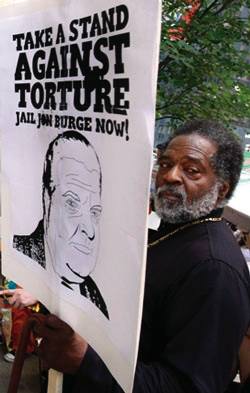
No Snitch Policy for Spooks & Cops: Ex-CIA Agent, Whistleblower John Kiriakou Sentenced to Prison While Torturers He Exposed Walk Free

DemocracyNow

Former CIA agent John Kiriakou speaks out just days after he was sentenced to 30 months in prison, becoming the first CIA official to face jail time for any reason relating to the U.S. torture program. Under a plea deal, Kiriakou admitted to a single count of violating the Intelligence Identities Protection Act by revealing the identity of a covert officer to a freelance reporter, who did not publish it. Supporters say Kiriakou is being unfairly targeted for having been the first CIA official to publicly confirm and detail the Bush administration’s use of waterboarding. Kiriakou joins us to discuss his story from Washington, D.C., along with his attorney, Jesselyn Radack, director of National Security & Human Rights at the Government Accountability Project. "This ... was not a case about leaking; this was a case about torture. And I believe I’m going to prison because I blew the whistle on torture," Kiriakou says. "My oath was to the Constitution. … And to me, torture is unconstitutional."

Mumia Abu-Jamal: "In jail you can see the span of Black Men. The Size is Stunning. Guys in wheel chairs, Very Old Black Men and Young Teenagers "

Democracy Now

In a rare live interview, Mumia Abu-Jamal calls into Democracy Now! as the new film, "Long Distance Revolutionary," about his life premieres in New York City this weekend. After 29 years on death row, he is now being held in general population at the Pennsylvania State Correctional Institution – Mahanoy. "How free are we today, those who claim to be non-prisoners? Your computers are being read by others in government. Your letters, your phone calls are being intercepted," says Mumia Abu-Jamal. "We live now in a national security state, where the United States is fast becoming one of the biggest open-air prisons on earth. We can speak about freedom, and the United States has a long and distinguished history of talking about freedom, but have we exampled freedom? And I think the answer should be very clear: We have not." In 1982, Mumia was sentenced to die for killing Philadelphia police officer Daniel Faulkner. He has always maintained his innocence and is perhaps America’s most famous political prisoner. In 2011, an appeals court upheld his conviction, but also vacated his death sentence. It found jurors were given confusing instructions.
Head Games w/ Circus Animals: As Suicides, Brain Injuries Mount, Safety of Football Questioned, from NFL to Youth Leagues

Democracy Now! 

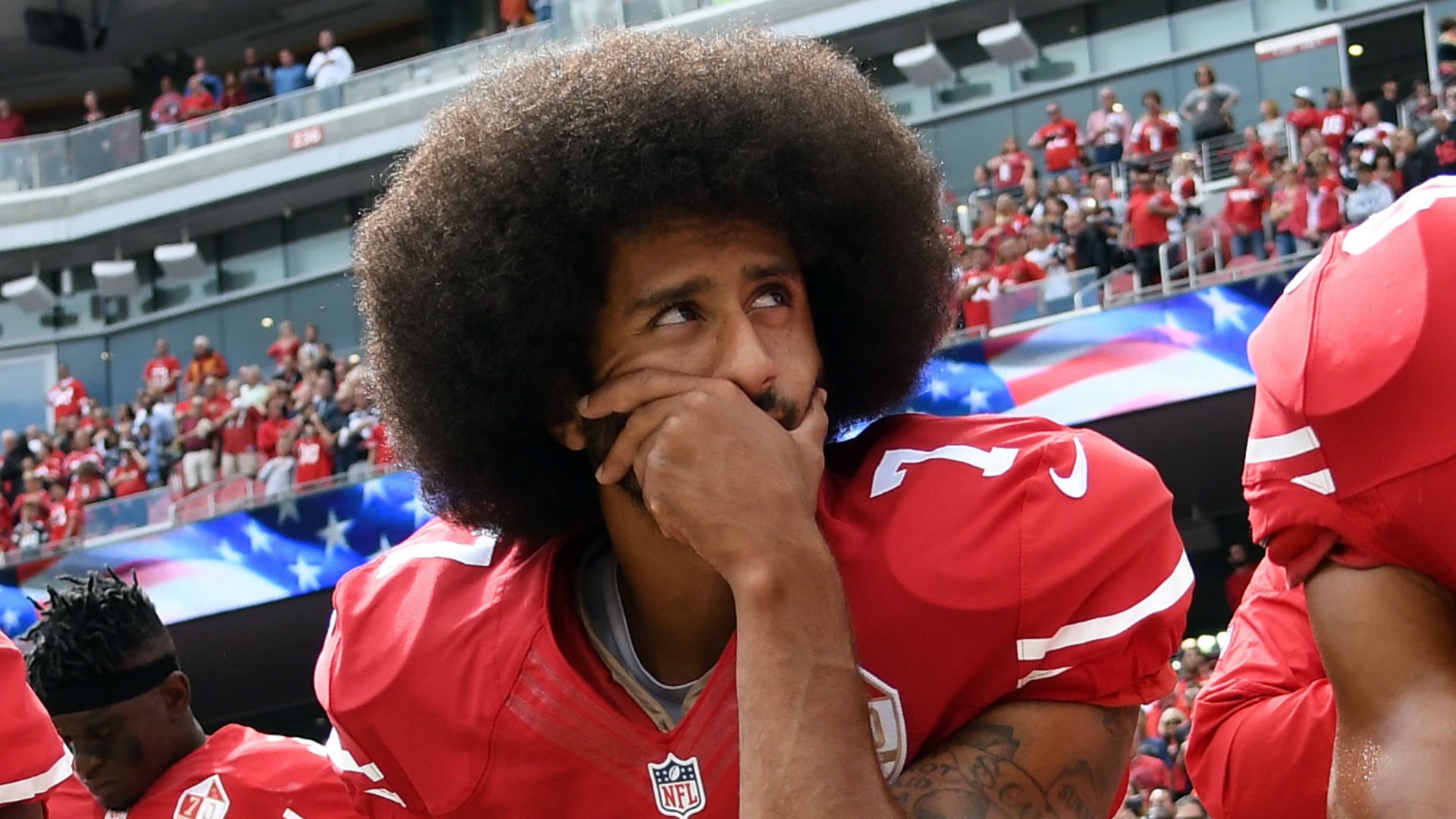
Ahead of Sunday’s Super Bowl, the safety of football is coming under increasing scrutiny as more evidence emerges about links between concussions and brain damage. President Obama recently weighed in on the issue, saying, "If I had a son, I’d have to think long and hard before I let him play football." We speak to former professional wrestler Chris Nowinski, co-founder of the Sports Legacy Institute and co-director of the Center for the Study of Traumatic Encephalopathy at Boston University School of Medicine, which maintains a bank of more than 140 athletes’ and military veterans’ brains in order to study the effects of concussions. He is the author of the book, "Head Games: Football’s Concussion Crisis," which is the focus of a new documentary.

Super Patriotic Pet Negro Geraldo Rivera Will Use Fox Platform to Benefit Possible Senate Run (vs Cory Booker) Until "It's No Longer Legal"

MediaMatters

Fox News host Geraldo Rivera is poised to become the latest Republican to leverage their Fox News platform into a possible run at political office. During an appearance this morning on Fox & Friends, Rivera suggested that he will continue to appear on the network while he "hone[s] a message," and do so until "it's no longer legal."

On the January 31 edition of his Cumulus radio show, Rivera told listeners that he is "truly contemplating" running for U.S. Senate in New Jersey. Following a discussion this morning of various news events, including the suicide attack in Turkey, Fox & Friends co-host Gretchen Carlson asked Rivera about the "firestorm" he had created by announcing a possible run. In response, Rivera launched into what co-host Steve Doocy appropriately labeled a "stump speech."

Joined by onscreen text featuring phrases like "Senator Rivera?," Rivera touted himself as a "modern Republican" that could appeal to "a point of view that is unrepresented in states like New Jersey." Calling for a "new vitalization of the Republican Party," Rivera explained his desire to cut the deficit and rein in entitlements while also indicating his support of gay marriage, Roe v. Wade, and immigration reform.

When Doocy asked Rivera if he's aware that he "can't be on TV or radio" if he officially declares his candidacy, Rivera explained that the race is "still a good year away," so he has "some time to hone a message," presumably using his Fox and WABC platforms. Later in the conversation, after Doocy encouraged him to make any official announcement on Fox & Friends, a laughing Rivera responded, "Well, I'll be here every Friday, until as such time as it's no longer legal."

New Report Calls for More Grants to Low-Income Students, End to Federal Parent Loan Program

Propublica

The federal government must double down on grants to low-income students and dramatically simplify the system of student loans, says a new report by the non-partisan New America Foundation.

The report, released on Tuesday, lays out more than 30 recommendations for fixing the nation’s increasingly strained system of paying for college, chief among them a more substantial and permanent investment in direct aid to students through Pell grants. The government should make the funding for the Pell program an entitlement in the federal budget, shielding it from annual wrangling, and should boost the maximum amount of individual grants, the report says.

It also proposes that the government create a system of incentives aimed at realigning how college use institutional aid dollars: Those with few low-income students and high tuition after discounts would be required to match a portion of Pell dollars with institutional aid; schools with many low-income students that meet a required graduation rate would get bonuses.

The New America Foundation’s report was funded by the Bill & Melinda Gates Foundation as part of a larger initiative to explore policy recommendations on ways to restructure and reform the financial aid system.

Beyond its recommendations on grants, the report suggests a wholesale overhaul of programs for student loans.

We’ve reported on the federal Parent Plus loan program, and how the lack of loan limits allows families to borrow more than they can reasonably afford to cover ever-increasing college costs. The government should end the Plus program, the report argues, as it “can encourage families to over-borrow and provides colleges with a convenient source of funds if they wish to raise their prices.”

The federal government should stick to one loan program – the main federal loan program known as the Stafford loan, the report suggests. It also suggests that the many different repayment plans currently available be replaced with one that bases monthly payments on a percentage of income – a modified version of some existing plans. 

The report also offers ideas to reform day-to-day handling of student loan payments. Errors in the servicing of student loans often frustrate borrowers and exacerbate the difficulties of repayment, especially for those whose loans were shuffled to a group of new nonprofit servicing companies.

As we’ve noted, these companies won a carve-out from Congress in 2010 that guaranteed them an opportunity to get in on servicing federal student loans. The report advocates ending this carve-out, arguing it “has made the federal student loan program more complicated and costly than it should be,” and that all servicing contracts should be awarded through competitive bidding.

See the full report for more details.

New Report Calls for More Grants to Low-Income Students, End to Federal Parent Loan Program

Propublica

The federal government must double down on grants to low-income students and dramatically simplify the system of student loans, says a new report by the non-partisan New America Foundation.

The report, released on Tuesday, lays out more than 30 recommendations for fixing the nation’s increasingly strained system of paying for college, chief among them a more substantial and permanent investment in direct aid to students through Pell grants. The government should make the funding for the Pell program an entitlement in the federal budget, shielding it from annual wrangling, and should boost the maximum amount of individual grants, the report says.

It also proposes that the government create a system of incentives aimed at realigning how college use institutional aid dollars: Those with few low-income students and high tuition after discounts would be required to match a portion of Pell dollars with institutional aid; schools with many low-income students that meet a required graduation rate would get bonuses.

The New America Foundation’s report was funded by the Bill & Melinda Gates Foundation as part of a larger initiative to explore policy recommendations on ways to restructure and reform the financial aid system.

Beyond its recommendations on grants, the report suggests a wholesale overhaul of programs for student loans.

We’ve reported on the federal Parent Plus loan program, and how the lack of loan limits allows families to borrow more than they can reasonably afford to cover ever-increasing college costs. The government should end the Plus program, the report argues, as it “can encourage families to over-borrow and provides colleges with a convenient source of funds if they wish to raise their prices.”

The federal government should stick to one loan program – the main federal loan program known as the Stafford loan, the report suggests. It also suggests that the many different repayment plans currently available be replaced with one that bases monthly payments on a percentage of income – a modified version of some existing plans. 

The report also offers ideas to reform day-to-day handling of student loan payments. Errors in the servicing of student loans often frustrate borrowers and exacerbate the difficulties of repayment, especially for those whose loans were shuffled to a group of new nonprofit servicing companies.

As we’ve noted, these companies won a carve-out from Congress in 2010 that guaranteed them an opportunity to get in on servicing federal student loans. The report advocates ending this carve-out, arguing it “has made the federal student loan program more complicated and costly than it should be,” and that all servicing contracts should be awarded through competitive bidding.

See the full report for more details.

Obama’s Flip-Flops on Money in Politics: A Brief History

Propublica

When President Obama told supporters that he would morph his campaign into a new nonprofit that would accept unlimited corporate donations, the announcement set off a familiar round of griping from campaign finance reformers.

The creation this month of Organizing for Action, which will promote the president’s second-term agenda, appears to be the fourth reversal by Obama on major money-in-politics issues since 2008.

“No big bank or corporation will donate million-dollar checks to OFA without the expectation that it will impact which issues they engage on, and that’s very troubling,” said Adam Green of the Progressive Change Campaign Committee.

The Washington Post noted that in reorganizing his campaign as a tax-exempt social welfare group, the president is embracing a structure that has been criticized for allowing anonymous money into politics.

Conservatives who’ve been attacked by the Obama camp for their reliance on such “dark money” groups called out the president’s “brazen hypocrisy.” Neither the White House nor Organizing for America responded to requests for comment.

Here’s a brief history of Obama’s other shifts on money-in-politics issues going back to 2008:

  • Public financing

In November 2007, then-Sen. Barack Obama pledged to take part in the presidential public financing system for the general election, calling himself “a longtime advocate for public financing of campaigns.” Under the system, created in the wake of Watergate, a candidate receives taxpayer money ($84 million in 2008) and cannot accept most private donations or spend beyond the amount of the government grant.

Less than a year later, in June 2008, Obama reversed himself and announced he was opting out of the system. He maintained he still supported the system in principle but said it should be reformed.

Obama became the first candidate to decline general election public financing since the creation of the system and went on to raise a then-record $745 million for the cycle. He outspent John McCain, who did accept public money, by four-to-one. Obama’s 2008 decision generally takes at least some of the blame from campaign finance observers for killing the system.

Neither Obama nor Mitt Romney accepted public financing in the 2012 race. The Obama campaign raised $782 million for the cycle.

  • Super PACs

When the U.S. Supreme Court issued its 2010 Citizens United decision, opening the way for the creation of super PACs financed with unlimited corporate or individual money, Obama became the ruling’s biggest critic.

“Last week the Supreme Court reversed a century of law that I believe will open the floodgates for special interests — including foreign corporations — to spend without limit in our elections,” Obama said in his State of the Union address a few days after the decision. “I don't think American elections should be bankrolled by America's most powerful interests, or worse, by foreign entities.”

That criticism turned into a pledge not to use the new funding vehicles. In July 2011, Obama campaign spokesman Ben LaBolt told the Washington Post: “Neither the president nor his campaign staff or aides will fundraise for super PACs. Our campaign will continue to lead the way when it comes to transparency and reform.”

Seven months later, the campaign reversed itself and embraced a super PAC founded by former White House aides called Priorities USA Action. “[O]ur campaign has to face the reality of the law as it currently stands,” wrote campaign manager Jim Messina in a blog post.

With the blessing of the campaign, top Obama aides, such as then-Chief of Staff Jack Lew and confidantes like Rahm Emanuel, were dispatched to solicit super PAC donations from Democratic millionaires and billionaires. Priorities USA ultimately spent more than $60 million to help re-elect the president.

  • Inaugural festivities funding

After Obama’s victory in 2008, his inaugural committee abided by what it called “an unprecedented set of limitations on fundraising as part of President-elect Obama’s pledge to put the country on a new path.” That meant taking no corporate money and no individual contributions in excess of $50,000 to pay for the myriad parties and balls that end up costing tens of millions of dollars.

The second time around, Obama reversed the policy. The inaugural committee organizing this month’s inaugural festivities accepted corporate money and imposed no limits on giving. A spokesperson cited the need to “meet the fund-raising requirements for this civic event after the most expensive presidential campaign in history.”

  • Unlimited special interest spending

Just a few months ago, the Obama campaign sent me a memo on the president’s campaign finance record, highlighting his repeated denunciations of special interest money in politics.

“That’s one of the reasons I ran for President: because I believe so strongly that the voices of ordinary Americans were being drowned out by the clamor of a privileged few in Washington,” he said in May 2010, decrying the way Citizens United “gives corporations and other special interests the power to spend unlimited amounts of money — literally millions of dollars — to affect elections throughout our country.”

In 2012, the Obama campaign specifically called out social welfare, or 501(c)(4),  groups that spent hundreds of millions of dollars of anonymous money on political ads.

That’s why campaign finance reformers are so angry: Organizing for Action is a 501(c)(4) that will advocate for the president’s second-term agenda.

The group has said that despite its status, it will voluntarily disclose donors. But it’s not clear whether that will involve full, prompt disclosure of who is giving and how much, or simply providing a list of names at some point.

A spokeswoman for the new group told NBC this week the disclosure issue is “still being worked out.”

Unnamed Democratic officials have told media outlets that the group will take corporate money (though not donations from registered lobbyists). Indeed, at a meeting this month at the Newseum in Washington, Obama campaign aides pitched top Democratic donors, reported Politico, which obtained a ticket to the event.

The meeting was sponsored by a trade association founded by Fortune 100 companies, including UnitedHealthcare, Microsoft, Wal-Mart, and Duke Energy.

Social welfare groups are formed to promote the common good and may be involved in politics. Under IRS rules, they are not supposed to be primarily engaged in campaigns.

It’s unclear whether Organizing for Action will get involved in electoral politics as other such nonprofits have in recent years. The group’s spokeswoman told NBC it will run “issue” ads to support Obama’s agenda — but that’s a category of political advocacy that has been open to wide interpretation.

Uncle Ruckus coming to a theater near you? Boondocks Creator Trying to Raise Money

TheGrio

The Boondocks, the popular and polarizing comic strip turned Adult Swim TV series, may be coming to a theater near you — if creator Aaron McGruder gets his way.

The outspoken artist is launching a Kickstarter campaign to raise money for a feature film based on the show’s most controversial character: the self-hating black man, Uncle Ruckus.

Kickstarter is a private for-profit company which helps creative artists fund their projects through public donations.

“If you do know who Uncle Ruckus is, you either really love him or really hate him. But if you’ve made it this far, you probably love him like we do. This is your movie,” reads McGruder’s Kickstarter promo.

The page comes complete with a video which shows an actor, largely in silhouette, who resembles Ruckus, waving a Confederate flag in slow motion.

The Ruckus character infamously insists he has “reverse vitiligo” to explain his dark complexion and frequently rails against beloved African-American figures such as Martin Luther King Jr. and President Barack Obama.

The satirical character (voiced by comedian Gary Anthony Williams) was conceived and created for Boondocks television series and has become one of the most popular facets of the show.

“There’s always been interest in a live-action Boondocks movie, which to me was out of the question considering Huey and Riley are essentially impossible to cast. The animated feature would cost around 20 million, but a live action Uncle Ruckus movie could cost a fraction of that,” said MacGruder in a statement.

Children are affected by incarceration

The Sentencing Project 

In America there are 24 million children with an incarcerated parent.
Amy Buckley writes that “these children are affected in numerous ways and those effects can be detrimental, often contributing to rebellious behavior and other problems."

She notes that since “judges don’t consider children when sentencing a parent—and women are more likely to have minor children than men--  grandparents often have to step in and raise their grandchildren.  Some children end up with other relatives or even in foster care.”

Between 1980 and 2010 the rate of women in prison increased by 646 percent, according to a fact sheet from The Sentencing Project.

READ ARTICLE

Exxon, Chevron Made $71 Billion Profit In 2012 As Consumers Paid Record Gas Prices

ThinkProgress

While 2012 might not be a banner year for Big Oil profits, it wasn’t a bad one either. With just BP left to announce 2012 earnings, Big Oil earned well over $100 billion in profits last year, while the companies benefit from continued taxpayer subsidies. Average gas prices also hit a record high last year, showing how a drilling boom may help oil companies’ profit margins, but not consumers’ wallets.

ExxonMobil — now the most valuable company in the world, passing Apple — earned $45 billion profit in 2012, a 9 percent jump over 2011. Meanwhile, Chevron earned $26.2 billion for the year. In the final three months of the year, the companies earned $9.95 billion and $7.2 billion respectively.

Here are the highlights of how Exxon and Chevron spend their earnings:

ExxonMobil

Exxon received $600 million annual tax breaks. In 2011, Exxon paid just 13 percent in taxes. The company paid no taxes to the U.S. federal government in 2009, despite 45.2 billion record profits. It paid $15 billion in taxes, but none in federal income tax.

Exxon’s oil production was down 6 percent from 2011.

In fourth quarter, Exxon bought back $5.3 billion of its stock, which enriches the largest shareholders and executives of the company.

Exxon’s federal campaign contributions totaled $2.77 million for the 2012 cycle, sending 89 percent to Republicans.

The company spent $12.97 million lobbying in 2012 to protect low tax rates and block pollution controls and safeguards for public health.

Exxon CEO Rex Tillerson received $24.7 million total compensation.

Exxon is moving ahead with a project to develop the tar sands in Canada.

Chevron:

In October, Chevron made the single-largest corporate donation in history. Chevron dropped $2.5 million with the Congressional Leadership Fund super PAC to elect House Republicans.

The bulk of Chevron’s federal contributions came from the super PAC donation, for a total of $3.87 million for the 2012 cycle. 85 percent went to Republicans.

Chevron spent $9.55 million lobbying Congress in 2012, according to the Center for Responsive Politics.

Chevron paid 19 percent U.S. taxes last year (half of the top corporate tax rate of 35 percent), and received an estimated $700 million in annual tax breaks last year.

Chevron was fined $1 million for a refinery fire that sent 15,000 Richmond, California residents to the hospital. Though the company faces $10 million in medical expenses, Chevron earns it back in a couple of hours.

With Royal Dutch Shell and ConocoPhillips reporting $35 billion in combined profit in 2012, BP is the last company left to announce its profits for the year.

Citizens United To Supreme Court: Landmark School Desegregation Case Was Wrong

ThinkProgress

Citizens United, the conservative group that successfully sued to enable wealthy corporations to buy elections, also has it in for same-sex couples. Yet an amicus brief they recently filed in the Supreme Court backing the unconstitutional Defense of Marriage Act would not simply deny marriage equality to gay people, it calls upon the Supreme Court to toss out a landmark decision ending public school segregation in the District of Columbia and declare that the federal government is free to discriminate against minorities and women:

Until May, 17, 1954, the day upon which this Court struck down “racially segregated public schools” in the States under the equal protection guarantee of the Fourteenth Amendment, it was generally understood that the due process guarantee of the Fifth Amendment did not have an equal protection component. As this Court observed in Adarand, “[t]hrough the 1940′s, this Court has routinely taken the view . . . that, ‘unlike the Fourteenth Amendment, the Fifth contains no equal protection clause and it provides no guaranty against discriminatory legislation by Congress. However, in Bolling v. Sharpe, this Court shoehorned equal protection into the due process text by sheer will, declaring “it would unthinkable that the same Constitution would impose a lesser duty on the Federal Government.”

To the contrary, it was and is eminently “thinkable” that the Reconstruction Congress, led by abolitionist Republicans, would propose an amendment to the Constitution that would increase the powers of the federal government at the expense of the states.

To translate this a bit, the Fourteenth Amendment provides that “[n]o State shall . . . deny to any person within its jurisdiction the equal protection of the laws,” and thus this guarantee against discrimination explicitly applies only to state laws and not to the federal government. On the same day that the Supreme Court handed down Brown v. Board of Education, however, the Court also held in Bolling that a shield against public school segregation is one of the liberties protected by the Fifth Amendment, which does apply to the federal government. Thus, the District of Columbia, which is a federal entity, could not have segregated public schools.

Citizens United is now claiming that Bolling was wrong, and that the Constitution does absolutely nothing to prevent the United States from engaging in discrimination of any kind. If the justices buy their argument — as they were all too willing to do in the case that bears Citizens United’s name — it would mean that Congress is free to set up its own Jim Crow laws.

2 Investigators: Accused Outlaw Chicago Cops Draw Desk-Duty Salaries, Sometimes For Years

CBS

Millions of tax dollars are spent on the salaries of cops on desk duty instead of on the street where they are desperately needed.

2 Investigator Pam Zekman has learned that’s because there are currently 86 Chicago Police officers stripped of their police powers over alleged misconduct. It can take years for the city to resolve their cases, even when there is taped evidence that seems to support the allegations.

For example, as a squad car rolled up to a domestic violence call in June 2011, its dashboard camera recorded another cop walking toward a suspect he already wounded. Then, as he lay on his side in a fetal position, the officer shot the suspect, Flint Farmer, three more times in the back.

Court records show the medical examiner concluded the shots depicted in the video were fatal.

Officer Gildardo Sierra told police at the time that he was “in fear for his life” when Farmer moved toward him while pulling an object out of his pocket and pointing it at him. It turned out to be a cell phone.

Farmer’s girlfriend and the mother of his child filed a wrongful death lawsuit against the city and Sierra. It argued Farmer stopped when he was ordered and was unjustifiably shot by Sierra.

The city recently agreed to settle the lawsuit filed by Attorney Craig Sandberg, who declined to comment about the case.

Sierra was stripped of his police powers and has been on desk duty for 19 months since the shooting. But he’s still making a $75,000 a year salary while the disciplinary process continues.

“That system is absolutely unworkable,” says Attorney Terry Ekl, who has reviewed hundreds of confidential police disciplinary files related to other lawsuits he’s filed involving police misconduct.

“There are literally layers on top of layers of rights afforded to police officers in the disciplinary process,” Ekl says. “It goes on for before there is ever any type of final resolution.”

He said the system should be overhauled.

Under the Freedom of Information Act, CBS 2 requested information about the 86 officers the department says have currently been stripped of their police powers. CBS 2 wanted to know who they are, when they stripped of their police powers — and why.

All data stored on cloud computing services can be accessed by US government without a warrant

BlackListed News

According to reports, all personal information stored on major cloud computing services can be spied on by US agencies without users’ knowledge or even a search warrant.

This is all reportedly being done under the recently reauthorized Foreign Intelligence Surveillance Act (FISA) and has led British Members of Parliament to call on the British government to not only end the use of cloud computing but also stop sharing intelligence services with the U.S, according to the Independent.

It’s worth pointing out that the US government has admitted breaching the Fourth Amendment under FISA while maintaining an absurd level of secrecy around the Act. Given the massive expansion of the Pentagon’s cyberwarfare forces and the exponential rise in surveillance overall, people around the world have a quite legitimate reason to be concerned.

As New Zealand’s IOL points out, under FISA “all documents uploaded on to cloud systems based in the US or falling under Washington’s jurisdiction can be accessed and analyzed without a warrant by American security agencies.”

Apparently, US agencies have been able to access private data stored on the cloud since 2008 while no one had any clue it was going on.

“What this legislation means is that the US has been able to mine any foreign data in US Clouds since 2008, and nobody noticed,” said Caspar Bowden, chief privacy adviser to Microsoft Europe for nine years until 2011.

According to IOL, US agencies like the National Security Agency (NSA), the FBI and the CIA can all access information that potentially concerns American foreign policy for reasons which are purely political.

There is apparently no need for suspicion that national security issues are at stake which would mean that religious organizations, political campaigns and even journalists could have their data monitored by the US government. 

Infographic: Doctors kill 2,450% more Americans than all gun-related deaths combined

BlackListed News

Everyone agrees the Sandy Hook shooting was a tragedy. Lots of people subsequently exploited the deaths of those children to push a political agenda of disarming Americans by claiming "guns kill people."

But compared to what? Swimming pools kill people. Horseback riding kills people. And yes, even childbirth kills people. (Does that mean we should criminalize getting pregnant?)

To make any sense of death statistics, we have to ask, "Compared to what?" Because if we compare deaths by firearms to other causes of death, the picture is very, very different from the doomsday fear mongering scenarios CNN and other gun control pushers have whipped up into a nationwide frenzy. In fact, as the following infographic shows, doctors kill 2,450% more Americans than all gun-related deaths combined.

Your doctor is FAR more likely to kill you than an armed criminal

It's true: You are 64 times more likely to be killed by your doctor than by someone else wielding a gun. That's because 19,766 of the total 31,940 gun deaths in the USA (in the year 2011) were suicides. So the actual number of deaths from other people shooting you is only 12,174.

Doctors, comparatively, kill 783,936 people each year, which is 64 times higher than 12,174. Doctors shoot you not with bullets, but with vaccines, chemotherapy and pharmaceuticals... all of which turn out to be FAR more deadly than guns.

This is especially amazing, given that there are just under 700,000 doctors in America, while there are roughly about 80 million gun owners in America.

How do 700,000 doctors manage to kill 783,936 people each year (that's over one death per doctor), while 80 million gun owners kill only 31,940? Because owning a gun is orders of magnitude safer than "practicing" medicine!

Check out the following infographic, which can also be viewed in a higher resolution at:
www.naturalnews.com/Infographic-Firearms-vs-Doctors-Drugs.html

O'Reilly Argues With Both Colin Powell and The Facts On Voter Suppression And Voter Fraud

Media Matters for America

In an interview with former Secretary of State Colin Powell, Fox News host Bill O'Reilly ignored key legal problems for photo voter ID laws under the Voting Rights Act and dismissed concerns of voter suppression, claiming in-person voter fraud was a problem.

On the January 29 edition of the O'Reilly Factor, O'Reilly hosted Powell to discuss "racial politics," voter suppression, and voter fraud, but failed to provide important context, including any mention of a crucial Voting Rights Act case set to be argued before the Supreme Court on February 27. In part, this case will turn on the historic civil rights law's efficacy at preventing the type of race-based voter suppression Powell described.

The problem that recent photo voter ID laws purport to address - voter fraud committed in person - is "virtually non-existent." Nevertheless, in the past two years, state Republican legislators and right-wing allies have aggressively pushed such laws that add another identification requirement for voting, even though voter identification is already required across the country. Under the Voting Rights Act, federal courts have recently confirmed that new voter ID laws in jurisdictions with a history of voter suppression have a prohibited effect on African-American and Hispanic voters.

O'Reilly refused to acknowledge any of these facts in his interview with Powell, even as Powell tried to explain them to him:

POWELL: One more point.

O'REILLY: All right. Go ahead, go ahead.

POWELL: You can't have policies that try to make it harder for minorities to vote. I think one of the most terrible things that happened in the past election season is when we had a number of states that were going out of their way, claiming there was outright fraud, when there really wasn't any fraud to be of concern to us.

But we were doing things to -- making it more difficult for those people to vote.

O'REILLY: I want to get very micro on this.

POWELL: Well, but you're --

O'REILLY: Voter ID -- wait, wait, wait.

POWELL: Go ahead.

O'REILLY: The voter ID, you object to showing an identification card when you vote?

POWELL: No. Of course not.

O'REILLY: Well, that's all the Republican Party wants. That's all they wanted is the voter ID.

POWELL: I object to putting in place additional levels of voter ID that --

O'REILLY: One, show one.

POWELL: -- disenfranchise, disenfranchise those of our fellow citizens. I want to see a Republican Party that, rather than trying to make it more difficult to vote and restricting the number of days and hours you can vote, a Republican Party that says we want everybody to vote and we're going to give you a reason to vote for us.

O'REILLY: All right. But I don't --I don't know if asking for an ID is trying to restrict the vote -- I mean, I'm sorry. You should be able to prove who you are before you cast a ballot.

POWELL: No, you should be able to prove who you are when you register to vote. And when you make the proper registration and identify yourself, you shouldn't have to go to some higher level which is going to restrict some.

O'REILLY: But surely you know how fraud is committed. I mean Boston, in Chicago, you register and then you show up and it's not you.

POWELL: I have not seen any study that says fraud is a problem of such significance that these kinds of procedures were in place. And I'm glad to see that Governor Scott in Florida has recently said he is turning this back over to his -- his local communities to handle.

O'REILLY: All right. I just think showing an ID to vote is the bare minimum.

O'Reilly's effort to discuss the topic in "micro" contained multiple inaccuracies and completely ignored the recent and relevant challenge to the Voting Rights Act in Shelby County v. Holder. For example, O'Reilly seems to be under the misimpression that "all the Republican party" wanted this past election cycle was "an identification card when you vote." Powell tried to correct him by noting the new voter ID laws were actually "additional levels" of already-required documentation. As detailed by the Brennan Center for Justice at the New York University School of Law, it was precisely these redundant and unnecessary "additional levels" of identification which made this initiative pushed by state Republicans so troubling:

Currently, every state in America requires voters to prove their identities before receiving a ballot; different states require different levels of proof.  Legislators in states across the country are now promoting bills that would require voters to meet more stringent documentation requirements before voting--including presenting photo identification at the polls on Election Day in order to cast a ballot. While the details of the proposals vary, these bills all would deny the right to vote to some or all citizens who are unable to produce a photo ID.  Studies show that as many as 11 percent of United States citizens--mostly older, low-income, and minority citizens--do not have government-issued photo IDs.

As of last year, ten states have new "unprecedented" voter ID laws. In-person voter fraud of the type O'Reilly describes has been repeatedly shown to be a fabricated problem to justify the "solution" of government-issued photo voter IDs mandated under the recent legislation. State Republicans are beginning to admit these types of laws are purely a prohibited race-based voter suppression tactic, as Powell argued during his O'Reilly Factor appearance. O'Reilly did not mention these documented admissions.

O'Reilly also notably left out the fact that federal review has documented this phenomenon through the "pre-clearance" process under Section 5 of the Voting Rights Act, which forbids jurisdictions with a history of impermissible racial discrimination - such as states in the South - from enacting changes in election practices without approval. As election law expert Professor Rick Hasen recently explained, these are the examples of illegal voter suppression that O'Reilly was searching for:

Like many other states with Republican majority legislatures acting over the last few years, South Carolina adopted a tough photo identification law before the 2012 election. The state's Republican legislature likely acted out of the belief that such laws would marginally depress Democratic turnout and help Republicans at the polls. Controversy over voter ID laws also motivates the Republican base to turn out to vote. (What voter ID laws don't do is prevent a lot of real voter fraud, though that's the rationale their supporters cite.)

The U.S. Department of Justice blocked South Carolina's voter ID requirement under Section 5. The process sounds technical, but it's important. Nine full states and parts of other states with a history of racial discrimination in voting must get approval from either the Department of Justice or a three-judge court in Washington, D.C. before making any changes in their voting practices and procedures--from changes as small as moving a polling location to as large as enacting a new redistricting plan. 

[...]

Voter ID laws have also passed outside the South in recent years, in states such as Indiana and Kansas. Because Section 5 doesn't apply there, no federal law prevents the voter ID requirements from going into effect, though some state courts have blocked them for other reasons. By contrast, because of Section 5, South Carolina's law automatically went on hold until it was softened. Texas, meanwhile, lost a bid to impose an even stricter voter ID requirement enacted in 2011.

Because GOP legislation of this sort is not going away, other media outlets are reporting on the clear and important link behind recent voter ID laws and the Voting Rights Act's prohibition of certain voter suppression that discriminates on the basis of race. In the coming weeks before the Supreme Court hears oral arguments on the "pre-clearance" requirements of the Voting Rights Act, hopefully O'Reilly will finish the conversation he started with Powell and include this crucial context.