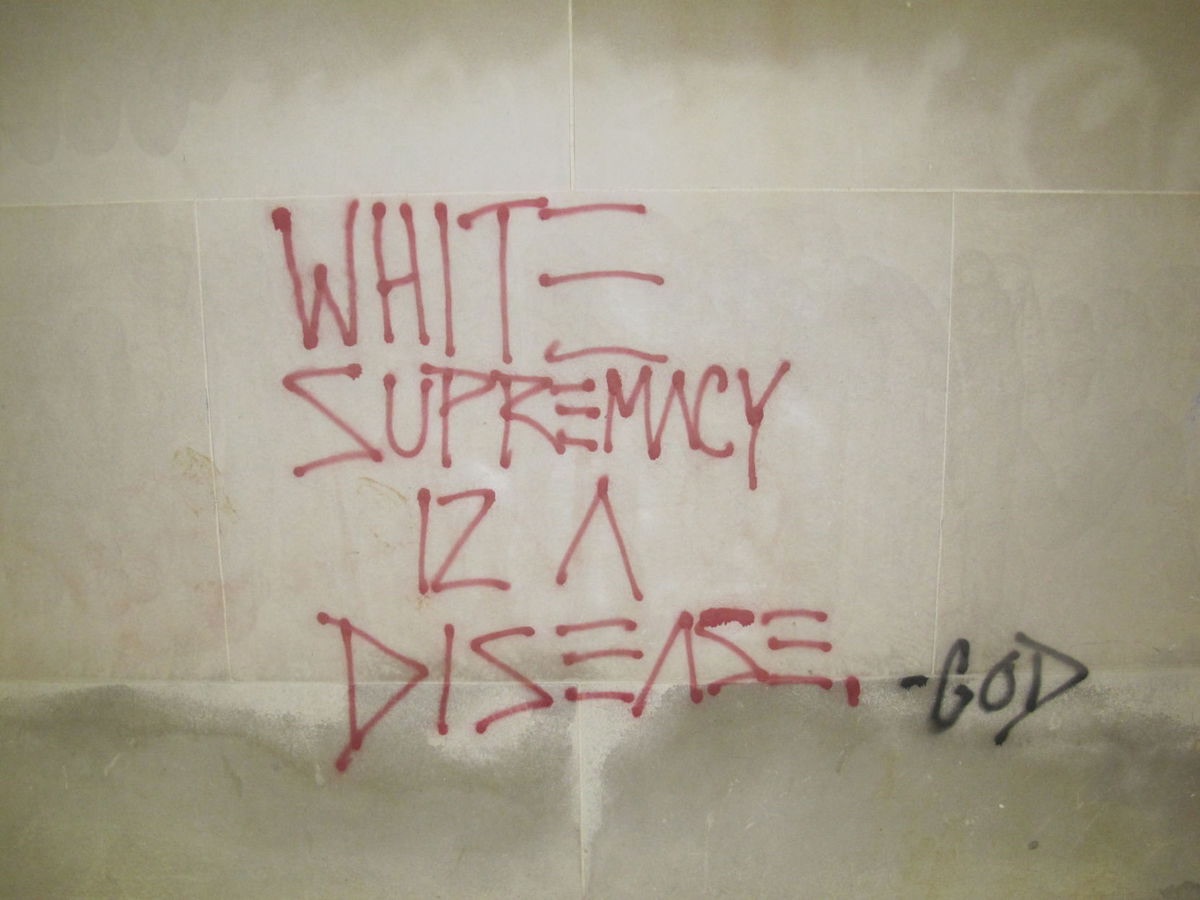
Sheriff Joe Arpaio Accepted Award From Confederate Group With "History of White Supremacy,"

PhoenixNewTimes

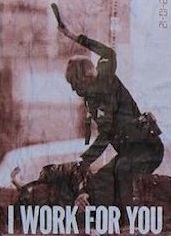
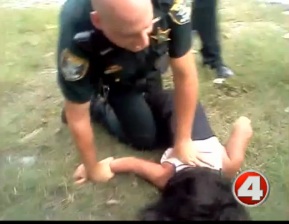
Besides the announcement of plans to deploy armed posse members at schools, another Sheriff Joe Arpaio story that broke yesterday concerns his acceptance last year of an award by a confederate group.

Salon, an online magazine with a national presence, published an article yesterday about the mini award ceremony in Arpaio's office back in October of 2011. The magazine got the tip from a researcher who says the group, the Sons of Confederate Veterans, "has an interesting history of white supremacy which continues to this this day."

The Salon story even includes the accompanying picture from the SCV newsletter of Arpaio accepting the award.

The Supreme Court ruled recently that it did not want to presume that Arpaio's racist sherif department would enforce the Arizona "papers please" law in a racist manner. As such, lawsuits challenging the law were premature.

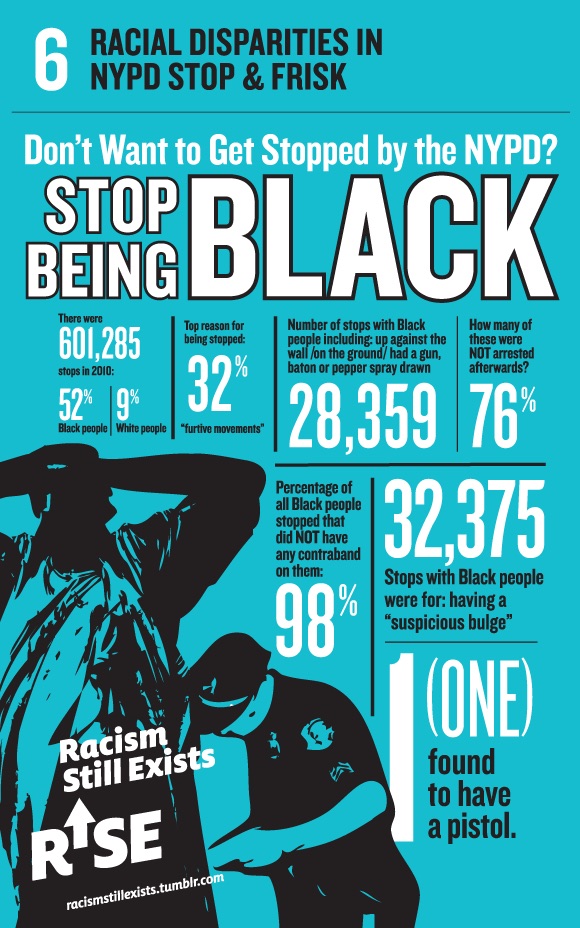
Section 2(B) gives police too much discretion when stopping or detaining persons while “checking” their citizenship status. The National Association of Criminal Defense Lawyers (NACDL) and AACJ argued in their brief that Sec. 2(B) cannot be implemented without racially profiling Latinos in violation of the Fourth Amendment’s prohibition on unreasonable searches and seizures and the Fourteenth Amendment’s Equal Protection Clause. (That is, police stops and detentions of persons based on physical characteristics or persons who look Latino (brown skinned persons or darker skinned persons who could appear to be African, Cuban, Dominican, Hatian or West Indian immigrants) to the police are reasonable in Arizona -  any stop and detention of a non-white person). Even lawful detentions and arrests become unconstitutional when the detention becomes prolonged or unreasonable. If officers rely on profiling characteristics such as a person’s ethnicity in determining whether a person should be detained for an immigration check, Sec. 2(B) becomes an unconstitutional “stop-and-identify” law repugnant to all citizens. [HERE] and NACDL amicus curiae brief

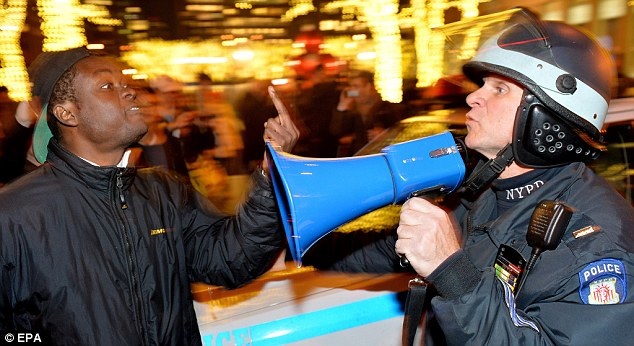
Surge in lawsuits vs. NYPD part of costly trend for the city

NYDailyNews

THE NUMBER of lawsuits against the NYPD jumped by 10% in the 2011 fiscal year, with cases involving alleged misconduct leading the way, a new report revealed.

There were 8,882 suits filed against the NYPD from July 1, 2010, through June 30, 2011 — the most against any city agency during that period, according to an analysis of claims against the city performed by city Controller John Liu’s office.

Claims against the NYPD cost the city $185.6 million in fiscal 2011, an increase of 35% from the previous fiscal year, when the payout was $137.3 million, the report notes.

In all, the city paid out $550.4 million in personal injury and property damage settlements and judgments in fiscal 2011.

Donna Lieberman (left, front), chief of the New York Civil Liberties Union, with (l. to r.) NYCLU lawyer  Alexis Karteron, Dinah Ortiz and her son, plaintiff Angel Ortiz, 18, and Roberto Concepcion, lawyer for Latino Justice PRLDEF, speak out about NYPD stop-and-frisk policy in October.

That figure, which breaks down to $70 per resident to cover the total cost, was 5% greater than the $522 million tally from the previous fiscal year. The mayor’s office said statistics for claims from fiscal 2012 are not yet available.

Read More

Blacks account for 85% of teens charged as adults in Baltimore

Baltimore Sun

Close to 85 percent of teens charged with adult crimes in the region are black, according to an snapshot of recent data from local jails in Baltimore and its surrounding counties.

Every one of the 45 juveniles housed at the Baltimore City Detention Center on a recent day was an African-American. But blacks only account for 63.7 percent of the city's population, according to the 2010 U.S. Census.

Camilla Roberson, an attorney with the Public Justice Center, said overrepresentation of minorities in the criminal justice system is a long-standing issue. But finding a starting point to address the matter faces one major barrier: The state doesn't track such data.

While jail supervisors record the information individually, there is no entity that documents it statewide.

The Baltimore Sun compiled the data for this analysis by asking each local detention center to submit one day of statistics from November. Though centers reported their numbers from different dates, state officials said the population does not fluctuate appreciably within a given month.

"If we as a state are going to address this disproportionality effectively — figure out who is being affected, where the points of entry are, why this is happening and how we can change it — we need to know how many youth are in the jails and their racial and ethnic breakdowns," Roberson said. "That's the first step in creating a solution."

In the Baltimore region, 81 juveniles were held in the adult detention center on a recent day in November on charges including murder, rape, assault, armed robbery and carjacking. Maryland law allows prosecutors to charge youths at least 14 years old as adults for certain crimes involving sex and violence. More than 770 juveniles were charged as adults in Maryland last year.

Read More

Blackface in Amsterdam

Patheos

A few years ago, I came across David Sedaris’s essay 6 to 8 Black Men, a  light-hearted look at how the Dutch celebrate the Christmas season holiday of Sinterklaas (Saint Nicholas) and his servant Zwarte Piet (Black Pete). Sinterklaas is similar to Santa Claus; he rewards good children with presents for their good behavior. The bad children, however, have to contend with Zwarte Piet, who beats them, kidnaps them and then sends them to Spain as punishment (really). Knowing that I’d be in the Netherlands during Sinterklaas I tried to mentally prepare myself to discuss this holiday, elements of which seem overtly racist to me, with my Dutch friends. However,  nothing prepared me for the nausea I felt seeing real,  white Dutch people walking in public streets in blackface, comically dressed as 19th century African pages.

As I continued to ask my friends about their thoughts concerning Zwarte Piet, I uncovered two interesting trends, that initially seemed disconnected. To begin with, there actually IS a socio-political movement to mitigate the racist elements of Sinterklaas. There have been countless public forums, documentaries and mass protests to address the racist elements of the holiday, mostly spearheaded by anti-racism activists of African backgrounds. A group of people even tried to remake the character of Zwarte Piet from a (former) black slave, into a magical rainbow-colored sprite. Mostly, these efforts have raised awareness of the issue, but have not succeeded in changing cultural attitudes toward this beloved Christmas tradition.

The second trend was astonishing, to my American ears. Most of the people I discussed Zwarte Piet with did not feel as though the character was very controversial. “It’s a children’s holiday; racism has nothing to do with Zwarte Piet” was the typical response I got from people I talked with, including those of white, Turkish and Moroccan backgrounds. At some point during these conversations, I wondered if I was letting my post-civil rights American sensibilities dictate how I viewed another culture’s holiday. After all, while The Netherlands does have ahistory of black slavery and colonization of black peoples, it does not have the same exact history

as the United States and I could not view The Netherlands with American lenses.

But I soon realized a deeper reason for their seeming ambivalence: for many Dutch citizens, of all racial, ethnic and religious backgrounds, the racism in the children’s fantastical Sinterklaas holiday isovershadowed by the real struggles people of color – citizens of former slave colonies and descendents of North African guest workers alike. These Dutch citizens are designated as allochtoon, always considered as foreigners by their society, and face tremendous difficulties in obtaining equal opportunities to the education and jobs that would open a path toward upward mobilization. The Zwarte Piet debate is seen as a diversion from the taking actions to promote the full economic and social integration of Dutch citizens of color.

Read More

U.S. files civil rights complaint against N.C. Sheriff who Racially Targeted Latinos

From [HERE] The U.S. Justice Department filed a civil rights complaint Thursday against a North Carolina sheriff, accusing his agency of systematic racial profiling of Latinos. The lawsuit in U.S. District Court follows a two-year investigation during which federal authorities concluded that Alamance County Sheriff Terry S. Johnson and his deputies made unwarranted arrests with the goal of maximizing deportations.

Federal officials say Johnson violated the constitutional rights of numerous U.S. citizens and legal residents by illegally targeting and detaining Latinos without probable cause. The complaint also alleges that Johnson sought to obstruct the federal investigation by withholding documents and falsifying records.

Johnson is a white Republican who was first elected in 2002. He has previously said the investigation of his department is politically motivated.

The sheriff’s lawyer, Chuck Kitchen, released a statement Thursday that said the accusations against Johnson are based on mistruths and flawed statistics. “Sheriff Johnson continues to deny any wrongdoing by his department,” Kitchen said. “The Alamance County Sheriff’s Office does not engage in profiling Spanish-speaking persons. The sheriff will be filing a formal response with the court.”

Thursday’s complaint, which Kitchen said they learned about through the media, was filed after Johnson and the Justice Department failed to reach a settlement.

The Civil Rights Act of 1964 and other federal laws bar police from engaging in a pattern of violating the constitutional protections of U.S. citizens or legal residents. In the complaint, federal authorities ask the court to impose sanctions intended to force Johnson’s compliance with federal law.


Read More

Deal Signed to Overhaul Juvenile Justice in Tennessee

NyTimes

For teenagers, especially African-Americans, getting in trouble in Shelby County, Tenn., has long been a particularly bad idea.

Federal investigators in 2009 began investigating juvenile justice in the county, which includes Memphis. They found that black teenagers were twice as likely as white teenagers to be detained and were sent to adult criminal court for minor infractions far more often than whites.

Black or white, teenagers locked up by the county attempted suicide at record rates and were sometimes strapped to deep, wide restraint chairs and left alone up to five times longer than the law allowed.

They languished over long weekends without proper hearings, were not read their Miranda rights and received crucial court documents just before hearings, if they received them at all, investigators found.

“What we saw was an assembly line with very little quality assurance,” said Tom Perez, an assistant attorney general in the Justice Department’s civil rights division.

On Monday, the county and the Justice Department signed an extensive agreement to overhaul the county’s juvenile justice system. The department and juvenile advocates called the agreement the first of its kind in the nation and a signal that momentum is growing to find new ways to treat teenagers who break the law.

Read More

Pet Negro Outreach Really Designed to Attract White Voters: The Puzzle of Black Republicans

Even if the Republicans managed to distance themselves from the thinly veiled racism of the Tea Party adherents who have moved the party rightward, they wouldn’t do much better among black voters than they do now. I suspect that appointments like Mr. Scott’s are directed less at blacks — whom they know they aren’t going to win in any significant numbers — than at whites who are inclined to vote Republican but don’t want to have to think of themselves, or be thought of by others, as racist.

Just as white Southern Democrats once used cynical manipulations — poll taxes, grandfather clauses, literacy tests — to get around the 15th Amendment, so modern-day Republicans have deployed blacks to undermine black interests, as when President Ronald Reagan named Samuel R. Pierce Jr. to weaken the Department of Housing and Urban Development, Clarence M. Pendleton to enfeeble the Commission on Civil Rights and Clarence Thomas to enervate the Equal Employment Opportunity Commission.

Over the course of history, racial alignments have shifted radically. The Democrats were the party of white supremacy until the New Deal. The Republicans were a party of relative, if feeble, support for civil rights until the 1950s. The tables have completely turned. No Republican presidential nominee has won the black vote since 1936. All four black Republicans who have served in the House since the Reagan era — Gary A. Franks in Connecticut, J. C. Watts Jr. in Oklahoma, Allen B. West in Florida and Mr. Scott — were elected from majority-white districts.

There is little that connects these men to mainstream black politics or to the country’s first two black senators, Hiram R. Revels and Blanche K. Bruce, who were elected (by the Mississippi State Senate) during Reconstruction, that extraordinary and brief moment of African-American political empowerment after the Civil War destroyed chattel slavery.


Read More

Death penalty becoming ‘irrelevant,’ report says (unless you are a non-white defendant who killed a white victim in the Death Belt)

Seattle Times

Only nine states executed death-row inmates in 2012 and the number of new death sentences, at 78, was nearly the lowest number of new sentences issued since the death penalty was reinstated in 1976, according to the Death Penalty Information Center’s year-end report released Tuesday.

The punishment also came under attack this year from advocates in California, who narrowly lost a death-penalty-repeal campaign headlined by district attorneys, judges, victims’ families and former prison officials.

Based on these trends, says Richard Dieter, executive director of the center, “the death penalty appears to be an increasingly irrelevant component of our criminal-justice system. It still exists, but as far as using it as a response to crime, it’s not the norm and it’s not carried out uniformly across the country.”

While the trend of the last 10 years shows that death sentences and executions are declining, one state did act this year to speed up its process. In May, South Dakota passed legislation limiting death-row inmates to one post-conviction appeal, which must be filed within two years of their convictions. The state executed two people this year, its first executions since 2007.

North Carolina also could buck the trend in the coming year. Republicans are now in control of the governor’s mansion and both legislative chambers. They have vowed to repeal the state’s Racial Justice Act, which allows death-row inmates to challenge their death sentences based on statewide statistical evidence that could show racial bias played a role in their sentencing or in jury selection. The state’s unique Racial Justice Act opened the door to appeals for nearly all of the state’s 165 death-row inmates and has stopped all executions in North Carolina.

Read More

Puerto Rico TV Station Will Not Cancel SuperXclusivo

ABCNews

A life-sized she-puppet continues to stir controversy in Puerto Rico for statements she made two weeks ago on the island's highest-rated show, SuperXclusivo. And after suggesting to The New York Times on Monday that La Comay's days may be numbered, José E. Ramos, the president of WAPA TV, which airs the show, says the puppet is here stay.

"No, WAPA is not considering canceling SuperXclusivo," Ramos told ABC/Univision. "I told The New York Times that, naturally, we do think about both the benefits and consequences of the program and we take the accusations leveled against the show very seriously."

However, Ramos says that the puppet, which is voiced by a "Kobbo" Santarroso, will only continue her reign as queen of Puerto Rican news and gossip if she makes a few adjustments.

"We will be implementing changes in oversight of the show that will ensure that offensive or inappropriate language is not used," he said. The network also says it will launch an anti-violence campaign to help police solve unsolved crimes on the island.

A movement to boycott the show grew quickly after the puppet made controversial comments regarding the brutal murder of 32-year-old José Enrique Gómez Saladín earlier this month. The boycott's Facebook page gained more than 73,000 Facebook fans in about a dozen days, and the group has pressured nearly 40 companies, including AT&T, Walmart, Ford, Coca-Cola, and Chevrolet, to cut ties with the show or pull their advertising.

After Ramos called the advertisers' decision to pull ad time "emotional" almost two weeks ago in an interview with Metro, dozens more advertisers have followed suit. Ramos' tone has since changed.

"We respect the decision by some advertisers to suspend advertising on the show; however, the majority of the public continues to support this show, as evidenced by our increase in ratings," he said.

The show's boycotters say their movement has caused the show to drop a few points in its Nielsen ratings over the past weeks, despite WAPA's claims that they have been better than ever. A WAPA spokesperson said that the recent drop in the last few days is because the network has been playing reruns since December 12th, and not because of the boycott. The network's spokesperson also said that SuperXclusivo has remained the most popular show on television for households throughout the boycott.

Nonetheless, Ramos wants to apologize to those offended by La Comay's insinuation that Gomez's murder may have been partially his own fault for being present in an area known for prostitution.

"We sincerely regret if comments made on the show are ever taken out of context or misinterpreted to be deliberately hurtful," he told ABC/Univision. Earlier this month, La Comay also offered her own apology, saying that she was simply repeating a story which originated in other news outlets.

But, the shows' critics say this just isn't enough. Pedro Julio Serrano, a spokesperson for the National Gay and Lesbian Task Force says that "sorry if we offended you" isn't a "real apology."

"It's like a half-apology, it says, if someone felt offended then we apologize," Serrano said. "That's not accepting responsibility for more than 15 years of defamation, of xenophobic, homophobic, and racist attacks that have come from their show."

While the comments regarding the brutal murder of 32-year-old José Enrique Gómez Saladín set off the controversy, critics say that this latest episode was just the final straw. Categorized as an entertainment show by WAPA, SuperXclusivo often pokes fun at public figures and puts its own spin on stories in the news.

Grand jury probes L.A. County sheriff's handling of FBI informant

LATimes

When Los Angeles County jail officials learned last year that one of their inmates was a secret FBI informant, they launched a plan.

Sheriff's officials moved the inmate from the downtown lockup, where he was surreptitiously collecting information on allegedly abusive and corrupt deputies, to a cell in a patrol station in San Dimas. Jailers kept him under constant watch, sources said, and listed the informant, a convicted bank robber, under a series of aliases — including Robin Banks.

Now, a federal grand jury is investigating whether sheriff's officials moved the informant to hinder an FBI investigation into alleged jail abuses.

Several sheriff's employees have testified at recent grand jury hearings about the handling of the informant, sources said. At least one witness testified that moving the inmate and changing his name was an attempt to hide him from federal agents, and that top officials, including the department's second in command, Undersheriff Paul Tanaka, played a role in the plan, according to a source familiar with the testimony.

Sheriff's officials insist that they were not hiding the informant, Anthony Brown, from the FBI but protecting him from other deputies.

Department spokesman Steve Whitmore said Brown wrote a letter after his identity was discovered, complaining that he feared for his life and felt abandoned by the FBI.

"He was frightened not of inmates but of deputies because he was snitching on deputies," Whitmore said. "We were moving him around to protect him from any kind of retaliation."

The grand jury investigation underscores the rift that developed last year between the Sheriff's Department and federal authorities after deputies discovered the FBI had cultivated an inmate informant as part of a wide-ranging inquiry into the department's jails.

After news broke about the incident, Sheriff Lee Baca publicly accused an FBI agent of possibly committing a crime by smuggling a phone to the informant. He dispatched investigators to the agent's home before determining the case was "not worthy of pursuing."

The grand jury hearings suggest that the federal investigation extends beyond alleged jailhouse abuses by deputies to include the actions of high-ranking members of the department. So far, the U.S. attorney's office has brought charges against only one deputy, who pleaded guilty to bribery for taking money to smuggle the cellphone to the informant.

Laurie Levenson, a professor at Loyola Law School and a former federal prosecutor, said obstruction of justice cases typically involve intimidation or violence against potential witnesses. But she said prosecutors could build a criminal case against sheriff's officials if they can prove the department's goal in moving Brown was to hinder the FBI's investigation of the jails.

"The biggest challenge is probably to show... the purpose of that was to interfere with the investigation as opposed to other legitimate purposes," she said. "If they can show that there was a conspiracy to hide the informant, they'll find a statute that fits."

Sheriff's officials discovered the informant's identity after jail deputies found his phone during a cell search in August 2011. The phone included calls to the FBI. In an interview with The Times earlier this year, the informant said he had been using his phone to take photos and document excessive force inside Men's Central Jail. Brown said FBI agents regularly visited him in court and at jail, where he supplied them with the names of corrupt and abusive deputies.

Brown said FBI agents rushed into the jail to visit him soon after they learned his cover had been blown. But as the meeting began, Brown said, a sheriff's investigator came in and ended it. "This…visit is over," the official said, according to Brown.

Brown said sheriff's officials moved him, changed his name several times and grilled him about what he knew and whether he would testify in the federal investigation.

"I didn't know it then, but they were hiding me from the feds," said Brown, who is serving 423 years to life in prison for armed robbery.

Whitmore, the sheriff's spokesman, disputed Brown's account of the FBI visit, saying it never happened. Federal agents, he said, never asked to visit Brown and would have been given access to the inmate had they requested it.

Sources who were briefed on the department's handling of the informant said the decision to move Brown was made at a meeting attended by Tanaka. One sheriff's employee testified that supervisors made it clear after the meeting that the intent of moving Brown was to hide him from the FBI, according to a source.

Whitmore said Tanaka played no role in Brown's move.

"That is an absurd allegation," he said. "Were the higher-ups briefed about this? Absolutely. But he had nothing to do with this decision other than the fact that he was aware of it."

In the year since the jail abuse scandal erupted, Tanaka has come under heavy criticism. A county commission created to examine the jails accused Tanaka of exacerbating problems in the lockups by encouraging deputies to push legal boundaries and discouraging supervisors from disciplining deputies involved in misconduct.

The undersheriff admitted some fault, but denied that he turned a blind eye to abuse. In testimony before the commission, he accused his detractors of having personal agendas and trying to discredit him by misinterpreting his actions.

At least one witness has told the grand jury that another top sheriff's official — Lt. Greg Thompson, formerly in charge of the jailhouse intelligence team — was also involved in hiding Brown, according to the source.

Thompson was placed on leave last month. Sheriff's officials are investigating whether Thompson had his son, who is also a deputy, confront another jailer to find out what he had told the grand jury about the elder Thompson, according to several sources who asked to remain anonymous because the investigation is ongoing.

Representatives for the FBI and the U.S. attorney's office declined to comment. Whitmore said that Tanaka and Thompson also declined to comment.

Federal Initiative Aims to Raise Number of Minority Scientists

NYTimes

Few blacks enter biomedical research, and those who do often encounter obstacles in their career paths.

A study published last year found that a black scientist was markedly less likely to obtain research money from the National Institutes of Health than a white one — even when differences of education and stature were taken into account.

The institute has now announced initiatives aimed at helping blacks and other ethnic and racial groups who have been unrepresented among medical researchers, including a pilot program that will test a grant review process in which all identifying information about the applicant is removed.

The initiatives take a step further than addressing the problem identified in the study — the goal is to entice more minorities into the field.

“It needed to go well beyond that,” said Francis S. Collins, director of the N.I.H., “because even if we fixed that, it would still be the case that there would be a very distressingly low number of individuals from underrepresented groups who are part of what we’re trying to do in science.”

The N.I.H. program will provide research opportunities for undergraduate students, financial support for undergraduate and graduate students, and set up a mentoring program to help students and researchers beginning their careers.

When the program ramps up, it will cost about $50 million a year and support about 600 students.

The N.I.H. formed a group of 16 scientists to study the causes of the problem, and the group presented its recommendations in June. At a meeting this month of his advisory committee, Dr. Collins and other officials discussed how to implement the recommendations.

Negro Removal: Israel steps closer to 1,500 new settlements in East Jerusalem

Rt.com

Israel’s Interior Ministry committee has approved the construction of 1,500 houses on disputed territories in Jerusalem, amid UN condemnation. The approval follows the Palestinians UN status being upgraded.

­The plan to expand settlements in Ramat Shlomo was first filed in 2010 and initially stipulated the construction of 1,700 houses. However, back then Israeli authorities were forced to suspend their intentions after Joe Biden’s visit to Tel Aviv as the plan met vast condemnation. 

The recent announcement comes just weeks after Israel, frustrated by the Palestinians success in winning UN recognition at the end of November, authorized the building of 3,000 new settlements in Jerusalem and the West Bank.  In response to that a number of European countries summoned their Israeli ambassadors to convey their disapproval and concerns. 

Interior Minister Eli Yishai, expressed satisfaction with the plan, which is still yet has to be fully discussed.

"The approval of this program is an important and positive step for the Interior Ministry, in order to improve the housing issue while simultaneously strengthening Jerusalem,"  the Jerusalem Post quoted the minister.

The decision was also welcomed by Yossi Deitch, the deputy mayor of Jerusalem, who according to the newspaper Israel Hayom said, that "the construction freeze in the city, which unfortunately lasted for several years, was brought to an end with the approval of the construction of these new houses, which will provide a partial solution to the housing shortage and the demographic balance of the city."

Deitch, who is also a member of the District Committee, called on the Prime Minister and members of Knesset- Israel’s legislative body- to continue to promote construction in Jerusalem and the surrounding areas.

A spokeswoman of the Interior Ministry committee, Efrat Orbach, said it could be years before final approval and construction, as the project still must go through several additional planning stages.

A critic of the project, left-wing activist Danny Seidemann, has slammed the project saying that “Netanyahu is going to an end-game with massive settlement activity that will determine the borders of Jerusalem as he sees it.”

“By all empirical standards, never, ever, since 1967 has there been such a frenzy of settlement activity as there has been over the past month, and one is only now beginning to see the full thrust of this,” the Jerusalem post quoted left-wing activist, Seidemann as saying.

Read More

In Bout Of Not-Affirmative Action, GOP To Promote Party's Lone Remaining Black Representative

Wonkette

Rep. Tim Scott (R-SC), who is the Other Black House Republican Besides Allen West, is your newest Senator from South Carolina, after Jim Demint left to grift money at the Heritage Foundation!  YAY!!!

Many people think that Tim Scott is somehow better because he is more moderate than Allen West, which is sort of like a fried Snickers bar being healthier than a fried Twinkie because it is covered in slightly less batter.  Also because, much like a Twinkie, Allen West was defeated and therefore no longer really exists.

As it turns out, Tim Scott is fucking crazy, but he has that sexy Michael Jordan head rather than Allen West’s weird graying Kendall Gill flattop, so all is forgiven.

As it turns out, Scott has floated impeaching Barack Obama over the debt limit, wanted to pay infinity money to put the Ten Commandments on state property, and wanted to kick people off food stamps if a working member of the family went on strike, among other things.

Granted, he never tortured an Iraqi prisoner like Allen West did, but it’s unfair to compare an apprentice to the master.

Congrats again to Tim Scott, who now has a guaranteed spot as the Black Friend to every Senate Republican from now until Barack Obama leaves office by stealing all the silverware. Well, unless they confuse him for Barack Obama, which they will do roughly three times a week until Joe Biden corrects them.

Seven of the Most Striking Ways States Have Loosened Gun Laws

Propublica

Friday’s deadly rampage at a Connecticut elementary school marked the 13th mass shooting in the United States this year. Among the 11 deadliest shootings in U.S. history, more than half took place in the last five years. During the same period, states have often relaxed their gun laws, making it easier for individuals to obtain guns, extending the places where concealed guns are permitted, or giving gun owners more robust protections.

We take a closer look at some of the more striking measures:

1. Five states allow students to carry concealed guns on college campuses     

A March 2012 Colorado Supreme Court decision held that the University of Colorado could not ban students and employees with state-issued concealed weapon permits from carrying guns on campus. The decision overturned the university’s long-standing gun ban. While school policy prohibits guns at ticketed athletic and cultural events, Boulder and Colorado Springs’ campuses now designate dorms for permit-carrying students. (Guns are still banned in other dorms). “Not a single student has asked to live where guns are allowed,” the Denver Post reported last month.

In September 2011, the Oregon Court of Appeals issued a similar ruling, allowing guns on campuses throughout the Oregon University system.

Wisconsin passed legislation in 2011 allowing college students in the University of Wisconsin school system to bring a concealed weapon on campus grounds, parking lots and “other spaces that aren’t enclosed,” according to the Wisconsin State Journal. The school can prohibit guns in buildings, but only if signs are posted at each entrance.

A law passed by the Mississippi State Legislature in 2011 broadly extended the places where concealed weapons are allowed, including college campuses, secondary schools, courthouses, polling locations, churches, bars and passenger terminals of an airport – places previously off-limits. This year, the University of Mississippi, which previously required students to leave guns in their vehicles, began allowing students to bring concealed weapons on campus, provided they have a concealed weapons permit and take an 8-hour training course.

Utah grants the least discretion: Since 2004, the state has prohibited any public college or university from banning concealed weapons, as campuses are considered state property.

2. Some states now allow you to bring guns into daycare centers, churches, and even “gun-free zones”

Last week, the Michigan Legislature passed a law that would allow concealed weapons in current “gun-free” zones such as schools, day care centers, bars, churches, hospitals and stadiums. Gun owners are required to receive eight hours of extra training before bringing guns into these places. The bill, which has yet to be signed into law, gives private business owners discretion to ban firearms on their property.

While Michigan’s legislation has gained attention given its timing to Friday’s shooting, it’s far from the only law of its kind. As we’ve already noted, Mississippi has also expanded the list of permissible concealed carry locations.

Elsewhere, loaded guns in bars are now allowed in Tennessee, Arizona, Georgia, Virginia and Ohio. Georgia lawmakers introduced legislation earlier this year that would expand the list of places where you can bring in a concealed weapon, proposing to allow them in colleges, places of worship and polling places.

Virginia, Louisiana and Maine allow firearms to be carried in state parks, state historic sites and state preservation areas. Recently passed federal legislation also allows the carrying of loaded guns in national parks, but only if state laws don’t interject.

3. You don’t have to be 18-years-old or sober to lawfully use a gun in some states

In Missouri, it’s no longer a crime for an intoxicated person to handle or fire a gun, so long as they were acting in self-defense.

Federal law prohibits licensed firearms dealers from selling a shotgun or rifle to anyone under 18, or handguns to anyone under 21. Still, some states impose minimum age limits that go below these federal limits.

For instance, in Vermont, it’s legal to sell a handgun or rifle to 16-year-olds. It’s legal to sell a rifle to a 16-year-old in Maine, Alaska, Minnesota or New York. In Montana, the legal age is 14, according to the Law Center to Prevent Gun Violence, a non-profit organization that tracks state gun laws.

4. Eight states have (symbolically) asserted their freedom to be exempt from federal gun regulation

Current federal gun laws set baseline standards regarding the sale and possession of guns. For instance, the Brady Handgun Violence Prevention Act requires licensed gun dealers to perform background checks on prospective gun purchasers. And agents with the Bureau of Alcohol, Tobacco, Firearms and Explosives can conduct warrantless inspections of any licensed gun dealer – although, as we’ve previously noted, its authority has been hamstrung in recent years.

Still, eight states have passed resolutions stating that guns made and manufactured in-state shouldn’t be subject to federal regulation: Montana, Idaho, Wyoming, South Dakota, Utah, Arizona, Tennessee and Alaska.

The Montana gun activist behind the state’s legislation, whom the Wall Street Journal profiled, explained he felt he should be “free from federal laws requiring him to record transactions, pay license fees and open his business to government inspectors.”

The states’ moves are basically symbolic. The states are still following the few federal rules that exist.

But that could change. Montana Shooting Sports Association and Second Amendment Foundation have filed a lawsuit in federal court to enforce the law.

5. Some states want to make it a crime for doctors and employers to ask about your gun

In 2011, Florida became the first state to enact a law prohibiting any health care professional from asking patients whether they own guns or store them safely. A federal judge later struck down the law based on free speech grounds, stating that a physician who “counsels a patient on firearm safety…does not affect or interfere with the patient’s right to continue to own, possess or use firearms.”

Other states have followed in Florida’s footsteps: Alabama and North Carolina have introduced similar legislation in the last year.

In 2010, Indiana made it easier for people to store guns in their vehicles in a workplace parking lot. A year later, Indiana passed a law allowing job applicants and current employees to sue a private or public employer for requiring disclosure of firearm ownership or use.

6. Nearly half of states have adopted some type of “Stand Your Ground,” or “Shoot First” law

Florida and 24 other states have enacted “Stand Your Ground” laws that expand a person’s right to self-defense. Under these laws, individuals no longer have a duty to retreat to avoid confrontation in any place he or she has a right to be.

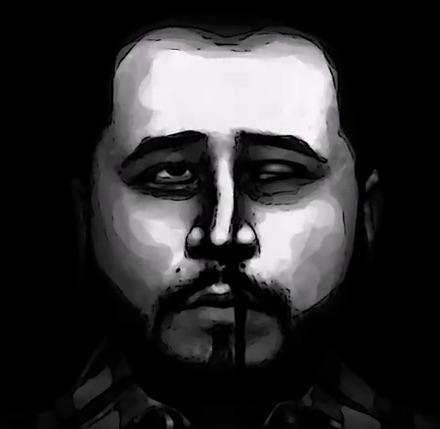
Florida was the first state to introduce such a law in 2005 – and many other states have followed suit. The law came into national spotlight when an unarmed 17-year-old teen, Trayvon Martin, was shot and killed by a neighborhood watch guard in Florida earlier this year. The shooter, George Zimmerman, was not initially charged with a crime; he has since been charged with second-degree murder and awaits trial.

7. A few states make it easy for even violent felons to get their gun rights restored

The New York Times conducted an extensive investigation into this issue last year. The story reports that in 11 states, nonviolent felons have automatic restoration of their gun rights while a handful of other states allow felons convicted of violent crimes to regain their gun rights.

In Minnesota, for instance, violent felons can petition a court to regain their gun rights by showing “good cause.” There is no waiting period. In Ohio, a violent felon need only demonstrate to a judge that he or she has “led a law-abiding life” since they’ve left prison. In Washington State, felons can get their gun rights restored as long as they haven’t been convicted of any new crimes in five years. Under Washington State’s Hard Times for Armed Crimes Act, judges actually have no discretion to deny restoration based on a felon’s character or mental health.

Felons in other states have other ways to get their guns back: Georgia and Nebraska have granted a high number of pardons to restore felons’ right to bear arms even for those convicted of crimes like voluntary manslaughter or armed robbery.

And Montana makes it possible for felons to get their gun rights restored as long as they didn’t use a dangerous weapon in the commission of their crime.

US government responds to targeted killings lawsuit

[JURIST]

The US Department of Justice (DOJ) [official website] on Friday filed a motion to dismiss [text, PDF] a lawsuit [complaint, PDF] challenging the US government's targeted killing of three US citizens in drone strikes. Senior al Qaeda [GlobalSecurity backgrounder] leader and US citizen Anwar al-Awlaki [BBC obituary; JURIST news archive] was killed by drone strike [JURIST report] last September along with another American, Samir Khan. Two weeks later drone strikes killed 16-year-old Abdulrahman Al-Awlaki, Anwar Al-Awlaki's son. The Center for Constitutional Rights (CCR) and the American Civil Liberties Union (ACLU) [advocacy websites] filed the lawsuit [JURIST report], naming as defendants Defense Secretary Leon Panetta, CIA Director David Petraeus, Adm. William McRaven, Commander of the US Special Operations Command and Gen. Joseph Votel, Commander of the Joint Special Operations Command. According to the defendants' motion:

courts repeatedly have recognized that the political branches, with few exceptions, have both the responsibility for—and the oversight of—the defense of the Nation and the conduct of armed conflict abroad. The Judiciary rarely interferes in such arenas. In this case, Plaintiffs ask this Court to take the extraordinary step of substituting its own judgment for that of the Executive. They further ask this Court to create a novel damages remedy, despite the fact that—based on Plaintiffs' own complaint—their claims are rife with separation-of-powers, national defense, military, intelligence, and diplomatic concerns. Judicial restraint is particularly appropriate here, where Plaintiffs seek non-statutory damages from the personal resources of some of the highest officials in the U.S. defense and intelligence communities. Under these weighty circumstances, this Court should follow the well-trodden path the Judiciary—and particularly the D.C. Circuit—have taken in the past and should leave the issues raised by this case to the political branches.

The ACLU issued a statement [text] condemning the government's motion.

Awlaki, a dual US-Yemeni citizen, had been approved for targeting killing by the Obama administration, an action that was challenged based on Awlaki's US citizenship. In December 2010 a judge for the US District Court for the District of Columbia [official website] dismissed a lawsuit [JURIST reports] challenging the Obama administration's ability to conduct "targeted killings" in al-Awlaki's case. Judge John Bates found that the court lacked jurisdiction over the case, filed by the ACLU and the CCR on behalf of Awlaki's father, dismissing it on procedural grounds and noting that important questions remain. Bates heard arguments [JURIST report] in the case in November 2010 on the same day Awlaki called for jihadist attacks on US citizens in a video posted on extremist websites. Earlier that month Yemeni prosecutors charged [JURIST report] Awlaki with incitement to kill foreigners, and he was later sentenced in absentia to 10 years in prison.
Texas Gun Store Owner Is Offering Teacher Discounts

ThinkProgress

Crocket Keller, owner of Kellers Riverside Gun Store near Austin, TX, announced on local radio show KRLD that he would start offering a discount for teachers who want to carry a concealed weapon after the massacre at Sandy Hook Elementary School in Connecticut on Friday. Keller talked enthusiastically of the need to arm teachers:

HOST: In light of this tragic, tragic shooting, teachers, educators may be wanting to get themselves certified to carry a concealed handgun. If they came to your store, what would you do for them and what kind of guidance would you give?

KELLER: Well, as we do with veterans, I would offer them a discount. Our normal rate is $110, so I would give them a rate of $90. If they are teachers, we would be more than happy to do that. We need to lobby our various state governments to allow teachers to be armed. We have airline pilots that now carry pistols or weapons of some sort. I think the same thing needs to happen in these gun-free zones that are so dangerous.

Keller went on to argue, “Any place where the citizenry is not allowed to defend itself is at risk.” This is a common claim by pro-gun advocates that has been debunked repeatedly. While many gun rights advocates have argued that armed teachers could have saved the lives of the Newtown children, not a single mass murder in the past 30 years has been stopped by a civilian with a gun. Moreover, an analysis by the Harvard Injury Control Research Center found that the high accessibility of guns creates a higher risk of homicide across the board at the city, state, and national levels.

State Mental Health Services Have Been Cut By Billions During The Great Recession

ThinkProgress

Gun control is not the only topic that’s been catapulted to the forefront of the national conversation by the mass shooting in Newtown, Connecticut. The tragedy has also brought renewed attention to what aid and support the United States provides to the mentally ill. On the second matter as well as the first, the record is not good.

According to a report by the National Alliance on Mental Illness, flagged by The Washington Post, states cumulatively cut over $1.8 billion from their mental health services from 2009 to 2011. Another report by the the National Association of State Mental Health Program Directors put the number as high as $4.35 billion from 2009 to 2012, according to Huffington Post. (The first report did not include Medicaid budgets, though it’s not clear if the second report did.) With a 35 percent cut to its overall state mental health budget, Alaska has seen the worst of it. South Carolina and Arizona both saw cuts of 23 percent, and plenty of other states have seen significant cut backs as well: