Flock Cameras Got the Wrong License Plate 71% of the Time in California City

Flock Safety claims to have over 120,000 cameras equipped with automatic license plate readers and more than 12,000 customers 49 states, effectively putting automated eyes meant to spot traffic violations on the roads just about everywhere in the country. Turns out those eyes might need to get their sight checked. According to a report from Business Insider, an analysis of alerts sent from Flock cameras to the Roseville Police Department in California found that a majority of the plates identified by Flock were incorrect.

The analysis focused on a two-year period between 2023 and 2024, in which Roseville PD received 1,427 alerts from Flock cameras. Those alerts were meant to notify the department when a license plate associated with some sort of criminal behavior passes by the stationary camera, flagging everything from cars supposedly used in felony crimes or vehicles that have been reported stolen. In 71% of cases that generated an alert related to vehicles that were stolen or used in a felony, the system misread the license plate, seemingly producing false positives. [MORE]

Consolidated Lawsuits Allege Baltimore Cops Violently Raped and Abused Vulnerable [mostly Black] Children While in Custody. City Authorities Claim Immunity [or "the Law of the Jungle" Standard]

From [HERE] When Brianna’s uncle died in 2024, she stumbled onto a collection of papers that took her 20 years back in time, back to when she was a frightened 12-year-old girl sitting in Baltimore’s social services office.

The documents showed her uncle’s prolonged effort to get justice for Brianna after he learned what happened to her in that office in 2004. Reading through handwritten letters and statements from that time, Brianna found herself back in that room, where a Baltimore Police officer groped and sexually abused her, she said in an interview with Baltimore Beat.

Her uncle never got what she would consider justice. But under Maryland’s Child Victims Act, Brianna got her own chance: she filed a lawsuit against the state of Maryland and the city of Baltimore over the abuse. (Baltimore Beat is identifying Brianna using a pseudonym to protect her identity and safety.)

“I feel like I was robbed of a childhood,” she said.

Brianna’s lawsuit became possible in 2023, when Maryland lawmakers passed legislation to allow adult survivors of childhood sexual abuse to sue no matter how long ago their abuse happened. While the Child Victims Act was passed after a massive attorney general’s report revealed decades of sexual abuse in the Archdiocese of Baltimore, it also brought forward thousands of other lawsuits, many against the state’s juvenile justice system.

A small subset of these cases has received less attention: lawsuits over abuse at the hands of the police.

Half a dozen of these lawsuits were consolidated into a group in the Circuit Court for Baltimore City. While they are far fewer in number than the lawsuits against Maryland’s Department of Juvenile Services, they depict violent rapes and abuse by officers who had vulnerable children under their control. The allegations span decades; one survivor is in her 70s now.

“If you look at the date ranges of these cases, … there is a clear history of sexual misconduct committed by Baltimore City Police Officers against, typically, women, young women in their custody,” said Cary Hansel, a civil rights lawyer handling one of the lawsuits. “Given that clear history, there is an obligation on the part of anyone with power to stop it.”

The Maryland attorney general’s office, which defends state agencies in these lawsuits, declined to comment. A spokesperson for Mayor Brandon Scott also declined to comment on behalf of the city.

In court papers, both the city of Baltimore and the state of Maryland denied responsibility for the allegations. The city and the state offered something of a catch-22 in their responses: the city argued the Baltimore Police Department was under state control at the time of the claims, while the state argued that BPD officers were city employees at that time. 

They also claimed to be protected by sovereign immunity, or the idea that federal and state governments have immunity from lawsuits unless they specifically waive it. [MORE]

"A Vortex of Corruption.” No Law or Accountability [Klanarchy] for Violent Cops Running Alabama Prisons: State has spent $68M Defending ADOC in Court for Murders, Assault and Other Crime since 2020

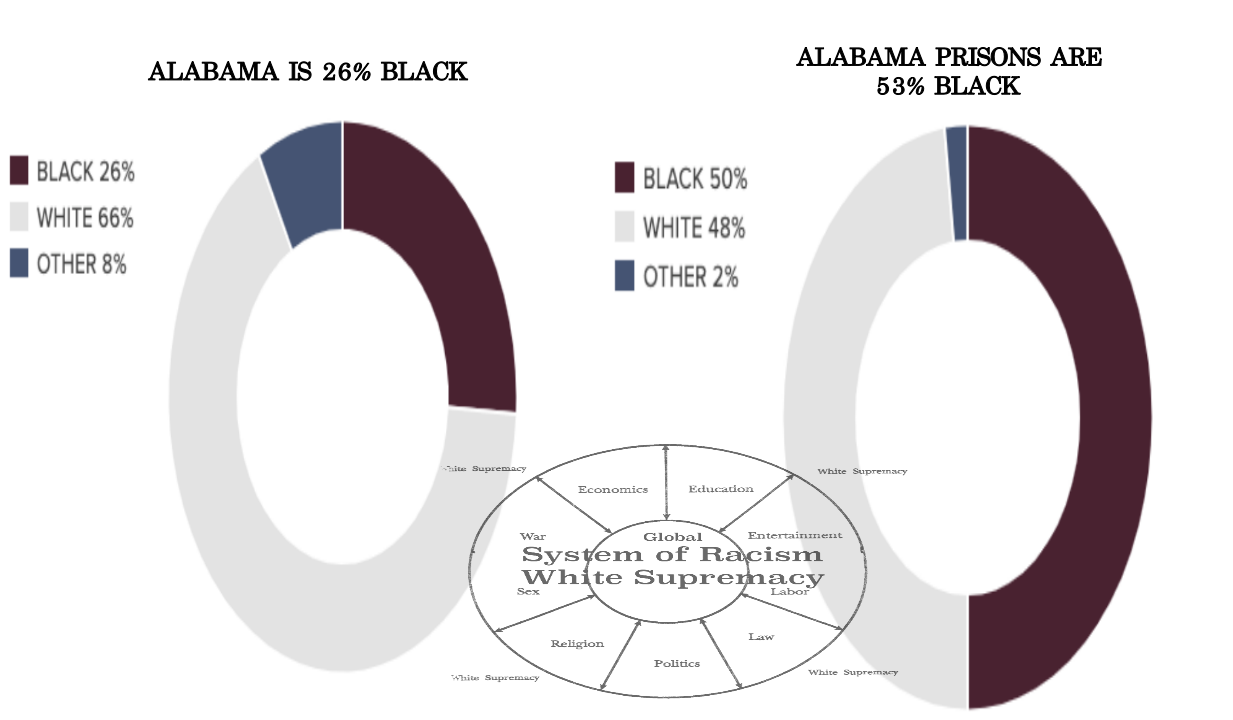
AMOS WILSON STATES, “Given the historical and contemporary virulence of White racism in America and the injustice toward Blacks that such racism engenders, the number of arrests, incarcerations, and in many instances, convictions of Black males should be viewed with a jaundiced eye. The willingness of White Americans to heavily tax themselves in order to finance accelerated and increased prison construction, rapidly expanding police forces and so-called criminal justice system personnel, burgeoning private police and security establishments; their willingness to finance the incarcera­tion of a Black male prisoner upwards of $30,000 to $40,000 per year, in sharp contrast to their unwillingness to tax themselves to provide for the appropriate funding of the education of Black children and to commit themselves to the ending of racist employment practices; to provide adequate housing medical care, food and clothing; clearly implies that alleged Black male criminality plays a very important role in defining the collective White American ego and personality. “ [MORE]

SETTLING FOR BRUTALITY. The state of Alabama has spent $68 million on litigation to defend the Alabama Department of Corrections since 2020, criminal justice advocacy campaign No More Alabama claims in a report released this week.

The report, titled “Settling for Brutality,” details the cost of the excessive force cases brought by incarcerated people against ADOC corrections officers. 

It lists a dozen corrections officers who have faced more than three excessive force lawsuits, with the 12 officers racking up a total of 55 cases in the last 10 years. The ADOC still employs all of them, according to the report.

Beth Shelburne, who produced the report alongside Chris Izor, told Alabama Daily News that the lack of repercussions for these officers creates an atmosphere of “zero accountability.”

“It’s really an environment of lawlessness when officers can violate people’s constitutional rights over and over again with no consequences, with no documentation, with no follow-up, with no disciplinary action,” Shelburne said. “There is no law. They’re not following any rules, and if we’re trying to create an environment to correct behavior, this is the opposite of that.”

Shelburne was a co-creator of The Alabama Solution, a 2025 Oscar-nominated documentary chronicling poor prison conditions and violence allegedly committed by corrections officers. 

In the wake of the documentary, lawmakers introduced legislation to bolster prison oversight, ultimately ending in a deal with ADOC to create an audit pilot program. The first audit is ongoing, and those involved expect to release the first report in October.

The topic of accountability for violent officers was also a common theme at the Prison Oversight Committee’s annual public hearing on Wednesday.

Speakers shared stories from family members or their own experience being incarcerated about the conditions inside ADOC facilities, often detailing abuse from officers and poor medical care.

In response to the report and members of the public’s comments, committee member Rep. Chris England, D-Tuscaloosa, called the ADOC “a vortex of corruption.” He called employing officers with several cases brought against them “a waste of money.”

“We could have actually saved money by firing them,” England said. “Can you imagine a scenario where a corrections officer beats someone to death? Not only beats him to death, but then later on, somehow the only witness for it dies too in Department of Corrections custody, and not only was that person given another job, but given a promotion while the criminal investigation was going on? Can you imagine what sort of culture you’re creating of civil rights abuses in those facilities if you get rewarded for beating somebody to death?” [MORE]

Although Juries Sentenced 25 People to Life in Prison, Alabama Authorities Still Have Scheduled to Murder Them ["the death penalty"]

Alabama lawmakers recognized nearly a decade ago that Alabama’s unique practice of allowing an elected trial judge to reject a jury verdict of life and impose the death penalty was wrong.

The state legislature abolished judicial override in 2017. When Governor Kay Ivey signed the bill into law, the “message was unambiguous: sentencing decisions in death penalty cases belong to juries, not to judges,” according to former Alabama Supreme Court Chief Justice Drayton Nabers Jr.

Roy S. Moore, another former Chief Justice of the Alabama Supreme Court pointed out that it is wrong for people to remain on death row even though their juries sentenced them to life imprisonment without parole. “If it was wrong in 2017 for a trial judge to overturn a jury recommendation of life without parole,” Justice Moore wrote, “it is wrong to condemn…individuals who were denied that right prior to 2017.”

Even though the state has abolished the practice of judicial override and recognized that jury verdicts should be respected, there are still 25 people facing execution in Alabama whose juries voted for life, including four whose juries unanimously rejected the death penalty as punishment. [MORE]

NJ Authorities Insist that the Most Widely Owned Semiautomatic Rifles are not ‘Arms’ protected by the 2nd Amendment, Seek to Enjoin Restored AR-15 Rights During Appeal to Supreme Court

From [HERE] New Jersey has asked the U.S. Court of Appeals for the Third Circuit to keep enforcing the state’s bans on commonly owned semiautomatic rifles and standard-capacity magazines—even after the en banc court ruled those laws violate the Second Amendment. The state filed a motion July 31 asking the Third Circuit to stay its mandate while New Jersey prepares a petition asking the U.S. Supreme Court to review the case.

Put plainly, New Jersey lost their case in Association of New Jersey Rifle & Pistol Clubs, Inc. v. Attorney General New Jersey, consolidated with Cheeseman v. Davenport. Now it wants gun owners to keep living under the unconstitutional laws while the state asks for another chance.

The Third Circuit issued its decision July 17, striking down New Jersey’s restrictions on commonly owned semiautomatic rifles and magazines holding more than ten rounds. The mandate, the formal order putting that judgment into effect, would otherwise issue no sooner than August 7.

New Jersey says its Supreme Court petition is due October 15. It wants the Third Circuit to keep the bans enforceable until the Supreme Court rejects the petition or, should the justices accept the case, until they issue a final decision. Filing the motion itself temporarily pauses issuance of the mandate while the Third Circuit considers the request.

New Jersey Claims Restored Rights Would Cause ‘Irreparable Harm’

The state argues that it will suffer irreparable harm if gun stores begin selling AR-15s and standard-capacity magazines before the Supreme Court acts. That turns the Constitution upside down. New Jersey treats the continued denial of an enumerated right as a temporary inconvenience for gun owners. At the same time, it characterizes lawful commerce in constitutionally protected arms as an injury to the government.

The state warns that thousands of rifles and magazines could enter New Jersey and become “near-impossible to retrieve” if the Supreme Court later reinstates the bans.

That language deserves attention. New Jersey is not merely concerned about administrative confusion. It is worried that citizens will acquire arms the state may later want confiscated, surrendered, destroyed, or permanently removed from lawful commerce.

The state also warns that people who purchase the affected firearms and magazines could face criminal exposure if the law changes again. That is not an argument for keeping unconstitutional laws in force. It is an admission that New Jersey’s regulatory scheme creates a legal minefield for otherwise law-abiding gun owners. [MORE]

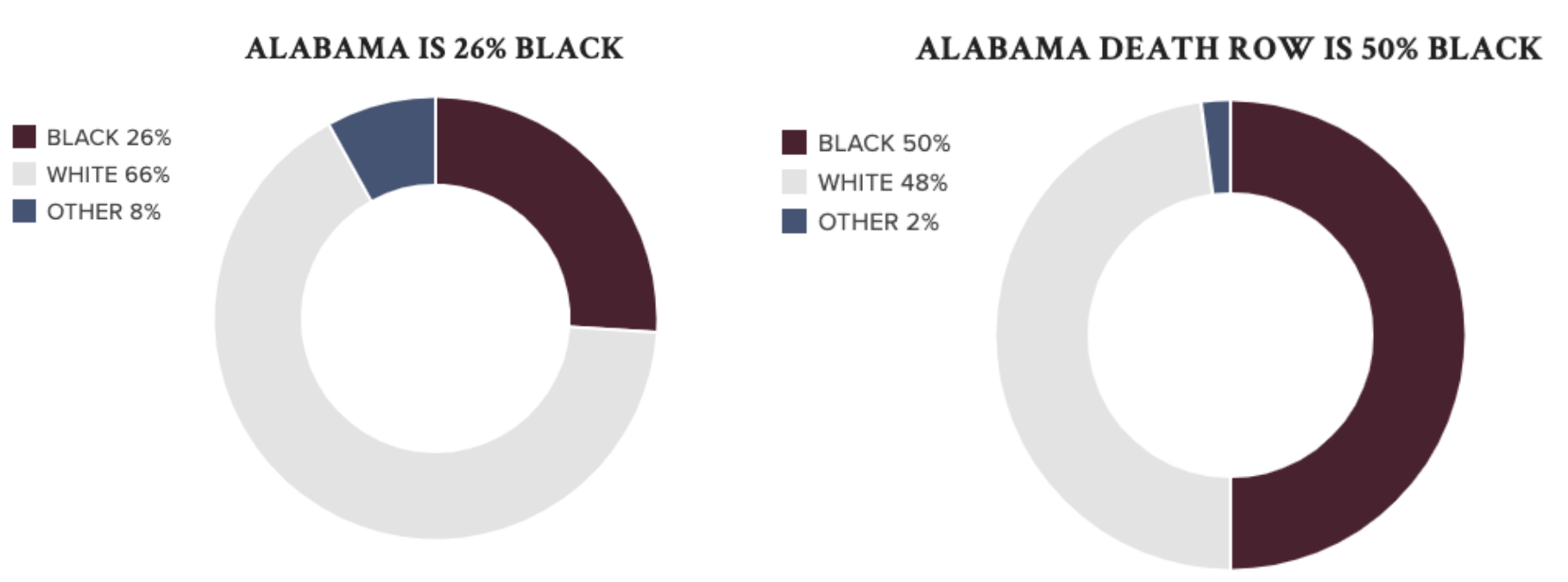
Missouri Executes Prisoners at a High Rate. Blacks are 37% of Its Death Row, Despite being Only 11% of the State Population

For more than two decades, Vincent McFadden has been sitting on Missouri’s death row. He’s watched a steady stream of his friends get marched off to their executions — and he’s waiting for his own as he fights in court to spare his life.

So it came as no surprise to him that Missouri is among the most prolific states to execute those facing capital punishment since the practice was reinstated in the U.S. 50 years ago. The state has executed more than half the people it has sentenced to death compared with 18% nationwide, ranking second behind Virginia, according to a Marshall Project analysis of data on state death sentences from 1972 to 2025. The data, which excluded states with fewer than 10 total death row prisoners, was compiled by Frank Baumgartner, a University of North Carolina at Chapel Hill professor, and researchers at the Death Penalty Information Center.

McFadden and critics of the death penalty see the state’s system as inherently broken with racial disparities in jury selection and in which cases prosecutors seek death. Additionally, some Missouri courts have turned a blind eye to the many factors that can impact capital cases, such as a defendant’s mental capacity.

“The state can know something is wrong but they still try to keep the conviction no matter the cost,” McFadden, 46, told The Marshall Project - St. Louis via email from death row. “Missouri has a lot that they need to grow out of and a lot they need to grow in.” [MORE]

37% of the Missouri death row is Black. [MORE]

Who are the Real Criminals When a Black Man Spends 30 Yrs in Jail for a Murder He Didn't Commit? Elwood Jones Files Suit Against White OH Prosecutors and Cops who Fabricated and Withheld Evidence

From [HERE] and [HERE] Elwood Jones, a former death row inmate who spent nearly 30 years in prison for a murder he did not commit, has filed a federal lawsuit against the city of Blue Ash and several former police officers. 

Jones was convicted of killing Rhoda Nathan at a Blue Ash hotel in 1994 and spent years on Ohio’s death row, facing six execution dates. Four years ago, a judge granted Jones a new trial, ruling that prosecutors had failed to share certain evidence with his defense team. In December, the case against Jones was dismissed.

Hamilton County Prosecutor Connie Pillich for­mal­ly dis­missed the case against Elwood Jones on December 12, 2025, end­ing a near­ly 30-year saga that saw Mr. Jones spend 27 years on Ohio’s death row for a mur­der he did not com­mit. ​“I did not take this extra­or­di­nary step light­ly,” said Prosecutor Pillich. ​“But after review­ing the evi­dence, I am not con­vinced that Mr. Jones killed Rhoda Nathan.” Mr. Jones was con­vict­ed and sen­tenced to death in 1996 for the 1994 mur­der of Rhoda Nathan. He is the 12th indi­vid­ual to be wrong­ful­ly con­vict­ed, sen­tenced to death, and lat­er exon­er­at­ed in Ohio.

Prosecutor Pillich’s review of Mr. Jones’ case iden­ti­fied what she called ​“sev­er­al crit­i­cal issues:” a lack of phys­i­cal evi­dence con­nect­ing Mr. Jones to the mur­der; insuf­fi­cient inves­ti­ga­tion of alter­na­tive sus­pects; mod­ern sci­en­tif­ic test­ing that excludes Mr. Jones as a sus­pect; and the fail­ure of the prosecutor’s office to over­turn excul­pa­to­ry evi­dence. In a state­ment from December 12, Prosecutor Pillich said, ​“a new tri­al, with­out evi­dence, wit­ness­es and up-to-date sci­ence would be futile.” She added, “[m]ake no mis­take, Rhoda Nathan’s life mat­ters great­ly to me. My duty is to admin­is­ter jus­tice with integri­ty. I work every day on behalf of vic­tims and this com­mu­ni­ty to ensure pub­lic safe­ty. Today’s deci­sion does not change that commitment.”

Mr. Jones was grant­ed a new tri­al in December 2022 and released on bond in January 2023 after Judge Wende Cross ruled that pros­e­cu­tors wrong­ly with­held thou­sands of pages of evi­dence from Mr. Jones’ tri­al coun­sel in vio­la­tion of his con­sti­tu­tion­al rights. The undis­closed mate­ri­als includ­ed infor­ma­tion about anoth­er person’s alleged con­fes­sion to involve­ment in Ms. Nathan’s mur­der and evi­dence regard­ing a pen­dant found in Mr. Jones’ vehicle. 

Judge Cross wrote that the evi­dence ​“under­mined the jury’s ver­dict and rein­forced a win-at-all-cost men­tal­i­ty that under­mines the pur­suit of jus­tice.” She con­clud­ed, ​“It is clear the fail­ure to dis­close the exis­tence of rel­e­vant excul­pa­to­ry and impeach­ing evi­dence pri­or to tri­al deprived Elwood Jones of a fair tri­al. The Sixth Amendment requires a new tri­al as the only appropriate remedy.”

The with­held evi­dence also includ­ed a Hepatitis B test. Ms. Nathan has test­ed pos­i­tive for Hepatitis B, but Mr. Jones had not con­tract­ed the virus. Judge Cross not­ed this test ​“is so sig­nif­i­cant that the state’s the­o­ry is scientifically implausible.”

The prosecution’s case at tri­al includ­ed tes­ti­mo­ny from Blue Ash Police Officer Michael Bray, who tes­ti­fied that he found a gold pen­dant miss­ing from Ms. Nathan’s body in a tool­box in Mr. Jones’ car after oth­er offi­cers had already searched the vehi­cle. In 2023, Judge Cross ruled that Officer Bray’s tes­ti­mo­ny would be exclud­ed from any retri­al because Mr. Jones’ attor­neys did not have an ade­quate oppor­tu­ni­ty to cross exam­ine him in 1996, and Officer Bray has since died. A three-judge pan­el from Ohio’s First District Court of Appeals affirmed this deci­sion in late August 2025, not­ing that the state did not con­test the point. 

On December 4, 2025, the Ohio Supreme Court ordered an appeals court to recon­sid­er a request by the Hamilton County Prosecutor’s Office to chal­lenge the 2022 deci­sion grant­i­ng Mr. Jones a new tri­al. That request was denied and a week lat­er, charges against Mr. Jones were dismissed. [MORE]

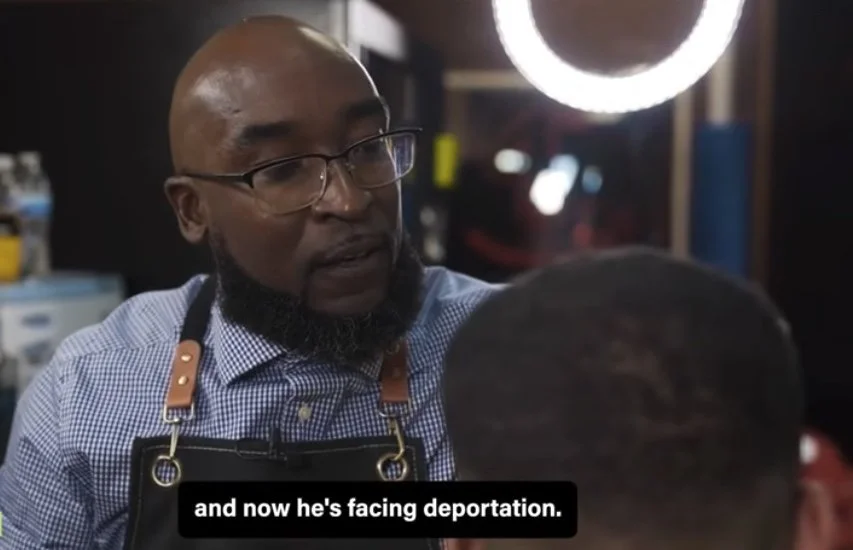
Trump Race Soldiers Detained a Double-Leg Amputee Black Man, Denied Him Food, Medical Help and Access to a Shower. Feds Sought Deportation Despite His Pardon by Governor. ACLU Files Suit

The American Civil Liberties Union of Georgia filed a claim under the Federal Tort Claims Act (FTCA) against U.S. Department of Homeland Security and Immigration and Customs Enforcement on behalf of Rodney Taylor, a 47-year-old father who has lived in the U.S. since he was 2 years old and is a double-leg amputee. Federal immigration officers detained Taylor in early 2025 while his two young children watched, and he was later denied needed medical care while in ICE custody at the Stewart Detention Center. The filing is part of a coordinated nationwide effort by the ACLU and its affiliates involving 53 claims across 17 states and Washington D.C.

Taylor's case drew national attention when Rep. Lucy McBath, D-Georgia, described the "despicable"conditions inside the Stewart Detention Center in Lumpkin, Georgia, during a hearing with then-Secretary of Homeland Security Kristi Noem.

Taylor entered the country legally, family and legal team say

Taylor arrived in the United States more than four decades ago with his mother, from Liberia, on a medical visa to address his severe limb deformities. By the age of 10, he was a double amputee. He now has only one hand with all five fingers, and uses two prosthetic legs to walk.

At the age of 17 he was convicted on a burglary charge in Georgia, but he was later pardoned by former Republican Gov. Sonny Perdue and never had any other interactions with law enforcement.

Taylor was running a successful barber shop in Loganville, Georgia, and was in the process of gaining his green card to continue living in the United States. He had a Social Security number, and was granted a work permit in January of 2025.

Sarah Owings, Taylor's attorney, told USA TODAY his immigration status was pending and he was going through the proper channels for his permanent residency in the United States when he was detained by ICE last year.

"I was detained by ICE in front of my kids, age 4 and 6, nearly 15 months ago on Jan. 15, [2025]," Taylor said.

"While I was detained, I was denied proper accommodations for my disability. I struggled just to charge my prosthetics, for access to [a] proper shower seat. At one point, they refused to feed me for three weeks because they expected me to walk the length of a football field six times a day just to get some meals while also refusing to provide protective liners needed for my prosthetics," Taylor said. "Walking was like walking directly on my knees against concrete. It was tough, very tough."

Taylor said he was placed in segregation if he complained about his legs or the water leaking into the facility when it rained. He said he would speak up about the poor conditions because he understood his rights and he is fluent in English, while many other detainees are unable to voice their concern.

"Stewart Detention Center is not equipped to handle people with disabilities. The building is old and run down. Water leaks through the ceiling, through the cells when it rains. There are black mold deposits in the water, in the drinking water. Sometimes detainees go days without hot showers, [and] toilets and sinks often do not work properly," Taylor described.

Taylor said it often took multiple weeks to get any kind of medical care, including two weeks to see a nurse and two more to see a doctor. He said officers told him if he wasn't "bleeding or dying" to just put in a sick call and medical personnel would get to him when they could.

"Meanwhile, people are suffering and losing their lives. These are human beings, but [they] treat us like cattle waiting to be slaughtered, but in this case, deported," Taylor said. [MORE]

Homeland Security Authorities Locked Up a [non-White] Family with 4 Small Kids and Pregnant Mom in Hot, Filthy Cell for a Month because They Sought Asylum, Food, Shelter in US- ACLU Files $15M Suit

The ACLU of Washington filed its intent to sue the Department of Homeland Security on Tuesday, July 28, on behalf of a family held for nearly a month at the Blaine Border Patrol Station in 2025.

The civil rights organization claims U.S. Customs and Border Protection violated its own policies when it held the family of six asylum seekers, one of whom was five months pregnant with a high-risk pregnancy, in a single “unbearably hot and filthy” cell, according to the legal filing.

The family, which includes mother Josefina, father Jose, and four children, ages 13, 10, 5 and 11 months, arrived in the United States in 2024, seeking asylum after Jose was persecuted for being a member of an opposition political party.

A year later, in April 2025, an immigration judge denied the family’s request for more time to prove their asylum claim and found the family to be deportable, according to the ACLU.

With few options, the family fled to Canada to request asylum there. However, they were detained at the border by immigration agents. 

Typically, immigrants who are deemed to be deportable and are detained are transferred to a detainment facility, such as the Northwest Detention Center in Tacoma, within hours and for up to 72 hours. But in the case of Josefina and Jose, they were made to stay inside a single windowless cell at the Blaine border station for a month, according to the ACLU.

“My children were confused and scared about why they were trapped in this cell, why they could not go outside and why they had no toys to play with,” Josefina said in a news release. “They cried all the time. I wanted to comfort them but had no answers to give them.”

While detained in Blaine, Josefina experienced multiple medical episodes related to her pregnancy and diabetes diagnosis, two of which required hospitalization. Doctors told Customs and Border Protection staff the conditions Josefina was being held in were unsafe. 

After the second hospitalization, federal agents allowed the family out of the cell once a week to sanitize the cell. The family was released from custody after four weeks and continues to reside within Washington state.

Advertisement

“Months after their cruel incarceration, our clients’ mental and emotional scars remain,” said David Montes, an ACLU Washington staff attorney, in a news release.

Recently, the 13-year-old said he didn’t want to go to an upcoming immigration hearing out of fear the family would be arrested and returned to the Blaine cell, according to the legal claim.

The ACLU alleges the agency knew holding the family, including a pregnant woman and children, would be harmful to their health and well-being. The group also alleges the agency should not have held the family in Blaine for four weeks, rather that the family should have been transferred to a separate facility within 72 hours.

The ACLU intends to seek $15 million in damages for the family. The intent to sue over the Blaine incident is just one of 54 claims brought by the ACLU in recent days against federal law enforcement in July.

The Department of Homeland Security has six months to respond to the claims. It did not immediately respond to comment from Cascadia Daily News. [MORE]

Lawsuit says the NYPD Covertly Collects and Stores DNA from [mostly Black] Suspects and then Runs Those profiles Against Every Past and Future Crime Scene DNA Sample in City's Database with No Warrant

From [HERE] An unusual left-right legal coalition asked a federal appeals court on Wednesday to shut down what they called the largest known municipal DNA database operating without legislative authorization in the United States: the NYPD's "Suspect DNA Index," a shadow genetic registry holding profiles from more than 34,000 New Yorkers — including hundreds of children — collected covertly, without warrants, and compared automatically and permanently against every piece of crime scene evidence the city accumulates.

The American Civil Liberties Union, the New York Civil Liberties Union, and the libertarian Cato Institute filed a joint amicus brief with the U.S. Court of Appeals for the Second Circuit in Leslie v. City of New York, backing The Legal Aid Society's class action challenge to the NYPD's decade-long practice of covertly collecting DNA from suspects in police interrogation rooms — and then running those profiles against every past and future crime scene DNA sample in the city's database, indefinitely, with no judicial oversight and no expiration.

Any New Yorker who accepted a drink of water or a cigarette during NYPD questioning may be in that database right now.

How the NYPD Builds Its Genetic Surveillance Archive

The collection method reads like a ruse. According to court documents from the underlying lawsuit and the ACLU's filing, NYPD detectives bring persons under questioning into interrogation rooms that have been specially cleaned and prepared to capture biological material. Officers then offer the detained person a beverage, a soda, or a cigarette. When the person is escorted out, officers collect the cup, bottle, or cigarette butt and ship it to the Office of the Chief Medical Examiner.

At the OCME, forensic technicians extract DNA from the sample and run a short tandem repeat (STR) analysis — the same standard technique used in criminal identification — to build a numeric genetic profile. That profile is then entered into the Local DNA Index System (LDIS), a database maintained by the OCME that is entirely separate from the state-authorized New York DNA Identification Index (Article 49-B), entirely separate from the national CODIS database, and entirely unauthorized by any legislation or court order. The New York City Bar Association has documented the database's status as the least restricted and most expansive municipal DNA index in the country.

What happens next is what the amicus brief calls the database's defining constitutional problem: that profile is then searched — automatically and perpetually — against every DNA crime scene evidence sample that enters OCME's system. New case comes in? Every one of the 34,000 profiles is checked against it. The person who accepted the water cup in a 2019 interrogation, whose charges were later dropped, is searched against a 2026 crime scene today. They do not know this is happening. No judge has authorized it. No law permits it. The Legal Aid Society's case page describes this architecture as a "perpetual genetic lineup."

This architecture — a perpetual automated genetic lineup — distinguishes the Suspect Index from a standard arrest record or even a conviction database. The database does not merely store a profile. It conducts a new de facto Fourth Amendment search against its subjects every time a new crime scene sample enters the system.

What a Soda Can Cost in New York City

One 12-year-old boy, documented in the original lawsuit's complaint, received a McDonald's soda during NYPD questioning. His mother had come to the precinct to be with him. The NYPD never sought consent from either of them. After the boy left, officers collected the straw and sent it to OCME. His family had to petition a court and file an appeal to get the profile removed — a process that took more than a year.

Shakira Leslie, the named plaintiff in the class action, was 23 when she was arrested in 2019 after a gun was found in the car she was riding in. She accepted a drink of water after 12 hours in custody. She was never charged with any crime related to the gun. Her DNA profile remained in the Suspect Index.

Eugean Burgos, 22 at the time, was arrested in 2019 after a firearm was found in the trunk of a car in which he was a passenger. Officers provided him a cup of water and a cigarette during interrogation. The charges against him were ultimately dismissed. His genetic profile remained in the database — automatically queried against each new crime scene submission.

Terrell Gills never gave the NYPD a drink or a cigarette. He was a regular customer at a Dunkin' Donuts in Jamaica, Queens. In May 2015, that store was robbed. Police swabbed the touchscreen cash register and found a DNA mixture including Gills's profile, which was already in the Suspect Index. Officers arrested him and put him on Rikers Island, where he remained for 18 months awaiting trial. Another man was arrested for two additional Dunkin' Donuts robberies the same week, same neighborhood, same method — knife, same distinctive hat — and eventually pleaded guilty. Gills was acquitted. He had simply been a devoted coffee shop customer. The S.T.O.P. Surveillance Technology Oversight Project has documented the Gills case as emblematic of the systemic risks embedded in the LDIS's perpetual-comparison design.

Science the NYPD Refused to Validate

The wrongful arrest risk is compounded by the OCME's documented history with unvalidated forensic techniques. From 2006 to 2017, the NYPD used a method called Low Copy Number (LCN) DNA analysis on trace and mixed samples — the kind of minute genetic material left on a touchscreen register by anyone who touched it. LCN analysis amplifies extremely small DNA samples far beyond standard protocols, dramatically increasing the risk of contamination and the production of false allele signals.

Marina Stajic, the OCME's own laboratory director at the time, recommended that a state oversight body demand a validation study for the technique — she was concerned it could land innocent people in jail. The OCME did not produce a validation study because it did not have one. The OCME promptly fired Stajic.

The OCME's in-house Forensic Statistical Tool (FST), software used to calculate the probability that a mixed DNA sample contained a specific person's DNA, was later thrown out by a state court. The FBI expert who had previously authorized its use stated he could no longer approve it. The math, as one creator of the FBI's own DNA database testified, was "not defensible."

A documented contamination incident also produced a wrongful arrest. Darrell Harris was arrested in 2018 for a Queens home burglary after police reported finding his DNA on the window. He had an alibi — he was in New Jersey, DJing a birthday party. He spent $25,000 on a lawyer and lost his job at JFK Airport before the charges were dropped. An investigation found that an OCME lab technician had contaminated the window sample with DNA Harris had separately provided in an unrelated sexual misconduct investigation.

Former OCME official Howard Baum, who helped build the database, told a 2020 City Council hearing that a DNA match alone no longer means a person is guilty: the more sensitive testing becomes, and the more people who are compared, the greater the potential for wrongful hits.

The Constitutional Argument: Carpenter Meets Shed DNA

The amicus brief advances two arguments. The first is straightforward state law: New York's DNA identification index under Article 49-B sets explicit rules about whose DNA may be collected, under what circumstances, for what purposes, and when profiles must be deleted. The NYPD's Suspect Index ignores all of them. No legislature ever voted to create it.

The Fourth Amendment argument is where the brief breaks new constitutional ground. The NYPD has defended its practices under what lawyers call the "abandoned property" doctrine — the principle established in California v. Greenwood (1988) that people who leave items in the trash surrender their Fourth Amendment interest in those items.

The civil liberties groups argue that doctrine cannot be extended to involuntarily shed DNA without becoming a legal fiction so sweeping that it eliminates genetic privacy entirely. Every few minutes, the human body sheds skin cells sufficient to cover significant surface area; a single sneeze expels thousands of droplets; hair falls involuntarily; every object a person touches becomes a potential collection site. The brief argues that DNA is not "abandoned" in any meaningful sense when it is left on a water cup handed to a person in police custody in a room specifically cleaned to facilitate covert collection.

The groups invoke Carpenter v. United States, the 2018 Supreme Court decision in which Chief Justice Roberts wrote for a 5-4 majority that warrantless government access to seven or more days of cell-phone location data violates the Fourth Amendment — even when that data had been shared with a wireless carrier. The Carpenter majority held that old rules permitting warrantless searches of third-party records cannot be automatically extended to new technological capabilities that produce comprehensive personal profiles without traditional investigative work.

Vera Eidelman, a senior staff attorney in the ACLU's Speech, Privacy, and Technology Project, made the parallel explicit. "The government cannot treat our DNA like it treats our garbage, and seize, search, and store it without a warrant," she said. "Usually we rely on hypotheticals to highlight the dystopian possibilities of this kind of privacy invasion, but no hypothetical could be more troubling than New York City's actual practice: amassing thousands of people's DNA without their knowledge, their consent, or any court-ordered or legislative guardrails. If the Second Circuit does not intervene, all I can say is: New Yorkers, hold on to your trash."

A genetic profile is, by any reasonable assessment, more sensitive than location data. It can reveal medical predispositions, ancestry, and — through familial matching — expose biological relatives who have no connection to any investigation. The brief argues the Carpenter logic applies to shed DNA with even greater constitutional force.

Why Libertarians and Civil Libertarians Share a Courtroom

The ACLU and the Cato Institute do not often file joint briefs. Their alignment here illustrates where ideological opposition to unchecked government power converges.

For the ACLU and NYCLU, the Suspect Index is a racial surveillance apparatus operating without democratic sanction. The demographics of the database reflect and extend the racial disparities documented in other NYPD enforcement practices: the database is disproportionately composed of Black and Latino New Yorkers. "For more than a decade, the NYPD has been operating a rogue DNA database not authorized by law," said Beth Haroules, the NYCLU's director of disability justice litigation. "No New Yorker should have their DNA taken illegally and stored in a secret database. This destructive practice disproportionately targets Black and brown New Yorkers and violates our Fourth Amendment rights."

For the Cato Institute, the issue is governmental overreach without legislative accountability — a state apparatus that invented its own authority and expanded it unchecked for more than a decade. "The secret, dragnet collection of DNA for inclusion on a 'Suspect Index' sounds dystopian," said Matthew Cavedon, director of Cato's Project on Criminal Justice. "Yet it's an affront to privacy and the presumption of innocence tens of thousands of New Yorkers have already suffered. The Fourth Amendment protects against this — and hopefully, so will the Second Circuit."

Once Added, Your DNA Is Searched Every Time NYPD Gets New Crime Scene Evidence

What makes the Suspect Index qualitatively different from an arrest record is that it does not stop working when a case closes. A person whose case was dismissed, who was acquitted, or who was expressly excluded as a suspect in the specific investigation that led to their DNA collection — all of them remain in the LDIS perpetual comparison system.

The database currently includes samples from people who have been expressly excluded as suspects in specific crimes, arrestees who have never been convicted of any crime, people who were acquitted or exonerated, and children as young as eleven years old. Its demographic profile, by the plaintiffs' account and by the documented arrest statistics the Legal Aid Society submitted, is overwhelmingly Black and Latino.

The NYPD has promised reform before. In February 2020, the department announced it would review profiles and expunge those of people not convicted of any crime. In a 2021 City Council hearing, officials pledged specifically to address juvenile profiles and people with no criminal conviction. According to data the OCME has published and the Legal Aid Society has documented, the database continued to grow.

The Policing Project, a law-and-policy organization affiliated with New York University School of Law, filed its own amicus brief in the district court proceedings, concluding that the NYPD and OCME had "overstepped carefully drawn legislative boundaries" when they "unilaterally created a program that surreptitiously captures the DNA of people who have been convicted of no crime and stores those DNA profiles."[MORE]

Nancy Grace Impeaches Statements Made by Racist Suspect to Coon Cop About Nolan Wells Murder; There was Phone Reception on the Boat, His Phone Had No Messages/Photos On it and No Polygraph Was Taken

Nancy Grace Obtains 'Boat Distress Call' Audio Recording from the Government that Contradicts Witness Accounts by Racist Suspect Teens in Nolan Wells Murder Case

McNegro Kamala Harris’ New $8M Mansion is in a 94% White Neighborhood

Former Vice President Kamala Harris’ new California mansion is situated in a neighborhood with virtually no racial diversity. Harris’ new 4,000-square-foot property, which reports indicate she acquired for $8.15 million, is located in the exclusive seaside community of Point Dume and includes ocean views, multiple wine fridges, private golf greens and enough parking to accommodate five vehicles.

Point Dume is situated entirely within Census tract 8004.08, which the Census Bureau’s American Community Survey estimated was just 0.2% Black and roughly 94% White as of 2019. [MORE]

Bignorant Blight House Administration Mislabels African Countries in Slideshow at AIDS Conference, Providing More Proof White Supremacy is a Fantastic Myth

A Trump administration slideshow at a conference in Rio de Janeiro, Brazil, for Acquired Immunodeficiency Syndrome (AIDS), has caused outrage for displaying a map of Africa with countries incorrectly labelled.

Jeff Graham, the US envoy for the president's emergency plan for AIDS relief, a George W Bush-era programme, was leading the presentation.

Reuters viewed a video of the event, which took place last week, and reported on Thursday that the map was found to have watermarks signalling it was made with OpenAI tools.

OpenAI is the San Francisco-based artificial intelligence innovator behind programmes like ChatGPT. The map was intended to show where the US has struck health agreements across Africa.

It showed a landlocked Nigeria, which actually faces the Atlantic Ocean. [MORE]

Massa Media and TrumpStein Continue to Lie About ‘Zero Damage:’ Iran Drops Image 'Proof' Of American F-35 Base's 'Destruction' in Jordan

TrumpStein Further Unites Iran With Unlawful Airstrikes on Residential Homes, Murdering Defenseless Adults and Children [those he claimed to "liberate"]

Iranian Foreign Ministry spokesman Esmaeil Baghaei has said that US airstrike on residential homes in Qeshm Island was "a crime reminiscent of Daesh terrorist atrocities" after three members of a family were killed in their sleep.

"The criminal attack carried out late last night against the homes of some of the noblest Iranians in Qeshm, which resulted in the destruction of several houses and the martyrdom of hardworking taxi driver Qeisar Jafari, his wife Zahra Jafari, and their innocent two-year-old son Sina, pains the heart of every conscientious human being," Baghaei said on Thursday.

He added that "these crimes, which evoke the terrorist acts of Daesh and are committed under the slogan of 'peace through strength' with the aim of punishing a nation for insisting on its rights, dignity, and independence, will never produce authority or legitimacy."

"With every explosion, every crime, every sanction, every threat, and every child you kill, you only make Iranians more determined and united in defending their homeland," the spokesman stressed.

The remarks came after a US airstrike struck a residential neighborhood in the Chah Tangu area of Qeshm Island, Hormozgan province, in the early hours of Thursday, July 30, leveling a family home and killing three members of the same household. [MORE]

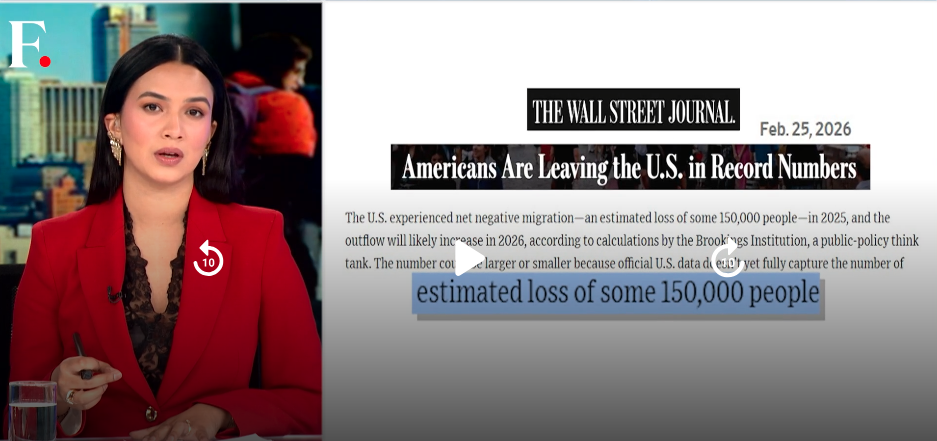
How Do I Get Out of Here? People are Leaving the US in Record Numbers, Causing a Negative Net Migration for the First Time Since the Depression: In 2025 More People Left the Country than Moved Into It

[MORE]

Iran’s Reported Deal for Up to 400 Chinese QW-12 and FN-16 MANPADS Could Complicate US-Israeli Air Operations

Iran is reportedly preparing to receive an initial shipment within weeks from a contract covering 300 to 400 Chinese QW-12 and FN-16 man-portable air-defence systems, potentially creating a dispersed low-altitude threat across a battlespace penetrated since February 2026.

According to Reuters, the reported US$60 million to US$70 million agreement would represent one of Tehran’s largest short-range air-defence procurements since American and Israeli attacks exposed weaknesses protecting fixed missile, drone, radar, and military infrastructure.

Three anonymous sources familiar with the arrangement described a signed contract, but no authenticated documents, shipment manifests, Chinese export licences, serial numbers, or imagery have emerged, leaving the procurement credible as reporting yet unverified as completed military delivery. [MORE]