New John Lott Study Finds that Concealed Carry Laws Don’t Increase Crime or Impact the Effectiveness of Police

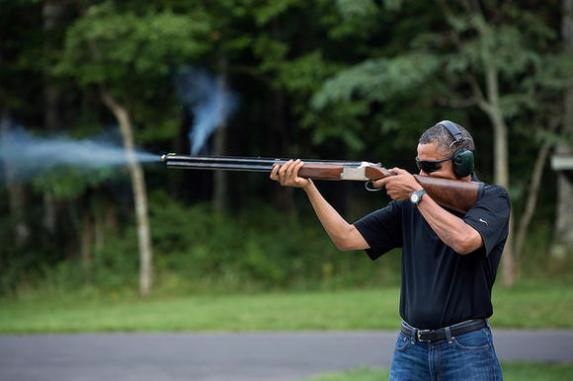
From [HERE] Gun-control groups campaign against right-to-carry laws by claiming that guns carried in public pose a substantial threat to public safety, and that concealed carry permitting laws lead to more violent crime, not less. Giffords, for instance, alleges that “the dangers of permissive public carry laws” include an increase in gun thefts and “other undesirable outcomes,” with absolutely no counterbalancing public safety benefits.

Professor Carl Moody and Dr. John Lott of the Crime Prevention Research Center (CPRC) have just released an updated paper, How Does Concealed Carrying of Weapons Affect Violent Crime? (May 31, 2024). These researchers examined information related to claims that carry concealed weapons (CCW) laws indirectly increase violent crime by driving up firearm thefts or by decreasing police effectiveness.

Using a unique new data set that employs the number of permit holders as the variable of interest, the authors found no evidence that CCW laws are associated with significant increases in gun thefts or impact the effectiveness of police. The study also found that concealed carry laws have no impact on the effectiveness of the police.

On gun thefts generally, an existing government source on how criminals obtain their firearms suggests that only a small amount of crime guns are acquired by theft. A Bureau of Justice Statistics report, Source and Use of Firearms Involved in Crimes: Survey of Prison Inmates, 2016 (Jan. 2019) shows that only 6.4% of state and federal prisoners who had possessed a firearm during the offense for which they were serving time listed “theft” (burglaries, thefts from retail sources or a family/friend, or “other”) as their gun source.

Previous literature from the CPRC indicates that CCW permit-holders are unlikely to be violent criminals — in fact, as a class they tend towards the extreme opposite end of the law-abiding spectrum. In jurisdictions where information on crimes and permits is available, it shows that permit-holders are less likely to drive recklessly or under the influence than non-permittees, and permit-holders are “convicted of firearms-related violations at one-twelfth the rate of police officers.” [MORE]
Evictions are Surging in Houston, Phoenix and Las Vegas. Most Courts Have Only Minimal Process - Phoenix eviction-court hearings often run for less than a minute

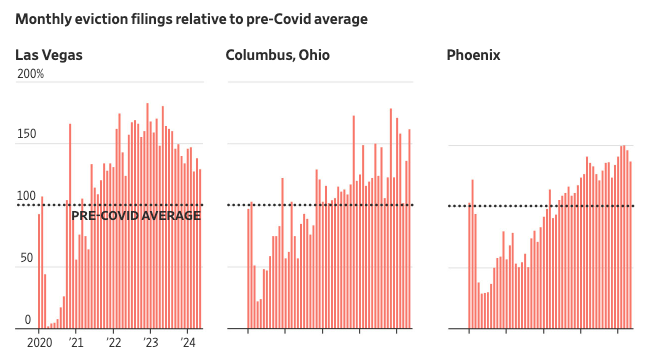
From [HERE] Tenant evictions look stuck at elevated levels in several corners of the U.S., showing little sign of returning to what was typical before the pandemic.

Eviction filings over the past year in a half-dozen cities and surrounding metropolitan areas are up 35% or more compared with pre-2020 norms, according to the Eviction Lab, a research unit at Princeton University.

This includes Las Vegas, Houston, and in Phoenix, where landlords filed more than 8,000 eviction notices in January. That was the most ever in a single month for the county that includes the Arizona capital. Phoenix eviction-court hearings often run for less than a minute. One judge signed off on an eviction after the tenant admitted to missing two rent payments.

“How long until I have to move out?” the tenant asked during a publicly available broadcast of the hearing this month. 

“It could be Tuesday,” the judge responded, suggesting she should try to work out a deal with her landlord before then.

Overall, eviction notices were up 15% or more compared with the period before the pandemic for 10 of the 33 cities tracked by the Eviction Lab, which looked at filings over the past 12 months. [MORE]

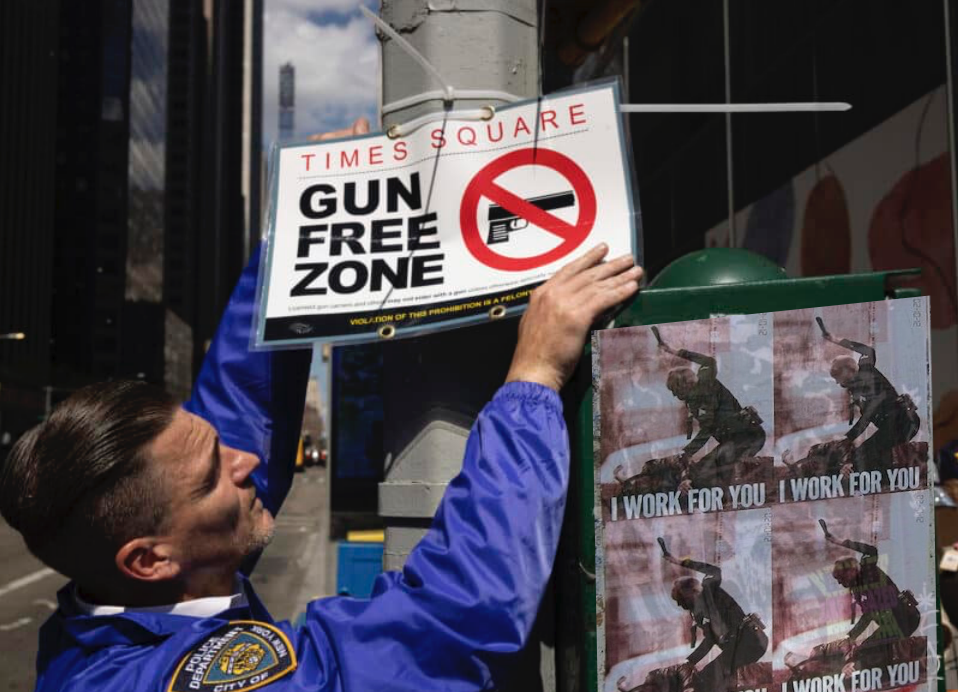
Louisiana Attorney General Shuts Down New Orleans’ Unconstitutional Gun-Free Zones – Areas Where Law Abiding Citizens Were Unable to Defend Themselves from Criminals

ACCORDING TO THE SUPREME COURT:

“Nothing in the Second Amendment’s text draws a home/public distinction with respect to the right to keep and bear arms. As we explained in Heller, the “textual elements” of the Second Amendment’s operative clause— “the right of the people to keep and bear Arms, shall not be in- fringed”—“guarantee the individual right to possess and carry weapons in case of confrontation. Heller further confirmed that the right to “bear arms” refers to the right to “wear, bear, or carry . . . upon the person or in the clothing or in a pocket, for the purpose . . . of being armed and ready for offensive or defensive action in a case of conflict with another person.”

This definition of “bear” naturally encompasses public carry. Most gun owners do not wear a holstered pistol at their hip in their bedroom or while sitting at the dinner table. Although individuals often “keep” firearms in their home, at the ready for self-defense, most do not “bear” (i.e., carry) them in the home beyond moments of actual confrontation. To confine the right to “bear” arms to the home would nullify half of the Second Amendment’s operative protections.

Moreover, confining the right to “bear” arms to the home would make little sense given that self-defense is “the central component of the [Second Amendment] right itself.” Heller, 554 U. S., at 599; see also McDonald, 561 U. S., at 767. After all, the Second Amendment guarantees an “individual right to possess and carry weapons in case of confrontation,” Heller, 554 U. S., at 592, and confrontation can surely take place outside the home.” [MORE]

From [HERE] After meeting last week with Louisiana Attorney General Liz Murrill, New Orleans officials quietly removed the 1,000-foot gun-free zone they had established illegally smack dab in the middle of the city’s popular French Quarter.

“I had a productive meeting with NOPD Superintendent Anne Kirkpatrick and District Attorney Jason Williams, and Councilwoman Helena Moreno on Thursday in which I shared my concerns. They are working on a solution that would comply with the law,” Murrill said in a short statement following the meeting.

What Murrill told city officials is not exactly known. She is in Milwaukee this week attending the Republican National Convention and is unavailable for comment, according to her spokesman, Lester Duhé, who added that the Attorney General will always defend Louisianans’ Second Amendment rights.

A story published last week revealed how city officials redesignated their Eighth District police station – which is located in the middle of the French Quarter – as a vocational technical school, so that everything within a 1,000-foot radius of the new “school” became a gun-free zone, including more than five blocks of Bourbon Street.

Who will actually attend classes at the new “school” was not specified. New Orleans Police recruits are trained at the police academy, which is located at a different facility. However, city and police officials claimed some of the recruits would take at least one class in a small room at the new “vo-tech.” No classes were planned for civilian students. [MORE]

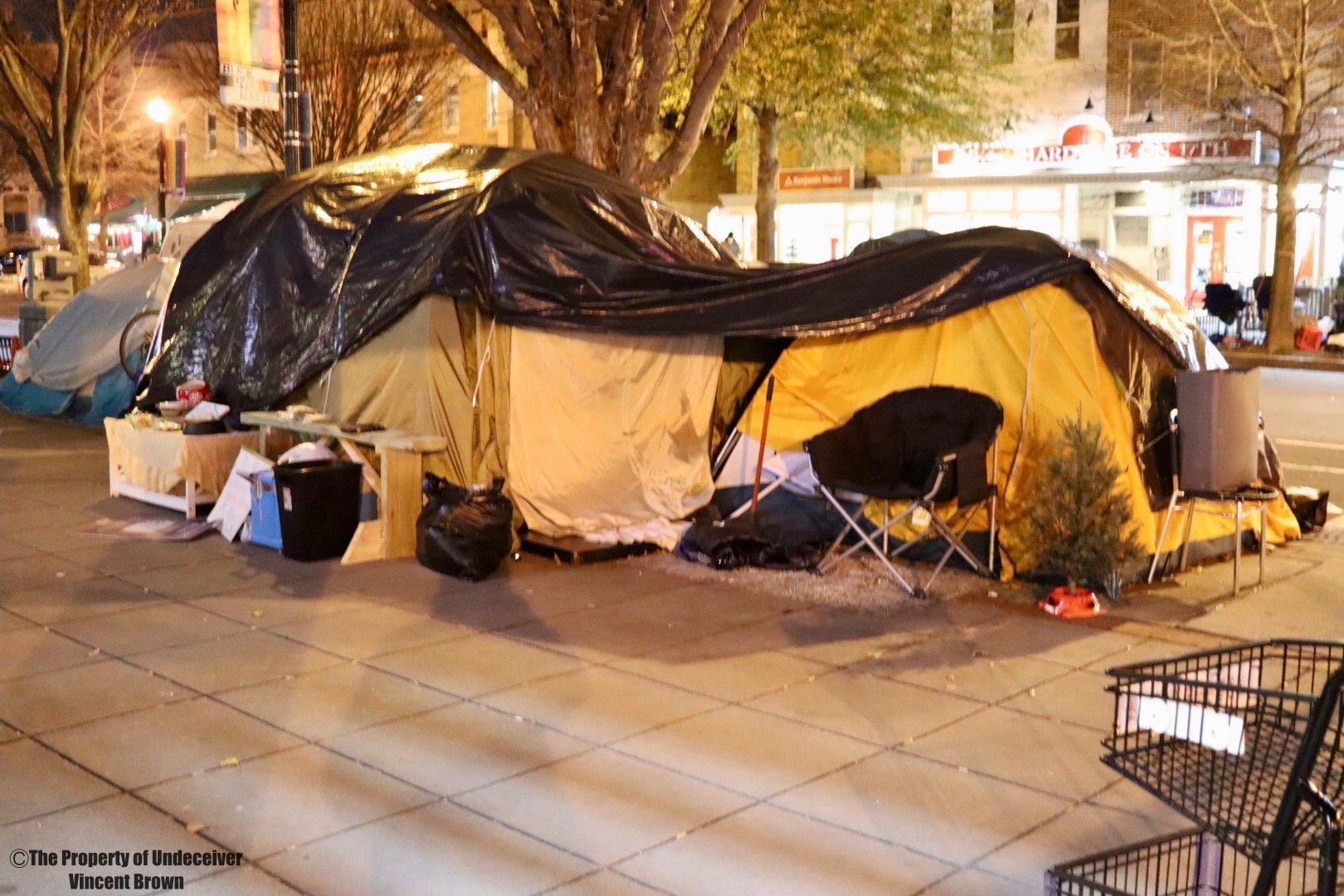
Mostly Black Homeless Shelter Residents Evicted To Make Room as Chicago Authorities Clear Tent Cities for White Liberals Ahead of Dumbocrats' Convention

From [HERE] One of Chicago’s longest-standing tent cities was cleared Wednesday as the city prepares for the Democratic National Convention, with many of the tent city’s residents offered rooms at a Gold Coast hotel operating as a homeless shelter.

But to make room for residents of the South Loop tent city, existing tenants of the hotel-turned-shelter were evicted, with some now living on the street, residents and activists said.

The encampment, sandwiched between the Dan Ryan Expressway and the 1100 block of South Desplaines Street, was cleared of tents and personal belongings by Wednesday morning. Crews added extra fencing to the area, cordoning off the strip of land that has been a respite for the unhoused for over four decades.

The encampment and others near the site of the DNC were cleared as a precaution in case the Secret Service determined the camps posed a safety threat, city officials said. [MORE]

Strawboss SF Mayor Launches Plan to 'Get Rid of Homeless People' for Her Liberal Masters. Vows 'Very Aggressive' Sweep of Encampments. Black People are Only 5% of SF population but 38% of all Homeless

From [HERE] Mayor London Breed said Thursday that San Francisco will launch a “very aggressive” crackdown on homeless encampments in the city next month. 

The mayor’s comments — made during an election debate hosted by the firefighter’s union — come about three weeks after the Supreme Court granted cities broad power to evict unhoused people from encampments. 

“We are going to be very aggressive and assertive in moving encampments which may even include criminal penalties,” Breed said at Thursday’s debate.

“The problem is not going to be solved by building more housing,” Breed added. “Thank goodness for the Supreme Court decision.”

Breed said the city has had to move from a compassionate approach to one focused on accountability. Long-term issues will not be solved by “just building housing and shelter,” she added. She said the city would start the sweeps in August because it needed time to retrain workers to follow the new legal guidance.

Since December 2022, a federal magistrate judge has prohibited San Francisco from enforcing certain laws to clear homeless tents. Although it did not ban the city from sweeping encampments, it prevented officials from citing or arresting people who refused to move in violation of six city laws. The city still increased sweeps during that time by enforcing other rules.  [MORE]

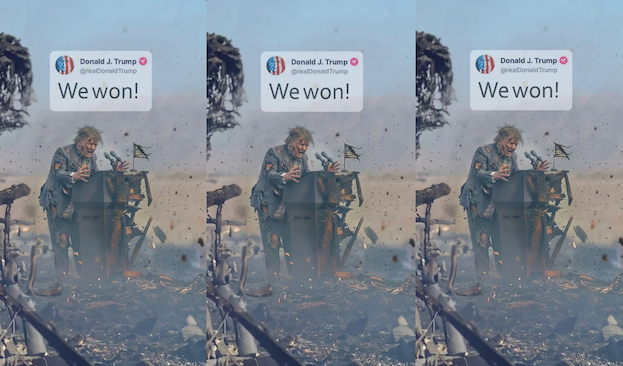
If the Bullets Were Real Can Trump's Assassination be Fake? Video Shows the Hydraulic Lift Being Struck by a Bullet, Causing Liquid to Gush Out [also Blowing Holes in Theories, Causing Truth Editing]

Evidence tending to show that the bullets were real - along with Trump’s slight head movement - make it reasonable to conclude that the shooting actually occurred and was not a false flag. The non-actions and failures by the USSS and the police tend to support the claim that the government tried to murder Trump. Contrary to belief based or emotional theory, in the final analysis, without more, facts such as “the same photographer was present,” or “it happened on a Saturday,” or ‘this benefits Trump’ are not evidence that tends to make the existence of any fact that is of consequence to a determination of whether an attempt murder was more probable than not.

“Coincidence is God’s way of remaining anonymous.” - Albert Einstein quoted in FUNKTIONARY, which also states the following:

theories – six-valued metaphors—double-breasted and double-blind tested. All our theories are only assumptions, however reasonable they may seem, each according to one’s own inner perception of one’s own truth in being. All theories wire into and often-times give way to successor theories just as truth always gives way to the nature of reality and either invalidates, eradicates, edits or updates itself (as new truths) in alignment with the attributes of reality which it is subject to forever.

theory – that which enables one to “know” all about a subject without having to know anything about it at all! 2) a mental conjecture about something. It seems as if theory is the only way we know how to overcome the static truth of self-consciousness and to recontextualize ourselves in dynamic subjective reality. “Today must forever be free to overthrow its yesterdays.” ~John K. Parsons. (See: TheoryScape, Half-Knowledge, Objective Truth & Truth-Editing)

truth editor – one who takes the reigns of truth—adding, slicing, deleting, dicing, blending, filtering, mincing it, whatever, as often and whenever it seems appropriate and beneficial to better comport to the nature of reality. (Attachment to truths of the past prevents testing those truths against reality incessantly met in the Literal Present. The Literal Present experienced as the dream past is where Reality and Truth shake hands and come out fighting. Being asked to submit to truth in our weakest moment is cuffing the hands that need to fight for reality’s sake. Truth needs the consort of reality to be (at least temporarily) true as a subjective or inner truth. (See: Knowledge Scrolling, Truth, Inner Truth, Subjective Truth, Objective Truth, Truth Decaym Absolute Truth, Mass Truth, Religious Truth, Personal Truth, TUTELAGE & Ph.F. Degree)

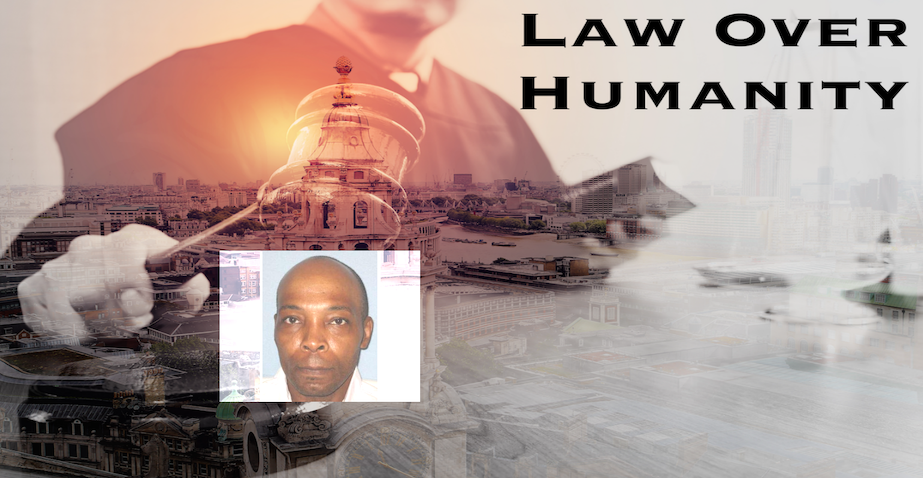
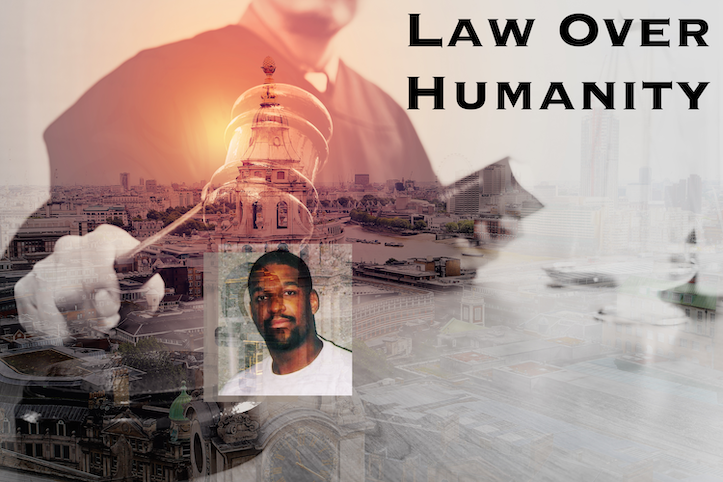
Executed Black Man “Had No Money to Retain a Real Attorney.” Alabama Murders Keith Gavin Despite Court Finding that his Attorney was “Constitutionally Ineffective” in Violation of his Right to Counsel

ACCORDING TO FUNKTIONARY:

Kratos – (Greek)—the naked unlimited power of the majority. Anytime or anywhere unlimited power, as opposed to mere supreme power, is vested with the majority, it will hand out rule-less violence to individuals by legislating truth over reality and law over humanity. (See: Iron Rule, Truth & Law, Violence, Naked Truth, Individuality, Symbiocracy & Reality)

LEGAL SANDWICH – THE JUDGE WHO MAKES PLENTY OF BREAD, THE PROSECUTOR, WHO IS TYPICALLY A DOUGH-BOY, AND THE DEFENDANT, WHO IS THE LUNCHMEAT (CATCH) OF THE DAY—WAITING TO BE DEVOURED BY THE BLINDFOLDED LADY IN JURIDICAL DRAG—MISAMERICA.

From [HERE] and [MORE] The State of Alabama put Keith Gavin to death today—the state’s third execution so far this year—despite constitutional flaws that undermined the reliability of his sentence.

Mr. Gavin was convicted of capital murder in the shooting death of a delivery driver and sentenced to death in 1999 after his appointed lawyers presented virtually nothing in mitigation at the penalty phase. 

A federal court found in 2020 that Mr. Gavin’s lawyers were ineffective in violation of Mr. Gavin’s right to counsel and held that the constitution requires a new sentencing trial, but the decision was reversed on appeal.

Questions About the Reliability of Mr. Gavin’s Death Sentence Persist

The Constitution guarantees effective assistance of counsel, which means that defense lawyers representing a person facing the death penalty are expected to investigate and present evidence demonstrating why the jury should reject the death penalty and impose a life sentence.

There was compelling evidence about Mr. Gavin’s life that could have persuaded the jury to choose life imprisonment without parole in his case. 

Keith was born into a family struggling with histories of drug abuse, alcoholism, and incarceration and, as the federal court found, “grew up in a gang-infested housing project in Chicago, living in overcrowded houses that were in poor condition, where he was surrounded by drug activity, crime, violence, and riots.” 

Keith tried to shield his 11 brothers and sisters from their abusive father by taking the blame for them and was frequently beaten with extension cords, sticks, hoses, and his father’s fist. 

In Chicago, Keith was the frequent target of gang violence and was brutally beaten at 17 and hospitalized. When he retaliated he was sent to prison, where he was frequently stabbed by gang members and continued to be victimized. Despite the constant threat of violence, Mr. Gavin earned his GED and took college courses in prison, and with only one major disciplinary write-up in 17 years, he became what the State’s expert called a model prisoner, which was a critical fact related to the jury’s decision to impose a sentence of life imprisonment without parole or death.

But Mr. Gavin’s jury never heard this evidence because, as the federal district court found, his lawyers failed to do the investigation and preparation that the constitution requires.

As Mr. Gavin’s mother lamented, “her son had no money to retain a ‘real attorney.’” Instead, he was appointed counsel who, the federal court found, “did not conduct an adequate background investigation, did not pursue all reasonably available mitigating evidence, and did not make a reasonable effort to present the mitigating evidence they had.” [MORE]

Supreme Court Issues Rare Last-Minute Stay of Execution for Ruben Gutierrez

From [HERE] The state of Texas was scheduled to execute Ruben Gutierrez (pictured) on July 16, 2024; however, the United States Supreme Court issued a rare, last-minute stay of execution just 20 minutes before he was scheduled to be executed by lethal injection. This is the first stay of execution granted by the Supreme Court since it issued a stay for Richard Glossip in 2023. In a petition filed with the Supreme Court, attorneys for Mr. Gutierrez asked the Court to intervene because Texas has denied access to testing the crime scene DNA under state law. His attorneys argued that various items from the crime scene remain untested and would rule Mr. Gutierrez out as the person responsible for the murder. The petition submitted to the court said that “[Mr.] Gutierrez faces not only the denial of (DNA testing) that he has repeatedly and consistently sought for over a decade, but moreover, execution for a crime he did not commit. Not one has any interest in a wrongful execution.” The Texas Attorney General’s Office and Cameron County District Attorney’s Office maintained that state law does not allow “for postconviction DNA testing to show innocence of the death penalty and, even if it did, [Mr.] Gutierrez would not be entitled to it.”

In response to the court’s issuance of a stay of execution, Shawn Nolan, an attorney for Mr. Gutierrez said that “we are hopeful that now the Court has stepped in to stop this execution, we can ultimately accomplish the DNA testing to prove that Mr. Gutierrez should not be executed now or in the future.” With the Supreme Court’s stay of execution, the court will now decide whether to review Mr. Gutierrez’s appeal request.

Mr. Gutierrez was convicted and sentenced to death in 1999 for conspiring with two other men to rob a trailer park operator in Brownsville, Texas, which ended in her death. Mr. Gutierrez has long maintained that he did not enter the victim’s home and did not know the other men intended on killing Ms. Harrison. Mr. Gutierrez has spent more than a decade fighting to test crime scene DNA to prove that did not kill Ms. Harrison.

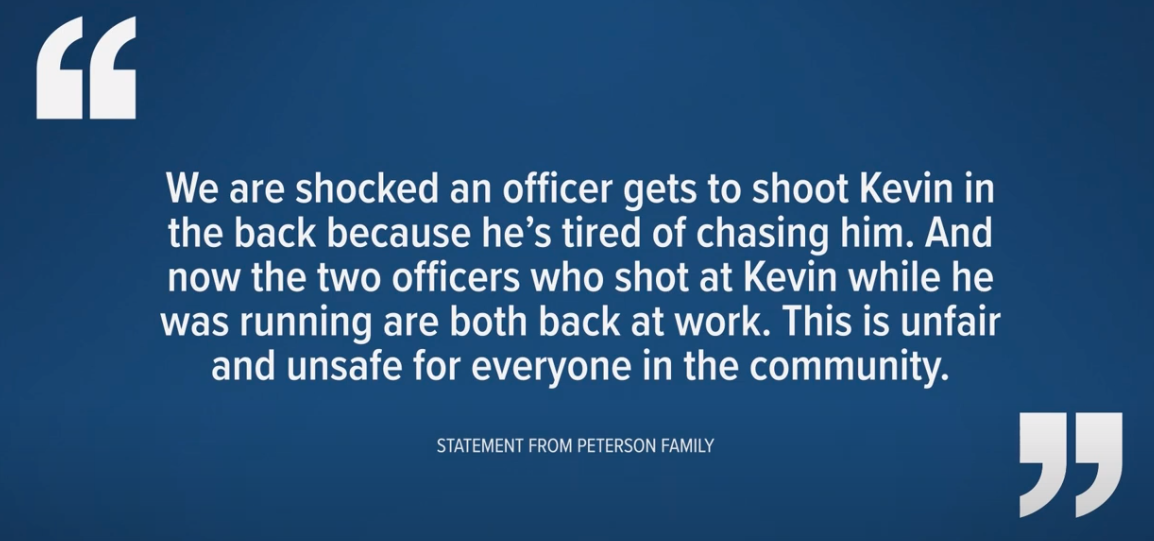
Fed Court Denies Clark County Government's Request to Dismiss Kevin Peterson's Suit. White Cops Shot Fleeing Black Man to Death who Didn't Point a Gun or Otherwise Threaten Them or the Public

From [HERE] A wrongful death lawsuit against the Clark County Sheriff's Department and two deputies, filed by Kevin Peterson Jr.'s family, will go to a jury trial.

A three-judge panel of the U.S. Court of Appeals unanimously ruled in favor of Peterson's family, whose attorneys announced the update on Wednesday.

In October 2020, Clark County Sheriff's deputies shot and killed Peterson, a 21-year-old Black man, during a failed drug sting. Peterson had expected to deliver Xanax pills and showed up to a parking lot in Hazel Dell, but ran away when he realized it was a setup, according to attorney Mark Lindquist. According to the lawsuit the police shot him to death while he was fleeing and posed no threat to the police.

At the time, former Clark County Sheriff Chuck Atkins said Peterson shot at deputies first. However, an independent investigation later found no evidence to suggest that Peterson shot at police. In other words, the police officers lied.

Peterson's family and the mother of his child filed a lawsuit in May 2022, accusing Clark County's then-sheriff Atkins and the deputies involved of wrongful death, negligence and excessive force. 

In September 2023, a federal trial judge denied the defendant's motion to dismiss five causes of action in the lawsuit. The federal judge ruled the lawsuit could move ahead to trial and set a start date for Oct. 30, 2023. But Clark County appealed the trial judge's ruling to the Ninth Circuit Court of Appeals. 

In an opinion filed on July 16, 2024, the three-judge panel unanimously held that "…the government’s interest in the use of deadly force was limited because Peterson was not suspected of committing a violent crime and a jury could reasonably conclude that he posed no immediate threat to the officers or others." The court stated

Although Peterson was armed and actively trying to evade police officers, the evidence, construed in his favor, suggests that he did not point the gun at anyone, say a word to the officers, make any harrowing gestures, or make any furtive or threatening movements towards the officers or the public. See Rice, 989 F.3d at 1121 (holding that the “most important” factor in deadly force cases is whether the suspect posed an immediate threat); Smith v. City of Hemet, 394 F.3d 689, 704 (9th Cir. 2005) (en banc) (noting that deadly force is generally not permissible “unless it is necessary to prevent escape and the officer has probable cause to believe that the suspect poses a significant threat of death or serious physical injury to the officer or others” (quoting Tennessee v. Garner, 471 U.S. 1, 3 (1985))).

While Defendants rely on officer testimony to the contrary, “in the deadly force context, we cannot ‘simply accept what may be a self-serving account by the police officer,’” because the victim—usually the best-positioned witness to rebut an officer’s testimony—is dead. Cruz v. City of Anaheim, 765 F.3d 1076, 1079 (9th Cir. 2014) (quoting Scott v. Henrich, 39 F.3d 912, 915 (9th Cir. 1994)). [MORE]

“This ruling sends a message to Clark County that they ought to look at their policies," said Lindquist. "Given Clark County’s resistance to accountability, the only way the family and the community is likely to see justice is through a trial.” 

Less than a year later, a Pierce County prosecutor found the shooting "justified and lawful." The deputies who fired at Peterson were cleared of criminal wrongdoing.

All causes of action alleged in the lawsuit will go to the jury. The trial is scheduled for early 2025 and will be held in the federal courthouse in Seattle.

Another Case Closed w/o a Trial as Judge Declares Wichita Cops Immune. Instead of Taking Cedric Lofton to a Mental Evaluation Police Put Black Teen in a Straitjacket and Crushed Him To Death at Jail

From [HERE] A federal judge in Kansas ruled Tuesday that seven Wichita police officers are entitled to qualified immunity in a civil lawsuit over the in-custody death of a 17-year-old Cedric Lofton, who was restrained for more than half an hour at a juvenile detention center.

In his order, Chief U.S. District Judge Eric F. Melgren said the plaintiff, Marquan Teetz — Lofton's brother — did not demonstrate the officers violated clearly established law. He granted the officer's motion for summary judgment.

Melgren dismissed without prejudice claims for negligence, intentional infliction of emotional distress and negligent infliction of emotional distress against the Wichita police officers. These state law claims could be filed again.

Qualified immunity is a legal doctrine that protects officials from lawsuits, only allowing them when a clearly established constitutional right has been violated.

Andrew M. Stroth of the Chicago firm Action Injury Law Group, one of the plaintiff's attorneys said they would continue to seek justice for Lofton.

"An unarmed 17-year-old Black boy was unjustifiably killed and we will do everything we can to support this family," he said.

The complaint sets forth the following facts:

In the early morning hours of September 24, 2021, Cedric returned to his foster home after leaving without notice a day earlier. Cedric’s grandmother had recently passed away and upon Cedric’s return, his foster father was concerned about Cedric’s mental health.

Seeking guidance with concern, Cedric’s foster father called the Kansas Department of Children and Families (“DCF”). DCF told him to call the police and to not let Cedric in the home. The purpose of this instruction was to obtain a mental health evaluation and treatment for Cedric. This is why the Wichita police were called. Cedric had committed no crime; he was a child returning innocently home.

WPD officers arrived and encountered Cedric outside his foster home. Cedric was tired and afraid. He showed no signs of violence and presented no harm or danger. It was immediately clear that he was experiencing a mental health crisis, telling WPD officers that he was worried people were trying to “kill” him and that all he wanted to do was to go inside his home and go to sleep. Cedric asked the officers, “Y’all are here to protect me, right?”

This foster child needed help. But rather than provide it, WPD officers physically confronted him, unnecessarily escalated a benign scenario, arrested him, and entombed him in a WRAP restraint system — effectively a full-body straitjacket. The use of the WRAP predictably and inexcusably exacerbated Cedric’s fear and paranoia.

Worse, WPD did not then take Cedric to a hospital for mental health evaluation and treatment. Instead, they brought him to Sedgwick County’s Juvenile Intake and Assessment Center (“JIAC”)—a kind of juvenile detention—and locked him in a holding room still in the WRAP restraint. In other words, even though the entire point of WPD’s involvement was to get Cedric help and even though he had committed no crime, WPD refused to obtain help and treated Cedric like a violent criminal. This despite the fact that one officer admitted: “For me, I think we should have taken [Cedric] to [the hospital at] St. Joe [for treatment].”

Worse still, when confronted with JIAC’s intake questioning about whether Cedric required medical treatment, WPD intentionally falsified their response and swore that he needed no such treatment, knowing that was exactly what was needed and required. Indeed, a JIAC intake officer witnessed a WPD officer change his response to the intake form when he learned it would trigger WPD’s obligation to transport Cedric for treatment. As such, the officer prioritized his own convenience at the expense of this child’s welfare. And JIAC officials knowingly permitted it.

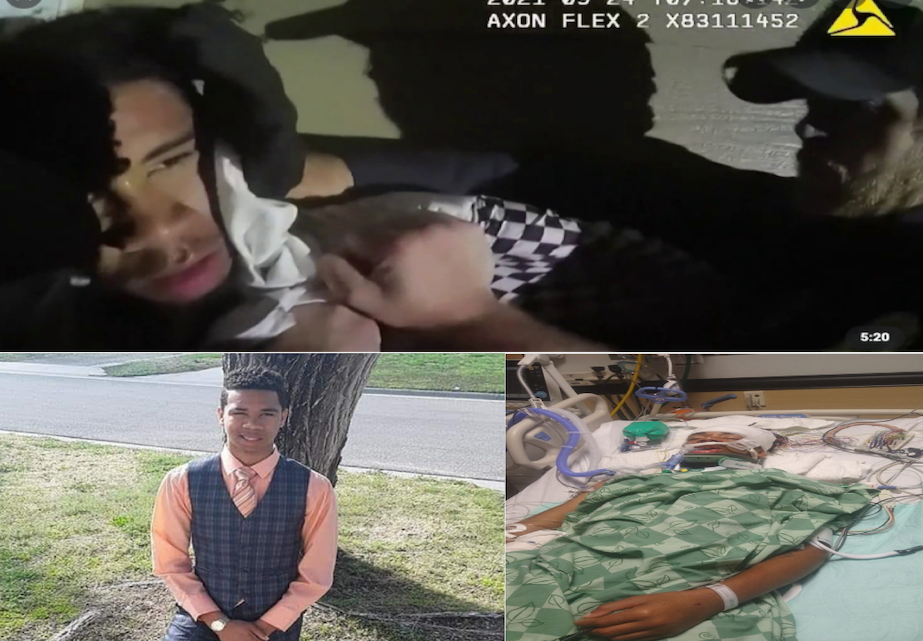
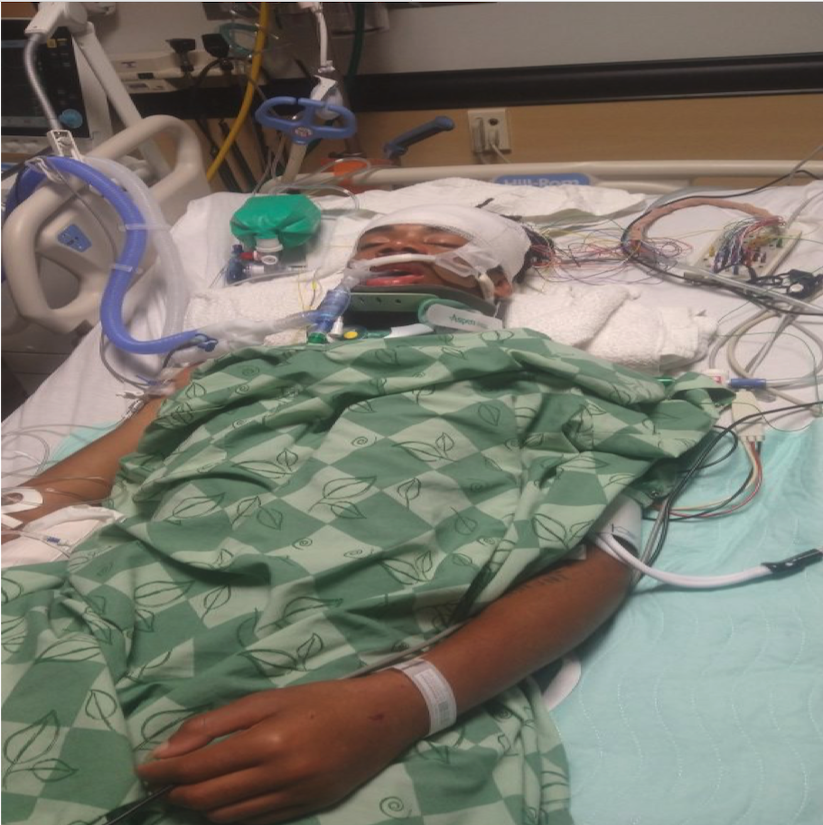
Within a few hours, Cedric was dead. Following a brief altercation, Cedric died after several JIAC officers forced him to the floor in the prone position and pinned him on his stomach for 39 uninterrupted minutes until he stopped breathing. The smiling child photographed above was condemned to die hooked to life-supporting tubes in a hospital bed, shown here:

Cedric posed no threat to anyone — not least of which the five able-bodied, adult officers who cycled-in and out of the room during Cedric’s slow death. These JIAC officers perpetrated a prolonged and abhorrent case of excessive force on a 135-pound, shoeless, shackled, and unarmed juvenile in the obvious throes of a mental health crisis.

Months later, the Sedgwick County medical examiner determined that Cedric was killed as a result of this incident and concluded that Cedric’s death was a “homicide.”

Teetz sued on June 13, 2022, filed an amended complaint in November and a second amended complaint in April 2023. He claimed the Wichita officers were indifferent to Cedric's mental health crisis in violation of his rights under the Constitution and said that the supervising officers, Tony Supancic, Amanda Darrow and John Esau participated in and did not stop violations of Lofton's rights. Teetz also claimed the officers intentionally and negligently inflicted emotional distress.

"Plaintiff fails to carry his burden of demonstrating that involuntary hospitalization and issuance of a mental evaluation were clearly established constitutional rights that the WPD Officers’ deprived Lofton of when they took him to JIAC. Consequently, the WPD Officers are entitled to qualified immunity, and the Court grants the WPD Officers’ motion for summary judgment," Melgren wrote in his order.

In early 2022, Sedgwick County District Attorney Marc Bennett, who is white, said he would not bring any charges against the officers due to Kansas' "stand-your-ground" law, the Associated Press reported at the time. (At least in regard to white citizens, “Stand your ground” law would be inapplicable here as “A person is justified in the use of deadly force under circumstances where a person reasonably believes that such use of deadly force is necessary to prevent imminent death or great bodily harm to such person or a third person.” [MORE] Here, no facts have been alleged that the black teen posed an imminent threat of death to jail authorities as he was crushed to death for 39 minutes while prone on the floor.)

Various defendants have been dropped during the course of the case, including Sedgwick County and the city of Wichita.

Sedgwick County Juvenile Intake and Assessment Center Officers Jason Stepien; Brenton Newby, Karen Conklin, William Buckner and Benito Mendoza remained defendants in the suit as of Tuesday night. They, too, have filed for summary judgment.

Instead of Protecting Sonya Massey, a White Cop Shot Her in the Face. Illinois Deputy Charged with Murder for Killing Black Woman who Called Police to Her Home to Investigate a Suspected Intruder

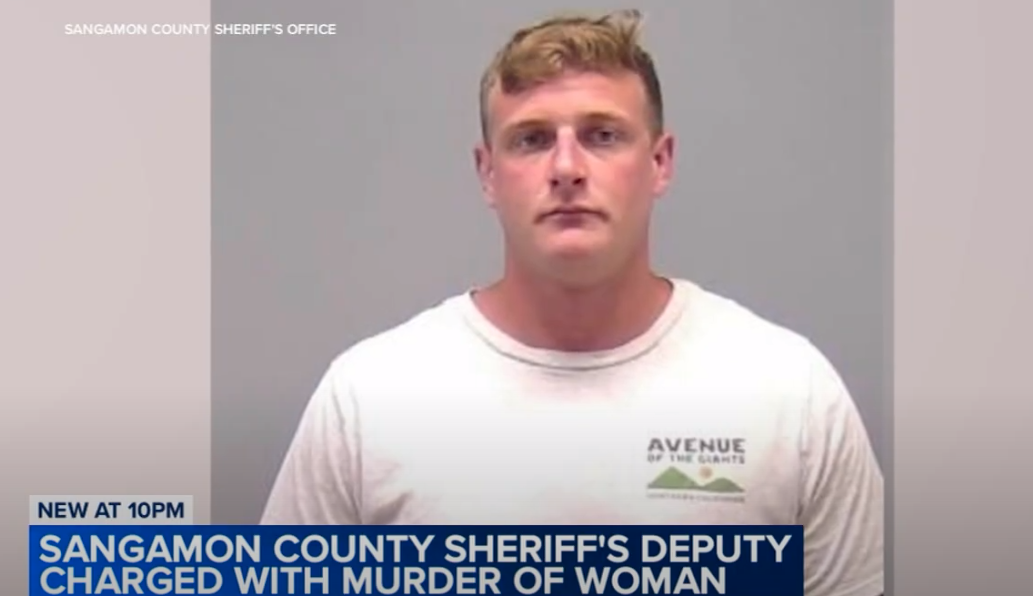
From [HERE] An Illinois sheriff's deputy has been fired, arrested and charged with murder in the fatal shooting of a 36-year-old Black mother that occurred after she called officers to her home for help, officials announced on Wednesday.

Sean Grayson, who is white, is set to be arraigned in Illinois' Seventh Judicial Circuit Court on Thursday afternoon, one day after a grand jury indicted him on five criminal counts for the July 6 death of Sonya Massey, according to the Sangamon County States Attorney's Office. He faces three counts of first-degree murder, one count of aggravated battery and one count of official misconduct. Grayson was denied bail during Thursday’s arraignment.

Massey was unarmed and shot in the face after she called police regarding a suspected intruder in her Springfield home, said Ben Crump, the prominent U.S. civil rights lawyer representing the family.

Massey lived in the 2800 block of S. Hoover Ave. in unincorporated Springfield. She had called 9-1-1 to report suspicious activity near her home. Two officers were called to Massey's home for a suspected prowler at 12:50 a.m. July 6. About 30 minutes later, Massey was shot and later pronounced dead at St. John's Hospital, according to the sheriff's office. The deputies were not injured in the incident.

Court documents filed by prosecutors say Massey was allowed to remove a boiling pot from her stove. But then the deputy, in an adjacent room, threatened to shoot her – demanding she put the pot down. The account says he then shot at her three times, wounding her in the face.

Grayson, the documents said, had failed to turn his body camera on until after the shots were fired,. But the incident was captured on the other deputies’ camera.

"While nothing can undo the heinous actions of this officer, we hope the scales of justice will continue to hold him accountable and we will demand transparency at every step," Crump said in a statement.

Reuters could not immediately identify an attorney for Grayson.

The family has viewed body-camera footage, which officials plan to release on Monday with minimal redactions, according to State's Attorney John Milhiser.

The shooting was investigated by the Illinois State Police. Grayson was fired after it was found his actions did not follow proper training and standards, Sangamon County Sheriff's Office said in a statement on Wednesday announcing the charges.

The killing comes roughly two months after a Florida deputy shot and killed Fortson, a 23-year-old Black airman with the U.S. Air Force, at Fortson's home in Fort Walton Beach. Eddie Duran, the deputy, was later fired amid an investigation into the shooting, though charges have not been filed.

Ohio Justices Enforce $30M Judgment after East Cleveland Authorities Refused to Pay. White Cops Unlawfully Stopped Black Man and Detained Him w/o Charges in a Jail Storage Room for 4 Days w/No Toilet

From [HERE] The Ohio Supreme Court on Wednesday ordered the city of East Cleveland to pay upwards of $30 million to satisfy a judgment in favor of a Black man who won a jury verdict finding that police officers wrongfully detained him and caused serious injuries in the process.

In the opinion, the justices granted a writ of mandamus to Arnold Black, saying East Cleveland has a clear legal duty to pay out the judgment, and Black had no other legal recourse to enforce that judgment as he cannot commence a regular enforcement action against the city under state law.

According to the opinion, Black was arrested in April 2012 during a traffic stop by East Cleveland police officers, who beat and arrested him after Black told them that he did not know who sold drugs in the city. The court made a factual finding that Black was left in a storage room for four days, with no bed or toilet, and his former fiancée testified that his head was “swollen like a helmet” when he was released.

Black sued Police Chief Ralph Scotts, Detective Randy Hicks and the city, and in August 2019 a jury returned a verdict in his favor, awarding $20 million in compensatory damages, plus $5 million in prejudgment interest, plus $15 million in punitive damages from Scotts and Hicks. The following year, an appeals court affirmed the judgment, and both the state and U.S. Supreme Courts denied review of the verdict.

Black's attorney contacted the city in October 2021 seeking to satisfy the judgment, but the city did not acknowledge or respond to the letter, and Black commenced the action seeking the writ in February 2023 and asked for the $20 million judgment, plus nearly $10.5 million in interest.

According to Wednesday's opinion, Black's evidence clearly and convincingly established that he's entitled to the relief because as he prevailed at a jury trial, which gives him a clear legal right to the judgment, while the city has a clear legal duty to satisfy the amounts.

While the city argued that a motion it made at trial to enforce a damages cap meant there was a dispute about how much money it owed Black and that therefore he hasn't established a clear legal right, the justices disagreed.

According to the opinion, Black has submitted sufficient evidence to establish exactly how much the city owes him, including the jury's interrogatories and verdict, including the amount of compensatory damages, the trial court's judgment ordering the city to pay and an appeals court's judgment affirming the verdict and monetary awards.

As such, the justices ordered the city to satisfy the judgment, including prejudgment interest and postjudgment interest from the verdict to the date it is paid, and if the city does not have the funds, it is to appropriate funds to satisfy the judgment and interest.

According to the court:

On April 28, 2012, at approximately 10:00 p.m., Black was driving home from his mother’s house when he was pulled over by East Cleveland Patrolman Jonathan O’Leary. (Trial tr. 166-167; 218; 227.) Sergeant Randy Hicks had ordered O’Leary to stop Black’s green truck because it resembled a green truck belonging to a suspected drug dealer. Hicks was a narcotics detective in East Cleveland and was also a member of a joint narcotics task force with the Cuyahoga County Sheriff’s Department. (O’Leary trial depo. tr. 54.)

O’Leary told Black to get out of his vehicle, handcuffed him, and escorted him to the back of his truck. (O’Leary trial depo. tr. 8.)

O’Leary’s patrol car was parked behind Black’s vehicle with the lights activated. Black was sitting on his back bumper in front of O’Leary’s patrol car when Hicks arrived on the scene.

Black testified that Hicks immediately began searching his car and removed the side panels from his truck. Hicks did not find any narcotics in the truck and, after brandishing his badge, began questioning Black about who sells drugs in East Cleveland. (Trial tr. 86.)

Black replied that he did not know who sold drugs in the city. Thereafter, Hicks became violent and repeatedly struck Black’s face and head without provocation or justification. (Trial tr. 93.) Hicks admitted at trial that he struck Black several times until O’Leary came between them and stopped him. (Trial tr. 93-94.) Hicks described Black as appearing “dazed” after the beating. (Trial tr. 94; 232-234.)

O’Leary testified that he believed his dash camera was operating throughout the duration of the incident and captured the incident on film. (O’Leary trial depo. 18.) Black and O’Leary both testified that Hicks may have been under the influence of alcohol at the time of the incident because he smelled of alcohol. (Trial tr. 291-292; O’Leary trial depo. 73-74.)

Hicks admitted that he called another officer to transport Black to the East Cleveland jail even though he did not have probable cause to arrest him. (Trial tr. 98.)

Upon arriving at the jail, Black was placed in a storage room that the police officers referred to as a “holding cell,” even though there was no bed and no toilet in the room. (Trial tr. 238-239.) The room contained a wooden bench, some storage lockers, and cleaning supplies and was infested with cock roaches. (Trial tr. 240- 241.)

Black remained in the storage room for four days. At some point, an unknown officer entered the room, gave Black a carton of milk, and allowed him to use his cell phone to make a call. (Trial tr. 244-245.) Black called his former fiancée, Eryka Bey and told her, in a whisper, that he had been arrested and beaten and was being held in the East Cleveland jail. (Trial tr. 190.)

Bey went immediately to the jail and asked to see Black. An officer told her she could not see him because he was “under investigation.” Black testified that on the fourth day following his arrest, a councilwoman came to the jail to inquire about him because she had heard he had been beaten while he was handcuffed and was being detained without probable cause in the city jail.

Chief Spotts accompanied the councilwoman during her visit with Black in the storage room. (Trial tr. 272.) In Black’s presence, the councilwoman told the chief that she wanted to know what happened to Black and how “at this time and age * * * he got beat up and put in a closet.” (Trial tr. 274.) Thereafter, Black was placed in a line of inmates, who were awaiting transport to the county jail. (Trial tr. 271-274.) Later that day, Bey picked Black up at the county jail and drove him home. (Trial tr. 196-197.)

According to Bey, Black’s head was swollen like a “helmet” and he was acting fearful. (Trial tr. 196-197.) In the weeks following the incident, Black complained of headaches and developed vision problems. His mother and Bey also observed changes in his personality. They described him as withdrawn and unwilling to leave the house due to fear of the police. (Trial tr. 199-200, 201, 209, 253-254.) [MORE]

To Make White Liberals Feel Safer, Grimacing Black Rolebot Governor Signs Law that Enables Mostly Black Children Age 10-12 to be Charged and Incarcerated for Adult Crimes. MD Juvy Jail is 77% Black

THE MARIJUANA PARDONS WERE A PUBLIC RELATIONS STUNT: No one in Maryland is currently incarcerated for misdemeanor marijuana convictions. The pardons free no one from jail. BLACK AGENDA REPORT EXPLAINED, This all occurs in a state that leads the nation in racial disparities in arrest, charges, and incarceration. POWER NAPPING SLEEPING TOMS DON’T GET IT.

ACCORDING TO FUNKTIONARY:

BOHICAN – Bend Over Here It Comes Again Negro. ☻Sniggers are the last of the buck-dancing Bohicans. “I am the last of the Bohicans,” he said, “…and I will never be broken. I am the last and worst of my breed—and the final token.” (See: Snigger, Coin-Operated, Samboism, Uncle Tom, Possumist, Turdistan, Piece-Activist, Niggeroe & GOP)

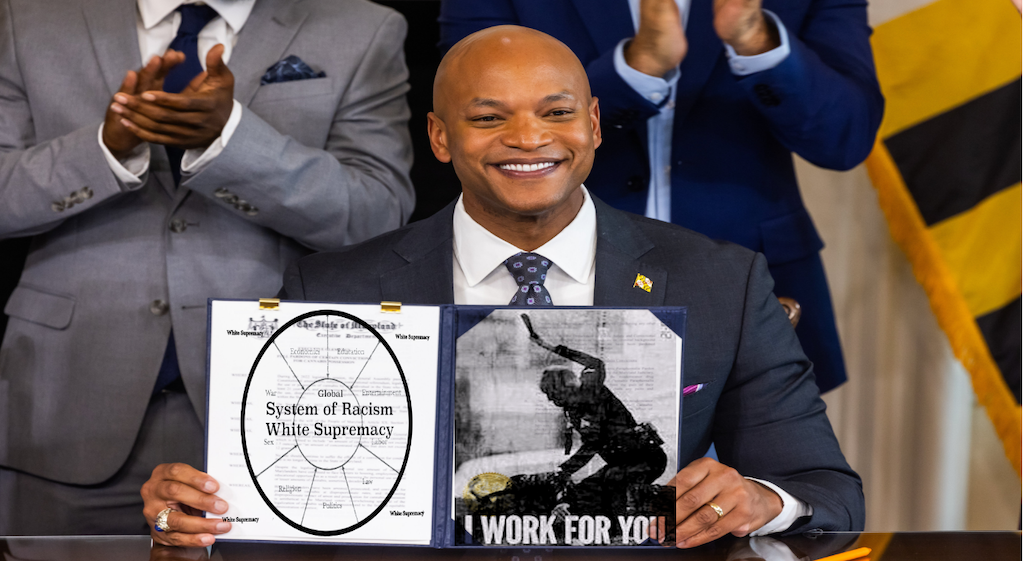
From [HERE] The Juvenile Justice Reform Act is now a Maryland law after it was signed Thursday by Gov. Wes Moore.

The new law makes it possible for children ages 10 to 12 to be charged with illegal gun possession, auto theft, harming animals and sex offenses.

"Today, we will sign bills that will make Maryland safer," Governor Wes Moore said. "This issue mattered too much to think that we could hope, or urge, or pray, or insist that the legislature do more without actually being willing to do the work ourselves."

Lawmakers introduced it earlier this year to address a spike in juvenile crime.

According to data from the Maryland Department of Juvenile Services, juvenile crime complaints have increased nearly 75% in recent years, from 7,100 complaints in 2021 to more than 12,363 in 2023.

The ACLU stated, the Governor has decided to take Maryland back to being ranked as one of the worst human rights violators of children in the entire United States. The intentional rollback of the Juvenile Justice Reform Act comes after just one year, without any facts, data, or evidence to justify it, and without consulting all the experts who worked so hard and relied on best practices, science, and evidence-based approaches that would actually improve public safety for all of us.

Said Yanet Amanuel, director of public policy at the ACLU of Maryland: “Do we truly believe in seeing and supporting the humanity of all our children? If so, legislators need to pause, reflect on how wrong-headed it is to incarcerate children for minor offenses, how important it is that elementary school children are not subjected to the criminal legal system, and then amend this bill to reflect those values. It is a proven fact that incarceration usually harms children more than it helps them. And despite Black children only making up 30 percent of the state’s population, they make up 77.4 percent of the children detained in Maryland juvenile jails. Our elected leaders must change course to ensure we do not usher in a new generation of failed, racist, tough on crime policies — and a renewed era of super-predator propaganda.” [MORE]

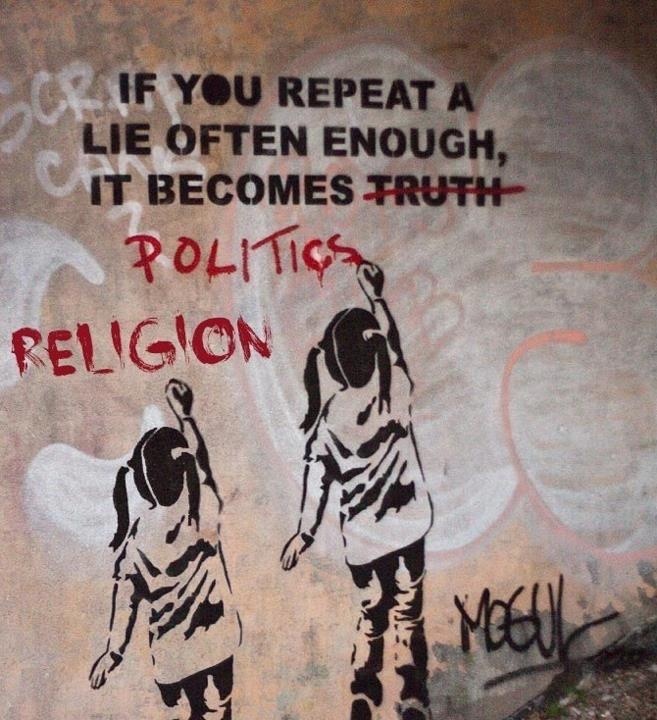
Do Dolly Want a Cracker? Anything that Challenges the Autofficial Version of Events is a Conspiracy to the Wall Street Journal, who Probotically Parrot Whatever Government or Police Say as Truth

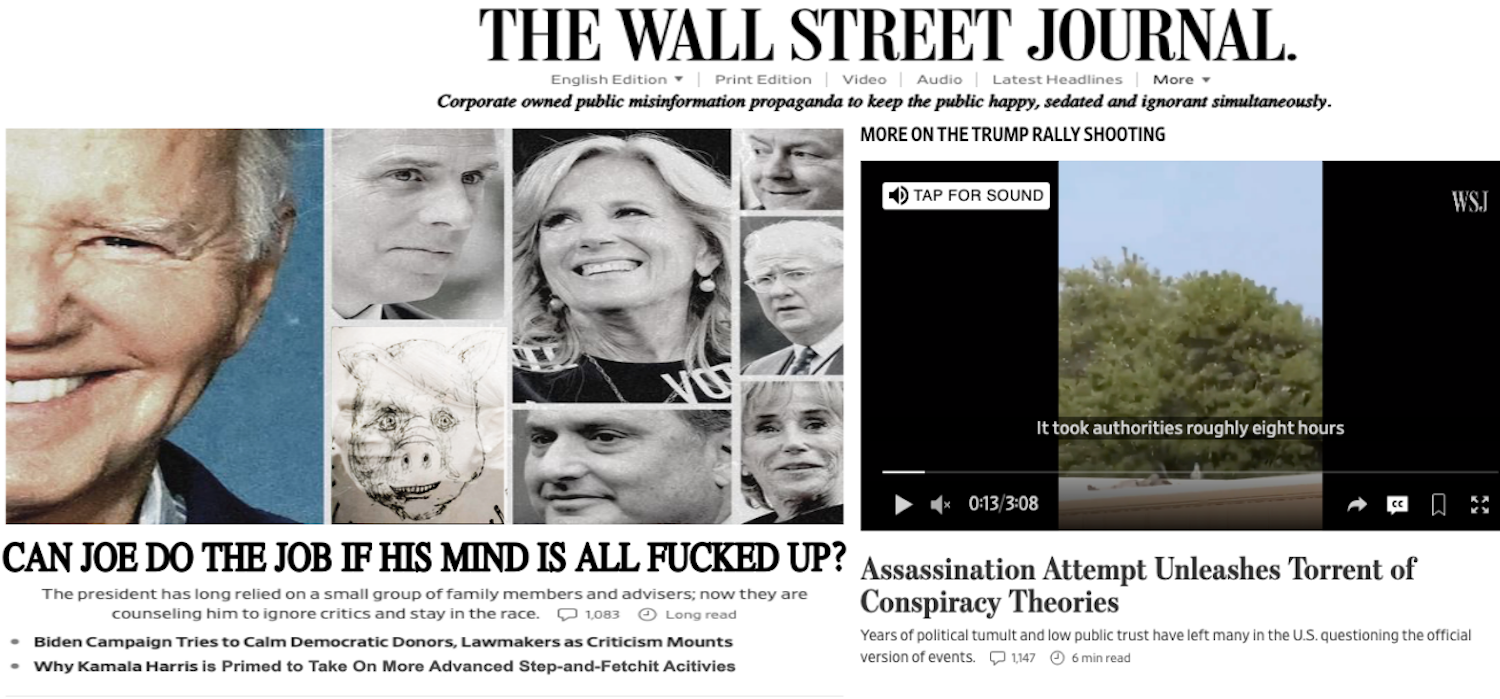
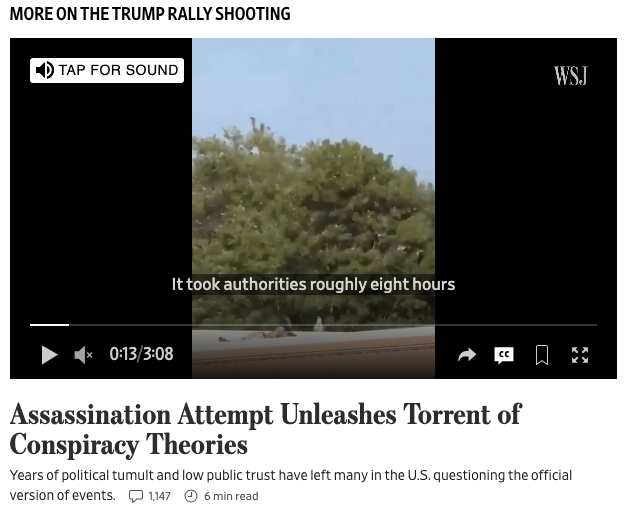
Today the Wall Street Journal explained to their elite, rich readership that “years of public tumult and low public trust have left many in the US questioning the official version of events.” Rest assured none of their journalists (aka “Yes Men” and “Yes Women”) would ever dare do such a thing as to challenge the competency or motives of authorities. Facts tending to show that Secret Service and police were knowledgeable of the Trump shooter’s presence surely must be false if the authorities said so. Questions about whether a second or third shooter were involved are apparently unreasonable to the elites in the Dependent Media who are engaged in the business of reality concealment.

Besides, who needs first hand witness accounts, corroboration of details and independent expert evaluation of facts when journalists can just parrot summarized hearsay information recited by cops from unstated, unknown and thus invisible sources of information who cannot be publicly evaluated (demeanor, tone of voice, appearance, etc) for their credibility. Similarly, also in regard to false flag operations, who needs to see a contested trial to determine the facts when the media can present mere allegations, emotional accounts and then a gift wrapped plea agreement accepted by the court or a default judgment as a substitute account for reality?

FUNKTIONARY explains,

Great Fraud – the Social Lie, i.e. to know that the official version of anything is most likely false and that all authority is based on canorous fraud—camouflaged in symbolaeography. (See: Fraud, Symbolaeography, Law & Real Tax)

phallacies – prevailing assumptions. 2) statist and authoritarian dribble. 3) the official legend. 4) the autofficial version.

journalism – the sciolistic and scribblative writing profession of scripturient cynics, critics or otherwise otiose ‘yes-men’. “Please forgive us our press passes as we forgive those who press pass against us.” ~The Book of Negroes 6:9. Journalists, historically speaking, have been the bagmen for the authoritative regimes in power and serve mostly as their lap-dogs.

Sojournalists – those who become acutely aware of the social funktion of their profession and with a raised consciousness on one hand and a pen in another, dearly depart from recreating and regurgitating (soft-spinning) the unnecessary illusions of our day-today lives into a totally opposite direction of exposing those very same illusions and the sources from which they are projected. Sojournalists have come to overstand that without meaningful lives, moral, ethical, ontological or existential purpose is not just invalid, but also meaningless. (See: NEWS, Corporate State, MEDIA & Have-Nots)

Dependent Media – Establishment (dependent) media is both unwilling and incapable of reporting events truthfully, accurately, or without extreme bias. News coverage is just that—covering-up-(masking) and distorting the events and those wielding the power behind the events (those reported and deliberately unreported). News coverage has simply become “disinfotainment” with the sole purpose of perception and knowledge containment as well as reality concealment. You report in the interests of those who paying you to do so. (See: MEDIA, NBC & NEWS)

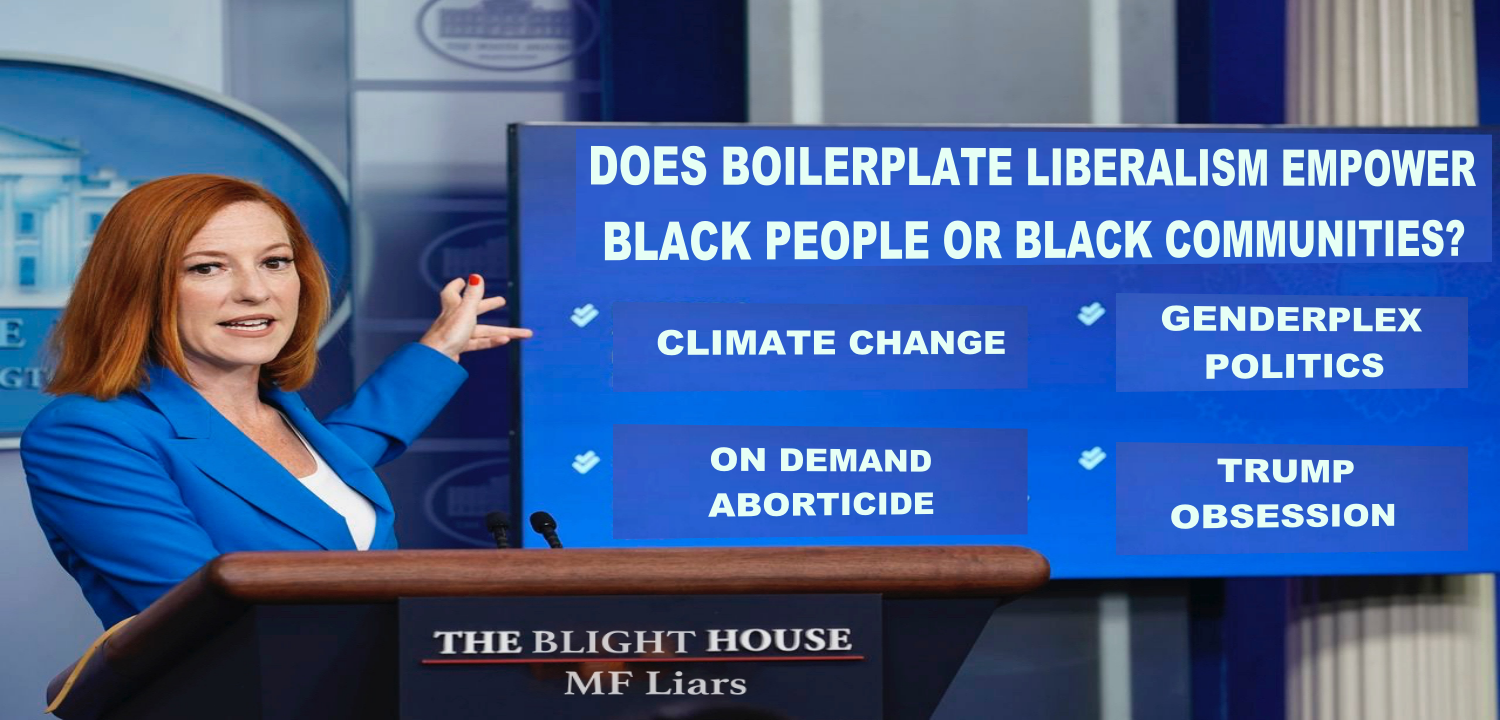
Probot – a propagandizing programmed robot. A representative from an organization, agency or institution, especially the Internal Revenue Service, Pentagon, State Department, or Blight House, whose assignment is to make prepared statements and answer “cooked” (prepared) questions at news conferences, briefings and the like. A probot is a proxymoron who conveys programmed disinformation in computerized language and bureaucratese jargon. A probot is one who disseminates lies, distortions and convenient mass truths composed by a superior overruling elite. (See: Proxymoron)

Social reality – perception and worldview created, constituted, propagandized, recognized, manipulated and celebrated by, with and through mass media. What we take as (or for) truth is fragmentary and subject to shatter (if not scatter) because reality is uncontrollably an “iffy” matter. With uncertainty as one of the foundational features of reality, coupled with our experienceextending imaginations and expectation-adjusting minds impinging on our fantasies, the social realities we collectively construct in each other’s heads (conscious and subconscious) are like constantly-shifting kaleidoscopic view that if taken seriously, would call into question or call us to ask the question, “how much make-believe are you led to believe is necessary to fantisize your reality?” (See: Perception, Observation, Quantum Reality & Worldview)

Federal Appeals Court Denies Honolulu Cops Request for Immunity for Handcuffing a Calm, 10-Year-Old Black Girl at School During Unlawful Arrest Over a Drawing She Made

From [HERE] A federal appeals court has held that three Honolulu police officers can be sued for using excessive force against a 10-year-old girl, finding that it is “beyond dispute that handcuffing a small, calm child who is surrounded by numerous adults, who complies with all of the officers’ instructions, and who is . . . unlikely to flee, was completely unnecessary and excessively intrusive.”

On January 10, 2020, N.B., a 10-year-old Black girl with a known disability, was handcuffed and arrested by three police officers at her public elementary school in Honolulu, allegedly for her participation in creating a cartoon-style drawing with other children, according to the federal district court.

A “simplistic cartoon-style picture” had been made by several elementary age students the day before in response to a bullying incident. N.B. used drawing as a coping mechanism, a lawsuit filed by N.B.’s mother explained, and another child took the drawing and gave it to one of the students it mentioned against N.B.’s wishes. School officials saw the drawing on January 9 and took no action.

But the next morning, a parent demanded that the school call the police on N.B. School officials complied, and three police officers arrived at Honowai Elementary School, where the complaint says they interrogated N.B. in a secluded room without knowledge or consent from her mother, who was not allowed to see her daughter.

Officers put 10-year-old N.B. in adult handcuffs and arrested her, according to the complaint. They then placed her in the back of a squad car and drove the crying child to Pearl City Police Station, where no charges were filed. When N.B. was finally allowed to go home with her mother, she allegedly had marks on her wrists from the tight handcuffs.

None of the other students—who were not Black—were investigated or disciplined for their involvement in creating and delivering the drawing, the complaint alleges.

N.B.’s mother filed a civil rights lawsuit for false imprisonment, racial discrimination, and excessive force, specifically alleging that the officers’ use of handcuffs was excessive given the age, size, and disability of her 10-year-old daughter, who was compliant and responsive to officers, posed no physical threat to anyone, was not resisting arrest, and had not attempted to flee.

The officers filed a motion to dismiss, asserting that qualified immunity shielded them from being sued. [MORE]

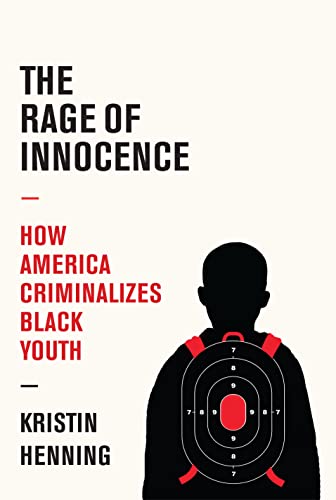
Government Study of the Public Fool System Found that the Arrest Rates of Black Students More Than Doubled if their School Had a Police Officer Stationed on Campus

From [HERE] A new government analysis has found that the arrest rates of Black students more than doubled if their school had a police officer stationed on campus. 
The General Accounting Office, a nonpartisan federal watchdog agency, also found that for Black boys with disabilities, including students with special-education plans, the difference in arrest rates widened even further.

“GAO’s analysis of the Department of Education’s data collected from nearly every U.S. school district found that students’ race and ethnicity, gender, and disability status were all prominent with respect to rates of arrest and referrals to police, especially when the characteristics intersected,” according to the report. 

Jackie Nowicki, director of GAO’s education team, said the report shines a light on a critical problem that schools have yet to fully address. 

“It is really clear from our statistical modeling that race, and gender, and disability status all matter when it comes to things like arrests in schools–especially when students have more than one of those characteristics,” she said on “Watchdog Report,” the GAO’s podcast. “But they matter differently for different groups of kids.” 

Titled “K-12 Education: Differences in Student Arrest Rates Widen When Race, Gender, and Disability Status Overlap,” the report found that arrest rates more than doubled in schools with police present compared to similar schools without police. The report also found that, of the 51% of schools with police present at least once a week, arrests were more common when the police were involved in student discipline.

Though procedures vary from one state to another, arrests typically are divided between paper arrests, in which the student receives a citation and is referred to police for investigation, and physical arrests, in which a police officer serving on campus handcuffs the student and takes them into custody. [MORE]
Despite Black People’s Heavy Involvement in the Democratic Party, Schools have Remained as Segregated as before Brown v Board of Education, which was Decided Over 70 Years Ago

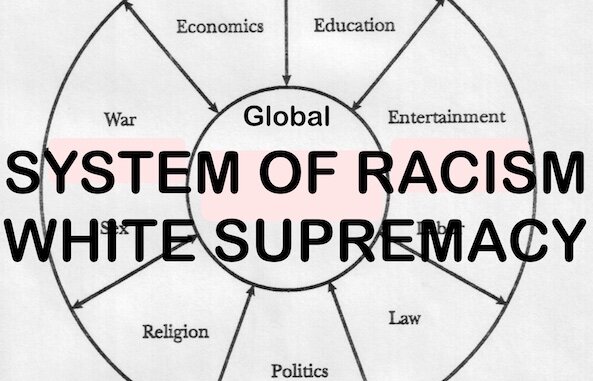
From [HERE] According to a new study from Available To All, an education nonprofit, equal access to a quality education has declined, and has resulted in the return of segregation to public schools in America. The study found that this occurs due to legally enshrined segregation and enrollment policies that have a discriminatory effect in practice. 
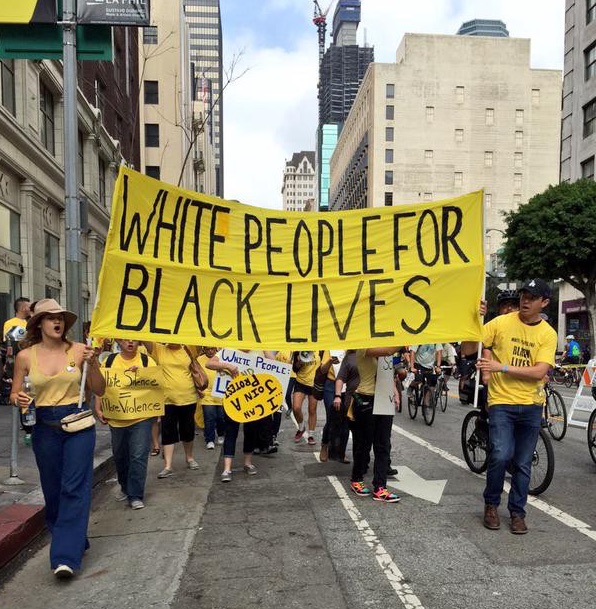
As Axios reports, the practice of “educational redlining” combined with school districts that aggressively enforce their zoning rules has resulted in elite public schools being stratified along the lines of race. This has left parents like Kelley Williams-Bolar, who became the subject of a national debate in 2011 when she used her father’s address to get her children into a better school in Ohio, with few legal remedies—as a result of her attempt, Williams-Bolar, a Black woman, spent nine days in jail. 

The report on the state of public school education in America was commissioned to mark the 70th anniversary of the Brown v. Board of Education Supreme Court ruling that officially ended segregating schools by race. However, the system of segregation by other means was never addressed, and as the study makes clear, it continues to plague the education system presently. 

As the study states in its introduction, “How can a public school deny enrollment to a student in 2024? Usually because of their address. Most public schools still use exclusionary maps to determine who is or isnʼt eligible to enroll. These maps are reminiscent of the redlining era in the decades before Brown when the federal government drew maps that determined who was or wasnʼt eligible for housing assistance.”

The study goes on to illuminate that families need adequate legal protection as it relates to their children’s access to individual public schools. Admission discrimination is either allowed or flat-out required by law, and school administrators can exploit several loopholes to maintain a specific makeup of a school’s demographics. This, the study argues, is a violation of the social contract of the education system and is stopping children of color from being full participants in the American Dream. 

Charter schools could be a model to base reforms of the public school system. Still, it also shows that the charter school system carries elements of the same geographic discrimination in public schools. In its conclusion, the report recommends that parents be given true school choice, that schools be transparent about why they deny a child access to their school in detail, and the practice of open enrollment should be made mandatory instead of optional. 

In addition, the study recommends that public schools be required to collect and report their admissions and enrollment data to the Department of Education, whose state branches should make this data available to the public. They also recommend wholesale changes aimed at reducing the impact of geography on the public education system. One of these changes, decriminalizing address sharing, which the study points out is a policy that is selectively enforced, would keep parents like Williams-Bolar out of jail for simply wanting a better education for their children. As the study concludes, “Such laws could go a long way to restoring the publicʼs trust in the K-12 public schools and upholding Justice Warrenʼs promise that the public schools will be “available to all on equal terms.”