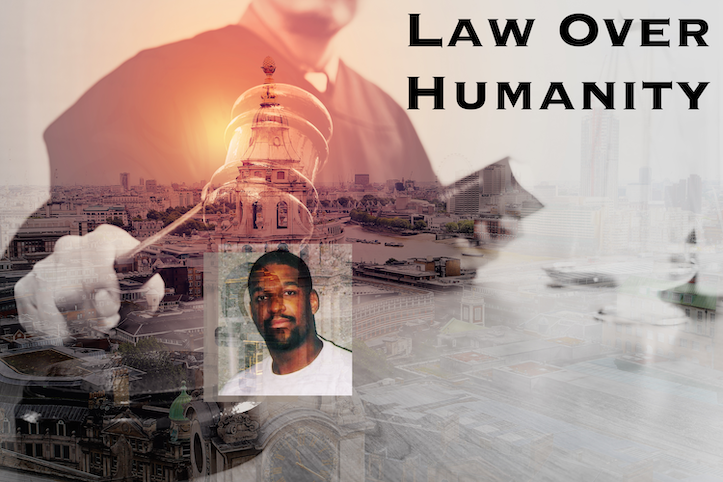
Alabama Authoritarians Murder White Man (Jamie Mills) Despite Clear Evidence that Prosecutors Falsified Case Against Him - Supreme Court Denied Review, Allowing his Execution

From [HERE] In 2005, Jamie Mills and two other suspects—his wife, JoAnn Mills, and a known local drug dealer, Benjie Howe—were arrested and charged with capital murder in the deaths of Floyd and Vera Hill. Benjie Howe was in possession of one victim’s medicine and a large amount of cash when he was arrested. Jamie and JoAnn Mills were arrested after physical evidence from the crime, including the murder weapons, was found in the trunk of their car.

JoAnn Mills told police in two different statements that she suspected Benjie Howe had planted the weapons in their car and that Mr. Howe had brought stolen items to their home in the past. Her statements were corroborated by police accounts that, in the weeks preceding the murder, officers saw Mr. Howe frequenting the Mills’s home where the murder weapons were found and evidence that the trunk of the Mills’s car had no lock and could easily be opened.

It was only after police threatened JoAnn Mills’s children and falsely claimed that DNA evidence on the murder weapons matched Jamie Mills that she gave a third statement implicating Jamie. Other than the evidence found in the unlocked trunk, JoAnn’s third statement was the only evidence connecting Mr. Mills to the crime.

The State’s Key Witness

The State’s case against Jamie depended on the jury believing that JoAnn—who had been charged with capital murder and was facing the death penalty or life without parole if convicted at her own trial—was credible when she testified against Jamie consistent with her third statement.

Accordingly, at the outset of JoAnn’s testimony, the district attorney affirmatively elicited that she had not been offered a plea deal in exchange for her testimony:

District Attorney: And are you doing this of your own free will?

JoAnn Mills: Yes, sir.

District Attorney: Have there been any deals or offers or anything like that made to you?

JoAnn Mills: No, sir.

On cross, JoAnn insisted that she was “up here admitting to capital murder without any hope of help from the district attorney’s office.”

Mr. Mills’s defense counsel also questioned the district attorney “on the record” about the existence of a plea offer or any inducement. The district attorney responded:

Prosecutor: There is not.

Defense: Not a promise, not a maybe, not a nudge, not a wink, because we think it stretches the bounds of credibility that her lawyer would let her testify as she did without such an Inducement.

Prosecutor: There is none.

Defense: None?

Prosecutor: Have not made her any promises, nothing.

Defense: Have you suggested that a promise might be made after she testifies truthfully?

Prosecutor: No.

Defense: No inducement whatsoever?

Prosecutor: No.

In closing argument, the prosecutor told the jury the case came down to Jamie’s word against JoAnn’s, and urged the jury to believe JoAnn because she was not promised anything in exchange for her testimony.

The jury convicted Mr. Mills of capital murder and he was sentenced to death. Ten days later, the State dismissed the capital murder charges against JoAnn Mills. She pleaded to a lesser offense and was sentenced to life with the possibility of parole.

New Evidence of Prosecutorial Misconduct

Mr. Mills’s counsel filed a motion for a new trial after learning that the State dismissed capital murder charges against JoAnn Mills, arguing this evidence established that JoAnn did have a deal in exchange for her testimony. The motion was denied without a hearing.

Over the course of the last 17 years, Mr. Mills has asked the State to reveal evidence of its deal with JoAnn Mills on 15 separate occasions, and each time, the State has denied the existence of any such deal.

But newly discovered evidence establishes that the State’s representations at trial and throughout the appeal and postconviction proceedings were false.

JoAnn Mills’s lawyer, Tony Glenn, submitted a sworn affidavit and supporting evidence showing that he met with the district attorney and the victims’ family to obtain a deal that would spare her the death penalty in exchange for her testimony against Jamie Mills. “According to Glenn,” Eleventh Circuit Judge Nancy G. Abudu wrote, “before Mills’ trial, the victims’ daughter agreed not to oppose the State offering JoAnn a plea deal, and the district attorney agreed to not pursue the death penalty against JoAnn—so long as she ‘testified truthfully’ at Mills’ trial.”

This new evidence from JoAnn Mills’s attorney establishes that the State falsely told the jury, trial judge, defense counsel, and every state and federal court that JoAnn Mills had nothing to gain from testifying against Mr. Mills.

Based on this new evidence, Mr. Mills filed a motion in federal court on April 5, 2024, requesting that the court reopen his appeal.

The State continues to deny the existence of a deal and urged the federal court to dismiss Mr. Mills’s motion and allow the State to move forward with his execution without reviewing this critical issue, and with no consequences for the State’s misconduct.

The federal district court denied relief, and Mr. Mills asked the federal appeals court to stay his execution and review his claims. On May 28, the Eleventh Circuit Court of Appeals rejected his appeal and denied Mr. Mills a stay of execution, ruling that the evidence he presented was not sufficient to reopen his case for further review.

Judge Abudu disagreed with the other two judges. In a separate opinion stressing the importance of reliability in death penalty cases and underscoring that prosecutors are forbidden from suppressing favorable evidence and are obligated to correct false testimony, she wrote that Mr. Mills met the threshold requirement to obtain review of his claims. The factual issues raised by the new evidence “should be resolved by the district court after an evidentiary hearing,” she wrote.

Mr. Mills appealed the decision to the U.S. Supreme Court, which denied review on Thursday afternoon.

Serious Questions Remain

When new evidence raises serious questions about whether a person has been wrongly convicted and illegally sentenced to death, courts have a responsibility to evaluate the evidence and give the legal arguments full consideration. Failing to do so undermines our system of justice.

More than half of wrongful convictions can be traced to witnesses who lied in court or made false accusations. False testimony by jailhouse informants is especially common in death penalty cases.

The consequences of prosecutors’ failure to disclose prosecutorial misconduct like the misconduct that took place in Mr. Mills’s case are striking. Since 1988, data from the National Registry of Exonerations shows that 987 people were wrongly convicted because of official misconduct by prosecutors, including perjury or false reports by police and other witnesses. The exonerees in these cases spent an average of 12 years each in prison.

The consequences of misconduct in death penalty cases can be irrevocable. Alabama sentences more people to die than any other state and has one of the highest execution rates per capita in the country. With 73 executions and nine exonerations since 1976, Alabama has a shocking rate of error: for every eight people executed, one has been exonerated.

In this case, new evidence raised significant questions about the reliability of Jamie Mills’s conviction and death sentence, including as Judge Abudu wrote, “why JoAnn’s attorney would sign an affidavit against his client’s interests that could jeopardize his own legal career” if it were not true?

The State never denied that there was a pretrial meeting with the victim’s family, which begs the question—how could it be true that JoAnn had absolutely no reason to hope for a deal from the district attorney if she provided the critical testimony the State needed? Why would she get on the stand and confess to capital murder without a deal? And if there was no prior agreement, how can the fact that the capital charges against her were dropped—and she not only avoided the death penalty but received a parole-eligible sentence—a mere 10 days after Jamie Mills was sentenced to death be explained?

As Judge Abudu found, the failure to provide process in a death penalty case where Jamie Mills has maintained his innocence—despite a affidavit from an officer of the court attesting under oath that a plea deal did exist—creates a “risk of injustice” and “risk of undermining the public’s confidence in the judicial process.”

Risk of Unnecessary Torture

Mr. Mills filed a separate lawsuit alleging that the State of Alabama has subjected condemned prisoners to unnecessarily prolonged torture on the execution gurney without access to counsel or the courts in violation of the Eighth Amendment’s prohibition against cruel and unusual punishment and the Sixth Amendment right to counsel.

In the last two years, Alabama prison officials have kept condemned men strapped down to a gurney for hours, even while a stay of execution is in place, without access to legal help to challenge or even document the State’s actions, done in secret behind closed doors.

The district court denied Mr. Mills’s challenge on May 21 and, on May 28, the Eleventh Circuit refused to review his claims, even though as Judge Abudu wrote in a separate opinion, Alabama’s “troubling” pattern of delay during executions means that:

Mills has a valid fear that he will be unnecessarily placed on the execution gurney if a stay is in place, while the IV team is not attempting to establish IV access, or while officials transport witnesses to the viewing area, without being given any updates from officials on the status of his cases or the ongoing execution protocol.

The U.S. Supreme Court denied Mr. Mills’s petition for review Thursday afternoon.
Could a Black Man Pose Imminent Danger to a White Cop while Running Away from Him on the Other Side of a Fence? $20M Suit Filed after San Bernadino Cop Hunted/Murdered Robert Brown After Profile Stop

From [HERE] and [HERE] The city of San Bernardino is facing a $20 million wrongful death claim following a deadly police shooting in December.

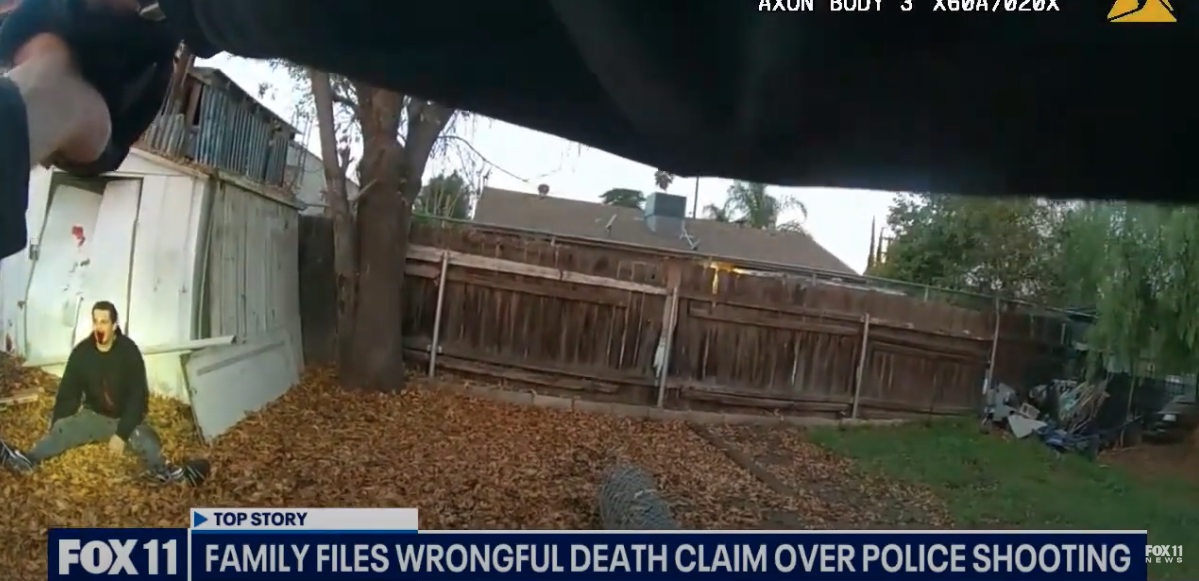
On Dec. 27, 28-year-old Robert Brown was pulled over for an alleged expired registration. According to the San Bernardino police, Brown ran from the vehicle and hopped a fence while holding a handgun. An officer then fired several shots, fatally striking him.


Brown’s family says the shooting was an overreaction, and alleges that he was pulled over due to racial profiling.

“He didn’t deserve to die like that,” Brown’s father, Willie Brown, said. “He ran, so what? They shoot him in his back? For a traffic infraction? And to say he had a gun?”

“There was no reason for Robert to be shot,” said attorney Brad Gage, who filed a claim on behalf of Brown’s family. “When Robert was shot, he had no gun.”

Regardless of whether Brown had a weapon, Gage said, the officer opened fire as the suspect was fleeing and posing no danger to him. 

The officer violated department policy by engaging in the pursuit and not relaying his location to dispatch during the chase, the attorney said.

Gage also questioned the officer’s decision to shoot through the fence. 

“He doesn’t know what’s behind there, and that’s something that endangers everyone in the community,” he said.

In released body cam footage, Brown can be seen holding an object in his right hand as he runs away, which the police department claims is a gun. Police said a nine-millimeter handgun, which had been reported stolen from out of state, was found at the scene.

In a news release, police included video stills of the officer’s body-worn camera, circling Brown’s hands in red to indicate that he was carrying a gun.

But the family’s attorney, Brad Gage, questioned the police’s version of events. Brown’s family maintains in the claim that San Bernardino police “appear to have planted a gun in an attempt to claim the shooting was justified as self defense.” “A stolen gun could come from anywhere. That could be in the police locker,” Gage said.

Body-camera video released by Brown’s family shows the officer chasing him for a short distance. Brown runs past the gate of a home and into a backyard, then jumps over a fence, using both hands to pull himself over. 

“As such it was evident he was not holding any gun,” the claim reads. 

Tubbs yells out, “Stop, stop!” as Brown jumps over the tall chain-link fence, lined with wood panels, the video shows. 

The officer doesn’t jump over, instead shooting his gun five times through the fence, fatally wounding Brown.

The claim against San Bernardino alleges civil rights violations and seeks $20 million in damages. If it’s denied by the city, it could set the stage for a lawsuit.

4th Circuit Gives Partial Victory to Army Lieutenant Niggerized by Cops @ Gas Station: 'Its Unconstitutional to Detain a Compliant Person @ Prolonged Gunpoint when he's no danger to the public or cops

‘PPRECIATE’ YOUR SERVICE NGHR [military uniforms don’t necessarily protect against abuse of authority by law enforcement.]. From [HERE] The US Court of Appeals for the Fourth Circuit court delivered a ruling on Friday that provided a partial judgment in favor of the Black and Latino Army lieutenant, Caron Nazario, who had been pepper-sprayed and handcuffed during a traffic stop by two Virginia police officers.

Nazario claimed the two police officers violated his Constitutional rights when they pepper-sprayed, handcuffed him on the ground, and threatened him. A trial court rejected Nazario’s arguments relating to excessive force, unreasonable seizure, and rights deprivation finding that the officers had probable cause because Nazario failed to comply with law enforcement. The majority predominately supported the lower court’s decision. However, it overturned the court’s granting of qualified immunity to police officer Joe Gutierrez regarding a Fourth Amendment claim for an unreasonable seizure.
“The Fourth Amendment, which is grounded in reasonableness, can be transgressed by an unwarranted threat of deadly force,” U.S. Circuit Judge Robert King wrote. “Although we may not have heretofore adopted the principle — we are satisfied that it can be unconstitutional to hold a person at prolonged gunpoint when he is compliant and presents no danger to the public or law enforcement officers”

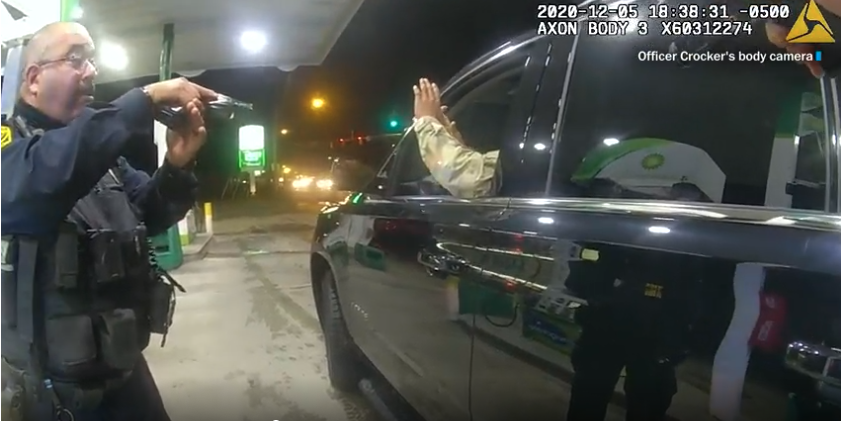
Video footage from a December 2020 interaction showcasing an encounter between Lt. Caron Nazario and police officers that attracted attention. The officers stated that Nazario’s vehicle had been missing a rear license plate. In the lawsuit, Nazario states that the car had been purchased recently and held a temporary tag. In the video, two officers were seen pointing handguns at the uniformed lieutenant. An officer then attempts to open the car door while Nazario uses his elbow to secure it closed. The Fourth Circuit majority considered Nazario’s refusal to exit the car a disobedient act toward law enforcement.

“The orders to Nazario to step out of the vehicle were lawful because the Policemen had probable cause to stop Nazario’s vehicle for failure to clearly display a license plate,” the opinion wrote.

A jury awarded a settlement last year, resulting in a $2,685 award to Nazario in compensatory damages. The situation highlights concerns among Black drivers about police mistreatment during traffic stops.

New Study that Analyzed 98 Million US Traffic Stops Concluded that Police Stop Black Drivers and then Search Their Cars at 2 Times the Rate of Whites

From [HERE] A new study by researchers from the University of Michigan’s Institute for Social Research has found that Black drivers are more frequently searched during traffic stops without finding contraband compared to white drivers. The findings, published in the Journal of Quantitative Criminology, highlight a pervasive bias in policing across multiple states and counties.

Analyzing 98 Million Traffic Stops Across the U.S.

Maggie Meyer, a doctoral candidate in psychology, and Richard Gonzalez, director of the Research Center for Group Dynamics at ISR and professor of psychology, analyzed data from 98 million traffic stops using the Stanford Open Policing Project database. They examined traffic stops in 14 state police departments and 11 local law enforcement departments between 1999 and 2017.

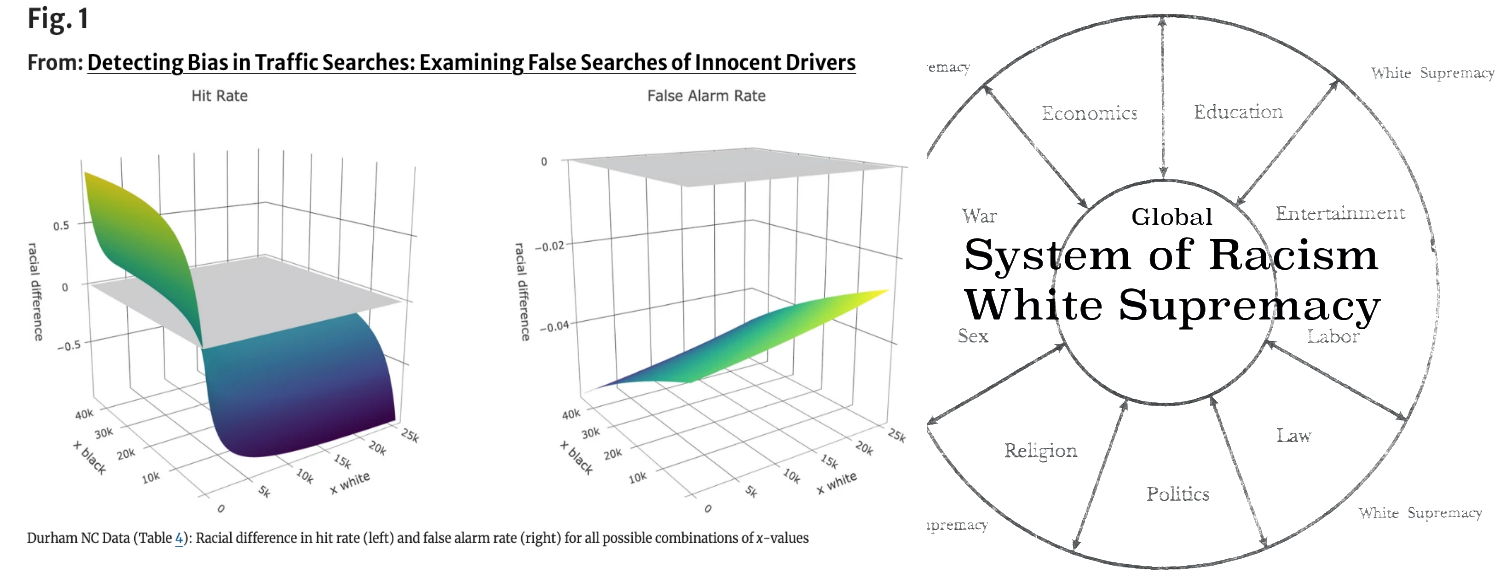
The researchers found that innocent Black drivers were likely to be searched about 3.4 to 4.5 percent of the time, while innocent white drivers were likely to be searched about 1.9 to 2.7 percent of the time.

“We show that there’s this pervasive bias in multiple states and multiple counties across different stop and search reasons that we need to understand,” said Meyer. “We’re not the first people to find racial bias in policing and we won’t be the last, but hopefully, this gives a clear place to intervene.”

Developing the Overlapping Condition Test to Account for Missing Data

To account for the unknown information about whether drivers who weren’t searched held contraband, the researchers developed the Overlapping Condition Test. This test is based on a standard descriptive tool in statistics called a 2×2 table, which allows researchers to jointly evaluate a decision and an outcome using hit rates and false alarm rates.

The researchers explored the possible values of the missing information and found that even without knowing the actual values, the bias was still present.

“It’s analogous to presidential elections with the electoral college. An election can be called because one candidate already has enough electoral votes to win, even though all of us haven’t been counted,” Gonzalez said. “Even if those uncounted votes went for the other candidate, one candidate has already got it in the bag.”

MI Trooper Charged w/Murdering Samuel Sterling. White Cop Intentionally Drove Onto Sidewalk and Violently Struck Fleeing Black Man w/a Minivan, Crushing Him. Then Handcuffed Him as He Laid Dying

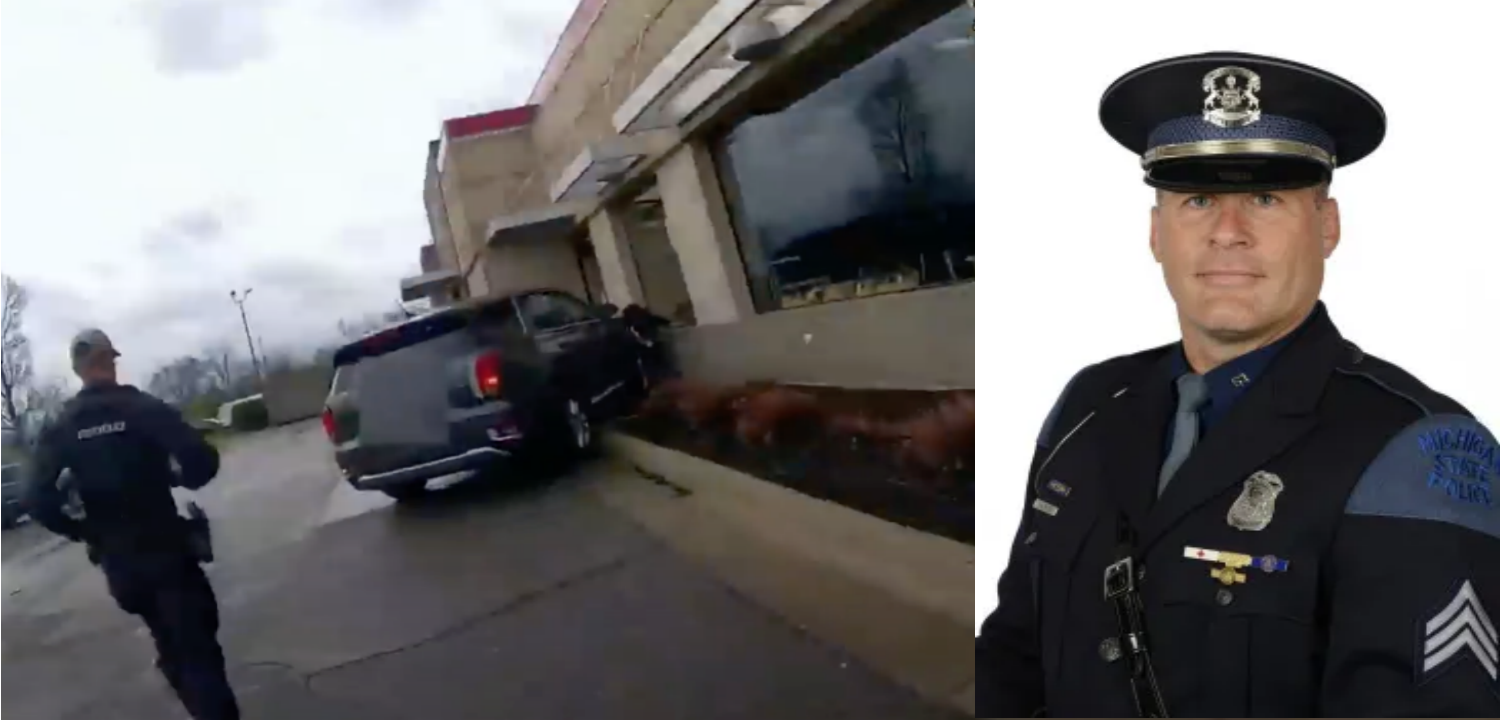
From [HERE] A white Michigan State Police detective has been charged with murder after investigators say he fatally struck a fleeing Black man with an unmarked SUV last month near Grand Rapids, state prosecutors announced.

Detective Sgt. Brian Keely on April 17 tried to arrest the suspect, 25-year-old Samuel Sterling, but Sterling fled and was chased by law enforcement officers by vehicle and on foot, according to the Michigan Department of the Attorney General.

As Sterling was running through a fast food restaurant parking lot in the suburb of Kentwood, the detective – driving an unmarked SUV – turned and struck Sterling with the vehicle, prosecutors said.

After the charges against Keely were announced, Sterling family attorney Ven Johnson said, “We applaud and appreciate Attorney General Dana Nessel for doing the right thing based on the overwhelming evidence that Keely broke the law when he ran over Samuel Sterling.”

Keely’s attorney, Marc Curtis, said in a release, “It is unfortunate that in this time of political correctness, Michigan’s Attorney General has chosen to ignore the facts of this incident and rely on political pressure.”

Video Speaks for Itself

On May 10, state police announced the investigation was complete and all evidence had been turned over to the attorney general’s office. That same day, the agency released an edited compilation of body-worn and dashboard camera footage of the incident.

The footage shows at least one officer chasing Sterling on foot into a Burger King parking lot when a large grey SUV veers into the lot and hits Sterling, appearing to pin him against the restaurant wall.

After the SUV reverses away from him, several officers converge on Sterling and order him to put his hands behind his back. Sterling repeatedly screams, “My back,” and groans in pain. After his hands are cuffed in front of him, Sterling continues to complain that his back and entire body hurt.

“Don’t move man,” an officer says. Officers ask him where he feels pain and repeatedly tell him not to move until emergency medical personnel arrive. Another officer says, “We don’t want you to move your back.”

Sterling’s family was “stunned and appalled” when they watched the footage, their attorney said in a statement to CNN affiliate WWMT.

“No one person should be able to appoint themselves as judge, jury and executioner, yet deaths from police brutality and excessive force continue to occur too often. We will continue to seek justice for his family and hold accountable those responsible for his death,” Johnson said.

At the time of the encounter, law enforcement officers representing multiple departments, including the US Marshals Service, “were working a fugitive arrest operation” in an attempt to arrest Sterling, who “was wanted on multiple warrants,” Grady said in April. Authorities did not reveal the nature of the charges.

Keely will be arraigned in Kentwood district court, though the date has not been set.

UK Government Data Demonstrates that Deaths in the "Vaccinated" were Categorized as Unvaccinated in 2021

From [HERE] ONS (Office for National statistics) data - possibly more so than any other source of data in the world - was used to bolster the claim that the [COVID] "vaccines" were highly effective and safe. However, as we have always argued, and which is now certain, any claims of efficacy and safety based on their data were completely illusionary and subject to the cheap trick of miscategorisation whereby even a placebo - or something even worse - could be ‘shown’ to be safe and effective. They therefore lied and intentionally created and spread misinformation. We were accused of conspiracy thinking and our reputations were tarnished as a result. - 

Joel Smalley

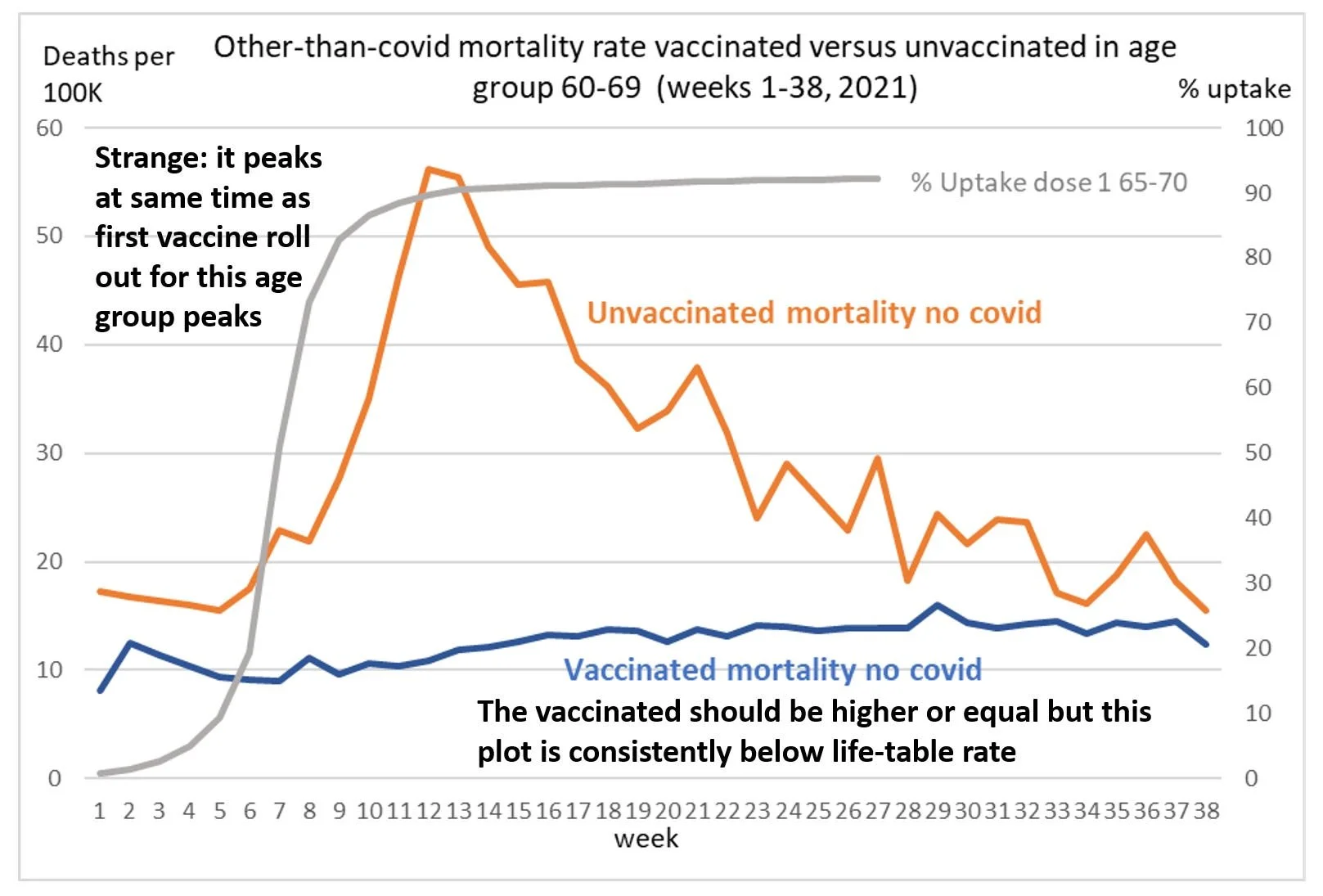
In 2021 when the UK ONS started releasing its vaccine by mortality status reports we exposed that there were large spikes in the non-covid death rates in the 'unvaccinated'. These spikes in mortality coincided with the first main vaccine rollout and did so for each age group (see this report, for example).

Here is the chart for non-covid mortality rates in weeks 1-38 of 2021 for the 60-69 age groups:

The charts for the other age groups looked much the same. 

We asserted that these obvious anomalies were a result of the standard ONS procedure of categorising anyone within 20 days of their first dose as ‘unvaccinated’. However, in our own discussions with the ONS they maintained that, although that method was used for their efficacy calculations, it was not used when it came to mortality. They clearly said that a person dying any time after vaccination was correctly categorised, as a vaccinated death, in the mortality data they regularly released to the public and which formed the basis of a massive public communication campaign encouraging vaccination. 

To ‘explain’ the spikes the ONS pushed the implicit assumption that there was a phenomenon called the 'healthy vaccinee' effect, whereby they claimed that people ‘close to death’ were not vaccinated. And they made this bold claim without any data to support it whatsoever.

Apart from the fact that this would have contradicted the NHS policy at the time we showed that, while a healthy vaccinee effect might have partly explained the longer term lower non-covid mortality rates in the vaccinated, it could not possibly have explained those spikes in mortality rates.

They could only be explained by categorising deaths shortly after vaccination as unvaccinated. Yet the ONS, along with many of the staunchest covid vaccine disciples, doubled down on their insistence that such miscategorisation did not occur. To them all the anomalies in the ONS data could only be explained by the hallowed ‘healthy vaccinee effect’.

Later, the ONS did actually claim that there was indeed an ‘unhealthy vaccinee effect’ but did so to explain other anomalies in the data. Clearly the ONS was so self-serving they did not see the contradictions between these claims and simply wanted to have their cake and eat it.

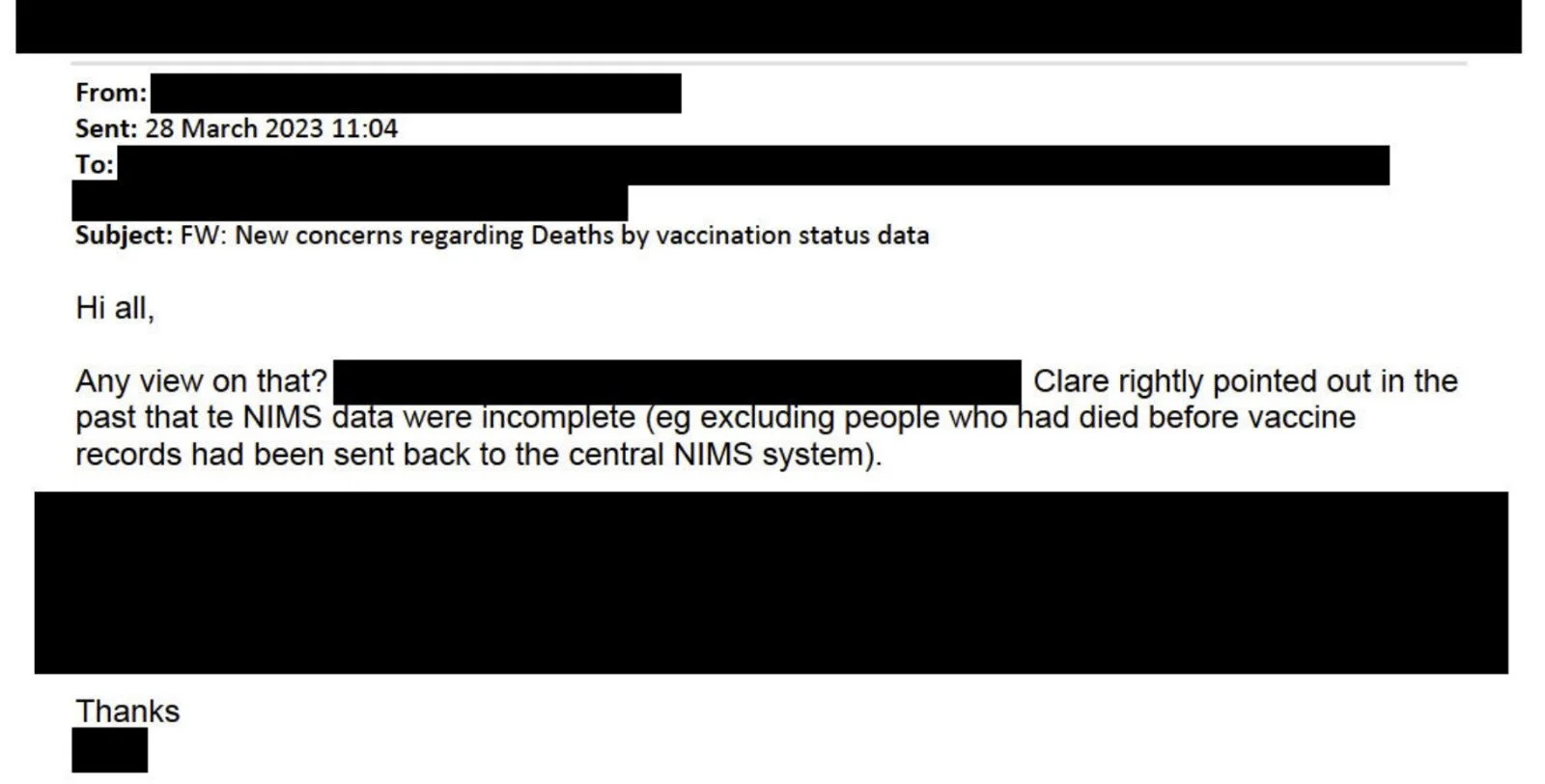
As a result of a subject access request that Clare Craig submitted to the ONS we have now found out that we were correct after all!

Clare has posted on this twitter/X thread, an internal ONS email confirming that the NIMS database of vaccinated people, that the ONS relied upon, had excluded those people who had died before vaccine records had been sent back to the central system:

When we pointed out to the ONS exactly this possibility for miscategorisation in 2021 they continued to deny that it had happened (see Table 8 of our report here).

Why is this so important? Because the ONS data - possibly more so than any other source of data in the world - was used to bolster the claim that the vaccines were highly effective and safe.

And, as we have always argued, and which is now certain, any claims of efficacy and safety based on their data were completely illusionary and subject to the cheap trick of miscategorisation whereby even a placebo - or something even worse - could be ‘shown’ to be safe and effective.

They therefore lied and intentionally created and spread misinformation. We were accused of conspiracy thinking and our reputations were tarnished as a result.

But we were right!

Dr. Michael Palmer and Dr. Sucharit Bhakdi Explain that Viruses do in fact Exist and that COVID-19 Exists

From [HERE] In the context of the COVID-19 “pandemic”, many people have come to understand that political and scientific authorities have been systematically lying about the origin of the infectious agent, as well as the need for and the safety of mandatory countermeasures, including lock-downs, masks and vaccines. Some skeptics have gone further and begun to question the existence of the virus responsible for COVID-19, or even of viruses and pathogenic germs altogether. Here, we put these questions in perspective.

Before we go into any specifics on germs and viruses, we should acknowledge that the public has ample reason to mistrust not only politicians, public officials and the media, but also the “scientific community.” Even before the COVID-19 pandemic, several very senior members of that community had drawn attention to the deplorable state of scientific integrity in medical research. Particularly poignant is this quote by a former editor-in-chief of one of the world’s leading medical journals, Marcia Agnell [1]:

It is simply no longer possible to believe much of the clinical research that is published, or to rely on the judgment of trusted physicians or authoritative medical guidelines. I take no pleasure in this conclusion, which I reached slowly and reluctantly over my two decades as editor of The New England Journal of Medicine.

Agnell’s assessment is echoed by The Lancet’s editor Richard Horton [1], leading epidemiologist John Ioannidis [2], and Bruce Charlton, former editor of Medical Hypotheses [3]. And, to be sure, this already precarious state declined even further in the COVID-19 “pandemic.” Here are some of the lies regarding COVID-19 that were told alike by politicians and their scientific court jesters the world over:

  •  the SARS-CoV-2 virus is of natural origin and jumped spontaneously from bats or pangolins to humans;

  •  PCR-testing of asymptomatic patients is an appropriate means for tracking the spread of COVID-19;

  •  the early COVID-19 waves threatened to overload the healthcare system to such a degree that it became necessary to destroy the economy in order to “flatten the curve”;

  •  general vaccination was necessary to overcome the pandemic;

  •  even though the vaccines were “safe and effective”, vaccinated persons were still at risk of being infected by unvaccinated individuals (but not by other vaccinated ones).

These absurd and brazen lies have been dealt with elsewhere, for example by cardiologist Dr. Thomas Binder [4]. We only cite them here to make it clear that we sympathize in principle with the radically skeptical attitude of much of the public. Nevertheless, we think that in some cases this radical skepticism has been taken too far, and that the proverbial baby has been thrown out with the bathwater. To support our case, we will survey some of the history of “germ theory” of infectious disease.

1. The rise of germ theory in the 19thcentury 

The idea that microbes cause transmissible diseases gained acceptance in the late 19thcentury. Its greatest pioneer was Robert Koch, a Prussian physician, who discovered the bacterial agents that cause anthrax, cholera, and tuberculosis. These discoveries paved the way for the prevention of such diseases by hygiene and surveillance.

Even before Koch’s discoveries, Hungarian physician Ignaz Semmelweis had discovered that physicians could avoid transmitting puerperal sepsis from deceased to living mothers through antiseptic hand-washing; but because his empirical procedure lacked a theoretical foundation, it was ultimately abandoned, in spite of its demonstrable success. Semmelweis himself was committed to a psychiatric hospital, where he suffered physical abuse and died shortly after.1

Semmelweis’s personal fate illustrates that the public and the medical community at the time certainly were not ready for “germ theory”, i.e. for the idea of diseases being caused by tangible germs that could be transmitted from one person to the other, but which could also be identified and combated. It therefore is remarkable that Koch’s discoveries were recognized and accepted within a fairly short period of time. Soon, other researchers joined the hunt for further pathogenic bacteria. Other kinds of pathogens soon followed; for example, in 1898 British physician Ronald Ross discovered that the parasite which causes malaria multiplies within and is transmitted by Anopheles mosquitoes.

What brought about this rapid triumph of germ theory? It seems fair to say that both the scientists involved and their audience made it happen. Robert Koch himself was an ingenious and meticulous experimentalist. He set himself an exacting standard for demonstrating that a certain infectious disease was caused by a specific microbe, the well-known “Koch’s postulates” [5]:

  1.  The given organism must be found regularly in the diseased tissue of the infected person or animal.

  2.  The organisms must be capable of being grown in pure culture in the laboratory.

  3.  The pure culture must produce the disease when administered to experimental animals.

  4.  The organisms must be found in the experimentally produced disease, and be capable of being recovered again in pure culture.

While Koch’s comprehensive evidence surely was compelling, his rapid success would not have been possible without his audience. Even though initially skeptical, this audience was also well-educated and open-minded—it had not yet become jaded, cynical, and disoriented by being relentlessly attacked with fake news and junk science.

The great scientists of the 19thcentury were very often hobbyists who were indulging their own whims and passions. They thus were independent from external interests, particularly from financial ones. Academic researchers, too, were more shielded from outside interests than are the “big shots” of today’s institutionalized science. But over the course of the 20thcentury, scientific research institutions became more and more dependent on external funding, often controlled by powerful special interests. This has severely compromised and undermined scientific integrity. We can but wonder, what would Robert Koch think of the likes of Christian Drosten and Tony Fauci? What of the Berlin “public health” institute that bears his name?

2. Successful applications of germ theory 

If a theory can be used successfully in practice, this suggests that it is true, or at least a good approximation of the truth. Germ theory has many useful applications; here, we will only give a few early examples for illustration.

Less than a decade after Koch’s discovery of the anthrax bacillus, Friedrich Klein isolated Streptococcus pyogenes, the bacterium which causes puerperal fever, scarlet fever, and various kinds of skin infections. This discovery could explain the earlier success of Semmelweis’s empirically developed hand disinfection procedures for preventing puerperal fever. Hygiene, surveillance and improvements to sanitation made it possible to prevent outbreaks of enteric diseases such as cholera. The city of Hamburg, which initially refused to adopt such precautions, promptly suffered an outbreak of cholera in 1882 that claimed several thousand lives [6]. Robert Koch himself was tasked with overseeing the introduction of hygienic countermeasures, which swiftly brought the outbreak under control.

It was mainly through such preventive measures that infectious diseases were conquered, even before specific treatments of manifest infections became available. This is illustrated for tuberculosis in Figure 1. Malcolm Watson, a physician in the colonial service of the British Empire, devised successful methods for controlling malaria. His work, begun only a few short years after Ross had discovered that the malaria parasite was spread by Anopheles mosquitoes, was mostly based on thorough and meticulous drainage of wetlands and regulation of brooks and streams, with quinine prophylaxis and treatment of infections playing only a secondary role [7].

3. Germ theory vs. “terrain theory”—a false dichotomy 

Opponents of germ theory like to point to the decisive role of the patient’s general health in susceptibility to infectious disease. This tenet is in fact accepted by mainstream medicine. For example, the significance of age and general health in the prognosis of pneumonia was summed up by the famous Canadian physician William Osler as follows:

In children and in healthy adults the outlook is good. In the debilitated, in drunkards and in the aged the chances are against recovery. So fatal is it in the latter class that it has been termed the natural end of the old man.

Osler’s words, written in 1892, are still true today, largely regardless of the germ in question. It matters not whether the pneumonia be caused by pneumococci, influenza virus, or SARS-CoV-2. Generally speaking, the notion of “opportunistic” infections that befall those in poor general health and states of immunosuppression can be found in the textbooks of medicine. But on the other hand, without any of those opportunistic pathogens, even susceptible individuals would not contract an infectious disease.

Figure 1 shows how, immediately after Koch’s discovery of the tubercle bacillus, mortality due to tuberculosis went into a steep and sustained decline. Most likely, both hygiene and improvements to nutrition and general health contributed to this change for the better. Note, however, that there is no detectable reversal of this trend in the 1930s, i.e. during the Great Depression. In this era, many people were suddenly thrown into poverty, which would most likely also have lowered the quality of their nutrition and their resistance to tuberculosis. The continued decline in tuberculosis mortality in those years was most likely due to the continued surveillance measures.

4. Not all infectious pathogens can satisfy Koch’s postulates

One reads now and then that some pathogenic virus or other microbe does not satisfy Koch’s postulates, which is then construed as proof that it does not cause the disease for which it is known. This is fallacious. Koch’s postulates do not constitute some sort mathematical axiom; they should be understood in their historical context.

Koch needed to convince a public that was initially radically skeptical; thus, the more comprehensive and rigorous his evidence, the easier it would be for him to succeed. It thus made perfect sense for him to focus on pathogens that could be grown in pure culture—that is, in the absence of any other living things—and which could then be inoculated into experimental animals and isolated again as many times as desired. However, once the idea of infectious pathogens had taken hold in principle, it soon became apparent that not all of them met every single postulate in the canon. For example, Rickettsia prowazekii and Treponema pallidum—the bacterial agents that cause typhus or syphilis, respectively—cannot be grown in pure culture, and therefore cannot meet the second, third and fourth postulate. They can, however, be propagated in experimental animals, and Rickettsia prowazekii also in cell culture.

Viruses, by their very nature, can only multiply within living cells but not in pure culture. Therefore, no virus can possibly satisfy Koch’s postulates. However, we repeat that these postulates are not a logical necessity. If they are not fulfilled, the question of disease causation must be settled in some other manner.

5. What does it mean to isolate a virus?

Several people have expressed very sweeping criticisms of virology as a discipline. For example, twenty doctors and investigators recently published a memorandum entitled “Settling the Virus Debate” [9]. In it, we read:

Perhaps the primary evidence that the pathogenic viral theory is problematic is that no published scientific paper has ever shown that particles fulfilling the definition of viruses have been directly isolated and purified from any tissues or bodily fluids of any sick human or animal. Using the commonly accepted definition of “isolation”, which is the separation of one thing from all other things, there is general agreement that this has never been done in the history of virology. Particles that have been successfully isolated through purification have not been shown to be replication-competent, infectious and disease-causing, hence they cannot be said to be viruses.

Further on, the authors make it clear that they don’t agree with the use of cell cultures as part of the isolation procedure. According to them, cell cultures may on their own give rise to debris that might be mistaken for virus particles, and they therefore insist that a virus must be directly isolated from tissues or bodily fluids of infected humans or animals. This objection can be countered as follows:

  1. The particles of many viruses have very characteristic shapes that are not likely to be confused with any particles produced by living cells, or with debris left behind by dead cells.

  2. There are many biochemical methods for characterizing viral particles, and moreover for establishing that they contain genetic information characteristic of the virus rather than the host cell culture.

  3. Not all viruses can easily be grown in cell cultures. Those which cannot are indeed routinely propagated in, and directly isolated from, laboratory animals.

A good example of such an animal study was published by Theil et al. [10]. It concerned the isolation of a novel virus from gnotobiotic, i.e. otherwise germ-free pigs. The abstract of the study reads as follows:

A rotavirus-like virus (RVLV) was isolated from a diarrheic pig from an Ohio swine herd. This virus infected villous enterocytes throughout the small intestine of gnotobiotic pigs and induced an acute, transitory diarrhea. Complete virions [viral particles] were rarely observed in the intestinal contents of infected animals … The genome of the porcine RVLV was composed of 11 discrete segments of double-stranded RNA …

The study shows both electron-microscopic pictures of the viral particles, as well as the result of an electrophoresis experiment that compares the genetic material contained in these particles to those of known viruses with similar morphology (see Figure 2). The novel virus could be serially passaged through multiple pigs without becoming “diluted” or getting lost altogether; therefore, it was clearly replicating within those pigs. Infection was detectable in the intestinal cells of the pigs and gave rise to diarrhea. We can see no reasonable objection to the authors’ conclusion that they had in fact established the existence of a novel virus that causes intestinal disease in pigs.[MORE]

Is it Safe to Get a Blood Transfusion from Someone who Got COVID Injections? Dr Mercola Discusses Potential Deadly Risks

From [HEREBy Dr. Joseph Mercola In a recent meta-analysis1,2 posted on preprints.org, Japanese researchers warn of potentially deadly risks to patients who receive blood from people who have taken mRNA covid injections and call for urgent action to ensure the safety of the global blood supply. According to the authors:3

… many countries around the world have reported that so-called genetic vaccines, such as those using modified mRNA encoding the spike protein and lipid nanoparticles as the drug delivery system, have resulted in post-vaccination thrombosis and subsequent cardiovascular damage, as well as a wide variety of diseases involving all organs and systems, including the nervous system …

[B]ased on these circumstances and the volume of evidence that has recently come to light, we call the attention of medical professionals to the various risks associated with blood transfusions using blood products derived from people who have suffered from long covid and from genetic vaccine recipients, including those who have received mRNA vaccines, and we make proposals regarding specific tests, testing methods, and regulations to deal with these risks.

Blood From Injected Donors May Pose Risk to Neurological Health

One particular risk addressed in this paper is the implications of blood tainted with prion-like structures found within the spike protein. Prions are misfolded proteins that can cause neurodegenerative diseases, such as Creutzfeldt-Jakob Disease (“CJD”) in humans, by inducing the misfolding of normal proteins in the brain.

Prion diseases are characterised by a long incubation period, followed by rapid progression and high mortality. The suggestion that the spike protein of SARS-CoV-2, especially from certain variants, might contain prion-like domains raises concerns for several reasons:

  • Transmission risk – If spike proteins with prion-like structures can be transmitted through blood transfusions, there might be a risk of inducing prion diseases in recipients. Prion diseases are notoriously difficult to diagnose early, have no cure and are fatal, making any potential transmission through blood products a significant safety concern.

  • Detection and removal challenges – Current blood screening processes do not specifically test for prions, partly because prion diseases are rare and partly due to the technical challenges in detecting prions at low concentrations. If spike proteins with prion-like properties are present in the blood of covid injected people, existing blood safety protocols may not be adequate to prevent transmission.

  • Long-term safety concerns – Prion diseases have long latency periods, meaning that symptoms can appear years or even decades after exposure. This delay complicates efforts to trace the source of an infection back to a blood transfusion and assess the safety of blood supplies over time.

  • Impacts on blood supply management – Concerns about the potential risks associated with prion-like structures in spike proteins might lead to changes in donor eligibility criteria or the implementation of additional screening measures. These changes could impact the availability of blood products, which are critical for routine medical procedures.

  • Public confidence – Public awareness of these potential risks, even if they are theoretical or have a very low likelihood of occurring, could affect people’s willingness to donate or receive blood transfusions, thereby lowering blood donation rates and the overall trust in the safety of blood transfusions.

The authors stress the need for comprehensive studies to better understand the implications of these prion-like structures in the spike protein, not only for mRNA jab safety but also for the broader implications for public health measures like blood transfusion practices. [MORE]

Barbaric IsrAlien Authorities are Systematically Targeting Hospitals and Disappearing, Detaining and Torturing Palestinain Doctors

FROM [HERE]

From [HERE] AS EARLY AS November, reports emerged of doctors being detained and going missing in north Gaza. According to the World Health Organization, at least 214 medical staff from Gaza have been detained by the Israeli military. In early May, the detention and alleged torture of medical staff from Gaza made headlines when Israeli authorities announced the death of Adnan Al-Bursh, a well-known surgeon and the head of orthopedics at Al-Shifa Hospital. After being taken into custody in December, officials said Al-Bursh died in April while in Ofer Prison, an Israeli detention facility in the occupied West Bank.

“Dr. Adnan’s case raises serious concerns that he died following torture at the hands of Israeli authorities. His death demands an independent international investigation,” Tlaleng Mofokeng, the United Nations special rapporteur on the right to health, said in a statement last week. “The killing and detention of healthcare workers is not a legitimate method of warfare. They have a legitimate and essential role to care for sick and wounded persons during times of conflict.”

Al-Bursh is one of at least 493 Palestinian medical workers who have been killed in Gaza since October 7, according to the Ministry of Health. The Israel Defense Forces has systematically targeted hospitals from the north to the south of the strip, claiming that Hamas operates in the facilities. Medical staff in Gaza’s hospitals have repeatedly denied this claim. This week, Israeli forces have launched new attacks on Kamal Adwan Hospital and Al-Awda Hospital in the north, with reports on Wednesday and Thursdayof medical staff being detained from Al Awda. [MORE]

The International Court of Justice Orders Israel to stop Genocide in Rafah

From [HERE] The International Court of Justice (ICJ), the United Nation's top court, has ordered Israel to "immediately halt its military offensive in Rafah," as it is not convinced that the Israeli military is doing enough to protect civilians.

The court acted in support of last week's application of South Africa, which brought genocide charges against Israel at the ICJ in December. The appeal sought several measures against Israel, accusing it of stepping up what it says is a genocide. "Those who have survived so far are facing imminent death now and an order from the court is needed to ensure their survival," Pretoria's filing read. (Related: South Africa calls for immediate halt to Israel’s military offensive in Rafah.)

ICJ head Nawaf Salam read the new ruling and said that its justices were doubtful that the evacuation efforts and the related measures that Israel affirms to have undertaken are not sufficient to "alleviate the immense risk" to civilians in Rafah. Salam said the humanitarian situation has deteriorated further since the court's last order in March and is now classified as "disastrous." The Palestinian city of Rafah hosted around 1.4 million refugees displaced from the enclave when Israel ordered around half that number to evacuate the city as it sent tanks and troops into its eastern neighborhoods.

"Israel must immediately hold its military offensive of [sic] any other action in the Rafah governorate," Salam continued, warning that failure to do so could bring about the wholesale destruction of life in the city.

A Mental Health Distress Call Turned into a Military Operation: Suit Claims Pittsburgh Cops Shot a Black Man in the Back while His Hands Were Raised to Force Him to Get Public Services

From [HERE] A new federal lawsuit accuses a former Pittsburg cop of shooting a Black man whose hands were raised during a call over a “mental health crisis,” and although the same officer has already been part of a suit that settled for $7.3 million, this case may be the least of his legal concerns.

The lead defendant, Ernesto Mejia-Orozco, is set to plead guilty or no contest in two unrelated criminal cases two weeks from now. On June 10, he is scheduled for a change of plea hearing in a case involving allegations he was part of a scheme to quash traffic tickets for bribes. The following day, he’s scheduled to plead guilty in a felonious scheme to defraud the city of Pittsburg by fraudulently obtaining a college degree for educational incentive pay, court records show.

Now, Mejia-Orozco is also a defendant in a federal suit accusing him of shooting a man named Ashton Porter on Feb. 24, 2022. The lawsuit says that while Porter was barricaded inside a hotel room, officers used pepper spray on him and shot him with rubber bullets, before Mejia-Orozco fired a pistol at Porter, striking him twice. He survived.

Speaking at a news conference Tuesday, Porter said he feels lucky to be alive and was shocked by the police “lies and cover up.”

“I was looking for one or two good cops who would make sure nothing terrible happened to me,” he said. “Unfortunately for me there wasn’t any cops out there that stood up for me or tried to de-escalate the event.”

Mejia-Orozco would later claim that Porter came at him with a knife. Video shows Porter exiting the hotel room and standing a several feet away from officers. He appears to be standing still as the initial shots are fired and when his body comes into view of an officer’s body camera, his hands are raised. The suit says the video provided by Pittsburg police  “does not support this version of events” and the suit itself includes stills showing Porter with his hands up, “milliseconds” before Mejia-Orozco shot him.

“Nearly two years after the incident, Mr. Porter still suffers every day from the physical and psychological injuries that the Defendant Officers inflicted upon him,” the lawsuit says. Porter’s lawyer, Adante Pointer, said Porter and his family have “bore brunt of police aggression, of police escalation, of police lack of discipline” and that Porter was initially jailed but charges were later dropped.

The suit also alleges that Pittsburg police Lt. William Hatcher, who helped supervise the incident, has a “troubling” history of covering up excessive force, referencing years-old claims by a whistleblower that he instructed officers to remove references to them hitting suspects with flashlights from their incident reports.

Mejia-Orozco was one of 14 current and former Antioch and Pittsburg officers charged in a wide range of crimes last year. Many of them have since pleaded guilty, including the alleged ringleader of the college-degree fraud scam, Patrick Berhan, who is set to be sentenced later this summer.

A former Antioch community service officer, Samantha Peterson, recently received probation for her role in the scam, and a third former Pittsburg and Oakland Housing Authority officer — Brauli Rodriguez Jalapa– is set to plead guilty June 25, court records show. Rodriguez Jalapa was also charged earlier this year with drunk driving and threatening cops in Clayton.

In 2020, a wrongful death suit involving Mejia-Orozco and other officers settled for $7.3 million. The suit alleged that the officers killed a man named Humberto Martinez, by placing him in a carotid hold and pinning him to the ground. Martinez died from having the blood stream to his brain cut off, according to the coroner’s report.

Study: Black Chicagoans are 20X more likely to be homicide victims as Arrest Rate Hits Low. Cops Fail to Protect but Fill the Jails w/Blacks who Possess Guns for Self-Defense in Unsafe Liberal City

From [HERE] Black Chicagoans are 20 times more likely to be murdered than white residents, with the expectation of an arrest for the crime hitting a record low.

Hispanic Chicagoans were nearly 5 times more likely to be a homicide victim than their white counterparts. The stats were for the 12 months through April.

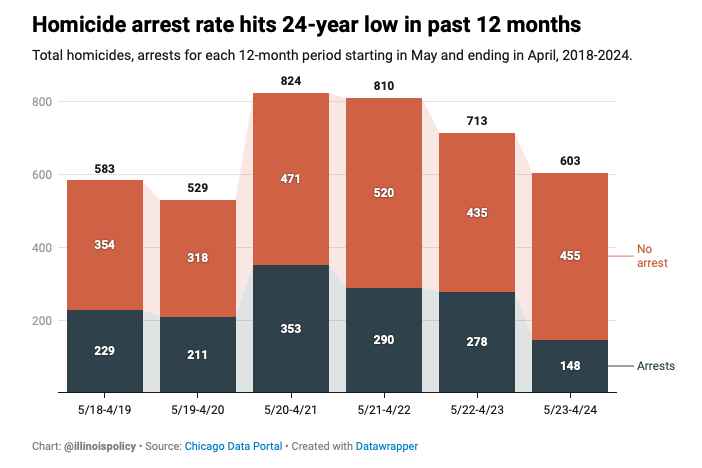
The arrest rate for these felonies hit a record low. Only 1-in-4 homicides resulted in an arrest between May 2023 and April 2024, compared to the same period in previous years.

In contrast, Chicago police made an arrest in 39% of homicide cases between May 2022 and April 2023. The number of arrests fell from 278 during that time to 148 through April of this year.

Chicago’s decade-long, nation-leading homicide crisis saw some relief during the past 12 months. Total cases dropped from 713 to 603, but Black Chicagoans were the victims in 77% of those cases where the victims’ race was known.

While Black Chicagoans were homicide victims 20 times more often than white residents, Hispanic Chicagoans were 4.7 times more likely to be homicide victims. Hispanic residents were 18% of homicide victims from May 2023 through April 2024. [MORE]

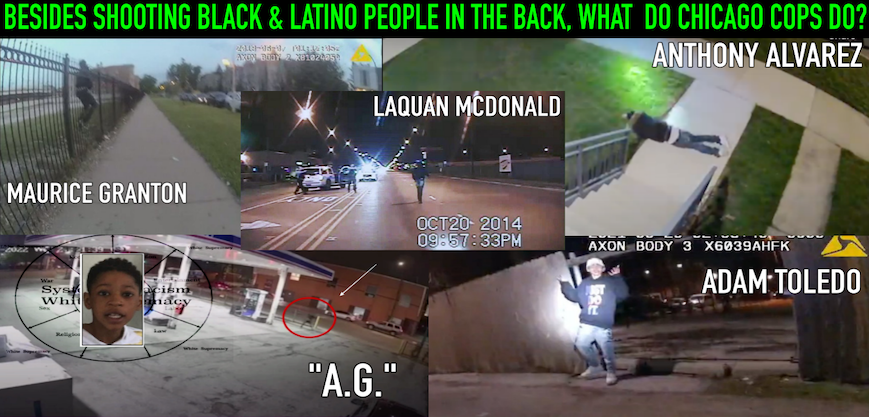
How does a reasonable, law-abiding non-white citizen living in a city run by elite white liberals measure the effectiveness of police? it seems logical to conclude that if a high number of crimes took place in Black neighborhoods then it means that police failed a high number of times to do their job of preventing crimes or protecting people in Black neighborhoods. If it occurs frequently it would seem then that police in general fail to do fulfill their perceived role of protecting Black people. Nevertheless, the Dependent media, which functions as “government media” in The Spectacle, always upholding authority, parroting police rationalizations no matter how ridiculous or factually unsupported and parroting facts from police perspective while assigning less credibility to civilian witnesses and perspectives, report crime numbers as if the police are helpless to do anything about crime. Often times the dependent media portrays cops as victims. We are made to believe that police are primarily engaged in actual police work and are aggressive crime fighters acting on behalf of people to fulfill their legal duty to Black citizens pursuant to the social contract, an agreement whereby citizens voluntarily agree to obey government authority in exchange for police protection and other services from the government.

Yet, in reality, crime data demonstrates that police don’t protect Black and Latino people and are not really involved in ‘police work’ in our communities. Rather, authorities use the perception and reality of crime to stalk, surveil, manage, control and kill Black and Latino people. Any beneficial “public service” provided by cops is random, incidental or done only under the most egregious or convenient circumstances and even then, it is done primarily to maintain manufactured public relations and provided on a compulsory, involuntary basis. Professor Alex Vitale states, “It is largely a liberal fantasy that the police exist to protect us from the bad guys. As the veteran police scholar David Bayley argues,

“The police do not prevent crime. This is one of the best kept secrets of modern life. Experts know it, the police know it, but the public does not know it. Yet the police pretend that they are society’s best defense against crime and continually argue that if they are given more resources, especially personnel, they will be able to protect communities against crime. This is a myth.”