California Police Union Director Charged with Importing and Distributing Fentanyl in the US

From [HERE] Joanne Marian Segovia, 64, the executive director of a police union in California, is facing federal charges after allegedly importing drugs from overseas and distributing them nationwide.

Segovia has been charged with an attempt to unlawfully import valeryl fentanyl, a new synthetic opioid, and faces up to a maximum sentence of 20 years, according to the complaint.

Authorities say the union exec peddled thousands of synthetic opioids, including valeryl fentanyl, that were disguised as chocolates, wedding favors, and makeup. The criminal complaint against Segovia was filed March 27 by the Office of the United States Attorney.

Segovia is the executive director of the San Jose Police Officers’ Association (SJPOA) and authorities alleged she used her personal and office computers to order the opioids and made shipments using the union’s UPS account.

Segovia has been in her position for nearly 20 years, according to CNN affiliate KGO-TV. [MORE]

“The NYPD continues to make clear that they don’t care what the law says:” Report Says Uncontrollable Cops Ignored 93% of Surveillance Law Rules in the POST Act

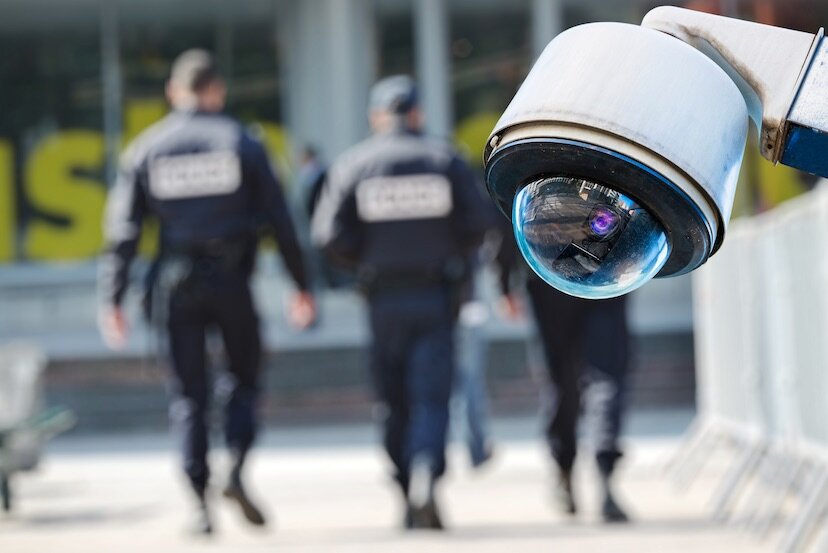
From [HERE] Back in July 2020, then New York City Mayor Bill de Blasio signed the Public Oversight of Surveillance Technology (POST) Act into law, which required the New York Police Department to reveal how it uses surveillance technology and to formulate surveillance policies.

The NYPD, however, has rejected 93 percent of the advice from an independent oversight body, the Department of Investigations' (DOI) Office of the Inspector General (OIG) for the force about how to comply with the law. According to OIG's Ninth Annual Report [PDF], the cop watchdog made 15 recommendations and the NYPD refused to implement 14 of them.

These include recommendations like identifying the organizations with which NYPD shares surveillance data: "NYPD should identify in each IUP [Impact and Use Policy] each external agency, by name, with which the Department can share surveillance data."

NYPD, according to the report, argues that it has complied with the POST Act, found in a previous OIG report [PDF] to fall short of community expectations because it "did not require the same level of transparency with respect to the use of surveillance technology as other jurisdictions require…"

The OIG agrees its recommendation is not an explicit requirement of the law, but says that following its recommendation will allow the watchdog to audit NYPD's POST Act compliance and that it is required by law to "study, audit and make recommendations relating to the operations, policies, programs and practices" of the city police.

The non-profit Surveillance Oversight Technology Project (STOP) in a statementrepeated its demand that the City Council pass broader surveillance legislation, including an amendment to the city's POST Act to ban controversial technologies like facial recognition.

“The NYPD continues to make clear that they don’t care what the law says,” said Surveillance Technology Oversight Project executive director Albert Fox Cahn. "This report helps support what advocates have said for years: that the NYPD is violating the POST Act."

NYPD's use of facial recognition technology has drawn fire from other organizations like Amnesty International. NYPD maintains facial recognition is a useful investigative tool and claims that federal government studies have shown it can be used in a way that avoids misidentification.

Not all of the federal government is so keen on facial recognition: The General Services Administration (GSA) somewhat scandalously declined to implement face scanning in its Login.gov service, citing uneven performance on different types of people despite authentication standards that endorse it.

‘Just trying to help’ by providing a compulsory service that citizens cannot decline in a system anchored in physical coercion [Obey or go to jail or die]

Asked to comment on the DOI OIG report, a spokesperson for the Office of the Deputy Commissioner, Public Information (DCPI) told The Register, "The role of the city's Office of Inspector General is important in city government and the NYPD remains committed to working collaboratively with the office as we move forward in improving all of the department's programs, policies and operations and practices.

"The NYPD shares the goal with the office of ensuring public safety and will absorb this report as the department continues working to build stronger relationships with all of those we serve in New York City."

The DCPI spokesperson said that the NYPD has implemented or accepted nearly 75 percent of DOI's recommendations since 2015 and continued to work with DOI to improve police services.

Indeed, the report says the NYPD has rejected around 25 percent of DOI recommendations over the past eight years but it has only fully accepted 58.5 percent. The remainder consists of partially implemented (10.5 percent), accepted in principle (3.5 percent), and under consideration (2 percent).

That seemingly favorable percentage follows from considering all 18 of OIG-NYPD Recommendations To NYPD from 2015-2022. Considered individually, specific sets of recommendations like "An Assessment of NYPD’s Response to the POST ACT," saw a 93.3 percent rejection rate.

"The DOI released a report in 2022 which found that the NYPD is fully compliant with the POST Ac," the DCPI spokesperson said. "As such, the NYPD is one of the most transparent police agencies in the nation, providing detailed information on various surveillance technologies in use by the NYPD."

Cahn from STOP took issue with that statement. "The NYPD continues to systematically hide the billions it spends on unproven and biased surveillance technology," he said in an email to The Register. "It's bad when the Department wastes money that puts New Yorkers in harm's way and shreds the Constitution, but it’s even worse when they lie about it.

"The City Council was clear in what they expected from the NYPD, and the Department simply isn't following the law. Now they just are flat out lying when they say they fully comply with the POST Act. The POST Act is one of the weakest surveillance oversight laws in the country, but the NYPD still refuses to meet even these minimal transparency requirements." ®

Lawsuit Claims NYPD is Collecting Suspects’ DNA  in a “Suspect Index” w/o their Consent or Court Approval and Keeping those Samples Even if the Person is Never Charged or Convicted of a Crime

From [HERE] A New York federal judge has ruled the New York Police Department (NYPD) must face a lawsuit claiming it violates the Fourth Amendment by maintaining a DNA database with no warrant.

In an order filed March 23,  U.S. District Judge Naomi Reice Buchwald said she would not strike down the class action lawsuit leveled against the police force simply because it had deleted samples from the named plaintiffs. 

The NYPD is accused of collecting suspects’ DNA  in a “Suspect Index” without their consent or a court’s approval and keeping those samples even if the person is never charged with or convicted of a crime. Those records are compared with DNA from crime scenes for multiple years, the lawsuit states.

In their March 2022 lawsuit, plaintiffs Shakira Leslie and Shamill Burgos allege the department’s DNA retention practices violate both the Fourth Amendment and a state law establishing New York’s database of such records.

The NYPD filed for the case against it to be dismissed, arguing that the lawsuit was moot as it had already deleted the plaintiffs’ DNA from the database. However the judge did not agree.

“There is no indication that defendants plan to discontinue the Suspect Index, a complex system they have built and maintained for many years,” the judge wrote in her order. 

“The Court also agrees with plaintiffs that mooting this action would allow defendants to frustrate any attempted class litigation, as they have already attempted to do here.” 

The proposed class action is still relevant to many people whose DNA the department keeps and compares to crime scene forensic evidence, she added. 

DNA was taken without notice or permission, lawsuit alleges

Leslie and Burgos were arrested by New York City police in separate incidents in 2019, they allege. Both were brought to an NYPD precinct for questioning after officers discovered a firearm in cars in which they were passengers, they say.

Despite never pressing charges, the NYPD took their DNA secretly, the lawsuit alleges. Leslie’s was allegedly taken from a cup of water and Burgos’ from a cigarette and water.

Meanwhile, the NYPD is facing another class action lawsuit alleging it illegally made the sealed arrest records of 10 New York residents public in a report that was sent to media outlets.

The plaintiffs are represented by Philip Desgranges, J. David Pollock, Paula Garcia-Salazar, Anna Blondell, Allison Durkin, Peter Laumann, Lisa Freeman and Corey Stoughton of the Legal Aid Society.

The NYPD DNA class action lawsuit is Leslie, et al. v. City of New York, et al., Case No. 1:22-cv-02305, in the U.S. District Court for the Southern District of New York. 

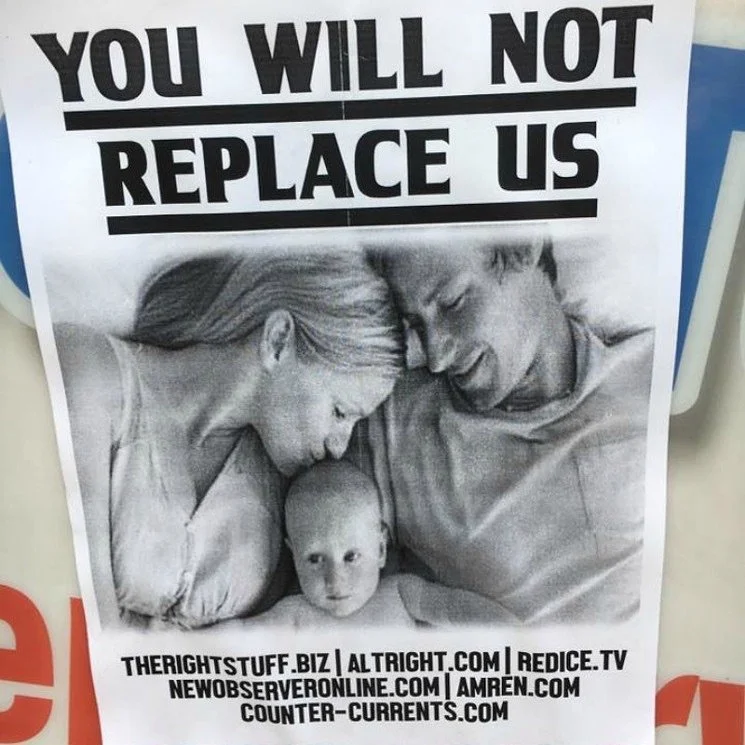
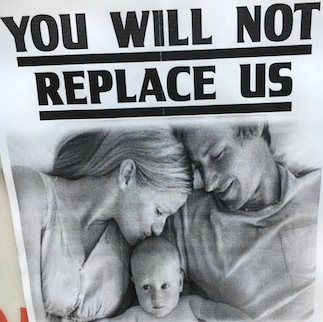
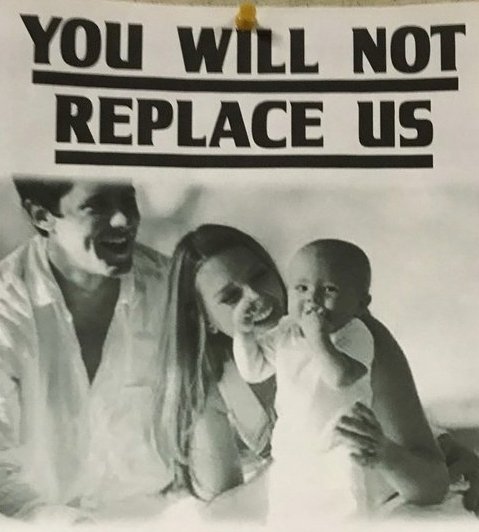
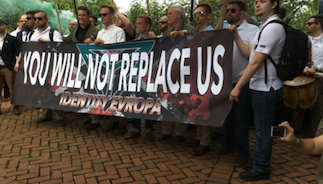
‘You Will Not Replace Us:’ White Louisiana Cop Attacked a Black Man after Unlawful Stop by Slamming His Head Into Sidewalk. ACLU Says Cop was Angry b/c Black Man had a White Wife, Settlement Reached

FUNKTIONARY explains that a "Caucasian" - is "One whose worst and most basic fear still remains genetic annihilation in the form of the fear of the impending "Black Planet." Whither goest thou white man? (See: Weiteko Disease, Yurungu, Western Civilization, Recessive Genes, Colored People, Melanin & Mutant). 

As explained by Dr. Frances Cress Welsing, “color always annihilates non-color.” Rarely discussed, it is scientific fact that white people are genetic recessive and are unable to produce color or melanin. Social integration or intermixing sexual relations with non-whites is considered white genocide to racists. Most white people consciously or subconsciously understand the following;

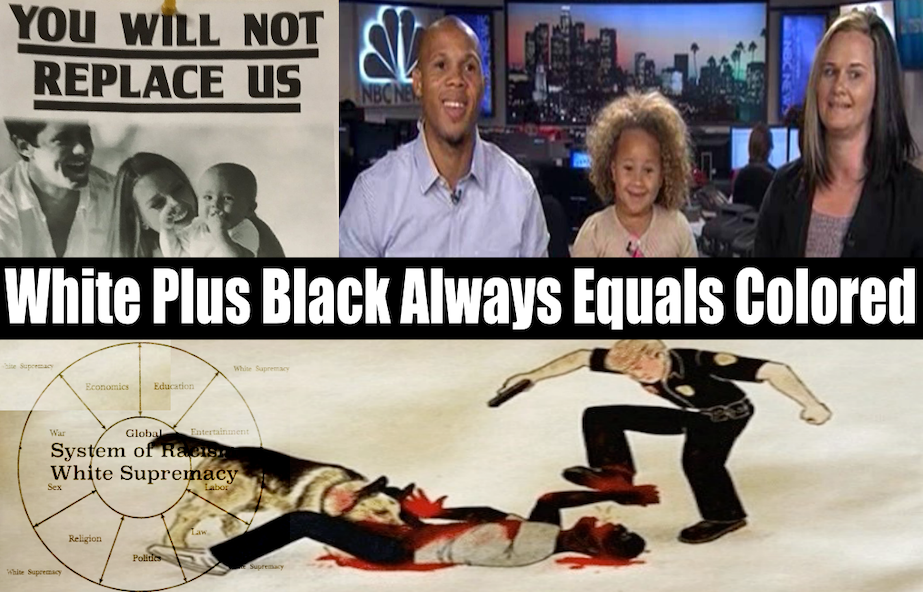
White plus Black equals Colored.

White plus Brown equals Colored.

White plus Yellow equals Colored. [MORE] AND [MORE] and [MORE]

Some racists believe they must harm or murder blacks to survive

From [HERE] A Black man who says  police officers  slammed him to the ground, knocked him unconscious and falsely arrested him after a racially motivated traffic stop has reached a legal settlement with the Marshal’s Office in Jackson, Louisiana, a town of about 4,000 people just north of Baton Rouge.

The alleged attack happened during an August 2020 traffic stop in which Officer Travis Clay Depew was accused of beating Craig White because he objected to White’s relationship with a white woman, according to the lawsuit.

‘What is your old lady up to these days?’

It was about 8 p.m. on Aug. 6, 2020, when White, driving his Honda Accord on Charter Street in Jackson, noticed blue flashing lights in his rearview mirror. He pulled over to the side of the road and watched as an officer got out of his patrol car and approached. It was Depew.

The officer took White’s license and registration, then asked a question which White believes was the reason he was pulled over.

“What is your old lady up to these days?” Depew asked, according to the suit.

“I don’t know,” White said. “She’s at home, I guess.”

White is Black. His wife is white. Depew had a problem with that, White’s lawyers alleged.

Depew ordered White to step out of his vehicle, then tried to search White without cause or reasonable suspicion that he had committed a crime, according to the suit. When he lunged at White and started to “aggressively touch” him, White slapped his hand away.

“Without warning and in the blink of an eye,” Depew tackled White to the ground, slamming his head and shoulder into the pavement, according to the suit. White lost consciousness and woke up in the back of an ambulance, handcuffed and with a bandage on his head.

The injuries White suffered were so severe they prevented him from working as a car mechanic for about six months, according to the suit. He continues to struggle with recurring headaches, problems with his vision, a reduced range of motion in his right arm, as well as anxiety, depression and a loss of sleep.

In his report, Depew said he pulled White over because he saw him texting while driving. He then suspected White had drugs in his pocket and when he tried to search him, White put his hand on his neck and shoved him. Fearing he would be pushed into oncoming traffic, Depew said, he tackled White to the ground and handcuffed him.

“It was at that point I noticed Craig appeared to be unconscious. I then observed some blood coming from Craig’s head and I heard what sounded like snoring,” Depew wrote in his report. “It was also found that during Craig’s resistance my Jackson issued body worn camera was damaged.”

But the ACLU disputes Depew’s claims.

“White made no actions that could reasonably be construed as an act of aggression” toward Depew or another officer who was at the scene, attorneys wrote in White’s lawsuit. But without any warning, Depew tackled him to the ground.

“In doing so, he slammed Plaintiff White’s head and shoulder into the asphalt and caused Plaintiff White’s head to bleed,” White’s attorneys wrote.

Depew arrested White on a host of charges including resisting and battery of an officer.  White accused Depew of manufacturing the charges and failing to turn on his body camera in an attempt to cover up his misconduct, a pattern of behavior that played out in the coming months, according to the suit.

White’s settlement is the sixth with a law enforcement agency announced or finalized this year by the ACLU of Louisiana.  Each involved allegations of excessive force and racial profiling, among other constitutional violations. Together they expose a failure of leadership to purge problem officers from their ranks, something that plagues police departments across the country, said Nora Ahmed, legal director of the ACLU of Louisiana.

“Those officers that end up committing killings are the very officers that are unlawfully stopping people, the very officers that are unlawfully searching people, the very officers that are engaged in unlawful arrest and the very officers that are engaged in excessive force,” Ahmed said. “And yet these officers continue to stay employed.”

The Jackson Marshal’s Office is a perfect example, according to the ACLU lawsuit filed in August 2021 on behalf of White.

The accused officer, Depew, has a troubled history marked by accusations of violence and racism, raising questions as to why the Jackson department hired him in the first place, then continued to employ him after even more allegations poured in.

Depew was previously fired in 2017 by the Pointe Coupee Police Department after accusations of stalking and malfeasance in office, according to the lawsuit and news reports. Details of the arrest are unknown as Depew’s court records were expunged in February 2021, according to the suit and reports.

The Jackson Marshal’s Office, however, had access to the files at the time they hired Depew, and, therefore, are directly responsible for what happened to White, the lawsuit alleged.

While employed by the Jackson Marshal’s Office, in addition to attacking White, Depew was accused of beating another Black man in the face with a flashlight, sexually assaulting a woman during a traffic stop, and strangling a 16-year-old boy while repeatedly calling him the N-word.

Depew was convicted of simple battery in January for the incident involving the teenager and has since left the department. The Jackson Marshal’s Office did not respond to requests for comment. Attorneys for the Marshal’s Office also did not respond to requests for comment.

The ACLU has not disclosed the terms of White’s settlement, which was reached in August 2022 but not finalized until recently. The Marshal’s Office hasn’t responded to a public records request seeking that information.

The lawsuit against the Jackson Marshal’s Office was filed as part of the ACLU of Louisiana’s Justice Lab. The initiative, launched in 2020,  enlists law firms and legal clinics to file litigation against law enforcement agencies throughout the state. Justice Lab partners have filed 50 cases throughout Louisiana focusing on excessive force, racial profiling, unreasonable searches, stops and seizures, and false arrests.

In March, the civil rights group announced a settlement with the Hammond Police Department on behalf of Timothy Watkins, a Black man who was injured during a shoplifting arrest. Watkins called 911 in April 2020 after someone threw a chunk of ceramic building material through his car windshield. Instead of investigating his complaint, the arriving officers, who were all white, arrested Watkins for allegedly stealing two bottles of tequila worth less than $80. That charge was later dropped, according to the lawsuit.

During his arrest, Watkins told officers he suffered from severe sciatica – nerve pain in his lower back, hips and legs – and asked that they handcuff him from the front.

“The officer callously and unjustifiably ignored Mr. Watkins’ pleas, and he was left handcuffed in a twisted, bent-over position for over 30 minutes while he was driven to the police station,” according to the ACLU of Louisiana. “As he had feared, this acutely aggravated his medical condition, causing debilitating long-term pain that has left him unable to perform even basic household chores.”

An additional three settlements were announced in February, the most recent of which was with the Thibodaux Police Department on behalf of Yohann Jackson, a Black man with cerebral palsy. Jackson claimed officers intentionally injured his disabled right arm while they performed an illegal search of his home after they claimed to smell marijuana. The city of Thibodaux did not respond to a public records request for terms of the settlement.

Those officers that end up committing killings are the very officers that are unlawfully stopping people, the very officers that are unlawfully searching people, the very officers that are engaged in unlawful arrest and the very officers that are engaged in excessive force. 

– Nora Ahmed, ACLU of Louisiana

Earlier that month, the New Orleans Police Department finalized a $10,000 settlement with Michael Celestine, a Black man who claimed he was stopped by police without cause, threatened with a gun, shocked with a stun gun, then falsely arrested, all while officers ignored his medical needs.

That came on the heels of a $20,000 settlement with the Shreveport Police Department on behalf ofBrandon Kennedy who said an officer assaulted him after he expressed support for the Black Lives Matter movement.

Each of the involved police departments denied any wrongdoing, according to court documents. Other than Depew, the officers in each case are still employed, according to the departments and the Innocence Project New Orleans’ Louisiana Law Enforcement Accountability Database.

Are We Being Lexi-Conned or just Niggarmaroled? After 9 Months White AG Still Unsure Whether White Cops Murdered Jayland Walker by Shooting the Black Man 60X in the Back as He Fled. Grand Jury Begins

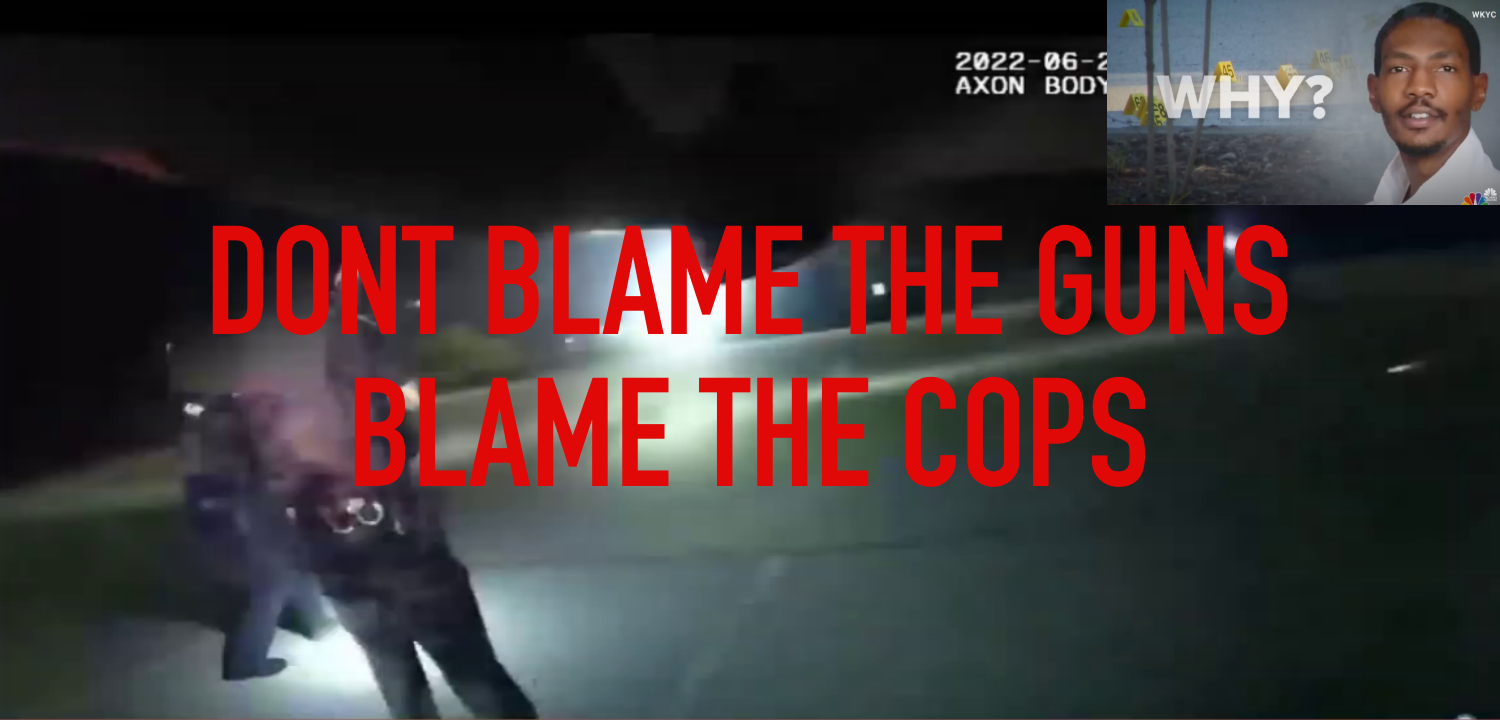
GUN CONTROL OF THE BLACKS. From [HERE] A grand jury in Ohio will hear evidence this week to decide whether police officers should face criminal charges in the shooting of Jayland Walker, a 25-year-old Black man whose death sparked protests in Akron last summer. He was a Doordash driver.

Eight officers fired dozens of rounds at Walker following a car and foot chase. Autopsy records show that eight officers fired more than 90 rounds at Walker, with more than 60 striking his body. Seven of the cops were white. Police said it began when they tried to pull him over for minor equipment violations and he failed to stop, cops then claim he fired a shot from his car 40 seconds into the pursuit.

Police body camera video showed Walker eventually bailed from his slowly moving car while wearing a ski mask and ran into a parking lot, where pursuing officers opened fire. A county medical examiner said Walker was shot at least 40 times. A handgun, loaded magazine and wedding ring were found on the driver’s seat of the car.

Attorney Bobby DiCello said there is no evidence showing that the firearm was discharged at an officer.

Whether a gun was fired is simply police misdirection and distraction from the only material issue which is whether the black man posed a threat as he fled on foot from police. He had no object in his hand and the cops never saw a gun, because it was on the car seat.

Walker's family called it a brutal and senseless shooting of a man who was unarmed at the time and whose fiancee recently died. Police union officials said the officers thought there was an immediate threat of serious harm and that their actions were in line with their training and protocols.

Authorities claim Walker made a threatening gesture before he was shot, but the body camera footage from June 27 speaks for itself. Police chased Walker for about 10 seconds before officers fired from multiple directions in a burst of shots that lasted 6 or 7 seconds.

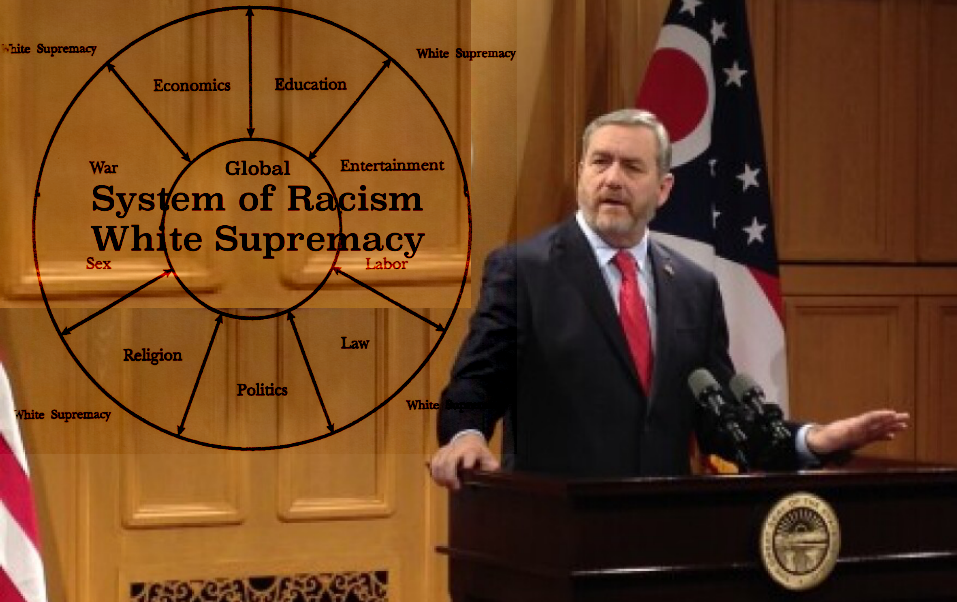
After Ohio Attorney General Dave Yost took over the investigation last summer at the request of Akron police, prosecutors in his office will present the case to the grand jury this week. Yost is a republican and a racist suspect. However, Yost recently charged a Columbus cop for the murder of Andre Hill.

City leaders have been meeting with community leaders, church groups, activists and business owners ahead of the grand jury meeting while also preparing for potential protests.

The city is considering setting up a designated protest zone downtown outside the city hall building, where workers already have put plywood over the first-floor windows. There's also temporary fencing around the county courthouse.

“We're not anticipating violence, but we’re preparing for anything,” said Stephanie Marsh, a city spokesperson.

FUNKTIONARY explains the lex-icon sustains your belief in the legitimacy of the legal system as a whole. Within the lex-icon elite whites go through great effort to produce a show of “fairness.” This production includes the court’s emphasis on “procedural due process,” “professionalism” and leaves out no detail as it includes plastic flags, oaths, black robes, elevated judge platform, formalities, high ceilings, latin phrases etc. Also, occasional dismissals and acquittals of Black defendants or convictions of white cops are a necessary part of the illusion. FUNKTIONARY further explains:

lexiconned – mislead (conned) by (inside-the-circle) lexical definitions and their deft definers. 2) word-conditioning. (See: Belief, Oughtism, Symbolaeography, Group-Entity, White Lies, Truth-Based Reality, Language & Oughtomatism)

legal system – the underworld inverted and sanctioned for public consumption, control and compliance over the masses. The same system down through the ages runs the legal system on the outside world as a front for the people to believe in while running the underworld as well. (See: Law, Lawyer, Lawyers, Statutes, Proclamations, Tyranny & Nobility)

The Niggarmarole – bullshit laced with hype sprinkled with jive-ass incompetence resulting in a tragicomedy of errors—selfrepeating and never receding—played out and played over and over until you’ve realized that it’s over—but something you’ll never truly get over. The Niggamarole is an experience that you allow others to put you through when you think you’ve been left with nothing else to do. The only performance happening in a niggamarole is purely theatrical—all for show—none for closing deals and making dough. (See: Bullshit, Piece-Activist, Reaves Technique & Soonshine)

Only Cops Should Have Guns? White Mississippi Deputies Shoved Their Guns Into the Mouths of 2 Handcuffed Black Men and Tortured Them During Unlawful Search. One Shot in the Face. Feds Investigate

GUN CONTROL OVER THE BLACKS From [HERE] Several deputies from a Mississippi sheriff’s department being investigated by the Justice Department for possible civil rights violations have been involved in at least four violent encounters with Black men since 2019 that left two dead and another with lasting injuries, an Associated Press investigation found.

Two of the men allege that Rankin County sheriff's deputies shoved guns into their mouths during separate encounters. In one case, the deputy pulled the trigger, leaving the man with wounds that required parts of his tongue to be sewn back together. In one of the two fatal confrontations, the man's mother said a deputy kneeled on her son's neck while he told them he couldn't breathe.

Police and court records obtained by the AP show that several deputies who were accepted to the sheriff's office's Special Response Team — a tactical unit whose members receive advanced training — were involved in each of the four encounters. In three of them, the heavily redacted documents don't indicate if they were serving in their normal capacity as deputies or as members of the unit.

Rankin County, which has about 120 sheriff's deputies serving its roughly 160,000 people, is predominantly white and just east of the state capital, Jackson, home to one of the highest percentages of Black residents of any major U.S. city. In the county seat of Brandon, a towering granite-and-marble monument topped by a statue of a Confederate soldier stands across the street from the sheriff's office.

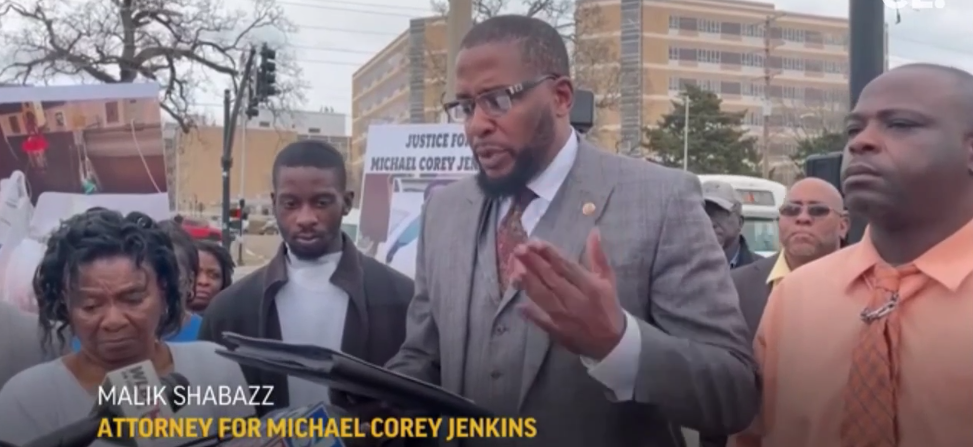
In a notice of an upcoming lawsuit, attorneys for Jenkins and his friend Eddie Terrell Parker said on the night of Jan. 24 the deputies suddenly came into the home and proceeded to handcuff and beat them. They said the deputies stunned them with Tasers repeatedly over roughly 90 minutes and, at one point, forced them to lie on their backs as the deputies poured milk over their faces. The men restated the allegations in separate interviews with the AP.

When a Taser is used, it’s automatically logged into the device’s memory. The AP obtained the automated Taser records from the evening of Jan. 24. They show that deputies first fired one of the stun guns at 10:04 p.m. and fired one at least three more times over the next 65 minutes. However, those unredacted records might not paint a complete picture, as redacted records show that Tasers were turned on, turned off or used dozens more times during that period.

The Mississippi Bureau of Investigation was brought in to investigate the encounter. Its summary says a deputy shot Jenkins at approximately 11:45 p.m., or about 90 minutes after a Taser was first used, which matches the timeframe given by Parker and Jenkins. The deputy’s name was not disclosed by the bureau.

Police say the raid was prompted by a report of drug activity at the home. Jenkins was charged with possessing between 2 and 10 grams of methamphetamine and aggravated assault on a police officer. Parker was charged with two misdemeanors — possession of paraphernalia and disorderly conduct. Jenkins and Parker say the raid came to a head when the deputy shot Jenkins through the mouth. He still has difficulty speaking and eating.

Another Black man, Carvis Johnson, alleged in a federal lawsuit filed in 2020 that a Rankin County deputy placed a gun into his mouth during a 2019 drug bust. Johnson was not shot.

The sheriff's department refused repeated interview requests and denied access to any of the deputies who were involved in the violent confrontations. The department has not said whether deputies presented a search warrant, and it's unclear if any have been disciplined or are still members of the special unit.

The news outlet Insider has been investigating the sheriff’s department and persuaded a county judge to order the sheriff to turn over documents related to the deaths of four men in 2021. Chancery Judge Troy Farrell Odom expressed bewilderment that the department had refused to make the documents public.

“(The) day that our law enforcement officers start shielding this information from the public, all the while repeating, ‘Trust us. We’re from the government,’ is the day that should startle all Americans,” Odom wrote.

The AP requested body camera or dashcam footage from the night of the Jenkins raid. Jason Dare, an attorney for the sheriff’s department, said there was no record of either.

Mississippi doesn’t require police officers to wear body cameras. Incident reports and court records tie deputies from the raid to three other violent encounters with Black men.

Dedmon was also among deputies involved in a 2019 arrest of Johnson, according to the lawsuit Johnson filed alleging that one of the deputies put a gun in his mouth as they searched him for drugs. Johnson is currently imprisoned for selling methamphetamine.

Other documents obtained by the AP detail another violent confrontation between Elward and Damien Cameron, a 29-year-old man with a history of mental illness. He died in July 2021 after being arrested by Elward and Deputy Luke Stickman, who also opened fire on Woods during the 2019 standoff. A grand jury declined to bring charges in the case last October.

In an incident report, Elward wrote that while responding to a vandalism call, he repeatedly shocked Cameron with a Taser, punched and grappled with Cameron at the home of his mother, Monica Lee. He said after getting Cameron to his squad car, he again stunned him to get him to pull his legs into the vehicle.

After going back inside to retrieve his Taser, deputies returned to find Cameron unresponsive. Elward wrote that he pulled Cameron from the car and performed CPR, but Cameron was later declared dead at a hospital.

Lee, who witnessed the confrontation, told the AP that after subduing her son, Elward kneeled on his back for several minutes. She said when Stickman arrived, he kneeled on her son’s neck while handcuffing him, and that her son complained he couldn't breathe.

Lee said she later went outside, hoping to talk to her son before the deputies drove him away.

NY Red Flag Gun Law Ruled Unconstitutional

From [HERE] Judge Rules on Constitutionality of New York's Red Flag Law—

It seems since the 2022 United States Supreme Court ruing against New York in NYSR&PA v. Bruen, the courts continue beating down New York's unconstitutional gun laws.

Yesterday New York Supreme Court Judge Craig Stephen Brown ruled that the state's Red Flag violates the individual's civil rights and is therefore unconstitutional. In his statement, Judge Brown writes:

“Without the requirement of any input from a medical or mental health expert, the Court is required to make a determination of whether “the respondent is likely to engage in behavior that would result in serious harm to himself, herself, or others in…section 9.39 of the mental hygiene law.” Under Mental Hygiene Law, a person’s liberty rights cannot be curtailed unless a physician opines that a person is suffering from a condition “likely to result in serious harm.” Further, in order to extend any such curtailment of liberty beyond 48 hours, a second doctor’s opinion must be obtained and such opinion must be consistent with the first doctor’s opinion.”

“Absent from New York’s Red Flag Law is any provision whatsoever requiring even a single medical or mental health expert opinion providing a basis for the order to be issued. New York’s Red Flag Law, as currently written, lacks sufficient statutory guardrails to protect a citizen’s Second Amendment Constitutional right to bear arms.”

You can read the entire ruling here. In New York, the State Appellate Court is higher than the State Supreme Court, so you can bet the anti-gunners are working on an appeal of this ruling.

Old Enough to Die for the Military but Not to Defend Yourself or Family from Criminals? Colorado's FreeDumb Fighting Puppeticians Raise Minimum age to Purchase a Gun and Expand Red Flag Laws

From [HERE] Back in 1999, Connecticut passed the first “red flag” law in the country. A quarter of a century later, red flag laws are on the books in 20 states and the District of Columbia. Advocates of the law say it's a valuable tool law enforcement can use to take guns away from people before they harm themselves or someone else. Critics say the laws violate the civil rights of Americans by depriving them of due process and their right to self-defense protected by the Second Amendment.

This week, the red flag laws of two states made the news in different ways.

Changes to Colorado Red Flag Law—

Colorado made the news again for passing several of the gun control bills proposed by its progressive Democratic legislature. Among the bills that made the cut was SB23-170, which amended elements of the state's existing Red Flag law, what Colorado calls an “Extreme Risk Protection Order Petition”.

Under the current law,

a family or household member and a law enforcement officer or agency can petition for an extreme risk protection order. The bill expands the list of who can petition for an extreme risk protection order to include licensed medical care providers, licensed mental health-care providers, licensed educators, and district attorneys.

What may be even worse is that SB23-170,

requires the office of gun violence prevention to expend funds annually on a public education campaign regarding the availability of, and the process for requesting, an extreme risk protection order.”

If you're a gun owner in Colorado, the government is going to spend your money to convince fellow Coloradans that violating American's civil rights is totally cool.

Colorado also passed SB23-169 and SB23-168. The first bill raised the minimum age to purchase any firearm from 18 to 21 years old. Colorado thinks you're old enough to die for your country, but not old enough to defend your family against the violent criminals its activist DAs have refused to hold accountable for their crimes. The second bill violates the Protection of Lawful Commerce in Arms Act Protection of Lawful Commerce in Arms Act (PLCAA), and allows victims to sue gun manufacturers. This is just a scheme of leftists to destroy firearm manufacturers, and try to hold them accountable for criminals who use their product illegally in a crime.

Gun owners continue to lose ground and it looks like that will not change anytime soon.

Fed Court in Minnesota Strikes Down Law Requiring 21-year-old age Minimum for Handgun Permit

From [HERE] A federal judge for the US District Court of Minnesota Friday struck down a Minnesota law requiring individuals to be at least 21 to obtain a permit to carry a handgun in public. US District Judge Katherine Menendez ruled that the minimum age requirement violated the Second Amendment right to keep and bear arms and was therefore unconstitutional.

The case was brought before the court by gun-rights advocacy organizations and several individuals under 21 who argued that the age restriction in Minnesota’s permit-to-carry law violated their Second Amendment rights. Specifically, they argued that the Second Amendment text protects the rights of 18- to 20-year-olds to bear arms for self-defense because that age group had the right to bear arms when the Second Amendment was ratified.

The Second Amendment states: “A well regulated Militia, being necessary to the security of a free State, the right of the people to keep and bear Arms, shall not be infringed.” Last year, the US Supreme Court in New York State Rifle & Pistol Association, Inc. v. Bruen formulated the following two-part test for evaluating laws regulating firearm possession:

[W]e hold that when the Second Amendment’s plain text covers an individual’s conduct, the Constitution presumptively protects that conduct. To justify its regulation, the government may not simply posit that the regulation promotes an important interest. Rather, the government must demonstrate that the regulation is consistent with this Nation’s historical tradition of firearm regulation. Only if a firearm regulation is consistent with this Nation’s historical tradition may a court conclude that the individual’s conduct falls outside the Second Amendment’s “unqualified command.”

The Bruen test first requires a court to determine whether the Second Amendment’s plain text covers an individual’s conduct. Then, the government must demonstrate that the proposed regulation is consistent with US history and tradition of firearms regulation. The latter step requires courts to exclusively inquire into the history and tradition of US firearm regulation to resolve Second Amendment cases. Judge Menendez acknowledged her “reservations” regarding the historical inquiry analysis, stating that “judges are not historians.”

In her decision, Judge Menendez applied the Bruen test and sided with the plaintiffs. She held that the Second Amendment’s plain text does not suggest an age limit and that reference to “the people” includes 18- to-20-year-olds. Therefore, it presumptively protects the right of that age group to bear arms in public for self-defense. She then found that the defendants failed to identify an analogous regulation that showed a historical US tradition of prohibiting 18- to-20-year-olds from possessing handguns for self-defense.

Gun rights activists have celebrated the decision, calling it “…a resounding victory for 18-20-year-old adults who wish to exercise their constitutional right to bear arms.” Those calling for stricter firearms regulation believe that it will only lead to more people with more guns. In her ruling, Judge Menendez acknowledged that applying the historical inquiry analysis from Bruen could lead to such a situation, stating:

Given the relative dearth of firearms regulation from the most relevant period where that lens is aimed, the endeavor of applying Bruen seems likely to lead, generally, to more guns in the hands of more people, not just young adults.

Gun control remains a highly divisive and politically charged issue in the US. This decision follows a recent school shooting in Nashville, Tennessee, which has reignited debate about firearm regulation.

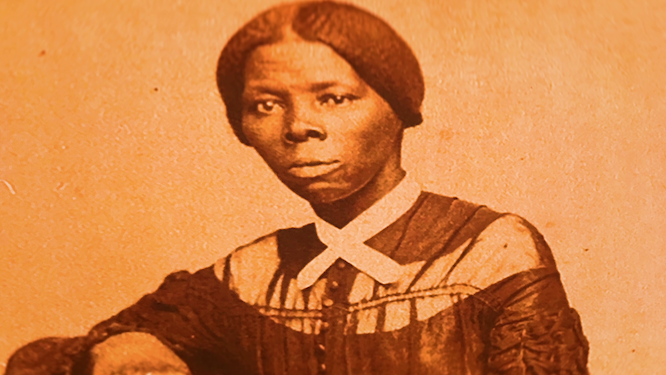
Lt Gov. Winsome Sears: Harriet Tubman Carried A Gun, If It's Good Enough For Her Then It's Good Enough For Me

From [HERE] Virginia Lt. Gov Winsome Sears (R) made the case for gun ownership in the black community on Friday's broadcast of HBO's 'Real Time' with host Bill Maher.


"I got tired of seeing black people every time we're in the media about guns it's always bad. We are law-abiding citizens and we're not going to give up our Second Amendment rights. And by the way, the fastest growing segment of gun owners, do you know who they are? I'm glad you asked. It's women. Black women. And it was a black woman who said you need a Winchester rifle in every home. A black woman during the Civil Rights [movement] and before said that. And Harriet Tubman carried a gun. If it's good enough for her it's good enough for me," Sears said.

Puppeticians Use the Black Power Sign to Push the White Liberal FreeDumb Agenda to Destroy the Right of Self Defense Against Criminals and Gov Tyranny - Rights Necessary to Maintain All Other Freedoms

THIS IS NOT BLACK POWER. WITH NO GUN "RIGHTS" FREEDOMS CAN BE SHUT OFF LIKE A LIGHT (SEE CANADA/IRELAND/UK/NEW ZEALAND) HISTORICAL ANALYSIS SHOWS DISARMED FORMERLY FREE PEOPLE HAVE NO DEFENSE AGAINST SLAVERY OR GOVT VIOLENCE.

DURING COVID What happened to disobedient people In countries where citizens have no right to bear arms? “The democratic protections of the formerly free nations of the world — Canada, the Republic of Ireland, the United Kingdom, Australia, New Zealand — were shut down with the ease of someone switching off a light, and with almost no resistance from citizens. Yes, there have been protests, and there have been petitions, and innumerable complaints online; and a few brave legislators have spoken up, if only to echoing chambers. 

But the fact remains that when the unidentifiable police or mercenary forces, as in Canada, are violent, and the protesters have nothing but the moral high ground with which to deter their violence, then even the bravest of resistances is fleeting.” [MORE]

From [HERE] Tennessee’s Republican-led House of Representatives expelled two Democratic lawmakers Thursday, a rare punishment for speaking out of turn on the House floor following last week’s mass shooting at a Nashville school.

The House voted Thursday afternoon to force out Justin Jones and Justin Pearson, two of three lawmakers who spoke about gun control. Lawmakers failed to get the two-thirds majority needed to expel their colleague Rep. Gloria Johnson.

Republican members drafted the resolutions to punish the three Democrats for “disorderly behavior” after they interrupted a House session on March 30. The members said the trio had broken rules about preserving order and displaying political messages. [MORE]

Although, the Supreme Court has made it plain that the 2nd Amendment protects an individual’s right to keep and bear arms for self-defense in public, liberal puppeticians and PropaGandhi are working tirelessly to make said inalienable right illusory. The court clearly stated;

Nothing in the Second Amendment’s text draws a home/public distinction with respect to the right to keep and bear arms. As we explained in Heller, the “textual elements” of the Second Amendment’s operative clause— “the right of the people to keep and bear Arms, shall not be in- fringed”—“guarantee the individual right to possess and carry weapons in case of confrontation. Heller further confirmed that the right to “bear arms” refers to the right to “wear, bear, or carry . . . upon the person or in the clothing or in a pocket, for the purpose . . . of being armed and ready for offensive or defensive action in a case of conflict with another person.”

This definition of “bear” naturally encompasses public carry. Most gun owners do not wear a holstered pistol at their hip in their bedroom or while sitting at the dinner table. Although individuals often “keep” firearms in their home, at the ready for self-defense, most do not “bear” (i.e., carry) them in the home beyond moments of actual confrontation. To confine the right to “bear” arms to the home would nullify half of the Second Amendment’s operative protections.

Moreover, confining the right to “bear” arms to the home would make little sense given that self-defense is “the central component of the [Second Amendment] right itself.” Heller, 554 U. S., at 599; see also McDonald, 561 U. S., at 767. After all, the Second Amendment guarantees an “individual right to possess and carry weapons in case of confrontation,” Heller, 554 U. S., at 592, and confrontation can surely take place outside the home.

Although we remarked in Heller that the need for armed self-defense is perhaps “most acute” in the home, id., at 628, we did not suggest that the need was insignificant else- where. Many Americans hazard greater danger outside the home than in it. See Moore v. Madigan, 702 F. 3d 933, 937 (CA7 2012) (“[A] Chicagoan is a good deal more likely to be attacked on a sidewalk in a rough neighborhood than in his apartment on the 35th floor of the Park Tower”). The text of the Second Amendment reflects that reality.

The Second Amendment’s plain text thus presumptively guarantees petitioners Koch and Nash a right to “bear” arms in public for self-defense.

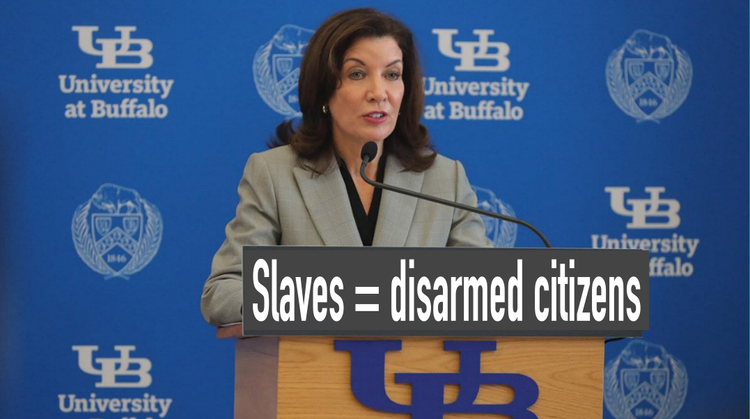
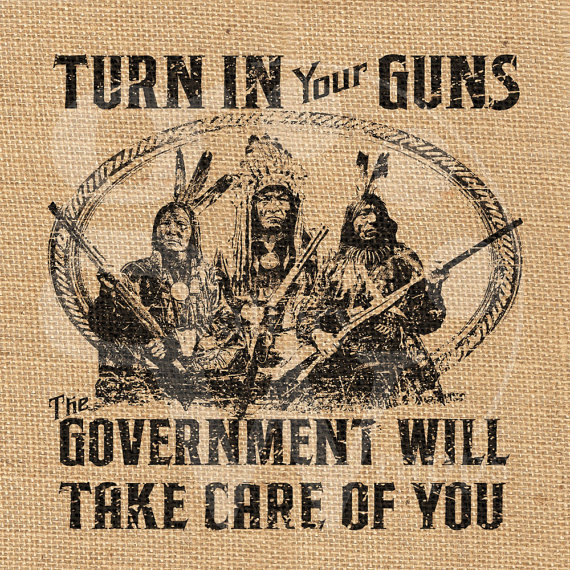
The illusion of accountable police helps to sell propaganda to disarm citizens. Most importantly it sells the statist myth of a social contract between citizens and government. Said myth is the basis of all political authority. The “clogic” is ‘people don’t need guns because the police will protect them.’ Such belief is also part of other woefully ignorant “propagenda” such as; ‘guns are primarily for hunting’ or primarily for self defense.  Contrary to such indoctrination, the 2nd Amendment exists for circumstances when all other rights have failed. An armed population is necessary to check authority and tyranny. As stated by 9th circuit judge Alex Kozinski,

“tyranny thrives best where government need not fear the wrath of an armed people. Our own sorry history bears this out: Disarmament was the tool of choice for subjugating both slaves and free blacks in the South. In Florida, patrols searched blacks' homes for weapons, confiscated those found and punished their owners without judicial process. In the North, by contrast, blacks exercised their right to bear arms to defend against racial mob violence. As Chief Justice Taney well appreciated, the institution of slavery required a class of people who lacked the means to resist. A revolt by Nat Turner and a few dozen other armed blacks could be put down without much difficulty; one by four million armed blacks would have meant big trouble.

All too many of the other great tragedies of history—Stalin's atrocities, the killing fields of Cambodia, the Holocaust, to name but a few—were perpetrated by armed troops against unarmed populations. Many could well have been avoided or mitigated, had the perpetrators known their intended victims were equipped with a rifle and twenty bullets apiece, as the Militia Act required here. If a few hundred Jewish fighters in the Warsaw Ghetto could hold off the Wehrmacht for almost a month with only a handful of weapons, six million Jews armed with rifles could not so easily have been herded into cattle cars.

. . . The prospect of tyranny may not grab the headlines the way vivid stories of gun crime routinely do. But few saw the Third Reich coming until it was too late. The Second Amendment is a doomsday provision, one designed for those exceptionally rare circumstances where all other rights have failed—where the government refuses to stand for reelection and silences those who protest; where courts have lost the courage to oppose, or can find no one to enforce their decrees. However improbable these contingencies may seem today, facing them unprepared is a mistake a free people get to make only once.” Silveira v. Lockyer, 328 F.3d 567, 569-570 (9th Cir. 2003) quoted in FUNKTIONARY

In the recent case New York State Rifle & Pistol Association, Inc. v. Bruen, Justice Clarence Thomas destroyed the emotional clogic of freedumb/slavery advocates when he wrote the Court’s opinion. He also dropped a few “revelation sandwich” reminders for serious, responsible Black individuals to consider in light of the facts that the quality of Black citizenship is so low that; no matter what the law says, Blacks are prohibited from possessing guns, Blacks are subject to omnipresent interference by cops with their freedom of movement and their right to be left the fuck alone, Black people are 3 times more likely than whites to be murdered by cops and the police have no legal duty to protect any particular citizen from harm unless they are in custody (“the public duty doctrine”). Said factors exist in a legal context in which law enforcement is uncontrollable by citizens, generally unaccountable to them, can’t be hired or fired by citizens and has irresponsible, limitless power over people to take life on the street as they see fit while providing a compulsoryservice” that citizens have no “right” to decline. While discussing the existence of the right to carry weapons for self-defense against public confrontation during Reconstruction, Justice Thomas discussed the historical need for Blacks to vigorously defend themselves in a violent, racist society. [MORE]

According to FUNKTIONARY:

self-defense – understanding the game—the hunter and the hunted. Self-defense is the only self-executing right, and requires the discipline to respond in the wild and the reading capability in order to plead in a courtroom if there are any survivors after one’s response to a foiled attack. (See: Kensei, Flow, Intuition, T’ai Chi & Clarity)

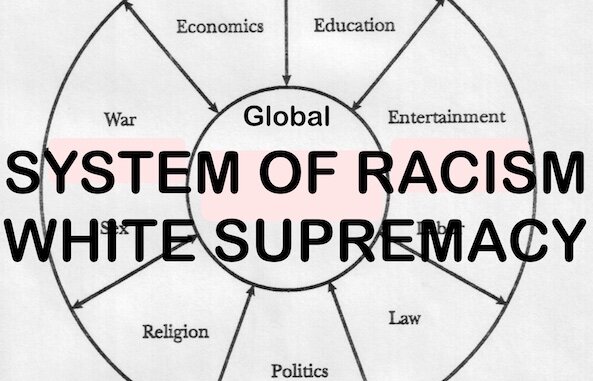
PropaGandhi – passive social non-resistance propaganda. 2) obedience-based servitude to the enforcers of granfalloons uncommonly known as Corporate States and any other group-entities. Mahatma Gandhi mostly walked barefoot which produced calluses on his feet. He also had a very weird diet sprinkled with bouts of fasting which made him rather frail and suffer intermittently from halitosis—this made him… “A super callused fragile mystic hexed by halitosis.” (See: Poser, Class, Mass, Racism White Supremacy, Gun Control & Caste)

freedumb – the state of unrecognized psychological captivity (brain hemispheric hostage) that sheeple remain in because they don’t speak the language of reality nor constantly edit truth from perfecting heart to perfecting power—and when truth is spoken around them, refrain from being open, or impervious to it thus being forever chained to its distortions and limitations. 2) the mindset that proposes “since we are liberated, we are also free.” 3) the mindset that operates upon the notion that you can have individuality without accountability or responsibility. 4) the pretense that reality is truth and viceversa. People cherish unwarranted assumptions and relish their freedumb because they have been socialized into selfcensorship along with misidentification with the ego-mind—the absence of knowledge of Self. (See: Phfreedom, Truth, Unfreedom, Dumbelievers, Self, Belief Systems, Objective Truth, Individuality, Objective Reality, True Self & Reality)

Tyranny Prevention is a Core Purpose of the 2nd Amendment. People Must Be Able to Obtain Assault Weapons for this "Pre-Existing Right" to be Meaningful

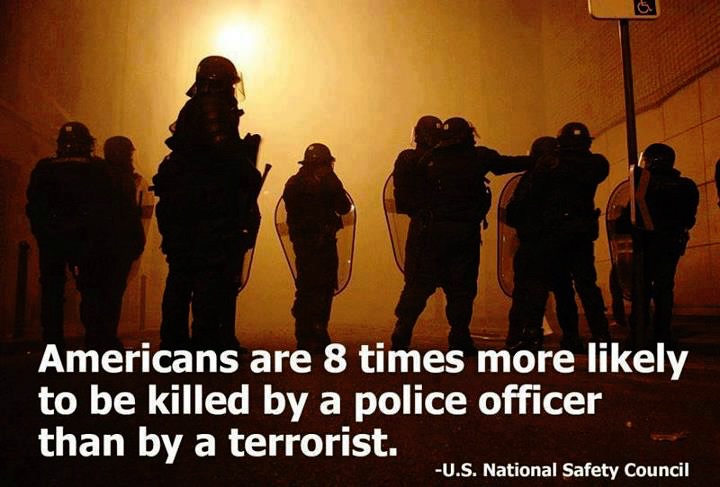
What is my chance of being victimized in a mass shooting or active shooter incident? Almost 0%. According to the FBI, this type of shooting is the rarest of all types of shooting. [MORE] An American’s lifetime odds of dying in a mass shooting committed in any location is 1 in 11,125; of dying in a car accident is 1 and 491; of drowning is 1 in 1,133; and of choking on food is 1 in 3,461). You’re 55 times more likely to be killed by a police officer than a “terrorist.” [MORE] 

freedom flighters – those whom when fighting against European Racism White Supremacy and sundry oppression and when the going gets tough, make a run for the hills of safer environs and kinder-gentler masters. 2) those who can muster only symbolic and token resistance to power-relation dynamics of economic domination and violence, and cultural oppression before they must retreat into the lush imagery of compensatory fantasies. Freedom flighters are only concerned with reform, not revolution or rebellion. Freedom flighters are assimilationists in revolutionary garb; Sambos in Uncle Tom’s finer raiment. (See: Reform, Revolution, Rebellion, Naptivity, Captivity, Ideology & Compensatory Fantasies)Placebo Syndrome – mindless obedience, commercialism, sinsationalism and servitude to the disco-sadistic purveyors of the spanktronic Death-Force, e.g., CrimethInc., Religious Dogma, and the Corporate State (creating and operating within the zone of zero-funkativity—a metaphor for life-negating impulses, memes and actions). 2) the faceless dull sameness generated by belief, conformity, belonging and fear. The Placebo Syndrome allows / affords one theopportunity to feel the hypocrisy of being someone other than yourself, living another’s script not your own. (See: Sir Nose D’Voidoffunk)

Freedomination – the liberty to choose the commitments, ideologies, covenants, contracts, judgments, and relationships that bind or restrain you within the Matrix. (See: The Matrix, Negative Hallucination, Phfreedom, Freedom & Liberty)

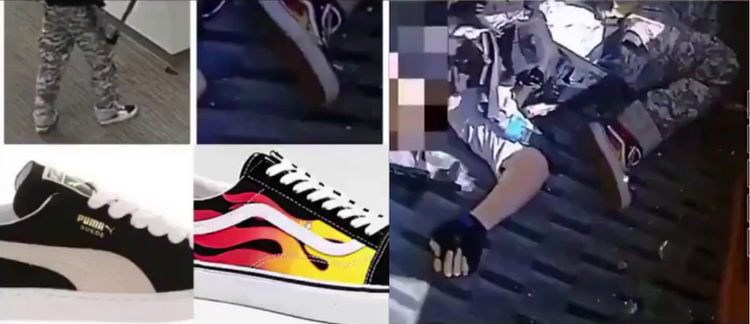
Tenn Shooting Not a False Flag? The So-Called Shooter is Seen Wearing Different Shoes in Video. Rather Than Provide More Video of the Incident, Gov/Media Claim the Shoes are the Same, Blame the Light

PROVE IT THEN. Nashville police released two videos of the incident: one was closed-circuit television footage from the Covenant School, and the other is a merged video of body camera footage from two police officers.

The attacker’s shoes as they are seen on the closed-circuit television camera footage appear to be black and white Pumas, while the ones seen on the body camera footage appear to be Vans with a red flame design. 

The body cam video provided a closer view of the shoes. A search through Google Lens showed a Vans shoe with the same flame design and single white stripe.

Brooke Reese, a Metropolitan Nashville Police Department spokesperson, told USA Today that there is no evidence the shooter changed shoes during the attack, and that the claim that the shooting was a false flag operation had no validity. [MORE]

According to the USA Today, “Multiple [unnamed] forensic experts said there are a variety of reasons why the shoes might appear to be a different color in the later footage.”

V.S. Subrahmanian, a computer science professor at Northwestern University, told USA TODAY that any reddish glow on the shoes in the second footage “might be due to the interplay between the sunlight coming through the window and the reddish floor beam in the center of the latter image.”

“I don’t see any significant visual inconsistencies in the imagery of the shoes when the perpetrator first enters the school and the video showing the shooter down,” Subrahmanian said. “The latter shows similar shoes with a similar pattern.” [“similar” pattern means they are not exactly the same. And would being a computer science professor be a relevant expertise to this issue?]

Siwei Lyu, a digital media forensics expert at the University of Buffalo, agreed, noting that the image of the shoe on the right in the Facebook post was shot near the footboard of the room, which has red color in it. 

"So the light in the room will have red light reflected from that part of the room, and if the materials of the shoes reflect a small amount of red light, it will appear reddish to us," Lyu said. "On the other hand, the image (on the left) was shot in a well lit situation, where input white light of all spectra are somewhat equally absorbed so the object appeared black." [MORE] yup, sounds like bullshit.

The police have explained there is more video from the school and from the police body cameras. As explained, the video is merged video from 2 bodycams and 1closed circuit camera so clearly there is more video. Also, the shooter’s corpse and his personal belongings (including his clothing) obviously shouldn’t be missing now. If its not a false flag then why not just release more video or photos of the incident? Also note that similar to the fake as fuck Buffalo shooting there is no blood anywhere in the video of this incident.

DEPENDENT MEDIA VIDEO ABOVE

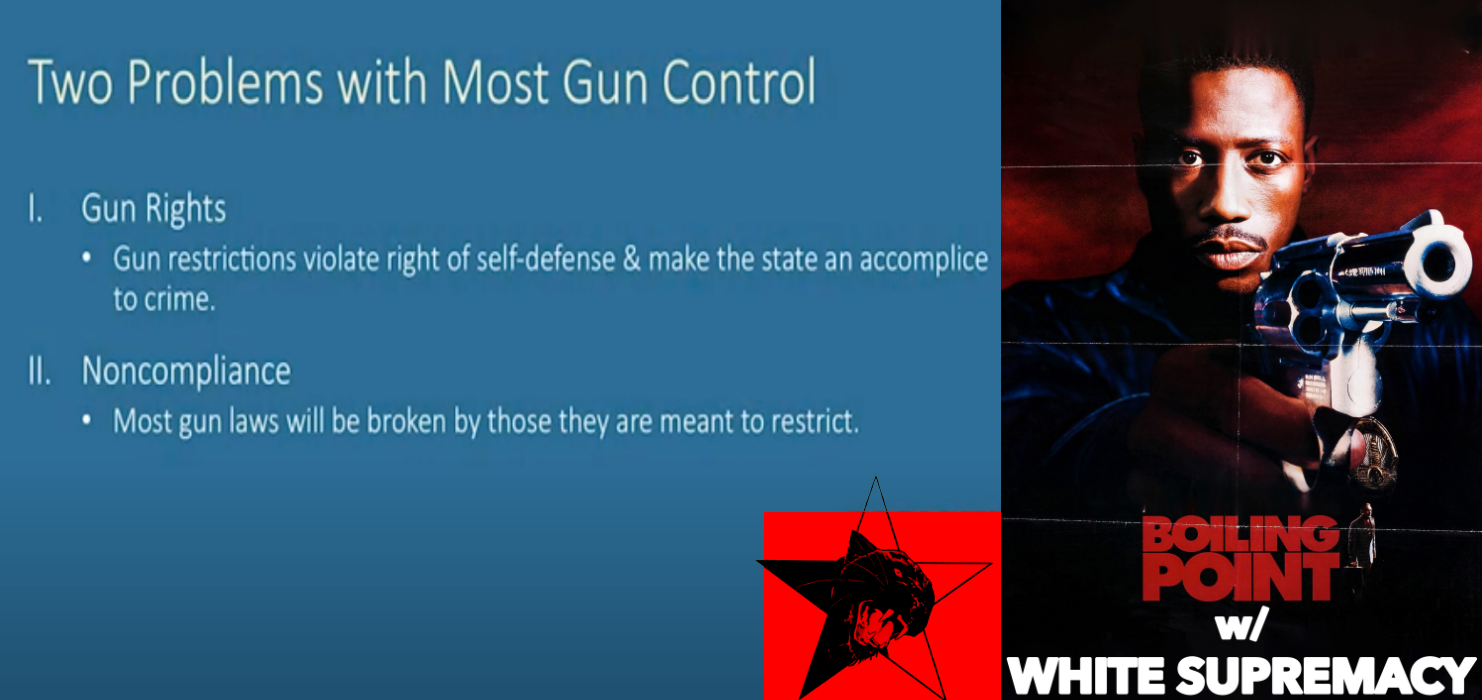
When Authorities Prevent Individuals from Being Able to Defend Themselves the Government Becomes Accomplices to Crime and Partly Responsible (in addition to the criminals themselves) for Victimization

Gun Rights and Noncompliance: Two Problems of Prohibition by Michael Huemer. Footnotes are [HERE]

Most of my fellow academics seem to harbor a visceral antipathy toward guns. Many, perhaps most, would like to see all private gun ownership outlawed. I think this position is not well grounded, either in empirical evidence or in moral principle. If we followed the lessons that we – or at least, the social scientists among us – try to teach our students, we would not be so confident of the benefits of gun restrictions. If we traced the implications of the moral principles we accept in other contexts, we would not be so quick to dismiss the rights of gun owners.

Like most controversial issues, the issue of gun control is highly complex, and it is commonly treated in a sadly oversimplified manner. I can’t fix that problem here (though I have discussed the issue at greater length elsewhere1). Here, I will address only what seem to me the two most important arguments concerning the simplest and most extreme form of gun control, which would be a complete ban on private gun ownership. The first argument is that gun prohibition would violate the right of individuals to protect themselves. The second argument is that gun prohibition will fail because criminals will disregard the law.

The Right to Self-Defense

The rights of the individual often seem lost in gun policy debate, as in most policy debates – we ask “what is good for society?”, but we rarely ask “what does the individual have a right to?” At the same time, we tend to ignore the factual situation of people different from ourselves, so that when asked what is best for society, we answer based on our personal circumstances, or even on the imagined circumstances of an ideal society.

I, for example, live in an incredibly safe place; I hardly need a gun. Perhaps you, reader, are in a similar situation. If so, you might be inclined to think, “No one needs a gun.”

But it isn’t true. I need never walk home on streets where I fear for my life. But many Americans live in places where they fear for their own safety, and are completely justified in that fear. Many more have abusive lovers, ex-husbands, or other people in their lives who have beaten them or threatened them with violence. And many believe – again, with complete justification – that the government cannot or will not protect them.

Consider the case of Ruth Bunnell, who in 1972 called the San Jose Police Department to report that her estranged husband had just told her that he was coming over to her house to murder her. She requested immediate police aid, but the police refused to help, instructing her instead to call back when her husband arrived. When he arrived forty-five minutes later, she was unable to call back because the husband immediately stabbed her to death.

My point in relating this case is not the usual one; my point is not simply that Bunnell could have defended herself with a gun. My point concerns what happened after the murder. John Hartzler, the administrator of Ruth Bunnell’s estate, brought a lawsuit against the city for failing to protect her.2 In tort law, there are four conditions for a valid civil claim: (i) the defendant must have had some duty to the plaintiff; (ii) the defendant must have breached that duty; (iii) the plaintiff must have suffered a harm; (iv) the breach of duty must have caused the harm. On this basis, you might assume that Hartzler had an open-and-shut case: surely the police were duty bound to respond to Bunnell’s plea for protection; surely their failure to do so caused her death.

You would be mistaken. The court dismissed the suit without a trial. Hartzler appealed, but the appellate court affirmed the dismissal. No one disputed that Bunnell had suffered a tragic harm caused by the police’s refusal to protect her. The city simply claimed that they never had any duty to protect Ruth Bunnell in the first place – and the court agreed. Nor was this an idiosyncratic decision; U.S. courts have consistently held to the theory that the government only has an obligation to “society” in general, to provide a general deterrent to crime – not an obligation to any individual.3

My point: individuals have a right to protect themselves. I would say this even if the government had promised to protect all of us, but I think the point especially clear given that they have not. Having refused to accept any obligation to protect you, the government cannot justly turn around and prohibit you from taking reasonable and effective measures for your own defense. For many Americans, that means a gun. Studies of defensive gun uses consistently find that gun use decreases one’s chance of being injured by a criminal, compared with other methods of self- protection.4

In earlier work, I have drawn the following analogy.5 Imagine that a killer has broken into a house where his intended victim lies in bed. The victim has a gun, which he would use to defend himself against the killer. Unfortunately, however, the killer has an accomplice in the house. As the victim reaches for his gun, the accomplice grabs it first and runs away with it. As a result, the killer is then able to stab the victim to death. In this scenario, the killer is guilty of murder. What about the accomplice?

The accomplice’s action was less bad than that of the killer; nevertheless, it was extremely wrong. By taking away the victim’s means of self-defense, he violated the victim’s rights in an extremely serious way and became responsible (in addition to the killer) for the victim’s death. Just so, when the state deprives individuals of weapons, it can predict that some individuals will suffer murder, rape, or other serious crimes that would have been prevented if the victims had the means to defend themselves. By coercively interfering in individuals’ self-defense efforts, the state becomes partly responsible (in addition to the criminals themselves) for their victimization – the state in effect becomes an accomplice to those crimes. Failing to protect people is one thing; actively intervening to stop them from protecting themselves is much worse.

Just as it would be wrong for the state to murder a certain number of innocent individuals, it is also wrong for the state to be an accomplice in their murders. This is true even if the state has reason to believe that a greater overall benefit to society would be attained. One may not, for example, murder an innocent person, even if your doing so somehow stops someone else from murdering two other innocent people. (May you murder an innocent person to prevent a thousand other murders? Perhaps – but that is not what is at issue here. By most accounts, the number of crimes prevented by guns is comparable to the number caused by guns.6)

Thus, consider a famous hypothetical from the ethics literature: suppose a defendant is on trial for a crime that has caused great public outrage.7 If no one is punished, there will be riots, during which several innocent people will most likely be unjustly injured or killed. The jury, however, realizes that the defendant is factually innocent. Should they convict anyway – thus sacrificing the one innocent defendant to save several other innocent people from being harmed by the riots? Almost everyone answers “no” to this question. The reason seems to be that to do so would violate the rights of the one individual, and one may not do this, even to prevent other people from committing several other rights-violations.

I gave this argument in 2003. Since then, I have seen one printed response to it. It was from (anti-gun) philosopher Jeff McMahan in a 2012 editorial:

Imposing a ban on guns, [gun rights advocates] argue, would be tantamount to taking a person’s gun from her just as someone is about to kill her. But this is a defective analogy. [. . .] Guns are only one means of self-defense and self-defense is only one means of achieving security against attack. It is the right to security against attack that is fundamental. A policy that unavoidably deprives a person of one means of self-defense but on balance substantially reduces her vulnerability to attack is therefore respectful of the more fundamental right from which the right of self-defense is derived.8

I see two ways of understanding McMahan’s argument: (1) Perhaps McMahan is arguing that, even if gun prohibition causes some people to be victimized who otherwise would have defended themselves, it still decreases the total number of victimizations that occur, and therefore it is not a violation of anyone’s right to security. But of course, this would just miss the central point. This would be analogous to claiming, in the example above, that punishing the innocent defendant is permissible because it will decrease the total number of rights-violations.

(2) More likely, what McMahan means is this: a ban on guns will not just increase the overall level of security for society, but will actually increase security for every individual. And since the right to security is the only relevant right at stake here, the gun ban will not violate anyone’s rights. If that is the argument, it is factually false. McMahan may believe that individuals only need guns because others have guns – but that just isn’t the case. Take the case of the woman whose estranged husband has threatened to kill her. He has beaten her in the past – not with a gun, with his fists. If he attempts to kill her, and neither of them has a gun, he will most likely kill her. She needs a gun to defend herself. She doesn’t need it because he has a gun; she needs it because he outweighs her by fifty pounds, because he might have a knife, because she doesn’t know how to fight.

Or take the case of the man who has to walk home through gang territory at night. If he is accosted by a gang, he will not successfully defend himself with a knife, or a can of mace, or a phone. He needs a gun. Again, he doesn’t need it because the gang has guns; if no one has a gun, the gang is going to be able to do whatever they want.

The reader will appreciate that these are hardly outlandish scenarios. These are precisely the sort of situations that make people want a gun for self-defense. Now, suppose the woman with the violent husband turns up at a gun store. And suppose they send her away, because a new law has just been passed that says only government agents are allowed to buy guns. How is she made safer by this? I am not asking how society might be made safer. I am asking about that individual, who went to buy a gun to protect herself – she was not worried about gun violence in society, she was worried about her abusive husband. So how is she more secure?

Now suppose she decides to buy a gun anyway. She gets it on the black market, as it would be in a gun prohibition regime. But the police catch her, and she is prosecuted for an illegal gun purchase. In court, she tries to explain her reasons for the purchase – she had no desire to hurt anyone, but she had to protect herself. The police could not protect her and didn’t even claim that they could. These explanations are rejected in court (as they surely would be), because “the desire to protect oneself” is not accepted under the anti-gun law as a valid excuse for buying a gun, and thus the woman is sent to jail. Is this a just outcome? Could we in good conscience claim that at no point in this story were anyone’s rights violated; at no point was an innocent person sacrificed for the sake of others?

If you say frankly that we should sacrifice innocent individuals whenever doing so is better for society, that is a position I can at least understand. And if you are also willing to say that the jury in the earlier example in fact should convict the innocent defendant to prevent the riots, then you have a consistent position. But even then, it is far from clear that gun prohibition will achieve its stated aim – which brings us to the other major problem with prohibition.

The Compliance Problem

Many confuse the question, “Would it be good for everyone to give up their guns?” with the question, “Would it be good to have a law that says everyone has to give up their guns?” These are two very different questions – for what the law prescribes is not the same as what actually happens.

Most people can appreciate this point for at least some issues. For example, the drug war. It is illegal to buy or sell marijuana, cocaine, heroin, or any of a variety of other recreational drugs. That does not mean that people do not buy and sell drugs. What it means is that they are bought and sold on the black market. It does not mean that you cannot get hold of cocaine if you want it; it means that you must buy it from criminals at high prices. It also means that the state will not enforce agreements between drug sellers and buyers, so if you feel cheated, you must enforce your rights yourself. This is why the drug trade is so prone to violence. Granted, society would be better if everyone gave up using drugs. That does not mean that society is better for having laws against using drugs.

The same was true of alcohol during the Prohibition era: massive noncompliance, expansion of organized crime, a violence-prone black market. Much the same has been true of prostitution for as long as it has been proscribed. The same will be true of guns during America’s gun prohibition era, if that era ever arrives. Some Americans will give up their weapons – but many will not. America is not England; guns play practically no role in British culture, but America, for better or worse, is another matter entirely. Many Americans love guns, which is why the country now has about 270 million guns, with an adult population of only 247 million.9 About a third of households contain at least one gun.10 And guns are durable; a hundred-year-old gun may still be perfectly functional. So even if we completely stop producing them right now, America’s gun stock is not going to run dry during this century. However you feel about America’s gun culture, it is a fact that has to be contended with. Pretending that people do whatever the law says has not given us a successful drug policy; it won’t give us a successful gun policy either.

The question to ask about a proposed law is never, “Would it be good if everyone followed this law?” The question is always, “Will things be better when those who are most likely to follow this law follow it, and those who can be expected to break it break it?”

There are two kinds of gun owners: criminal gun owners and noncriminal owners. Criminals (and prospective criminals) own a gun for purposes of robbing, threatening, or killing others (perhaps in addition to noncriminal purposes); noncriminal owners own a gun for purposes of self-protection, hunting, or other recreation. The ideal situation would be to disarm all the criminals, while leaving the noncriminal citizens armed. But that option is not available. In the event that private gun ownership were outlawed, who would actually be most likely to follow the law, and who would be most likely to break it?

The group most likely to follow the law would be those who own a gun for self- defense or recreation. The group most likely to break the law would be those who own a gun for criminal purposes. Why? Criminals, to put it lightly, have a lesser average level of respect for law than the rest of us. A man who is prepared to commit armed robbery or murder is unlikely to pause at the thought of committing a misdemeanor gun law violation. Therefore, restrictive gun laws affect innocent citizens much more than they affect criminals. Criminals may even welcome more restrictive gun laws: surveys show that criminals in America are more afraid of encountering armed victims than they are of encountering the police (and wisely so).11 Restrictive gun laws help criminals by reducing their chances of encountering armed victims. In other words, they tend to have approximately the opposite of their intended effect.

The popular version of this argument: “If guns are outlawed, only outlaws will have guns.” This is an old argument, and gun control advocates are ready for it. Their response: it isn’t only the criminals we have to worry about. It is ordinary citizens we should worry about. Gun control proponents fear that a perfectly normal, noncriminal person with access to a gun may one day, in the heat of argument with a neighbor or family member, suddenly “snap” and shoot the other party. To support this fear, they cite statistics about the number of murder victims who were killed by someone they knew, or the number of murders that occur after a heated argument.

This argument is a logical and empirical error. When we hear that most murder victims were killed by a family member or someone they knew,12 this does not imply that they were killed by a normal person as a result of a simple disagreement of the sort that anyone could find themselves in. Remember that the category “someone known to the victim” includes such people as the victim’s drug dealer, the victim’s pimp, one of the victim’s fellow gang members, the victim’s partner in crime. Most homicides are committed by people with prior criminal records, and they are overwhelmingly committed against other criminals.13 Many are gang-related or drug- related.14 It isn’t Aunt Sally shooting Uncle Ted in an argument over the phone bill.

Comment: There is a great deal of complex and mixed data on this that cannot be reviewed here. Here, I have focused on one main point: that in America, gun prohibition is not likely to succeed in keeping guns out of the hands of criminals; its largest effect will be on the behavior of innocent citizens. Thus, whether gun prohibition would even prevent more harm than it caused is at best unknown; it cannot reasonably be claimed that it would prevent many times more harm than it caused.

Conclusion: Gun prohibition is impermissible.

‘You Want Me to Live in a Crime Ridden Area but I Can’t Protect Myself?’ Study Says Liberal Authorities Fail to to Make Arrests in Most Shootings but are Cramming Blacks Into Jails Over Gun Possession

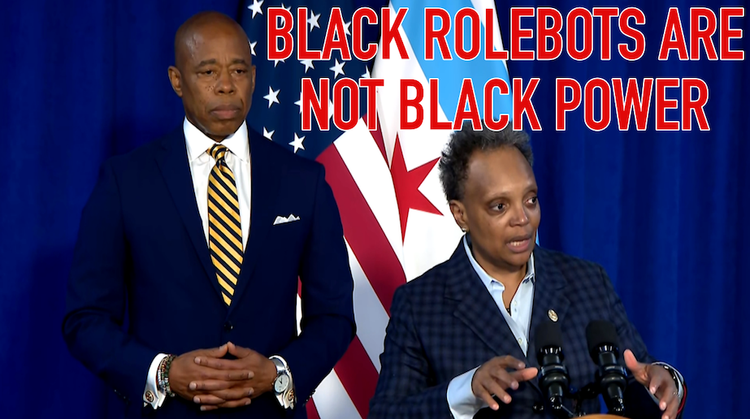
RACIST LIBERALS ARE ACCESSORIES TO CRIME. Note that all the cities discussed in this analysis from the Marshall Project are places dominated by elite white liberals; they control each jurisdiction’s major resources, utilities, industry, banks, media and own all major business, real estate and property, notwithstanding how many black rolebots hold political office or are placed into token leadership positions.

From [MARSHAL PROJECT] In Chicago, the race to get guns off the street often begins with a police stop.

Officers just need a pretext to search someone: A man in a white Ford Sedan blocking an alleyway. A bulge in a fanny pack at the beach. A man breathing heavily in a black Chevrolet Malibu as police approached. The smell of “fresh cannabis” wafting from an open window. Tinted windows. A missing license plate. Police reports show that the list goes on.

This article was published in partnership with WBEZ.

Authorities tout these arrests as an effective crime-fighting strategy. “Each gun recovered, regardless of how, is a potential life saved,” said former Chicago Police Superintendent David Brown in a press conference last year. It’s a common refrain repeated by officials from San Jose, California, to the small city of Utica, New York, as gun deaths rose across the country.

But in Chicago, a town labeled as “ChiRaq,” a “war zone,” and a “murder capital,” gun enforcement overwhelmingly focuses on possession crimes — not use.

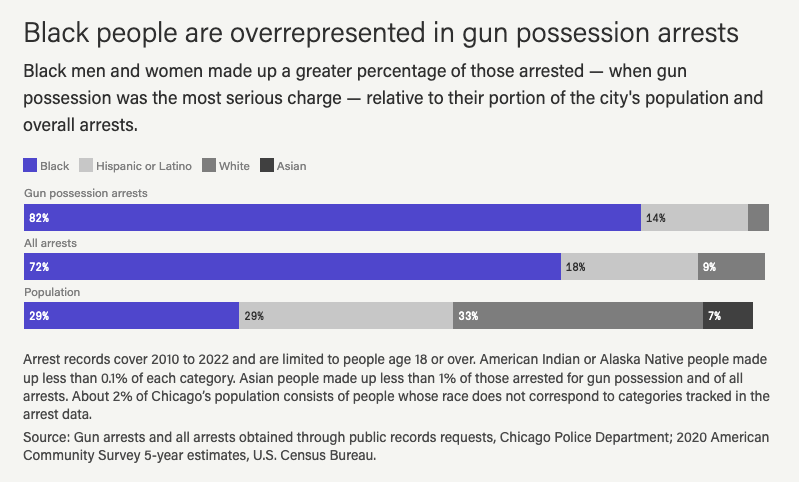
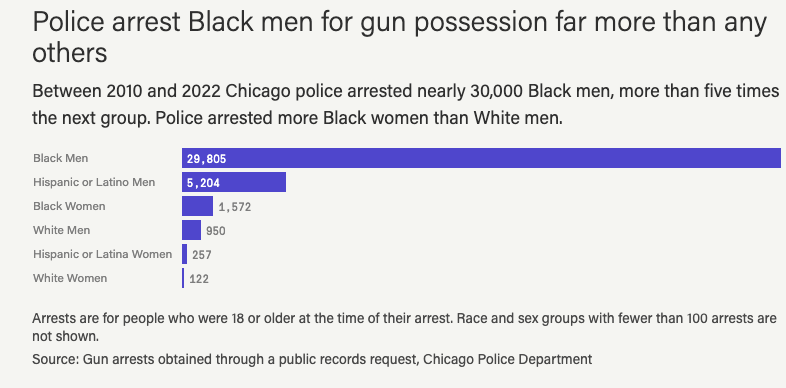
A Marshall Project analysis found that from 2010 to 2022, the police made more than 38,000 arrests for illegal gun possession. These arrests — almost always a felony — doubled during this timeframe. While illegal possession is the most serious offense in most of the cases we analyzed, the charges often bear misleading names that imply violence, like “aggravated unlawful use of a weapon.”

Recent research shows that most people convicted in Illinois for felony gun possession don’t go on to commit a violent crime, and the majority of those sentenced to prison for gun possession don’t have past convictions for violence. Instead, people who already committed violent crimes are more likely to do so again.

The racial disparities in this enforcement are glaring. Although Black people comprise less than a third of the city’s population, they were more than 8 in 10 of those arrested for unlawful possession in the timeframe we reviewed. The number of Black people arrested could fill every seat at a Chicago Bulls game and then some; the majority are men in their 20s and 30s.

The consequences of these arrests are long-lasting. If convicted, people face a year or more in prison, depending on the charges. Even without time behind bars, those we interviewed faced damning criminal records, time on probation, job loss, legal fees and car impoundments.

Officials justify the focus on confiscating guns — even if they are not being fired at anybody — as a way of curtailing violence. But these tactics have not substantially reduced shootings in Chicago. In fact, as possession arrests skyrocketed, shootings increased, but the percentage of shooting victims where someone was arrested in their case declined.

“Guns are not assembly-line cases, and they shouldn't be treated as such,” says Chris Hudspeth, 31, who has been incarcerated for illegal gun possession. “I’m scared for my life — and I gotta go to prison because I fear for my life, for my family’s safety? Because we’re not fortunate enough to live someplace else?”

The Chicago Police Department did not respond to repeated requests for an interview, nor did they comment on findings The Marshall Project shared with them. Gun arrest practices rest with the next mayor, whom voters will choose in an upcoming runoff election. The options are stark: Brandon Johnson, a Black county commissioner pitching police reform, and Paul Vallas, a White perennial candidate and veteran education official backed by the city’s police union. Despite running on seemingly different platforms, both mayoral candidates are suggesting tough-on-gun policies to address public safety.

For this article, we read nearly 300 arrest reports to understand the tactics police use to find guns, and compiled decades of police data showing a history of discriminatory gun enforcement. We conducted more than 100 interviews with people navigating gun cases, researchers, attorneys and community members. Our reporting focused on Chicago, given its struggles with gun violence despite strict firearm laws, but we identified several other cities with similar trends.

The Marshall Project found that widespread stops and gun possession arrests — and the inability of Chicago officials to show they are working — have parallels to other discredited strategies like “broken windows” policing, stop-and-frisk and the war on drugs.

“People are for ‘gun control’ but against ‘mass incarceration,’” said James Forman Jr., a professor at Yale Law School and author of “Locking Up Our Own: Crime and Punishment in Black America.” “They haven’t thought about how this particular form of gun control ends up helping to produce and sustain mass incarceration.”

In a country where guns are deeply intertwined with race, class and safety, discussions about them are often guided by politics and sensationalism. But as officials try to address street-level gun violence and prevent yet anothermass shooting, it’s important to understand how firearm laws play out in reality, upending deeply ingrained assumptions about guns, who should have them, and how laws are enforced.

On an unseasonably warm day last October, 29-year-old Elijah Hudson decided to drive to work rather than take the train. On his way to pick up his son from daycare that evening, he turned onto a wide stretch of road downtown before Chicago police pulled over his silver Hyundai Genesis for expired license plates, arrest reports show.

After he agreed to settle the ticket in court, body camera footage we reviewed of the arrest shows an officer asking Hudson, “What’s with the attitude?,” and then asking if he was a licensed gun owner.

“I just don’t know what that has to do with expired license plates,” Hudson responded, not answering the officer’s question.

To legally purchase a gun and carry it in public, Illinois residents need two licenses: a firearm owner’s permit that costs $11 online and a concealed carry card. These licenses are referred to locally as a FOID and a CCL. Since Chicago has no gun ranges within the city, residents have to travel to the suburbs to participate in half of the legally required 16 hours of training. All together, the process can cost upward of $300 in fees and take several months.
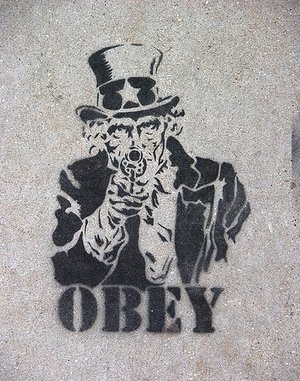
If a person lacks both licenses — or has a gun owner’s card but not a concealed carry permit — they can be arrested for illegal gun possession.

Officers quickly became frustrated with Hudson, the footage shows, as he continued to question the relevancy of guns for the traffic stop.

“It has to do with all of our safeties. If there’s a firearm in this vehicle — all of our safeties are at risk now,” said an officer near the passenger side.
Hudson explained that his Smith & Wesson pistol was in a computer bag on the passenger-side floorboard. While he and an arresting officer standing near the driver’s side window debated over the stop, at least five additional police vehicles and nearly a dozen officers arrived on the scene.

“If he doesn’t have a FOID or CCL, I’m breaking the window — just letting you know,” another officer remarked while checking Hudson’s credentials. When a bystander told the police he was recording the interaction, police footage shows the initial officer retrieving Hudson’s unloaded gun from a police vehicle and then showing it off for the pedestrian to see.

Once police confirmed that Hudson was, in fact, a fully licensed gun owner, they arrested him for refusing an officer’s order, refusing to disclose his gun, and for having expired license plates.

A judge dismissed his charges weeks later. “It was almost like an ‘aha!’ moment,” Hudson said in an interview. “What if they are predatorily stopping CCL owners, minority owners, and they’re trying to find ways to charge them with something so they can legally confiscate your firearm?”

In December, Hudson filed a complaint with the city’s police oversight agency and held a small press conference. “I want the officers to be disciplined, and I want people to see how they have a presumption of criminality if you’re dark-skinned in Chicago, and you have legal firearms,” he said.

Illegal possession charges make up the majority of gun arrests.

According to our analysis of these arrests from 2010 to 2022, White men were underrepresented, as were White women. Chicago’s population is roughly a third White, and nationwide surveys suggest gun ownership is far more common among men than women. But over the years of data we reviewed, Chicago police arrested fewer than 1,000 White men — and more than 1,500 Black women.

Hispanic men and women were also underrepresented. Although they also make up about one-third of the overall population, they account for a little over 1 out of every 10 arrested.

We found that Black people make up the majority of those arrested across Chicago, regardless of neighborhood demographics. Two areas that buck this trend include the city’s international airports, O’Hare and Midway, where Transportation Security Administration agents call police when someone brings a firearm through security. In these neighborhoods, White people were more likely to be arrested.

But even after decades of arrests and guns seized, research and crime data show that Black communities in Chicago still bear the brunt of gun violence. The majority of those killed are Black men in their 20s and 30s. When combined with persistent economic and chronic health inequities, Black residents’ lives are almost 10 years shorter on average than their non-Black counterparts. Defenders of the current tactics argue that because gun violence harms Black communities, the arrests for gun violence reflect not racial disparities in enforcement, but the reality of where violence takes place.

But Daniel Webster, a researcher who studies gun violence reduction at Johns Hopkins University, says possession cases shouldn’t overshadow larger problems like gun trafficking or illegal sales. He said it’s important to acknowledge the disparity in gun violence without justifying racial profiling.

Chicago police can make thousands of arrests each year because courts have given them broad discretion on when they can stop and search someone for firearms.

To see what this looks like in practice, The Marshall Project requested public documents outlining the Chicago police strategy for seizing guns. The department told us there were no memos, presentations or reports available.

So we focused on more than 225 gun arrests conducted over last year’s Memorial and Labor Day weekends. We picked these holidays because they tend to have a heightened police presence.

We found that the overwhelming majority of those arrested were Black men. Most people had no arrest warrants out, nor were they on supervised release, probation or suspected of being in a gang. In most of the incidents we analyzed, police were not responding to 911 calls about a person with a gun.

In arrests where possession was the most severe charge — about 140 of the cases — we found that more than 7 in 10 began with a simple traffic violation. After this initial stop, police often used some other justification for a search.

Officers often did this by citing the smell of marijuana. Although Illinois legalized cannabis in 2020, smoking while driving is still prohibited.

In a third of the stops, we found the person arrested had their gun owner’s permit, but not the license that allowed carrying the loaded gun in public.

Above easily replaceable, unpluggable BLACK ROLEBOT PROXYMORONS WHO DELIVER NOTHING OF TANGIBLE VALUE TO THE gullible BLACK VOTARY WHILE WORKING ON BEHALF OF ELITE RACISTS.

who is it cramming the jails and courtrooms with Blacks in NYC, LOS ANGELES, Milwaukee, Chicago, Columbus, Minnesota, Washington D.C., Philadelphia, Oakland, Atlanta, Kansas City, St. Louis, Detroit, New Orleans and others? Who is striking Blacks from juries? Who is evicting Black tenants from their homes for failure to pay rent during the government’s COVID lockdowns? Who is providing a servant (mis)education to black children? Who is running the public fool systems? Who is gentrifying neighborhoods, dislocating Black families, businesses and making blacks homeless? Who is failing to protect law abiding black people in their segregated communities and preventing them from arming themselves in self-defense from criminals? Who is surveilling, stopping, frisking, and searching law abiding Blacks at will on a daily basis? Whose police officers frequently brutalize and murder blacks with impunity? WHO IS TELLING BLACKS THAT RACISM/WHITE SUPREMACY IS ABOUT BIGOTRY, MEAN WORDS AND NOT ANY OF THE ABOVE?? The answer is racist liberals. Specifically, white liberal; judges, prosecutors, jurors, landlords, government authorities, administrators, police officers, school teachers, school administrators, real estate agents, bankers, doctors, business owners, creditors etc., in places where the majority of Black people reside in the US - liberal jurisdictions. [MORE]

“People in the Black community have now started to teach themselves to just comply, just do what the officers want so you can stay alive,” said Takenya Nixon, an assistant public defender. “It completely negates the fact that you have constitutional rights, and that you do not have to allow an officer to search a car, and you are well within your rights to question an officer.”

These arrests have cascading consequences. For those arrested during a traffic stop, we found that more than a third had their cars impounded and faced a $2,000 city fee, in addition to the daily storage fees private companies impose.

The arrest reports show that many people were cooperative with police when they asked about guns, even if they hesitated to answer. In some cases, they told police they had the gun for safety.

​​“He has the firearm for protection due to him being shot and robbed in the past,” police noted after one arrest. “Arrestee related that he was shot at two Mondays ago in an attempt[ed] carjacking where he was the victim,” another report reads.

New Haven Chief Recommends Firing Cop Accused of Intentionally Paralyzing Randy Cox. Black Man Arrested for Exercising His Right to Carry a Gun to Defend Himself w/o first Seeking Master’s Permission

BLACK CITIZEN ARRESTED ON JUNETEENTH FOR EXERCISING HIS SO-CALLED RIGHT TO CARRY A GUN TO DEFEND HIMSELF W/O MASTER’S PERMISSION IN THE FREE RANGE PRISON From [HERE] New Haven Police Chief Karl Jacobson announced on Tuesday he is recommending the firing of four police officers involved in the transportation incident that left a Black man paralyzed from the chest down.

On June 2022, Randy Cox, 36, was arrested on suspicion of illegally possessing a handgun. After his arrest, officers transported Cox in a police van but failed to strap him in properly. Video of the van ride shows Cox, who was handcuffed, being tossed around the van after the vehicle came to an abrupt stop. Five officers were arrested and charged with second-degree reckless endangerment in November. Surprisingly enough, four of the five officers who are facing possible termination have been on paid administrative leave since the incident.  

Officer Oscar Diaz, Officer Jocelyn Lavandier, Officer Luis Rivera and Sgt. Betsy Segui have been on administrative leave since the Randy Cox incident.

The fifth officer, Ronald Pressley, retired right after Cox was paralyzed and isn’t part of Chief Jacobson’s recommendation. According to Chief Jacobson, an internal affairs investigation was completed March 6, which lead to Jacobson’s recommendation. Two other people will also be disciplined for their roles in the incident but will not be identified to the public.

“If we gave Randy a voice that day when he said he was injured, we wouldn’t be here today,” Jacobson said in a press conference. “If we treated him with dignity, we might not be here today. If we were neutral in our decision-making when he said he was injured, we might not be here today.”

Hearings of the four recommended terminations will take place as soon as late April.

On Juneteenth of this year, Richard “Randy” Cox was arrested and charged with carrying a firearm without a permit, criminal possession of a firearm and two misdemeanors, all of which were ultimately dropped.

It’s likely the video footage from the arrest and showing the inside of the police van while Cox rode played a role in the charges being dropped. Crump, who first posted the video on social media back in June, suggested Cox’s injuries were sustained as a result of apparent implicit bias on the part of the arresting officers.

'All Fairfax Cops Knew About Timothy Johnson was that He was Black, Male, Unarmed, Posed No Imminent Threat to Them and Allegedly Stole Some SunGlasses- but that was Enough Info to Execute Him'

From [HERE] The family of Timothy McCree Johnson, an unarmed Black man fatally shot by Fairfax County police outside Tysons Corner Center last month, watched body-camera footage of his killing. Their lawyer asserted afterward that the video showed Johnson had posed no threat to law enforcement.

“The best way to describe the video is to say first what was not on it,” said Carl Crews, an attorney for the family, after viewing the footage Wednesday. “What it doesn’t show: danger. It doesn’t show the officers faced any danger — imminent or otherwise.”

Crews said he and the family watched eight minutes of the Feb. 22 footage, ending with Sgt. Wesley Shifflett and Officer First Class James Sadler firing at Johnson, 37, who authorities have said was suspected of stealing designer sunglasses at the mall nearby. The Fairfax County Police Department is planning to release the footage publicly on Thursday afternoon.

Crews said the footage showed Shifflett, who was in uniform, and Sadler, who was in plain clothes, attempting to stop Johnson after the suspected theft and chasing him on foot into a wooded area. He said the officers can be heard telling Johnson to stop running and to lie down before they shoot him.

Crews said it was unclear to see who fired and when, though police have previously said that both officers fired shots and that Johnson was struck once in the chest. Authorities said he was taken to a hospital, where he died.

“This was an execution by Fairfax County police officers,” Crews said.

Police declined to comment on remarks made by the Johnson family Wednesday, but they confirmed the meeting occurred. The footage was from a body camera worn by Shifflett.

Melissa Johnson, Timothy Johnson’s mother, said that she could not describe specific details from the footage and that it was difficult to process and make sense of what she saw.

“No parent should have to view the killing of their child and then be asked to give remarks,” Melissa Johnson said. “However, here we are. And here I stand.”

Melissa Johnson said she hoped the court system would provide justice for her son, who she previously said was a father of two and an artist who had hoped to start his own clothing line. Timothy Johnson’s killing was an opportunity for the community to right systemic failures and racial bias, she said, adding that when police first investigated the case, she felt he had been painted in a negative light. Police did not say initially that Timothy Johnson was unarmed and indicated that they were searching the woods for evidence before later confirming that no weapon had been recovered. The police chief also referenced his criminal history.

“They drew their guns, fired and shot and killed him,” Melissa Johnson said. “And the only thing that they knew was that he was accused of allegedly taking a pair of sunglasses. Officer Sadler and Shifflett did not know his name, did not know his age, did not know where he went to school, did not know the names of his children or anything about his past — personal or judicial — history. The only thing they knew was that he was Black and male.”

SF Sleeping Toms Indulge in “PrioriTease” Reparations Talk for 5% Black Populace Rather than Engage in the Hard Work of Economic Development or Confront the Many Problems Caused by White Supremacy

Discussing, meeting, thoughting and writing about reparations is what FUNKTIONARY describes as prioritease – things that lull or lure one into procrastination—thereby inhibiting one from Taking care OF business. Hoping and prioritease ENABLE gullible Blacks to go on sleepwalking AS THEY SIMULTANEOUSLY cooperatE with racism white supremacy and ARE conditionED to aCCEPT A white over black system of vast unequal power, YET ALL THE while they believe they are ‘fighting the power.’

According TO FUNKTIONARY:

prioritease – things that lull or lure one into procrastination—thereby inhibiting one from getting on with the rhythm for fear of losing (or taking care of) the business. (See: Fleshback, Quickdraw, Realitease, Dimwit, Pulldozer & Cosmic Block)

ostrichisma belief that knowledge ignored does not exist and cannot affect anyone. (See: Bra, Ignorance & Stupidity)

From [HERE] By putting a dollar amount on historical wrongs, Black politicians, activists and residents are pressing San Francisco to live up to its progressive image.

“The world is watching,” said Tinisch Hollins, the vice chair of the city’s reparations committee, which has produced a controversial report that has garnered nationwide headlines.

With the city confronting a reparations price tag that could well be in the billions, hostilities to the effort have exposed long-standing rifts in this city of extreme wealth — and wealth disparity. Home to dozens of billionaires, many of whom earned their riches in the region’s famed technology sector, San Francisco has persistently struggled with homelessness and crime. [MORE]

Gov May Use Reparations to Induce Blacks to Provide Info about Themselves, Federal Forms May Ask About Ancestry [Reparations are a diversionary trick to enable Blacks to tolerate present conditions]

From [HERE] The U.S. government is considering asking Black Americans on federal forms, including the census, whether their ancestors were enslaved.

In a proposed update to how the government tracks Americans’ race and ethnicity, the Biden administration is asking the public for input on how it might go about differentiating Black people who are descendants of slaves in America from those whose families arrived more recently as immigrants from sub-Saharan Africa, the Caribbean or other countries.

The idea of adding more-detailed categories to the census has been gaining currency among some Black Americans, who say society too often conflates their experiences with those of Black immigrants, who only started moving to the U.S. in meaningful numbers in the past few decades. Roughly one in five Black people in the U.S. are immigrants or their children, according to an analysis by the nonpartisan Pew Research Center.

Supporters of the change say one reason they are pushing it is to quantify who would be eligible to receive reparations for slavery should the government ever agree to pay them. An effort to make such payments has stalled in Congress, though local efforts have gained some steam. In San Francisco, the city’s Board of Supervisors is debating a proposal to award eligible Black residents up to $5 million per person in restitution, one of a menu of preliminary recommendations that include free homes, guaranteed incomes and debt and tax relief.

Research by the Federal Reserve Bank of Minneapolis and by researchers at Duke University, among others, shows that Black Americans whose ancestors were enslaved tend to lag behind in wealth and education compared with more-recent arrivals. [MORE]