Supreme Court to Decide Whether So-Called 4th Amendment Rights Can Prevent the IRS from Secretly Combing Through Bank Records

From [HERE] Fresh off a new injection of $45 billion to ramp up its enforcement efforts, the IRS is calling on the U.S. Supreme Court to allow its agents to secretly obtain financial records, without ever notifying the account holders. Although the case, which will be argued in March, centers around an arcane statutory dispute, it will have massive implications for the Fourth Amendment rights of taxpayers nationwide.

Now a broad coalition from all across the political spectrum, including the ACLU, the Cato Institute, the Center for Taxpayer Rights, the Institute for Justice, and the U.S. Chamber of Commerce, is urging the Supreme Court to limit the IRS’s power.

If the Supreme Court sides with the IRS, the ruling would grant the agency “effectively unfettered power to seek the complete financial records of anyone with even a tenuous connection to a delinquent taxpayer,” the Institute for Justice warned in its amicus brief. Worse, the IRS could “comb through these third parties’ most sensitive financial records without their knowledge, let alone any opportunity to object.” In fact, “the agency may demand the production of anyone’s most private financial records based on no standard other than that some government agent wants to see them.”

Unfortunately, this is not hypothetical or hyperbole. The case started when an IRS agent suspected that Remo Polselli had been concealing his assets through bank accounts held in his wife’s name. The agent then sent summonses to Hanna Karcho Polselli’s bank as well as to the banks for two law firm Remo had patronized.

Those summonses ordered that the banks “appear before” the IRS “to give testimony” and “to produce for examination...all bank statements relative to the accounts” for Hanna and those law firms. Despite this massive intrusion into their financial privacy, the IRS didn’t even bother to send notice to the two firms or Hanna that it had demanded access to reams of their banking records.

“The problem isn’t just that the government’s rule is un-American or that the IRS fancies itself the NSA,” they argued in their brief. “An IRS agent doesn’t get to secretly comb through years of law-firm bank records—and all the attorney-client information they contain—just because he thinks doing so might be convenient.”

Under federal law, the IRS does have broad power to subpoena personal financial information from third-party record keepers. But the IRS is also required to send notice to “any person…identified in the summons.”

Once notified, those affected can petition a federal court to quash the summons. But if an individual wasn’t notified, they can’t quash the summons. In turn, that effectively renders them powerless to prevent their own records from being handed over. Simply put, providing notice is key to ensure due process and to preserve financial privacy. [MORE]

Senate Bill Forces Appliance Makers to Reveal Spy Devices In Fridges, Washing Machines

From [HERE] A Senate bill forces manufacturers to tell the public if their appliances – such as televisions and refrigerators – are spying on them with hidden microphones and cameras.

The bill, the Informing Consumers about Smart Devices Act, targets so-called ‘smart devices’ that are capable of recording conversations and tracking people inside their own homes. 

“American consumers should be aware when their appliances and everyday tech products have the capability to record them through microphones and cameras – let alone the ability to transmit through Wi-Fi,” said Sen. Ted Cruz (R-Texas) who co-introduced the bill with Democratic Sen. Maria Cantwell of Washington.

“I’m proud to help author this bipartisan solution to help safeguard the privacy and security of American homes.”

The bill has already passed the US House and is set for a full Senate vote.

“It’s estimated that by 2026, over 84 million households will have smart devices – providing connection and control over everything from your air conditioning to your air fryer,” Cantwell said. “Yet, most consumers expect their refrigerators to keep the milk cold, not record their most personal and private family discussions.” [MORE]

Critics Warn of ‘a Dragnet of Surveillance’ as US Pushes Ahead with Plans for More ‘Smart’ Cities

From [HERE] U.S. Transportation Secretary Pete Buttigieg last week announced $94 million in grant awards to fund 59 smart city technology projects across the country.

Despite widespread and mounting pushback against biometric surveillance and control systems associated with smart city technologies and the failure of the U.S. Department of Transportation’s (DOT) previous attempt to grant-fund smart city transformation in Columbus, Ohio, Buttigieg told The Verge he thinks “smart city technologies matter more than ever.”

Cities just need to take a different approach — experimenting with and testing out different technologies first, rather than implementing a “grand unified system” all at once, Buttigieg said.

The new grants, part of the Strengthening Mobility and Revolutionizing Transportation (SMART) Grants Program, are the first round of $500 million in funding that will be awarded for smaller smart mobility projects over the next five years, authorized under the 2021 Bipartisan Infrastructure Law.

In this funding round, DOT awarded smart grants for a range of projects, including drone surveillance or delivery, smart traffic signals, connected vehicles, autonomous vehicles, smart grid development, intelligent sensors and other Internet of Things (IoT) infrastructure. Some cities, including Los Angeles (LA), received multiple grants.

Smart city development typically focuses on the implementation of technologies like the IoT, 5G, cloud and edge computing, and biometric surveillance to track, manage, control and extract profit from an array of urban processes.

Whitney Webb, an investigative journalist and smart cities critic, said the smart city infrastructureis meant to facilitate the development of cities “micromanaged by technocrats via an all-encompassing system of mass surveillance and a vast array of ‘internet of things’ devices that provide a constant and massive stream of data that is analyzed by artificial intelligence (AI).”

‘Concept of a sensor in every home doesn’t look as shiny as it once did’

Smart city projects began gaining traction in the U.S. in 2015, boosted by a program launched by then-DOT Secretary Anthony Foxx. Foxx, who went on to become the chief policy officer for Lyft, now works at Tulco, a data science venture capital firm. Foxx created the “Smart City Challenge,” which offered a $50 million grant to the mid-sized city with the best proposal to remake their city as a “smart city.”

Vulcan LLC, an investment and philanthropic organization dedicated to materializing the vision of Microsoft co-founder Paul Allen and whose profit-making services focus on real estate development, partly funded the federal grant.

Columbus, Ohio, beat out 77 other cities with its “revolutionary” proposal, but the project was by most accounts a failure — expensive trip-planning kiosks erected downtown were never used, autonomous shuttles had accidents, the public transportation platform was rarely downloaded and sensor-connected trucks failed to materialize.

Then, in May 2020, another paradigmatic smart city model project failed when Google smart city subsidiary Sidewalk Labs scrapped plans to build a smart city prototype in Toronto amid public outcry about surveillance and profiteering.

According to The Globe and Mail, Eric Schmidt, former head of Google parent company Alphabet, described the project in these terms:

“The genesis of the thinking for Sidewalk Labs came from Google’s founders getting excited thinking of ‘all the things you could do if someone would just give us a city and put us in charge.’”

Visions like these raised a lot of flags among both experts and the general public.

Even one of the smart city concept’s biggest promoters, Wired Magazine, admitted that skepticism about smart cities had grown:

“Today, as citizens think more carefully about tech-enabled surveillance, the concept of a sensor in every home doesn’t look as shiny as it once did.”

San Francisco banned government use of facial recognition software. And Amazon is facing a class action lawsuit in New York City for failing to comply with the city’s law that businesses must inform customers if they are harvesting their biometric data.

New York is one of several cities that have passed biometric laws. Several states, including Texas, Washington and Illinois also passed similar lawsNick Corbishly reported in Naked Capitalism.

Global market for smart cities projected to reach $696 billion by 2028

But pushback hasn’t stopped tech visionaries and states from moving forward with smart development projects. The global Smart Cities Market is projected to grow to $696 billion by 2028, growing from $467 billion in 2022, according to a market research report published Monday.

Webb reported that soon after Schmidt commented on the vision behind the Toronto smart city, then-New York Gov. Andrew Cuomo tapped him to lead an effort to reimagine post-pandemic life in the state, building smart city infrastructure through partnerships with the Israeli government.

In fact, the COVID-19 lockdowns led to a series of positive PR pieces promoting the implementation of smart cities and several conferences “re-imagining” them.

It also led to a series of academic and technical papers promoting the potential of smart cities to be beneficial during a pandemic by tracking travel patterns using cellphone data, facilitating delivery start-ups, using the IoT to create the “antivirus-built environment,” using AI and big data to control and predict virus outbreaks and generally “seizing the moment to ‘build back better’ and re-imagine cities that are more resilient, inclusive, and sustainable,” according to the Center for Strategic and International Studies.

Smart city pilot projects continue to proliferate. In Japan, Toyota is building Woven City, a 175-acre prototype, where people and things are completely connected through data and sensors. The project will test new technologies, such as automated driving, robotics and AI in a “real-world environment.”

Researchers are studying residents of neighborhoods in Helsinki and Amsterdam who added smart technology to their homes and using the information to help with the development of “experimental innovation platforms.”

Even small towns like Cary, North Carolina, have turned themselves into smart cities by deploying IoT sensors that “collect data and enable analytics to provide actionable insights” across the entire city.

In Busan, South Korea, The New York Times reported Tuesday, 54 families are subjecting every aspect of their lives to data collection so developers can use their behavior as a basis to build a smart city “from the ground up.” [MORE]
GA Police Relied on Hidden Facial Recognition Technology to Falsely Arrest and Lock Up the Wrong Black Man

From [HERE] On the Friday afternoon after Thanksgiving, Randal Quran Reid was driving his white Jeep to his mother’s home outside Atlanta when he was pulled over on a busy highway. A police officer approached his vehicle and asked for his driver’s license. Reid had left it at home, but he volunteered his name. After asking Reid if he had any weapons, the officer told him to step out of the Jeep and handcuffed him with the help of two other officers who had arrived. 

“What did I do?” Reid asked. The officer said he had two theft warrants out of Baton Rouge and Jefferson Parish, a district on the outskirts of New Orleans. Reid was confused; he said he had never been to Louisiana.

Reid, a transportation analyst, was booked at the DeKalb County jail, to await extradition from Georgia to Louisiana. It took days to find out exactly what he was accused of: using stolen credit cards to buy designer purses.

“I’m locked up for something I have no clue about,” Reid, 29, said.

His parents made phone calls, hired lawyers and spent thousands of dollars to figure out why the police thought he was responsible for the crime, eventually discovering it was because Reid bore a resemblance to a suspect who had been recorded by a surveillance camera. The case eventually fell apart, and the warrants were recalled, but only after Reid spent six days in jail and missed a week of work. 

Reid’s wrongful arrest appears to be the result of a cascade of technologies — beginning with a bad facial recognition match — that are intended to make policing more effective and efficient but can also make it far too easy to apprehend the wrong person for a crime. None of the technologies are mentioned in official documents, and Reid was not told exactly why he had been arrested, a typical but troubling practice, according to legal experts and public defenders.

“In a democratic society, we should know what tools are being used to police us,” said Jennifer Granick, a lawyer at the American Civil Liberties Union.

A Contract With Clearview AI

In a panic, Reid’s family immediately retained an Atlanta lawyer from the Cochran Firm. He could not get Reid out of jail, and he struggled to gather more information. He suggested that the family members hire someone in Louisiana, so they cold-called law firms in Jefferson Parish and Baton Rouge until they found Thomas Calogero, a criminal defense lawyer. They retained him that Sunday. 

Calogero found out that Reid was accused of the summer thefts of two Chanel purses and a brown Louis Vuitton bag, collectively worth almost $13,000, from Second Act, a consignment store on the outskirts of New Orleans. Calogero went to the store and talked to the owner, who showed him a still from a surveillance camera. He realized that one of the alleged fraudsters looked like Reid, but the man was heavier. 

“The guy had big arms, and my client doesn’t,” Calogero said. A Jefferson Parish sheriff’s officer insisted it was a “positive match,” language that made Calogero believe that facial recognition technology had been used, and he spoke to the New Orleans news outlet NOLA.com about what he believed had happened. 

A person with direct knowledge of the investigation confirmed to The New York Times that facial recognition technology had been used to identify Reid. Yet none of the documents used to arrest him disclosed that.

Andrew Bartholomew, the Jefferson Parish financial crimes detective who sought the warrant to arrest Reid, wrote in an affidavit only that he had been “advised by a credible source” that the “heavyset black male” was Reid. Reached by phone, Bartholomew declined to comment. [MORE]

Authorities Using the Fear of Crime to Take Away Black People’s Imaginary 4th Amendment Rights: Liar Richmond Police Claim the Purpose of Using Cameras to Watch People 24-7 is Safety

From [HERE] In late February, the Richmond Police Department responded to a shooting in a West Broad Street alley that left a 24-year-old man dead. Eleven days later, the department announced it had made an arrest.

While the typical homicide can take months or even years to solve, police managed to make an arrest in days — a feat made possible, officials said, through technology.

Interim Police Chief Rick Edwards said the department used video footage from cameras across the city to identify a vehicle, run the license plate number and find a suspect.

With backing from the state, promised investments from the city and Edwards’ data-driven policing plan, this could become a regular occurrence as the department makes strides into the digital age.

While the introduction of newer, more advanced technology could result in faster arrests, some groups, including civil rights activists and data researchers, have raised concerns. They allege that such programs, if not conducted properly, could reinforce systemic racism, hurt communities and infringe on Fourth Amendment rights.

Matt Callahan, a senior attorney with the Virginia branch of the American Civil Liberties Union, said the use of technology in policing can be a slippery slope and should raise Fourth Amendment concerns. With the implementation of surveillance cameras and license plate readers, Callahan said there could be more arrests, and that some people may not know how they were apprehended or if surveillance played a part in their arrests.

“I think one of the really insidious things about these predictive policing tools that categorize people into threat levels, based on something other than a criminal record, is that people don’t always know that they’re being affected by it,” Callahan said. “It really threatens the kind of freedoms that our democracy is built on.” [MORE]

Trilateral Commission calls 2023 'Year One' of New World Order

From [HERE] As retired foreign ministers, ambassadors, CEOs, bankers and academics gathered at the secretive Trilateral Commission's first global plenary meeting in India, perhaps the most influential individual sat quietly off to the side, listening.

James Baker, director of the Pentagon's Office of Net Assessment, was not even on the list of participants at the Taj Palace Hotel in New Delhi. But his takeaways from the meeting could find their way into policies that shape the world.

Baker is the successor to legendary defense strategist Andrew Marshall, who headed the office for 42 years. He is responsible for providing the Secretary of Defense with an assessment of U.S. military capabilities relative to other actors 20 to 30 years down the road.

One particular speech may have caught Baker's attention, for it captured the essence of the three-day discussion, held from Friday through Sunday. "The Biden administration is trying to convince the world that there is this titanic struggle between autocracies and democracies. I am skeptical about that," a speaker said. Instead, the world is fragmented, with countries -- including the U.S. -- looking out for their self-interests, the speaker added.

The Trilateral Commission is a nongovernmental organization that seeks to deepen understanding between the U.S., Europe and Asia. [MORE]

Take It in the Face! Lathered Up ElectoRant Has TrumpGasm as Massa'Bator DA Kicks Off '24 Campaign by Filing Indictment Over Payments to a Porno Ho, but are Dems Only Screwing Themselves?

MASSA’BATOR DA gains prestige among white liberals while doing little for black people. CONTRARY TO CONSERVATIVE MEDIA TALKING POINTS, ALVIN BRAGG IS NOT SOFT ON CRIME, AT LEAST IN REGARD TO BLACK PEOPLE. IN FACT HIS OFFICE IS FILLING UP MANHATTAN COURTROOMS AND RIKERS ISLAND JAIL WITH BLACK PEOPLE. BOB GANGI, DIRECTOR OF THE POLICE REFORM ORGANIZING PROJECT AND LONGTIME COURT WATCHER, SAYS HE’S SEEN LITTLE CHANGE FROM HIS PERSPECTIVE IN THE BACK ROW OF MANHATTAN ARRAIGNMENTS.

“THEY WERE STILL PROSECUTING LOW-LEVEL BROKEN-WINDOWS TYPE CASES, IT SEEMED TO US, AS OFTEN AS VANCE’S OFFICE WOULD DO,” GANGI SAID, REFERRING TO BRAGG’S IMMEDIATE PREDECESSOR AS MANHATTAN ATTORNEY GENERAL, CY VANCE JR. [MORE].

RATHER, ON BEHALF OF his white liberal masters, MR. BRAGG’S DA OFFICE IN MANHATTAN — ONE OF THE WEALTHIEST AND LEAST EQUAL PLACES IN THE COUNTRY — HAS CONVICTED BLACK PEOPLE OF FELONIES AND MISDEMEANORS AT A RATE 21 TIMES GREATER THAN THAT OF WHITE PEOPLE OVER THE PAST TWO DECADES. THIS DISPARITY IS THE LARGEST OF ANY COUNTY IN THE STATE. [MORE] THAT IS, BRAGG IS SOFT ON WHITE LIBERALS WHO COMMIT CRIMES. APPARENTLY NOTHING HAS CHANGED SINCE HIS ELECTION.

GULLIBLE conservativeS misunderstand; THE EMASCULATED BLACK VOTARY REALLY getS nothing for ITS vote. AS A  Pork Chop Boy, BRAGG’S ONLY GOAL IS TO GAIN PRESTIGE AMONG HIS WHITE LIBERAL MASTERS. WHITE Democrats know they WON’T suffer ANY sanctions from IGNORING AND DOING NOTHING FOR POWERLESS, AGREEABLE blacks, WHO VOTE ONLY AGAINST REPUBLICANS AND VOTE FOR NOTHING ELSE. [MORE]

FUCKED FOR FREE? From [HERE] That Thursday’s indictment wouldn’t have been brought against any other member of the human race can be divined almost as readily by listening to a Democratic commentator as a Republican one.

There are issues of the statute of limitations, issues of selective prosecution, issues of overreach in tying the Stormy Daniels payment to an alleged campaign-finance offense the feds themselves declined to prosecute.

The original event of Bragg’s case — Trump’s brief liaison with Stormy Daniels — happened 17 years ago, in 2006. [MORE] Hush payments may be sleazy, but they are legal. The violation of the law in the Daniels payment may have been in how it was logged in the Trump Organization accounts. The payment was agreed to near the end of the 2016 campaign, and then–Trump fixer Michael Cohen paid it with his own funds and Trump reimbursed him across 2017. In the Trump Organization books, the payments were called legal expenses, suggesting that they were for ongoing legal work. [MORE]

The stretch by Manhattan District Attorney Alvin Bragg in today’s unique political context demands attention. No, not the novelty of Mr. Trump being the first ex-president to be indicted. The bigger twist: It can hardly be exaggerated how expertly Joe Biden and Democrats have navigated themselves down a funnel from which the only escape is Mr. Trump being next year’s GOP nominee. 

The sensible analyst Greg Valliere speculated on Bloomberg TV on Friday that the indictment would improve Mr. Trump’s chance of winning the nomination while weakening his chance of winning the general election. 

This is a hole-in-one for Mr. Biden. Any other scenario and he would be perceived to be in a deep hole by his own party. He’s got the worst inflation in 40 years, a banking crisis and a possible recession in the offing, never mind the age issue. But even a ham sandwich might have a good chance of beating Mr. Trump. Mr. Biden is the Democrats’ ham sandwich. [MORE]

According to FUNKTIONARY:

The Electorant – the willfully ignorant electorate—the suckers (voters and “taxpayers”) who delegate and abdicate their power to elected and appointed officials (employees) and the system through which voters’ will is subverted through statutes, laws and policies not approved or even known in the election process. The ‘electorant’ are always ranting and raving about their sordid and assorted conditions when they are responsible for them by being ignorant of the nature of delegated power and its effect, i.e., arbitrary power wielded with impunity and State-sanctioned immunity. The electorant have no recourse but to fuss and talk about change—utterly clueless. All power of the State resides in those who hold the purse strings. Control of the “money” is in the hands of those who further use it to corrupt others in order for one to retain power (dynastic banking cartel families) and the other to remain in power (politician). It is a symbiotic racket and one that continues unabated. (See: Voters, GEO-Dollars, “Monetized Debt,” Federal Reserve System, Willful Ignorance, Political Money, Gangbanking, Elections, MONEY, S&M Banking, Taxpayers, Second Tax, Dumbing-Down, Colonized Mind & Citizens of the United States)

The Do-Gooders – that most dangerous tribe of pseudo-moralists armed with ignorance and golden rulers. The do-gooders absence of the true nature of Self (the ‘I Am,’) strengthen all the forces of illusion and collusion and ensure the continuity to the realm of unreality for the sleep-walking masses. “The world suffers most from the disinterested tyranny of its well-wisher.” - Rabinath Tagore. (See: Status-Quoticians & The Golden Rule)

More Evidence of Alabama Prison Corruption and Misconduct as Another Cop is Charged with a Felony

From [HERE] Another Alabama prison official has been arrested after evidence of corruption, misconduct, and illegal activity was uncovered.

A corrections officer at Easterling Correctional Facility in Barbour County, Alabama, was arrested this week on charges of promoting prison contraband and using his office for personal gain.

Quindarious Thagard, 27, told an Alabama Department of Corrections agent that he had agreed to bring in contraband—including 32 cell phones, five earbuds, paper soaked in an unidentified substance, 18 magnets, a gold chain, and a phone charger—in exchange for $10,000, the Montgomery Advertiser reported.

He told investigators that he brought the items into the prison in a clear backpack and left it in the guard tower, according to the Advertiser. He was booked in the Barbour County jail on Sunday and later released on $7,500 bond, the paper reported.

Mr. Thagard has resigned from ADOC, where he had worked since 2019, the Advertiser reported.

He faces up to 10 years in prison or a $15,000 fine for promoting prison contraband, which is a felony.

Mr. Thagard is one of several Alabama correctional officers arrested in recent months on charges that include bribery, conspiracy to distribute a controlled substance, promoting prison contraband, and assault, the Advertiser reported.

Alabama’s prisons are facing a crisis of violence and abusive treatment driven by overcrowding, staff shortages, and leadership failures.

ADOC’s vacancy rate in security staffing was recently reported to be 63.6%.

In 2022, 270 people died in Alabama’s prisons—the most  on record in a calendar year for Alabama, according to the Montgomery Advertiser. That includes at least 19 homicides.

More than one in five deaths in Alabama’s prisons were due to homicide, suicide, or drug overdose.

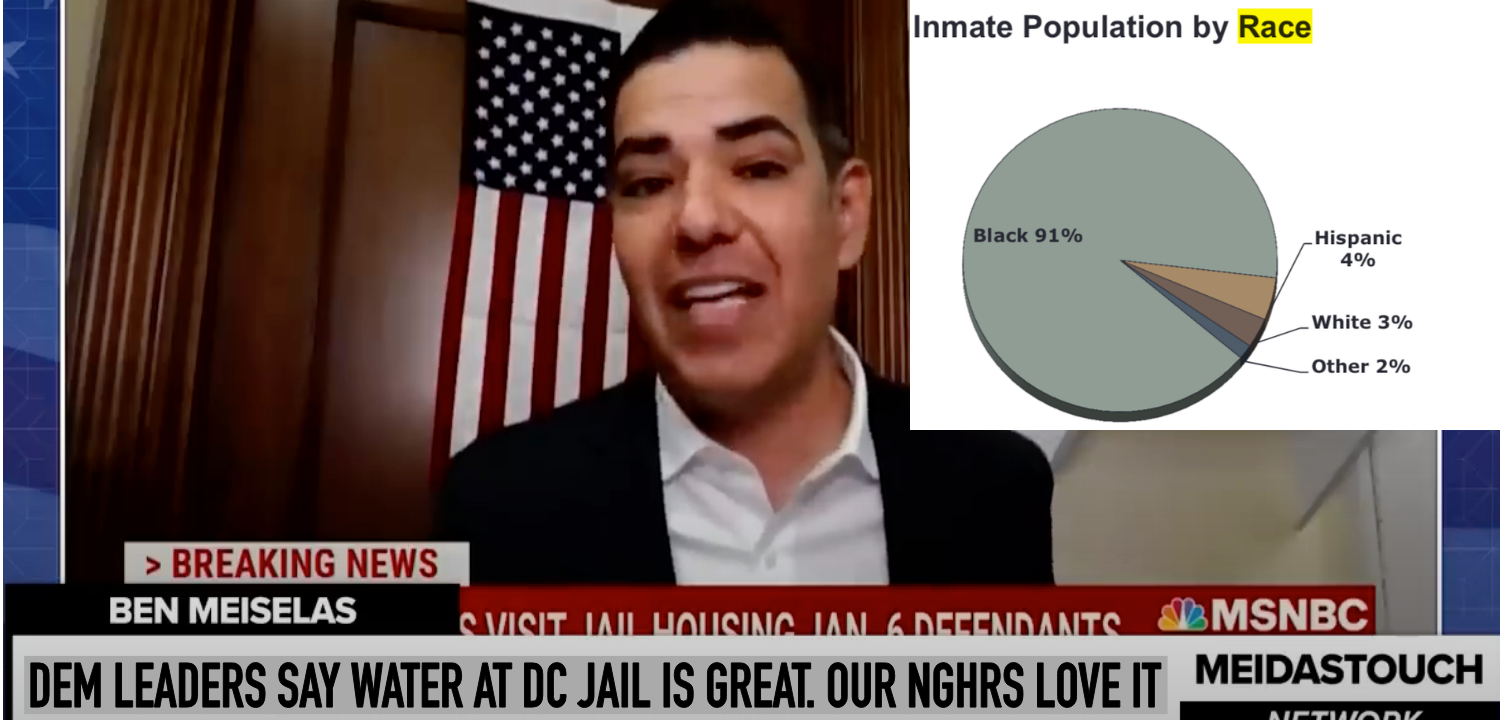
After Visiting J6 Defendants Marjorie Taylor Greene Seeks Investigation of Inhumane Conditions @ DC Jail (Lacks Water, Showers, 1st Aid). Liberals Defend Overcrowded Jail They’ve Filled w/Blacks (90%)

Rep Marjorie Taylor Greene called for an investigation into the D.C. detention facility and its alleged “two-tiered justice system.” [MORE] and [MORE] Previously she released a report about the conditions at the jail called Unusually Cruel. During here recent visit to the jail she stated that she was prevented from seeing any non-Jan 6th defendants. Apparently, the J6 defendants have now been moved and segregated from the general population. DC Jail is known to be dangerous and kept in a foul state by the elite liberals who run it. [MORE]

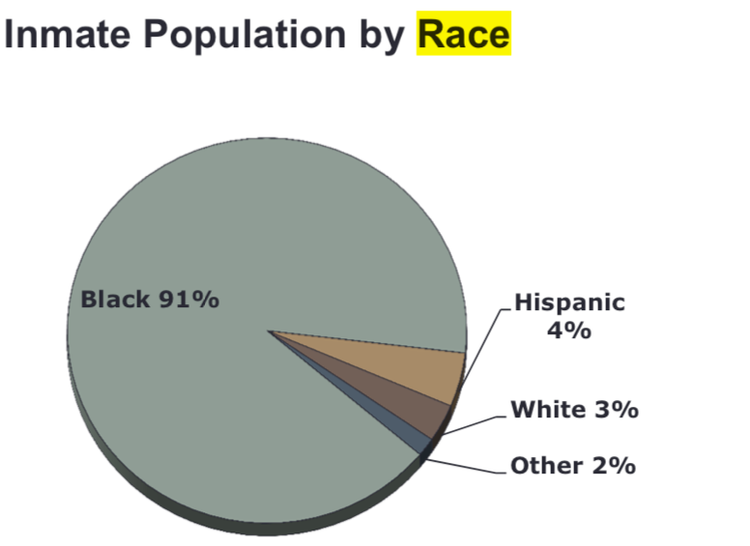
DC Jail is 91% Black. Although the percentage of the overall Black population in DC has decreased, the percentage of incarcerated Blacks, particularly Black men, has remained relatively high and stable since 1990. [MORE] The vast majority of inmates are held pre-trial. All trials have been subject to postponements because of COVID. Felony trials in some cases are being set in 2024 due to the busy calendars of prosecutors, courts and defense attorneys. [MORE] and [MORE] This means persons held pre-trial and presumed innocent must wait for trial in this reprehensible jail run by liberals. [who do you think has jammed the jail with Blacks? Do republican klansman-like judges and prosecutors run the courts or police force?? DC is 95% liberal and white liberal prosecutors/judges and their rolebotic servant Blacks are responsible, - just as they are in many places where Blacks try to live]

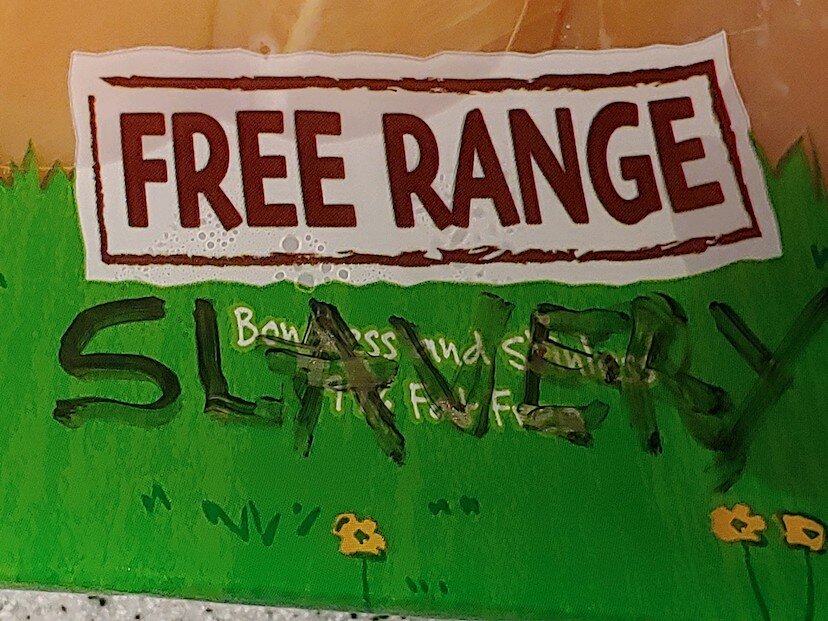
Lack of Evidence Doesn’t Bother Sheople Entertained by Alex Murdaugh’s Conviction. But It Means Anyone Can be Made Guilty Based on GPS/Car Data and Info off "Cell Phones" in the ‘Free Range Prison’

From [HERE] As I watched the gripping murder trial of the prominent South Carolina attorney Alex Murdaugh over the last few weeks, I found myself wrestling with difficult questions about how data from smartphones and other digital technologies should be relied upon in the criminal justice system. We are all being constantly and intimately tracked by our gadgets, but the voluminous records produced by these devices are not always easy to interpret.
In the Murdaugh case, arguments by both the prosecution and the defense involved loads of data, and both sides raised important points about what the digital records prove and do not prove in a high-stakes case — and I expected a jury to have a hard time getting to the bottom of these issues.

Well, apparently not. The Murdaugh trial lasted almost six weeks. The prosecution and defense called more than 70 witnesses. The jury began deliberating after lunch on Thursday and reached a verdict by dinnertime. I have little quarrel with its decision, but the lightning speed with which it came to its conclusion — about three hours — makes me deeply uncomfortable with how the criminal justice system might deal with all of the digital effluvia being spewed by our devices. Unlike the jury, apparently, I worry that the evidence our devices produce can just as easily muddy the picture of a crime as clarify it.

Britt Dove, a South Carolina law enforcement officer, testified about cellphone data at Murdaugh’s trial.Credit...Pool photo by Joshua Boucher

Murdaugh was convicted of shooting to death his wife, Maggie, and their 22-year-old son, Paul, near the dog kennels on the family’s vast estate in Colleton County, S.C., in June 2021. There were no witnesses, and the police found little forensic evidence to tie Murdaugh to the crime. They did not recover any murder weapons or any blood-soaked clothing; and because the murders occurred on Murdaugh’s property and he touched the bodies when he discovered them (he says he felt Paul for a pulse and touched Maggie on her waist), the evidence of his DNA found at the scene proves little.

Instead, the prosecution’s case stood on two pillars. First, Alex Murdaugh’s dishonesty and crookedness — he has admitted to stealing millions from his clients and law partners and lying about his actions to almost everyone, including to the police in this case. (Prosecutors say he killed his wife and son to distract from his financial crimes, a theory I found dubious — the murders only added to the scrutiny.)

Second, prosecutors reconstructed a tight timeline of the crime using lots and lots of data. Among other sources, they extracted information from Alex, Maggie and Paul Murdaugh’s iPhones, call records of family and friends, location and speed data from Murdaugh’s S.U.V., entry logs from his office security system, images from automatic license plate readers mounted on public roads, communications on social networks and messaging apps, reams of financial data and video and audio recorded on Murdaugh’s 911 call and by police officers at the scene.

It isn’t surprising that authorities would mine such data to determine basic facts like who was where and when, but prosecutors in the Murdaugh case claimed to find many deeper truths in the digital record. And it’s in their interpretations of the data that they sometimes lost me. Often, they seemed to be finding patterns in the data that didn’t necessarily hold true, and this made me wary that the authorities can build outlandish stories from our data.

For instance, the victims’ time of death. The county coroner saidMaggie and Paul were killed between 8 p.m. and 10 p.m. on June 7, 2021. To get a more precise time for the killings, prosecutors pointed to the victims’ phone usage. Paul was known to be always looking at his phone, and both Paul and Maggie’s phones were last unlocked at around 8:49 p.m. that night. And so, prosecutors argued, Maggie and Paul must have died just after 8:49 — what else but death could have kept them from responding to incoming texts?

An 8:49 time of death put Alex Murdaugh in deep trouble. His voice was recorded on a Snapchat video captured by Paul at the kennels around 8:45 p.m. that night — in other words, Alex would have been at the scene of the crime just minutes before the victims’ time of death. Murdaugh initially told the police he had not been at the kennels around that time and only admitted he had been there after the Snapchat video was found. (He explained that his addiction to opioids had driven a paranoia that had caused him to lie.)

Prosecutors claimed to see much more in the data. Murdaugh’s iPhone didn’t record him taking any steps between 8:09 p.m. and 9:02 p.m. that night. Since he too was known to be always glued to his phone, did his hour of nonactivity show he had deliberately stashed his phone so it wouldn’t show him going to the dog kennels during the murders? Then, at 9:02 p.m., Murdaugh’s phone recorded a flurry of activity — lots of phone calls, lots of steps walked. Was this evidence that he was “manufacturing an alibi” to show that he was otherwise occupied around the time of the murders, as the prosecution argued?

Murdaugh’s car was also scrutinized. Murdaugh says that on the night of the murders, he drove to and from his mother’s house (his mother has Alzheimer’s disease, and he and others in the family often dropped in to check on her). Tracking data provided by General Motors’ OnStar service showed that Murdough’s Chevy Suburban did indeed drive to and from his mother’s house at the time. But on his way there, Murdaugh hit a top speed of more than 70 miles per hour. Why was he going so fast, prosecutors wondered — was he speeding to flee the murder scene as fast as he could? Later, at his mother’s house, Murdaugh’s phone data showed him walking around outside for several minutes. Why? Was he trying to hide something?

Come on — really? I can see how some of these details can paint a pretty damning picture when put together on a neat timeline. But I expected the jury to spend some time pondering the perfectly innocuous explanations for many of them.

By 8:49 p.m. Paul Murdaugh’s phone battery was down to 2 percent — wouldn’t that have been a perfectly good reason for him to put down his phone? And while Maggie Murdaugh’s phone was not unlocked after 8:49, it did record some usage after that time — its backlight went on and off, its orientation changed from sideways to vertical and it recorded moving about 59 steps. Did that mean Maggie was not yet dead? Or that the killer was moving her phone? (It was found using Apple’s “find my phone” feature the day after the murders on the side of the road leading to the Murdaugh property; the prosecution alleged he threw her phone out of his car on his way to his mother’s house.) To complicate matters, both Alex and his brother testified that it was Alex who provided the police with the password to Maggie’s phone — but if Alex knew Maggie’s password, why didn’t he unlock her phone after the killing, if he was the murderer, just to complicate the time of death?

Also, if Alex Murdaugh was speeding away from his house to flee the crime scene, why did he drive at more than 80 miles per hour on the way back from his mother’s house? Could it be that he just had a heavy foot?

Then there’s all the walking and phone calling he did at around 9 p.m. and later at his mom’s house — couldn’t he have just been pacing while on the phone, something I find myself doing all the time? Could it also be possible that his phone’s step data was inaccurate? Studies have found that the iPhone’s activity measurements are far from perfect. When I’m on a plane, my iPhone sometimes thinks I’m driving; when I’m in a car, my Apple Watch sometimes praises me for working out. Why should we believe these devices are good enough for a murder conviction?

Murdaugh’s speedy guilty verdict suggests that the legal system may have a hard time teasing out such complexities. Murdaugh’s defense team pointed out some of these issues, but because technology is complicated and its idiosyncrasies difficult to explain — and most likely because Alex Murdaugh’s lies were tough to explain away — their arguments clearly did not land.

Yes, our devices now capture everything about what everyone is doing, but making sense of that data isn’t trivial. In the Murdaugh case, both sides pointed to the digital record — but by the end of the trial, I felt like I had no real idea what actually happened. The jury was hardly so cautious. [MORE]

Did the Government Set Fire to the Mexican Immigration Jail, Murdering 38 People? Video Shows Cops Calmly Flee w/o Attempting to Free Any People Locked in Burning Cells at Political Border Jail

According to FUNKTIONARY:

borders – arbitrary geopolitical abstractions—economic and cultural impediments and surprisingly ineradicable. 2) imaginary geographic distinctions and occult political restrictions. Borders are what allows fences (internetworks of stolen goods) to be erected and trafficked through. (See: Corporate State, Political Borders & States)

political borders – arbitrarily delineated and enforced geographical boundaries of power for a nation-state and rule over the people within those boundaries. “Within a nation-state, title to land demarcates boundary of ownership for the private individual. By creating ownership of, or claim to land, ipso facto, creates both political and occult value by preventing use and/or occupation of land by those who whish or mean to do so. Those with intent to occupy land may do so only through purchase or conquest. In this lose/lose scenario, either choice is demeaning. By contrast, aboriginal peoples who are more in touch with spirituality believe they belong to the land, they do not own the land.” ~John Casperson.

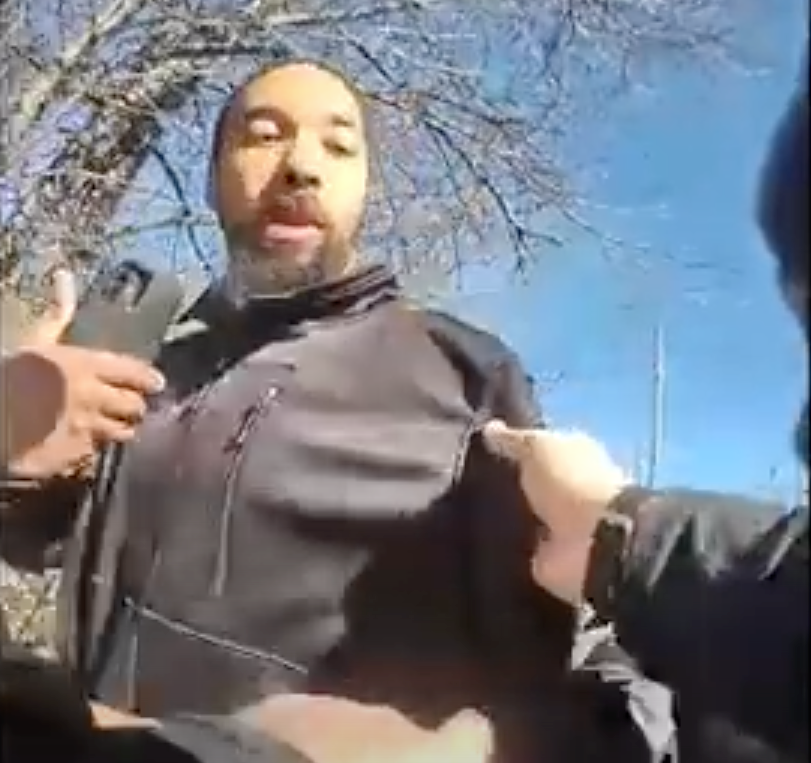
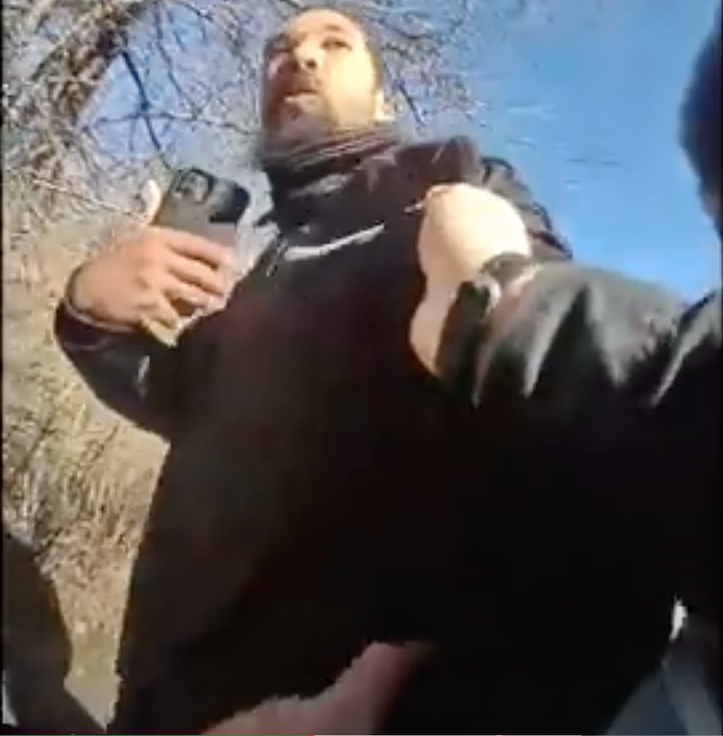
Attorney Says a Black Man “Schooled” a WVA Cop After an Unlawful Stop. In Reality, the Black Man Had to Obey Authority b/c There are No Real Choices in the Free Range Prison. "Rights" Protect Nobody

RIGHTS and LEFTS. In the video above The Civil Rights Lawyer claims that the Black man schooled the white cop about his rights. Here, the attorney has confused “freedom” with an authority giving you permission to do something – master’s favors best described as adherent rights.

adherent rights – privileges disguised as so-called “rights” created by men via deceptive word-manipulation in written form called “symbolaeography,” and legal documents. 2) privileges granted by an apparent or putative authority at the expense of one's inherent or unalienable ‘rights.’ (See: Inherent Rights & Rights) - FUNKTIONARY

The Civil Rights Lawyer writes “February 13, 2023, Jacob Jackson is walking down a public sidewalk in Beckley, West Virginia. A uniformed sheriff’s deputy pulls up in a marked police cruiser and activates his emergency lights. The reason? He has civil service papers to serve related to an eviction proceeding. Jacob asserts his rights. The deputy asserts what he believes to be his rights as a police officer. Can a police officer forcibly detain you, ID you, search you, put his hands on you, just because he has civil paperwork to serve on someone? Even if you’ve done nothing illegal?” The attorney goes on to explain that the initial stop was absolutely unlawful because it violated Mr. Jackson’s 4th Amendment Rights - he was not engaged in a crime and the white cop had no rational reason to believe he was. The cop also had no reason to touch him, interrogate him, demand his name and continue to detain the Black man against his volition.

But he did though. His imaginary rights didn’t protect him, nor did they stop the cop. At some point during their forced interaction the Black man realizes that he’s not actually having an arms length conversation with an equal member of society. He’s talking to his public master. The cop will let him go if he so desires and the cop will be the decider of all things decided during their argument and the black man will be required to obey. Mr. Jackson seems aware that he has no meaningful choices and no independent opportunity to secure a different outcome by continuing to talk to the cop. He can either 1) obey authority or 2) go to jail or face physical violence. Within 10 minutes Mr. Jackson is coerced into complying with the cop to avoid the fuckery; he tells the cop his name and accepts service of the court papers.

The Civil Rights Lawyer is correct about Constitutional legal truths inside law books. But all truths must give way to reality. Brazen cops so frequently abuse their power that no Black shopper, pedestrian, motorist, juvenile, adult or Black professional of any kind—could make a rational argument that so-called constitutional rights provide any real protection from cops or the government in general. The only thing upholding the 4th Amendment is your belief in it. You only have rights if an authority says that you do or agrees that you do. Your possession of "rights” given to you by a magical government, which functions as your master, is cult belief. In reality, as explained by Dr. Blynd, “There is no freedom in the presence of so-called authority.” Authority is force. Jeremy Locke explains, “There is no authority on earth that can rightfully govern your life. Born to this world, you and you alone control your eyes, your ears, your tongue, your hands and your mind. All authority which claims to be able to dispose of you and your abilities is deceit. . . Anyone who tells you that you must yield your mind, your body, or your possessions to authority is evil.”

Rights are myths or a device to conceal the true nature of relations between the government and its citizens.

The legal system is based entirely on physical coercion. In general, all laws or commands are backed by the threat of violence against those who do not comply – here, violence means forced confiscation of property [payment of fines] or arrest or prison. Said threat of violence includes the ability and willingness of authorities to use deadly force against those who disobey. Michael Huemer spells out the mechanics of it,

‘force and violence are the final intervention that the individual cannot choose to defy. One can choose not to pay a fine, one can choose to drive without a license, and one can even choose not to walk to a police car to be taken away. But one cannot choose not to be subjected to physical force if the agents of the state decide to impose it.” [MORE]
Citizens can either obey authority or go to jail. The lie of tyranny is that you will maintain your freedom by obeying authority. The choices it offers you are a lifetime of obedience or death.“ [MORE] Government and it’s “services” are not voluntary and individuals cannot opt out or reject government services or choose to live without government – rather, we are born into this involuntary arrangement.

In the video Mr. Jackson knew he couldn’t walk away from the police. He had no choice but to comply with authority and he did. FUNKTIONARY calls this a “Hobson’s Choice – you can either get with this or nothing at all.” Obey or go to jail or die. In fact, The Civil Rights Lawyer would make the same legal arguments about Mr. Jackson’s so-called 4th Amendment rights if he had been paralyzed or shot to death by the cop while resisting the unlawful stop. Said “constitutional rights” protect no one.

The video speaks for itself when it’s viewed through the lens of reality not the abstraction of “authority.” It shows a white man approach and stop a Black man who was minding his own business. The white man wore a blue costume and the Black man did not. The Black man posed no threat to the costumed man. The costumed man was not acting in self-defense of himself or another person or in defense of property when he stopped, non-consensually touched and forcibly controlled the Black man’s freedom of movement. Nor was the interaction voluntary and consensual as the Black man was not free to leave without being subjected to violence. It is obvious that if a non-costumed person had walked up to the Black man and done the same thing -demand identification or face violence- then he would be considered a deranged criminal. Here however, both parties are actually engaged in role play: both pretended that the costumed man, a so-called ‘police officer’ had the power to control and direct the Black man who acted as a ‘citizen,’ a person who voluntarily consented to this “optional” arrangement. Both play out their respective roles no differently than children playing “house” or any other make believe games. Both roles are acted out according to their common agreement about reality or what FUNKTIONARY describes as a “consensus reality” in which; the costumed man had power over the Black man because as a police officer he was a representative of a fiction called government, and thus imagined to have powers to do things that citizens cannot do (such as order you to stop on the street) and are exempt from morality, laws and the normal rules of accountability when they do so. Within this consensus reality the costumed man believes he has the power to stop the Black citizen in the street to give him a document (a summons) and the Black citizen believes that although he has the right to be free from unlawful seizures, he still must comply with police orders. The cop believes there are legal or constitutional boundaries to what he can do, but on the street he is the sole decider of his discretionary power. Legal questions only arise out of these roles as set forth in their consensus reality (the constitution, laws). We already know that if the interaction was between two citizens, Mr. Jackson could simply ignore the white man and/or defend himself if the white man tried to stop or threaten him.

The officer’s implied right to rule over and forcibly control the citizen acted out in the video is called “authority.” All people play out the above roles in their daily relations with government agents or representatives of authority in different contexts. Like Mr. Jackson, citizens dutifully fulfill their roles because they believe there is some substantive, actual and valid unarticulated basis for their belief in authority. That is, they believe there is some solid legitimate reason the government is in charge of citizens and some legitimate reason for them to obey government authorities.

However, what if there is no rational basis for authority? What if there is no legitimate basis for the government to make and enforce rules for the rest of society and no legitimate basis for citizens to obey authority?

If there is no valid basis for authority then when the costumed man interfered with the Black man’s freedom of movement and then detained him against his own volition he was engaged in thuggery, not just bad police work. When the costumed man forcefully touched the Black man he committed a criminal assault and when he prevented him from leaving he committed felony threats to do significant bodily harm. If there is no valid basis for authority then the consensus reality that the costumed man can forcibly control the Black man’s movement within certain bounds is actually a form of slavery. Like a prisoner claiming to be the warden of a prison or a child claiming to be the parent, simply asserting that you are a higher authority cannot somehow legitimately endow you with superior power to rule over others. Nor can putting on a blue costume give an individual an exemption from morality or transform a person’s conduct from unlawful to lawful.

FUNKTIONARY describes this role play as delusional and a “deadly theatrical (tragicomedy) game” because in reality no one has legitimately acquired the right to rule over them. Authority, which is the basis for all governments throughout the world, is a complete farce, make believe. In reality there is no rational basis for the existence of authority,” it is based on brute force and nothing else.

The belief in authority is a farce because people cannot delegate powers to the government that they do not possess.

All persons have the natural right to defend themselves and come to the defense of others if they believe another person is in imminent danger from an aggressor. Private security workers and guards also work under said natural law. In contrast, police officers and other representatives of authority have the extra or added “power” to act offensively as aggressors; they have been granted the power to use force offensively on people or initiate unprovoked acts of violence against people whenever they deem it necessary. As such, police are permitted to do things “citizens” cannot do, such as, stop individuals, touch them against their will, attack (make arrests) people, interfere with their freedoms in many ways, kidnap people (detain and transport) or imprison them all because higher authorities have empowered them to do so. In turn, “citizens” are said to have a moral and legal obligation to obey all government orders, laws and have no right to even resist an unlawful arrest in most states. Authority must be obeyed on a content-neutral basis (regardless of whether citizens agree or not.) [MORE] This hypothesized moral property (authority) is said to make government the supreme authority over human affairs.

However, “authority” does not come from people nor is it derived from any natural source. All governmental power allegedly is said to come exclusively from the people. Citizens delegate their individual power to government and it’s representatives for them to represent citizens and act on their behalf. Such representation works much in the same way agents represent principals in all kinds of business or other contractual relationships. For instance, a manager at McDonalds represents the franchise owner when she carries out his everyday business requests, like ordering inventory and hiring workers, etc. She is the agent, the owner is the principal who empowers and directs her work and is responsible for her conduct. Naturally, an agent only can possess whatever powers the principal gave to her. For instance, the Manager does not have the authority to sell the store unless the owner granted her such power. Similarly, the McDonalds manager could not have the power to do things that the franchise owner has no power to do - such as change the McDonalds logo to a black panther or use another business’ parking lot for storage. Additionally, numbers don’t change anything – a group of McDonald’s owners still don’t have the power to grant an agent the power to use another business’ parking lot either. An agent cannot have more power than the principal because all his/her power necessarily originated exclusively from the principal. Additionally

In the case of government however, the government has somehow granted itself the power to do things that no individual citizen could ever do. While citizens have the inalienable right to act in self-defense or come to the defense of others, citizens have no right to initiate unprovoked acts of violence (use force offensively) on other people and no right to forcibly control other people. As such, it is logically impossible for citizens to delegate the power to forcibly control others to the government - because citizens cannot possibly delegate rights that they don’t have.

Larken Rose explains, ‘the people whom the politicians claim to represent have no right to do anything that politicians do: impose “taxes,” enact “laws,” etc. Average citizens have no right to forcibly control the choices of their neighbors, tell them how to live their lives, and punish them if they disobey, So when a “government” does such things, it is not representing anyone or anything but itself.’ As stated, it is a logical and legal impossibility for a representative to have more power than the person he is representing. Larken Rose explains, “you can’t give someone something you don’t have.” There is nothing complicated about this. Rose states;

“Despite all of the complex rituals and convoluted rationalizations, all modern belief in “government” rests on the notion that mere mortals can, through certain political procedures, bestow upon some people various rights which none of the people possessed to begin with. The inherent lunacy of such a notion should be obvious. There is no ritual or document through which any group of people can delegate to someone else a right which no one in the group possesses. And that self-evident truth, all by itself, demolishes any possibility of legitimate “government.”

Rose further explains if

those in “government” have only those rights possessed by those who elected them, then “government” loses the one ingredient that makes it “government”: the right to rule over others (”authority”). If it has the same rights and powers as everyone else, there is no reason to call it “government.” If the politicians have no more rights than you have, all of their demands and commands, all of their political rituals, “law” books, courts, and so on, amount to nothing more than the symptoms of a profound delusional psychosis. Nothing they do can have any legitimacy, any more than if you did the same thing on your own, unless they somehow acquired rights that you do not have. And that is impossible, since no one on earth, and no group of people on earth, could possibly have given them such superhuman rights.

The point here is not a theoretical discussion about the purpose of government or how it should run. Rather, it is the fact that there is no valid justification for one man (or government) to have supreme authority over another. Although we all assume that there is some valid explanation for why the government should be entitled to engage in behavior that would be deemed to violate individual rights if performed by anyone other than the government, there is none.

Other explanations for authority have been thoroughly debunked.

SOCIAL CONTRACT THEORY. How about the social contract theory - the idea that there is a contract between people and the government in which the government protects the people and enforces the laws, in exchange for citizens obedience and taxes? That is, individuals have contractually agreed to obey the government and must do so and the government is obliged to provide services and protection. However, if such an agreement exists, WHEN DID YOU SIGN IT? We were born into this arrangement, no one signed anything. Yet we are bound to obey authority. Therefore, there is no contract and no social contract exists.

At any rate, the so called “public duty” doctrine renders the “social contract theory” meaningless. Decades ago the Supreme Court ruled that a government and its agents are under no general duty to provide public services, such as police protection, to any particular individual citizen. It means for instance that police have no legal duty to protect any victim from violence by other private parties unless the victim was in police custody. [MORE] and [MORE] This means that police cannot be sued for any federal constitutional claim for a failure to protect citizens. Unless a state negligence law exists allowing such a lawsuit, victims cannot hold police liable for a failure to protect from harm from private parties. [MORE] and [MORE].

Pursuant to the social contract, citizens are contractually obliged to obey all laws and commands and when they fail to do so the government punishes the citizen, usually with fines or imprisonment. However, authorities are bound to do whatever they want to do, whenever they want to do it and to whom they choose, but no one in particular. Dr. Blynd asks “Makes you feel like a fool, doesn’t it?” There is no contract between the individual and the state. It is device or trick to control the populace.

IMPLICIT AGREEMENT. What about an implicit agreement to obey authority - where we are deemed from birth to have agreed to obey authority until we decline, opt out or reject it? This proposition is also an illusion because whether you reject or object to authority you must obey authority regardless. You have no real choice in the matter. Like a plantation system, there is no way to opt out and avoid being a slave subject to another (authority) plantation owner.

AGREEMENT BY ACCEPTING BENEFITS. Perhaps authority is made legitimate when citizens agree to accept the benefits provided by government, such as public schools or police “service?” For the same reasons no one has an implicit contract with the government. Government authority is not made legitimate through acceptance of benefits. Whether a person accepts the benefits of government or not, all persons are still subject to the laws and required to obey authority.

CONSENT BY PRESENCE. How about consent to authority by simply remaining in a particular location - consent by presence on the land? In other words, in order to remain on your own land then you must pay a government and obey laws to do so. Said theory means governments own all land and property everywhere government exists. According to such clogic as stated by Huemer, “Those seeking to avoid all governmental jurisdiction have three options: they may live in the ocean, move to Antarctica, or commit suicide.” [MORE]
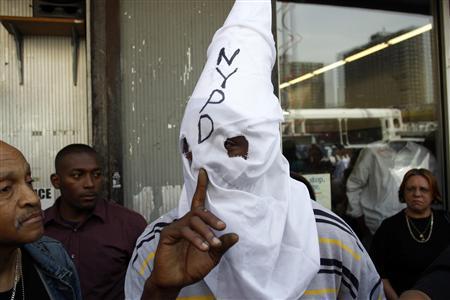
Larken Rose explains, “To tell someone that his only valid choices are either to leave the “country” or to abide by whatever commands the politicians issue logically implies that everything in the “country” is the property of the politicians. If a person can spend year after year paying for his home, or even building it himself, and his choices are still to either obey the politicians or get out, that means that his house and the time and effort he invested in the house are the property of the politicians. And for one person’s time and effort to rightfully belong to another is the definition of slavery. That is exactly what the “implied consent” theory means: that every “country” is a huge slave plantation, and that everything and everyone there is the property of the politicians. And, of course, the master does not need the consent of his slave.”

It is also obviously circular thinking to say ‘the government has authority over everything and everybody because it has authority over everything and everybody’ - such statement may indeed be the case but it cannot be a justification for the legitimacy of authority in the first place.

CONSENT THRU PARTICIPATION. Finally, does consent through participation make government authority legitimate or valid? Not at all. “If you didn’t vote in the election, would you then not have to obey the laws made by whoever wins? Of course not. You will be subject to the same laws whether you vote or not.” [MORE]

MAGIC WORDS, CAPES & CEREMONIES. It should also go without saying but there is no magic ceremony, special costumes to put on, voting process or magic statements (oaths) which can grant certain people extra-human powers to rule over other people, exempt them from morality, accountability and do things which no individual or group of individuals can do.

—-

Therefore, in summary there is no rational basis for authority, the implied right to forcibly control others. No person(s) or entity has the right to rule over other human beings. No one is obliged to obey a command merely because it comes from their government.

FUNKTIONARY explains that government means “control of the mind” and “authority is the means by which society uses to control its population.” Trent Goodbaudy describes this is as a “statist delusion.” Statist, within the meaning of FUNKTIONARY means “the belief “citizens” and “states” exist and the memetic thought patterns supporting such beliefs.” Goodbaudy states, “We are stuck in an illusory construct that only exists in a diseased psyche. There really are no rulers and no masters anyway; just claims of authority, and acceptance of these claims by the brainwashed. There really is no government other than what you choose to be governed by: they only have the authority that you grant them.”

In reality, persons do not actually live under “democracies” or “republics” or monarchies or dictatorships. Said descriptions or characterizations are designed to conceal the reality of an elite ruling class and the master/servant relations it has with its citizens. In the United States and everywhere else government exists, Rose states “there is a ruling class and a subject class, and the differences between them are many and obvious. One group commands, the other obeys. One group demands huge sums of money, the other group pays. One group tells the other group where they can live, where they can work, what they can eat, what they can drink, what they can drive, who they can work for, what work they can do, and so on. One group takes and spends trillions of dollars of what the other group earns. One group consists entirely of economic parasites, while the efforts of the other group produce all the wealth. It is patently obvious who commands and who obeys. The people are not the “government,” by any stretch of the imagination, and it requires profound denial to believe otherwise. For example, it is also claimed that “the government works for us; it is our servant.” Again, such statements does not even remotely match the obvious reality of the situation; it is little more than a cult mantra, a delusion intentionally programmed into the populace in order to twist their view of reality.”

Within the “consensus reality” (a consensus manufactured through programming and the social conditioning of the masses) various other fictions and devices are used to disguise the reality of the master-servant relationship. Devices such as “consent of the governed,” “we are the government,” “democracy,” “representative government,” “majority rule,” and “constitutional rights” etc. According to FUNKTIONARY these ‘fictions lead only to a progressive social, personal, racial and jurisprudential separation from reality.’ Dr. Blynd states, “discussion and debates about fictions such as “rights” merely evades the FAQ, i.e., the frequently avoided question of who is to enforce any “right” and who will benefit from the pretense?”

As explained by FUNKTIONARY,“Government” is simply, unequivocally, and always initiation of force or coercion and nothing else. “While there are varying degrees, “government” very simply is “one man violently controlling the life and property of another man.” Governmental rule based on authority cannot be voluntary or consensual.

The legal discussion of whether Mr. Jackson had any “rights” in his relations on the street with his public master will be ultimately decided by higher authorities (judges, police chief, prosecutors) who are in control of us because they said so. In fact, the head of the state police was forced to resign over the incident and now the Governor and the feds are involved and may take action (to maintain our belief in the existence of rights) as said higher authorities see fit. If you still have doubt about your status as ‘a citizen’ ask yourself the following question: If another person, such as a police officer, is uncontrollable by you, unaccountable to you, can’t be hired or fired by you, has irresponsible power over you and provides a compulsory “service” to you that cannot ever decline, isn’t he your Master? Dr. Blynd states, "The child who is taught to believe the law will be his protection is the child who will become the victim of its own beliefs."  "Unquestioned beliefs own you."

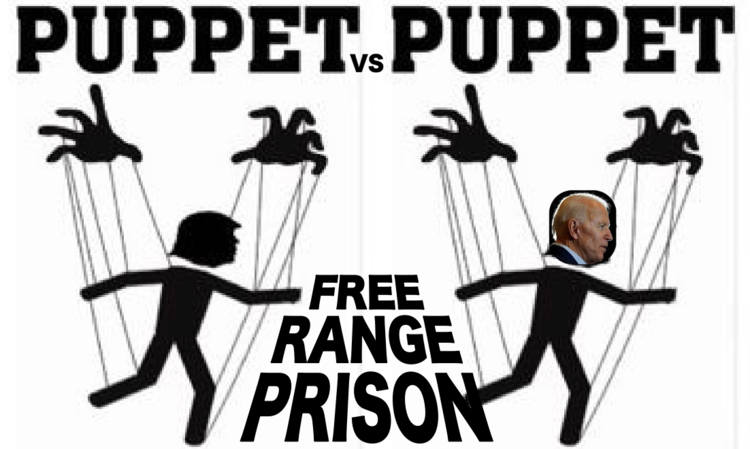
FUNKTIONARY explains that although there are different brands and flavors of “government” across the ideological spectrum, it is more accurate to describe such systems as “free range plantations” or “free range prisons.” The inhabitants of such “jurisdictions” are “free range slaves” or “free range prisoners.” Some prisons or plantations are more restrictive than others but all “citizens” within them are subject to an implied authority. Slaves or prisoners in the Free Range Prison may face greater or lesser restrictions depending upon their income, status or race but none are free.

Whether individuals choose to be willing slaves (citizens) or unwilling slaves (denizens) depends upon how aware they are of their true reality and their response to it.

Nevertheless, there is no need to revolt against authority. Authority is only a belief that must be dropped. FUNKTIONARY states, ‘there are no tyrants only tyranny exists. How can one man or woman rule a multitude against their will except through mind-control and word-conditioning control?’

“The real threat to "authority" is the masses overcoming info-gaps and verigaps through self-knowledge and the proliferation of symbols of opposition, not crime or destruction of property.” FUNKTIONARY explains, “We don’t violently overthrow government, rather we silently and organically outgrow it in its current form as we know it. Where there is no energy for conflict upon which to feed, it starves itself into oblivion or becomes malnourished to the point of ineffectual irrelevance.”

Where a critical mass of individuals see authority for what it is – an irrational, self-contradictory, evil, granfalloon, contrary to civilization and morality that “constitutes the most dangerous, destructive superstition that has ever existed”- they will drop it like a wooden coin or unwanted vaccine.

According to Dr. Blynd:

"rights" - useful fictions declared in order to make agents of another type of fiction ("government") have to play along in their deadly theatrical (tragicomedy) game. 2) mere fictions, the contemplation of which leads only to a progressive social, personal, racial and jurisprudential separation from reality. Discussion and debates about "rights" merely evades the FAQ, i.e., the frequently avoided question of who is to enforce any "right" and who will benefit from the pretense. "Rights" are separated into two categories—those flowing from "negative liberties" and those flowing from "positive liberties." In law, rights are remedies and if a person is without a remedy (as is with citizens of the United States) he is without a right, and only a 'thing' is without rights. (See: Negative Liberties, Positive Liberties, Bill of Rights, Civil Rights, Human Rights, Ma'at & Justice)

rights - fantasmatic or fictitious objects having no reality in actuality by those imagining as an identity being in possession of them. Rights are cultural gratuities perceived through various fantasy frames, recognized, and sometimes even created, by man's system of law to provide a modicum or pretense of civility under a system whereby their very undermining and violation is vouchsafed. Rights are merely rites unless you know how to assert and defend them in order to enjoy them. 2) things people are free to do whether they are able to or not. 3) conditions of existence required by hue-man's nature for their potential survival (primarily against the cartoon that kills, i.e., the wholly unconscionable entity called the "State"). It is a mistaken notion that rights are enjoyed by one at the expense of the many—that is the realm of privilege. Enjoyment of rights in a neo-imperialistic world controlled by Yurugu through the Greater System (Symbolic Order), paradoxically, entails not only a recognition of their inevitability but, equally, their impossibility. How can we be endowed with rights, or even know what rights are when they are based on binary considerations? Rights, as ontological ephemera, cannot be universally observed, recognized, realized or, enforced—and paradoxically, act also as its own eternal source for its assertion and vessel for its fulfillment in our imaginary enjoyment of them. While the law reads rights referentially, what is universally needed in the praxis of rights discourse today is a particular re-inscription, demystification or reontologising of rights (revivified and convivial) by the pan-gendered subject-citizen-decoder—taken symptomatically rather than seriously. Most people rarely experience the cognizance of being property of corporate fictions because as long as you don't violate the rules of society your real status as feudal-property-slave is no: involved or revealed. [MORE]
consensus – the hypnotic communal cultural trance—the collective psychosis. 2) a common agreement about reality. 3) an artificial overlay or semantic screen (filter) that obfuscates the clarity of our subjective reality. 4) a search for an acceptable myth. 5) an opinion or position no one really likes, but everyone is seemingly able to live with it or through it. It is impossible to ever find (or experience) reality by consensus. Consensus is the art of conning the group—Con-Sense-Us— you con. Consensus has nothing to do with census, but with common sense, albeit mostly manufactured through programming and social conditioning of the masses. In consensus, the participants take part in the decision-making process on an ongoing basis and exercise real control over their daily lives. Consensus fosters and upholds freedom and accountability while allowing each participant to retain his or her own autonomy. Autonomous individuals can cooperate without agreeing on a shared agenda, so long as everyone benefits from everyone else’s participation without constraint, coercion, conformity, fear or submission. Consensus can be as repressive as democracy unless the participants retain and exercise their own respective autonomy. (See: Consensus Reality, Symbiocracy, Freedom, Split-Mind, Mirrorealization, Predictive Programming, Conformity, Autonomy, Anarchy, Self-Ownership, Aggression & Funnel Vision)

MD Bill that would Bar Police from Stopping and Detaining Individuals Simply b/c They Smelled of Marijuana Clears House Hurdle

From [HERE] The House of Delegates on Thursday gave preliminary approval to legislation that would bar police from detaining individuals simply because they smelled of marijuana.

Following its voice vote, the House could vote as early as Friday on passage of the bill, which states that marijuana’s odor alone gives police neither reasonable suspicion nor probable cause to suspect someone of criminal activity. The smell, however, could still be a factor in an officer’s reasonable suspicion during a traffic stop that a person was driving while impaired by marijuana.

The House’s consideration of the legislation – House Bill 1071 —  arises amid the coming legalization of possession of up to 12 grams of marijuana. Maryland voters approved the possession of a personal amount of the drug by individuals age 21 and above in a referendum last November.

Under the approved referendum and related law, which take effect July 1, possession of between 12 and 20 grams of marijuana will be punishable by a $250 civil fine. Possession of more than 20 grams will be a criminal misdemeanor punishable by up to six months in prison and a $1,000 fine.

Currently, possession of less than 10 grams of marijuana is a civil offense punishable by a $100 fine unless the drug is being used for legal medicinal purposes.

House consideration of HB 1071 also follows a pre-referendum Maryland Supreme Court decision last year that upheld the authority of police to briefly detain and question people smelling of marijuana without violating their constitutional right against unreasonable search and seizure, though possession of less than 10 grams of the drug is not a crime.

Assistant Maryland Public Defender Michele Hall cited the court’s decision in In Re: D.D. in telling legislators that HB 1071 is needed because marijuana will still be illegal if possessed in large quantities and thus its smell could still enable police to detain and question individuals.

“Legalization alone did not fix this problem,” Hall told the House Judiciary Committee last week.

“As long as odor supports Fourth Amendment intrusion, Marylanders legally engaging in the cannabis market are at risk,” added Hall, who argued in vain for D.D. before the high court.

“Alleging odor of cannabis alone is nothing more than a blank check for police to intrude upon a person’s right to privacy in the hopes of finding something criminal, and the Fourth Amendment requires more.”

HB 1071 has also drawn strong support from the American Civil Liberties Union’s Maryland chapter.

“Marijuana odor stops and searches not only pose serious risk to people’s Fourth Amendment rights, they enable racial profiling and dangerous and unnecessary police interactions,” Yanet Amanuel, the chapter’s public policy director, told the Judiciary Committee last week.

“This is why it is critical that the legislature must step up and ensure that the law and police practices are consistent with the reason you all said you support legalization of marijuana and, most importantly, the law reflects the will of the people,” Amanuel added. “Marylanders should not fear police interactions because of a lingering odor of a now legal substance.”

But William Katcef of the Maryland State’s Attorneys’ Association said the constitutional issues of probable cause and reasonable suspicion should be left to judges to determine, not legislators.

“I don’t think that we should have the General Assembly make the determination as to what constitutes reasonable suspicion or what constitutes probable cause,” Katcef told the Judiciary Committee. “I think the courts should decide.”

The Judiciary Committee sent the bill to the House floor on a 15-6 vote Wednesday.

Del. Charlotte Crutchfield, D-Montgomery, is chief sponsor of HB 1071, which would go into effect July 1. The bill was not cross-filed in the Senate.

Police Stopped a Black Couple in Tennessee and Took their Children because They Found a Minuscule Amount of Marijuana in the Car

From [HERE] Nearly a month ago, Bianca Clayborne, Deonte Williams, and their five children were on their way from Georgia to Chicago for Clayborne’s uncle’s funeral when a highway patrol officer stopped them in Manchester, Tennessee.

That moment – about 60 miles outside Nashville – has since upended their lives as Clayborne and Williams try to regain custody of their children after they say state authorities “kidnapped” them on account of a minuscule amount of marijuana in the car, the Tennessee Lookout first reported.

The separation described by Clayborne and Williams fits into a historical pattern of US child welfare services dividing poor, Black and Indigenous families in particular on the grounds of alleged neglect and abuse, fueling disparities in who gets to remain a family and who doesn’t.

“I just have to believe if my clients looked different or had a different background, they would have just been given a citation and told you just keep this stuff away from the kids while you’re in this state and they’d be on their way,” said Jamaal Boykin, one of the family’s attorneys, according to the Tennessee Lookout.

In her damning book, Torn Apart: How the Child Welfare System Destroys Black Families – and How Abolition Can Build a Safer World, University of Pennsylvania law professor Dorothy E Roberts described how the US child welfare system historically punished families – especially Black ones – for living through poverty as they face accusations of neglect or being unable to meet children’s housing, healthcare and other basic needs.

Roberts argues that racist stereotyping influences the way child welfare workers and policymakers approach the investigations of families of color, finding that one in 10 Black children are forcibly removed from their families and put into foster care by the time they are adults. She wrote in an excerpt that more than half of US Black children would face some form of a child welfare investigation by the time they are 18 while fewer than a third of white children would.

In Clayborne and Williams’s case, the trooper stopped their car on 17 February for having dark tinted windows and driving in the left lane without actively passing, according to citations reviewed by the Lookout. The officer searched their car and found five grams of marijuana, a misdemeanor offense. He arrested Williams and took him to a local jail. Clayborne followed, as her kids cried.

While Clayborne waited for Williams’s release on bond, an officer restrained her while state officials took custody of her five children, including her four-month-old baby. Courtney Teasley, an attorney representing the family since late February, said that Clayborne and Williams’s case reflected “how government systems that say they are there to protect have the ability to use those same protections to oppress”.

Saying Tennessee’s children’s services department was “abysmal,” Teasley said her clients’ children now face being removed from Georgia “to some school that they know nothing about”.

“We already know that … [most] children being hurt are the Black children,” Teasley added. “Shining a light on this [shows] what’s being done to Black people in real time. That leads to mass incarceration and everything that comes with it: generational trauma, the school-to-prison pipeline.” [MORE]
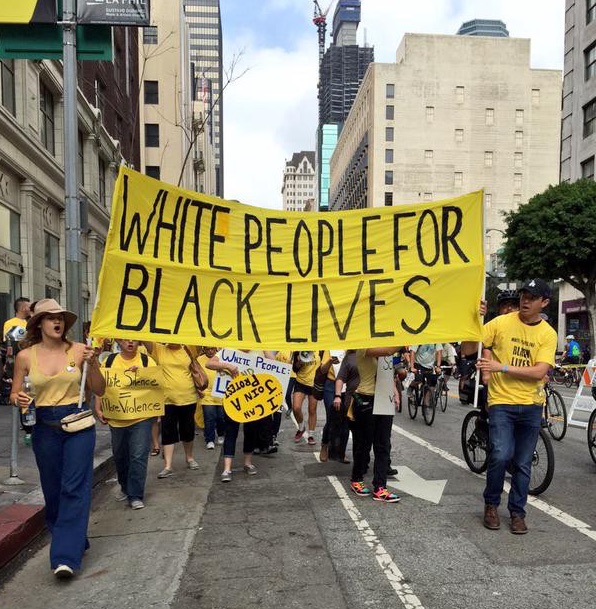
Racist Suspect Wisconsin Cops Unlawfully Stopped a Black Teen b/c He was Riding with an Old White Woman (his grandmother). Police then Forced Him to Get on His Knees at Gun Point, according to Lawsuit

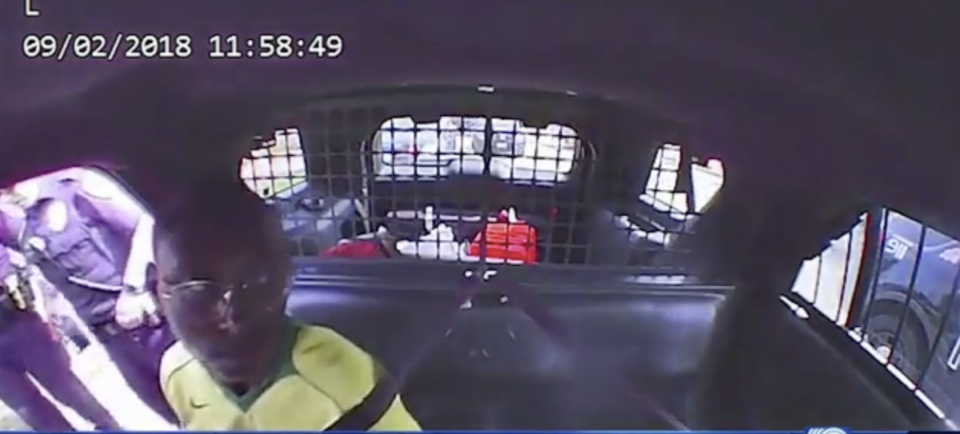
From [HERE] A Black man riding with his white grandmother was ordered to get out of his vehicle and forced to get on his knees by police at gunpoint. He was then arrested and placed in the back of a police car, all because he was Black. Now, he has filed a federal lawsuit against the police officers.
According to WISN, police officers from Wauwatosa, WI only stopped and detained Akil Carter, because he was a Black man in a blue Lexus with his grandmother, Paulette Barr, who is white and was sitting in the passenger seat. Her friend, Sandra Adams, who is also white, was in the driver’s seat navigating the car.

Carter was only 18 years of age when this happened nearly five years ago in September 2018.

The two white women, Barr and Adams testified at the trial on Monday, explaining to the jury of four white women and three white men, that when the police officer’s lights came on behind them they were clueless as to why they were getting pulled over.

The police officer who pulled them over, Officer Patrick Kaine claimed that while in his squad car, another man he referred to as a “tipster” had made a U-turn and pulled over to tell him that there was a robbery going down. He said the man told him that the alleged crime was taking place in a blue Lexus at the next intersection. Kaine admitted that the “tipster” never disclosed how he knew that the alleged crime was happening or how he saw what was supposedly taking place. But stated that this “tipster” seemed “adamant” that the robbery was going down.

Kaine then went to go pull the blue Lexus over.

The police officer then stated it was a “high-risk” traffic stop and called for backup. Dash camera video shows Kaine pulling out his .40 caliber Glock service weapon as he heads toward the car. Another police officer is placing Carter in handcuffs after being instructed to get out of the car with his hands up, to the sidewalk and walk backward toward the police officers.

The officers then proceed to take Carter back to the police car and placed him in the back of the squad car.

After going back to the car Carter was riding in, Kaine is told that he is her grandson.  He tells Barr that he was given the wrong information and only apologized for receiving bad information but not for the arrest.

Carter was held for six minutes before they decided to release him, according to the defense attorneys.

Carter’s attorney Joy Bertrand expressed to the jury that the police officers violated Carter’s Fourth Amendment right, the “foundation of this case and freedom.”

Bertrand argued that they had no evidence or proof that a crime was being committed in that blue Lexus.

Carter will be taking the stand in the case as well. He is suing for damages in the civil case as he said he suffered emotional distress and trauma following the traffic stop.

Using City Cameras NOPD Falsely Arrested a Black Man Minding His Own Business. Initially Police said Cameras Existed to Get Evidence After a Crime Occurs But Now Are Used to Track Residents Movements

MESSAGE TO SLEEPING TOMS AKA THE BLACK VOTARY: YOUR GREAT WHITE LIBERAL FRIENDS ARE SURVEILLING YOU, STOPPING YOU AND TRYING TO LOCK YOU UP EVERYDAY IN PRISONS THEY CONTROL IN CITIES SUCH AS NEW ORLEANS, DC, NEW YORK, CHICAGO ETC.

A MAIN PURPOSE OF POLICE IS TO SURVEIL BLACK PEOPLE ON BEHALF OF ELITE RACISTS. From [HERE] Twenty-five year old Michael Celestine [above] walked outside his friend’s 7th Ward home to take a phone call and smoke a cigarette. Wearing a Tommy Hillfiger puffer jacket on a brisk day in January 2020, he chatted with a friend, walked across the street and then went back inside.

What Celestine didn’t know that is that for the full 15 minutes he was outside, he was being watched by a New Orleans police officer on a monitor about a mile away at the city’s surveillance hub, the Real Time Crime Center, which has access to more than 1,200 live feeds from cameras across the city.

Celestine was the subject of live video surveillance that landed him in jail for more than a year — in the midst of the COVID-19 pandemic, which hit New Orleans early and hard just two months after he was arrested —  even though all the charges against him were eventually dropped. In 2021, Celestine sued the NOPD with the help of the ACLU of Louisiana for a litany of alleged abuses, including an unlawful stop, false arrest and excessive force. Celestine and the NOPD agreed to a $10,000 settlement last year.

“It’s very egregious,” ACLU of Louisiana staff attorney Meghan Matt told Verite. “It’s a man literally minding his own business outside … and subsequently spends a year in jail on false charges during the height of COVID when hundreds of people in that jail were infected, and people were literally dropping dead.”

When the city’s camera network was first introduced in 2017, officials assured the public that the system was primarily there to gather evidence after a crime occurs, rather than proactively surveil the public for suspicious activity.

But in recent years, the NOPD has increased its use of live surveillance to justify stops and searches, according to local defense attorneys and advocates.

“We’ve seen over the years the increased use of the real-time crime cameras to lead to stop and frisks,” New Orleans Chief Public Defender Danny Engelberg told Verite.

Civil rights advocates say that trend is concerning, escalates the privacy implications of the city’s ever expanding surveillance apparatus and threatens to amplify the worst tendencies of the criminal justice system.

On the day of Celestine’s arrest, NOPD officers on the street were conducting what the police report described as a “proactive patrol in high crime areas” while another, Daniel Grijalva, was monitoring a surveillance feed from a nearby camera in the neighborhood.  The camera shifted  to follow Celestine’s  movements, zooming in to provide a close visual inspection of his clothing and cellphone. Grijalva saw a “bulge” in the puffer jacket, and notified nearby patrols that he believed Celestine had a gun, according to the police report and the lawsuit. Officers did not initially respond while Celestine was in the home.

Grijalva was still watching when Celestine left the house again two hours later, and again called for nearby officers to respond. Justified only by a perceived “bulge” in video surveillance, two NOPD squad cars approached Celestine. He ran away before the officers could say a word. Officer Bryan Bissell chased him on foot into a backyard and pulled out his gun.

“I will f—ing shoot you,” the officer said, body camera footage obtained by Verite shows.

Celestine then hoisted himself halfway over a fence before Bissell shot him with a stun gun. Celestine fell to the ground wailing in pain. As he was being arrested, he told the officers “I can’t breathe.”

“Shut up,” Bissell responded.

After briefly being admitted to the hospital, Celestine was taken to jail on Jan. 13, 2020 on several charges, including possession of a stolen weapon, which officers said they found in his pant leg. The Orleans Parish District Attorney’s Office later dropped all charges against him, but not until January 2021. Celestine was kept in jail for the entire year because he was on parole from a previous conviction and was put on a “parole hold” that prevented him from posting bail.

A portion police body camera footage shows Officer Bryan Bissell chase, stun and arrest Michael Celestine on Jan. 13, 2020. Credit: New Orleans Police Department (/customCaption]

“The damage that can happen to a person’s life and livelihood by spending a year in jail without conviction is almost indescribable,” Chris Kaiser, advocacy director of the ACLU of Louisiana, told Verite. Verite was unable to reach Celestine for comment.

Matt, who previously worked as a staff attorney for the Orleans Public Defenders office, said all of the abuses suffered by Celestine stemmed from an initial live video surveillance stakeout — a practice she said is becoming more prevalent in New Orleans.

“As a former public defender, I can tell you this was all the time,” Matt said. “It’s happening multiple times a day, every single day.”

Neither the NOPD nor Mayor LaToya Cantrell’s office responded to requests for comment.

From ‘complaint-based’ system to proactive surveillance

Since the city’s crime camera network launched in 2017 under then-Mayor Mitch Landrieu, city officials have told the public that the system would be largely “complaint-based,” meaning that the footage would primarily be used to gather evidence after an alleged crime was called in.

But it quickly became clear that the cameras were also being used to proactively search live footage for potential suspicious activity.

In 2018, The Lens reported on the case of Clint Carter, who was arrested during a drug bust coordinated through live video surveillance. The cameras caught an interaction that an NOPD officer interpreted to be a drug deal. Carter was swarmed by NOPD squad cars and arrested.

No drugs were recovered from the scene, but the police said they found brass knuckles on him. And one officer claimed that Carter, who was taken for medical treatment after his arrest, tried to take a swing at him from his hospital bed. (The officer later admitted that Carter was shackled to the bed more than five feet away from him.)

Carter was booked with illegally carrying a weapon, simple assault and trespassing — the last charge allegedly stemming from a neighbor’s complaint, though, according to a report by The Lens, video footage did not show Carter entering the property in question.

In November 2018, about four months after the arrest, a judge found Carter not guilty of all charges. But Carter still ended up in prison because the arrest was considered a violation of his parole.

Many criminal justice and privacy advocates object to the city’s crime camera apparatus altogether, saying that it has inadequate guardrails, that the multimillion-dollar investment hasn’t actually helped reduce crime and that it violates people’s privacy. City officials have repeatedly argued that because the cameras are placed on public rights-of-way, the cameras do not present a privacy concern.

“This isn’t making us safer,” Marvin Arnold, an organizer with the privacy advocacy group Eye on Surveillance, told Verite.

But the cases of Celestine and Carter speak to another objection some advocates have to escalating police surveillance — that powerful tools that amplify the police power also amplify the misconduct, abuse and bias in the American criminal justice system.

Kaiser said that while the arrest of Celestine began with invasive surveillance, every other abuse he experienced are issues that have long plagued major police departments: excessive force, racial profiling (Celestine is a Black man), officers lying to justify use of force, unconstitutional stops and the NOPD’s failure to follow its own policies.

“This implicates surveillance technology,” Kaiser said. “But from another angle, this really does boil down to more old-fashioned police misconduct.”

Matt said that the more live surveillance is used, the more opportunity there is for misconduct.

“This happens constantly, and it’s going to be happening more and more the more surveillance is used,” she said. [MORE]