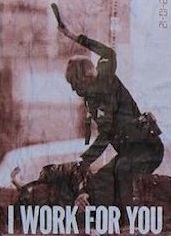
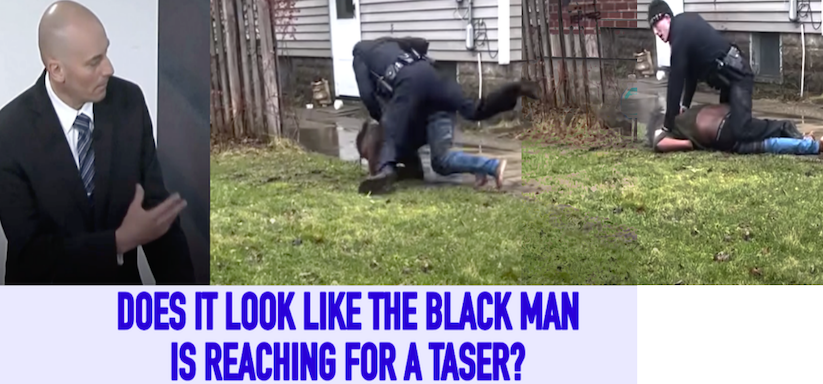
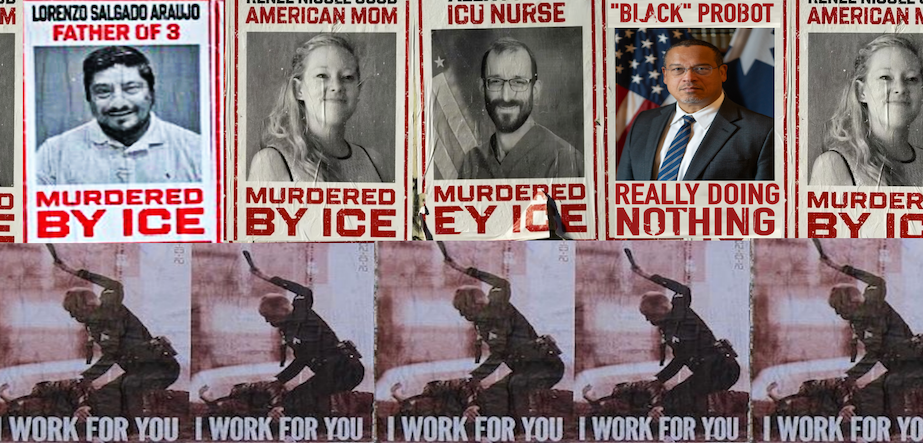
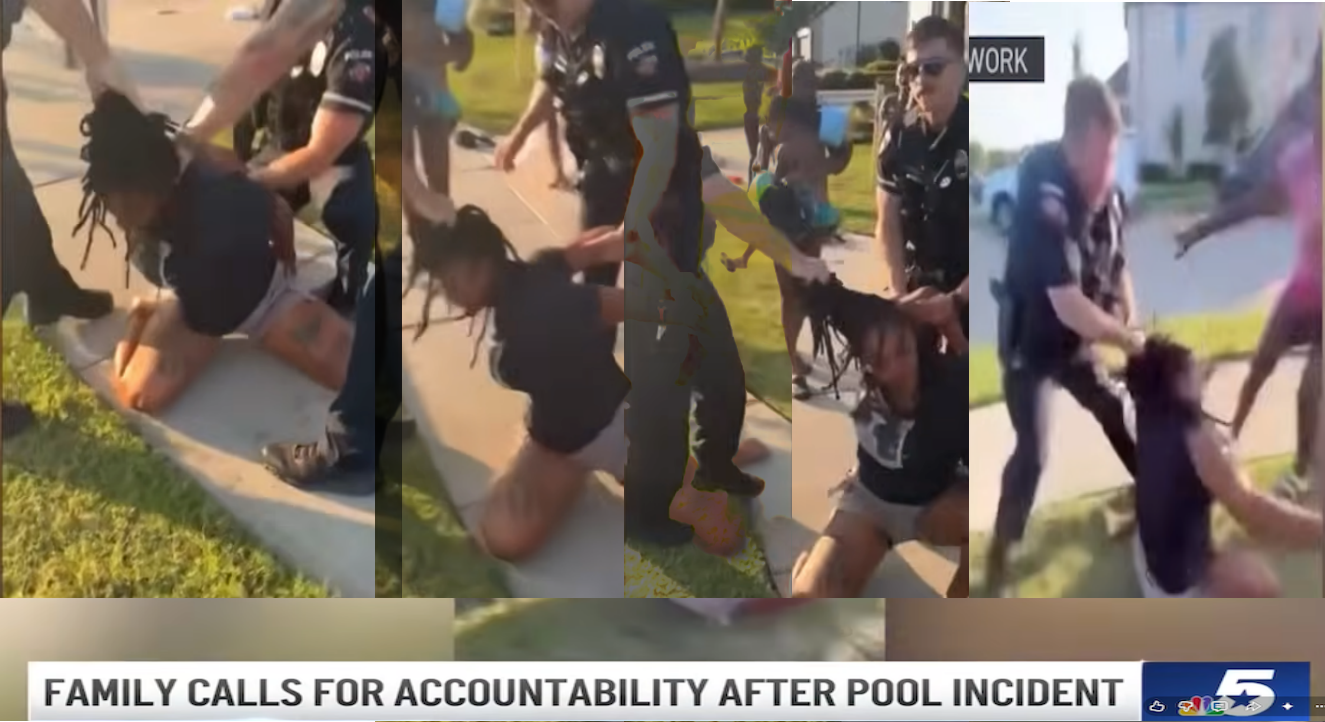
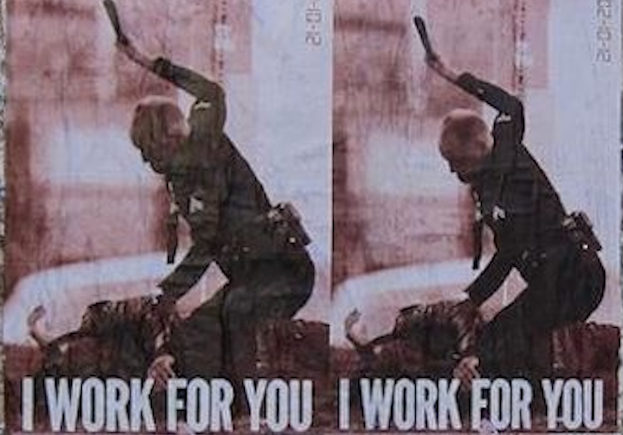
If Cops Have Been [somehow] Delegated Uncontrollable Power Over You Then They Can Kick You in the Face While You're Handcuffed and Laying Face Down in the Street - Like LA Cops Did to Timothy Williams

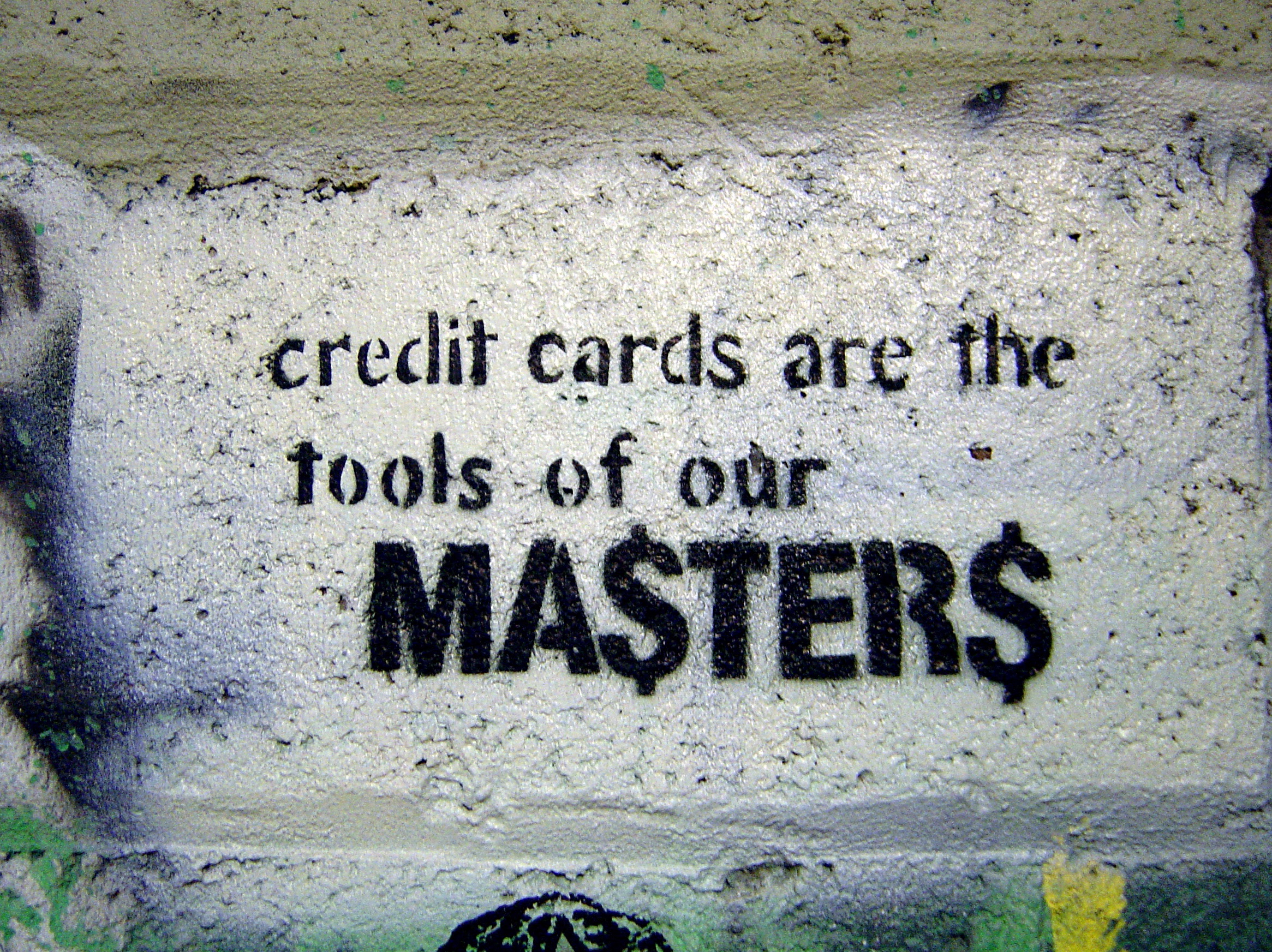
If a “public servant," such as a police officer, is uncontrollable, unaccountable, can’t be hired or fired by you, has irresponsible power over you and provides a compulsory “service” that you are obliged to accept then he is actually your Master.

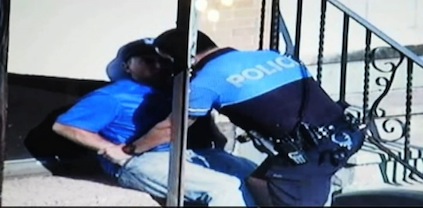
From [HERE] The Louisiana cop was arrested in June for the incident that took place in April. The video was released last week.

Timothy Williams said he ran from the cops after they found him with a fake gun and crack pipe because he was afraid they would hurt him.

But he surrendered by lying facedown on the ground with his hands behind his back once he realized he was not going to outrun them.

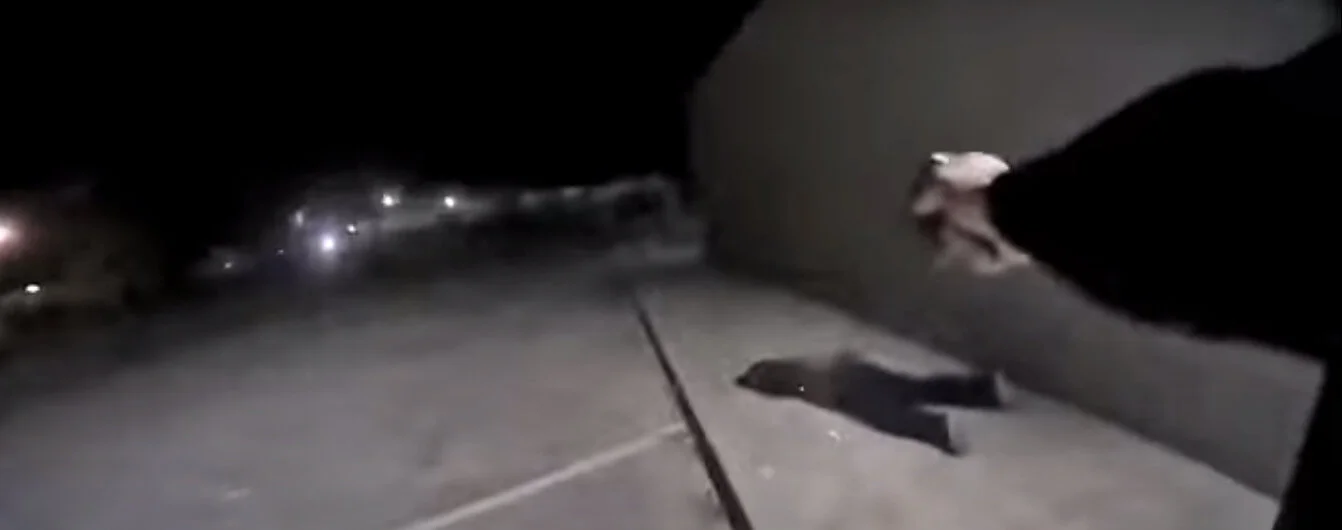
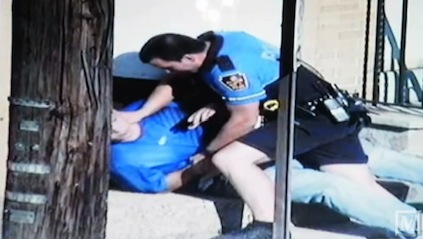
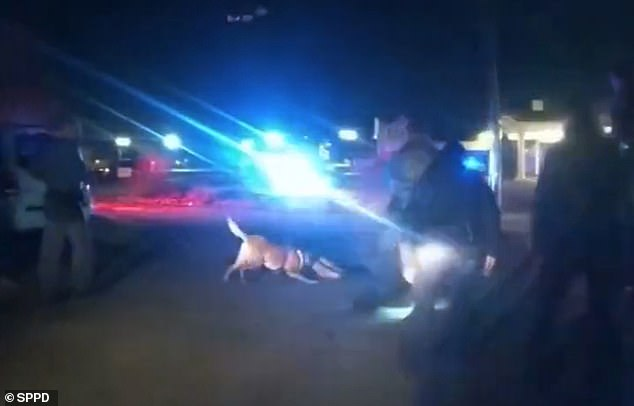
However, that did not stop a Monroe police officer from running up to him and kicking him in the head as if it were a football, leaving the 40-year-old man howling in pain.

Monroe police officer Jared Preston DeSadier then planted his knee on Williams' neck while pressing his face into the ground, causing him to howl in pain even louder.

The incident took place on April 21 and DeSadier was arrested two months later on the felony charges of second-degree battery and malfeasance in office.

Allegedly governmental power comes from the people. That is, we delegate our individual power to the government for it to act on our behalf. However, it goes without saying that people cannot delegate powers or rights that they do not possess. So if…

Allegedly governmental power comes from the people. That is, we delegate our individual power to the government for it to act on our behalf. However, it goes without saying that people cannot delegate powers or rights that they do not possess. So if people have delegated their powers to lawmakers and lawmakers have empowered police officers to act on our behalf, how did police acquire the moral right to commit acts of unprovoked violence on people? Asked differently, if you don’t have the right to initiate unprovoked acts of violence against other people then how can you delegate or authorize police officers or anyone else acting on your behalf to do so? How did government representatives and police acquire such extra or super-human powers? [MORE]

The body cam video was released Thursday and shows another Monroe police officer chasing Williams, threatening to taser him if he did not stop.

It also shows that same cop standing over Williams after he had surrendered, reaching for the handcuffs on his belt while Williams remained on the ground with his hands behind his back.

Almost ten seconds go by before DeSadier comes sprinting up to kick Williams in the head. He then proceeds to plant his body weight on Williams while telling him to "put your fucking hands behind your back!".

The arrest report made no mention of the kick but it did say he was transported to the hospital to be treated for “lacerations he suffered while trying to evade capture" but the video shows he was not evading anybody when he was kicked.

Williams pleaded guilty to flight from an officer and possession of drug paraphernalia but his attorneys say they are still plan on suing.

Patterns of excessive force against black people have persisted for too long, according to state Sen. Katrina Jackson.

“It's time for it to stop,” said Jackson, D-Monroe. “We're seeing it all across America.” [Yet how can it stop when in a system of based on physical coercion?]

Jackson pledged to file legislation during the next legislative session that would force police officers to give a statement within 24 hours of any disciplinary action. Such legislation was needed because some officers connected to Williams' arrest have not made any public statement.

DeSadier, 42, resigned after he was charged with two felonies. He faces up to ten years in prison. It does not appear as if he has entered a plea. Watch the shortened video above with a portion in slow motion to show the kick. The full video is here.

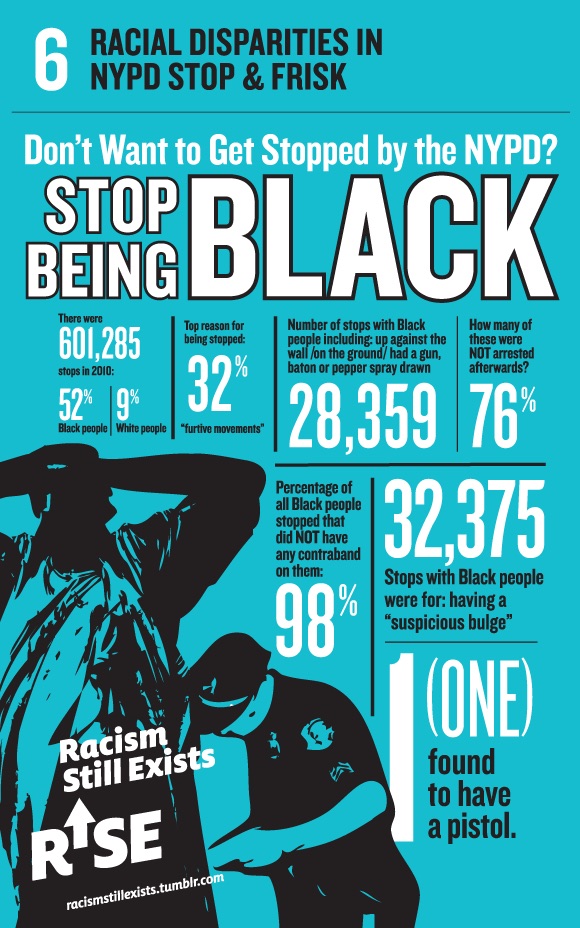
A Primary Function of the Police Force in the Liberal, Vanilla DC Suburb of MO County is to Surveil Black Travelers and Treat them as the Enemy: Blacks are 7X More likely than Whites to be stopped

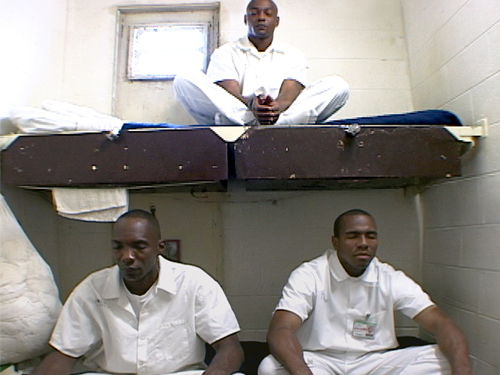
free range prison 2333.jpg

From [HERE] Black drivers were about seven times more likely than White drivers to be stopped by police in wealthy Bethesda, Md., in 2018, according to recently released data.

Across Montgomery County, police searched the vehicles of Black drivers more than twice as frequently as White drivers, and were more likely to cite “probable cause” if the drivers were Black.

These yawning disparities, which advocates say have dogged the liberal suburb for decades, are fueling renewed scrutiny over the dangers of what advocates call “driving while black.” As communities nationwide confront calls to “defund” and “unbundle” the police in the wake of the death of George Floyd in Minneapolis, some in Montgomery are asking: Should police even be in charge of traffic enforcement?

Maybe not all of it, lawmakers say.

County council member Hans Riemer (D-At Large) has commissioned a study to figure out whether – and how — Montgomery might be able to move certain traffic enforcement functions out of the police department and into other government agencies.

At least two other lawmakers, including council vice president Tom Hucker, who sits on both the public safety and transportation committees, think that change would be a good idea.

Armed with a recent report on enforcement disparities by the county’s Office of Legislative Oversight, they are holding an online town hall next month to solicit public feedback.

County Executive Marc Elrich (D) said he is “more than concerned” about the racial inequities in traffic enforcement and will consider the possibility of reallocating resources.

Montgomery appears to be the only jurisdiction in the Washington metro region targeting traffic enforcement in policing, though the District last year moved automated enforcement from police to the transportation department.

County officials say they would start by similarly shifting responsibility for speeding and red light cameras away from the police department — if it’s allowed under state law — then evaluate what other functions could be performed by civilians. They also want to rely more on cameras at traffic stops for driving enforcement, since personal bias is less of a factor in automated systems.

Berkeley City Council in California voted last month to move enforcement of minor traffic violations into a new Department of Transportation. Officials in Cambridge, Mass., and St. Louis Park, Minn., are weighing similar legislation.

“This is the real-world example of ‘defund the police’ that we’re talking about,” said Rayshawn Ray, a University of Maryland sociology professor who specializes in police-civilian relations. “In theory, it makes sense, it’s a good idea. But the implementation will be key.”Lawmakers hope shifting traffic enforcement might have more broad-based support.

Increasing automated enforcement of speeding and red light violations could help reduce opportunities for biased policing, but also boost road safety, Riemer said. And having transportation department employees, instead of police, take charge of issuing fines and tickets from the video footage shouldn’t be a heavy lift.

“They’re looking at a camera,” Hucker (D-District 5) said.

Pro-transit advocates agree. Paul Goldman, president of the Montgomery-based Action Committee in Transit, wrote in a July letter to officials that they should “replace police traffic enforcement with camera enforcement wherever feasible, to eliminate bias and improve compliance.”

There has long been a case for increasing automated enforcement as a way to improve traffic safety, Riemer said, and it is now coinciding with the calls to address racial inequity.

The recent report on the police department reveals staggering racial disparities in arrests and use-of-force, along with highly detailed data on traffic enforcement.

Stops, searches and traffic violations are broken down by race and neighborhood — showing for example, that Black drivers are stopped at a disproportionately higher rate in mostly white Potomac than they are in more diverse White Oak. Countywide, White drivers were stopped more frequently for violations like speeding or beating red lights, while Black drivers were often found in violaton for infractions detected after a stop, such as driving without a license or refusing to show it to an officer.

W/o Bothering to Ask Questions, Investigate or Corroborate Any Details from the Radio Run White LA Cops Arrived on the Scene and Immediately Pointed Machine Guns at Black Teens who Called 911 for Help

From [HERE] Multiple California police officers were filmed pointing guns at three African American teenagers who were were allegedly being threatened by a homeless man.

The mother of one of the teenagers in the video, Tammi Collins, shared an 11-minute clip to her Instagram page, showing officers from the Los Angeles County Sheriff’s Department aiming guns at them in Santa Clarita, California, on 7 August.

Ms Collins wrote in the caption of her video: “I wanted to share what happened to my son yesterday in SCV when he was with a couple of friends sitting at a bus stop headed home.”

She added: “He was attacked by a gentleman (homeless guy) who approached them and first asked them if they had any crack then tried to take their things.”

Ms Collins said that the man then pulled out a knife and become aggressive, so the teenagers attempted to defend themselves by using their skateboards to make sure he kept a safe distance.She added that multiple calls were made to the police by witnesses, but that one of the callers told the authorities that “two black guys were attacking a homeless man”.

Multiple California police officers were filmed pointing guns at three African American teenagers who were were allegedly being threatened by a homeless man.

The mother of one of the teenagers in the video, Tammi Collins, shared an 11-minute clip to her Instagram page, showing officers from the Los Angeles County Sheriff’s Department aiming guns at them in Santa Clarita, California, on 7 August.

LA race soldier pigs.jpg

Ms Collins wrote in the caption of her video: “I wanted to share what happened to my son yesterday in SCV when he was with a couple of friends sitting at a bus stop headed home.”

The Los Angeles County Sheriff’s Department confirmed to TMZ that they responded to the incident after they received a call from someone who told them that two adult men were attacking another man with a skateboard. Even if that were partially true no such conduct was going on when the race soldiers arrived.

After the police spoke to witnesses, the teenagers were released without any charge, but the authorities said that “the Dept doesn’t know what happened to the homeless man,” according to TMZ.

Ms Collins added that “this is something my son and his friends will never forget. I’m still wonder how will I ever help my son recover from this traumatic experience. Please pray for my family.”

Undermining the Illusion that Police Exist to "Protect and Serve," NYPD Cops Do Nothing as an 11-Year-Old Black Girl is Beaten in the Street in Broad Daylight

NYPD watches.jpg

From [HERE] NYPD cops had a front-row seat to a five-on-one brawl — but let the violence play out rather than doing their jobs to break it up, The Post has learned.

An 11-year-old girl was slapped, punched, kicked and even shocked with a stun gun by a group of five other girls after a basketball game around 7 p.m. Sunday on East 125th Street near Madison Avenue in Harlem.

During the roughly 4-minute beatdown, cops sat idly in nearby cruisers — but they didn’t get out until the girl was bloody and bruised, a Post photographer observed.

At least 20 police cars were nearby on the street — with at least one a little more than a car-length away, photos show.

Police sources told The Post the young girl was treated at Mount Sinai Hospital after being cut, bruised and shocked in the stomach with the stun gun. The girl told cops she didn’t know her attackers but knew two of their handles on social media, sources said.

An NYPD spokesman claimed the account witnessed by the Post photographer was “completely inaccurate.

“The officers were met by a large crowd while attempting to come to this person’s assistance. They were outnumbered. Projectiles were thrown at them. And they were forced to reposition and call every available resource in the area,” said rep Al Baker.

The department also tweeted footage it claimed to show people throwing bottles at cops who tried to intervene — though it was unclear when or where the footage was shot, and it does not show the girl being attacked.

But the Post photographer said he observed no bottles being tossed at police — though he was on the scene after hearing reports of an unruly crowd nearby some 45 minutes prior.

It was not known if any arrests were made in connection with the fight.

The hands-off approach comes as the police unions challenge a portion of NYC’s chokehold bill that makes it a misdemeanor crime to use any technique during an arrest that could limit breathing.

Top NYPD officials have also spoken out against the local reform, calling it dangerous, but have denied a slowdown  — despite video leaking out from a weekly CompStat meeting capturing precinct leaders telling Chief of Department Terence Monahan that cops were “afraid” of facing charges over the law.

Over the last month, arrests have plummeted, with cops making nearly 60 percent fewer collars, according to NYPD statistics released Monday.

Cops are also pulling over fewer drivers, issuing a quarter of the normal speeding tickets — with the city’s speed cameras violation count holding steady.

Dependent Media Moves On to Other News After Forcing Release of Video of Murder at NC Jail. 5 Cops Smothered & Piled Onto a Handcuffed Black Man as He Continually Begged for His Life on Cell Floor

john Neville.jpg

From [FTP] John Neville begged for his life as multiple deputies piled on top of him as he had a medical emergency.

The incident began when Neville was found semi-conscious on the floor of his jail cell. The deputies continue telling Neville to “calm down” but Neville eventually panics and tries to stand up.

“You had a seizure,” the nurse said. “They’re just taking care of you. They’re doing this so you don’t hurt yourself.”

“You’re going to be alright, buddy,” a deputy says. “You’re going to be alright. You’re having a bit of a medical episode here.”

“I can’t breathe. I can’t breathe. I can’t breathe. Help!” Neville said as deputies retorted, “If you can talk, you can breathe.”

But Neville was telling the truth. He could not breathe.

Neville was being held face down on his stomach, begging to be rolled over so he could catch his breath but the deputies refused. He asked them over 30 times, every one of the requests were denied.

One deputy tells others he knows they’re enjoying holding down Neville before offering them a break if they need it. After a straight 11 minutes with cops on top of him, Neville fell unconscious and stopped breathing.

“You guys killed him,” someone shouts. “You killed him.”

He was transported to the hospital but would not make it.

According to the News & Observer:

An autopsy report listed his cause of death as a lack of oxygen that led to a heart attack and brain injury from being held in prone restraint.

That technique of holding prisoners on their stomach with their arms handcuffed behind their backs and their ankles raised to their wrists is controversial across the country because of the number of deaths it has caused.

On July 8, 2019, seven months after Neville died, Forsyth County District Attorney Jim O’Neill announced felony involuntary manslaughter charges against the six people involved: a nurse and five deputies.

Those charged are identified as deputies Sarah E. Poole, Antonio M. Woodley and Christopher Stamper, Corp. Edward J. Roussel and Sgt. Lavette M. Williams. The nurse is Michelle Heughins.

For months the News & Observer, the NYT and others fought for the release of the video but the DA denied it. On July 31, 2020, Superior Court Judge Greg Horne ordered the sheriff’s office to provide two of the videos to the media coalition by noon on Wednesday. The videos were finally released. The national dependent media has paid little notice and provide only token coverage.

White OH Cops Unlawfully Stopped a Black Man, Handcuffed him, Searched His Car, Repeatedly Hit His Face and Detained Him w/o Charges in a Jail Storage Room for 4 Days w/no Toilet; $50M Verdict Upheld

east cleveland cops23.jpg

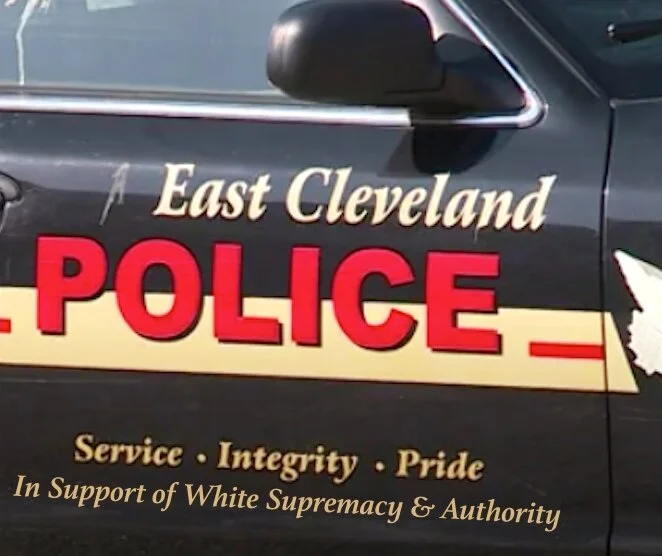
From [HERE] and [HERE] An Ohio appeals court on Thursday upheld a $50 million jury verdict in favor of a Black man who was stopped, searched and arrested without probable cause and then beaten and unlawfully detained in a filthy storage closet for four days by East Cleveland police.

The verdict had come in Arnold Black's second jury trial against East Cleveland over its police department's treatment of him in 2012 after he was pulled over for baseless reasons. In Thursday's multipart ruling, the appeals court in Cuyahoga County kept the jury's eight-figure award to Black.

Among other things, the appellate panel found that the trial court didn't abuse its discretion in various decisions made during the August 2019 trial, including a decision to bar the city from presenting evidence that hadn't been handed over when requested in discovery in 2014.

The court stated,

On April 28, 2012, at approximately 10:00 p.m., Black was driving home from his mother’s house when he was pulled over by East Cleveland Patrolman Jonathan O’Leary. (Trial tr. 166-167; 218; 227.) Sergeant Randy Hicks had ordered O’Leary to stop Black’s green truck because it resembled a green truck belonging to a suspected drug dealer. Hicks was a narcotics detective in East Cleveland and was also a member of a joint narcotics task force with the Cuyahoga County Sheriff’s Department. (O’Leary trial depo. tr. 54.)

O’Leary told Black to get out of his vehicle, handcuffed him, and escorted him to the back of his truck. (O’Leary trial depo. tr. 8.)

O’Leary’s patrol car was parked behind Black’s vehicle with the lights activated. Black was sitting on his back bumper in front of O’Leary’s patrol car when Hicks arrived on the scene.

Black testified that Hicks immediately began searching his car and removed the side panels from his truck. Hicks did not find any narcotics in the truck and, after brandishing his badge, began questioning Black about who sells drugs in East Cleveland. (Trial tr. 86.)

Black replied that he did not know who sold drugs in the city. Thereafter, Hicks became violent and repeatedly struck Black’s face and head without provocation or justification. (Trial tr. 93.) Hicks admitted at trial that he struck Black several times until O’Leary came between them and stopped him. (Trial tr. 93-94.) Hicks described Black as appearing “dazed” after the beating. (Trial tr. 94; 232-234.)

O’Leary testified that he believed his dash camera was operating throughout the duration of the incident and captured the incident on film. (O’Leary trial depo. 18.) Black and O’Leary both testified that Hicks may have been under the influence of alcohol at the time of the incident because he smelled of alcohol. (Trial tr. 291-292; O’Leary trial depo. 73-74.)

Hicks admitted that he called another officer to transport Black to the East Cleveland jail even though he did not have probable cause to arrest him. (Trial tr. 98.)

Upon arriving at the jail, Black was placed in a storage room that the police officers referred to as a “holding cell,” even though there was no bed and no toilet in the room. (Trial tr. 238-239.) The room contained a wooden bench, some storage lockers, and cleaning supplies and was infested with cock roaches. (Trial tr. 240- 241.)

Black remained in the storage room for four days. At some point, an unknown officer entered the room, gave Black a carton of milk, and allowed him to use his cell phone to make a call. (Trial tr. 244-245.) Black called his former fiancée, Eryka Bey and told her, in a whisper, that he had been arrested and beaten and was being held in the East Cleveland jail. (Trial tr. 190.)

Bey went immediately to the jail and asked to see Black. An officer told her she could not see him because he was “under investigation.” Black testified that on the fourth day following his arrest, a councilwoman came to the jail to inquire about him because she had heard he had been beaten while he was handcuffed and was being detained without probable cause in the city jail.

Chief Spotts accompanied the councilwoman during her visit with Black in the storage room. (Trial tr. 272.) In Black’s presence, the councilwoman told the chief that she wanted to know what happened to Black and how “at this time and age * * * he got beat up and put in a closet.” (Trial tr. 274.) Thereafter, Black was placed in a line of inmates, who were awaiting transport to the county jail. (Trial tr. 271-274.) Later that day, Bey picked Black up at the county jail and drove him home. (Trial tr. 196-197.)

According to Bey, Black’s head was swollen like a “helmet” and he was acting fearful. (Trial tr. 196-197.) In the weeks following the incident, Black complained of headaches and developed vision problems. His mother and Bey also observed changes in his personality. They described him as withdrawn and unwilling to leave the house due to fear of the police. (Trial tr. 199-200, 201, 209, 253-254.)

Black eventually sought medical attention and required surgery to remove blood from his brain. (Trial tr. 204-206, 257-260.) Following the incident, O’Leary reported Hicks to his superiors, including Spotts. (Trial depo. tr. 29-30.) O’Leary told Spotts that the dash camera video would show Hicks beating Black while he was handcuffed. O’Leary also completed a “Form-M,” a report in which O’Leary detailed Hicks’s actions with respect to Black. (O’Leary trial depo. tr. 66.)

Yet, nobody from the East Cleveland Police Department ever followed up with O’Leary to investigate the incident, and the dash-camera video went missing. (Trial tr. 31; 33-34; 49.) O’Leary testified that the department’s failure to take action in response to the incident suggested that the department intended to cover it up. (Trial tr. 33-34.)

O’Leary stated: Q: Now, based on your experience, based on your reference to notify supervisors, based on the actual notifications that you gave to supervisors about what happened, does the missing video and the inaction by the city and chief --- * * * lead you to believe * * * that the chief ignored your information so they could put the matter to rest without prosecuting Detective Hicks? * * *

A: I don’t know what his intentions were, but the appearance to me was that he probably wanted to put [it] to rest.

Q: So the missing video and inaction by the city and chief leads you to believe, and do you in fact, truly believe that the chief participated in a passive, do nothing cover up in this case? * * *

A: So you’re saying that because nothing was ultimately done and – by anybody, basically, that there was no prosecution, was that a covert way to basically, hide this? It has that appearance to me. (O’Leary trial depo. tr. 33-34.)

Hicks similarly testified that he propounded discovery to appellants, requesting any police reports, O’Leary’s Form-M complaint, the dash-camera video, booking documents, jail records, and his own personnel file, and the city informed him that “[t]hey didn’t have [them] anymore” and that “they were gone.” (Trial tr. 102-103.) Hicks testified that there was a culture of violence in the East Cleveland Police Department. He explained that as part of his on-the-job training, he was taught to use violence against citizens in order to obtain information from them and to instill fear. (Trial tr. 83-84, 87.)

Hicks explained that when he was a patrol officer, he and Spotts were part of group known as the “jump-out boys.” (Trial tr. 90.) Whenever they encountered citizens gathered on a sidewalk, they would jump out of their cars, throw the citizens on the ground, and beat or “boot” them. (Trial tr. 90.) Hicks was also taught to “clear the corners” by slamming people against police cars, searching them for drugs without probable cause, and if they did not find any drugs, making it “inconvenient for them.” (Trial tr. 91.) The officers “made it inconvenient” for citizens by “strip[ping] them down in the middle of winter” and making them stand naked in the cold. (Trial tr. 91.) They stripped people naked on a “daily” basis. (Trial tr. 91.) Hicks testified that he would not have been promoted if he had refused to engage in these violent tactics. (Trial tr. 95.)

Spotts was the chief of police in the East Cleveland Police Department at the time of Black’s arrest. (O’Leary trial depo. tr. 22; trial tr. 109.) Hicks testified that as the “top law enforcement officer” in East Cleveland, Spotts was responsible for establishing policies and procedures for the jail, criminal investigations, and “every aspect” of the police department. (Trial tr. 106, 110.) Under Spotts’s supervision, it was well known that there was a “right way, a wrong way, and the East Cleveland way.” (O’Leary trial depo tr. 34, Trial tr. 106.) The “East Cleveland way” included a lack of meaningful oversight by supervisors, routine failures to report violations of police procedures, and the use of violence against citizens and other officers. (O’Leary trial depo tr. 36-39, Trial tr. 87-93.) As a result, violence was a custom and practice within the city when arresting people at traffic stops or when citizens were not compliant. (Trial tr. 103-104, 146-147.) According to Hicks, individuals, who posed a threat the city’s civil liability, were also routinely treated with violence, arrested without probable cause, and placed in the jail. (Trial tr. 105.) [MORE]

White Minn 1st Responders Assumed a Black Man Having Diabetic Seizures was on Drugs [though His Girlfriend Told Them Otherwise] So They Restrained Him & Injected Him w/Sedatives Nearly Killing Him

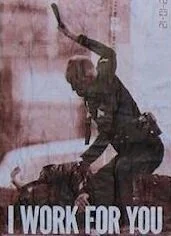
i+work+for+you.jpg

From [HERE] On Thursday, Abby Wulfing published a Facebook post about the dangerous treatment her boyfriend, Max Johnson, received from EMS responders and Minneapolis police officers during a recent diabetic episode.

Wulfing wrote of waking up on July 26 to the sound of Johnson having a seizure, and called 911, telling an operator Johnson was diabetic and suffering from low blood sugar. She says when they arrived, paramedics believed Johnson was on drugs, and asked her to tell them "what he's on."

According to Wulfing, EMS workers for Hennepin Healthcare (formerly HCMC) hospital ignored her attempts to inform them of Johnson's diabetes, and instead radioed police for assistance.

"I told an older male EMS worker that their behavior, how they were talking to [Johnson] (loudly, angrily, commanding), and their physical restraint WASN’T HELPING and that he needed sugar," Wulfing wrote. "Instead of listening to me, he snapped at me to 'go let the cops in the front door,' as he had just called the MPD for backup."

In the course of treating Johnson, Wulfing says, EMS staff administered both Versed and ketamine. Ketamine is the same powerful sedative drug HCMC paramedics and MPD officers were criticized for using unnecessarily on arrestees in 2018... and again in 2019, when the Food and Drug Administration (FDA) found the hospital chain's employees had continued doping people as part of a secretive, non-voluntary study even after they said they'd stopped.

Wulfing also observes that the dose of ketamine given to Johnson (500 milligrams) is the same amount that contributed to the recent death of Elijah McClain in Aurora, Colorado.

Johnson spent two days in the hospital's intensive care unit "on a ventilator," during which time Wulfing and others couldn't visit him, writes Wulfing.

"This happened because Max is a 6' 5" Black man," Wulfing wrote. "My whiteness was not enough to save him from the Hennepin Healthcare EMS and MPD’s egregious racism and life-threatening decisions. I believe that police brutality and racism is more of a health risk to Max than his Type I diabetes."

Wulfing also says Dr. Thomas Wyatt, director of the Department of Emergency Medicine at Hennepin Healthcare, had agreed that Johnson's incident was handled differently because of his race. 

In a statement to the Star Tribune, a spokesperson said Hennepin Healthcare "[does] not discuss individual patient care publicly, but when a patient or family member has concerns we answer their questions about the medical decisions that were made."

Minneapolis Police Department spokesman John Elder told City Pages the department is "aware of" Wulfing's story, and that it is "under internal review."

On Sunday, Rep. Mohamud Noor (DFL-Minneapolis) called for an investigation into the "disturbing incident," saying of the alleged drugging of Johnson: "It is unacceptable that this man, who was experiencing a medical emergency, was given this dangerous drug that can result in life-threatening conditions—as it did in this case."

Power Doesn't Corrupt, It Reveals: Inspired to Get Justice for Michael Brown a Black Reformer Ran for DA but When He Got His Chance He Did Nothing: No Charges for Ferguson Cop who Murdered Black Teen

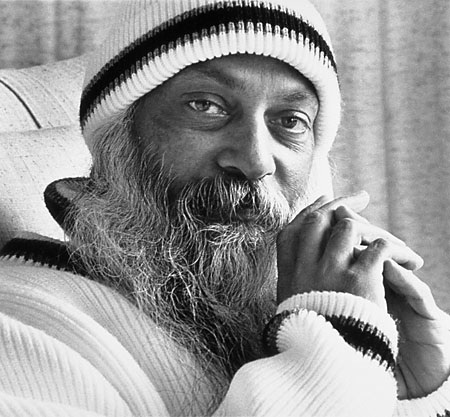
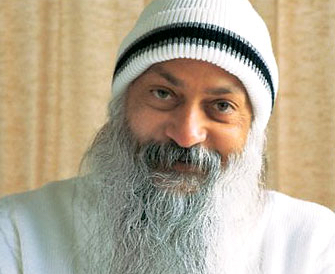
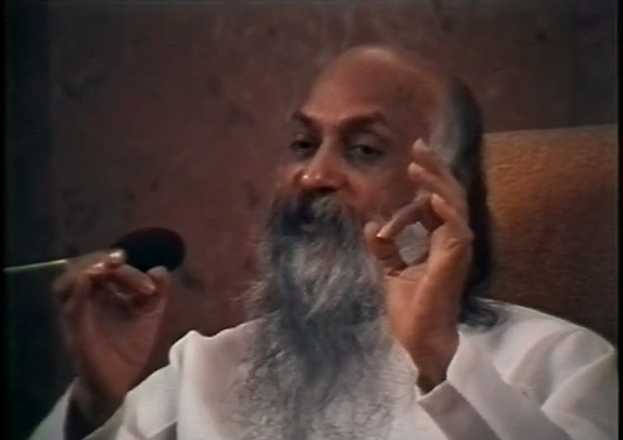
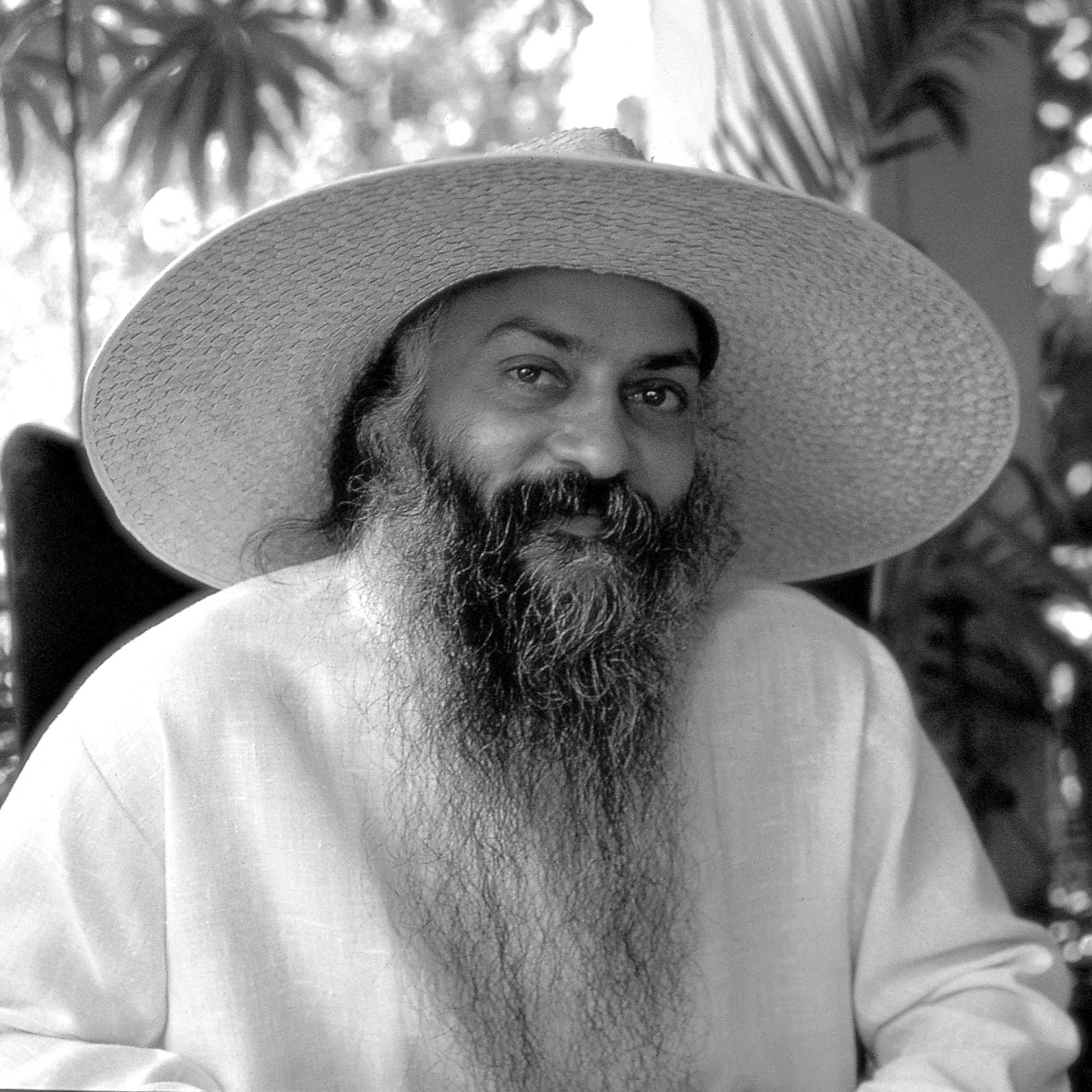
OSHO OBSERVED, ‘POWER ONLY PROVIDES THE OPPORTUNITY. LORD ACTON SAID: POWER CORRUPTS, AND ABSOLUTE POWER CORRUPTS ABSOLUTELY. NO, THAT IS NOT RIGHT. POWERNEVER CORRUPTS, IT ONLY BRINGS CORRUPTION OUT. HOW CAN POWER CORRUPT? YOU WERE ALREADY CORRUPT …

OSHO OBSERVED, ‘POWER ONLY PROVIDES THE OPPORTUNITY. LORD ACTON SAID: POWER CORRUPTS, AND ABSOLUTE POWER CORRUPTS ABSOLUTELY. NO, THAT IS NOT RIGHT. POWERNEVER CORRUPTS, IT ONLY BRINGS CORRUPTION OUT. HOW CAN POWER CORRUPT? YOU WERE ALREADY CORRUPT BUT THERE WAS NO OUTLET FOR IT. YOU WERE ALREADY UGLY BUT YOU WERE STANDING IN DARKNESS. NOW YOU ARE STANDING IN LIGHT, SO WILL YOU SAY THAT LIGHT MAKES YOU UGLY? NO, LIGHT ONLY REVEALS.

DR. BLYND EXPLAINS “REFORM IS ALWAYS IN THE SERVICE OF THE STATUS QUO AND THE POLITICIAN: IT SERVES THE PRIVILEGE OF THE PAST NOT THE PROMISE OF THE FUTURE. REFORM CREATES HYPOCRISY AS A MATTER OF COURSE.” FUNKTIONARY SAYS:

REFORMERS - NAIVE POLITICIANS. THEY CAME TO DO GOOD AND STAYED TO DO WELL. REFORMERS THEMSELVES GET REFORMED INTO THE STRUCTURE, CONSCIOUSNESS AND CONTENT OF THE DOMINANT EXPLOITATIVE SYSTEM--AND THUS BECOME THE SYSTEM. (SEE: REVOLUTION)

From [HERE] Darren Wilson, the white police officer who fatally shot Michael Brown in August 2014, will not be charged with any crimes.

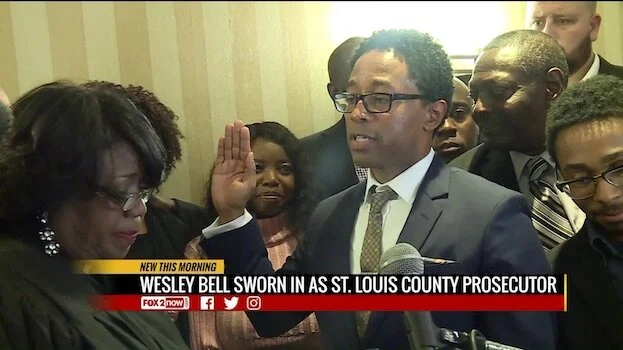
St. Louis Prosecuting Attorney Wesley Bell, who is Black, made the announcement Thursday afternoon, officially ending the six-year legal saga. Bell said the lack of charges did not exonerate Wilson, but that the five-month investigation did not find anything that could be proven beyond reasonable doubt.

“I think we try our best to move on,” Bell said in a press conference. “I don’t know how a family will ever heal fully. I don’t know how this region is ever going to heal fully from this case, and I know the significance of it, but I think it’s time to try to move on.”

Brown’s father met with Bell before the press conference about the investigation’s findings.

“Mike Brown Sr. did not leave this meeting happy and anything short of justice in this case, that being Darren Wilson being held criminally responsible, would certainly be disappointing,” Anthony Gray, the Brown family attorney, said in a statement.

Bell’s announcement was made 10 days prior to the six-year anniversary of Brown’s death. Wilson claimed that he was acting in self-defense after Brown, who was unarmed and 19 years old, charged at him. Video from a nearby convenience store showed Brown allegedly stealing a box of Swisher Sweets before the encounter.

Several in attendance at the press conference shouted their displeasure at Bell. One man screamed that it would be “his last term” before being removed by security.

“What I would hope is that people who are watching this, understand that we put the time in, we did a thorough and detailed investigation, and we sat down with the family, looked them in the eyes, and gave them the findings,” Bell said. “And I think at this point that is all we can do.”

Bell said the investigation took place without any announcement because he did not want undue outside influence. He said they went through thousands of pages of documents in the case before reaching the conclusion.

Like his racist suspect predecessor, Bob McCulloch is also a democrat. McCulloch could have directly filed charges against Darren Wilson, the white cop who shot Michael Brown to death, but instead chose to take the case to a grand jury. It is widely believed that McCulloch did not want the grand jury to actually indict the white police officer. He selected a mostly white (9 out of 12) grand jury. McCulloch’s prosecutors handling the case took the highly unusual course of dumping all evidence on the jurors and leaving them to make sense of it. McCulloch’s office claimed that this is a way to give more authority to the grand jurors, but it was more like a way to avoid charging Wilson at all — and to use the grand jury as cover for the outrage that ensued. McCulloch's father was a police officer killed in a shootout with a black suspect, and several of his family members are, or were, police officers. He did not prosecute a single police shooting in 23 years. [MORE] and [MORE].

In January 2015 the NAACP Legal Defense Fund* wrote an open letter to Missouri Judge Maura McShane [also white] asking her to investigate Ferguson prosecutor Bob McCulloch and his team for misconduct in the lackluster, fake effort grand jury he put together in the Brown case. 

The group of experts assembled by the NAACP to review the grand jury transcripts “were struck by the deeply unfair manner in which the proceedings were conducted.” [MORE]

A federal investigation led by white prosectors also failed to turn up any charges against Wilson.

DEFENSE ATTORNEY TURNED PROSECUTOR. GETTING OUT THE VOTE TO ELECT THIS FUCKING CLOWN TO OFFICE DID NOT PRODUCE JUSTICE FOR BLACK PEOPLE WHO CAN BE MURDERED IN BROAD DAYLIGHT BY WHITE COPS ON ANYDAY AND IN ANY PLACE. TO THE DEPENDENT MEDIA AND ITS PA…

DEFENSE ATTORNEY TURNED PROSECUTOR. GETTING OUT THE VOTE TO ELECT THIS FUCKING CLOWN TO OFFICE DID NOT PRODUCE JUSTICE FOR BLACK PEOPLE WHO CAN BE MURDERED IN BROAD DAYLIGHT BY WHITE COPS ON ANYDAY AND IN ANY PLACE. TO THE DEPENDENT MEDIA AND ITS PARROTS IN THE BLACK MEDIA ‘THE ACHIEVEMENTS OF BLACK POLITICIANS, NO MATTER HOW DUBIOUS, ARE OFTEN PRE­SENTED AS VICARIOUS ACHIEVEMENTS OF THE BLACK COMMUNITY AS A WHOLE.’ [MORE]

Brown’s death sparked months of often violent protests in the streets of Ferguson, a St. Louis suburb. The incident brought the issues of systemic racism and excessive police force into the national conversation.

In 2015 during the Ferguson Uprising Bell was elected to the city council with strong support from some activists. [MORE]

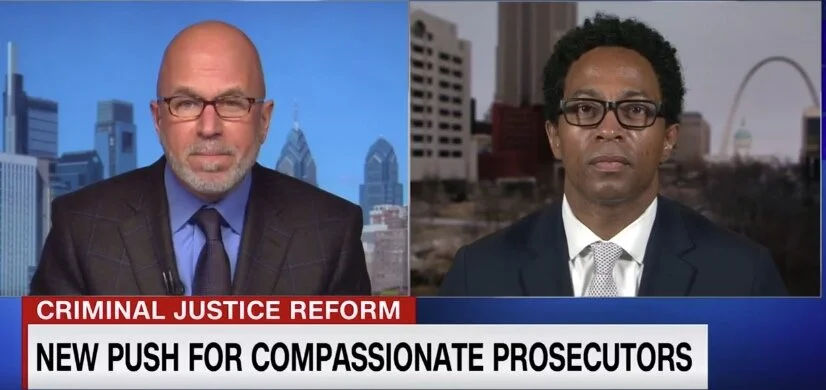
He then ran for DA on a platform of systemic overhaul of the county’s criminal justice system. His campaign against Bob McCulloch seemed improbable at first. But it was propelled by tireless grassroots organizing, a viral #ByeBob social media campaign modeled after Chicago’s #ByeAnita, and the backing of some national players that have prioritized transforming the culture of district attorney’s offices nationwide. His victory in the Democratic primary was both stunning and decisive. With a record turnout, he beat the incumbent by a 14 percent margin. [MORE] After his win left leaning reporter John Nichols said, “I thought what was incredibly significant last night was the Missouri race in St. Louis for the prosecutor’s seat. Wesley Bell’s victory out there is just a remarkable breakthrough win in a prosecutor’s race that might well be the pinnacle race in the country, because this is the prosecutor who didn’t respond effectively to Ferguson, and here you have a city councilman from Ferguson running against the incumbent 28-year veteran prosecutor on a platform of criminal justice reform, addressing cash bail, raising all the critical issues, and winning not by a small margin. It looks like Wesley Bell’s victory will be in the range of 57-43. So that’s a very big victory out there.“ [MORE]

The progressive publication, The Intercept wrote, “the push to put progressive prosecutors into office really took off after Ferguson, where the disastrous investigation of Brown’s killing opened the public’s eyes to prosecutors’ unique power to decide whom and when to prosecute. With Bell’s election, the Ferguson protests’ impact on the politics of criminal justice finally came home to St. Louis County."

“I absolutely feel like I am part of a momentum that’s continuing to grow,” Bell told the Intercept, adding that he draws inspiration from Krasner, Foxx, and other progressive prosecutors who preceded him. “I think that we have a real opportunity.” [MORE]

As if he was really about it, one of Bell’s first [symbolic] moves was to fire a veteran assistant prosecutor who had been a key figure in the case of Darren Wilson. Thereafter however, it took him two years to reopen the investigation into Michael Brown’s shooting. Two years? If a white cop or white human being were killed in the street would it take two years?

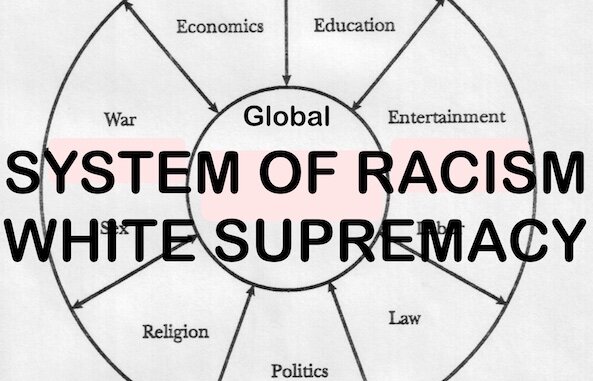
racism white supremacy chart.jpg

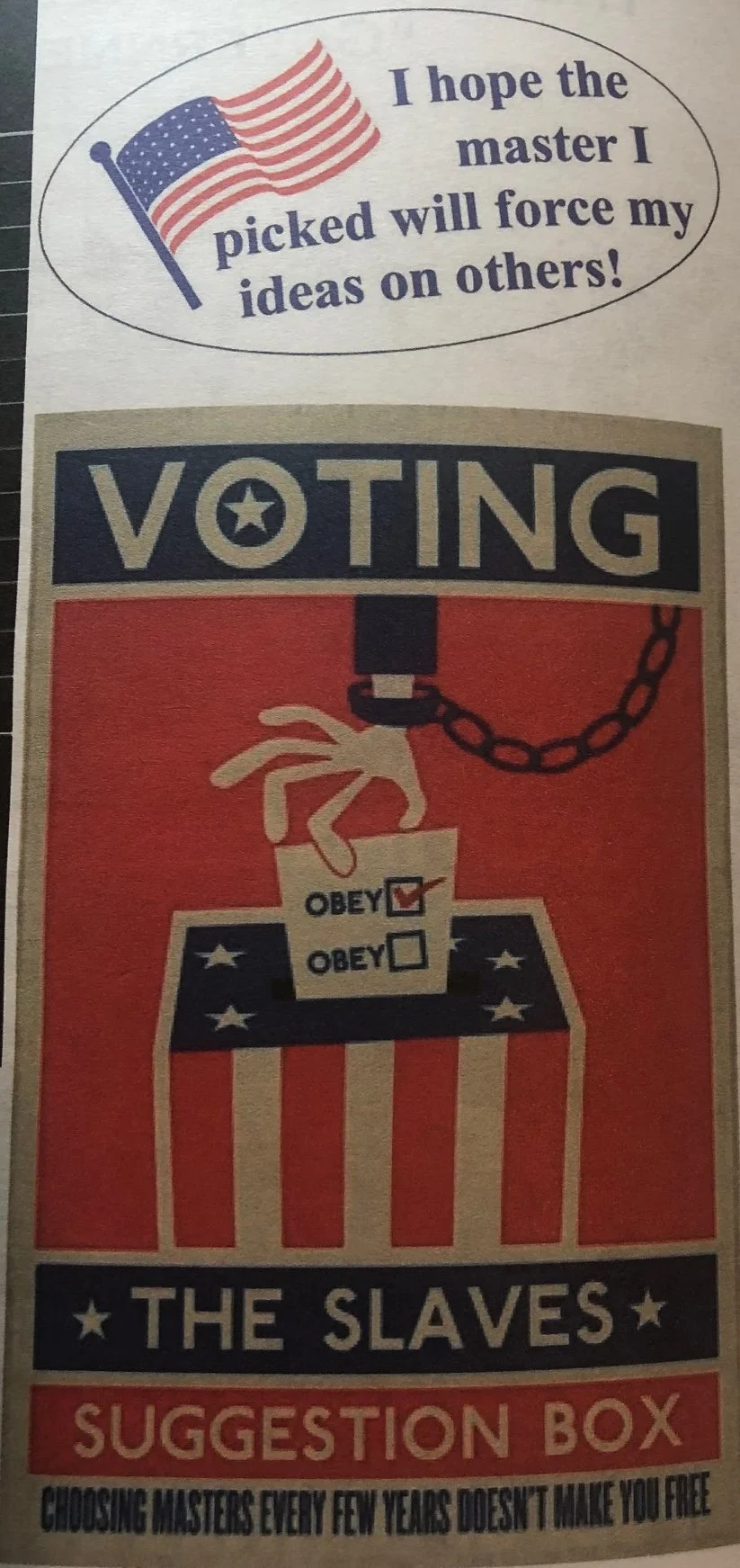
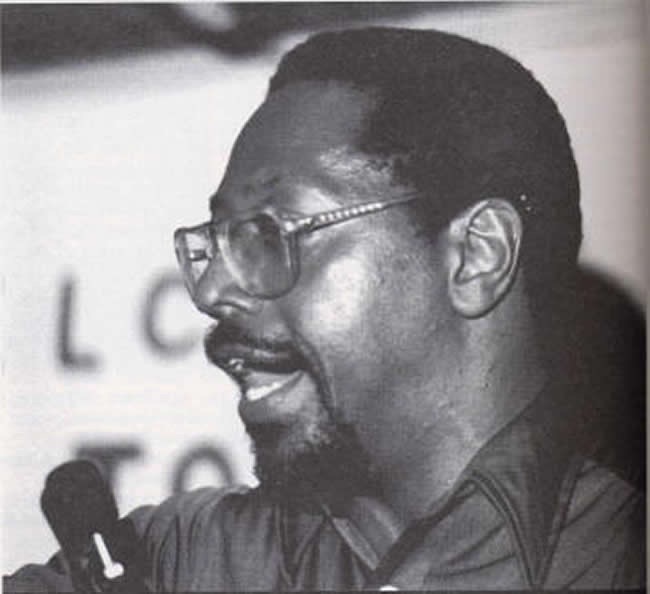
SOMETHING FOR NOTHING. ‘VOTING IS AN ILLUSION TO KEEP US QUIET, PACIFIED AND STUPID ABOUT OUR CONDITION.’ Dr. Amos Wilson explained, ‘The white liberal establishment [liberal dependent media, non-profit organizations, educational institutions and politicians] strives strenuously to convince the Black electorate that every conceivable problem which confronts it can be resolved through voting heavily for Black and friendly White politicians.’ It was no different after Michael Brown was killed: “Get out and vote to make change!”

But the reality was already there for anyone who had eyes to see:The Democratic Party has dominated St. Louis city politics for decades. In fact at the time of Brown’s murder there was a Black president, a Black Attorney General and lots of non-white representatives in Congress. Democrats controlled Ferguson/St. Louis and had significant power in Missouri. There was also a Democrat Governor (Jay Nixon), Democrat U.S. Senator (Claire McCaskill), a Democrat state attorney general (Chris Koster), a Democrat prosecutor (Robert McCulloch) overseeing the grand jury. At the time St. Louis city not had a Republican mayor since 1949 and the last time a Republican was elected to another city-wide office was in the 1970s. Additionally 95% of the city's 28 Aldermen were Democrats. At the federal level, in Missouri's 1st congressional district, a Republican had not represented a significant portion of St. Louis in the U.S. House since 1953. [MORE

Yet Blacks still had and have no power to get justice for Michael Brown. Clearly, in no way did voting for friendly white and Black politicians solve Black people’s problems in Ferguson or in NYC, Minneapolis, Atlanta, LA, Chicago or many other places where Black people are murdered in broad daylight by white cops. All such places have active Black votaries and no shortage of liberal democrat puppeticians. Right in our face; Blacks have no power to solve their problems. This is what powerless class means.

The fundamental rule of politics; the quid pro quo has not applied to electoral Black politics. Claude Anderson observes, “History does not show any instances in which Black Americans have been compensated on a quid pro quo basis for the political, cultural or economic contributions they have made.” He explains, “ Both White and Black candidates for public office, various political parties, and this nation, all get a free ride with Black voters. Black voters are led to believe there are two purposes to vote: 1) to elect the White candidate who is best able to lead and control resources or 2) to elect the Black candidate who is most deserving of a public job and personal recognition. The most we get is personal satisfaction that the candidate we supported won. We play politics just to play.“

Wilson states, ‘The dependent media is ever quick to remind the Black electorate of the historical struggles necessary to achieve their right to vote. It indicts the community for its electoral apathy and seeks to evoke guilt feelings in those who do not participate in the electoral process — making such ritualistic participation emblematic of democracy and first-class citizenship. This is of special interest when it is realized that very few, if any, of the major political, economic and social goals achieved by Black America, including the Voting Rights Act, were accomplished through Black voting prowess. The ballot box has been a relatively impotent weapon in the achievement of major victories by the Black community. Suddenly vigorous protest and direct-action legal suits and extralegal processes such as boycotts, sit-ins, and the like, which were used so effectively by the community to achieve its sociopolitical ends and to fight injustice and oppression, have fallen far behind the election of Black politicians to achieve the same ends.

Wilson states, that in reality the election of such politicians who in no way are interested in developing a program for the economic emancipation and empowerment of the Black community, and who are not committed to the final overthrow of White supremacy.’ [MORE]

Police Acknowledge that a White Man Known as 'Umbrella Man' Initiated the Riots in Minneapolis by Breaking the Windows of an AutoZone but Insist that said Racist Suspect is Not a Cop, media parrots

cop+like+white+man+at+protest+.jpg

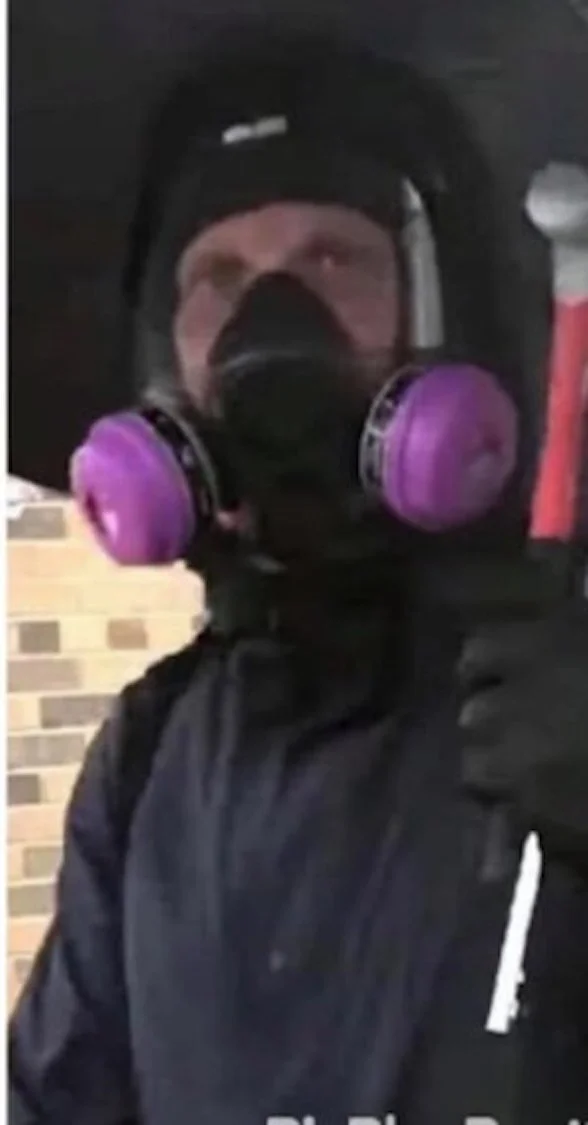
BREAKING WITHOUT ENTERING. From [HERE] Police say the masked, umbrella-wielding white man who smashed windows at a Minneapolis auto parts store two days after George Floyd's death has ties to a white supremacist group and specifically sought to inflame racial tensions. Police say a lot of things and lie much of the time. The dependent media parrots their statements and rarely do any investigation of their own. That is, when it comes to government violence against people of color reporters function as “repeaters.”

According to the Minneapolis Star Tribune, Minneapolis police arson investigator Erika Christensen wrote in a search warrant affidavit filed this week that the man's actions created a hostile atmosphere and sparked a series of events that turned previously peaceful protests chaotic. She said she believed his "sole aim was to incite violence." 

Minneapolis police spokesperson John Elder told NPR he is unable to comment on the investigation, which is "open and active." NPR has not seen the affidavit and is not naming the man because he has not been charged with a crime.

Video of the white individual breaking the windows of an AutoZone with a sledgehammer went viral this spring, prompting speculation about the identity of the so-called "Umbrella Man." 

The Star Tribune reported that the man had also spray painted "free shit for everyone zone" on the doors of the store, which was later burned to the ground.

In the Twin Cities of Minneapolis and St. Paul, roughly 500 businesses were damaged or looted, with nearly 70 of them burned to the ground.

"This was the first fire that set off a string of fires and looting throughout the precinct and the rest of the city," Christensen wrote in the affidavit, according to reports. "Until the actions of the person your affiant has been calling 'Umbrella Man,' the protests had been relatively peaceful."She also wrote that she had watched "innumerable hours" of social media videos in her search for the suspect, which was unsuccessful until a tip arrived in the police department's inbox last week. 

The tipster identified the man as a Hell's Angels member, and said he "wanted to sow discord and racial unrest by breaking out the windows and writing what he did on the double red doors," reported the Star Tribune. yep. k.

While the man's face was obscured by a gas mask in the video, Christensen reportedly wrote in the affidavit that his height lines up with the video, and noted a "striking resemblance in the eye, nose bridge and brow area."

Black Conservative AG Appointed to Breonna Taylor's Case who Never Tried a Case and has No Court Experience is Now Baffled by How To Apply Evidence/Facts to Law, Continues to Stall Charging White Cops

SLEEPING TOM ONLY RUSHES FOR MASSA. FUNKTIONARY EXPLAINS:BLACK CONSERVATIVE - A LOST SHEEP IN MASTER'S CLOTHING. A BLACK CONSERVATIVE TYPICALLY HAS NOTHING OF HIS OWN TO CONSERVE WITH THE EXCEPTION OF HIS OR HER OWN DOUBLE-CONSCIOUSNESS. SO-CAL…

SLEEPING TOM ONLY RUSHES FOR MASSA. FUNKTIONARY EXPLAINS:

BLACK CONSERVATIVE - A LOST SHEEP IN MASTER'S CLOTHING. A BLACK CONSERVATIVE TYPICALLY HAS NOTHING OF HIS OWN TO CONSERVE WITH THE EXCEPTION OF HIS OR HER OWN DOUBLE-CONSCIOUSNESS. SO-CALLED "BLACK CONSERVATIVES" DODGE THE REALITY OF THEIR FOLLY AND POSIT IS THAT WHAT THEY TRULY ARE CONSERVING IS TRADITIONAL "VALUES" AS IF VALUES EVER HAD ANYTHING WHATSOEVER TO DO WITH MORALITY OR ETHICS. A BLACK CONSERVATIVE UNKNOWINGLY PRESERVES THE DIFFERENTIAL POWER-RELATIONS AND DYNAMICS BETWEEN THOSE OF AFRICAN DESCENT HE AND THEIR BOSSES, THE OVERRULING OVERCLASS ELITE. [MORE]

From [HERE] Kentucky officials offered new details on Friday in the investigation into the death of Breonna Taylor, a young Black medical worker who was fatally shot in Louisville, Ky., by plainclothes police officers who had entered her home.

Kentucky Attorney General Daniel Cameron has said little about the case since taking over the investigation in May amid ongoing protests and calls for immediate charges against the officers involved.

Taylor's death on March 13 helped ignite civil unrest across the country as people protested against racism and police brutality. Louisville police officers had executed a no-knock search warrant and used a battering ram to forcefully enter the young woman's apartment. She was not the person they were looking for, according to police.

Amid mounting pressure for a decision in the probe, Cameron said investigators were still gathering information.In a statement Friday, the AG's office said it was still waiting for key evidence, specifically related to the guns and bullets involved in the shooting.

"Attorney General Cameron remains committed to an independent and thorough investigation into the death of Ms. Taylor," the office said in a statement Friday. "The investigation remains ongoing, and we currently await additional testing and analysis from federal partners, including a ballistics test from the FBI crime lab."

The FBI confirmed that it collected a "significant amount of ballistic evidence" after searching Taylor's home in June. The white media parrots this stuff as if it were really real. Do you have any doubt that if a team of Black civilians wearing body cameras broke into a home and blindly and maliciously fired gun shots therein murdering a sleeping white woman that it would take 5 months for prosecutors or cops to find probable cause for a crime??

Cameron has routinely refused to put a timeline on his office's decision.

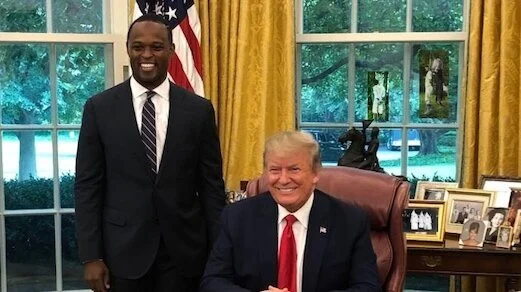
Daniel Cameron, 34, is the first Republican elected to the office since 1944 and is the first African-American Attorney General of Kentucky. He is a so-called Black conservative who was endorsed and heavily promoted by racists Donald Trump and Mitch McConnell. In fact, Mitch McConnell “hand-picked” his former staffer Cameron to run for Attorney General to strengthen his own political empire before his own re-election in 2020.

Prior to Cameron’s election as AG in 2019 he had never tried a case of any kind, never represented an actual client in a court case and had no courtroom experience. He also never argued a legal brief before either the appellate court or the Supreme Court — at the state level or federal level. Cameron’s only experience was working as general counsel for Senate Majority Leader Mitch McConnell for 2 years, working as a law clerk and working for a law firm that focused on lobbying - positions that have no meaningful relevance to prosecutorial trial and appellate work. [MORE] and [MORE].

After being sworn in on December 17, 2019, one of the first major things the newly elected AG did was call for halting abortions in Kentucky during the coronavirus pandemic, arguing it was an elective medical procedure that should fall under the statewide ban for the duration of the pandemic. [MORE] Cameron said he has not personally experienced the kind of racism the demonstrators are marching against. [MORE]

On May 13th Attorney General Daniel Cameron was named as a Special Prosecutor in the investigation into the death of Louisville EMT Breonna Taylor. The Republican was appointed by Gov. Andy Beshear after calls for investigations grew in Kentucky and nationwide. During his run for AG Cameron campaigned with white cops to create his image as a servant of authority.

killed+breonna 2.jpg

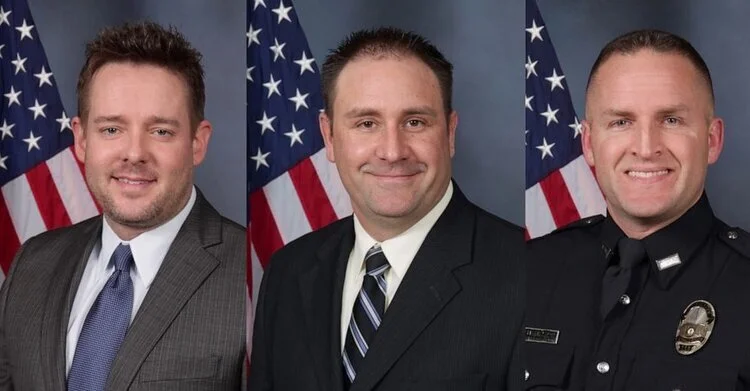
Taylor a 26-year-old emergency medical technician, was fatally shot to death by white Louisville Metro Police Department (LMPD) officers on March 13, 2020 while she was sleeping. Three LMPD officers executing a no-knock search warrant entered her apartment in Louisville. The LMPD officers fired over twenty shots. Taylor was shot eight times.

The cops had a search warrant for Breonna’s apartment, where the officers were searching for Jamarcus Glover who lived in a different part of Louisville. LMPD was successful in locating Glover at his home, detaining him, executing a search, identifying drugs and firearms, and arresting Glover.

Glover was located and identified by LMPD prior to the warrant being executed at home. Despite this, the white cops elected to proceed with executing the warrant at home.

As confirmed by multiple neighbors, the officers did not knock or identify themselves prior to entering Breonna’s home. Knocking and announcing is critical for a warrant of this nature to be executed safely. Reasons include but are not limited to the following:

  1. The officers were in plain clothes;

  2. It was 12:40 in the morning;

  3. The home was part of a large unit of connected homes containing children;

  4. There was nothing to indicate that Breonna Taylor and Kenneth would flee or

    pose an unreasonable danger if the officers knocked and identified themselves as police; and

  5. Individuals, under several circumstances, have a lawful right to use deadly force in order to defend against those who enter their home. [MORE]

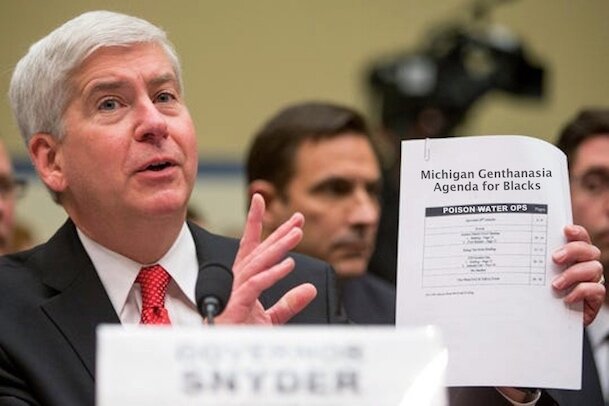
Ct says No Basis to Dismiss Racist Suspect Governor from Flint Case: Snyder Oversaw the Switch to Contaminated Water and then Refused to Switch Back, Knowing [mostly Black] People were Being Poisoned

snyder devil .jpg

The Sixth Circuit denied immunity to Michigan government defendants, including former Governor Rick Snyder, in actions stemming from the Flint water crisis based on the court’s previous findings that the officials played direct roles in creating the crisis. The order states:

“This is an appeal from one of the many strands of the Flint Water Crisis litigation. The City of Flint and City and State officials (collectively, “Defendants- Appellants”) allegedly caused, sustained, and covered up the poisoning of the people of Flint.

Defendants-Appellants in this case are largely the same as those that were parties in In re Flint Water Cases (Waid v. Snyder), 960 F.3d 303 (6th Cir. 2020).3 There are no new Defendants-Appellants in this case, the claims at issue are the same, and we again take their appeal at the motion-to-dismiss stage.4 In Waid, we decided that the same City and State officials who are Defendants-Appellants in this case plausibly violated plaintiffs’ substantive due process right to bodily integrity and are not entitled to qualified immunity. Id. at 311. We additionally rejected the City of Flint’s and Governor Whitmer’s arguments that the Eleventh Amendment requires their dismissal from the case.”

The order explains in respone to the concurrence;

“The plaintiffs in Waid alleged that Snyder personally helped coordinate the City of Flint’s switch from clean Detroit Water and Sewerage Department (“DWSD”) water to contaminated Flint River water. Waid, 960 F.3d at 330. Plaintiffs-Appellees additionally allege in this case that Snyder not only knew that the Flint River would serve as an interim water source, but that he knew that there were no plans to update the water plant so that it could treat the water properly before making the switch. R. 185-2 (Am. Master Compl. at 35–36, ¶ 109) (Page ID #5076–77). Moreover, Snyder’s staff were told that “the ‘expedited timeframe’ for switching to Flint River water ‘is less than ideal and could lead to some big potential disasters down the road.’” Waid, 960 F.3d at 314 (internal quotation omitted).

Soon after the switch went into effect, General Motors cut off the Flint River water supply to its engine plant because the water’s chloride levels were so dangerously high that it would corrode the machinery. Id. at 315–16. In response, a member of Snyder’s executive staff “sent an email to the full team about comments in the media about Flint residents being treated as “lab rats,” and fretting that it might come out that the chemical composition of the water “exceeded health-based water quality standards.” Id. at 316 (internal quotation omitted). To prevent the crisis from snowballing, the executive staff member recommended that the Governor’s office ask the Emergency Manager for the City of Flint to switch Flint back to its prior source of clean water, the DWSD. Id. Snyder’s legal counsel agreed that the Flint River water issues were “‘downright scary’ and “advised that, ‘[t]hey should try to get back on the [DWSD] system as a stopgap ASAP before this thing gets too far out of control.’” Id. (internal quotation omitted).

Yet, Snyder did not try to switch Flint back to clean water, or to mitigate the crisis with protective equipment, or to acknowledge the dangers of the water contamination—even after his own chief of staff told him that “[t]he water issue continues to be a danger flag.” See id. at 318 (internal quotation omitted). Snyder’s office, instead, coordinated with the MDEQ Director of Communications to create political cover for Snyder’s administration. See id. Snyder’s office also managed to supply water coolers for State buildings, while refusing to distribute water filters to the people of Flint. See id. at 330. From these allegations, it is hard to imagine that Snyder was kept in the dark about the cause and extent of the crisis, and we do not hesitate to conclude that Snyder’s alleged personal actions demonstrated deliberate indifference.

But the concurrence’s point is not really about the plausibility of the pleadings or whether Snyder’s conduct shocks the conscience. The concurrence’s real issue with Waid is that we refused to dismiss a high-ranking government official from the litigation. To escape the Waid plaintiffs’ and Plaintiffs-Appellees’ extensive and personal allegations against former Governor Snyder, the concurrence peddles a new appendage to qualified-immunity doctrine that effectively would grant high-ranking officials absolute immunity regardless of the allegations. Snyder, in the concurrence’s view, simply is too high-up to be accountable. Perhaps that would be the case for a different governor in a different set of circumstances. Perhaps that would be the winning argument had the crisis in Flint not been under the public eye and had it not been orchestrated and debated at the highest levels of state government. But on these facts, Snyder is alleged to have coordinated the switch to Flint River water knowing that the water would not be treated for contamination. Snyder is alleged to have refused to switch Flint back to clean water, knowing that the people of Flint were being poisoned. Snyder is alleged to have hidden the full extent of the dangers and to have failed to take remedial actions. On these facts, Snyder is named to defend his own actions, not those of his subordinates, and there is no basis for dismissing him from this case. Thus, although we fail to see why saying so is relevant to the task at hand, we stand by our decision in Waid. [MORE]

If You Removed a Fly From Your Soup Would You Eat the Rest of It? Hundreds of Guilty Pleas & Convictions Based on Liar LAPD Cops' Testimony & Reports Under Review by Black Rolebot DA

jackie lacey authority.jpg

From [HERE] Hundreds of criminal cases involving three city police officers charged earlier this month with falsifying evidence are now under review by prosecutors after corruption allegations sparked questions about whether their past police work could be suspect.

Prosecutors are already analyzing pending cases to determine if they can move forward on the strength of evidence other than the charged officers’ testimony, but past cases and convictions — including those based on plea deals — could also be revisited, Los Angeles County Dist. Atty. Jackie Lacey said.

Her office is sending letters to more than 750 defendants whose cases listed one or more of the charged officers as potential witnesses, urging them or their attorneys to contact her office if they feel the officers’ involvement was prejudicial or merits further review.

Defendants who were convicted in cases involving officers Braxton Shaw, Michael Coblentz or Nicolas Martinez “should contact us for more information, so that together we can make a determination as to whether their conviction should stand,” Lacey said.

She said prosecutors would prioritize any cases in which the defendants are incarcerated.

“I’m extremely disappointed in the officers’ actions, because it does affect the criminal justice system and it affects how people view the criminal justice system — whether they have faith in it or not,” Lacey said. “I take it seriously.”

LAPD Chief Michel Moore called the review “appropriate.”

“An officer’s most critical value, aside from their heart and their compassion for people and dedication for service, is their integrity,” he said. “When that’s lost, it jeopardizes everything they’ve touched.”

The reviews are the latest step by law enforcement officials to address a scandal that broke earlier this year, involving LAPD officers allegedly identifying people they stopped as gang members or associates on field interview cards without evidence. Criminal justice reform advocates say such labels can follow people through their lives and hurt their ability to find employment and housing.

Lacey’s office filed a 59-count complaint earlier this month charging Shaw, Coblentz and Martinez with conspiracy to obstruct justice and multiple counts of filing false reports and preparing false evidence. Prosecutors alleged the officers wrote on field cards that people had admitted to being gang members when body-camera footage showed no such admissions or showed the individuals had explicitly denied gang affiliation.

Shaw is accused of falsifying 43 cards, Coblentz of falsifying seven and Martinez of falsifying two.

However, Lacey’s review goes far beyond those incidents, to include felony cases from the start of the officers’ careers. For Shaw, that is 206 cases involving 256 defendants since February 2009, according to district attorney records obtained by The Times. For Coblentz, that is 296 cases involving 345 defendants since July 2002. For Martinez, that is 122 cases involving 157 defendants since September 2010.

The officers, who were all assigned to the LAPD’s elite Metro Division, handled a range of cases, up to and including homicides.

Shaw’s credibility came into question in 2015 when a prosecutor discovered video from an LAPD patrol car that contradicted testimony Shaw gave about a weapons arrest. The following year, a judge tossed out an unrelated firearm case after prosecutors disclosed their investigation of Shaw.

Attorneys for the officers did not respond to requests for comment. Greg Yacoubian, an attorney for Shaw, has previously said Shaw did nothing wrong, and followed directions from his commanders.

While prosecutors are proactively reviewing pending cases, Lacey said it will be “more efficient” in closed cases for her office to wait on defense counsel to “tell us whether they wish to have it reopened or re-examined.”

For those cases in which the charged officers are major witnesses, Lacey said prosecutors will determine whether dismissal is “in the interest of justice.”

However, Lacey said many criminal cases are built on evidence beyond the word of individual officers, and it’s possible that few will be undone.

“It may be that the officers, although listed as a subpoenaed witness, may not have witnessed anything, may not be a key player, or there may be other witnesses who corroborated that a crime occurred,” Lacey said.

Moore said he is confident the state “does not just have to rely on those officers’ accounts” to prove many of the cases identified.

Defense attorneys who specialize in gang cases, however, suggested the impact of the officers’ alleged actions goes beyond guilt or innocence, including by serving as the basis for labeling defendants as gang members, which can lead to harsher sentences.

Stephen Kahn, a Beverly Hills defense attorney who specializes in gang and felony cases, said those harsher sentences could also require a remedy if the officers’ testimony was found to be crucial to the filing of an enhancement. Inaccurate gang pronouncements, he said, leave defendants at a steep disadvantage at trial.

“It implies that he’s a bad guy, and therefore, he’s guilty. It really changes the whole tenor of the case,” Kahn said. “It makes it harder to ever settle the case. It forces these people, most of whom have public defenders … to take a deal. And a lot of people plead to things that they would not have plead to, but for the gang allegations.”

In addition to the Metro scandal, a 2016 audit of the statewide CalGang database found the LAPD was one of several agencies that “could not substantiate” the reasons it had added people. In 2018, a federal judge barred the LAPD from enforcing most of the city’s gang injunctions — which restrict movements of suspected gang members — by ruling the department had violated the individuals’ due process rights.

Lacey, who has been criticized as being weak in holding officers accountable and faces stiff competition from challenger George Gascón in the district attorney race in November, said her prosecutors use a range of sources and information beyond that provided by the LAPD to verify gang affiliations — including “tattoos and Facebook posts” — and will continue to do so to seek higher sentences fairly.

“Gang crime does happen and there are innocent people who are living in communities who want prosecutors to address gang crime,” Lacey said. “For me, the bottom line is: Be careful with this evidence. Make sure you have enough evidence to prove that someone did something for the benefit of a gang. You shouldn’t just charge these gang enhancements without really checking it out.”

In addition to Shaw, Coblentz and Martinez, more than 20 other LAPD officers are under investigation in the field card scandal. If any are criminally charged, their past cases may also be reviewed, Lacey said.

Peter Bibring, a senior staff attorney for the ACLU, said Lacey’s review falls far short of what’s necessary to mitigate misconduct that likely goes beyond the three charged officers. Instead of putting the onus on defendants to repair a mistake caused by officer misconduct, Bibring suggested her office’s Conviction Review Unit initiate a case audit.

“Just simply notifying defense attorneys in cases where these specific cops testified definitely doesn’t get at the harm this scandal has caused,” he said.

Supreme Ct Lifts Injunction Implementing COVID Measures at CA Jail that Reported 15 New Cases in a Week and Allowed Symptomatic Inmates To Commingle in General Population, thereby Spreading the Virus

law over humanity 32.jpg

From [HERE] and [HERE] The U.S. Supreme Court on Wednesday lifted an injunction requiring the sheriff of Orange County, California, to implement COVID-19 safety measures at the jail.

The Wednesday ruling in Barnes v. Ahlman involves the Orange County Jail, which is located in Santa Ana, California, and currently houses more than 3,000 inmates, many of them awaiting trial. Between late March and Aug. 3, 476 people tested positive for COVID-19 at the jail. A group of inmates sued jail officials in April, alleging that the officials were failing in various ways to prevent the spread of the virus. They said the jail was ignoring recommendations from the Centers for Disease Control and Prevention by refusing to allow social distancing and failing to isolate symptomatic inmates. They alleged that inmates “were required to clean the bedding of detainees who tested positive for COVID-19” and that infected or symptomatic detainees were allowed to mingle with others in common areas of the jail. They also said the jail lacked proper cleaning supplies and personal protective equipment.

In one case, after a detainee tested positive for COVID-19, he was housed with those who had not tested positive, sharing “the same showers, phones, and pass[ing] the same newspaper around cell to cell.” Miranda Decl., ECF No. 41-14 at ¶ 25. Others that were infected and/or symptomatic were allowed to “comingle . . . in the common day room, playing chess and cards,” with no regard for their ability to infect others. [MORE]

On May 26, a federal district judge in California issued a preliminary injunction requiring the jail to take various public health measures to combat the spread of the virus. Among other things, the injunction ordered the jail to allow inmates to maintain at least six feet of social distancing; ensure that staff wear CDC-recommended masks and other personal protective equipment; immediately test inmates, staff or visitors who show symptoms of COVID-19; properly quarantine anyone who has the virus or was exposed to it; and provide soap, hand sanitizer and other cleaning products to inmates.

Jail officials appealed to the U.S. Court of Appeals for the 9th Circuit and asked that court to pause the injunction while the appeal proceeded. The 9th Circuit declined to do so, prompting the officials to ask the Supreme Court for an emergency stay of the injunction.

In their application to the justices, the officials said the district court’s injunction was an unwarranted micromanagement of local jail procedures by the federal judiciary. They said that, prior to the injunction, the jail had “largely implemented” CDC guidelines “to the extent possible,” and they complained that the injunction required measures not endorsed by the CDC. They also said that, between March 1 and May 19, they voluntarily released more than half of the jail’s inmates to provide more space within the jail for social distancing. And they said they have “essentially eliminated COVID within the jail population with the exception of new detainees.”

Lawyers for the inmates disputed the officials’ claim that the virus is under control at the jail. They told the justices that, on July 24, a record-high 56 symptomatic individuals were in medical isolation at the jail, up from four symptomatic individuals who were in isolation a month earlier. “Even these numbers are likely an underestimate of the true extent of the disease,” they said, because jail officials “have never attempted or even claimed to test everyone, regardless of symptoms.”

In a three-sentence order on Wednesday, the Supreme Court sided with the jail officials and granted their request for a temporary stay of the district court’s injunction while the litigation proceeds. The five conservative justices voted to grant the stay but, as is customary with emergency orders, did not explain their reasoning. Sotomayor’s dissent was joined by Justice Ruth Bader Ginsburg. Justices Stephen Breyer and Elena Kagan noted that they would have denied the request for a stay, but they did not join Sotomayor’s dissent.

In her dissent, Sotomayor called the majority’s decision to grant the stay an “extraordinary intervention” that failed to respect the findings of the district court, including a finding that – contrary to the assertions of jail officials – the jail had fallen “well short” of CDC guidelines and “exposed its inmates to significant risks from a highly contagious and potentially deadly disease.” And she argued that the Supreme Court’s action is premature. Citing her own dissent from the court’s decision last week to impose a stay on a lower court’s ruling that had loosened Idaho ballot-initiative rules during the pandemic, Sotomayor wrote that “[t]his Court again intervenes to grant a stay before the Circuit below has heard and decided the case on the merits.”

She wrote, “This court stays the district court’s preliminary injunction,” Sotomayor wrote, “even though the jail recently reported 15 new cases of COVID-19 in a single week (even with the injunction in place), even though the jail misrepresented under oath to the district court the measures it was taking to combat the virus’s spread, and even though the jail’s central rationale for a stay (that the injunction goes beyond federal guidelines) ignores the lower courts’ conclusion that the jail’s measures fell ‘well short’ of the Centers for Disease Control and Prevention (CDC) guidelines.”

The jail asserted that it was implementing social distancing, providing enough soap for frequent hand-washing, and isolating and testing symptomatic individuals.

“Dozens of inmate declarations told a different story,” Sotomayor said.

Inmates said they were transported to and from the jail in cramped buses, they socialized in dayrooms with no space for social distancing, and they slept in bunk beds 2 to 3 feet apart, Sotomayor said.

Inmates were told that they could best protect themselves with frequent hand-washing, but many inmates said they received just one small, hotel-sized bar of soap per week. Many inmates said they were denied COVID-19 tests, and some told of sharing common spaces with infected or symptomatic individuals.

“The jail also faces an uphill battle in its claim of irreparable harm,” Sotomayor said. “The measures it now decries as vexatious judicial micromanagement are the same measures that just months ago it claimed were, ‘at a minimum,’ already being implemented. If the jail is already doing everything required by the injunction, then what irreparable harm does the injunction pose? And if it is not, and the jail misrepresented its actions under oath to the district court, then why should the jail benefit from this court’s equitable discretion?”

The New York Times, the Washington Post and SCOTUSblog had coverage of the Supreme Court’s order.

The case is Barnes v. Ahlman.

A Black Man and Woman Were Tried for Murder but Only the Shooter Will Get a New Trial b/c Only his Atty Objected to the Judge’s Refusal to Ask Jurors About Whether They Could Presume Innocence

scales of justice by doggy.jpg

From [HERE] They were tried together but only the shooter will get a new trial because his attorney objected to the judge’s refusal to ask prospective jurors if they could presume the defendants innocent while the lawyer for the co-defendant convicted of handgun offenses failed to object, Maryland’s second-highest court ruled this week.

In fact the DA acknowledged that the judge made an error and conceded that both defendants were entitled to reversal and a new trial but the appeals court rejected the concession saying that the Black woman’s attorney failed to make a timely objection.

The Court of Special Appeals of Maryland summarized the case by stating:

“A popular [*2]  bartender, Alex Wroblewski, was shot and killed at a Royal Farms store in Locust Point, where he had stopped on his way home after a shift. After a joint trial in the Circuit Court for Baltimore City, a jury found Tonya Hayes guilty of transporting a handgun in a vehicle and conspiracy to transport a handgun in a vehicle and Marquese Winston guilty of second-degree murder, use of a handgun in the commission of a crime of violence, transporting a handgun in a vehicle, conspiracy to transport a handgun in a vehicle, and carrying a handgun on his person. Ms. Hayes and Mr. Winston raise numerous challenges to their convictions. We affirm Ms. Hayes's convictions but reverse Mr. Winston's, and we remand his case for further proceedings consistent with this opinion.”

The court explained,

“Surveillance cameras captured the incident, and the jury heard eyewitness testimony alongside the footage.

On November 14, 2017, Lawrence Greene worked the graveyard shift at the Royal Farms. That night, Mr. Wroblewski, who was a regular, came in at around 1:00 a.m., whereas he "normally [came] in between [*3]  2:30 and 3:00 in the morning." According to Mr. Greene, Mr. Wroblewski "was toasted when he came in." He remained in the store for about fifteen minutes and ordered food, but as he was leaving, "[h]e was stumbling all over the place." At that point, Mr. Greene saw "a young boy and then a older woman, the woman, heavyset, light skinned" come into Royal Farms. When the two saw Mr. Wroblewski, "the young man got really happy" and "was jumping up and down, skipping." When Mr. Wroblewski left the store, the two followed him. Video surveillance at Royal Farms confirmed everything to this point.

Mr. Wroblewski's condition and the behavior of the young man and older woman led Mr. Greene to go check on Mr. Wroblewski. As he approached, he heard a "bang" and went "all the way up by [Mr. Wroblewski]," saw that he was "laying on his back," and "checked his pulse and [saw] that he was still living, he was still breathing and everything." Mr. Greene observed that Mr. Wroblewski still had "his food, his bag, his cell phone and [] his wallet . . . beside him." He went back in the store and told another employee to call 911.

Kiara Giddons was the cashier on duty that night. She described Mr. Wroblewski [*4]  as "wasted" when he arrived. She testified that after he paid for his food, he went towards the window where there was a bar stool, and he sat there for a minute. Ms. Giddons saw "three people—two people getting out the car, [] a lady and a man getting out the car. And the other guy [] just sat in the car. They parked [near] the gas station." Ms. Giddons saw the woman and the man come into the store, and when Mr. Wroblewski left, the pair immediately left as well. Ms. Giddons testified that she walked outside and saw Mr. Wroblewski walking up the street, then she "heard one gunshot." She and Mr. Greene ran to where Mr. Wroblewski was lying, and Ms. Giddons then ran back in the store to call 911.

Lasheka Moore was the manager on duty. She testified that Mr. Wroblewski "was a regular" at the Royal Farms, but that night, "he spent a little bit more time than usual in the deli area" and "[a]ctually laid his head on top of the deli." Ms. Moore "walked over to [Mr. Wroblewski] and was, like, hey, why don't you go ahead and sit down, eat your food, wait for your friends to come[,]" and he replied "that he was okay." She testified that Mr. Wroblewski was in the store for about "10, 15 minutes" [*5]  and when he left, "he was staggering on his way out the door." She observed that the Black male and the Black female to whom Mr. Greene and Ms. Giddons referred in their testimony seemed "a little off" because "they came and pulled up to the gas pump, but didn't purchase anything." Ms. Moore identified Mr. Winston as the Black man and Ms. Hayes as the Black woman.

Ms. Moore testified further that Mr. Wroblewski left the store and walked "towards the Bank of America ATM machine." Mr. Winston then walked out ahead of Ms. Hayes, but when Ms. Hayes "was exiting the store, she looked in the direction of [Mr. Wroblewski], then looked back at the car." Ms. Moore saw Mr. Winston go to the back seat of the car, where "another male pops up out the car." Mr. Winston walked off a little bit, "and then the male that's in the backseat gets out the car and throws his hood over his head." They both "went walking across the parking lot towards the direction that [Mr. Wroblewski] was going in." Ms. Hayes "jumped in the driver's side, pulled off slow, like as if she was behind them."

Ms. Moore testified that at that point, she "grabbed a broom and [] went outside to sweep the sidewalk, [] made it to about [*6]  the Bank of America ATM machine, [when she] heard a gunshot." She later identified all individuals involved through a photo array.

Dr. Patricia Aronica was the medical examiner who performed Mr. Wroblewski's autopsy. She testified that Mr. Wroblewski had "an entrance gunshot wound to the abdomen and there were also some additional injuries which were multiple abrasions which are like scrapes and scratches where the top layer of the skin comes off and then some bruising were also noted." She assigned the cause of death as the gunshot wound and the manner of death as homicide. Dr. Aronica described how the gunshot wound killed him:

[THE STATE]: And what type of wound would you have considered this as far as—would it have been considered a rapidly fatal wound or not so rapid, how would you describe this wound?

[DR. ARONICA]: Well, this is a fatal wound but because it hit—the bullet hit all these veins, it's a slower bleeding wound then say if it hit arteries. It's going to bleed slower, it's also going to cause intestinal contents to come out into the abdomen so it has great potential for infection, if they were able to stop all of the bleeding, but there was massive amount of blood loss [*7]  but it would be slower and very difficult because of all the injuries that it did create to the veins.

She opined that there was "no evidence of close range firing" and that "[t]he level of alcohol had no effect on [Mr. Wroblewski's] death."

Tivontre Gatling-Mouzon, who pled guilty to conspiracy to commit armed robbery for his involvement in the killing of Mr. Wroblewski, testified on behalf of the State. Mr. Mouzon is Ms. Hayes's son. He testified that Ms. Hayes picked him and Mr. Winston up in Richmond, Virginia to drive to Baltimore to pick up his younger sister, Tiana Witherspoon, who was living there with her father. They stopped that night at Royal Farms to get gas after picking up Ms. Witherspoon.

Mr. Mouzon testified that Mr. Winston and Ms. Hayes went into the store while he sat in the car with his sister. While they waited, Mr. Winston came back to the car and "reached down by [his] leg." Mr. Winston asked Mr. Mouzon "to come with him around the corner . . . ." Mr. Mouzon followed Mr. Winston and saw him "conversating with the victim, arguing . . . ." He described this encounter as "a confrontation." Then Mr. Winston approached Mr. Wroblewski, and Mr. Mouzon "s[aw] the gun[]" in Mr. Winston's hand. After more confrontation, he began to head back to the car, but before he got in he "heard a shot." By then, Mr. Winston "was already coming to the passenger side to get in." They all left the area and went back to Richmond.

Detective Jonathan Riker was the homicide detective assigned to the case. He testified that he put the Royal Farms surveillance video on social media to try to locate the individuals responsible for killing Mr. Wroblewski. Through social media, Detective Riker was able to identify the woman as Ms. Hayes. He then reached out to Ms. Witherspoon's father, Steven Witherspoon. Mr. Witherspoon identified Mr. Winston as the male in the video and he also was able to identify Mr. Mouzon. Detective Riker located Mr. Mouzon in Richmond. The Detective put Ms. Hayes's vehicle information in the National Crime Information Center database and was able to locate her and Mr. Winston in Atlanta, Georgia; Officer Justin Hartsfield, a police officer in Atlanta, pulled Ms. Hayes over in her vehicle in response to a "Be On The Lookout" ("BOLO") alert identifying her as "armed and dangerous." The Atlanta Police then contacted Detective Riker, who along with Detective [*9]  Dave Moynihan, flew to Atlanta to interview Ms. Hayes and Mr. Winston. No gun was ever recovered.

Mr. Winston testified in his own defense. He testified that on the evening of November 14, 2017, Ms. Hayes drove up from Atlanta, where she was living, and picked him up to drive to Baltimore to "pick up her daughter." According to Mr. Winston, they did not intend to stay the night in Baltimore and planned to travel immediately back to Richmond after picking up Ms. Witherspoon. He testified that before and while heading to Baltimore, he had been drinking vodka and beer, had used cocaine and marijuana, and was intoxicated.

Mr. Winston testified that after they picked up Ms. Witherspoon, they stopped at Royal Farms. When they approached the store, he saw "Mr. Wroblewski coming out the store, [and] witnessed [Mr. Wroblewski] hock spit in [Ms. Hayes's] direction." This made him feel "disrespected." He said that he did not immediately confront Mr. Wroblewski because he was "under the influence, it didn't sink in right then and there." He was "carrying [his] gun" into the Royal Farms because he did not want "to leave a gun inside of a car with the kids." He left the store to "catch up" with Mr. [*10]  Wroblewski "[t]o make him aware of his actions and to get an apology." Mr. Winston "confront[ed] [Mr. Wroblewski] and let[] [Mr. Wroblewski] know that he just spit at [Ms. Hayes] and he needed to give . . . an apology." Mr. Winston testified that during the confrontation, Mr. Wroblewski "started to swing with his [right] hand." Mr. Winston then "backed up," "pull[ed] a gun from [his] right hand and fir[ed]" "[o]ne time." After he shot Mr. Wroblewski, he "ran to the car" and "told [Ms. Hayes] to drive."

The jury found Ms. Hayes guilty of transporting a handgun in a vehicle and conspiracy to transport a handgun in a vehicle. The jury acquitted Ms. Hayes of attempted robbery with a dangerous weapon, attempted robbery, conspiracy to use a handgun in the commission of a crime of violence, conspiracy to commit robbery with a dangerous weapon, and conspiracy to commit robbery. The court sentenced her to three years' incarceration for transporting a handgun in a vehicle and three years' incarceration for conspiracy to transport a handgun in a vehicle, all but one year suspended, consecutive to the sentence for transporting a handgun in a vehicle. The court also imposed a probation period of [*11]  thirty days.

The jury found Mr. Winston guilty of second-degree murder, use of a handgun in the commission of a crime of violence, transporting a handgun in a vehicle, conspiracy to transport a handgun in a vehicle, and carrying a handgun on his person. The court sentenced Mr. Winston to forty years' incarceration, suspending all but thirty, for second-degree murder; ten years' incarceration for use of a handgun in the commission of a crime of violence, consecutive to the sentence for second-degree murder; three years' incarceration for transporting a handgun in a vehicle, concurrent with all other sentences; three years' incarceration for conspiracy to carry a handgun in a vehicle, to run concurrent with all other sentences; and three years' incarceration for carrying a handgun, concurrent with all other sentences.

Ms. Hayes and Mr. Winston filed timely notices of appeal. We consolidated their appeals because they present overlapping issues, arise from the same operative facts, and were tried together in the circuit court. We supply additional facts as needed below.

abused its discretion in declining to ask voir dire questions about the State's burden of proof and the defendant's right not to testify. Second, both Ms. Hayes and Mr. Winston raise challenges to certain jury instructions the court gave, or declined to give, before deliberation. Third, Mr. Winston lodges a constitutional challenge, asserting that his right to a speedy trial under the Sixth Amendment was violated. Fourth, Ms. Hayes challenges the sufficiency of the evidence to support her convictions. Finally, Ms. Hayes asserts that she received ineffective assistance of counsel at trial. We affirm Ms. Hayes's convictions but reverse Mr. Winston's convictions on the ground that the circuit court abused its discretion when it failed to propound the voir dire questions regarding the State's burden of proof and the defendant's right not to testify.

A. The Voir Dire Questions.

During voir dire, Mr. Winston's counsel requested that the court ask the following questions, which the court declined:

[MR. WINSTON'S COUNSEL]: Yes. The next request would be, as far as defense voir dire would be question number 20, defense's proposed voir dire for Mr. Winston, "In a criminal case like this one, each side may present arguments about the evidence but only the State has the burden of proof. The defendant need not testify on his own behalf nor present any evidence. Would you hold it against the defendant if he were to exercise his Constitutional right to remain silent and/or his right to not present evidence?" I would ask that this question be asked, included in the Court's voir dire. I would also point out that during jury selection in this case, [*14]  the last time there were individuals that answered this question.

THE COURT: Okay. That is covered by the instructions, it is a classic catechizing voir dire question and the case law is again clear that not only is not required but it's disfavored so I'm not going to ask that.

[MR. WINSTON'S COUNSEL]: All right. Just but again note my objection for the record. I would also request defense jury voir dire question number 21, "You must presume the defendant innocent of the charges now and throughout the trial unless and until after you have heard all of the evidence, the State convinces you of his guilt beyond a reasonable doubt. If you do not consider the defendant innocent now or if you are not sure you will require the State to convince you of his guilt beyond a reasonable doubt, please stand." I would again ask that this question be read and again indicate that people did answer this question when it was on the proposed voir dire during our last jury selection.

THE COURT: All right. Again, that is a classic catechizing question, believe me, the jurors when they come up for their individual responses will be reminded repeatedly that your client and Ms. Hayes are presumed to be innocent [*15]  and that the burden rests with the State but I'm not going to ask that question.

[MR. WINSTON'S COUNSEL]: And again, I just note my objection. . . .

(emphasis added). Both Ms. Hayes and Mr. Winston assert that the circuit court was required to ask this question, and that reversal is required in light of a recent Court of Appeals decision in Kazadi v. State, 467 Md. 1, 223 A.3d 554 (2020), which reversed Twining v. State, 234 Md. 97, 198 A.2d 291 (1964)HN1 We review "for abuse of discretion a trial court's decision as to whether to ask a voir dire question." Pearson v. State, 437 Md. 350, 356, 86 A.3d 1232 (2014).

1. Ms. Hayes failed to preserve this issue for appellate review.

Because Kazadi was decided in the midst of the briefing in these cases, the parties filed supplemental briefs addressing the impact and application of that decision to these defendants. In its supplemental briefs in both cases, the State acknowledged that Kazadi, by its own terms, applied to "'any other cases that are pending on direct appeal when th[at] opinion was filed, where the relevant question has been preserved for appellate review'" (quoting Kazadi, 467 Md. at 47). From there, the State concedes that both Mr. Winston and Ms. Hayes are entitled to reversal and a new trial under Kazadi. Our review of the transcript, however, reveals that during the court's review of proposed  [*16] voir dire questions, Mr. Winston's counsel objected to the court's refusal to ask questions 20 and 21, but Ms. Hayes's counsel didn't. And because the preservation requirement identified in Kazadi was not met as to Ms. Hayes, she is not entitled to relief under Kazadi.

Under Maryland Rule 8-131, we "will not decide any [] issue unless it plainly appears by the record to have been raised in or decided by the trial court. . . ." Rule 4-323(c) governs, among other things, objections made during voir dire and jury selection:

[I]t is sufficient that a party, at the time the ruling or order is made or sought, makes known to the court the action that the party desires the court to take or the objection to the action of the court. The grounds for objection need not be stated unless these rules expressly provide otherwise or the court so directs. HN2 If a party has no opportunity to object to a ruling or order at the time it is made, the absence of an objection at that time does not constitute a waiver of the objection.

But if an opportunity to object presents itself and a defendant fails to object to a court's refusal to read a proposed question, the objection is waived. Brice v. State, 225 Md. App. 666, 679, 126 A.3d 246 (2015). And in cases involving multiple defendants, "each defendant [*17]  must lodge his own objection in order to preserve it for appellate review and may not rely, for preservation purposes, on the mere fact that a co-defendant objected." Williams v. State, 216 Md. App. 235, 254, 85 A.3d 367 (2014). A defendant "may expressly join in an objection made by a co-defendant but he must expressly do so." Id.

The State's concession of error, although well-intentioned, does not bind us, Coley v. State, 215 Md. App. 570, 572 n.2, 81 A.3d 650 (2013) (an appellate court is not bound by a party's erroneous concession of error on a legal issue), and we cannot discern any way in which Ms. Hayes preserved this contention for appellate review. In its concession, the State "acknowledge[d] that Hayes's case was pending on direct appeal at the time of the Court's decision, that the relevant question has been preserved for appellate review through objections filed during jury selection and renewed prior to accepting the composition of the jury," but doesn't say how the issue was preserved. Ms. Hayes claims in her opening brief that her counsel joined Mr. Winston's request for the two voir dire questions, but as reproduced above, the transcript reveals no joining or objection or statement of any kind at the time Mr. Winston asked the court to read the questions. The citation in Ms. Hayes's brief [*18]  identifies a statement by counsel a day later, and although counsel did say at that point in the transcript "I just want to say I want to incorporate the arguments of my co-counsel," the statement came after a discussion of voir dire question number 10. There is another passing (and uncited) mention (by Mr. Winston's counsel) of questions 20 and 21 shortly after, but no reaction or joining then by Ms. Hayes's counsel either.3 Nobody cites, and we haven't found, any omnibus statement that both defendants joined each other's objections or any other way to bring Ms. Hayes within Mr. Winston's objection. So as strange as it may seem in a case where the State joins in a defendant's request for a new trial, we are constrained to find that Ms. Hayes has not preserved this issue and is not entitled to relief under Kazadi.“

Harvard Study says If You Murder a White Person You are 17 Times More Likely to Be Murdered by the Government [Executed] than if You Murder a Black Person in its Racist System of Revenge [Justice]

revenge omnibus.jpg

From [HERE] and [HERE] Black lives do not matter nearly as much as white ones when it comes to the death penalty, a new study has found. Building on the work of a law professor who analyzed racial disparities in the Georgia death penalty and on data at the heart of a landmark 1987 Supreme Court decision, the study concluded that killers of white people are executed at a rate 17 times greater than killers of Black victims.

The new study, published in the Harvard Civil Rights-Civil Liberties Law Review, combined Georgia death sentence data studied by University of Iowa law professor David Baldus with information on actual executions carried out. The New York Times has coverage.

The new study found that 22 out of 972 defendants convicted of killing a white victim in Baldus’ study were ultimately executed, but only two out of 1,503 defendants convicted of killing a Black victim were put to death.

“Thus, the overall execution rate is a staggering 17 times greater for defendants convicted of killing a white victim,” write the authors of the new study, professor Scott Phillips and law professor Justin Marceau of the University of Denver.

Phillips and Marceau say the new data is important because a 1976 Supreme Court decision upholding Georgia’s death penalty downplayed racial disparities by emphasizing the role of appellate review. The new research “shows that post-sentencing proceedings exacerbate, rather than remediate, the problems of arbitrariness,” the authors write.

Baldus, who died in 2011, had analyzed sentencing in more than 2,000 murders in Georgia from 1973 to 1979. He found that killers of white victims were four times more likely receive a death sentence that killers of Black victims. He did not analyze how many executions were actually carried out because so much time passes between sentencing and execution.

The U.S. Supreme Court considered Baldus’ findings in McCleskey v. Kemp, a 1987 decision that found the death penalty is constitutional despite statistical disparities in the system.

Professor Baldus’s study examined more than 2,000 murders in Georgia from 1973 to 1979, controlling for some 230 variables.

In 1990, the General Accounting Office, now called the Government Accountability Office, reviewed 28 studies and determined that 23 of them found that the race of the victim influenced “the likelihood of being charged with capital murder or receiving a death sentence.”

“This finding was remarkably consistent across data sets, states, data collection methods and analytic techniques,” the report said. A 2014 update came to a similar conclusion.

Homeland Security Targets Citizens Not Criminals. Under the Pretext of Fighting Crime It has Seized $2 Billion from Travelers Since 2000, Most Victims Were Never Charged w/a Crime

currency seized.jpg

From [HERE] Anthonia Nwaorie headed to a Houston airport with more than $41,000 in her bags in 2017, planning to use the cash to build a free medical clinic for women and girls in her native Nigeria, according to a lawsuit. But the registered nurse was stopped on the boarding bridge by agents from Customs and Border Protection, who claimed she failed to report taking more than $10,000 out of the country as required by federal law. Nwaorie’s currency was seized and though she was never charged with a crime, it took months and a legal battle before CBP returned the money without conditions. Such seizures are hardly unique. More than $2 billion was taken from travelers at the nation’s airports by the CBP and other agencies now associated with the Department of Homeland Security between 2000 and 2016, according to a first-of-its-kind analysis of a government database of every seizure.

Federal law allows CBP and other agencies to take cash from travelers as a way to combat drug trafficking and other criminal enterprises, but the new report by the Institute for Justice found nearly 70 percent of such cases are like Nwaorie’s — no arrest accompanies a seizure.

Law enforcement agencies across the country routinely seize currency from innocent travelers using civil forfeiture—a legal process that allows agencies to take and keep property without ever charging owners with a crime, let alone convicting them of one. This is in contrast to criminal forfeiture, which requires that prosecutors secure a conviction against an owner before forfeiting their property through criminal procedures. Proceeds from both civil and criminal forfeitures are deposited into a federal forfeiture fund and later shared with seizing agencies.

Thanks to newly available data, this study is the first to quantify just how often CBP and other U.S. Department of Homeland Security agencies have seized currency at airports over the years—and just how much currency has flowed into the government’s coffers as a result.

Critics argue federal agencies are abusing civil forfeiture to fatten budgets, since the cash flows into government coffers and is redistributed. The report found DHS airport seizures have exploded over the decade-and-a-half studied, climbing 178 percent. In all, DHS agencies made more than 30,500 cash seizures during the period.

DHS agencies seize millions of dollars from thousands of individuals each year. Between 2000 and 2016, DHS agencies conducted at least 30,574 currency seizures at domestic airports, for an average of at least 1,798 seizure cases per year. All told, they seized at least $2 billion in currency over this period. And more than three-quarters of those seizures were of cash—an asset that can be quickly and easily deposited into government forfeiture accounts. Airport currency seizures have markedly increased in recent years. The value of currency seized at airports by DHS agencies more than doubled between 2000 and 2016, from at least $74 million in 2000 to at least $178 million in 2016 (Figure 1). The number of DHS agency currency seizure cases at airports likewise nearly tripled over this period, from 931 in 2000 to 2,592 in 2016.

Dulles International Airport led the nation in DHS seizures during 2016, the latest year for which data was available. About $41 million was taken from travelers, or nearly a quarter of the amount seized nationwide, according to the report. Dulles only accounts for 2 percent of the nation’s air travelers. Indeed, some media reports suggest DHS agents working at Dulles specifically target currency for seizure. For example, a Washington, D.C., news station reported that, from July 2017 to March 2018, CBP agents working at Dulles conducted 10 seizures of cash going to or coming from Ghana. In response to media inquiries about this trend, a CBP official stated, “We talk about a global economy—well, guess what? The bad guys and smugglers are also involved in the global economy.” But there is little evidence that agents were actually targeting “bad guys”: None of the money from any of the 10 seizures was linked to criminal activity.

The report states:

“The most common reason provided for airport currency seizures is a reporting violation. That is, the traveler allegedly failed to file required paperwork (Table 3). Federal law requires people to file a FinCEN Form 105 with CBP when they are traveling into or out of the country with $10,000 or more in currency. The law was originally intended to fight money laundering activities, such as smuggling proceeds from criminal enterprises out of the country in order to deposit it into a foreign bank account, thereby hiding the illicit activity. However, innocent travelers often violate this law unintentionally when leaving the United States: While CBP makes it quite clear travelers entering the country must report carrying more than $10,000, it does little to publicize the fact that those leaving the country must report carrying more than $10,000 as well.20 Individuals entering the country must pass through Customs, at which time they are provided with a declaration form and advised they must declare if they are traveling with more than $10,000, among other things. But when leaving the country, individuals are not required to clear Customs and are not automatically provided with any Customs forms. They therefore do not have the same opportunity to learn of the reporting requirements. Furthermore, while it is easy to locate a CBP agent in international arrival terminals, finding one on the departure side is much more difficult. [MORE]