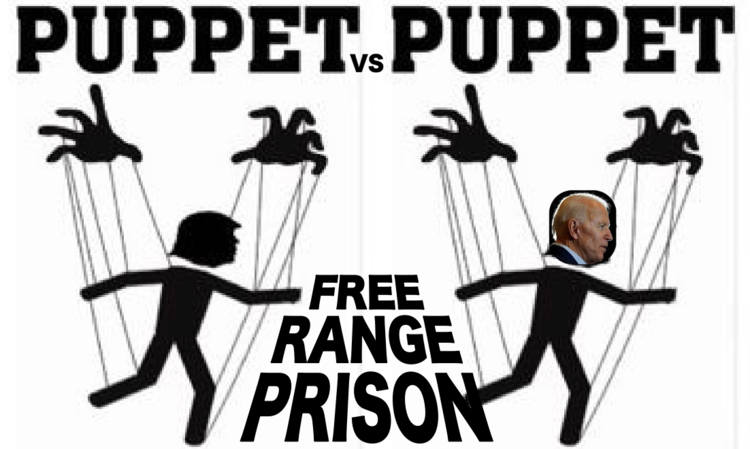
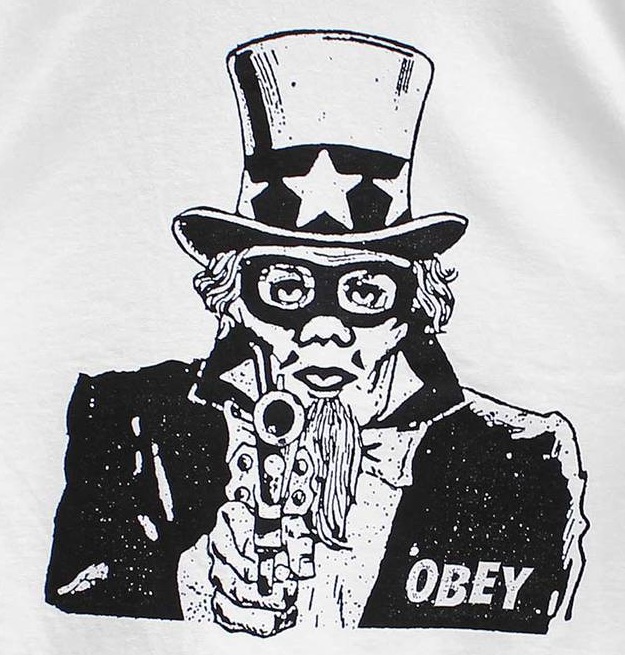
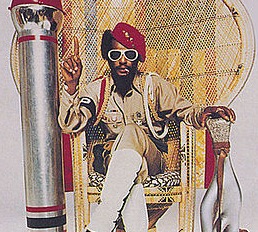
Larken Rose explains,
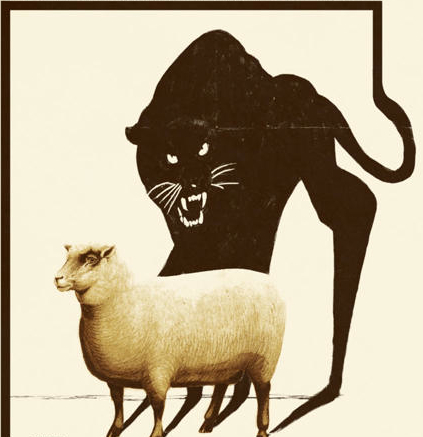
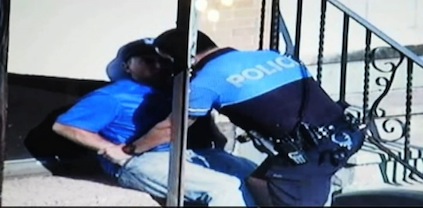
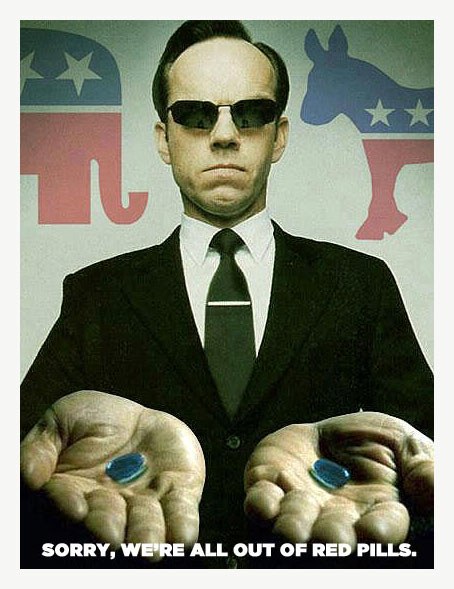
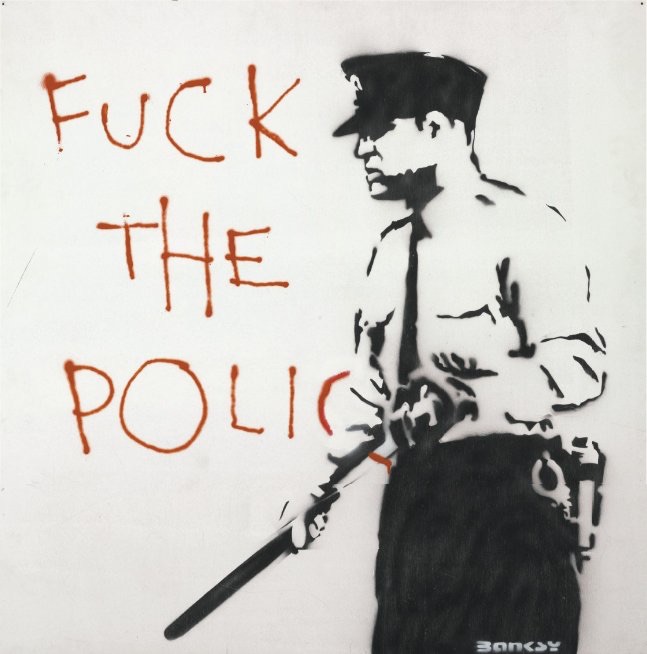
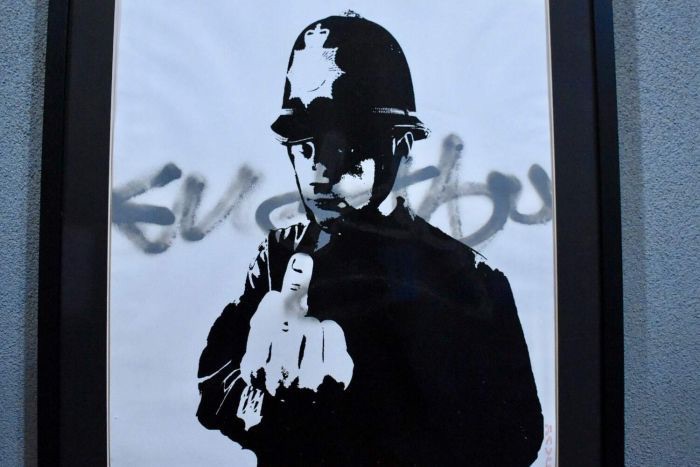
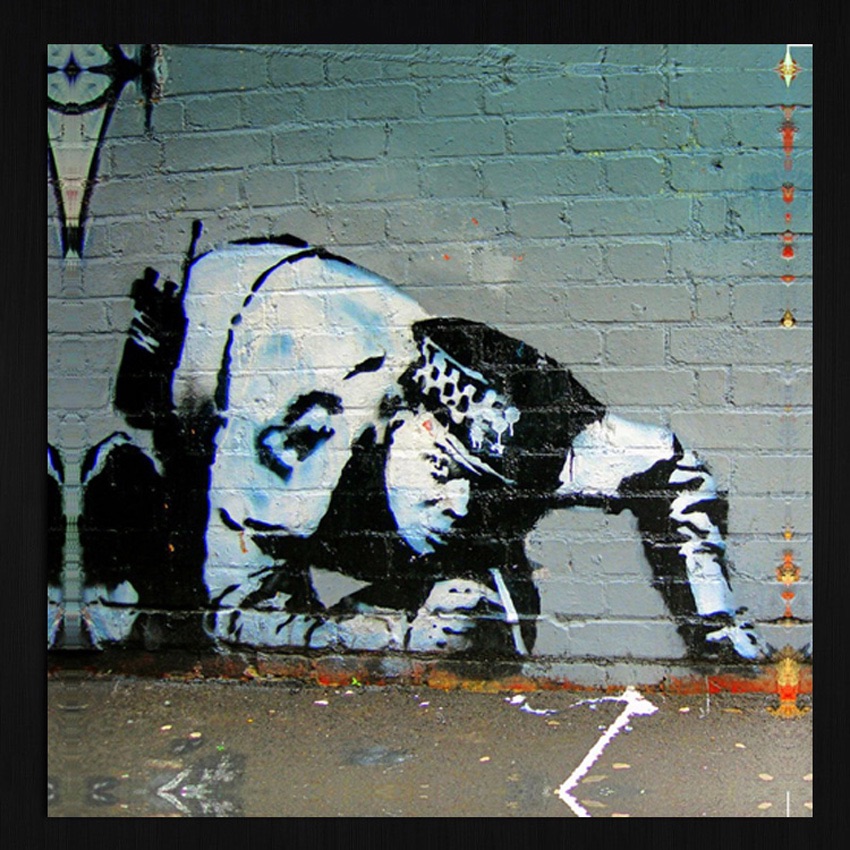
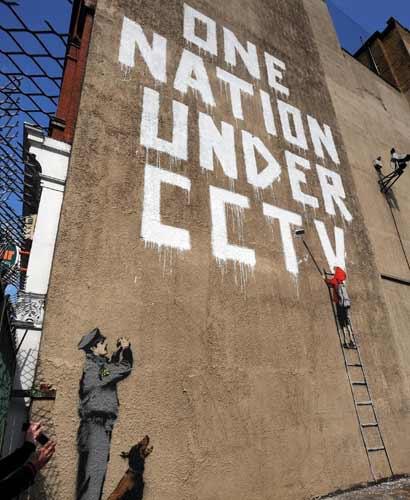
“Authority” can be summed up as the right to rule. It is not merely the ability to forcibly control others, which to some extent nearly everyone possesses. It is the supposed moral right to forcibly control others. What distinguishes a street gang from “government” is how they are perceived by the people they control the trespasses, robbery, extortion, assault and murder committed by common thugs are perceived by almost everyone as being immoral, unjustified, and criminal. Their victims may comply with their demands, but not out of any feeling of moral obligation to obey, merely out of fear. If the intended victims of the street gang thought they could resist without any danger to themselves, they would do so, without the slightest feeling of guilt. They do not perceive the street thug to be any sort of legitimate, rightful ruler; they do not imagine him to be “authority.” The loot the thug collects is not referred to as “taxes,” and his threats are not called “laws.”
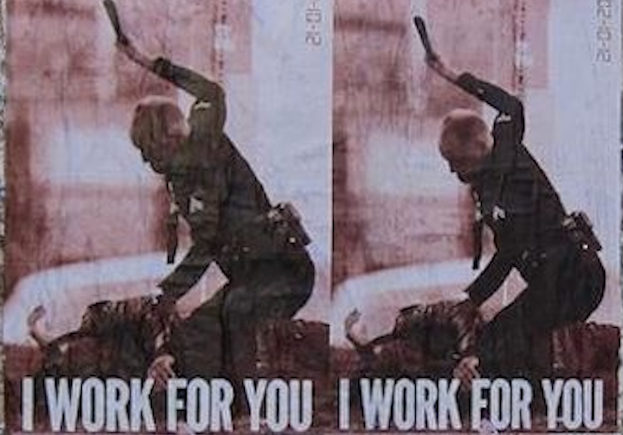
The demands and commands of those who wear the label of “government,” on the other hand, are perceived very differently by most of those at whom the commands are aimed. The power and control the “lawmakers” in “government” exert over everyone else is seen as valid and legitimate, “legal” and good. Likewise, most who comply with such commands by “obeying the law,” and who hand over their money by “paying taxes,” do not do so merely out of fear of punishment if they disobey, but also out of a feeling of duty to obey, No one takes pride in being robbed by a street gang, but many wear the label of “law-abiding taxpayer” as a badge of honor. This is due entirely to how the obedient perceive the ones giving them commands. If they are perceived as “authority,” a rightful master, then by definition they are seen as having the moral right to give such commands, which in turn implies a moral obligation on the part of the people to obey those commands. To label oneself a “law-abiding taxpayer” is to brag about one’s loyal obedience to “government.”
In the past, some churches have claimed the right to punish heretics and other sinners, but in the Western world today, the concept of “authority” is almost always linked to “government.” In fact, the two terms can now be used almost synonymously, since, in this day and age, each implies the other: “authority” supposedly derives from the “laws” enacted by “government,” and “government” is the organization imagined to have the right to rule, i.e., “authority.”
It is essential to differentiate between a command being justified based upon the situation and being justified based upon who gave the command. Only the latter is the type of “authority” being addressed in this book, though the term is occasionally used in another sense which tends to muddle this distinction. When, for example, someone asserts that he had the “authority” to stop a mugger to get an old lady’s purse back, or says he had the “authority” to chase trespassers off his property, he is not claiming to possesses any special rights that others do not possess. He is simply saying that he believes that certain situations justify giving orders or using force.
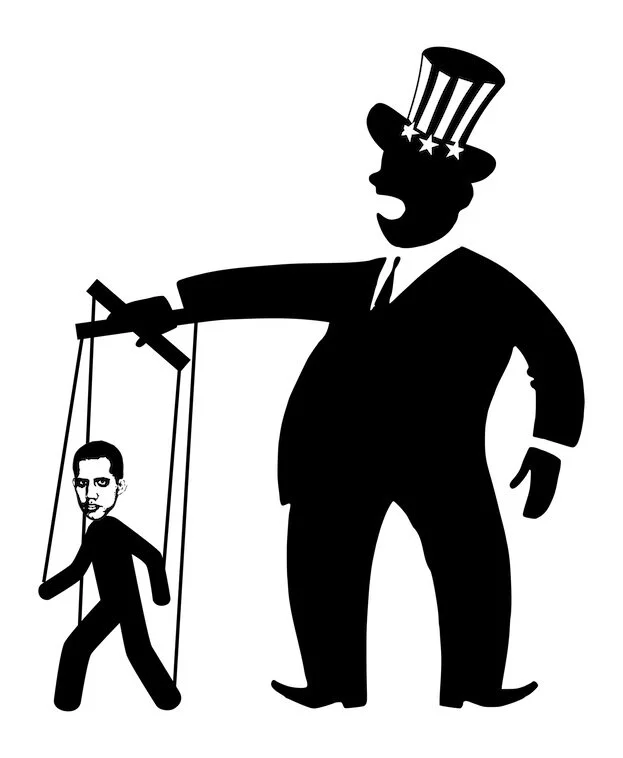
In contrast, the concept of “government” is about certain people having some special right to rule. And that idea, the notion that some people – as a result of elections or other political rituals, for example – have the moral right to control others, in situations where most people would not, is the concept being addressed here. Only lose in “government” are thought to have the right to enact “laws”; only they are thought to have the right to impose “taxes”; only they are thought to have the right ) wage wars, to regulate certain matters, to grant licenses for various activities, and o on, When “the belief in authority” is discussed in this book, that is the meaning being referred to: the idea that some people have the moral right to forcibly control others, and that, consequently, those others have the moral obligation to obey.
It should be stressed that “authority” is always in the eye of the beholder, If the one being controlled believes that the one controlling him has the right to do so, then the one being controlled sees the controller as “authority.” If the one being controlled does not perceive the control to be legitimate, then the controller is not viewed as authority” but is seen simply as a bully or a thug. The tentacles of the belief in authority” reach into every aspect of human life, but the common denominator is always the perceived legitimacy of the control it exerts over others. Every “law” and “tax” (federal, state and local), every election and campaign, every license and permit, every political debate and movement – in short, everything having to do with “government,” from a trivial town ordinance to a “world war” – rests entirely upon the idea that some people have acquired the moral right – in one way or another, to one degree or another – to rule over others.
The issue here is not just the misuse of “authority” or an argument about “good government” versus “bad government,” but an examination of the fundamental, underlying concept of “authority.” Whether an “authority” is seen as absolute or as having conditions or limits upon it may have a bearing on how much damage that “authority” does, but it has no bearing on whether the underlying concept is rational. The
U.S. Constitution, for example, is imagined to have created an “authority” which, at least in theory, had a severely restricted right to rule. Nonetheless, it still sought to create an “authority” with the right to do things (e.g., “tax” and “regulate”) which the average citizen has no right to do on his own. Though it pretended to give the right to rule only over certain specific matters, it still claimed to bestow some “authority” upon a ruling class, and as such, is just as much a target of the following criticism of “authority” as the “authority” of a supreme dictator would be. [MORE]








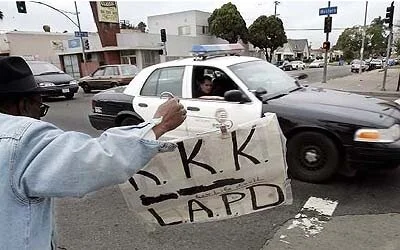






![Louisiana SEAT BELT LAW CARRIES NO JAIL TIME & UP TO a $50 FIne. “Any person who violates this Section [§295.1.] subsequent to August 31, 1995, and prior to November 1, 1995, shall be given a warning ticket only. Subsequent to October 31, 1995, …](https://images.squarespace-cdn.com/content/v1/5a5430b290bade59404c2423/1593954520241-2JKQZNK25AN844RDVGW3/LA+COPS+KILL+BLACKS+23.jpg)



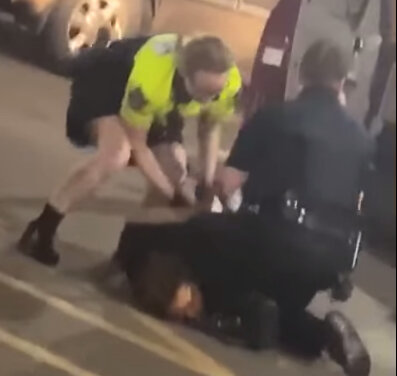




![‘GET OFF THE SIDEWALK. BECAUSE ITS A PUBLIC SIDEWALK.” Racists are the most provocative people in the world and they love to provoke LATINO AND Black people. Ask Martin Bashir OR MANY OTHERS what happens when you REACT [not respond] to the…](https://images.squarespace-cdn.com/content/v1/5a5430b290bade59404c2423/1593940881034-Y99LHZ1ONUDNR5NLF7TH/buffalo+cop+neanderthal.jpg)