ICE Murder: DHS Said a Cop was “Seriously Injured” by a Non-White Migrant who Hit and Dragged him w/His Car, So He Fatally Shot Him. Video Shows the Cop Had Minor Injury, Dismissed as “Nothing Major”
/Silverio Villegas-Gonzalez had just dropped off his 3-year-old son at day care when an unmarked vehicle pulled in front of his car. Less than a minute later, the father of two was shot dead by a U.S. Immigration and Customs Enforcement officer.
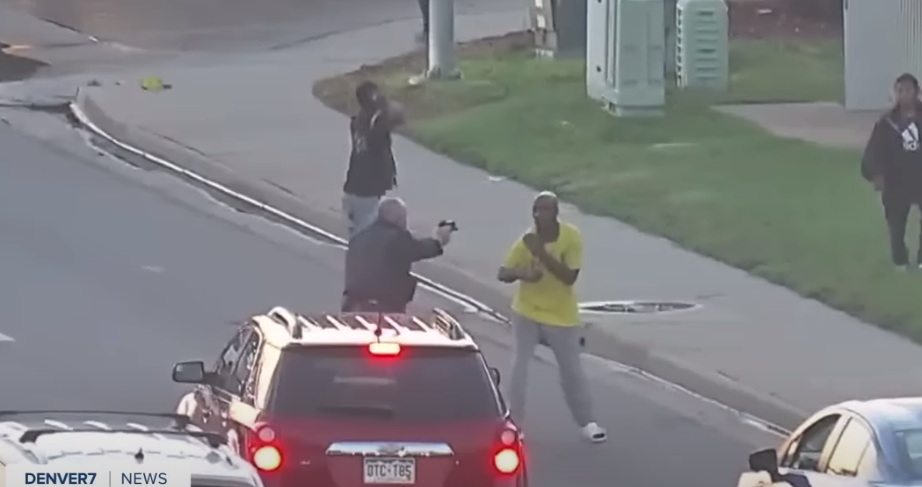
The U.S. Department of Homeland Security says ICE was targeting a “criminal illegal alien” who refused to follow officers’ commands. In a statement, DHS said Villegas-Gonzalez drove his car at law enforcement officers, hitting one and dragging him a “significant distance.” “Seriously injured” and “fearing for his own life,” DHS said, the officer fired his gun.
“We are praying for the speedy recovery of our law enforcement officer,” DHS spokeswoman Tricia McLaughlin said. “He followed his training, used appropriate force, and properly enforced the law to protect the public and law enforcement.”
But videos collected from nearby businesses and bystanders show both officers engaged in tactics that experts in policing said put them at unnecessary risk. Video also shows the hurt officer was fully mobile after the shooting and described his injuries as “nothing major.” And while DHS has said it is targeting the “worst of the worst,” records from Chicago’s Cook County show Villegas-Gonzalez had no record of violence. Since illegally crossing the border nearly two decades ago, he had been charged only with traffic violations in the city where he settled.
“Reckless conduct, in my opinion, may have led to the officer being in a situation where they were, quote, ‘dragged,’” said Philip Stinson, a professor of criminal justice and founder of the Police Integrity Research Group at Bowling Green State University. “And I would use the term drag with a bit of caution in terms of accepting that as the truth, because we really don’t know.”
Stinson is one of four experts with decades of experience in criminal justice who reviewed the Sept. 12 footage at The Washington Post’s request. The experts said the videos provide too little information to determine whether the use of fatal force was proportionate to the officer’s perceived threat. ICE officers do not routinely wear body cameras, and the only available such footage is from responding agencies capturing the aftermath.
In a statement, DHS said the officer who fired his weapon is a military veteran who has worked at ICE since 2021 and was previously employed by another federal law enforcement agency. The agency said it was his first time firing in a “use of force incident” and that both officers are “well seasoned and trained professionals.”
“The smears and misleading reporting in the days since the incident have been disgusting and contribute to our officers facing more resistance and assaults against them,” McLaughlin said.
Villegas-Gonzalez’s shooting death has triggered calls for an independent investigation and raised concerns about whether officers assigned to conduct street arrests have been properly trained. Chicago’s Democratic elected leaders argued that the shooting is an example of ICE’s unnecessarily aggressive tactics against immigrants who do not pose a danger.
“Thus far DHS’s story doesn’t seem to add up and a man is dead and a family is shattered,” said U.S. Rep. Jesús “Chuy” García (D-Illinois), who called on anyone with evidence from the incident, including law enforcement, to come forward. “The agency responsible just keeps hiding behind the rhetoric that it continues to espouse.”
A final stop
Villegas-Gonzalez, 38, was a single father caring for two boys, ages 7 and 3, both U.S. citizens. He arrived in the United States from west-central Mexico in 2007 but the details of his migration story are unclear. Family members said he worked as a cook and delivery driver, and had married a U.S. citizen but was separated from her.
DHS declined to explain why ICE agents targeted Villegas-Gonzalez, but said in a news release that he had “a history of reckless driving.”
Cook County court records show Villegas-Gonzalez had received citations 11 times for traffic violations between 2010 and 2019; about half were dropped. Most were civil infractions such as driving an uninsured vehicle and driving with an expired license. The most serious offense was speeding in 2013, a misdemeanor. The citation states he had exceeded the speed limit by more than 31 mph.
Records show Villegas-Gonzalez complied with supervision, which typically consists of avoiding new tickets for a period of time and paying a fine, which he satisfied through payment or community service.
“He was cooperative with the officers — he was never fleeing or eluding. And he realized his mistake and didn’t do it again,” said Manuel Cárdenas, who represented Villegas-Gonzalez in two of his traffic cases. “The perspective that DHS gave that he was some violent person just doesn’t fit the facts.”
The morning of the shooting, Villegas-Gonzalez stopped at a day care in Franklin Park where workers remembered him as “always polite and respectful.” [MORE]