Despite the Supreme Court’s Prohibition on Executing Intellectually Disabled People, Florida Authorities are Scheduled to Murder Victor Jones in 12 Days (a Black Man who Killed a White Couple)
/
From [HERE] Gov. Ron DeSantis, the Republican governor of Florida has signed more death warrants this year than any of his predecessors.
The U.S. Supreme Court’s 2002 decision in Atkins v. Virginia established that the Eighth Amendment prohibits executing people with intellectual disability. The Court later clarified that rigid IQ cutoffs were not permissible and also required states to consider meaningful evidence of intellectual disability, including scientifically valid expert testimony and adaptive functioning deficits. Despite this unequivocal constitutional protection, two death-sentenced prisoners — David Pittman and Victor Jones—face execution this month in Florida. Attorneys for both men argue they are people with intellectual disabilities that should be exempt from execution and protected under Atkins.
Pittman was murdered last night by government authorities.
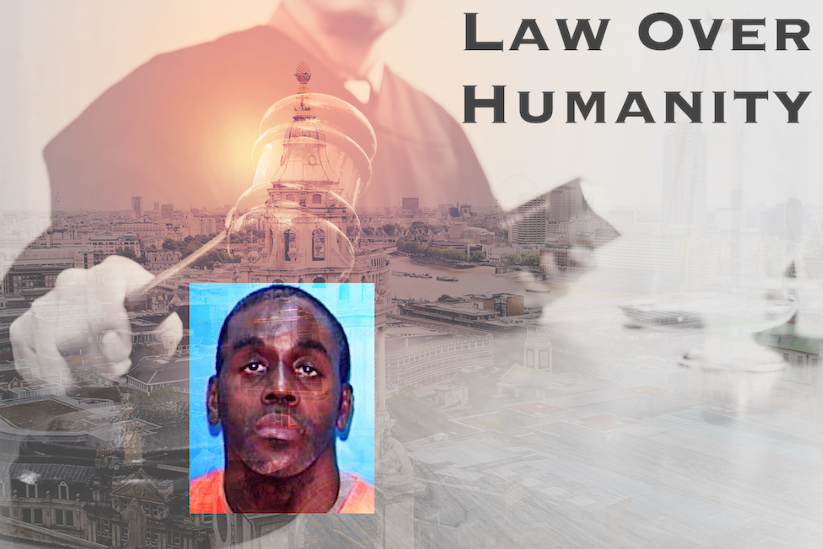
Much like Mr. Pittman, Victor Jones, who was sentenced to death in 1993 for the 1990 murders of his two employers, has been denied relief in lower courts regarding his intellectual disability claim and is scheduled to be executed on September 30, 2025. At trial, the court found three aggravating factors and rejected every mitigating factor presented by defense counsel. Following the U.S. Supreme Court’s ruling in Atkins, Mr. Jones was able to secure an evidentiary hearing to demonstrate he met the standards outlined in that case. The State argued that because Mr. Jones’ IQ was tested and found to score above the hardline threshold of 70, he did not qualify for relief, and the circuit court agreed. After the state’s ruling in Hall, Mr. Jones again petitioned the courts for relief, but they summarily denied his claims based on prior testimony from the Atkins hearing, despite its reliance on outdated medical science.
During post-conviction proceedings, Mr. Jones’ sister and cousin described in detail the pain and abuse they all suffered at the hands of Laura Long, an aunt who raised them.” Both Mr. Jones’ sister and cousin described beatings in which Mr. Jones was made to first undress, noting that Ms. Long would call him “slow” and “stupid,” and beat him for getting bad grades. They also testified that Ms. Long’s son, who was ten years older than Mr. Jones, would beat them as well. This information was never presented to a jury.
His trial jury also never learned that as a young teenager, Mr. Jones was confined to Okeechobee School for Boys on four separate occasions between 1975 and 1978. While at Okeechobee, Mr. Jones suffered neglect, physical and sexual abuse by state employees, and witnessed brutality against his peers. Mr. Jones was beaten several times with thick leather straps, witnessed the gang-rape of his peers, and to avoid sexual violence, he had to fight off other boys, which landed him in solitary confinement. As a result of the abuse he witnessed and experienced, Mr. Jones developed Post-Traumatic Stress Disorder (PTSD), suicidal ideations, and a drug dependency. Though Mr. Jones told others, including authority figures and adults about Okeechobee, no one believed him — including his prosecuting attorney. Throughout his trial and appellate proceedings, the state of Florida has consistently argued that evidence of Mr. Jones’ abuse and the mental health effects of that abuse was not credible or believable. Without hearing the evidence of Okeechobee and his childhood abuse, his jury returned two verdicts for death. Mr. Jones’ current counsel contends that had the trial jury heard this evidence it would not have sentenced him to death.
Gov. DeSantis signed Mr. Jones’ execution warrant less than eight months after signing a bill that sets aside $20million to compensate individuals who were sent to Arthur G. Dozier School for Boys and Okeechobee between 1940 and 1975 who suffered from mental, physical, or sexual abuse at the hands of state-employed officials. By signing this legislation, Gov. DeSantis acknowledged the wrongdoing of the state and traumatic effects of both Dozier and Okeechobee. An investigation by The Marshall Project found that at least 34 former residents of Arthur G. Dozier School for Boys were eventually sentenced to death in Florida. One of these individuals, Michael Bell, was executed in May 2025, despite federal courts never hearing his claims.
In January 2025, Florida Attorney General Ashley Moody’s office formally recognized in a letter to Mr. Jones that he is a member of the class of boys who were abused at Okeechobee. The letter states in part, “Please know that we are sorry to hear about the circumstances that prompted you to apply for compensation,” which was eventually sent to his account in prison. Mr. Jones’ counsel argues that the letter from AG Moody’s office should preclude the state from continuing to promote the theory that his claims of abuse are not credible. Noting the limited nature of the aggravating factors found at trial, attorneys for Mr. Jones argue his case requires relief because a reasonable probability exists that in conjunction with new evidence of his mental health issues and low IQ, the letter from January 2025, would lead a jury to sentence him to life imprisonment. Mr. Jones’ final warrant-related appeals remain pending in the Florida Supreme Court.