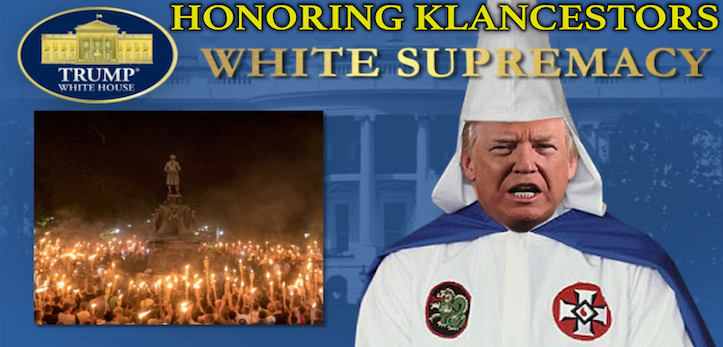
Trump Honors His Klancestors by Restoring the Name of Military Base to "Fort Bragg," for Braxton Bragg, a Racist and Enslaver, Despite Bi-Partisan Law to Remove the Names of Confederate Traitors
/
Honoring a Champion of Slavery for Symbolic Value. From [HERE] Despite Bragg’s poor track record as a military leader and legacy as a notorious enslaver and defender of racial hierarchy, Camp Bragg was established in 1918 in Fayetteville, North Carolina, and became Fort Bragg in 1922.
Braxton Bragg was an unpopular military figure whose own soldiers tried to kill him before he was court-martialed for disrespecting Army leadership. He resumed military command for the Confederacy during the Civil War to preserve slavery and became “known for his pettiness and cruelty, along with the battlefield failures that eventually led to his being relieved of command.” Bragg was deeply committed to the institution of slavery and the exploitation of Black people. He contended that slavery was “just and necessary” and claimed it was “the best and most humane” labor system in the world. He told Irish journalist William H. Russell in 1861 that forced slave labor was the only way to farm in Louisiana:
“If a northern population…settled in Louisiana tomorrow, they would discover that they must till the land by the labour of the black race, and the only mode of making [them] work was to hold them in a condition of involuntary servitude.”1
Bragg added that, to prevent the abolition of slavery, he would fight against the Union “as long as he had a drop of blood in his body.”2
For decades, the choice to name U.S. military bases after individuals who defended slavery and showed contempt for the lives and capabilities of Black soldiers has been criticized as divisive, dishonorable, and antithetical to democratic values.
In the National Defense Authorization Act for FY 2021, a bipartisan majority of Congress voted overwhelmingly to end this painful legacy and established a Naming Commission to rename or remove all military assets that commemorate Confederate traitors.
In 2022, the commission recommended new names for nine Army bases, including Fort Bragg, which was officially redesignated as Fort Liberty in June 2023.
The renaming of Fort Bragg represented an acknowledgment of the name’s harm to decades of Black service members and community members.
“America should not have vestiges of slavery and secessionism and celebrate them,” Army veteran Isiah James, a senior policy officer at the Black Veterans Project, told PBS. “We should not laud them and hold them up and venerate them to where every time a Black soldier goes onto the base, they get the message that this base Bragg is named after someone who wanted to keep you as human property.”
Less than two years later, this progress was reversed.
In March 2025, at the urging of President Donald Trump, Defense Secretary Pete Hegseth ordered that Bragg’s name be restored to the base. To get around federal law, which prohibits naming military installations for people who fought against the U.S., the Defense Department said it was naming the base after Pvt. Roland L. Bragg, an infantryman in World War II.
But the Trump administration has been clear that its goal is to reimpose the names of insurrectionists who killed U.S. soldiers to defend slavery.
“This is about restoring all bases to their original names,” Hegseth told members of the Senate Armed Services Committee at a hearing earlier this year.
On the campaign trail, Trump promised, “We’re going to change the name back to Fort Bragg.” In June 2025, President Trump gave a speech at the base, where he told service members, “Fort Bragg is in. That’s the name. And Fort Bragg it shall always remain.”