A $30 million lawsuit against the city
of Pacifica was filed Monday on behalf of the family of a man killed
after getting shocked by Taser guns by Pacifica police officers. Filed
in U.S. District Court in San Francisco by Oakland civil rights
attorney John Burris, the complaint seeks $30 million in general
damages in connection with the Jan. 2 death of 30-year-old Greg
Saulsbury. Named as defendants in the lawsuit were the city of
Pacifica, seven individual officers and police Chief Pat Brennan, while
plaintiffs included members of Saulsbury's family present at the time
of the incident. "This is a death that should not have occurred,"
Burris told The Examiner. "It was not drugs that caused this death. The
police's reaction and conduct was so aggressive that it exacerbated his
condition." A coroner's report on Saulsbury determined that a
combination of the struggle with police, shocks from Taser guns and the
cocaine present in the victim's system likely caused a fatal heart
attack. [more]
According to his family, Saulsbury came home late Jan. 2 and began
complaining that people were after him and that he couldn't breathe.
Clarice Patterson, Saulsbury's 68-year-old grandmother, said a family
member called 911 for medical assistance but that the police arrived
before the paramedics and forced their way into the house on Inverness
Drive. She said Saulsbury was thrown to the ground and repeatedly shot
with a Taser, while the rest of the family was ordered outside.
Saulsbury was pronounced dead at a hospital at 12:40 a.m. Jan. 3. [more] and [more]
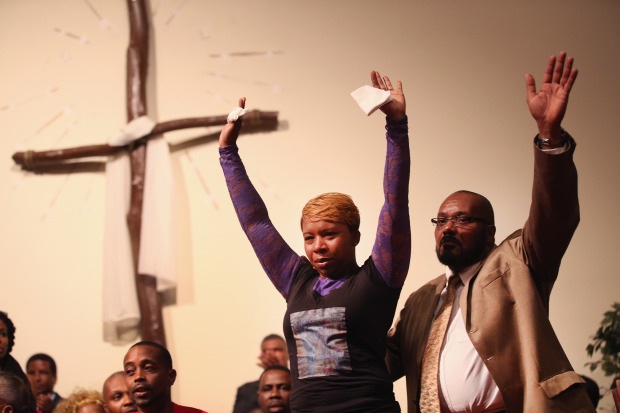
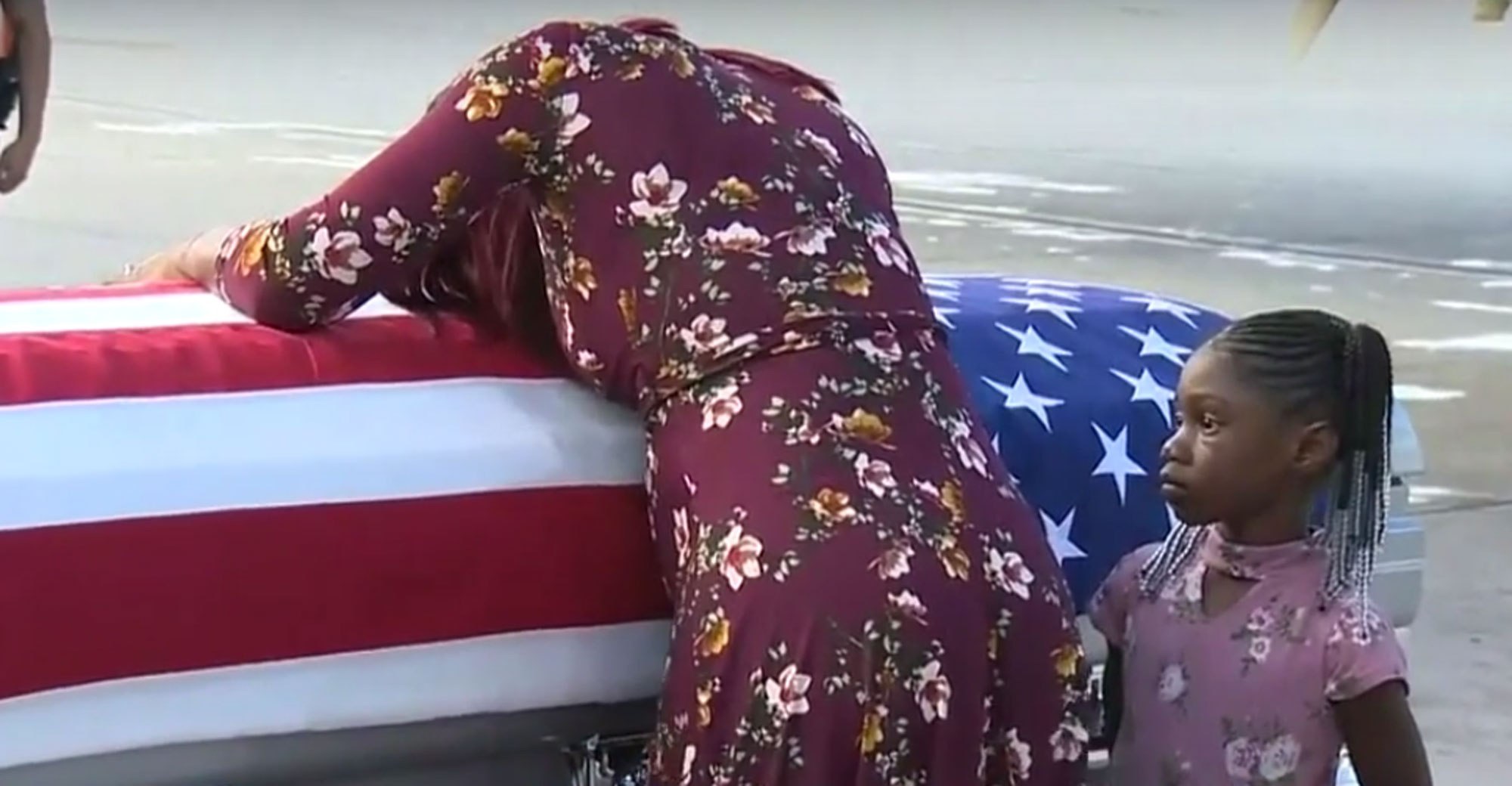
Pictured above:
Michael Tillman arrives at the funeral of his stepson, Greg Saulsbury,
who was killed by Pacifica, Calif. police when they shot him with an
electric taser gun [more]
Relatives of a man shot and killed by
Baltimore police last year are suing the department, claiming Dexter
Hill was shot in the back as he ran away from officers. They're seeking
30 million dollars in damages from the officers, the department and
Mayor Martin O'Malley. Attorneys for Hill's family say the 37-year-old
carpenter and construction worker was walking on an East Baltimore
street on March 17th, 2004, when he was stopped, searched and
questioned by plainclothes officers. The unit stopped the carpenter and
father of four as he walked North Bethel Street in east Baltimore. "Mr.
Hill kneeled on the ground and put his hands in the air and said, 'I
don't have anything, all I have is a dollar in my pocket,'" said Janell
Byrd, an attorney for Hill's family. According to department policy,
officers must identify themselves as police, even while in plain
clothes. The lawsuit does not indicate that the officers identified
themselves and states that Hill ran from police, but it doesn't mention
why, Collins said The attorneys say Hill hid behind a tree, and
when he got up to run again, Officer Mark Walrath saw him and shot him
in the back from a distance. Walrath claimed that Hill had tried to
charge him with a wooden board and was shot in self-defense. But the
attorneys say that's not what eyewitnesses saw, and the only board
found at the scene was too large and unwieldy to be used as a weapon. The
lawsuit also alleges a police cover-up, accusing officers of ordering
witnesses to leave the scene. The lawsuit also alleges that residents
covertly saw that police had moved the body, Collins reported. [more] and [more]
King County Sheriff's Deputy Melvin
Miller did not violate Robert Thomas Sr.'s constitutional rights when
he fatally shot him in a parked pickup three years ago in the deputy's
neighborhood, a federal jury found yesterday. A U.S. District Court
jury in Seattle rejected a claim by Thomas' estate that in firing three
shots into the pickup, shots that killed Thomas Sr. and wounded Robert
Thomas Jr. in the hand, Miller used excessive force and violated the
Thomases' rights under the Fourth Amendment, which calls for protection
from unreasonable searches and seizures. Thomas Sr. was black, Miller
is white and the shooting, which occurred east of Renton, prompted
demonstrations by the NAACP and others, who less than a year earlier
had protested the fatal shooting of another African-American man, Aaron
Roberts, by a white Seattle police officer. An inquest jury found that
the officer had "reasonable fear" that Roberts posed an imminent
threat. The verdict in the $25 million wrongful-death lawsuit marks the
latest vindication for Miller, who has maintained since the April 7,
2002, shooting that he acted in self-defense. In the federal case, all
members of the seven-member jury were white. Bradley Marshall, the
Thomas family's attorney, said the entire jury pool was white.
[more]
Civil trial opens in King County Deputy Killing of Black Man - Lost in an ALL White Neighborhood [more]
The
inquest will result in a nonbinding ruling on whether there is probable
cause that Police used excessive force. The final decision on charging
the officer rests with State Attorney Barry Krischer.
Anyone hoping that next week's inquest
will result in criminal charges being filed against the officer who
shot and killed a 16-year-old outside a school dance in February should
steel themselves for disappointment. During the past 30 years, while
dozens of police beating and shooting deaths have been investigated,
only four Palm Beach County officers have been charged in connection
with their fatal decisions. All four were cleared at trial. And Palm
Beach County isn't unique. State attorneys from Pensacola to Miami say
that few, if any, officers have been charged with crimes for killing
people while on the job during the past 10 years. Though no one keeps
figures, a 2001 Daily Business Review investigation found that all 56
fatal police shootings investigated in Miami-Dade County from 1995 to
2001 were deemed justified. [more] and [more]
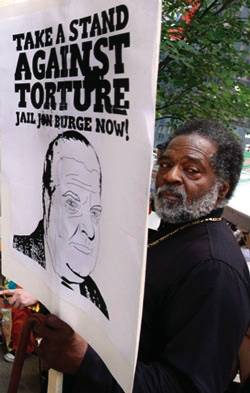
Pictured above:
Dean Frankson holds up his sign expressing a course of action for the
African-American community following the slaying of Delray Beach teen
Jerrod Miller. His message was part of an NAACP meeting discussing the
tragedy.
33 Witnesses Contradict Police Version of Shooting. The
Delray Beach police officer who killed Jerrod Miller as the teen drove
down a narrow walkway said he aimed for the head and fired because he
feared the boy would run down someone at a school dance. "There were
people directly in the path, a large group of people," rookie Officer
Darren Cogoni said in a videotaped statement made hours after the
shooting and played Monday during an inquest into Miller's death. "Had
I not thought that vehicle was going to strike those people, I would
not have fired my weapon," Cogoni said in a separate sworn statement
read in court. "I thought that the least amount of harm ... would be to
fire my weapon at that point." Those statements were at odds with other
witnesses' accounts, said Rick Caplano, a special agent who questioned
Cogoni and headed the shooting investigation. Caplano testified he
interviewed 33 witnesses in the Feb. 26 shooting at the Delray Full
Service Center but could identify no one in the path of the car or in a
parking area where it was headed when Miller was killed by a single
bullet to the back of his head. [more]
Judge to visit scene where Delray teen was shot by police as part of inquest [more]
Inquests don't solve issues, Florida prosecutors say [more]
Critics target black Delray officers after teen's shooting death [more]
Two Rayne police officers facing
manslaughter charges are set to go back on patrol after almost two
years. A judge ruled the men can once again can carry firearms, because
prosecutors have taken too long to bring the case to trial. Daniel
Boulet and Marlo Forman are accused of misusing deadly force in the
September 2003 shooting of 30-year-old Derrick Francis. The firearms
restriction had confined the men to desk jobs while the shooting is
investigated. Police Chief Geroge Melancon says he plans to return the
officers to regular patrol duty today (Thursday). The family of Derrick
Francis has filed a wrongful death suit against the city and the two
officers. The officers were responding to complaints that a car was
ramming other vehicles in Rayne. The officers allegedly fired a total
of 20 bullets at Francis, who was not armed. Francis died from a shot
to the head. On Wednesday, Trahan lifted the restriction, ruling that
the maximum 180 days had passed since the men filed for speedy trial in
February 2004. "I have never seen anything like this," Francis' father,
Bradley Francis, said of the officers returning to patrol. "They killed
my son. His hands were up, and they shot him." Assistant District
Attorney David Smith said the delay occurred because the case was
reassigned to him. District Attorney Mike Harson has declined to
comment on the reason for reassignment, but said, "the action should
have been moved along a little quicker." The officers, who have denied
wrongdoing, could be sentenced up to 40 years in prison if convicted of
manslaughter. [more] and [more]
Man arrested after filing police brutality suit [more]
A 21-year-old heavy equipment operator
Monday filed a lawsuit against the city of Prichard, the city's Police
Department and seven police officers, alleging police brutality and
seeking $25 million. According to the 10-page civil suit filed in the
Mobile County Circuit Clerk's office, James Woodard came home from work
on March 22, then walked to a nearby convenience store to buy a pack of
cigarettes. On his way home, while still on foot, a group of men riding
in a Jeep and wearing undercover gear, later identified as Prichard
police officers, stopped him, according to his Montgomery attorney,
Wesley Pitters. When he did not respond quickly enough to their demands
to come to them, Pitters said, they "manhandled" and "roughed him up."
Then, they told him he could go, Pitters said. Irate, he began berating
them for the rough treatment, his attorney said. Woodward has no
criminal history and no warrants have been issued against him as of
Monday, Pitters said. According to the attorney, one of the officers
pulled his gear off and challenged Woodward to a fight. When Woodward
told the group he was not going to fight all of them, he was thrown on
the ground, Pitters said. He woke up in a hospital with a cracked
skull, and spent six days in in tensive care and another two days in
the hospital recuperating, his lawyer said. He also lost hearing in his
right ear as a result of the beating, his attorney said. He has not
been able to work since, Pitters said Monday evening. According to the
filed complaint, Woodward was subjected to "police brutality, excessive
force" and "racial profiling." [more]
A 27-year-old Lakeland man shot by
police earlier this year after a routine traffic stop went awry
received a five-year prison sentence on charges stemming from the
incident. Polk Circuit Judge Roger Alcott sentenced Michael Edwin
Worlds on April 8 as a habitual traffic offender. Worlds pleaded guilty
to aggravated assault on a law enforcement officer, driving with a
suspended license and fleeing to elude an officer. On Jan. 25, Lakeland
police Officer Douglas Brown Jr. and other officers were clocking
drivers with a radar gun in a construction zone on Kathleen Road, just
south of Bella Vista Street. After being stopped for speeding, Worlds
refused to pull over, according to a State Attorney's Office
investigation. Worlds put his Ford Taurus in reverse, plowing through
construction barrels. Worlds' car lunged at Brown, who fired two shots
at the car. One bullet punched through the front driver's side
windshield, the other through the driver's window. The investigation
concluded that the shooting was justified. Worlds was wounded in the
chest and went to Lakeland Regional Medical Center for treatment. [more]
Lawyers for White Cops Call Tyrone Johnson an "Evil Man" [more]
The city will pay $70,000 to the
teenage daughter of a man who died during a 1999 struggle with police
as they tried to arrest him on a traffic warrant. The settlement was
approved in U.S. District Court earlier this month and is in addition
to an undisclosed amount 15-year-old Ashley Johnson will receive from
Southwest Ambulance, which was transporting her father to Kino
Community Hospital when he died. A lawsuit by Johnson accusing the city
and the ambulance company of negligence and the city of excessive force
ended in a hung jury last year. Tyrone Johnson, 28, had a past
conviction for drug possession and resisting arrest, and spent about
nine months in jail for a probation violation before his Aug. 8, 1999,
encounter with the police that led to his death. Officers said they
used pepper spray on Tyrone Johnson to subdue him and after he was
handcuffed, he complained he couldn't breathe. He died in the ambulance
on the way to the hospital. The Pima County medical examiner found
Johnson had a significant amount of cocaine and traces of morphine in
his system when he died. [more] and [more]
Gasping for Air Tyrone
Johnson was "spent." He was gasping for air. He posed no threat to
anyone around him; he wasn't about to run, or to lash out at the cops
who'd beaten and pepper sprayed him, or to battle the firefighters and
EMTs who had loaded him face-down in an ambulance with his hands cuffed
behind his back. He was given no oxygen--something that is administered
as routinely as nine out of 10 calls, according to one of the
firefighters who responded to the call to evaluate and treat Johnson
after Johnson briefly fled from two Tucson policemen on Aug. 8, 1999. [more]
Improper Care? After
police subdued Tyrone Johnson with three shots of pepper spray and up
to 11 strikes with metal batons, Tucson Fire Department paramedics and
Southwest Ambulance EMTs failed to properly diagnose, monitor and treat
Johnson, according to testimony from a longtime emergency room
physician. [more]
The father of a man who died in police
custody three years ago has brought a wrongful death suit against the
city of Greenville and the police officers involved in the incident.
Eugene Allen Boseman, 41, of Greenville died after police removed him
from the travel lanes of Memorial Drive on March 7, 2002. He was
wearing boxer shorts and a T-shirt and behaving erratically. The
lawsuit lists Allen Boseman Sr., the father, as plaintiff on behalf of
the son's estate. Boseman died after officers struggled to subdue him.
The State Bureau of Investigation investigated the incident, and Pitt
County District Attorney Clark Everett decided not to prosecute the
officers involved after reviewing the results of the investigation. The
Pitt County medical examiner reported that Boseman "died as a result of
agitated delirium caused by cocaine use, psychosis and stopping
antipsychotic medications." Obesity and heart disease contributed to
the death, the report said. The $15 million suit filed March 10 in
federal court in Greenville alleges the officers' actions violated
Boseman's constitutional rights and caused his death. Greenville Police
Chief Joe Simonowich said his officers followed state and departmental
procedures for dealing with mentally ill people. While the medical
examiner found multiple bruises on Boseman's body apparently resulting
from the contact with officers, none of the injuries contributed to his
death, the examiner said. Boseman, who was infected with the virus that
causes AIDS, inflicted a deep bite wound on one of the officer's hands.
That officer, Armarlin Richardson, is named in the suit, along with six
"unknown officers" and Greenville Mayor Don Parrott. Calvin Henderson,
president of the Pitt County Chapter of the NAACP, said the
organization "has worked hard to obtain justice in this case," which he
claims involves "gross police misconduct and brutality," and an
"official cover-up" in the wake of Boseman's death. [more] and [more]
Marchers Want Police Officers Fired Because Of Deaths [more]
The Texas Rangers have officially
launched an investigation into an alleged case of police brutality,
which left a Cherokee County man with a broken ankle. Cherokee County
District Attorney Elmer Beckworth said he has asked Texas Ranger Rudy
Flores to conduct an investigation into the allegations made by John
Brown, of Alto after the man reported he had been the victim of
brutality at the hands of a veteran Cherokee County sheriff's deputy.
Beckworth said his office asked Flores to investigate the allegations
after Brown and witnesses made statements to the National Association
for the Advancement of Colored People and Brown called the FBI. Brown, 27, said he was in his home cooking last week when his
father asked him to go outside and see why the family dogs were
barking. Brown claims he saw an unidentified man lurking around his
property with a flashlight and went to investigate. He contends the
man, Cherokee County sheriff's Deputy Sgt. Jamie Beene, who was
searching for an unrelated suspect, arrested him for no reason and
broke his ankle and beat him while Brown was handcuffed behind his
back. Brown was subsequently arrested on a misdemeanor charge of
interfering with a police investigation and underwent surgery that
night to repair his shattered ankle, which entailed three plates and 16
pins being used during the surgery. Brown's attorney, Hulon Brown, a
former district attorney and Texas legislator, said My client was in
his own yard and had nothing to do with what was going on. He was
arrested and brutalized," he said. [more]
A convicted felon with a long, violent
history who was working illegally as a security guard at Walgreens shot
and killed an unarmed man accused of stealing sunglasses Sunday night,
prompting a state investigation. The 53-year-old guard - identified on
a police arrest record as Sam Gwin Jr. - was carrying the gun illegally
and concealed it from shoppers and employees at the store in the 3500
block of W. Wisconsin Ave., police said. Gwin, who was held in jail
Monday night but had not been charged, shot Alexander Mitchell, 39,
outside the 24-hour store, police said. All guards working for security
companies in Wisconsin must be licensed by the state Department of
Regulation and Licensing, whether they carry a gun or not, said Chris
Klein, a department spokesman. Gwin was not licensed, Klein said.
Mitchell and a friend went into the Walgreens store around 11:30 p.m.
Sunday, his family said. Mitchell picked up a pair of sunglasses and
tried to steal them, police said. "The victim punched the security
guard one time in the face when they got out of the store ... then
apparently the security guard pulls the weapon and shoots the victim
multiple times," Schwartz said. The shooting happened outside the
Walgreens door. [more] and [more]
Pictured above: Alexander Mitchell: Shooting victim leaves behind four children
Suspect Shocked After Not Giving Urine Sample
An Orlando police officer has been charged with misdemeanor battery for
allegedly using a Taser stun gun on a suspect tied and handcuffed to a
hospital bed. Officer Peter Linnenkamp was charged Monday with using
his Taser on 18-year-old Antonio Wheeler two times in early March. The
50,000-volt shocks came after Wheeler, who had been arrested on a drug
charge, had been taken to Florida Hospital Orlando and either would not
or could not provide a urine sampleBefore the Taser was used, Wheeler
aggressively resisted efforts to insert a catheter in order to get a
urine sample, officials said. Linnenkamp wrote in a statement to
investigators that he "administered the Taser discharge upon Mr.
Wheeler in order to get him to release his penis so that the catheter
could be inserted." After Wheeler was shocked in the forearm area two
times with the Taser, the report says he "voluntarily provided a urine
sample to the medical staff." Linnenkamp, who remains on restricted
duty, was not arrested, but received a summons to appear in court.
Linnenkamp could still keep his job even if he is found guilty, said
Lt. Brian Gilliam of the Orlando police department. Sanctions could
include anything from time off to a demotion to termination, he said.
The crime itself carries a sentence of up to one year in jail.
Wheeler's lawyer, Howard Marks, said prosecutors undercharged
Linnenkamp. "We believe this (Linnenkamp's behavior) amounts to nothing
less than torture. To me, it should be a felony battery." About 100
people have died nationally since 1999 after being shocked with a
Taser, including recent deaths in Pensacola, Hollywood and Naples. [more] and
[more]
Unarmed Insurance Salesman, Black Man, face down, complying with police orders shot in the head. Officer not punished.
Kenneth Walker was shot and killed by
former Deputy David Glisson in December of 2003. A grand jury cleared
him of criminal charges 11 months later. Civil rights leaders then
filed a petition saying Glisson wasn't sworn in during that hearing,
and they wanted a new one. In a hearing Wednesday, Judge Jordan ruled
to dismiss the petition, meaning no other grand jury will hear the
case. The ruling ended the suit for a writ of mandamus filed Nov. 30,
2004, by Edward DuBose, former president of the Columbus chapter of the
NAACP. The complaint sought an order compelling Dougherty County
District Attorney Kenneth Hodges to correct an error that allowed
former Muscogee Deputy Sheriff David Glisson to make an unsworn
statement to the grand jury on Nov. 22, 2004. The next day, the grand
jury returned a no bill, refusing to indict Glisson in the Dec. 10,
2003, shooting death of Walker during a traffic stop. Jordan's ruling granted
the motion to dismiss argued by Assistant Attorney General Kay Baker,
who said a writ of mandamus was the wrong mechanism for a remedy.The
judge noted that the prosecutor still has the discretion to present the
case to a second grand jury. "Broad discretion remains with the
district attorney, who may exercise his discretion to present to a
subsequent grand jury... or, in his discretion, to choose not to
present to a subsequent grand jury," Jordan said. [more] and [more]
VIDEO: View the Kenneth Walker tape (Blurry, no audio) [more] and [more]
Pictured above: The 39-year-old black insurance manager from Columbus was either
exiting an SUV that had been pulled over on I-185 or was getting set to
lie on the ground. A bullet, one of two shots fired from an MP5 9 mm
submachine gun, ripped into Walker's brain. Six hours later, the
husband and father of a 3-year-old girl was dead.
The Wrong Car.
On Wednesday, Dec. 16, four professional African
American men were
supposedly identified by a police informant as drug suppliers from
Miami who were heavily armed. Who really was inside the vehicle were
four friends en route to a local restaurant to continue their weekly
ritual of male/friendship bonding. All of that changed when the gray
Yukon was pulled over. Eyewitnesses
recounted the incident as the men were being physically snatched from
the car, guns pointed directly in their faces and to the head area and
being thrown to the ground. It was during this time that 39-year-old
Kenneth Walker was shot.
According to the sheriff, he was shot after failing to show both of his
hands. "Mr. Walker refused to follow a direct command from the
deputy." When the dust settled, a terrible mistake had been made.
Walker and his
companions were not drug dealers and they were not armed. The car was
searched and no drugs were found. [more]
The parents of a 33-year-old man who
died after Amarillo police shot him twice and shocked him multiple
times with a Taser in 2003 filed a federal civil lawsuit Monday,
alleging officers' excessive force contributed to their son's death.
The wrongful-death suit, filed in Amarillo's U.S. District Court, names
the city of Amarillo, Taser International Inc., Amarillo Police Sgt.
Phil Dean and five unknown police officers as defendants in the case.
The suit, filed by the parents of Corey Calvin Clark, focuses on the
April 16, 2003, case that led to Clark's death. According to police
reports, the confrontation between Clark and Amarillo police, who
wanted to arrest Clark in connection with a string of car thefts, began
when officers cornered Clark's van in an alley in the Bivins
neighborhood after he led police on a car chase. When officers ordered
Clark out of his car, he refused and appeared to be reaching behind the
seat for a weapon, police reports stated. The final autopsy report into
Clark's death said the weapon was a knife. Dean then shot at Clark, who
suffered two gunshot wounds, because he feared for his life, according
to Globe-News reports. Police also activated a Taser against Clark
multiple times during their attempt to place him into custody, the
autopsy report said. Clark was transported to Northwest Texas Hospital,
where he later died. According to the autopsy report, Clark died of
"acute cocaine intoxication due to chronic cocaine abuse." The civil
lawsuit alleges officers' actions in the incident were excessive,
unlawfully violent and deprived Clark of his life and liberty,
violating his Fourth Amendment rights. "I cannot understand why
(police) shot a person twice, and then practiced their Tasers on them,"
said attorney John Mann, who is representing Clark's parents.[more]
A former police officer pleaded guilty
on Monday to second-degree manslaughter in the shooting of an
18-year-old deli clerk last year in Queens, telling the judge it was
tragic case of horseplay. An indictment had accused John Malik, 60, of
recklessly firing a semiautomatic pistol at the victim while cashing a
lottery ticket inside the deli the night of Oct. 18, 2004. Mr. Malik
originally told the police that he had been waiting for his lottery
tickets around 11 p.m. on Oct. 18 when his pager went off. He claimed
that when he reached for it, he jostled his .380-caliber SIG Sauer
semiautomatic pistol in his holster. A single shot struck the clerk,
Manuel Chametla, 18, who was about 8 or 10 feet away, behind the
counter of the Astoria Food Mart at 31st Street and 21st Avenue. But
Mr. Malik changed his story yesterday, before Justice Randall T. Eng of
State Supreme Court in Queens, saying the shooting had resulted from
"horseplay." He had been on the way to work at a security company, he
said, his gun holstered in a belt clip inside his waistband, until he
drew his gun in jest in response to something Mr. Chametla had said.
The bullet struck and killed Manuel Chametla, an 18-year-old Mexican
immigrant. During the sentencing, he turned and apologized to the
victim's family. Malik, who served on
the police force 28 years, faces a term of one to three years in prison
at sentencing on June 14. [more] and [more] and [more]
Two decades after police ordered the
bombing of the home of the radical group MOVE, which demolished an
entire city block, a federal jury awarded 24 West Philadelphia
residents $12.8 million in damages. What the jury’s decision means is
that the city must pay $530,000 to each of the plaintiffs, who have
been tussling for decades over their compensation for the bombing,
which resulted in 11 deaths and the destruction of 61 Black-owned row
houses. After spending $16 million for repairs, in 2000 the city
offered $150,000 – roughly three times the market value – for each
home, plus moving expenses. Thirty-seven homeowners accepted the deal,
but another 24 families refused it, enlisting the help of attorneys,
arguing that their homes and lives were worth more than that. “Thank
the Lord; our day of deliverance has come,” plaintiff Betty Mapp told
the Philadelphia Inquirer. “It took 20 years, and now it’s over with
the City of Philadelphia.” The seven-member jury found the city and
Mayor John F. Street liable for $1.25 million in damages for reckless
disregard for the rights of the homeowners, $960,000 for conspiracy to
harm, and $2.4 million for breach of contract for the promised repairs
and emotional distress. The plaintiffs sued on the grounds that Street
broke the promises of former mayors, W. Wilson Goode ,who rebuilt the
block, and Ed Rendell, who promised to continue repair on the homes.
Mayor Street allegedly told homeowners that the city could use the
power of eminent domain to seize their property if they did not accept
the buyout. [more] and [more]
Police Drop Bomb on Radicals' Home in Philadelphia. [more]
6 Bodies in Ashes of Radicals' Home; 200 Homeless - Assault Defended [more]
The U.S. Justice Department has cleared
a white Concordia Parish deputy in last summer's shooting of a black
man in Ferriday, the Sheriff's Office said. Deputy David Hedrick said
he shot Frederick Lollis in self-defense. The NAACP had contended the
August shooting was racially motivated. The Justice Department's
criminal section in Washington has closed its investigation, according
to a news release issued by the Concordia Parish Sheriff's Office.
Sheriff Randy Maxwell stressed that Hedrick has now been cleared of any
wrongdoing by local, state and federal agencies. At the time of the
shooting, police said that Hedrick was responding to a complaint from a
man who said two people had hit him with a gun. Hedrick and the victim
were in Hedrick's car when the victim pointed out his attackers on the
road, Maxwell said. Hedrick stopped and got out. Maxwell said Lollis
was one of the men and had a baseball bat. The deputy told the men they
were under arrest and ordered Lollis to drop the bat and both men to
get on the ground, according to last August's account by Maxwell.
Maxwell said Lollis moved toward the officer and Hedrick sprayed him
with Mace. It was then that Lollis pulled a 9mm gun from his waistband.
The gun was pointed at Hedrick as the officer continued to shout for
Lollis to put his weapon down, Maxwell said. Hedrick fired four or five
shots and then called for backup and an ambulance. [more]
The threat of terror alerts continues
to haunt American society as if 9-11 happened yesterday. But while we
cautiously board airplanes, the thought of another terrorist attack
never far from our minds, another type of fear routinely plagues a
particular group of American citizens. The most recently publicized
infraction of this type involved 13-year-old Devin Brown, who was
involved in an early morning car chase with Los Angeles police
officers. As soon as I heard that he was an African American male, I
knew that boy had a better chance of surviving an actual wreck than
being "urged" to pull over by police. As expected, young Devin was
gunned down by one of the officers. I was immediately reminded of a
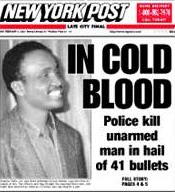
Haitian immigrant, Abner Louima, who was beaten and sodomized with a
toilet plunger by New York police officers while in custody; an unarmed
Amadou Diallo, who was felled by a shower of gunfire, 41 shots to be
exact, at the hands of New York police officers; the fatal shooting of
Tim Thomas, an unarmed teenager, by cops in Cincinnati; and even the
fatal shooting years ago of an unarmed black woman by a cop at a
traffic stop right here in Charlotte, not far from where I grew up. If
that's not terrorism, I don't what is. Too often those sworn to protect
and serve here in the United States inflict abuse upon African
Americans, particularly males. Forget Osama bin Laden. The bigger
threat for African Americans is Officer Do-Good, who is too often the
recipient of misbegotten empathy and support by juries when it comes
time for him to be tried for police brutality, if the case even gets to
trial. Such officers are routinely acquitted, and the memory of it all
is far too easily erased from the consciousness of American society. [more]
A preliminary court date for the
officer charged in the shooting death of a West African immigrant has
been set for May 5, according to attorney Sanford Rubenstein.
Rubenstein, the lawyer representing the family of Ousmane Zongo, who
was killed by Officer Bryan Conroy during a raid at a Chelsea warehouse
two years ago, told the Amsterdam News that the officer will probably
go on trial in the late summer. Conroy’s first trial ended when the
jury was unable to reach a verdict, and Judge Daniel Sullivan declared
a mistrial. “In all likelihood the trial will take place in the late
summer pending the availability of witnesses,” Rubenstein explained.
“We have also been informed that Ousmane’s widow, Salimata Sanfo, and
his brother will return from Burkina Faso for the trial.” At the end of
the first trial that was conducted in the State Supreme Court, the
prosecution promised that the officer would be retried. “They were
obligated to set another trial,” Rubenstein said at that time. No
matter the outcome of a second trial, the lawyer said the family would
pursue a $150 million federal lawsuit against the city and Officer
Conroy. [more]
The family of a 17-year-old autistic
boy who struggled with sheriff's deputies March 18 is asking to meet
with Shasta County officials to discuss a legal settlement. Redding
attorney T. James Fisher, who represents the boy's parents, Joel and
Cynthia Cowell, told County Counsel Karen Jahr it "would appear in
everyone's best interests" to try to resolve the case. Fisher says
deputies exerted excessive force in using their fists, baton strikes
and electric shocks from a Taser gun to subdue Pierre Cowell, who his
parents say has the mental capacity of a 4-year-old and is mute. "The
officers used everything at their disposal short of using their guns"
even though the boy didn't have a weapon or threaten the deputies,
Fisher said Friday. The Board of Supervisors will meet in closed
session Tuesday to discuss the case. The Cowells have yet to file a claim in the case --
the first step toward filing a lawsuit. The struggle with deputies
occurred after Pierre Cowell had wandered from his home in Mountain
Gate onto a neighbor's property shortly before 2 a.m. The neighbor did
not recognize Cowell when she saw him through a window and called 911
after hearing him jiggling the doorknob. Deputies Brian Jackson, Ray
Breshears and Boun Kongkeoviman tried to control Cowell using force to
his pressure points, according to a press release later issued by
District Attorney Jerry Benito's office. As a result of the struggle,
Cowell's elbow was fractured and he received a head wound requiring six
stitches. After investigating the incident, Benito determined the
officers did not use excessive force, he said in a report. [more]
Black Autistic Teenager is Beat Down by Deputies After Being Mistaken for a Prowler [more]