Venezuela expels two US embassy officials amid Chavez cancer conspiracy

Rt.com

Vice President Nicolas Maduro said President Hugo Chavez's enemies had poisoned him with cancer before announcing that two US Air Force officials would be expelled from the country for spying on the military and plotting to destabilize the country.

Maduro identified one American as the Air Force attaché and said he had 24 hours to leave the country.


"We are aware of the allegations made by Venezuelan Vice President Maduro over state-run television in Caracas, and can confirm that our Air Attache, Col. David Delmonico, is en route back to the United States," spokesman Lieutenant Colonel Todd Breasseale said in a statement.


Foreign Minister Elias Jaua later announced that two Air Force officials in total had been named "persona non grata" and were being kicked out of  Venezuela, AFP reports.


Maduro also accused President Hugo Chavez's enemies of poisoning him with the cancer he has been battling for nearly two years.


"Behind all of [the plots] are the enemies of the fatherland," he said on state television.


Maduro spoke just hours after the government announced Chavez was in "very delicate" health after undergoing cancer surgery in December. Maduro said the president was suffering through the "most difficult hours" since the operation.


In December 2011, Chavez speculated that the United States could be infecting the regions leaders with cancer  after Argentine President Cristina Fernandez de Kirchner was diagnosed with thyroid cancer.

Obama Administration: Yes, We Can Kill Americans on US Soil

anti-war

The controversy, arising out of the drone war, that President Obama has the authority to assassinate US citizens abroad in non-war zones just got even more disgraceful.

The Obama administration’s Attorney General Eric Holder sent a letter in response to persistent inquiries from Senator Rand Paul, who vowed to block the confirmation of John Brennan to CIA chief if the White House didn’t respond. In the letter, Holder maintains that the President does have the authority to kill US citizens on US soil without any due process.

“It is possible, I suppose, to imagine an extraordinary circumstance in which it would be necessary and appropriate under the Constitution and applicable laws of the United States for the President to authorize the military to use lethal force within the territory of the United States,” Holder wrote.

Holder’s caveat is that this scenario is “entirely hypothetical” because “the US government has not carried out drone strikes in the United States and has no intention of doing so.” Furthermore, “as a policy matter…we reject the use of military force where well-established law enforcement authorities in this country provide the best means for incapacitating a terrorist threat.”

Still, the concluding legal opinion represents a radical betrayal of constitutional limits imposed on the state for depriving citizens of life, liberty and property. Officially now, Obama’s kingly authority to play Judge, Jury, and Executioner and deprive Americans of their life without due process of law applies not only to Americans abroad but to citizens that are inside the United States.

“The US Attorney General’s refusal to rule out the possibility of drone strikes on American citizens and on American soil is more than frightening – it is an affront the Constitutional due process rights of all Americans,” Sen. Paul said in a statement.

Holder, along with the Obama administration, is making it seem as if the President’s use of lethal force, as in the drone war, would only be used in circumstances like another impending 9/11 attack or something. Only when an attack is imminent.

But that categorical limitation on the President’s authority to kill depends upon their definition of “imminence,” which we learned from a leaked Justice Department white paper last month, is extremely broad.

The memo refers to what it calls a “broader concept of imminence” than what has traditionally been required, like actual intelligence of an ongoing plot against the US.

“The condition that an operational leader present an ‘imminent’ threat of violent attack against the United States does not require the United States to have clear evidence that a specific attack on U.S. persons and interests will take place in the immediate future,” the memo states, contradicting conventional international law.

Instead, so long as an “informed, high-level” US official claims the targeted American has been “recently” involved in “activities” that pose a threat and “there is  no evidence suggesting that he has renounced or abandoned such activities,” then the President can order his assassination. The memo does not define “recently” or “activities.”

Holder also insists that in the case of such “extraordinary circumstances,” like another impending 9/11, he ”would examine the particular facts and circumstances before advising the president of the scope of his authority.”

Boy, do I feel comforted.

Israel's Palestinian-only buses 'torched'

Aljazeera

Unknown assailants have set fire to two buses which Israel began operating as Palestinians-only lines to be used by Palestinian labourers travelling between the West Bank and Israel.

"Two buses were apparently set on fire but we are looking into all possibilities," police spokeswoman Luba Samri told AFP news agency on Tuesday, saying the incident took place in the Arab-Israeli town of Kfar Qassem which lies very close to the Green Line.

Police sources quoted by army radio said the buses had been torched as a protest against the new transportation system which came into effect on Monday.

The incident took place just hours after Israel began running separate bus lines for Palestinian workers and Jewish settlers, in a move which was bluntly denounced by an Israeli rights group as "segregation" and "simple racism."

But Israel's transport ministry denied the charge, saying Palestinians with a permit to work in Israel were allowed to travel "on all public transport lines."

Sharp criticism

The controversy over the separate bus lines continued to draw sharp criticism from Palestinian officials on Tuesday.

"This is a racist policy of segregation," deputy labour minister Assef Said told AFP.

His remarks were echoed by the Palestinian Workers' Union which also denounced it as "a racist measure" and said the buses would become an easy target for attacks by settler extremists.

The new bus route ferries Palestinian workers from the Eyal checkpoint just north of the West Bank city of Qalqilya to several cities in Israel where they have permits to work.

The transport ministry says the new lines are to serve Palestinian workers entering Israel in a bid "to replace the pirate operators who transport the workers at inflated fares."

But Israeli media reports said the service was launched after Jewish settlers complained that forcing them to share public transport with Palestinians was a security risk.

Until now, the workers have been reaching Israel by catching buses which run from outside Jewish settlements which they would ride alongside settlers travelling to Israel.

Ron Nahman, the late mayor of Ariel settlement, had in November said he was in talks with the army, the police and the transport ministry to find ways of "stopping Palestinians from boarding the buses that go to Ariel."

"All of them are working on this problem, and we hope that they will soon find a solution to the reality that is bothering our people," he wrote on his Facebook page.

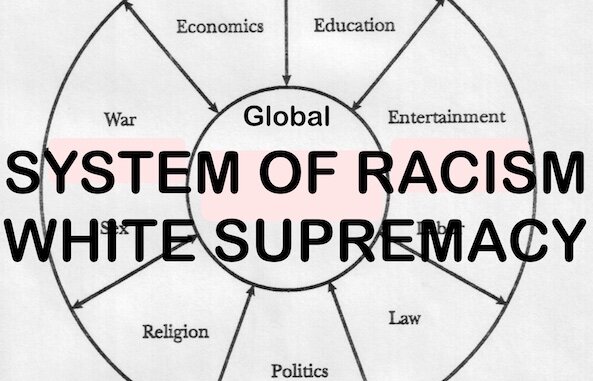
Jim Crow in Palestine: parallels between US and Israeli racism = White Supremacy is Racism, Racism is White Supremacy

ElectronicIntifada 

The Birmingham Civil Rights Institute in Alabama does a good job of showing what blacks endured before the civil rights victories of the 1960s. I visited there last fall and was especially struck by one particular image — a 1926 map of the small and isolated patches of Birmingham where city zoning regulations allowed blacks to live.

What struck me was the similarity of this map to maps of the isolated patches of the West Bank including East Jerusalem where Palestinians are allowed to live. The map then made me think about other similarities between the oppression of blacks in the Jim Crow South and Israel’s present-day oppression of Palestinians.

The methods for keeping blacks within their enclaves in Birmingham were more direct and brutal than the redlining agreements among banks and realtors that maintained a de facto segregation in the North. Municipal zoning laws in Birmingham prevented sales to blacks outside designated areas, and if a black person somehow acquired a house outside the designated area, even if just across the street, the house would be blown up.

Similarly, the Israeli legal system keeps Palestinians within restricted areas of East Jerusalem and elsewhere in the West Bank. Palestinians living outside those areas have been evicted and their homes destroyed or occupied by Jewish settlers. Eighteen thousand Palestinian homes have been destroyed by Israel since 1967, according to the Israeli Committee Against House Demolitions.

The black areas and white areas of Birmingham were very different physically. The black areas often lacked municipal amenities or services such as street lighting, paved streets, sidewalks, garbage collection and sewers that the white areas had. Similarly, the Palestinian areas of East Jerusalem often lack these same basic facilities and services, and the differences between Palestinian areas and those reserved for Israeli settlers are clear to all. [MORE

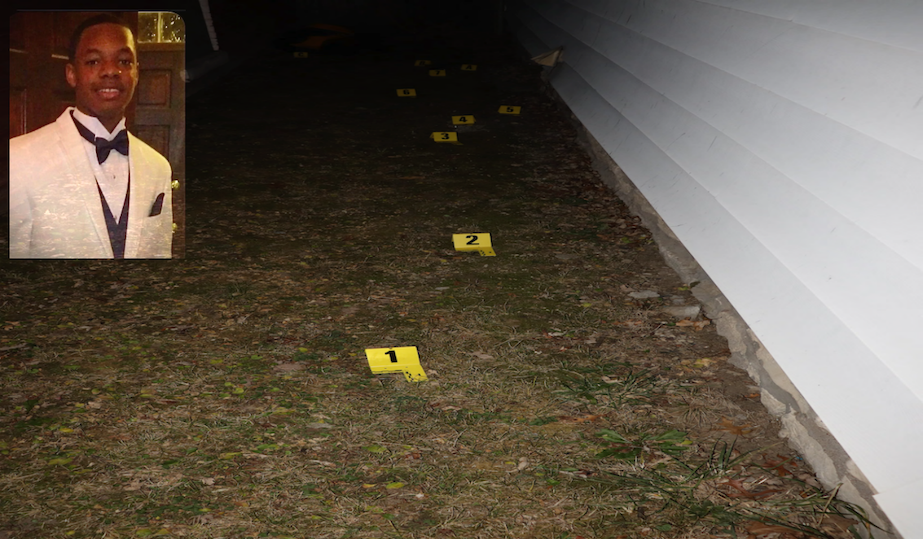
Black Mayoral Candidate Found Murdered in Clarksdale, Media Insists on telling us over & over he is gay

ClarionLedger

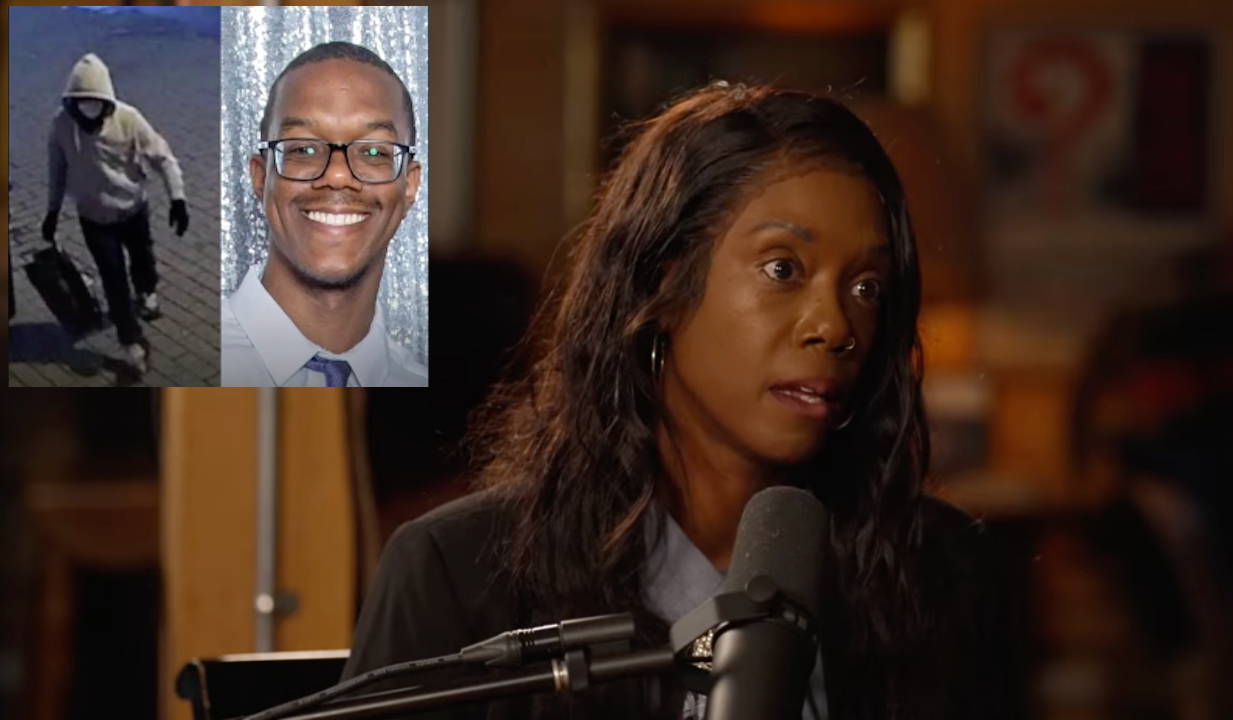
The Coahoma County sheriff has charged Lawrence Reed with the murder of Marco McMillian.

Reed, 22, is from Shelby. He is thought to have killed McMillian sometime late Monday night or early Tuesday morning.


McMillian was considered missing after an accident involving his SUV happened around 8:30 a.m. Tuesday near the Coahoma County-Tallahatchie County line. Reed, who was driving McMillian’s SUV, had collided head-on with another vehicle.


McMillian wasn’t in his SUV at the time of the accident, thus prompting a search for his whereabouts.


The two drivers each were taken to different hospitals. Reed was airlifted to the Regional Medical Center at Memphis.

The other driver was taken to a local hospital and since has been released.


A spokeswoman for The Med said Reed was in good condition as of Wednesday afternoon.


McMillian had entered the highly contested Clarksdale mayoral race earlier this year, saying he wanted to combat crime and high unemployment. Politics likely wasn’t a factor in McMillian’s death, said Coahoma County Coroner Scotty Meredith.


Law enforcement agents on Wednesday afternoon said they found McMillian's body found near the Mississippi River.

Oppressive Arizona sheriff suffers broken shoulder in fall

Yahoo

A controversial 80-year-old Arizona lawman, who styles himself as America's toughest sheriff and is known for targeting illegal immigrants, broke his left shoulder on Thursday after taking a spill in downtown Phoenix, authorities said.

Maricopa County Sheriff Joe Arpaio was being treated for the shoulder fracture at a local hospital and will not require surgery, said sheriff's spokeswoman Lisa Allen. It was not clear if he will remain overnight.

"He's feeling fine," Allen said in a telephone interview from the hospital. "He's hurting a little right now, but he should be back to work in a few days."

Arpaio was on his way to lunch when he tripped on a pipe and fell to the ground, she said. He was taken to the emergency room for diagnosis and treatment.

Arpaio, famous nationwide for his tent city jail and immigration roundups, was re-elected for his sixth term last November after facing his stiffest challenge yet. He is facing lawsuits from the federal government and Hispanic drivers who accuse him of racial profiling and civil rights abuses, which he denies.

Five Ways Courts Say Texas Discriminated Against Black and Latino Voters

Propublica

Oral arguments begin today in a Supreme Court case challenging Section 5 of the Voting Rights Act as out of date. SCOTUS blog is reporting that "a majority of the Court seems committed to invalidating Section 5 of the Voting Rights Act."

In August, a panel of federal court judges ruled that new district maps drawn by Texas' Republican-controlled legislature weakened the influence of Latino voters and in some cases evinced "discriminatory intent" against both Latinos and African Americans. Two days later, another panel of federal judges unanimously struck down a voter-ID law passed by the legislature in March 2011, arguing that it would disproportionately harm African-American and Latino voters. The judges did not address whether there was discriminatory purpose behind the legislation, but they noted that the legislature failed to pass amendments that would have mitigated the law's discriminatory impact.

Both of these decisions hinged on Section 5, which requires certain states with a history of racial discrimination in voting — including Texas — to prove that any changes in their voting laws or procedures do not hamper the voting rights of minorities. Enacted in 1965, the Voting Rights Act aimed to eliminate discriminatory voting practices that had long been used to suppress the black vote, particularly in southern states.

In August, Texas Attorney General Greg Abbott's office declined to comment on the specifics of the rulings, but the state appealed both cases to the Supreme Court. Whether or not the Court will decide to hear Texas’ redistricting case, which also challenges Section 5, may depend on how the court rules on the current Voting Rights Act case, Shelby County v. Holder.

Minority groups have outnumbered whites in Texas since roughly 2004, and 55.2 percent of the state's residents are now minorities, according to Census figures. But as of 2011, the state's legislature was more than two-thirds white.

Here’s a look at examples of “discriminatory intent” and discriminatory impact federal judges found in Texas lawmakers’ actions in 2011.

1. Lawmakers drew some districts that looked like Latino majority districts on paper — but removed Latinos who voted regularly and replaced them with Latinos who were unlikely to vote.

In the redistricting case, a panel of three federal judges found that Texas lawmakers had intentionally created districts that would weaken the influence of Latino voters, while appearing to satisfy the requirements of the Voting Rights Act.

In drawing Texas' 23rd congressional district, the judges found that "The mapdrawers consciously replaced many of the district's active Hispanic voters with low-turnout Hispanic voters in an effort to strengthen the voting power of [Congressional District] 23's Anglo citizens. In other words, they sought to reduce Hispanic voters' ability to elect without making it look like anything in [Congressional District] 23 had changed."

In 2010, the 23rd district narrowly elected a Latino Republican, Francisco "Quico" Canseco. One email to a Republican mapdrawer, released during the legal battle over the maps, shows that Republicans were trying to increase the chances Canseco would be re-elected.

Lawmakers used a similar tactic in redrawing a state house district, modifying it "so that it would elect the Anglo-preferred candidate yet would look like a Hispanic ability district on paper," the court ruled. An "ability district" is one in which a minority group has the capability to elect representatives of its choosing. The judges concluded that the legislature had been trying to make this district appear as if it satisfied the requirements of the Voting Rights Act, while actually trying to benefit white voters.

Judge Thomas B. Griffith, writing the unanimous opinion of the three-judge panel of the U.S. District Court for the District of Columbia, called it "a deliberate, race-conscious method to manipulate not simply the Democratic vote but, more specifically, the Hispanic vote."

2. Lawmakers widened the gap between the proportion of the population that is Latino and African Americans and the proportion of districts that are minority-controlled.

In the years leading up to the 2010 census, Texas' population increased by 4.3 million people, 65 percent of them Latino. As a result, Texas gained four seats in Congress.

In their decision, the federal judges in the redistricting case noted that minority voters have no constitutional right to proportional representation. But the Voting Rights Act says states can't weaken the electoral power of minorities. So, the judges reasoned, if there is already a gap between the minority population of a state and its political representation, states can't let that gap grow wider.

In Texas, the judges observed, African Americans and Latinos were already underrepresented in Congress. Given the number of voting-age minority citizens in the state, Texas's old maps should have had roughly 13 congressional seats that represent districts in which minorities have a strong voice, the judges calculated. Instead, Texas only had 10 such districts.

Instead of narrowing this "representation gap" as the minority population grew, the legislature increased it.

With four additional congressional seats, Texas should now have 14 districts in which minorities have the ability to elect their chosen representatives, the judges concluded. But the state's new plan still included just 10 minority districts.

3. Texas removed economic centers and district offices from African-American and Latino districts, while giving white Republicans perks.

In defending its new maps, Texas argued that the districts had been shaped to help Republicans and hurt Democrats — a perfectly legal tactic — and that race had been irrelevant to its choices.

The Associated Press reported that the state's lawyer had argued before the court that "'a decision based on partisanship' is not based on race, even if it results in minority voters having less political influence."

The judges noted that while there was no "direct evidence" that "discriminatory purpose" animated the new maps, circumstantial evidence indicated the design of the new congressional districts "was motivated, at least in part, by discriminatory intent."

Texas' gerrymandering was not limited to manipulating the kinds of voters within districts. By reshaping a district, mapdrawers can determine whether key businesses, schools and tourist attractions are removed from a district or added to another.

The redistricting opinion dwelled at length on "unchallenged evidence that the legislature removed the economic guts from Black ability districts." African-American Rep. Al Green testified that the "economic engines" of his district — including a medical center, a university, and the Reliant Park sports mega-complex that includes the Astrodome — were removed. African-American Rep. Eddie Bernice Johnson's district lost a sports center and an arts district, while Latino Rep. Charles A. Gonzalez from San Antonio said that both a convention center and the Alamo were drawn out of his district.

These three members of Congress, and African-American Rep. Sheila Jackson Lee, all Democrats, also testified that their district offices were drawn out of their districts — a detriment because constituents want easily accessible district offices.

"No such surgery was performed on the districts of Anglo incumbents," the judges found. "In fact, every Anglo member of Congress retained his or her district office."

"The only explanation Texas offers for this pattern is 'coincidence.' But if this was coincidence, it was a striking one indeed," Judge Griffith wrote. He noted that Texas had argued that "without hearing from the members, the mapdrawers did not know where the district officers were located." But, he wrote, "We find this hard to believe as well. We are confident that the mapdrawers can not only draw maps but read them."

The judges noted that members of Congress who represented minority districts testified that they were largely shut out of the map-drawing process. At the same time, white Republican members asked for tweaks to their districts and were often accommodated. "Anglo district boundaries were redrawn to include particular country clubs and, in one case, the school belonging to the incumbent's grandchildren," the judges wrote, referring to requests related to the districts of Republican Congressman Lamar Smith, and Kenny Marchant, respectively.

Not all white lawmakers were happy with their new districts. Democratic Congressman Lloyd Doggett, who was forced to run in a new district as a result of the Republicans' maps, told the Texas Tribune last year that map plans "plunged a dagger into the heart of our community."

4. Divide and conquer: Texas "cracked" minority voters out of one district into three.

One common tactic of racial gerrymandering is "cracking" a minority community into different districts so it cannot elect a minority politician.

Looking at a State Senate district in Fort Worth, the judges cited testimony that lawmakers reshaped the district in a way that "cracked the politically cohesive and geographically concentrated Latino and African American communities," and placed those voters "in districts in which they have no opportunity to elect their candidates of choice."

The judges cited "well supported" testimony that African Americans in Fort Worth had been "exported" into a rural, "Anglo-controlled" district to the South, while Latinos on the North side of the city had been put into another white, suburban district, leaving the "reconfigured" Senate District 10 a "majority Anglo" district.

The judges rejected Texas' argument that "its decision to 'crack' [Senate District] 10 is best explained by partisan, not racial, goals," and concluded that the district map "was enacted with discriminatory purpose."

5. Texas passed a voter-ID law with requirements that would make it disproportionately difficult for African Americans and Latinos to vote.

A three-judge panel found that Texas' voter-ID law discriminates against minorities, since the costs of obtaining the required identification would place a greater burden on low-income Texans, who are more likely to be minorities than white.

Although the state issues free election IDs, the cost of a birth certificate, one of the underlying documents needed for the ID, is $22 — and that's if voters can get to the right government office in the first place. At least one-third of Texas' counties don't have a state Department of Public Safety office, which issues state IDs.

"It is virtually certain that these burdens will disproportionately affect racial minorities," wrote Judge David S. Tatel for the unanimous panel of the U.S. District Court for the District of Columbia. He cited "undisputed U.S. Census data" showing that Hispanics and African Americans in Texas are more likely to be poor and more likely to live in households without a car.

"Simply put, many Hispanics and Africans Americans who voted in the last election will, because of the burdens imposed by [the new voter ID law], likely be unable to vote in the next election," he wrote.

The judges agreed ahead of last month's trial to keep out any evidence indicating motivations for the voter-ID law, so they didn't address whether or not there was intentional discrimination behind the creation of the law. But the 56-page decision pointed out that the Texas legislature could have made its law more accommodating by, among other things, waiving documentation fees for the election IDs, reimbursing travel-related costs or expanding DPS office hours to evenings and weekends — amendments that were either defeated or tabled.

Finally, the judges agreed with Texas that the state had an interest in preventing voter fraud, even though there is little documented evidence of current voter fraud in Texas. However, they noted that circumstantial evidence "could nonetheless suggest that Texas invoked the specter of voter fraud as pretext for racial discrimination."

The 2012 election

Texans were not required to present a photo ID to vote in November's election.

"As a result of the court's decision, Texas is not permitted to implement the photo ID law," Texas Secretary of State Hope Andrade announced in a news release.

As for the redistricting maps, Texas used a set of interim maps drawn by federal judges in Texas. Those interim maps were part of a contentious battle that earlier went to the U.S. Supreme Court.

U.S. Drone and Surveillance Flight Bases in Africa Map and Photos

PublicInteliigence

The following map and photos depict current and future locations used by the U.S. military for launching drones and surveillance flights throughout Central and North Africa. The map is not complete and reflects available information from open sources.  Similar to drone bases in Pakistan, a Washington Post article from 2012 quotes a senior U.S. commander as saying that most of the African air bases launching drones and surveillance flights are “small operations run out of secluded hangars at African military bases or civilian airports.” Several sites that are rumored to be used for launching drones and surveillance aircraft are not included in the map, including al-Wigh airbase in Libya which has been recently reported by news outlets in North Africa to be a base for French and U.S. operations in Mali.  All images are via Google Earth. [MORE]

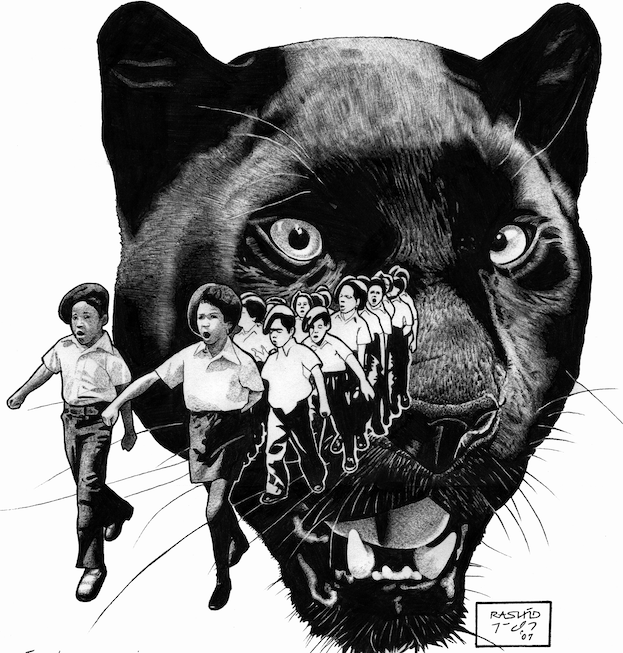
Forum About Black Panthers March 7 at 3:30 p.m. @ UMass, Boston

BAYStateBanner

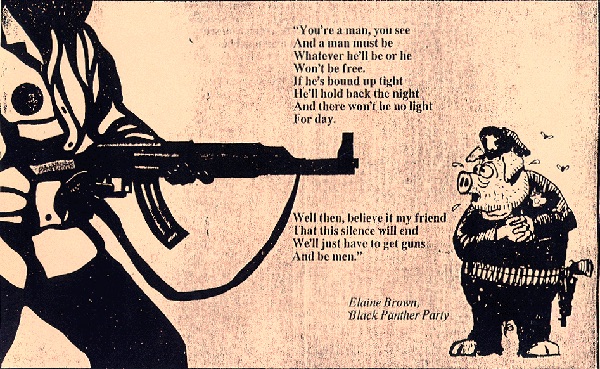
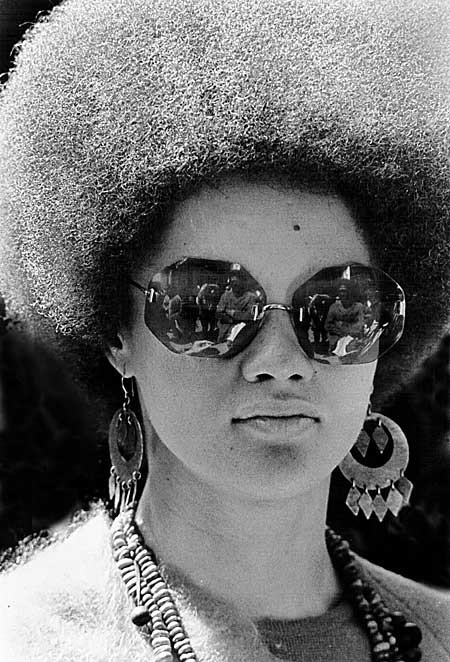
As we appreciate and celebrate Black History Month in February, there’s one story we should pay close and careful attention to: The Black Panther Party. The legacies of the Panthers and the Black Power Movement still echo nearly 50 years later.

When people talk about Black History Month today, the real history often gets neglected. Martin Luther King Jr.’s opposition to the Vietnam War is ignored by politicians who invoke his legacy — right before they order bombings of other countries. Affirmative action, the war on poverty and other Great Society programs are removed from the history of regular people. These reforms weren’t the result of “benevolent” politicians. They were the products of the millions of black, brown and white people who protested and even revolted in cities across the country as part of the Black Power movement and other social movements in the 1960s.

The Black Panthers were formed at the height of the Black Power movement, rather than in the years leading up to it. As a result, many members were new to revolutionary politics and struggling to apply them in practice for the first time. His honest assessment gives us the chance to learn and build off these lessons for today’s world.

Today’s society is still plagued by racism. Just as slavery gave way to Jim Crow in the South and racism in the North, overt racism has given way to the color-blind rhetoric that masks continued racial inequality today.

For the Panthers, racism was not limited to people’s ideas but was a structure that held down black and brown people. While politicians today (as they did then) blame the oppressed and dispossessed, the Black Panthers saw poverty, violence and racism as a result of an inherently unequal system.

Those who are interested in applying the lessons of the Panthers for challenging racism today should seize this upcoming opportunity to hear Dixon speak. Far from just history, the stories of Aaron Dixon and the Black Panther Party are all the more relevant today.

Aaron Dixon will speak on Thursday, March 7 at 3:30 p.m. at UMass Boston and 7 p.m. at Codman Square Health Center (637 Washington St., Dorchester). Chris Morrill is a student 

The Cost of Doing White Supremacy Business: Burbank police litigation costs hit $7.1 million and rising

LATimes

The cost incurred by the city of Burbank as it continues to defend itself against a slew of lawsuits filed by former and current police officers has hit $7.1 million, officials announced recently.

Most of the cases — which center on claims of racial discrimination, harassment and wrongful termination — remain ongoing.

The largest chunk of the cost, roughly $4 million, was spent defending a multi-plaintiff lawsuit in which three Latino officers, a black officer and an Armenian officer claimed racism and sexual harassment in a lawsuit filed in May 2009, the Burbank Leader reported.

Two of the plaintiffs — Omar Rodriguez and Elfego Rodriguez, who were both dropped from the suit — were among the 10 officers fired in 2010 for alleged misconduct stemming from a Porto's robbery investigation in 2007.

All but one of the fired employees appealed their terminations, City Atty. Amy Albano said Friday.

Omar Rodriguez, however, dropped all claims against the city and gave up his administrative appeal in July, with the city also agreeing to dismiss its cross complaint against him, records show.

Elfego Rodriguez has continued to fight the city in court.

His administrative appeal hearing concluded last year, with a judge in September recommending the city uphold his termination. He has asked the court to reverse the decision and award him attorney fees, back pay and benefits.

He was fired almost three years ago after police officials determined he assaulted a Porto's robbery suspect who, as it turned out, was misidentified and not involved in the crime. The city claimed Elfego Rodriguez subsequently lied about the alleged excessive force to protect his reputation.

Administrative appeals for the remaining seven officers are pending. Albano declined to comment on the status of each case, stating that they are "personnel matters."

The $7.1 million in legal fees the city incurred does not include the cost of internal administrative hearings for the fired officers, Albano said.

Bill Taylor was the sole fired employee who did not appeal, but he did sue the city for wrongful termination. He won $1.3 million in damages and $820,000 in attorney fees.

In June, the city appealed the verdict.

To date, the city has spent $1.5 million on Taylor's lawsuit, in which he said he was fired in retaliation for refusing to sign off on the terminations of minority officers.

Two other officers involved in the discrimination lawsuit have had their trials, but are now tied up in appeals.

Burbank Police Officer Cindy Guillen-Gomez — the sister of City Council candidate Juan Guillen — claimed she was discriminated against for being pregnant and then faced retaliation when she complained.

A jury last year sided with the city, but Guillen-Gomez has since appealed.

Another officer, Steve Karagiosian, won $150,000 plus $900,000 in attorney fees in his discrimination case last year. The city has appealed that decision.

D.C. civilian police oversight board concerned as White Police Chief overrules decisions

WashPost

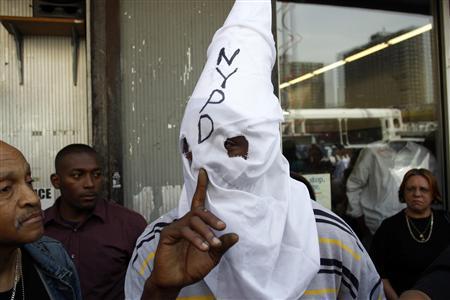
A civilian D.C. police oversight board says Police Chief Cathy L. Lanier has three times since 2010 ignored its findings of officer misconduct and refused to dole out any punishment.

Although the department’s rejection of a panel’s finding comes in only a small fraction of cases, the board’s director says it undermines the group’s credibility and sets a precedent to undo legally binding decisions.

The Office of Police Complaints also said in its annual report that more than one-third of the 64 D.C. officers involved in disciplinary cases handled by the board last year refused to cooperate with investigators. That is a sharp increase from 2010, when three declined to provide their versions of events.

“We want the chief to have some control over her troops,” said Philip K. Eure, executive director of the mayor-appointed board. “But there’s a process, and you have to respect the law. The [police department] has done that in the vast majority of cases. . . . But we do have differences of opinions at times. We’re doing our job.”

Lanier said she’s asking the D.C. attorney general to weigh in on whether she has to reprimand or suspend an officer in cases in which “our disciplinary review does not feel there is evidence to support the outcome.”

“Are we required to discipline a member who we don’t feel deserves it?” she asked, noting that she has made only three reversals.

In its annual report, the complaints board called this practice “troubling” and said “it was made in direct conflict with District law stating that the decision of a final review panel ‘shall be binding on the subject police officer or officers and on the police chief.’ ”

Lanier also said some officers are resisting cooperating with the panel because they don’t want to risk self-incrimination should they later be investigated by prosecutors. Lanier said she wants clarification from the attorney general on whether the civilian panel can grant officers limited immunity that would prohibit prosecutors from using their statements in a criminal case.

The Office of Police Complaints was formed by statute in 2001 as an alternative to the department’s in-house investigations squad, the Internal Affairs Bureau. The civilian board typically investigates allegations of improper use of force, bad language and rude behavior. It has more teeth than similar panels in other cities in that it has subpoena power. An assistant D.C. police chief is on the board.

Eure, a former lawyer in the U.S. Justice Department, said police first rejected the panel’s finding three years ago in a case in which an officer used inappropriate language. He said the department indicated the dismissal was done in error.

The annual report says the department dismissed two more cases last year. In one, involving profanity and harassment, Lanier declined to punish one officer but issued mild reprimands to two others in the same incident.

In another case, Lanier exonerated an officer after the panel concluded the officer arrested someone without justification and used inappropriate force, taking a suspect to the ground by his neck.

In that instance, Lanier had filed an appeal of the board’s decision, but a three-member panel ruled against her. According to the annual report, Lanier said she thought investigators relied too heavily on the version given by the man arrested and by his friends.

Eure said that after losing the appeal, Lanier ignored the ruling, which he believes she cannot do. “We consider these to be serious matters warranting further scrutiny,” the annual report says.

The Office of Police Complaints is just one place for people to lodge objections about police conduct. Internal affairs can investigate the same type of issues as the civilian panel, as well as more serious allegations involving violations of criminal laws, police-involved shootings and corruption.

In 2011, the most recent year for which statistics are available, internal affairs investigated 386 complaints, including 22 alleging false arrest, 67 accusing rude or unprofessional behavior, 38 involving abuse of authority and four regarding excessive force. More than 50 complaints were sustained, according to the department’s annual report, though a breakdown was not provided.

The Office of Police Complaints received 574 formal inquiries in fiscal 2012. Twenty-one other cases were determined serious enough to warrant a full investigation. Twelve resulted in a finding of misconduct against at least one officer involved in the case.

Four officers received minor letters of prejudice, which typically means guidance and counseling; two more got serious letters of reprimand, which can impact performance reviews and promotions; and two were found guilty of dereliction of duty. Two officers were suspended, the most serious discipline. One for 10 days, another for 30 days, for punching a man in the face after he shouted a profanity and clenched his fists by his side.

Lawsuit Calls Out MPD Beale Street Cops

Wreg

(Memphis) Beale Street is the busiest and most famous street in Memphis.

Now, its at the center of a multi-million dollar lawsuit over claims of abuse and civil rights violations by police from sweeps that were being done.

“Actually it’s something we discontinued last June so we don’t do it anymore. We hadn’t been doing it for quite some time and going into this season, this year, we won’t do it this season either,” said MPD Director Toney Armstrong.

Armstrong says the Beale Street sweeps stopped because they were no longer necessary and had nothing to do with abuse claims like the one filed by one of their own.

Patrolman Lakendus Cole. Cole and Leon Edmond, an ATF agent from St. Louis, claim Memphis police roughed them up, arrested them for no reason and violated their civil rights.

“I won’t speak to the legitimacy of the lawsuit but certainly with an agency this size we get more than our fair share of lawsuits,” said Armstrong.

During the sweeps, MPD officers forced all visitors not inside clubs off the street.

An On Your Side Investigation uncovered mounting claims of police brutality during these sweeps.

Visitors accused officers of choking, pushing them to the ground, slamming them into squad cars.

Two people said one officer punched them in the head and even put them in headlocks.

Internal Affairs determined most of the claims were unfounded. “

“Anytime you have a department this size and we touch as many people as we touch, you’re going to have those types of things,” said Armstrong.

Attorney Robert Spence says otherwise. He’s filed two lawsuits in two weeks against Beale Street officers.

“Just a blatant violation of their civil rights,” said Spence.

He added, “They weren’t disorderly.  They weren’t anything.”

Spence also represents two former University of Memphis college students who claim seven MPD officers beat them on Beale Street.

At least six LAPD officers want their firings re-examined in wake of Christopher Dorner case

TheSun

While Los Angeles police say they will review more officers' firings in the wake of the Christopher Dorner case, it's unclear how many cases will be re-examined.

Between 2010 and 2012 alone, 67 officers were removed after departmental trials known as boards of rights, Deputy Chief Mark Perez said Wednesday.

Another 27 were suspended or demoted.

At least six officers are known to now be asking to have their cases re-examined, after LAPD Chief Charlie Beck said the department would look at Dorner's firing again.

It's possible many others could make the same demands, potentially straining the department's resources.

"If I got fired and all this fuss came after I got fired, I think I'd probably go do the same thing," said Perez, who oversees the Professional Standards Bureau, which includes Internal Affairs investigators.

One who is looking to have his case reopened is Derek Sykes, a former LAPD officer who was fired in 2009.

"I would think the LAPD should open any case that there's allegations of misconduct involved in," Sykes said in an interview. "That's what I would hope. There are other officers out there who are in Dorner's position, who have lost everything."

Sykes said he did not know whether he was counted among the six who are known to be asking for their cases to be reopened. His wife, Christy Sykes, said she has spent years writing to people in the department and the mayor asking for a review.

Sign the petition to Defend Martin Luther King's Dream Act

Sign the petition to Defend Martin Luther King's Dream Act - here.

Joining Greg Palast as initial co-signers of the petition are Dr. Charles Steele, Jr., CEO, Southern Christian Leadership Conference, who succeeded Dr. King as President of SCLC and one of the original Freedom Riders, Dr. Bernard Lafayette, Jr.,  co-founder, Student Nonviolent Coordinating Committee.

Watch the film, sign the petition and pass this note on.

Greg Palast: How Do You Steal a Dream? Supreme Court hears suit to kill Voting Rights Act

By Greg Palast

Jim Crow is alive and well — and he has mounted a new attack on the law Martin Luther King dreamed of: the Voting Rights Act.

Today, February 27, the Supreme Court will hear a suit brought by Shelby County, Alabama, which challenges the right of the Department of Justice to review changes in voting procedure. Example: Attempts to cut the number of early voting days, to expunge “illegal alien” voters without any evidence, refusing Spanish-language ballots, have been blocked by the Department of Justice and courts because they have stopped Black and Hispanic citizens casting ballots.

Sixteen states are subject to this “pre-clearance” law, every one with a history of Jim Crow rules such as “literacy” tests — Blacks had to recite the Constitution, Whites “Mary Had a Little Lamb.”

Dixie moans it’s been picked on unfairly, but the “pre-clearance” states, chosen by an arithmetic formula, include all or parts of the “Confederate states” of California, Arizona, Alaska and New York.

All those above the Mason-Dixon line are on the civil-rights hot-water roster because of a history of hostility to Hispanic citizens. In 2006, for example, the Republican Secretary of State of California rejected 42% of voter registration forms because the names were “unusual” and difficult to type into records! The names, like Chávez and Muhammad, were only “unusual” for Republicans.

New York’s mayor Michael Bloomberg is happy to pre-clear his city’s changes with the Justice Department and has told that to the Court. But once again, as Dr. King said in his Dream speech, in Alabama, the “Governor has his lips dripping with the words of interposition and nullification” — to nullify the 15th Amendment’s right to vote and to interpose himself between federal law and the enforcement of this basic American right.
And the Southland? In 2000, Florida Secretary of State Katherine Harris purged tens of thousands of African-Americans from voter rolls, labeling them “felons” when their only crime was VWB: Voting While Black. All — every one — were innocent. And again, in 2012, Florida Governor Rick Scott targeted 180,000 voters, mostly Latinos, as illegal “alien” voters. The Governor, when challenged by the Justice Department, cut the “alien” list to 198 but in the end, could only produce evidence against one.
If it were not for Section 5, the pre-clearance law, the purges, gerrymandering and other racially bent trickery rampant in Florida, Arizona (with its profiling and harassment of Hispanic voters) and Alaska with its bias against Native Americans would be so much worse. Without review — and the threat of review — Americans would once again lose the rights that the Constitution promises, won with the blood of our Fathers.

At the same time, we cannot ignore the Jim Crow and José Crow tactics that create long lines of voters of color in Ohio and other states.

Presidents Gerald Ford and Ronald Reagan signed massive expansions of the Voting Rights Act, tripling its reach. It is time to extend the law's protections again — to Ohio, to Wisconsin, to everyone.

When every American is protected by the Voting Rights Act review of voting changes, then all of us may be secure that our votes will not be nullified by politicians abusing the voting system to seize office through tactics racist in effect, if not intent.

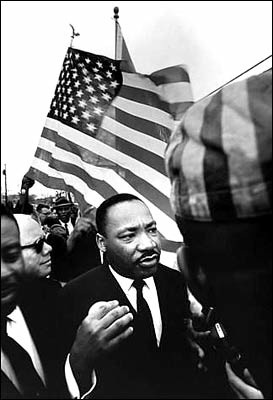
A half century ago this year, Dr. Martin Luther King shared his dream with America:

"I have a dream that one day this nation will rise up and live out the true meaning of its creed: ‘We hold these truths to be self-evident: that all men are created equal.’

"We can never be satisfied as long as a Negro in Mississippi cannot vote and a Negro in New York believes he has nothing for which to vote. No, no, we are not satisfied, and we will not be satisfied until justice rolls down like waters and righteousness like a mighty stream."

King’s dream is the American Dream — which no Court should take away. It is a mighty stream which must touch all citizens in every state.

Without “pre-clearance,” the Voting Rights Act is an empty promise — with purged, blocked and intimidated voters having to protest after an election to the very officials elected by the vote thievery that put them in office.

If this Supreme Court removes “pre-clearance” Section 5 on the grounds that it does not apply to every state, then the solution is simple and just: apply pre-clearance to every state.  Every American deserves a review by Justice of laws which tell us who can vote — and who can’t.

As King admonished us, we must not be satisfied when we see Black folk, a half century after the passage of the Voting Rights Act, stand in line for six hours to vote whether in Miami or in Cleveland.

We petition the Court and Congress to let freedom ring.

Anti-Police Brutality Protesters briefly take over Vallejo City Council chambers

TimesHerald

Dozens of anti-police protesters who had gathered at City Hall briefly took over Vallejo City Council Chambers on Tuesday night during a special council meeting, police said.


About 50 people moved inside the chambers about half an hour after the meeting's 6 p.m. start, at which time council members retreated to a back room, City Manager Dan Keen said. The demonstrators — who were protesting police brutality stemming from a fatal officer-involved shooting of Mario Romero in September — then took over the council dais and used the chambers' sound system, authorities said.


Romero's family has been regularly protesting the Sept. 2 Vallejo police actions, in which the 23-year-old Vallejo man was shot multiple times while in a car parked outside his North Vallejo home. 


Police said Romero was killed after two officers saw him with a handgun that later turned out to be a replica. Romero's family members and friends have been refuting the police department version of events ever since.  


The fatal shooting was one of 10 officer-involved shootings in 2012. Six people and two dogs were killed. 


Called to respond to the protest, officers entered the chambers and asked everyone to move their protest back outside to the City Hall steps, police said. Four officers, including one cadet, were already on hand for the special meeting, which involved interviews of the public for vacancies on city committees, commissions and boards.

About 15 officers from both the Vallejo police department and Solano County Sheriff's office lined up at the entrance to keep protesters from reentering City Hall. American Canyon police also provided backup.


The protesters began dispersing at about 7 p.m. with no arrests, although police said one demonstrator was seen with a baton.


“We are not going to tolerate that moving forward,” Vallejo police Lt. Sid DeJesus said of weapon carrying.


The start of the council's regular meeting was pushed back at least 20 minutes. As of press time, the council had begun hearing a mid-year city budget update, and had approved purchase of a use-of-force and firearms simulator for the police department — a direct response to community outcry over last year's officer-involved shootings.


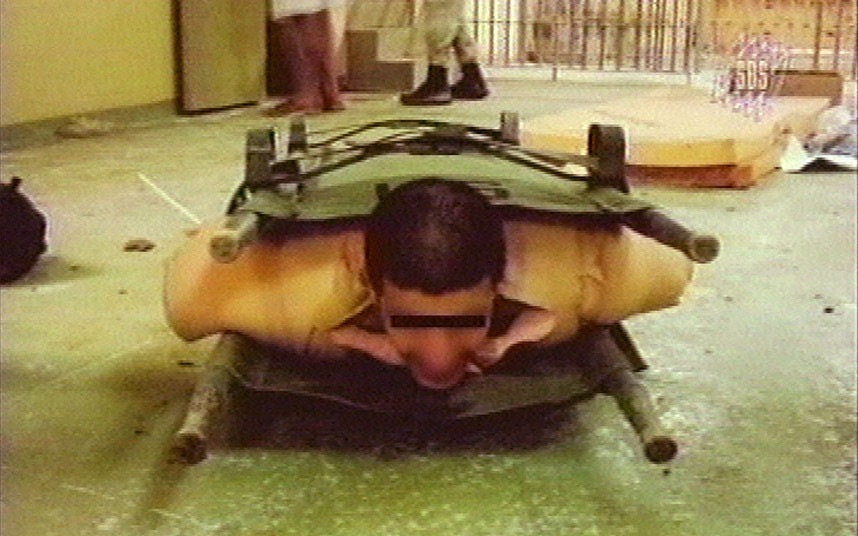
An Interrogation Center at Yale? Proposed Pentagon Special Ops Training Facility Sparks Protests

Jurist

Students and alumni at Yale University are organizing against a proposed campus center to train special operations forces in interview techniques. The center would be funded by a $1.8 million grant from the Pentagon and could open as early as April. Dubbed an "interrogation center" by critics, the facility would be housed at the Yale School of Medicine and led by Charles Morgan, a professor of psychiatry who previously conducted research on how to tell whether Arab and Muslim men are lying. We speak to two students at Yale who co-authored an editorial titled "DoD Plans are Shortsighted, Unethical," and with Michael Siegel, professor of community health sciences at Boston University School of Public Health and a 1990 graduate of the Yale School of Medicine. "Yale has now crossed a line," Siegel says. "Using the practice of medicine and medical research to help design advanced interrogation techniques, or even just regular civilian intelligence-gathering techniques, interviewing techniques, is not an appropriate use of medicine. The practice of medicine was designed to improve people’s health. And the school of medicine should not be taking part in either training or research that is primarily designed to enhance military objectives."