Florida's Welfare Drug Testing Law Struck Down by Federal Appeals Court

ColorLines

A federal appeals court today struck a blow to a 2011 Florida law requiring drug tests for all applicants to the state's welfare program. The unanimous decision from the Eleventh Circuit Court of Appeals also applies to a nearly identical bill signed last year by Georgia Governor Nathan Deal. The decision cuts to the heart of a Republican-led efforts to conflate poverty and unemployment with drug abuse and sends a message to other states that the suspicionless testing laws will not stand.

In the years since 2010, conservative state legislators introduced a rash of bills to require applicants to state welfare, unemployment insurance and food stamp programs to submit to drug tests. Advocates of the bills argued that the laws were necessary to protect children from the harms of drug addicted parents and to interrupt a pattern of drug use among poor and unemployed people.

But the appeals court ruled today to uphold a 2011 decision by an Orlando district court to enjoin the Florida law on the grounds that it violates the 4th amendment protection against unreasonable search and seizure.

"The simple fact of seeking public assistance does not deprive a TANF applicant of the same constitutional protection from unreasonable searches that all other citizens enjoy," the court wrote in its ruling today.

The case was brought by the ACLU on behalf of Luis Lebron, a Navy veteran and college student who is raising his children alone while also caring for his aging mother. He applied for welfare assistance from the state of Florida but was barred from help when he refused to take the drug test.

The Florida drug testing law had a short life. But in the few months it was in effect before a court blocked it, nearly 98 percent of welfare applicants passed the test. Today's Eleventh Circuit decision leaves the injunction in place and sends the Florida law back to the district court to rule on the law.

Georgia, for its part, waited until today's ruling to determine whether to implement it's own testing program, which was modeled on Florida's. The Eleventh Circuit court has jurisdiction over Florida, Georgia and Alabama, and the decision today sends a clear message that the Georgia law would not survive legal challenge.

"We are grateful to the Court for their ruling today that essentially renders Georgia's law dead in the water," said Gerry Weber, an attorney at the Southern Center for Human Rights, which planned to challenge the Georgia law if it went into effect.

Despite repeated court decisions finding bills like the ones in Florida and Georgia unconstitutional, other states continue to consider their own versions. At least 8 states have already considered welfare drug testing requirements this year.

Autopsy shows Palestinian prisoner died of torture in Israeli jail

Xinuanet

Palestinian Minister of Prisoners Affairs Eissa Qaraqe' said on Sunday that autopsy revealed that Palestinian prisoner Arafat Jaradat died of torture.

"Traces of severe torture appeared on Jaradat's body: neck, face and backbone," Qaraqe' told reporters in a news conference held in the West Bank city of Ramallah.

Jaradat, 30, died in an Israeli prison on Saturday after he was detained in one of the almost-daily Israeli army raids in the West Bank since less than a week.

Initial Israeli media reports cited sources suggesting that Jaradat died of a heart attack. Qaraeq' denied this claims, describing it ad "untrue Israeli claim."

"There was no signs of a heart attack or stroke," Qaraqe' said.

Jaradat's death angered Palestinians who have been protesting for several days to support the Palestinian prisoners in Israeli jails, especially the four prisoners, who have been on a hunger strike for months and demanded an end to their administrative detention, in which they could be locked up for long period without a trail.

The New York-based Human Rights Watch (HRW) called on Israel on Sunday to either charge or release the hunger-strikers immediately.

According to a statement released by the HRW, the watchdog group said "Israel must stop denying them and their lawyers' access to evidence of their alleged crimes."

Experts Debate Effects of Voting Rights Act Provision on Native Americans

BLT

Days before the U.S. Supreme Court was set to hear arguments in Shelby County v. Holder, a case challenging the constitutionality of Section 5 of the Voting Rights Act, legal experts said they feared that striking it down would hurt Indian Country and Native American voters.

Enacted in 1965 as a temporary provision, Section 5 freezes election practices or procedures in certain states and local governments, mostly in the south, until the new procedures have been subjected to review or "precleared" by the Justice Department or a federal court. Congress has since reauthorized Section 5 four times. Currently, it is set to expire in 2031.

In order to make changes to their voting rules, the states in question must demonstrate that the rules do not have the purpose of discriminating — or that regardless of intent, that the new rules will not have a discriminatory effect — based on race or color, or against a “language minority group,” including persons who are American Indian, Asian American, Alaskan Natives, or of Spanish heritage.

The Justice Department has since objected to about one percent of the prospective voting rules changes that have been submitted to the agency. On February 27, the Supreme Court is set to hear arguments in Shelby County, challenging Congress's authority to reauthorize the program in 2006.

During a February 22 media conference call with legal experts, Laughlin McDonald, director of the ACLU Voting Rights Project, said he thinks it is the Supreme Court's duty to reject the challenge of constitutionality of Section 5. "The Section 5 objections enforcement actions…show that the extension of Section 5 in 2006 was more than justified,” McDonald said. In his report, “Voting Rights in Indian Country,” McDonald lays out several discriminatory decisions, such as redistricting in South Dakota, which diluted the Indian vote.

However, Section 5 is not permanent and jurisdictions may terminate or "bail out" from coverage if they have not discriminated for at least 10 years. Nine states are currently covered as a whole: Alabama, Alaska, Arizona, Georgia, Louisiana, Mississippi, South Carolina, Texas, and Virginia.

According to Patricia Ferguson-Bohnee, law professor at Arizona State University and author of an amicus brief filed by the Navajo Nation, Section 5 has improved American Indian's voting rights in Arizona. However, she said, voters are still facing challenges, such as distant poll locations, linguistic barriers, and restrictive ID requirements.

James Tucker, a voting rights of counsel with Wilson Elser Moskowitz Edelman & Dicker and a primary author of the amicus brief filed by the Alaska Federation of Natives, said Section 5 remains an appropriate measure to prevent the ongoing voting discrimination against Alaska Natives. Section 203 of the Act requires that minorities in certain designated jurisdictions are to be given assistance in voting in their native language.

Alaska has the greatest number of indigenous languages in the country and Native Alaskan suffered historical educational discrimination that prevented them from learning English, Tucker said. In Nick v. Bethel and the state of Alaska, a federal court found that by providing all voter registration and voting information only in English, and by failing to provide translators, Alaska lacked responsiveness in remedying discrimination against Alaska Natives.

Supreme Court sides with drug-sniffing dog

WashPost

The Supreme Court on Tuesday sided with a drug-sniffing German shepherd named Aldo in ruling that police do not have to extensively document a dog’s expertise to justify relying on the animal to search someone’s vehicle.

The unanimous court overturned a decision by the Florida Supreme Court. That court had thrown out a 2006 search of a man’s truck after Aldo “alerted” to the smell of drugs, saying police must compile detailed evidence of the dog’s reliability before probable cause to search the vehicle is established.

Md. Senate panel approves measures on death penalty repeal, tighter gun-control

WashPost

Gov. Martin O’Malley’s bill to abolish Maryland’s death penalty cleared a tall hurdle Thursday evening as a key Senate committee approved the measure for the first time and sent it to the full chamber for a vote next week.

The same Senate panel, which voted 6 to 5 for the repeal bill, later signed off on sweeping gun-control legislation, another top O’Malley priority, in a voting session that stretched until nearly midnight.

After making several changes, the panel voted 7 to 4 in favor of the bill, which would ban assault weapons, preclude more mental health patients from purchasing firearms, tighten school security and impose some of the strictest gun-licensing requirements in the country.

Both are marquee measures for O’Malley (D) in the 90-day session, which reaches its midpoint Friday. The House of Delegates is poised to weigh both bills in coming weeks.

The approval of the repeal bill followed spirited debate from members of the Judicial Proceedings Committee on both sides of the issue.

“Human beings make mistakes,” said Sen. Brian E. Frosh (D-Montgomery), the panel’s chairman, who argued that Maryland risked executing an innocent inmate by keeping capital punishment on the books. “No matter how hard we try . . . to find a way to beat all the error out of our system, I don’t believe that’s possible.”

Opponents of the repeal countered that lawmakers were robbing prosecutors of an important tool.

“We really are reducing our ability to deal with the most severe crimes committed in our state,” said Sen. Joseph M. Getty (R-Carroll), who voted against the repeal. “In many cases, these are crimes against humanity that need a sufficient sanction.”

All six members of the panel who voted for the bill are Democrats. Two other Democrats joined three Republicans in opposing the repeal.

The Judicial Proceedings Committee has long been seen as the biggest stumbling block for repeal legislation.

Maryland, where five prisoners sit on death row, would become the 18th state to outlaw capital punishment. Death sentences would be replaced with life in prison without the possibility of parole.

Ultimately, the issue could be decided by voters. If a repeal passes, opponents have vowed to take advantage of a process in Maryland that allows citizens to petition just-passed laws to the ballot.

Sen. Robert A. Zirkin (D-Baltimore County) was considered the swing vote on the Senate committee.

During the debate Thursday, Zirkin said he had managed to separate his emotional response about people who commit murders from his legal analysis of the issue.

“As heinous and awful as these individuals are, I just think the state should not be involved in these executions,” Zirkin said.

Although the death penalty remains on the books in Maryland, the state has not executed a prisoner since 2005. The state’s highest court ruled in 2006 that new regulations on lethal injection would have to be adopted for capital punishment to continue. Under O’Malley, that has not happened.

With Zirkin’s support, there are 26 senators who are either co-sponsoring the repeal bill or who have said in interviews that they plan to support it. That’s two more than are required to pass bills on the Senate floor. [MORE]

The focus has been on drones. But the real question is whether targeted killings by other means occur in the U.S.

Salon.com

At John Brennan’s confirmation hearing to be director of the CIA earlier this month, Sen. Ron Wyden, D-Ore., asked him whether the administration could let the public know under what circumstances the government believes it can kill Americans within the United States. The exchange takes on added resonance today, as new reports reveal the Obama administration continues to hide its targeted killing authority, even from Congress.

“I’ve asked you how much evidence the president needs to decide that a particular American can be lawfully killed and whether the administration believes that the president can use this authority inside the United States,” Wyden reminded Brennan at the Feb. 7 hearing. ”What do you think needs to be done to ensure that members of the public understand more about when the government thinks it’s allowed to kill them, particularly with respect to those two issues: the question of evidence and the authority to use this power within the United States?”

After saying, “What we need to do is optimize transparency on these issues, but at the same time optimize secrecy,” Brennan emphasized that while the Department of Justice’s Office of Legal Counsel “establishes the legal boundaries within which [the executive branch] can operate … It doesn’t mean that we operate at those outer boundaries.”

Just hours earlier, Wyden had read two Office of Legal Counsel memoranda describing the administration’s authority to carry out the targeted killing of Americans.

Wyden had requested the memos at least five times over the previous two years, and had finally received them by threatening to hold up Brennan’s nomination. He went from reading those memos to asking this question about when the administration believed it could target Americans within the United States.

Wyden’s question, even more than a similar question posed by Sen. Rand Paul, R-Ky., last week — “Do you believe that the president has the power to authorize lethal force, such as a drone strike, against a U.S. citizen on U.S. soil?” — ought to concentrate the public’s focus on the government’s counterterrorism programs.

Paul’s question has elicited a focus on drones, not targeted killing more generally.

At a Google hangout after Paul released his letter and announced a hold on Brennan’s nomination, a participant expressed concern to the president, “that your administration now believes that it is legal to have drone strikes against American citizens. And whether or not that is specifically allowed versus citizens within the United States.” In response, President Obama answered, “First of all, I think, there’s never been a drone used on an American citizen on American soil.”

Similarly, Sen. Dianne Feinstein, D-Calif., asked Brennan, in a follow-up to his hearing, “Could the administration carry out drone strikes inside the United States?”

As Obama had, Brennan emphasized that no drone strikes had been carried out within the United States. “The administration has not carried out drone strikes inside the United States and has no intention of doing so.”

He didn’t answer about targeted killings more generally.

The administration seems happy to answer whether or not anyone has been killed in a drone strike in the United States. No one has yet answered whether targeted killings, conducted via some means other than drones, have ever been carried out. And no one has yet answered whether either the Obama administration or the Bush administration before it ever has operated at the boundaries of what OLC says is possible within the United States.

That’s important because people have died in counterterrorism operations within the United States. As just one example, an African-American Muslim cleric, Imam Luqman Ameen Abdullah, died in an arrest raid in Dearborn, Mich., in October 2009. As with Anwar al-Awlaki — the Yemeni-American cleric killed in Yemen in 2011 in the best-known targeted killing directed against an American — the government claimed Abdullah was a highly placed leader of a radical Islamist group training to conduct jihad against the United States (though much of their evidence consists of his blustery attacks on the United States). The FBI brought a team of 66 FBI agents — 29 in the immediate team — including two K-9 teams, snipers and a master breacher, to arrest Abdullah and four associates.

There’s no reason to believe Abdullah’s death was a targeted killing. The FBI claims it sicced a dog on him because while he was prone on the ground, they claim, he refused to show his hands. And they say he pulled a gun and shot the dog, in response to which they shot him 21 times.

But Abdullah’s death is a reminder that when the United States uses targeted killing overseas, it often as not uses tactical assaults, as in the raid that killed Osama bin Laden, rather than drones.

And it’s not just drone killing that has served as a distraction in this conversation. So, too, has a focus on whether such strikes fit in the Authorization to Use Military Force (AUMF) that authorized the Afghan war, passed by Congress in 2001.

Much of the commentary on whether and how the administration could target Americans within the U.S. treats it as a military question — whether, for example, Posse Comitatus (federal law intended to limit the use of military personnel to enforce laws) would prevent the administration from launching military operations to target Americans within the United States.

Paul, too, asked similar questions in his letter to Brennan. “Do you believe that the Posse Comitatus Act, or any other prohibition on the use of the military in domestic law enforcement, would prohibit the use of military hardware and/or personnel in pursuing terrorism suspects — especially those on a targeting list — found to be operating on U.S. soil?”

Wyden, for his part, talks about the military, but repeatedly talks about intelligence agencies — not the military — conducting targeting killing.

Last year he asked for “any and all legal opinions regarding the authority of the president, or individual intelligence agencies, to kill Americans in the course of counterterrorism operations.”  And last month, he suggested the executive branch was “claim[ing] that intelligence agencies have the authority to knowing kill American citizens …” At least for Wyden — who has been asking about this authority for two years — it’s an authority the intelligence agencies have used, not the military.

And the authority of intelligence agencies killing Americans would work differently. As Paul notes, the National Security Act, which authorizes the CIA, prohibits “CIA participation in domestic law enforcement.” He asks whether that prohibition would “apply to the use of lethal force, especially lethal force directed at an individual on a targeting list, if a U.S. citizen on a targeting list was found to be operating on U.S. soil?”

Members of Congress are asking whether the CIA can operate in the United States to kill Americans. Not by drone, but by any means.

And it’s not just members of Congress trying to exercise some oversight over the administration. Even the white paper the administration wrote in 2011 and released to Congress last year (and publicly last month) stressed its authorities derived not just from the AUMF, authorizing military action, but from the president’s own authority. The white paper actually situates the power to kill Americans in Article II — “The President has authority to respond to the imminent threat posed by al-Qa’ida and its associated forces, arising from his constitutional responsibility to protect the country” — before it mentions “Congress’s authorization of the use of all necessary and appropriate military force against this enemy,” under the AUMF.

The response to the focus on targeted killing last week focused on whether drones, apparently run by the military under the AUMF, could target Americans in the United States. But that’s not the question we should be asking.

The administration continues to hide its targeted killing authority, even from Congress. According to the New York Times today, it aims to avoid turning over seven more memos on targeted killing before Brennan is confirmed. All the more reason to continue to ask about this authority.
Nine States to Limit Drone Surveillance

DroneJournals

While the Federal government and the Federal Aviation Administration mull over laws pertaining to domestic drone use, eight nine states have started to take their own action.

State legislatures across the country have introduced legislation hindering drone usage. Some simply require police to have a warrant, while others go much further.

The Federal Aviation Administration estimates that about 30,000 commercial and government unmanned aerial vehicles, commonly called drones, could be flying over the United States within 10 years. Their sale and servicing is projected to grow into a $90 billion industry. And the FAA has been ordered by Congress to develop safety regulations that would allow routine domestic use of drones by September 2015.

Some state legislatures, however, aren’t so sure about that future vision.

NYPD, Microsoft create crime-fighting technology; city could make millions in business deal

BlackListed News

A 911 call comes in about a possible bomb in lower Manhattan and an alert pops up on computer screens at the New York Police Department, instantly showing officers an interactive map of the neighborhood, footage from nearby security cameras, whether there are high radiation levels and whether any other threats have been made against the city.
White Supremacists/Racists Could Care Less About the High $ Cost of Prison

Sentencing Project

Tom Ashbrook, host of  NPR’s On Point notes that states are “fed up with high prison costs and mandatory sentencing” which has made the U.S. number one in the world when it comes to the number of people in prison. 

Ashbrook discusses how to slim down American prisons population—larger than fifteen American states-- with experts, including Marc Mauer, executive director of The Sentencing Project.

Listen here.

READ ARTICLE

Federal and state courts each order stay of execution of Mentally Retarded Black Man on death row

[JURIST]

The US Court of Appeals for the Eleventh Circuit [official website] on Tuesday issued a stay [text, PDF] on the execution of Georgia death row inmate Warren Hill minutes before his execution. The court granted the stay [opinion, PDF] to allow time to consider the implications of the court now finding that Hill, 53, is in fact intellectually challenged with an IQ of 70. Specifically, the court asked for the parties to address if Hill could have presented this fact before and if this finding would have caused no reasonable jury could have found him guilty and whether Hill's claim for protection has already been addressed in another proceeding. In addition to the Eleventh Circuit's ruling, a Court of Appeals of Georgia [official website] granted [Guardian report] a concurrent stay of Hill's execution. The state court granted the stay to consider an appeal by Hill regarding the recent change by the Georgia Department of Corrections to its lethal injection protocol, the traditional three-drug "cocktail" having been replaced with a single dose of the sedative pentobarbital.

The court granted the say just after the US Supreme Court [official website] denied [JURIST report] his cert petition earlier this week. Hill's appeal to the Georgia Supreme Court [official website] was denied early this month. In July the Supreme Court of Georgia unanimously granted a stay of execution [JURIST report] 90 minutes before Hill was scheduled to be executed, in order to consider the state's new single-dose lethal injection protocol. In a separate order the court also denied Hill's request to hear his appeal of a Butts County Superior Court ruling, which held that Hill had failed to prove beyond a reasonable doubt [JURIST report] that he is mentally disabled, and that the "beyond a reasonable doubt" standard itself is constitutional. The US Supreme Court ruled in Atkins v. Virginia [opinion; Cornell LII backgrounder] that the execution of mentally retarded individuals is cruel and unusual punishment prohibited by the Eighth Amendment [text].

on the Kevin Durant Tweet: Racist Suspect Reporter says no one would ever, ever say anything Racist in Utah at a Jazz Game

Remember "a Black person cannot be the victim in a white supremacy society. The Black individual is always at fault regardless of who initiated the conflict." [MORE] 
Standard.net


Here we go again …

Oklahoma City superstar Kevin Durant became the latest in a string of NBA players to shoot fish in the barrel known as EnergySolutions Arena when he complained last week about hearing inappropriate comments from Jazz fans.

Not long after the Jazz upset the Thunder, 109-94, on Feb. 12, Durant used the social media network Twitter to tattle on fans sitting behind the OKC bench.

He has since removed the Tweet from his timeline, but, of course, screen shots of the message insure it’ll live forever on the Internet.

“I love playing in Utah,” he wrote, “just upset at how the fans treated us behind our bench. … we don’t deserve that … but I’m movin on.”

First things first: I’m glad Durant deleted the Tweet because it made him look pretty silly. And I’m glad he decided to move on.

Personally, I like Durant and always have. Over the past couple of seasons he has tried to toughen up his image from the more gentle, easy-going young man who first came into the league back in 2007. Understand, Durant wasn’t a pushover even when he entered the league as skinny teenager after one season at Texas. While he’s always been lanky and thin, he’s also always been a fierce competitor, a dazzling offensive player and a nightmare of a matchup for most NBA small forwards.

When he signed a long-term contract with the small-market Thunder it sent a message to fans, essentially saying, “I know who I am and I don’t need to feed my ego with big-market adulation.”

I think even Jazz fans were appreciative of that.

If you ask me, Durant’s still one of the NBA’s good guys. But, a few years ago he came to a crossroads when his personality clashed with OKC point guard Russell Westbrook’s bad boy reputation.

In order to assert himself, Durant needed to harden his image a little.

Frankly, I’ve got no problem with it. In fact, I applaud him for doing so. After all, an NBA locker room is a notoriously macho domain, not suitable for the weak or faint of heart.

OK, so we’ve established Durant is a bit more cantankerous than he used to be. In fact, during last week’s Jazz game he was whistled for a flagrant foul when he hip-checked Utah’s Alec Burks. Turns out it was the first flagrant of his career.

The ESA was rocking pretty loudly by the time Durant fouled Burks and it only got louder.

This hardly comes as breaking news. The arena long ago developed a reputation for being one of the loudest places in the NBA when the Jazz are playing well.

And that brings me to my second point: I’ve grown terribly weary of players complaining about Jazz fans, often implying they go too far or somehow cross the line of decency.

Look, I’m not saying Durant’s tweet was anything more than a complaint about being heckled by a few fans sitting behind OKC’s bench. However, other players — and media, for that matter — have come through town and complained about Utah fans’ boorish behavior, even going so far as to claim they heard racist taunts.

While I’m not denying the existence of racism here in Utah or anywhere else for that matter, I’m stating definitively: In seven-plus seasons of covering Jazz games in Salt Lake City, I’ve never once heard a racial slur.

Now that I think about it, in more than 20 years of covering sporting events in Utah, I’ve never once heard a racial slur.

I did, however, cover the 1998 NCAA Final Four in San Antonio when North Carolina’s Makhtar Ndiaye accused University of Utah forward Britton Johnsen of calling him the N-word.

A day later, Ndiaye retracted the statement and admitted he lied because he was upset about losing.

My point in bringing up that old story is not to imply racism doesn’t exist, but rather to illustrate that our state is, in many ways, an easy target. After all, it’s not considered culturally diverse, nor seen as particularly sophisticated by outside media.

Ironically, people who espouse those beliefs are, in their own way, practicing the age-old art of stereotyping.

Personally, I don’t think Durant heard anything racist or, for that matter, anything that was even inflammatory; nor do I think he was implying he did. But when I saw his tweet, I couldn’t help but be reminded of past complaints complete with unsubstantiated allegations.

I couldn’t help but think, here we go again.

Jim Burton is the Standard-Examiner’s sports columnist. He also covers the Utah Jazz and the NBA. He can be reached at 801-625-4265 or at jburton@standard.net. He tweets at http://twitter.com/jmb247

Tony Kornheiser on the Redskins nickname

WashPost

By Any Other Name, by Tony Kornheiser
March 5, 1992

Off in the distance the wheels of change are grinding. You may not be able to hear them yet. But it’s only a matter of time until “Redskins” is gone.

I’ve grown accustomed to it over the years — and fond of it, I have to admit. I loved the old helmet, the one with the feather. I certainly never thought of myself as a racist for caring about the “Redskins.” I never thought of the name as anything but harmless, something protected by antiquity.
That’s because I never really thought about it.

It’s not an animal name, like the Chicago Bears, or a weather name, like the Phoenix Suns, or homage to a city’s history, like the Pittsburgh Steelers.

Oh sure, we don’t mean anything offensive by it. But what kind of excuse is that? You’ve heard this before, but how well would the name Blackskins play here? Why should the American Indians accept that we don’t mean anything bad by it? Why should they have to be more understanding than the rest of us?

In rebuttal, you might point out that excessive sensitivity might actually lead to intolerance. Would you ban “Huckleberry Finn” because the word “nigger” is in there? Would you ban “The Merchant Of Venice” because of the stereotypical characterization of the Jewish Shylock? Might we not be going overboard here with political correctness?

In rebuttal, you might also point out that there are names which are solely based on ethnicity, like Notre Dame’s Fighting Irish and the Vancouver Canucks, and those people aren’t upset. But those people chose the nicknames. As far as I know, George Preston Marshall didn’t poll any Indians before he announced the name 58 years ago in Boston. That’s right, Boston! It wasn’t even our name to begin with, so let’s not hear about how it’s a Washington tradition.

Carl Shaw, director of public affairs for the Bureau of Indian Affairs, and a Cherokee himself, said, “Indians often say, ‘We are people. We aren’t mascots.’ ” Surely we can agree there are egregious offenses on the mascot level, and begin redressing them by halting the insulting caricatures, like the warpaint, the feather headdresses — most of all the vile Tomahawk Chop. Maybe I’m being naive, but I don’t see why Indians would be offended by names like Chiefs and Braves, which are analogous to Generals and Soldiers, names that appear to appreciate their strength and achievement.


But Redskins?

“I don’t know where you draw the line on this, whether you include Chiefs and Braves,” Shaw said. “But without a doubt, ever since the term ‘Redskin’ was created by the white man, it was a very derogatory, offensive term…You might ask, Why didn’t anybody say anything about this years ago? The Indians are a very small voice. Finally, they’re being heard.”

The genie is out of the bottle on this issue. In Washington, D.C., the home of the Redskins, the mayor and eight members of the city council have expressed their opinions that the name should be changed — a rather unexpected position for elected officials to take, especially just after a Super Bowl win.

Elsewhere, colleges and universities like Dartmouth, Stanford and Eastern Michigan jettisoned names like “Indians” and “Hurons.” Last week the St. John’s Redmen introduced a new mascot, a playful Sesame Street beastie. Portland’s respected newspaper, The Oregonian, has a new editorial policy not to publish certain hot-button nicknames of pro teams, believing they perpetuate racial and cultural stereotypes. In The Oregonian you will read about “the football team in Washington.”

The “Redskin” question makes me uncomfortable. I wrote five months worth of Bandwagon columns and avoided it. I don’t sense any groundswell out there to change the name, and I suspect most people would rather the issue go away. You might think there’s a liberal-conservative split. But good liberals I admire think the whole thing is silly. “It’s just a football team,” one told me in exasperation. “There are far worse examples of racial insensitivity in the world. This is not going to solve discrimination. The fans associate ‘Redskins’ with something positive.”

The problem is, apparently many Indians don’t see it that way. Shaw talked about mascots portrayed as savages, in paint and feathers on the warpath, and said, “What does an Indian father say to his kids when they ask, ‘Daddy, is that how you used to do it?’ ”

There’s a glib tendency to trivialize this issue by stretching it absurdly, and suggesting if these names are changed, Animal Rights advocates will demand that names like Dolphins and Tigers be changed, and then religious leaders will demand the varied forms of Devils be changed because they glorify Satanism, and atheists will demand that Padres and Angels be changed, and populists will want Kings and Royals changed, and of course Brewers must go, as it encourages drunk driving, etc.

Oh please.

The issue is whether it’s proper to have a team name that derives solely from skin color.

I watched the players have trouble with this at the Super Bowl. During the mass media sessions, many were asked about the propriety of the name

It’s interesting that of all the nicknames the players have given themselves — Posse, Hogs, National Defense, Fun Bunch — none ever had anything to do with warpaint, warpath or scalping, or any other racial and cultural Indian stereotypes. I’d like to keep the name Skins. Maybe make it Pigskins to play off Hogs. That way we could save the song. I love that song.

Hogs at the feed trough/Fight for old D.C.

Look, names are changed, and institutions survive. Stanford goes on as The Cardinal. The Colt .45s became the Astros. If we had to preserve everything as it started, the Dodgers would be in Brooklyn, and Cher would look like a stick.

Some think that the only reason to change “Redskins” is to bend at the vogue knee of being Politically Correct.

I think it will eventually be done simply to be correct. Period.

Thursday on NPR's "Fresh Air": "Klanville USA" author David Cunningham

NPR

Today's episode of "Fresh Air" on National Public Radio features an extended interview with David Cunningham about his new book, Klansville, USA: The Rise and Fall of the Civil Rights Era Ku Klux Klan:


As the civil rights movement gained momentum in the 1960s, Ku Klux Klan activity boomed. That fact itself may not be surprising, but in the introduction to his new book, Klansville, U.S.A., David Cunningham also reveals that, "While deadly KKK violence in Mississippi, Alabama and Georgia ha[d] garnered the lion's share of Klan publicity, the United Klan's stronghold was, in fact, North Carolina." North Carolina, Cunningham writes, had more Klan members than the rest of the South combined.


Cunningham's book focuses on the rise and fall of the KKK in the U.S., and specifically in North Carolina. The violence and terror tactics of the Klan aside, one of the things that jumped out at Cunningham during his research was the Klan's organization: what it was able to do on a daily basis, and how that shaped its place in communities.


"What they would do is they would be holding a rally somewhere in the state almost every night of the year in North Carolina," Cunningham tells Fresh Air's Terry Gross. "The rally would be in the evening ... largely because they would want it to be dark by the time they had the climax of the rally, which would be an enormous cross burning prior to the rally. They would have these marches — these street walks — that would go down the main street of the town, and they would get mostly members, and they would have them in regalia. And what they were trying to do was create a public presence and try to say, 'This isn't an organization that just works under the cover of darkness: This is an organization that's out in the open.' "


While Klan activity these days is marginalized, Cunningham says its legacy is powerful in communities where the Klan was once active.


He says that in North Carolina — and throughout the South in general — places that were once KKK strongholds now "have significantly higher rates of violent crime than other communities where the Klan wasn't active."


This can be heard on line at: http://www.npr.org/2013/02/14/171729575/klansville-u-s-a-chronicles-the-rise-and-fall-of-the-kkk

Genocide Watch: Why is the Department of Homeland Security buying so many bullets?

CitizensforLegitGov

The Homeland Security Department wants to buy more than 1.6 billion rounds of ammunition in the next four or five years. It says it needs them -- roughly the equivalent of five bullets for every person in the United States -- for law enforcement agents in training and on duty. Peggy Dixon, spokeswoman for the Federal Law Enforcement Training Center in Glynco, Ga., said one of the contracts would allow Homeland Security to buy up to 750 million rounds of ammunition over the next five years for its training facilities.
ACLU Obtains Emails That Prove ICE Officials Set Deportation Quotas for Non-White Immigrants

ColorLines

A set of e-mails obtained by the American Civil Liberties Union of North Carolina show U.S. immigration officials developed strategies to increase the number of deportations so they could surpass the previous year's record deportation numbers. 

Federal immigration authorities have claimed to target people who pose a threat to public safety but these email show officials targeted immigrants convicted of minor crimes.

 "These recently reported documents suggest that ICE's 'targeted' approach may have less to do with public safety or a focus on serious crimes, and more to do with the agency's laser focus on meeting deportation levels," said Seth Freed Wessler, Colorlines.com's investigative reporter.

Wessler says the documents provide evidence to support what advocates have long argued: immigration enforcement as it's currently practiced looks more like a dragnet than a harpoon.

USA Today analyzed the emails and point to some of the strategies used to increase the number of deportations:

Among those new tactics - detailed in interviews and internal e-mails - were trolling state driver's license records for information about foreign-born applicants, dispatching U.S. Immigration and Customs Enforcement (ICE) agents to traffic safety checkpoints conducted by police departments, and processing more illegal immigrants who had been booked into jails for low-level offenses. Records show ICE officials in Washington approved some of those steps. 

 ... 

 In April, officials told field office heads to map plans to increase removals, then instructed at least one field office that supervises enforcement throughout Georgia, North Carolina and South Carolina to go ahead with efforts to mine DMV records and step up their efforts to deport people who had been booked into county jails, among other measures.

ICE spokeswoman Gillian Christensen told USA Today in a statement that "ICE does not have quotas." She said the agency sets "annual performance goals" that "reflect the agency's commitment to using the limited resources provided by Congress."

Immigration advocates say this news doesn't come as a surprise. 

"The revelations about the Obama Administration's deportation quotas are shocking, but not a suprise" said Arturo Carmona, Executive Director of Presente.org. "Anyone who knows the hard working people that the Administration is calling 'criminals,' who are being jailed by the thousands and deported by the millions, knows that government officials have such internal quotas. Other officials do an injustice to us all when they repeat false claims that there is some sort of legal mandate to deport 400,000 people a year. There's not. And now everybody can see the 'bonuses,' deceit and dirty politics behind the immigrant tragedy."

Chris Newman, Legal Director of the National Day Laborer Organizing Network says the findings are offensive.

"Setting immigration policy by a deportation quota runs counter to every talking point the Obama administration has used in the past five years. It has endangered public safety. It offends both constitutional values and has led to grave civil rights violations," Newman said.
"It's the exact reason why the first step in immigration reform must be a suspension of deportations," Newman went on to say.

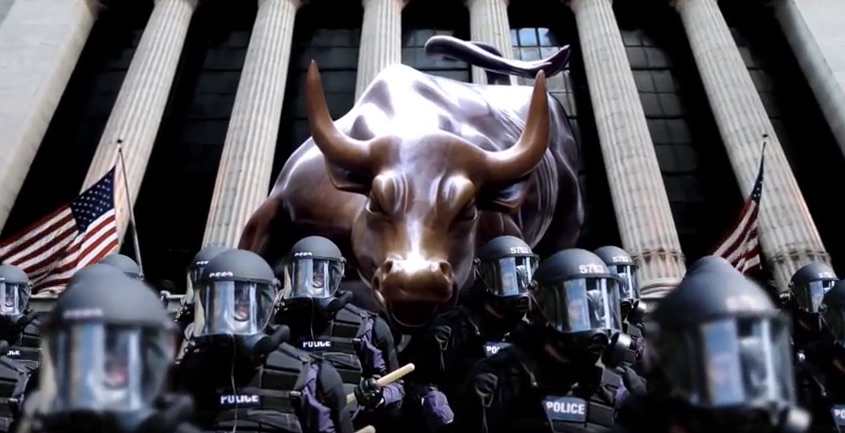
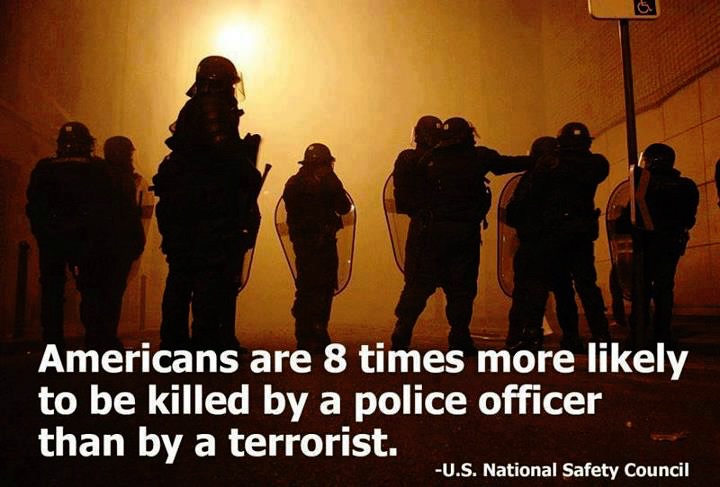
From Dorner to Waco to MOVE Bombing, A Look at Growing Militarization of Domestic Policing

DemocracyNow

The fire that killed former Los Angeles police officer Christopher Dorner on Tuesday has drawn comparisons to the deadly 1993 raid on the Branch Davidian complex in Waco, Texas, and the 1985 police bombing of the MOVE headquarters in Philadelphia. In Waco, federal agents denied for years they had used incendiary tear gas after a fire killed 76 people inside the compound. The MOVE bombing left six adults and five children dead. We speak to former Seattle police chief Norm Stamper and Radley Balko, author of the forthcoming book, “Rise of the Warrior Cop: The Militarization of America’s Police Forces.”