Preserve CIA prisons as evidence, lawyers for September 11 suspects ask

Reuters

Lawyers for five alleged conspirators who attacked America on September 11 and say they were tortured in secret CIA prisons have asked a U.S. military judge to order that the prisons be preserved as evidence.

The issue is one of more than two dozen on the docket for a week of pretrial hearings that began on Monday in the war crimes tribunal at the Guantanamo Bay U.S. Naval Base in Cuba.

The defendants include Khalid Sheikh Mohammed, the accused mastermind of the hijacked plane attacks that killed 2,976 people on September 11, 2001. He wore a camouflage jacket to court over his white tunic and defiantly refused to answer the judge's questions.

Defense lawyers also have asked the judge to order the U.S. government to turn over all White House or Justice Department documents authorizing the CIA to move suspected al Qaeda captives across borders without judicial review and hold and interrogate them in secret prisons after the September 11 attacks.

President George W. Bush announced in 2006 that the September 11 defendants were among a group of "high-value" captives sent to Guantanamo from the secret prisons.

The CIA has acknowledged that Mohammed was subjected to the simulated drowning technique known as waterboarding. The defendants said they were also subjected to sleep deprivation, threats, and being chained in painful positions.

The defense lawyers will argue that their clients' treatment was illegal pretrial punishment and constituted "outrageous government misconduct" that could justify dismissal of the charges, or at least spare the defendants from execution if convicted.

"By its nature, torture affects the admissibility of evidence, the credibility of witnesses, the appropriateness of punishment and the legitimacy of the prosecution itself," the defense lawyers wrote in court documents.

At least one potential witness was also held in the CIA prisons and his treatment could raise questions about the admissibility of his testimony, said James Connell, defense attorney for Mohammed's nephew, defendant Ali Abdul-Aziz Ali.

The chief prosecutor, Brigadier General Mark Martins, said the prosecution does not plan to introduce any evidence obtained from the defendants or anyone else via torture, cruelty or inhuman treatment - which is prohibited by U.S. law and international treaty.

In a departure from the Bush administration, the Obama administration has made it clear that any interrogation techniques must adhere to those long established in the army field manual, which prohibits torture.

The defendants have been in U.S. custody for a decade, but there are still numerous legal and evidentiary issues that must be resolved before their trial begins on charges that include murder, hijacking, terrorism and attacking civilians.

ABU GHRAIB PRISON

The judge presiding over the September 11 trial, Army Colonel James Pohl, ordered in 2004 that the Abu Ghraib prison in Iraq be preserved as a "crime scene." He was at the time presiding over the trial of U.S. military police officers accused of torturing and photographing prisoners at Abu Ghraib.

Iraq was then under U.S. occupation. It was unclear whether Pohl had authority to order the preservation of the CIA prisons, whose location the government has kept secret, arguing that disclosure could threaten U.S. national security and put allies at risk.

Polish prosecutors are investigating allegations that one of the sites was in Poland, and there is evidence the CIA set up others in Romania, Lithuania and Thailand, according to reports by the Council of Europe and the United Nations.

Lawyers for the September 11 defendants first made the request for preservation of the secret CIA prisons under seal in September of last year. The request was unsealed about a month later. But this week's pre-trial hearing marks the first time it has been presented in the Guantanamo court.

Before considering the CIA prisons issue, the court on Monday began slogging through issues such as whether the defendants had agreed to add lawyers to two defense teams and drop one from another and whether they must show up in court for pretrial hearings.

When two of them refused to answer whether they had approved the personnel changes, the judge took their lawyers' word for it that they had.

But he said he would not grant their request to skip some court sessions unless they first acknowledged vocally that they understood they had the right to be present for discussions that could affect their legal rights.

"They're going to have to tell me out of their own mouths, or they'll be here," Pohl said.

After a chaotic May 2012 arraignment session that dragged on for 13 hours, the defendants have alternated between refusing to speak to the judge and making accusatory statements against the United States. Although they largely ignored the judge on Monday, they whispered to their lawyers and appeared to be reading legal documents.

Mohammed and his nephew are Pakistani citizens. The other defendants are Walid bin Attash and Ramzi Binalshibh, both Yemenis, and Mustafa al Hawsawi, a Saudi.


President Obama's alleged uncle facing deportation

Rt.com

US President Barack Obama’s Kenyan uncle has been living in the US illegally since arriving as a teenager and is now facing the prospect of deportation.

After being arrested and charged for drunk driving in Framingham, Mass., police discovered that 68-year-old Onyango Obama, the half-brother of the president’s father, was in the country illegally – and had been living in the US undetected for years.
After his arrest, an incapacitated and slurring Obama threatened to “call the White House”. He was charged with driving under the influence and was held without bail after the incident while immigration officials investigated the details surrounding his deportation warrant.

The president’s uncle had already been ordered for deportation in 1986 and 1989 and again in 1992 after failing to renew an application to stay in the US. But it wasn’t until the drunk driving incident that he was found and taken to court for violating the law. 

The president said he did not know his uncle was here illegally and that he would not intervene in the trial. A hearing has been set for Dec. 3.

“Everybody wants to stay in America,” said the man’s lawyer, Scott Bratton. “Hopefully, on Dec. 3, the case will be over.”

Although the president said he will not intervene, it appears as if his uncle has been getting special treatment due to his relation. After his arrest, he was quickly released from the detention center and quickly secured a federal work permit and a state hardship driver’s license, since his own was revoked. He quickly returned to his job at a liquor store in Framingham.

Obama attended a boys’ school in Cambridge nearly 50 years ago and has lived in the US ever since. He is married to Zeituni Onyango, who was also ordered for deportation and was granted asylum in 2010, partially because of the media exposure her case received.

North Korea imposes martial law, orders troops to ‘be ready for war’ - report

Rt.com

North Korea has allegedly been placed under martial law and its ruler Kim Jong-un has ordered the army to “prepare for war”, a South Korean daily claims.

­The North Korean leader issued a series of orders to his top defense and security officials on Saturday to conclude preparations for a new nuclear test, the Seoul based Korea JoongAng Daily alleges citing an unnamed source.


The source reportedly said that Kim Jong-un issued a secret order to “complete preparations for a nuclear weapons test <…>and carry it out soon”. 


According to the source, Kim Jong-un also said, “The country will be under martial law starting from midnight January 29th and all the frontline and central units should be ready for war.”


The source told the South Korean daily that the nuclear test could come earlier than expected. Other analysts have said it would likely be held on February 16th, the birthday of the former leader Kim Jong-il, who died in 2011. 


Another suggestion as to the test’s timing included February 25th, the inauguration day of South Korean President-elect Park Geun-Hye, the Korea JoongAng Daily reported.   


North Korean media also reported that Kim Jong-un told his top defense officials to take “effective, high-profile state measures” at a meeting on Saturday. 


The alleged measures come amid a new spike in tensions caused by a new round of sanctions on North Korean entities and individuals, including travel bans and asset freezes, which were passed unanimously by the United Nations Security Council in December 2012. 


The Security Council, including China, backed Resolution 2087, after Pyongyang carried out the launch of a long range rocket in December 2012. 


Pyongyang claimed it was for the peaceful launch of a satellite, but critics say it was a thinly veiled test-firing of an intercontinental ballistic missile. 


Since the resolution was approved North Korea has issued a number of warnings, including a statement on the day it was implemented, that there will be “no more dialogue or denuclearization.”  It also threatened “all-out war” against Washington, which it said was its sworn enemy and blamed for leading the sanctions.  


However, the source also said that Kim Jong-un is concerned about China’s reaction to a nuclear test.


“China is still useful to us. We need to be careful of the relationship with China,” Kim allegedly said at the meeting. 


A South Korean government official told reporters Wednesday that satellite images had discovered increased activity and movement of equipment near the Punggye-ri nuclear test site in the northwest of the country and that the mouth of the test shaft had been sealed in readiness for a nuclear test. 


According to the report in the Korea JoongAng Daily, the South Korean military, as of Tuesday, had not detected any movements in North Korea’s frontline units.


The President of South Korea, Lee Myung-bak, has ordered the military to make a “strong response” to any provocation from North Korea.
The last time North Korea was placed under martial law was in March 1993, just days before it withdrew from the Treaty for the Non-Proliferation of Nuclear Weapons, and the regime also ordered its troops to be ready for war. 


North Korea carried out its first nuclear test in October 2006 and conducted a second underground blast in May 2009.


There is also international concern about whether Pyongyang will use highly-enriched uranium to get better results in its third nuclear test. Previous tests used plutonium, were detonated underground, and had reportedly limited success.

+1 (3 votes)


16


WSJ and NY Times Hit by 'Chinese hackers'

Aljazeera 

The Wall Street Journal says its computer systems have been infiltrated by Chinese hackers who were trying to monitor the newspaper's coverage of China.

A spokesperson for Dow Jones & Co., the newspaper's publisher, says the Journal completed a network overhaul to bolster security on Thursday.

"Evidence shows that infiltration efforts target the monitoring of the Journal's coverage of China and are not an attempt to gain commercial advantage or to misappropriate customer information," Paula Keve said.

The Journal did not address how the hacking of its systems occurred, but it said it has faced such threats from China in recent years.

'Ongoing issue'

The infiltration of networks related to coverage of China is an "ongoing issue," Keve said.

"We continue to work closely with the authorities and outside security specialists, taking extensive measures to protect our customers, employees, journalists and sources."

Meanwhile, the New York Times reported on Thursday that Chinese hackers repeatedly penetrated its computer systems and stole reporters' passwords.

The Times said the hackers were hunting for files on an investigation into wealth amassed by the family of a top Chinese leader.

China's foreign ministry dismissed the New York Times' accusations as "groundless" and "totally irresponsible".

Blast rocks headquarters of Mexico oil giant

Aljazeera

At least fourteen people have been killed and some 80 others injured after an explosion rocked the skyscraper that houses the headquarters of Mexican oil giant Pemex in Mexico City.

"What took place was an explosion in the B2 building of the administrative centre. There are injuries and damage on the ground floor and mezzanine," the state-owned company said on Thursday.

Al Jazeera's Adam Raney, reporting from Mexico City, said that the interior minister had confirmed the casualties, but there were still people missing.

"There are people trapped under rubble still - we have seen a massive rescue operation launched here by firefighters and rescue workers," our correspondent said.

The blast was caused by "an accumulation of gas" in an electricity supply room of the building's lower floors, a spokesperson for the city's civil protection agency said.

Heavy damage

Television images showed heavy damage on the tower's ground floor and people being carted away on stretchers and office chairs.


Police have cordoned off the 

streets around the building [AFP]

Mayor Miguel Angel Mancera, who headed to the scene of the accident, said rescue and public safety personnel were at the scene.

Pemex, the world's fourth-largest producer of crude with around 2.5 million barrels per day, announced earlier that it had evacuated the building due to a power failure.

The company has experienced deadly accidents at its oil and gas facilities in the past.

Last year, a huge explosion killed 30 people at a gas plant near the northern city of Reynosa, close to the US border.

The previous worst incident took place in December 2010, when an oil pipeline exploded after it was punctured by thieves in the central town of San Martin Texmelucan, leaving 29 dead and injuring more than 50.

In October 2007, 21 Pemex workers died during a gas leak on an oil platform in the Gulf of Mexico. Most drowned when they jumped into the sea in panic.

Curtail the government’s power to snoop

WashPost

EVER SENT an embarrassing e-mail? Ever gotten one you’d rather that others not see? Read this editorial if you use Gmail. Or if you have a Dropbox account. Or if you back up any of your files to Google Drive, Apple’s iCloud or any other remote drive that you can’t hold in your hand. Though some argue that the Fourth Amendment overrides it, a federal statute allows law enforcement agents to view material on these and many other common electronic storage services without a warrant, as long as that material is at least 180 days old.

The paper credit card applications and car insurance solicitations that clog your mailbox enjoy stiff privacy protections. Highly sensitive e-mails do not. Google just reported that it received 8,438 government requests for user data in the last half of 2012; the law’s flimsy privacy protections should not comfort anyone.

The story of the Electronic Communications Privacy Act (ECPA) is an archetypal example of technological reality vastly outpacing Washington’s ability to adapt. When Congress wrote the law in 1986, its provisions made some sense. Few Americans used e-mail at all, and the e-mail services that existed stored messages for only as long as it took users to download and read them — not in perpetuity, as many do now. Ubiquitous cloud computing — in which people store their documents and other files not on their computing devices but on a server somewhere else — was also a far-off dream.

Now many Americans spend hardly a waking hour without using one of these services. (This includes journalists: The Newspaper Association of America, to which The Post belongs, is part of the Digital Due Process Coalition, which is lobbying for reform.)

Sen. Patrick J. Leahy (D-Vt.), ECPA’s author, has made updating the law such a priority that he remained chairman of the Judiciary Committee this year rather than attempt to take the Appropriations Committee’s gavel. Last November, he managed to pass out of his committee an ECPA amendment that would have removed the 180-day rule, requiring law enforcement agents to obtain search warrants based on probable cause before reading through electronic communications. But lawmakers failed to advance the measure before Congress adjourned this month, so Mr. Leahy must now start over.

It’s strange enough that ECPA has survived unamended for this long; it would be senseless for it to persist any longer. Mr. Leahy’s amendment included exceptions to the warrant rule in certain emergency situations, such as kidnappings, dulling the argument that his new requirements would be too burdensome on law enforcement.

Yet Mr. Leahy does not have a Republican co-sponsor to help him shepherd it through Congress, nor has the White House spoken up. House Judiciary Committee Chairman Bob Goodlatte (R-Va.)said that “ECPA is something that Congress should look at closely.” We hope that careful inspection will lead him and his GOP colleagues to conclude that reform is embarrassingly overdue.

The Bipartisan Opposition to Domestic Drones

Drones are wildly popular on the battlefield. Now they can claim victory elsewhere. The use of drones within U.S. borders—in car chases, to monitor wildfires, or for simple surveillance—is uniting political parties and people more often at odds.

Their concern: the widespread use of drones among civilians represents a deep and dangerous intrusion into American life.

“What we used to know as privacy is finished,” said John Whitehead, a constitutional scholar and president of Virginia-based Rutherford Institute. “Big Brother is here to stay.”

Both the progressive American Civil Liberties Union and the libertarian Rutherford Institute cheer legislative efforts to place strict limits on unmanned aerial vehicles, or UAVs. And, prodded by privacy groups, state lawmakers nationwide—Republicans and Democrats alike—have launched an all-out offensive against the unmanned aerial vehicles.

And to think, only the prospect of complete upheaval of America’s strong tradition of privacy rights spurs bipartisanship.

In at least 13 states, lawmakers this year will examine bills to place strict limits on how government entities can deploy drones. No state has embedded such regulations into law.

Drones are already everywhere—executing search-and-rescue missions, tracking cattle rustlers, or monitoring wildfires with minimal cost and little risk of loss of life.

The Federal Aviation Administration listed 345 active drone licenses as of November 2012. Congress has directed the federal department to streamline the approval process. Starting in 2015, commercial entities—think entertainment news outlet TMZ—will have easy access to drone permits.

Analysts believe as many as 30,000 drones will populate American skies by 2020.

Canyon County, Idaho, already has one, a camera-equipped Draganflyer X-6 it bought for $33.400 with federal grant money. About a year ago, Mesa County, Colorado, used $14,000 to purchase its drone, a 4-foot-long, 9-pound plane that can maintain flight for about an hour. The Seattle Police Department spent $41,000 in August for its Draganflyer X-6.

With the booming interest in the myriad uses of UAVs comes nervous anxiety about the creep of the surveillance state.

And that’s where state lawmakers and their allies come in. [MORE]

NY Appellate Court Rules that Pre-Arraignment Script Read to Suspects by Prosecutors is Unconstitutional

NY Times

A panel of New York State appellate judges overturned the convictions of three men on Wednesday after finding that their constitutional rights had been violated by a method of interviewing suspects, used only in Queens, before they are arraigned in court.

The Queens district attorney, Richard A. Brown, vowed to appeal the ruling to the state’s highest court. But if it stands, it could throw into question untold numbers of other convictions.

All prosecutors in New York City seek to interview suspects before arraignment. But since 2007, prosecutors with the Queens district attorney’s office have read defendants a prepared script that includes notifications that they will have an opportunity to give information about their alibis and that the office will investigate anything about the case they request.

The script also informs defendants that this is their only chance to speak with the prosecutor before arraignment. After these remarks are read, the defendants are read their Miranda rights, as required before any suspect is questioned.

The four judges of the Appellate Division’s Second Department ruled that the procedure, which they called a preamble to the Miranda warnings, added “information and suggestion” that sent a “muddled and ambiguous” message to the suspects about their constitutional right against self-incrimination.

“For these reasons, it is far more likely that the recitation of the preamble will serve to confuse, or at worst, mislead, suspects as to the nature of their rights and the consequences of waiving them,” the ruling held.

The judges ruled that videotaped statements made by the three defendants after such interviews should not have been played during their respective trials. The three defendants were convicted in separate cases in 2010; two were convicted of attempted robbery, the other of attempted murder. The judges ordered a new trial for each.

Christopher Dunn, associate legal director with the New York Civil Liberties Union, said the ruling should lead to the end of the practice.

“I don’t think there’s any question but that this is taking down the entire program” as it has existed, said Mr. Dunn, who signed a friend-of-the-court brief in the case challenging the program.

But in a statement, Mr. Brown said that the remarks the judges took issue with had been removed from the script more than three years ago, and that further changes were made on Wednesday as a result of the new ruling.

He added that the program was created in response to the call for videotaped interrogations in an effort to prevent wrongful convictions.

But the judges said the way the interview was conducted in at least one of the three cases “raises doubt about that assertion.”

White Man's Execution Stayed in Texas

Innocence Project

A Montgomery County District Court Judge granted Texas death row inmate Larry Swearingen a stay of execution yesterday, four weeks before he was scheduled to die by lethal injection. The decision followed a hearing in which the Innocence Project and Swearingen’s attorneys argued for DNA testing that could prove his innocence in the 1998 murder of Melissa Trotter.
 
Swearingen’s attorneys argued that the current DNA testing statute was expanded by the Texas Legislature in direct response to Swearingen’s unsuccessful requests for testing, reported KTRK (ABC-Houston).


Just before his ruling, Judge Kelly Case said, “I think we need certainty before we have finality.”

The prosecution’s request to set an August execution date was denied. Instead, Judge Kelly Case gave them 60 days to file a response to the motion before he makes a decision on DNA testing.


Read the full article.

New Publication: Children of Immigrants in Harm's Way

Sentencing Project

Children of immigrants are a fast growing population, and the criminal justice system has become a key player in the deportation of their parents. The Sentencing Project and First Focus, two organizations with very distinct missions, have joined forces to produce a new and timely publication explaining how children are harmed when the criminal justice, immigration enforcement, and child welfare systems converge in a parent's life.

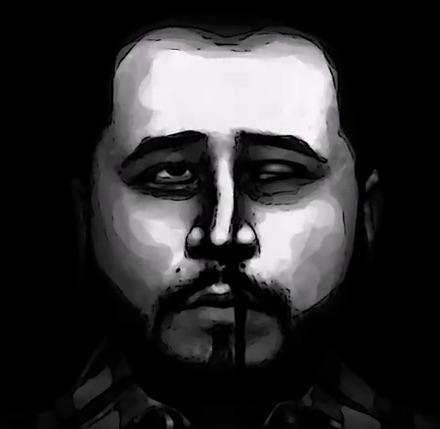
Accused Racist Suspect Zimmerman wants to delay trial for Trayvon Murder case

TheGrio

Attorneys for the white man charged with shooting Trayvon Martin to death on Wednesday asked for more time to prepare his case, saying prosecutors had been slow to turn over evidence.

At the same time, Zimmerman’s lead attorney, Mark O’Mara, renewed his request for donations to George Zimmerman’s legal defense, which he said could cost up to $1 million.

“The state has virtually unlimited resources to prosecute George,” O’Mara said on Zimmerman’s defense fund website. “To finance his defense, however, George relies on the generosity of individuals who believe he is innocent.”

Spokesman Shawn Vincent said Zimmerman’s attorneys want his second-degree murder trial to be moved from June to November. Zimmerman has pleaded not guilty.

A hearing in which Zimmerman will argue he was acting in self-defense is scheduled for April. The judge has said that hearing will be at least 45 days before the trial.

Prosecutors did not immediately respond to emails and phone calls about the defense request.

O’Mara said prosecutors had been slow to turn over evidence. As an example, he said someone from State Attorney’s Office had removed Martin’s cell phone from an evidence locker to have it sent to California for analysis, but the state has refused to give him any information about the agency and the type of tests being run on the phone. He also said prosecutors had made it difficult for O’Mara to get answers to administrative questions from a chief investigative agent and had refused to forward them other information on Martin and a witness.

O’Mara also asked the public to donate more money for his defense, saying on the web site that Zimmerman’s defense fund has raised more than $314,000 since he was charged. Of that amount, $95,000 was spent on bail, almost $62,000 was spent on Zimmerman’s living expenses during the past eight months and $56,100 was spent on security. The pricey living expenses were the result of Zimmerman having to stay at extended-stay hotels until he could find a place to rent after his bail conditions were changed to restrict him to Seminole County, Fla., according to the statement on the website said.

Federal Judge Defies Sentencing Scheme That Treats Low-Level Drug Offenders Like Kingpins

ThinkProgress

A tough-on-crime prosecutor turned federal judge who last year blasted prosecutors’ abuse of draconian mandatory minimum sentences has now issued a damning judicial indictment of another aspect of the harsh U.S. drug sentencing scheme.

In an opinion declining to rely upon federal drug sentence guidelines, U.S. District Judge John Gleeson calls the guidelines for drug crimes “deeply and structurally flawed,” subjecting “low-level offenders” to “prison terms more suitable for a drug boss.”

Over twenty-five years of application experience have demonstrated the perverse outcomes generated by the Guidelines ranges for drug trafficking offenses. … [S]entencing judges have routinely departed from these Guidelines, which have never been the “heartlands” that the original Commission aspired to create. Despite these consistent departures, federal drug sentencing has contributed to the national crisis of mass incarceration.

Gleeson, who in 1992 led the team of prosecutors that sent John J. Gotti to life in prison, issued an opinion last May blasting federal mandatory minimum sentences for low-level drug offenders that “distort the sentencing process and mandate unjust sentences.” Under the Anti-Drug Abuse Act of 1986, he lamented, “An addict who is paid $300 to stand at the entrance to a pier and watch for the police while a boatload of cocaine is offloaded” … “qualifies for kingpin treatment”. In this week’s opinion, he points out that even those who manage to escape mandatory minimum sentences don’t fare much better under the alternative federal sentencing scheme for drug crimes, the U.S. Sentencing Guidelines.

Defendant Ysidro Diaz, who was a “run-of-the-mill, low-level participant in a drug distribution offense,” narrowly escaped a mandatory minimum sentence of 10 years because he satisfied all five requirements for “safety valve relief.” Instead, Gleeson was tasked with looking to U.S. Sentencing Guidelines, which recommended 8-10 years in prison, even though Diaz had no prior convictions.

While the U.S. Supreme Court ruled in 2005 that judges could no longer be obligated to follow these guidelines, Gleeson points out that they have nonetheless contributed to exponential increases in sentence length and an accompanying spike in federal incarceration for drug crimes:

Perhaps the best indication that the Guidelines ranges for drug trafficking offenses are excessively severe is the dramatic impact they have had on the federal prison population despite the fact that judges so frequently sentence well below them. […]

In less than a decade, from 1985 to 1991, the length of federal drug trafficking sentences increased by over two-and-a-half times. Sentences for drug trafficking were “elevated above almost every serious crime except murder.” The increase in sentence length for drug offenders “was the single greatest contributor to growth in the federal prison population between 1998 and 2010.”

We must never lose sight of the fact that real people are at the receiving end of these sentences. Incarceration is often necessary, but the unnecessarily punitive extra months and years the drug trafficking offense guideline advises us to dish out matter: children grow up; loved ones drift away; employment opportunities fade; parents die.

Of course, it’s not just long sentences that have overwhelmed federal prisons with drug offenders. Criminalization of nonviolent drug offenses, and frequent prosecution of offenders are just as fundamental. But disproportionate punishment implicates fundamental due process principles and has even been found to violate the Eighth Amendment, which is probably why Gleeson is one of several federal judges who have been uncharacteristically vocal in pleading with both prosecutors and lawmakers for immediate sentencing reform.

Virginia Lawmakers Approve Bill Forcing Universities To Fund Student Groups That Discriminate

ThinkProgress

The Virginia House of Delegates voted 80-19 today to approve HB1617, a bill that would invite any religious or political university student group to discriminate as they please and still require the campus to providing them funding and access to campus facilities. This would make LGBT students particularly vulnerable to discrimination because universities’ protections for sexual orientation are not enforceable under Virginia law. Under this bill, though, even a KKK chapter could hypothetically form, use campus resources, and openly discriminate against non-white and non-Christian students on campus.

Here’s the text of the bill:

To the extent allowed by state and federal law:

1. A religious or political student organization may determine that ordering the organization’s internal affairs, selecting the organization’s leaders and members, defining the organization’s doctrines, and resolving the organization’s disputes are in furtherance of the organization’s religious or political mission and that only persons committed to that mission should conduct such activities; and

2. No public institution of higher education that has granted recognition of and access to any student organization or group shall discriminate against any such student organization or group that exercises its rights pursuant to subdivision 1.

On most college campuses, student organizations must maintain a constitution that conforms to the university’s procedures, including its nondiscrimination policies. For example, James Madison University requires that all organizations obey the “policies, rules, regulations, and standards of the university,” such as its nondiscrimination policy, which includes sexual orientation. The College of William & Mary offers similar protections and requires student groups be open to all students.

Such policies are key because student organizations receive funding and use campus resources (like meeting spaces) that are funded by fees that all students pay; thus, all students deserve equal access to those campus clubs. Nondiscrimination policies have become a source of contention for conservative Christian student groups, like at Tennessee’s Vanderbilt University and New York’s University of Buffalo, who wish to exclude gay students from membership. In the 2010 case Christian Legal Society v. Martinez, the U.S. Supreme Court narrowly answered this question in favor of nondiscrimination policies, ruling that “all-comers” policies are viewpoint neutral, and thus are no more unfair to Christian groups than any other student groups.

Conservatives have argued, however that nondiscrimination policies allow for “hostile takeovers“ — in which students with opposing views infiltrate and assume power in the organization — but there’s no evidence to suggest that this is plausible, let alone that it ever happened. Members of an organization are still allowed to vote for their group’s leaders, even with discriminatory intent, if all students remain eligible. Any student group that can’t persist on its own merits probably doesn’t warrant use of student fees in the first place.

All 19 votes against the bill were cast by Democrats. It now advances to the Senate for committee consideration.

Top Republican (White Party) Calls Two-State Solution ‘Very Damaging’

ThinkProgress

The Ranking Member of the Senate Armed Services Committee, Sen. James Inhofe (R-OK), today called the premise of a two-state solution to the Israel-Palestine conflict “deeply disturbing,” showing himself and his allies to be extremely out of the mainstream.

The vast majority of the questions that came up throughout the first round of questioning Chuck Hagel in his bid for Secretary of Defense related to Hagel’s stances on Israel and Iran, and his past statements on those issues. Many of those questions involved deliberate distortions of Hagel’s record. Inhofe started off the second round of questioning during the hearing with more of the same, but with the added twist of spurning the past decade of U.S. policy in solving the conflict.

“You made a statement that I strongly disagree with. You said that President Obama has been ‘the strongest Israel supporter since 1948′,” Inhofe said in the lead-off, continuing to criticize Obama for promoting the two-state solution:

INHOFE: But when you see statements coming out of the administration like “the United States believes that negotiations should result in two states with permanent Palestinian borders with Israel, Jordan, and Egypt,” and they’ve come out with statements saying they believe that the borders with Israel and Palestine should be based on a 1967 border lines, these are statements that I think are very damaging. I can assure you that the leadership in Israel feels those statements are damaging.

Federal judge rules juvenile life sentences unconstitutional

[JURIST]

A judge for the US District Court for the Eastern District of Michigan [official website] ruled [opinion, PDF] Wednesday that sentencing juveniles to life in prison with parole is unconstitutional. Judge John Corbett O'Meara found that last year's Supreme Court decision in Miller v. Alabama [JURIST report], which held that mandatory life sentences for juveniles constituted cruel and unusual punishment, should apply retroactively to juveniles sentenced before that decision. In the opinion, O'Meara wrote:

In this case, each of the Plaintiffs was tried as an adult and convicted of first-degree murder. As a result, they received mandatory life sentences. Pursuant to statute, the parole board lacks jurisdiction over anyone convicted of first-degree murder. This statutory scheme combines to create life without parole sentences for those who committed their crimes as juveniles. This type of sentencing scheme is clearly unconstitutional under Miller.

The ruling focused on the constitutionality of a parole statute [text] that imposed mandatory life sentences for certain offenses. Under the court's decision the plaintiffs will now be eligible for parole.

In November the Michigan Supreme Court ruled [JURIST report] that Miller did not apply retroactively. In October Human Rights Watch [advocacy website] wrote a letter to Pennsylvania Governor Tom Corbett asking him to veto [JURIST report] legislation which would maintain the sentence of life without parole as an option for child offenders. In June the US Supreme Court ruled 5-4 in two combined cases, Miller v. Alabama and Jackson v. Hobbs [SCOTUS backgrounders] that mandatory life sentences for juveniles violate the Eighth Amendment. Some observers have argued that the reasoning the court used in this case could easily be extended [JURIST op-ed] in the future to abolish life in prison without the possibility of parole sentences for all juvenile homicide cases. JURIST Guest Columnist Perry Moriearty of the University of Minnesota Law School recently argued that the Miller decision marks an important step toward restoring principles of rehabilitation [JURIST op-ed] to the juvenile justice system.

ACLU files lawsuit challenging Michigan right to work law

[JURIST]

The American Civil Liberties Union of Michigan (ALCUM) [advocacy website] on Thursday filed a lawsuit [complaint, PDF; press release] against the state of Michigan challenging the state's "Freedom to Work" legislation [SB 116, materials]. The ACLUM was joined by various labor unions, including the AFL-CIO [official website]. The suit claims that while the legislation was debated and passed, the public was prohibited from entering the Capitol Building through the public entrance by Michigan state police, affecting a "total denial of public access to the Capitol for over four hours." They assert that this denial of access was impermissible under the Michigan Open Meetings Act [text], the Michigan Constitution and the First Amendment of the US Constitution. They requested that the resulting legislation be invalidated and that the state be enjoined from implementing and enforcing the law.

The right-to-work law has been controversial since its passage [JURIST report] in December, over unanimous Democratic opposition. Earlier this week Michigan Governor Rick Snyder [official website] sent a letter to the Chief Justice of the Michigan Supreme Court [official website] requesting an advisory opinion [JURIST report] on the constitutionality of the law. In addition to this lawsuit, two other lawsuits have been filed [Detroit News report] challenging the law's passage as a violation of the Open Meetings Act. JURIST guest columnist Susan Bitensky of the Michigan State University College of Law criticized [JURIST op-ed] Michigan's right to work law as a bill that will "weaken the people and families who depend upon the benefits and protections negotiated by labor unions." Measures to strengthen collective bargaining rights in Michigan have also been controversial. In September the Michigan Supreme Court ordered [JURIST report], a union-backed measure to amend the state constitution to include a right to labor unionization and collective bargaining to appear on the November ballot. The measure was ultimately defeated [AP report] 57-43 percent.

Judge okays BP plea, $4 billion penalty in Gulf oil spill

Reuters

A U.S. judge accepted an agreement by BP Plc to plead guilty for its role in the Deepwater Horizon disaster and pay a record $4 billion in criminal penalties for the worst offshore oil spill in U.S. history. The company said it pleaded guilty to 11 felony counts related to workers' deaths, a felony related to obstruction of Congress and two misdemeanors. It faces five years' probation and the imposition of two monitors who will oversee its safety and ethics for the next four years. After the April 2010 explosion on the Transocean rig in the Gulf of Mexico, 4.9 million barrels of oil spewed into the Gulf over 87 days.

Obama Urges Speed on Immigration Plan, but Exposes Conflicts

CitizensforLegitGov

Seizing an opening to rewrite the nation's immigration laws, President Obama challenged Congress on Tuesday to act swiftly to put 11 million illegal immigrants living in the United States on a clear path to citizenship. But his push for speedy action and his silence on proposals to defer the opportunity for legal residency until the country’s borders are deemed secure provoked criticism from a Republican leader on the issue. The response suggests that reaching consensus on immigration law changes remained difficult despite a new bipartisan push since the November elections.

'Two killed, five injured in Israeli airstrike on Syrian research center'

CitizensforLegitGov

The Syrian Army says two people have been killed and five others injured in an Israeli airstrike on a scientific research center in Jamraya, near the capital Damascus. "Israeli fighter jets violated our airspace at dawn today and carried out a direct strike on a scientific research center in charge of raising our level of resistance and self-defence," the Syrian Army said in a statement on Wednesday, AFP reported. The attack was carried out against the center, which was tasked with boosting Syria's resistance and self-defense, "after terrorist groups made several failed attempts in the past months to take control of the site."