Monitor: Oakland PD still regressing on reforms

AP

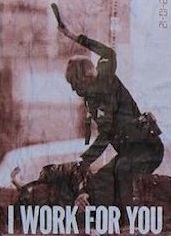
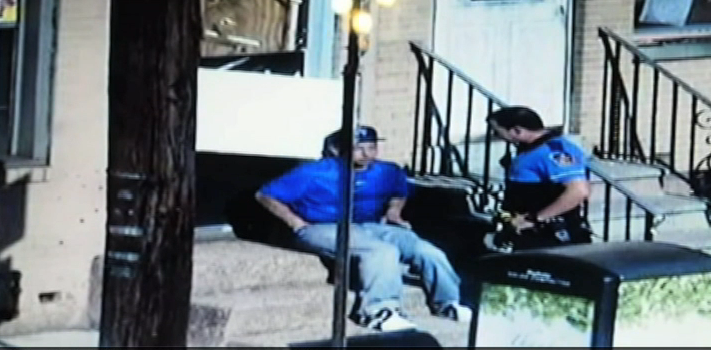
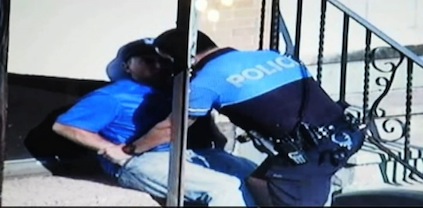
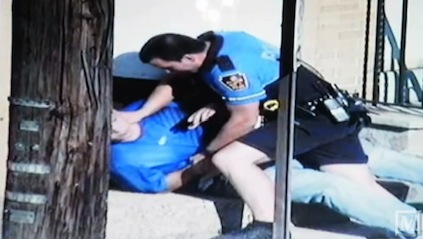
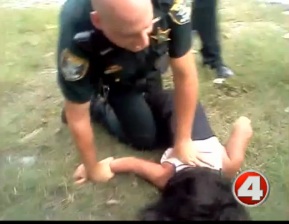
OAKLAND, Calif. -- A federal court monitor says that the Oakland police department's decade-old reform effort continues to backslide.

Robert Warshaw said in a report released Thursday that the department for the second straight quarter is declining in terms of reforming, especially when it comes to investigating complaints against the department and reporting the misconduct of fellow officers.

Warshaw has been monitoring the reforms as part of a settlement stemming from a police brutality lawsuit in 2003. The reforms were to have been completed five years ago, but Warsaw says the department is still not in full compliance with 11 tasks - two more than the last quarter.

City officials said Thursday they "respectfully disagree" with some off Warshaw's findings as they await a judge's decision on a soon-to-be hired compliance director to make sure they complete the reforms.


Read more here: http://www.sacbee.com/2013/01/31/5156613/monitor-oakland-pd-still-regressing.html#storylink=cpy

591 inmates killed during 2012 in worsening violence in Venezuela’s prisons

WashPost

Venezuela’s latest bloody prison clash came after a year in which 591 inmates were killed in the country’s troubled prisons, the deadliest toll yet during President Hugo Chavez’s 14-year government, a watchdog group said Thursday.

The Venezuelan Prisons Observatory released last year’s death toll nearly a week after fierce gunfire erupted at Uribana prison in the western city of Barquisimeto. The government said 58 people were killed on Friday when armed inmates clashed with National Guard troops who were attempting to carry out an inspection. Nearly all of those killed were prisoners.

The number of deaths in prison riots and other violence in 2012 was up about 5 percent from the previous year, and up about 24 percent over the number killed in 2010. The group also said 1,132 inmates were injured in prison violence during 2012.

Human rights groups called for a thorough investigation into Friday’s violence and said the authorities used excessive force.

The riot was the latest in a series of deadly clashes in Venezuela’s overcrowded and often anarchic prisons, where inmates typically obtain weapons and drugs with the help of corrupt guards. Critics called it proof that the government is failing to get a grip on a worsening crisis in prisons where heavily armed groups control cellblock fiefdoms.

Humberto Prado, director of the Venezuelan Prisons Observatory, said that his group’s records show 5,667 inmates were killed in the country’s prisons between 1999 and last year.

“The state contributes to them being violent. One, because it contributes to the traffic of weapons and drugs inside prisons, and two, because it makes prisons inhospitable,” Prado said at a news conference.

Vice President Nicolas Maduro pledged to redouble efforts to improve the prisons and called for a high-level investigation.

Penitentiary Service Minister Iris Varela defended the authorities’ actions in the latest violence and said groups of prisoners opened fire “on a large scale.” She said the government decided to send troops to search the prison after reports of clashes between inmates during the previous two days.

Emergency workers carried bleeding inmates to ambulances after the gunfire, while relatives of the prisoners wept outside, some collapsing with grief.

In one photograph amid the chaos, a bloodied inmate was sprawled face-down in the back of an ambulance, his arm dangling out the door.

After the violence, the government order more than 2,000 inmates evacuated from the prison and transferred to other facilities. Before they agreed to come out, some inmates set a fire in a prison yard where there were crudely built shacks made of wood and sheets of zinc, apparently burning potentially incriminating belongings.

Varela toured the smoldering prison yard last weekend, saying the government is fighting “mafias” within the penitentiaries. As for the now-empty Uribana prison, she said, “it became an icon of violence in Venezuela.”

Prado disputed the death toll provided by the government, saying his group tallied a higher toll of 63 victims after visiting the morgue, the hospital and receiving accounts from victims’ relatives. He said 61 of those killed were inmates, and that one National Guard soldier and a Protestant pastor also were slain.

It was the deadliest spasm of prison violence in Venezuela since 1994, and the latest in a series of deadly clashes in the past few years. In August, 25 people were killed and 43 wounded when two groups of inmates fought a gunbattle inside Yare I prison south of Caracas.

In 2011, Chavez created a Cabinet-level ministry to focus on prisons and appointed Varela to lead it. The president made that decision following a deadly, weekslong armed uprising at the prisons El Rodeo I and El Rodeo II outside Caracas.

Since Varela assumed her post, 869 inmates have been killed, Prado said. He and other activists charge that the new government ministry hasn’t made real progress in addressing the crisis.

Venezuela has 33 functioning prisons built to hold about 16,000 inmates, and are packed with more than 48,000 inmates, Prado said.

Uribana prison was built to hold about 850 inmates. Varela said that when the violence erupted last week, the prison held about 2,400.

This week, the government extended for three months a previously declared emergency in the prison system, in a step that Varela said would speed construction of new prisons. The authorities have not recently showed any new prisons under construction.

In most of the country’s penitentiaries, National Guard troops remain outside while the authorities largely leave internal control of the facilities to groups of inmates, some of them heavily armed. In recent search of prisons, the authorities have reported finding assault rifles, submachine guns, handguns and grenades.

Prado said that National Guard soldiers are often to blame for allowing guns inside.

“An important step has to be taken, and it’s taking the National Guard out of the prisons,” Prado said. “Who has the responsibility at the outside gate? It’s the National Guard.”

Pelican Bay Slammed for Housing Groups by Race

CourthouseNews

Administrators at Pelican Bay State Prison cannot enforce race-based lockdowns, a California appeals court panel ruled, noting that the practice contradicts 10-year-old precedent.
     Pelican Bay is home to California's most serious criminal offenders. Gang warfare within its walls has given the super-maximum security facility a reputation of being one of the most notoriously violent prisons in America.
     Overpopulation further complicates matters. Pelican Bay was designed to accommodate 2,280 prisoners, but state data shows that its current population tops 3,461.
     A 2009 manual published by the California Department of Corrections and Rehabilitation states that there are seven designated prison gangs, all formed along racial lines.
     To control the violence among the general population, Pelican Bay assigns inmates to one of five racial or ethnic groups: White, Black, Northern Hispanic, Southern Hispanic or Other, a group consisting mostly of Asians.
     All cellmates share the same group designation and are thus segregated by race. Their cells are marked by color-coded signs: white for White, yellow for Other, blue for Black, red for Southern Hispanic and green for Northern Hispanic.
     Southern Hispanics had balked when they were left with the harshest punishment after a 2000 conflict that led the prison to impose a full lockdown on the entire population and then easing restrictions on all other groups.
     Judge Robert Weir of Del Norte County Superior Court deemed race-based lockdowns unconstitutional in 2003, ruling on consolidated habeas petitions brought by Aaron Escalera and other inmates.
     California's First Appellate District affirmed the following year in an unpublished decision, but reform at the prison was short-lived.
     Jose Morales, who is serving life for first-degree murder, petitioned for habeas relief in early 2010 after just over a year in the Southern Hispanic group at Pelican Bay.
     He said prison officials placed him because of his prior Southern California residency, unfairly punishing him for a fight that occurred before his arrival.
     The lockdown of the Southern Hispanics cost Morales privileges like yard recreation, visits, phone calls and other activities.
     Judge Weir also decided Morales' petition and found Pelican Bay's system improper under Escalera v. Terhune. He ordered the prison to end its race-based group designation within 60 days.
     Unable to stay the order pending appeal, Pelican Bay immediately ended its modified program of partial lockdowns. A prison official reported in April 2012 that there had not been violence requiring a lockdown or partial lockdown since the order.
     Division Three of the state's First Appellate District shot down the warden's appeal last week.
     The decision notes the trial court's finding that Pelican Bay can handle gang violence without resorting to long-term, mass deprivation of outside exercise, work assignments, family visits and religious services.
     One former warden, for example, experienced success using a system of evaluation based on the threat-assessment scores of individual inmates.
     Punishing inmates by denying all visitation and enforcing other restrictions also "appear primarily punitive in nature, rather than designed to maintain security, especially when imposed on a large group of inmates for an extended period of time," Justice Stuart Pollak wrote for a three-member panel.
     The court also upheld Judge Weir's decision to let inmates enforce this order rather than multiplying litigation by filing duplicative habeas petitions, as Morales had been forced to file. 

African American Youths Over Represented In Kansas Juvenile Justice System

Wilbw

State and county officials gathered at the Topeka and Shawnee County Public Library Tuesday for a meeting to discuss why minority adolescents are over represented in the Kansas juvenile justice system.

“Every state is required by the federal government to conduct an assessment of how minority groups are over represented in the juvenile justice system,” said Dr. Elizabeth Neely, Director at research group Objective Advantage. “The purpose of this study is to find the factors that contribute to over representations.”

Independent researchers at Objective Advantage found that African Americans represent a disproportionately high percentage of the youth arrested in Shawnee County.

This trend also exists at the state level. While African Americans make up just over eight percent of the youth population in Kansas, they represent over 20 percent of arrested adolescents. Hispanic youths are also over represented in statewide juvenile arrests.

Neely says this is not necessarily because minority groups commit more crimes, but because of how the system operates.

“Consistently what we found is that the over representation of Latinos in the juvenile justice system tends to be regarding compliance with technical violations rather than committing new crimes. For black youth, it tends to be how our warrant system is handled here in Kansas,” said Neely.

The meeting was held to discuss the preliminary findings of the research and allow community members the opportunity to give feedback before compiling the final report.

"After tonight, the researcher's will take this input, work on their final report, present it to the Kansas Advisory Group and the agency in March in phase one and late June in phase two,” said Randy Bowman, Kansas Juvenile Justice Authority director of community programs.

Neely says she believes programs like the Juvenile Detention Alternative Initiative, which treat incarceration as a last resort for juveniles, seem to be the most promising to end minority over representation.

Google unveils detailed North Korea map

Aljazeera

Google's Maps service has unveiled a highly detailed map of North Korea, an area that went largely undocumented on the service previously.

Monday's development comes just weeks after Eric Schmidt, chairman of the California-based-based internet company, embarked on a secret trip to the country.

"For a long time, one of the largest places with limited map data has been North Korea. But today we are changing that," Jayanth Mysore, a senior product manager at Google Map Maker, said in blog posting on Monday.

Map Maker creates maps from data that is provided by the public and fact-checked in a similar process to that used by Wikipedia.

Mysore said the North Korea section had been completed with the help of a "community of citizen cartographers" working over a period of several years.

"While many people around the globe are fascinated with North Korea, these maps are especially important for the citizens of South Korea who have ancestral connections or still have family living there," he said.

At Least 80 young men & boys found 'executed' in Syria

Aljazeera 

The bodies of at least 80 young men and boys, all executed with a single gunshot to the head or neck, have been found in a river in the Syrian city of Aleppo, a watchdog and rebels said.

The London-based Syrian Observatory for Human Rights said at least 65 bodies were found in the Quweiq River, which separates the Bustan al-Qasr district from Ansari in the southwest of the city, but that the toll could rise significantly.

A Free Syrian Army fighter at the scene said the death toll is higher, pointing out that many more bodies were still being dragged from the water, in a rebel-held area.

"Until now we have recovered 68 bodies, some of them just teens," said Captain Abu Sada, adding that all of them had been "executed by the regime."

"But there must be more than 100. There are still many in the water, and we are trying to recover them."

A senior government security source said many of the victims were from Bustan al-Qasr and had been reported kidnapped earlier.

He accused "terrorists" of carrying out the executions and spreading propaganda to deflect responsibility.

"They were kidnapped by terrorist groups, who some are accusing of being pro-regime, and executed last night in a park in Bustan al-Qasr under their control," the source said by telephone.

"Now these terrorist groups are creating a media campaign, showing the bodies being recovered from the Quweiq River in an area under their control."

"It has been confirmed that a number of the victims had been abducted by armed terrorist groups and their families had made repeated attempts to negotiate their releases."

"We will disclose the identities of those killed as soon as we are able to secure the bodies, which is a difficult process since the area is in the hands of terrorist groups," the source said.

A volunteer said as he helped load one of the bodies on a truck: "We don't know who they are because there was no ID on them. 

Abu Sada said they would be taken to the hospital at Zarzur where relatives could seek to identify them.

"Those who are not identified will be buried in a common grave," noting that some were unrecognisable because of the impact of the bullet.

Meanwhile, people were gathering at the bank seeking lost relatives.

"My brother disappeared weeks ago when he was crossing (through) the regime-held zone, and we don't know where he is or what has become of him," said Mohammed Abdel Aziz, as he looked at the mud-covered bodies one by one.

"They could have been executed a couple of days ago and the current brought the bodies this far," an FSA fighter, Abu Anas, said.

The 129-kilometre river originates in Turkey to the north and flows to the southwest of Aleppo, traversing both regime and rebel-held areas.

"This is not the first time that we have found the bodies of people executed, but so many, never," he says numbly, as he examines the body of a boy of about 12 with a gunshot wound to the back of the neck.

"The shabiha (pro-government militia) seize people crossing the checkpoint.... and they torture and execute many of them," said Abu Anas.

All look to be young men, some teens, wearing jeans, button-up shirts and sneakers.

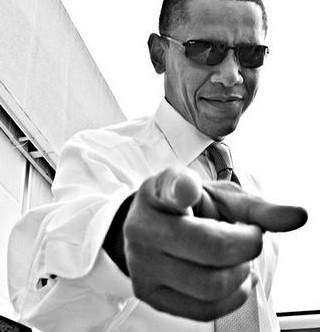
Obama's immigration speech: Light on details, heavy on vague demands (video of speech)

RT.com

President Obama gave a highly anticipated speech on immigration to a cheering crowd in Las Vegas. It comes as Congress tries to put together a reform package - and if it fails, Obama warned, he'll write his own and send it to them for a vote.

The speech was unsurprising in content, with the president relying on cliched anecdotes about immigrant contributions to American society and the domestic economy to get his point across. Obama asked for congressional action to give undocumented immigrants the opportunity to become citizens, tighten border and workplace controls, and create new ways for foreign students and workers to immigrate legally and more easily – without much in the way of how such demands would be accomplished. 

“The good news is that for the first time in many years, Republicans and Democrats seem ready to tackle this problem together. Members of both parties, in both chambers, are actively working on a solution,” Obama said. "Now is the time," he said, to overhaul the country's "out of date and badly broken" immigration system.

But the address was sparse on specifics when it came to what such a reform bill would actually look like, and was more of a way for the president to get Americans talking about solutions to what many see as the country's immigration 'problem.' 

Obama hinted that he had amnesty in mind for the people living in the US who came to the country illegally. 

"Right now, we have 11 million undocumented immigrants in America," he said. "Yes, they broke the rules. They crossed the border illegally. Maybe they overstayed their visas. Those are facts, nobody disputes them.  But these 11 million men and women are now here.  Many of them have been here for years.  And the overwhelming majority of these individuals aren’t looking for any trouble.  They’re contributing members of the community.  They're looking out for their families.  They're looking out for their neighbors. … Every day, like the rest of us, they go out and try to earn a living."

So-called DREAMers, people who benefited from the 2001 DREAM Act that gave permanent residency to some undocumented immigrants who arrived in the US as minors and graduated from American high schools, featured as examples in the address. Obama called on Congress to keep the act in place, but also to "act on a comprehensive approach that finally deals with the 11 million undocumented immigrants who are in the country right now."

Advocates for undocumented immigrants have been calling on Obama to slow down the rate of deportations as the immigration reform deal is written, giving others the same opportunities given to DREAMers. 

“The President should immediately follow his speech with an order suspending deportations as the first step to open a pathway to citizenship for undocumented immigrants,” Pablo Alvarado, the director of the National Day Laborers Network, said in a statement. “Demonstrating that all 11 million undocumented people deserve the same relief given to the Dreamers will set the debate in the right direction and remove divisions between ‘us and them.’”

Sending about 400,000 people back to where they came from every year since taking office, the Obama administration has set records in terms of deportations, a point the president noted in the address as one of his successes. Though he mentioned the deportations of criminals, Obama left out the fact that about 45 per cent of the roughly 410,000 people the United States deported in 2012 had not been convicted of felonies or misdemeanors. 

Rights groups representing gay and lesbian immigrants also have demands for the new legislation, as currently the Defense of Marriage Act, which denies same-sex couples federal benefits, bans Americans in same-sex relationships from sponsoring their undocumented partners for green cards. 

We need President Obama to show real and tangible leadership on immigration issues,” said Felipe Sousa-Rodriguez, of LGBT immigrants rights groups GetEQUAL, in a statement. “Hundreds of thousands of LGBT immigrants like myself would benefit from that call in enormous ways while we wait for Congress to act.”

Though Obama has voiced support for legislation that would give same-sex citizen-immigrant couples rights enjoyed by heterosexual couples, he has refused to stop deporting immigrant partners. Republicans are opposed to even mentioning same-sex couples in draft legislation. 

Now, members of Congress are to begin putting together the language for an immigration bill. What concrete details can be made of the president's demands for changes to how the US treats immigration remain to be seen – including who will or will not get to enjoy any reforms to the federal system.

Obama Immigration Plan Fact Sheet

President Obama announced his vision for a comprehensive immigration reform plan in Las Vegas Monday.

His plan includes four parts:

1) "Strengthen borders" 

2) "Crack down on companies that hire undocumented workers."

3) "Hold undocumented immigrants accountable before they can earn their citizenship; this means requiring undocumented workers to pay their taxes and a penalty, move to the back of the line, learn English, and pass background checks. 

4) "Streamline the legal immigration system for families, workers, and employers."

Below you'll find a more detailed fact sheet provided by the White House.

The key principles the President believes should be included in commonsense immigration reform are:


Continuing to Strengthen Border Security: President Obama has doubled the number of Border Patrol agents since 2004 and today border security is stronger than it has ever been.  But there is more work to do.   The President's proposal gives law enforcement the tools they need to make our communities safer from crime.  And by enhancing our infrastructure and technology, the President's proposal continues to strengthen our ability to remove criminals and apprehend and prosecute national security threats.


Cracking Down on Employers Hiring Undocumented Workers: Our businesses should only employ people legally authorized to work in the United States.  Businesses that knowingly employ undocumented workers are exploiting the system to gain an advantage over businesses that play by the rules.  The President's proposal is designed to stop these unfair hiring practices and hold these companies accountable.  At the same time, this proposal gives employers who want to play by the rules a reliable way to verify that their employees are here legally. 


Earned Citizenship: It is just not practical to deport 11 million undocumented immigrants living within our borders.  The President's proposal provides undocumented immigrants a legal way to earn citizenship that will encourage them to come out of the shadows so they can pay their taxes and play by the same rules as everyone else.  Immigrants living here illegally must be held responsible for their actions by passing national security and criminal background checks, paying taxes and a penalty, going to the back of the line, and learning English before they can earn their citizenship. There will be no uncertainty about their ability to become U.S. citizens if they meet these eligibility criteria. The proposal will also stop punishing innocent young people brought to the country through no fault of their own by their parents and give them a chance to earn their citizenship more quickly if they serve in the military or pursue higher education.    


Streamlining Legal Immigration:  Our immigration system should reward anyone who is willing to work hard and play by the rules.  For the sake of our economy and our security, legal immigration should be simple and efficient.  The President's proposal attracts the best minds to America by providing visas to foreign entrepreneurs looking to start businesses here and helping the most promising foreign graduate students in science and math stay in this country after graduation, rather than take their skills to other countries.  The President's proposal will also reunify families in a timely and humane manner. 


Continuing to Strengthen Border Security


Strengthen border security and infrastructure.  The President's proposal strengthens and improves infrastructure at ports of entry, facilitates public-private partnerships aimed at increasing investment in foreign visitor processing, and continues supporting the use of technologies that help to secure the land and maritime borders of the United States.


Combat transnational crime.  The President's proposal creates new criminal penalties dedicated to combating transnational criminal organizations that traffic in drugs, weapons, and money, and that smuggle people across the borders.  It also expands the scope of current law to allow for the forfeiture of these organizations' criminal tools and proceeds.  Through this approach, we will bolster our efforts to deprive criminal enterprises, including those operating along the Southwest border, of their infrastructure and profits.


Improve partnerships with border communities and law enforcement.  The President's proposal expands our ability to work with our cross-border law enforcement partners.  Community trust and cooperation are keys to effective law enforcement. To this end, the U.S. Department of Homeland Security (DHS) will establish border community liaisons along the Southern and Northern borders to improve communication and collaboration with border communities, boost funding to tribal government partners to reduce illegal activity on tribal lands, and strengthen training on civil rights and civil liberties for DHS immigration officers. 


Crack down on criminal networks engaging in passport and visa fraud and human smuggling. The President's proposal creates tough criminal penalties for trafficking in passports and immigration documents and schemes to defraud, including those who prey on vulnerable immigrants through notario fraud. It also strengthens penalties to combat human smuggling rings.


Deporting Criminals. The President's proposal expands smart enforcement efforts that target convicted criminals in federal or state correctional facilities, allowing us to remove them from the United States at the end of their sentences without re-entering our communities. At the same time, it protects those with a credible fear of returning to their home countries.  


Streamline removal of nonimmigrant national security and public safety threats.  The President's proposal creates a streamlined administrative removal process for people who overstay their visas and have been determined to be threats to national security and public safety.


Improve our nation's immigration courts.  The President's proposal invests in our immigration courts. By increasing the number of immigration judges and their staff, investing in training for court personnel, and improving access to legal information for immigrants, these reforms will improve court efficiency.  It allows DHS to better focus its detention resources on public safety and national security threats by expanding alternatives to detention and reducing overall detention costs.  It also provides greater protections for those least able to represent themselves.


Cracking Down on Employers Who Hire Undocumented Workers


Mandatory, phased-in electronic employment verification. The President's proposal provides tools for employers to ensure a legal workforce by using federal government databases to verify that the people they hire are eligible to work in the United States.  Penalties for hiring undocumented workers are significantly increased, and new penalties are established for committing fraud and identity theft.  The new mandatory program ensures the privacy and confidentiality of all workers' personal information and includes important procedural protections.  Mandatory electronic employment verification would be phased in over five years with exemptions for certain small businesses.


Combat fraud and identity theft.  The proposal also mandates a fraud‐resistant, tamper‐resistant Social Security card and requires workers to use fraud‐and tamper‐resistant documents to prove authorization to work in the United States. The proposal also seeks to establish a voluntary pilot program to evaluate new methods to authenticate identity and combat identity theft. 


Protections for all workers. The President's proposal protects workers against retaliation for exercising their labor rights.  It increases the penalties for employers who hire undocumented workers to skirt the workplace standards that protect all workers.  And it creates a "labor law enforcement fund" to help ensure that industries that employ significant numbers of immigrant workers comply with labor laws.


Pathway to Earned Citizenship


Create a provisional legal status.  Undocumented immigrants must come forward and register, submit biometric data, pass criminal background and national security checks, and pay fees and penalties before they will be eligible for a provisional legal status.  Agricultural workers and those who entered the United States as children would be eligible for the same program.  Individuals must wait until the existing legal immigration backlogs are cleared before getting in line to apply for lawful permanent residency (i.e. a "green card"), and ultimately United States citizenship. Consistent with current law, people with provisional legal status will not be eligible for welfare or other federal benefits, including subsidies or tax credits under the new health care law.


Create strict requirements to qualify for lawful permanent resident status.  Those applying for green cards must pay their taxes, pass additional criminal background and national security checks, register for Selective Service (where applicable), pay additional fees and penalties, and learn English and U.S. civics.  As under current law, five years after receiving a green card, individuals will be eligible to apply for U.S. citizenship like every other legal permanent resident.

Earned citizenship for DREAMers. Children brought here illegally through no fault of their own by their parents will be eligible for earned citizenship.  By going to college or serving honorably in the Armed Forces for at least two years, these children should be given an expedited opportunity to earn their citizenship.  The President's proposal brings these undocumented immigrants out of the shadows.


Create administrative and judicial review. An individual whose provisional lawful status has been revoked or denied, or whose application for adjustment has been denied, will have the opportunity to seek administrative and judicial review of those decisions.  


Provide new resources to combat fraud. The President's proposal authorizes funding to enable DHS, the Department of State, and other relevant federal agencies to establish fraud prevention programs that will provide training for adjudicators, allow regular audits of applications to identify patterns of fraud and abuse, and incorporate other proven fraud prevention measures.


Streamlining Legal Immigration


Keep Families Together. The proposal seeks to eliminate existing backlogs in the family-sponsored immigration system by recapturing unused visas and temporarily increasing annual visa numbers.  The proposal also raises existing annual country caps from 7 percent to 15 percent for the family-sponsored immigration system.   It also treats same-sex families as families by giving U.S. citizens and lawful permanent residents the ability to seek a visa on the basis of a permanent relationship with a same-sex partner. The proposal also revises current unlawful presence bars and provides broader discretion to waive bars in cases of hardship.

Cut Red Tape for Employers.  The proposal also eliminates the backlog for employment-sponsored immigration by eliminating annual country caps and adding additional visas to the system.  Outdated legal immigration programs are reformed to meet current and future demands by exempting certain categories from annual visa limitations.


Enhance travel and tourism.  The Administration is committed to increasing U.S. travel and tourism by facilitating legitimate travel while maintaining our nation's security.  Consistent with the President's Executive Order on travel and tourism, the President's proposal securely streamlines visa and foreign visitor processing.  It also strengthens law enforcement cooperation while maintaining the program's robust counterterrorism and criminal information sharing initiatives.  It facilitates more efficient travel by allowing greater flexibility to designate countries for participation in the Visa Waiver Program, which allows citizens of designated countries to visit the United States without obtaining a visa.  And finally it permits the State Department to waive interview requirements for certain very low-risk visa applicants, permitting resources to be focused on higher risk applicants and creates a pilot for premium visa processing.


"Staple" green cards to advanced STEM diplomas.  The proposal encourages foreign graduate students educated in the United States to stay here and contribute to our economy by "stapling" a green card to the diplomas of science, technology, engineering and mathematics (STEM) PhD and Master's Degree graduates from qualified U.S. universities who have found employment in the United States.  It also requires employers to pay a fee that will support education and training to grow the next generation of American workers in STEM careers.


Create a "startup visa" for job-creating entrepreneurs.  The proposal allows foreign entrepreneurs who attract financing from U.S. investors or revenue from U.S. customers to start and grow their businesses in the United States, and to remain permanently if their companies grow further, create jobs for American workers, and strengthen our economy.


Expand opportunities for investor visas and U.S. economic development.  The proposal permanently authorizes immigrant visa opportunities for regional center (pooled investment) programs; provides incentives for visa requestors to invest in programs that support national priorities, including economic development in rural and economically depressed regions ; adds new measures to combat fraud and national security threats; includes data collection on economic impact; and creates a pilot program for  state and local government officials to promote economic development.


ColorLines

Create a new visa category for employees of federal national security science and technology laboratories.  The proposal creates a new visa category for a limited number of highly-skilled and specialized immigrants to work in federal science and technology laboratories on critical national security needs after being in the United States. for two years and passing rigorous national security and criminal background checks.


Better addresses humanitarian concerns. The proposal streamlines immigration law to better protect vulnerable immigrants, including those who are victims of crime and domestic violence.  It also better protects those fleeing persecution by eliminating the existing limitations that prevent qualified individuals from applying for asylum.


Encourage integration. The proposal promotes earned citizenship and efforts to integrate immigrants into their new American communities linguistically, civically, and economically.

The Refinement of White Supremacy? CBS Runs Segment Called 'Let's Give Up On The Constitution'

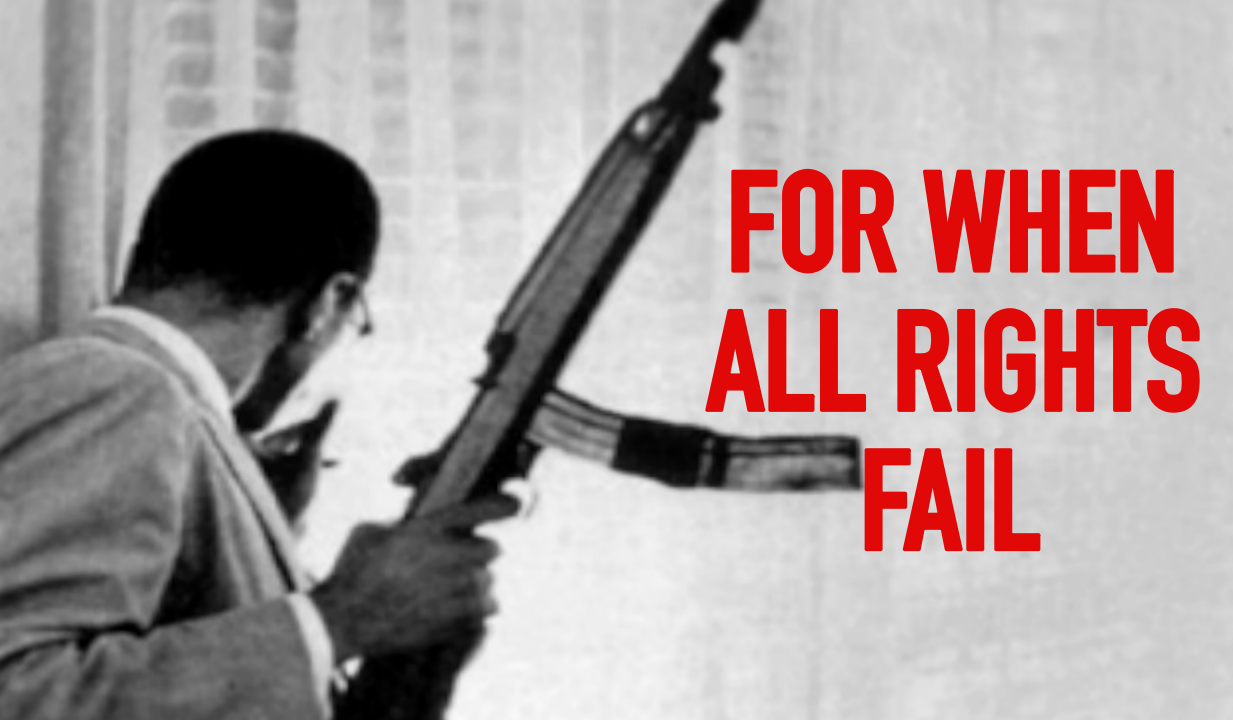
Right to Vote. White Supremacists/Racists numerical inadequacy causes Jim crow vote suppression tactics.

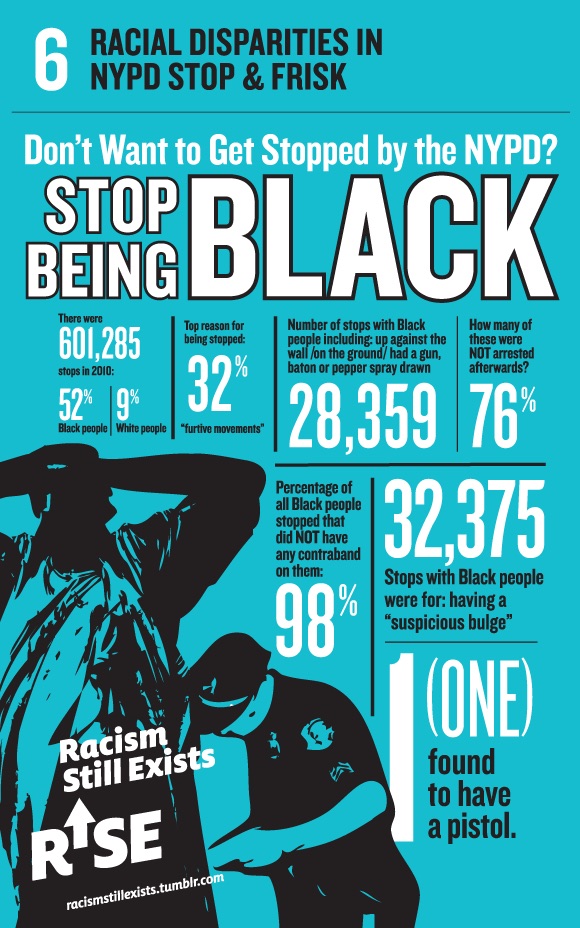
4th Amendment. Exists for whites only as law enforcement stop & frisk, detain, search and kill Non-whites practically unabated by the public or judges. As Neely Fuller said last month - keep your protest signs yall because you will use them over & over. 

Right to Self Defense. Misinformed Non-white advocates urge legislators to do away with the right for people to defend themselves in the face of imminent death (white supremacy is the cause and effect of the Trayvon Martin episodes - not Stand Your Ground laws.)

2nd Amendment. And  who will protect you from white supremacists/racists (including cops) who are armed to the teeth? 911 is a joke. For whites only. Wake up. 

Read More

Federal Reserve Money Printing is the Real Reason Why The Stock Market Is Soaring

BlackListedNews

So should we be surprised that stocks are now the highest that they have been in more than 5 years?

Of course not.

And who benefits from this?

The wealthy do.  In fact, 82 percent of all individually held stocks are owned by the wealthiest 5 percent of all Americans.

Unfortunately, all of this reckless money printing has a very negative impact on all the rest of us.  When the Fed floods the financial system with money, that causes inflation.  That means that the cost of living has gone up even though your paycheck may not have.

If you go to the supermarket frequently, you know exactly what I am talking about.  The new “sale prices” are what the old “regular prices” used to be.  They keep shrinking many of the package sizes in order to try to hide the inflation, but I don’t think many people are fooled.  Our food dollars are not stretching nearly as far as they used to, and we can blame the Federal Reserve for that.

For much more on rising prices in America, please see this article: “Somebody Should Start The ‘Stuff Costs Too Much’ Party“.

Sadly, this is what the Federal Reserve does.  The system was designed to create inflation.  Before the Federal Reserve came into existence, the United States never had an ongoing problem with inflation.  But since the Fed was created, the United States has endured constant inflation.  In fact, we have come to accept it as “normal”.  Just check out the amazing chart in the video posted below

The Best Reporting on Redistricting Shenanigans (the White Party (GOP) Practicing Racism)

Propublica

Republicans in the Virginia Senate made headlines Jan. 20 when they rammed through legislation that would concentrate the state’s Democratic voters into fewer districts.

The Virginia bill is the latest effort by both parties to turn redistricting to their advantage around the country. We’ve rounded up some of the best reporting on how the parties have tried to influence both congressional and state electoral maps — and, in most cases, gotten away with it — for political gain.

Republicans Seeking Electoral College Changes, The Washington Post, January 2013
Only two states — Maine and Nebraska — currently apportion their electoral votes by congressional district. But Republicans in Virginia, Michigan, Ohio and Pennsylvania have recently proposed switching their states to a similar system. Each of those states “went for Obama in the past two elections but are controlled by Republicans at the state level.”

Va. Republicans’ Redistricting Draws Criticism, The Washington Post, January 2013
While Virginia state senator Henry Marsh was in Washington celebrating Obama’s inauguration, state senate Republicans were redrawing district lines to favor GOP candidates. Republican senators took the opportunity of Marsh’s absence to pass a bill, 20 to 19, that made “technical adjustments” to district boundaries. State Democrats are decrying Republicans’ political maneuver, accusing them of trying to “pack and crack” the influence of the state’s black voters.

How Maps Helped GOP Keep the House, The New York Times, December 2012
Democratic House candidates across the country won more than a million more votesthan Republicans ones, but the Republicans kept control of the chamber. How did they manage it? Republicans seized the upper hand in redistricting: “thanks to the gains they made in 2010 state-level elections, Republicans controlled the redistricting process in states with 40 percent of the seats in the House, Democrats controlled it in states with 10 percent of the seats, and the rest of the seats were drawn by courts, states with divided governments or commissions.”

So Few Swing Districts, So Little Compromise, Five Thirty Eight, December 2012
Why is it so difficult for members of the U.S. House to find compromise? Because most members come from “hyperpartisan” districts where they face no real threat of defeat. Nate Silver breaks down the decline of swing districts due in large part to redistricting (as well as less split-ticket voting).

How Dark Money Helped GOP Hold the House, ProPublica, December 2012
Republicans launched an effort in 2010 designed to help the party win statehouses — which control the redistricting process in most states — in the elections that fall. We detailed how dark money helped fund the GOP’s statehouse victory in North Carolina and subsequently helped pay for redistricting consultants, who worked out of the Republican party headquarters in Raleigh.

The League of Dangerous Mapmakers, The Atlantic, October 2012
Who are the cartographers behind the U.S.’s constantly shifting district maps? Journalist Robert Draper follows Republican National Committee redistricting consultant Tom Hofeller as he travels the country, advising legislators how to best designate districts to their advantage. Draper charts the history of redistricting, to show how what “was intended by the Framers solely to keep democracy’s electoral scales balanced…has become the most insidious practice in American politics.”

Redistricting, a Process Cloaked in Secrecy, Center for Public Integrity, November 2012
Though the Supreme Court has dictated how often states redraw district lines, how they do it is mostly up to them. The State Integrity Investigation rated each state on the transparency and potential for public input of their redistricting process. Roughly half didn’t make the grade:  “while 18 states received A’s; 24 received a D or an F.”

How Democrats Fooled California’s Redistricting Commission, ProPublica, December 2011
In an attempt to insulate redistricting from party politics, California created a citizens’ commission in 2010 to determine state districts. But Democratic strategists still found new ways to influence the process: from secretly enlisting local organizations to creating a sham community group to push for a map that favored Democratic candidates.

Welcome to America’s Most Gerrymandered District, The New Republic, November 2012
Democrats have been especially aggressive about redistricting in Maryland, where they dominate the state legislature. Maryland Democrats approved a new congressional map so tortured that a federal judge called the state’s Third Congressional District “reminiscent of a broken winged pterodactyl, lying prostrate across the center of the state.” The redrawn maps helped Democrats capture seven of Maryland’s eight House seats, despite winning only 62 percentof the total votes cast in all the state’s House races.

High Court Rejects Maryland State Police Effort to Block Disclosure of Records on Racial Profiling Complaints

ACLU

The Maryland State Police (MSP) must turn over records pertaining to racial profiling complaints under the state’s public information law, Maryland’s highest court held today in a decision lauded by the American Civil Liberties Union (ACLU) of Maryland and the Maryland State Conference of NAACP Branches (NAACP).  Since 2007, the groups have maintained that MSP is violating the state’s public information law by improperly withholding documents that would show whether it has meaningfully investigated profiling complaints. Today’s ruling rejects the Attorney General’s blanket assertion that these documents can never be released, holding instead that redaction of personal information amply protects the privacy interests of those involved.

“The ruling handed down today by the state’s highest court is a true victory for all Marylanders,” said Gerald Stansbury, President of the Maryland State Conference of NAACP Branches. “It sets a strong precedent and gives us the ability to determine if and when reports and complaints of racial profiling are thoroughly investigated and handled appropriately.”

The NAACP’s purpose in pursuing the records all along has been to determine whether the MSP is truly investigating the complaints and taking seriously its responsibility to eliminate racial profiling by its troopers. However, the MSP has refused to turn over the documents, saying that all records of complaints and investigations are "personnel records" exempt from disclosure under the Maryland Public Information Act (MPIA), even when all identifying information is redacted.  Today’s court ruling flatly rejects that argument.

“As the police often say, ‘If you have nothing to hide, then what’s the problem?’” asked Deborah Jeon, Legal Director of the ACLU of Maryland. “Complaints that people of color are targeted by the State Police for highway stops have haunted the department for more than two decades. Now, finally, the department must come clean about how it investigates and addresses racial profiling complaints.” 

In November 2010, Maryland’s Court of Appeals heard argument regarding whether to uphold a Court of Special Appeals decision ordering MSP to produce investigatory records concerning how profiling complaints were resolved. That ruling upheld the Circuit Court's decision requiring the MSP to disclose the records without revealing the identities of either troopers or complainants. Today’s ruling reaffirms the decisions of the lower courts.

Seth Rosenthal, an attorney who has led the Venable legal team since 2007, added: “From 2003 to 2008, motorists who lodged racial profiling complaints against Maryland state troopers went 0 for 100.  Despite its proven history of racial profiling, the State Police has never sustained even one allegation. With the Court’s decision today, Maryland citizens will now be able to monitor carefully whether the State Police is taking meaningful steps to eradicate the unlawful practice of stopping and searching motorists based on of the color of their skin.”

In 2003, the NAACP and the MSP entered into a Consent Decree in racial profiling litigation initiated in the early 1990s. The MSP agreed to make the process for motorists to file racial profiling complaints more user-friendly and to thoroughly investigate all such complaints. During the four-year period following entry of the Decree, approximately 100 official complaints alleging racial profiling were filed by minority motorists. However, the MSP found that not a single one of these complaints had merit.. No MSP trooper has ever been found to have engaged in racial profiling, and no disciplinary action has ever been taken against a trooper for racial profiling.

Plaintiffs are represented by pro bono attorneys Seth Rosenthal, Brian Schwalb, and Joeann Walker from the law firm Venable, LLP, and Deborah Jeon from the ACLU of Maryland.

Go to the ACLU of Maryland website to learn more. 

The State of Sentencing 2012

SentencingProject

The State of Sentencing 2012, a new report from The Sentencing Project, highlights reforms in 24 states that demonstrate a continued trend to reform sentencing policies and scale back the use of imprisonment without compromising public safety. The report provides an overview of recent policy reforms in the areas of sentencing, probation and parole, collateral consequences, and juvenile justice.

Right-Wing Media Figures Seize On Immigration Reform To Link Immigrants With Welfare

Media Matters for America

Right-wing media figures have responded to immigration reform by invoking the oft-repeated conservative argument that legalizing immigrants will enlarge the "welfare state." In fact, the announced immigration reform proposal would prevent newly legalized immigrants from receiving federal benefits for an extended period of time; moreover, immigrants in general are less likely to receive welfare benefits.

Conservative Media Figures Respond To Immigration Framework By Invoking Welfare

Fox News' Bill O'Reilly Claimed That Immigration Reform Would Mean More Immigrants On The "Welfare Entitlement Train." On his Fox News show, Bill O'Reilly claimed that immigration reform would mean more immigrants "on the welfare entitlement train." He went on to say: "I think we need immigration reform. But I do think that they have to deal with the welfare situation. Because if you're going to add another 6 million people, and, believe me, when welfare gets -- when welfare, when immigration reform gets passed, that means the people that are in the other countries are going to be able to come here." [Fox News, The O'Reilly Factor, 1/28/13]

WSJ's Stephen Moore Speculated That Newly Legalized Immigrants Would Become "Welfare Recipients." On Fox News' America's Newsroom, guest and Wall Street Journal editorial board member Stephen Moore claimed that the "big concern" regarding immigration reform would be how many newly legalized immigrants would become eligible to receive public benefits. Though Moore stressed that he is pro-immigration, he stated: "I do have a concern about offering this safety net, food stamps, health care benefits, welfare benefits to immigrants who come here." He added: "We want immigrants who want to come here and work and be productive citizens, not people -- we don't want our welfare system to become a magnet." He also stated:

MOORE: You know, we've had a policy in this country for 100 years, Bill, that says immigrants can come to this country but they have to, when they, upon entry they have to prove to the satisfaction of the immigration officials that they will not become what is called a public charge, that is to say they won't become welfare recipients, that they will be productive citizens. And it will be interesting whether we extend that kind of qualification to the people who get legalized under this program. [Fox News, America's Newsroom, 1/28/13]

Michelle Malkin Advanced Notion That Immigration Proposal Would "Rope More Immigrants Into Welfare State." In a post on her blog titled, "While GOP leaders push amnesty, Dems rope more immigrants into welfare state," Fox News contributor Michelle Malkin asked, "How, pray tell, do these capitulationist Republicans propose to ensure that shamnesty beneficiares don't get access to federal benefits?":

Among the many self-deluded promises that GOP illegal alien amnesty promoters are making, this one is especially snort-worthy:

Those who have obtained probationary legal status would not be allowed to access federal benefits.

Oh, yeah? How, pray tell, do these capitulationist Republicans propose to ensure that shamnesty beneficiares don't get access to federal benefits later when they can't do anything to prevent the Obama administration from sabotaging existing federal prohibitions on welfare for immigrants now? [MichelleMalkin.com, 1/28/13]

FACT: Immigration Reform Proposal Restricts Newly Legalized Immigrants' Access To Social Benefits

KABC: Undocumented Immigrants Who Gain Legal Status Would "Not Receive Federal Benefits Like Welfare Or Medicaid." ABC's Los Angeles affiliate, KABC, reported that undocumented immigrants who "gain legal status to live and work in the U.S." would "not receive federal benefits like welfare or Medicaid":

The process of obtaining citizenship won't be easy or short. Under the plan, undocumented immigrants would be required to register with the federal government. Those without a criminal record would be eligible for "probationary legal status" if they pass a background check and pay fines and back taxes. They would then gain legal status to live and work in the U.S., but not receive federal benefits like welfare or Medicaid. [KABC-TV, 1/28/13]

Under Senate Framework, Current Benefit Restrictions For Non-Immigrants Will Remain In Place For Those Given Probationary Status. The bipartisan framework for immigration reform recently announced by a group of eight senators states: "Current restrictions preventing non-immigrants from accessing federal public benefits will also apply to lawful probationary immigrants." [The Washington Post, accessed 1/28/13]

Even Sen. Marco Rubio Has Noted That Immigrants With Temporary Status "Will Not Be Able To Receive Welfare, Student Aid Or Any Other Federal Public Assistance." In an op-ed detailing what "we need to address" in immigration reform, Senator Marco Rubio (R-FL) said that those who have come here illegally and who haven't committed felonies will have "the opportunity to apply for temporary non-immigrant status." He went on to say that "they will not be able to receive welfare, student aid or any other federal public assistance." [Las Vegas Review-Journal, 1/27/13]

CBPP: Most Immigrants Are Barred From Receiving Federal Welfare Dollars For First Five Years Of Residency. A report from the Center on Budget and Policy Priorities described the eligibility requirements for the Temporary Assistance to Needy Families (TANF) program, which replaced cash welfare benefits in 1996. CBPP said, "Federal law bars states from using federal TANF dollars to assist most legal immigrants until they have been in the United States for at least five years. This restriction applies not only to cash assistance, but also to TANF-funded work supports and services such as child care, transportation, and job training. A substantial percentage of poor children have non-citizen parents who are ineligible for TANF benefits and services." CBPP went on to note that while states can use their own funds to provide benefits to recent immigrants, fewer than half do. [Center on Budget and Policy Priorities, 12/4/12]

FACT: Immigrants Receive Less Public Assistance Than Native-Born Americans

WSJ: "Low-Income Immigrants Are Less Likely To Be Receiving Public Benefits Than Low-Income Natives." In an editorial "debunking some talk radio myths," The Wall Street Journal reported that "low-income immigrants are less likely" to receive public assistance than low-income, Native-born Americans:

[I]f foreign nationals are primarily attracted to our welfare state, how to explain the fact that low-income immigrants are less likely to be receiving public benefits than low-income natives?

Illegal aliens aren't eligible for Medicare, Medicaid, Social Security and other federal entitlements. But even those low-income immigrants who are eligible for public assistance sign up at lower rates than their native counterparts. According to the U.S. Department of Agriculture, which administers food stamps, noncitizens who qualify are significantly less likely than citizens to participate. [The Wall Street Journal, 11/13/12]

Even Anti-Immigrant Group Has Acknowledged Low Welfare Use Among Undocumented Immigrants. In a 2004 study, the anti-immigrant Center for Immigration Studies found that among undocumented immigrants' use of cash assistance programs "tends to be very low" and that use of Medicaid is less than other households:

Welfare use. Our findings show that many of the preconceived notions about the fiscal impact of illegal households turn out to be inaccurate. In terms of welfare use, receipt of cash assistance programs tends to be very low, while Medicaid use, though significant, is still less than for other households. Only use of food assistance programs is significantly higher than that of the rest of the population. Also, contrary to the perceptions that illegal aliens don't pay payroll taxes, we estimate that more than half of illegals work "on the books." On average, illegal households pay more than $4,200 a year in all forms of federal taxes. Unfortunately, they impose costs of $6,950 per household.

Social Security and Medicare. Although we find that the net effect of illegal households is negative at the federal level, the same is not true for Social Security and Medicare. We estimate that illegal households create a combined net benefit for these two programs in excess of $7 billion a year, accounting for about 4 percent of the total annual surplus in these two programs. However, they create a net deficit of $17.4 billion in the rest of the budget, for a total net loss of $10.4 billion. Nonetheless, their impact on Social Security and Medicare is unambiguously positive. [Center for Immigration Studies, August 2004]

Cato Institute: "The Low-Skilled, Predominantly Hispanic Immigrants Who Enter The United States Illegally Do So For One Overriding Purpose -- To Earn Money In The Private Economy." A 2012 study from the Cato Institute concluded that immigrants who come to the United States illegally do so "to build a better life through work, not welfare." From the study:

[I]mmigration to the United States does not pose a long-term burden on U.S. taxpayers. The typical immigrant and his or her descendants pay more in taxes than they consume in government services in terms of net present value. Low-skilled immigrants do impose a net cost on government, in particular on the state and local level, but those costs are often exaggerated by critics of immigration and are offset by broader benefits to the overall economy.

[...]

Immigrants come to America today to build a better life through work, not welfare, just as they have throughout American history. We can see evidence of this in their labor-force participation rates as well as their gravitation toward states that offer the best prospects for employment, not welfare benefits.

The typical foreign-born adult resident of the United States today is more likely to participate in the work force than the typical native-born American. According to the U.S. Department of Labor (2011), the labor-force participation rate of the foreign-born in 2010 was 67.9 percent, compared to the native-born rate of 64.1 percent. The gap was especially high among men. The labor-force participation rate of foreign-born men in 2010 was 80.1 percent, a full 10 percentage points higher than the rate among native-born men.

Labor-force participation rates were highest of all among unauthorized male immigrants in the United States. According to estimates by Jeffrey Passell (2006) of the Pew Hispanic Center, 94 percent of illegal immigrant men were in the labor force in the mid-2000s. This almost universal propensity to work among undocumented men partly reflects the fact of U.S. law that becoming a ward of the state is simply not an option. But it primarily reflects the fact that the low-skilled, predominantly Hispanic immigrants who enter the United States illegally do so for one overriding purpose -- to earn money in the private economy. [The Cato Institute, Winter 2012]

Cato Institute: "If Immigrants Were Primarily Concerned With Collecting Welfare, They Would Not Be Flocking To" States With Low Social Spending. The 2012 Cato Institute study noted that "[if] immigrants were primarily concerned with collecting welfare, they would not be flocking" to "states with relatively low social spending":

The work ethic of immigrants reveals itself further by the kind of states they gravitate to. If we consider changes in the foreign-born populations in individual states, for example, we can see that the largest gains have generally been in states that are relatively stingy in offering public assistance. Journalist Jason Riley, in his book Let Them In, noted that many of the states that have seen the largest increases in their immigrant populations in the past decade are also states with relatively low social spending.

Comparing changes in immigrant population since 2000 to levels of social spending confirms Riley's thesis. The 10 states with the largest percentage increase in foreign-born population between 2000 and 2009 spent far less on public assistance per capita in 2009 compared to the 10 states with the slowest-growing foreign-born populations -- $35 vs. $166. In the 10 states with the lowest per capita spending on public assistance, the immigrant population grew 31 percent between 2000 and 2009; in the 10 states with the highest per capita spending on public assistance, the foreign-born population grew 13 percent. If immigrants were primarily concerned with collecting welfare, they would not be flocking to such states as Kentucky, Tennessee, North Carolina, South Carolina, and Georgia. Instead, they would be drawn to such states as Michigan, Rhode Island, and Vermont, which in fact have seen very slow growth in their immigrant populations. [The Cato Institute, Winter 2012]


Kansas Ends Free HIV Testing In Most Counties, Limiting Access For The Most Vulnerable

ThinkProgress

The Kansas Department of Health and Environment used to provide free HIV testing kits and specimen analysis to 40 counties — but this year, it’s scaling back its services to cover just the 10 most populous counties, a move that health advocates warn could end up restricting care for some of the state’s most vulnerable residents living in rural areas.

State and federal agencies are attempting to allocate their prevention funds strategically. Since Kansas is considered a “low incidence” state for HIV, cutting back on free testing in some counties is an attempt to concentrate resources where they are most needed. But health officials warn that the strategy may backfire, particularly because the state’s poorest residents may not seek out preventative care and get themselves tested:

“What we’re really talking about is potentially decreased access to services,” said Michelle Ponce, executive director of the Kansas Association of Local Health Departments. “If there’s not an entity in a community able to provide HIV testing on a basis which clients can afford, it’s not going to be done.” [...]

In Kansas, Medicaid pays for HIV testing if a physician orders it, Wilmoth said.

Donna Sweet, University of Kansas director of internal medicine education at Via Christi Regional Medical Center in Wichita, cautioned that people who live in rural communities where everyone knows everyone may be unwilling to discuss their concerns with a primary care physician. They might not recognize the signs or understand the risks, she said.

“Certainly it’s going to make an impact. People who are poor generally don’t have the money to pay for anything that is not free,” said Sweet, who has been the principal investigator for the Mountain Plains AIDS Education and Training Center since 1988.

State officials note that, since Obamacare seeks to expand the Medicaid program to cover additional low-income people, the health reform law will help improve access to free testing in Kansas because Medicaid picks up the tab for HIV tests. But that’s only true if Kansas agrees to accept the optional expansion and add an estimated 240,000 low-income people to its Medicaid rolls. A Democratic lawmaker in the state recently introduced a bill to expand Medicaid, but Gov. Sam Brownback (R) — a staunch Obamacare opponent — hasn’t yet indicated whether he will cooperate with that provision of the health law.

Obamacare does take big strides to improve access to HIV testing and treatment. But, since the Centers for Disease Control estimates that about 20 percent of all HIV-positive Americans don’t realize they have the virus — which includes half of the HIV-positive people between the ages of 13 and 24 — a widespread emphasis on preventative testing is critical to reach that population.

Illinois governor signs bill allowing illegal immigrant driver's licenses

[JURIST]
Illinois Governor Pat Quinn [official website] signed a bill [SB 0957 text, PDF] on Sunday that will permit immigrants in the country illegally to obtain temporary driver's licenses if they can provide proof of one-year state residence and an unexpired passport from their country of citizenship or a valid unexpired consular identification document and a photograph. The bill will allow potential licensees to take both written and driving tests and would require them to have proof of auto insurance, which proponents advocate is a public safety measure. The licenses will last for three years and cannot be used for the purchase of firearms, to vote or to board a plane. The Illinois secretary of state's office estimates it will begin issuing licenses [Chicago Tribune report] in about 10 months. Critics argued that the process is open to abuse, but Quinn praised the bipartisanship effort [press release] to pass the bill and stated that it would save lives and money by helping to ensure that immigrant motorists had passed a driving safety test.

The Illinois House approved the bill [JURIST report] in early January after it was approved by the Senate last December. California Governor Jerry Brown signed [JURIST report] a similar bill in October, which directed California's Department of Motor Vehicles to issue driver's licenses to people who do not have a social security number but can prove they are authorized to be in the US under federal law. In contrast, Arizona Governor Jan Brewer [official website] issued an executive order [JURIST report] in August that instructs state agencies not to provide driver's licenses and other public benefits to undocumented immigrants who have gained the right to work under the new federal program known as Deferred Action [DHS memorandum; JURIST report]. The American Civil Liberties Union (ACLU) [advocacy website] has filed a lawsuit challenging the order [JURIST report].

US Senators unveil immigration reform plan

[JURIST]

A group of eight senators from both parties released a framework [text, PDF] Monday of comprehensive immigration [JURIST backgrounder] reform legislation that they plan to introduce by March. The framework focuses on four "pillars" that the legislation will include: creating a path to citizenship for current unauthorized immigrants, contingent upon securing the borders; reforming the immigration system to ease the way for immigrants who will bolster the US economy or are a part of an existing US family and have been waiting for citizenship; creating a new employment verification system to check immigration status; and allowing immigrants to legally imigrate to the US for low-skilled labor, only if it is available and American workers have refused the work. Senators Chuck Schumer, John McCain, Dick Durbin, Robert Menendez and Marco Rubio [official websites] revealed the outline in a press conference. 

White House Press Secretary Jay Carney stated in his press briefing [transcript] Monday that "[T]he President welcomes the efforts by the bipartisan group in the Senate to put forward principles on the need for comprehensive immigration reform—principles that mirror the President's blueprint." President Barack Obama is expected to make a statement on immigration reform on Tuesday.

The individual senators involved in building the framework released several statements on what the eventual legislation will include. McCain focused on border security [press release], "Greater focus needs to be paid to drug traffickers and criminals that cross the border. ... To combat this, we need to continue to invest in UAVs, radar, and other proven surveillance systems that will give Border Patrol the ability to detect and apprehend all illegal entries into the United States." He also compared the framework to failed legislation [FAQ text] that was put forward in 2007, and issued more details about the plan, including that funding for some aspects of the program will come from "fees collected from immigrant workers—both new guest workers and the previously undocumented." These funds will be used for "registering the undocumented, processing visas and other applications, enhancing enforcement and providing English and civics education to immigrants." Senator Lindsey Graham [official website], who was not available for the press conference, also released a statement [press release] and said, "We're a long way from having legislative language but I do believe 2013 presents us the best chance to pass immigration reform in many years."

(Sandy Hook) Records: Massacre Lasted 6 Minutes

Hartford Courant 

January 26, 2013

Adam Lanza's shooting rampage inside Sandy Hook Elementary School lasted roughly six minutes, a Courant review of dispatcher traffic from state police and the Newtown fire and police departments indicates.

In that time, Lanza fired at least 150 rounds, killing 20 first-graders and six adults.

The dispatch tapes indicate the first of two rounds of shots lasted almost two and a half minutes after he entered the building Dec. 14 by shooting his way through the front entrance. 

The first 911 call came into the Newtown police department just before 9:36 a.m., with the dispatcher's alert -- "Sandy Hook School caller indicates she thinks someone is shooting in the building" -- interrupting the normal channel chatter between officers on patrol.

There were several 911 calls made from the school, but Danbury State's Attorney Steven Sedensky has instructed authorities not to release them until the investigation is complete. Sedensky appeared Thursday before the Sandy Hook Advisory Commission and said the investigative report into the shooting will not be finished until at least June. He gave few details of the investigation to the commission and indicated he would not be releasing any information about Lanza's mental health history because of privacy issues. 

The Courant reviewed the dispatch calls made for a two-hour period following that initial 911 call, believed to be from a woman who worked in Principal Dawn Hochsprung's office. Some parts of the dispatch tapes are difficult to decipher, and many of the calls from officers in the school are inaudible.

About 40 seconds after the initial call, the dispatcher tells officers on their way to the school that the "front glass has been broken; they are unsure why." A second 911 call comes about one minute, twenty seconds later. "The individual I have on the phone is continuing to hear what he believes to be gunfire," the dispatcher advises officers.

As officers start arriving at the long driveway leading to the school, the dispatcher puts out a call that the shooting has appeared to stop: "The shooting appears to have stopped. It is silent at this time; the school is in lockdown."

There are references to other people outside the school when the shooting started. One officer says at 9:41:22 that "I've got him proned out," indicating he is arresting someone. Other media reports have indicated this was a man who had a child at the school, and he was headed to that class when the shooting started.

But the shooting was not over for long. About 50 seconds later, another caller indicates they can still hear shooting and that they saw "two shadows running outside past the gym," which is in the rear of the school.

Newtown Police Lt. George Stinko said some people were detained initially as police got to the scene that was rapidly unfolding.

"This is a public school that is not in a closed area, and officers encountered several individuals as they got to this chaotic scene. None of them were involved in the shooting,'' Stinko said. "There was only one shooter, Adam Lanza. He was found dead inside the school of a self-inflicted gunshot wound."

It is unclear why Lanza stopped shooting. He was moving between classrooms from one where he killed teacher Lauren Rousseau, 14 students and aide Rachel Davino, to Victoria Soto's classroom, where he killed Soto, aide Mary Ann Murphy and six students.

The delay also could have been because his Bushmaster rifle jammed. Sources said police found live rounds on the floor in Soto's room, indicating Lanza may have cleared the gun after it jammed.

Six students escaped the massacre by running from Soto's room when Lanza stopped shooting.

The second burst of shooting lasted more than three minutes, until 9:42:18 -- six minutes, 26 seconds after the initial 911 call.

At 9:51, the records indicate police found Lanza's body. Police found his car at 10:05 a.m. when an officer asked a dispatcher to run the license plate 872YEO. The car, a black Honda Civic, belongs to Nancy Lanza, according to Department of Motor Vehicle records. Police later found a shotgun in the trunk.

Students and teachers started coming out of the school at 10:03, even as police officers were still running into the building to do a room-by-room search

While SWAT teams and other officers searched the school, late-arriving officers tried to reunite children with terrified parents at the nearby firehouse. One officer discovered the six students who had escaped Soto's room.

"Be advised I'm with the parent who has the children who were in the classroom during the event, trying to get a count on them now, not in regular ... we have lines with rooms, and they are not with them, so I'm gathering names of students that were in classroom at the time."

At 11:09 the dispatcher reports, "Danbury is reporting a possible vehicle, a purple van with two occupants with a possible ski mask that may be involved in this incident. Exit 8 and Stony Hill heading towards the center."

The van later was determined to have nothing to do with the shootings. A dispatch call just after 11:50 called off the search.